Open Access Dissertations Theses and Dissertations
Fall 2014
An exploratory factor analysis and reliability
analysis of the student online learning readiness
(SOLR) instrument
Taeho Yu Purdue University
Follow this and additional works at:https://docs.lib.purdue.edu/open_access_dissertations Part of theCurriculum and Instruction Commons, and theHigher Education Commons
This document has been made available through Purdue e-Pubs, a service of the Purdue University Libraries. Please contact [email protected] for additional information.
Recommended Citation
Yu, Taeho, "An exploratory factor analysis and reliability analysis of the student online learning readiness (SOLR) instrument" (2014).
Open Access Dissertations. 397.
7KLVLVWRFHUWLI\WKDWWKHWKHVLVGLVVHUWDWLRQSUHSDUHG %\ (QWLWOHG )RUWKHGHJUHHRI ,VDSSURYHGE\WKHILQDOH[DPLQLQJFRPPLWWHH $SSURYHGE\0DMRU3URIHVVRUVBBBBBBBBBBBBBBBBBBBBBBBBBBBBBBBBBBBB BBBBBBBBBBBBBBBBBBBBBBBBBBBBBBBBBBBB $SSURYHGE\
+HDGRIWKHDepartment *UDGXDWH3URJUDP 'DWH
To the best of my knowledge and as understood by the student in the Thesis/Dissertation Agreement, Publication Delay, and Certification/Disclaimer (Graduate School Form 32), this thesis/dissertation adheres to the provisions of Purdue University’s “Policy on Integrity in Research” and the use of copyrighted material.
Taeho Yu
AN EXPLORATORY FACTOR ANALYSIS AND RELIABILITY ANALYSIS OF THE STUDENT ONLINE LEARNING READINESS (SOLR) INSTRUMENT
Doctor of Philosophy
Jennifer C. Richardson Catherine E. Watt Timothy J. Newby
Karen Swan
Chantal Levesque-Bristol
Jennifer C. Richardson
A Dissertation Submitted to the Faculty
of
Purdue University by
Taeho Yu
In Partial Fulfillment of the Requirements for the Degree
of
Doctor of Philosophy
December 2014 Purdue University West Lafayette, Indiana
ii This is dedicated to my wife Yunjoung, my two sons Brian & Darren, and to my parents,
iii ACKNOWLEDGEMENTS
I would like to acknowledge and express my appreciation to Dr. Jennifer C. Richardson, my dissertation committee chair and my best mentor in the world, for advising and guiding me with great generosity, kindness, patience, understanding, and thoughtful consideration. She has contributed her tremendous time and efforts to help me to better develop my dissertation with her support. Dr. Richardson has been my role model as a mentor, an advisor, and a scholar. I have always tried to follow her path and will keep it continuously. In addition, I sincerely grateful to the other members of my committees: Dr. Timothy Newby, Dr. Karen Swan, Dr. Chantal Levesque-Bristol, and Dr. Catherine E. Watt.
iv TABLE OF CONTENTS
Page
LIST OF TABLES ... vii
LIST OF FIGURES ... ix
ABSTRACT ... x
CHAPTER 1. INTRODUCTION ... 1
1.1 Introduction ... 1
1.2 Background ... 3
1.3 Purpose of the Study ... 5
1.4 Significance of the Study ... 7
CHAPTER 2. REVIEW OF THE LITERATURE ... 8
2.1 Introduction ... 8
2.2 Online Learning ... 8
2.3 Benefits and Challenges of Online Learning ... 10
2.4 Theoretical Framework ... 12
2.5 Student Retention and Online Learning ... 17
2.6 Review of Existing Student Readiness Instruments ... 27
2.7 Social Competencies ... 31
2.8 Communication Competencies ... 34
2.9 Technical Competencies ... 38
2.10 Learning Outcomes and Learner Satisfaction ... 42
2.11 Summary ... 44
CHAPTER 3. METHODS ... 45
3.1 Introduction ... 45
3.2 Research Context ... 45
v 3.5.2.Reliability Analysis ... 58 3.6 Summary ... 59 CHAPTER 4. RESULTS ... 60 4.1 Introduction ... 60 4.2 Descriptive Statistics ... 60
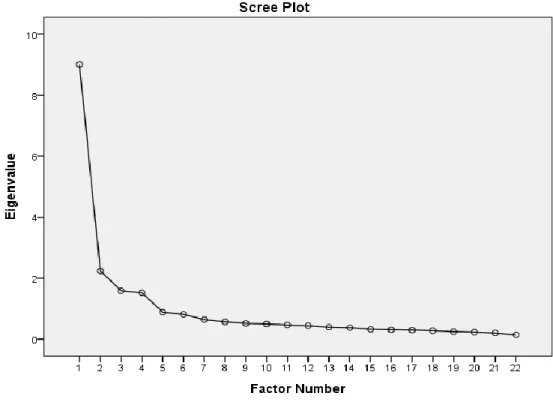
4.3 Exploratory Factor Analysis (EFA) for Validity ... 62
4.3.1.Preliminary Four-Factor Structure ... 63
4.3.2.Final Four-Factor Structure... 66
4.4 Item Analysis for Reliability ... 72
4.5 Summary ... 73
CHAPTER 5. DISCUSSION ... 74
5.1 Introduction ... 74
5.2 Discussion ... 75
5.3 Implications... 77
5.3.1.Implications for Research ... 77
5.3.2.Implications for Practice ... 79
5.4 Limitations ... 80
5.5 Future Research ... 81
REFERENCES ... 83
APPENDICES Appendix A: IRB Approval Letter ... 98
Appendix B: Cover Letter for Student Online Learning Readiness (SOLR) instrument ... 100
Appendix C: Initial Version of Student Online Learning Readiness (SOLR) instrument for EFA ... 101
Appendix D: Final Version of Student Online Learning Readiness (SOLR) instrument ... 107
vi Page
vii LIST OF TABLES
Table ... Page
Table 1. Five Conditions for Student Retention ... 15
Table 2. Forty One Factors of Student Retention in Online Learning ... 19
Table 3. Summary of Strategies to Overcome Dropout Factors in Online Learning ... 22
Table 4. Summary of Existing Student Readiness Instruments ... 28
Table 5. Numbers of Students and the List of Courses Participated in This Study ... 47
Table 6. Demographic Information of the Students Participating in This Study ... 49
Table 7. Social Competencies with Instructor Measurement in Online Learning ... 51
Table 8. Social Competencies with Classmates Measurement in Online Learning ... 52
Table 9. Communication Competencies Measurement in Online Learning ... 53
Table 10. Technical Competencies Measurement in Online Learning ... 55
Table 11. Descriptive Statistics of Each Element of the Student Online Learning Readiness (SOLR) instrument ... 61
Table 12. Eigenvalues, Total Variances Explained for a Preliminary Four-Factor Structure ... 63
Table 13. The items and preliminary four-factor structure of the Student Online Learning Readiness (SOLR) instrument ... 64
Table 14. Eigenvalues, total variances explained for the final four-factor structure ... 67
Table 15. Factor Correlation Matrix ... 68
Table 16. Item-total Statistics ... 70
Table 17. The Items and Four-Factor Structure of the Student Online Learning Readiness (SOLR) Instrument after Factor Reduction Procedures... 71
vii
i
Table ... Page Table 18. Cronbach’s Alpha for Each Element of the Student Online Learning Readiness (SOLR) instrument... 73
ix LIST OF FIGURES
Figure ... Page Figure 1. Online Enrollment as a Percent of Total Enrollment in the United States from
2002 to 2012 ... 9
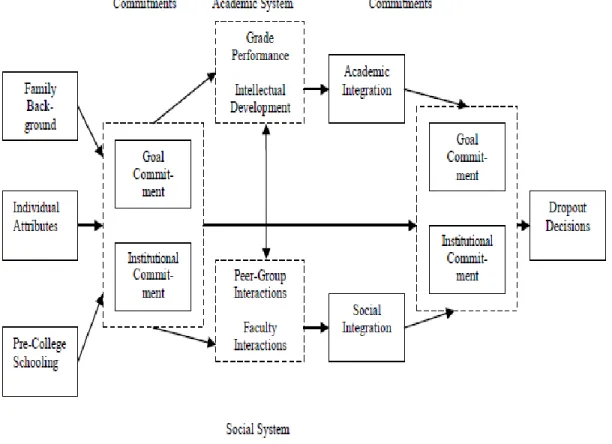
Figure 2. Tinto’s Student Integration Model (SIM)... 13
Figure 3. Student Online Learning Readiness (SOLR) Model in Online Learning... 16
x ABSTRACT
Yu, Taeho. Ph.D., Purdue University, December 2014. An Exploratory Factor Analysis and Reliability Analysis of the Student Online Learning Readiness (SOLR) Instrument. Major Professor: Jennifer C. Richardson.
The purpose of this study was to develop an effective instrument to measure student readiness in online learning with reliable predictors of online learning success factors such as learning outcomes and learner satisfaction. The validity and reliability of the Student Online Learning Readiness (SOLR) instrument were tested using Exploratory Factor Analysis (EFA) and reliability analysis. Twenty items from three competencies, i.e. social competencies, communication competencies, and technical competencies, were designated for the initial instrument based on the Student Online Learning Readiness (SOLR) Model as a new conceptual model. An exploratory factor analysis (EFA) revealed that four factor-structures of the instrument of student readiness in online
learning explained 66.69% of the variance in the pattern of relationships among the items. All four factors had high reliabilities (all at or above Cronbach’s α > .823). Twenty items remained in the final questionnaire after deleting one item which cross-loaded on
multiple factors (social competencies with classmates: five items, social competencies with instructor: five items, communication competencies: four items, and technical competencies: six items). The four-factor structure of the Student Online Learning Readiness (SOLR) has been confirmed through this study. Educators can use the Student
xi measuring their social, communication, and technical competencies. In addition, this
study was looking at two factors of social integration in Tinto’s SIM and has introduced the Student Online Learning Readiness (SOLR) conceptual model with the purpose to extend Tinto’s social integration to online learning environment.
1
CHAPTER 1. INTRODUCTION
1.1 Introduction
Online learning is becoming an increasingly large part of higher education
(Anderson, 2014; Duck & Parente, 2014; Kim, 2011). Over 7.1 million college and
university students took at least one online course by the end of the fall 2012 semester in the United States (Allen & Seaman, 2014). More than 71% of US colleges and
universities offered online courses in 2012 (Allen & Seaman, 2013) and one-third of higher education students took at least one online course in 2012 (Allen & Seaman, 2014). According to the U.S. Department of Education Distance Learning Report (Bakia, Shear, Toyama, & Lasserter, 2012), the benefits of online learning are: a) to broaden access to the educational resources, b) to personalize learning, c) to provide flexibility in time and location for students, and d) to reduce school-based facilities’ costs. However, the benefits of online learning also bring some challenges into the field of education.
First, the retention rates in online learning courses are 10-25% less than those for traditional face-to-face classes (Ali & Leeds, 2009; Angelina, Williams, & Natvig, 2007; Holder, 2007; Lee & Choi, 2011; Poelhuber, Chomienne, & Karsenti, 2008) in higher education. In other words, over one half of distance students may dropout of their
education as a result of online courses (Carr, 2000; Jun, 2005). Second, students who take online courses for the first time tend to feel lonely and socially isolated not only because
2 2004). This feeling of social isolation has a significant relationship with distance student
attrition (Ali & Leeds, 2009; Link & Scholtz, 2000; Reio & Crim, 2006). Third, online learning requires learners to assume a greater responsibility for their studies and requires that they have additional skills or competencies (Zawacki-Richter, 2004). For these reasons, it is important to offer distance learners support to help these individuals be successful in their online learning (Watulak, 2012; Zawacki-Richter, 2004). In this manner, it becomes possible to improve student retention rates in online learning in higher education (Ali & Leeds, 2009; Atchley, Wingenbach, & Akers, 2012; Ludwig-Hardman & Dunlap, 2003; Moore & Kearsley, 2005).
Moreover, distance learners are more likely to have a lower sense of belonging than face-to-face students (Ma & Yuen, 2010). According to Goodenow (1993), the concept of a “sense of belonging” at school refers to “the extent to which students feel personally accepted, respected, included, and supported by others in the school social environment” (p. 80), and the positive relationships among a sense of belonging, students’ motivation, and academic achievement were verifed by a series of previous research (Battistich, Solomon, Watson, & Schaps, 1997; Flook, Repetti, & Ullman, 2005; Furrer & Skinner, 2003; Osterman, 2000; Tinto, 1975; Tinto, 1988; Tinto, 1993; Tinto, 1997; Tinto, 1998). In line with the significance of a sense of belonging in an academic field, Tinto (1998) emphasized the positive effect of faculty interactions and student-student interactions on student-students’ sense of belonging. In addition, technological elements, such as computer skills or Internet connections, are important success factors for online
3 learning, including learning outcomes and learner satisfaction (Ben-Jacob, 2011; Herrera
& Mendoza, 2011; Watulak, 2012). For this reason, it is necessary to provide support for distance learners to enhance their social competencies with instructors and classmates as well as their communication competencies and technical competencies so that they can have a better learning experience.
One preemptive way to accomplish this is by assisting students to more accurately gauge their readiness for online learning before they start a program. Some universities require their students to take an online learning readiness test before they take online courses in an effort to provide input about those specific skills or areas where the student may have general deficiencies for online learning. However, existing online learning readiness surveys may only be focused on a narrow range of aspects – such as access to technology, basic computer skills, Internet connections or basic learner characteristics rather than upon a more all-encompassing profile which could be studied to address the competencies necessary for one to be truly successful (Dray, Lowenthal, Miszkiewicz, Ruiz-Primo, & Marczynski, 2011).
1.2 Background
With respect to learner competencies, the terms “competency” and “competence” have been used as substitutes for one another in many studies. However, these two terms are slightly different from each other. The International Board of Standards for Training, Performance and Instruction (IBSTPI) defined competency as “a knowledge, skill, or attitude that enables one to effectively perform the activities of a given occupation or function the standards expected in employment” (Spector, 2001, p. 180). On the other
4 outcomes – making as clear as possible what is to be achieved and the standards for
measuring achievement” (p. 2). With the understanding of these terms, as so defined, the word “competency” will be used for the purpose of this study.
Competencies are an individual’s perception of his or her ability or capability. For this study social competencies are defined as skills, competencies, and the feeling of control essential for managing social situations and building and maintaining
relationships (Myllylä & Torp, 2010). Communication competencies are defined as “the ability to demonstrate knowledge of the socially appropriate communicative behavior in a given situation” (p. 24). Technical competencies are defined as “self-efficacy in
technology” (Heo, 2011, p. 61).
The effect of learners’ competencies on their academic achievement has been studied in the field of online education. First, the importance of social competencies for distance learners’ academic achievement has been supported (Chen et al., 2010; Parker et al., 2006; Williams, 2003). Cho and Jonassen (2009) found that there is a significant correlation between success in online learning environments and the student’s social competencies in interacting with his or her instructor and peers in online courses. Second, a sizeable number of studies have proposed that interpersonal and communication
competencies are the most influential predictors of academic achievement (Betermieux & Heuel, 2009; Dabbagh, 2007; Dabbagh & Bannan-Ritland, 2005; Volery & Lord, 2000; Williams, 2003). Third, technical competencies are considered to be a necessary
5 Selim, 2007; Watulak, 2012; Whale, 2006). Moreover, in terms of the influence of
technical competencies on online education, Herrera and Mendoza (2011) proposed that technical competencies are a significant predictor for learning outcomes in online
learning, which has been confirmed by Cho (2012), Ben-Jacob (2011), and Selim (2007). However, although several studies have introduced various measures for technical competencies (Osika & Sharp, 2002; Saud et al., 2010; Selim, 2007; Soong et al., 2001; Wozney, Venkatesh, & Abrami, 2006), it is necessary to update these measuremes to more adequately and appropriately qualify and quantify the current online learning environment. For instance, Osika and Sharp (2002) and Saud et al. (2010) proposed measuring technical competencies that would be considered outdated at this time, such as formatting a disk, copying a file from one disk drive to another, sending and receiving e-mail, and properly starting and shutting down a personal computer.
1.3 Purpose of the Study
Distance learners should be provided with an opportunity to develop their competencies or readiness skills to better avoid a problematic situation involving non-content related learning challenges that could prevent them from succeeding in online learning. For this reason, it is essential to both measure and enhance the learners’
readiness for online learning before they take an online course. However, many educators in higher education do not know how to measure their learners’ social, communication, and technical competencies which are required for these learners to succeed in such environments (Yu, 2014). Moreover, although a number of universities develop and implement their own online learning readiness surveys, these surveys, as discussed
6 learning preferences (Bernard, Brauer, Abrami, & Surkes, 2004; Kerr, Rynearson, & Kerr,
2006; Watkins, Leigh, & Triner, 2004).
For these reasons, the purpose of this study is to develop a more specified instrument designed to measure student readiness in online learning through a focus on social, communication, and technical competencies. The development of a new
instrument to measure distance learners’ online learning readiness is significant for the future of the field of online learning to provide useful and practical suggestions for administrators and educators in higher education as well as for the distance learners themselves. First, by using the existing literature related to a student’s online learning readiness scales as a guide, a new instrument will be developed to measure the social, communication, and technical competencies of the varied learners within online learning environments. Second, the reliability and validity evidence of the developed instrument employed to measure social, communication, and technical competencies will be evaluated. The specific research questions addressed in this study are:
1. Which set of items should appropriately be included in the final instruments
based on analyses of psychometric properties of the developed instrument that measures social competencies, communication competencies, and technical competencies?
2. What is the reliability and validity evidence of the developed instrument to
measure social competencies, communication competencies, and technical competencies?
7
1.4 Significance of the Study
Previous research has supported the importance of measuring student readiness in online learning before students then proceed to take an online course (McVay, 2000, 2001; Parnell & Carraher, 2002; Smith, 2005; Watkins, Leigh, & Triner, 2004), as well as the significant effect of student readiness on students’ academic achievement within the online learning environments (Bernard et al., 2004; Kerr et al., 2006). In addition, it is necessary to provide an adequate social and academic support in order to enhance the students’ sense of belonging in online learning both for increased meaningful learning experiences and higher retention rates (Ali & Leeds, 2009; Atchley, Wingenbach, & Akers, 2012; Ludwig-Hardman & Dunlap, 2003). However, those existing student
readiness instruments tend to ask about learner’s computer skills, technology accessiblity, or initial thoughts regarding online learning that are not related to the social aspects in online learning. Therefore, it is crucial to develop a more contemporary instrument to measure distance learners’ readiness by combining social, communication, and technical competencies, the most reliable predictors of online learning success factors such as learning outcomes, and learner satisfaction itself in an actual effort to improve the online learning experience and increase the retention of distance learners.
This study will first develop an instrument to measure social, communication, and technical competencies and will then evaluate the reliability and validity of this
instrument. Further, for the future of the online learning, the instrument developed in this study shall be designed to provide a significant tool for online administrators in higher education as well as for distance learners.
8
CHAPTER 2. REVIEW OF THE LITERATURE
2.1 Introduction
Assessing the levels of distance learners’ social, communication, and technical competencies to measure their readiness in online learning is the main focus of this study. For this reason, the literature on current issues in online learning, including student retention in online learning and the benefits and challenges of online learning, are reviewed in this chapter. Tinto’s Student Integration Model (SIM) is introduced as a foundation of the theoretical framework for this study, and existing student readiness instruments have been reviewed as well. Additionally, literature on the key terms of this study, which are: a) social competencies; b) communication competencies; and c) technical competencies have been reviewed. Finally, the literature on learning outcomes and learner satisfaction is reviewed as a success indicator in online learning.
2.2 Online Learning
Online learning has been described as technology-based learning (Carnevale, 2000), web-based learning (Urdan & Weggen, 2000), network- and computer-based
learning (Wentling et al., 2000), or “instructional environments supported by the Internet” (Bakia et al., 2012, p. 2). Meanwhile, Horton (2006) defined online learning as “the use
9 of information and computer technologies to create learning experiences” (p. 1), and
Allen and Seaman (2011) defined online courses as courses that deliver at least 80 % of all course content online. Although each researcher uses different terms to describe the phenomenom of online learning, the common element in all of the research is that learners need to be familiar with using computer technology and the Internet to take online courses.
Figure 1. Online Enrollment as a Percentage of the Total Enrollment in the United States from 2002 to 2012
Online learning environments in higher education in the United States have been expanding rapidly (Allen & Seaman, 2014). As is shown in Figure 1 (Allen & Seaman, 2014, p. 15), online enrollment as a percentage of the total enrollments in U.S.
universities was less than 10% in 2002, whereas it reached more than 33.5% in 2012. The benefit of online learning is that distance learners can study anytime anywhere at their
0% 5% 10% 15% 20% 25% 30% 35% 40% Fall 2002 Fall 2003 Fall 2004 Fall 2005 Fall 2006 Fall 2007 Fall 2008 Fall 2009 Fall 2010 Fall 2011 Fall 2012
10 such as student readiness for taking an online course and lower retention rates when
compared to the traditional face-to-face course.
2.3 Benefits and Challenges of Online Learning
In response to the growth of online learning in higher education, a number of empirical studies have investigated the benefits and challenges of online learning, comparing it to traditional face-to-face classes. Bakia and her colleagues (2012) suggested three primary benefits of online learning for distance learners in their U.S. Department of Education Distance Learning Report. First, distance learners have access to high quality educational resources through online learning. Namely, online learning can provide learners with increased educational opportunities to study at a lower cost than that for the traditional face-to-face course (Appana, 2008; Coyner & McCann, 2004; Sabella & Hart, 2014). Second, online learning can provide a personalized learning environment for distance learners because their instructors are able to tailor the instructions depending on each students’ particular study interests (Acker, Pearl, & Rissing, 2003; Twigg, 2003). Third, and most importantly, online learning can provide flexibility in time and location for students (Hammonds, 2003; Jun, 2005; Sabella & Hart, 2014). Distance learners do not need to spend their time commuting to campus, and they can study anytime and anywhere with computer access and Internet connections at their own pace (Davidson, 2005; Deal, 2002; Hammonds, 2003; Karber, 2003; Taylor, 2003). Distance learners can access course materials 24 hours a day and seven days a week, and
11 these course materials may include readings, discussion boards, the course gradebook,
assignments and rubrics, or any supplemental materials (Coyner &McCann, 2004). In addition, online learning can provide a learning environment for a multi-media learning experience (Davidson, 2005), timely or frequent instructors’ feedback through Learning Management System (LMS) (Deal, 2002), and either synchronous or
asynchronous communication tools including chat and discussion boards (Reeves & Brown, 2002). According to Reeves and Brown (2002), distance learners have more time to participate in the online discussions and to engage with instructors and classmates than do individuals involved in the traditional face-to-face classroom discussions. More importantly, international students have increased opportunities to contribute on the online discussions, because they can have an increased amount of time and greater ability to read other classmates’ postings and to think deeply about the discussion topics or core concepts before they participate in the online discussions (Deal, 2002; Jun, 2005).
On the other side, several studies have classified various challenges of online learning, including: a) low retention rates (Ali & Leeds, 2009; Angelina, Williams, & Natvig, 2007; Holder, 2007; Lee & Choi, 2011), b) a greater responsibility for study and requirements of additional skills or competencies (Aragon, Johnson, & Shaik, 2002; Zawacki-Richter, 2004), and c) an absence of the sense of social belonging (Ma & Yuen, 2010). According to Karber (2003), learners tend to spend more time studying when they take an online course than they might with a traditional face-to-face course. Meyer (2003) also found that the learners who participated in online discussions needed to spend more time reading the others’ postings, writing several questions, and participating in the discussion than they did in face-to-face discussion settings. Moreover, varied
12 cause unplanned issues for distance learners (Davidson, 2005). For this reason, distance
learners need to spend more time and effort in getting used to the technology employed and programs related to online learning (Coyner & McCann, 2004; Davidson, 2005). Technology costs, such as purchasing a computer or Internet connection, may result in another challenge for a student who desires to take an online course (Tayler, 2003).
2.4 Theoretical Framework
The theoretical framework for this study stemmed from the work of Tinto (1975) and his Student Integration Model (SIM), which determines factors that can increase students’ retention. Although Tinto’s work was based in face-to-face classes, the
principles remain the same for learners in distance classes. He asserted that those students who are not sufficiently integrated into the social and academic aspects of a college or university tend to “dropout” or remove themselves from their purported plans of study. In other words, he stressed the importance of students’ social and academic integration into their university life as an element necessary to decrease their dropout rate (Tinto, 1975; Tinto, 1998; Tinto, 2000; Tinto, 2005; Tinto, 2006; Tinto, 2008). In the SIM, which is the most influential model of student retention in higher education (McCubbin, 2003), Tinto (1975) elucidated which aspects and processes were related to the individual student’s decision to leave the college or university and proposed five internal factors as significant predictors of student retention, which are: a) academic integration; b) social integration; c)
13 goal commitment; d) institutional commitment; and e) the learning community (p. 95) as
shown in Figure 2.
Figure 2. Tinto’s Student Integration Model (SIM)
Tinto (1975) considered social integration and academic integration as the most significant factors for student retention among these five internal factors. He asserted that social integration consists of the student’s quality of relationship with the course
instructor and classmates, whereas academic integration relates to students’ academic performance and their level of intellectual development (Tinto, 1975, Tinto, 1998; Tinto, 2000; Tinto, 2005; Tinto, 2006). In addition, Tinto (1975) claimed that the level of social
14 social and academic integration tend to have strong goal commitments and institutional
commitments and, as a result, tend not to drop out. Moreover, in the SIM, social integration plays a key role (Tinto, 1975; Tinto, 1998; Tinto, 2000; Tinto, 2005; Tinto, 2006; Tinto, 2008). Tinto (1975) asserted that the students’ social integration, such as the students’ interaction with course instructors and classmates, may enhance academic integration, help students to form learning communities, and resultantly increase student retention. Based on the SIM, Tinto also proposed three supports which have a positive effect on student retention – social support, academic support, and financial support (Tinto, 1975; Tinto, 1998; Tinto, 2000; Tinto, 2005; Tinto, 2008), and he proposed five conditions for student retention (Tinto, 2006) as is shown in Table 1.
15 Table 1
Five Conditions for Student Retention
Condition 1 Students are more likely to persist and graduate in settings that
expect them to succeed.
Condition 2
Students are more likely to persist and graduate in settings that provide clear and consistent information about institutional requirements and effective advising about the choices students have to make regarding their programs of study and future career goals.
Condition 3 Students are more likely to persist and graduate in settings that
provide academic, social, and personal support.
Condition 4 Students are more likely to persist and graduate in settings that
involve them as valued members of the institution.
Condition 5 Students are more likely to persist and graduate in settings that
foster learning.
While Tinto’s model includes elements outside of the scope of this study, such as financial support, it is suitable as a theoretical framework and includes the major
elements being studied. Furthermore, Tinto’s SIM suggests that there is a significance in social integration, such as the students’ interactions with instructors and classmates. In addition, communication competencies are an important element for enhancing student interaction with instructors and classmates (Dabbagh, 2007; Dray & Miszkiewicz, 2007). Last but not least, technical competencies are a substantial component for distance learners as it is the mediating element by which the others are implemented. Therefore, this study proposes the Student Online Learning Readiness (SOLR) Model as a new conceptual model for student retention in online learning that was inspired by Tinto’s SIM as shown in Figure 3.
16 Figure 3. Student Online Learning Readiness (SOLR) Model
The Student Online Learning Readiness (SOLR) Model consists of four
components believed necessary to measure student readiness for online learning, such as social competencies with the instructor, communication competencies, social
competencies with classmates, and technical competencies. The positive relationships of each component with learning outcomes or learner satisfaction in an online learning environment have been verified by the previous research (e.g. social competencies with the instructor: Shen, Cho, Tsai, & Marra, 2013, communication competencies:
Betermieux & Heuel, 2009, social competencies with classmates: Shen et al., 2013, and Learning Outcomes Learner Satisfaction Communication Competencies Technical Competencies Social Competencies with classmates Online Learning Student Retention Student Online Social Learning Readiness
17 technical competencies: Cho, 2012; Herrera & Mendoza, 2011). In addition, the influence
of learning outcomes and learner satisfaction on student retention rates in online learning has been supported (Carey, 2011; Lee & Choi, 2013). That is, student readiness in online learning as measured by social competencies with the instructor, communication
competencies, social competencies with classmates, and technical competencies plays a significant role in the enhancement of student retention in online learning in the Student Online Learning Readiness (SOLR) Model.
2.5 Student Retention and Online Learning
Student retention rates in online courses are significantly lower than that found with the traditional face-to-face courses (e.g. 20%: Ali & Leeds, 2009; Angelina,
Williams, & Natvig, 2007; Holder, 2007; Lee & Choi, 2011; 25%: Poelhuber et al., 2008). For instance, Ali and Leeds (2009) argued that there is a 20% gap in student retention rates between online courses and the traditional face-to-face courses. In addition, Poelhuber and his colleague (2008) reported that 25% more students will abandon their online courses than will those students enrolled in the traditional face-to-face courses. For this reason, research has been conducted to uncover the reasons behind the higher
dropout rates in online learning and to suggest feasible solutions in order to increase student retention rates. Regarding this retention disparity, Lee and Choi (2011) reviewed 33 empirical studies on student retention in online courses in higher education from 1999 to 2009, determined 41 factors that could have an effect on student retention in online learning, and sorted these into three categories and 9 sub-categories, as shown in Table 2 (p. 605-606). According to Lee and Choi (2011), over half of the previous studies
--18 learning. Course/program factors (e.g. course design, institutional supports, and
interactions) and environmental factors (e.g. work commitments, supportive study environments) were also determined to be a student retention factor in online learning.
19 Table 2
Forty-One Factors Relating to Student Retention in Online Learning
Categories Sub-categories Factors
Student factors Academic background GPA
Previous academic performance
SAT math score
Relevant experiences Educational level
Number of previous courses completed online
Number of previous distance learning courses
Previous experience in the relevant field
Involvement in professional activities in relevant field
Skills Time management skills
Underestimation of the time required to balance academic
and professional obligations
Ability to juggle roles/balancing multiple responsibilities
Strong coping strategies
Resilience
Relevant prior computer training
Computer confidence
Psychological attributes Locus of control
Motivation
Goal commitment
Love of learning
Self-Efficacy
20 Forty-One Factors Relating to Student Retention in Online Learning (continued)
Categories Sub-categories Factors
Course/
Program factors
Course design Team-building activities
Program quality
Institutional supports Administrative support
Student support infrastructure
Orientation
Tutorial attendance
Interactions Inter-student interaction
Faculty interaction with students
Student participation
Environment factors Work commitments Employment status
Work commitments
Increased pressure of work
Changes in work responsibilities and environments
Supportive environments Financial aid
Support from family, work, friends
Emotional support
Supporting environments allowing study time
Life circumstances
Life challenger
21 Based on their review of the previous research, Lee and Choi (2011) also
summarized the strategies to overcome the student retention issues in online courses as shown in Table 3 (p. 611-612). To overcome student factors (e.g. academic background, relevant experiences, skills, and psychological attributes), Lee and Choi (2011) asserted that a developed understanding of each student’s challenges and potential should come before other specific strategies with the intent to better deal with the detailed issues. In addition, they claimed that the overall mission should be to provide quality course activities and well-structured supports (Lee & Choi, 2011). With respect to overcoming the environmental factors, they emphasized the importance of handling environmental issues and emotional challenges (Lee & Choi, 2011).
22 Summary of Strategies to Overcome Dropout Factors in Online Learning
Categories Sub-categories Factors
Student factors Academic background Provide high quality and responsiveness of academic advising
Relevant experiences No strategies currently mentioned in the studies reviewed
Skills Pre-assess students’ skills
Administer the diagnosis of students’ basic skills (e.g., writing,
computer, mathematics, and critical thinking) before course registration and offer remedial courses or technical training if necessary
Provide computer training
Ensure that students are comfortable with technology and have
good writing skills
Utilize a battery of autonomous assessment tools that can be
scored immediately using computer adaptive assessment
Psychological attributes Operate a screening procedure to determine students’ locus of
23 Table 3
Summary of Strategies to Overcome Dropout Factors in Online Learning (continued)
Categories Sub-categories Factors
Course/
Program factors
Course design Limit the class size to 20 students
Offer a cohort- and team-based learning experience with
extensive faculty feedback and interaction
Provide content which is relevant to students’ experiences and
interests
Make course content flexible and self-directive for students to
access and explore
Make curriculum more interesting and interactive to encourage
student participation
Reinforce a teacher’s role as a facilitator of interactive learning
Increase interaction in classroom using communication
technology tools
Institutional supports Identify at-risk students and provide them with appropriate
training opportunities and guidance
Provide student orientation programs including training in the use
and application of Internet technologies
Utilize advisers or tutors to support students
Provide staff trainings to qualify them to provide guidance and
support in online courses to qualify them
24 Summary of Strategies to Overcome Dropout Factors in Online Learning (continued)
Categories Sub-categories Factors
Course/
Program factors
Interactions Use technological tools to facilitate and promote peer interaction
Create online interaction forums that are compatible with these
motivations to increase student–student interaction within an online course
Monitor students’ involvement in learning activities and their
continuous progress
Encourage extensive faculty feedback and interaction
Develop online learning community
Environment factors Work commitments No strategies currently mentioned in the studies reviewed
Supportive environments Use questionnaires to ascertain students’ level of maturity and
life challenger status
Identify students as early as possible who might be more at-risk
for excessive personal demands
Have advisers trained to counsel students at a personal level
Provide counseling services that respond to emotional and health
issues to meet students’ need to feel socially connected not only to peers and faculty but also to staff at the institution
Supply resources to ease the trauma involved in dropout decision
when a student comes to the conclusion that withdrawal is indeed the best action to take
25 Boston, Ice, and Gibson (2009) identified 45 significant factors that accounted for
a high percentage of the variance in student retention rates in online courses. In their study, Boston and his colleagues analyzed the demographic, enrollment, and academic achievement data of 20,569 students at the American Public University System (APUS) to indentify which factors might influence student retention in online learning by
conducting linear regressions. As a result, the number of transfer credits received by the students was determined as the most predictive factor for student retention in online learning. The total number of courses taken within the previous semester, each student’s previous experience in receiving grades of ‘F’ or ‘W’, and his/her GPA were followed in turn. In their study, Boston and his colleague (2009) also proposed three solutions to overcome low retention rates in online courses, such as: a) new faculty training, b)
community and connection in the classroom, and c) staff involvement. First, they asserted that the faculty who are new to teaching online should be trained through new faculty trating for a better understanding of online learning, the characteristics of student engagement, and the effective teaching strategies in an online course. Second, they also insisted that more interaction between instructors and students have a positive
relationship with student retention in online courses. At least two direct interactions with students were recommended for distance instructors to improve student retention in online courses. Last but not least, they also insisted that not only faculty efforts but also staff involvements, such as school counselors, have a significant effect on student retention in online courses (Boston et al., 2009).
In addition, Rowntree (1995) reviewed four topics related to online learning in his study by reflecting on his teaching experience in an online course at Open University, as
26 teaching experience, he proposed that specific learner skills – such as computer literacy,
information literacy, time management, reading and writing, and computer-based
interaction – can all be significant factors for reducing the dropout rate in online learning (Rowntree, 1995). He particularly stressed the substantial influence of collaborative learning and technological issues existent in an online course on student retention (Rowntree, 1995).
In summary, there are various subjects that were determined to be significant factors through the previous research (e.g. learner characteristics, interaction in online courses, technological issues, and institutional supports). However, most of those factors can be converged on three competencies such as social competencies, communication competencies, and technical competencies. Many researchers emphasized the importance of student interactions with instructors and classmates in the online learning environment as an element to improve student retention and stated that social competencies can be an underpinning of interaction. Moreover, social competencies can be related to
communication competencies either directly or indirectly. Last, and most importantly, online learning environments are substantially different from the traditional face-to-face courses. For this reason, a sizeable number of studies confirmed the positive relationship between technical competencies and student retention. Finally, based on the findings of the previous research, this study shall similarly consider social competencies,
communication competencies, and technical competencies as a significant factor on student retention in online learning.
27
2.6 Review of Existing Student Readiness Instruments
The ongoing efforts of researchers have continued to measure student readiness in online learning, and a number of student readiness instruments in online learning have been used in higher education (Bernard, Brauer, Abrami, & Surkes, 2004; Dray & Miszkiewicz, 2007; Kerr, Rynearson, & Kerr, 2006; Mattice & Dixon, 1999; McVay, 2001; Parnell & Carraher, 2003; Watkins, Leigh, & Triner, 2004). However, most existing readiness instruments tend to focus only on technology access, online skills, and computer skills (Watkins et al., 2004; Dray et al., 2011).
As is shown in Table 4, most existing student readiness instruments have included basic computer skill questions (Bernard, Brauer, Abrami, & Surkes, 2004; Dray &
Miszkiewicz, 2007; Mattice & Dixon, 1999; McVay, 2001; Parnell & Carraher, 2003; Watkins et al., 2004), learner characteristics (Bernard, Brauer, Abrami, & Surkes, 2004; Dray & Miszkiewicz, 2007; Kerr, Rynearson, & Kerr, 2006; Mattice & Dixon, 1999; McVay, 2001; Parnell & Carraher, 2003; Watkins et al., 2004), and demographic questions (Dray & Miszkiewicz, 2007; Mattice & Dixon, 1999). For instance, Bernard and his colleagues developed an online survey with 38 items to measure four categories of learner readiness in online education: a) readiness of online skills; b) readiness of self-management of learning and learning initiative; c) readiness of beliefs about DE/online learning; and d) desire for interaction with an instructor and/or other students (Bernard et al., 2004, p. 33).
28 Authors Name of Instrument Number of Items Main focuses Bernard, Brauer,
Abrami, & Surkes (2004) Questionnaire for Predicting Online Learning Achievement 38 Online skills Self-management
Beliefs about online
learning
Desire for interaction with
instructors and classmates Dray & Miszkiewicz (2007) Online Learning Readiness Survey (OLRS) 40 Demographic questions Learner characteristics Technology capabilities Kerr, Rynearson, & Kerr (2006) Test of Online Learning Success (TOOLS) 45 Self-esteem Learning styles Metacognitive reading strategies Intrinsic motivation
Academic locus of control
Mattice & Dixon (1999) Distance Learning Survey 25 Demographic questions Learner characteristics Technology capabilities
Online learning experience
McVay (2001) Readiness for
Online Learning Questionnaire
13 Basic computer skills
Communication competencies Independence as a learner Parnell & Carraher (2003) The Management Education by Internet Readiness (Mebir) Scale 12 Technological mastery Self-management
Beliefs about online
learning
Anticipated quality of
29 Watkins, Leigh, & Triner (2004) E-learner Readiness Self-assessment 27 Technology access
Online skills and
relationships
Motivation
Online audio/video
Internet discussions
Importance to own success
Because online learning is implemented in instructional environments with the Internet and computer technologies, technology elements of the readiness tests such as technology access, online skills, and computer skills can be considered as necessary requisites to taking an online course. However, these computer and technology skills are not enough to guarantee successful learning outcomes and learner satisfaction. For this reason, some existing student readiness instruments have also included other aspects of student readiness in online learning, such as learner characteristics, demographic information, or learning styles.
For instance, Dray and Miszkiewicz (2007) developed the Online Learning Readiness Survey (OLRS) and included three specific learner characteristics within the survey: a) psychological characteristics, b) learning style, and c) situational factors. In their study, Dray and Miszkiewicz (2007) also introduced nine subscales by which to measure learner characteristics more accurately, as follows: a) motivation; b) attitude; c) confidence; d) group work; e) independence; f) communication; g) commuting issues; h) schedule conflicts; and i) access. In addition, Dray and Miszkiewicz (2007) included some items to derive information about the distance learner’s demographic information (e.g. age, gender, and ethnicity) because demographic characteristics such as age, gender, or ethnicity were considered to be one of the more influential factors on success in online
30 Campbell and Oblinger (2007) insisted that female, majority, or second generation
students would tend to achieve better learning outcomes in online learning than would their male, minority, or first generation peers. Through their research, Thurmond, Wambach, and Connors (2002) confirmed that there was an influence of age on the distance learners’ academic achievement.
Next, motivation was included in several student readiness instruments with regards to online learning (Dray & Miszkiewicz, 2007; Kerr, Rynearson, & Kerr, 2006; Watkins, Leigh, & Triner, 2004). Motivation has been considered a crucial learner characteristic for success in the online learning environment (Kanuka & Nocente, 2003; Lim & Kim, 2002; Piccoli, Ahmad, & Ives, 2001), as it has positive relations with learner satisfaction (Kanuka & Nocente, 2003; Piccoli, Ahmad, & Ives, 2001) and academic achievement (Lim & Kim, 2002). In addition, several existing student readiness instruments in online learning have contained items related to communication competencies (Dray & Miszkiewicz, 2007; McVay, 2001) and distance learners’ interactions with their instructors and classmates (Bernard, Brauer, Abrami, & Surkes, 2004).
In summary, it has been revealed that the prevailing student readiness instruments employed in today’s online learning are focused on asking computer or Internet related questions in order to measure the students’ technological ability to access to an online course through use of a computer and Learning Management System (LMS). However, each student’s access to an online course does not always guarantee that student’s success.
31 In addition, most existing readiness instruments did not include social readiness although
it is a significant factor in online learning. Therefore, other aspects – such as social, communication, and technical competencies – must also be considered as essential components of the student readiness instruments in online learning.
2.7 Social Competencies
A review of social competencies found that researchers have used different terms to describe this category which are dependent on the context. Caplan (2003) referred to social competencies in terms of a “perceived interpersonal competence” (p. 627), and Myllylä & Torp (2010) defined social competencies as “skills, competences, and the feeling of control that are essential for managing social situations and building and maintaining relationships” (p. 2795). “Social inclusion” (Dehinbo, 2008, p. 2385; Velupillai, 2007, p. 1), “social awareness” (Berman & West, 2008, p. 743), and “social-reliance” (Ransdell et al., 2011, p. 932) have also been used to represent social
competencies. Gabriel et al. (2009) described social competencies as the ability “to continually develop and share ideas, promote their own position against contrary opinions and compromise despite linguistic and cultural barriers” (p. 1251). Even though
researchers have used different terms to refer to social competencies, in many studies researchers have concluded that positive relationships between social competencies and academic achievement do exist (Anderson & Messick, 1974; Chen et al., 2010; Dalley, Bolocofsky, & Karlin, 1994; Tan et al., 2010).
While limited research has arisen regarding social competencies in online learning, most studies have focused on the effect of social competencies on academic achievement
32 competencies, social skill, and online learning, and he found that only six papers were
published related to social competencies in online learning between 2000 and 2012. According to his study, all six papers stated that there were positive relationships inherent between social competencies and the distance learners’ academic achievement (Caplan, 2002; Dehinbo, 2008; Gabriel et al., 2009; Myllylä & Torp, 2010; Ransdell et al., 2011; Velupillai, 2007), whereas only one paper (Caplan, 2002) introduced a way to measure self-perceptions of social competencies as a means to evaluate the level of preference for online social interaction. In his study, Caplan conducted a survey regarding the students’ perceived social benefits (e.g. “I am treated better in my online relationships than in my face-to-face relationships”, “I am more confident socializing online than I am offline”, “I feel safer relating to people online rather than face-to-face”, “I am willing to give up some of my face-to-face relationships to have more time for my online relationships”, “My relationships online are more important to me than many of my face-to-face relationships”, and “I am happier being online than I am offline”) and perceived social controls (“I can control how others perceive me when online” and “When I am online, I socialize with people without worrying about relational commitment”) with 386
undergraduate students (Caplan, 2002, p. 561). Caplan (2002) concluded that there was a positive correlation between social competencies and academic achievement. Cronbach’s alpha for internal consistency was .86.
In addition, Myllylä and Torp (2010) stated that the learner needs to develop new types of social skills, such as international collaboration and cross-cultural
33 communication, to better succeed in the online learning environment. In their qualitative
study, Myllylä and Torp (2010) interviewed 27 students and found that there was positive relationship between online social environments and the students’ social competencies. Comeaux, Huber, Kasprzak, and Nixon (1998) and Spector (1999) proposed that distance learners would need to develop their social learning skills to enhance their competencies in interacting with instructors or classmates, collaborating in groups, and building knowledge in online courses. Moreover, Spector (1999) introduced 11 initial principles for the creation of an online learning environment, where most of those principles were either directly or indirectly related to social competencies in online learning (e.g. foster a sense of a collaborative learning community, provide support for the collaborative construction of knowledge objects or for the collaboration construction and analysis of problem solutions, support mediation among all of the participants, and provide both public and private feedback support mechanisms).
Last but not least, Shen, Cho, Tsai, and Marra (2013) developed a new online learning self-efficacy scale following a literature review and verified the effect of specific social competencies, such as: a) self-efficacy to interact socially with classmates, and b) self-efficacy to interact socially with instructors, on learning satisfaction in the online learning environment. In fact, Shen and his colleagues (2013) made an initial item pool with 120 items, and they established a five factor model of an online learning self-efficacy scale with 30 items after an expert review and exploratory factor analysis, defined as follows: a) efficacy to complete an online course (8 items), b) self-efficacy to interact socially with classmates (5 items), c) self-self-efficacy to handle a course management system (6 items), d) self-efficacy to interact with an instructor in an online
34 should be included to more accurately measure the varied students’ online learning
readiness, when employed along with technology issues such as computer skills (Shen et al., 2013).
In summary, although a series of researchers have stated that the positive
relationship exists between social competencies and academic achievement in the online learning environments, those researchers did not use an instrument to measure social competencies but supported their statement through the literature review (Caplan, 2002; Dehinbo, 2008; Gabriel et al., 2009; Myllylä & Torp, 2010; Ransdell et al., 2011;
Velupillai, 2007). Moreover, although Caplan (2002) introduced an instrument by which to measure social competencies, the main focus of his instrument was the relationship between Internet use and psychosocial well-being such as depression and loneliness (p. 554). However, in the case of Shen et al.’s (2013) online learning self-efficacy scale, the items to measure one’s self-efficacy to interact socially with classmates and an instructor in an online course were well fitted for the purpose of this study, although these
researchers used the term, “self-efficacy to interact socially” instead of “social competencies”.
2.8 Communication Competencies
Communication competencies have been defined differently depending on the varied perspectives of the researchers. Within the sociolinguistic view, Hymes (1972) defined communication competencies as the knowledge to interact with other participants
35 at a social level and to successfully communicate by adapting to the specific
communication situations. Backlund (1978), a communication educator, considered communication competencies as “the ability to demonstrate knowledge of the socially appropriate communicative behavior in a given situation” (p. 24). Other communication scholars have described communication competencies as a perception of competence which is formed with knowledge, skill, and motivation by the appropriateness of another’s communicative behavior within various contexts (Rubin, 1983; Spitzberg, 1983). In addition, Spitzberg and Cupach (1984) referred to communication
competencies as the “knowledge of cultural, social, and interpersonal rules for
acceptability of behavior” (p. 67). Communication competencies were also defined as the ability to use knowledge, skills, and motivation to achieve the personal goal appropriately and effectively (Berko, Rosenfeld, & Samovar, 1997).
In the field of higher education, communication competencies have been studied as a predictor for learning outcomes in both face-to-face classroom settings and the online learning environment. Bassett, Whittington, and Staton-Spicer (1978) stated that communication competencies were related to learning and were required for college students to succeed within the college setting. In their study, Bassett and his colleagues (1978) proposed 19 communication competencies with four categories (i.e.
communication codes, oral message evaluation, basic speech communication skills, and human relations) after analyzing the previous research on speech communication and other domains that are critical for high school graduates and similarly studying documents obtained from state agencies.
36 literature. In her study, Dabbagh (2007) insisted that distance learning environments have
been changing since the classic distance education setting (e.g. correspondence or home study). For this reason, different types of learner characteristics (e.g. interpersonal and communication competencies, social competencies, and technical competencies) are considered as a significant factor for the successful academic achievement in an online course. In addition, Dray and Miszkiewicz (2007) stated that communication
competencies are one of the components which can be employed to measure the distance learners’ readiness in online learning. Dray and Miszkiewicz (2007) included four items of communication competencies in their 20 item instrument to measure learner
characteristics in online learning, as follows: a) I am comfortable expressing my opinion in writing to others, b) I am effective in communicating my opinion in writing to others, c) I am comfortable responding to other people’s ideas, and d) I am good at giving
constructive and proactive feedback to others. McVay (2001) also introduced 13-item student self-evaluation inventory and included two items to measure communication competencies in online learning environment, as follows: a) I am comfortable communicating electronically and b) I am willing to actively communicate with my classmates and instructors electronically.
Thach (1994) conducted a competency study for an online learning environment through use of the Delphi technique; communication competencies were identified as the most important competencies in distance education. Two round surveys were used in this study. For the first round survey, the total of 51 experts who were working in academic
37 institutions in both the United States and Canada participated and identified 51
competencies for success in online learning by use of an open-ended form. In the second round survey, 36 of 51 experts who participated in the first round survey responded and determined the top ten competencies in online learning according to a five-point Likert scale (e.g. Interpersonal Communication, Collaboration/Teamwork, Writing Skills, Feedback Skills, Planning Skills, Organizational Skills, Knowledge of Distance, Basic Technology Knowledge, and Technology Access Knowledge). In line with Thach’s (1994) study, Williams (2003) conducted a subsequent study to find answers for two research questions by means of the Delphi technique: a) What Are the Roles and Competencies Necessary in Distance Education in Higher Education? b) How Do Distance Education Experts Rate the Importance of the Competencies? His results confirmed the previous findings of Thach (1994), and he similarly concluded that communication competencies play a major role in one’s ability to succeed in learning in online education.
In summary, the positive influence of the distance learners’ communication competencies on their learning outcomes in the online learning environments has been confirmed (Dabbagh, 2007; Dray & Miszkiewicz, 2007; Thach, 1994; Williams, 2003). However, while a relatively small body of literature was conducted on communication competencies in the context of online learning, many studies have been conducted in other areas, including a) linguistic communication competencies focusing on grammatical skills (Berger, Roloff, Roskos-Ewoldsen, 2010; Chomsky, 2006; Widdowson, 2007); b) the intercultural communication competencies (Samovar, Porter, & McDaniel, 2010; Tuleja, 2009); c) teacher’s communication competencies (Daly & Vangelisti, 2003;
38 1999; Rallis & Goldring, 2000). However, those areas were not included in this literature
review because they were not directly related to distance learners’ communication competencies in online learning. With respect to the instrument to measure the level of communication competencies in online learning, four items of Dray and Miszkiewicz (2007) and two items of McVay (2001) were well fitted for the purpose of this study because these items were developed to directly measure distance learners’
communication competencies in online learning.
2.9 Technical Competencies
When the concept of “technical competency” was discussed in the literature, it was sometimes referred to as “technology proficiency” (Brzycki & Dudt, 2005, p. 623), “self-efficacy in technology” (Heo, 2011, p. 61), “technological abilities” (Herrera & Mendoza, 2011, p. 1080), “digital capability” (Mackey et al., 2012, p. 4745), and “computer self-efficacy” (Wang et al., 2012, p. 139). Hoy and Spero (2005) stated that the major concern of self-efficacy is not a person’s actual ability, but a person’s
perception, and the studies on perceived technical competencies dominated the research. However, “technical competencies” is the primary term used in most studies reviewed, and a relatively large body of research deals with instructors’ technical competencies in online learning environments (Baylora & Ritchie, 2002; Ben-Jacob, 2011; Brzycki & Dudt, 2005; FitzGibbon et al., 2012; Gibson, 2009; Mackey et al., 2012; McKimmy & Eichelberger, 2011; Orre, 2002).
39 With respect to the influence of learners’ technical competencies on their
academic achievement in online learning, Herrera and Mendoza (2011) proposed that technical competencies are significant predictors of learning outcomes in online learning for both teachers and students. In their study, Herrera and Mendoza (2011) interviewed 118 students with the purpose to compare students’ perceptions of technology between social science students (n=56) and science students (n=62). Both student groups
considered technical competencies as an important factor in online learning. In addition, more social science students reported that pedagogical processes are important than did the science students, whereas more science students responded that communication is important than did the social science students (Herrera & Mendoza, 2011). Ben-Jacob (2011) and Selim (2007) also confirmed that technical competencies are necessary components for success in online learning.
Moreover, technical competencies have been found to be one of the most
influential elements of learners’ academic achievement in online learning (Osika & Sharp, 2002; Selim, 2007; Watulak, 2012; Whale, 2006). Selim (2007) introduced 53 online learning critical success factors (CSFs), broken into four categories: instructor (13 items), information technology (13 items), student (22 items), and university support (5 items); he then tested his theory by analyzing survey data collected from 538 students. In his study, Selim (2007) investigated the connections between technical competencies and learners’ motivation and found that there was a significant correlation between these two variables. Similarly, Whale (2006) confirmed that technical competencies positively affect learners’ attitudes toward learning, and Wang et al. (2012) asserted that computer self-efficacy enhances the learners’ perceived enjoyment of blogging and learning via the
40 although current educators or administrators generally assume that most college or
university students have high technical competencies when they take online courses, there are still students struggling with a technology barrier (Watulak, 2012).
A relatively small body of literature exists on technical competencies in the context of online learning (Osika & Sharp, 2002; Selim, 2007; Wang et al., 2012). Osika and Sharp (2002) proposed the use of fifteen technical skills as a scale by which to measure minimum technical competencies for online learning students. However, these technical skills have included too many basic items, such as the ability to “properly start
and shut down a PC and send and receive e-mail”(p. 320). Since this paper was
published ten years ago, ithas become necessary to update these technical skills in order
to more accurately determine minimum technical competencies necessary for the current online learning environments. Selim (2007) also introduced an information technology instrument, which consists of 13 items to measure students’ technical competencies, as follows: a) Easy on-campus access to the Internet, b) Did not experience problems while browsing, c) Browsing speed was satisfactory, d) Overall, the website was easy to use, e) Information was well structured/presented, f) I found the screen design pleasant, g) I could interact with classmates through the web, h) I could easily contact the instructor, i) I can use any PC at the university using the same account and password, j) I can use the computer labs for practicing, k) I can rely on the computer network, l) I can register for courses on-line using Banner, and m) Overall, the information technology infrastructure
41 is efficient (p. 411). However, these items may also be too much technology-skill
oriented than are the technical competencies required in online learning.
In addition, Wang et al. (2012) developed a seven item technical competencies instrument that consisted of computer self-efficacy (CSE) and personal innovation in information technology (PIIT). Three items are included in computer self-efficacy (e.g. “I would be confident in blogging even if there was no one around to show me how to blog”, “I would be confident in blogging even if I had never blogged before”, “I would be
confident in blogging if someone showed me how to blog first”), and four items are relevant to personal innovation in information technology (e.g. “If I heard about a new information technology, I would look for ways to experiment with it”, “Among my peers, I am usually the first to try out new information technologies”, “In general, I am hesitant to try out new information technologies”, “I like to experiment with new information technologies”).
In summary, the significant influence of distance learners’ technical competencies on their learning outcomes in online learning has been verified (Ben-Jacob, 2011; Herrera & Mendoza, 2011; Osika & Sharp, 2002; Selim, 2007; Watulak, 2012; Whale, 2006). However, with regard to the instrument to measure the level of technical competencies in online learning, the principle items in the existing instruments were outdated or
technology-skill oriented. For this reason, it is necessary to develop a new instrument by which to measure the distance learners’ technical competencies – one of the most