Calhoun: The NPS Institutional Archive
Theses and Dissertations Thesis Collection
2015-12
An analysis of internal controls for DoD contract management
Hidaka, Daisuke
NAVAL
POSTGRADUATE
SCHOOL
MONTEREY, CALIFORNIA
MBA PROFESSIONAL REPORT
AN ANALYSIS OF INTERNAL
CONTROLS FOR DOD CONTRACT
MANAGEMENT
December 2015
By:
Daisuke Hidaka
Jared
L.
Owen
Advisors: Juanita M. Rendon Rene G. Rendon
REPORT DOCUMENTATION PAGE Form Approved OMB No. 0704-0188 Public reporting burden for this collection of information is estimated to average 1 hour per response, including the time for reviewing instruction, searching existing data sources, gathering and maintaining the data needed, and completing and reviewing the collection of information. Send comments regarding this burden estimate or any other aspect of this collection of information, including suggestions for reducing this burden, to Washington headquarters Services, Directorate for Information Operations and Reports, 1215 Jefferson Davis Highway, Suite 1204, Arlington, VA 22202-4302, and to the Office of Management and Budget, Paperwork Reduction Project (0704-0188) Washington DC 20503.
1. AGENCY USE ONLY (Leave
blank)
2. REPORT DATE December 2015
3. REPORT TYPE AND DATES COVERED
MBA Professional Report
4. TITLE AND SUBTITLE
AN ANALYSIS OF INTERNAL CONTROLS FOR DOD CONTRACT MANAGEMENT
5. FUNDING NUMBERS
6. AUTHOR(S) Daisuke Hidaka and Jared L. Owen
7. PERFORMING ORGANIZATION NAME(S) AND ADDRESS(ES)
Naval Postgraduate School Monterey, CA 93943-5000
8. PERFORMING ORGANIZATION REPORT NUMBER
9. SPONSORING /MONITORING AGENCY NAME(S) AND ADDRESS(ES)
N/A
10. SPONSORING/MONITORING AGENCY REPORT NUMBER
11. SUPPLEMENTARY NOTES The views expressed in this thesis are those of the author and do not reflect the official policy or position of the Department of Defense or the U.S. Government. IRB Protocol number ____N/A____.
12a. DISTRIBUTION / AVAILABILITY STATEMENT Approved for public release; distribution is unlimited
12b. DISTRIBUTION CODE 13. ABSTRACT (maximum 200 words)
According to a 2010 report, the Department of Defense (DOD) spends over $300 billion each year on contracts to sustain the organization as an operational military force. Since 1992, the Government Accountability Office (GAO) has identified contract management within the DOD as an area for high risk in fraud, waste, abuse, and mismanagement, and the DOD has not provided enough assurance that they are using sound practices in procurement. Failures to meet objectives in cost, schedule, and performance have led to cost overruns, reduced buying power, and a reduction in capabilities throughout contract administration processes.
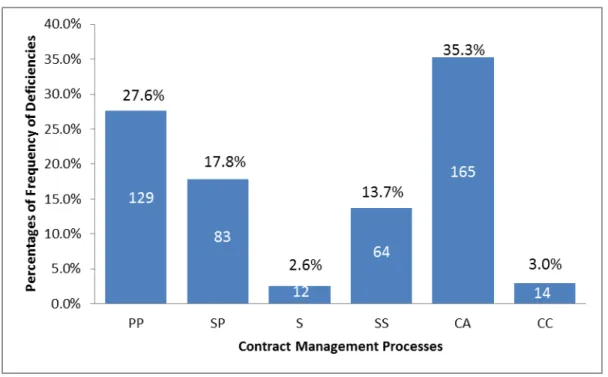
The purpose of this research was to assess internal controls within the DOD contract management processes. This assessment was conducted by analyzing reports from the DOD Inspector General, which noted deficiencies in the contract management processes and weaknesses in the internal control framework. The results of this analysis indicate that, overall, the highest numbers of deficiencies in the DOD were found in Procurement Planning, Solicitation Planning, and Contract Administration. In addition, overall, the highest numbers of weaknesses were found in Contract Environment, Contract Activities, and Risk Assessment. This research may help the DOD address identified problems within internal controls and contract management processes.
14. SUBJECT TERMS
Procurement, contracting, auditability, internal controls, contract management processes
15. NUMBER OF PAGES 103 16. PRICE CODE 17. SECURITY CLASSIFICATION 18. SECURITY CLASSIFICATION OF THIS 19. SECURITY CLASSIFICATION OF 20. LIMITATION OF ABSTRACT
ii
Approved for public release; distribution is unlimited
AN ANALYSIS OF INTERNAL CONTROLS FOR DOD CONTRACT MANAGEMENT
Daisuke Hidaka, Lieutenant Commander, Japan Maritime Self Defense Force Jared L. Owen, Captain, United States Army
Submitted in partial fulfillment of the requirements for the degree of
MASTER OF BUSINESS ADMINISTRATION
from the
NAVAL POSTGRADUATE SCHOOL December 2015
Authors: Daisuke Hidaka
Jared L. Owen
Approved by: Dr. Juanita M. Rendon, Lead Advisor
Dr. Rene G. Rendon, Support Advisor
iv
AN ANALYSIS OF INTERNAL CONTROLS FOR DOD CONTRACT
MANAGEMENT
ABSTRACT
According to a 2010 report, the Department of Defense (DOD) spends over $300 billion each year on contracts to sustain the organization as an operational military force. Since 1992, the Government Accountability Office (GAO) has identified contract management within the DOD as an area for high risk in fraud, waste, abuse, and mismanagement, and the DOD has not provided enough assurance that they are using sound practices in procurement. Failures to meet objectives in cost, schedule, and performance have led to cost overruns, reduced buying power, and a reduction in capabilities throughout contract administration processes.
The purpose of this research was to assess internal controls within the DOD contract management processes. This assessment was conducted by analyzing reports from the DOD Inspector General, which noted deficiencies in the contract management processes and weaknesses in the internal control framework. The results of this analysis indicate that, overall, the highest numbers of deficiencies in the DOD were found in Procurement Planning, Solicitation Planning, and Contract Administration. In addition, overall, the highest numbers of weaknesses were found in Contract Environment, Contract Activities, and Risk Assessment. This research may help the DOD address identified problems within internal controls and contract management processes.
vi
TABLE OF CONTENTS
I. INTRODUCTION...1 A. BACKGROUND ...1 B. PURPOSE OF RESEARCH ...2 C. RESEARCH QUESTIONS ...2 D. METHODOLOGY ...2E. BENEFITS AND LIMITATIONS...3
F. ORGANIZATION OF REPORT ...3
G. SUMMARY ...4
II. LITERATURE REVIEW ...5
A. INTRODUCTION...5
B. DEPARTMENT OF DEFENSE CONTRACTING ENVIRONMENT ...5
1. Impact ...6
2. Problems ...6
C. DEPARTMENT OF DEFENSE INITIATIVES ...8
D. AUDITABILITY THEORY ...10
1. Competent People ...11
2. Capable Processes ...12
3. Effective Internal Controls...12
E. CONTRACT MANAGEMENT PROCESSES ...12
1. Procurement Planning ...13
a. Determining and Defining the Procurement Requirement ...14
b. Conducting Market Research ...15
c. Developing Requirements Documents ...15
2. Solicitation Planning ...16
a. Determining the Appropriate Procurement Method ...17
b. Selecting the Appropriate Contract Type ...20
c. Establishing Evaluation Criteria ...21
3. Solicitation ...22
a. Pre-Proposal Conference ...22
b. Advertising Requirements ...23
4. Source Selection ...23
a. Source Selection Organization ...24
b. Evaluating Proposals ...24
c. Clarifications, Communications, Discussions, and Revisions ...25
5. Contract Administration ...26
viii
6. Contract Closeout ...28
a. Successful Completion ...28
b. Termination ...28
F. INTERNAL CONTROL COMPONENTS...29
1. Key Concepts of COSO’s Internal Control Framework ...30
2. Objectives of COSO’s Internal Control Framework ...30
a. Operational Objectives ...30
b. Reporting Objectives ...31
c. Compliance Objectives ...31
3. Five COSO Internal Control Components ...31
a. Control Environment ...32
b. Risk Assessment ...32
c. Control Activities ...32
d. Information and Communication ...33
e. Monitoring Activities...33
4. Fundamental Principles Supporting Internal Control Components ...34
a. Principle 1: Demonstrates Integrity and Ethical Values ...35
b. Principle 2: Exercises Oversight Responsibility ...36
c. Principle 3: Establishes Structure, Authority, and Responsibility ...36
d. Principle 4: Demonstrates Commitment to Competence ...36
e. Principle 5: Enforces Accountability ...37
f. Principle 6: Specifies Suitable Objectives ...37
g. Principle 7: Identifies and Analyzes Risk ...37
h. Principle 8: Assesses Fraud Risk ...37
i. Principle 9: Identifies and Analyzes Significant Change...38
j. Principle 10: Selects and Develops Control Activities ...38
k. Principle 11: Selects and Develops General Control Over Technology ...38
l. Principle 12: Deploys through Policies and Procedures ...38
m. Principle 13: Uses Relevant Information ...39
n. Principle 14: Communicates Internally ...39
o. Principle 15: Communicates Externally ...39
p. Principle 16: Conducts Ongoing and/or Separate Evaluations ...40
q. Principle 17: Evaluates and Communicates Deficiencies ...40
G. SUMMARY ...40
III. METHODOLOGY ...43
A. INTRODUCTION...43
B. SOURCE OF DATA COLLECTED ...43
C. DEVELOPMENT OF ASSESSMENT TOOL ...43
E. SUMMARY ...44
IV. FINDINGS, IMPLICATIONS, AND RECOMMENDATIONS ...45
A. INTRODUCTION...45
B. FINDINGS ...45
1. Contract Management Processes Deficiencies ...45
2. Internal Controls Weaknesses ...53
3. Correlation between Contract Management Deficiencies and Internal Controls Weaknesses ...60
C. IMPLICATIONS OF FINDINGS ...61
1. Contract Management Processes ...61
2. Internal Controls ...63
D. RECOMMENDATIONS ...64
1. Introduction ...64
2. Contract Management ...64
a. Improving or Adding More Training ...64
b. Practice Policies and Procedures Properly ...65
c. Proper Oversight of Contractors ...66
3. Internal Controls ...67
a. Additional Policy and Guidance ...67
b. Practice Policies and Procedures Properly ...67
c. Strengthen Oversight ...67
E. SUMMARY ...68
V. SUMMARY, CONCLUSIONS, AND AREAS FOR FURTHER RESEARCH ..69
A. SUMMARY ...69
B. CONCLUSION ...69
1. Research Questions ...69
a. Which Contract Management Processes Are Related to the DODIG Reported Deficiencies? ...69
b. Which internal control components are related to the DODIG-reported weaknesses? ...70
c. What patterns or consistencies does the data from the DOD Inspector General reports show regarding the deficiencies in contract management processes and weaknesses in internal control components? ...70
2. Areas for Further Research ...70
APPENDIX. DODIG REPORTS USED IN DATA COLLECTION ...73
x
LIST OF FIGURES
Figure 1. Overall DAW (Military & Civilian) Retirement Eligibility
Distribution—FY12Q1 (12-31-11) ...7
Figure 2. Auditability Triangle ...11
Figure 3. Contract Management Processes ...13
Figure 4. Comparison of Contracting Methods ...18
Figure 5. Contract Types and Risk ...21
Figure 6. COSO’s 17 Fundamental Principles ...35
Figure 7. Overall Contract Management Processes Percentages of Frequency of Deficiencies ...51
Figure 8. Overall Contract Management Key Practice Activities Percentages of Frequency of Deficiencies ...52
Figure 9. Contract Management Key Practice Activities Percentages of Frequency of Deficiencies by DOD Departments ...53
Figure 10. Overall Internal Control Components Percentages of Frequency of Weaknesses ...58
Figure 11. Overall Internal Control Components and Related 17 Principles Percentages of Frequency of Weaknesses ...59
Figure 12. 17 Principles Percentages of Frequency of Weaknesses by DOD Departments ...60
xii
LIST OF TABLES
Table 1. Contract Management Processes Number of Deficiencies by DOD
Departments ...46
Table 2. Contract Management Processes Number of Deficiencies Shown as
Percentages by DOD Departments ...48
Table 3. Internal Control Components Number of Weaknesses by DOD
Departments ...54
Table 4. Internal Control Components Percentages of Weaknesses by DOD
Departments ...56 Table 5. Correlation between Contract Management Deficiencies and Internal
xiv
LIST OF ACRONYMS AND ABBREVIATIONS
BCA Business Case Analysis
BPA Blanket Purchase Agreement
CICA Competition in Contracting Act
CPAF Cost Plus Fixed Fee
CPIF Cost Plus Incentive Fee
CPPC Cost Plus a Percentage of Cost
CR Cost Reimbursement
CS Cost Sharing
COR Contracting Officer Representative
COTR Contracting Officer Technical Representative
COSO Committee of Sponsoring Organizations
DAU Defense Acquisition University
DAWDF Defense Acquisition Workforce Development Fund
DAWSSB Defense Acquisition Workforce Senior Steering Board
DAWIA Defense Acquisition Workforce Improvement Act
DCAA Defense Contract Audit Agency
DCMA Defense Contract Management Agency
DFARS Defense Federal Acquisition Regulation Supplement
DOD Department of Defense
DODIG Department of Defense Inspector General
EESA Emergency Economic Stabilization Act
eSRS Electronic Subcontracting Reporting System
EVM Earned Value Management
FAPIIS Federal Awardee Performance and Integrity Information System
FAR Federal Acquisition Regulation
FARA Federal Acquisition Reform Act
xvi
FP/EPA Fixed Price with Economic Adjustment
FY Fiscal Year
GAO General Accountability Office
GPC Government Purchase Card
GPE Government Point of Entry
GSA General Services Administration
IDIQ Indefinite Delivery Indefinite Quantity
IFB Invitation for Bid
IFN Invitation for Negotiations
IPT Integrated Product Team
ITB Invitation to Bid
LPTA Lowest Price Technically Acceptable
MIRR Material Inspection and Receiving Report
NDAA National Defense Authorization Act
OCO Overseas Contingency Operation
OGE Office of Government Ethics
OPM Office of Personnel Management
OMB Office of Management and Budget
OUSD[AT&L] Office of the Under Secretary of Defense for Acquisition, Technology, and Logistics
PPIRS Past Performance Information Retrieval System
PEO Program Executive Office
PWS Performance Work Statement
QAE Quality Assurance Evaluators
QAR Quality Assurance Representative
R&D Research and Development
RDECOM Research, Development, and Engineering Command
RFP Request for Proposal
SAA Source Selection Authority
SAT Simplified Acquisition Threshold
SAP Simplified Acquisition Procedures
SE System Engineering
SECM System Engineering Career Model
SERC System Engineering Research
SoS System of System
SOO Statement of Objectives
SOW Statement of Work
STEM Science, Technology, Engineering, Math
SSA Source Selection Authority
SSAC Source Selection Advisory Council
SSEB Source Selection Evaluation Board
SST Source Selection Team
xviii
ACKNOWLEDGMENTS
This research paper has benefited from data made available via publically accessible DODIG reports and by the individuals and the divisions involved in internal controls and contract management for the Department of Defense.
To Dr. Juanita Rendon and Dr. Rene G. Rendon, we owe much gratitude. Both have, above all, influenced our thinking, and without their faith and confidence in our abilities, our research paper would not have been successful. They both suggested that we critique our sources for the most clear and reliable sources available. We have examined many documents and collections of data. We have tried to be fair in evaluating all of our documents and the data we collected. We relied on experienced professionals such as Drs. Rendon and Rendon when data became unclear. We are grateful to these professors for the long hours they spent in helping us clarify the analysis we conducted in our assessment of internal controls within the Department of Defense contract management.
xx
I.
INTRODUCTION
A. BACKGROUND
The Department of Defense (DOD) spends over $300 billion dollars each year on contracts to sustain the organization as an operational military force (Government Accountability Office [GAO], 2015). The increase in contract actions in the last decade has led to increased problems in contract management demonstrating the need for greater improvements in these areas (Department of Defense Office of Inspector General [DODIG], 2009). Since 1992, the GAO (2015) has identified contract management within the DOD as an area for high risk in fraud, waste, abuse, and mismanagement. The GAO reports that the DOD has not provided enough assurance that they are using sound practices in procurement. The GAO has also identified that many DOD programs are failing to meet objectives in cost, schedule, and performance (2015). These failures have led to an increase in cost overruns, reduced buying power, and a reduction in capabilities. The DODIG (2009) audit reports also identified many deficiencies in the DOD acquisition and contract administration processes. These problems necessitate a response from the DOD to Congress and the American people.
The DOD acknowledges these concerns and has attempted to improve its competencies by increasing the size of the acquisition force and by improving procurement training for its workforce. For example, from 2008 to 2014, the DOD increased its acquisition workforce size from about 126,000 to 150,000 (Government Accountability Office [GAO], 2015). Also, the Defense Contract Audit Agency (DCAA) hired 500 more auditors in 2010 with plans to hire 1,000 additional auditors by 2015 (Office of Management and Budget [OMB], 2015). The DOD has further conducted competency assessments of the acquisition workforce to identify the skills and capabilities needed to fix the issues in contract management (GAO, 2015).
ensures integrity, accountability, and transparency. Auditability is highly dependent on competent people, capable processes, and effective internal controls (Rendon & Rendon, 2015). According to the DODIG (2009), many of the deficiencies in the DOD acquisition and contract management processes are a result of material internal control weaknesses. In order to reduce weaknesses and ensure auditability in contract management, the DOD needs to have effective internal controls (Rendon & Rendon, 2015).
B. PURPOSE OF RESEARCH
The purpose of this research is to assess internal controls within the Department of Defense contract management. This assessment was conducted by analyzing DODIG-reported deficiencies in the contract management processes with relation to weaknesses found in the internal control framework.
C. RESEARCH QUESTIONS
This research addresses the following research questions:
• Which contract management processes are related to the DODIG-reported deficiencies?
• Which internal controls components are related to the DODIG-reported weaknesses?
• What patterns or consistencies does the data from the DODIG reports show regarding the deficiencies in contract management processes and weaknesses in internal control components?
D. METHODOLOGY
This research includes a review of recent literature regarding internal controls and contract management, specifically on the integration of internal controls in contract management. The literature review consists of government reports, which describe the importance of contracting within the DOD, outline contract management processes, and explain internal control components. Additionally, literature was reviewed regarding auditability theory and the general characteristics of the Committee of Sponsoring Organization of the Treadway Commission (COSO) internal control framework. The
literature review is followed by an analysis of the DODIG reports to identify weaknesses in internal controls within contract management processes. Finally, this report concludes with recommendations for improvements in the DOD’s contract management processes and internal controls and identifies areas for further research.
E. BENEFITS AND LIMITATIONS
This research assesses deficiencies in the DOD’s procurement processes and weaknesses in the internal controls based on the analysis of the DODIG’s reported deficiencies in contract management. One aspect of this analysis describes the relationship between the DODIG’s reported contracting deficiencies, internal controls, and contract management processes. The results will provide the DOD with recommendations on how to improve internal controls and contract management processes.
This research is limited to collecting and analyzing the DODIG’s reports identifying deficiencies in DOD contract management. Another limitation is that the DODIG’s reports used in this research are from 2003 to 2010.
F. ORGANIZATION OF REPORT
This research is composed of five chapters, including this introduction chapter. Chapter II consists of a literature review of the DOD’s contracting environment and current problems, DOD initiatives to address those current problems, auditability theory, contract management processes, and internal control components. Building on this literature review, Chapter III provides the methodology for this research, examines the source of data, discusses the development of the assessment tool, and describes how data was analyzed. Chapter IV provides the research findings, the analysis of the findings, and the implications of the findings. This chapter also provides recommendations for how the DOD can improve contract management processes and internal controls. Chapter V consists of a summary of the research, the conclusions, and areas for further research.
G. SUMMARY
This chapter provided an introduction and background to this research. In this chapter, the purpose of the research, the research questions, and the methodology used in this research were discussed. Additionally, this chapter provided the benefits and limitations of the research as well as the organization of this report. The next chapter provides the foundation for the research by presenting a literature review that covers the DOD contracting environment and its current problems, DOD initiatives to address those current problems, auditability theory, contract management processes, and internal control components.
II.
LITERATURE REVIEW
A. INTRODUCTION
This literature review explains the DOD contracting environment, its current problems, and the DOD’s initiatives in response to these problems. It also covers auditability theory, contract management processes, and internal control components. This review shapes the essential organization of information for this research and provides a baseline for following chapters.
B. DEPARTMENT OF DEFENSE CONTRACTING ENVIRONMENT
DOD contracting comprised 8% of all federal government spending in 2015. The DOD’s budget has increased from $190 billion in fiscal year (FY) 2000 to the current $290 billion in FY 2015 (Schwartz, Ginsberg, & Sargent, 2015). DOD contracting in FY 2014 was comprised of 10% research and development (R&D) contract obligations, 45% of services contract obligations, and 45% of goods and supplies contract obligations (Schwartz, Ginsberg, & Sargent, 2015). The government must ensure they have the appropriate workforce and contract management processes to manage these areas mentioned effectively and must provide verification that the citizen taxpayer is receiving sufficient quality and quantity for contracted services and supplies (Schwartz, Ginsberg, & Sargent, 2015). Because of acquisition workforce issues, contracting techniques and processes non-compliance, and failure to adhere to policy and statutory requirements in the DOD, contracting efforts continue to reflect a high risk. Some complex issues in the contracting environment include having the right number of people and the appropriate resources to reduce risk, the use of various methods to monitor progress, and the implementation of corrective actions needed to reduce risk (GAO, 2015). The acknowledged GAO issues have resulted in the DOD applying several initiatives to help mitigate the risk.
1. Impact
The contracting impact to the DOD is important to have oversight on because of high amount of contracts awarded for goods and services. In FY 2015, the DOD disbursed over $200 billion in contracts awarded with 1,335,179 transactions (OMB, 2015). The DOD as a whole spent $560.4 billion total, including $64.2 billion in funds for overseas contingency operations (OCO) (OUSD [Comptroller], 2015). The immense number of dollars spent and transactions processed is problematic to the acquisition workforce because the workforce has been inadequate in quantity and skill level of people (GAO, 2015).
2. Problems
Some of the problems with DOD contracting have been in acquiring and retaining the proper acquisition workforce, complying with contract management policy, and providing advanced training for personnel. These problems have led the GAO to continue to assess contract management as a “high risk” since 1992 (GAO, 2015).
The first problem is acquiring and retaining the proper acquisition workforce. To properly manage the acquisition of goods and services, the DOD will have to address the proper workload ratio to contract transactions processed, as well as attrition due to retirement (Defense Acquisition University [DAU], 2010). Denis states, “The real problem is that the public contracting workforce is insufficient in both numbers and training. The number of contracting professionals has not kept the pace with contracting dollars, and public agencies have not sufficiently invested in the training of their contracting staffs” (Denis, 2009, p. 62). This problem is partially due to budget constraints and people retiring.
Leadership in the DOD acknowledged the workforce problem in a DOD Strategic Capital Plan report, which cited increased contract actions from $138 billion in 2001 to $384 billion in 2009 (Defense Acquisitions University, 2010). Simultaneously, the workforce decreased by 2.6%. The DOD Strategic Capital Plan updated report of 2010 also explains that 16% of the civilian acquisition workforce was eligible to retire in 2009 with 37.5% becoming eligible to retire by 2020 (Defense Acquisitions University, 2010).
Rendon and Snider (2008) state, “The pending departure of the Baby Boomer generation contracting workforce will require the DOD to continue to take action to recruit, retain, and train the contracting workforce.” Figure 1 illustrates the impact of an aging workforce.
Figure 1. Overall DAW (Military & Civilian) Retirement Eligibility Distribution—FY12Q1 (12-31-11)
Source: Defense Acquisition University (DAU). (2012). Defense Acquisition Workforce Update: 2012 Acq Demo Conference. Retrieved from https://dap.dau.mil/ workforce/Documents/AcqDemo/Keynote%20Address%20-%20AcqDemo%20HCI% 20brief.pdf
The second problem is getting the acquisition workforce to comply with contracting policies within each of the contract management processes, which are procurement planning, solicitation planning, solicitation, source selection, contract administration, and contract closeout (Rendon & Snider, 2008, p.164). A lack of oversight in contract management’s compliance with policy creates a loss of confidence
The third problem, according to the GAO, is that the DOD needs to adhere to statutory requirements, such as assessments of the critical skills and competencies of its workforce. The DOD needs to ensure that they have the correct number of people with appropriate skills and capacities, sufficient tools, and adequate data to make informed acquisition decisions. These factors are critical for achieving the warfighters’ missions. DOD leadership involvement is essential to building on the progress made in addressing these ongoing problems (DAU, 2010).
C. DEPARTMENT OF DEFENSE INITIATIVES
The DOD has responded with various initiatives including making improvements in the acquisition workforce by hiring more personnel, adding new policies and guidance, re-emphasizing compliance with policy, and adding supplementary or advanced acquisition training for personnel. The defense acquisition workforce initiatives are recruiting, hiring, training, developing, and retaining the workforce. The DOD resolved some of the problems with the acquisition workforce by increasing the number and the quality of their personnel. For example, in 2008, the DOD workforce consisted of 126,000 personnel, processing 1,608,959 contract transactions (DAU, 2010). In 2014, the workforce had expanded to 150,000 personnel, processing 1,361,325 contract transactions (DAU, 2010).
In 2005, the undersecretary of defense for acquisition, technology, and logistics (USD[AT&L]) helped form a Defense Science Board Task Force (DSBTF) led by Dr. William Schneider. The DSBTF reviewed oversight of management and acquisition activities and assessed policies to recommend changes to internal controls within the DOD. The DSBTF advised the DOD to hire more auditors and conduct more audits (USD[AT&L], 2005). The National Defense Authorization Act (NDAA) of 2008 section 852 empowered the workforce and improved its acquisition support with a Defense Acquisition Workforce Development Fund (DAWDF), which was established by Title 10 U.S.C. 1705. In response to these DSBTF initiatives, the DOD hired an average of 200 to 300 auditors from 2005 to 2009, and hired 500 more auditors in 2010 to assist with
massive amounts of contract actions. The DOD proposed plans to hire 1000 more auditors by 2015 (OMB, 2015).
In 2009, in the USD(AT&L), the Honorable Ashton B. Carter re-established the Defense Acquisition Workforce Senior Steering Board (DAWSSB) to help advance acquisition workforce initiatives. The Office of Personnel Management (OPM) implemented a phased retirement plan in 2014 that allowed full-time employees to work a part-time schedule while beginning to draw benefits. The hiring initiatives appeared to be on track as of 2010, according to USD(AT&L) Carter, who said, “The Department must act now on its strategy to increase its acquisition management, technical and business capability, and capacity to manage and oversee the acquisition process from start to finish” (DAU, 2010, p. 3). In this quote, Carter is discussing tools used by the acquisition workforce, such as contract management policies and DAWDF funding. The Army, Navy, and Air Force have acted in response to the USD(AT&L) order by continuing to use the DAWDF section 852 to empower their acquisition workforce by closing the workforce gaps and adjusting human capital strategies.
The DOD’s Program Executive Officers (PEOs) are constantly developing new methods to help train their workforce. In addition, PEOs are using resources offered by the DOD, academia, and industry to enhance the workforce’s knowledge. For example, the Army has partnered with the Naval Postgraduate School to create a master of science in systems engineering degree and a master of business administration in acquisition and contract management. The Army’s Research, Development, and Engineering Command (RDECOM) has established a supportive research and development agreement with the Systems Engineering Research Center (SERC) to develop new methods and approaches for complex System of System (SoS) problems. RDECOM and SERC are also working with DAU to enhance courses such as SYS 350, Systems Engineering (SE) technical leadership course. The Navy is using an Acquisition Workforce Strategic Plan to grow the workforce by 16% from 2010 to 2015. The Navy has a close relationship with the
Bright Horizons, which is a science, technology, engineering, and math (STEM) strategic roadmap program. The Air Force also created a career path tool to help manage and assist airmen in their career paths (DOD [DT&E], 2012)
Another initiative was to improve the Defense Acquisition Workforce Improvement Act (DAWIA) certification levels in the workforce by positions. DAWIA provides for the proficiency levels of personnel through mandatory requirements in education, training, and experience. In 2009, only 59% of the workforce met the DAWIA certification requirements. By 2014, the workforce was able to meet 79% of the DAWIA certification requirements (DAU, 2015b). Additionally, from 2009 to 2014, there was a 33% increase in the acquisition workforce’s ability to meet or exceed DAWIA certification requirements, demonstrating the efficacy of this initiative (DAU, 2015b).
The Honorable Frank Kendall, USD(AT&L), also helped try to address educating the acquisition workforce by launching advanced certification criteria with his memorandum Better Buying Power 3.0 (OUSD[AT&L], 2014). During 2010 to 2015, the Secretary of Defense has added supplementary or advanced acquisition training for personnel by expanding contracting officer representative (COR) training and enhancing training for contract specialists, program managers, systems engineers, and pricing personnel. In addition, the Secretary of Defense has implemented a new curriculum for high impact and emerging acquisition needs and new certification structures and training for the “Big A” workforce (DAU, 2010). The DOD’s response to its workforce challenges was hiring additional workforce, providing additional training and guidance, and establishing higher certification level requirements, but what is missing in the response is the focus on internal controls. The next section includes a discussion of auditability theory and the importance of internal controls in assuring auditability in organizations.
D. AUDITABILITY THEORY
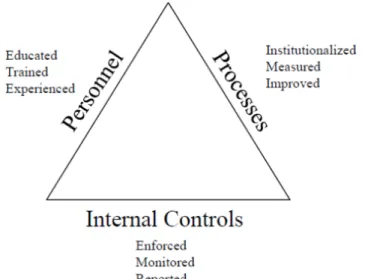
The DOD needs to be concerned with auditability because auditability is essential for contract management organizations to ensure integrity, accountability, and transparency. The theory of auditability encompasses the following three aspects of
governance, which include competent personnel, capable processes, and effective internal controls. Figure 2 illustrates the relationship between these three aspects of governance. Hence, the DOD desires to improve the function of a competent procurement workforce, capable procurement processes, and effective internal controls to achieve its contract management goals and objectives (Rendon & Rendon, 2015). The three aspects of auditability are discussed in the following subsection.
Figure 2. Auditability Triangle
Source: Rendon, R. G., & Rendon, J. M. (2015). Auditability in public procurement: an analysis of internal controls and fraud vulnerability. Manuscript submitted for conference proceedings.
1. Competent People
Auditability relates to the competency of personnel engaged in the contract management functions of the organization. It encompasses the education, training, and experience requirements of team members for each function in the organization (Rendon
is qualified to perform his or her particular function. When Carter was the undersecretary of defense (AT&L), he said, “Workforce size is important, but quality is paramount” (DAU, 2015b).
2. Capable Processes
Auditability also relates to the capable processes of an organization, specifically with their contract management activities. As discussed previously, contract management has six processes, which include procurement planning, solicitation planning, solicitation, source selection, contract administration, and contract closeout (Rendon and Snider, 2008, p.164). The capabilities of these processes are measured with regards to processes that are “fully-established, institutionalized, mandated, integrated with other organizational processes, periodically measured, and continuously improved” (Rendon & Rendon, 2015, p. 7).
3. Effective Internal Controls
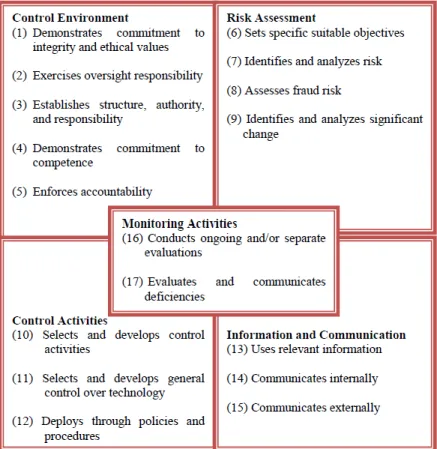
The internal controls aspect regarding auditability relates to implementing effective internal controls in organizations in order to ensure compliance with laws and regulations, ensure activities are monitored, and ensure material weaknesses are reported (Rendon & Rendon, 2015). Internal controls are typically discussed in regards to the five internal control components established by the Committee of Sponsoring Organizations of the Treadway Commission (COSO). In 2013, the COSO established 17 principles associated with each of the five internal control components. The next section further discusses details about the contract management processes and internal controls.
E. CONTRACT MANAGEMENT PROCESSES
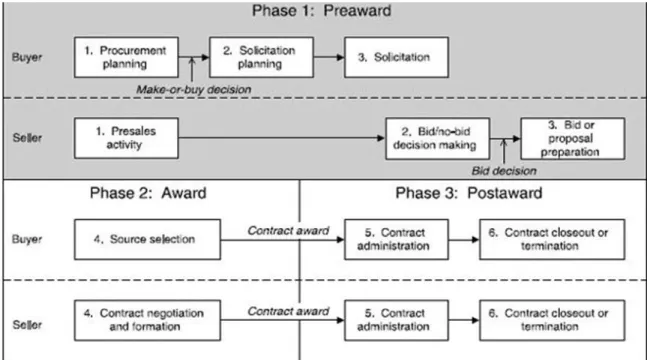
Contract management processes from the government perspective are divided into three main phases called the pre-award, award, and post award. These phases are then sub-divided into the six contract management processes, which include procurement planning, solicitation planning, solicitation, source selection, contract administration, and contract closeout (Garrett, 2010, p. 20). The pre-award phase consists of procurement planning, solicitation planning, and solicitation, wherein the government decides to make
or buy the product or service, and the seller decides to bid or not bid on the project. The next phase is the award phase, which consists of source selection, wherein the government awards the contract to the contractor in a well-defined relationship based on a written agreement, which details the rights and responsibilities of each party. The last phase is the post-award phase, in which the responsibilities of contract administration and contract closeout are conducted. Figure 3 outlines the three phases and six processes of contract management visually, but the importance of these six processes are described in more specificity in later sections.
Figure 3. Contract Management Processes
Source: Garrett, G. A. (2010). World class contracting (5th ed.). Riverwoods, IL: CCH, p. 80.
1. Procurement Planning
The contracting activity starts with the procurement planning phase as seen in Figure 3. The procurement planning phase is part of the pre-award phase and is an
defining the procurement requirement, conducting market research, and developing requirements documents (Garrett, 2010, p. 80). Garrett summarizes the first process:
Procurement planning is the process of identifying which business needs can be best met by procuring products or services outside the organization. This process involves determining whether to procure, how to procure, what to procure, how much to procure, and when to procure. (Garrett, 2010, p. 81)
To conduct procurement planning appropriately, the government first defines the requirement, then conducts market research, and finally develops requirements documents to ensure the products or services will achieve quality, cost, schedule, and performance outcomes.
a. Determining and Defining the Procurement Requirement
In procurement planning, the first step in planning is defining what is required and developing the acquisition plan. The first question to address is whether the government is looking to purchase supplies or services. The customers or end users must decide what their requirements are in order to purchase the correct supplies or services. The customers should also be involved in the procurement planning process, and they should be asking several questions that will help determine the right mechanism to use in the procurement of the requirements. According to Federal Acquisition Regulation (2015) Part 7, these questions include:
• Should the customer go with commercial or government resources for the required supplies and services?
• Does the customer want to outsource the requirement or accomplish it together with a contractor?
• Should the customer buy or lease a product?
• Has the government purchased similar products or services? • What is the timeline for the supplies or services needed?
• Is the supply or service the customer wants to buy inherently
The answers to these questions are based on the need of the organization to properly define the requirement and on the approval of key leadership and stakeholders (Chang, 2013). In most general acquisitions, the stakeholders are the customer’s organization, technical experts, key leadership, and the contracting officer within the originating activity. In larger acquisitions, stakeholders are appointed to an integrated product team (IPT) that includes some of the following personnel: a program manager, a contracting officer, a contracting officer representative, a technical lead, a technical support subject-matter expert, a financial officer, a legal officer, and personnel within the customer’s organization. The organization’s key leadership should ensure that the originating requester, the identified subject-matter experts, and the contracting officer understand the requirements to ensure that their mission is successful.
b. Conducting Market Research
Market research is determining who sells what the buyer requires, who else buys what the buyer requires, and how they buy it (Garrett, 2010)? Market research also helps determine if the capabilities to perform the effort are available commercially, non-developmentally, or by using government resources. The necessary extent of market research varies depending on several factors: urgency, complexity, dollar value, and past experience. The agency should determine if the requirement could be provided by competition or sole source during market research. Competition is also an important part of government contracting and is mandated according to the FAR Part 6. The contracting officer must ensure that the legitimate needs of the requirement are identified and evaluate the tradeoffs to acquire the item. Sources of market research are evaluated based on public information on the company, company feedback, and previous buying experience with the business. Understanding the requirements provides a foundation to determine what types of strategies to employ, the type of contracting methods to use, and exceptions that may apply to the procurement process.
documents become a part of the solicitation package. The solicitation package is usually developed by either an invitation for bid (IFB) or a request for proposal (RFP), depending on the selected procurement process. The FAR Part 11 prescribes which documents are mandated for use by law, but also allows for the use of existing or modified documents if it meets the needs of the agency. The requirements documents describe the desired outcomes of the supplies or services in the procurement process (Rendon & Snider, 2008). Different types of requirements documents are utilized based on the agencies’ specific requirements. A Performance Work Statement (PWS) is a performance-based document that explains the required results in well-defined, precise, and unbiased terms with measurable outcomes. A Statement of Objectives (SOO) is a document that is prepared by the government describing the required performance objectives. A Statement of Work (SOW) establishes and describes all non-specific requirements for the contractors work performance with the use of precise documents (DAU, 2015a). FAR Part 11 defines the order of precedence for requirements documents within the procurement process. The requirements documents order of precedence is stated as follows:
1. Documents mandated for use by law;
2. Performance-oriented documents (e.g., a PWS or SOO); 3. Detailed design-oriented documents;
4. Standards, specifications, and related publications issued by the Government outside the Defense or Federal series for non-repetitive acquisition of items. (FAR, 11.101)
2. Solicitation Planning
Solicitation planning is also part of the pre-award phase and comes after the completion of the procurement planning process. Solicitation planning utilizes the findings discovered from market research and the documents produced to complete the plan. Rendon and Snider (2008) state that solicitation planning is “the process of preparing the documents needed to support the solicitation. This process involves documenting program requirements and identifying potential sources” (Rendon & Snider, 2008, p. 167). The solicitation planning process includes determining the appropriate procurement method, selecting the appropriate contract type, and establishing evaluation
criteria. The evaluation criteria are then applied to selecting the successful awardee(s) (Rendon & Snider, 2008).
a. Determining the Appropriate Procurement Method
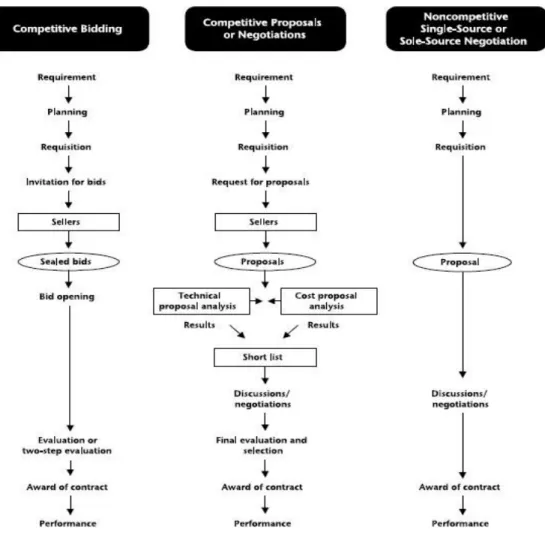
Determining the appropriate procurements method to use for a supply or service can seem challenging due to a myriad of reasons such as cost, availability of sources, complexity, and potential risk. The FAR is helpful to the buyer in that it establishes mandated ceiling thresholds. The Government Purchase Card (GPC) is the preferred method when using the micro-purchase method for procurement because it allows the customer the ability to get mission essential requirements acquired for simple buys. As of October 1, 2015, the current micro-purchase base threshold is $3,500 (FAR 2.101). FAR Part 13 Simplified Acquisition Procedures (SAP) details the procedures outlined within the Simplified Acquisition Threshold (SAT), which is not to exceed $150,000 (FAR 13.003(b)(1)). For acquisitions above the SAT, FAR Part 15.101 gives the acquisition team the ability to utilize best value continuum to determine the complexity and potential risk in procurement and allows them to choose a sealed bid and/or a negotiated procurement. Lowest Priced Technically Acceptable (LPTA) is commonly used for supplies or services that are easily defined and the price is the most influential consideration. The tradeoff process is appropriate when price is not the influential consideration and the requirement is more complex in nature with higher risk. The government must also decide how to compete the procurement requirements by assessing if they will award a contract based on full and open competition or under sole source (Garrett, 2010). Figure 4 outlines the competitive and non-competitive processes of awarding the contract with specific steps to help guide the contracting officer and team in developing the award of the contract.
Figure 4. Comparison of Contracting Methods
Source: Garrett, G. A. (2010). World class contracting (5th ed.). Riverwoods, IL: CCH, p. 76.
Public policy, specifically FAR 6.101, requires “that contracting officers shall promote and provide for full and open competition in soliciting offers and awarding Government contracts” (FAR 6.101, 2015). The Competition in Contracting Act of 1984 (CICA) mandates promoting competition in awarding government contracts, and it was re-emphasized by President Obama in a March 2009 memorandum on government contracting (Manuel, 2011). The CICA remains a foundation for competition 30 years later as it places efficiency in the agencies’ missions, helps to prevent fraud, and benefits the overall best public interest (Manuel, 2011).
Another important public policy is the Federal Acquisition Streamlining Act of 1994 (FASA) that allowed for a shift in preference from the acquisition of items developed specifically for the government to the acquisition of commercial items. The FASA promotes maximum use of commercial acquisition to meet the government’s requests in addition to allowing increased commercial market practices. Source selection must be made on the best value and not always the lowest price basis. The FASA’s preference for commercial items is included in FAR 1.102 (OUSD[AT&L], 2011). The FASA was then followed by the Federal Acquisition Reform Act of 1996 (FARA), which placed efficiency on fullfilling government requirements by amending the FAR to ensure full and open competition is implemented with the government’s best interest in mind (Manuel, 2011). In 2003, the Services Acquisition Reform Act (SARA) was passed allowing special types of contracts to be treated as commercial items in certain conditions.
From 2006 to 2009, a swinging pendulum effect took place in the DOD commercial world, tightening the policies that had once been encouraged. The DOD Authorization Act of 2006 became more restrictive in commercial acquisition procedures for major weapon systems in that it required the secretary of defense to determine whether a certain procurement would meet the definition of a commercial item, to determine that national security objectives would meet the criteria for purchase, and to give Congress a 30-day notice before purchase. In 2008, the National Defense Authorization Act limited terms for major weapon systems (DFARS 234.7002), and in 2009, it restricted commercial services “of a type” sold on the commercial market (Stockman, Ross, Bongiovi, & Sparks, 2011; FAR 15.403-1(c)(3)(ii)). However, the Emergency Economic Stabilization Act (EESA) of 2008 did authorize the Secretary of Treasury to use other than full and open competition for urgent and compelling circumstances (Manuel, 2011). Rendon and Snider (2008) also discuss the government’s accountability to public policy. However, not all public policy objectives allow for streamlining of acquisition processes to the government (Rendon and Snider, 2008). For
schedule, and performance in the long run instead of procuring from a foreign competitor.
b. Selecting the Appropriate Contract Type
Selecting the appropriate contract type is a critical step in the contract management process because it needs to provide flexibility in acquiring supplies or services. The contract team will decide which contract type and structure to use based on the requirement and the benefits to the government. Contract types include two broad categories, which are fixed-price and cost-reimbursement contracts according to FAR 16.101. Fixed-price contracts have a set price and are defined as a standard business pricing arrangement for contracts. The three types of fixed-price are firm-fixed price (FFP), fixed-price with economic adjustment (FP/EPA), and fixed-price incentive. Fixed price contracts are the preferred contract type for the government because they present the lowest risk and place a majority of risk on the contractor. Cost-reimbursement contracts, on the other hand, are used when the actual costs are unknown and the projects requirements might also be unknown. The six types of cost-reimbursement contracts are cost-sharing (CS), cost-reimbursement (CR), incentive fee (CPIF), cost-plus-award fee (CPAF), cost-plus-fixed fee (CPFF), and cost-plus-a-percentage-of-cost (CPPC). It should be noted that CPPC contracts are not allowed in the federal government. Cost-reimbursement contracts, in general, place much more risk on the government and less on the contractor, as the end product is less defined.
In addition, there are contract instruments that can be used to assist the government in getting the best value. Two of these contract instruments are indefinite delivery indefinite quantity (IDIQ) and blanket purchase agreements (BPA), which can provide the government flexibility on ordering recurring requirements. Figure 5 shows the contract types and risk involved with each type of contract when selecting the appropriate contract type (Garrett, 2010).
Figure 5. Contract Types and Risk
Source: Garrett, G. A. (2010). World class contracting (5th ed.). Riverwoods, IL: CCH, p. 127.
c. Establishing Evaluation Criteria
Establishing the evaluation criteria is a critical step in the procurement process because it signals what the most important areas to be graded are and presents a guideline to potential offerors in how the contract will be awarded. Evaluation criteria are important in the following three areas: cost or price evaluation, past performance evaluation, and technical evaluation (FAR 15.304–305). Criteria are usually discussed and defined in objective and threshold values and terms. The performance measures provide the basis for collecting the information to evaluate and answer the contracting team’s questions in regards to the requirements. The criteria should also be unambiguous and the objectives should be measurable either qualitatively or quantitatively (DAU, 2014). In a negotiated procurement, the evaluation strategy may decide if lowest price technically acceptable (LPTA) or tradeoff process is in the government’s best interest in the selection. In LPTA, the government achieves the best value with the lowest price technically acceptable offer (FAR 15.102-2(a)). The tradeoff process is where the government will consider an award to other than the lowest price offeror or the highest technically rated offeror (FAR 5.101-1(a)). The technical factors measure whether the
rankings along with supporting documentation for each evaluation factor (FAR 15.305(3)(ii)). Establishing appropriate evaluation criteria early in the procurement process allows the contracting team to choose the best value for the government and helps mitigate future protest. The Defense Acquisition University (DAU) BCA guidebook says that evaluation criteria are “the most critical and difficult components of a business case analysis (BCA)” (DAU, 2014). Finally, it is critical to identify and define the appropriate evaluation criteria in order to ensure that the proposals will be graded fairly and meets the government’s requirements.
3. Solicitation
Solicitation is also part of the pre-award phase and comes after the completion of the solicitation planning process. In the solicitation process, the contracting officer begins formal interaction with industry by holding a pre-proposal conference and advertising the requirement. The contracting officer can deliver the requirement to industry orally, physically, or electronically using the following procurement documents: the request for proposal (RFP), request for quote (RFQ), invitation for bids (IFB), invitation to bid (ITB), and invitation for negotiations (IFN) (Garrett, 2010). Regardless of the solicitation method, the government should ensure that a high-quality solicitation is released to ensure success. Garrett emphasizes this point: “Better solicitations from the buyer generally result in having better bids, quotes, proposals, or tenders submitted by the seller in a more timely manner. Poorly communicated solicitations often result in delays, confusion, fewer bids or proposals, and lower-quality responses” (Garrett, 2010, p. 24).
a. Pre-Proposal Conference
The pre-proposal conference is an important step in the solicitation process because it serves as a forum for the organization and the offerors to better understand the requirements and capabilities of the acquisition. Pre-proposal conferences provide an early exchange of information amongst industry, the program manager, and the contracting officer, to identify and resolve concerns regarding the acquisition. The main topics discussed with industry at these pre-proposal conferences is the strategy, proposed contract type, terms and conditions, planning schedules to determine the feasibility of
performing the requirements, and the suitability of the proposal instructions and evaluation criteria (FAR 15.201(c)). The pre-proposal conference allows industry the chance to ask questions and make suggestions that can help the government get the best products or services by making revisions or amendments to the solicitation (FAR 15.409 (c)(1)(2)).
b. Advertising Requirements
Advertising requirements are defined in FAR Part 5 and require contracting officers to disseminate the information on the proposed contract in multiple ways depending on the dollar amounts. For contract actions that exceed $25,000, the contracting officer must provide a synopsis of the proposed contract action, solicitations, and associated information using the government point of entry (GPE), which is usually broadcasted using a uniform resource locator (URL) at either the Federal Business
Opportunities (FedBizOpps; http://fedbizopps.gov) or the General Services
Administration (GSA; http://www.gsa.gov; FAR 5.101(1)). For contracts between $15,000 and $25,000, they can be distributed by displaying them in a public place or by any appropriate electronic means that can be accessed by the general public (FAR 5.101(2)(iii)). The purpose of the GPE is to ensure competition, to broaden industry participation to meet the government’s requirements, and to support socio-economic programs and disadvantaged businesses in helping them obtain contracts and subcontracts with the government. Potential contractors in this category might include small businesses, veteran-owned small businesses, service-disabled/veteran-owned small businesses, HUB-Zone small businesses, small disadvantaged businesses, and women-owned small businesses (FAR 5.002(a)(b)(c)).
4. Source Selection
Source selection is a part of the award phase and comes after the completion of the solicitation process. In the source selection process, the government acquisition team
selections are directed by the source selection organization that evaluates the proposals and communicates concerns with the offerors to clarify any misunderstandings about the proposal that might need to be revised.
a. Source Selection Organization
The DOD Source Selection Procedures describe the source selection organization as a cross-functional representative team that includes the Source Selection Authority (SSA), the Source Selection Team (SST), the procuring contracting officer (PCO), the Source Selection Evaluation Board (SSEB), the Source Selection Advisory Council (SSAC), the small business specialist, cost or pricing experts, and legal personnel (OUSD[AT&L], 2011b, p. 2). In the source selection organization, the contracting officer has the SSA authority for most contracts up to $100 million. The SST is a team that is required to perform a source selection when the contract exceeds $100 million. Due to the high-dollar amount, the SSAC also provides assistance to the SSA to ensure appropriate analysis of the evaluation results. The PCO is responsible for the administrative and contract sections of the acquisition, which also entails performing SSA duties. The SSA appoints the SSEB chair members and safeguards the source selection process as directed by FAR 3.104 and DFARS 203.104 (OUSD[AT&L], 2011b, p. 4). The SSEB is a group of government and non-government personnel (if approved) that have great experience in their fields. The SSEB is divided into three main teams, which include the technical team, the past performance team, and the cost and pricing team. These teams assess the proposals and the evaluation criteria to ensure technical feasibility, past performance, and cost price realism to achieve the government’s best value in the transaction. The SSAC also consists of senior individuals, team members, and a chair that provide written analysis with recommendations to the SSA as well as comparative analysis of the SSEB evaluation results.
b. Evaluating Proposals
Evaluating proposals is a process where the SSEB scores each proposal against the importance of the evaluation factors and sub-factors of the solicited RFP document. During this process, it is critical that the SSEB assess the appropriate criteria in their
selection, including cost or price evaluation, technical rating evaluation, past performance, and socio-economic factors. FAR 15.4 and the contract pricing guide state that “cost or price to the Government shall be evaluated in every source selection” (OUSD[AT&L], 2011b, p. 14). Depending on the complexity of the source selection, the level of analysis will fluctuate; however, no adjectival ratings shall be used in evaluating cost or price. The PCO will provide a sufficient description of the cost or price evaluation, and the analysis must determine that the cost or price evaluation was fair and reasonable. The PCO must also conduct cost realism analysis on all cost reimbursement contracts. Cost realism analysis should also be conducted on contracts that are competitive, on fixed-price incentive contracts, or on contracts that take extraordinary effort or risk (OUSD[AT&L], 2011b). The technical rating evaluation is a criteria tool that uses a technical risk rating assessment to identify weaknesses that could potentially impact costs, present schedule delays, create performance shortfalls, and necessitate additional government oversight. Past performance is a criteria tool that uses information obtained from sources available to the government, including Past Performance Information Retrieval System (PPIRS), Federal Awardee Performance and Integrity Information System (FAPIIS), Electronic Subcontract Reporting System (eSRS), and other interviews or databases. The last criteria, socio-economic factors evaluation is a tool that considers small business participation as one of the higher factors or sub-factors when evaluating the sole source selection (OUSD[AT&L], 2011b)
c. Clarifications, Communications, Discussions, and Revisions
In the source selection process, FAR Part 15 addresses clarifications, awards without discussions, communications and exchanges with offerors, establishment of the competitive range, limits on exchanges, and proposal revisions. The government uses clarifications when they expect to award a contract without discussions, but they can use rationale to conduct discussions if necessary. Clarifications are limited exchanges between the government and the offeror and allow the offeror to modify only minor
gives the offeror an opportunity to provide an explanation for adverse past behavior in order to facilitate the government’s evaluation process (FAR 15.306(b), 2015). Communications with offerors not in the competitive range provide the government a list of the most highly rated efficient proposals. The contracting officer will then send the offerors a notice that they are no longer eligible for the competitive range and will be eliminated for consideration of an award. The offerors may ask for a debriefing upon being eliminated to give them insight to the reason why they were eliminated (FAR 15.306(c), 2015). Communications with the offerors after the establishment of the competitive range allows the government to conduct negotiations on price, schedule, technical requirements, and contract type. They can also address deficiencies, weaknesses, or other terms of a proposed contract in order to obtain the best value (FAR 15.306(d), 2015). Negotiations that are conducted after the establishment of the competitive range are called discussions if they are in a competitive acquisition (FAR 15.306(d), 2015). The government is not allowed to exchange favors with one vendor, reveal offeror’s technical answers, disclose offeror’s intellectual property, disclose offeror’s price without permission, or disclose the results of the evaluation. The contracting officer may, however, inform offerors that their price is considered too high or too low (FAR 15.306(e), 2015). The contracting officer may request or allow proposed revisions to document agreements during negotiations (FAR 15.307(b), 2015).
5. Contract Administration
Contract administration is a part of the post-award phase and comes after the completion of the source selection process. In the source selection process, the government selects the source and awards the contract to the winners. Contract administration usually starts with a pre-performance conference and sets the stage for monitoring and measuring of the contractor’s performance. Contract modifications occur in this process if needed, and the process is finished when the payment or invoice process is completed (Rendon & Snider, 2008).
a. Monitoring and Measuring Performance
Monitoring and measuring a contractor’s performance is an important process in contract administration because it gives the government a way to ensure that the procurement objectives are met. During the contract performance period, the SOW becomes the primary document used by the contractor to perform the requirements. The government assigns administrative contracting officers, contracting officer representatives (COR), and evaluators to oversee the contractor’s performance. The government uses different evaluators depending on the type of contract such as: quality assurance evaluators (QAE), quality assurance representatives (QAR), or contracting officer’s technical representatives (COTR). Rendon and Snider (2008) state, “These technical representatives act as the contracting officer’s eyes and ears in terms of ensuring the contractor meets the technical requirements of the contract” (p. 177). Performance management becomes paramount because it allows the government to stay in compliance with cost, schedule, performance, and quality. One quantitative way that performance is measured is by utilizing earned value management (EVM). Earned value management is a tool that the government can use to help identify concerns and estimate the cost and completion date as a result of issues (Rendon & Snider, 2008).
b. Contract Modifications
Contract modifications are changes that are made after both parties sign the contract. FAR 43.103 discusses two types of contract modification changes, which are bilateral and unilateral. Bilateral modifications must be signed by both parties and are used to negotiate equitable adjustments, definitize letter contracts, and modify the terms of a contract. Unilateral modifications are signed only by the government and consist of administrative changes, changes in orders, changes authorized other than change clauses, and termination of notices (FAR 43.103, 2015).