UNIVERSITY OF KWAZULU-NATAL
IMPLEMENTATION OF HUMAN RESOURCE INFORMATION SYSTEMS- A
CASE STUDY OF CENTRAL BANK OF LESOTHO
By
Lerato M. Makaaka
202514609
Dissertation Submitted in partial fulfillment of the requirements for the degree
of
Masters of Commerce
College of Law and Management Studies
School of Management, Information Technology and Governance
Supervisor: DR. L N GOVENDER
i
DECLARATION
I, Lerato Margret Makaaka declare that
i) The research reported in this dissertation, except where otherwise indicated, is my original research.
ii) This dissertation has not been submitted for any degree or examination at the any other university.
iii) This dissertation does not contain other person data, picture graphs or other information, unless specifically acknowledged as being sourced from other persons.
iv) This dissertation does not contain other persons writing unless specifically acknowledged as being sourced from other researchers.
a) Their words have been re-written but the general information attributed to them has been referenced;
b) Where their extra words have been used, their writing has been placed inside quotation marks, and referenced.
v) This dissertation does not contain text, graphics or tables copied and pasted from the internet unless specifically acknowledged, and the source being detailed in the dissertation and referenced.
ii
ACKNOWLEDGEMENTS
I thank the Lord for walking beside me throughout my studies. The Lord is my strength and courage and I could not complete this research project without him by my side.
I acknowledge Mr. Tsikoane and the Abundant Life Church members for their prayers and their spiritual support throughout this research journey. I can do all things through Christ who gives me strength. I express my sincere gratitude to my supervisor Dr. L.N. Govender for his guidance and support until the end. It was not easy but you were always motivating me to do more to complete the study. I am highly appreciative and thankful.
My parents, you were the pillars of my strength and I am thankful for your support during this challenging phase. My sisters Lineo and Mpho, thank you for taking care of my son while I was away. My brother, Semethe I am very grateful because you were always available and ever willing to support my family even when you had your own challenges. May our almighty God bless you all and grant you all your wishes.
I wish to record my appreciation to the Management of the Central Bank of Lesotho for giving me this opportunity to further my studies. I take this opportunity to thank employees of the Bank who participated on the study. Your input has contributed immensely to the study’s aims and objectives. Dr. Motšoene and Mr. Hlompho Khatha, it was fantastic to work with you throughout my research. I am greatly indebted to Dr. Gill Hendry for the statistical support as well as assistance with the structure of the questionnaire and analysis of the data.
iii
DEDICATION
I dedicate this dissertation to the following persons
Firstly, to my son Bokang Makaaka. You are a gift from God that deserves the best. I therefore will strive to give you the best always.
Secondly, I dedicate this dissertation to my lovely parents. You have made this accomplishment very special!
iv
ABSTRACT
Human Resources Information System (HRIS) is a system that organisations use to reduce administrative costs, enhance service delivery, and increase productivity. The study focuses on the implementation of HRIS at the Central Bank of Lesotho (CBL). The Unified Theory of Acceptance and Use of Technology (UTAUT) model was adopted to determine factors that influence individual behaviour intentions to use HRIS at the CBL.
The study has used the case study approach to gather in depth knowledge about the factors that influence individual behaviour on the use of HRIS following the implementation of the system at CBL. The study adopted a quantitative approach to investigate the potential benefits of the UTAUT model at CBL to provide a useful data to measure user behaviour from a statistical point of view. The data was analysed to identify the factors that influence individual behavioural patterns on the usage of HRIS at the CBL. The study applied the probability sampling with the assumption that the population have equal chance of being selected to participate in the study. The motive for using probability sampling was to be able to generalise the results obtained to a larger group.
The population for CBL comprises of three hundred (300) employees. One hundred and sixty-nine (169) employees were selected randomly from all occupational levels at the Bank ranging from top managers to lower level of employees. The response rate was 76%. Statistical Package for Social Sciences (SPSS) software was used to interpret statistical data to give meaning to the data collected and to enable recommendations emanating from the study. The findings concluded that individual behaviour intention to use HRIS is highly influenced by all the constructs and the constructs were found to be best predictors of behaviour intention to use HRIS. The findings reflected that gender, age and experience had no significant effect on the relationship between the constructs as indicated by the original model. Management feels that it is important to understand employees’ behavioural changes to foster user acceptance of the system.
Keywords:
v
TABLE OF CONTENTS
DECLARATION ... i ACKNOWLEDGEMENTS ... ii DEDICATION ... iii ABSTRACT ... iv TABLE OF CONTENTS ... vLIST OF FIGURES ... viii
LIST OF TABLES ... ix
1. CHAPTER ONE: INTRODUCTION ... 1
1.1 Introduction ... 1
1.2 Context of the Study ... 2
1.3 Research Problem ... 4
1.4 Purpose of the Study ... 5
1.5 Significance of the Study ... 6
1.6 Research Methodology ... 6
1.7 Research Objectives ... 6
1.8 Research Questions ... 7
1.9 Hypotheses ... 7
1.10 Definition of Terms ... 7
1.11 Structure of the Dissertation ... 8
1.12 Conclusion ... 9
2. CHAPTER TWO: LITERATURE REVIEW ... 10
2.1 Introduction ... 10
2.2 Role of HRIS... 11
2.3 Implementation of HRIS in Organisations ... 12
2.4 HRIS at Human Resources Departments ... 13
2.5 Design of HRIS ... 14
2.6 HRIS CONFIGURATION ... 15
2.7 Types of HRIS ... 16
2.7.1 Electronic Data Processing (EDP) ... 16
2.7.2 Management Information System (MIS) ... 16
2.7.3 Decision Support System (DSS) ... 16
2.7.4 Employee Self-Service (ESS) ... 16
vi
2.8.1 Failures of HRIS ... 18
2.8.2 Key Success Factors of Implementing HRIS ... 21
2.9 Theoretical Framework ... 24
2.9.1 Application of UTAUT ... 28
2.10 Summary of the Chapter ... 31
3. CHAPTER THREE- RESEARCH METHODOLOGY ... 33
3.1 Introduction ... 33
3.2 Theoretical Paradigm ... 33
3.3 Research Approach ... 34
3.4 Research Design ... 35
3.5 Sampling Procedure ... 36
3.6 Data Collection Tools and Techniques ... 37
3.6.1 Questionnaire ... 37
3.7 Validity and Reliability ... 38
3.8 Data Analysis Procedure ... 38
3.8.1 Software Package ... 38 3.8.2 Descriptive Statistics ... 39 3.8.3 Inferential Statistics... 39 3.8.4 Chi-Square-Goodness-of-Fit-Test ... 40 3.8.5 Regression Analysis ... 40 3.8.6 ANOVA ... 41 3.8.7 Construct Analysis ... 41 3.9 Ethical Consideration ... 41 3.10 Limitations ... 42
3.11 Summary of the Chapter ... 42
4. CHAPTER FOUR-PRESENTATION OF RESULTS ... 44
4.1 Introduction ... 44
4.2 Overview of the Research Questionnaire ... 44
4.3 Data Management ... 45 4.4 Demographic Information ... 46 4.4.1 Gender ... 46 4.4.2 Age ... 47 4.4.3 Education ... 47 4.4.4 Position ... 47 4.4.5 Experience ... 47 4.5 Analysis of UTAUT ... 47
vii
4.5.1 Performance Expectancy (PE) ... 48
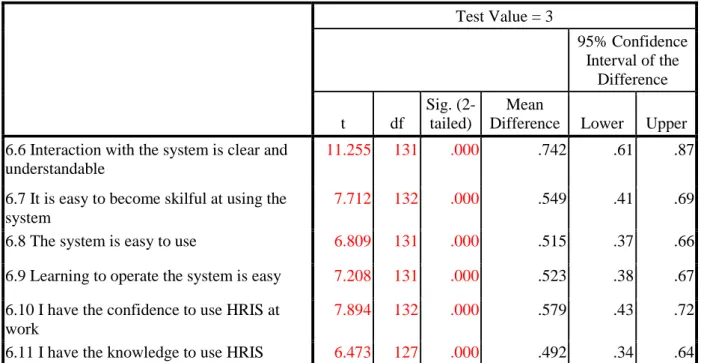
4.5.2 Effort Expectancy (EE) ... 50
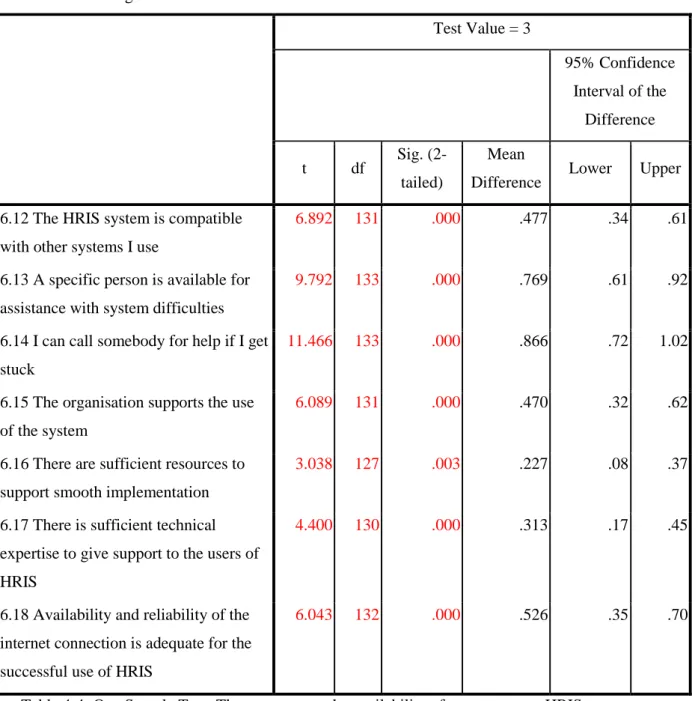
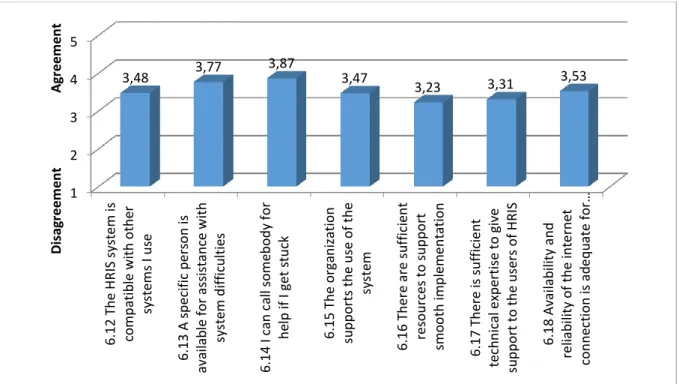
4.5.3 Facilitating Conditions ... 51
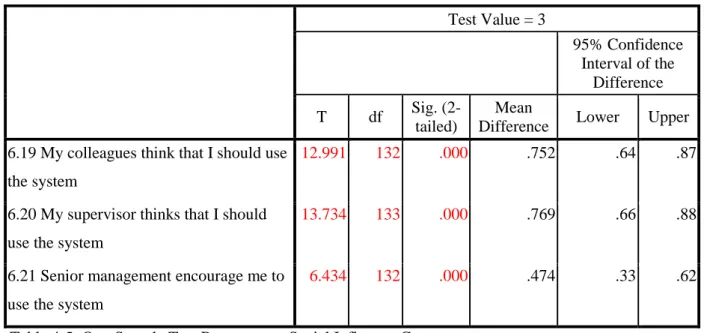
4.5.4 Social Influence... 53
4.6 Dependent Variables to the Model ... 54
4.6.1 Behaviour Intention... 54
4.6.2 Intention to Use ... 55
4.6.3 Training ... 56
4.6.4 Use Behaviour ... 57
4.7 Construct Analysis ... 58
4.7.1 Performance Expectancy (PE) ... 59
4.7.2 Effort Expectancy (EE) ... 59
4.7.3 Facilitating Conditions (FC) ... 59
4.7.4 Social Influence (SF) ... 59
4.7.5 Behaviour Intention (BI) ... 59
4.7.6 Usage Behaviour (UB) ... 60
4.7.7 Construct Relatedness ... 60
4.8 Objectives Analysis ... 60
4.8.1 The Effect of Independent Variable on the Dependent Variable ... 61
4.8.2 Moderating effect of Gender, Age, Experience, and Training ... 67
4.9 Summary of the Chapter ... 67
5. CHAPTER FIVE-DISCUSSION OF THE RESULTS ... 69
5.1 Introduction ... 69
5.2 Discussion of the Finding Based on Research Questions ... 69
5.3 Research Contribution ... 73
5.4 Recommendations for Future Research ... 73
5.5 Summary of the Chapter ... 74
6 CHAPTER SIX- CONCLUSION AND RECOMMENDATION ... 75
6.1 Introduction ... 75 6.2 Conclusion ... 75 6.3 Recommendations ... 76 7. REFERENCES ... 79 Appendix A ... 85 Appendix B ... 87
viii
LIST OF FIGURES
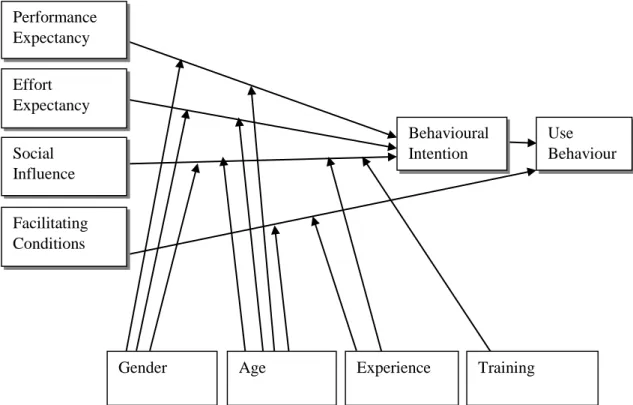
Figure 2- 1 Original Unified Theory of Acceptance and Use of Technology ... 25
Figure 2- 2 Proposed UTAUT Model ... 27
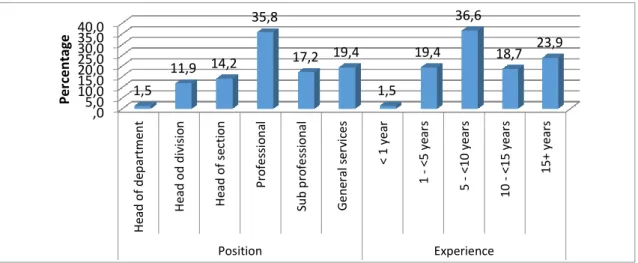
Figure 4 - 1 Demographic Information Summary ... 46
Figure 4 - 2 Position level and Working Experience Summary ... 46
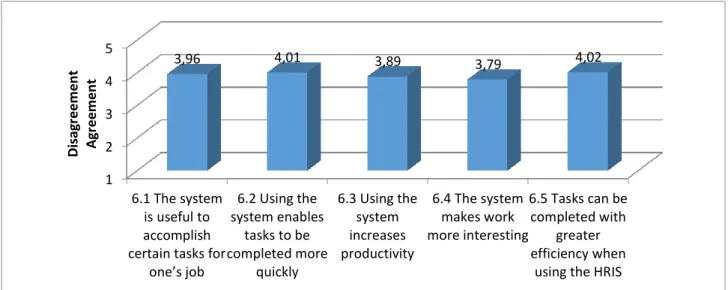
Figure 4 - 3: Performance Expectancy Mean Distribution ... 49
Figure 4 - 4 Effort Expectancy Mean Distribution ... 50
Figure 4 - 5: Facilitating Condition Mean Distribution. ... 52
Figure 4 - 6: Social Influence Mean Distribution. ... 53
Figure 4 - 7: Behaviour Intention - Mean Distribution ... 54
Figure 4 - 8: Intentions to Use Mean Distribution ... 55
Figure 4 - 9: Present Usage Behaviour Mean Distribution. ... 56
Figure 4 - 10 Training – Mean Distribution ... 57
Figure 4 - 11 Percentage of Usage of HRIS on Weekly Basis. ... 57
Figure 4 - 12 : Percentage of Usage in Years... 58
ix
LIST OF TABLES
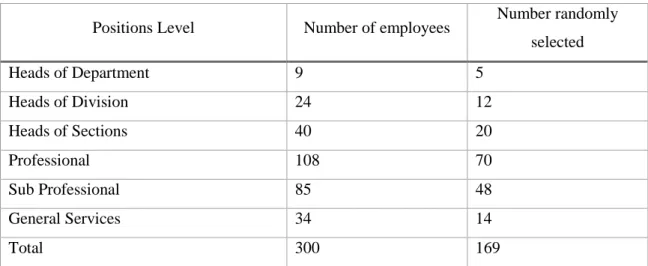
Table 4-1: Total number of employees at CBL. ... 45
Table 4-2: One-Sample Test- Response on Performance Expectancy Construct. ... 49
Table 4-3: One-Sample Test Response on Effort Expectancy Construct. ... 50
Table 4-4: One Sample Test- The response on the availability of support to use HRIS ... 51
Table 4-5: One-Sample Test Response on Social Influence Construct ... 53
Table 4-6: One Sample Test- Indicating the respondents’ intention to use HRIS. ... 54
Table 4-7: One Sample Test Present Usage Behaviour. ... 55
Table 4-8: One-Sample Test Response on the Training of HRIS. ... 56
Table 4-9: Reliability Statistics of the Constructs. ... 59
Table 4-10: Model Summary. ... 62
Table 4-11: ANOVA. ... 62
Table 4-12: Coefficients ... 62
Table 4-13: Model Summary. ... 63
Table 4-14: ANOVA. ... 63
Table 4-15: Coefficients ... 63
Table 4-16: Model Summary ... 64
Table 4-17: ANOVA ... 64
Table 4-18: Coefficients. ... 64
Table 4-19: Model Summary. ... 65
Table 4-20: ANOVA ... 65
Table 4-21: Coefficients. ... 65
Table 4-22: Model Summary. ... 66
Table 4-23: ANOVA. ... 66
1
1.
CHAPTER ONE: INTRODUCTION
1.1
Introduction
The world is operating in the era where information needs to be readily available always and in required standards for smooth decision making. To make sound decisions, organisations rely on reliable, accurate, and timely information both from internal and external stakeholders. The quality of decisions is determined by the quality of information available, on the other hand the quality of information depends on the accuracy of data collected, captured, analysed and presented (Awan & Sarwar, 2015). When information is not managed and kept safe organisations run the risk of information overload. Therefore, information technology (IT) is a tool to be used to manage information properly and to reduce the risk of information overload and misuse of that information (Kavanagh & Thite, 2009). IT has provided possible solutions that offer excellent service delivery and generated opportunities to organisations to get meaningful information that can be used for decision making (Heisler, 2010). IT is used in organisations to provide better administrative functions by improving the efficiency of services, improving back office productivity and in offering better delivery. Information sharing has been transformed by technology to enable information to be shared across departments for customers to receive faster and more transparent service (Wachira, 2010).
In the 21st Century, organisations have shifted from the manual way of doing work to the use of
information technology solutions that improve efficiency and quality of services (Storey, 2007). Human Resources Information System (HRIS) evolved along with the development of technology in improving service delivery in a form of providing accurate and well-timed information for strategic decisions. IT has contributed a lot to convert manual human resources functions to computerised processes for easy retrieval and dissemination of information related to human resources. HRIS has not only increased organisations’ efficiency but it has contributed a lot in refining management strategic functions concerning human resources planning (Ahmer, 2013).
Human Resources Information Systems is a tool that helps managers at strategic level to access accurate and timely employee information to fulfil organisational objectives. Kavanagh and Thite (2009) indicated that HRIS is another system organisations use to automate human resource (HR) business processes to gain potential benefits of delivering effective and efficient human resources services. The impact of HRIS globally has been significant in terms of adding value to improve an organisation’s proficiency in the management of employee information (Troshani, Jerram & Gerrard, 2010). Bal, Bozkurt and Ertemsir (2012) indicated that HRIS is one of the fastest growing tools used by human resources departments in achieving organisational objectives. To indicate the fast pace of technology in the HR; in the 1950s organisations were managing employee information manually with paper work
2
and filing. In the 1970, organisations started investing in information technology by introducing computers to manage information (Bal et al., 2012). In the 1980 human resources functions started to deploy electronic human resources management (e-HRM) to automate their work to provide tools that support decision making in managing employees (Ahmer, 2013). In the mid-1990s there was a shift to Human resources information systems (HRIS) to focus more on providing a system that can enable organisations to have structural connectivity across all departments to increase the speed of information dissemination. It is important to note that HRIS is an information resources tool that is useful to align human resources functions with the organisational strategic plan. Human resource department transition from old ways of storing and filing information to fully automated system has led the human resource department to be part of strategic partner in organisations.
HRIS is defined as an integrated system used to gather, store, analyse and manage information concerning employees to support decision making (Jonsson, 2013). HRIS purpose is to fast track information storing and retrieval throughout the organisation depending on the level of responsibilities in decision making. An example is Decision Support System (DSS) which provides interactive information to managers to make decisions such as supply and demand forecasting (Kavanagh & Thite, 2009). It facilitates smooth achievement of organisational strategic goals by providing accurate information used for strategic, tactical and operational decision making (Smit, Cronje, Brevis & Vrba, 2011).
The use of HRIS to manage employees’ information relies on the proper implementation of the system for efficient operation. Understanding of user’s behaviour and system process are key factors in ensuring that HRIS implementation meets the organisational needs. The study is going to explain the importance of understanding factors that influence individual behaviour intentions to use and accept HRIS. The issue of user behaviour change is the key phenomenon on the study to be used to assess and evaluate the success of implementing HRIS at the Central Bank of Lesotho. At the same time, user behaviour will also help organisations to identify areas that need to be corrected to ensure the successful implementation of HRIS. Feedback from the users will assist in getting the full picture of the actual usage of the system and acceptance.
1.2
Context of the Study
This study focuses on the implementation of HRIS at the Central Bank of Lesotho by investigating factors that influence individual behaviour intentions to use HRIS. The purpose of the study is to rectify the existing resistance to change and prevailing difficulties in the acceptance and usage of the system. The tenacity of implementing the HRIS at Central Bank of Lesotho (CBL) was to support the decision-making needs at the operational, technical, and strategic management levels to ensure that information is available and accessed always. The key focus of the study is to reveal the individual behaviour
3
intention to use the system by identifying issues that need to be addressed that have an impact on acceptance of the system. The study should determine the contribution and success of HRIS implementation at the Bank. At the end, the study will provide appropriate measures in ensuring smooth transition to use the automated system.
Unified Theory of Acceptance and Use of Technology (UTAUT) was adopted in the study because it is one of the user’s acceptance models used to test the success of the new technology implemented. Literature has indicated that the UTAUT can be used as a starting point to find some explanations on the user behaviour to accept technologies introduced. The growing research on behaviour intention and usage of technology innovation has inspired the development of the study. The study will concentrate on both the organizational and individual use of the system at CBL. At the organisational level, the study will investigate how the Bank is supporting the implementation process to ensure that there is smooth transition from old manual operations to the new automated system. On the employee level, the main focus will be on the behavioural changes and usage of the system. The UTAUT model will be used to determine factors influencing individual behaviour intentions to use HRIS. The model is more relevant to the study because it has been cited in studies where new technology has been introduced (Venkatesh, Morris, Davis & Davis, 2003).
The model will guide the study in identifying factors that influencing individual behaviour intention and acceptance of HRIS. UTAUT will be used to measure the employees’ behaviour changes and perceptions on how the system has changed their performance since its implementation. The study is expected to find out how employees’ behaviour has been influenced by the implementation of HRIS. Lastly the study will look at the significance of age, gender, experience, and training on the behaviour intentions and usage of the system. The study is important because it is going to provide recommendations to help the Bank in designing, developing, and implementing new IT systems in the future. The study will provide an explanation on why introduction of new technology can be a problem in an organisation such as Central Bank of Lesotho
Human resource (HR) functions at CBL were performed manually since the establishment of the Bank in 1980. In 1990 the first computer installed was a unique payroll system responsible for payroll administration function. Two departments performed the payroll administration duties namely HR and Finance. The HR was responsible for all paper work for payment of salaries and staff benefits. Finance department was capturing all payments and deduction transactions on the system. It was difficult for the two departments to manually process payroll monthly. An increase in the number of employees resulted in an increase of paper work for HR to do payroll manually daily. Staff personal information was kept in files and little information like staff terminal benefits spread sheets were kept on the computers. The finance department was overloaded with work every month to prepare spread sheets for
4
deductions and doing manual calculations for overtime payments and tax. People were working tirelessly day and night to ensure that employees are paid on time.
HR functions such as application of employee leaves, recruitment and selection, training and performances management system were performed manually at CBL. Managers were faced with difficulties of managing employee records because information was misfiled in the human resources division. Management was reluctant to automate human resources functions because of high costs of installation and system maintenance. HR office was under pressure to automate their processes due to high demand of information for reporting to management pertaining to human resources. In 2010, HR functions were automated to improve service delivery. After the automation, the Bank was faced with the problems of acceptance and reluctance in the use of the new HRIS. There was perceived resistance from employees who were using the system because of the movement from the old manual system to automated human resources functions, and that hindered development and positive progression in the organisation.
The HRIS was installed in 2013 with automation of payroll, leave management and self-services where staff views pay-slips online and change their personal details. CBL was faced with a challenge of resistance from employees which resulted in the slow progress in noticing the opportunities brought by the system to improve service delivery. HRIS is used by individuals to run the operations of the Bank and it is important to examine individual perceptions to use the system and how they are adapting to the system daily. In order to have successful usage of the any information technology, research revealed that resistance should be dealt with by raising users’ awareness to the advantages of the system implemented (Ghalandari, 2012). The study on the implementation of HRIS at the Central Bank of Lesotho is important because it is going to predict the employee response towards the use of the system introduced and explain their behaviour intentions in order that the system can be used effectively and efficiently. Resistance to change was a challenge which needed to be addressed by the study to help prepare appropriate remedies for full utilisation of the system (Kavanagh & Thite, 2009).
1.3
Research Problem
The perceived resistance to change by individual employees who are users of HRIS makes it difficult for the system to be fully utilised. Individual decisions to use the system may be influenced by colleagues’ views which might cause negative or positive attitude towards the use of the system. The transition to the use of technology has changed employees’ relationships because of the human computer interaction (Taiwo & Downe, 2013). Readiness and preparedness of the Bank to enable the smooth switch from the old system to new HRIS technology is another challenge faced by CBL.
5
The study provides an opportunity to develop a broader range of strategies to improve implementation of HRIS. It will offer recommendations to help prepare the appropriate environment for employees to accept and use the HRIS. The UTAUT model will be used to determine the user’s behaviour intention and usage of the new technology. The model will provide a scientific way of explaining individual’s intentions to use the new technology to improve service delivery. This study will use four constructs of UTAUT model to explore the factors influencing the CBL employees to accept and use the technology. The study will focus on the CBL employees and management in predicting their reaction towards new HRIS introduced. Management support is vital in the implementation of any system to create supportive environment and providing required resources (Ahmer, 2013). There a serious need to address the issues of acceptance and usage of the HRIS at CBL. The Government of Lesotho is in the process of implementing the same project for all ministries in the country. The study is going to provide learning opportunities to the government in support of the human resources national goals. The problem of acceptance and usage of technology still exists when looking at government employees. The employees’ experience in using computers is very minimal and the government has to be ready to deal with the challenges of acceptance and usage of HRIS. Al-Dmour and Love (2015) indicted that existing internal factors such as employees are very critical in the implementation of HRIS as users. Employee behavioural change is the key focus of the study in finding out factors that influence their behaviour to use HRIS using the UTAUT model. Management should have a better understanding of user behaviour toward acceptance of the technology implemented (Bal et al., 2012).
1.4
Purpose of the Study
Technology change is strengthening employee performance by making it possible for them to do their work faster and more accurately. Technology is truly transformative because it leads to individual behaviour change in how people think about the world. Their roles change in the ways they do their work and they face some challenges which hinder their performance and usage of the system. This study aims at identifying factors that influence individual behaviour intentions to use HRIS at the Central Bank of Lesotho. The intention of the study is to identify those factors to be able to notice behavioural change in the use of the HRIS and rectify existing problems cause by non-usage of the HRIS.
The use of HRIS in the HR department was to offer faster services which are accurate and timely to different stakeholder as required. The study will identify factors that might impact the implementation and acceptance of the HRIS at the Bank. The reluctance in acceptance of HRIS by staff has created a gap in understanding user’s acceptance of the new system which needs to be investigated further to be able to explain how their perceptions can be changed towards using the system. The study will offer recommendations that provide the right platform for proper implementation and usage of the new technology. The study will explain factors that hinder the implementation process at CBL to have clear
6
understanding of why HRIS implementation can fail. The study will provide strategic value of implementing the HRIS at CBL as change management process. This is an attempt to extend the knowledge on the successful implementation and maintenance of technology in organisations in Lesotho especially in the Banking sector. The present study will provide a clear explanation why implementation of HRIS can be a problem in organisations.
1.5
Significance of the Study
The issue of implementation and acceptance of HRIS at the CBL has to be addressed to ensure successful usage of the new information system. The CBL has invested in the technology to improve service delivery in providing better services to internal and external clients; therefore the study has to provide solutions on the problem of usage of the system design. The CBL will experience a great loss on its investment if the new technology cannot be utilised fully. The study has to find ways through which the Bank can overcome the current challenges faced following the implementation of the system.
1.6
Research Methodology
The study is going to use quantitative method approach to provide a better understanding of the problem. Quantitative method is appropriate as the study will be looking at the general features of a population to find factors that influence individual behaviour to use HRIS. The study will be conducted at the Central Bank of Lesotho (CBL) in Maseru, Lesotho. The CBL has the total of three hundred (300) employees who are users of the system at different levels. The study has adopted Krejcie and Morgan (1970) table in determining the sample size for this study for the population of 300 employees which is 169. The study will use questionnaires based on the UTAUT model as a method of gathering data from employees.
Data will be handled in such a way that it is consistent over time and represent the total population under study. Validity will be demonstrated by use of constructs to ensure that measurements are accurate and are measuring what they are intended to measure. Data collected will be analysed by SPSS software to provide analysis on the employees behaviour changes following the implementation of HRIS.
1.7
Research Objectives
Objectives have been formulated based on the constructs of the UTAUT model. Research study seeks to address the following objectives:
7
a) To determine whether implementation of HRIS has improved employees’ performance in the bank.
b) To ascertain how individual employee effort has influenced the behaviour intentions to use HRIS.
c) To establish the impact of social influence on employee’s behaviour in using the HRIS. d) To find out whether the bank has created facilitating conditions for the HRIS implementation.
1.8
Research Questions
a) To what extent has employees’ performance improved by implementing and using HRIS? b) To what extent has effort expectancy influenced the users’ behaviour intentions in using HRIS? c) To what extent has social factors influenced the users’ behaviour intentions in using HRIS? d) To what extent has the Bank’s facilitating conditions influenced the users’ behaviour intentions
and use of HRIS?
1.9
Hypotheses
Hypothesis 1: Performance expectancy has significant influence on the users’ behaviour intentions to use HRIS.
Hypothesis 2: Effort expectancy has significant influence on the users’ behaviour intentions to use HRIS.
Hypothesis 3: Social influence has significant influence on users’ behaviour intentions and use of HRIS. Hypothesis 4: Facilitating conditions have significant influence on the users’ behaviour intentions and use of HRIS.
1.10
Definition of Terms
User Acceptance – demonstrates willingness within a user group to employ information technology for the tasks it is designed to support (Venkatesh, Thong, & Xu, 2012).
Usage – continuous use of the system (Kavanagh & Thite, 2009).
HRIS – is a software system used at the human resources department to help automate and manage their HR, payroll, management and accounting activities (Tiwari, 2013)
Central Bank of Lesotho– is an institution that manages a state's currency, money supply, and interest rates. Central banks also usually oversee the commercial banking system of their respective countries. In contrast to a commercial bank, a central bank possesses a monopoly on increasing the monetary base in the state, and usually also prints the national currency which usually serves as the state's legal tender. (https://www.centralbank.org.ls/index.php/legislation/121-principal/538-central-bank-act).
8
Concentrated HRIS – is a system that is controlled and placed at one centralised location to allow strict control and monitoring (Grobler, Warnich, Carrell, Elbert & Hatfield, 2005).
Distributed HRIS – a system that is found on both central and multiple sites and are connected to each other (Nambiar, Poess, Masland, Taheri, Emmerton, Carman & Majdalany, 2012).
Independent HRIS – has got more flexibility features that accommodate duplication of systems to be connected (Dillon, Wu & Change, 2010).
Hybrid HRIS – a mix of system that allow centralisation and decentralisation of other systems to be connected to one another (Dillon et al., 2010).
Electronic Data Processing (EDP) – an automated system used for processing of routine information (Kavanagh & Thite, 2009).
Management Information System (MIS) – a system that provides data to support daily decision making at operational and management levels (Bal et al., 2012).
Decision Support System (DSS) – designed to interact and reiterate managerial decision making and support business operations (Nambiar et al., 2012).
Employee self-service (ESS) – provides employees with opportunity to perform some of the human resources functions on their desktop (Kavanagh & Thite, 2009).
1.11
Structure of the Dissertation
This study is organised in six chapters. In this chapter, the introduction was detailed indicating the importance of implementation of human resources information system (HRIS) in organisations. The impact of HRIS was discussed looking at behaviour intentions in the use of HRIS. The remaining chapters of the study will be structures as follows;
Chapter 2 focuses on the research methodology devoted to the literature review relating to the use of HRIS at different scenarios. Several relevant studies were visited looking at how the implementation of information technology has affected user behaviour to use the system. Literature on successes and failures were read to gain more knowledge on the subject matter. The theoretical framework adopted on the study was discussed.
Chapter 3 introduces the methodology framework used in the study. The research methodology was discussed looking at theoretical paradigm and approaches used in the study. The chapter describes data collection methods, analysis tools as well as reliability and validity test used.
9
Chapter 4 discusses the analysis and the findings of the data collected. The discussion includes the overview of the questionnaires and the results of the respondents. The chapter presents the analysis of the respondent’s demographic information looking at age, gender, qualifications and working experience. The constructs were tested to understand the users level of agreement and disagreement with the statements presented.
Chapter 5 isabout discussion and conclusion on the findings of the study. On this chapter research questions were answered and hypothesis confirmed in relation to the respondents’ response on their usage of the system.
1.12
Conclusion
This chapter discussed background of the study, research problems and purpose of the study. The chapter reiterated on the importance of taking the study and research methodology applied. The research objectives, questions and hypotheses were presented. The definition of terms and structure of the research study were also outlined in the same chapter.
10
2.
CHAPTER TWO: LITERATURE REVIEW
2.1 Introduction
HRIS implementation is an important process in the transition from manual HR functions to the use of automated systems. A common mistake that is normally underestimated is the amount of time that is taken to implement the new system and getting the employees to use it in their daily work. HRIS has drastically changed the organisation’s work environment by providing sophisticated analytical tools that supports effective decision making in organisations. HRIS is explained as a system used to acquire, store, manipulate, analyse, retrieve and distribute employee information for effective and efficient decision making by management in an organisation (Kavanagh & Thite, 2009). Research has revealed that HRIS has a strong effect on the way organisations manage their human capital (Atsanga, 2013). Managers are no longer counting individual heads of employees but as a result of technology they are truly understanding what employees are doing and the value they are adding to the success of the organisation ( Razali & Vrontis, 2010).
HRIS covers a wide scope of information from start, when an employee joins the organisation, to finish, when an employee retires (Bal et al., 2012). It provides important data for effective decision making and can be used as communication platform to help human resources department link the organisation’s human capital with their activities to improve job performance (Razali & Vrontis, 2010). Information technology through HRIS has transformed the human resources department in providing accurate information for improved and better decision making in organisations (Heisler, 2010). It goes an extra mile to produce reports, forecasting HR needs, strategic planning and evaluating human resources policies and practices (Troshani et al., 2010). This chapter presents a discussion of the relevant literature regarding implementation of HRIS in organisations and its impact on users’ behaviour to use the system. Previous research studies regarded user acceptance as an important factor that can be used to measure the success of implementation of HRIS (Opiyo, 2015).
Researchers have come up with theories that investigate factors that influence human beings to use information technology which will also be discussed here. The current study investigates the implementation of HRIS with the focus on user behaviour of HRIS at the Central Bank of Lesotho (CBL). Unified Theory of Acceptance and Use of Technology (UTAUT) will be adopted to provide knowledge about the phenomenon looking at behaviour intentions in the usage of the system. This will enable the study to establish the success or failure of implementing the HRIS at the CBL. The original UTAUT focuses on user’s acceptance of new technologies introduced and identifying factors that influence individual users behaviour on the use of the technology to be able to establish how their perception changes with increased experience of using the technology and the effort they exert (Venkatesh et al., 2003).
11
The purpose of the chapter is to review previous literature on success factors and challenges faced by different organisations which implemented HRIS. It is important to identify factors that influence individual intention to use the system (Sharifian, Askarian, Nematolahi & Farhadi, 2014). The knowledge acquired will help managers of CBL to develop strategies aimed at enhancing users’ acceptance. The chapter will discuss the role of HRIS in an organisation, success and failure factors of HRIS and UTAUT, and lastly summarise the chapter.
2.2 Role of HRIS
HRIS is considered as a weapon that an organisation can use to reduce administrative costs, enhance service delivery and increase productivity (Razali & Vrontis, 2010). Organisational effectiveness is now a worldwide phenomenon in Europe, America and Africa with all countries implementing HRIS programs to guide their operations in managing human capital (Mbugua, 2015). Companies have realised the need to automate HR functions to improve the overall organisational performance (Grobler et al., 2005). The Central Bank of Lesotho also has noticed a little improvement in the quality of work produced by automating other operations and felt the need to expand the services to HR on payroll and self-service. The study is going to provide insights on the extent to which the implementation of HRIS has affected the operations of the Bank. Human resources management (HRM) is a dynamic function supporting the organisation to achieve its business goals through effective management of employees (Bohlander & Snell, 2006). Researchers have realised that management of human capital cannot be smooth if the HRIS is not properly implemented (Razali & Vrontis, 2010).
As a way of enhancing organisational effectiveness, organisations require an effective management information system (MIS) that will coordinate and control business operations at all levels within the organisation (Bal et al. 2012). HRIS is considered as one of the MIS sub function within HR office intending to support decision making within the organisation (Kavanagh & Thite, 2009). Bal et al., (2012) indicates that organisations invest in IT to be able to cope and manage the demands of their business environment both internal and external. Human resources function such as recruitment, talent management, payroll, and reward management, leave management, and workforce planning form the scope of HRIS. According to Ahmer (2013) HRIS helps organisations to optimise the use of scarce resources through smart IT that supports decision making. HRIS is regarded as an innovation that transformed the human resources (HR) functions to be felt in every circle of organisational strategic management platforms (Sanchita, 2013).
HRIS was implemented successfully by Epicurea Company in America. Epicurea was a family owned company founded in the 19th Century (Tansley & Watson, 2000). The company is operating in
sixty-six (66) countries around the world and its headquarters is based in American Mid-West. The HRIS project was successful because it was completed before the scheduled time and it could meet the
12
specified targets and specifications. HRIS allows multinational companies to operate smoothly irrespective of different areas where the companies are based (Kavanagh & Thite, 2009). Majority of studies undertaken on implementation of HRIS were done in developed countries and few cases from developing and less developing countries. HRIS implementation in Lesotho is a new phenomenon adopted by organisations. As a result, no literature is available as reference.
HRM is a key player in the business arena because it assists organisations to systematically administer and manage employees effectively. Therefore, HRIS is a tool that takes part in transforming HRM to increase productivity as a result of efficient management of the workforce (Noor & Razali, 2011). Al-Shibly (2011) mentioned that HRIS has provided a strategic platform that HRM had missed in the past. HRIS has changed the way business has been conducted by making information real time, accessible and accurate for managers to gain intelligent knowledge required for effective decision making (Dunne, 2016).
2.3 Implementation of HRIS in Organisations
Organisations implement HRIS to strive for effective organisational learning, improved productivity and effective strategic decisions (Oruh, 2013). In India, HRIS was implemented in phases, firstly to keep employee records and administer payroll and later to do sophisticated applications such as performance management, rewards management and used as a communication platform (Al-Shawaken, 2014). In Kenya, the use of IT has been found useful in the banking sector including Kenya Commercial Bank. The study by Mbugua (2015) showed that majority of Banks in Kenya were using traditional managerial practices to manage employee information. There was lack of adoption of the HRIS processes because work was performed manually. After the implementation of HRIS, Banks noticed that the use of computers has resulted in improved organisational effectiveness in decision making. There was a positive development in employee satisfaction together with improvement in communication channels.
Malaysian Airlines (MAS) implemented HRIS in 2006 for purpose of improving quality of work in the human resources department. HRIS has shown an impact in helping the airline to achieve its business goals because of improved human resources processes (Razali and Vrontis, 2010). The company recruitment process was faster resulting in hiring best employees. Improved services delivery led to happy customers and enjoyable flights. Another study was undertaken in Kenya to assess the effect of HRIS on performance of commercial banks (Opiyo, 2015). The study revealed that HRIS enhances organisational performance by saving recruitment and payroll costs. E- Succession planning was found to have high significance with performance as it embraced leadership development initiatives as a corporate strategy to improve performance.
13
The articles have spelled out the importance of HRIS in improving HR functions to be proactive in providing information faster to top management. The question remaining unanswered is whether HRIS has fulfilled the same positive platform at CBL. HRIS was implemented in Jordan for purpose of ensuring that employee information is readily available to managers for improved decision making. The study was investigating the degree to which the organisation’s internal and external environmental factors have influenced the usage of HRIS in Jordan The study revealed that the most successful HRIS applications implemented and used in Jordan were employee records and payroll at the same time there was an increased usage of HRIS in decision making (Al-Dmour & Love, 2015).
Ministry of Public Service in Kenya has extended the used the HRIS by automating leave management, payroll, staff deployment, compensation and benefits, statutory deductions and training and development (Kumar, 2012). Wiblen, Grant, &Dery (2010) indicated that majority of studies undertaken emanate from developed countries with few cases from developing and under developed countries as they adopted the information systems in a lukewarm manner. In Lesotho, HRIS is considered as a new phenomenon and there is no published literature available currently. The current study embraces IT and its delivery of speedy service.
2.4 HRIS at Human Resources Departments
Organisations are currently giving electronic systems more attention due to lack of accurate and reliable information contributing to the dysfunctional operation resulting in low staff morale, low productivity and lack of competiveness (Heisler, 2010). As part of developments brought by technology, organisations have noticed that good HR decisions originate from accurate and up-to-date HR information from HRIS (Kavanagh & Thite, 2009). The use of HRIS is encouraged by most companies as an opportunity for HR officers to be part of strategic partners with top management (Opiyo, 2015). The systems allow employees to manage most of their HR administrative work and routine transactions at any time because automated systems do not keep office hours (Muriithi, Gachunga & Mburugu, 2014). Various authors mentioned that organisations can reap the benefits given by HRIS by designing systems that support decision-making and managing human capital effectively (Wiblen et al., 2010). The system should answer the organisation problems and provide appropriate solution that benefits the organisation and managers especially in the decision-making processes.
Researchers indicated that different organisations that implemented HRIS successfully guarantee that HRIS has contributed towards improved employee commitment, innovation, creativity, increased productivity, and improved service delivery (Mbugua, 2015). The effectiveness of the use of HRIS to manage employees relies on proper implementation and maintenance of an appropriate HRIS application (Kavanagh & Thite, 2009). According to the Deloitte Global Human Capital Trend Report (2016), implementation of HRIS was a symbol of growing in the digital system within the HR
14
profession. The use of HRIS is noticed as an opportunity for human resource professionals to be strategic partners in decision making (Kavanagh & Thite, 2009). The study on integrated role of HRIS and Strategic Human Resources Management in the banking sector of Pakistan indicated that HRIS is a technology that brings substantial benefits to the banking environment by giving it a new look and better ways of doing work (Awan & Sarwar, 2015). HRIS is the vehicle through which technology was implemented in organisations such Central Bank of Lesotho. There are different forms and types of HRIS with different functionality and performance (Global Human Capital Trend, 2016). In implementing any HRIS project successfully, understanding the design requirements is crucial in customising the system according to the user requirements.
2.5 Design of HRIS
Purchasing a new software solution can be thrilling for the organisation and employees (Kariuki, 2015). In most cases, organisations make the mistake of focusing on the potential benefits of the system and fail to properly address the challenges that come with HRIS implementation (Kavanagh & Thite, 2009). Organisations have to understand top priority challenges concerning employee acceptance of the system before the implementation starts. Manager should be able to identify factors that hinder the implementation process and how to address them can be an assurance of successful implementation of the project. It is important for organisations to have a clear understanding of the impact of implementing any technology.
According to Kavanagh and Thite (2009), system development life cycle (SDLC) is a structural development process used to analyse and design any information system. According to literature, SDLC is undertaken from the time an organisation considers computerising its HR functions. System development starts first with analysis of the current environment to determine the problems to be able to come up with the system that will provide appropriate solutions.
The second thing is the system design stage which helps to figure out how the system will solve the existing problems and help the organisation to take advantage of opportunities available (Smit et al., 2011). The aim of the design stage is to find the system that fits into the organisation’s operations, not the organisation fitting into the system. HRIS is one of the vehicle through which HR technology is implemented in an organisation (Dunne, 2016).
The third stage is the design which provides detailed specifications of the final system to be implemented (Kavanagh et al., 1990). The fourth stage is implementation, where the system is built, tested and getting ready to be used. Lastly, the maintenance stage which can be referred to as evaluation of the system to confirm whether the system has met the users’ needs as determined before the implementation.
15
The success in the design and implementation stage of the system will improve organisation’s business processes at the same time change the human resource (HR) functions to be part of strategic partners in decision making (Heisler, 2010). The quality of the design stage depends on the documentation collected on every stage of the system implementation process (Kavanagh et al., 1990). Organisations implement HRIS technology because of developmental changes and pressure from competitors for better service delivery. This is an indication that design stage is very important in the successful implementation of a system (Al-Dmour & Love, 2015).
2.6 HRIS CONFIGURATION
HRIS has a variety of features available where an organisation can make a beneficial choice rather than sticking to the basic system. Selecting the basic system may be helpful for getting used to the system at first, but will not help the organisation to maximise the potential offered by other applications of the system. Central Bank of Lesotho bought the full package of HRIS with payroll, self-service, leave management, recruitment, web reporting and business alerts and performance management system. The Bank is only using payroll, self-service and partly leave management. After the initial stages of implementation, it may be helpful to bring in an expert to configure the system to send alerts and automatically print reports that can help with labour management, compliance, recruitment and staffing, and reports that can help with labour management, compliance, recruitment and staffing, and productivity (Heisler, 2010).
The ability of the organisations to manage their talent can be realised from the effective design and use of HRIS (Kavanagh & Thite, 2009). Literature has pointed out that there are different categories where HRIS can be implemented depending on the individual and organisational needs. Some organisations opted for the HRIS that resides on the server at the physical location. Another option is the server that resides entirely at the vender’s location or the HRIS that exists partly at the business location and at a vender location (AO’Brien, Marakas, Hill & Lalit, 2006). There are also different types of HRIS configurations with variation in functionality and performance. According to (Grobler et al., 2005), HRIS can be configured in four ways, which are concentrated, distributed, independent and hybrid. Concentrated HRIS is a system that is controlled and placed at one centralised location to allow strict control and monitoring.
Distributed HRIS is a system that is found on both central and multiple sites and are connected to each other.
Independent HRIS has more flexibility features that accommodate duplication of systems to be connected.
16
Hybrid HRIS is a mix of system that allow centralisation and decentralisation of other systems to be connected to one another.
2.7 Types of HRIS
HRIS has four types which are relevant to this study, namely, Electronic Data Processing (EDP), Management Information System (MIS), Decision Support System (DSS) and Employee Self-Service (ESS). Organisations can choose any type depending on the needs and job requirements. These types can be used at different levels ranging from storage of files to providing information for active decisions to ensure consistent performance (Kavanagh & Thite, 2009).
2.7.1 Electronic Data Processing (EDP)
This is an automated system used for processing of routine information. The application is used for data storage, processing, and easy flow of information at the operational level of the business. Information that is found on the EDP system is the payroll, time and attendance entries and applications.
2.7.2 Management Information System (MIS)
This is a system that provides data to support daily decision making at operational and management levels (Bal et al., 2012). It is very important to coordinate and control information that is circulating within the organisation to ensure that all departments are working together (Kavanagh et al., 1990). In organisational hierarchies, there are senior managers who make long term decisions for the organisation, middle management who carry out plans and programs and lastly operational managers who are responsible for monitoring daily activities. All these levels are provided with information through the MIS, presented in a way suitable for decision making and for planning and monitoring of activities (Bal et al., 2012). MIS was firstly implemented by industrialised countries in the 1980s to support the business information needs (AO'Brien et al., 2006).
2.7.3 Decision Support System (DSS)
This is designed to interact and reiterate managerial decision making and support business operations (Kavanagh & Thite, 2009). This system assist in decisions made by top management level and one example of DSS can be providing human resources planning market (Nambiar et al., 2012). One of the example of DSS is providing human resources planning data systems capable of providing future scenarios regarding how organisations can attract and recruit best qualified employees in the labour market (Storey, 2007).
2.7.4 Employee Self-Service (ESS)
This provides employees with opportunity to perform some of the human resources functions on their desktop. ESS allows employees to view their personal information and payroll information online. It permits employees see their personal information and pay information online at the same time enter and change personal information ( Kavanagh & Thite, 2009).
17
2.8 Successes and Failures of HRIS
Research studies have revealed that the key factor in implementing HRIS is to provide opportunities to HR to transform its functions to help organisations in achieving competitive advantage (Wiblen et al., 2010). There is growing research worldwide emphasising the impact of failure of implementation of HRIS on individual and organisational performance (Bal et al., 2012). Just to mention a few studies that support the above mentioned statement, the study by Razali and Vrontis (2010) looked at the reaction of employees toward the implementation of HRIS in the Malaysian Airline System. The study indicated that top management involvement is very crucial in the planned change program to avoid failure of implementation process. It advised top Management to be actively involved in all stages to manage failures that may surface during implementation. Literature has also shown that there are mixed findings on the factors that influence the success or failure of the project implementation process (Yu, 2012). This section is going to discuss reasons behind failure and success factors that influence the implementation of HRIS. The scope will focus on issues that are related to factors that influence usage behaviour. Knowing about the determining factors that influence behavioural changes could help the Central Bank of Lesotho to alleviate some of the problems that are hindering the success of the implementation of HRIS. The purpose of the study is to assist the Bank to attract more users to use the system and it is very important to identify factors that are hindering the implementation process. The study by Al-Dmour and Love (2015) indicated that internal factors play the most important role in influencing user behaviour to use the new technology introduced. The study explored the extent to which the organisation’s internal and external environmental factors influenced the HRIS implementation. The study results indicated that the internal factors produced clear explanation of the causes of failure of HRIS applications than the external factors. Last, but not least, is a study by (Opiyo, 2015) discussing the effects of human resources information system on the performance of banks in Kenya. All the studies examined the factors that contributed towards the success and failure of implementation of HRIS at different organisations. Almost all organisations from large to small use automated systems to build employee value and customer value proposition which reveal the importance of addressing failures in the implementation process (Noor & Razali, 2011).
In Pakistan, the major obstacles that were noticed were insufficient skills and knowledge, funds, and lack of top management support, in addition to shortage of IT support to drive the implementation process and poor time management. Al-Dmour and Zu'bi (2014) indicated that lack of collaboration with other stakeholders internally and externally also hindered the implementation process. Therefore, it is important to understand that the success or failure of any IT implementation has nothing to do with the technology itself but the people involved in the implementation. Majority of times implementations fail or succeed because more focus was placed on human factors looking into the skill, abilities and
18
willingness (Al-Dmour & Love, 2015). The challenge in every success is being able to navigate through problems encountered during the implementation process to keep the project on track and within budget (Altaany, 2011).
2.8.1 Failures of HRIS
Al-Dmour and Love (2015) mentioned earlier that internal factors play the most significant role in influencing user behaviour to use the new technology. Some of the internal factors such as training and development, overspending, top management support and resistance to change will be discussed to show their importance in the implementation of HRIS.
2.8.1.1 Training and Development
The worth of training employees to use a new system should not be underestimated during implementation process (Sanchita, 2013). Any system can impose fear and anxiety to employees when they are not familiar with the system (Kavanagh & Thite, 2009). Management and employees should participate in the implementation process of the system and ensure that time is set aside for learning on how to use the new system (Al-Dmour & Love, 2015). The study by Razali and Vrontis (2010) showed that there are various factors that need to be considered before implementing any system, such as the organisation network structures and culture readiness, technology competency, skills development and budget available to avoid implementation failure. Global Human Capital Trends Report (2016) indicated that user training is crucial to enable the organisation to identify areas that need to be addressed with the intention to avoid unnecessary failures. Findings by Muriithi et al. (2014) indicated that training which is incorporated in the human resource information systems has a greater impact on the implementation to ensure that employees can attain skills to use the system and gain self-confidence at any time.
In the field of HRM, technology has not only contributed towards the paradigm shift, but has brought along with it various challenges and opportunities (Panayotopoulou, Galanaki & Palalexandris, 2010). Water, Zuber, Willy, Waudo, Oluoch, Kimani & Riley (2013) observed that even though some countries have successfully implemented HRIS, others have not, leading to negative and dysfunctional working environments. One of the major cause of failure of the implementation of HRIS is insufficient knowledge of HR processes which makes it difficult to find proper solutions to the existing problems in Pakistan. It was found that lack of awareness, limited knowledge and resistance were issues of concern in the implementation of HRIS (Ahmer, 2013).
Limited knowledge of technology is an obstacle to successful implementation of HRIS (Kavanagh & Thite, 2009). Lack of IT skills among HR officers make it more difficult to implement the HR technology (Opiyo, 2015). Research studies revealed that training has a positive correlation with performance of the organisation (Muriithi et al., 2014; Sharifian et al., 2014). Loss of project control is quoted as another key issue that resulted in poor implementation of HRIS in organisations. Automating
19
HR functions requires training and development to manage the system as a result of human touch lost by automation of HR functions (Mbugua, 2015). Development of a proper managerial climate is crucial for innovative application and knowledge of HRIS (Kariuki, 2015).
2.8.1.2 Overspending
Kavanagh and Thite (2009) indicated that the biggest challenge facing organisations in the implementation of HRIS is overspending caused by delays and excessive overrun costs. Overspending can occur as a result of poor planning, shortage of IT support and poor time management (Ahmer, 2013). Noor and Razali (2011) mentioned that HRIS has brought challenges that are equally important to be noted such as high implementation and maintenance costs which can result into overspending in the project. Research has discovered that implementation and maintenance costs of HRIS are worth noting for effective functioning of the HRIS system (Sanchita, 2013). Huge cost in the maintenance of HRIS is another obstacle that hampers with the implementation process (Ahmer, 2013). Kavanagh and Thite (2009) indicated thatexpenses incurred for purchase of software and other costs related to system infrastructure for installation and implementation of HRIS are high because of movement from manual to automated system.
2.8.1.3 Top Management Support
Absence of management support hinders the implementation process (Al-Dmour & Love, 2015). Razali and Vrontis (2010) findings showed that top management support and organisational commitment appeared as largest factors affecting the implementation of HRIS and acceptance of the system. Literature showed that management should always support and commit by participating in the implementation process till the end (Bal et al., 2012). Lack of top management support contributes to management not being able to notice the investment in the HRIS as it is mostly given low priority (Kavanagh et al., 1990). Loss of project control by management is quoted as another key issue that resulted in poor implementation of HRIS in organisations (Sanchita, 2013). Absence of management support hinders the implementation process and the widely usage of the technology within the organisation (Lawrence, 2011). Top management support helps employees to gain confidence to use the system and also provides a smooth transition to use the new system (Ahmer, 2013).
Top management involvement is an indication that the organisation is ready to give required support during the implementation of the new technology. It showed a serious commitment of management to support and provide adequate resource during the implementation process. Suggested by Kavanagh and Thite (2009) was that top management can identify future business opportunities to be actively involved and support the initiative to foster right direction to ensure successful implementation of the system. Management support plays an important role in overcoming user resistance and resolving feasible struggles. Successful implementation of any system required hundred percentage of management support (Ahmer, 2013).
20
2.8.1.4 Resistance to Change
Research pointed out that on the implementation stage it is important to note that resistance from employees can surface at any time due to fear of the unknown (Akbar, 2013). The research by Razali and Vrontis (2010) emphasised that individual differences are capable of producing resistance to organisational changes because behaviour cannot be changed overnight. Resistance from employees can display a sign of uncertainty, computer anxiety and worry of losing control over the work (Kim & Crowston, 2011). Employee resistance in most cases is attributed to the fact that employees are comfortable with the status quo and the organisational investment on the current status (Kavanagh & Thite, 2009). Employee’s response towards implementation of HRIS attributes to continuous resistance which can prolong for months, resulting in low morale, disengagement, quarrelling and turnover (Lawrence, 2011). Most individuals who resist change are those that feet they lack meaningful opportunities to participate in decision making and feel unfamiliar with what is happening around them (Awan & Sarwar, 2015). To counter resistance, organisations should promote the value of change both inside and outside the organisation to be able to understand the processes that individuals go through during the implementation process (Oruh, 2013). It is useful to be able to identify factors that influence user behaviour to acceptance of the new technology which will ultimately lead to successful implementation of HRIS (Razali & Vrontis, 2010).
It is important to take note that individual have different concerns that can lead to individuals acting in a way that undermine the implementation of HRIS. Implementation of new technology is a symbol of change in the roles and responsibilities because new work patterns are introduced. Managing resistance to change is key to the study because it affects user behaviour to use the system. Information technology researchers regarded user satisfaction as a vital representation of successful implementation of a new system (Bal et al., 2012). In any system, implementation process and user behaviour are considered as core in enlightening behaviour intentions to use HRIS.
The study aimed at identifying factors that influence individual behaviour intentions to use the HRIS, looking among others different demographic qualification such as age, gender, education and training (Atsanga, 2013).Ahmer (2013)indicated that due to limited knowledge and resistance by employees, the implementation of the system in Pakistan hindered the usage of HRIS. Employees were reluctant to learn about the system because of resistance caused by the fact that new innovations in Pakistan were considered as difficult and complex unless incentives were given. Publications were made on the behavioural consequences brought by resistance to change and this is considered as a key concern in the study in question.
The Bank will be able to deal with resistance to change as the study will provide clear explanation of employee behavioural intentions to use the system. Some employees may not be interest to use and learn the system and opt to continue with what they are familiar with (Bal et al., 2012).