Constructing a Japanese Basic Named Entity Corpus of Various Genres
Tomoya Iwakura1, Ryuichi Tachibana2, and Kanako Komiya3
1Fujitsu Laboratories Ltd. 2 Commerce Link Inc.3 Ibaraki University
Abstract
This paper introduces a Japanese Named Entity (NE) corpus of various genres. We annotated 136 documents in the Bal-anced Corpus of Contemporary Written Japanese (BCCWJ) with the eight types of NE tags defined by Information Re-trieval and Extraction Exercise. The NE corpus consists of six types of gen-res of documents such as blogs, maga-zines, white papers, and so on, and the corpus contains 2,464 NE tags in total. The corpus can be reproduced with BC-CWJ corpus and the tagging information obtained from https://sites.google.com/ site/projectnextnlpne/en/.
1 Introduction
Named Entity (NE) recognition is a process by which the names of particular classes and nu-meric expressions are recognized in text. NEs include person names, locations, organizations, dates, times, and so on. NE recognition is one of the basic technologies used in text processing, in-cluding Information Extraction (IE), Question An-swering (QA), and Information Retrieval (IR).
For the development of NE recognizers in early stage, newspaper articles have been mainly used. For example, the following data sets consist of newspaper articles: eight types of basic Japanese NE recognition data sets for Information Retrieval and Extraction Exercise (IREX) (IREX Commit-tee, 1999), the CoNLL’03 shared task (Tjong Kim Sang and De Meulder, 2003), an English fine-grained NE type that includes 64 classes (Weischedel and Brunstein, 2005), and Sekine’s extended NE hierarchy that includes about 200 classes of NEs (Sekine et al., 2002).
As for Sekine’s extended NE hierarchy, NE corpus have been created on various genres doc-uments such as blogs, white papers and so on, in BCCWJ (Maekawa et al., 2010).1 However,
compared with the corpus for Sekine’s extended NE hierarchy, which covers several genres, cor-pus for Japanese basic NEs have been created for fewer genres of documents such as newspaper arti-cles of IREX and leading sentences of Web pages (Hangyo et al., 2012).
This paper introduces a Japanese Named En-tity (NE) corpus of various genres called BCCWJ Basic NE corpus. BCCWJ Basic NE corpus was created for the sake of expanding genres of docu-ments for Japanese basic NE researches. The cor-pus includes 136 documents in the Balanced Cor-pus of Contemporary Written Japanese (BCCWJ) core data annotated with the eight types of NE tags defined by IREX. The corpus contains 2,464 NE tags in total and the genres of the documents are following: Yahoo! Chiebukuro (OC)2, White
Pa-per (OW), Yahoo! Blog (OY), Books (PB), Mag-azines (PM) and Newspapers (PN). This corpus in-cludes genres of documents that have not been tar-geted in existing NE corpus for IREX definition. (IREX Committee, 1999; Hangyo et al., 2012).
2 IREX NE Definition
IREX committee defined the eight NE types: AR-TIFACT, LOCATION, ORGANIZATION, PER-SON, DATE, MONEY, PERCENT and TIME. Ta-ble 1 shows the eight NE types and their examples. In addition to the eight NE types, OPTIONAL, for ambiguous NEs, were defined.
For example, from the following sentence, “Mr. Miyazaki comes from Miyazaki.” in English, an 1The IREX definition is not a subset of the Sekine’s ex-tended NE hierarchy.
2Yahoo! Chiebukuro consists documents from a QA site on the Web.
ARTIFACT Nobel Prize
LOCATION Japan
ORGANIZATION Foreign Ministry
PERSON Tom White
DATE May, 5th
MONEY 100 yen
PERCENT 100%
[image:2.595.210.389.61.188.2]TIME 10:00 p.m.
Table 1: The eight NE types defined by IREX and the examples.
NE recognizer should extract the first Miyazaki as PERSON and the second one as LOCATION be-cause NE types are decided by context in the IREX definition.
⟨P ER⟩宮崎⟨/P ER⟩ さん は (Miyazaki) (Mr.) (postposition) ⟨LOC⟩宮崎⟨/LOC⟩ 出身
(Miyazaki) (comes from)
PER and LOC in the above example indicate PER-SON and LOCATION.
3 BCCWJ Basic NE corpus
We annotated 136 documents included in BC-CWJ core data with IREX-defined NE tags by the following procedure.3 We choose the same
documents of a Japanese morphological analysis corps.4
• Initial annotation: Six annotators, the authors and three university students, annotated all the documents with NEs. Each document was annotated by only a member.
• Modification: Four of the annotators checked all the annotated documents again and mod-ified annotation errors. Annotation disagree-ments are resolved based on discussion of an-notators.
• Packaging:We prepared a package only in-cluding annotated tags with the positions in each documents. Users having BCCWJ can reproduce the BCCWJ Basic NE corpus with the package.
3We referred the annotation guideline careted by IREX committee: https://nlp.cs.nyu.edu/irex/NE/df990214.txt . This site is only Japanese.
4http://plata.ar.media.kyoto-u.ac.jp/mori/research/ NLR/JDC/ClassA-1.list
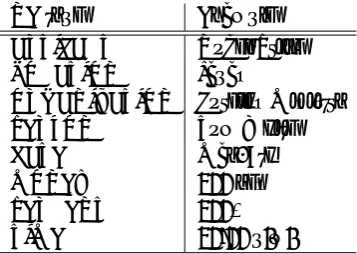
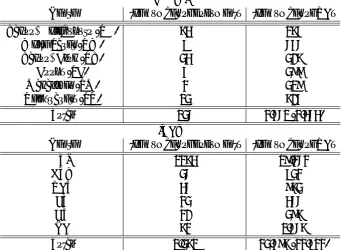
Table 2 shows the number of documents and NE tags of each genre in BCCWJ Basic NE cor-pus. For comparing purpose, the statistics of IREX data. The number of documents of BCCWJ Ba-sic NE corpus is more than the sum of the num-ber of the IREX evaluation data: GENERAL data, ARREST DATA. In addition, BCCWJ Basic NE corpus includes documents other than newspapers such as Yahoo! Chiebukuro and White Paper.
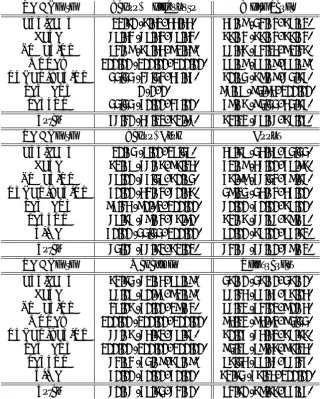
Table 3 shows the statistics of BCCWJ Basic NE corpus. Table 4 shows the percentage of each NE in a genre. We see from these statistics that BCCWJ Basic NE corpus has different property compared IREX. For example, we see that Yahoo! Chiebukuro and White Paper include more AR-TIFACT than newspapers and Magazine includes more PERSON than the other genres.
4 Example Uses of BCCWJ Basic NE corpus
This section describes some example uses of BC-CWJ Basic NE corpus.
4.1 Evaluation of an NE recognizer
We evaluated KNP that extracts the eight types of NEs listed in Table 1 based on the IREX defini-tion. KNP is one of the freely available state of the art NE recognizers. We used Japanese mor-phological analyzer JUMAN version 7.01 5 as a
morphological analyzer of KNP version 4.126.
Table 5 shows accuracy of KNP on BCCWJ Ba-sic NE corpus. KNP was evaluated with Recall, Precision and F-measure:
• Recall = NUM/(the number of correct NEs)
BCCWJ
Genre the number of documents the number of NEs
Yahoo! Chiebukuro (OC) 74 175
White Paper (OW) 8 656
Yahoo! Blog (OY) 34 307
Books (PB) 5 399
Magazines (PM) 2 319
Newspapers (PN) 13 705
Total 136 2,561 (2,464)
IREX
Genre the number of documents the number of NEs
CRL 1174 19,262
DRY 36 832
NET 46 973
AT 23 466
AR 20 397
GE 72 1,667
[image:3.595.128.471.69.319.2]Total 1,371 23,597 (22,822)
Table 2: The number of NEs in BCCWJ Basic NE corpus and the IREX data set. The documents of NEs for IREX data is the number of news articles. IREX data set consists of the following data created from Mainichi Shimbun news articles: CRL NE DATA.idx (CRL),DRYRUN03.idx (DRY), NEtraining981031.idx (NET),ARREST TRAIN.idx (AT),ARREST01.idx (AR),GENERAL03.idx (GE). The numbers between parentheses in Total columns indicate the number of NEs excluding OP-TIONAL.
• F-measure = 2×Recall×Precision/( Re-call + Precision )
where NUM is the number of correct NEs recog-nized by KNP.
Compared with Newspapers, KNP showed lower performance on Yahoo! Chiebukuro and Yahoo! Blog. One of the reasons seems that KNP was trained with IREX CRL data that con-sists of news articles. Another reason is Yahoo! Chiebukuro and Yahoo! Blog includes more ab-breviations and colloquial expressions than news-papers. Furthermore, KNP also showed lower per-formance on White Paper even if White Paper doc-uments were written language. One of the rea-sons seems that White Paper includes more AR-TIFACT NEs than Newspapers The accuracy of KNP for ARTIFACT was lower than the other NEs on Newspapers.
From this evaluation, we see that we can eval-uate NE recognizers with different perspective by using different genres of documents.
4.2 The Other Expected Use
We also expect that BCCWJ Basic NE corpus con-tributes to the following research.
• NE recognition for colloquial expressions: Yahoo! Blog contributes to NE recognition researches for colloquial expressions because Yahoo! Blog includes more colloquial ex-pressions than Newspapers and White Paper
• Domain Adaptation: BCCWJ Basic NE cor-pus includes six genres of documents, there-fore, we expect BCCWJ Basic NE corpus is useful for the research of domain adaptation (Daum´e III, 2007).
• Revision learning for NE recognition: We also have uploaded not only latest annotation but also older versions of NE annotation re-sults. Therefore, we can use the corpus as an error detection research or revision learning like Japanese morphological analysis (Naka-gawa et al., 2002).
Genre ART DATE LOC MON OPT ORG PERC PERS TIME
OC 54 19 57 9 8 19 0 6 3
OW 163 129 140 9 39 128 33 15 0
OY 25 60 52 7 9 61 11 79 3
PB 29 50 87 0 24 26 6 169 8
PM 13 42 32 5 4 17 1 203 2
PN 24 165 188 59 13 118 38 78 22
Total 308 465 557 89 97 369 89 550 37
IREX
Data ART DATE LOC MON OPT ORG PERC PERS TIME
CRL 747 3567 5463 390 585 3676 492 3840 502
DRY 42 110 192 33 42 214 6 169 24
NET 67 137 255 32 47 270 19 138 8
AT 11 69 165 19 7 80 3 94 18
AR 13 72 106 8 8 74 0 97 19
GE 49 277 416 15 86 389 21 355 59
[image:4.595.116.487.69.325.2]Total 929 4232 6597 497 775 4703 541 4693 630
Table 3: The number of NEs in BCCWJ Basic NE corpus. ART, LOC, MON, OPT, ORG, PERC and PERS indicate ARTIFACT, LOCATION, MONEY, OPTIONAL, ORGANIZATION, PERCENT and PERSON, respectively. The others are same as ones in Table 2.
this corpus for evaluating annotation perfor-mance and annotation methods on different genres of documents. One of the examples is described in (Komiya et al., 2016). The pa-per compared the following two methods to annotate a corpus via non-expert annotators for named entity (NE) recognition task. The first one is an annotation method by revising the results of an existing NE recognizer. The other is an annotation method by hand from the beginning.
5 Conclusion
This paper introduced a Japanese Named Entity (NE) corpus of various genres called BCCWJ Ba-sic NE corpus. We annotated 136 documents in the BCCWJ with the eight types of NE tags de-fined by IREX. Users having BCCWJ can repro-duce use the corpus by using the annotation in-formation of the corpus distributed at a web site. Users having BCCWJ can reproduce use the pus by using the annotation information of the cor-pus distributed at the following web site: https:// sites.google.com/site/projectnextnlpne/en/.
Acknowledgments
We appreciate Ai Hirata, Maiko Yamazaki and Masaaki Ichihara for their help of building this corpus.
References
Hal Daum´e III. 2007. Frustratingly easy domain adap-tation. InProc. of ACL’07.
Masatsugu Hangyo, Daisuke Kawahara, and Sadao
Kurohashi. 2012. Building a diverse
docu-ment leads corpus annotated with semantic relations. pages 535–544.
IREX Committee. 1999.Proc. of the IREX workshop.
Kanako Komiya, Masaya Suzuki, Tomoya Iwakura, Minoru Sasaki, and Hiroyuki Shinno. 2016. Com-parison of annotating methods for named entity cor-pora. InProc. of LAW-X.
Kikuo Maekawa, Makoto Yamazaki, Takehiko Maruyama, Masaya Yamaguchi, Hideki Ogura, Wakako Kashino, Toshinobu Ogiso, Hanae Koiso, and Yasuharu Den. 2010. Design, compilation, and preliminary analyses of balanced corpus of
contemporary written japanese. In Proceedings
BCCWJ
Genre ART DATE LOC MON OPT ORG PERC PERS TIME
OC 30.86% 10.86% 32.57% 5.14% 4.57% 10.86% 0% 3.43% 1.71% OW 24.85% 19.66% 21.34% 1.37% 5.95% 19.51% 5.03% 2.29% 0% OY 8.14% 19.54% 16.94% 2.28% 2.93% 19.87% 3.58% 25.74% 0.98% PB 7.27% 12.53% 21.80% 0% 6.02% 6.52% 1.50% 42.35% 2.01% PM 4.08% 13.17% 10.03% 1.57% 1.25% 5.33% 0.31% 63.63% 0.63% PN 3.40% 23.40% 26.68% 8.37% 1.84% 16.74% 5.39% 11.06% 3.12%
IREX
Genre ART DATE LOC MON OPT ORG PERC PERS TIME
[image:5.595.86.514.72.295.2]CRL 3.88% 18.52% 28.36% 2.02% 3.04% 19.08% 2.55% 19.94% 2.61% DRY 5.05% 13.22% 23.08% 3.97% 5.05% 25.72% 0.72% 20.31% 2.88% NET 6.89% 14.08% 26.21% 3.29% 4.83% 27.75% 1.95% 14.18% 0.82% AT 2.36% 14.81% 35.41% 4.08% 1.50% 17.17% 0.64% 20.17% 3.86% AR 3.27% 18.14% 26.69% 2.02% 2.02% 18.64% 0% 24.43% 4.79% GE 2.94% 16.62% 24.95% 0.90% 5.16% 23.33% 1.26% 21.30% 3.54%
Table 4: The percentage of each NE in a genre. The meanings of items are same as ones in Table 2.
Tetsuji Nakagawa, Taku Kudo, and Yuji Matsumoto. 2002. Revision learning and its application to
part-of-speech tagging. InProc. of ACL’02, pages 497–
504.
Satoshi Sekine, Kiyoshi Sudo, and Chikashi Nobata.
2002. Extended named entity hierarchy. InProc. of
LREC’02.
Erik F. Tjong Kim Sang and Fien De Meulder. 2003. Introduction to the conll-2003 shared task: Language-independent named entity recognition. In
Proc. of CoNLL’03, pages 142–147.
ARTIFACT 12.70 (7.41, 44.44) 45.69 (32.52, 76.81) DATE 68.42 (68.42, 68.42) 77.52 (77.52, 77.52) LOCATION 82.69 (75.44, 91.49) 86.47 (82.14, 91.27) MONEY 100.00 (100.00, 100.00) 88.89 (88.89, 88.89) ORGANIZATION 33.33 (26.32, 45.45) 70.83 (79.69, 63.75) PERCENT 0 (0, 0) 96.88 (93.94, 100.00)
PERSON 33.33 (50.00, 25.00) 59.57 (93.33, 43.75) Total 56.20 (46.11, 71.96) 72.12 (68.56, 76.08)
NE/Genre Yahoo! Blog Books
ARTIFACT 10.53 (8.00, 15.38) 48.78 (34.48, 83.33) DATE 71.58 (56.67, 97.14) 51.69 (46.00, 58.97) LOCATION 68.00 (65.38, 70.83) 57.99 (56.32, 59.76) ORGANIZATION 50.00 (42.62, 60.47) 39.13 (34.62, 45.00) PERCENT 95.24 (90.91, 100.00) 60.00 (50.00, 75.00) PERSON 68.75 (69.62, 67.90) 72.67 (66.86, 79.58) TIME 50.00 (33.33, 100.00) 80.00 (75.00, 85.71) Total 63.06 (56.71, 71.01) 62.56 (56.80, 69.61)
NE/Genre Magazines Newspapers
ARTIFACT 72.73 (61.54, 88.89) 37.50 (37.50, 37.50) DATE 86.08 (80.95, 91.89) 86.24 (85.45, 87.04) LOCATION 28.07 (50.00, 19.51) 86.11 (82.01, 90.64) MONEY 100.00 (100.00, 100.00) 94.12 (94.92, 93.33) ORGANIZATION 66.67 (64.71, 68.75) 70.05 (64.41, 76.77) PERCENT 100.00 (100.00, 100.00) 93.15 (89.47, 97.14) PERSON 62.82 (53.69, 75.69) 87.34 (88.46, 86.25) TIME 50.00 (50.00, 50.00) 72.73 (57.14, 100.00)
[image:6.595.138.462.193.593.2]Total 60.56 (58.73, 62.50) 82.70 (79.77, 85.85)