SIGNIFICANCE OF VALUE ADDED MATERIALS
Doctoral student, Nigerian Defence Academy,
Environmental Management, Kaduna, Nigeria
ARTICLE INFO ABSTRACT
Materials science developments are often invisible to users of technology, but they are at the heart of so many important advances. Materials research and development
broad set of science and engineering disciplines and engages researchers across academia, industry and government laboratories. Value added materials (VAMs) are products whose worth is based on their performance or functio
formulations/combinations of several materials whose composition sharply influences the performance and processing of the end product. Products and services in the materials industry require intensive knowledge, innovation and commodities due to technological developments. The frontiers of materials research have been taken to the next level by the availability of technologies allowing the tailoring of material structure at the nanoscale
systems made up of components with nanoscale dimensions. Materiomics takes a materials science perspective toward complex biological systems, explicitly accounting for feedback loops that link functional requirements (and
different scales in both time and length. Materials research seeks to understand fundamental physical and chemical properties, and then use that understanding to improve the technology base count on to meet our needs for energy, national security and defense, information technology and telecommunications, consumer products, health care, and more. This means investing in the leading edge research and educating the next generations of
VAMs for emerging technologies for 21
Copyright©2019, Ayodele A. Otaiku. This is an open access distribution, and reproduction in any medium, provided
INTRODUCTION
The world’s ability to meet the rising demand with limited natural resources is increasingly coming into question. Value Added Materials (VAMs) are products whose worth is based on their performance or functionality, rather than their
composition. They can be single entities or
formulations/combinations of several materials whose
composition sharply influences the performance and processing of the end product. Products and services in the materials industry require intensive knowledge and converged innovation. VAMs are normally produced by a complex, inter linked industry. Similarly, most advanced materials are called a ‘new generation’ of materials (Fisher, et al. 2008; Weng et al., 2011; Pinciotta, 2011; Waqar and Jackson, 2009) that display physical attributes substantially different from the generics (Weng et al., 2011; Krueger et al., 2010; Kelsall, 2005) and provide superior performance capacities. Advanced materials are materials that are early in their product and/or technology lifecycle, that have significant room for growth in terms of the improvement of the performance characteristics (technology lifecycle) and their sales volume (product lifecycle).
ISSN: 0975-833X
Article History:
Received 14th July, 2019
Received in revised form 18th August, 2019
Accepted 25th September, 2019
Published online 30th October, 2019
Citation: Ayodele A. Otaiku. 2019. “Significance of Value Added Materials (VAMs)for Modernity and
Research, 11, (10), 78917907.
Key Words:
Multidisciplinary, Value Added Materials (VAMs), Military, Resilience,
Materiomics, Raw material development, Environmental, Sustainability, Health, Military, Energy, Transport sector, Information and Communication and Soild minerals.
RESEARCH ARTICLE
VALUE ADDED MATERIALS (VAMS) FOR MODERNITY AND DEVELOPMENT
*
Ayodele A. Otaiku
Doctoral student, Nigerian Defence Academy, Faculty of Arts and Social Science, Department of Geography,
Environmental Management, Kaduna, Nigeria
ABSTRACT
Materials science developments are often invisible to users of technology, but they are at the heart of so many important advances. Materials research and development
broad set of science and engineering disciplines and engages researchers across academia, industry and government laboratories. Value added materials (VAMs) are products whose worth is based on their performance or functionality, rather than their composition. They can be single entities or formulations/combinations of several materials whose composition sharply influences the performance and processing of the end product. Products and services in the materials industry uire intensive knowledge, innovation and commodities due to technological developments. The frontiers of materials research have been taken to the next level by the availability of technologies allowing the tailoring of material structure at the nanoscale and by the development of material systems made up of components with nanoscale dimensions. Materiomics takes a materials science perspective toward complex biological systems, explicitly accounting for feedback loops that link functional requirements (and changes thereof) to altered material components and structure, at different scales in both time and length. Materials research seeks to understand fundamental physical and chemical properties, and then use that understanding to improve the technology base count on to meet our needs for energy, national security and defense, information technology and telecommunications, consumer products, health care, and more. This means investing in the leading edge research and educating the next generations of scientists and engineers needed to secure the VAMs for emerging technologies for 21st century is requirement for modernity and development.
access article distributed under the Creative Commons Attribution the original work is properly cited.
The world’s ability to meet the rising demand with limited natural resources is increasingly coming into question. Value Added Materials (VAMs) are products whose worth is based on their performance or functionality, rather than their
be single entities or
formulations/combinations of several materials whose
composition sharply influences the performance and processing of the end product. Products and services in the materials industry require intensive knowledge and converged
ion. VAMs are normally produced by a complex, inter linked industry. Similarly, most advanced materials are called a ‘new generation’ of materials (Fisher, et al. 2008; Weng et al., 2011; Pinciotta, 2011; Waqar and Jackson, 2009) that l attributes substantially different from the generics (Weng et al., 2011; Krueger et al., 2010; Kelsall, 2005) and provide superior performance capacities. Advanced materials are materials that are early in their product and/or have significant room for growth in terms of the improvement of the performance characteristics (technology lifecycle) and their sales volume (product
Advanced materials refer to all new materials and modifications to existing materials to
performance in one or more characteristics that are critical for the application under consideration. Added value materials with higher knowledge content, new functionalities and
improved performance are critical for industrial
competitiveness and sustainable development; the materials themselves represent a key step in increasing the value of products and their performance, including design and control of their processing, properties and performance. Moskowitz (2009) elaborates on advanced
properties, production methods and applications, as well as the classical materials .The key for tailoring material properties is to understand how the microstructure influences macroscopic properties such as physical and chemica
different applications, how better performance is achieved and how these properties can be modified and controlled by means of material and manufacturing technology (EuMaT, 2012). Apply scientific understanding to advance our ability to design, improve, and scale service systems for business and societal purposes using raw materials development. Service dominant logic may be the philosophical foundation of service science,
International Journal of Current Research Vol. 11, Issue, 10, pp.7891-7907, October, 2019
DOI: https://doi.org/10.24941/ijcr.33599.10.2019
Significance of Value Added Materials (VAMs)for Modernity and Development
FOR MODERNITY AND DEVELOPMENT
Faculty of Arts and Social Science, Department of Geography,
Materials science developments are often invisible to users of technology, but they are at the heart of so many important advances. Materials research and development is a global pursuit. It covers a broad set of science and engineering disciplines and engages researchers across academia, industry and government laboratories. Value added materials (VAMs) are products whose worth is based on nality, rather than their composition. They can be single entities or formulations/combinations of several materials whose composition sharply influences the performance and processing of the end product. Products and services in the materials industry uire intensive knowledge, innovation and commodities due to technological developments. The frontiers of materials research have been taken to the next level by the availability of technologies and by the development of material systems made up of components with nanoscale dimensions. Materiomics takes a materials science perspective toward complex biological systems, explicitly accounting for feedback loops that link changes thereof) to altered material components and structure, at different scales in both time and length. Materials research seeks to understand fundamental physical and chemical properties, and then use that understanding to improve the technology base that we count on to meet our needs for energy, national security and defense, information technology and telecommunications, consumer products, health care, and more. This means investing in the leading
scientists and engineers needed to secure the century is requirement for modernity and development.
License, which permits unrestricted use,
Advanced materials refer to all new materials and modifications to existing materials to obtain superior performance in one or more characteristics that are critical for the application under consideration. Added value materials with higher knowledge content, new functionalities and
improved performance are critical for industrial
ess and sustainable development; the materials themselves represent a key step in increasing the value of products and their performance, including design and control of their processing, properties and performance. Moskowitz (2009) elaborates on advancedmaterial families based on properties, production methods and applications, as well as the classical materials .The key for tailoring material properties is to understand how the microstructure influences macroscopic properties such as physical and chemical behave our in different applications, how better performance is achieved and how these properties can be modified and controlled by means of material and manufacturing technology (EuMaT, 2012). Apply scientific understanding to advance our ability to ign, improve, and scale service systems for business and raw materials development. Service dominant logic may be the philosophical foundation of service
INTERNATIONAL JOURNAL OF CURRENT RESEARCH
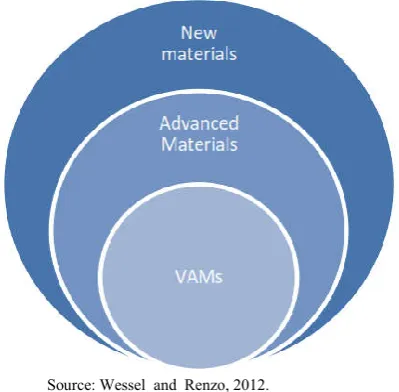
Source: Wessel and Renzo, 2012.
Figure 1. VAMs as a part of advanced and new materials
and the service system may be its basic theoretical construct for six ‘key enabling technologies’ (advanced materials,
advanced manufacturing, nanotechnologies, photonics,
industrial biotechnologies, and microand nanoelectronics) can provide the instruments to accelerate the creation of innovation and the deployment of technologybased products and services, and so induced faster economic growth in Africa soild mineral driven economies and the world.
The rapid expansion in the scope of materials science and engineering has led to incorporation of such fields as
experimental and computational biology, biomedical
engineering, and genetics in the context of natural and synthetic materials. Recent progress provides insight into biological mechanisms and enables us a peek into how biology works at the ultimate, molecular scale and how this relates to macroscopic phenomena such as cell mechanics, tissue behaviour, or functions provided by entire organisms (EuMaT, 2012). Value Added Materials (VAMs) aimed at improving the effectiveness of publicand privatesector research partnerships through cooperative investments, expanding interactions among personnel, and increasing opportunities for technology transfer in its broadest sense and stimulate new research and development (R&D)business models that may be scalable to a national and regional level. Future technology mapping will provide a more comprehensive visualization of the entire production technology landscape that will take account of technology subcategories that have varying readiness levels in different production contexts, and varying levels of diffusion and adoption within different sectors. The evaluation of the significance of value added materials (VAMs)aregap analysis; solutions; impacts on materials science on stateofart technology development and applications:
The conception or creation of new knowledge, products,
processes, methods and systems and development of value added services by collaborative research for VAMs.
VAMs CrossDiscipline Education : Transdiciplianry
Applying Artificial Language (AI) and Machine Language (ML) methods to materials discovery and design effort requiring experts from many fields, including materials science, chemistry, mathematics, and computer science. Crossdisciplinary education and training are needed at the university and graduate levels;
Design and develop dual core value added materials for
military and civilian applications;
Develop an interdisciplinary and intercultural approach to
service research of raw materials ; build bridges between disciplines through grand research challenges; establish service system and value proposition as foundational concepts; work with practitioners to create data sets to understand the nature and behaviour of materials systems create modelling and simulation tools for advanced materials;
The training requirements for the future of Value Added
Materials.
The internet of things (IoT) encapsulate VAMs application of products development is often presented as a revolution, but it is actually an evolution of technologies developed more than 15 years ago. Operations and automation technologies are now blending, albeit conservatively, with sensors, the cloud and connectivity devices of the information technology (IT) industry Information Handling Services (HIS) projects the number of those devices to grow to almost 80 billion by 2025,
up from 17 billion today1.The immediate opportunities for
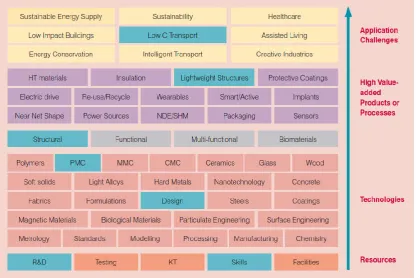
producers are in smart enterprise control, asset performance management in real time and smart and connected products and services. Cybersecurity and interoperability challenges are hindering producers from embracing IoT on the factory floor and in their supply chains, with 85% of assets still unconnected. Materials science and engineering drastically intensified in the 1960s, when applications of materials became increasingly based on scientific principles rather than the empiricism that prevailed prior to World War II.2 Materials science and engineering today can be described as ‘the study of substances from which something else is made or can be made; [and] the synthesis, properties, and applications of these substances.’3 This definition covers both natural, traditional materials as well as synthetic, designed materials, Figure 2.
Environmental sustainability: Sustainable electronics brings to mind images and concerns about energy efficiency, resource use, and waste disposal or recycling that is, building an electronic world that enables sustainable management of natural resources. For example, how can electronic devices be built that operate more energy efficiently than today’s silicon based devices? Chemists and other scientists and engineers are using organic materials to steer electronics into the future in a more environmentally sustainable way than is possible in today’s electronic world, for example by using carbonbased material instead of precious earthmined resources and by relying on safer and less energy intensive manufacturing
methods than siliconbased electronic processing
methods(CS3,2012).
Source: www.innovateuk.org. UK Technology Strategy Board
Figure 2. The advanced materials landscape
[image:3.595.122.475.383.618.2]Source: JRC, 2013a
Figure 3. JRC assessment for the identification of raw materials as a potential bottleneck in the future European energy system
Source: Hagelüken, 2013
Figure 4. Low-carbon energy technologies at risk due to potential bottlenecks in the supply chain of critical raw materials (JRC, 2013a)
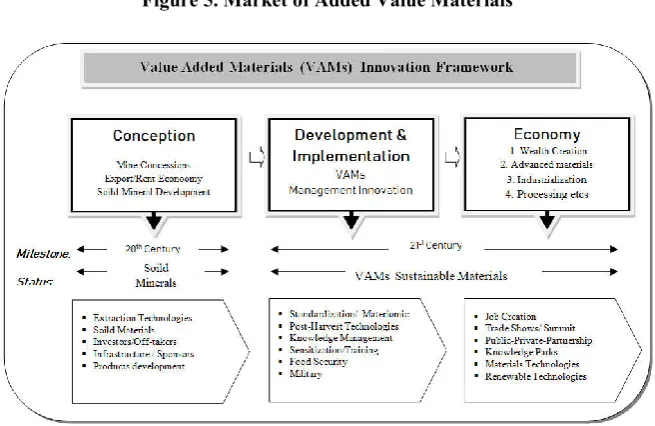
[image:4.595.135.462.319.542.2]Source: ISQ Instituto de Soldadura e Qualidade
Figure 5. Market of Added Value Materials5
[image:4.595.132.460.569.782.2]Source: Cranford and Buehler , 2010.
[image:5.595.114.493.61.294.2]Figure7. The studyofmateriomicshasamultidisciplinarytheoretical,computational,andexperimentalfoundation resulting from the historical progression of physics, biology, chemistry, and materialsscience cross-discipline ‘collective’ approach
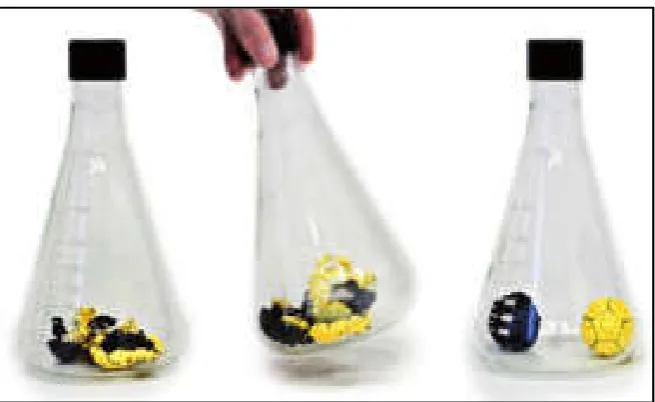
Figure 8. Self-Assembling Materials 6.Demonstration of self-assembly and molecular chirality, or right-handed and left-handed patterns of attraction. Opposing attraction patterns in the self-assembly units allowed for the parts to sort themselves when
combined and shaken randomly. The yellow units and black units eventually self-assemble into two distinct structures, demonstrating error-correction throughout the assembly process. The molecular structures in this exhibit were based on the Polio
Virus capsid
Sources: Sekitani et al., 2010; Zschieschang et al. 2011; Sun et al. 2011.
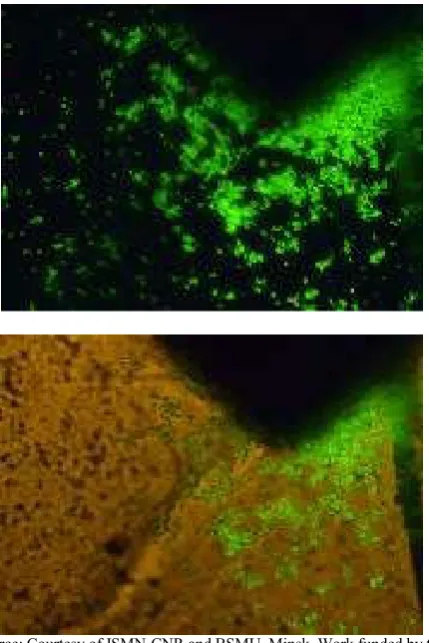
[image:5.595.136.464.342.543.2]Source: Courtesy of ISMNCNR and BSMU, Minsk. Work funded by the Magister Project– NMP, FP7
Figure 10. Stem cells loaded with magnetic nano particles - Cells are attracted by a magnetized scaffold for tissue engineering
[image:6.595.57.272.257.579.2]Source: Courtesy of ISMNCNR and BSMU, Minsk. Work funded by the Magister Project– NMP, FP7
Figure 11. Cell attraction to magnet placed below culture dish
Source: Courtesy of Technische Universität Darmstadt
Figure 12. Crack bridging in a ceramic-metal interpenetrating phase composite
Justification: The European Commission claims that 14 critical raw materials used for high tech products such as mobile phones, laptop computers and clean technologies are in danger of shortage. Increased recycling of products containing these materials will be needed in the future. The list includes cobalt, gallium, indium and magnesium. They are increasingly used for ‘emerging technologies’ but are mined in only a few countries such as China, Russia and Mongolia, where Africa has not started to mined these developmental minerals (WWF, 2014). The difficulties of replacing critical raw materials which sets the stage for development of Value Added Materials (VAMs’) market, especially in the field of catalysts and materials for energy storage. Technological breakthrough it will not be possible to fully reduce the market need for critical raw materials. The experts identified another approach: increased recycling of raw materials to reduce demand side of the market. Therefore, one response to the raw materials challenge is more research on how to recycle technically challenging products and improve collection.
Here again ,VAMs will be use in the design of such advanced recycling systems(Figure 3).Among various technological, financial, market and policy challenges, the largescale deployment of lowcarbon energy technologies will lead to a significant increase in the demand for raw materials. Concerns about the supply of raw materials being insufficient to meet the growing demand of these technologies have increased considerably in the past few years. Previous studies conducted by the JRC have shown that several lowcarbon energy technologies could be at risk because of potential bottlenecks in the supply chain of certain raw materials [JRC, 2011, 2013]. The recent JRC report entitled ‘Critical metals in the path towards the decarbonisation of the EU energy sector’ identified 32 materials that are significant in terms of amounts requested compared to their global supply. When market and geopolitical factors were taken into account, eightof them were given a high criticality rating, namely: dysprosium, europium, neodymium, praseodymium, terbium, yttrium, gallium and tellurium (Plate 1). Furthermore, six additional materials are considered to have a mediumtohigh risk and should be monitored closely: graphite, rhenium, hafnium, germanium, platinum and indium. Similar challenges to the material supply that may affect the US’ clean energy technologies in the short to medium term were found by the Department of Energy (DOE, 2011a). The technologies of particular concern to the most critical materials listed in the JRC report were as follows: fluorescent lighting, wind energy, electric vehicles, and solar photovoltaic (Figure 4).
GAP Analysis: The fact that the technology and R&D investments in Europe are sufficient and balanced so that all essential industrial areas can be maintained competitive is becoming more important than ever before. Usually, technologies support each other by synergistic effect. Their combined use and concurrent engineering is today a self evident approach in creating breakthrough innovations in all areas of technology and industry. Higher research volume, as such, produces typically more innovations than lower research investment, and more interfaces with different
actors (competitors, research institutes, and other
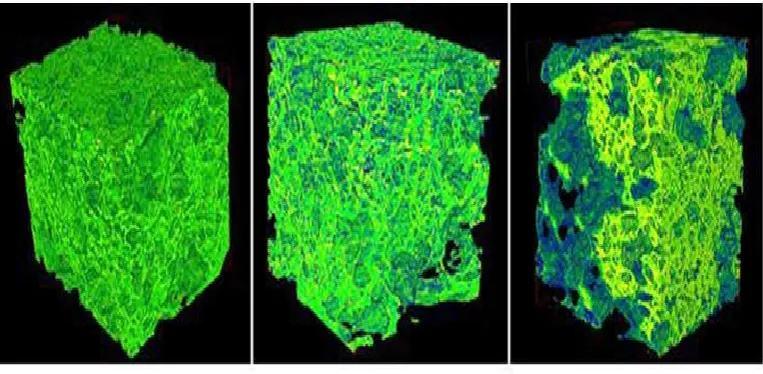
[image:6.595.60.268.608.770.2]Source: Courtesy of Technische Universität Wien
Figure 13. Microtomographic reconstruction of glass-ceramic scaffold (scaffold – green, new phase - blue).
[image:7.595.288.549.303.456.2]
Flexible solar cell11
Figure 14. Analysis in 3D and at the atomic scale of a MOS transistor by atom probe tomography 14(APT): A transistor has been extracted from SRAM memories (a) using focused ion beam and shaped into a tip (b) to be analysed by APT (c). In (c), the atoms
drawn as points define the transistor parts: contact (NiSi), gate (poly-Si) and spacers (SiO2). The arsenic atoms (dopants) have been
enlarged to show the segregation at the NiSi/Si interface that changes the electrical properties
Key R&D areas are the development of improved understanding of material degradation mechanisms in applications for process and energy industry, development of materials for improved friction and wear, corrosion and high
temperature performance, Figure 5 “Fundamental discoveries
in physics dominated the first half of the 20th century, whereas
discoveries in molecular biology, such as the structure of
DNA, dominated the second half. The 21st century may well
bring forth a new era, one of revolu tionary discoveries in materials research that result in farreaching changes for
society and how we live…”.4
Environmental threats and resilience: The global climate is changing, affecting agriculture. Environmental change, water availability, soil degradation and biodiversity loss threaten food security. The price spikes of recent years highlighted the vulnerability of international food markets to adverse weather events. Less predictable weather patterns are likely to become more common. Agriculture and food production will have to adapt to these changing conditions to increase the resilience of food systems.
The sector will also have to make a concerted effort in helping reduce greenhouse gas emissions and meeting climate change commitments for sustainability by developing more efficient materials today. Materials Science and Engineering (MSE), basic research into final products and applications in the field of MSE involves certain MSEtypical motifs and specific issues, as well as certain aspects that are that are lacking today in industries and academia. In comparison with underlying traditional (or basic) disciplines such as physics, chemistry or biology, MSE involves a range of aspects that are more characteristic of applied science, where relevance has equal importance to curiosity in order to drive the research effort and justify expenditure– the defined goals often being a proven innovative technology or indeed a particular product. MSE and the related transfer of knowledge and technology includes consideration of factors such as materials and product life cycles, the abundance of materials, the technical, ecological and economic feasibility of materials engineering and processing, as well as the transdisciplinarity of the ‘background’ knowledge and the efficiency of the academic effort involved (Figure 6).The societal impact of VAMs is, therefore, hugely significant and depends on the effective interconnection of three key aspects conception development and implementation and economy. Knowledge generation through basic and applied research, academic education and later career training
Knowledge transfer within academia and from academia
into commercial and industrial sectors, but more importantly here the transfer from industry into academia, something that is currently chronically neglected in academia; and
Development of new technologies to produce new
products and services.
The innovation chain is the chain going from (a) basic research, to (b) applied research, to (c) demonstrator projects and prototyping, to (d) early stage commercialisation and, finally to (e) mass production.
Thomson Reuters (2011). Global Research Report Materials science and technology. http://sciencewatch.com/grr/materialsscience technology
To overcome this problem, action is required to give a new thrust to competitiveness and to effectively move through the following scheme in VAMs (Figure 6):
Foster the transformation of scientific results into a new technology.
Provide proofofconcept for the new technology by
prototyping.
Ramp up prototyping into largescale production.
VAMs innovation framework addresses issues that are at the core of each of these steps. Progress can only be made if academic and industrial partners act closely together during the first two stages: transforming science into technology and facilitating demonstrator and productiondriven projects. On the other hand, an optimised value chain implies favouring the transition from (a) raw or semiprocessed materials, using (b) adequate equipment, into (c) devices, into (d) products and (e) services, and finally into (f) solutions to societal challenges. Another negative issue, which may be related to the previous
one, is a weaker entrepreneurial mindset among
African/Nigeria scientists and engineers. Several Africa universities offer entrepreneurship education, but more and original initiatives have to be promoted to provide dedicated entrepreneurship training for engineers and scientists. Measures to strengthen technology and knowledge transfer are particularly important in the light of the paradox in the innovation chain of VAMs.
Materiome-The future of materials science research: Materiomics is the study of asystem’s materiome or the ‘complete’ material system–its constituents and structure, properties and processes, function, failure, and behaviour– initsentirety. The goal is to link the disparate nature of the physical description of a material (ie, components and structure) with the related phenomenological functionalities (ie, strength and robustness). The approach is partially motivated by macro scale engineering techniques such as structural analysis in Figure 7by Cranford and Buehler (2010). In other words, the materiome provides not only the answer to what the material system is in terms of components, structure, and properties, but also to why the system is the way it is and how it is and/or how it can be manipulated. The consideration of the complete materiome of a material system allows a fundamental bottomup design of purposespecific materials from the atomistic to the continuum levels where the role of the relationship between processes, structures, and properties of materials in biological organisms is thus far only partially explored and understood. The objective is to ultimately bridge hierarchical levels and piece together not only material properties and structures at the nano and microscales, but also the ultimate effects on both the mechanical properties and function of the entirematerial system.
require. The same study also suggests a simpler approach to
classification, grouping new materials as follows:
Bioengineered materials, advanced (‘super’) alloys, advanced ceramics, engineering polymers, organic polymer electronics (OPEs), advanced electronic materials (other) advanced coatings, nanopowders, nanocarbon materials, nanofibers, thin films and advanced composites. Materiomics takes a materials science perspective toward complex biological systems, explicitly accounting for feedback loops that link functional requirements (and changes there of) to altered material components and structure, at different scales in both time and length. Materiomics provides an exciting opportunity for the analysis and engineering of complex biological systems based on quantitative insight into their fundamental physical and chemical features. A rigorous understanding may enable us eventually to integrate concepts from living systems into engineering materials design, seamlessly (Cranford and Buehler, 2010).
The incentive for materiomics is fourfold:
Primarily, to amalgamate the advancing knowledgebase
of chemistry, biology, materials science, and mechanics to a single, holistic description of a material system from nanotomacro. This complete description, the materiome, contains the information required to manipulate mechanical function and properties and development of new, predictive materiomic theories and models, which specifically include the hallmark of living systems feedback loops that facilitate an autonomous sensing, structural change, and as a result, adaptation to altered environmental conditions and functional requirements.
Investigative methods developed from a
multidisciplinary perspective for multiscale analysis can be applied to a vast amount of material systems, both current and future, offering new insights and theoretical formulations unavailable to past biochemists, medical engineers, and materials scientists.
The application of materiomics can unlock fundamental
design principles of Nature’s materials based on high throughput computational, theoretical, and experimental methods and utilize this insight in the development of advanced materials, biological and synthetic, micro and macroscopic. This harnessing of Nature’s ‘trade secrets’ could usher in new technologies that are
currently unattainable without the integrative
approaches a materiomics perspective provides. Indeed, such integrative approaches are already being implemented as discussed above, albeit by different research groups with disparate goals.
Materiomics highlights the similarities and promotes a
mutually beneficial relation between all researchers and scientists concerned with biomimetic materials, advanced composite design, nanotechnology, medical engineering, tissue engineering, mechanisms of disease, genetic defects, and any field requiring the complete description and understanding of a specific materiome (Cranford and Buehler, 2010).
By unlocking the complete materiomic information, efforts have been made to utilize gene regulation in the selfassembly and organization structural DNA materials (Seeman, 2007; Andersen et al., 2009; Lin et al., 2009). The field of materiomics provides a powerful integrated theoretical
framework for complex hierarchical materials, which enables us to define future scientific hypothese sin the field of biological and synthetic materials and nanotechnology in a systematic way. Such hypothesis must be proved through a unified approach that combines theory, experiment, and simulation, leading to a detailed understanding of how Nature successfully links structure, processes, properties, and functions simultaneously over many length scales, from nano to macro. With the aim of maintaining academic excellence and at the same time reinforcing the capacity to innovate, national funding agencies and European institutions must consider coherent and compatible longterm strategic research plans covering the entire span from exploratory research to market implementation. This should be performed on a welldefined set of the topics presented above and especially on multifunctional and biobased materials which are still in a nearly development stage and show potential for meeting numerous if not allgr and societal challenges. In addition, the following crosscutting topics were confirmed as being of critical importance to improve the research process across the material sciences’ board : analytical tools and characterisation methods; combinatorial materials science; data storage and processing tools; simulation ; surface science as an enabling technology; multi functionality; availability of natural resources and recycling.
VAMs Case Studies
Self-Assembling Materials: There is fairly good knowledge of biological systems which is translated into the ability to fabricate sim ple objects with selfassembly processes. The first milestones towards more complex structures are the modelling of assembled objects and the development of concepts for assembly from individual building blocks (Figure 9). These should be made at the nanoscale as the starting point. Progress in self assembling materials is subject to three conditions: cost reduction; development of dedicated instru ments on atomic level; and the biological production of the building blocks for selfassembly. Midterm milestones deal with 3D structures, whose assembly are proteindirected or are obtained from selffold ing polymers. Once such structures are assembled, a barrier would be their integration into devices, with a subsequent challenge on the modelling and the simulation of assembly processes. Selfassembly in different scales is a longterm milestone, with challenges here to engineer stable, macroscopic structures and, ultimately, to assembly complicated objects.
these challenges and this is a mid to longterm milestone, together with stent miniaturisation for brain applications. A corresponding challenge at this point is the ability to produce biodegradable stents with predictable behaviour, namely degradation rate. As is the case for previous case studies on biomaterials, longterm barriers are clinical trials, regulation and product (market) approval.
Organic Display Technology: Organic lightemitting diodes (OLEDs) are built from one or more layers of organic and hybrid material (either small molecules or polymers) sandwiched between two electrodes (e.g., indium tin oxide), all on a plastic or other substrate. Unlike other display technologies, which require a backlight in order for the display to show, OLEDs generate their own light via electroluminescence and therefore they do not require backlights. They require less power and are more energy efficient than backlightdependent display technology. OLEDs are already widely commercialized in many Samsung and
other smartphone models6. The Samsung Galaxy line of
OLEDbased smartphones occupies a significant portion of the global smartphone market. Additionally, Samsung and LG Electronics have both announced forthcoming launches of largescreen OLED TVs. The new TVs are expected to not only be more spectacular than today’s TV technology, with respect to crisper colours and sharper contrasts, but also lighter, thinner, and more energy efficient.
Transistor Technology: Transistors are considered a fundamental “building block” of modern electronic devices, either amplifying signals or operating as onoffs witches. There are many different types of transistors. Most organic transistors are organic field effect transistors (OFETs). OFETs have several uniquepropertiesnot shared by silicon transistors, most notablytheir flexibility. Because OFETs can be manufactured at or near room temperature, they enable the manufacture of integrated circuits on plastic or other flexible substrates that would otherwise not withstand the high temperature conditions of siliconbased device manufacture. OFETs are also highly sensitive to specific biological and chemical agents, making them excellent candidates for biomedical sensors and other devices that interface with biological systems (Sekitani et al., 2010; Zschieschang et al. 2011;Sun et al., 2011) and see Figure 9 below. Organic materials give electronic devices unique propertiesim possible to achieve with siliconbased electronic structures, enabling abroad range of innovative “outofthebox” applications. Theseproperties include sensing, biocompatibility, and flexibility. Because of the unique structural and functional variation oforganic materials, arguablyone of thegreatest are as for innovation in the field of organic electronics is in sensing that is, the use of electronic devices to sense chemical or biological substances in the environment, in or on the human body, in food and water, or elsewhere. For example, chemical scientists envision diagnostic sensors that detect changes in biomarker levels (e.g., changes in glucose levels in people with diabetes); environmental sensors that detect toxins in food or water; and national security sensors that detect trinitrotoluene (TNT) or other explosives. Biosensors are among the most exciting nearfuture applications of organic electronics.
Biomaterials: Biomaterials are synthetic or modified natural materials such as polymers, metals, ceramics, biological materials, and composites. Of particular interest to nanotechnologists are RNA, DNA, peptides, and proteins,
because they allow scientists to build large numbers of fairly large, atomically precise three dimensional structures. Although these biomolecular structures are not as stiff and strong as carbon nanotubes are, they can provide great specificity for selfassembly by offering many degrees of freedom in designs (EuMaT, 2012). Scientists have already developed complex designs of nanomotors and nanotweezers using biomolecules. Health and lifescience areas that use
biomaterials include labonachip diagnostic devices,
orthopaedic implants, dentistry, urology, gene therapy, growth and repair of organs, tissue engineering, ophthalmology, drug delivery, cardiology and treatment of vascular disease, and cosmetic products. The use of biomaterials will continue to expand in health and life sciences as well as in mechatronics to
fabricate functionalized biomolecular machines and
biomolecular tools. Functionalized biomolecular machines include synthetic biosequencers or bioassemblers that scientists make from ribosomes. Biomolecular tools include nanomotors, nanotweezers, and nanobiosensors, all of which comprise DNA sequences, peptides, proteins, or other types of biomaterials and see Figures 10 and 11(EuMaT, 2012).
Intermetallics: Intermetallic materials are distinct chemical compounds comprising two or more metals and have crystal structures that are different from those of the constituent metals. Strictly speaking, intermetallics have been in use since the beginning of metallurgy in the ancient times. The intermetallics that were used in that period derived from low melting alloy systems of copper. The applications relied on the hardness and wear resistance as well as their decorative aspect. Examples are the coatings of Cu3As for bronze tools used by
the Egyptians and Cu31Sn8 used as mirrors by the Romans and
the Chinese. Intermetallics generally exhibit an ordered arrangement of mixed atom species of metalmetal or metal semimetal (in silicides) types in nearstoichiometric
composition, including Ni3Al, FeAl, TiAl, MoSi2, etc. In these
examples, Ni, Fe, Ti and Mo take on the role of the metal, while Al and Si take the role of the other metal or semimetal. The metalmetal and metalsemimetal bond is partially metallic and partially ionic or covalent (EuMaT, 2012). Strong interatomic bonding leads to high values of the Young’s modulus. The ordered superlattice structure means that larger shear forces are required to cause plastic deformation of the lattice leading to generally stronger and less ductile materials. The modern interest in intermetallic materials derives from a variety of attractive properties which they display. From a mechanical point of view, they can offer a compromise between metallic and ceramic properties when, for example, retention of high temperature strength is important enough to sacrifice some toughness and ease of processing. They can also exhibit desirable magnetic and chemical properties owing to crystalline order and mixed (metallic, ionic and covalent) bonding. Aluminides and silicides are the most notable group of intermetallic materials and have several engineering applications or are promising candidates for future applications (EuMaT, 2012) .
thermal and electrical conductivity, low to moderate thermal expansion, good wear resistance and good behaviour at high temperatures. Depending on the base material one distinguishes ceramicmatrix composites (CMC) and metal matrix composites (MMC). The ceramicmatrix composites can be reinforced with ceramic and/or metal inclusions in the form of particles, discontinuous fibres (e.g. whiskers) endless fibers, or layered ceramic coatings or multilayers. Also, there is a new class of metalceramic composites with interpenetrating network microstructure like Al2O3/Al or Cu
(alloys), TiO2/Al (alloys), Al2O3/MexAly (intermetallic
compounds) and see Figure 12 (EuMaT, 2012).
Functionally Graded Materials for Biomedical and Transport Applications: The mechanical and thermal response of materials with spatial gradients in composition and microstructure is of considerable interest in numerous technological areas. The graded transition in composition across an interface of two materials (for instance, metal and ceramics or polymer) can essentially reduce the thermal stresses and stress concentration at intersection with free surfaces. Similarly, the stress intensity factor at the crack tip can be altered by varying the gradient properties across the interface. The ceramicmetal FGMs exhibit higher fracture resistance parameters resulting in higher toughness due to crack bridging in a grade volume fraction. Varying thermal expansion in graded layers induces residual stress and affects the crack growth mode. In fact, the interface bonding is much improved by providing smooth composition variation when traversing the interface. The interest in graded materials focused primarily on the control of thermal stresses in
elements exposed to high temperatures (to1600oC), for
instance in gas turbine blades, aerospace structures, solidoxide fuel cells, energy conversion systems using thermoelectric or thermionic materials (thermal barrier coatings, TBC).
Subsequent applications of wide variety include fusion and fastbreeder reactors as a firstwall composite materials, piezoelectric and thermoelectric devices, high density magnetic recording media, in optical applications as graded
refractive index materials in audiovideo disks, in
bioengineering as orthopaedic and dental implants, in structures as fire retardant doors and penetration resistant materials for armor plates and bulletproof vests This section is of the SRA is focused on two representative “subgroups” of FGMs: (i) highperformance graded coatings for the aeronautic, automotive, machinery, and energy industry and (ii) functionally graded biomedical materials (such as implants for large defect repair and regeneration or biodegradable scaffolds for tissue engineering) , Figure 13.(EuMaT, 2012). The graded protective coatings deliver high temperature oxidation resistance, good mechanical/tribological properties, and/or oxidation and hot corrosion resistance as well as thermal insulation. In such materials, typically two components (TiAlX, glassceramic, etc.) are mixed, and their volume fractions are varied along spatial directions, at one specific observation scale. Biological materials are, as a rule, characterized by microstructural and compositional gradients, well adapted to maximize the probability of survival.
These gradients are existing on several length scales biological materials are hierarchically organized. Such highly complex organizations have been at the focus of basic science for decades, but they have also inspired the technological field.
Composition and microstructures of many biological materials have been elucidated and understood, while the implications of this hierarchy on the materials’ properties have been generally less understood (with notable exception of the elasticity of bone).Recent highlights in the biomedical FGMs comprise poregraded 3D scaffolds, produced by using a bioactive glass. Two types of porous structures were produced: (i) wholly porous scaffolds with pore gradient able to mimic the trabecular texture of cancellous bone, and (ii) double structure scaffolds able to mimic the cancellouscortical bone system by coupling a porous region with a compact layer. Most remarkably such structures exhibited mechanical properties comparable to those of natural bone tissue and therefore have the potential of replacing of loadbearing bone portions.
VAMs Applications: Africa is the world’s top producer of numerous mineral commodities and has the world’s greatest resources of many more, but most of Africa still lacks systematic geological mapping which could bring to light a much greater resource base. Unfortunately, most of Africa’s minerals are exported as ores, concentrates or metals, without significant valueaddition.Africa’s dire need to industrialise is universally acknowledged. The structural transformation of our economies must be an essential component of any longterm strategy to ensure the achievement of the Millennium Development Goals (MDGs) in Africa, eradicate poverty and underpin sustainable growth and development across our continent. The key issue, however, is in the formulation and implementation of workable industrialisation strategies based on the continent’s unique strengths, rather than the emulation of strategies that may have been effective in other contexts.Africa continent is believed to contain roughly 30% of the world’s mineral reserves, much of it unexplored (Prichard, 2009).
Rio Tinto Plc and ArcelorMittal to announce intended investments of over $US25 billion on over 3000 miles of railway construction and 11 new ports across iron orerich West Africa (De Backer, 2012). subSaharan Africa accounted for 21 percent of the world’s land mass, yet received only 4
percent of global expenditures on mineral exploration7
Continued innovation and human resources development are key to reducing the dependence on the initial factor endowment (natural resources) and to building and sustaining a locally embedded, competitive and diversified economy.
Conversely, where there is underdeveloped human,
This contribution is a reversal of historically higher percentages of up to 5 percent in the 1960s–70s, when the economy was largely sustained by agriculture and exploration of solid minerals.
Climate: Shortterm milestones in the environment and climate societal challenge concern building materials, namely those which are energy efficient (e.g., dye sensitised polymer solar cells) and those obtained through recycling (e.g., ashes and again polymers). In parallel, there are needs for membranes for clean environment and polymers, ceramics
and/or carbonbased materials for CO2 removal. Materials for
sensors are another group of interest in the short term, with particular requirements for multifunctionality in the context of environmental monitoring. Underlying requirements for all these materials families are ad hoc processing science. Reliable and inexpensive water treatment and storage is a mid term challenge together with autonomous water treatment units for remote locations. In a longer perspective, biobased and selfassembled new materials will present potential interest to face needs in the environment and climate challenges.
Health: Ageing and sedentarisation of the population are the driving forces for research in materials for health. Shortterm milestones in this area are autonomous biosensors, non invasive therapy and drug delivery, and polymeric coatings, biomedical and also architectured, for digital lenses. Additional needs concern simple biodegradable implants, scaffolds with angiogenic potential and sensors. For the latter, advanced polymers and other organic materials are needed for mobile patient monitoring. Mid term milestones are labon chip for fast, portable, multiplex diagnostics, implants with added biological factors, bioactive glasses with therapeutic ion release ability, with additional pronounced needs on surface chemistry functionalisation for cell expression.
Longerterm milestones are artificial muscles, superconductors and materials for nanobiomedicine, namely magnetic nanoparticles for cancer treatment. Also, dualfunction (theranostic) optical fibres, resorbable biocompatible Mg based devices (for stents and orthopedic applications),patches for cardiac regeneration, biodegradable stents, artificial cellular factories for drugs, materials with tunable stiffness for implants and labonchip for module organs (all/tissue dips). Milestones in a more visionary perspective are nanoparticles for combating infections and cell printing scaffolds(EuMaT, 2012).
Information and Communication: New (ceramic) materials for lasers, including high power ones, new optical fibers, and polymer composite (light) materials for telecommunications satellites are shortterm milestones in the information and communication domain. There are significant, shortterm needs for inexpensive electronics such as plastic ones for smart labels or low cost printed ones made from organic conductors and semiconductors with corresponding milestones concerning the production of throw away and flexible devices with acceptable lifetimes(EuMaT, 2012).
Food security and the bio-based economy: By 2025 this number likely will increase vastly (especially in Africa and South Asia), as food demand in emerging countries increases. Moreover, supply is likely to be reduced and food prices may prove prohibitive for the poorest groups because of the reduction of agricultural land, irrigation problems and the general effects of climate change9..Value Added Materials in the chemical sector that support agriculture production may be
an important factor in future solutions. In general the VAMs may not directly influence the food production sector apart from such applications as: advanced chemicals and biochemicals supporting agricultural production; and new packaging materials for food.
Water: Half of the world’s population will face water shortages by 2035, according to the UN. Rising demands from population growth, greater consumption, and agricultural production will outstrip water supplies, which will become less reliable in some regions from groundwater depletion and
changing precipitation patterns10.Water suppliers are already
using new technologies based on ‘VAMs’ influence can be expected to grow in the future. Applications for water supply systems include:
Materials for advanced technologies to permit the reuse of
waste water;
Materials for treatment systems for rainwater harvesting;
Materials that remove microbial pollution (including
viruses) and emerging contaminants;
Materials for seawater desalination by innovative solar
powered membrane distillation systems; Integrated long term materials and components, based on innovative, costefficient technologies, for new and existing infrastructures;
Materials for manufacturing nanoporous membranes
(filtration, packaging, electrolytic devices, large surface electrodes);
Materials that reduce energy and chemical use in water and wastewater treatment systems.
Materials developments are often invisible to users of
technology, but they are at the heart of so many important advances. The connection is clear between materials research and the energy technologies that we rely on today and those we need for our future.
Materials research and development is a global pursuit. It covers a broad set of science and engineering disciplines and engages researchers across academia, industry and government laboratories.
Materials research seeks to understand fundamental physical and chemical properties, and then use that understanding to improve the technology base that we count on to meet our needs for energy, national security and defense, information technology and telecommunications, consumer products, health care, and more will take the same longterm approach. This means investing in the leadingedge research and educating the next generations of scientists and engineers needed to secure our country’s technological leadership. Despite these technological triumphs, a large part of the world lives without adequate energy. 1.5 billion people have no access to electricity, and the electricity grid is woefully inadequate in many other areas of the world. Tremendous opportunities currently exist for transitioning from carbon based energy sources such as gasoline for engines to electric motors for transportation, as well as from coalfired electric power generation to renewable, clean solar, nuclear and wind energy sources for electricity, and thereby dramatically
7. World Bank (1992) ‘Strategy for African Mining’ World Bank Technical Paper no. 181,
Africa Technical Development Series, Mining Unit, Industry and Energy Division
(Washington, DC: World Bank.
increasing the capacity and reliability of urban grids in high density population countries like Nigeria, China, Brazil and India. These advances will require a new generation of advanced materials, including:
Battery materials for massive electrical energy storage
Highefficiency andlow cost solar cells
Corrosionresistant alloys for hightemperature power
conversion
Strong lightweight composites for turbine blades
Superconducting power distribution cables
Advanced power handling electronics, and more.
Materials developments are often invisible to users of technology, but they are at the heart of so many important advances. Materials research and development is a global pursuit. It covers a broad set of science and engineering disciplines and engages researchers across academia, industry and government laboratories. Materials research seeks to understand fundamental physical and chemical properties, and then use that understanding to improve the technology base that we count on to meet our needs for energy, national
security and defense, information technology and
telecommunications, consumer products, health care, and more will take the same longterm approach.This means investing in the leadingedge research and educating the next generations of scientists and engineers.
Smart, green and integrated transport: Transport is rightly considered as a key societal challenge. It should be also kept in mind that transport is a key condition for competitiveness. Value added materials will play a central role in one of the key grand challenges green transport.
Innovative solutions for transport address materials and
manufacturing processes for lower fuel consumption and development of alternative fuel sources. Materials science is engaged in developing new construction materials for roads and rail roads, as well as materials for transport security.
It must be noted that advanced materials are used now in the
transport industry to a very large extent. This may be seen in the advanced cars produced today.
Advanced cars begin with a chassis of complex aluminium composite (machine materials optimization) . In many cases they are covered with nano enhanced, selfhealing coatings, with anti reflex windows produced of advanced glass. The interiors are filledin with advanced electronics and sensors. Finally, energy supply in combustion vehicles uses a number of composites based on polymers and ceramic materials. The future holds more environmentallyfriendly solutions, with advanced materials used for efficient energy storage as well as materials for alternative energy production (hydrogen fuel cells, photovoltaics, and so on). The ‘green’ aspect of transport is very much aligned with two other Grand challenges described here– ‘resource efficiency and climate action’ and ‘secure, clean and efficient energy’. Further examples of applications of VAMs for transport will be developed in other sections.Transport is rightly considered as a key societal challenge. It should be also kept in mind that
transport is a key condition for competitiveness.’12
9
“How to Feed the World in 2050”, at FAO Headquarters in Rome on 1213 October, 2009.
10. Global Trends : Paradox of Progress. A publication of the National
Intelligence Council, 2017. NIC 2017001 ISBN 9780160936142 www.dni.gov/nic/globaltrends.
Analytical Tools: Characterisation of advanced materials, and par ticularly of materials with necessarily complex structures such as bio and functional ones, requires analytical tools for observation and monitoring all relevant length scales (nano, micro, meso and macro). Moreover, detailed insight in the matter through analytical tools beyond the state of the art will be an invaluable contribution to the modelling of the
structureproperties relationship and there fore to
understanding, controlling and monitoring properties and performance of materials, devices and systems (Figure 12). Such tools should demon strate high spatial resolution and ability to follow the behaviour of the material systems in time. In this perspective, recent progress has been made on synchrotronbased methods with respect to in situ capabilities as well as nanofocusing, pushing the spatial resolution further into the nm range. Analytical tools should be able to operate in situ, in an operating environment involving, for exam ple, high pressure or living organisms. Surface analysis is a particular field requiring appropriate analytical tools using ultrahigh vacuum electron microscopy and also very low
energy modes of the electron microscopy and
spectromicroscopy and see Figure 14.
Free Electron Laser (FEL) facilities have emerged as a novel scientific tool and should be developed for detailed structural analysis at timescales down to femtoseconds. Furthermore, materials processing requires in situ analytical tools, which contributes to the optimisation of the process itself (by providing process modelling with reliable data) and also to the processingstructure relationship. There is a crucial need for the combination of local tools, facilities and infrastructures as well as large facilities. It is worth recalling here the pan European effort to produce a comprehensive inventor y of research infra structures of major relevance in Europe across all scientific domains. This project, entitled Mapping of the European Research Infrastructure Landscape (MERIL), is
accessible to the public through an interactive online portal.13
Figure 14. Analysis in 3D and at the atomic scale of a MOS
transistor by atom probe tomography 14(APT): A transistor has
been extracted from SRAM memories (a) using focused ion beam and shaped into a tip (b) to be analysed by APT (c). In (c), the atoms drawn as points define the transistor parts: contact (NiSi), gate (polySi) and spacers (SiO2). The arsenic atoms (dopants) have been enlarged to show the segregation at the NiSi/Si interface that changes the electrical properties.
electron microscopy and also very low energy modes of the electron microscopy and spectromicroscopy. Free Electron Laser (FEL) facilities have emerged as a novel scientific tool and should be developed for detailed structural analysis at timescales down to femtoseconds.
Cell and Tissue Engineering Laboratories; five
dedicated cell culture laboratories, a molecular biology facility and general purpose laboratories
Confocal microscopy unit incorporating two confocal
microscopes, enabling advanced 3D imaging of living cells
Mechanical Testing Facilities
NanoVision Centre; our stateoftheart microscopy unit
bringing together the latest microscope techniques for structural, chemical and mechanical analysis at the nanometer scale
Spectroscopy Laboratory.
Thermal Analysis Laboratory.
Research Industrial/Sectorial Partnerships: Research paradox in Africa is particularly evident further downstream, at the later stages (after proofofconcept) of what is often called the ‘valley of death ’ in the innovation chain or the ‘ market evolution of startups’. The lack of sufficient public– private funds for prototyping after technology validation has demonstrated the innovative potentialis a clear example of the existing shortcomings for converting scientific results into products. This gap is an intrinsic feature of a market economy. To negotiate the valley and to become more competitive, Africa needs its own tailored funding models for pilot lines and prototype production facilities. The socalled ‘knowledge society’ is necessary for but not alone sufficient to sustain a modern economy. Knowledge must be exploited through innovative manufacturing facilities. New materials, new processes and life cycles underpin manufacturing innovation.
Partnership With Academic Institutions: VAMs R&D activities on potentially disruptive processes / products. This carries the risk that some breakthrough from research laboratories may not find timely implementation in the market through the involvement of Nigeria /Africa companies. To facilitate industry’s participation in highrisk research that has mediumterm application potential, new and flexible public privatepartnership (PPP) initiatives need to be explored and tested in VAMs. These new PPP experiments should include
SMEs, industrial consortia, academia, Research and
Technology Organisations (RTOs) and governmental research organisations. Whilst they should minimise the risk to SMEs for participation, these PPPs should target medium to long term technology validation even where a practical return on investment in the form of new products is not predictable .PDF. VAMs is profiling of 11 classes of materials:
Multifunctional materials
Multistructural materials
Metamaterials and artificially structured
functional materials
Nanoenabled materials in metallurgy, forestry,
energy efficiency, etc.
13. http://portal.meril.eu/converisesf/publicweb/research_infrastructure/3395
Informal discussion with stakeholders on the transport component of the next common strategic framework for research and innovation, Brussels, 16 June, 2011.
14. Panciera F, Hoummada K, Gregoire M, Juhel M, Bicais N, and Mangelinck D
(2011). Three dimensional distributions of arsenic and platinum within NiSi contact and gate of an ntype transistor Applied Physics Letters 99, 051911 (2011)
Bio and biobased materials
Bioinspired materials
Materials for targeted surface properties
Metals
Ceramics, including cement and glass, and composites
including natural fibres
reinforcement
Polymers
Soft materials.
Knowledge Diffusion: VAMS will “link” industry/academia clearly indicates that values underpin all engagement activity, be that in the form of ‘Engagement Practices or Engaged Scholarship activity’. Engagement is not a passing phase or for the faint of heart. Creating engagement will not be easy for it faces considerable resistance by institutional inertia, traditional definitions of scholarship and pressures from a marketbased economy. The promise of engagement however lies in its potential to rejuvenate the academy, redefine scholarship and involve society in a productive conversation about the role of education in the new century. Engagement is higher education's larger purpose (Brukardt et al. 2004). In soild mineral sector in Africa, this wave of mining code liberalization would continue to be adopted across a large number of African states. In sum, the pressures introduced by international donors and financial institutions, along with the postindependence history of underperformance by staterun enterprises in the mining sector, led to the widespread adoption of liberalized mining codes across the. African continent but no impacts of academia in development of raw materials or value additions. These reforms most often restricted the role of the state from one of owneroperator to a benign “facilitator” of private sector investment. To the extent that natural resource management strategies directed at environmental or social protections informed these legislative shifts, they remained heavily reliant on “selfregulation” by private sector operators.Natural resource dependency also insulates national leaders from public pressure since they do not rely on taxation of their populations for revenue, with an established correlation between resource abundance and political corruption (Ross, 2012).