Case Study on Assessment of Mild Traumatic Brain Injury
Using Granular Computing
Melaku A. Bogale1, Huiying Yu1, Thompson Sarkodie-Gyan1, Murad Alaqtash1, James Moody2, Richard Brower3
1Department of Electrical and Computer Engineering, University of Texas at El Paso, El Paso, Texas, USA 2
Mentis NeuroRehabilitation, El Paso, Texas, USA
3Department of Medical Education, Texas Tech University Health Sciences Center, El Paso, Texas, USA Email: [email protected]
Received 2012
ABSTRACT
Patients with mild traumatic brain injury complain about having balance and stability problems despite normal clinical examination. The objective of this study is to investigate the stride-to-stride gait variability of mTBI subjects while walking on treadmill under dual-task gait protocols. Fuzzy-granular computing algorithm is used to objectively quantify the stride-to-stride variability of tem-poral gait parameters. The degrees of similarity (DS) of temtem-poral gait parameters in the dual tasks were determined from the corres-ponding granulated time-series. The mTBI group showed relatively smaller degree of similarity for all window sizes under the cogni-tive (dual) task walking, showing pronounced stride-to-stride variability. Different levels of DS among the mTBI subjects were ob-served. Individually, both healthy and mTBI group showed different DS under the two dual-tasks, reflecting the challenging level of the cognitive tasks while walking. The mean values of the temporal parameters for the mTBI group were different from the averaged normal reference. On the other hand, the individual variance analysis shows no significant differences between the normal and dual task values for some mTBI subjects. The granular approach however is able to reveal very fine differences and exhibited similar trends for all mTBI subjects. Different DS values among mTBI group could be indicative for the different severity level or the un-dergone rehabilitation process.
Keywords: Fuzzy Granular Algorithms; Fuzzy-similarity; Stride-to-stride Variability; Temporal Gait Variables; Dual-task Gait Protocol; Mild Traumatic Brain Injury
1. Introduction
Mild traumatic brain injury (mTBI) is one of the most common neurological disorders [12]. According to the Center for Dis-ease Control (CDC) [9], 75 % of head injuries are mild trau-matic brain injuries. The CDC acknowledged mTBI as a serious public health problem in the United States in its 2003 report [9] to the US congress. This report pointed out, mTBI is underes-timated by the current “surveillance methods” and some people with mTBI show no sign of abnormalities under the clinical diagnosis techniques and made recommendation for further research and studies [9]. Furthermore, research findings in two studies [10,11] indicated that mTBI could be misdiagnosed and altered cognitive and behavioral functions may still exist even years after mTBI. Many people with mTBI suffer from balance and stability problems even though the clinical neuropsycho-logical examinations show no sign of abnormality [10]. Failure of the clinical evaluation of mTBI in showing any clear mor-phological brain effects was reported in [21] despite patients’ complaints about cognitive and emotional difficulties after they were discharged from the hospital. Gaetz et al. reported the insensitivity of the standard clinical EEG technique to most brain functions change after mTBI [22].
Research studies [2,3,5,8,13,14,17,27,28] investigated into possible gait alterations of people after mTBI. Body sway measurements, under different visual inputs, while the subject
is standing, gathered from force plate were used to quantifying balance and stability changes [2,14]. Motion capture systems [3,8,13,14,27,28] were used to study gait dynamics among the general TBI population.
(reciting the months of the year in reverse, subtracting by seven and spelling a five letter word in reverse) as Parker et al., [28] in the first dual-task walking. The second dual-task walking was reaction-time (RT) test, where subjects responded by pressing a button when they heard an audible cue [4]. A differ-ence in spatial-temporal variables was reported in both healthy and concussed groups. Both groups exhibited slower speed in both dual tasks compared with the normal level walking. Long-er stride-time was obsLong-erved among the concussed group. A significantly shorter stride-length and increased step width were observed during the cognitive task walking compared to the reaction-time test walking.
Different dual-task gait protocols were shown to discriminate between able-bodied and mTBI groups [4,15,24,27,28]. How-ever, the current research of mTBI in dual-task paradigm is mostly focused on comparing the mean values of the spatial- temporal parameters of normal group with mTBI group [27,28].
For people with neurological disorders, gait analysis is used to provide diagnosis, evaluation and treatment planning infor-mation. The benefit of gait analysis is so well established that it has now become a part of routine process in many rehabilita-tion centers [16,25]. Recognirehabilita-tion and understanding of “nor-mal” gait patterns and behavior are very important in the clini-cal gait analysis process for the purposes of identification of pathological gait. The observed or measured “normal” gait patterns or parameters serve as a reference or standard against which a pathological gait can be compared.
Studying gait parameters over a gait cycle, particularly, comparison of established reference patterns with that of the neurological impaired subject’s data over a cycle [19,23] is a common way of assessment and evaluation. However, wave-form analysis and comparison of averaged gait parameters over a gait cycle may not be sensitive enough to detect any subtle variation or irregularity in mTBI subjects’ gait parameters.
We present a case study for a possible application of granular computing to accomplish the required local comparisons and analysis. The purpose of this study is therefore to investigate the effect of a secondary cognitive task on stability of temporal gait parameters using fuzzy information granulation. We spe-cifically aim to compute the similarity of temporal gait para-meters in the dual-task walking with that of the undivided at-tention walking, individually by calculating degree of similarity of each variable. A statistical variance analysis will also be presented for comparison purposes. We hypothesize that mTBI subjects would show more pronounced stride-to-stride variabil-ity under the dual task walking conditions, and hence smaller degree of similarity and significantly different values from normal walking parameters.
2. Fuzzy Granulation Algorithm
2.1. Information Granulation
Information granulation is an essential activity of human cogni-tion, information processing and communication [18 - 20]. The goal of information granulation is to better understand the problem and transform it into more tractable smaller parts, so that we have smaller sub problems with smaller computational complexity [6]. Information granules are established using set theory, rough sets, fuzzy sets, and shadow sets, etc., [6]. There
are essential two steps in the granulation process, namely, seg-mentation and granular representation [19]. In the first phase we divide the original data into segments that retain the expe-rimental nature of the data. In the second phase we create a granular representation of each segment [6]. These two phases has competing goals, since we are trying to accommodate more information for experimental relevance and at the same time we demand to be more specific in each information granule. Algo-rithmic optimization [6] approach aims to compromise these two conflicting goals.
2.2. Fuzzy-granulation Applied to Temporal Gait Parameters
Given the original 100-point stride-time, stance-time and swing-time, time series data, the goal of granulation is to divide the given original data points into smaller segments and represent each segment with a fuzzy membership function. Before doing any granulation, normalization was performed to minimize the effect of speed of walking [7] and individual dif-ferences in temporal gait variables .The data were normalized as,
0 0
0 0
min( )
max( ) min( )
T T
T
T T
− =
− (1)
where T0 is the original time-series data, max is maximum, and min is minimum.
We then divided the 100 cycles’ time series data into several equal parts of different window sizes. Window sizes (w = 2, 4, 5) were used so that the original time-series is divided into segments (granule) of equal data points. Finally, a fuzzy triangular membership function was designed based on the methods outlined [6,7] to represent each granule. For each segment in the interval [a, b], the triangular membership function is established as
, , ( ) a b m
x m
x
m a
µ = −
− , for a≤ ≤x m (2a)
, , ( ) a b m
b x
x
b m
µ = −
− , for m≤ ≤x b (2b)
where m is the modal or core of the respective fuzzy set. The median of each segment is taken as the modal value [6]. To obtain the parameters, a and b of each fuzzy set, the optimiza-tion equaoptimiza-tion (3) was solved for each segment [1,6].
, , 1
( )
( , ) max
k
a b m i i
x Q a b
b a
µ
=
=
−
∑
(3)
2.3. Granular Matrix and Calculation of Degree of Similarity
Next, we form the granular matrix, G=(gij)3xp from each
information granule represented by ( , , )a m b where p is the
number of segments [7]. The degree of similarity (DS) [7]
be-tween two granulated time series G=(gij)3xp and H=(hij)3xp
3
1 1 3
1 1
( )
( , )
( )
p
ij ij j i
p
ij ij j i
g h
DS G H
g h
= =
= =
∧ =
∨
∑∑
∑∑
(4)where gij∧h isij min(g hij, ij) and gij∨h isij max(g hij, ij) . The
DS is within a range between 0 and 1. DS value of zero signi-fies no similarity at all and 1 represents 100 % similarity. A DS value closer to 1 indicates higher degree of similarity and DS values close to zero show little or no similarity.
3. Experimental Design and Methods
3.1. Participants
The institutional review board (IRB) of The University of Tex-as at El PTex-aso approved this study. Subjects obtained explana-tions about the study and are asked to sign informed consent prior to participation. Fifteen healthy male control subjects with no history of gait abnormalities are recruited from the El Paso community. Four male mTBI subjects are recruited from a local NeuroRehabilitation center in El Paso. Reported loss of con-sciousness for less than 30 minutes, post-traumatic amnesia less than 24 hours and post-concussive symptoms (dizziness, mem-ory loss, headache, confusion) were used to diagnosis subjects with mild traumatic brain injury.
3.2. Experimental Protocol
Both normal control and mTBI subjects performed treadmill walking at their comfortable speed for three minutes under three different conditions: 1) Undivided attention (refer as Normal walking), 2) Walking while reciting the months of the year in reverse order starting from December (refer as Dual task 1), and 3) Walking while subtracting by two starting from 299 (refer as Dual task 2.). These protocols are the standard in mental status examinations [26,27].
3.3. Data Processing and Feature Extraction
[image:3.595.311.539.72.219.2]A dual-belt instrumented treadmill (Bertec®, USA) was used to measure the ground reaction forces (GRFs) in three-dimensions. The speed of the treadmill is controllable and can be set at the subject’s comfortable speed. The force plates measure the ground reaction forces in 3D at 100Hz sampling frequency. Vertical GRF was filtered using a second order Butterworth low pass filter with cut-off frequency of 20 Hz. The vertical ground reaction force (vGRF) was used to define the gait cycles. A gait cycle begins at the instant one-foot strikes or contacts the ground and the instant when the same foot strikes the ground again marks the end of the gait cycle. The stance phase covers the duration from initial contact to toe-off and swing phase is
Figure 1. Sample granulated time-series.
defined from toe off to the next initial contact. The stride-time, stance-time and swing-time for 100 gait cycles were extracted for the three walking trial. The three walking trials temporal variable were segmented into different window sizes. A trian-gular fuzzy membership function was used to represent each segment as described above in equations 2a and 2b. The granu-lar matrix for each walking set was then established from the respective values of a, m, and b determined from the optimiza-tion equaoptimiza-tion. To study the effect of the cognitive task on stride-to-stride variability of the temporal gait parameters we calculated the degree of similarity between the granular matric-es built from the data in the normal walking, with that of the two dual tasks walking using equation (4). The reference degree of similarity was built from the average of the 15 able-bodied subjects’ degree of similarities.
4. Results
Figure 2 represents a sample granulated plot of stride time shown for window size w =5, we have twenty segments of the stride data each being represented by the respective triangular
fuzzy-memberships function parameters a, m and b.
Table 1 shows the calculated degrees of similarities of able-
bodied (reference) and the four-mTBI subjects (PM01, PM02,
PM03, PM04) for the three temporal variables (stride-time,
stance-time and swing-time). DS (N, D1) represents the DS of
normal walking temporal variable with that of walking with dual task 1 (reciting month of the year backwards). Similarly,
DS (N, D2) stands for DS of normal walking temporal variable
[image:3.595.124.220.88.136.2]with dual task 2 (counting backwards) walking. The DS values for the three temporal parameters are relatively smaller than unity in the two dual task walking for both able-bodied and mTBI subjects.
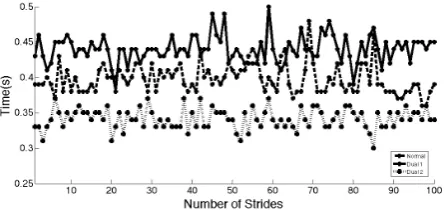
Figure 2. Original swing-time for mTBI subject PM03.
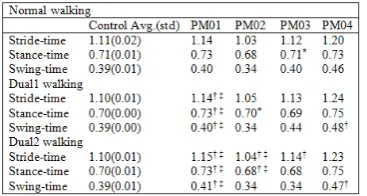
[image:3.595.313.536.596.701.2]*No significant difference (p > 0.05) from the corresponding averaged control group; †No significance difference (p > 0.05) from their respective individual normal walking values; ††No significance difference (p > 0.1) from their respective individual normal walking values.
Table 2. DS values for reference and mTBI subjects.
The calculated DS for stride-time, stance-time and swing- time of the four-mTBI subjects are smaller than the DS of the reference group for all window size considered. The two-mTBI subjects (PM01 & PM04) relatively have a higher DS among the mTBI group though smaller than the normal group for all the tree temporal parameters (stride-time, stance-time and swing-time). The one-way ANOVA comparison between nor-mal walking and the two dual tasks for PM01 have p > 0.05 (Table 1), showing no difference at all. Also, the dual task 2 values of PM02 for stride-time and stance-time display no sig-nificance difference from the corresponding normal values (p > 0.05), but the DS values are quite different form the reference values. In this regard, the granular approach is shown to reveal very small differences, that otherwise would have been im-possible to pick up.
Both the reference and mTBI group have a higher degree of similarity in dual task 2 walking. The DS of swing-time for PM02 and PM03 suffered a significant decrease in the two dual task walking. These notable deviations are expected because looking back at the original swing-time series data of PM03 in
the three trials (Figure 2), we observer different values and
hence little similarity.
5. Discussion
In this research study dual-task gait (with cognitive tasks) pro-tocols are proved to be able to discriminate able-bodied and neurologically challenged mTBI group in agreement with pre-vious research findings [15,27,28]. The proposed granular computing approach was shown to provide a simple parameter (DS) that is capable of revealing very fine individual differenc-es that otherwise would have been very difficult to pick up using the usual statistical variance analysis. This approach has a greater advantage over the statistical averaging methods pre-sented [4,15,27,28] because it furnishes a single individual parameter that can be used to individually follow and evaluate recovery process and outcome of an intervention. Our approach can easily be integrated into a clinical setting with real-time data processing. Particularly, this can be applied in sports where individual baseline performances of athletes on any dual- task gait protocol before a game could be collected and com-pared with post-game performance. Likewise we can extend this application to army soldiers where individual evaluation can be done before and after deployment.
6. Acknowledgements
The authors would like to acknowledge the Computational Science program of University of Texas at El Paso and the Stern foundation for their financial support. These funds were used to support a graduate student in this project. The authors also would like to thank all subjects who participated in this study.
REFERENCES
[1] Bargiela, A., and Pedrycz, W. (2003) Granular Computing: An Introduction, Kluwer Academics Publishers, Boston, Dordrecht, and London.
[2] Geurts, A.C.H., Ribbers, G.M., and Knoop, J.A. (1996) Identifi-cation of static and dynamic postural instability following trau-matic brain injury, Archives of Physical Medicine and Rehabili-tation, 7, 639 - 644.
[3] Catena, R.D., van Donkelaar, P., and Chou, L. (2009) Different gait tasks distinguish immediate vs. long-term effects of concus-sion on balance control, Journal of NeuroEngineering and Reha-bilitation, 6 :25.
[4] Catena, R.D., and van Donkelaar, P. (2007) Cognitive task ef-fects on gait stability following concussion, Exp. Brain Res, 176, 23 - 31.
[5] Niechwiej-Szwedo, E., Inness, E.L., Howe, J.A., Jagla, S., Mcllory, W.E., and Verrier, M.C. (2007) Changes in gait varia-bility during different challenges to movaria-bility in patients with traumatic brain injury, Gait and posture, 1 170 -77.
[6] Yu, F., and Pedrycz, W. (2009) The design of fuzzy information granules: Tradeoffs between specificity and experimental evi-dence, Applied Soft Computing, 9, 264 -273.
[7] Yu, F., Chen, F., and Dong, K. (2005) A Granulation-based method for finding similarity between time Series, Granular Computing, IEEE International Conference, 2, 700 - 703.
[9] Gerberding, J.L. and Binder, S. (2003) Report to congress on mild traumatic brain injury in the United States.
[10] Malece, J.F., (1999) Mild traumatic brain injury: scope of the problem. in: Varny NR, Roberts, J.R, editors, Evaluation and treatment of mild traumatic brain injury, Lawrence Erlbaum Publications 15 – 31.
[11] Malec, J.F., and Cicerave, K.D. (2006) Cognitive rehabilitation, In: Evans, R., editor, Neurology and trauma, Oxford University Press 238 - 248.
[12] Kurtzke, J.F. and Jurland, L.T. (1993) The epidemiology of neurological diseases, in: Joynt, R.J, editor, Clinical Neurology, Rev, Philadelphia JB Lippincott.
[13] Basford, J.R., Chou, L., Kaufman, K.R., Brey, R.H., Walker, A., Malec, J.F. Moessner, A.M, and Brown, A.W. (2003) An as-sessment of gait and balance deficit after traumatic brain injury, Archives of Physical Medicine and Rehabilitation, 84, 343 - 349.
[14] Lehmann, J.F., Boswell, S. R., Price, A., Burleigh, B.J., deLateur, K.M., and Jaff, D. H. (1990) Quantitative evaluation of sway as an indicator of functional balance in post-traumatic injury, Arc-hives of Physical Medicine and Rehabilitation, 12, 955 - 962.
[15] Chou, L., Kaufman, K.R., Walker-Rabation, A.E., Brey, R.H., and Basford, J.R.(2004) Dynamic instability during obstacle crossing following traumatic brain injury, Gait and Posture, 20, 245 - 254.
[16] Hausdroff, J. M. (2005) Gait Variability: methods, modeling and meaning, Journal of NeuroEngineering and Rehabilitation, 2 :19.
[17] Wade, L.D ., Canning, C.G., Fowler, V., Felmingham, K.L., and Baguley, I.J. (1997) Change in postural sway and performance of functional tasks during rehabilitation after traumatic brain injury, Archives of Physical Medicine and Rehabilitation, 10, 107 - 1111.
[18] Zadeh, L.A. (1997) Toward a theory of information granulation and its centrality in human reasoning and fuzzy logic, Fuzzy sets and Systems, 90, 111 - 127.
[19] Sarkodie-Gyan, T., Yu,H., Alaqtash, M., Abdelgawad, A., Spier, E., and Brower, R. (2011) Measurement of functional impair-ments in human locomotion using pattern analysis, Measurement, 44, 181 – 191.
[20] Zadeh, L.A. (1979) Fuzzy sets and information granulity, in: M. Gupta, R. Ragade, R. Yager (Eds), Advances in fuzzy set theory and application, North-Holland, Amsterdam, 3 - 18.
[21] Ruijs, M.B., Keyser, A., and Gabreëls, F.J. (1990) Long-term sequelae of brain damage from closed head injury in children and adolescents, Clinical Neurology and Neurosurgery, 92, 323-328.
[22] Gaetz, M., and Bernstein, D.M. (2001) The current status of electro physiologic procedure for the assessment of mild trau-matic brain injury, Journal of Head Trauma and Rehabilitation, 14,386 - 405.
[23] Alaqtash, M., Yu, H., Brower, R., Abdelgawad, A., and Sarko-die-Gyan, T. (2011) Application of wearable sensors for human gait analysis using fuzzy computational algorithm, Engineering Application of Artificial Intelligence 6 1018 -1025.
[24] Woollacott, M., and Shumway-Cook, A. (2002) Attention and the control of posture and gait: a review of an emerging area of research, Gait and Posture, 16, 1 -14.
[25] Whittle, M.W. (2007) Gait Analysis an introduction, 4th edition, Elsevier Ltd.
[26] Bell, R., and Hall, R. C. (1997) The mental status examination, American Family Physician, 16, 145 – 152.
[27] Osternig, L.R., Lee, H., and Chou, Li (2005) The effect of di-vided attention on gait stability following concussion, Clinical Biomechanics 20 389 - 395.