Context-Dependent Translation Selection Using Convolutional Neural
Network
Baotian Hu‡ Zhaopeng Tu†∗ Zhengdong Lu† Hang Li† Qingcai Chen‡
‡Intelligent Computing Research †Noah’s Ark Lab
Center, Harbin Institute of Technology Huawei Technologies Co. Ltd. Shenzhen Graduate School [email protected] [email protected] [email protected] [email protected] [email protected]
Abstract
We propose a novel method for translation selection in statistical machine translation, in which a convolutional neural network is employed to judge the similarity between a phrase pair in two languages. The specif-ically designed convolutional architecture encodes not only the semantic similarity of the translation pair, but also the con-text containing the phrase in the source
language. Therefore, our approach is
able to capturecontext-dependent
seman-tic similarities of translation pairs. We adopt a curriculum learning strategy to train the model: we classify the training examples into easy, medium, and difficult categories, and gradually build the abil-ity of representing phrases and sentence-level contexts by using training examples from easy to difficult. Experimental re-sults show that our approach significantly outperforms the baseline system by up to 1.4 BLEU points.
1 Introduction
Conventional statistical machine translation (SMT) systems extract and estimate translation pairs based on their surface forms (Koehn et al., 2003), which often fail to capture translation pairs which are grammatically and semantically similar. To alleviate the above problems, several researchers have proposed learning and utilizing semantically similar translation pairs in a contin-uous space (Gao et al., 2014; Zhang et al., 2014; Cho et al., 2014). The core idea is that the two phrases in a translation pair should share the same semantic meaning and have similar (close) feature vectors in the continuous space.
∗
* Corresponding author
The above methods, however,neglect the
infor-mation of local contexts, which has been proven to be useful for disambiguating translation candi-dates during decoding (He et al., 2008; Marton and Resnik, 2008). The matching scores of translation pairs are treated the same, even they are in dif-ferent contexts. Accordingly, the methods fail to adapt to local contexts and lead to precision issues for specific sentences in different contexts.
To capture useful context information, we pro-pose a convolutional neural network architecture to measure context-dependent semantic similari-ties between phrase pairs in two languages. For each phrase pair, we use the sentence contain-ing the phrase in source language as the context. With the convolutional neural network, we sum-marize the information of a phrase pair and its con-text, and further compute the pair’s matching score with a multi-layer perceptron. We discriminately train the model using a curriculum learning strat-egy. We classify the training examples according to the difficulty level of distinguishing the positive candidate from the negative candidate. Then we train the model to learn the semantic information
fromeasy(basic semantic similarities) to difficult
(context-dependent semantic similarities).
Experimental results on a large-scale transla-tion task show that the context-dependent convo-lutional matching (CDCM) model improves the performance by up to 1.4 BLEU points over a
strong phrase-based SMT system. Moreover,
the CDCM model significantly outperforms its context-independent counterpart, proving that it is necessary to incorporate local contexts into SMT.
Contributions.Our key contributions include:
• we introduce a novel CDCM model to
cap-ture context-dependent semantic similarities between phrase pairs (Section 2);
• we develop a novel learning algorithm to
train the CDCM model using a curriculum learning strategy (Section 3).
/ /
: tagged words : untagged words representation
…
/ / the key point is representation
…
Matching))Score)
Layer&1( Layer&2(
pooling
convolution matching(model(
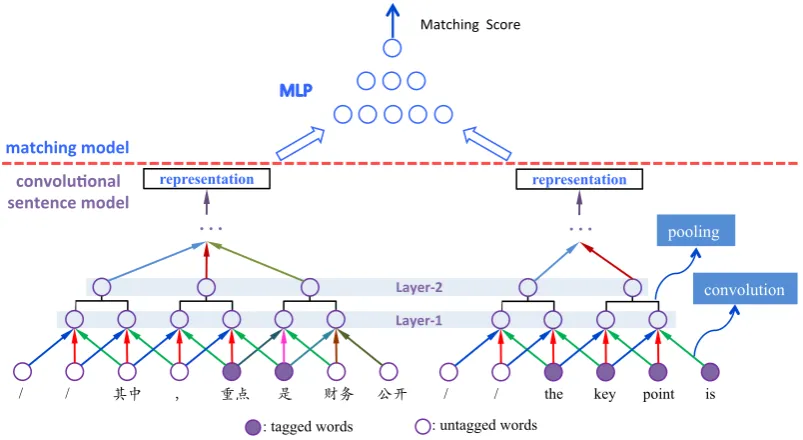
[image:2.595.101.503.68.288.2]convolu6onal( sentence(model(
Figure 1: Architecture of the CDCM model. Theconvolutional sentence model(bottom) summarizes the
meaning of the tagged sentence and target phrase, and thematching model(top) compares the
represen-tations using a multi-layer perceptron. “/” indicates all-zero padding turned off by the gating function.
2 Context-Dependent Convolutional Matching Model
The model architecture, shown in Figure 1, is a variant of the convolutional architecture of Hu et al. (2014). It consists of two components:
• convolutional sentence model that summa-rizes the meaning of the source sentence and the target phrase;
• matching model that compares the two representations with a multi-layer percep-tron (Bengio, 2009).
Leteˆbe a target phrase andfbe the source
sen-tence that contains the source phrase aligning toˆe.
We first projectf andeˆinto feature vectorsxand
yvia the convolutional sentence model, and then
compute the matching scores(x,y)by the
match-ing model. Finally, the score is introduced into a conventional SMT system as an additional feature. Convolutional sentence model.As shown in Fig-ure 1, the model takes as input the embeddings of
words (trained beforehand elsewhere) inf andˆe.
It then iteratively summarizes the meaning of the input through layers of convolution and pooling, until reaching a fixed length vectorial representa-tion in the final layer.
In Layer-1, the convolution layer takes sliding
windows onf andeˆrespectively, and models all
the possible compositions of neighbouring words.
The convolution involves afilterto produce a new
feature for each possible composition. Given a
k-sized sliding windowion f oreˆ, for example,
thejth convolution unit of the composition of the
words is generated by:
ci(1,j)=g( ˆci(0))·φ(w(1,j)·cˆi(0)+b(1,j)) (1)
where
• g(·) is the gate function that determines
whether to activateφ(·);
• φ(·) is a non-linear activation function. In
this work, we use ReLu (Dahl et al., 2013) as the activation function;
• w(1,j) is the parameters for thejth
convolu-tion unit on Layer-1, with matrix W(1) =
[w(1,1), . . . ,w(1,J)];
• cˆi(0)is a vector constructed by concatenating
word vectors in thek-sized sliding widowi;
• b(1,j) is a bias term, with vector B(1) =
[b(1,1), . . . ,b(1,J)].
To distinguish the phrase pair from its con-text, we use one additional dimension in word
embeddings: 1 for words in the phrase pair and
their tagged embeddings, the convolutional sen-tence model takes multiple choices of composition using sliding windows in the convolution layer. Note that sliding windows are allowed to cross the boundary of the source phrase to exploit both phrasal and contextual information.
In Layer-2, we apply a local max-pooling in
non-overlapping1×2windows for every
convo-lution unit
c(2i ,j)= max{c2(1i,j),c(12i+1,j)} (2)
In Layer-3, we perform convolution on output from Layer-2:
ci(3,j)=g( ˆci(2))·φ(w(3,j)·cˆi(2)+b(3,j)) (3)
After more convolution and max-pooling opera-tions, we obtain two feature vectors for the source sentence and the target phrase, respectively. Matching model.The matching score of a source sentence and a target phrase can be measured as the similarity between their feature vectors. Specifically, we use the multi-layer perceptron (MLP), a nonlinear function for similarity, to com-pute their matching score. First we use one layer to combine their feature vectors to get a hidden statehc:
hc=φ(wc·[xf¯i :y¯ej] +bc) (4)
Then we get the matching score from the MLP:
s(x,y) =MLP(hc) (5)
3 Training
We employ a discriminative training strategy with a max-margin objective. Suppose we are given
the following triples (x,y+,y−) from the
ora-cle, where x,y+,y− are the feature vectors for
f,ˆe+,eˆ−respectively. We have the ranking-based
loss as objective:
LΘ(x,y+,y−) = max(0,1+s(x,y−)−s(x,y+))
(6)
wheres(x,y) is the matching score function
de-fined in Eq. 5, Θconsists of parameters for both
the convolutional sentence model and MLP. The model is trained by minimizing the above ob-jective, to encourage the model to assign higher matching scores to positive examples and to as-sign lower scores to negative examples. We use stochastic gradient descent (SGD) to optimize the
model parametersΘ. We train the CDCM model
with a curriculum strategy to learn the context-dependent semantic similarity at the phrase level
from easy (basic semantic similarities between
the source and target phrase pair) to difficult
(context-dependent semantic similarities for the same source phrase in varying contexts).
3.1 Curriculum Training
Curriculum learning, first proposed by Bengio et al. (2009) in machine learning, refers to a se-quence of training strategies that start small, learn easier aspects of the task, and then gradually in-crease the difficulty level. It has been shown that the curriculum learning can benefit the non-convex training by giving rise to improved gener-alization and faster convergence. The key point is that the training examples are not randomly pre-sented but organized in a meaningful order which illustrates gradually more concepts, and gradually more complex ones.
For each positive example (f,ˆe+), we have three
types of negative examples according to the diffi-culty level of distinguishing the positive example from them:
• Easy: target phrases randomly chosen from
the phrase table;
• Medium: target phrases extracted from the aligned target sentence for other non-overlap source phrases in the source sentence;
• Difficult: target phrases extracted from other candidates for the same source phrase. We want the CDCM model to learn the following semantic information from easy to difficult:
• the basic semantic similarity between the source sentence and target phrase from the
easynegative examples;
• the general semantic equivalent between the source and target phrase pair from the
mediumnegative examples;
• the context-dependent semantic similarities
for the same source phrase in varying
con-texts from thedifficultnegative examples.
Algorithm 1Curriculum training algorithm. Here
T denotes the training examples, W the initial
word embeddings, η the learning rate in SGD, n
the pre-defined number, andtthe number of
train-ing examples.
1: procedureCURRICULUM-TRAINING(T,W) 2: N1←easy negative(T)
3: N2←medium negative(T)
4: N3←difficult negative(T)
5: T←N1
6: CURRICULUM(T,n·t) .CUR. easy 7: T←MIX([N1,N2])
8: CURRICULUM(T,n·t) .CUR. medium 9: forstep←1. . . ndo
10: T ←MIX([N1,N2,N3], step)
11: CURRICULUM(T,t) .CUR. difficult 12: procedureCURRICULUM(T,K)
13: iterate until reaching a local minima or K iterations 14: calculateLΘfor a random instance inT
15: Θ = Θ−η·∂LΘ
∂Θ .update parameters
16: W =W −η·0.01·∂LΘ
∂W .update embeddings
17: procedureMIX(N,s= 0) 18: len←length ofN
19: iflen <3then
20: T ←sampling with[0.5,0.5]from N 21: else
22: T ←sampling with[ 1
s+2,s+21 ,s+2s ]from N
training instances that consist of positive examples
andeasynegative examples in theeasycurriculum
(lines 5-6). For the latter curriculums, we gradu-ally increase the difficulty level of the training in-stances (lines 7-12).
For each curriculum (lines 12-16), we compute
the gradient of the loss objectiveLΘand learn Θ
using the SGD algorithm. Note that we mean-while update the word embeddings to better cap-ture the semantic equivalence across languages
during training. If the loss function LΘ reaches
a local minima or the iterations reach the pre-defined number, we terminate this curriculum.
4 Related Work
Our research builds on previous work in the field of context-dependent rule matching and bilingual phrase representations.
There is a line of work that employs local con-texts over discrete representations of words or phrases. For example, He et al. (2008), Liu et al. (2008) and Marton and Resnik (2008) em-ployed within-sentence contexts that consist of discrete words to guide rule matching. Wu et al. (2014) exploited discrete contextual features in the source sentence (e.g. words and part-of-speech tags) to learn better bilingual word embeddings for SMT. In this study, we take into account all the
phrase pairs and directly compute phrasal similari-ties with convolutional representations of the local contexts, integrating the strengths associated with the convolutional neural networks (Collobert and Weston, 2008).
In recent years, there has also been growing interest in bilingual phrase representations that group phrases with a similar meaning across dif-ferent languages. Based on that translation equiv-alents share the same semantic meaning, they can supervise each other to learn their semantic phrase embeddings in a continuous space (Gao et al., 2014; Zhang et al., 2014). However, these mod-els focused on capturing semantic similarities be-tween phrase pairs in the global contexts, and ne-glected the local contexts, thus ignored the use-ful discriminative information. Alternatively, we integrate the local contexts into our convolutional matching architecture to obtain context-dependent semantic similarities.
Meng et al. (2015) and Zhang (2015) have proposed independently to summary source sen-tences with convolutional neural networks. How-ever, they both extend the neural network joint model (NNJM) of Devlin et al. (2014) to include the whole source sentence, while we focus on cap-turing context-dependent semantic similarities of translation pairs.
5 Experiments
5.1 Setup
We carry out our experiments on the NIST Chinese-English translation tasks. Our training data contains 1.5M sentence pairs coming from
LDC dataset.1 We train a 4-gram language model
on the Xinhua portion of the GIGAWORD corpus using the SRI Language Toolkit (Stolcke, 2002) with modified Kneser-Ney Smoothing (Kneser and Ney, 1995). We use the 2002 NIST MT evaluation test data as the development data, and the 2004, 2005 NIST MT evaluation test data as the test data. We use minimum error rate train-ing (Och, 2003) to optimize the feature weights. For evaluation, case-insensitive NIST BLEU (Pa-pineni et al., 2002) is used to measure translation performance. We perform a significance test using thesign-testapproach (Collins et al., 2005).
1The corpus includes LDC2002E18, LDC2003E07,
Models MT04 MT05 All
Baseline 34.86 33.18 34.40
CICM 35.82α 33.51α 34.95α
CDCM1 35.87α 33.58 35.01α
CDCM2 35.97α 33.80α 35.21α
CDCM3 36.26αβ 33.94αβ 35.40αβ
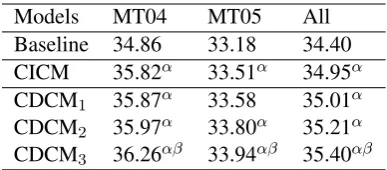
Table 1: Evaluation of translation quality.
CDCMk denotes the CDCM model trained in the
kth curriculum in Alg. 1 (i.e., three levels of
curriculum training), CICM denotes its context-independent counterpart, and “All” is the
com-bined test sets. The superscriptsαandβ indicate
statistically significant difference (p <0.05) from
Baseline and CICM, respectively.
For training the neural networks, we use 4 con-volution layers for source sentences and 3 convo-lution layers for target phrases. For both of them, 4 pooling layers (pooling size is 2) are used, and all the feature maps are 100. We set the sliding
win-dowk = 3, and the learning rateη = 0.02. All
the parameters are selected based on the develop-ment data. We train the word embeddings using a bilingual strategy similar to Yang et al. (2013), and set the dimension of the word embeddings be 50. To produce high-quality bilingual phrase pairs to train the CDCM model, we perform forced decod-ing on the bildecod-ingual traindecod-ing sentences and collect the used phrase pairs.
5.2 Evaluation of Translation Quality We have two baseline systems:
• Baseline: The baseline system is an open-source system of the phrase-based model – Moses (Koehn et al., 2007) with a set of com-mon features, including translation models, word and phrase penalties, a linear distortion model, a lexicalized reordering model, and a language model.
• CICM (context-independent convolutional
[image:5.595.84.278.61.146.2]matching) model: Following the previous works (Gao et al., 2014; Zhang et al., 2014; Cho et al., 2014), we calculate the match-ing degree of a phrase pair without consider-ing any contextual information. Each unique phrase pair serves as a positive example and a randomly selected target phrase from the phrase table is the corresponding negative ex-ample. The matching score is also introduced into Baseline as an additional feature.
Table 1 summaries the results of CDCMs trained from different curriculums. No matter from which curriculum it is trained, the CDCM model significantly improves the translation qual-ity on the overall test data (with gains of 1.0 BLEU points). The best improvement can be up to 1.4 BLEU points on MT04 with the fully trained CDCM. As expected, the translation performance is consistently increased with curriculum grow-ing. This indicates that the CDCM model indeed captures the desirable semantic information by the curriculum learning from easy to difficult.
Comparing with its context-independent coun-terpart (CICM, Row 2), the CDCM model shows significant improvement on all the test data con-sistently. We contribute this to the incorporation of useful discriminative information embedded in the local context. In addition, the performance of
CICM is comparable with that of CDCM1. This is
intuitive, because both of them try to capture the basic semantic similarity between the source and target phrase pair.
One of the hypotheses we tested in the course of this research was disproved. We thought it likely
that the difficultcurriculum (CDCM3 that
distin-guishs the correct translation from other candi-dates for a given context) would contribute most to the improvement, since this circumstance is more consistent with the real decoding procedure. This turned out to be false, as shown in Table 1. One possible reason is that the “negative” examples (other candidates for the same source phrase) may share the same semantic meaning with the posi-tive one, thus give a wrong guide in the supervised training. Constructing a reasonable set of nega-tive examples that are more semantically different from the positive one is left for our future work.
6 Conclusion
In this paper, we propose a context-dependent con-volutional matching model to capture semantic similarities between phrase pairs that are sensitive to contexts. Experimental results show that our ap-proach significantly improves the translation per-formance and obtains improvement of 1.0 BLEU scores on the overall test data.
Integrating deep architecture into context-dependent translation selection is a promising way to improve machine translation. In the future, we will try to exploit contextual information at the
Acknowledgments
This work is supported by China National 973 project 2014CB340301. Baotian Hu and Qinghai Chen are supported by National Natural Science Foundation of China 61173075 and 61473101. We thank Junhui Li, and the anonymous reviewers for their insightful comments.
References
Yoshua Bengio, J´erˆome Louradour, Ronan Collobert, and Jason Weston. 2009. Curriculum learning. In
ICML 2009.
Yoshua Bengio. 2009. Learning deep architectures for ai.Foundations and TrendsR in Machine Learning,
2(1):1–127.
Kyunghyun Cho, Bart van Merrienboer, Caglar Gul-cehre, Fethi Bougares, Holger Schwenk, and Yoshua Bengio. 2014. Learning phrase representations using rnn encoder-decoder for statistical machine translation. InEMNLP 2014.
M. Collins, P. Koehn, and I. Kuˇcerov´a. 2005. Clause restructuring for statistical machine translation. In
ACL 2005.
Ronan Collobert and Jason Weston. 2008. A unified architecture for natural language processing: Deep
neural networks with multitask learning. In ICML
2008.
George E Dahl, Tara N Sainath, and Geoffrey E Hinton. 2013. Improving deep neural networks for lvcsr
us-ing rectified linear units and dropout. In ICASSP
2013.
Jacob Devlin, Rabih Zbib, Zhongqiang Huang, Thomas Lamar, Richard Schwartz, and John Makhoul. 2014. Fast and robust neural network joint models for sta-tistical machine translation. InACL 2014.
Jianfeng Gao, Xiaodong He, Wen-tau Yih, and Li Deng. 2014. Learning continuous phrase rep-resentations for translation modeling. InACL 2014. Zhongjun He, Qun Liu, and Shouxun Lin. 2008. Im-proving statistical machine translation using lexical-ized rule selection. InCOLING 2008.
Baotian Hu, Zhengdong Lu, Hang Li, and Qingcai Chen. 2014. Convolutional neural network archi-tectures for matching natural language sentences. In
NIPS 2014.
Reinhard Kneser and Hermann Ney. 1995. Improved backing-off for m-gram language modeling. In
ICASSP 1995.
Philipp Koehn, Franz Josef Och, and Daniel Marcu.
2003. Statistical phrase-based translation. In
NAACL 2003.
Philipp Koehn, Hieu Hoang, Alexandra Birch, Chris Callison-Burch, Marcello Federico, Nicola Bertoldi, Brooke Cowan, Wade Shen, Christine Moran, Richard Zens, Chris Dyer, Ondrej Bojar, Alexandra Constantin, and Evan Herbst. 2007. Moses: open source toolkit for statistical machine translation. In
ACL 2007.
Qun Liu, Zhongjun He, Yang Liu, and Shouxun Lin. 2008. Maximum entropy based rule selection model for syntax-based statistical machine translation. In
EMNLP 2008.
Yuval Marton and Philip Resnik. 2008. Soft syntac-tic constraints for hierarchical phrased-based trans-lation. InACL 2008.
Fandong Meng, Zhengdong Lu, Mingxuan Wang, Hang Li, Wenbin Jiang, and Qun Liu. 2015. Encod-ing source language with convolutional neural net-work for machine translation. InACL 2015. Franz Josef Och. 2003. Minimum error rate training in
statistical machine translation. InACL 2003. Kishore Papineni, Salim Roukos, Todd Ward, and
Wei-Jing Zhu. 2002. Bleu: a method for automatic eval-uation of machine translation. InACL 2002. Andreas Stolcke. 2002. Srilm - an extensible language
modeling toolkit. InProceedings of Seventh
Inter-national Conference on Spoken Language Process-ing, volume 3, pages 901–904. Citeseer.
Haiyang Wu, Daxiang Dong, Xiaoguang Hu, Dian-hai Yu, Wei He, Hua Wu, Haifeng Wang, and Ting Liu. 2014. Improve statistical machine transla-tion with context-sensitive bilingual semantic
em-bedding model. InEMNLP 2014.
Nan Yang, Shujie Liu, Mu Li, Ming Zhou, and Nenghai Yu. 2013. Word Alignment Modeling with Context
Dependent Deep Neural Network. InACL 2013.
Jiajun Zhang, Shujie Liu, Mu Li, Ming Zhou, and Chengqing Zong. 2014. Bilingually-constrained
phrase embeddings for machine translation. InACL
2014.