The Internet of Things as a source for improving
the product development process
Author: Dennis Westerbeek
University of Twente P.O. Box 217, 7500AE EnschedeThe Netherlands
ABSTRACT
With 50 billion connected in 2020 the Internet of Things (IoT) can be named the new ‘big thing’. With its ability to get new insights in customer behavior and product performance it is a huge source of competitive advantage. This study reveals the impact the Internet of Things can have on the new product development process. Many authors have already done research in both fields but none of them clearly describes the relation the two topics can have. Therefore this report integrates IoT in the front end of the new product development process. By studying different literatures and interviewing some experts this paper tries to create a clear new product development model, in which IoT is integrated. The impact new products have on a firm’s performance is big (30% of a firm’s profit). However some challenges arise in the current used methods. In order to find the bottlenecks in this process the activities and success factors have been identified. It turned out that firms have the biggest influence in the pre-development stages of the process, which is mainly concerned with identifying customer needs and generating ideas. Besides that costs rise when moving further in the process. Therefore the front end is the phase in which firms should put much effort in. However a challenge arises when analyzing this phase. It takes much time to come up with ideas, many ideas are needed, and many firms fail at identifying existing and potential customer needs. By integrating the Internet of Things in products the way new products and services are created gets a new dimension. Products contain sensors that are able to track product usage and provide performance data that couldn’t be discovered before. This ability adds a new stage to the front of the well-known Stage-gate® model: the data collection stage. Sensors in new products are the new source of continuous product and service improvement as it can gather real-time data. The result of the addition of this stage is that the Stage-Gate® transforms from a straight model to a virtuous model.
Supervisors: Dr. Efthymios Constantinides , Dr. S.A. De Vries
Keywords
New product development, Internet of Things, Big Data, Fuzzy Front End, Stage-Gate®
7th IBA Bachelor Thesis Conference, July 1st, 2016, Enschede, The Netherlands.
Copyright 2016, University of Twente, The Faculty of Behavioural, Management and Social sciences.
1.
INTRODUCTION
Nowadays companies do not just compete on price but also by differentiating products from those of competitors. Being innovative is a keyword for firms. The process of developing new products is an important task for every company. Research has shown that top business performers attain high profits from the introduction of new products. New products count for about 42% of the total profit for the top 20% of businesses (Cooper & Edgett, 2003). This number clearly indicates that the new product development process is of high importance for firms. According to Cooper and Kleinschmidt (2007) a high quality new product process is a key determinant for high business performance. However many firms fail in introducing new products to the markets. For instance, by not identifying the changing customer needs or by a slowly executed product development process. As a technological era is moving quickly several techniques can be applied to smoothen the new product development process. Well known are the Internet, which improves the information flow among stakeholders, sensors, which provide data, and automation, which makes work less labor intensive and more efficient. At the moment a new technology is making its entrance. This is called the Internet of Things (IoT). This technique does not really have a universal definition but can be defined in some way. It is a technology, which connects the physical world with the virtual world. In the Internet of Things sensors are embedded in physical objects that are linked through wired and wireless networks, often using the same Internet Protocol (IP), which is connected to the Internet (Mckinsey, 2010). These smart products are able to generate and exchange data without much human influence. By connecting products, users and its producers via the Internet many opportunities arise. Research has shown that IoT is going to play a big role in future businesses. An estimated number of around 50 billion devices will be connected through IoT in 2020 (Cisco, 2011) The data gathered from these objects allow firms to improve their data analytics and identify problems or solutions in early phases. As the Internet of Things is able to monitor and control data from a distance it is believed to be useful in the difficult stages of the new product development process. Especially in the pre-development phases in which customer needs have to be identified. Over the years some new product development models have been constructed. However the basics of these models are quite the same and in none of them the influence of the Internet or new technologies is integrated. The implementation of IoT is not a straightforward process, as it has to overcome many barriers concerning privacy and security of data. In order to integrate IoT in the new product development process several steps need to be taken. The suitable stages of the new product development process must be identified and answers must be found to overcome the barriers. The topics of new product development and IoT are seen as opportunities for firms but it is not clear yet how to integrate them. Many articles about different innovation models are available but none of them really mentions IoT as a suitable technique of improving this process. Besides that many firms fail to meet customer needs, thus new methods might be required. Therefore the research problem of this report is based on this gap. The end result of the report is an integrated new product development model including the Internet of Things opportunities. The main research question therefore is: How can data generated by connected devices be used to improve and innovate the new product development process? In order to achieve an answer to this question several sub-questions are stated:
1. Why are new products important for a firm’s business performance?
2. What are the determinants or success factors of new product development process?
3. What are the current challenges that the NPD process faces?
4. In which stages of the NPD process can IoT play a role and how can it solve these challenges?
5. Which important factors concerning the
implementation of IoT should be taken into account?
2.
METHODOLGY
The paper consists of three parts: theoretical background, literature review and the integration of IoT in the new product development model. In order to come up with a strong theoretical background scientific papers have been researched and compared. At the end of every part a small summary is provided in which the findings of different papers are compared. By comparing the papers patterns could be identified, which provides the reader an overall view of each topic. The literature study is mainly concerned with finding the bottlenecks in the new product development process. As with the theoretical background several scientific articles and company reports have been researched. When the bottlenecks were clear articles about the Internet of Things were read in order to find their abilities and opportunities. Besides the collected literature some experts in the field of IoT were surveyed. Together with the literature study a new model of new product development was created. The data from the expert study was mainly used to strengthen the model instead of gathering new insights because the answers experts gave are quite similar to the results from the literature study. Finally a conclusion has been written in which the findings are summarized and limitations are stated. Recommendations for further researched are also provided in the last part of this study.
3. LITERATURE REVIEW: CONCEPTS
3.1 Concept of New product development
(NPD)
product life cycle, which consists of the introduction phase, growth phase, maturity phase and decline phase (Levitt, 1965). Due to the drastically changing competitive landscape, rapid technology changes and rising customer expectations companies continuously need to invest in the process of product development. As new products have a huge share in the total profit and sales of firms this process should be well executed. Research has shown that new products count for 30% of a firm’s sales (Cooper & Edgett, 2003). The process of new product development can be seen as a multi-stage process of sequential steps for launching a new or improved product. Several models have been created to provide a clear overview of the whole process. The traditional model consists of seven steps. This model has been created by Booz, Allen and
Hamilton (1982).
Figure.1 : New product development process ( Booz, Allen & Hamilton, 1982)
3.1.1 Stage-Gate Model ® & Fuzzy Front End
The original Stage-Gate ® model has been constructed in 1990. As all other new product development models the Stage-Gate model moves an idea from its conceptual phase to the moment it is launched to the market. Cooper (1990) came up with this model as a solution to the high failure rate of new products. Instead of having a “tech push” orientation firms should be more focused on a market orientation. The model is structured as a five-stage process with control checkpoints between every stage. Every stage specifies its deliverables and these deliverables must meet the quality criteria stated at each gate. In its initial model the process started with an idea. However it is not stated how firms can come up with that idea. Therefore the Stage-Gate® model has been improved over the years and the discovery stage has been added. The Stage-Gate® model can now be seen as a 5-stage model with a pre-process step, which is the discovery phase, and a process, which is the post-launch review (Cooper, 2008). The tough Go/No-go gates are causing the model to be a funnel in which poor ideas are eliminated one after the other.Different authors have constructed many different models. However all of them rely on the same basics. Starting with the generation of new ideas until the launch of the product. Especially the first phase is important as this makes or breaks the innovation. If market analysis is not executed well then the new product might fail to succeed in the marketplace. The first phases of idea generation and screening are also the stages in which managers can still exert some influence the process. These first stages of the new product development phase are seen as the fuzzy front end. This concerns the period from the idea generation until the approval of development (Dewulf, 2013). So basically the fuzzy front end starts when an opportunity is seen as worth to invest in.
3.2Definition of Internet of Things (IoT)
In this technological era new technologies and techniques arise constantly. One of the most important technologies found in the last century is the Internet. The majority of companies use the Internet as it provides opportunities in communication, marketing and many other fields. However not all the possibilities of the Internet are exploited yet. The Internet of Things (IoT) is the newest opportunity that has arisen. Many definitions of IoT exist, as a universal definition has not been created yet.
“IoT is the next generation of the Internet. It is a global system of IP- connected computer networks, sensors, actuators, machines and devices” (Bosch Corporation, 2014)
“In what’s called the Internet of Things, sensors and actuators embedded in physical objects – from roadways to pacemakers – are linked through wired and wireless networks, often using the same Internet Protocol (IP) that connects the Internet” (McKinsey Corporation, 2010)
“IoT refers to the networked interconnection of everyday objects, which are often equipped with ubiquitous intelligence. IoT will increase the ubiquity of the Internet by integrating every object for interaction via embedded systems, which lead to a highly distributed network of devices communicating with human beings as well as other devices” (Feng, 2012)
In order to make clear what IoT is this report will use an integrated definition. IoT is the network of intelligent devices equipped with sensors or actuators uses the Internet to interact with other devices, machines and human beings. The Internet of Things is all around us. It has been applied in many settings. Ranging from smart homes to optimized operations.
3.2.2 Smart Products
When applying the Internet of Things theory it is useful to think about how the IoT devices connect and communicate with other and its users. This can also be called the connectivity component of the Internet of Things technology. Four frameworks of communication can be identified (InternetSociety, 2015). Each of those has their own characteristics. The first communication model is named the device-to-device communication. This model basically consists of two or more devices that are directly connected and are able to communicate with each other without the use of an intermediary application. A very common example is that of a light bulb and its switch. Both are connected through, for instance, Bluetooth that enables them to interoperate. A step further goes the device-to-cloud communication. In this model the smart devices with its sensors connect directly to an Internet cloud service, which could be an application services provider. Often a Wi-Fi connection is used to construct a connection between the smart product and the IP network. This IP network ultimately connects the IoT product with the cloud service (Internet Society, 2015). This communication model provides opportunities for end users as well for the service provider. A popular example is the smart thermostat. Consumers are able to use the Internet or smart phone applications to monitor the temperature and its usage. The same kind of principle can be applied for the interaction between service providers and smart products. IoT products can be useful source of information for companies. Through an Internet connection service providers can obtain important information about usage patterns and other information. In the case of device-to-cloud widely available technologies as Wi-Fi can be used to transmit information. However sometimes smart devices need to interact with non-IP devices. Therefore a local gateway device is required to act as a bridge between the service provider and the smart product (Tschofenig, 2012). In easy terms this communication is used to integrate new smart devices into a legacy system with devices that are not natively interoperable with them (Internet Society, 2015). The main task of the intermediary device is to provider security and to translate the data gathered. Often smart phones act as the local gateway device. An application on the smart phone is used to communicate with the smart product and transmits the information to a cloud service. This communication model can be found in many IoT wearables that do not require constant connection with the Internet. The fourth communication model identified by Tschofenig (2012) is named the back-end-data-sharing model. This communication model is seen as an extension of the previous mentioned device-to-cloud model. In the extended version of this model third parties can access data gathered from different smart products. This new communication tries to overcome a problem that the cloud model faces. Smart devices in the device-to-cloud model upload data only to one single service provider. This may lead to silos of data. The back-end-sharing model overcomes this problem by aggregating and analyzing data from different IoT data streams. Often WiFi is used to connect devices. However not every place is equipped with WiFi and therefore alternatives need to be found. As mentioned gateway devices could be used but there are ideas about a special network designed especially for the Internet of Things. These four communication models must be considered when IoT systems are designed and developed as they clearly illustrate how networked devices are able to add value to the end users.
3.3 Big Data & Data Mining
As the purpose of the Internet of Things is connect the virtual and the physical world a lot of data has to be collected, analyzed and stored. This large pool of data that is captured is called Big Data (McKinsey, 2011). Of course the big data on
itself does not make much sense. The analysis of the big data has been done in many segments ranging from the financial sector to the retail sector. Nowadays in this information era data mining is necessary as the enormous amount of data can barely be handled. In the first years of this drastic increase of information resulted in the creation of databases. However in order to make the right decisions firms need to make sense of the data. The set of techniques to extract patterns from large datasets by combining different methods is called data mining (McKinsey, 2011). Often applied methods are associating, predicting, using statistics and identifying sequential patterns.
4.
LITERATURE REVIEW: NPD
4.1 A Model of New Product Development
(NPD)
5 investigates whether the product satisfies the corporate
company objectives and also the prospected sales and profits. The following phase is the physical development of the new product. Often a prototype has been made to monitor the technological capabilities. A prototype can also be a proper way of exciting and convincing customers to buy the new product. When the prototype has been made a company has to test its marketing program. This is a useful step as it allows a firm to reduce costs of extensive marketing program. A marketing program can be applied in a small target group or area in order to gain some insights in customer responses. After all these steps are completed the firm can finally commercialize its new product. This phase consists of the highest costs, as it has to create an intensive marketing program, open or rent a new manufacturing plant to fulfill demand and set up a distribution network. Next to Kotler & Armstrong’s model many other processes have been created. For instance, the Stage-Gate process created by Cooper (1990). Cooper created his model of new product development in 1990. However he made some adjustments over the years in order to increase the chance of success of new products. The original model contains of five stages and five gates. According to Cooper the way to improve the quality of an output is to focus on the process itself (Cooper, 1990). The five stages have specified activities and deliverables. The following gates are introduced as a quality checkpoint to ensure the quality of the product. The gates often consist of cross-functional teams of senior managers. The original stage-gate process contains the following stages; preliminary assessment, detailed investigation (business case), development, testing and validation, market launch. As with some other models this model forgets the phase before the first stage. This model starts with an idea but does not say how to come up with that idea. Therefore Cooper implemented an improved version of the stage-gate process, which includes the discovery phase (Cooper, 2001). A last model has been identified by Schilling & Hill (1998). Rather then inventing new steps in the new product development process they suggested to perform the process parallel instead of sequential. The parallel process is useful as it stimulates more communication between the different departments and gives early warnings about whether an idea is feasible or not (Schilling & Hill, 1998). This model does not contain gatekeepers but the parallel process should improve the communication, which decrease the risk of failures. The main purpose is to shorten the cycle time of the new product development process, as steps are not followed sequentially. In figure 2 several models have been mentioned and some similarities can be identified. All the models have a common pattern. Starting with a pre-development stage, consisting of idea generation, product definition and project evaluation.
Figure 2: Different new product development processes
When the product concept has been clearly defined and evaluated a firm will take a look at the feasibility of the product (Veryzer, 1998). When these steps have been completed the development phase can finally start in which the physical product and a prototype is made. The Stage-Gate® process is especially interesting as it is one of the few models that uses gatekeepers in order to ensure quality. This model is applied by hundreds of firms and is therefore worth further consideration later in this report (Cooper, 2008). As mentioned before one can identify three common stages in the new product development process. Several authors have also concluded this. Koen et al. (2001) divided the innovation process in the following three steps: The Front End of Innovation (FEI), new product and process development and the commercialization. Other authors identify these three stages but they use different names for the first phase. Fuzzy front end (Khurana & Rosenthal, 1997) or pre-development (Cooper & Kleinschmidt, 1994).
4.1.1.The Fuzzy Front End
In this report the term fuzzy front end (FFE) will applied in order to refer to the first stage of the new product development process. At this point in the new product development process firms decide whether they should invest time and money in an idea or whether they should drop it (Kim & Wilemon, 2002). This front end mainly consists of the idea generation activities. The fuzzy front end ranges from the idea generation phase until the development phase starts (Dewulf, 2013). But why is the fuzzy front end seen as an important stage in the new product development process? The FFE is of high importance as it identifies the opportunities and ideas. Therefore it can make or break a project already in the beginning of the process. If a firm invests much money in a project without knowing it potential the investment is a huge risk. It is also the stage in which a firm can exert the biggest influence in the innovation process.
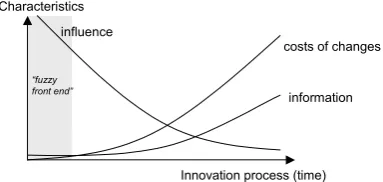
Figure 3 : The evolution of influence, costs of changes and information in the innovation process. (Von Hippel / Modified by Herstatt & Verworn, 2001)
As one can see in figure 3 the fuzzy front end can be seen as a fundamental stage in the innovation process. Obviously it is important to identify customer needs in an early phase but it is also important to draw a clear description of the requirements that are needed produce the product (e.g. costs, resources and time) (Murphy & Kumar, 1997).
The front end is the phase in which managers can exert the biggest influence on an idea before costs rises. Even though information is limited changes can best be made in the front end as later on this will be way more expensive. Now it is clear that the fuzzy front end is an important phase but it is not yet clear what the activities are in this stage.
4.1.2. Activities The Fuzzy Front End
The purpose of the fuzzy front end is to identify opportunities and to create a clear product concept before the idea enters the development process. Several authors have identified some activities that take place in this pre-development stage. Koen et
Author Steps Activities
Booz,%Allen%&%Hamilton%(1982) 7
New%product%strategy%AA>%Idea%generation%AA >%Screening%&%Evaluation%AA>%Business% analysis%AA>%Design%&%Development%AA>% Testing%AA>%Commercialization
Kotler%(2010) 8
Idea%generation%AA>%Idea%screening%AA>% Concept%Development%&%Testing%AA>%New% product%strategy%AA>%Business%analysis%AA>% Development%AA>%Marketing%Testing%AA>% Launch
Cooper%(2001) 6
Discovery%AA>%Scoping%AA>%Business%case%AA>% Development%AA>%Testing%&%Validation%AA>% Launch
Schilling%(1998) 5
Opportunity%Identification%AA>%Concept% Development%AA>%Product%Design%AA>% Process%Design%AA>%Commerical%production
The „FuzzyFront End“ of Innovation Herstatt/Verworn _________________________________________________________________________________
Characteristics
Innovation process (time) “fuzzy
front end” influence
information costs of changes
Figure 2: Influence, cost of changes, and information during the innovation process (according to von Hippel 1993/ modified by the authors)
In the next section we will show in more detail, what kind of information has typically to be gathered during the front end, depending on the kind of innovation targeted at. This determines the application fields of methods and tools.
3. A FRAMEWORK OF APPLICATION FIELDS FOR DIFFERENT METHODS AND TOOLS FOR THE “FUZZY FRONT END”
As already outlined, the lack of information is a limiting factor for the front end. Therefore, a differentiation for the management of the front end should be made with regard to the newness of key activities for the enterprise. Typical questions an enterprise has to ask itself at the beginning of an innovation project are summarized in figure 3.
Is the technologynew to our company?
Does the target market or customerdiffer from our previous ones? Do we have experience with the necessary distribution channels? Do the buying activitiesdiffer from our current practices? Do we have information about potential suppliers? Do we have the required production plants?
Can we execute the project within the existing organization or do we have to form a
new department or group.
Do the capital needsreach new, previously unknown heights?
Do the skillsrequired to develop the product/process differ from currently existing skills?
[image:5.595.318.510.456.547.2]al. (2001) explains five elements of the fuzzy front end. The first element is the opportunity identification. As the name already explains this element identifies opportunities that firms might want to pursue. For instance, this opportunity could be an answer to competitive threats or minor improvements to a product. It does not necessarily be a new product or service but can also be an improved manufacturing process. Techniques as causal analysis or brainstorming can be used to find new opportunities. In order to get to a concrete idea some additional information is needed. This information is generated and processed in the second element; opportunity analysis. The next stage is the so-called idea genesis in which the opportunity is turned into a concrete idea. An idea can be created using a formal approach but also by accident. For instance, an experiment that went wrong or unusual requests made by customers. Therefore direct interaction with customers is needed. The idea will be taken to the idea selection element where unrealistic ideas are dropped and the promising ideas will be pursued. The fifth element is called the “concept and technology development”. A business case should be developed based on market potential and customer needs. Khurana & Rosenthal (1998) identifies three phases in the front end: The pre-phase zero, phase zero and phase one. The pre-phase zero contains several activities that need to be followed before moving to phase zero and phase one. As mentioned by Koen et al. (2001) this pre-phase zero includes the opportunity identification and idea generation. Besides that it constructs a market and technology analysis in order to react effectively to customer needs and trends. When these steps are followed one can move to the next phases. Phase zero and phase one are concerned with the product concept. This means that a firm should clearly define the idea according to customer needs. In order to successfully move the idea through the process the firm should also identify the market segment, competitive situations and requirements that are needed to make the product. Before moving to the development process this concept should be tested on customers (e.g. visualization or clear description). In order to create a clear view of the activities in this front end one more finding will be discussed here. Kumar & Murphy (1997) identify three main activities in the pre development phase. First, this research shows two factors in the idea generation activity. Environmental scanning, which focuses on direct contact with customers and external generated ideas. The other factor, organization culture, focuses more on ideas found within the company. In their opinion the second activity is the product definition. This stage can be seen as an intermediary stage as it acts as a transformer of the idea into a real product concept. It is important to create a clear and realistic product design, as it needs support from the entire organization. There is a third activity stage, which must be surpassed. In order to realize an idea it must meet criteria. Several analyses have to be constructed to prove the feasibility of the idea. Risk analysis and business analysis are common used techniques. Especially business analysis has proved to be very important (Murphy & Kumar, 1997). According to these authors some pre development activities are required before a firm can start manufacturing a product. A certain pattern can be identified. Broadly spoken all their models start with the identification of opportunities. This can be done both external, through direct interaction with customers, and internal, through employees or processes. In order to get a clearly stated idea more and more additional information is needed. Therefore a business case should be constructed. A business case should deliver results about the market needs and trends. Besides an environmental view it should also provides information about the technological requirements and the feasibility of the idea in
terms of profitability. The end result of this business case should be a well-defined product definition.
• Opportunity and idea generation
• Idea scoping: inexpensive preliminary investigation
• Business analysis: market, business and financial
analysis
• Product concept and testing: Detailed stated definition
of the product
4.1.3. Success factors of new product development
In order to examine in which stages IoT can play a role activities had to be identified. However it is also interesting to see how it can contribute to the success of new products and to overcome challenges the current model faces. Therefore this part will explain the determinants of success. In order for a product to be successful it should be able to differentiate itself from competitors’ products. Traditionally this was done through excelling in terms of quality and price (Schilling, 1998). However as competition is getting more intense these two factors do not guarantee success anymore. Competition causes products’ life cycle to shorten because of innovative competitors. Two critical objectives that new product development process must meet are identified: (1) minimize time-to-market (2) and maximize the fit with customer requirements and needs (Schilling, 1998). The time to market is important, as it is hard for firms to get a good return on their investment. When a firm is late with introducing a new product it might become obsolete quicker and thus less time is available to recover on development costs. Another reason for firms to be “on time” is that certain market trends do not last forever and therefore market demand might shift. The second objective sounds obvious however many firms fail to correctly identify customer needs and thus don’t sell as many products as they could. Research has been done to identify critical success factors of firm’s business performance (Cooper & Kleinschmidt, 2007). This has shown that the key determinant to distinguish good and bad performers is that of a high quality new product development process. A well-executed process is capable of generating a higher profitability and impact efforts. Thus in order to let a product succeed in the market special attention is required towards the new product development. The quality of the new product development process has been measured according to some criteria. Up-front homework is the first factor. Many firms move directly to the physical development stage without assessing the technological and market characteristics. The best new product development processes consist of one or more homework stages in which preliminary assessment is done. The main purpose of these predevelopment stages is to get a clear analysis of the technological requirements and market needs (Cooper & Kleinschmidt, 2007). Besides these homework stages the following five criteria were used to assess the quality of the process:• A sharp & early product definition • Tough Go/Kill gates
• Quality of execution
• All stages were completely carried out
Next to a high quality new product process several other factors should be taken into account. Cooper (2013) identified 8 drivers of successful new products. These will be briefly discussed in the next part. The most important driver is based on its ability to deliver superior value and quality to the customer (Cooper, 2013). It is well known that differentiation is one of the generic strategies that can give a company competitive advantage (Porter, 1985). A product is superior when it outperforms a competitor in terms of quality, meeting customer needs and price-quality ratio (Cooper, 2013). Besides that customers must perceive the product as meaningful. In this sentence product does not just mean the physical product but also the attached services, support and other benefits (Kahn, 2013). Important to consider is that superiority is seen from a customer point of view and not from an R&D point of view. Therefore it is required to have well identified the customer wants and needs. The second driver that is discussed in his report is concerned with a market orientation. In his research he found that a products success is based on the firm’s ability to be market-oriented and to build on the voice of the customers. This means that a firm should identify competitor pressures, customer needs and the nature of the market. These are seen as essential elements of a new product. Not putting sufficient effort in the interaction with customers causes many firms to fail at the introduction of a new product. Firms might believe that doing extensive market research only adds time to the process. However it is causing more benefits than disadvantages to the process. The two next drivers are already explained previously. These are two stages of the predevelopment phase: the up-front homework and the sharp definition of products. Cooper & Kleinschmidt (1990) can support these drivers as they found that 85,4% of the products with a strong definition succeeded compared to only 26,2% with a poor definition. The fifth driver is called the spiral development. In this kind of development process constant feedback is required from customers during the entire process. Information changes overtime and competitive actions as well. Therefore firms need to seek feedback at every stage. It first builds a test model, which is tested. The test results, feedback, are used to revise the product. This kind of development is done to give some experience to customers because they do not know the product until they have seen it. The next driver is about globalization. This driver is interesting for bigger firms as they have the resources to go abroad. Firms that do not just focus on the domestic market outperform those that only stay in their home market (de Brentani & Kleinschmidt, 2004). However a firm should not forget to listen to customers in the foreign market. The seventh driver is about the marketing side of the new product development. As products don’t sell itself a firm should put sufficient effort in marketing programs to create awareness of the product. The last driver is concerned with the speed to the market. According to Cooper (2013) and Schilling (1998) speed to the market is one of the objectives of the new product development process. Cooper (2013) states that being the first to the market brings main advantages to a firm. However some criticisms occur. Rather than being the first to the market, timing is a better definition. Sometimes it is preferred to be a second mover instead of a first mover as firms can imitate others at lower development costs. Several ways can be followed in order to increase the speed to the market. For instance, parallel process instead of sequential. Besides the previously mentioned success drivers of the overall process, research has been done to the critical success factors of each stage in the new product development process. As this report mainly focuses on the front end these steps will be taken into account. According to Bhuiyan (2011) the first activity identified in this paper, the idea and opportunity stages, must be
[image:7.595.311.542.266.420.2]customer focused. Listening to the voice of the customer resulted in higher success rates of new products, compared to internally generated ideas (Bhuiyan, 2011). The way of gathering ideas from customers can be done in two ways. The traditional approach where a set of random customers is asked to give feedback. Or the lead user approach that focuses more on the leading innovation adopters in the markets. These are customers that identify innovations sooner than the rest of the market (Von Hippel, 1986). The next stage, the business analysis, contains a more detailed analysis of the market and the selection of “good” ideas. Especially important is the projection of profits and development costs. In the first stages costs are not that high but as a project moves further in the process costs rise as well. Therefore a good analysis should be used to eliminate projects. The main driver of success in this stage is the up-front homework conducted by the responsible team. This consists of competition, market and financial analyses.
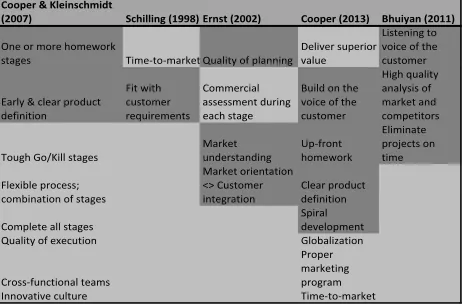
Figure 4: Success factors of different authors
As shown in figure 4 the majority of success factors occur in the front end, see the bold columns. These are drivers that relate to the interaction with customers and the clear statement and analysis of the product. As mentioned in the last part proper up-front homework also enables to decrease the cycle time of a product and thus increase the time to a market. In order to create a successful product it appears to be of high importance to listen carefully to the voice of the customer in the predevelopment stages. A challenge that now arises concerns the collection and transformation of data. How can firms identify the right customer needs? How can firms collect this information? The next section will go more in depth on the customer involvement in these early stages of the new product development process.
4.1.3. Customer Involvement In Fuzzy Front End
As seen in the previous chapter many of the success factors point at the front end and the interaction with customers as a main driver of success. Therefore more research to how this stage can contribute to a successful introduction of new products is required. In this part of the report several studies will be compared concerning the opportunities customer provide and the positive impact customers have. If firms are not able to fulfill customer expectation, which means that customers do not perceive products or services as valuable, it misses huge opportunities. A firm might be really excited about an idea and puts it through the development stage, without knowing the customer needs; a lot of money and effort is wasted. As the focus is on the fuzzy front end of the new product development process it is important to identify gaps and opportunities undiscovered in current consumer interactions.Cooper&&&Kleinschmidt&
(2007) Schilling&(1998) Ernst&(2002) Cooper&(2013) Bhuiyan&(2011)
One$or$more$homework$
stages Time1to1market Quality$of$planning Deliver$superior$value Listening$to$ voice$of$the$ customer
Early$&$clear$product$ definition
Fit$with$ customer$ requirements
Commercial$ assessment$during$ each$stage
Build$on$the$ voice$of$the$ customer
High$quality$ analysis$of$ market$and$ competitors
Tough$Go/Kill$stages
Market$ understanding
Up1front$ homework
Eliminate$ projects$on$ time
Flexible$process;$ combination$of$stages
Market$orientation$ <>$Customer$
integration Clear$product$definition
Complete$all$stages
Spiral$ development
Quality$of$execution Globalization
Cross1functional$teams
Proper$ marketing$ program
Research has been done in the report of Business Decisions Limited (2003). In this paper the power of customers to drive innovation is discussed and will be briefly explained. As mentioned before the first task for a new product development team is to identify opportunities and turn them into specific ideas. When taking a look at internal and external sources this research has shown that the main sources of new opportunities are the changing customer needs. Compared with other sources, such as changes in technology, new geographic markets and changing government regulations, changing needs are seen as three times more important (Business Decisions Limited, 2003). Even though nearly every study shows that firms who don’t interact with customers in the new product development process have a lower success rate still not every company pays that much attention to its customer base. The report of Business Decisions Limited shows that around 75% of all the researched firms pay attention to customer in the idea generation phase. Other research (Gruner & Homburg, 2000) shows that this number is even lower. On a likert scale of 7 (1 is no interaction, 7 intense interaction) the first two stages, idea generation and product concept development, achieve around 2,4. This clearly shows that there is room for improvement for more customer integration. But why do not all firms spent so much effort in interacting and communicating with customers while it is proved to be beneficial? One motive could the amount of labor required to gather the customer data. Often used methods in the idea generation phase are brainstorm sessions, customer interviews and the use of focus groups. Another motive might be the difficulty of gathering customer needs and therefore being time consuming. Two kinds of needs can be identified. The needs that are easiest to identify are the articulated needs. These needs and wants are verbalized by customers and therefore widely available for firms. Conducting an interview or maintaining a customer service point can identify these needs. More difficult is the identification of unarticulated needs. Obviously these needs are not verbalized and thus hard to recognize by a firm. Unarticulated needs are the problems or additions customers face but are unable or unwilling to share with a wider community. Furthermore a division can be made between existing and potential customers. 66% of the articulated needs of existing customers were assessed against 52,5% of their unarticulated needs. In case of potential customers this number is a bit lower. Firms were able to identify 54,3% of the articulated needs of potential customers and 41,5% of their unarticulated needs. Important note is that these numbers apply to the best firms in the industry so in case of less performing firms these numbers are even lower. Even though customers are a main source of innovation and competitive advantage many firms have shown not to be able to identify these (un) articulated well. Thus firms miss a huge opportunity of creating new products and new success. A solution to this missed opportunity is to put more effort in customer interactions and use better methods to efficiently gather customer information. Two previously mentioned opportunities could be summarized:
• More time and effort in customer interaction in the
front end stages
• New methods for identifying (un) articulated needs &
needs
For smaller firms it is easier to maintain close contact with customer as for larger firms that have many customers. Before introducing new methods of opportunity identification the current techniques will be briefly explained.
4.1.4. Current Applied Techniques To Identify
Customer Needs & Wants
As mentioned above two kinds of customers and needs can be identified. Starting with the simplest form: articulated needs of existing customers. The easiest ways of collecting information from these customers is to hold direct interviews, surveys and the use of focus groups (Hauser, 1993). Focus groups are a group of people that asked to give their opinion about a product or service. They are free to interact with each other so firms are able to get a variety of views on its offerings. These techniques are seen as traditional market research tools. However these are inapplicable for unarticulated needs. These needs are not verbalized so hard to identify for firms. Though as it is so hard to assess not many firms are able to yield the benefits it offers. A very popular tool is the lead user analysis. Lead users are important as they identify innovations way earlier than other customers. Lead users can act as a need-forecasting technique (Von Hippel, 1983). Lead users are able to adapt to an innovation before it becomes general to the rest of the marketplace. First step is to identify a specific trend in which the company is interested. Then the lead users can be found and collected. The next step contains the collection of data from the lead users. Putting them in a group discussion can do this. Finally, the information and concepts collected from the lead users should be tested on ordinary users as they represent the general market (Von Hippel, 1989). Another often-used method is the so-called ethnography. This is the description and study of human culture (Light Minds, 2005). This technique can be applied to potential and existing customers. Firms should not just focus on what people say at the moment but rather what customer want in the future. As mentioned by Christensen (1997) products might not be needed at the moment but can be useful in the future. This is called the Innovator Dilemma. In order to overcome this problem firms can use ethnography because this tells firms to listen and observe customers really carefully. Instead of surveys ethnography applies customer participation and observation. Now there is still one category left: unarticulated needs of potential customers. This means that customers are not aware of the needs that they have and therefore hard to assess. It is a huge opportunity for firms to know needs before customers are even conscious of it. The main way to handle these needs is to spend much time with the customer so you know them better than they do themselves (Anthony, 2012).
5. LITERATURE REVIEW: LINKING IoT
The previous sections have addressed the opportunities and the challenges associated with the front end of the new product development process. Companies find it hard to identify customer needs and wants while these are essential drivers in the introduction of new products. Several techniques have been discussed already to improve the front end but apparently not every firm is able to fully exploit the potential. Therefore new methods can be useful to increase the success rate of the new product development process. It is believed that the Internet of Things (IoT) is the next big thing that can contribute to this process. By connecting devices to devices or users products are quickly able to adapt to changing environment or customer wants. The magic word within the combination of IoT with new product development is ‘predictive analysis’ (IBM corporation, 2015).
factors the following bottlenecks can be identified (Verhage & Van Weele, 1981):
• Insufficient time to provide a good idea
• Product uniqueness: difficult to come up with better ideas than the existing products
• Product-market fit: products that do not fit market needs
• Screening is often on intuitive basis
5.1
Application of IoT in the Front End
The Internet of Things is a technology that has many applications. One can think of smart homes, smart cars etc. It is known that it is capable of improving the customer experience. For example, smart coffee machines. One is able to connect the coffee machine to an application on your smartphone. Setting a time in the morning so you can wake up while your fresh cup of coffee is ready. By offering these new value-added services firms are also able to get better customer insights (Bosch, 2014; Splunk, 2015; McKinsey, 2010). It is believed that IoT has the capability of predicting future needs by analyzing real-time data from the smart products. This section will explain whether IoT is applicable in the first stages of the new product development process
The first activity in the front end is the idea generation stage. The act of generating novel and applicable ideas (Herring et al. , 2009). The performance of the idea generation stage is assessed by ability to generate many ideas and to screen the high quality ideas (Girotra et al., 2009). Ideas can come from external sources (e.g. customers or competitors) or internal sources (e.g. processes or employees). As changing customer needs have the biggest impact on a firm’s business this section first connects IoT and the external source. By using a device-to-cloud communication model firms are able to gather information about usage patterns and behavior. These usage patterns might give firms useful insights in how to incrementally or drastically innovate products. As just one idea is not sufficient in order to create a successful product many more need to be acquired. By offering a smart product firms have the ability to analyze every individual product and collect real-time data. This kind of information collection is closely linked to the topic of open innovation. Open innovation states that external sources should be exploited more in order to improve product lines (Enkel et al., 2009). The idea behind open innovation is that smart people are not just the people within the firm but also outside the firm. The Internet of Things allows firms to interact with customers without much human intervention. A good example is the freestyle vending machine of Coca Cola. This is not just a normal vending machine but this one includes its own MAC address so it is able to communicate via WiFi (The Register, 2014). This machine provides opportunities for customers and Coca Cola. The vending machine contains a touchscreen on which customers can make their own coke. Over 100 flavors and brand beverages can be chosen. Besides that it can communicate with consumer’s smartphone in order to personalize customer offers. It offers a total new customer experience while it also provides Coca Cola with valuable information about what, when and where people use the vending machine. The connectivity components of such smart products allow firms to store the huge stream of data about the performance and the usage of products. Which features do customers use or favor? Are the products really used in the way they are designed for? The sensors in smart products are able to answer these questions. By using IoT technologies firms get insights about the state of a product and the way it is used. This provides firms with a lot of data, which can be used to come up
with ideas on how to improve the product. In order to make sense of this enormous stream of data the right skills and data mining tools are needed. When doing this right is must be able to safe time in the new product development process. As the volume of data is huge firms can identify certain patterns. Just a few users might experience a problem and is therefore not worth further consideration experience some performance issues. This makes it easier to screen certain ideas by ranking them on a scale of how often it appears. Instead of directly contacting customers data analytics tools do the job for you. Besides tracking customer behaviors and usage IoT also offers opportunities for internal idea generation. The use of the Internet of Things in identifying customer usage patterns offers new ideas about new-and-improved or maybe even new-to-the-world products. By applying IoT to the internal sources (e.g. employees or processes) firms rather find ideas about cost-reductions then drastic innovations. The Internet of Things can reduce costs by optimizing development processes and therefore offer prices against a lower price (McKinsey, 2010). Sensors are able to give real-time data about temperature, location or motion. Problems are recognized and data is send to computers. By signaling back the data sensors can adjust the process without human intervention.
development. As mentioned, agile or spiral development is seen as a success factor. Thus IoT can improve the performance of the new product development model by constantly tracking customer behavior and product usage. This is a good way of accelerating the new product development process while a good relationship with the customer is maintained as well (Splunk, 2015). In order to prove the ability of predicting market needs and potential some experts have been surveyed and cases have been studied. The case studies are summarized in the table below.
[image:10.595.54.286.198.305.2]5.2 Results From Literature, Case & Expert Study
Figure 5 : Case studies of firms that have applied IoT
These case studies relate to several features of IoT. The Heidelberg and CNH Industrial mainly focus on predictive maintenance. By identifying breakdown before they occur firms have been able to offer remote services that can solve the problems from a distance. Besides offering new services these insights in product performance can also open the eyes of the manufacturers to improve future products. The other two cases were more about the identification of customer behavior and usage patterns. The information gathered from IoT in these cases were used to customize products and services as well as providing customers ideas related to (unmet) customer needs. To strengthen these findings some experts have been surveyed (see appendix 9). Questions are asked concerning privacy and security issues, speed of process and the ability to predict customer needs. In order to see whether IoT has the potential to be a game-winner the findings from the literature study, case study and experts study should be gathered and the previous bottlenecks will be assessed.
1. Insufficient time to provide a good idea:
As stated by the cases and the experts IoT has the capability to gather real-time data. Therefore firms get a constant flow of data that can be analyzed, which means more insights, more ideas and more correlations. Instead of interviewing focus groups data is directly gathered so firms do not have to spend time in collecting groups. A requirement is that the firm has proper analytics tools so the process will not be delayed. Due to the real-time data a firm can constantly collect feedback throughout the whole process and therefore ideas can be generated throughout the entire life cycle of a product.
2. Product uniqueness:
With the current techniques it is hard to come up with better products than the existing ones (Verhage & Van Weele, 1981). Connected devices are able to follow a ‘fail fast’- approach. This means IoT has the ability to identify issues in existing products in a very early stage. As shown in the cases smart products have the ability to detect failures in a very early stage. This offers firms the opportunity to add remote (maintenance) services and thus create new-and-improved products. Remote service can add value to the product and make a product unique (e.g. Heidelberg case). Besides making a product unique IoT
also influences the duration of the life cycle of a product. By collecting data quicker and adding services from a remote distance products become obsolete (or will be replaced) sooner.
3. Product-market fit
As well as the cases the experts have the same opinion about this bottleneck. Tracking customer behavior and product usage give important insights in possible improvements or even new products. Every single product is equipped with sensors so a huge stream of data tells companies about widely occurred issues or opportunities. The data collected from sensors is said to be more accurate as it gains insights in real-life actions. When observing people or interviewing focus groups a bias might occur thus this new way of data collection can be seen as more reliable.
4. Screening is on intuitive basis
Screening is important, as ‘bad’ ideas should be eliminated as soon as possible before it gets costly. The smart products can be useful when creating a product concept. Constant interaction through the smart devices can be applied to get feedback on ideas. For example, asking feedback through messages on touchscreens of smart phones or the product itself.
6. INTEGRATION
According to the previous findings a ‘new’ new product development model is created. As a basis the Stage-Gate model is used because it uses cross-functional teams and quality gates before a next step can be exerted. Besides the Stage-Gate model is a flexible and adaptive model by including spiral development. Spiral development is used to show customers ideas and get feedback in every stage of the model (Cooper, 2014). However a firm doesn’t have to build a prototype in order to get feedback as IoT is able to offer a remote solution for this. For instance, by remotely adding services and assess how customers respond to it. However the Stage-Gate have been a bit revised. As much data is collected firms need to change the organization in order to process this data into understandable information. Due to sensors in products firms are able to constantly collect real-time data, which provides firms with real-time issues or ideas. This turns products into constant revenue generators over its life cycle.
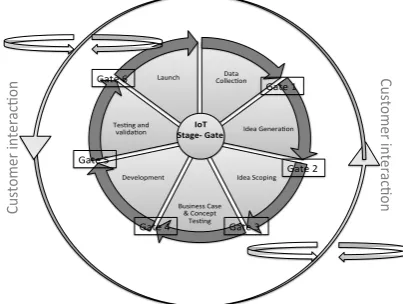
Figure 6: Proposed Stage-Gate Model® Including The Internet Of Things
When applying IoT on a product the way of generating ideas and data changes. Therefore instead of starting with the idea generation phase (e.g. normally includes focus group interviews or brainstorm sessions) a stage is needed in which data from sensors and actuators arrive in the cloud. Therefore data collection is the new first activity. This stage includes the
Company Project Result Opportunity
Coca%Cola Coca%Cola%Freestyle% Vending%machine Identifying%spikes%in%beverage% consumption%%and%most% bought%flavours Targeted%marketing,%ideas% for%future%flavours
Heidelberg%Printing Smart%service%:%Predictive%maintenance Remote%solving%of%printer%issues%and%downtime
[image:10.595.322.524.526.678.2]collection of raw data (e.g. product performance and usage) but also filters the required information. The next step is the idea generation phase. Current techniques, such as focus groups or lead user analysis, can still be used but sensors offer more accurate data. The filtered data from the data collection stage will enter the idea generation phase. In order to come up with good ideas one should turn raw data into useful information by mining the data. This stage shouldn’t slow down the process and therefore skilled employees and proper analytics tools should be applied. Fortunately this era offers new algorithms and increasing computing powers everyday. The next two stages are essential in the new model. Data has been turned into information and some new ideas are generated but a firm must ensure that there is a product-market fit. Therefore firms should constantly seek feedback from customers by adding services or using smart products as a two-way interaction mode. Next to this skilled employees should be able to identify certain patterns or behaviors that show what customers really want. All this information should provide a clear product definition, including the financial and technical requirements. The following stages have not been discussed in this paper. However several authors have mentioned the opportunity IoT provides in the physical development stage. After the smart product is launched basically the new product development directly starts again. In the former new product development model a firm had to be active in the first stage (idea generation) because it needed to get in touch with customers. This active approach now moved to a more proactive orientation. Instead of contacting focus groups firms interact with customers directly after launching a product and therefore the former straight Stage-Gate® model transforms into a virtuous cycle in which firms collect data throughout the entire model and in every stage. The main outcome of an IoT integrated new product development process is a new-and-improved product that includes services. These services can be offered and optimized from a remote distance. However new-to-the-world products can be identified as well because firms get unique insights in product usage and performance.
7. SECURITY AND PRIVACY ISSUES
The implementation of IoT on itself should be done really carefully. It is not straightforward. The organization must be skilled enough to handle to huge amounts of data. Additionally, this kind of innovation needs to fit an organization’s culture. Besides the organization needs to take into account some ethical issues as well. As IoT generates so much data firms must guarantee customers that they don’t spread their information. Some data security challenges arise. Miorandi et al. (2012) identified three kinds of IoT security requirements: data confidentiality, privacy and trust. Data confidentiality states that only authorized entities are allowed to enter and modify the data. Data might provide a firm with valuable data in order to stay competitive and third parties that can use the data against you may not access this data. The second challenge is quite similar to the data confidentiality challenge. However privacy is more concerned with data of individual persons. Customers’ behavior, patterns and daily activities can be observed and therefore firms must clearly communicate with their customers what kind of data they collect. A firm must provide transparency into how they collect data and how they use the data (McKinsey Global Institute, 2015). The last challenge is to build on trust between customer and company. Guaranteeing security of data builds on this trust challenge but trust is way more than just security. A firm’s reputation plays a role as well. If a firm is known for its non-ethical and bad businesses customers might not want to share data with it. Therefore firms
can exploit the opportunities of IoT but should also overcome some barriers concerning the implementation of the technology and ethical challenges.
8.CONCLUSION & LIMITATIONS
Smart products are becoming a ‘big thing’ in nowadays and future businesses. By 2020 more than 50 billion connected devices will be available, which is ten times as much as the whole population on this planet. It opens doors in terms of improved customer experienced but also in creating opportunities for firms. This paper has examined the opportunities provided to firms. In order to come up with a new theoretical model some research questions were to be answered first. First task was to assess the importance of proper new product development process in order to strengthen relevance of this report. Besides the fact that new products count for around 40% of a firm’s profit there was a clear distinguishing between the high performing firms and the lower ones. This clearly indicates that the new product development process is of high importance. To have a clear scope the study focuses on the front end of the process. In order to find the opportunities for firms this study has examined the bottlenecks and success drivers of the new product development model. After some research it turned out that the front end activities are seen as success drivers of a success in introducing new products. However these stages also contain bottlenecks because still not every firm is able to clearly identify customer needs. Some firms barely have contact with customers (Gruner & Homburg, 2000). In order to offer firms some support a new model, based on the Stage-Gate® model, has been created. Besides the known stages one additional phase has been added to the front of the model: data collection. The idea behind this new model is that sensors make it possible to collect real-time data and throughout every stage of the model. Via this way firms can gather new insights and collect feedback at a constant rate. Therefore the new model is a virtuous cycle that states that smart products are a source of continuous product improvement and idea generation. This makes it easier for firms to interact with customers without much human intervention and time consumption.