Visuo-spatial Ability and Damage in
Laparoscopic Simulator Training
Bachelor Thesis Psychology
Jacek Sliwinski
Enschede, The Netherlands, April 2010
Dr. Matthijs Noordzij
Department of
Cognitive Psychology & Ergonomics
Jan-Maarten Luursema
Abstract
Introduction
Laparoscopic surgery is established as the preferred technique for many common procedures (Al-Abed & Cooper, 2009). This development is accompanied by the increased availability of laparoscopic simulators (Lamata, Gómez, Bello, Kneebone, Aggarwal, & Lamata, 2006), which provide an artificial learning environment. Numerous studies support findings of transfer from simulator training to operating room, which encourages the use of simulators (Hyltander, Liljegren, Rhodin, & Lönroth, 2002; Seymour, et al., 2002; Stefanidis, Acker, & Heniford, 2008; Stelzer, Abdel, Sloan, & Gould, 2009).
In the acquisition of laparoscopic skills, cognitive abilities have proven to be influential, especially for the early learning phase (Keehner, Lippa, Montello, Tendick, & Hegarty, 2006). This development is in accord with the theories of skill acquisition (Anderson, 1983; Fitts & Posner, 1967), which propose that cognitive abilities correlate with performance the most during declarative encoding, thereafter becoming less influential due to an increase in automaticity.
In particular visuo-spatial ability has been found to be a key predictor of laparoscopic performance (Eyal & Tendick, 2001; Hassan, et al., 2007; Keehner, Lippa, Montello, Tendick, & Hegarty, 2006). Risucci (2002) even found that surgeons tend to score higher than the general population on tests of visual-spatial ability. Visuo-spatial ability predicts laparoscopic performance in the early training stage (Hedman, Ström, Andersson, Kjellin, Wredmark, & Felländer-Tsai, 2006), and correlates with the speed in acquiring laparoscopic skills (Risucci, Geiss, Gellman, Pinard, & Rosser, 2001).
It is mostly investigated on the laparoscopic performance measures Time (Risucci, et al., 2000; Risucci, et al., 2001), Economy of motion (Hassan, et al., 2007; Wanzel, Hamstra, Caminiti, Anastakis, Grober, & Reznick, 2003), and a Total score of performance (Eyal & Tendick, 2001; Wanzel, Hamstra, Anastakis, D, & D, 2002). Yet, the role of visuo-spatial ability on measures of Damage has been so far only scarcely investigated. However, its further research might prove valuable, since the patients health must be the top priority of every physician.
In this sense, Damage might be a more vital indicator for laparoscopic performance than the duration or speed in performing. The current study examines the influence of visuo-spatial ability on Damage in an exploratory way. Following Carroll’s Three-Stratum Theory (1993), visuo-spatial ability has been investigated by the five factors it comprises, namely Visualization, Spatial relations, Speed of closure, Fluency of closure, and Perceptual speed.
Tendick, 2001; Wanzel, et al., 2002). Only low but significant correlations have been found on Total error, and Tissue damage (Hassan, et al., 2007).
Spatial relations refers to mentally manipulating relatively simple visual patterns. It is found to influence positively the duration of training to reach a performance goal (McClusky III, Ritter, Lederman, Gallagher, & Smith, 2005; Ritter, McClusky III, Gallagher, Enochsson, & Smith, 2006).
Speed of closure refers to the ability of identifying incomplete visual objects and patterns, by matching them with their associated memory representations. This factor is not included in testing because prior studies could not confirm its importance concerning laparoscopic surgery (Risucci, et al., 2001; Wanzel, et al., 2002, Wanzel, et al., 2003).
Fluency of closure relates to apprehending and identifying complete but disguised or obscured visual patterns. It is the ability to differentiate a simple figure from a complex background. A high score on that ability is found to have a positive influence on Time, and Total error, in surgical training (Gibbons, Baker, & Skinner, 1986; Schueneman, Pickleman, Hesslein, & Freeark, 1984).
Perceptual speed is the speed in finding a known visual pattern. It is the ability to quickly and accurately compare visual figures or symbols. A significant correlation has been found between Perceptual speed and the duration of simulator training to reach a goal (McClusky III, et al., 2005), and a total score on plastic surgery tasks (Wanzel, et al., 2002).
Method
Participants
Four surgical and three gynecological trainees from the Medisch Spectrum Twente hospital in Enschede participated in this study (three female, four male) with a median age of 29 years (range, 26-33 years). All participants were right handed and had no game experience but different previous surgical experience. The study was performed within a training program for basic laparoscopic skills and is based on data from the Department of Technical Medicine, University of Twente, the Netherlands.
Procedure
The study was organized in two phases. The first phase consisted of a two-part paper-and-pencil psychometric test to examine the participants’ visuo-spatial ability factors Visualization, Spatial relations, Fluency of closure, and Perceptual speed (see Appendix A for testing details). The same factors were tested two times with different items to increase the test reliability. Their mean represents an indication of the corresponding ability. Additionally, data about the participants´ demographics and prior experience was collected.
Basic Skills software package. The exercises were Instrument navigation, Coordination, Grasping, Lifting and Grasping, Cutting, and Clip applying. A detailed description of the exercises can be found under www.surgical-science.com.
Apparatus
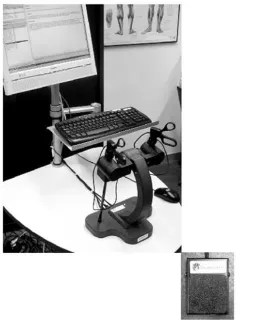
[image:8.612.89.345.372.699.2]The LapSIM virtual reality simulator (see Figure 1) was used with a Virtual Laparoscopic Interface (VLI) by Immersion. The VLI consists of 2 handles with sensors using a 5-degree-of-freedom tracking system and was connected to computer running Microsoft Windows XP SP2, equipped with an Intel Pentium 4 CPU with 3.00 GHz, 504 MB of RAM, an onboard video card with 128 MB shared memory, and a 19” TFT monitor. Surgical Science’s LapSim v.3.0.10 with the Basic Skills software package v.3.0.2 was used as training software.
Data reduction
In the course of the first paper-and-pencil test, eight numeric experience variables had been acquired, which are prior attendance of laparoscopy, and endoscopy, prior assistance in laparoscopy, and endoscopy, prior simulator experience in laparoscopy, and endoscopy, and prior procedures performed in laparoscopy, and endoscopy. These variables have been categorised into Experience. Category 1 represents little experience and is defined by an overall experience score of 0-30. Average experience is defined by an overall experience score of 30-100. Category 3 stands for high experience and is defined by an overall experience score of more than 100. The scores were categorised based on the given distribution, and in order to discriminate different levels of experience among the participants. As little experienced were three participants classified, as average experienced two, and as high experienced also two.
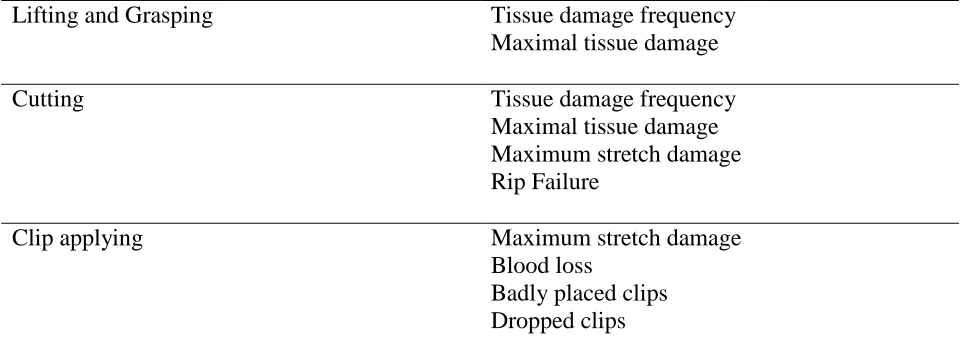
The measured variables by the LapSim simulator concerning Damage were Tissue damage frequency, Maximal tissue damage, Maximum stretch damage, Rip Failure, Badly placed clips, Dropped clips, and Blood loss. Each exercise logged these variables, which corresponded to its specific task (see Table 1). All variables were then merged into one compound variable per session, using the method of Luursema (in press).
Exercise Logged variables
Instrument navigation Tissue damage frequency
Maximal tissue damage
Coordination Tissue damage frequency
Maximal tissue damage
Grasping Tissue damage frequency
Lifting and Grasping Tissue damage frequency Maximal tissue damage
Cutting Tissue damage frequency
Maximal tissue damage Maximum stretch damage Rip Failure
Clip applying Maximum stretch damage
Blood loss
[image:10.612.66.546.72.253.2]Badly placed clips Dropped clips
Table 1. Specific Damage variables corresponding to the individual exercises.
Statistical analysis
Results
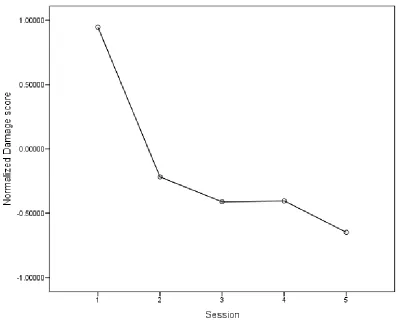
[image:11.612.82.481.186.513.2]In order to measure a training effect throughout the five sessions, a repeated-measures ANOVA was carried out for the variable Damage. A significant decrease in Damage was observed, indicating that learning took place (F(4, 20) = 5.3, p < .01).
Figure 2. Learning curve of the inflicted damage across the training sessions in terms of z-scores.
Discussion
This study investigated the involvement of visuo-spatial ability with Damage in laparoscopic simulator training. The visuo-spatial ability factors Visualization, Spatial relations, Fluency of closure, and Perceptual speed, were correlated with Damage for the whole simulator training as well as each training session apart. Additionally, the development of the participants’ averaged Damage score was observed during the training. The results will be discussed in the following.
Throughout the training, the Damage score of the participants improved very quickly, with the most salient advancement from the first to the second session (see Figure 2 in the ‘Results’ section). Thereafter, the score improved relatively little till the fifth and last session, with almost no changes from the third to the forth one.
The major improvement at the very beginning of the training might represent for a great part the participants’ familiarisation with the simulator. Although the following changes are much smaller in size, an overall ongoing improvement was observed. A clear saturation could be not identified, and therefore further improvements would be expected if the training was extended. The learning process concerning the avoidance of damage to the virtual tissue is recognised as ongoing and relatively slow.
No involvement of any visuo-spatial ability factor was identified for the whole training. Though, correlating them with each training session individually discovered Visualization to be of particular influence. In the last three sessions, Visualization has been found to contribute greatly, with negative correlations for Damage.
Visualization is the ability involved in manipulating more complex visuo-spatial representations (Carroll, 1993). What was observed is an increased involvement of Visualization just after the initial familiarisation phase with the simulator. At that point, it was directly associated with the skill development of damage avoidance, giving an indication of the required demands. The visuo-spatial skill of manipulating complex figures is therefore believed to be vital for the ongoing learning process of minimizing damage.
A lasting significance of Visualization in the context of laparoscopic simulator training was also reported by Keehner et al. (2006), though measured by a time-related performance variable. The similar relationship with Damage confirms Visualization as the main visuo-spatial ability factor predicting long-term laparoscopic performance. However, an involvement of other variables than visuo-spatial ability is also possible. Therefore, further research is necessary to confirm the role of Visualization and the other visuo-spatial ability factors with Damage as shown in this study.
Limitations
have performed some tasks multiple times, especially after achieving a poor score. Therefore, the data from the first trials only was analysed. Because the data from this study was collected during a larger training program, the trials with different difficulty and another simulator might have distorted the data. Aside from that, there had been minor technical difficulties. Some participants have had occasionally problems in using the simulators, though support was always in reach.
Conclusion
References
Al-Abed, Y., & Cooper, D. G. (2009). A Novel Home Laparoscopic Simulator. Journal of
Surgical Education, 66/1.
Anderson, J. R. (1983). The architecture of cognition. Cambridge, MA: Harvard University Press.
Carroll, J. B. (1993). Human Cognitive Abilities: A Survey of Factor-Analytic Studies. Cambridge University Press.
Ekstrom, R. B., French, J. W., Harman, H. H., & Dermen, D. (1976). Manual for Kit of
Factor-Referenced Cognitive Tests. Princeton, NJ: Educational Testing Service.
Eyal, R., & Tendick, F. (2001). Spatial Ability and Learning the Use of an Angled Laparoscope in a Virtual Environment. Medicine Meets Virtual Reality , 146-152.
Fitts, P. M., & Posner, M. I. (1967). Human performance. Belmont, CA: Brooks Cole.
Gibbons, R. D., Baker, R. J., & Skinner, D. B. (1986). Field Articulation Testing: A Predictor of Technical Skills in Surgical Residents. Journal of Surgical Research, 41, 53-57.
Guay, R., & Mc Daniels, E. (1976). The Visualization of Viewpoints. The Purdue Research Foundation. West Lafayette, IN. (as modified by Lippa, Hegarty, & Montello, 2002).
Hassan, I., Gerdes, B., Koller, M., Dick, B., Hellwig, D., Rothmund, M., et al. (2007). Spatial perception predicts laparoscopic skills on virtual reality laparoscopy simulator. Child's Nervous
Hedman, L., Ström, P., Andersson, P., Kjellin, A., Wredmark, T., & Felländer-Tsai, L. (2006). High-level spatial ability for novices correlates with performance in a visual-spatial complex surgical simulator task. Surgical Endoscopy, 20, 1275-1280.
Hyltander, A., Liljegren, E., Rhodin, P. H., & Lönroth, H. (2002). The transfer of basic skills learned in a laparoscopic simulator . Surgical Endoscopy, 16, 1324-1328.
Keehner, M., Lippa, Y., Montello, D. R., Tendick, F., & Hegarty, M. (2006). Learning a Spatial Skill for Surgery: How the Contributions of Abilities Change With Practice. Applied
Cognitive Psychology, 20, 487-503.
Luursema, J.-M. (in press). See Me, Touch Me, Heal Me. The Role of Visuo-spatial Ability in Virtual Anatomical Learning and Endoscopic Simulator Training (Doctoral thesis, University of Twente, The Netherlands).
McClusky III, D. A., Ritter, E. M., Lederman, A. B., Gallagher, A. G., & Smith, C. D. (2005). Correlation between perceptual, visuo-spatial, and psychomotor aptitude to duration of training required to reach performance goals on the MIST-VR surgical simulator. The American
Surgeon, 71 (1), 13-21.
Risucci, D. A. (2002). Visual spatial perception and surgical competence. The American
Journal of Surgery, 184 (3), 291-295.
Ritter, E. M., McClusky III, D. A., Gallagher, A. G., Enochsson, L., & Smith, D. (2006). Perceptual, visuospatial, and psychomotor abilities correlate with duration of training required on a virtual-reality flexible endoscopy simulator. The American Journal of Surgery, 192 (3), 379-384 .
Schueneman, A. L., Pickleman, J., Hesslein, R., & Freeark, R. J. (1984). Neuropsychologic predictors of operative skill among general surgery residents. Surgery, 96 (2), 288-295.
Seymour, N. E., Gallagher, A. G., Roman, S. A., O’Brien, M. K., Bansal, V. K., Andersen, D. K., et al. (2002). Virtual Reality Training Improves Operating Room Performance. Annals of
Surgery, 236 (4), 458-464.
Spearman, C. (1904). "General Intelligence" Objectively Determined and Measured. The
American Journal of Psychology, 15 (2), 201-292.
Stefanidis, D., Acker, C., & Heniford, T. B. (2008). Proficiency-Based Laparoscopic Simulator Training Leads to Improved Operating Room Skill That Is Resistant to Decay.
Surgical Innovation, 15 (1), 69-73.
Stelzer, M. K., Abdel, M. P., Sloan, M. P., & Gould, J. C. (2009). Dry Lab Practice Leads to Improved Laparoscopic Performance. Journal of Surgical Research, 154, 163–166.
Thurstone, L. (1938). Primary mental abilities. Psychometric Monographs, 1.
Wanzel, K. R., Hamstra, S. J., Anastakis, D. J., Matsumoto, E. D., & Cusimano, M. D.
(2002). Effect of visual spatial ability on learning of spatially complex surgical skills.
The Lancet, 359, 230-231.
Appendix A
Psychometric tests
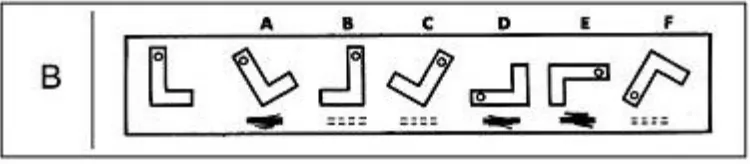
The participants’ visuo-spatial ability factors were assessed two times with a battery of paper-and-pencil psychometric tests. Different tests for the same abilities were administered the second time. In testing, participants were asked to match the left figure with one from the right. The abilities were examined using the following tests.
Visualization
[image:20.612.87.467.359.439.2]Mental rotation test (Vandenberg and Kuse, 1978) and Guay’s visualization of viewpoints (Guay & Mc Daniels, 1976), as modified by Lippa, Hegarty, & Montello, 2002.
Figure A. Sample items of the Mental rotation test (Vandenberg and Kuse, 1978).
Spatial relations
[image:20.612.90.465.585.667.2]Figures Test (Thurstone, 1938) and Cards Test (Thurstone, 1938).
Fluency of closure
[image:21.612.89.468.164.231.2]Hidden figures test (Ekstrom, French, Harman, & Dermen, 1976) and Hidden patterns test (Ekstrom, et al., 1976).
Figure C. Sample items of the Hidden figures.test (Ekstrom, French, Harman, & Dermen, 1976).
Perceptual speed
Number comparison test (Ekstrom, et al., 1976) and Identical pictures test (Ekstrom, et al., 1976).
[image:21.612.87.466.415.470.2]Appendix B
Simulator training
Two different simulators were used for training, the LapSIM simulator and the ProMIS simulator. The exercises of the LapSIM were in each trainings block Instrument navigation, Coordination, Grasping, Lifting and Grasping, Cutting, and Clip applying. All ProMIS exercises, except for Investigating and Locating & coordinating, were augmented reality tasks with tactile feedback.
LapSIM ProMIS
Session 1 Easy block Medium block Investigating Object placement Needle handling Session 2 Easy block Medium block Investigating Object placement Needle handling Sharp dissection Session 3 Medium block Hard block Investigating Object placement Needle handling Knot tying Sharp dissection Session 4 Medium block Hard block
Locating & coordinating Object placement Needle handling Suturing Sharp dissection Session 5 Medium block Hard block
Locating & coordinating Object placement
Needle handling Suturing