Original Article
Association between two common polymorphisms of
TNF-α gene (-308 and -238) and the risk of head and
neck carcinomas based on case-control studies
Xing Gao1, Liwei Ma2, Hongying Sun3, Xinchun Jian1
1Department of Oral and Maxillofacial Surgery, Xiangya Hospital, Central South University, Changsha, Hunan,
China; 2Department of Oral Medicine, Xiangya Hospital, Central South University, Changsha, Hunan, China; 3
De-partment of Stomatology, Huashan Hospital, Fudan University, Shanghai, China
Received September 30, 2015; Accepted December 19, 2015; Epub February 15, 2016; Published February 29, 2016
Abstract: Background: Current data regarding association between TNF-α polymorphisms and the risk of head and neck squamous cell carcinomas (HNSCC) have shown controversial results. The current study aims to achieve a more accurate estimation of the association between TNF-α-308 and -238 gene polymorphisms and HNSCC sus-ceptibility by a meta-analysis of all eligible studies. Methods: The meta-analysis was performed by reviewing ten studies on the TNF-α-308G/A polymorphism including 1833 HNSCC cases and 2542 controls and five studies on the TNF-α-238G/A polymorphism including 870 cases and 819 controls. Results: For TNF-α-308G/A polymorphism, a significant association was found under heterozygote model (AA vs. GA: OR = 2.48, 95% CI = 1.48-4.16, P<0.001;
Pheterogeneity = 0.68) in the overall analysis. Consistently, the subgroup analyses by tumor site, ethnicity and control source revealed that 308G/A polymorphism among heterozygote model was associated with HNSCC risk, especially in oral cancer (AA vs. GA: OR = 2.48, 95% CI = 1.30-4.73, P = 0.0006; Pheterogeneity = 0.54) and Asians (AA vs. GA: OR = 3.50, 95% CI = 1.24-9.89, P = 0.02; Pheterogeneity = 0.41). However, TNF-α-238G/A polymorphism were not found to be significantly associated with HNSCC risk in any genetic model. Conclusion: The findings of the meta-analysis indi-cated that an increased risk for the TNF-α-308G/A polymorphism was found in HNSCC, especially in oral cavity and Asian subgroup, suggesting that 308G/A polymorphism may be a genetic risk factor for HNSCC. However, 238G/A polymorphism were not observed to be associated with HNSCC risk. Further well-designed and large studies should be conducted to precluding the drawing of the conclusions.
Keywords: TNF-α, polymorphism, head and neck, oral cancer, meta-analysis
Introduction
Head and neck squamous cell carcinomas (HNSCC) including the oral cavity, pharynx, and larynx constitutes the sixth most common malignancy worldwide, and the etiology re- mains largely unknown [1]. Although increasing evidence suggests that environmental factors and chemical carcinogens, such as tobacco use and heavy alcohol consumption, are prob-able etiological factors contributing to HNSCC susceptibility, only a small fraction of individu-als exposed to these carcinogens will develop HNSCC [2, 3]. HNSCC development is widely recognized as a stepwise process with involve-ment of a series of genetic alterations [4], and single-nucleotide polymorphisms (SNPs) for the
cancers in candidate genes offer a superior strategy for unravelling genetic complexity [5, 6].
TNF-α A allele was found associated with high-er constitutive and inducible TNF-α expression by affecting a consensus binding site of a tran-scription factor [8, 9]. The increased levels of TNF-α for a long duration can cause an uncon-trolled infammation and have a significant harmful effect on the cells. TNF-α promoter -308G/A and -238G/A gene polymorphisms were found associated with the susceptibility to several types of cancers, including gastric, colorectal, prostate, and cervical cancers [10-13].
Thus far, several studies have been conducted in recent years to evaluate the association of TNF-α promoter -308G/A and -238G/A poly-morphisms with HNSCC susceptibility [14-24]. However, the results remain inconclusive and controversial, partially because of the relatively small sample size of individual study and low statistical power of independent study. Meta-analysis allow stronger quantitative synthesis for identifying some models of genetic factors, which may aid in screening, early diagnosis and/or therapy in the clinic [4]. To the best of
‘TNF’) AND (‘polymorphisms’ OR ‘variants’) AND (‘cancer’ OR ‘carcinoma’ OR “malignancy” OR “tumor” OR “tumour” OR “neoplasm”) AND (‘head and neck’ or ‘oral’ or ‘oropharyngeal’ or ‘laryngeal’ or ‘laryngopharyngeal’ or ‘hypopha-ryngeal’). The relevant articles were reviewed to evaluate their appropriateness for inclusion in the meta-analysis. Additional relevant publica-tions were identified through the references cited in the retrieved articles or reviews on this topic.
Inclusion and exclusion criteria
The inclusion criteria for eligible articles were as follows: (i) human case-control studies; (ii) evaluation of TNF-α-308G/A and -238G/A poly-morphism and HNSCC risk; (iii) available geno-typing data for calculating odds ratio (OR) and 95% confidence interval (CI); and (iv) histologi-cally confirmed diagnosis of HNSCC. Accord- ingly, the exclusion criteria were as follows: (i) not a case-control study; (ii) overlapping or duplicate publications; and (iii) no usable data reported.
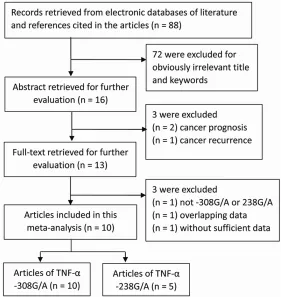
Figure 1. Flow diagram of the study selection process.
our knowledge, no previous meta-analysis was available on the association between TNF-α-308G/A and -238G/A SNPs and HNSCC susceptibil-ity. Therefore, a meta-analysis was performed on all eligible case-control studies to derive a more precise estimation of the association, as well as to investigate the heterogeneity and potential bias.
Materials and methods
Literature search strategy
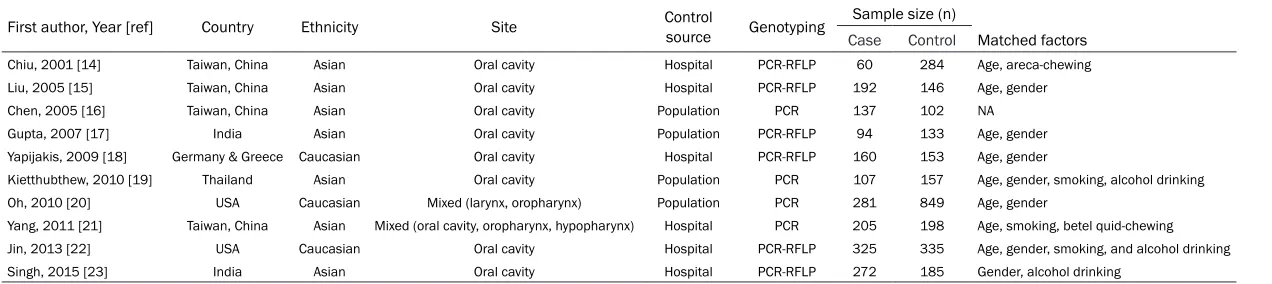
Table 1. Characteristics of studies included in this meta-analysis
First author, Year [ref] Country Ethnicity Site Control source Genotyping Sample size (n)
Case Control Matched factors
Chiu, 2001 [14] Taiwan, China Asian Oral cavity Hospital PCR-RFLP 60 284 Age, areca-chewing
Liu, 2005 [15] Taiwan, China Asian Oral cavity Hospital PCR-RFLP 192 146 Age, gender
Chen, 2005 [16] Taiwan, China Asian Oral cavity Population PCR 137 102 NA
Gupta, 2007 [17] India Asian Oral cavity Population PCR-RFLP 94 133 Age, gender
Yapijakis, 2009 [18] Germany & Greece Caucasian Oral cavity Hospital PCR-RFLP 160 153 Age, gender
Kietthubthew, 2010 [19] Thailand Asian Oral cavity Population PCR 107 157 Age, gender, smoking, alcohol drinking
Oh, 2010 [20] USA Caucasian Mixed (larynx, oropharynx) Population PCR 281 849 Age, gender
Yang, 2011 [21] Taiwan, China Asian Mixed (oral cavity, oropharynx, hypopharynx) Hospital PCR 205 198 Age, smoking, betel quid-chewing
Jin, 2013 [22] USA Caucasian Oral cavity Hospital PCR-RFLP 325 335 Age, gender, smoking, and alcohol drinking
Singh, 2015 [23] India Asian Oral cavity Hospital PCR-RFLP 272 185 Gender, alcohol drinking
Data extraction
According to the selection criteria, all relevant crude data were extracted from each eligible article independently by two researchers. Inconsistencies were discussed until a consen-sus was reached. The following information were extracted from each publication: first author’ name, publication year, country origin, ethnicity, tumor site, source of control (hospi-tal- or population-based control), genotyping methods, number of cancer cases and con-trols, characteristics ofcases and concon-trols, gen-otype frequencies for cases and controls. Statistic analysis
Hardy-Weinberg equilibrium (HWE) of control group in each study was measured using Pearson’s goodness-of-fit x2 test. The strength of association of TNF-α-308G/A and -238G/A polymorphisms with HNSCC susceptibility was determined by OR with 95% CI. In the overall and the subgroup meta-analysis, pooled ORs and 95% CIs of TNF-α both 308G/A and -238G/ A were calculated from combination of each study by heterozygote model (AA vs. GA), homo-zygote model (AA vs. GG), dominant model (AA + GA vs. GG), and recessive model (AA vs. GA + GG). The allele comparison (A vs. G) was con-ducted as an additive mode. The statistical sig-nificance of the pooled OR was evaluated using
the Z-test, and the heterogeneity of the ORs was tested by χ2-based Q-test and I2 statistics. If the result of heterogeneity test showed P > 0.1, ORs were pooled according to the fixed-effects model (Mantel-Haenszel model). Other- wise, the random-effects model (DerSimonian and Laird model) was selected. Additionally, the potential publication bias was examined by the Egger’s test and Begg’s funnel plot. The signifi-cance of the intercept was determined by the t test as suggested by Egger’s test. For sensitiv-ity analysis, each study was sequentially excluded and the summary ORs (95% CIs) were recalculated. All statistical analyses were per-formed with the software Review manager 5.0 (The Cochrane Collaboration, Oxford, UK) and STATA 12.0 (Stata Corporation, College Station, TX, USA), using two-sided P values.
Results
Characteristics of included studies
Of the 88 potentially relevant articles, 75 were excluded with reasons and 13 full-text articles were reviewed for detailed evaluation from the search of the published literature. During the data extraction according to the inclusion and exclusion criteria, one study by Vairaktaris et al [24] that was the overlapping data by the same authors’ colleague was excluded; one study by Canova et al [25] that was not relevant to
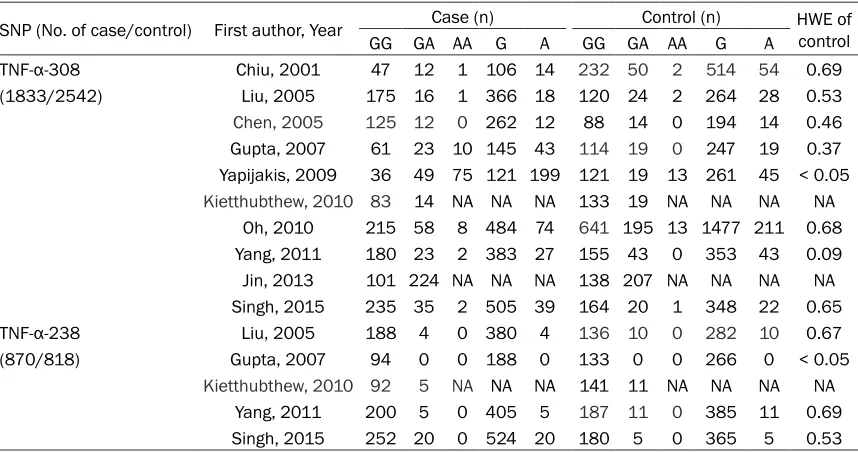
TNF-Table 2. Distribution of TNF-α genotype among cases and controls included in the meta-analysis SNP (No. of case/control) First author, Year Case (n) Control (n) HWE of control
GG GA AA G A GG GA AA G A
TNF-α-308 Chiu, 2001 47 12 1 106 14 232 50 2 514 54 0.69 (1833/2542) Liu, 2005 175 16 1 366 18 120 24 2 264 28 0.53 Chen, 2005 125 12 0 262 12 88 14 0 194 14 0.46 Gupta, 2007 61 23 10 145 43 114 19 0 247 19 0.37 Yapijakis, 2009 36 49 75 121 199 121 19 13 261 45 < 0.05 Kietthubthew, 2010 83 14 NA NA NA 133 19 NA NA NA NA
Oh, 2010 215 58 8 484 74 641 195 13 1477 211 0.68 Yang, 2011 180 23 2 383 27 155 43 0 353 43 0.09 Jin, 2013 101 224 NA NA NA 138 207 NA NA NA NA Singh, 2015 235 35 2 505 39 164 20 1 348 22 0.65 TNF-α-238 Liu, 2005 188 4 0 380 4 136 10 0 282 10 0.67 (870/818) Gupta, 2007 94 0 0 188 0 133 0 0 266 0 < 0.05
[image:4.612.93.522.84.310.2]α-308G/A and -238G/A polymorphism was excluded; and one study by Erdei et al [26] was excluded due to the control source being not healthy individuals. Consequently, ten eligible articles were identified in the final meta-analy-sis (Figure 1), and the characteristics of the eli-gible studies and detailed variant genotype dis-tributions of TNF-α-308G/A and -238G/A are summarized in Tables 1 and 2 respectively. For TNF-α-308G/A polymorphism, ten eligible case-control studies including 1833 HNSCC cases and 2542 controls were identified. There was eight oral carcinoma study and two mixed HNSCC studies. Seven of the ten studies were conducted in Asians and three studies were conducted in Caucasians. There were six stud-ies of hospital-based controls and four studi- es of population-based controls. For TNF-α-238G/A polymorphism, five eligible case-con-trol studies including 870 HNSCC cases and 819 controls were identified. There was four oral carcinoma study and one mixed HNS- CC studies. All five studies were conducted in
Asians. There were three studies of hospital-based controls and two studies of population-based controls.
Quantitative assessment of TNF-α-308G/A SNP
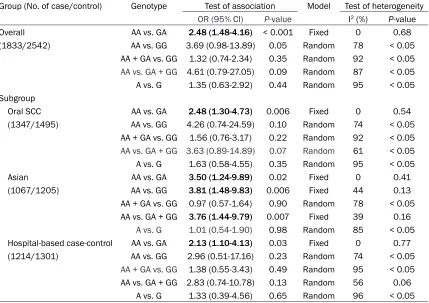
[image:5.612.94.523.98.401.2]The association of TNF-α-308G/A SNP with HNSCC risk were summarized in Table 3. In the overall analysis, a significant association was found in the heterozygote model (AA vs. GA: OR = 2.48, 95% CI = 1.48-4.16, P<0.001; Pheterogeneity = 0.68). However, no significant associations were found in the other genetic model; homozy-gote (AA vs. GG: OR = 3.69, 95% CI = 1.48-4.16, P = 0.05), dominant (AA + GA vs. GG: OR = 1.32, 95% CI = 0.74-2.34, P = 0.35), reces-sive (AA vs. GA + GG: OR = 4.61, 95% CI = 0.79-27.05, P = 0.09) models, and allele comparison (A vs. G: OR = 1.35, 95% CI = 0.63-2.92, P = 0.44). In the stratified analysis by tumor site, a significant association was also found in oral cancer among heterozygote model (AA vs. GA: OR = 2.48, 95% CI = 1.30-4.73, P = 0.0006;
Table 3. Summary of polled odds ratios (ORs) with 95% confidence interval (CI) of TNF-α-308 poly-morphism and HNSCC risk in the meta-analysis
Group (No. of case/control) Genotype Test of association Model Test of heterogeneity OR (95% CI) P-value I2 (%) P-value
Overall AA vs. GA 2.48 (1.48-4.16) < 0.001 Fixed 0 0.68 (1833/2542) AA vs. GG 3.69 (0.98-13.89) 0.05 Random 78 < 0.05
AA + GA vs. GG 1.32 (0.74-2.34) 0.35 Random 92 < 0.05 AA vs. GA + GG 4.61 (0.79-27.05) 0.09 Random 87 < 0.05 A vs. G 1.35 (0.63-2.92) 0.44 Random 95 < 0.05 Subgroup
Oral SCC AA vs. GA 2.48 (1.30-4.73) 0.006 Fixed 0 0.54 (1347/1495) AA vs. GG 4.26 (0.74-24.59) 0.10 Random 74 < 0.05
AA + GA vs. GG 1.56 (0.76-3.17) 0.22 Random 92 < 0.05 AA vs. GA + GG 3.63 (0.89-14.89) 0.07 Random 61 < 0.05 A vs. G 1.63 (0.58-4.55) 0.35 Random 95 < 0.05 Asian AA vs. GA 3.50 (1.24-9.89) 0.02 Fixed 0 0.41 (1067/1205) AA vs. GG 3.81 (1.48-9.83) 0.006 Fixed 44 0.13 AA + GA vs. GG 0.97 (0.57-1.64) 0.90 Random 78 < 0.05 AA vs. GA + GG 3.76 (1.44-9.79) 0.007 Fixed 39 0.16
A vs. G 1.01 (0.54-1.90) 0.98 Random 85 < 0.05 Hospital-based case-control AA vs. GA 2.13 (1.10-4.13) 0.03 Fixed 0 0.77 (1214/1301) AA vs. GG 2.96 (0.51-17.16) 0.23 Random 74 < 0.05
AA + GA vs. GG 1.38 (0.55-3.43) 0.49 Random 95 < 0.05 AA vs. GA + GG 2.83 (0.74-10.78) 0.13 Random 56 0.06
Pheterogeneity = 0.54), and no significant associa-tions were also found in the other genetic model. Consistently, there was evidence for the association between TNF-α-308G/A SNP and HNSCC risk in the stratified analysis based on source of controls in the heterozygote model (AA vs. GA: OR = 2.13, 95% CI = 1.10-4.13, P = 0.03; Pheterogeneity = 0.77). In the stratified analy-sis by ethnicity, significant associations were observed in Asians among three models; het-erozygote model (AA vs. GA: OR = 3.50, 95% CI = 1.24-9.89, P = 0.02), homozygote (AA vs. GG: OR = 3.81, 95% CI = 1.48-9.83, P = 0.006), and recessive (AA vs. GA + GG: OR = 3.76, 95% CI = 1.44-9.79, P = 0.007) models. Forest plots for meta-analysis of these three stratified anal-yses in the significant heterozygote genetic model were shown in Figure 2. Because there was only two available studies of mixed HNSCC sites, two Caucasian studies, two studies of population-based controls, the stratified analy-ses were not emphasized in this study (Figure 2).
Quantitative assessment of TNF-α-238G/A SNP
The overall analysis of TNF-α-238G/A SNP and HNSCC risk revealed that no significant asso-ciations were found in the dominant model (AA + GA vs. GG: OR = 0.72, 95% CI = 0.26-1.99, P = 0.53; I2 = 71, P = 0.01) and allele
sequential removal of individual study. For TNF-α-308G/A polymorphism, the P values and cor-responding pooled ORs with 95% CI were not significantly changed after the sequential removal of individual studies. In the heterozy-gote model (AA vs. GA) of TNF-α-308G/A, P val-ues ranged from 0.0003 to 0.007 and ORs ranged from 2.11 to 2.69. ORs under heterozy-gote comparison stayed statistically significant. For TNF-α-238G/A polymorphism, sensitivity analysis was not performed due to the small number of studies included.
Publication bias
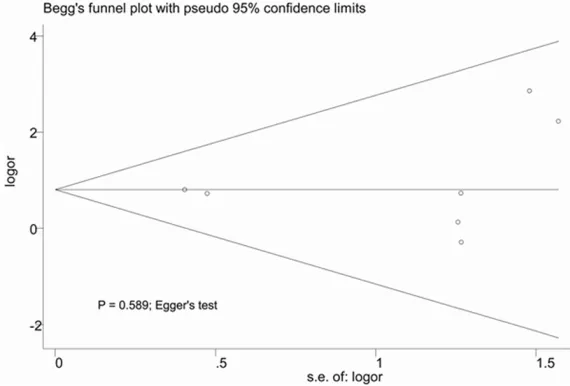
No evidence for publication bias was detected by either the Begg’s test or the Egger’s test for the genetic models of TNF-α-308G/A polymor-phisms (P > 0.05). Figure 3 showed that the representative shapes of funnel plots did not reveal any evidence of obvious asymmetry with Begg’s test (P = 0.764) and Egger’s test (P = 0.589) in heterozygote model of TNF-α-308G/A. Publication bias investigation was also not per-formed for TNF-α 238G/A due to the small num-ber of studies included.
Discussion
[image:7.612.90.375.114.307.2]An association between chronic inflammation and head and neck cancer with emphasis on oral cancer has been basically addressed [27,
Figure 2. Forest plots of meta-analysis of TNF-α-308G/A polymorphism and head and neck cancer stratified by (A) tumor sites, (B) ethnicity and (C) control source in heterozygote model (CC vs. TC + TT).
Figure 3. Begg’s funnel plots of TNF-α-308G/A polymorphisms among het-erozygote model. s.e. standard error; or, odds ratio.
comparison (A vs. G: OR = 0.73, 95% CI = 0.18-2.95, P = 0.65; I2 = 80, P
heterogeneity = 0.006). Subgroup analyses were not performed due to the small number of studies. Although there were five eligi-ble case-control studies on TNF-α-238G/A polymorphism, AA genotype was not identi-fied in the five studies (Table 2). Thus, heterozygote model (AA vs. GA), homozygote model (AA vs. GG), and reces-sive model (AA vs. GA + GG) were not estimated.
Sensitivity analysis
28]. Patients with chronic inflammatory diseas-es such as oral lichen planus and discoid lupus erythematosus carry a significantly increased risk of developing cancer [29]. Host genetic fac-tors are emerging as key determinants of dis-ease for head and neck cancer [4], as genetic variations in pro-inflammatory and anti-inflam-matory cytokine genes influence individual response to carcinogenic exposures. TNF-α is one of the most important pro-inflammatory cytokines involved in cell growth, differentia-tion, and apoptosis, which has been reported to play a vital role in the oral carcinogenesis [30]. As transcription of TNF-α is regulated by the promoter region of TNF-α gene polymor-phisms, two well-characterised variations in the promoter region of the TNF-α gene, namely, -308G/A and -238G/A, were identified and extensively studied in cancer susceptibility [10-13].
To the best of our knowledge, this meta-analy-sis conducted for the first time all the available data on the association between TNF-α-308G/A and -238G/A polymorphisms and HNSCC risk. A meta-analysis with larger sample and subgroup analysis is better to estimate the association between these polymorphisms and HNSCC risk. For TNF-α-308G/A polymorphism, ten eligible studies involving 1833 HNSCC cases and 2542 controls were included in this meta-analysis. The results demonstrated that the TNF-α-308G/A polymorphism was signifi-cantly associated with HNSCC risk under het-erozygote comparison. For TNF-α-238G/A poly-morphism, five eligible case-control studies including 870 HNSCC cases and 819 controls were identified. The results demonstrated that the TNF-α-238G/A polymorphism was not sig-nificantly associated with HNSCC risk.
The 308G/A is the most commonly studied SNP site of TNF-α promoter region. Our study revealed that 308G/A polymorphism was asso-ciated with an increased risk of HNSCC, in accordance with the previous meta-analysis of other cancers, such as gastric, colorectal, pros-tate, cervical cancers [10-13]. TNF-α-308 gene polymorphism plays a vital role as host genetic factor predisposing to head and neck carcino-genesis and it could be used as a screening marker. Our data showed that no significant association between TNF-α-238G/A polymor-phism and HNSCC risk was found in all genetic models, in line with the previous several meta-analyses [10-12].
A significant association is found overall analy-sis, meta-analysis can estimate whether the association is common among different sub-groups. Subgroup analysis was performed of TNF-α-308G/A polymorphism according to tumor site, ethnicity and control source. In the subgroup analysis by tumor site, the significant-ly increased risk of HNSCC in oral cavity and mixed sites were observed among the 308G/A heterozygote. In the analysis of control source, the increased risk of HNSCC in hospital-based and population-based controls were observed among the 308G/A heterozygote. The results of two subgroup analyses were in agreement with that of overall analysis. In the analysis of eth-nicity, significant associations in Asians were found in the heterozygote model, homozygote, and recessive models. These data suggested that TNF-α-308G/A polymorphism may be a genetic risk factor for HNSCC, though the func-tional explanation for such these associations remains undetermined. Moreover, the involve-ment of TNF-α-308G/A in HNSCC susceptibility may interact with other genes polymorphisms and with some particular environmental exposures.
Despite the efforts in performing a comprehen-sive analysis, some limitations need to be addressed in the current meta-analysis and the results should be considered with caution. First, the number of eligible studies available and the pooled sample size of individual stud-ies were not adequate in both overall and strati-fied analyses, especially Caucasian studies and population-based studies; and it is possi-ble that some relevant unpublished studies were missed. Second, the effect of the con-founding ingredients in gene-environment exposures and life habits interactions such as environmental factors, and tobacco and alco-hol use, were not estimated in the current study due to data available limitation. Therefore, to obtain a more accurate analysis of TNF-α poly-morphisms on HNSCC risk, more well-designed studies with larger sample sizes and diverse ethnicities are warranted to validate our findings.
included in the current meta-analysis was sat-isfactory without evidence of publication bias for the outcome and without obvious heteroge-neity in the significant genetic models. Thirdly, sensitivity analysis was performed to reflect the influence of the individual dataset to the pooled ORs, and conducted to validate the credibility of outcomes in this meta-analysis. These strengths suggest that the associations between TNF-α polymorphisms and HNSCC risk of this meta-analysis are robust.
In summary, the current meta-analysis provid-ed a more accurate estimation of the associa-tion between the TNF-α polymorphisms and HNSCC risk compared with independent stud-ies. The findings of the meta-analysis indicated that an increased risk for the TNF-α-308G/A polymorphism was found in HNSCC, especially in oral cavity and Asian subgroup, suggesting that 308G/A polymorphism may be a genetic risk factor for HNSCC. However, 238G/A poly-morphism were not observed to be associated with HNSCC risk. Further well-designed and large studies should be conducted to preclud-ing the drawpreclud-ing of the conclusions.
Acknowledgements
This study was supported by National Natural Science Foundation of China (81470736, 81260166).
Disclosure of conflict of interest
None.
Address correspondence to: Xinchun Jian, Depart- ment of Oral and Maxillofacial Surgery, Xiangya Hospital, Central South University, Changsha, Hu- nan, China. E-mail: [email protected]; Hong- ying Sun, Department of Stomatology, Huashan Hospital, Fudan University, Shanghai, China. E-mail: [email protected]
References
[1] Siegel R, Naishadham D, Jemal A. Cancer sta-tistics, 2012. CA Cancer J Clin. 2012; 62: 10-29.
[2] Marron M, Boffetta P, Zhang ZF, Zaridze D, Wunsch-Filho V, Winn DM, Wei Q, Talamini R, Szeszenia-Dabrowska N, Sturgis EM, Smith E, Schwartz SM, Rudnai P, Purdue MP, Olshan AF, Eluf-Neto J, Muscat J, Morgenstern H, Menez-es A, McClean M, Matos E, MatMenez-es IN, Lissows-ka J, Levi F, Lazarus P, La Vecchia C,Koifman S,
Kelsey K, Herrero R, Hayes RB, Franceschi S, Fernandez L, Fabianova E, Daudt AW, Dal Maso L, Curado MP, Cadoni G, Chen C, Castell-sague X,Boccia S, Benhamou S, Ferro G, Berthiller J, Brennan P, Møller H, Hashibe M. Cessation of alcohol drinking, tobacco smok-ing and the reversal of head and neck cancer risk. Int J Epidemiol 2010; 39: 182-96. [3] Leemans CR, Braakhuis BJ, Brakenhoff RH.
The molecular biology of head and neck can-cer. Nat Rev Cancer 2011; 11: 9-22.
[4] Lacko M, Braakhuis BJ, Sturgis EM, Boedeker CC, Suárez C, Rinaldo A, Ferlito A, Takes RP. Genetic susceptibility to head and neck squa-mous cell carcinoma. Int J Radiat Oncol Biol Phys 2014; 89: 38-48.
[5] Chen SS, Song J, Tu XY, Zhao JH, Ye XQ. The association between MMP-12 82 A/G polymor-phism and susceptibility to various malignant tumors: a meta-analysis. Int J Clin Exp Med 2015; 8: 10845-54.
[6] Zhang K, Gao L, Wu Y, Chen J, Lin C, Liang S, Su J, Ye J, He X. NAT1 polymorphisms and can-cer risk: a systematic review and meta-analy-sis. Int J Clin Exp Med 2015; 8: 9177-91. [7] Watts TH. TNF/TNFR family members in
co-stimulation of T cell responses. Annu Rev Im-munol 2005; 23: 23-68.
[8] Kroeger KM, Carville KS, Abraham LJ. The -308 tumor necrosis factor-alpha promoter polymorphism effects transcription. Mol Immu-nol 1997; 34: 391-9.
[9] Wilson AG, Symons JA, McDowell TL, McDevitt HO, Duff GW. Effects of a polymorphism in the human tumor necrosis factor alpha promoter on transcriptional activation. Proc Natl Acad Sci U S A 1997; 94: 3195-9.
[10] Rokkas T, Sechopoulos P, Pistiolas D, Kotho-nas F, Margantinis G, Koukoulis G. Population differences concerning TNF-α gene polymor-phisms in gastric carcinogenesis based on meta-analysis. Ann Gastroenterol 2014; 27: 139-148.
[11] Min L, Chen D, Qu L, Shou C. Tumor necrosis factor-a polymorphisms and colorectal cancer risk: a meta-analysis. PLoS One 2014; 9: e85187.
[12] Ma L, Zhao J, Li T, He Y, Wang J, Xie L, Qin X, Li S. Association between tumor necrosis factor-alpha gene polymorphisms and prostate can-cer risk: a meta-analysis. Diagn Pathol 2014; 9: 74.
[13] Jin Y. Association of single nucleotide polymor-phisms in tumor necrosis factor-alpha with cer-vical cancer susceptibility. Cell Biochem Bio-phys 2015; 71: 77-84.
factor-alpha and risk of oral submucous fibro-sis, a pre-cancerous condition of oral cancer. J Dent Res 2001; 80: 2055-9.
[15] Liu CJ, Wong YK, Chang KW, Chang HC, Liu HF, Lee YJ. Tumor necrosis factor-α promoter poly-morphism is associated with susceptibility to oral squamous cell carcinoma. J Oral Pathol Med 2005; 34: 608-12.
[16] Chen WC, Tsai MH, Wan L, Chen WC, Tsai CH, Tsai FJ. CYP17 and tumor necrosis factor-a gene polymorphisms are associated with risk of oral cancer in Chinese patients in Taiwan. Acta OtoLaryngologica 2005; 125: 96-9. [17] Gupta R, Sharma SC, Das SN. Association of
TNF-α and TNFR1 promoters and 30 UTR re-gion of TNFR2 gene polymorphisms with ge-netic susceptibility to tobacco-related oral car-cinoma in Asian Indians. Oral Oncol 2008; 44: 455-63.
[18] Yapijakis C, Serefoglou Z, Vylliotis A, Nkenke E, Derka S, Vassiliou S, Avgoustidis D, Neukam FW, Patsouris E, Vairaktaris E. Association of Polymorphisms in Tumor Necrosis Factor Alpha and Beta Genes with Increased Risk for Oral Cancer. Anticancer Res 2009; 29: 2379-86. [19] Kietthubthew S, Wickliffe J, Sriplung H, Ishida
T, Chonmaitree T, Au WW. Association of poly-morphisms in proinflammatory cytokine genes with the development of oral cancer in South-ern Thailand. Int J Hyg Environ Health 2010; 213: 146-52.
[20] Oh SS, Chang SC, Cai L, Cordon-Cardo C, Ding BG, Greenland S, He N, Jiang Q, Kheifets L, Le A, Lee YC, Liu S, Lu ML, Mao JT, Morgenstern H, Mu LN,Pantuck A, Papp JC, Park SL, Rao JY, Reuter VE, Tashkin DP, Wang H, You NC, Yu SZ, Zhao JK, Belldegrun A, Zhang ZF. Single nucle-otide polymorphisms of 8 inflammation-relat-ed genes and their associations with smoking-related cancers. Int J Cancer 2010; 127: 2169-82.
[21] Yang CM, Hou YY, Chiu YT, Chen HC, Chu ST, Chi CC, Hsiao M, Lee CY, Hsieh CJ, Lin YC, Hsieh YD, Ger LP. Interaction between tumor necrosis factor-α gene polymorphisms and substance use on risk of betel quid-related oral and pharyngeal squamous cell carcinoma in Taiwan. Arch Oral Biol 2011; 56: 1162-9. [22] Jin L, Sturgis EM, Zhang Y, Huang Z, Song X, Li
C, Wei Q, Li G. Association of tumor necrosis factor-alpha promoter variants with risk of HPV-associated oral squamous cell carcinoma. Mol Cancer 2013; 12: 80.
[23] Singh PK, Bogra J, Chandra G, Ahmad MK, Gupta R, Kumar V, Jain A, Ali Mahdi A. Associa-tion of TNF-α (-238 and -308) promoter poly-morphisms with susceptibilityof oral squa-mous cell carcinoma in North Indian population. Cancer Biomark 2015; 15: 125-31.
[24] Vairaktaris E, Yapijakis C, Serefoglou Z, Av-goustidis D, Critselis E, Spyridonidou S, Vylli-otis A, Derka S, Vassiliou S, Nkenke E, Pat-souris E. Gene expression polymorphisms of interleukins-1 beta, -4, -6, -8, -10, and tumor necrosis factors-alpha, -beta: regression analy-sis of their effect upon oral squamous cell car-cinoma. J Cancer Res Clin Oncol 2008; 134: 821-32.
[25] Canova C, Hashibe M, Simonato L, Nelis M, Metspalu A, Lagiou P, Trichopoulos D, Ahrens W, Pigeot I, Merletti F, Richiardi L, Talamini R, Barzan L, Macfarlane GJ, Macfarlane TV, Hol-cátová I, Bencko V, Benhamou S, Bouchardy C, Kjaerheim K, Lowry R, Agudo A, Castellsagué X, Conway DI, McKinney PA,Znaor A, McCartan BE, Healy CM, Marron M, Brennan P. Genetic associations of 115 polymorphisms with can-cers of the upper aerodigestive tract across 10 European countries: the ARCAGE project. Can-cer Res 2009; 69: 2956-65.
[26] Erdei E, Luo L, Sheng H, Maestas E, White KA, Mackey A, Dong Y, Berwick M, Morse DE. Cyto-kines and tumor metastasis gene variants in oral cancer and precancer in Puerto Rico. PLoS One 2013; 8: e79187.
[27] Bonomi M, Patsias A, Posner M, Sikora A. The role of inflammation in head and neck cancer. Adv Exp Med Biol 2014; 816: 107-27.
[28] Wang F, Arun P, Friedman J, Chen Z, Van Waes C. Current and potential inflammation targeted therapies in head and neck cancer. Curr Opin Pharmacol 2009; 9: 389-95.
[29] Feller L, Altini M, Lemmer J. Inflammation in the context of oral cancer. Oral Oncol 2013; 49: 887-92.