Proc. of the 3rd Joint SIGHUM Workshop on Computational Linguistics for Cultural Heritage, Social Sciences, Humanities and Literature, pp. 1–11 1
Modeling Word Emotion in Historical Language:
Quantity Beats Supposed Stability in Seed Word Selection
Johannes Hellrich* Sven Buechel* Udo Hahn
{firstname.lastname}@uni-jena.de
Jena University Language & Information Engineering (JULIE) Lab Friedrich-Schiller-Universit¨at Jena, Jena, Germany
julielab.de
Abstract
To understand historical texts, we must be aware that language—including the emotional connotation attached to words—changes over time. In this paper, we aim at estimating the emotion which is associated with a given word in former language stages of English and German. Emotion is represented following the popular Valence-Arousal-Dominance (VAD) annotation scheme. While being more expres-sive than polarity alone, existing word emotion induction methods are typically not suited for addressing it. To overcome this limitation, we present adaptations of two popular algorithms to VAD. To measure their effectiveness in diachronic settings, we present the first gold standard for historical word emotions, which was created by scholars with proficiency in the respective language stages and covers both English and German. In contrast to claims in previous work, our findings indicate that hand-selecting small sets of seed words with supposedly stable emotional meaning is actually harm- rather than helpful.
1 Introduction
Language change is ubiquitous and, perhaps, most evident in lexical semantics. In this work, we focus on changes in the affective meaning of words over time. Although this problem has been occasionally addressed in previous work (see Section 2.3), most contributions in this area are limited to a rather shallow understanding of human emotion, typically in terms of semantic
* These authors contributed equally to this work. Johannes Hellrich was responsible for selecting historical text corpora and training embedding models. Sven Buechel selected existing emotion lexicons and was responsible for modeling word emotions. The adaptation of polarity-based algorithms (Section 3), the creation of the German and English historical gold standard lexicons (Section 5.1), as well as the overall study design were done jointly.
polarity(feelings being either positive, negative or neutral). Another major shortcoming of this area is the lack of appropriate data and methodologies for evaluation. As a result, the aptness of algo-rithmic contributions has so far only been assessed in terms of face validity rather than quantitative performance figures (Cook and Stevenson, 2010;
Buechel et al., 2016; Hamilton et al., 2016a;
Hellrich et al.,2018).
To tackle those shortcomings, we first introduce adaptations of algorithms for word polarity induc-tion to vectorial emoinduc-tion annotainduc-tion formats, thus enabling a more fine-grained analysis. Second, to put the evaluation of these methods on safer ground, we present two datasets of affective word ratings for English and German, respectively.1 These have been annotated by scholars in terms of language-stage-specific emotional connotations.
We ran synchronic as well as diachronic exper-iments to compare different algorithms for mod-eling historical word emotions—the latter kind of evaluation employs our newly created gold standard. In particular, one prominent claim from previous work has been that full-sized emotion lexicons of contemporary language are ill-suited for inducing historical word emotion. Rather, it would be much more beneficial to select a small,
limited set of seed words of supposedly invariant emotional meaning (Hamilton et al., 2016a). In contrast, our experiments indicate that larger sets of seed words perform better than manually selected ones despite the fact that some of their entries may not be accurate for the target language stage. Our unique historical gold standard is thus an important step towards firmer methodological underpinnings for the computational analysis of textually encoded historical emotions.
2 Related Work
2.1 Representing Word Emotions
Quantitative models for word emotions can be traced back at least to Osgood (1953) who used questionnaires to gather human ratings for words on a wide variety of dimensional axes including “good vs. bad”. Most previous work focused on varieties of such forms of semantic polarity, a rather simplified representation of the richness of human affective states—an observation increas-ingly recognized in sentiment analysis ( Strappa-rava, 2016). In contrast to this bi-polar repre-sentation, the Valence-Arousal-Dominance (VAD) model of emotion (Bradley and Lang, 1994) is a well-established approach in psychology (Sander and Scherer, 2009) which increasingly attracts interest by NLP researchers (K¨oper and Schulte im Walde, 2016;Yu et al., 2016;Wang et al., 2016;
Shaikh et al., 2016; Buechel and Hahn, 2017;
Preot¸iuc-Pietro et al., 2016; Mohammad, 2018). The VAD model assumes that affective states can be characterized relative to Valence (corre-sponding to the concept of polarity), Arousal (the degree of calmness or excitement) and Dominance (perceived degree of control). Formally, VAD spans a three-dimensional real-valued space (see Figure 1) making the prediction of such values a multi-variate regression problem (Buechel and Hahn,2016).
Another popular line of emotion representation evolved around the notion of basic emotions, small sets of discrete, cross-culturally universal affective states (Scherer, 2000). Here, contribu-tions most influential for NLP are Ekman’s (1992) six basic emotions as well as Plutchik’s (1980) wheel of emotion (Strapparava and Mihalcea,
2007;Mohammad and Turney,2013;Bostan and Klinger, 2018). In order to illustrate the rela-tionship between Ekman’s basic emotions and the VAD affect space the former are embedded into the latter scheme in Figure1.
The affective meaning of individual words is encoded in so-called emotion lexicons. Thanks to over two decades of efforts from psychologists and AI researchers alike, today a rich collection of empirically founded emotion lexicons is available covering both VAD and basic emotion representa-tion for many languages (see Buechel and Hahn
(2018b) for an overview). One of the best know resources of this kind are theAffective Norms for English Words(ANEW;Bradley and Lang,1999)
−−1.01.0 −0.5 0.0 0.5 1.0
−
0.5
0.0
0.5
1.0
−1.0
−0.5 0.0
0.5 1.0
●
●
● ●
●
●
Anger
Surprise Disgust
Fear
Sadness
Joy
Valence
D
o
m
in
a
n
[image:2.595.307.524.61.232.2]ce
Figure 1: Affective space spanned by the Valence-Arousal-Dominance (VAD) model, together with the position of six basic emotion categories.
Entry Valence Arousal Dominance
rage 2.50 6.62 4.17
orgasm 8.01 7.19 5.84
[image:2.595.331.501.292.342.2]relaxed 7.25 2.49 7.09
Table 1: Sample Valence-Arousal-Dominance (VAD) ratings from the emotion lexicon by Warriner et al.
(2013). The scales span the interval of[1,9]for each dimension, “5” being the neutral value.
which comprise 1,034 entries in VAD format. ANEW’s popular extension by Warriner et al.
(2013) comprises roughly 14k entries acquired via crowdsourcing (see Table1for examples).
Recently, researchers started to build compu-tational models of the relationship between VAD and discrete categories (illustrated in Figure 1) resulting in techniques to automatically trans-late ratings between these major representation schemes (Calvo and Kim, 2013; Buechel and Hahn,2018a).
2.2 Predicting Word Emotions
algorithms which have been tested in diachronic settings in previous work. An overview of recent work focusing on applications to contemporary language is given byBuechel and Hahn(2018c).
More than a decade ago, Turney and Littman
(2003) introduced a frequently used and often adopted (e.g.,K¨oper and Schulte im Walde(2016);
Palogiannidi et al.(2016)) algorithm. It computes a sentiment score based on the similarity of an unrated word to two sets of positive and nega-tive seed words. Bestgen (2008) presented an algorithm which has been prominently put into practice in expanding a VAD lexicon to up to 17,350 entries (Bestgen and Vincze,2012). Their method employs a k-Nearest-Neighbor method-ology where an unrated word inherits the aver-aged ratings of the surrounding words. Rothe et al.(2016) presented a more recent approach to polarity induction. Based on word embeddings and a set of positive and negative paradigm words, they train an orthogonal transformation of the embedding space so that the encoded polarity information is concentrated in a single vector component whose value then serves as an explicit polarity rating. The algorithm proposed byHamilton et al.(2016a) employs a random walk within a lexical graph constructed using word similarities. They outperformRothe et al.(2016) when embeddings are trained on small datasets.
Note that these algorithms differ in the kind of input representation they require. Whereas
Turney and Littman (2003), Rothe et al. (2016), and Hamilton et al. (2016a) expect binary class ratings (positive or negative), Bestgen’s algorithm (Bestgen,2008) takes vectorial seed ratings, illus-trated in Table1, as input.
2.3 Historical Sentiment Information
There are several studies using contemporary word emotion information, i.e., emotion lexicons encoding today’s emotional meaning, to analyze historical documents. For instance, Acerbi et al.
(2013) and Bentley et al. (2014) observed long-term trends in words expressing emotions in the Google Books corpus and linked these to historical (economic) events. Another example areKim et al.(2017) who investigate emotions in literary texts in search for genre-specific patterns. However, this contemporary emotion information could lead to artifacts, since the emotions con-nected with a word are not necessarily static
over time. This phenomenon is known as ele-vation & degeneration in historical linguistics, e.g., Old Englishcniht‘boy, servant’ was elevated becoming the modernknight(Bloomfield,1984).
Alternatively, algorithms for bootstrapping word emotion information can be used to predict historical emotion values by using word similarity based on historical texts. This was first done for polarity regression with the Turney and Littman
(2003) algorithm and a collection of three British English corpora by Cook and Stevenson (2010).
Jatowt and Duh (2014) tracked the emotional development of words by averaging the polarity of the words they co-occurred with (assuming the latters’ polarity to be stable). Hamilton et al.
(2016a) used their novel random walk-based algo-rithm for polarity regression on COHA. They con-sider their method especially suited for historical applications.2 This algorithm was also used by
G´en´ereux et al.(2017) to test the temporal validity of inferred word abstractness, a psychological measure akin to the individual VAD dimensions. They used both modern and historical (1960s) psychological datasets rating the same words as gold standards and found a strong correlation with predicted historical abstractness. Buechel et al. (2016) used Bestgen(2008)’s algorithm to investigate emotional profiles of different genres of historical writing. Finally, we used theTurney and Littman(2003) algorithm to induce historical sentiment information which is provided as part of
JeSemE.org, a website for exploring semantic
change in multiple diachronic corpora (Hellrich et al.,2018).
3 Methods
3.1 Word Similarity
We measure word similarity by the cosine between word embeddings, the most recent method in studies of distributional semantics. Their most popular form are Skip-Gram Negative Sampling (SGNS;Mikolov et al.,2013) embeddings which are trained with a very shallow artificial neural network. SGNS processes one word-context pair, i.e., two nearby words, at a time and learns good embeddings by trying to predict the most likely contexts for a given word.
2 However, the algorithm is sensitive to changes in its
An alternative solution for generating low dimensional vectors is gathering all word-context pairs for a corpus in a large matrix and reducing its dimensionality with singular value decomposition (SVD), a technique very popular in the early 1990’s (Deerwester et al., 1990; Sch¨utze, 1993).
Levy et al. (2015) propose SVDPPMI, a
state-of-the-art algorithm based on combining SVD with the positive pointwise mutual information (PPMI;
Niwa and Nitta,1994) word association metric. Both SGNS and SVDPPMI have been shown
to be adequate for exploring historical semantics (Hamilton et al., 2016b,a). A general down-side of existing embedding algorithms other than SVDPPMI is their inherent stochastic behavior
during training which makes the resulting embed-ding models unreliable (Hellrich and Hahn,2016;
Antoniak and Mimno, 2018; Wendlandt et al.,
2018). Very recently, contextualized word embed-dings, such as ELMo (Peters et al., 2018) and BERT (Devlin et al., 2018), have started to establish themselves as a new family of algorithms for word representation. Those methods achieve enhanced performance on many downstream tasks by taking context into account, both during training and testing, to generate an individual vector representation for each individual token. This makes them unsuitable for our contribution, since we address emotion on the type level by creating emotion lexicons.
3.2 Word Emotion
Our work employs three algorithms for inducing emotion lexicons, two of which had to be adapted to deal with the more informative vectorial VAD representation instead of a simple binary two-class representation (positive vs. negative polarity):
KNN — The k-Nearest-Neighbor-based algo-rithm byBestgen(2008) which already sup-ports vectorial input.
PARASIMNUM — An adaptation of the classical PARASIMalgorithm by Turney and Littman
(2003) which is based on the similarity of two opposing sets of paradigm words.
RANDOMWALKNUM — An adaptation of the RANDOMWALK algorithm proposed by
Hamilton et al. (2016a) which propagates affective information of seed words via a random walk through a lexical graph.
KNN sets the emotion values of each wordwto the average of the emotion values of thek most similar seed words. For any given seed word s, let e(s) denote its three-dimensional emotion vector corresponding to its VAD value in our seed lexicon. Furthermore, let nearest(w, k) denote the set of thekseed word most similar to a given word w. Then the predicted emotion of word w according toKNN is defined as follows:
eKNN(w, k) :=
1
k
X
s∈nearest(w,k)
e(s) (1)
PARASIM computes the emotion of word w by comparing its similarity with a set of positive and negative paradigm words (POS and NEG, respectively):
ePARASIM(w) :=
X
p∈POS
sim(w, p)−X
n∈NEG
sim(w, n)
(2) where sim(·,·) denotes the cosine similarly between two embedding vectors.
Let e(s) map to ‘1’, if word s ∈ POS, and to ‘−1’, if s ∈ NEG, then Equation (2) can be rewritten as
ePARASIM(w) =
X
s∈POS∪NEG
sim(w, s)×e(s). (3)
For PARASIMNUM, our adaptation of PARAM -SIM, we change e(s) to map to a three-dimensional vector corresponding to the VAD entry of a word in our set of seed words S := POS ∪ NEG. We also introduce a normal-ization factor so that the predictions according to PARASIMNUM take the form of a weighted average:
ePARASIMNUM(w) :=
P
s∈Ssim(w, s)×e(s)
P
s∈Ssim(w, s)
(4) RANDOMWALK propagates sentiment scores through a graph, with vertices representing words and edge weights denoting word similarity. Let V represent the set of words in this lexical graph, and let the vectorp ∈ R|V| represent the induced sentiment score for each word in the graph. To compute word emotions, p is iteratively updated by applying a transition matrixT:
p(t+1) :=βT p(t)+ (1−β)s (5)
between assigning similar scores to neighbors and correct scores to seeds. The vectorpis initialized so that thei-th elementpi = 1/|V|, whereassis
initialized withsi = 1/|S|(Sbeing the set of seed
words), if the corresponding word wi is a seed
word and0, otherwise. Details how the transition matrix is initialized can be found in Zhou et al.
(2004).
To obtain the final sentiment scores pfinal, the
process is independently run until convergence for both a positive and a negative seed set, before the resulting valuesp+andp−are normalized by performing az-transformation on:
pfinal :=
p+
p++p− (6)
We now provide a simple adaptation for vec-torial emotion values, RANDOMWALKNUM: p andsare replaced by |V| ×3 matrices P andS, respectively. All entries ofP are initialized with
1/|V|. For the positive seed set, S is populated with the original VAD values of each word in the seed lexicon and 0, otherwise. For the negative seed set all values are inverted relative to the center of the numerical VAD rating scales. For instance, the valence score ofrelaxed in Table 1
is transformed from7to3, because5is the center of the respective scale. Finally,Sis normalized so that each column adds up to 1. Pf inalcan then be
calculated analogously to the original algorithm.
4 External Datasets
4.1 Diachronic Corpora
We rely on two well curated diachronic corpora— the Corpus of Historical American English3 (COHA;Davies,2012) and the core corpus of the Deutsches Text Archiv4[’German Text Archive’] (DTA;Geyken,2013;Geyken and Gloning,2015). They are smaller than some alternative diachronic corpora, especially the Google Books N-gram subcorpora (Lin et al., 2012), yet their balanced nature and transparent composition should make results more resilient against artifacts (Pechenick et al.,2015). Both corpora contain metadata in the form of automatically generated POS annotations and lemmatizations. The latter appears to be more consistent in DTA, possibly due to the inclusion of an orthographic normalization step (Jurish,2013).
3
english-corpora.org/coha/
4 deutschestextarchiv.de— we used the May
2016 snapshot.
COHA is relatively large for a structured corpus (Davies, 2012, p. 122) containing over 100k long and short texts from the 1810s to the 2000s. It is conceptually centered around decades and aims at providing equally sized and genre-balanced data for each decade. The only deviations are an increase in size between the 1810s and 1830s to a then stable level, as well as the inclusion of newspaper texts from the 1860s onwards. COHA is based on post-processed texts from several pre-existing collections, e.g., Project Gutenberg (Davies, 2012, p. 125), digitized with optical character recognition (OCR) software.
DTA is the closest German equivalent to COHA and the result of an ongoing effort to create a dig-ital full-text corpus of printed German documents from the 15th to the 19th century. It is smaller than COHA, containing only about 1.3k long texts, yet of higher quality, based on extensive manual transcription (mostly double keying, in some cases corrected OCR). It contains texts from different genres, and individual texts were chosen with an eye toward cultural (not statistical) representativeness. Balance between genres is limited for some timespans, e.g., non-fiction is strongly over-represented in the early 17thcentury. However, the texts used in our experiments (see below) are well balanced between fictional and non-fictional texts (101 vs. 91 texts, respectively).
For both, COHA and DTA, we selected all texts from particular timespans as basis for our exper-iments. Those timespans served two purposes: (a) when building our gold standard of historical word emotions (Section 5.1) the annotators were requested to rate word emotions according to the respective target language stage; (b) documents associated with the respective timespan were used to train language stage-specific word embeddings (Section6.1) in order to model those gold ratings.
The 2000s decade of COHA was an obvious fit for our synchronic experiments in Section
4.2 Emotion Lexicons
We now describe the VAD lexicons which were used to provide seed words for both synchronic and diachronic experiments. Based on its size and popularity, we chose the extended version of ANEW (Warriner et al., 2013; see Section 2) for English. Concerning German emotion lexicons, we chose the Affective Norms for German Sen-timent Terms (ANGST; Schmidtke et al., 2014) which contain 1,003 words and largely follows ANEW’s acquisition methodology.
5 Historical Gold Standard
5.1 Dataset Construction
In general, native speakers fluent in the respec-tive (sub)language are the only viable option for acquiring a gold standard lexicon of emotional meaning for any language or domain. In the case of historical language older than about a century, this option is off the table due to bio-logical reasons—we simply lack native speakers competent for that specific language period.
As the best conceivable surrogate, we rely on historical language experts for constructing our dataset. The gold standard consists of two parts, an English and a German one, each with 100 words. We recruited three annotators for German and two for English, all doctoral students experienced in interpreting 19th century texts.
We selected high-frequency words for the anno-tation to ensure high quality of the associated word embeddings. The selection was done by, first, extracting adjectives, common nouns and lexical verbs from the 1830s COHA and the 1810– 1839 DTA subcorpus and then, second, randomly sampling 100 words out of the 1000 most frequent ones. We manually excluded two cases of ordinal numerals misclassified as adjectives.
The actual rating process was set up as a questionnaire study following established designs from psychological research (Bradley and Lang,
1999; Warriner et al., 2013). The participants were requested to put themselves in the position of a person living between 1810 and 1839 for the German data set, or a person living in the 1830s for the English one. They were then presented with stimulus words and used the so-called Self-Assessment Manikin (SAM; Bradley and Lang,
1994) to judge the kind of feeling evoked by these lexical items. SAM consists of three individual nine-point scales, one for each VAD dimension.
Valence Arousal Dominance Mean
goldEN 1.20 1.08 1.41 1.23 goldDE 1.72 1.56 2.31 1.86 Warriner 1.68 2.30 2.16 2.05
Table 2: Inter-annotator agreement for our English (goldEN) and German (goldDE) gold standard, as well as the lexicon by Warriner et al. (2013) for comparision; Averaged standard deviation of ratings for each VAD dimension and mean over all dimensions.
Each of the 27 rating points is illustrated by an cartoon-like anthropomorphic figure serving as a non-verbal description of the scale. Moreover, these figures are supplemented by verbal anchors for the low and high end points of the scales e.g., the rating point “9” of the Valence scale represents “complete happiness”. They were not provided with or instructed to use any further material or references, e.g., dictionaries. The final ratings for each word were derived by averaging the individual ratings of the annotators.
5.2 Dataset Analysis
We measure inter-annotator agreement (IAA) by calculating the standard deviation (SD) for each word and dimension and averaging these, first, for each dimension alone, and then over these aggregate values, thus constituting an error-based score (the lower the better). Results are provided in Table 2. In comparison with the lexicon by
Warriner et al.(2013), our gold standard displays higher rating consistency. As average over all three VAD dimensions, our lexicon displays an IAA of 1.23 and 1.86 for English and German, respectively, compared to 2.05 as reported by
Warriner et al.(2013). This suggests that experts show higher consensus, even when judging word emotions for a historical language period, than crowdworkers for contemporary language. An alternative explanation might be differences in word material, i.e., our random sample of frequent words.
historical modern
V A D V A D
daughter 3.5 4.0 4.0 6.7 5.0 5.1
divine 7.0 7.0 2.0 7.2 3.0 6.0
[image:7.595.90.273.64.123.2]strange 2.0 6.5 1.0 4.7 3.5 5.3
Table 3: Illustrative example words with large devia-tion between historical and modern affective meaning; Valence-Arousal-Dominance (VAD) of newly created gold standard compared toWarriner et al.(2013).
The Pearson correlation between modern and historical lexicons is 0.66, 0.51, and 0.31 for Valence, Arousal, and Dominance, respectively. Table 3 displays illustrative examples from our newly created gold standard where historical and modern affective meaning differ strongly. We con-ducted a post-facto interview on annotator motiva-tion for those cases. Explanamotiva-tions—which match observations described in common reference text-books (e.g., Brinkley (2003))—range from the influence of feminism leading to an increase in Valence for“daughter” up to secularization that might explain a drop in Arousal and rise in Dominance for “divine”. The annotation for
“strange”was motivated by several now obsolete senses indicating foreignness or alienness.5
In summary, we recruited historical language experts as best conceivable surrogate to com-pensate for the lack of actual native speakers in order to create a gold standard for historical word emotions. To the best of our knowledge, no comparable dataset is elsewhere available, making this contribution unique and hopefully valuable for future research, despite its obvious size limitation.
6 Modeling Word Emotions
This section describes how we trained time period-specific word embeddings and used these to eval-uate the algorithms presented in Section 3.2 on both a contemporary dataset and our newly created historical gold standard.
6.1 Word Embedding Training
COHA and DTA were preprocessed by using the lemmatization provided with each corpus, as well as removing punctuation and converting all text to lower case.
5See the Oxford English Dictionary:oed.com/view/ Entry/191244
We used the HYPERWORDStoolkit (Levy et al.,
2015) to create one distinct word embedding model for each of those subcorpora. Hyperpara-meter choices follow Hamilton et al. (2016a). In particular, we trained 300-dimensional word vectors, with a context window of up to four words. Context windows were limited by docu-ment boundaries while ignoring sentence bound-aries. We modeled words with a minimum token frequency of 10 per subcorpus, different from Hamilton et al. (2016a). For SVDPPMI,
eigenvectors were discarded, no negative sampling was used and word vectors were combined with their respective context vectors.
6.2 Synchronic Evaluation
Our first evaluation of lexicon induction algo-rithms compares the ability of the three different algorithms described in Section3to predict ratings of a modern, contemporary VAD lexicon, i.e., the one byWarriner et al.(2013), using two different types of seed sets (see below). For this experi-ment, we used word embeddings trained on the 2000s COHA subcorpus. We call this evaluation setup synchronic in the linguistic sense, since seed lexicon, target lexicon and word embeddings belong to the same language period. A unique feature of our work here is that we also take into account possible interaction effects between lexicon induction algorithms and word embedding algorithms, i.e., SGNS and SVDPPMI.
We use two different seed lexicons, both are based on the word ratings by Warriner et al.
(2013). The full seed lexicon corresponds to all the entries of words which are also present in ANEW (about 1,000 words; see Section 2). In contrast, thelimitedseed lexicon is restricted to 19 words6which were identified as temporally stable byHamilton et al.(2016a).
The first setup is thus analogous to the polarity experiments performed by Cook and Stevenson
(2010), whereas the second one corresponds to the settings from Hamilton et al. (2016a). We use Pearson’s r between actual and predicted values for each emotion dimension (Valence, Arousal and Dominance) for quantifying performance7 and a
6One of the 20 words given byHamilton et al.(2016a), “hated”, is not present in the Warriner lexicon and was therefore eliminated.
7Some other studies use the rank correlation coefficient
Induction Method Seed Selection SVDPPMI SGNS
KNN full 0.548 0.487
PARASIMNUM full 0.557 0.489
RANDOMWALKNUM full 0.544 0.436
KNN limited 0.181 0.166 PARASIMNUM limited 0.249 0.191
[image:8.595.181.419.60.137.2]RANDOMWALKNUM limited 0.330 0.181
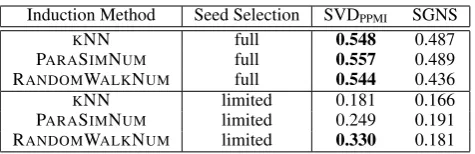
Table 4: Results of the synchronic evaluation in Pearson’sraveraged over all three VAD dimensions. The best system for each seed lexicon and those with statistically non-significant differences (p≥0.05) are inbold.
Language Induction Method Seed Selection SVDPPMI SGNS
English
KNN full 0.307 0.365
PARASIMNUM full 0.348 0.361
RANDOMWALKNUM full 0.351 0.361
KNN limited 0.273 0.153 PARASIMNUM limited 0.295 0.232
RANDOMWALKNUM limited 0.305 0.0394
German
KNN full 0.366 0.263
PARASIMNUM full 0.384 0.214
[image:8.595.152.448.179.288.2]RANDOMWALKNUM full 0.302 0.273
Table 5: Results of the diachronic evaluation in Pearson’sraveraged over all three VAD dimensions. The best system for each language and seed selection strategy (fullvs.limited) is inbold. Only the system marked with ‘4’ is significantly different from the best system (p<0.05).
Fisher transformation followed by a Z-test for significance testing (Cohen,1995, pp. 130–131).
Table 4 provides the average values of these VAD correlations for each seed lexicon, embed-ding method and induction algorithm. SGNS embeddings are worse than SVDPPMIembeddings
for both full and limited seed lexicons. SVDPPMI
embeddings seem to be better suited for induction based on the full seed set, leading to the highest observed correlation with PARASIMNUM. How-ever, results with other induction algorithms are not significantly different. For the limited seed set, consistent with claims byHamilton et al.(2016a), RANDOMWALKNUM is significantly better than all alternative approaches. However, all results with the limited seed set are far (and significantly) worse than those with the full seed lexicon.
Performance is known to differ between VAD dimensions, i.e., Valence is usually the easiest one to predict. For the full seed lexicon and the best induction method, PARASIMNUMwith SVDPPMI
embeddings, we found Pearson’s r correlation to range between 0.679 for Valence, 0.445 for Arousal and 0.547 for Dominance.
6.3 Diachronic Evaluation
The second evaluation set-up utilizes our historical gold standard described in Section 5.1. We call
numerical values. In contrast, Kendall’s τ only captures ordinal information and is therefore less suited for VAD.
this set-updiachronic, since the emotion lexicons generated in our experiments aim to match word use of historical language stages, whereas the seed values used for this process stem from
contemporarylanguage. This approach allows us to test the recent claim that artificially limiting
seed lexicons to words assumed to be semantically stable over long time spans is beneficial for generating historical emotion lexicons (Hamilton et al.,2016a). We used Pearson’srcorrelation and the Z-test, as in Section6.2.
Again, we investigate interactions between lex-icon induction algorithms and embedding types. For English, we evaluate with both full and
limited seed lexicons, whereas for German, we evaluate only using thefullseed lexicon (ANGST, see Section 2) since most entries of the English
limited lexicon have no corresponding entry in ANGST. Embeddings are based on the 1830s COHA subcorpus for English and on the 1810– 1839 DTA subcorpus for German, thus matching the time frames featured by our gold standard.
The results of this experiment are given in Table
argued that their hand selected set of emotionally stable seed words would boost performance rel-ative to using the full, contemporary dataset as seeds.
Our finding is statistically significant in only one of all cases (the combination of SGNS and RANDOMWALKNUM). However, the fact that we get the identical outcomes for all the other five combinations of embedding and induction algorithm strongly indicates that using the full seed set is virtually superior, even though the differences are not statistically significant when looking at the individual conditions in isolation, due to the size8 of our gold standard. Note that this outcome is also consistent with our results from the synchronic evaluation where we did find significant differences.
German results with the full seed lexicon are similar to those for English. Here, however, the SGNS embeddings are outperformed by SVDPPMI,
whereas for English both are competitive. A possible explanation for this result might be differ-ences in pre-processing between the two data sets which were necessary due to the more complex morphology of the German language.
7 Conclusion
In this contribution, we addressed the task of constructing emotion lexicons for historical lan-guage stages. We presented adaptations of two existing polarity lexicon induction algorithms to the multidimensional VAD model of emotion, which provides deeper insights than common bi-polar approaches. Furthermore, we constructed the first gold standard for affective lexical seman-tics in historical language. In our experiments, we investigated the interaction between word embedding algorithm, word emotion induction algorithm and seed word selection strategy. Most importantly, our results suggest that limiting seed words to supposedly temporally stable ones does not improve performance as suggested in pre-vious work but rather turns out to be harmful. Regarding the compared algorithms for emo-tion lexicon inducemo-tion and embedding generaemo-tion, we recommend using SVDPPMI together with
PARASIMNUM (our adaption of the Turney and
8
Typical emotion lexicons are one or even two orders of magnitude larger, as discussed in Section2.1. Given the current correlation values, we would need to increase the size of our gold standard by a factor of about 40—a challenging task, given its expert reliant nature—to ensurep < .05.
Littman (2003) algorithm), as this set-up yields strong and stable performance, and requires few hyperparameter choices. We will continue to work on further solutions to get around data sparsity issues when working with historical language, hopefully allowing for more advanced machine learning approaches in the near future.
Acknowledgments
We thank our emotion gold standard annotators for volunteering. This research was partially funded by the Deutsche Forschungsgemeinschaft (DFG) within the Graduate SchoolThe Romantic Model
(GRK 2041/1).
References
Alberto Acerbi, Vasileios Lampos, Philip Garnett, and R. Alexander Bentley. 2013. The expression of emotions in 20th century books. PLoS ONE, 8(3):e59030.
Maria Antoniak and David Mimno. 2018. Evaluating the stability of embedding-based word similarities. Transactions of the Association for Computational Linguistics, 6:107–120.
R. Alexander Bentley, Alberto Acerbi, Paul Ormerod, and Vasileios Lampos. 2014. Books average pre-vious decade of economic misery. PLoS ONE, 9(1):e83147.
Yves Bestgen. 2008. Building affective lexicons from specific corpora for automatic sentiment analysis. In LREC 2008, pages 496–500.
Yves Bestgen and Nadja Vincze. 2012. Checking and bootstrapping lexical norms by means of word similarity indexes. Behavior Research Methods, 44(4):998–1006.
Leonard Bloomfield. 1984. Language. University of Chicago Press. [Reprint, first published 1933].
Laura Ana Maria Bostan and Roman Klinger. 2018. An analysis of annotated corpora for emotion classi-fication in text. InCOLING 2018, Technical Papers, pages 2104–2119.
Margaret M. Bradley and Peter J. Lang. 1994. Mea-suring emotion: The self-assessment manikin and the semantic differential. Journal of Behavior Therapy and Experimental Psychiatry, 25(1):49–59.
Margaret M. Bradley and Peter J. Lang. 1999. Affec-tive norms for English words (ANEW): Stimuli, instruction manual and affective ratings. Technical Report C-1, The Center for Research in Psychophys-iology, University of Florida, Gainesville, FL.
Sven Buechel and Udo Hahn. 2016. Emotion analysis as a regression problem — Dimensional models and their implications on emotion representation and metrical evaluation. In ECAI 2016, pages 1114– 1122.
Sven Buechel and Udo Hahn. 2017. EMOBANK: Studying the impact of annotation perspective and representation format on dimensional emotion anal-ysis. InEACL 2017, Short Papers, pages 578–585.
Sven Buechel and Udo Hahn. 2018a. Emotion repre-sentation mapping for automatic lexicon construc-tion (mostly) performs on human level. InCOLING 2018, Technical Papers, pages 2892–2904.
Sven Buechel and Udo Hahn. 2018b. Representation mapping: A novel approach to generate high-quality multi-lingual emotion lexicons. In LREC 2018, pages 184–191.
Sven Buechel and Udo Hahn. 2018c. Word emotion induction for multiple languages as a deep multi-task learning problem. InNAACL-HLT 2018, Long Papers, pages 1907–1918.
Sven Buechel, Johannes Hellrich, and Udo Hahn. 2016. Feelings from the past: adapting affective lexicons for historical emotion analysis. InLT4DH @ COLING 2016, pages 54–61.
Rafael A. Calvo and Sunghwan Mac Kim. 2013. Emo-tions in text: Dimensional and categorical models. Computational Intelligence, 29(3):527–543.
Paul R. Cohen. 1995. Empirical Methods for Artificial Intelligence. MIT Press.
Paul Cook and Suzanne Stevenson. 2010. Automati-cally identifying changes in the semantic orientation of words. InLREC 2010, pages 28–34.
Mark Davies. 2012. Expanding horizons in historical linguistics with the 400-million word Corpus of Historical American English.Corpora, 7:121–157.
Scott C. Deerwester, Susan T. Dumais, George W. Furnas, Thomas K. Landauer, and Richard A. Harshman. 1990. Indexing by latent semantic analysis. Journal of the American Society for Information Science, 41(6):391–407.
Jacob Devlin, Ming-Wei Chang, Kenton Lee, and Kristina Toutanova. 2018. BERT: pre-training of deep bidirectional transformers for language under-standing. http://arxiv.org/abs/1810. 04805.
Paul Ekman. 1992. An argument for basic emotions. Cognition & Emotion, 6(3-4):169–200.
Christiane Fellbaum, editor. 1998. WORDNET: An Electronic Lexical Database. MIT Press, Cam-bridge/MA; London/England.
Michel G´en´ereux, Bryor Snejfella, and Marta Maslej. 2017. Big data in psychology: Using word embed-dings to study theory-of-mind. In IEEE BigData 2017, pages 4747–4749.
Alexander Geyken. 2013. Wege zu einem his-torischen Referenzkorpus des Deutschen: das Pro-jekt Deutsches Textarchiv. In Ingelore Hafe-mann, editor, Perspektiven einer corpusbasierten historischen Linguistik und Philologie, pages 221– 234.
Alexander Geyken and Thomas Gloning. 2015. A living text archive of 15th-19th-century German.
Corpus strategies, technology, organization. In Jost Gippert and Ralf Gehrke, editors, Historical Corpora. Challenges and Perspectives, pages 165– 180. Narr.
William L. Hamilton, Kevin Clark, Jure Leskovec, and Dan Jurafsky. 2016a. Inducing domain-specific sentiment lexicons from unlabeled corpora. In EMNLP 2016, pages 595–605.
William L. Hamilton, Jure Leskovec, and Dan Jurafsky. 2016b. Diachronic word embeddings reveal statis-tical laws of semantic change. InACL 2016, Long Papers, pages 1489–1501.
Johannes Hellrich, Sven Buechel, and Udo Hahn. 2018. JESEME: a website for exploring diachronic changes in word meaning and emotion. InCOLING 2018, System Demonstrations, pages 10–14.
Johannes Hellrich and Udo Hahn. 2016. Bad company—Neighborhoods in neural embedding spaces considered harmful. In COLING 2016, Technical Papers, pages 2785–2796.
Adam Jatowt and Kevin Duh. 2014. A framework for analyzing semantic change of words across time. In JCDL 2014, pages 229–238.
Bryan Jurish. 2013. Canonicalizing the Deutsches Textarchiv. In Ingelore Hafemann, editor, Perspek-tiven einer corpusbasierten historischen Linguistik und Philologie, pages 235–244.
Evgeny Kim, Sebastian Pad´o, and Roman Klinger. 2017. Investigating the relationship between lit-erary genres and emotional plot development. In LaTeCH-CLfL @ ACL 2017, pages 17–26.
Maximilian K¨oper and Sabine Schulte im Walde. 2016. Automatically generated affective norms of abstractness, arousal, imageability and valence for 350,000 German lemmas. In LREC 2016, pages 2595–2598.
Yuri Lin, Jean-Baptiste Michel, Erez Lieberman Aiden, Jon Orwant, William Brockman, and Slav Petrov. 2012. Syntactic annotations for the GOOGLE
BOOKS NGRAM corpus. In ACL 2012, System Demonstrations, pages 169–174.
Tomas Mikolov, Kai Chen, Gregory S. Corrado, and Jeffrey Dean. 2013. Efficient estimation of word representations in vector space. InICLR 2013.
Saif Mohammad. 2018. Obtaining reliable human ratings of valence, arousal, and dominance for 20,000 English words. InACL 2018, Long Papers, pages 174–184.
Saif M. Mohammad and Peter D. Turney. 2013. Crowdsourcing a word-emotion association lexicon. Computational Intelligence, 29(3):436–465.
Yoshiki Niwa and Yoshihiko Nitta. 1994. Co-occurrence vectors from corpora vs. distance vectors from dictionaries. In COLING 1994, pages 304– 309.
Charles E. Osgood. 1953. Method and Theory in Experimental Psychology. Oxford University Press.
Elisavet Palogiannidi, Polychronis Koutsakis, Elias Iosif, and Alexandros Potamianos. 2016. Affective lexicon creation for the Greek language. In LREC 2016, pages 2867–2872.
Eitan Adam Pechenick, Christopher M. Danforth, and Peter Sheridan Dodds. 2015. Characterizing the GOOGLE BOOKS corpus: Strong limits to inferences of socio-cultural and linguistic evolution. PLoS One, 10(10):e0137041.
Matthew E. Peters, Mark Neumann, Mohit Iyyer, Matt Gardner, Christopher T. Clark, Kenton Lee, and Luke S. Zettlemoyer. 2018. Deep contextualized word representations. InNAACL-HLT 2018, Long Papers, pages 2227–2237.
Robert Plutchik. 1980. A general psychoevolutionary theory of emotion. Emotion: Theory, Research and Experience, 1(3):3–33.
Daniel Preot¸iuc-Pietro, Hansen Andrew Schwartz, Gregory Park, Johannes C. Eichstaedt, Margaret L. Kern, Lyle H. Ungar, and Elizabeth P. Shulman. 2016. Modelling valence and arousal in FACEBOOK
posts. InWASSA @ NAACL-HLT 2016, pages 9–15.
Sara Rosenthal, Preslav I. Nakov, Svetlana Kir-itchenko, Saif M. Mohammad, Alan Ritter, and Veselin Stoyanov. 2015. SemEval 2015 Task 10: Sentiment analysis in Twitter. In SemEval 2015, pages 451–463.
Sascha Rothe, Sebastian Ebert, and Hinrich Sch¨utze. 2016. Ultradense word embeddings by orthogonal transformation. InNAACL 2016, pages 767–777.
David Sander and Klaus R. Scherer, editors. 2009.The Oxford Companion to Emotion and the Affective Sciences. Oxford University Press, Oxford, U.K., New York, N.Y.
Klaus R. Scherer. 2000. Psychological models of emotion. In Joan C. Borod, editor, The Neu-ropsychology of Emotion, pages 137–162. Oxford University Press.
David S. Schmidtke, Tobias Schr¨oder, Arthur M. Jacobs, and Markus Conrad. 2014. ANGST: Affective norms for German sentiment terms, derived from the affective norms for English words. Behavior Research Methods, 46(4):1108–1118.
Hinrich Sch¨utze. 1993. Part-of-speech induction from scratch. InACL 1993, pages 251–258.
Samira Shaikh, Kit Cho, Tomek Strzalkowski, Laurie Feldman, John Lien, Ting Liu, and George Aaron Broadwell. 2016. ANEW+: Automatic expansion and validation of affective norms of words lexicons in multiple languages. InLREC 2016, pages 1127– 1132.
Carlo Strapparava. 2016. Emotions and NLP: Future directions. InWASSA @ NAACL 2016, page 180.
Carlo Strapparava and Rada Mihalcea. 2007. SemEval-2007 Task 14: Affective text. In SemEval 2007, pages 70–74.
Peter D. Turney and Michael L. Littman. 2003. Mea-suring praise and criticism: Inference of semantic orientation from association. ACM Transactions on Information Systems, 21(4):315–346.
Jin Wang, Liang-Chih Yu, K. Robert Lai, and Xuejie Zhang. 2016. Dimensional sentiment analysis using a regional CNN-LSTM model. InACL 2016, Long Papers, pages 225–230.
Amy Beth Warriner, Victor Kuperman, and Marc Brysbært. 2013. Norms of valence, arousal, and dominance for 13,915 English lemmas. Behavior Research Methods, 45(4):1191–1207.
Laura Wendlandt, Jonathan K. Kummerfeld, and Rada Mihalcea. 2018. Factors influencing the surprising instability of word embeddings. In NAACL-HLT 2018, Long Papers, pages 2092–2102.
Liang-Chih Yu, Lung-Hao Lee, Shuai Hao, Jin Wang, Yunchao He, Jun Hu, K. Robert Lai, and Xuejie Zhang. 2016. Building Chinese affective resources in valence-arousal dimensions. In NAACL 2016, pages 540–545.