https://www.scirp.org/journal/jss ISSN Online: 2327-5960 ISSN Print: 2327-5952
DOI: 10.4236/jss.2019.712005 Dec. 3, 2019 52 Open Journal of Social Sciences
Exploration of Cityscape Planning Strategy
for Implementation
—Taking Mianyang as an Example
Lin Li, Xiang Zhao
Southwest University of Science and Technology, Mianyang, China
Abstract
Cityscape is the image of a city, and cityscape planning is the main means of creating urban style. This paper summarizes the problems of the natural en-vironment, historical characteristics and style of Mianyang City, and analyzes the problems encountered in the specific implementation of the cityscape planning. It is proposed that the planning of the cityscape should be based on public participation, and enhances the control and guidance of the cityscape planning. Targeting and improving the expression of historical culture in the city, in order to reduce the difficulty of urban planning, and thus achieve the purpose of improving the city’s appearance and improving the city’s perso-nality.
Keywords
Cityscape, Cityscape Planning, Implementation, Mianyang
1. Background Interpretation
Under the background of economic globalization, cities compete fiercely at all levels, and their centers promote sustainable urban development by attracting capital and human resources. A vibrant city image can greatly increase the city’s competitiveness, so planning and designing a good urban look is extremely im-portant.
The urban style is the image of a city, a comprehensive reflection of the inner quality and external appearance of the city. It is a historical tradition, culture, citizen spirit and environmental characteristics of urban life formed during the urban development process through artificial landscape and natural environ-ment [1] [2] [3]. Compared with the soft aspects of culture and spirit, the
plan-How to cite this paper: Li, L. and Zhao, X. (2019) Exploration of Cityscape Planning Strategy for Implementation—Taking Mia-nyang as an Example. Open Journal of Social Sciences, 7, 52-63.
https://doi.org/10.4236/jss.2019.712005
Received: November 4, 2019 Accepted: November 30, 2019 Published: December 3, 2019
Copyright © 2019 by author(s) and Scientific Research Publishing Inc. This work is licensed under the Creative Commons Attribution International License (CC BY 4.0).
http://creativecommons.org/licenses/by/4.0/
DOI: 10.4236/jss.2019.712005 53 Open Journal of Social Sciences ning and construction of urban material space can quickly show results. There-fore, it has become the focus of local governments, which have put forward the slogan of “building” and “marketing” the image of city. The specific implemen-tation is based on the “cityscape planning”. Urban landscape planning usually refers to providing effective guidance and control over the construction content and implementation steps of urban tangible material space within the city’s metropolitan area, in order to form a city style that conforms to the city’s own characteristics and to show the personality of the city [4] [5].
However, in the process of rapid urbanization, many cities have taken the rapid economic growth as their primary objective, making the planning of urban landscape stay on the map or become mere formality. Problems such as increas-ing volume ratio, the control of buildincreas-ing height that is nothincreas-ing but an empty shell, and exaggerated architectural appearance are widespread, which lead to low quality of urban landscape.
The lack of urban personality caused by the convergence of urban image and the lack of historical and cultural background is also one of the focuses of the so-ciety, which makes the city planning department feel more pressure and anxiety. Therefore, how to improve the personality and diversity of the city, and inter-nalize the city’s natural characteristics, historical culture and humanistic spirit into the elemental planning of the style, so that it can be coordinated with the material environment of the city, and thus create a beautiful urban appearance. Strengthening urban characteristics under the premise of ensuring the integrity of the city’s style is an urgent issue facing the current urban landscape planning.
Mianyang is the second largest city in Sichuan and the only science and tech-nology city in China. However, there are many problems in the city construc-tion, such as the destruction of landscape pattern, poor public open space and building quality, lack of elements related to local culture, etc., which make the city’s appearance difficult to match with its city status. To this end, this paper takes Mianyang as an example to explore a more scientific and operational plan-ning method of urban landscape, which provides the basis for Mianyang’s citys-cape improvement planning.
2. Analysis on the Present Situation of Mianyang Features
2.1. Natural Environment and Historical Culture
Mianyang is located in the northwest of Sichuan Basin. It has a history of 2220 years since its establishment and is one of the cities in the core area of ancient Shu culture.
1) Natural environment
DOI: 10.4236/jss.2019.712005 54 Open Journal of Social Sciences mountains and a dam in the middle, which forms a green barrier to the down-town area [6].
2) Hydrological environment
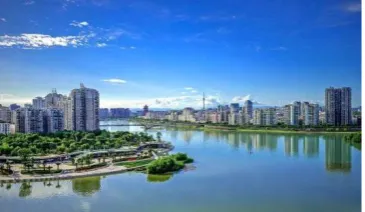
Mianyang has many rivers and well-developed water systems, among which the Fujiang River, Anchang River and Furong River form the intersection of three rivers and the circulation of two rivers as the landscape with local characteristics of Mianyang (Figure 1).
3) Historical and cultural characteristics
As a famous historical and cultural city in Sichuan Province, Mianyang has a profound historical and cultural heritage. It has the cultural characteristics of Ba-Shu culture, Three Kingdoms culture, national culture, science and technol-ogy culture, landscape culture and so on. It has intangible cultural heritage such as Wenchang Sacrifice, Qijiang ancient town, city god temple fair, the legend of Yu. There are many landscape buildings in the city, such as Yuewang building (Figure 2) and Ziyun Pavilion, which are rich in poetry.
2.2. The status Quo of Cityscape
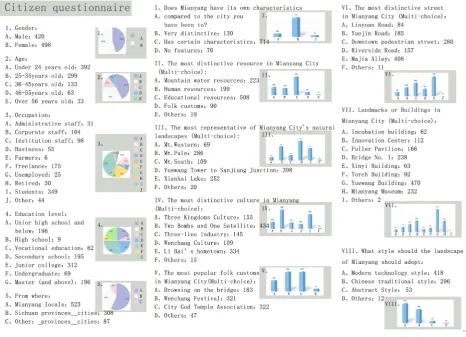
[image:3.595.283.466.446.552.2]In the preliminary work, in order to understand the local residents’ perception of the style of Mianyan, our research group on Mianyang’s cityscape planning and design strategy has designed a questionnaire based on the principles of ef-fectiveness, simplicity, scientificity and representativeness. After a round of pre-liminary investigation, it has revised the problems that are too professional to understand and lengthy, and formed the final citizen questionnaire, which cov-ers natural landscape, characteristic culture, folk customs, characteristic streets,
Figure 1. Sanjiang interchange.
[image:3.595.283.465.585.708.2]DOI: 10.4236/jss.2019.712005 55 Open Journal of Social Sciences landmark buildings, landscape sketches and other contents. The central urban area of Mianyang is divided into eight areas: Yuyingba area, Sanjiang Inter-change Center area, Wulidui area, Shengshui Qingyi Shima area, Central City and Gaoshui area, Tangxun Xiaojian Songya area, gardening area, high-tech area. Questionnaires were distributed to all local and non-local residents living in Mianyang in squares, parks, riverside belts, main streets, main residential areas and commercial centers in the eight districts respectively, and 918 copies were collected. First-hand information on the current situation of Mianyang’s land-scape has been obtained. At the same time, the team members also conducted detailed field research on each area from the professional perspective through photography, filling in style surveys, interviews, etc., and recording, perceiving, analyzing and summarizing the urban context and appearance of Mianyang from daily life, to provide a basis for further understanding of the main charac-teristics of Mianyang.
[image:4.595.69.536.375.712.2]Through questionnaires (Figure 3) and field research, it is found that Mia-nyang has certain urban characteristics, has a more pleasant landscape, and its urban construction has also achieved certain development, but there are still some problems. The main problems of Mianyang’s urban style can be summa-rized as:
DOI: 10.4236/jss.2019.712005 56 Open Journal of Social Sciences 1) The landscape pattern of harmony between city and nature is destroyed Due to the failure to control the relationship between the building and the mountain, the background contour formed by the natural landscape was ob-scured by the urban construction, and there was no visual line effect that formed the mutual attraction and coordination of the mountain city, which greatly af-fected the urban appearance (Figure 4(a)). At present, Youth Square and Tieniu Square and the waterfront along the road have a good hydrophilic environment and visual landscape, but most of the Riverside Road is still grassy, and the green landscape is not built as a whole, lacking in ornamental (Figure 4(b)).
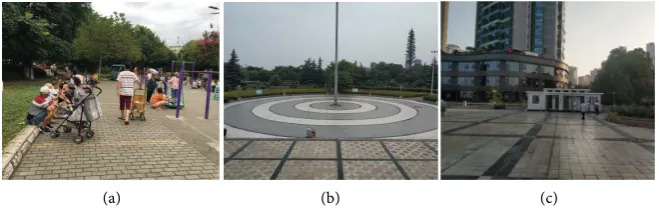
2) The shape of public open space is monotonous
[image:5.595.211.539.410.545.2]Some squares have inadequate service facilities. There are no chairs for the public to rest. The citizens can only sit on the ground. The public open space scale is too large. The interior is dominated by a large area of hard paving, with a discouraged, luxurious space form, but lost its appeal and affinity to the public. The design method is single. The design stage simply combines the theme sculpture, fountain and pavement, and does not adapt to local conditions. The local natural and human landscape features have not been fully displayed (Figure 5).
3) Poor building quality
At present, the newly built areas of Mianyang, such as horticultural hills and high-tech zones, have basically the same architectural color, but the overall tone of the city is chaotic. A small part of the architectural style is too abrupt, destroying
[image:5.595.209.539.590.694.2](a) (b)
Figure 4. The landscape pattern is destroyed. (a) The contour of the mountain is broken; (b) Waterfront landscape not built.
(a) (b) (c)
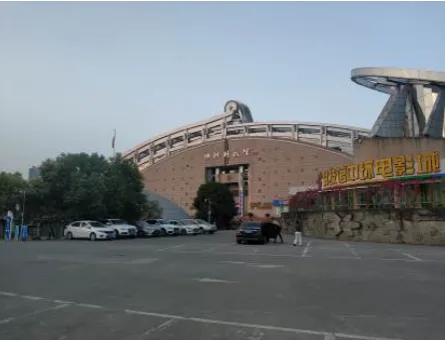
DOI: 10.4236/jss.2019.712005 57 Open Journal of Social Sciences the integrity of the building complex; high density; the building skyline is straight and rigid, without forming the height of the buildings; the majority of the build-ing’s facade is old, reducing the overall quality of the city; lacking landmark buildings. In the absence of landmark buildings, according to Question VII of the questionnaire, only the Yuewang Building is half of the choice of urban land-marks, and the urban area lacks recognition (Figure 6).
4) Historical and cultural characteristics are not reflected
Mianyang has a prominent history and culture. The “China Science and Tech-nology City” is the iconic business card of Mianyang (Figure 7). However, in our interviews, many citizens put forward the following suggestions for “what can be improved in the planning and design of Mianyang’s cityscape”: “Mia-nyang does not have many related buildings and public spaces that can display the characteristics of the Science and Technology City. Only the Science and Technology Museum is not enough to display the science and technology culture of Mianyang; various public facilities are basically not combined with Mia-nyang’s history or culture; increase the style of science and technology and re-flect the appearance of science and Technology City…” Explain that the public is only aware of the history and culture of Mianyang, but it is difficult to perceive their existence in the city.
[image:6.595.210.536.368.503.2](a) (b)
Figure 6. Poor construction qualities. (a) Style confusion; (b) Building no ups and downs.
[image:6.595.263.486.537.707.2]DOI: 10.4236/jss.2019.712005 58 Open Journal of Social Sciences
3. The Reasons for the Problems of City Style
3.1. Lack of Binding Force and Guidance of Landscape Planning
At present, cityscape planning is a non-statutory plan. Enforcement is more dif-ficult. Its regulations are also broader and more discretionary. Therefore, it is often not implemented in the actual implementation process. There are many cases of giving way to urban development. For example, in order to pursue the economic benefits of urban development, the breakthrough of floor area ratio and building height control, encroach on waterfront space, destroy mountain contours, and block landscape corridors; on the other hand, existing landscape planning is mainly in 2D drawings. Presented in textual descriptions, abstract expressions, lack of a more refined description and recognized specific proce-dures to follow, resulting in historical factors such as skyline, sight corridor, public space, architectural color, building height, etc. The control is often over-whelmed, it is difficult to provide a definite guidance for urban construction, and it is impossible to provide management basis for post-construction man-agement [7].3.2. Insufficient Targeting of Landscape Planning
Cityscape planning is the main method to show the uniqueness of the city. The content of the plan does not have to cover all the elements, but rather in strictly and exhaustively controlling the main problems affecting the present situation of the cityscape and the key contents that truly represent the cityscape and perso-nality from the perspective of the whole city. Other non-key elements can be grasped by the planners themselves to reduce various uncertain interference factors and promote the individuality and diversity of the overall style of the city under the premise of ensuring integrity.
3.3. Insufficient Attention to Historical Culture in Style Planning
With the continuous development of the city, authorities, builders, including or-dinary citizens have gradually learned the important role of history and culture in urban development, but the importance attached to them remains on the planning concept, and in the specific planning implementation stage. Lack of implementation, for example, just through various propaganda methods to in-form everyone that Mianyang City is “China Science and Technology City” and “Li Bai’s Hometown”, but it has not been reflected in the construction of the city, leading to the phenomenon of “only hear the sound but not see the person”, the city still lack of personality and difference.4. Analysis on the Improvement Plan of Urban Landscape in
Mianyang
4.1. Increase Control and Emphasize Public Participation
introduc-DOI: 10.4236/jss.2019.712005 59 Open Journal of Social Sciences tion of the control detailed planning guidelines to guide the style control of dif-ferent areas, improve the effectiveness of urban landscape planning control [8].
In the urban and rural planning law, there are clear provisions on public par-ticipation, but cityscape planning does not belong to the scope of urban and ru-ral planning. Public participation is often neglected, resulting in the construction of a city that is only the ideal city considered by planners and decision makers, but not the city of citizens favored by the public. Therefore, when planning the cityscape, we should understand and attach importance to the public’s cognition and opinions on Mianyang’s cityscape.
4.2. Increase the Guiding Role of Landscape Planning
As an implementation plan, urban landscape planning should directly guide the construction and management activities of the city. Therefore, we can learn from some case studies of relevant urban design in foreign countries, and compile land-scape control plans based on three-dimensional perspectives, so as to determine a series of specific planning conditions and refined control of urban features.
The urban design of the Makuhari New City residential area in Japan is stipu-lated in detail from the street area distinction, space form, building façade, roof styling, and commercial layout to face the urban features, such as the external contour form of the single building design along the street, the regulations on wall protrusions in the design, wall rate, exterior wall material and color, and balcony regulations (Figure 8) have achieved good effect of style control [9].
In this way, the status quo of the landscape elements, the specific measures for implement the transformation and the visual effect can be clearly expressed di-rectly from the drawings, so that the planning content can be more easily un-derstood, and a relatively unified management standard can be provided for the management personnel, so as to improve the management efficiency.
4.3. Improve the Relevance of the Content of the Planning
The system structure of urban landscape planning is complex, mainly including road system, open space system, building height control system, node space sys-tem, urban color syssys-tem, etc. Different areas will have different problems, if not focused, planning and designing all the elements of the style will not only con-sume a lot of manpower and material resources, but also make the final planning results lack of pertinence [10]. Therefore, we first learned through the question-naire survey that Mianyang’s Yuewang Building to Sanjiang Interchange, two bombs and one star, Majiaxiang and Yuewang Building are representative natu-ral landscapes, cultures, streets and landmark buildings of Mianyang selected by the citizens respectively.
DOI: 10.4236/jss.2019.712005 60 Open Journal of Social Sciences
(a)
(b)
[image:9.595.215.528.76.678.2](c)
DOI: 10.4236/jss.2019.712005 61 Open Journal of Social Sciences
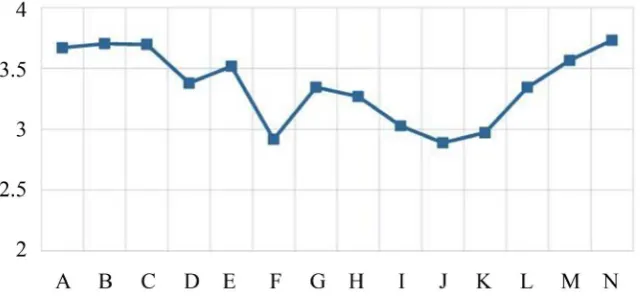
Figure 9. Average satisfaction of various style elements. A: Urban overall appearance; B: Natural environment; C: Green landscape; D: Street environment; E: Walking (riding) environment; F: Parking space; G: Waterfront activity space; H: Square space; I: Archi-tectural style; J: ArchiArchi-tectural color; K: Landscape sculpture; L: Street furniture; M: Bill-boards, signboards; N: Night lighting.
of cityscape in Mianyang are mainly concentrated in the aspects of urban color disorder, insufficient building height control, uncoordinated combination of arc-hitectural style and space group, insufficient parking lot, and low quality of land-scape sculpture. Therefore, in order to solve specific problems, we can firstly carry out strict style control and fine planning design on the architectural color, height, style, parking lot and landscape sculpture of the key areas of Yuewang building to Sanjiang Interchange and Majiaxiang, so as to highlighting the urban style of Mianyang.
At the same time, combined with the second point to detail the content of the landscape planning, the corresponding elements will be implemented to the building planning and design control guidelines, parking lot layout planning plans, landscape sculpture planning, using maps, text and various data indicators requirements the combined way of expression is conducive to enhancing the in-tuitive feeling and guidance of the planning results.
4.4. Improve the Expression of History and Culture
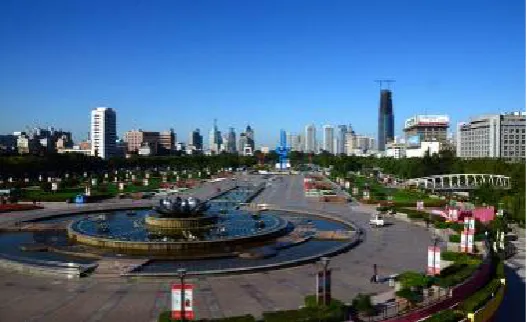
The planning and design of Quancheng Square in Jinan (Figure 10) fully inte-grates the local natural landscape, history and culture, and perfectly expresses the cultural characteristics of Jinan. For example, the square pavement uses dif-ferent materials to form a space with difdif-ferent touches; there are four groups of fountains under the famous springs on the square and 72 small springs, each of which has meanings, so that the citizens and tourists can fully feel the spring “spring culture”; the famous celebrities in the history of Jinan will be displayed through sculptures and reliefs [11].
DOI: 10.4236/jss.2019.712005 62 Open Journal of Social Sciences
Figure 10. Quancheng square.
5. Conclusion
Cityscape planning is an application-oriented plan. Mianyang has a good natural landscape pattern and more scientific and technological features. Therefore, in order to better play its guiding and management role, in the guiding ideology of the preparation of landscape planning, it is necessary to maintain the natural landscape pattern, continue the local historical planning concept and highlight the elements of modern science and technology, so that “new” and “ancient” coex-ist, with “new” as the mainstay and “ancient” as the supplement. The implementa-tion plan is to increase the control of the landscape planning and attach impor-tance to public participation. In the planning results, the current status problems and transformation measures are directly presented through two-dimensional and three-dimensional drawings, making them easier to understand and im-prove operability.
Conflicts of Interest
The authors declare no conflicts of interest regarding the publication of this pa-per.
References
[1] Cai, X.F. (2006) Analysis and Regulation on City Style and Feature. Tongji Univer-sity, Shanghai.
[2] Chi, Z.K. (1989) Urban Design. Hao, S.X., Trans., Tianjin University Press, Tianjin. [3] Xia, Y. (2007) Research on Landscape Shape in City Style and Feature Plan. Tianjin
University, Tianjin.
[4] Liu, J. (2011) Research on Urban Landscape Planning Framework. Xi’an University of Architecture and Technology, Xi’an.
[5] Huang, S.H. (2014) The Research on Overall Planning of City Style in Wuyi Area. Beijing Forestry University, Beijing.
[6] Mianyang (2018) Natural Resources and Planning Bureau. Mianyang Natural Envi-ronment.
DOI: 10.4236/jss.2019.712005 63 Open Journal of Social Sciences [7] Jin, G.J. (2001) Introduction to American Urban Design Guidelines. Urban
Plan-ning International, No. 2, 6-9+48.
[8] Wang, L. (2009) Norms and “Alternatives”—Thinking about Illegal Planning. Pro-ceedings of the 3rd International Conference on Urban Development in the 21st Century, Wuhan, 20 November 2009, 108-113.
[9] Liu, C. (2015) Urban Landscape Planning Control Method for Guiding Architectur-al Design. New Normal: Inheritance and Transformation—Proceedingsof 2015 China Urban Planning Annual Conference (11 Planning Implementation and Management), Guiyang, 19 September 2015, 9.
[10] Zhu, X.H. (1993) System Components of Urban Landscape Planning. Urban Plan-ning Forum, No. 6, 43-57, 38.