(,
)
... _ •.... -.. _ . . . . -_ .. _._--. _ ... _._-.. __ .... _.--_ . . . ---. _
-What's the name to remember for memory?
We have eight lines of ferrite cores so you can
string your own arrays. Or we can. We provide
virtually all configurations and frame designs.
And these we can stack into compact stacks
with memory cycles of 1 to 25 microseconds.
Then we offer memories -40 different models,
in fact. They're off-the-shelf core memories of
both coincident current and word select types.
They provide random and sequential access
operating modes. They have cycle times of 1
CIRCLE 1 ON READER CARD
© AMPEX CORP. 1963
AMPEX
to 24 microseconds. And capacities of 128 to
16,384 words. We also have today's finest
high- and medium-speed tape transports and
tape memory systems-offering complete
fa-cility to read, write and check digital data in
o
major computer formats. What about the reli-
0
ability of this memory line? In a word: Ampex ..
·For more information write to Ampex Corp.,
, I
' " I " i
['(I,'
~. j '. '.:.:1 .. )1 .. \
'" •• ,,'~' '. t I "
d
luils ::if;!.:; Ol);',:,
<" .. .,
--
~" ,.:..., I"J 'l~. ,I •
I."" r
, ~,
, ~ ,
}:,,\,{o."J§l§\
2
FAST
LOW-COST
DATA
PLOTTING
MAKE
THIS
WITH
THIS.
The improved Dymec DY-2030 Series Digital Data Plot-ting Systems provide economical, time-saving conversion of digital data to easy-to-read X-V charts. Data stored on
pe~forated tape or 'punched cards or tabul.ardata en-. tered manually on an accessory keyboard isen-. quickly
plotted as meaningful X-V graphs for easier interpreta-tion, rapid and accurate appraisal, permanent records . and presentations. The DY -2030B /D systems incorporate fast, quiet, reliable photo-electric tape readers and ac-cept virtually all standard-format computer tapes, thus minimizing the need for spedal computer programming. Punched cards may be read on customer-supplied read-ers and translated to graphical form by the DY-2030A/C Plotting Systems ..
These Dymec systems are ideal for rapid translation, con-version and graphical presentation of data in such areas as stress analysis-verification of numerically controlled machine tool program tapes-business situations, proflt-loss and trend data-thrust analysis-fluid flow and aero-dynamic studies-space vehicle trajectory and orbit
infor-c-,
Y
IIA
.1:
C
A DIVISION' OF HEWLETT- PACKARD COMPANY
EASY
TO READ
motion-real-time analog parameters acquired digitally -in any application where large amounts of digital delta can be more easily understood in graphical form. This is what the systems offer: Card, perforated tape or keyboard input • Up to 120 points/min. plotted with tape • Up to 50 points/min. with' cards • Zero sup-pression for convenient placement of plot • Continu-ously variable scale ·factor adjustment for maximum image size • Plot accuracy better than 0.15
% •
Reso-lution: 4 digits and' sign accepted for both X and Y axes. Write or call your nearest Dymec/Hewlett-Packar~representative or Dymec for full information.
2030A 2030B 2030C 2030D
Input Punched Perforated Punched Perforated cards tape cards tape
Output 11" x 17" 11" x 17" 30" x 30" 30" x 30·
plot plot plot plot
Price $6975 $7975 $11 ,360 $12,360
395 PAGE MILL ROAD, PALO ALTO, CALIF . • PHON E (415) 326-1755 TWX 415-492-9363
CIRCLE 4 ON READER CARD
o
-
---I
'I
The Datanets are here!
G.£.'s flexible new Datanets Will speed up your data communications_
across the country or across the hall
Whether your data communication problems are in the fac.
tory, in a nationwide network, or in the same office, General Electric can help solve them with The Datanets _ a complete
line of data communication systems.
And G.E.'s new data communication systems-like G.E.'s computers - are compatible. They talk to each other _ and to the computers. General Electric's data communication
systems and computers Use the same peripheral equipment. And when yOU move up to a more POWerful computer, General
Electric's data communication system will stay in step.
HERE ARE THE DATANETS:
Datanet-30 communication processor' Datanet-IS commu-nication control/er • Datanet-600 punched tape terminal • Datanet-90, -91 magnetic tape terminals' Datanet-3101 data accumulation system. Plus a wide range of speclal-purpose controllers and peripherals.
Next step: Ask for the complete Oatanet catalog.
Write: General Electric Computer Department, Section J-8,
Phoenix, Arizona.
7?-o,!ress
~
0(11' Mos! /"';>01'/<1111-Pror/ve!GENERAL
e
ElECTRIC
August 1963
CIRCLE 5 ON READER CARD
4
POTTER MT-'I20:
It doesn't require lengthy trial to determine if MT-120 is compatible with your computer system. It is. This highly advanced digital mag-netic tape transport features exceptional performance in a COM-PLETELY STANDARD, LOW COST PACKAGE. For example, a patented tape handling system* eliminates program restrictions - permits Start/Stop, Reverse/Stop or Forward/Reverse operation at up to 200 commands per second and at tape speeds to 120 ips. To learn more about the MT-120 and its unprecedented I-year war-ranty of reliability, write to our Director of Marketing. We'll send you full specifications, then you can judge for yourself.
THE MT-120 FEATURES:
.-" "'~ ... Special i'nterJocking devices prevent inadvertent arm retraction when reel drive motors are energized.
IBM and split-post type EOr and BOT sensing amplifiers are avail-able for positive tape control. .
·Potter Patent No. 3,016,207
POTTER INSTRUMENT COMPANY, INC.
MARKETING DIVISION. 151 Sunnyside Boulevard, Plainview, New York'T.M.
CIRCLE 6 ON READER CARD
DATAMATION
()
o
o
volume
9,
numberStaff
President FRANK D. THOMPSON
Publisher
GARDNER F. LANDON
Vice President & Publication Manager
RICHARD W. NIELSON
Editor ROBERT B. FOREST
Managing Editor & Art Director
CLEVE MARIE BOUTELL
Assistant Editor EDWARD YASAKI
News Editor VALERIE ROCKMAEL
Editorial Advisers
DANIEL D. McCRACKEN ROBERT L. PATRICK
Contributing Editor
H. R. J. GROSCH
Technical Consultant DON B. PRELL
Production Manager
MARILEE PITMAN
Circulation Mgr. ALGENE TRAINA
Eastern District Manager
JAY S. MARTIN 141 E. 44th St., New York 17, N.Y. MUrray Hill 7·5180
New England District Manager
WARREN A. TIBBETTS 112 West Haven Rd., Manchester, N.H., NAtional 5·9498
Midwest District Manager
JOHN BRENNAN 201 N. Wells St., Chicago 6, III. Financial 6·1026
Western District Manager
& Vice President
HAMILTON S. STYRON 1830 W. Olympic Blvd., Los Angeles 6, Cal. 385·0474
EDITORIAL OFFICES 1830 WEST OLYMPIC BLVD.
LOS ANGELES 6, CALIF. Microfilm copies of DATAMATION may be ob-tained from University Microfilms, Inc.,' 313 No.' First St., Ann Arbor, Mich.
August 1963
the automatic handling of information
Feature Articles
Europe & the U.S . . . . The Widening Gap
24 The European Computer Scene: 1963, by A. S. Douglas
27 Computers in Britain, by R. H. Williams
29 Cybernetics - A Soviet View (USSR Reprint)
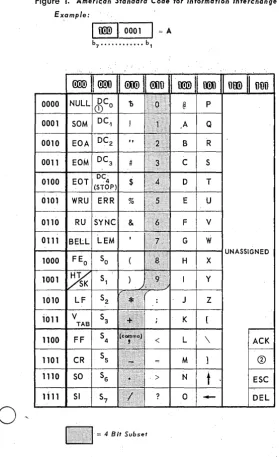
32 The American Standard Code for Information Interchange, by
R.
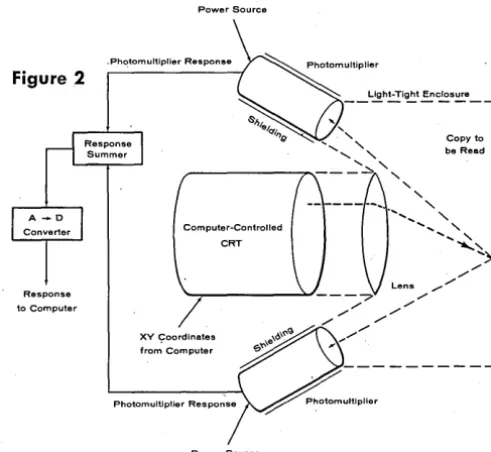
W. Berner37 Visual Input to Computers, by Dr. Roger L. Fulton
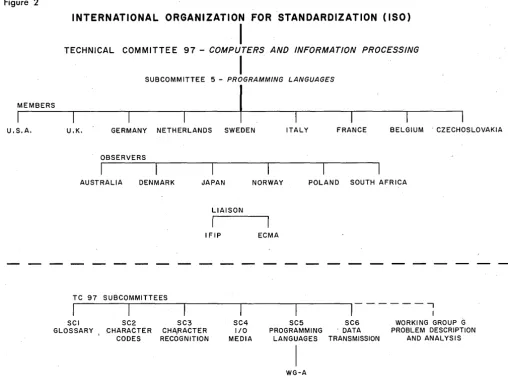
41 Standardization of Programming Languages, by Howard Bromberg
53 Techniques in the Review of Technical Papers, by D. D. Bourland Jr.
59 The DPMA Certificate 62 The PDS 1020 64 The ASI 2100
Departments
81
10 17 23 67 72 78
81 87 88
90
Important Dates in Datamation Letters to the Editor
Datamation in Business and Science The Editor's Readout
News Briefs in Datamation Datamation Feature Index People in Datamation New Products in Datamation Component Products in Datamation New Literature in Datamation Advertisers' Index
THIS ISSUE - 46,000 COPIES
(over
Despite increasing sales of American hardware in Europe, and regardless of growing alliances between U.S. manufacturers and those abroad, the computer growth curves of the two regions reflect a Widening Gap. It is a subject of con-cern to Europeans, and of interest to marketing men throughout the world. Cover design is by Art Director Cleve Boutell. .
Circulation audited by Business Publications Audit
Member, National Business Publications
DATAMATION is published monthly on or about the tenth day of every month by F. D. Thompson Publications, Inc., Frank D. Thompson, president. Executive, Circulation and .Advertising offices, 141 East 44th St., New York 17, N.Y. (MUrray Hill 7-5180). Editorial offices, 1830 W Olympic Blvd., Los Angeles, 6. Published at Chicago, III. Con-trolled Circulation paid at Columbus, O. Form 3579 to be sent to F. D. Thompson Publications, Inc., 201 N. Wells St., Chicago 6, III. Copyright 1963, F. D. Thompson Publications, Inc. Printed by Beslow Associates, Inc.
Stup-·\\,a t cli dcci sions don't lea \l~ you ti me to dig for data. \{ot] lleed a cOll1municaliolls system that moves as fast as :' uttr business. That system'? T!ES ... a vital new RCA
d\,,'\l~I()l'l1lcnt linking multiple locations to a high-speed
line:; ... L,;cpillg yuur IWl1lc and !ic!d o!1iccs, stores or pLl!1h, ill c()]):,tallt. :tutul11atic comIllunication.
TH2f:,--Tr:1I1~;missinll and Information Exchange System-speeds handling
or
cUstomer inquiries and orders. Itreduces processing costs. It ends your need for many small tabulating installations, since all processing is consolidated at strategic computer centers.
\Vith TIES, as with every area of electronic data process-illg, the RCA approach is uniquely customer-directed. It starts when your operation is timed-out by RCA on its own CO 111 puters, and continues as long as you are a cus-tomer. Call us-and see!
RCA ELECTRONIC DATA PROCESSING, CHERRY HILL, N.
J.
The iVjost ·rrusted r1Jarne in Electronics
CIRCLE 7 ON READER CARD
I'
Printing Tape Punch (LPR Set), Serial Input, 10 char/sec.
2 Tape Reader (LXD Set), Serial and Parallel Output, 10 char/sec.
3 Tape Reader (LBXD Set), Serial and Parallel Output; or as Signal Conversion Unit, Parallel Input, Serial output, 10 char/sec.
4 Tape Punch (LARP Set), Parallel Input, 20 char/sec.
5 Tape Reader (LX Set), Parallel Output, 20 char/sec.
6 Keyboard Tape Punch (LKPE Set), Manual tape preparation.
7 Tape Punch (BRPE Set), Parallel Input, 63 or 110 char/sec.
8 Tape Reader (CX Set), Parallel Output, 60 or 107 char/sec.
9 Signal Conversion Units: Serial·to·Parallel Converter (LRS Set, shown); Parallel·to·Serial Converter (LD Set). 10 char/sec.
o
Does your data system need punched tape?
If it does, check your specifications against these nine Teletype units.
Then check the price.
Frankly, we think you'll be amazed that equipment with these capabilities will cost you so little.
Choose from models that handle five, six, seven or eight-level tape. They range in speed from 10 char/sec. on the LPR Tape Punch (upper left) to 110 char/sec. on the BRPE Tape Punch Clower left).
ers, even punch and relay sets. In fact, there are Teletype units available for almost any mes-sage and data communication need-whether your system is small and local ... or large and country-wide.
For more details, contact: Teletype Corpora-tion, Dept. 81H, 5555 Touhy Avenue, Skokie, Illinois.
This equipment is made for the Bell System and others who require dependable communications at the lowest pOSSible cost.
Is it a combination set you want? In addition
~::::e~n~:d ;:~:~~. ::deh::~ s~::~-':;~:~:;:-
Ii
e
iJ
c!RpI§AkN't ..
!
.Y~to·
r~~~-~·~'=-~~~=~~~~·:-:-~,~~~:=-.=j
•
• The second Institute on Electronio Information Display Systems will be held September 16-20 at The Ameri-can Univ., Washington~ D.C.
• The 13th International Management Congress will be held September 16-20 at the Hilton Hotel, New York City. Sponsor is the Comite International de l'Organisation Scientifique.
~ The 12th annual Industrial Elec-tronics Symposium will be held Sep-tember 18-19 at Michigan State Univ., E. Lansing, Mich. Sponsors are PGIE, AlEE, and IsA.
• The 26th annual meeting of the American Documentation Institute will be held October 6-11 at the Pick-Congress Hotel, Chicago, Ill.
• The fourth annual Symposium on Switching Circuit Theory and Logical Design will be held Oct. 7-11 in Chi-cago, Ill. Sponsor is the AlEE sub-committee on Logic and Switching Circuit Theory.
• The International Systems Meeting will be held October 14,-16 at the Hotel Schroeder, Milwaukee, Wisc. Sponsor is the Systems and Procedures Assn.
• The annual meeting of the Users of Automatic Information Display Equip-ment will be held October 15-17 at the Carillon Hotel, Miami Beach, Fla.
• The BEMA (Business Equipment Manufacturers Assn.) 'Exposition/Con-ference will be held Oct. 28' to Nov. 1 at the Coliseum, New York, N.Y.
• The 1963 Fall Joint Computer Con-,ferencewill be held in the Las Vegas,
Nev., Convention Center, Nov. 12-14.
• The annual meeting of the Ameri-can Mathematical Society will be held January 20-24, 1964, in Miami, Fla.
• The 1964 Spring Joint Computer Conference will be held at the Shera-ton Park Hotel, WashingShera-ton, D.C., April 21-23.
8
Tab card record keeping
minus its biggest expense
Tbe biggest expense in a punched card tabulation system has been the key-punching and key-verifying of cards.
All that expense is eliminated with the Friden Add-Punch ~
The Add-Punch works just like a IO-key adding machine, creating a punched paper tape of any or all data entered on the keyboard. This is automatic data processing at the
source.
These tapes can be converted, to tab cards automatically, or fed directly into a computer, with no manual key-punching arid without key-verifying.
You'or a service bureau can now prepare a set of double-entry
accounting records from the Add-Punch tapes. Or profit and loss statements, sales analyses, cash disbursement analyses, labor distribution.
Since the Add-Punch automates the entire process, there is never
a chance of your re-entering or re-copying errors along the way.
,Tab card record keeping minus its biggest expense. That's what the Add-Punch offers you. For full details, call your Friden Systems man. Or write to: Friden, Inc.~
San Leandro, California.
Friden
Add-Punch is a Registered Trademark of Friden, Inc • • Sales, Service and Instruction Throughout the World
CIRCLE 46 ON READER CARD
o
F~C:.T
C~AOUSEL
have you heard of a magnetic tape memory that can exist "in any room and go on
operating month after month with no special treatment - no humidity nor dust
con-trol - and still have the reading reliability of a drum memory. If not - then write for
information to FA C I
TIFack
lStockholm
71Sweden.
CIRCLE 33 ON READER CARD
, with
a
dsd
1260
HIGH-SPEED
PRINTER
No need to shut down this
high-speed data processing printer
to adjust character-to-character
vertical alignment. Alignment is
ELECTRONICALLY controlled
from the front panel while the
printer is operating at a speed
whi.ch in' most applications
almost DOUBLES THE
DOC-UMENT RATE of presently
avail~able printers.
PARTIAL SPECIFicATIONS
Printing Speed 1200 lines/min.
Skip Rate . . . .
60" /sec.
Form Width . . 3" minimum
22" maximum,
132 columns
Presently being demonstrated
af' .
DATA,
SYSTEMS
DEVICES
OF BOSTON, INC.
342 Western Ave., Boston 35, Massachusetts .. Area Code 617
Al
4-0440CIRCLE 47 ON READER CARD
10
o
0 0.0 0 0
0 0 0 0
0 0 0
0 0
information retrieval
Sir:
One. statement in Dr. Meneely's letter to the editor (June, p. 12) aroused my interest. The writer said that he found an article on the theory of polar planimeters, in the 11 th edition of the Encyclopedia Brittanica, "after weeks of search."
I proceeded from my desk down-'stairs to the 11 th . edition's resting
place, opened the index to the only reference to planimeters, 4-975d. At this location, in the article on Cal-culating Machines, was a discussion on planimeters. Total elapsed time, "portal to porta:!," aboutthree minutes. A cursory examination of the ar-ticle reveals one more interesting point. The words "polar planimeter" are not found therein nor, indeed, the, ,word "polar." Therefore, a
billion-dollar associative 'memory with' the whole 11th edition on it would not have helped the gentleman.
ARNOLD 1. DUMEY
Data Handling
Roslyn Heights, New York
coBol 'revisited
Sir:
Assuming that Mr. Naftaly is not simply crying "Wolf!" at the sight of a domesticated German shepherd, his defense of COBOL (May, p. 24) was convincing and comprehensive; his arguments and statistics show fairly conclusively that COBOL "certainly meets the realistic test - it saves the user money."
However, although Mr. N aftaly proves that COBOL does not itself inherently possess major faults, he does not suggest any reason why it is attacked, except to imply that those who attack it must be ignorant and/ or irrational. One of the major reasons for COBOL's current vulnerability surely stems from the inadequacy of the original CODASYL COBOL Man-ual - something which Mr. Naftaly does riot even rpention.
Apart from the writing style, which is appalling, the specifications in this manual are absurdly organized, dan-gerously vague, often meaningless, and s'ometiIlles even contradictory . One often has the impression that the
proverbial infinite number of monkeys had been supplied with the proverbial infinite number of typewriters. The misleading and contradictory state-ments about the SYNCHRONIZED clause on pages VI-22 and VI-42, Note 3, are just one example of many
0
that could be quoted.Since every implementor based his compiler on these specifications, there are as many interpretations of certain areas of the language as there are implementors; ariy areas not clearly and unequivocally defined were bound to be interpreted in the most con-venient way by each implementor. Under these circumstances, lack of commonality, for one thing, was as-sured from the beginning.
The COBOL working committees have offered clarifications of certain elements in the language; in many cases, however, these clarifications were issued months after each im-plementor had committed himself to a particular interpretation; very often, the ClarIfications themselves needed clarifying.
The CODASYL .COBOL Manual recommends that "each user recognize his own responsibility to determine that the compiler offered by any man-ufacturer does in. fact implement all of the REQUIRED features to the extent of hardware capability to make it a 'proper' COBOL compiler." How can a user possibly determine any-thing except that the manufacturer has implemented all of the RE-QUIRED features? To determine whether they were implemented cor:"
rectly, the user would have to appeal to the same ambiguous source as the implementor.
It is a flattering reflection on the COBoL language and its implemeri-tors that, in spite of all these difficul-ties, manufacturers have produced COBOL compilers which meet Mr. ' N aftaly' s and the user's realistic test. MARCUS L. BYRUCK
Woodside, California
datamation readers are invited to
express themselves both on specific
contents of an issue and on the in-formation processing field in gen-eral; Only letters bearing the
writ-er's name will be considered for publication, although names will be withheld on request. The editors re-
CI
tain the right to edit letters, pro-vided this can be done without changing the meaning.o
o
August 1963
Before you answer check our new
prices for analog/digital data
sys-tems components. Better yet, let
us quote your specific requirement
for A-to-D and D-to-A
converters,
solid-state multiplexers, sample
and hold amplifiers, signal
condi-tioners, and related hardware. Call
or write
I.
R. Schwartz, Sales Mgr.
1 -
292 Main St., Cambrld •• 42, Ma ••.1145 East Ash Avenue, Fullerton, Calif. 2050 Woodson Rd., St. Louis, Mo.
l.i~ml!l4 IIn't 1\'J"(otiJiiri/" (;l;i/!Il'J'liiT:im
II;l!1!1m''''~ rrii/iiII!1TtlNi:,ifi,;;,fl t:IiWfiril:r;.'!
CIRCLE 10 ON READER CARD
with specified extra wide safety margins
Standard or custom systems, in-corporating RCA ferrite and semi-conductor devices, are designed, built, and tested by memory-circuit specialists-at RCA's newly expanded memory products oper-ation in Needham Heights, Mass. Here is the new answer to memory-system design and production, of-fering new latitude to the computer engineer, new solutions to your system production problems-com-plete RCA Memory Systems. De-signed and produced by RCA from ferrite cores to entire packaged systems, these predsion units are pre-tested to broad operating lits and are delivered ready for im-mediate use in computer designs.
Here are some of the outstanding fea. tures of complete RCA Memory Systems:
• Specified Wider Margins of Opera. tions ... Up to 8 percent ... to cope with broad variations in power levels. • . Custom Design Service ... RCA's en-gineering staff will custom-design a memory system to your specifications. • Superior Reliability ... Components and circuits proved by the long, de-pendable service of over 150 systems now in use.
• Complete Information Reterttion ... even in case of full power loss. • Wide Temperature Range ... O°C to 50°C.
For Systems Engineering Service-Call your RCA Office. For further technical information on RCA Memo-ry Systems, write Dept. FD8, RCA Memory Products Dept., 64 "A" St., Needham Heights 94, Massachusetts.
STANDARD RCA MEMORY SYSTEMS
Capacity
Speed
Modes of Operation Reliability
128 to 32,768 words, 4 to 64 bits per word.
Complete Read·Write cycle times: 0.375 to 12usec.
Read.Regenerate;'Read.Modify/Write . Only/Read Only/Master Clear. Acceptance tests made with all pow· er supply voltages varied both plus and minus 8 percent from their nom· inal values while the system is being temperature cycled.
ADDITIONAL OPTIONAL FEATURES • Self Checking-with simulated worst·case con·
ditions.
• Information Retention-prevents loss of stored and in·process information in the event of pri· mary power failure.
• Indicator Lights-for memory address register and memory information register.
• Interlace Register ~ permitting simUltaneous read and write operations.
The Most Trusted Name
In Electronics
RCA SEMICONDUCTOR AND MATERIALS DIVISION FIELD OFFICES ••• EAST: 32 Green St., Newark 2, N. J., HU 5·3900 • 731 James St., Room 402, Syracuse 3, N. Y., GR 4·5591 • 605 Marlton Pike, Erlton, N. J., HA 8·4802. Greater Baltimore Area, 1725 "K" Street, N.W., Washington 6, D. C., FE 7·8500 • NORTHEAST: 64 "A" St., Needham Heights 94, Mass., HI 4·7200 • SOUTHEAST: 1520 Edgewater Dr., Suite No.1, Orlando, Fla., GA 4·4768 • CENTRAL: Suite 1154, Merchandise Mart Plaza, Chicago 54, 111.,527·2900.2132 East 52nd St., Indianapolis 5, Ind., CL 1·1405 • 5805 Excelsior Blvd., Minneapolis 15, Minn., WE 9·0676 • 714 New Center Bldg., Detroit 2, Mich., TR 5·5600 • 7905 Carpenter Freeway, Dallas 7, Texas, ME .1·9720 • Continental Terrace Bldg., 2785 North Speer Blvd., Room 346, Denver 11, Colo., 477·1688 • WEST: 6801 E. Washington Blvd., Los Angeles 22, Calif., RA 3·8361 • 1838 EI Camino Real, Burlingame, Calif., OX 7·1620 .2250 First Avenue, So., Seattle 4, Wash., MA 2·8816 • GOVERNMENT. 224 N. Wilkinson St., Dayton 2, Ohio; BA 6·2366 • 1725 "K"
Street, N.W., Washington 6, D. C., FE ;;:·8500. .
CIRCLE 27 ON READER CARD
12 DATAMATIDN
o
o
~---
-//VPVV
/~:~.~.-.-.~.,
CONVERT A
TOOcompatible and complete
data systems equipment
from one source:
P a c k a r d Bell
When you specify Packard Bell equipment for data systems, you have several things : in your favor. The systems will be easy to design and easier to put together. Packard Bell units, originally designed for systems use, are complete, compatible, available from stock and have field-proved reliability. Completeness-Packard Bell's equipment line is the most complete: the "M" series A to D converters with the new M20 (30kc, 15 bits) and the M21 (70kc, 12 bits); a new family of D to A converters; fast and accurate commutators, multiplexers, and sample and hold units; differential amplifiers; silicon and germanium logic modules for all logic functions at 200kc, 1 mc and 3mc; and the PB250 and PB440 digital computers for real-time and other systems control and computing jobs.
Compatibility-PB data systems equipment fits to-gether smoothly because of impedance matching, sim-plified cabling, standard codes and logic levels.
Documentation and Support-Application and Tech-nical manuals take the guesswork out of the usual problems of interface, timing, code conversion, etc. PB application and field engineers are ready with addi-tional assistance.
Simplify your data systems design now by writing to Packard Bell Computer and asking for Data File E-16-7.
P a c k a r d Bell
a/l~«te~,
A DIVISION OF PACKARD BELL ELECTRONICS
1905 Armacost Avenue • Los Angeles 25, California'
CIRCLE 12 ON READER CARD
fEJEJl
HOW
TO
"REDUCE" AN ORB/rro
3~''
X
3~''
You ,can graphically reduce mountains
of
telemetry
data to an easy-to-read
curve with
an
EAI OAT APLOTTER®.
As many
as 4500
line
segments
can
be
plotted
on a 30"
x
30" surface
in one minute. The EAI OAT APLOTTER will
accept inputs directly from
most
digital computers, from magnetic
or
punched tape, punched
cards or
from
manual input keyboards. Plotting accuracy is
.05%
with repeatability
of .07 %.
Reliability is assured
by
solid-state
electronic circuitry.
0
EAt OAT APLOTTERS can "reduce" your telemetry data-problems. Write for details today.
EAIELECTRONIC ASSOCIATES. INC.
Long Branch. New Jersey
ADVANCED SYSTEMS ANALYSIS AND COMPUTATION SERVICES/ANALOG COMPUTERS/HYBRID ANALOG-DIGITAL COMPUTATION EQUIPMENT/SIMULATION SYSTEMS/ SCIENTIFIC AND LABORATORY INSTRUMENTS/INDUSTRIAL PROCESS CONTROl SYSTEMS/PHOTOGRAMMETRIC EQUIPMENT/RANGE INSTRUMENTATION SYSTEMS/TEST AND CHECK-OUT SYSTEMS/MILITARY AND INDUSTRIAL RESEARCH AND DEVELOPMENT SERVICES/FielD ENGINEERING AND EQUIPMENT MAINTENANCE SERVICES.
CIRCLE 13 ON READER CARD
14 DATAMATIDN
o
)
o
Controlling the program
from
the operator
con-sole, men in data processing guide information
input and output through high speed computers.
Whether you use half-size reels for short-run
MAC
PAN'EL" COMPANY,
...
...
...
...
...
...
...
...
...
...
...
...
...
...
...
...
...
...
...
...
...
...
,
... .
...
...
...
...
applications or the standard 2400' size, MAC
Panel heavy-duty computer tape is manufactured
and tested to provide drop-out free data
trans-mission . . . to give you assured perforrriance .
Division of Adams-Millis Corporation
(~)
High Point, North Carolina
Representatives throughout the United States, Canada, Latin America and Europe
August 1963
"Men in Data Processing," No.8 of a series.
11"
x
14" print, suitable for framing
available upon request.
CIRCLE 14 ON READER CARD
The SDS 9300
is
faster than the 7090.
It costs $215,000.
Kiss the computer speed/cost barrier goodby!
The SDS 9300 adds in 1.75 microseconds and multiplies in 7 microseconds, including indexing. With optional hardware, it executes 48-bit floating point multiply in ~4 microseconds. Compared to a 7090, that's over 100% faster at less than 25% the cost. And there's more to the 9300's speed than arithmetic: Input/outputrateEi exceed, 2-million characters per second simultaneous with com- . putation (you can operate eight high-speed tape units, all running at 96Kc, concurrent with arithmetic execu-tion) . .The price of the basic 9300 is $215,000. With
over-lapping 8K memory, floating point hardware and a mag-tape unit, it costs $330,000. First delivery: December.
If you'd like more informaiion on the computer that represents an order of magnitude increase in answers per dollar for a wide range of scientific and systems applica-tions, request a. copy of our 9300 Computer brochure.
sl'
_Is
9 a O O (;
SCIENTIFIC DATA SYSTEMS 1649 Seventeenth St., Santa Monica, Calif.
CIRCLE 15 ON READER CARD
16 DATAMATION
/
-!
)v. 80
86 92 98
•
•
•
•
•
•
•
•
•
•
•
303 307
.1
c)
C)
0
BUSINESS
&
SCIENCE
EDP'BILL PASSES HOUSE;
FACES STIFFER SENATE FIGHT
The Brooks bill, moving down well-greased legislative
rails, moved out of the House in June after only one
hour's debate on the floor. A motion to return the
bill to committee was defeated, 258-96. Also beat down:
a motion to make competitive bidding on punched card
equipment mandatory. The final version of the bill
removed operation as a direct
~uthorityof GSA and
also extends GSA authority to edp systems leased or
purchased by contractors, and entirely funded by gov't
dollars. Exact nature of GSA authority will not be
determined until the bill escapes the Senate--where
intensified DOD opposition is expected--and final GSA
regulations are issued.
NEW
1
=
NEW LEASE
ON LIFE FOR ASI
- - - -
.
Bucked up by a quick injection of Vitamin M, Advanced
Scientific Instruments of Minneapolis this month
an-nounces a new system, the ASI 2100 (see p. 64). The
announcement signals the return from the grave of
the two-year-old Minneapolis firm, which only last
January was ready to call it quits. Every avenue of
salvation had been explored,
including--ironically--purchasing look-sees by Autonetics and Bendix.
At this point, riding up like a melodrama hero,
came Electro-Mechanical Research, waving a
multi-mega-buck hypo from its parent firm, Schlumberger •••
Nether-lands-based firm which has been broadening its original
petroleum services base with electronics acquisitions,
including Daystrom (Feb. '62). Within two weeks of the
original contract, ASI was a division of EMR, ready to
begin the long climb out of the financial cellar.
Some 60 furloughed employees were rehired, all
out-standing
d~btspaid, and new management controls
In-stalled. Today, ASI has 125 employees, and expects to
double that number by the end of '63. There are now
11 210's installed. Recent orders include Adaptronics,
Inc., Beech Aircraft, and a service bureau installation
at Electronic Calculating Service in Los Angeles.
Cur-rent 210 production rate: two a month.
Originally a splinter of the old General Mills
computer effort, AS! is in more logical hands with
EMR, a 22-year-old firm which specializes in aerospace
instrumentation and data handling. Although nev'er
publicly announced, EMR's gross is estimated at about
30 megabucks a year. Behind EMR: the 266-megabuck
gross of Schlumberger in 1962.
18
Cr\tica\ insta\\at\(ms re\'j on "'ne\e~ \-\\gh S-peed ?r\nteT S'jstems. \n the N.at\ona\ De'ense Communkaticms
Contra\ Center, ?TO\ect I\G':lL, the Mer-cur"j and the f\-po\\o -program", ... in
a\\ ot these and man'l more, "'ne\e~
S"jstems ha\le earned a -p\ace. \\ fe\\-abint"j is yOUf concern, write tOT
tUf-ther \n\OTmat\On.
CIRCLE 16 ON READER CARD
::c
m
<
m
::c
::c
m
r
-»
OJ
-
r
--I
-<
-(J)
n
::c
--I
-n
»
r
DATAMATION
-
NA TIT CO ADCil
--
PRel -ID
19 28 37 46
55
64 73
~ I
•
--
NATlTI
CO, AD
CIT
--
PRO1
10 1
19 21 28 2' 37 31 46 4:
55 51
o
)
o
nUSINESS l1. SCIENCE
CDC WINS OUT
- - - -
DOWN UNDER
-BRAVE CEIR,
A CAUTIOUS BULL
-
-COMMUNICATIONS-ORIENTED
SYSTEM FROM RCA
August 1963
In the same month that .it set up its new Australian
company, Control Data walked off with the
marbles--some $8Yz-9-million worth--beating out 7 other American
and British manufacturers with two orders for
multi-computer systems for the Commonwealth Scientific and
Industrial Research Organization and the Bureau of
Census
&
Statistics. Each organization will receive a
3600, plus yet-to-be-announced satellites (the
new Zeta?)--four for CSIRO and five for BCS.
One CSIRO satellite will be located at Canberra
headquarters with-the 3600; the others will be spotted
in Sidney, Melbourne and Adelaide. No physical
connec-tion is anticipated right away, according to G. N.
Lance, Officer in Charge of the Computing Research
Laboratories for CSIRO, a governmental scientific
re-search organization. Final delivery of the CSIRO
com-plex is expected by June '64, with some satellites due
earlier. The BCS 3600 will go in before June;
satel-lites are not due before the end of '64. Lance said
that his organization expects "considerable"
programming support from CDC, which will supply a
FORTRAN
'~3,and, eventually; an AL90L
com~iler.The
orders were expected to be signed in late July or
August.
CEIR, bravely taking its medicine, has written off
all of its past mistakes in the semi-annual report
covering the six months ending March 31. The dose
was a whopper: $2,136,272, which includes such
mis-judgments as STRETCH space committments and the 1604,
plus nearly half-a-megabuck in one-time consultant
fees (reorganization comes high these days). One
bright glimmer: outside of these non-recurring losses,
'63 losses for the first six months were some
$250K
-less
th~nlast year's same period. And the firm's
working capital as of April Fool's day was plus
$1,116,300- vs. a minus $310,952 six months earlier.
Not included in the report: the company's third quarter
--"best in the last three years." Looking like a
cautious bull, CEIR plans no more immediate hardware
investments,feels that in its current situation lie
the germs of order, stability and predictability. In
the words of' one observer, ·the company is now in a
position to plan to stay alive.
The harsh fact that hardly anybody makes dough
build-ing and sellbuild-ing computers doesn't seem to slow the pace
of new computer announcements. The latest: RCA's 3301
(three times as fast as the 301?) REALCOM, featuring
a 1.75 usec
~ainmemory cycle
an~a 250 nanosecond
microferrite 200-character scratchpad memory.
Compat-ible with the 301" the 3301 software includes an
1/6
controller called the File Control Processor and an
executive routine, plus FORTRAN II (IV is coming),
and extended '61-COBOL. Straight add time (five digits,
memory to memory), is 32 usec; with floating point add
(10 digits) taking 9.75 usec. These compare to 189
BUSINJ;SS & SCIENCE . M E l · - - - _ . . _ _ _ _ _ _ _ _ _ _ _ _ _ _ _ _ kEIIDlliW _ _ lIil!ii#lI:aN9I!W_,*ra'MI!!IWDUZill@!t:I.:mIMB@i!!.!M!ll!Mmlh,j
20
BACK TO THE WELL
FOR BURROUGHS
PROGRAMMERS-IN-WAITING
usec and 168 usec, respectively, in the 301. The word
~
length is variable up to 10 characters. Multiprocessing
capabilities include simultaneous compute, I/O and
access to disc or tape; optional is a priority
inter-rupt control which provides five-way simultaneity:
read, write, compute, communicate and interrupt. Three
communications modes include: Communications Mode
Control (300 cps max.) ; Data Exchange Control' (266,666
cps); and Single Channel Communications Control' (uses
six voice grade communication lines, handling
up to
40,000 bits per second on'a common carrier digital
subset). Described as a communications-oriented'gp
business and sciSntific system, the 3301 falls
be-tween the 301 and the 601 in capability, is
price-equivalent'to the 501, which, says RCA, it does not
replace. Wanta bet?
Burroughs, which has already invested in its edp
program to the tune of an estimated 100-150
mega-bucks, is arranging for more financing, primarily
to reduce its current bank debts--$54-millionas
of the end of May. $25-million'in debentures was
sold to an
unde~writinggroup, and another $17.6
will be raised by an
off~ringof over 740,000
com-mon shares to stockholders:at $23.75 each. As of this
writing, Burroughs stock is hovering
ne~rthe year's
low of
27~.The People Problem in dp is being given a boost by
pools of parttime programmers, mostly young mothers
organized to provide programming service by the hour,
day, or you name it. It may become a healthy boost if
'these
so~calledpregnant programmers can be pooled in
Ann Arbor, Mich., Chicago, San Francisco, and Los
Angeles, as presently planned.
In the latter city, a staff of 10 under Ralph Shofner
of
Adva~cedInformation
Syst~msis available
but~as
yet, unutilized. Preseni rate structure is $96: per
day for a senior programmer, $78 for a programmer.
Already earning pin money are some 12-14 ladies in
Boston suburbs, associated with Mrs. Elsie Shutt 'Of
Ha~vard,Mass. ~ormerlywith
Datamatic·Corp.,
Mrs. Shutt charges $12 per hour for an
analyst/programmer (equivalent of a masters degree
in math plus five
io
six years' programming
e~perience). A programmer (bachelors in mqth, 'three..;plus
years) costs $9 per hour, and a junior programmer
(bachelors,less than three years), $6.:A shortage of
analysts, Mrs. Shutt says, is slowing staff expansion.
Unlike the Kelly secretarial group, the girls are
not, guaranteed' to be kept busy, but all work is at
home
e~ceptfor meetings with the job'analyst and
debugging. Mrs. Shutt, too, works out of her'living
room; ,indeed, the no-overhead operation is, at this
stage, necessary' for a successful venture, she says.
Her only expenses are a part time secretary and phone
calls.
I:IATAMA"rION
~
(
'-) 0
)
o
Elgin "60" Elapsed Time Indicator shown actual size
Let Elgin "60" Ell· police your computers:
Here's an accurate and low cost Elapsed Time Indi-cator-ideal for many applications and particularly
computers. The Elgin "60" provides precise measure-ment of operating time. It's tough and its size and weight are just right for computer use ... it's designed to meet the requirements of Mil-M-77930. When your computers start, the "60" loses no time-it starts in
less than 500 milliseconds . .. when power is off, the "60" stops in the same amount of time!
communications
DIVISIONElgin ETI's are sold exclusively by Airsupply Company, division of the Garrett Corporation.
Digital dial with operating indicator
Write today for new folder giving information on the Elgin "60" and all other Elgin ETI's.
• ELGIN. ILLINOIS 60120
E LG I N
national watch company
INDUSTRIAL GROUP
OTHER DIViSioNS: SYSTEMS • MICRONICS • RESEARCH & DEVELOPMENT • CONTROLS • PRECISION PRODUCTS
CIRCLE 17 ON READER CARD
That's what this tape says. Andthaes
what
DATA. PHONEservice is-the last
word in data communications.
Business machines do the
talking-over regular telephone lines at regular
telephone rates. The results: big savings
of time and money in shipping data ...
increased efficiency for your business.
And when the machines aren't talking,
you can use the
DATA·PHONEdata set
as a regular telephone.
Talk to one of our Communications
Consultants about versatile
DATA.PHONEservice. Just call your Bell Telephone
Business Office and ask for him.
(
)
C'\
DATAMATION
Ie>
EDITOR'S READOUT
,I,j
o
+FOR BELL TELEPHONE CIRCLE 18 ON READER CARD
OF MATURITY
IAND MEATBALLS
Moving with the manic-depressive erraticism of the teenager that it is, that awe-inspiring, exasperating, lovable, dumb organism known as the computer industry' ambles sluggishly but inexorably toward adulthood.
As with the human animal, this event is to be viewed with mixed emotions . . . exhilarated relief coupled with nostalgia. With the expectations of more predictable behavior comes a longing for some of the enthusiastic transgressions and digressions of childhood. Most of all, we think the industry will miss its own equivalent of the buffalo, that fast disappearing species known as the individual.
Programmers, especially, are being thought of as' rational human beings capable of doing a standard day's work, we understand. The industry is moving swiftly toward the domestication of this once proud, wild animal.. . . estab-lishing standard aptitude and selection tests which will surely lead to a neat curriculum formula by which bright-eyed, clean-shaven young men will plod methodically along a well-Row-charted course toward a BS in Computing Sci-ences, a desk with a graph pad in a windowless room in Po dunk or Potts, and a 25-year good conduct pin with three oak leaf clusters.
Engineers, as everybody knows, have already gone this route. A look at today's machines is all the evidence needed . . . the only succinct comment to be made upon the values of this sensible and ·orderly approach. Someday even the programmers at Rand will shuck their sandals and sport shirts for shoes and Rooster ties. These, of course, are only surface symbols of conformity, not to be confused with the real originality and creativity.
These twin talents, hard to define, are harder yet to detect and predict. They often appear in people not afraid to carp, criticize, complain . . . people driven by a divine discontent, a belief in such old-fashioned values as un-compromising truth. The modern organization chart, revered by meatball manufacturer and user alike as substitute for real authority and responsibility, has few boxes for individuals who know what they are doing, are capable of doing it, and, more important, care . . . want to see it done properly.
Some of these people turn into consultants, a profession to be recommended if you have the will and the nerve to watch, others pay plenty of dollars to ignore your advice. Others form a small company of their own . ., then watch it get swallowed by a bigger organization chart, or turn into one.
We'd like to see a computing organization with a Roating box saved for a thinker, a person unfettered by standard, traditional ways of looking at problems . . . free of the usual confusions of hard and dotted lines to read, research and think in his own way about real, not artificial, problems. He'd be free, too, to wander into the president's office with ideas, sound and hair-brained . . . and to occasionally get something done. Maybe somewhere this is
happenin,g. We'd like to think so. •
Abhorring the vacuum created
by European
computer manu·
facturers' inabil· ityto keep up with voracious continental. com-puting needs,
American ma·
chine makers are
moving rapidly
into a nearly vir-ginal market. Beachheads have been established and
consoli-dated; the invasion continues in full force. IBM, according to
one interested U.S. observer, is taking orders for the 7407
in Europe at the rate of one a day 1 already has 80% of the
market there . . . 90~b in some countries. Control Data,
step-ping up its pace to meet this threat, is accelerating plans to establish manufacturing plants in Europe to au.gment the recently acquired Netherlands Elecfrofact facility. Burroughs, although strangely refusing to push its ALGOL-oriented B
5000 in ALGOL-happy Europe, ;s marketing its 200 series,
and has -established a subsidiary in Norway. RCA, well established with its marketing agreements with Bull and ICT, has already sold nearly as many 301's in Europe as in the
states ... and without a lot of ugly overhead. GE, with com·
puter department ex-general manager Claire Lasher at the helm of a newly established International operation, is mak-ing noises as if it means business overseas to match its
runner·up aspirations in this country. Univac and Honeywell are stepping up the pace of their European operations.
shimmering vistas
Triggering all this hyperthyroidism is the same thing that pulled the American 4gers west: the promise of riches in a virtually untapped field. According to a recent report, "Development of the European Computer Market," delivered
by the Netherlands Automatic Information Processing Re-search Centre by the request of the Committee of the Euro-pean Economic Committee, Europe now stands on the thres-hold of a decade of computing progress.
The report estimates that, in the Common Market alone, the estimated 985 installations (at the end of 1961)
repre-sent only 1 0<;'/0 of the total number expected by 1970. This
would represent a· total EEC investment of $5,800,000,000
($3.3 billion for equipment and $2.5 billion for prepara-tion, including personnel). But, as the report points out, liThe curve of growth is even then considerably less steep than that lor the USA in the years 1956 to 1967 , so that the
present lag of live years will increase to eight and a half
years by J970."
Factors which may alter t/tis estimate: the lack 01 pro~
grammer training . . . plus the possible counterbalancing
effect of new hardware/software techniques from tradi-tionally fertile European minds. Datamation's roving Herb Grosch wishes that the U.S. and Europe could exchange educational output for the next few years. "What the U.S.
needs," he says, "is a small number 01 well trained people;
Europe needs a great mass of junior-college-type 1401 pro-grammers."
Currently, however, the installation lag is paralleled by a technological gap between the two continents . . . a gap which, in the eyes of one observer, threatens to swamp some European computer manufacturers. Articles by two seasoned European observers probe this problem more deeply in this
international issue 01 Datamation; one of them poses the
possibility of a British computer renaissance which may be
strong enough to mount a counter-invasion of the U.S. Additional insight into the current European situation is provided by Howard Bromberg's article on standardization,
where acceptance of English for COBOL in both France and Germany presages a strengthening of the American invasion. The first of a two-part series on the new American Standard Code for Information Interchange has important international implications. And a reprint from USSR underlines the ques-. tion mark that shrouds Soviet computing activitiesques-. Johnques-.
Diebold reports that Russia has advertised a computer in western Europe; perhaps a technological re-enactment of World War 11 is in the offing.
THE EUROPEAN
COMPUTER SCENE: 1963
nationalism
&
IBM's
competitors abroad
by A. S. DOUGLAS, C-E-I-R (U.K.)' Ltd.,
London, England
Criticism of computer developments in Europe is perhaps safer, if not more penetrating, when done from the other side of the Atlantic. Data-mation recently published a brilliant critique by an American in Europe of· the supposed progress in the development of computer languages (February 1963). There are many Europeans and, no doubt, some Americans who would agree with Dr. Grosch's sentiments, but for very different reasons. Whereas the Americans, in agreeing with him, might appreciate the problems involved in operating a large computer and realize that lariguages, however sophisticated, will not in themselves satisfy their needs, most Europeans would agree with his criticisms largely because they themselves do not see the need for ~n operating system at. all - and feel that the Americans are making altogether too much fuss about the whole thing.
It is perhaps significant that, in discussing the problems of a large concern in the U.K. recently, I was informed
24
that "their computer staff could not see any work in the corporation which could not be coped with on the 1401." No doubt this attitude exists in the U.S. too, but I doubt if it would be expressed without reservations, even in a small organization. In fact, most
u.s.
firms of the size concerned would already have a more comprehensive system or be using one on a service basis.European development, of course, is at very different stages in different places, and tends to take on a local, or national, character. For instance, Dutch development has been greatly influenced by the design work of Prof. Van der Poel of the Post Office and Prof. Van vVijngaarden of the Mathematische Centrum, each of whom has been largely responsible for producing successful small machines, the Stantec Zebra and the Electrologica Xl, much used locally. In the same way, design work in Denmark has led to the local production of an excellent scientific
com-put~r, the Ceir, by the firm of Disa Electronics. In both
DATAMATION
(;,
... /
o
o
countries, the use of larger systems has tended to be con-fined to one or two large firms, such as Shell and Philips.
In Belgium, by contrast, practically no real interest in computing has yet developed, natural conservatism being reinforced by the strong central control of industry by the banks and the Societe General. At present, the most powerful computer in the country is a Ferranti Mercury (IBM 1410 class) and that is at the nuclear energy establishment which has strong intra-European connec-tions.
Norway, largely due to the pioneer work of Dr. Jan Garwick of the 'Atomic Energy Authority, is fairly well advanced in its thinking, and the Regnecentralen, a partly government-supported firm, is shortly to take delivery of a Univac 1107. In Sweden, the Board of Computing Machinery sponsored development of BESK, based on the IAS/Illiac systems, at an early stage, and machines have been made and sold locally by Facit and Saab. An IBM 7090 is installed at the Atomic Energy Establishment. Various British machines are working in industry, several from leT, and a Ferranti Orion has recently been success-fully installed for a large store in Gotaborg. Considering the size of the country, this is significant progress, but still not on the scale of, for instance, the U.K.
In Germany, there is a strong feeling that to compete in the U.S. 'it is necessary to copy ,U.S. methods, for which there is sometimes an inordinate admiration. Consequently, large and small machines are being installed by U.S. firms, although both France's Bull and British manufacturers, particularly ICT, have obtained some orders. There is something of a struggle going on in the large machine field between IBM and Univac, the latter working hard to get established. At present, honors are about even with at least two 1107's going in shortly, one at Frankfurt and one in Stuttgart, and 7090's already in Munich and Dusseldorf (the latter an IBM service centre), being supplemented by machines at Bonn and at the Badische Anilin und Soda Fabriek at Ludwigshafen. In the data processing field, IBM already has the major share of the
market. '
The German manufacturers have not really got going yet. The first TR4's are due for delivery shortly by Tele-funken and it is said that Siemens will come into the field sdon. A small firm, Zuse AG., has been
m~king
small scientific machines for some time, and the Z23, a drum machine of about the IBM 650 class, is much in use in university departments. This machine is unique in having ALGOL as its 'normal symbolic input, hardware being provided to speed up conversion.Italy also has its own local manufacturer, Olivetti. The firm has yet to make a real' impact with computers outside its country, although its accounting machines with paper tape by-product and equipment for recording' factory in-formation on paper ,tape are both cheaper and better de-signed than competitive machinery, such as the IBM 357 or the NCR and Burroughs accounting machines. Never-theless, in spite of the presence of the International Com-puting Centre in Rome, and Euratom at Ispra, progress in the computer field has been slow. And there is a severe shortage of trained programmers in key areas, such as Milan.
In France, the main local manufacturer, Bull has a strong sales organization but few products of its own to sell in the computing field. However, it is successfully marketing the RCA 301 as the Gamma 30. In this it is meeting some competition from ICT, which has a local sales organization selling the same machine as the ICT 1500! Unfortunately, the Gamma 60, which has many interesting design features, has not been successful in the field and, being a valve (vacuum tube) machine, is by
August 1963
now considered outdated. A new machine, the Gamma 300, will have the unique feature of a 300 card per minute mechanical punch and is a simple and compact system for small data processing jobs. "However, Bull has, as yet, no machine to offer on the scale of the IBM 7000 series, and it is therefore not surprising that this market has fallen almost entirely to IBM. Several 7070/4's are installed, plus at least five 7090's and one 7094. The first 7040 is due for delivery shortly, and there are several other large systems on order.
Univac has one order in France for an 1107, from Paris Univ., but has otherwise managed to make little headway there against the European headquarters of IBM \Vorld Trade. In Switzerland, however, where Sperry Rand Inter-national has its headquarters, although no 1107 is on order, Univac has had more success with the SS-80 than in France. The only large machine there is a 7090 going to CERN in Geneva. Surprisingly, Switzerland leads all European countries on the basis of computers per head of population.
But this sort of statistic can be most misleading (who said, "You can prove anything with statistics?"). The development of work within firms all over Europe has sprung from two main sources, accountants and scientists. In the accountancy field we are really see'ing a steady transition from conventional punched card equipment to electronic card-operated computers of the 1401 class. This transition is a direct development from conventional punched card accounting systems, effected largely for the cost savings offered, and makes no real impact on company organization. "
The second stage of accountancy development has been begun only in a relatively small number of firms, mostly the "larger ones. This involves adding magnetic tapes or disc packs to basic computing units, and requires mechanization of complete office procedures, rather than individual jobs. If only this type of machine is considered, then there is little doubt that the leader in Europe is the U.K., where the nearest approach to U.S. development is taking place.
the british scene
Up until now the U.K. has had too many manufacturers and too many varieties of machines, mostly incompatible with one another. From the U.S., Honeywell, Univac, NCR, CDC, Burroughs and, of course, IBM all have machines installed. Local manufacturers have tended to belong to one of two mainlines of development, and have not concerned themselves greatly with the other. Thus, Ferranti and English Electric have built "scientific" machines, LEO and ICT "commercial" machines. Only Elliott tried early to cover both fields with one machine, the 803, carefully aimed at the smallest end of the range and marketed on the commercial side by NCR. The wis-dom of this move by a "scientific" firm to cover its weakness in commercial marketing has now been acknowledged by English Electric in merging with LEO who, though with-out NCR's powerful marketing organization, is nevertheless well established in the commercial field.
The most powerful British competitor to IBM is un-doubtedly ICT. I,t has a marketing organization for punched card equipment in Europe comparable to IBM World Trade, and is still well entrenched in the U.K. despite great strides made by IBM in the 12 years or so since the agreements withBTM (main parent of ICT) were finally terminated, and IBM came to England in-dependently. However, in the computer field at present, ICT is' a marketing organization searching for products to market. Somehow it has never been able to create an engineering organization wholly within" itself which can design and build a successful computer.
The main product to date, the ICT 1200/1/2, was