
SARAH CLINCH,
The University of Manchester, United KingdomMATEUSZ MIKUSZ,
Lancaster University, United KingdomIVAN ELHART,
Università della Svizzera italiana (USI), SwitzerlandNIGEL DAVIES,
Lancaster University, United KingdomMARC LANGHEINRICH,
Università della Svizzera italiana (USI), SwitzerlandDigital displays are a ubiquitous feature of public spaces; London recently deployed a whole network of new displays in its
Underground stations, and the screens on One Time Square (New York) allow for presentation of over 16,000 square feet of
digital media. However, despite decades of research into pervasive displays, the problem of scheduling content is under-served and there is little forward momentum in addressing the challenges brought with large-scale and open display networks. This paper presents the first comprehensive architectural model for scheduling in current and anticipated pervasive display
systems. In contrast to prior work, our three-stage model separates out the process ofhigh level goal settingfrom content
filteringandselection. Our architecture is motivated by an extensive review of the literature and a detailed consideration of
requirements. The architecture is realised with an implementation designed to serve the world’s largest and longest-running research testbed of pervasive displays. A mixed-methods evaluation confirms the viability of the architecture from three angles: demonstrating capability to meet the articulated requirements, performance that comfortably fits within the demands of typical display deployments, and evidence of its ability to serve as the day-to-day scheduling platform for the previously described research testbed. Based on our evaluation and a reflection on paper as a whole, we identify ten implications that will shape future research and development in pervasive display scheduling.
CCS Concepts: •Information systems→Multimedia content creation; •Human-centered computing→Ubiquitous and
mobile computing systems and tools.
Additional Key Words and Phrases: Digital signage, digital out-of-home advertising, multimedia scheduling
ACM Reference Format:
Sarah Clinch, Mateusz Mikusz, Ivan Elhart, Nigel Davies, and Marc Langheinrich. 2019. Scheduling Content in Pervasive
Display Systems.Proc. ACM Interact. Mob. Wearable Ubiquitous Technol. 3, 4, Article 129 (December 2019),37pages.
https://doi.org/10.1145/3369826
1 INTRODUCTION
Technology advances and falling hardware costs have led to a proliferation of digital displays in public and semi-public spaces. Such displays have traditionally been used for advertising and simple information presentation, with the result that many viewers perceive public displays as being of very low value and have become highly skilled at ignoring the content shown. This phenomenon is typically referred to as “display blindness” [72]. Authors’ addresses: Sarah Clinch, Department of Computer Science, The University of Manchester, Manchester, M13 9PL, United Kingdom; Mateusz Mikusz, School of Computing and Communications, Lancaster University, Lancaster, LA1 4WA, United Kingdom; Ivan Elhart, Univer-sità della Svizzera italiana (USI), Faculty of Informatics, Lugano, 23185, Switzerland; Nigel Davies, School of Computing and Communications, Lancaster University, Lancaster, LA1 4WA, United Kingdom; Marc Langheinrich, Faculty of Informatics, Università della Svizzera italiana (USI), Lugano, 23185, Switzerland.
This paper is published under a Creative Commons Attribution International 4.0 License (CC BY 4.0). Permission to make digital or hard copies of part or all of this work for personal or classroom use is granted without fee provided that copies are not made or distributed for profit or commercial advantage and that copies bear this notice and the full citation on the first page. Copyrights for third-party components of this work must be honored. For all other uses, contact the owner/author(s).
© 2019 Copyright held by the authors. 2474-9567/2019/12-ART129
However, in recent years researchers have begun to explore entirely new forms of pervasive display systems that have the potential to transform the way that users engage with displays and media in public spaces. Such display systems are typically:
Context Aware New displays frequently include sensors that enable them to adapt to their physical
en-vironment (e.g. their location) and to the presence or absence of viewers. For example, video analytics systems enable displays to determine the number and demographics of viewers and tailor the content shown accordingly [46]. Such displays are often termed context-aware [9] or situated [53], while the ability for an individual viewer to influence a displays behavior is referred to as display personalization [24], display- or cyber-foraging [20] and appropriation [17].
Interactive Support for user interaction with public displays has been the subject of intense research and
solutions have been developed that enable interaction through touch [48], gaze [28], gesture [76] or via user smartphones [16]. Interactivity may range from simple selection operations through to complex implicit interactions based on eye-tracking.
Networked Existing display systems tend to view displays as isolated entities or, exceptionally, part of
choreographed configurations in locations such as train stations. However, the creation of display networks provides new opportunities for the way in which content is disseminated and presented – for example enabling “follow me” content that tracks individual users as they navigate the display network.
Open Traditional display networks operate as closed systems with no easy mechanisms for third parties
to develop and deploy content for presentation. However, as the mobile phone market as demonstrated, innovation occurs most naturally in open systems and hence researchers have begun to articulate a vision of global, open display networks [26] that enable content to be freely created and shared.
In parallel with research into new display capabilities, researchers have also begun to explore the creation of new types of content for display networks [26]. These include highly interactive content [71], applications designed to promote ambient awareness or behavior change [22,49] or social interaction [7] and content from autopoiesic display systems [60] that are able to autonomously generate content items for display. This wealth of content may be made available through large-scale brokerage networks or research platforms such as display application stores [21] that encourage sharing of content.
One key challenge for these increasingly complex display systems, is that ofscheduling, determining which content item should be presented at which point in time, and on which display (or part of a display). This is a particularly challenging question as algorithms for scheduling onto pervasive displays must take into account numerous factors including, but not limited to: (i) the expectations of a large number of human/organisational stakeholders (including display owners, content producers, and multiple viewers and bystanders); (ii) the envi-ronmental context of displays and their viewers; (iii) the selection of content from a potentially large and diverse pool of available items; and (iv) determining appropriate schedules for both individual displays and across entire display networks.
As a research community, we have an extensive body of systems and deployments, none of which would have been realised without some fundamental decisions about scheduling. However, despite several decades of experience, researchers lack an accepted vocabulary for talking about the unique challenges and solutions for pervasive display scheduling. There are no common models, patterns or practices and relative to other challenges for pervasive displays (e.g. interaction), the problem of scheduling is under-served and immature.
Theprimary research contributionof this paper lies within its articulation ofa three-stage architectural
model for scheduling content in pervasive display systems. Although primarily targeted to emerging
vocabularyfor talking about pervasive display scheduling. Such a vocabulary is important as it allows researchers to explore and innovate in three distinct but newly-articulated subproblems, potentially catalysing an era of new research in the domain.
In developing the scheduling architecture at the heart of this paper, we maketwo further contributions.
Firstly, weprovide a comprehensive description of requirements for scheduling in pervasive display
net-worksbased on a literature survey, use cases and real-world experiences. We identify eleven requirements that
reflect the diverse set of challenges and expectations emerging fromtraditional signage,interactivity,contextand
emerging notions of openness. Secondly, since our architecture is conceptual and thus independent of any specific display system implementation, we provide adescription of the design, implementation and evaluation of
key elements of this architecture in the context of a large-scale display testbed– in so doing, we
demon-strate the feasibility of realising what might otherwise be an entirely abstract model. Conducted entirely within the existing software of the e-Campus signage network, our implementation illustrates the applicability of the architecture to existing deployments without the need to re-engineer established signage software.
To the best of our knowledge, this work represents the first comprehensive architectural model for scheduling in current and anticipated pervasive display systems. In the subsequent sections of this paper, we summarise the scheduling problem and approaches taken in pervasive display scheduling to date (Section2). We then identify eleven requirements (Section3) that build on prior research (including both deployed systems and articulated use cases) and our own experiences acquired over twenty years working in the field. The core of this paper is the architectural model presented in Section4and realised with an implementation in Section5. We evaluate the architecture (Section6) first by taking a theoretical approach that compares agains the presented requirements, then by exploring the performance of our implementation in a controlled setting, and finally by describing the performance of this same implementation when in daily use on∼100 displays. This evaluation confirms that a three-stage architectural model meets the needs of current and future display systems, and can be used as the basis for a concrete implementation that meets real-world expectations; these and other implications are discussed in Section7.
2 RELATED WORK
2.1 Scheduling
Scheduling has been an important research topic for many years and has been explored both from theoretical perspectives [77] and in the context of applied fields such as operations research [42] and operating systems [51]. In general scheduling theory,schedulingis defined as a decision-making process that deals with the allocation ofresourcestotasks. Its goal is to find afeasibleoroptimalsolution that adheres to a given set ofconstraintsand one or more schedulingobjectives[77].
In applied scheduling problems,resourcesare often equated with, for example, machines in a workshop or processing units in a computing environment. In such cases,tasksrepresent jobs or processes that have to be completed on the given resources (e.g. number of available machines). Requirements (constraints) governing the allocation of jobs to resources may be expressed in the form of hard limitations or preferences and can be associated with both resources and tasks. Hard constraints usually prevent the execution of tasks on machines that do not posses certain capabilities; these constraints have to be satisfied at any cost. Preferences, on the other hand, may indicate a choice to execute a task on a particular machine (e.g. faster or newer) but if needed the task can be completed on any available machine. Some of the most common scheduling constraints include processing times, release times, due times, weights, sequences, and preemption.
that seek an optimal solution, some scheduling techniques are concerned with simply finding a feasible solution that satisfies all constraints but does not necessarily minimize or maximize an objective function.
Development of mathematical models to find optimal solutions for practical problems has been the focus of operational research [42]. Initial operational research techniques can be dated back to the start of the industrial revolution, where technical advances created opportunities for optimization of increasing resources and tasks, and later for optimization of activities within emerging organizations. During World War II, the focus shifted towards the optimization of scarce resources and strategically moving them around. Many optimization models developed during this time have since found practical applications in the commercial and public sectors for the management of personnel and activities. Depending on the properties of the mathematical model and objective function, optimization problems can be deterministic - when properties of the model are known and constant, or stochastic - when only probabilities assigned to resources and tasks are available [77].
2.2 Scheduling in Digital Signage
Pervasive display research dates back forty years [22]. The very earliest systems focused on the multimedia capabilities of displays, exploring their use as media links that connected together physically separate spaces [6,36]. Deployed to show just a single media item, these platforms had no need for scheduling techniques to determine media selection. However, more recent systems encompass multiple screens, content items and/or viewers, introducing a need for an active media selection (scheduling) process.
Over the course of decades of pervasive display systems and deployments, researchers have explored a number of distinct approaches to scheduling content items to displays. One recent paper classified these approaches as either “procedural” and “declarative” based on whether they required a display owner to “specify the exact schedule ahead of time” (procedural) or to simply “specify some notion of importance” and leave exact timings for the algorithm itself to determine (declarative) [8, p1]. This is a useful distinction, but abstracts over the variety of approaches used (in particular, the diversity of approaches used in declarative display scheduling). We therefore report prior work based on its use of four distinct scheduling approaches:round robin and declarative playlists,
interactivity,context-basedmethods, andauction-based or utility-driven algorithms.
2.2.1 Round-Robin and Declarative Playlists. For small display installations that do not justify complex signage
software, lightweight round-robin approaches to scheduling are commonplace. In such systems, scheduling consists of simply cycling through all available content items sequentially—once all items have been shown, the scheduler begins again with the first item). Widely used in commercial settings, such approaches have also been commonplace in research systems. For example, the Campus Coffee Display [13,55], an indoor deployment, consisted of a single display sited within a café in Newcastle, UK. Scheduling was deliberately non-interactive and “slow-paced”, providing café visitors with a slideshow-style presentation of information on local cultural events. The display remained in place for over two years, acting as “a low-key technology probe” [13] that allowed researchers to explore display engagement behaviors. Round-robin approaches were also used in the early Hermes Photo display [10–12] to show user-contributed photographs.
In contrast to small-scale display deployments, large-scale commercial display deployments often feature in excess of 1,000 screens. Notable deployments of this kind (each featuring thousands of screens) include the
management and playback, and both support a playlist-based model of scheduling. In addition to playlists, Scala provides remote player monitoring and provision for emergency alerts, whilst Sony’s application suite includes tools for the creation of playlists for the entire display or sub-portions thereof (e.g. to maintain a separate schedule for a sidebar or ticker tape).
2.2.2 Interactivity.Pervasive display research systems often support interactivity, using (typically touch-) input
from users as a mechanism for controlling the content schedule. For example, the Plasma Poster Network [15] consisted of three touch-enabled plasma displays located in the FX Palo Alto Laboratory that were oriented in a portrait format to reflect the typical layout of traditional paper posters. Content was generated from the laboratory’s intranet pages and from items submitted by users via email and the web. Like the round-robin approaches previously described, a “PosterShow” interface cycled through content items, but touchscreen buttons were also provided for navigating between content items, printing, forwarding and responding to items; over ten months of use, the number of touch-interactions each month increased from 1,309 to 1,2733.
Combining user-driven and round-robin scheduling has been a common pattern for pervasive display systems (e.g. [14,31,33,59]), and was an important feature of the UBI-Hotspots deployment in Oulu, Finland [41,74], one of the largest city centre research display deployments. Twelve hotspot sites operating between 2009 and 2017 included large touch-sensitive LCD panels that enabled users to select from an array of media and applications; when the screen was not in active use, a default cycle of content was shown in order to attract attention.
As an alternative to explicit interaction, many display platforms have looked to adapt their schedules based on the mere presence of users (e.g. [31,33,59]). The Flexible Ubiquitous Monitor Project (FLUMP) [33] provided personalized content on two CRT screens to users identified by the presence of an Active Badge. Users configured pages for the screens ahead of time, assembling them from a variety of content widgets including unread email messages for the user, upcoming appointments, a cartoon, and the opening status of a local coffee bar. When no registered users were detected to be in the vicinity of display, the FLUMP screen would carousel (round-robin) through a sequence of default webpages. As an additional input to the content schedule, limited interaction with the FLUMP stations was possible: users could page through their content using two control buttons on their Active Badge. This type of scheduling behavior has also been seen in the Outcast and Groupcast displays [59] displays and the Plasma Poster Network [14]. Recent research has explored the potential to display user-specific social media feeds on shared displays (the WE-BAT system [31]) and the use of mobile phones to support display personalization in a privacy preserving fashion [25]. In commercial systems, a similar move has seen the use of video analytics [46] (cameras attached to public displays) to automatically determine the age and gender of proximate viewers and adjust the content shown accordingly. These various approaches share a common overall goal of responding to users, a specific case of contextual scheduling.
2.2.3 Context and Constraints. More complex contextual models have looked to account not only for the presence
on its relevance to “an individual or group of individuals in the present situation, based on information about the current situation” [58, p2] would eliminate the need for personal (privacy-infringing) data use.
The importance of context in both analogue and digital display content scheduling was also identified in Müller et al.’s ReflectiveSigns [66]. They proposed that adaptive digital signs could be implemented as an architecture composed of two ‘loops’: ascheduling loopthat identified current context and selected an appropriate item, and alearning loopthat measured audience reaction and provided future input for the scheduling loop to learn from its previous behavior. Although the theoretical platform accounted for a wide range of contextual data (time, weather, location, audience profiles), an initial prototype using time and location demonstrated that time, location and content were all significant in determining the amount of viewer attention, with location having the largest impact on view time.
A number of researchers have noted the usability challenge presented by content management and scheduling systems that incorporate context into their schedules [35,66]. For example, although commercial signage systems have evolved to incorporate conditional statements and constraints, such systems typically feature sophisticated user interfaces that may be overly cumbersome for non-expert users. Similarly, research platforms such as e-Campus have provided constraint-based scheduling for expert users (in this case, taking the form of an API for Python programming [83]), but the subsequent user interfaces have abstracted away much of this fine-grained control [35].
2.2.4 Auction-Based and Utility-Driven Approaches.In addition to the above models, the strong advertising focus
of commercial platforms have led to the development of scheduling models inspired by the auction approaches used in other advertising mediums (e.g. web-based banner advert selection). Payne et al. [75] first proposed the use of auctions to select advertisements on public displays – their goal was to maximise each audience exposure to unique advertisements (i.e. to avoid repeated sightings of the same content item by any given individual). Their ‘BluScreen’ system used Bluetooth scanning to count users in front of the display and build up user history records. A repetitive second-price sealed bid auction was used to determine the winner from a set of advertising agents, each placing a bid on behalf of an advertisement to be shown. Each agent used the same valuation function and bidding strategy to determine their bid, this strategy used historical data representing previously successful advertising cycles and the devices present (i.e. which users had seen this advertisement before) and the currently detected Bluetooth devices (i.e. which users would be likely to see content if the bid was successful). For a small-scale simulated deployment (one display, ten content items, no more than 100 unique devices), BluScreen’s auction-based scheduling was shown to require an average of 36% fewer scheduling cycles to expose users to all content items than a round-robin approach.
Recently, Bauer et al. [5] have suggested that auction-based systems are unlikely to be the primary method of pricing and content selection in large digital signage networks. They instead propose a hybrid solution as the most likely outcome, in which the majority of timeslots are ‘fixed’ (e.g. allocated based on a pre-defined playlist), whilst the remaining options are available for sale by auction.
Bushman and Labrinidis [8] proposed an alternative means of considering value in pervasive display scheduling. Their utility-based scheduler builds on the observation that the value of scheduling any given content item to a display changes over time. Bushman and Labrinidis divide media into anytime- and deadline-content, and use different utility functions for each. Their evaluation uses a simulated environment to compare the effect of different variables on ability to meet deadlines and overall utility.
3 REQUIREMENTS FOR SCHEDULING IN PERVASIVE DISPLAY SYSTEMS
The perceived value of a pervasive display is entirely dependent on both the availability of a pool of high-quality content items, and the selection of appropriate content items to display for any given set of viewers. Significant attention has been given over to techniques for developing high quality and engaging media (e.g. [40,43,54,57]), compelling narratives (e.g. [2,88,92]) and interactive content (e.g. [37,39,56,65,90]). However, systems to support scheduling are less frequently at the foreground in pervasive display research (for exceptions, see [8,31,62,70,78,83]), and requirements for selecting items for presentation are implicit rather than overtly expressed (for one notable recent exception, see [8]). In order to understand the generalised set of scheduling requirements for future display networks we draw on three distinct sources:
(1) a study of prior literature including: (a) those reported in Section2.2, (b) a recent survey of content scheduling [86], and (c) prior requirements elicitation initiatives [8,83],
(2) use cases for future display networks [22,26], and,
(3) experiences of operating the world’s largest research testbed for display networks [35].
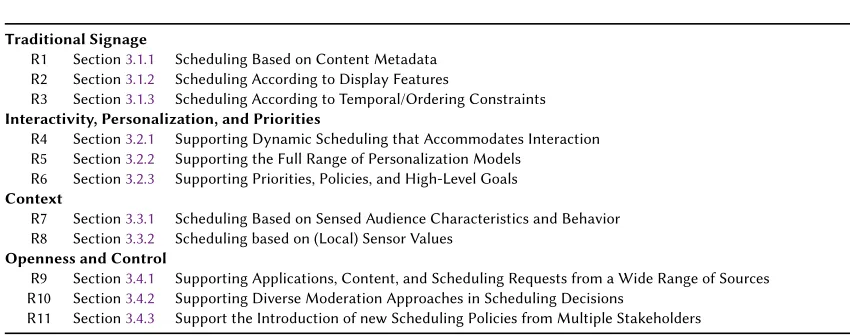
We group the resulting requirements into four main categories based on the need to support traditionaldigital signagefunctionality,interactivity and personalization,contextual awareness, andopenness(see Table1for an overview).
3.1 Supporting Traditional Signage
Traditional display systems typically make scheduling decisions based on three factors:content metadata,display features, andtemporal and ordering constraints.
3.1.1 R1: Scheduling Based on Content Metadata. The majority of digital signage systems support a wide range
of multimedia content including still images, web pages, and videos. The most simplistic scheduling approaches simply play out all available content items (e.g. all files in a directory), no criteria is used to reduce the available content down to a smaller subset for playback. However, it is not uncommon for signage platforms to schedule based on descriptive features of the content such as format constraints (must have an audio soundtrack or portrait orientation) [86], content type (e.g. show adverts or news), media type (e.g. show only videos) or content creators (show content only from this company) [35].
3.1.2 R2: Scheduling According to Display Features.While research systems typically feature only a small number
Table 1. Summary of scheduling requirements for pervasive display systems.
Traditional Signage
R1 Section3.1.1 Scheduling Based on Content Metadata R2 Section3.1.2 Scheduling According to Display Features
R3 Section3.1.3 Scheduling According to Temporal/Ordering Constraints
Interactivity, Personalization, and Priorities
R4 Section3.2.1 Supporting Dynamic Scheduling that Accommodates Interaction R5 Section3.2.2 Supporting the Full Range of Personalization Models
R6 Section3.2.3 Supporting Priorities, Policies, and High-Level Goals
Context
R7 Section3.3.1 Scheduling Based on Sensed Audience Characteristics and Behavior R8 Section3.3.2 Scheduling based on (Local) Sensor Values
Openness and Control
R9 Section3.4.1 Supporting Applications, Content, and Scheduling Requests from a Wide Range of Sources R10 Section3.4.2 Supporting Diverse Moderation Approaches in Scheduling Decisions
R11 Section3.4.3 Support the Introduction of new Scheduling Policies from Multiple Stakeholders
range of display factors that may influence the scheduling decision, including their ability to support specific content types, their shape and layout, their ability to support presentation of concurrent content items (i.e. by spatially multiplexing content on the display [74]), and the display’s location [85].
3.1.3 R3: Scheduling According to Temporal/Ordering Constraints.Many signage systems use temporal or ordering
constraints as factors when making scheduling decisions. Perhaps for this reason, the need to meet temporal constraints has been prominent in both early [83] and recent [8] attempts to describe requirements for pervasive displays. However, there is considerable variety in temporal constraints. These include requirements to show (or prevent the showing of) specific items at a given time (“Showthe lunch menufrom 11:00 to 14:00”, “Do not show
the movie trailerafter 20:00”) but also requirements that control the number (“Showthe movie trailertwelve times today”, “Do not showthe movie trailermore than five times this morning”) or order (“Showlocal weather station reportimmediately afterthe national weather forecast”) of media playback.
3.2 Interactivity, Personalization and, Priorities
The needs of traditional signage systems can typically be met using a static approach to scheduling, i.e. the system or the display owner can construct a static, deterministic schedule of content presentation that specifies precisely when any given piece of content will be shown and on which displays. Such an approach (characterised by Bushman and Labrinidis as procedural scheduling [8]) is epitomised by systems that provide users with interfaces based on producing timelines (a classic example of this type of approach is the Sony Ziris system [82]). However, the introduction of technologies such as touch screens that support interactive content make static, deterministic scheduling impossible. Similar problems occur when considering live content where the duration is not known at the start of presentation.
3.2.1 R4: Supporting Dynamic Scheduling that Accommodates Interaction.Interactive content does not share
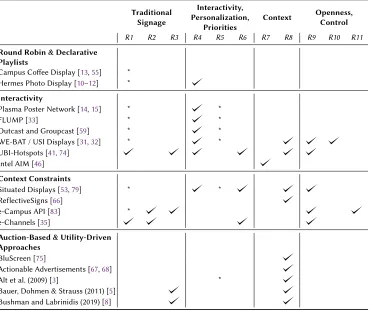
Table 2. Summary of prior research and notable commercial deployments discussed in Section2with respect to the scheduling
provision made by each display systems. Provisions are reported against the eleven requirements identified in Table1(see
Section3). A checkmark indicates that the platform provides the functionality described by the requirement, an asterisk
indicates partial fulfilment.
Traditional Signage
Interactivity, Personalization,
Priorities
Context Openness,
Control
R1 R2 R3 R4 R5 R6 R7 R8 R9 R10 R11
Round Robin & Declarative Playlists
Campus Coffee Display [13,55] * Hermes Photo Display [10–12] *
Interactivity
Plasma Poster Network [14,15] * *
FLUMP [33] * *
Outcast and Groupcast [59] * * WE-BAT / USI Displays [31,32] * * UBI-Hotspots [41,74]
Intel AIM [46]
Context Constraints
Situated Displays [53,79] * * ReflectiveSigns [66]
e-Campus API [83] * e-Channels [35]
Auction-Based & Utility-Driven Approaches
BluScreen [75]
Actionable Advertisements [67,68]
Alt et al. (2009) [3] *
Bauer, Dohmen & Strauss (2011) [5] Bushman and Labrinidis (2019) [8]
Arbitrary content presentation start time: Public displays should be able to react to user input and show
interactive content in an immediate fashion. Any latency in reacting and showing interactive content can affect overall user experience with the system.
Arbitrary content presentation duration: The duration of user interactions (and thus the actual content
presentation duration) is difficult to predict in advance. Removing interactive content or switching to static content during interaction can negatively influence the user experience and impact the overall usability of the system.
Relative and absolute presentation time limits: While interactive content can increase the utility of
3.2.2 R5: Supporting the Full Range of Personalization Models.In addition to interactivity, changes to
predeter-mined schedules may also need to be accommodated in order to cater for personalization of a display to reflect the viewers present. While most display personalization work has focused on adapting immediately to viewers that pass by a screen, Davies et al. identified three distinct classes of display personalization [24]:
Walk-by personalization in which viewers passing by a single display see content that is relevant to them. Longitudinal personalization in which viewer preferences for personalized content are realised as a shift
in content on multiple screens in a given geographic area, typically over an extended period of time.
Active personalization in which users (inter-)actively engage with a display system to control personalized
applications on a nearby display, e.g. to extend a mobile phone display for better viewing of a complex interface.
Each of these forms of personalization places different demands on the underlying scheduling system – from rapid response to viewer proximity, to the adjustment of long-term high-level goals and policies (see R6 below) on a per-user basis.
3.2.3 R6: Supporting Priorities, Policies, and High-Level Goals.In addition to both the static and dynamic
schedul-ing constraints in R1 through R5, one can imagine more generally the specification of high-level goals or policies for a set of displays. Examples of the need to support high-level scheduling policies can be found in [78] and [35]. Such policies may include prioritising new content items [78], maintaining a particular ratio of content types (e.g. 80% local events, 20% advertising) [35], or guaranteeing certain exposure times for advertising content in the face of user interactivity. Such goals or policies have previously been referred to as long-term application scheduling in the literature [31], but in reality goals and policies may operate over a range of time-scales. For example, a policy that allows the display to be utilised for emergency announcements [22,26] may give such content short-term but absolute priority over any content, irrespective of the long-term policy in place.
3.3 Context
Public displays are inherently situated objects – they exist within the physical, social and cultural setting of their deployment. This focus on the situated nature of displays has been an important part of pervasive display research since its inception. In their early edited volume, O’Hara et al. highlighted the bi-directional nature of this relationship: “...they inform us about places, amenities, and events of interest and reflect the activities of others... They act as important cultural reference points in the construction of shared meanings, beliefs, desires and the memories of groups and communities.” [73, pxvii]. In [52] José et al. used interviews and workshops to derive seven “dimensions of situatedness” that impact on pervasive display content:location,spatial association,
activity,community, perceived ownership, andplace identity.
Location of the Display Viewers often expect displays to show information relating to the location of the
display. This can be as simple as a “you are here” annotation onto a larger map, but also extends to showing local weather and other content for which geographic location is a key determinant (as opposed to other location-related attributes covered below).
Spatial Association The spatial arrangement of the display relative to its surroundings was also found to
impact on the content that viewers expected to see (e.g. wifi information close to a wifi router, or directional arrows that are correctly oriented).
Activity Displays may be associated with a specific activity – for example screens positioned in an urban
travel hub should anticipate commuter needs by providing relevant travel information.
Community This dimension relates to the extent to which a display becomes part of, and draws content
systems designed to encourage interaction between colleagues in a workplace [14], attendees at social gatherings [7] or in a school [47].
Perceived Ownership Displays are typically considered to have an explicit owner. Users may or may not
be able to easily identify the owner but often assume that it is the same as the owner of the physical space in which the display resides [20]. Clearly the ownership of a display will have a direct impact on the choice of content.
Place Identity This relates to the public perception of the physical location within which the display is
situated – and the expectation that this might put on the content being shown [52]. For example, one might expect high-quality content for prestige brands to be shown on large screens in airports or shopping malls while lesser brands might appear on screens in low-key locations.
Several of these dimensions are already subsumed within other, more general scheduling requirements. In particular, scheduling according to location and spatial association are part of R2 (Scheduling According to Display Features); perceived ownership is part of R10 (Supporting Diverse Moderation Approaches in Scheduling Decisions) below. However, the dimensionsactivityandcommunityrequire the system to schedule content based on a display’s audience and their behavior – similar in principle to the longitudinal personalization of Supporting the Full Range of Personalization Models yet with a view towards preferences of multiple viewers. Similarly, environmental context can provide further scheduling requirements. For example, Memarovic et al. [60] describe a display system that is designed to support autopoiesic content, i.e. content that is generated by the display itself as a result of input from sensors in the local environment. We thus derive two further context-based requirements.
3.3.1 R7: Scheduling Based on Sensed Audience Characteristics and Behavior.In order to provide content suitable
to the identity of a place, and or the dominant audience (both over time or at a particular moment), a system should be able to schedule content based on viewer demographics (average or current) and their behavior (visible and invisible, e.g. their walking speeds or combined WiFi downloads) [46].
3.3.2 R8: Scheduling based on (Local) Sensor Values. Beyond taking the presence, preferences, and behavior of a
display’s viewers into account, one can also schedule display content based on other, environmental data, (e.g. light levels, temperature and humidity, noise, but also WiFi traffic or number of Bluetooth devices in vicinity). Individual sensor values or aggregation over multiple sensors can thus influence (and dynamically change) parameters of the scheduling logic over time, allowing the display to adapt to its changing environment over time. For example, a display may respond to increasing noise levels by reducing the priority of content that includes an audio soundtrack.
3.4 Openness and Control
While traditional display networks have operated as largely closed systems (managed by a single organisation), there has been increasing interest in stimulating innovation by creating “open display networks” that can accommodate content and control from multiple sources [26]. Such networks are characterised by open APIs and software components that enable developers to create new signage applications [26,83], techniques for enabling content ingestion from multiple sources [21], and recognition of the complex set of stakeholders that exist in such networks [4,21,63,89]. In [26] the authors provide three example scenarios of potential applications for open display networks:
Emergency Services In this scenario, displays in a shopping mall are used to distribute images of a missing
child was last seen – reflecting the distance the child might have travelled; and, (c) the content is clearly of a higher priority than other content on the displays and hence preempts existing content (see also R6).
Influencing Behavior In this scenario displays situated within a town are used to encourage children to
exercise on their way to school by providing a distributed treasure hunt. Key issues for scheduling in this scenario are (a) as in the previous scenario, content is scheduled across multiple displays, (b) touch interaction enables children to “collect” items from the screen, and (c) personalization is used to ensure that the application is only displayed when the target demographic (i.e. children) are present.
Self Expression and PersonalizationWhile much personalization work has focused on delivering targeted
adverts to increase revenue streams for display networks, this scenario highlights the use of displays for self expression by those nearby, changing the display to reflect a passer-by’s music tastes. In this case the requirement is to support both (a) walk-by personalization, and (b) content from new sources.
The scenarios above illustrate many of the challenges that arise as a result of a move to open display networks. The problem is compounded by the diverse set of stakeholders involved. Prior research has identified four stakeholders in typical public display deployments: display owners, space owners, content providers, and viewers [4,21,63,89]. In traditional display systems many of these stakeholders are represented by a single organisation (e.g. an advertising company may simultaneously act as both the display owner and content provider). However, display networks are increasingly featuring a more diverse set of stakeholders. For example, in shopping complexes many hundreds of displays may exist in close proximity yet be situated in spaces owned by different stakeholders (shops or concession owners), operated by different signage companies, and show content from multiple distinct content providers.
Allowing a wider set of stakeholders to introduce both content and applications to displays introduces a need for content moderation [34]. Research with display owners has shown that while most agree that an open display network can bring added value, they still prefer their own displays to remain firmly under their control [20]. When asked, most articulated a compromise in which passers-by could at best select from a set of pre-vetted content and applications, rather then calling up content from unknown sources. Should unknown content be introduced into the network, all expected thatmoderationwould be required. Greis et al. [38] found that passers-by also expect content pre-moderation, and would be prepared to wait for up to 10 minutes for their content to be approved. However, their in-the-wild deployment found that pre-moderation significantly lowered the number of content items posted. Post-moderation approaches, such as the system by Elhart et al. [32], which allows display operators to instantaneously remove unwanted content from a display through an in-situ authentication (using a key card) and a touch screen are also possible.
Given the above, we formulate three further requirements to support open display networks:
3.4.1 R9: Supporting Applications, Content, and Scheduling Requests from a Wide Range of Sources.Supporting
articulated visions for future open display networks requires new collaborations between stakeholders – these collaborations have a direct impact on signage scheduling systems. For example, architectural support will be needed to connect displays to a range of different sources, as well as to signal the availability of content (or the need to display content) downstream to individual displays or groups of displays.
3.4.2 R10: Supporting Diverse Moderation Approaches in Scheduling Decisions. In closed signage systems
propose the use of trusted applications that offer their own moderation. Beyond the support of moderation at the point of ingestion, a moderation-aware scheduling system would require appropriate metadata to support context-dependent moderation.
3.4.3 R11: Support the Introduction of new Scheduling Policies from Multiple Stakeholders.While R9 and R10
are primarily concerned with supporting new applications and content, a truly open display network would allow developers to extend the scheduling system itself. A variety of approaches exist in the software systems communities to facilitate extensible system development (e.g. component-based software), and signage platforms such as Yarely [18] have shown that these can be applied in the digital signage domain.
4 A MULTI-STAGE SCHEDULING ARCHITECTURE
4.1 Overview
Section3demonstrates the breadth of scheduling requirements faced by future pervasive display systems. Likewise, our exploration of related work has shown the wide variety of approaches taken to schedule content items in existing signage platforms. For example, commercial systems often use static playlists to schedule content onto digital signs (e.g. [80,82]), and research platforms typically opt either for lightweight round-robin approaches (e.g. [13]) or complex constraint-based schedulers (e.g. [35]).
Despite their utility in systems to date, Table2clearly shows that none of these approaches come close to fully addressing the requirements of future multimedia signage. Playlist-based models and round-robin schedules ignore context (including potential audience members) completely, whilst more complex approaches typically focus on a single sub-component of the scheduling problem. For example, constraint-based systems tag each content item with a series of constraints (e.g. only show a specific content item between 9am and 5pm) that help determine when each item can be presented, but do not provide a definitive item schedule for any given point in time as there are likely to be multiple content items that satisfy the current constraints. Similarly, constraints are not well-suited to expressing the rich mix of priorities and policies that may further influence content selection. By contrast, auction-based systems (e.g. [75]) may result in a single winning item but need integration with other approaches to address availability restrictions, and have typically been restricted to advertising content in which it is possible to ascribe a financial value to presenting a content item.
Consequently, we believe that future pervasive display systems will require scheduling techniques that consider both:
(1) the process of reducing available content to a pool of items that are legitimate for playback in the current setting,and,
(2) the selection between multiple items that meet this description.
In both cases, scheduling should be conducted within the context of a set of expected behavior or goals for the multimedia signage system. The presence of interactive content and context triggers mean that precise schedules cannot generally be computed in advance and hence scheduling in display systems is not a simple static optimisation problem.
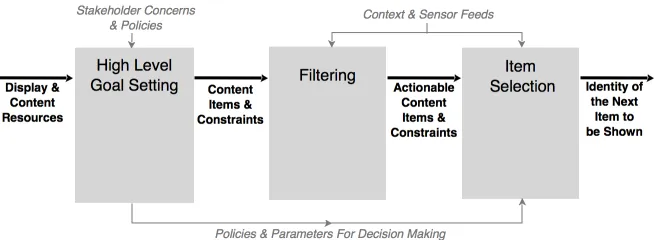
Fig. 1. A three-stage architecture for digital signage scheduling. Stakeholders set high-level goals for the use of display and content resources, based on these content is filtered down to a pool of actionable items, and then a single item is selected for each schedulable display resource.
ensure that item selection is informed by both the high level goal stage (through the communication of policies and parameters) and the filtering stage (through the communication of actionable content items).
4.2 Stage 1: Describing Constraints and Goals
During High Level Goal Setting, the scheduling process takes stock of the resources available (displays and content) and supports the expression of overall constraints and goals for the use of those resources.
Our staged model begins with the gathering of stakeholder expectations and the representation of those expectations as a set of policies and constraints. Core entities within the signage ecosystem (content and displays) are inventoried, and stakeholders are provided with a set ofuser interfacesto populate these inventories and provide the policies that describe their expectations. These policies may take the form ofconstraintswhich must be respected by scheduling processes at every given moment (e.g. advertising content can only be shown between the hours of 12 noon and 2pm), and some higher levelgoalsthat describe the general expected behavior of the scheduler over time (e.g. the news bulletin will normally be shown once per hour). Whilst the preceding examples described policies that operated over content, policies may also related to specific displays (e.g. in the case of a display that will not normally show content that has recently played on a nearby display).
The goal management component integrates policies expressed by stakeholders together with the inventory data that describes the signage ecosystem and then exports these in a format to be processed at subsequent stages. For architectural purposes we distinguish between goals and constraints at the point of output generation, although in practice some implementations may provide an integrated export of these two datasets.
4.3 Stage 2: Filtering
In the Filtering stage, the scheduling process resolves constraints on content items and displays to determine the set of valid media and display resource pairings.
(false) at any point in time. For example, a content constraint that indicates availability of the content can be expressed as“content item𝑎𝑖 is available at𝑡𝑗”. Further, as our exposition of requirements has already shown, constraints for content scheduling may relate to a wide range of factors including content metadata, screen capabilities, time and dates, environmental factors and the presence (or absence) of viewers.
Conceptually we can think of the Filtering stage as taking only two inputs:the content items and associated constraints(i.e. the primary output from Stage 1), anda set of contextual data including sensor feeds. The dynamic nature of display systems and their context mean that is not possible to statically determine the scheduling for a display network using constraints. As a result we propose that Stage 2 is used only to filter content items at the point at which a scheduling decision needs to be taken. If the constraints associated with a content item clearly cannot be met in the given schedulable unit (display plus context) then the item will not progress any further through the scheduling process (it will be filtered out). During this second stage stakeholder concerns and policies are put aside (they will be revisited during the final stage).
Once the filtering process has been completed for all incoming content items, the final pool ofeligible content itemscan be forwarded to Stage 3 (selection). Whilst in some settings, the final set ofeligible content itemsmay consist of a single item, it is likely that in the majority of deployments multiple items remain possibilities for playback. The resolution of these to a final decision is made in the Selection stage.
4.4 Stage 3: Selection
In the Selection stage, the scheduling process narrows a pool of equally-valid resources down to a single item for playback on the display. This process is conducted in accordance with previously expressed goals and policies, and may leverage current context.
The Selection stage operates over a set ofeligible content items, each of which has been determined to be valid for playback in the target context. During selection, the goal is to reduce this set down to a single content item (assuming scheduling is taking place for a single display region). To achieve this, the selection process revisits the policies and parameters specified during Stage 1 (High Level Goal Setting). Such policies may be highly variable, and may often depend on some contextual factors (including environmental context such as time, location, weather; but also playback context such recently displayed content items).
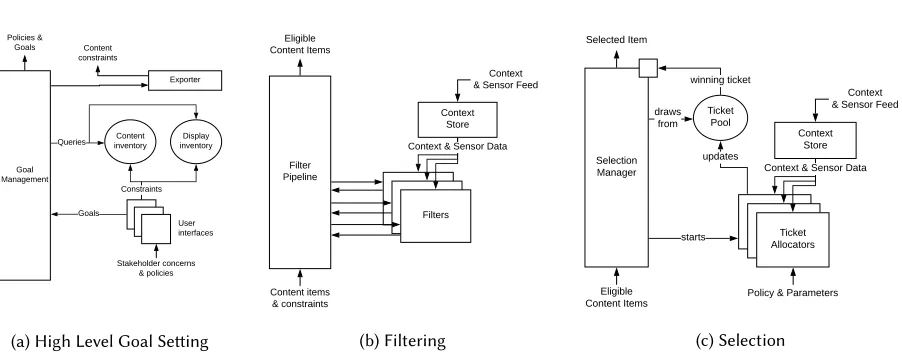
Trading off the various policies and constraints is arguably the most challenging problem in display scheduling. In our architecture [Figure2], this process is handled by aselection manager, receiving the eligible items and reducing them down to a single item. Whilst the selection manager itself could be considered a black box, we incorporate into our architecture recent work by Mikusz et al. [62], who propose that lottery scheduling approaches may be well-suited to this problem. Section5.3explores lottery scheduling as a solution for Stage 3 in more detail, but our overall architecture folds in core components for lottery ticket storage and allocation. Specifically, a ticket allocator is provided to handle each of the possible policy specifications (e.g. a goal to achieve proportionate scheduling of two distinct content types). Each ticket allocator may query the context store for data points related to the policy it is intended to uphold, leveraging this data in order to shape its distribution of tickets between content items.
5 EXAMPLE IMPLEMENTATION
Stakeholder concerns & policies
User interfaces Goal
Management Policies &
Goals Content constraints
Exporter
Content inventory
Display inventory Queries
Goals Constraints
(a) High Level Goal Setting
Content items & constraints
Context & Sensor Feed
Filter Pipeline Eligible Content Items
Context Store
Context & Sensor Data
Filters
(b) Filtering
Eligible Content Items Selected Item
Selection Manager
Ticket Pool winning ticket
draws from
Context & Sensor Feed
Context Store
Context & Sensor Data
Ticket Allocators starts
Policy & Parameters updates
[image:16.612.82.533.92.269.2](c) Selection
Fig. 2. Detailed architectural breakdowns for the three scheduling stages as realised in e-Campus: (a) High Level Goal Setting, (b) Filtering, and (c) Selection.
5.1 Stage 1
In e-Campus display owners and content creators can chose from two web-based systems for distributing their content and configuring display schedules: e-Channels [35] and Mercury [21]. The e-Channels system focuses on organising content items (e.g. images, slides or videos) into logical groups (“Channels”) of items provided by content providers. Time constraints can be placed on the availability of the channel and content providers can choose whether the channel is available only to the displays they themselves own or is to be shared publicly (i.e. available on any screen on campus). It is important to note that while content providers can determine content availability by adding or removing it from the channel, they cannot determine the order in which content is shown within a channel. Display owners can configure the operating times for their displays and can subscribe each display to content from one or more channels. They can also specify a policy for content playback ratio on a per-channel basis (e.g. request content from a certain channel to be shown 75% of the time whilst other channels are allocated a lower playback ratio).
Mercury is an application store for public displays and allows the distribution of content modelled as an application, providing support both for traditional signage content (such as images and videos) and new types of interactive applications. Display owners can use Mercury to choose from a large set of applications (content) and add these to their displays. The e-Campus version of Mercury provides the same basic capabilities as e-Channels in terms of adding and removing subscriptions to content channels. While Mercury was originally conceived as a successor to e-Channels, the enduring popularity of e-Channels with users has meant that the vast majority of users choose it as their preferred management platform.
5.2 Stage 2
Each e-Campus display node runs the Yarely [18] software stack, an open-source modular digital signage player1.
Yarely accesses display schedules from a combination of e-Channels [35] and Mercury [21] and is designed to periodically pull CDSs from a combination of local and/or web-based sources (e.g. e-Channels). The CDS is then first parsed by Yarely’s Context and Constraints Parser and then converted into an object-based format that can be read by other system components.
In parallel to receiving the CDS, Yarely also provides an interface that enables capturing and storing of contextual events, e.g. from sensors connected to the display player or from remote sources (e.g. Tacita [24]). Contextual events arrive in the form of a combination of metadata (expressing the type of event) and a CDS (should the event include a content schedule request). The incoming event is parsed and stored within Yarely’s Context Store – a lightweight SQLite database on the local file system [62].
Yarely initiates its content scheduling process with its implementation of the Filtering stage. This is realised in the form of a processing pipeline (previously described in [62]): the parsed CDS is passed through a pipeline of independent filtering components which each remove items that are not eligible to be played in the target context. The filters are not executed in parallel, instead each filtering operation generates a CDS result that consists of equal or fewer items than it received as input; this new CDS is passed on to the next filter in the pipeline. In the context of e-Campus, we developed the following set of independent filtering components:
Cache Filter Yarely has been designed to cache static content such as images and videos locally to reduce
network traffic and to mitigate the consequences of network failures. For each content item that can be cached, the cache filter accesses the local file system to ensure that the individual content item is available locally. For content items that cannot be cached (e.g. live media streams), the cache filter skips the check and does not access the local file system. The overall effect of this filter is to exclude content that is considered to be cacheable but that is not yet available locally.
Constraints Filter Content Items (and entire CDSs) can be subject to temporal constraints that limit
avail-ability based on date, day, or time. For each content item, the constraint filter accesses constraints associated with a content item (and its parent CDSs) and ensures that these are met in the target context (typically now).
Priority Filter To support the prioritization of content (e.g. in emergency situations) content items specified
in the CDS can consist of a priority flag such as “normal”, “high” and “highest”. The priority filter iterates over the available set of content items to identify the highest priority available, and conducts a second iteration of the available content to remove content items with a lower priority.
Touch Input Filter To support interactions with touch-enabled displays, Yarely can display an application
dock that allows users to select content they wish to see on the display via touch input. Requests made in this way are stored in the local Context Store. The touch input filter queries the Context Store for requests made within the last five seconds; if multiple requests have been made, then only the most recent is used. In the event that a recent request is found, the touch input filter verifies that the requested content is eligible for playback in the target context (i.e. did it form part of the original CDS) and then removes all other content to ensure that only the requested content remains eligible for playback on the display.
Tacita Filter The Tacita filter supports remote display personalization requests in a similar manner to the
touch input filter. The Tacita filter queries the context store for the recent personalization requests, verifies the eligibility of the content item for the target context, and then removes all other content to ensure the removal of all content not described in the personalization request.
Each filtering component has been implemented as a separate Python module, making it straightforward to introduce new constraint types and associated filters. After completing the filtering process, the resultant set of eligible content items (a CDS) is passed on to Stage 3.
5.3 Stage 3
The selection of which specific item to show from the set of all eligible content items has been implemented in the form of a lottery scheduler [62]. The scheduler consists of three main components: aselection manager, a set oflottery ticket allocatorsand theticket pool. The selection manager distributes available lottery tickets to individual lottery ticket allocators and orchestrates the overall content scheduling process. Each lottery ticket allocator operates independently to distribute its lottery tickets to content items in accordance with its own policies and algorithms. Dividing allocation in this way allows each to implement different scheduling policies and requirements, and for these to co-exist in the same system simultaneously.
Once a lottery ticket has been allocated to a content item, the assigning allocator places the ticket in a common ticket pool. Upon completion of the ticket allocation processes (which, unlike the filtering stage, execute in parallel), the selection manager draws a lottery ticket from the common ticket pool. The winning content item is then scheduled to the display. Our current implementation provides the following lottery ticket allocators:
Ratio-based Ticket Allocation The ratio-based ticket allocator implements the high level policies that
describe preference for content playback ratios (as described in Stage 1, above, and in Friday et al. [35]). It distributes lottery tickets to individual content items based on the playback ratio of the channels in which the content items have been placed.
Recency-based Ticket AllocationDisplay owners may choose to prioritize content that has not been
shown recently (perhaps as a result of not having been the subject of personalization or interaction requests). The recency-based allocator prioritizes content items that have not been played recently over other content items. This is achieved by allocating a higher proportion of lottery tickets to least-recently played items as follows. First, the allocator requests an ordered list of the𝑛least recently played content
items from the Context Store, it them assigns 2𝑛−1lottery tickets to the
𝑛-th content item in the list of
recently played content until no more tickets are left.
Whilst the above allocators take into account only limited contextual data (the ratio-based allocator uses no context at all, the recency-based allocator needs only to know about the items most recently shown on the target display), other ticket allocators could query the Context Store to inform the allocation of tickets based on external or contextual events.
Our implementation is structured similarly to the previously described Filtering stage, with each ticket allocator realised in its own Python module. Each allocator registers its presence with the Selection manager, and can communicate with other components of Yarely via the Context Store and ØMQ interfaces. While conceptually lottery tickets are allocated to content items, in the underlying implementation each ticket allocator receives a set of pre-generated empty ticket instances that can each hold a reference to one content item. The ticket allocation process is threaded: ticket allocators run in parallel and are managed and monitored by the Selection manager. Ticket allocators can then assign content items to lottery tickets until all available lottery tickets are assigned – or the ticket allocation process is stopped by the Selection manager to ensure a prompt scheduling decision. For more details on the motivation for using lottery scheduling in public displays see [62].
6 EVALUATION
Our evaluation considers the validity of the proposed architecture from three distinct angles of inquiry.Firstly,
Secondly, can the architecture meet the performance demands of a modern signage system and, in particular
how well does our implementation perform on representative demands made in controlled conditions?Finally,
how feasible is the architecture in practice – can our implementation meet the needs of a real-world deployment? We address these questions using a mixed methods approach. We begin, in Section.6.1, by revisiting our eleven requirements and critically analyse both our architecture and the implementation with respect to these. We then turn further attention to the implementation as a measurable artefact that realises the proposed architecture – Section6.2presents lab studies that quantify the performance of key aspects of our implementation in controlled settings, whilst Section6.3quantifies experiences gained from long-term usage of the implementation in an in-the-wild testbed. Collectively we believe these evaluation methods provide evidence of the utility and feasibility of the proposed architecture.
6.1 Addressing Scheduling Requirements
In Section3(summarised in Table1) we articulated eleven requirements based on a survey of systems reported in prior literature, published use cases for future open display networks, and own experiences of operating and studying a long-lived research testbed. Here we revisit those requirements reflecting on the described architecture and implementation. In so doing, we aim to establish if the many and varied needs of pervasive displays can be met using the proposed multi-stage model. We revisit the requirements in their original four groupings; our findings are summarised in Table3.
6.1.1 Traditional Signage Functionality. The first three requirements were concerned with providing traditional
digital signage functionality, that is, the scheduling of media based on inherent metadata (R1), to specified displays (R2) in accordance with some temporal or ordinal specification (R3). Addressing these requirements for traditional signage (R1 - R3) is supported across multiple stages of the architecture and implementation, but is principally expressed in Stage 1 and enforced at Stage 2.
Specification of policies related to all three requirements is handled at Stage 1 (High Level Goal Setting) as represented by the incoming arrow "Stakeholder Concerns & Policies" shown in Figure1. Representative constraints are then passed through to Stage 2 (Filtering). At this stage items that do not posses the target metadata (R1), are not intended for playback on the target display (R2) or are not eligible because of timing or order restrictions (R3) will be removed leaving a set of actionable content items. It is evident that compliance with R1 - R3 may still leave a choice of content items at any given point in time. For this reason, a complete implementation to meet these requirements will still require a Selection stage (Stage 3) that determines the single most-appropriate item from all remaining actionable content items.
6.1.2 Interaction, Personalization and Priorities.Requirements four through six concerned support for systems
that responded to viewer interaction (R4), presence and preferences (R5), and with the meeting of high-level goals (R6). Two of these requirements (R4 and R5) essentially demand a shift away from pre-specified deterministic scheduling approaches to more flexible models that can adapt to changing situations; R6 may invoke this same pattern, but also allows shaping of scheduling over the longer-term (e.g. to meet a desire for 60% of content shown to be video). Requirements for interaction, personalization and priorities (R4 - R6) are supported across multiple stages of the architecture and implementation, with Stage 3 having greater importance in enforcing R5 and R6.
Specification of R4 - R6 are handled at Stage 1 (High Level Goal Setting). For R4 and R5 this corresponds to whether or not interaction and personalization are supported, and the forms it may take. Specification of priorities, policies and high-level goals (R6) is likely to be more heterogeneous and could take a wide variety of forms – some examples are given in Section3.2.3but these are not intended to be exhaustive. Enforcement of an authorised interaction (R4) or personalization (R5) request takes place at either Stage 2 or Stage 3. In the majority of cases, the preferred behavior will be to show the content that is subject to an interaction or personalization requestat the expense of any other content; to ensure this behavior, enforcement would take place at Stage 2 when all other items will be filtered out. The resulting set of actionable content items will only include those associated with the current interaction or personalization request(s); these will then progress to Stage 3 where selection will determine the most-appropriate item should multiple options still remain. In other cases (e.g. for longitudinal personalization), it may be the case that an interaction or personalization request does not preclude other content from showing. To enable this behavior, no action may be needed at Stage 2, but instead Stage 3 will need to take into account relevant requests (e.g. by weighting requested items more heavily in the selection process). With regard to R6, again Stage 2 or Stage 3 enforcement may be more or less appropriate depending on the policy/goal type; as a general rule, short-term policies are more likely to be enforced at Stage 2, whilst those operating over the longer-term will be enforced at Stage 3.
Our implementation largely follows the two patterns articulated above for R4 and R5 (enforcement at Stage 2), and a mixture of both patterns (enforcement at Stage 2/3) for R6. E-Channels allows display owners to specify whether or not their display permits personalization requests (R5) and the desired ratios (R6) between channels that a display is subscribed to (this functionality is not supported in the Mercury user interfaces). Our implementation does not presently allow stakeholders to specify whether or not interaction is permitted (R4); we have a small number of touch-interactive displays and these are assumed to always permit interaction. Constraints specified through the user interfaces are exported, together with the content items, as a CDS that forms the input for Stage 2. R4 and R5 are implemented using Yarely’s touch input filter and Tacita filter respectively – these filters exclude all items that are not currently subject to an interaction or personalization request. Our specific implementations of these filters select only the most recently occurring event such that only one actionable item will progress to Stage 3. R6 is implemented at Stage 3 (content and policy-relevant descriptions pass through Stage 2 without transformation) with the ratio-based ticket allocator. Evidence of the generality of this approach is seen in the provision of an additional (but presently unused) Stage 3 ticket allocator that supports a policy of prioritising rarely seen content.
6.1.3 Context.The next two requirements relate to the needs of systems that respond to sensed audience (R7)
will use Stage 2 to filter out the ice cream adverts when they are not eligible for playback (i.e. when either the temperature, light or audience constraints are not met), but may rely on Stage 3 strategies to increase the probability of playback when the constraint is met.
Our implementation does not presently provide an interface for users to specify either audience- (R7) or environment-based (R8) constraints and it is not currently possible to adjust scheduling based on audience or environmental factors.
6.1.4 Openness and Control.Our final three requirements relate to support for openness to novel content (R9)
and scheduling policies (R11); this novel content may need to be moderated (R10). Although the requirements are conceptually related, they are addressed at very different points in the architecture and implementation.
R9 is the exclusive concern of Stage 1 (High Level Goal Setting). Openness to new content relies firstly on the availability of that content, and secondly on the agreement of stakeholders that policy permits presentation of that content on a given display. These are both represented in Figure1by the incoming arrows for "...Content Resources" and "Stakeholder Concerns & Policies" respectively. R10 specification is dealt with at Stage 1 (as described for prior requirements), and enforced at Stage 2 through the removal of unsuitable content from the set of actionable content items. Note that moderation policies often overlap with other forms of scheduling constraints, typically R1, R3 and R7 (e.g. “do not show ’R’ rated content before 9pm or while children are present”) and so the moderation UI may map onto the same underlying technology as is used to address these requirements. Further, while moderation decisions are typically binary in nature (yes/no) it is possible for there to be a degree of uncertainty in the context in making the decisions and this uncertainty could be reflected in Stage 3. R11 is supported through specification at Stage 1, the resulting implementations of these policies would be applied at Stage 2 or Stage 3 as appropriate.
Our implementation’s use of CDSs [18] makes it straightforward for any display to receive content from new sources (R9); multiple CDSs can be received at any display node and will be aggregated into a single schedule. Further, the Mercury app store was explicitly designed as a platform for the easy distribution of novel content from new parties to be distributed to a large pool of existing displays (subject to stakeholder policies). Our current implementation does not provide a UI for expressing moderation preferences (R10, Stage 1) and these are not enforced at the later stages; however, an implementation based on constraints (Stage 2) would require only minor additions to our current codebase. Finally, our implementation of the lottery scheduler is explicitly designed to be extensible (R6) – provision of new constraint filter modules (Stage 2), and ticket allocators (Stage 3) allow for easy addition to existing scheduling policies. At present these need to be manually added to the correct execution path; discovery of new policies is left as a potential area for future work.
6.2 Lab-based Benchmarking
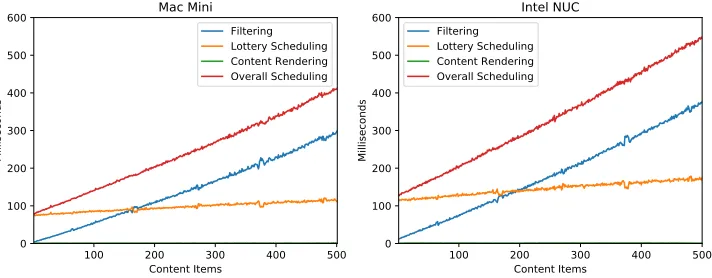
6.2.1 Methodology.In order to explore whether it was possible to create a performant implementation of our
architecture we conducted a set of controlled lab-based experiments capturing the delays incurred during Stages 2 (Filtering) and 3 (Selection). We acknowledge that the specific performance of these phases is implementation-specific. However, these statistics are not intended to measure the absolute performance of the architecture, or to compare against existing solutions (for which benchmarks are largely non-existent). Instead, our goal is to provide a general indication that the proposed multi-stage architecture can be realised, and that its performance in controlled settings is such that one might consider the system practicable for real-world signage scenarios. Note that our benchmarks focus purely on Stages 2 and 3 – Stage 1 (High Level Goal Setting) is primarily centred on allowing stakeholders to inventory resources, set goals, and express policies – providing a set of performance measures for Stage 1 interfaces would not be appropriate.



![Table 5. Number of reported content requests to Pheme [64] between August 2017 and August 2018 by content type (adaptedfrom [61]).](https://thumb-us.123doks.com/thumbv2/123dok_us/9302654.430137/28.612.145.468.150.244/number-reported-content-requests-august-august-content-adaptedfrom.webp)
