FORMULATION AND EVALUATION OF MOUTH DISSOLVING
TABLET OF BAMBUTEROL HYDROCHLORIDE
Nayan N. Vadsola* and Bijal Prajapati
Department of Pharmaceutics, Parul Institute of Pharmacy, Limda, Vadodara, Gujarat (India).
ABSTRACT
The aim of present work was to formulate and evaluate mouth
dissolving tablet of Bambuterol Hydrochloride to minimize the
disintegration time and improve % drug release. Bambuterol
Hydrochloride is an Antiasthmatic drug. Mouth dissolving tablet was
formulated using Camphor as a subliming agent. Sodium deoxycholate
and Cross povidone were added as permeation enhancer and as a
super-disintegrant respectively. Optimization was done by 32 full factorial design and developed formulation was evaluated for In-vitro
drug release study and Ex-vivo diffusion study. Concentration of
Camphor and Sodium deoxycholate were selected as independent
variables. All formulations were evaluated for properties such as
weight variation, hardness, friability, drug content, disintegration time, wetting time study,
In-vitro dissolution study, Ex-vivo diffusion study. % In-vitro drug release and % Ex-vivo
permeation at 10 min were selected as dependent variables. Analysis of variance was
performed for dependent variables. In-vitro release data was fitted to various kinetic models
of drug release. Optimized formulation batch (B9) had complies the acceptance criteria and
was found to be stable for 1 month. % In vitro drug release and % ex-vivo permeation of
optimized formulation were found to be 90% and 78.46% at 10 min respectively.
KEYWORDS: Antiasthmatic drug, Super-disintegrating agent, Sublimation method, Mouth dissolving tablet, 32 full factorial designs.
1. INTRODUCTION[1-3]
Asthma related various disorders of the respiratory system leads to difficulty in breathing. It
causes the respiratory airways hyper reactive to various stimuli. Asthma is a common chronic
Volume 5, Issue 11, 668-678. Research Article ISSN 2277– 7105
*Corresponding Author’ Nayan N. Vadsola
Department of
Pharmaceutics, Parul
Institute of Pharmacy,
Limda, Vadodara, Gujarat
(India).
Article Received on 08 Sept. 2016,
Revised on 29 Sept. 2016, Accepted on 19 Oct. 2016
inflammatory disease of the airways characterized by various recurring symptoms like
bronchospasm, air way inflammation and airflow obstruction.
Mouth dissolving tablet is describe as “A solid dosage form containing medicinal substances
or active ingredients which disintegrate rapidly within a few seconds when placed on to
tongue.” According to European pharmacopoeia, these mouth dissolving tablets (MDTs)
should disintegrate in less than three minutes. No need of drinking water.
Bambuterol Hydrochloride (BHT) is the bisdimethylcarbamate prodrug of terbutaline. The
adrenergically inactive bambuterol has in itself a high affinity for lung tissue but to become
effective, it must be administered systemically, preferably by the oral route. BHT is a direct
acting sympathomimetic with predominantly β2-agonist. It is an ester prodrug of β2
adrenergic agonist terbutaline. It is used for the prophylaxis and treatment of chronic asthma
and chronic bronchitis in pediatrics.
2. MATERIALS AND METHODS[4] Materials
Bambuterol Hydrochloride was used as an active pharmaceutical ingredient. Bambuterol
Hydrochloride was obtained from Shreeji Pharma. Pvt. Ltd. (Vadodara, Gujarat). Camphor,
Sodium deoxycholate, Magnesium stearate, Talc, Crospovidone, Microcrystalline cellulose
were obtained from Chemco Chemdyes Corp. (Rajkot, Gujarat).
Method of preparation: Sublimation method
Weigh all the ingredients and pass through 60# sieve separately. Mix properly for 10 min.
Add lubricant and glidant, again mix. Compress the blend into 100 mg tablet by single punch
rotary compression machine using of 6mm punch. Tablets were then placed in vacuum oven
at 60o C for 30 min. till a constant weight of tablet was obtained.
Screening study of sublimating agents and permeation enhancers [5] Four (A1 to A4) batches were prepared for screening of formulation.
Table 1: Screening batches: A1 to A4.
Ingredients (mg) A1 A2 A3 A4
Bambuterol hydrochloride
(API) 10 10 10 10
Camphor 5 15 - -
Sodium deoxycholate 3 5 - - Sodium lauryl sulfate - - 0.5 1
Crosspovidone 6 6 6 6
Talc 1 1 1 1
Magnesium stearate 1 1 1 1
Microcrystalline cellulose Q.S. Q.S. Q.S. Q.S. Total weight(mg) 100mg 100mg 100mg 100mg
32 Full Factorial Designs[5]
The concentration of Camphor and concentration of Sodium deoxycholate were selected as
independent variables. The % invitro drug release and % Ex-vivo permeation were selected
as dependent variables.
In this design, two factors were evaluated each at 3 levels in such a way that low level was
(-1), medium level (0) and high (+1).
The results obtained from the experiment were statistically analyzed for response variables by
using Design expert 10.0.0 version.
Table 2: Composition of 32-full factorial design formulations.
Ingredients (mg) B1 B2 B3 B4 B5 B6 B7 B8 B9
API 10 10 10 10 10 10 10 10 10
Camphor 5 5 5 10 10 10 15 15 15
Sodium deoxycholate 3 4 5 3 4 5 3 4 5
Crosspovidone 6 6 6 6 6 6 6 6 6
Talc 1 1 1 1 1 1 1 1 1
Magnesium stearate 1 1 1 1 1 1 1 1 1
Micro-crystalline
cellulose Q.S. Q.S. Q.S. Q.S. Q.S. Q.S. Q.S. Q.S. Q.S. Total weight (mg) 100
mg 100 mg 100 mg 100 mg 100 mg 100 mg 100 mg 100 mg 100 mg
Preformulation study[6]
It was carried out including of Identification of drug, Solubility study and Drug-excipients
compatibility study.
Evaluation parameters of powder blend[7]
It was carried out by performed of flow property like angle of repose, bulk density, tapped
Evaluation parameters of tablet[8]
Evaluation of tablet was done by Diameter & Thickness, Weight variation testing, Hardness,
Friability (%), Drug content, Disintegration Time, % In-vitro drug release study, Ex-vivo
diffusion study and Wetting time study.
Kinetic release study was applied for % drug release data.
Stability study[9] of optimized batch was studied at accelerated condition.
Statistical study[10]
Design Expert 10 (32-bit) or Stat-Ease software was used to determine the influence of
factors on the responses and for the optimization of formulation. We applied 32 factorial design. Result of the statistical study was interpreted from ANOVA analysis.
Statistical study was expressed in the form of polynomial equation as given below:
Y=o+1X1+2X2+12X1X2+1X12+2X22
3. RESULT AND DISCUSSION EVALUATION OF TABLET
Screening study for sublimating polymers
Table 3: Disintegration time of screening formulations.
Batch No. Disintegration time(sec) ± SD (N=3)
A1 20±1.5
A2 16±0.42
A3 29±1.75
A4 23±2.03
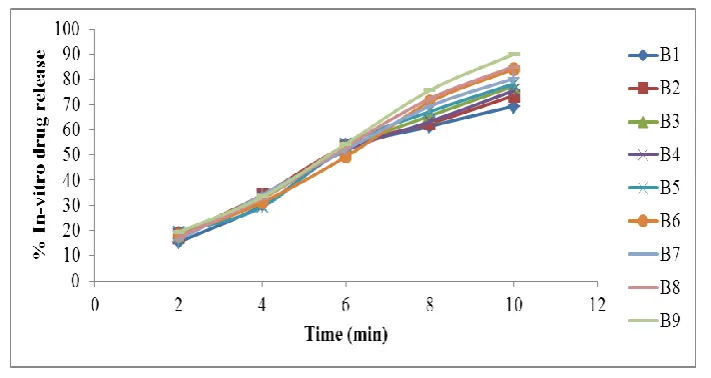
% drug release study of batches-B1 to B9
% drug release study was performed by using dissolution apparatus at 50 rpm & 37±5 ℃ in
phosphate buffer pH 6.8. % In-vitro drug release of B1 to B9 batches were found to be
ranging from 69.37 to 90.00%.
Table 4: Table 5.12: In vitro dissolution study of batches-B1 to B9.
Time(min) B1 B2 B3 B4 B5 B6 B7 B8 B9
Figure 1: % In-vitro drug release of Batches-B1 to B9.
Table 5: ANOVA for Response 1 (% In vitro drug release)
Analysis of variance table [Partial sum of squares - Type III]
Source Sum of
Squares df
Mean Square
F Value
p-value Prob>F
Model 326.03 5 65.21 63.28 < 0.0001 Significant A-Camphor 114.84 1 114.84 111.46 < 0.0001
B-Sodium
deoxycholate 207.21 1 207.21 201.10 < 0.0001
AB 0.77 1 0.77 0.74 0.4218
A2 1.96 1 1.96 1.90 0.2175
B2 0.35 1 0.35 0.34 0.5823
Residual 6.18 6 1.03 - -
Lack of Fit 2.50 3 0.83 0.68 0.6204 Notsignificant
Pure Error 3.68 3 1.23 - -
Cor Total 332.21 11 - - -
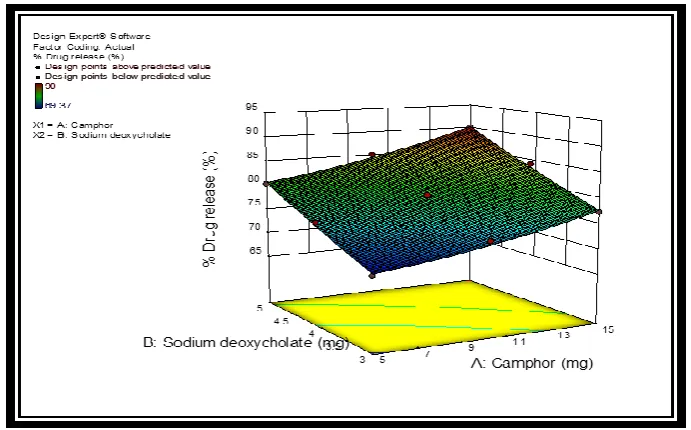
[image:5.595.82.511.313.513.2]Statistical study for response 1 (% drug release)
[image:5.595.114.480.539.738.2]Figure 3: Response surface plot for response-1 (% in-vitro drug release).
Statistical analysis of data of % drug release was shown that both the factors, conc. of
Camphor & conc. of Sodium deoxycholate, have P value <0.0001 and <0.0001 respectively
were p<0.05. That indicated that both factor have significant effect on drug release. An
increase in the concentration of factors leads to increase in % drug release observed.
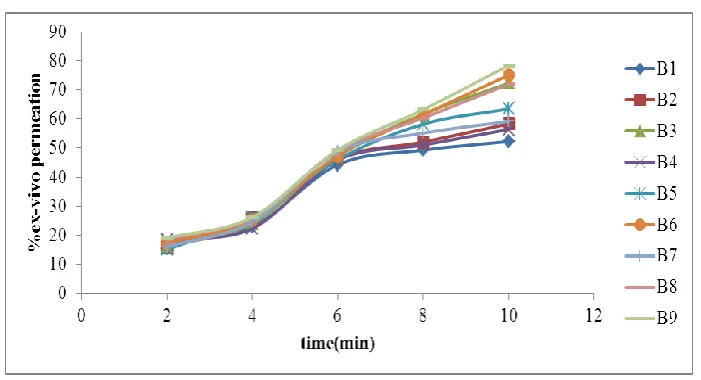
% Ex-vivo diffusion study of batches-B1 to B9
Ex-vivo diffusion study was performed using Franz diffusion cell at 37.0±0.5 0C temperature in phosphate buffer pH 6.8.
Table 6: % Ex-vivo diffusion study of batches-B1 to B9.
Time(min) B1 B2 B3 B4 B5 B6 B7 B8 B9
[image:6.595.65.534.516.608.2]Figure 4: % Ex-vivodrug permeation study of Batches-B1 to B9.
Table 7: ANOVA for Response 2 (%Ex-vivo permeation). Analysis of variance table [Partial sum of squares - Type III]
Source Sum of
Squares df
Mean
Square F Value
p-value Prob>F
Model 681.78 5 136.36 36.01 0.0002 Significant
A-Camphor 561.44 1 561.44 148.29 < 0.0001 B-Sodium
deoxycholate 118.90 1 118.90 31.40 0.0014
AB 0.16 1 0.16 0.041 0.8458
A2 1.08 1 1.08 0.28 0.6132
B2 6.667E-003 1 6.667E-003 1.761E-003 0.9679
Residual 22.72 6 3.79 - -
Lack of Fit 17.43 3 5.81 3.30 0.1767 not significant
Pure Error 5.29 3 1.76 - -
Cor Total 704.50 11 - - -
[image:7.595.135.464.539.733.2]Statistical study for response 2 (%Ex-vivo diffusion)
Figure 6: Response surface plot for response-2 (% Ex-vivo permeation)
Statistical analysis of data of % Ex-vivo diffusion was shown that both the factors, conc. of
Camphor & conc. of Sodium deoxycholate, have P value <0.0001 and 0.0014 respectively
were p<0.05. That indicated that both factor have significant effect on drug release. An
increase in the concentration of factors leads to increase in % permeation observed.
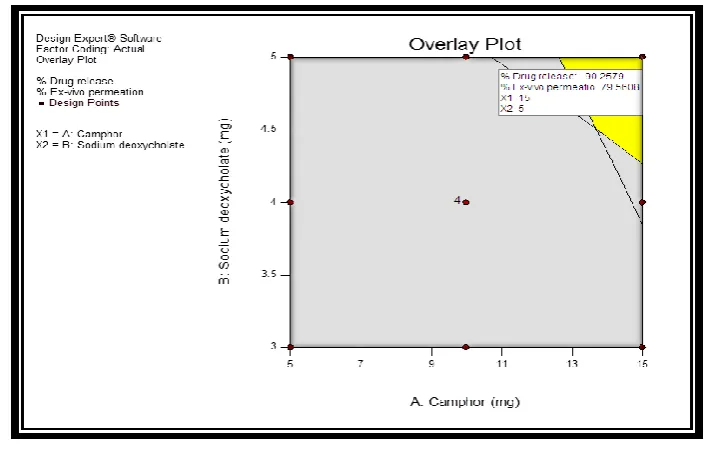
Figure 7: Overlay plot for check-point batch study.
The overlay plot reflects that the yellow region is the area of interest (experimental region).
[image:8.595.119.475.436.664.2]% Drug release study of optimized batch-B9.
Table 8: % Drug release study for optimized batch-B9. Time(min) % Drug release
2 19.38
4 33.41
6 54.48
8 75.66
10 90
Figure 8: % in-vitro drug release of optimized batch B9 B9 Batch was given maximum drug release. So, it was selected as optimized batch.
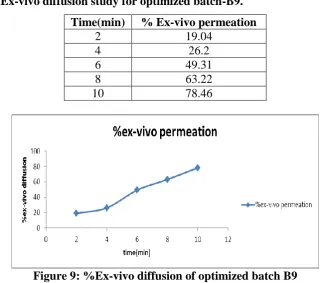
[image:9.595.122.457.93.387.2]% Ex-vivo diffusion study of optimized batch-B9
Table 9: % Ex-vivo diffusion study for optimized batch-B9. Time(min) % Ex-vivo permeation
2 19.04
4 26.2
6 49.31
8 63.22
10 78.46
Figure 9: %Ex-vivo diffusion of optimized batch B9
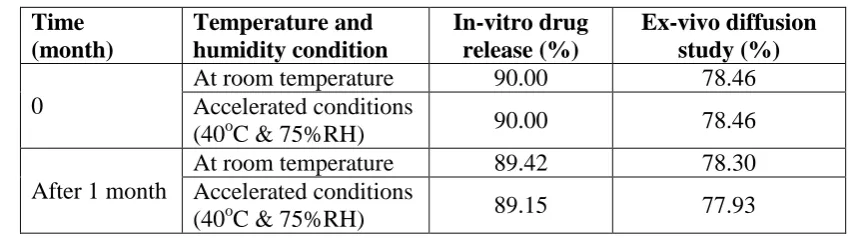
[image:9.595.132.459.459.742.2]Stability study
Table 10: Stability study of optimized batch F12. Time (month) Temperature and humidity condition In-vitro drug release (%) Ex-vivo diffusion study (%) 0
At room temperature 90.00 78.46 Accelerated conditions
(40oC & 75%RH) 90.00 78.46
After 1 month
At room temperature 89.42 78.30 Accelerated conditions
(40oC & 75%RH) 89.15 77.93
DISCUSSION
The stability study data for the optimized mouth dissolving tablet formulation batch
containing Bambuterol Hydrochloride remain stable in terms of % In-vitro drug release and
% Ex-vivo permeation at room temperature and Accelerated condition for 1 month. There is
not much change in all two parameters after 1 month. So, it indicates that the optimized
formulation batch is stable.
4. CONCLUSION
Bambuterol Hydrochloride is Antiasthmatic drug. UV spectrum of Bambuterol
Hydrochloride was found 264 nm. FTIR spectra showed that drug was not having any kind of
interaction with excipients. Preliminary screening was done by using different sublimable
polymers like Camphor & ammonium bicarbonate and with permeation enhancers like
Sodium deoxycholate & Sodium lauryl sulfate and studied their influence on results of
disintegration time. Based on the result of preliminary batches Camphor and sodium
deoxycholate were selected For optimization of formulation, the value of independent
variables and dependent variables were statistically analyzed based on 32 full factorial design by using Design Expert® 10.0.0 trial version. Total nine batches were prepared for 32 factorial design. The concentration of Camphor and Sodium deoxycholate were selected as
independent variables and studied their effects on responses such as % in-vitro drug release
and % Ex-vivo diffusion. On basis of statistical analysis, batch B9 was found to be optimized
containing 15mg Camphor and 5 mg Sodium deoxycholate. Based on linearity, drug release
data fit with korsemeyer Peppas model (R2 =0.992). So, Drug release mechanism was found to be Case II-Transport (n=0.982). From the experimental design, check point batch was
compared with optimized formulation which shows that the model is significant. Check point
batch was prepared for validation of optimized batch. It showed nearby results with predicted
like blend evaluation and tablet evaluation. In tablet evaluation, % in-vitro drug release at 10
min. and % ex-vivo permeation at 10 min. were found to be 90.00% and 78.46% respectively.
Stability study of optimized batch B9 was performed for one month. Result of stability study
showed that optimized batch B9 was found to be stable. From the result & discussion, we
were observed that dissolution and permeation were induced with help of sublimable polymer
and permeation enhancer by % drug release study and % Ex-vivo permeation study. The
optimized formulation can be a competent alternative to conventional tablets because it may
improve bioavailability of drug up to some extent as supported by ex-vivo diffusion of drug.
5. REFERENCES
1. “Asthma” Nov 2014, http://www.healthnavigator.org.nz/health-topics/asthma/
2. Gupta A., Mittal A., Jha K. K., “Fast Dissolving Tablet- A Review”,
www.thepharmajournal.com, Vol. 1, No. 1, 2012.
3. “Bambuterol” Sep 2014, http://www.drugbank.ca/drugs/DB01408
4. Sarasija S., Pandit V., Joshi HP, “ Preparation and evaluation of mouth dissolving tablets of salbutamol sulphate”, Indian J Pharm Sci.2007; 69: 4679.
5. Wade A, Weller PJ, “handbook of pharmaceutical excipients.” American pharmaceutical
association, Washington, 2nd Edn; 1994, pp 280, 292, 436, 462, 519.
6. Indian Pharmacopeia, Vol-I, 7thEdn; The Indian Pharmacopeia commission, Ghaziabad,
2014; 174(176): 1134-1135.
7. Lachman L., Liberman HA., and Joseph LK. The theory and practice of industrial
Pharmacy; 3rd Edn; Varghese Publication House, 1990; 70-71.
8. Lachman L. and Lieberman H., The theory and practice of industrial pharmacy, 2009; 1:
66.
9. Guidance on stability testing, Stability testing of new drug substances and products,
Jan.2015
http://www.ich.org/cache/compo/363-272-1.html