Changes in Team Communication Patterns in Critical Situations
Using REM to study the difference in communication patterns between critical and non-critical situations Floris van den Oever, S1864394
Master’s thesis for Human Factors and Engineering Psychology Under the guidance of Jan Maarten Schraagen
University of Twente 08-07-2019
Abstract
Teams operating in time-pressured, dynamic environments frequently need to cope with critical situations varying in complexity and hazard. To cope with critical situations, teams may have to adapt their communication processes. Adaptation of team communication processes has been studied mostly at relatively short time frames (minutes). Literature on adapting communication at longer time frames (hours) is limited. This study used the Relational Event Model to compare team communication in critical and non-critical situations of pediatric cardiac surgeries and Apollo 13 Flight Director’s voice loops. Teams showed some flattening of communication structures in critical situations. Both teams maintained institutional roles and displayed closed-loop and information seeking communication. The exact way teams adapt to critical situations may differ depending on team and team size. Findings may inform team training procedures or team structure development.
Keywords
Abstract... 1
Keywords ... 1
Contents ... 2
Introduction ... 3
Team adaptation in critical situations ... 3
The role of communication ... 4
The Relational Event Model ... 4
Research aims and outline ... 6
Systematic Literature Review ... 7
Method ... 7
Eligibility Criteria ... 7
Search ... 7
Data collection process ... 8
Risk of bias in individual studies ... 8
Results and Discussion ... 9
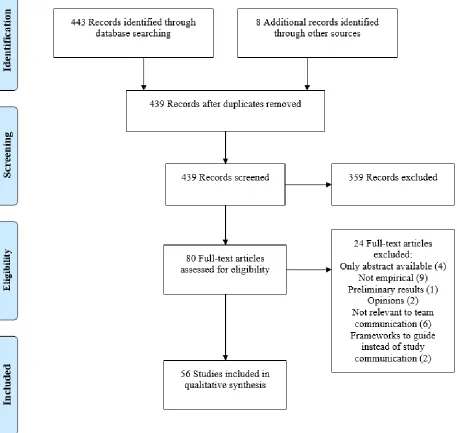
Study selection ... 9
Individual studies ... 10
Synthesis of results ... 28
Frameworks for studying team communication ... 29
Communication patterns ... 32
Limitations ... 41
Natural History Study ... 42
Method ... 42
Data sources ... 42
Categorization of data into critical and non-critical situations ... 45
Data preparation ... 46
Analysis... 47
Results... 49
Premodeling descriptive statistics ... 49
Model Selection ... 50
Parameter Estimates ... 53
Comparison of extreme situations ... 57
Discussion ... 59
Limitations ... 65
Research implications ... 66
Practical implications ... 67
Conclusion ... 67
Introduction
Team adaptation in critical situations
Teams deal with situations of various levels of complexity and hazard. Especially teams operating in time-pressured, dynamic environments cope with these kinds of situations (Burke, Stagl, Salas, Pierce, & Kendall, 2006). Such situations place a high demand on the skills and capabilities of teams, necessitating rapid situational assessment and adaptation to, often unexpected, changes (Kozlowski, DeShon, Schmidt, Chambers, & Milner, 2001). In this report, situations that have high levels of both complexity and hazard are defined as critical situations. In critical situations, teams must adapt in order not to break down and fail to achieve their goals (Kozlowski et al., 2001; Woods & Hollnagel, 2006).
Studying the adaptability of teams is useful because more knowledge on the topic can help to improve the adaptability of teams. Team adaptability is becoming more important as a result of increasing complexity and unpredictability of organizations and work environments (Baard, Rench, & Kozlowski, 2014). In accordance with the bounded rationality syllogism (Woods & Hollnagel, 2006), teams have limited resources and capabilities and therefore are fallible. This means that teams can never have all the resources and capabilities required to cope with every possible situation they might encounter (surprise is universal), and they run the risk of saturation of their adaptive capacity (Woods, 2018). Therefore, teams must adapt when demands change (Woods & Hollnagel, 2006) and align and coordinate with multiple interdependent units in a network (Woods, 2018). Teams must develop strategies that handle fundamental trade-offs produced by the need to adapt to changes in an uncertain world (see Hoffman and Woods, 2011). Salas, Sims, and Burke (2005) state that adaptive performance is an integral component of teamwork. Because the adaptability of teams is so vital to their success, it is beneficial to study the adaptability of teams.
over-in critical situations, expert team members shift from skill reproduction to skill generalization. Barth, Schraagen, and Schmettow (2015) analyzed the centrality of communication patterns to study team adaptability in complex situations. Butts, Petrescu-Prahova, and Cross (2007) state that teams in emergency situations must adapt resource usage and allocation to changing conditions. Serfaty and Kleinman (1990) found that, as situations become more complex, teams adapt their decision making and coordination strategies.
The role of communication
Since these processes of adaptation occur at the team level, it is axiomatic that they involve communication between team members (Cooke, Gorman, Meyers, & Duran, 2013). Some studies have found that communication patterns change when teams encounter critical situations (e.g., Baard et al., 2014; Butts, 2008; Gibson, 2003; Leenders, Contractor, and DeChurch, 2016). Multiple studies have applied Social Network Analysis (SNA) (see Wasserman and Faust, 1994) to teams in various domains (e.g., medical (Barth et al., 2015), military (Houghton, Baber, Stanton, Jenkins, & Revell, 2015), and sports (Lusher, Robins, & Kremer, 2010)). Although SNA provides detailed measures of, amongst others, the centrality of actors in networks, it is limited in its ability to study how communication patterns develop over time. Team adaptation studied in the form of changes in communication dynamics over time can give a more fine-grained portrayal of communication. Moreover, anecdotal evidence suggests that entrenched communication patterns may have a detrimental effect on patient safety (Fowler, 2013), airplane passenger safety (BEA, 2012), combat effectiveness (Roberts and Dotterway, 1995), or even entire organizations such as NASA (Vaughan, 2006). Correspondingly, Leenders et al. (2016) argue that team processes ought to be studied with more temporal constructs and Stachowski, Kaplan, and Waller (2009) suggest that communication patterns among team members during critical situations may be antecedents of team effectiveness. It is therefore important to take the patterns of communication over time into consideration when studying team adaptability.
The Relational Event Model
communication dynamics during the Air France 447 incident, David and Schraagen (2018) showed how communication patterns can be used to study adaptation at the ‘transaction level’ (Schraagen, 2017), a new ‘system level’of Newell’s (1990) “bands of cognition”. Newell (1990) distinguished biological, cognitive, rational, and social ‘strata’, each defined by a particular time band during which processes take place. For instance, the typical cognitive processes take place between 100 msec and 10 sec and the typical rational processes between minutes and a few hours. At the transaction level, processes take between an hour and several hours. the entity to be described is a network of interconnected units of adaptive behavior (i.e. a powerplant controlroom team or a cockpit crew). As units of adaptive
behavior interact over time, regularities in behavior emerge. These regularities may be visible in the form of ‘patterned interactions’ and may be studied by methods such as SNA or REM. David and Schraagen (2018) provided insight into the changes of multiple communication patterns of a team entering a critical situation. However, a limitation of this study was that the cockpit communication that was studied did not extend beyond 20 minutes and mostly involved two actors, limiting the diversity of the communication patterns that could be studied. Further investigation of communication patterns of larger teams across longer time spans is warranted. Therefore, this study built upon the results found by David and Schraagen (2018), applying Butts' (2008) REM to compare transaction level communication patterns of teams other than cockpit teams in critical and non-critical situations.
communication patterns when said teams encounter critical situations.
Research aims and outline
This study has three aims. The first aim is to observe whether communication patterns captured with Butts' (2008) REM are different when teams are in critical situations, compared to non-critical situations. Woods and Hollnagel (2006) discuss how teams adapt and extend their performance in critical situations. Changes in communication patterns play a role in these adaptations (see also Xiao, Seagull, Mackenzie, Ziegert, and Klein, 2003). More insight in which communication patterns differ between critical and non-critical situations and how these communication patterns differ can be useful for developing better team communication structures or training procedures (Manser, 2009). The second aim is to evaluate the generalizability to other teams of the differences in communication patterns found (David & Schraagen, 2018). In line with Woods and Hollnagel's (2006) notion of ‘patterns’, teams from different domains are expected to adapt to critical situations in similar ways and thus change communication patterns in similar ways (see also Van Diggelen et al., 2019). As such, studies applying REM to other teams than cockpit teams may find similar differences in communication patterns when those teams encounter critical situations. If patterns found in the current study are similar to those found by David and Schraagen (2018), their generalizability extends to those domains and can be expected to occur in teams in critical situations of yet other domains. The third aim is to evaluate the concurrent validity of applying REM to team communication on the transaction level. Support for validity is gained if the results are consistent and in line with the results of David and Schraagen’s (2008) because data is collected from multiple sources (Spector, 1992). Furthermore, if differences in communication patterns between critical and non-critical situations are found, this provides a demonstration for the applicability of REM for studying team communication on the transaction level.
reviewed according to the PRISMA statement (Moher, 2009), establishing a framework for investigating and answering the research questions, selecting communication patterns of interest, and formulating hypotheses about the differences of these patterns between critical and non-critical situations. The second section describes the natural history study of critical and non-critical situations.
Systematic Literature Review
A literature review was conducted to explore the contemporary scientific knowledge concerning team communication patterns during critical situations and frameworks to investigate this topic. As such, the research question is: What have studies focusing on communication patterns found that applies to teams in critical situations, with a focus on the Relational Event Model? The literature review followed the PRISMA statement for systematic reviews to the extent permitted by the extracted literature (Moher, 2009).
Method
Eligibility Criteria
Literature was sought which concerns team communication and/or REM. The reviewed literature was not focused on a medical intervention. Studies of various designs and populations were deemed worthwhile for investigation, even studies that applied REM to study communication in other contexts than teamwork because these improve understanding of communication patterns that can be studied with REM. Documents retrieved for the review were restricted to those written in English and published after 1985.
Search
The search was conducted in SCOPUS, which includes all relevant human factors journals. The last search date was 08-02-2019. The following search string was used:
communication related to teams, critical situations, and synonyms thereof. Some terms were explicitly excluded to reduce the number of publications found on topics that were not of interest. Namely, communication in robot or computer teams or non-adults.
Data collection process
A data extraction sheet was developed based on Schraagen and Verhoeven (2013). Qualitative summaries were written for the studies in this data extraction sheet, in accordance with the PRISMA statement (Moher, 2009). Studies were summarized. The following components were summarized, if present: (a) Study type and focus on critical or non-critical situations; (b) Study methods (e.g., method of data collection, experimental design, sample size), including unit of study characteristics (e.g., a disaster response communication network, cockpit crew, surgical teams) and the applied framework or model (e.g., REM, SNA); (d) Studied variables (e.g., communication patterns, relational events, personal characteristics). If discernable, dependent and explanatory variables; (f) Findings (e.g., effects of significant variables, communication patterns, social networks); (g) Methodological limitations (e.g., Limits of communication media, limited samples, possible confounding variables).
Risk of bias in individual studies
Risk of bias at the study level was assessed based on methodological limitations of the studies. These were extracted from the studies themselves and, in some cases, based on the reviewer’s judgment. For example, many, but not all, studies used pre-existing, validated frameworks for studying communication. Some studies focused on specific populations which may limit generalizability to other populations. Other studies relied on volunteers or snowball sampling and risked self-selection bias. When researchers failed to discuss their own limitations, this was mentioned in the summary. These risks of bias were taken into consideration in the synthesis of the results.
Study selection
Figure 1. The selection process used to identify appropriate published studies about team communication and REM.
Individual studies
& Lomi, 2014) Furthermore, publications were categorized based on type, ordered by rank of validity associated with these types, see Table 1. This categorization was informed by methodological sources such as Cook, Campbell, and Shadish (2002). The category “Natural history study” was adopted from Woods and Hollnagel (2006). Summaries of the individual studies are shown in table 2.
Table 1. The number of studies analyzed per study and situation type.
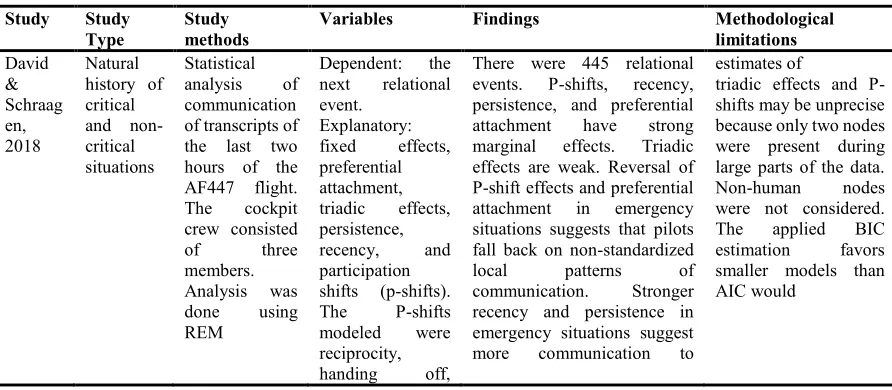
Table 2. Summaries of the individual studies, including the characteristics, results, and methodological limitations. Study Study
Type
Study methods
Variables Findings Methodological
limitations David
& Schraag en, 2018
Natural history of critical and non-critical situations
Statistical analysis of communication of transcripts of the last two hours of the AF447 flight. The cockpit crew consisted
of three
members. Analysis was done using REM
Dependent: the next relational event.
Explanatory: fixed effects, preferential attachment, triadic effects, persistence, recency, and participation shifts (p-shifts). The P-shifts modeled were reciprocity, handing off,
There were 445 relational events. P-shifts, recency, persistence, and preferential attachment have strong marginal effects. Triadic effects are weak. Reversal of P-shift effects and preferential attachment in emergency situations suggests that pilots fall back on non-standardized
local patterns of
communication. Stronger recency and persistence in emergency situations suggest more communication to
estimates of
triadic effects and P-shifts may be unprecise because only two nodes were present during large parts of the data. Non-human nodes were not considered. The applied BIC estimation favors smaller models than AIC would
Type Situation N
Natural history critical 6
non-critical 11
both 2
Literature review critical non-critical
both 1
Observational study critical non-critical 4
both 3
Mixed methods critical 2
non-critical 1
both 1
Quasi-experiment critical 1 non-critical 2 both
Simulator quasi-experiment critical 10 non-critical 2
both 1
Panel study critical
non-critical 4 both
Case study critical 1
non-critical 3 both
[image:11.612.75.521.518.713.2]Type methods limitations persistence of
source or target, and attraction
cognitively readily available team members Lingard , Reznic k, Espin, Regehr, and DeVito (2002) Natural history study of critical and non-critical situations
128 hours observation of communication of operation room (OR) teams in 35 operations and unstructured interviews with participants. No framework for analysis was mentioned Dependent: Communication patterns Explanatory: communicative events coded with tension levels
Communication among OR team members is subtler and more complex than the openly combative style that gets portrayed in media
Higher-tension events occurred most between surgical and nursing staff
novices reacted to tension by either mimicry of the teacher’s discursive style or posture or withdrawal from the communicative sphere
The nature of the study only allowed to study visible responses to team tension. Adding measures of attitude may have given more insight. It was not stated how large the OR teams were
Butts et al. (2007)
Natural history study of a critical situation
Statistical analysis of three and a half
hours of
interpersonal radio
communication networks and interactions among four groups of first responders at the scene of the World Trade Center (WTC)
on 9/11.
Communicatio n was analyzed using SNA. Police reports were also analyzed
Dependent: network positions
and ties
Explanatory: specialized in emergency response, formal institutional role associated with coordination
A high degree of heterogeneity
of individual in
communicative activity. Heterogeneity of individual position within the communication structure. Homogeneity across responder types; no evidence for differences in the distribution of communication activity between specialists and non-specialist responders. Emergent coordinative activity played a prominent role, but
responders with
institutionalized coordination roles were more likely to act as coordinators than those without coordination roles. A larger than expected overall connectivity of the police response network
Actor to group communication was not modeled. Binary tie data: either there is a tie or not. No insight in varying amounts of communication. Some statistical data is aggregated from police reports written after the incident and therefore sensitive to memory bias as well as researches degrees of freedom
Butts (2008)
Natural history study of a critical situation
Statistical analysis of three and a half
hours of
interpersonal radio
communication networks and interactions among police officers at the scene of the WTC on 9/11. Police reports, using REM
Dependent: the next relational event. Explanatory: individual-level heterogeneity, preferential attachment, triadic effects, cognitive effects, conversational norms
There were 1131 relational events. A combination of cognitive/behavioral effects and local rules best predicts the dynamic behavior of WTC radio communication networks. Local rules (p-shifts) have a strong impact. Recency is important. Persistence and preferential attachment had a weak effect compared with recency and p-shift effects. Triadic effects were significant in half the transcripts with little consistency in strength or direction. There is a substitution effect between preferential attachment and fixed effects. Centrality within
Type methods limitations networks was largely due to
factors other than institutional status
Au, Lo, and Hoek (2009)
Natural history study of critical situations
Statistical analysis 50 hours of time-stamped communication data of an Air and Space Operations Center team
with 11
members based on speech and chat logs, using
Dependent: Importance of operators to social and situational awareness. Explanatory: Centrality sociometric status, and information objects
Two actors have more connectivity than the others, the Dynamic Targeting Officer (DTO) and the Command and Control Duty Officer. (C2DO) The DTO has high centrality and sociometric status, the C2DO has high centrality. Incorrect information objects due to high workload limited situational awareness
No limitations were discussed in the article. Loss of information due to the aggregation of fine-grained data to social networks Goguen and Linde (1983) Natural history study of critical situations
Statistical analysis of eleven cockpit communication transcripts of critical situations, each lasting at least 30 minutes. based on the Speech Act theory
Crew recognized emergency, crew recognized problem, operational relevance, mitigation/aggrav ation, topic
Speech acts to superiors are more mitigated. Speech acts are less mitigated in crew recognized emergencies and problems. Subordinates plan less than superiors. Planning and explanation are less common in crew recognized emergencies and problems. Topics are less likely to be picked up in mitigated speech. More mitigated suggestions are less likely to be ratified
Due to the research being based on multiple transcripts of unique events it is impossible to form hypotheses correlating linguistic patterns with specific types of events in the real world. Due to the absence of video recordings, it is difficult to tell what actions crew members took and their relation to the linguistic patterns
Quintan e et al. (2014)
Natural history study of a non-critical situation
Statistical analysis of an open source software project with two releases, using REM with a two-node networks extension
Dependent: the next relational event.
Explanatory: Prior edge, prior activity, prior popularity, out-in assortativity, four-cycle. Actor attributes: core developers, severe software bug, core severe
There were 4348 relational events, 194 active contributors, and 1208 active software bugs. The extension performed well on the large dataset with many actors. There were patterns of hierarchy, high initiator, preferential attachment, centralization, and four-cycle, which show the emergence of a social organization of problem solving that cannot be reduced to individual self-interest
No limitations were discussed in the article. No statistical model selection. The study
was based on
sequential REM, while a two-node extension was more applicable
Jahn and Johanss on (2018) Natural history study of a critical situation
Qualitative analysis of communication in 10 crisis response team meetings
during a
wildfire. Between 9 and 18 members were present. Analysis was done using the
Dependent: adaptive capacity Explanatory: membership negotiation, reflexive self-structuring, activity
coordination, and institutional positioning
Reflexive self-structuring is important for the adaptive capacity of a new team. A consistent meeting procedure is helpful. Further adaptation is possible through activity coordination
Type methods limitations Structurational
Model Quintan
e and Carnab uci (2016)
Natural history study of non-critical situations
Statistical analysis of email
communication
s in a
consulting agency, using REM with a two-node networks extension
Dependent: The next relational event
Explanatory: recency, triadic closure, inertia, high initiator, preferential attachment
There were 75,308 relational events. Brokers engage more often in recency and when they do, they often instigate triadic closure
Email communication is only one medium of communication. Communication through other media was not included in this study
Vu, Pattison , and Robins (2015)
natural history study of a non-critical situation
Statistical analysis of learner activity and clickstream data generated by 33,527 learners in a Massive Open Online Course. Relational events studied were 28.263 drop-outs, 7141 forum posts, and 14.140 quiz submissions, using REM
with an
extension for stratification
Dependent: drop-out, forum post, quiz submission. Explanatory: user questions, user degree, user activity, user degree x activity, thread view, thread degree, thread activity, thread degree x activity, thread degree and quiz scores, degree assortativity, activity
assortativity, user two-paths, user two-paths and quiz scores, thread two-paths, thread two-paths and quiz scores, edge view, edge activity, three-paths, three-paths and quiz scores, edge activity x three-paths, edge activity x three-paths and quiz scores, user post recency, thread age, user forum votes, thread forum votes, forum vote assortativity, edge forum votes, user active time, user forum view, user wiki view, user video view time, user quiz recency, user quiz scores,
user pass
Drop-out was predicted by low user active time, low quiz scores, passing the course, low interaction with course materials, low and dispersed activity on forums. A high number of forum posts has a negative relation with drop-out.
forum posts were predicted by user activity variables as well as thread popularity, especially if high-performing learners contributed. Active learners are less likely to contribute to popular threads. Learners tend to post on threads they have posted to before. Learners with common interests in the past tend to take part in the same forums. Activity in the course and interaction with course materials, as well as high quiz scores predict post behavior.
Test submission was predicted by user active time, activity in the course and high interaction with course materials. Forum activities had no effect on quiz submission. Higher quiz performance was related to more submissions
Type methods limitations achievement, user
current quiz score DuBoi
et al. (2013)
Natural history story of non-critical situations
Statistical analysis of 297 high school classroom sessions, using REM with a hierarchical extension
Dependent: The next relational event.
Explanatory: The participation shifts: PSAB-BA, PSAB-BY, and PSAB-AY. Contextual effects: is teacher, is female, recency, teacher-class, teacher-class repeat, student-class, same race, same gender, are friends, adjacent seating
Applying a hierarchical extension of REM is beneficial for modeling heterogeneity across event sequences compared to other approaches, especially in the case of poorly informed parameters from individual sessions. For example, when the racial mix within a particular classroom proves few opportunities for cross-group interaction
No limitations were discussed in the article. It is unclear how many relational events were observed. Pooled modeling is a simpler
method than
hierarchical modeling if coefficients are similar across events sequences Brande nberger (2018) Natural history study of a non-critical situation
Statistical analysis of legislative cosponsoring events of the 113th U.S.
Congress, using REM with a two-mode network extension with extensions for model
estimation with unique target
nodes or
inherent time-dependence in target node set composition
Dependent: the relational event. Explanatory: three types of reciprocity with five levels of time weights:
reciprocity as a dynamic, reciprocity in active
cosponsoring, reciprocity in passive
cosponsoring, inertia, similarity, shared partners, member activity-active sponsoring, member activity-passive
sponsoring, short-term bill popularity, bill popularity among ideologically different members
There were 123,587 relational events. Republican members reciprocate previous support by working together on new bills if they received cosponsoring support within the past few months. Democratic members, on the other hand, exhibited negative effects of reciprocity on the formation of new collaboration clusters. Reciprocity does not help to resolve the waiting game
Large amounts of noise in cosponsoring data may produce biased results. Two-mode REMs are limited in several ways: (a) they demand a specific data structure, (b) they are computationally intensive in the case of large datasets, (c) REMs can have problems with omitted variable bias if the endogenous network effects are not specified correctly or adequately. Goodness-of-fit statistics may help
Lomi et al. (2014)
Natural history study of a non-critical situation
Statistical analysis of collaborative patient referral relations linking a network of hospitals during the period of 2005-2008, using REM
Dependent: the next patient referral event Explanatory: reciprocity, assortativity, repetition, transitive closure, cyclic closure, hospital capability
3461 referral events connecting 35 hospitals were studied. Patients were likely to be sent to more capable hospitals. Hospitals tended toward reciprocation, transitivity, assortativity and to rely on prior relations
Type methods limitations
capability may be unobserved Amati, Lomi, and Mascia (2019) Natural history study of a non-critical situation
Statistical analysis of collaborative patient referral relations linking a network of hospitals during the period of 2005-2011, using REM with an extension focusing on the time variation of processes
Dependent: the next patient referral event Explanatory: preferential attachment, reciprocity, inertia, assortativity, closure, fixed effects
8363 referral events connecting 35 hospitals were studied. Positive effects were found for reciprocity, persistence, assortativity by intensity and cyclic closure negative effects were found for recency, assortativity by degree and transitive closure. Reciprocity was less likely to be observed on Thursdays than on the rest of the weekdays, no daily variation was found for inertia and assortativity. Cyclic closure operates only on Thursdays and Fridays
No limitations were discussed in the article. Triadic effects were not considered.
The influence of other relational events than patient transfers was not considered. Hard to reproduce
Benha m-Hutchin s and Effken (2010)
Natural history study of non-critical situations
Five patient transfers between four hospital units in an acute care setting in a university hospital in the
US were
studied, data was gathered by means of observation and questionnaires distributed to 25 participants selected by snowball sampling, analysis was done using SNA
Dependent: Communication network
structures during patient handoff Explanatory: Betweenness centrality, closeness centrality, eigenvector centrality, total degree centrality, betweenness network centralization, and Hierarchy
The network consisted of 18 actors. Handoffs had low betweenness centralization, indicating that there was no centralized structure in emergent communication networks. Hierarchical structures were observed with the admitting unit nurse and emergency department attending physician in gatekeeper positions. No dyads, triads or cliques were observed. Overall actors were satisfied with the communication they were able to obtain. Information systems with multiple channels increase workload. Policies have a strong influence on communication patterns
Response rates may cause bias to social networks.
Networks included actors that were not observed or found through snowball sampling, which may have influenced out degree centralization. Limited
generalizability due to handoffs providing a snapshot view of a single transfer, there were varying network structures. There may be informant bias and the discrepancy between recall and self-report and actual behaviors
Liang (2014)
Natural history study of non-critical situations
Quantitative analysis of communication patterns on online political forum
discussions using REM
Dependent: the next relational event
Explanatory: ideology, conversational norms, structure, common interest, opinion congruity
There were 1178 participants and 171338 relational events. Conversational norms had a large positive effect, as well as popularity and recency received. Recency send had a negative effect. Triadic effects were small but present. Actors were more likely to send to people of an opposing political ideology
Low generalizability due to a focus on a specific political forum
and because
participation in web forums is a self-selection process. No model selection was carried out. It is unclear how data from different datasets were pooled Lerner and Lomi (2019) Natural history study of non-critical situations
Quantitative analysis of collaborative
work in
Wikipedia using REM
with an
extension for two-mode
Dependent: The next relational event.
Explanatory: repetition, article popularity, user activity, 4-cycle, page views for
There were 87000 users connected to 4000 articles by more than 950000 relational events. A high positive effect was found for edit repetition and article popularity, indicating centralizations. A small positive effect for edit
Type methods limitations networks and a
novel software program
both editing and talking
cycle was found indicating group forming.
A negative effect was found for edit assortativity, indicating that popular contributors contribute to non-popular articles. Natural role taking of talkers and editors was visible in activity levels Lerner and Lomi (2018) Natural history study of non-critical situations
Quantitative analysis of edits and deletion of
edits in
controversial Wikipedia articles using REM with an extension for two-mode networks and actor
orientation
Dependent: the next relational event
Explanatory: reputation of source, reputation of target. For undo and redo actions:
repetition, reciprocation, outdegree of source, indegree of source, outdegree of target, and indegree of target. Four triadic effects: friend of friend, friend of enemy, enemy of friend, and enemy of enemy
1206 articles were studied, with each on average 3416 edits by 1872 contributors. Balance theory seems to explain the behavior of actors. Actors seem to classify others into “friends” and “enemies” and this classification has consequences for the way users evaluate the contribution of others. However, the reputation hypothesis is also supported. Actors evaluate the reputation of others and undo and redo accordingly. Actors took on roles of content providers or editors
Lack of consideration of the semantics may limit insight. Not all communication channels available to the actors were considered. The quality of articles was not taken as an explanatory variable but may have had a large influence. Fixed effects of users may have given more insight into roles actors take, such as moderator or contributor Vu, Lomi, Mascia, and Pallotti (2017) Natural history study of a non-critical situation
Statistical analysis of collaborative patient referral relations linking a network of hospitals during the period, using REM with an extension to control for event-specific effects
Dependent: the next relational event
Explanatory: out degree, out intensity, in degree, in intensity, recent sending, recent receiving, repetition, reciprocity, assortativity by degree,
assortativity by intensity, transitive closure, cyclic closure, sending and receiving balance
2709 patient transfers between 35 hospitals were analyzed. Aggregated results masked a considerable level of heterogeneity. Differences were found in different network compositions. In within-specialty networks, hospitals were selected regardless of levels of competition.
In between-specialty networks, hospitals were
chosen based on
competitiveness and similarity.
In intensity was positive between specialties, but negative within specialties. Overall, recency was negative. Out intensity, out degree, in indegree and repetition was positive.
No limitations were discussed in the article. No statistical model selection is carried out. Not all the found effects are discussed
Manser (2009)
Literature review of studies concernin g critical
Structural literature review with measures for reliability,
No specific variables were used
Teamwork is critically important in assuring patient safety. Relevant aspects of teamwork are quality of collaboration, SSM,
Type methods limitations and
non-critical situations
developing a framework for the analysis of team
communication
coordination, communication, and leadership. So far, no direct link between communication patterns and patient outcomes has been established, but models of communication are expected to improve team functioning and patient safety
Barth et al. (2015)
Observati onal study of critical and non-critical situations
Observation of communication patterns during different phases of 39 surgeries, using SNA for analysis Dependent: Centralization Explanatory: network-level degree centralization, density, closeness centralization, betweenness centralization, and reciprocity
Frequency of communication was lower in complex procedures. There was a considerable degree of
reciprocity. Most
communication occurred between perfusionist 1 and surgeon 1. These actors were the most frequent senders; surgeon 1 also was the most frequent receiver. Anesthetist 1 had a strong sender and receiver role as well. In complex procedures, the network structures were flatter, denser, and less closed, enabling higher levels of information sharing. Higher degrees of density and reciprocity during transition phases indicate more information sharing and closed-loop communication
Aggregation of data with SNA may limit insight into fine-grained communication patterns. Data was observed during live sessions. While rigorous reliability measures were taken, some events may have been missed by observers
Xiao et al. (2003)
Observati onal study of critical and non-critical situations
Analysis of direction and frequency of communication
in 18
videotaped trauma resuscitations. Content was measured in two categories: questions and instructions.
Dependent: Communication frequency, direction, and type (instruction or question) Explanatory: Task urgency and shared experience among team members
Under higher task urgency, the proportion of communication from the team leader grew from 9% to 15%. There also was a higher proportion of team communication between the team leader and senior member of the team. During urgent situations, fewer questions were asked and more instructions were given
Not all team members were treated equally. Only three initiators were considered. The rest of the team (e.g.,
nurses) were
categorized as “other”. Only four cases depicted high task urgency. While discussing the proportional frequency of team members, overall communication frequency was not mentioned
Schraag en (2011)
Observati onal study of critical and non-critical situations
Quantitative and qualitative analysis of team
communication processes in 40 surgeries. Qualitative analysis was done based on the NOTECHS
Dependent: explicit coordination, heedful interrelating, support behavior, and decision making
Explanatory: non-routine events
Explicit coordination was most frequent, followed by heedful interrelating, support behaviors and decision making. Surgeons displayed more coordinating behavior than anesthetists; anesthetists displayed more heedful interrelating.
Little decision making, heedful interrelating and
The study concerned one team in one medical specialty, limiting
Type methods limitations coding
framework
support behaviors were observed in perfusionists and nurses.
The team relied largely on explicit coordination to deal with routine events. Non-routine events predicted explicit coordination processes for anesthetists and nurses.
Heedful interrelation in complex situations may be related to better patient outcomes Manser, Foster, Flin, and Patey (2013) Observati onal study of non-critical situations
Patient handover communication was studied and compared to self-ratings of handover quality by
means of
ANOVA and MANOVA. No framework for analysis was mentioned
Dependent: handover quality Explanatory: 31 types of handover behavior
a total of 117 patient handovers were observed at three postoperative care transitions. Higher quality handovers were related to more assessments and less information seeking. Information seeking behavior may be compensatory. A large variety was found in what clinicians think makes a good handover
The observational nature of the study did not allow for the control of confounding variables. Some participants were observed multiple times, for which countermeasures were taken. No causal inference can be made due to the analysis performed. The study was carried out in one hospital
Stainba ck, Sawhne y, and Aikens (2011)
Observati onal study non-critical situations
Observational study of six car racing teams, using the novel Communicatio n Productivity Model
Dependent: Racing performance Explanatory: Technical word density, Racing stop word density, Quality word density
Technical word density and racing stop word density had positive relationships with racing performance
No limitations were discussed in the article.
Determining the significance of communication relative to the productivity of multiple teams was not possible
Zhang et al. (2016)
Observati onal study of a non-critical situation
Sector capacity estimation based on air traffic control (ATC) workload as measured by control communication frequency
Dependent: The number of controlling communication events
Explanatory: the number of aircraft of the different traffic flows
Control events happened 61 times/hour. The ratio between the approach and departure is roughly 1:1. The number of control events is proportional to sector capacity. From the perspective of controller workload, limiting the number of control events per unit time limits the ultimate sector capacity
Limited
generalizability to ATC centers with different numbers of control sectors.
Sevdali s et al. (2012)
Observati onal study of non-critical situations
Quantitative analysis of communication
in 20
laparoscopic and 20 open surgical operations. Analysis was based on a
Dependent: Communication patterns, content, purpose, and type Explanatory: Type of surgery
Surgeons initiated about 80% and nurses 15% of all communication. Anesthetists initiated very little communication. Surgeons received about 48 % and nurses about 39% or communication. Laparoscopic surgery communication was more directive and contained
Type methods limitations novel
framework built on two models of team communication
more inquiries. Overall, equipment- and procedure-related issues were most discussed.
Weller et al. (2014)
Mixed methods study of critical and non-critical situations
Comparison of anesthesiologis ts’
communication in simulated routine and crisis surgeries and comparable routine surgeries in the OR. Manser's (2009) coding framework and ANOVAs were used for the analysis
Dependent: Fixed effects, task assignments, information requests, response to suggestions, statements of fact, verbalizations of patient status, assessment of patient status, anticipation of future events, proposal of action plan.
Explanatory: Criticality of situation
48.7% of communication events involved the sharing of situational information about the patient. There was no difference in communication between routine OR and routine simulation operations, but there was a difference between simulated crisis and routine operations. Verbalizations and assessment of patient status, as well as proposals for plans of actions, happened more in crisis situations. The target of communication was the same in routine and crisis situations
Convenience sampling was applied. A novel coding framework was used.
Calder et al. (2017)
Mixed methods study of critical situations
18 emergency resuscitation team members were
interviewed. 30 simulated resuscitation video
recordings and
12 live
resuscitations were observed. Qualitative communication content analysis was used, as well as SNA
Dependent: shared mental models (SSM), communication patterns in terms of types of communication, content of information exchange and types of team interactions, and information needs
for team
situational awareness
2625 relational events were observed in the simulation videos and 2128 in the live observations. The most responsible physician, recording nurse, and senior resident were the most central figures. Environmental factors limiting communication caused problems for SSM. The most common types of communication involved statements, requests,
questioning and
acknowledging. These are seen as required for team situational awareness, as well as conveying information about the patient, environment, task, and time
The study was conducted in a single center and may not be generalizable.
Interviews relied on volunteers, so there is a risk of self-selection bias, social desirability bias, and recall bias. Interviews were not based on a standardized interview
questionnaire. However, they were designed using psychology and clinical resuscitation expertise of the investigative team. Observations of the simulations may suffer from the Hawthorne effect. Transcriptions of video recordings were done by a single investigator (10% was verified by a clinician investigator). Live observations risked data loss McKin
ney and Smith (2005)
Mixed methods study of critical situations
Qualitative analysis of personal experience, interviews, reports of mishaps, training guides,
Performance, communication, characteristics of effective starts, training methods
Cockpit crew performance in critical situations was improved by (a) deliberate early expression and commitment to specific communication values; (b) selection of distinct and varied communication interactions;
Type methods limitations and conference
proceedings about cockpit crews. No framework for analysis was mentioned
(c) a team’s capacity to apply new interactions during a critical situation; (d) crewmembers’ awareness of their communication responsibilities and role
(Liu, Manias, and Gerdtz (2012) Mixed methods study of non-critical situations Observations, field interviews,
video-recordings, and video reflexive focus groups were conducted focusing on nurses during patient handovers in a hospital. Fairclough’s critical disclosure analytic framework was
used for
analysis
No specific variables were studied
In total 290 hours of observation, 72 field interviews, 34 hours of video-recordings and 5 reflexive focus groups were analyzed. Handovers in private spaces prioritized organizational and biomedical discourse, with little emphasis of effectiveness or medication treatment. Spatial structure caused added complexity. Handovers at bedsides facilitated medical communication. Handover across wards caused communication breakdowns
Participants were invited, those who were less confident in their communication skills might have been unintentionally excluded. The first researcher may have
been somewhat
subjective due to her nursing background
Hutchin s et al. (2007)
Quasi-experimen t of critical situations
Analysis of verbatim transcripts from two series of experiments wherein teams collaborated to solve complex problems. Three Maritime Interdiction Operation teams and four air warfare teams
participated. Analysis was done using content analysis in the framework of the Model of Team
Collaboration
Dependent: The method of team
collaboration Explanatory: communication acts coded as cognitive processes in four categories: Knowledge construction; collaborative team problem solving; team consensus; and outcome, evaluation and revision
Seven teams participated. Teams consisted of six
members. Most
communication acts were in the knowledge construction category, showing that individual knowledge construction is important and reflects the high degree of uncertainty of the situations in which the teams acted. Collaborative team problem solving was also important, especially getting a shared understanding. Only a few communication acts in the categories team consensus and outcome evaluation happened. Indicating that decision making was probably not collaborative
No limitations were discussed in the article. Coding process is unclear. No mention of multiple codes or inter-rater reliability
Gorma n, Cooke, Amaze en, and Fouse (2012)
Quasi-experimen t of non-critical situations
Quantitative analysis of the communication of three-person teams carrying out a series of 40 minutes UAV
reconnaissance
Dependent: team effectiveness Explanatory: communication determinism, unique patterns extracted, average pattern length
Teams that were not mixed
displayed higher
communication determinism than mixed teams. Mixed teams suffered a performance decrement following the mixing but became more adaptive later while
Type methods limitations missions. Half
of the teams were mixed halfway through. Communicatio n was analyzed with recurrence analysis for nonlinear time series
performing as well as intact teams
Boies and Fiset (2018)
Quasi-experimen t of non-critical situations
Forty-four teams of 2-4 members completed a complex task after watching different leadership videos. Team interactions were
transcribed and coded. Mental models were measured by rating scales. The relations between communication patterns and leadership styles were studied using ANOVA and the Tukey post
hoc HSD
analysis
Dependent: team SMM and
task SMM
emergence Explanatory: three leadership manipulations: inspirational motivation, intellectual stimulation, control
Communication patterns may explain how intellectual stimulation and inspirational motivation influence SMM emergence. Task-related communication mediated the relationship with task SMM. Team-related communication mediated the relationship with team SMM and task SMM in the case of inspirational motivation
The temporal nature of SMM emergence was not measured
Manser et al. (2009)
Simulator quasi-experimen
t of
simulated critical and non-critical situations
Analysis of coordination patterns of 24 two-person anesthesia teams. The framework for observation of coordination patterns was
based on
multiple existing systems, interviews, and field notes. Statistical analysis was done with ANOVAs
Dependent: Coordination patterns Explanatory: Team clinical performance score
and situation criticality
Information management and task management was higher in the critical situation than in the non-critical situation.
Higher performing teams exhibited less coordination of actions or tasks and more coordination of information in the first five minutes of a crisis than low performing teams
Analysis of
Type methods limitations Davis et al. (2017) Simulator quasi-experimen t of critical situations
Retrospective analysis of the communication behavior of 7 operative teams during the response to a simulated emergency, using the closed-loop communication framework
Call-outs, check backs, closed-loop episodes
7 simulation sessions were analyzed with a total of 42 participants. Surgeons and nurses sent significantly fewer
call-outs than
anesthesiologists. Directed call-outs received more check backs (18%) than non-directed (11%). 7% of directed call outs and 2 % of non-directed call outs resulted in closed-loop communication. During periods immediately following critical clinical changes, the association between directed communication and check backs disappeared entirely, while it significantly increased check-backs in calmer periods
There may be unknown confounders because retrospective analyses were conducted. Prior relationships among team members or hierarchical
relationships could
have affected
communication patterns. Communication behavior was coded by only one researcher, however similar studies with a second coder described no issues of inter-rater reliability. A large chance of false-negative in finding no relationship between directed
communication and closed-loop
communication due to low prevalence Pilny et
al. (2016)
Simulator quasi-experimen t of a critical situation
Statistical analysis of radio
communication of a multi-team system consisting of
two
co-operating military teams which had to navigate a critical situation in a simulator. As well as pre-experiment surveys, using REM
Dependent variable: the next relational event. Explanatory variables: Inertia, reciprocity, captain as sender, cross-team relay, trust
298 relational events were observed. Intrateam communication was most prevalent, then stinger team and then cross-team. Inertia was positive and significant. Reciprocity was not significant. Although captains sent more messages, drivers were more likely to send the next message. Cross-team relay was insignificant. Trust was positive and significant
No limitations were discussed in the article. Both teams consisted of only two members, limiting possible communication patterns such as triadic effects. Fixed effects may have played a role, since there was a clear role division in the teams but weren’t studied Schecte r, Pilny, Leung, Poole, and Contrac tor (2018) Simulator quasi-experimen t of a critical situation
55 four-person teams played a military-style strategy game. Text chats were analyzed, using REM
Dependent: Perceived levels of coordination and sharing of information Explanatory: inertia, reciprocity, triadic closure, activity,
preferential attachment
35829 events across 200 people organized into 55 groups of four were analyzed. A negative propensity towards activity and preferential attachment were linked to higher coordination and effective information sharing. Propensity towards inertia, triadic closure, and reciprocity were linked to higher levels of coordination and effective information sharing
Type methods limitations
may have been spurious Cumin, Skilton, and Weller (2017) Simulator quasi-experimen t critical situations
Analysis of transcripts of 39 simulated emergency surgery scenarios with 20 OR teams, each taking part
in two
simulated scenarios. No framework for analysis was mentioned
Dependent: Transmission of clinically relevant information in the
form of
information probe Explanatory: Formal team communication instances: pre-case briefing, sign in, and time out. Informal
communication instances
The whole team was 5 times more likely to correctly answer post scenario questions if a probe was mentioned during formal team communication and 4.1 more likely to recall a probe if it was mentioned in response to a question during the scenario. Consultant surgeons, anesthetists, and circulating nurses were more likely to mention information probes than scrub nurses, anesthetic technicians or surgical trainees. Failures in effective communication were common
Interrater comparison and agreement were carried out, but no calculation of interrater reliability is given. Acting in a simulation rather than a naturalistic situation may have affected the likelihood of sharing information.
Generalizability may be limited because the study was undertaken with the staff of two hospitals in Australia. A large spread in confidence intervals (CI’s) suggests an estimate of effect size could be limited Dunn, Lewand owsky, and Kirsner (2002) Simulator quasi-experimen t of a critical situation
Analysis of the temporal distribution of radio
communication between individuals and groups of an emergency management team in a training exercise that simulated a chemical spill, analysis was
based on
communication frequency Dependent: communication rate Explanatory: timing of critical events and intrinsic temporal cycles
Communication rate between key members of a distributed decision-making team in critical situations may both follow an intrinsic cycle and be affected by critical events
Only radio
communication transcripts were used, person-to-person communication was not registered, which may cause bias.
Patterns of
communication in exercise two were different than one and three, which reduces the credibility of findings
Grimm et al. (2017)
Simulator quasi-experimen t of critical situations
Observation of the
communication flow of three neurosurgery
teams in
simulation scenarios. Analysis was done using Discrete recurrence analysis Dependent: communication determinism Explanatory: perturbations in
the team
environment
Team communication patterns are different immediately after perturbations in the team environment (i.e. patient goes into anaphylactic shock)
It is unknown whether this algorithm is efficient enough to
truly detect
perturbations in real-time for a variety of team process measures. Parameter selection is somewhat arbitrary. Time series with different window sizes may be slow
Siassak os, Draycot t, Montag Simulator quasi-experimen t of a
Content analysis to compare communication patterns Dependent: Communication patterns Explanatory:
The two teams that received training had an increase of directed commands increasing the likelihood of tasks being acknowledged and performed.
Type methods limitations ue, and
Harris (2009)
critical situation
between four medical teams in an obstetric emergency. Two teams received teamwork behavior training beforehand. No framework for analysis was mentioned
Teamwork behavior training
In all teams a clear hierarchy was visible. The senior doctor and primary midwife played central roles. Due to unclear roles and responsibilities, team situational awareness and clarity of responsibilities was low, causing errors
Stacho wski et al. (2009)
Simulator quasi-experimen t of critical situations
Quantitative analysis of communication patterns of 14 nuclear powerplant control room teams dealing
with a
simulated crisis. No framework for analysis was mentioned Dependent: Communication patterns Explanatory: Team effectiveness
Higher performing teams exhibited fewer, shorter and simpler interaction patterns during critical situations. They also showed fewer established, systematic patterns
Only a small sample of teams were studied. No control conditions of non-critical situations were available Granlu nd, Granlu nd, Dahlbä ck, and Johanss on (2010) Simulator quasi-experimen t of critical situations
18 crisis management teams
responded to simulated crisis situations; Nine participant groups consisting of six members each in two conditions, summing up to 108
participants. Communicatio n was recorded. Content was coded based on a framework developed by Svenmarck and Brehmer (1991). Content and frequency of communication were analyzed Dependent: communication patterns: questions, information, order, and other Explanatory: Geographical information system, paper map
Teams with a geographical
information system
communicated less, especially about information, but gave more orders
No limitations were discussed in the article.
Only email
communication was studied. Some communication may have happened through other media
Leende rs et al. (2016)
Simulator quasi-experimen t of a
Analysis of the communication patterns of two two-team systems in a
Dependent: The next relational event.
Explanatory: Inertia
Inertia and reciprocity were positive, indicating routinized communication. Interteam reciprocity was not significant for one multiteam system and
A rather small sample with two multisystem teams consisting of two teams of two persons
Type methods limitations critical
situation
simulated conflict zone, applying REM
reciprocity; interteam reciprocity; and interteam mimicry
negative for another. Interteam mimicry was positive for one system and negative for the other
generalizability. No possibility of studying triadic effects due to the small team size.
Various effects that may have been interesting, such as fixed effects, were not studied
Weil et al. (2008)
Simulator quasi-experimen t of non-critical situations
Analysis of stored
communication from electronic chats in an Air and Space Operations Center simulation. The Flow Analysis of Utterance in Teams (FAUCET) was
used for
analysis
Dependent: team performance Explanatory: communication chains: sequences of communication events
Four teams of five students participated in a combined total of 53, forty-minute scenarios. Regularities in the structure of a team’s communication flow were associated with good performance. More chat events may also be related to higher performance
Chat occurred in multiple threads across multiple chat rooms, which made flow analysis more difficult
Bierhal s, Kohler, and Badke-Schaub (2007) Simulator quasi-experimen t of non-critical situations
Eight teams solved complex design problems in a gaming simulation. Questionnaires were taken, and performance
data was
collected. Interactions of the worst and best performing teams were compared. Analysis was done using the KATKOMP communication categories
Dependent: Team performance. Explanatory: Development of shared mental models (SSM) of task, process,
team, and
competence; Communication categories: Content, process, and relationship; patterns of communication
High overall, process, and team dyadic SMM were high performance. SMM about tasks was less important. More discussion led to better SMM. Communication categories were similar for the high and low performing teams. The low performing team did show
more relationship
communication. A flatter communication structure was related to better SMM. Discussion of contradictory goals was related to higher performance. Frequent transitions between planning, analysis, and evaluation was related to higher performance. Critical situations may instigate the development of SMM
The results are limited to self- organizing groups in complex situations.
Autocratically leaded groups may be able to rely on coordination done by the leader
P. D. Patterso n et al. (2013)
Panel study of non-critical and critical situations
SNA of team communication patterns at different times of the day in a hospital emergency department-based 336 survey results by 103 unique respondents
Dependent: Network density, network
centralization, in-degree
centralization. Explanatory Patterns of communication flow
Network density and centralization varied based on topics of communication and between night and day shifts. Medical advice was more often sought from central actors, while general socializing and problem solving were more distributed. High indegree-centrality indicates popularity of the charge nurse and attending
Brief periods of assessment. Surveys are an indirect measure of communication and may suffer from recall bias. Operational and demographic
Type methods limitations physician as well as a few
other team members Ngo et
al. (2014) Panel study non-critical situations Constructing process models, conducting interviews and focus groups with trauma personnel. Estimating waiting time
based on
reported waiting time. Analysis of decision-making processes was done using the Hurwicz Alpha Criterion
Dependent: Variability in communication. Explanatory: estimated waiting times at each step of the admission process from the Emergency Department to other
departments. Opinions about the admission process.
Large variability in communication occurs, especially when concerning consults and the bed center, resulting from a lack of situational awareness and external procedures
Basing waiting time estimations on interviews is not a reliable measure.
Alsama dani, Hallow ell, and Javerni ck-Will (2012) Panel study non-critical situations
Interviews and questionnaires were collected from nine work crews of five to 12 members. Analysis was done with SNA
Dependent: Accident rate Explanatory: Centrality, density, and betweenness
No relation was found between accident rate centrality and betweenness. Density of communication reduces accident rates. Using multiple types of safety communication reduces accident rates
Low generalizability due to the specificity of the sample. Risk exposure was not controlled for
Bellury, Hodges , Camp, and Adudde ll (2016)
Panel study of non-critical situations
18 surveys were taken from registered nurses and focus group discussions with 33 nursing assistive personnel were conducted. Analysis was done according to the “Big Five”
framework
Leadership, performance monitoring, back-up behaviors, adaptability, team orientation, SSM, closed-loop communication, and mutual trust.
A discrepancy in mental models, opinions on closed-loop communication and shortage of mutual respect may have a negative influence on performance
Different data collection methods were used for subgroups of the sample
E. S. Patterso n, Cook, Woods, and Render (2004) Case study of a non-critical situation
Analysis of a
case of
communication breakdown causing medication error to identify communication patterns from Human Factors literature. No framework for analysis was mentioned
Communication patterns described in human factors research
Several communication patterns may have contributed to the medication error: Lack of mentioning intent in communication; Limited communication during handoff; Unclear division of responsibilities and tasks; difficulty in accessing specialized expertise; failure to break fixation; reluctance to question people with greater authority; limiting properties of communication medium
Low generalizability. Not empirical, but based on a deeper understanding of the complex