Jointly Learning Grounded Task Structures from Language Instruction and
Visual Demonstration
Changsong Liu1*,Shaohua Yang1*,Sari Saba-Sadiya1,
Nishant Shukla2,Yunzhong He2,Song-Chun Zhu2, andJoyce Y. Chai1 1Department of Computer Science and Engineering
Michigan State University, East Lansing, MI 48824 2Center for Vision, Cognition, Learning, and Autonomy
University of California, Los Angeles, CA 90095 {cliu,yangshao,sadiyasa,jchai}@cse.msu.edu {shukla,yunzhong}@cs.ucla.edu,[email protected]
Abstract
To enable language-based communication and collaboration with cognitive robots, this paper presents an approach where an agent can learn task models jointly from language instruction and visual demonstration using an And-Or Graph (AoG) representation. The learned AoG captures a hierarchical task structure where linguistic labels (for language communication) are grounded to correspond-ing state changes from the physical environ-ment (for perception and action). Our em-pirical results on a cloth-folding domain have shown that, although state detection through visual processing is full of uncertainties and error prone, by a tight integration with lan-guage the agent is able to learn an effective AoG for task representation. The learned AoG can be further applied to infer and interpret on-going actions from new visual demonstra-tion using linguistic labels at different levels of granularity.
1 Introduction
Given tremendous advances in robotics, computer vision, and natural language processing, a new gen-eration of cognitive robots have emerged that aim to collaborate with humans in joint tasks. To facili-tate natural and efficient communication with these physical agents, natural language processing will need to go beyond traditional symbolic representa-tions, but rather ground language to sensors (e.g., vi-sual perception) and actuators (e.g., lower-level con-trol systems) of physical agents. The internal task
* The first two authors contributed equally to this paper.
representation will need to capture both higher-level concepts (for language communication) and lower-level visual features (for perception and action).
To address this need, we have developed an ap-proach on learning procedural tasks jointly from language instruction and visual demonstration. In particular, we use And-Or Graph (AoG), which has been used in many computer vision tasks and robotic applications (Zhao and Zhu, 2013; Li et al., 2016; Xiong et al., 2016), to represent a hier-archical task model that not only captures symbolic concepts (extracted from language instructions) but also the corresponding visual state changes from the physical environment (detected by computer vision algorithms).
Different from previous works that ground lan-guage to perception (Liu et al., 2012; Matuszek et al., 2012; Kollar et al., 2013; Yu and Siskind, 2013; Yang et al., 2016), a key innovation in our frame-work is that language is no longer grounded just to perceived objects in the environment, but is further grounded to a hierarchical structure ofstate changes where the states are perceived from the environment during visual demonstration. The state of environ-ment is an important notion in robotic systems as the change of states drives planning for lower-level robotic actions. Thus, connecting language concepts to state changes, our learned AoG provides a unified representation that integrates language and vision to not only support language-based communication but also facilitate robot action planning and execution in the future.
More specifically, within this AoG framework, we have developed and evaluated our algorithms in the
context of learning a cloth-foldingtask. Although cloth-folding appears simple and intuitive for hu-mans, it represents significant challenges for both vision and robotics systems. Furthermore, although symbolic language processing in this domain is easy due to limited use of vocabulary, grounded language understanding is particularly challenging. A sim-ple phrase (e.g., “fold in half”) could have differ-ent grounded meanings (e.g., lower-level represen-tation) given different contexts. Thus, this cloth-folding domain is a good starting point to focus on grounding language to task structures.
Our empirical results have shown that, although state detection from the physical world can be ex-tremely noisy, our learning algorithm that tightly in-corporates language is capable of acquiring an effec-tive and meaningful task model to compensate the uncertainties in visual processing. Once the AoG for the task is learned, it can be applied by our infer-ence algorithm, for example, to infer on-going ac-tions from new visual demonstration and generate linguistic labels at different levels of granularity to facilitate human-agent communication.
2 Related Work
Recent years have seen an increasing amount of work on grounding language to visual percep-tion (Liu et al., 2012; Matuszek et al., 2012; Yu and Siskind, 2013; Kollar et al., 2013; Naim et al., 2015; Yang et al., 2016; Gao et al., 2016). Further-more, the robotics community made significant ef-forts to utilize novel grounding techniques to facil-itate task execution given natural language instruc-tions (Chen et al., 2010; Kollar et al., 2010; Tellex et al., 2011; Misra et al., 2014) and task learning from demonstration (Saunders et al., 2006; Chernova and Veloso, 2008).
[image:2.612.357.496.55.163.2]Research on Learning from Demonstration (LfD) employed various approaches to model the tasks (Argall et al., 2009), such as state-to-action mapping (Chernova and Veloso, 2009), predicate calculus (Hofmann et al., 2016), and Hierarchical Task Networks (Nejati et al., 2006; Hogg et al., 2009). However, aspiring to enable human robot communication, the framework developed in this paper focuses on task representation using language grounded to a structure of state changes detected
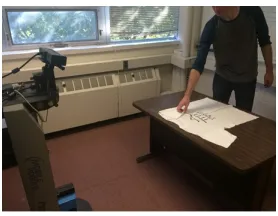
Figure 1:The setting of our situated task learning where a hu-man teacher teaches the robot how to fold a T-shirt through both task demonstrations and language instructions.
from the physical world. As demonstrated in recent work (She et al., 2014a; Misra et al., 2015; She and Chai, 2016), explicitly modeling change of states is an important step towards interacting with robots in the physical world.
Additionally, there has also been an increasing amount of work that learns new tasks either using methods like supervised learning on large corpus of data (Branavan et al., 2010; Branavan et al., 2012; Tellex et al., 2014; Misra et al., 2014), or by learn-ing from humans through dialogue (Cantrell et al., 2012; Mohan et al., 2013; Kirk and Laird, 2013; She et al., 2014b; Mohseni-Kabir et al., 2015). In this pa-per, we focus on jointly learning new tasks through visual demonstration and language instruction. The learned task model is explicitly represented by an AoG, a hierarchical structure consisting of both lin-guistic labels and corresponding changes of states from the physical world. This rich task model will facilitate not only language-based communication, but also lower-level action planning and execution.
3 Task and Data
In this paper, we use cloth-folding (e.g., teaching a robot how to fold a T-shirt) as the task to demon-strate and evaluate our joint task learning approach. As mentioned earlier, cloth-folding, although sim-ple for humans, represents a challenging task for the robotics community due to the complex state and ac-tion space.
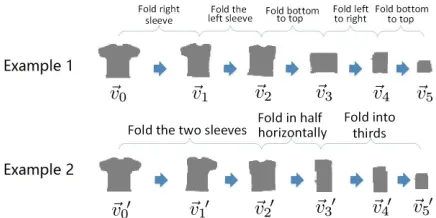
Figure 2: Examples of our parallel data where language in-structions are paired with a sequence of visual states detected from the video.
the human’s visual demonstration, and the human’s corresponding verbal instructions are recorded by Kinect2’s embedded microphone array.
A recorded video of task demonstration and its corresponding verbal instruction become one train-ing example for our task learntrain-ing system. Figure 2 shows two examples of such “parallel data”. The vi-sual demonstration is processed into a sequence of visual states, where each state is a numeric vector (~vi) capturing the visual features of the T-shirt at a particular time (see later Section 5.1 for details). The recorded verbal instructions are then aligned with the sequence of visual states based on the timing in-formation.
During teaching the task, we specifically re-quested the demonstrator to describe and do each step at roughly the same time. This greatly simpli-fied the alignment problem. Since our ultimate goal is to enable humans to teach the robot through nat-ural language dialogue and demonstration, our hy-pothesis is that the alignment issue can be alleviated by certain dialogue mechanism (e.g., ask to repeat the action, ask for step-by-step aligned instructions, etc.). As it is human’s best interest that the robot gets the clearest instructions, we also anticipate during dialogue human teachers will be collaborative and provide mostly aligned instructions. Certainly, these hypotheses will need to be validated in the dialogue setting in our future work.
In our collected data, each change of state, i.e., a transition between two visual states, is caused by one or more physical actions. Some language de-scriptions align with only a single-step change of state. For instance, “fold right sleeve” is aligned with the change (~v0 → ~v1) and “fold left sleeve”
is aligned with (~v1 → ~v2) in Example 1. This kind of single-step change of state is considered as aprimitive action. Other language descriptions are aligned with a sequence of multiple state changes. For instance, “fold the two sleeves” in Example 2 is aligned with two consecutive changes: (~v00, ~v10, ~v20).
This kind of sequence of state changes is considered as acomplex action, which can be decomposed into partially ordered primitive actions. A complex ac-tion can also be concisely represented by the change from the initial state to the end state in the sequence, such as(~v00 →~v20)in Example 2.
These parallel data are used to train and test our learning and inference algorithms presented later.
4 And-Or Graph Representation
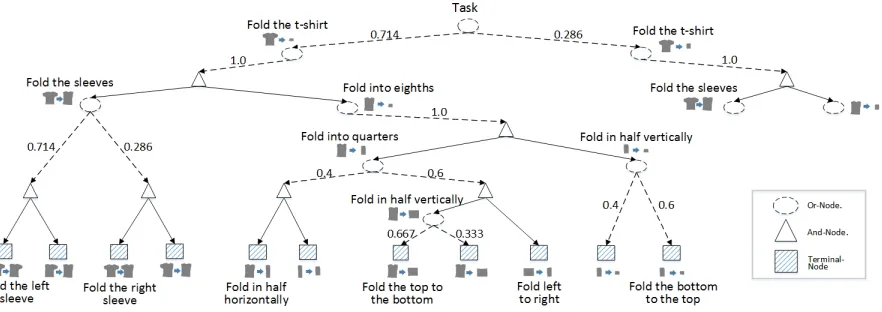
We use AoG as the formal model of a procedural task. Figure 3 shows an example AoG for the cloth-folding task. It is a hierarchical structure that ex-plicitly captures the compositionality and reconfig-urability of a procedural task. The terminal nodes capture state changes associated with primitive ac-tions of this task, and non-terminal nodes capture state changes associated with complex actions which are further composed by lower-level actions.
In addition to state changes, the learned AoG is also labeled with linguistic information (e.g., verb frames) capturing the causes of the corresponding state changes. The state changes are also considered as grounded meanings of these verb frames. For ex-ample, Figure 3 shows two “fold the t-shirt” labels at the top layer. Note that although symbolically, these two phrases have the same meaning (e.g., same verb frames), their grounded meanings are different as they correspond to different changes of state. Be-ing able to represent differences or ambiguities in grounded meanings is crucial to connect language to perception and action.
Formally, an AoG is defined as a 5-tuple G = (S,Σ, N, R,Θ), where
• Sis a root node (or a start symbol) representing
a complete task.
• Σ is a set of terminal nodes, each of which
represents a change of state associated with a primitive action.
sub-Figure 3:An example of the learned AoG
sets of And-nodes and Or-nodes.
• R is a “child-parent” relation (many-to-one
mapping), i.e.,R(nch) =npa(meaningnpais
the parent node ofnch), where nch ∈ Σ∪N andnpa ∈N ∪ {S}.
• Θ is a set of conditional
probabili-ties p(nch|npa), where npa ∈ NOR,
nch ∈ {n | R(n) = npa}. Namely, for each Or-node,Θdefines a probability
distribu-tion over the set of all its children nodes.
In essence, our AoG model is equivalent to Prob-abilistic Context-Free Grammar (PCFG). An AoG can be converted into a PCFG:
• Each And-node and its children form a produc-tion rule
nAN D →nch1 ∧nch2 ∧. . .
that represents the decomposition of a complex action into sequentially ordered sub-actions.
• Each Or-node and its children form a produc-tion rule
nOR→nch1 |nch2 |. . .
that represents all the alternative ways of ac-complishing an action. Each alternative also comes with a probability as specified inΘ. 5 Method
5.1 Vision and Language Processing
The input data to our AoG learning algorithm con-sist of co-occurring visual demonstrations and lan-guage instructions as described in Section 3. Based
on the RGB-D information provided by the Kinect2 sensor, we developed a vision processing system to keep track of human’s actions and statuses of the T-shirt object.
To learn a meaningful task structure, the most im-portant visual information are those key statuses that the object goes through. Therefore, our vision sys-tem processes each visual demonstration into a se-quence ofstates. Each state~vis a multi-dimensional
numeric vector that encodes the geometric infor-mation of the detected T-shirt, such as its smallest bounding rectangle and largest inscribed contour-fitting rectangle. These key states are detected by tracking the human’s folding actions. Namely, whenever a folding action is detected1, we append
the new state caused by the action to the sequence of observed states, till the end of the demonstration.
The verbal instructions given by the demonstra-tors were mainly verb phrases such as “fold which-part”, “fold to which-position”, or “fold in-what-manner”. A semantic parser2 is applied to parse
each instruction text into a canonical verb-frame representation, such as
F OLD: [P ART : lef t sleeve]
[P OSIT ION : middle].
Through the vision and language processing, each task demonstration becomes two parallel sequences, i.e., a sequence of extracted visual states and a se-quence of parsed language instructions. The align-1The vision system keeps track of human’s hands, and de-tects a folding action as a gripping action followed by moving and releasing the hand(s).
[image:4.612.92.533.61.217.2]ment between these two sequences is also extracted from their co-occurrence timing information. Thus, an instance of a task demonstration is formally rep-resented as a 3-tuple x = (D, L,∆), where D = {~v1, ~v2, . . . , ~vM} is the sequence of visual states,
L = {l1, l2, . . . , lK} is the sequence of linguis-tic verb-frames, and ∆(k) = (i, j) is an
“align-ment function” specifying the correspondence be-tween a linguistic verb-frame lk and a single or a sub-sequence of visual state(s){~vi, . . . , ~vj}(i≤j). Then, given a dataset X of such task demonstra-tions, our AoG learning algorithm learns an AoGG
as defined in Section 4. The next section describes our learning algorithm in detail.
5.2 AoG Learning Algorithm
Learning an AoG G = (S,Σ, N, R,Θ) is carried out in two stages. Firstly, we learn a set of termi-nal nodes Σto represent the primitive actions (i.e.,
the actions that can be preformed in a single step). This is done through clustering the observed visual states. Secondly, the hierarchical structure (i.e.,N
andR) and parametersΘof the AoG is learned us-ing an iterative grammar induction algorithm.
5.2.1 Learning Terminal Nodes
A terminal node in the AoG represents a primitive action, which causes the object to directly change from one state to another. Thus we represent a ter-minal node as a 2-tuple of states (or a “change of state”). Since the visual states detected by computer vision are numeric vectors with continuous values, we first apply a clustering algorithm to form a fi-nite set of discrete state representations. Each clus-ter then represents a unique situation that one can encounter in a task. Since when learning a new task we usually do not know how many unique situa-tions exist, here we employ a greedy clustering algo-rithm (Ng and Cardie, 2002), which does not assume a fixed number of clusters.
As the greedy clustering algorithm relies on the pairwise similarities of all the visual states, we also train an SVM classifier on a separate dataset of 22 T-shirt folding videos and use its classification output to measure the similarity between two visual states. The SVM classifier takes two numeric vectors as an input, and predicts whether these two vectors rep-resent the same status of a T-shirt. We then apply
this SVM classifier on each pair of detected visual states in our new dataset (i.e., the dataset for learn-ing the AoG), and use the SVM’s output class la-bel (1 or−1) multiplies its classification confidence
score as the similarity measurement between two vi-sual states.
After clustering all the observed visual states in the data, we then replace each numeric vec-tor state representation with the cluster “ID” it longs to. Thus each visual demonstration now be-comes a sequence of symbolic values, denoted as
D0 = {s1, s2, . . . , sM}. And we further trans-form it into an equivalentchange of statesequence
C ={(s1, s2),(s2, s3), . . . ,(sM−1, sM)}, in which each change of state essentially represents a primi-tive action in this task. These change of state pairs then form the set of terminal nodesΣ.
5.2.2 Learning the Structure and Parameters
With the sequences of numeric vector states re-placed by the “symbolic” change of state sequences in the first stage, we can further learn the structure and parameters of an AoG. Namely, to learnN,R,
andΘthat maximize the posterior probability:
arg max N,R,Θ
P(N, R,Θ|X,Σ)
= arg max N,R,Θ
P(N, R|X,Σ)P(Θ|X,Σ, N, R).
Following the iterative grammar induction paradigm (Tu et al., 2013; Xiong et al., 2016), we employ an iterative procedure that al-ternatively solves arg max
N,R P(N, R|X,Σ) and
arg max Θ
P(Θ|X,Σ, N, R).
To solve the first term, we use greedy or beam search with a heuristic function similar to (Solan et al., 2005). To solve the second term, we estimate the probability of each branch of an Or-node by comput-ing the frequency of that branch, which is essentially a maximum likelihood estimation similar to (Pei et al., 2013).
In detail, the learning procedure first initializes emptyN,R, andΘ, then iterates through the
follow-ing two steps until no further update can be made.
Step (1): search for new And-nodes.
This step searches for new And-node candidates fromΣ∪N, and updateN andRwith the top-ranked
Hereslis the initial state of an existing node, whose end state issm. Andsris the end state of another ex-isting node, whose initial state issm. Thus an And-node candidate always has two child And-nodes, and rep-resents a pattern of sub-sequences which starts from statesl, ends atsr, and hassmoccurred somewhere in the middle.
Using the above notation, the heuristic function for ranking And-node candidates is defined as
h(A) = (1−λ)Pstate(A) +λPlabel(A)
wherePstate(A)captures the prevalence of a partic-ular And-node candidate based on the observed state change sequences:
Pstate(A) =
PR(A) +PL(A) 2
andPR(A)is the ratio between the number of times (sl → sm → sr)appears and the number of times (sl →sm)appears, andPL(A)is the ratio between the number of times(sl → sm → sr) appears and the number of times(sm →sr)appears.
The componentPlabel(A)captures the prevalence of linguistic labels associated with the sequential state change patterns. It is computed as the ratio between the number of times (sl → sm → sr) co-occurs with a linguistic instruction3 and the
to-tal number of times(sl→sm→sr)appears. We specially define two AoG learning settings based on the role that language plays:
• Tightlanguage integration: incorporate
heuris-tics on linguistic labels (i.e., λ = 0.5). In
this setting, the learned AoG prefers And-nodes that not only happen frequently, but also can be described by a linguistic label.
• Loose language integration: without incorpo-rating the heuristics on linguistic labels (λ = 0). Each And-node is learned only based on
the frequency of its state change pattern. The learned node can still acquire a linguistic label if there happen to be a co-occurring one, but the chance is lower than the “tight” setting.
Step (2): search for new Or-nodes or new branches of existing Or-nodes, then updateΘ.
Once new And-nodes are added by the previous step, the next step is to search for Or-nodes that 3Such information is encoded in the∆function as men-tioned in Section 5.1.
can be created or updated. An Or-node in the AoG essentially represents the set of all And-nodes that share the same initial and end states, denoted as
(sl→sr)here (slandsrare the common initial and end states, respectively). Suppose(sl → s0m →sr) is a newly added And-node, it is then assigned as a child of the Or-node(sl → sr). To further update Θ, the branching probability is computes as the
ra-tio between the number of times(sl → s0m → sr) appears and the number of times(sl→sr)appears.
5.3 Inference Using AoG
Once a task AoG is learned, it can be applied to in-terpret and explain new visual demonstrations using linguistic labels. Due to the noises and uncertainties from computer vision processing, one key challenge in interpreting the visual demonstration is to reliably identify the different states of the T-shirt.
To tackle this issue, we formulate a joint infer-ence problem. Namely, given a task demonstration video, we first process it into a sequence of numeric vector statesD = {~v1, ~v2, . . . , ~vM}as described in Section 5.1. Then the goal of inference is to find the most-likely parse tree T and a sequence of
“sym-bolic states” D0 = {s1, s2, . . . , sM} based on the AoGGand the inputD:
(T∗, D0∗) = arg max
T,D0 P(T, D
0| G, D)
We apply a chart parsing algorithm (Klein and Manning, 2001) to efficiently solve this problem. Furthermore, to accommodate the ambiguities in mapping a numeric vector state~vm to a symbolic state, we take into consideration the top-k
hypothe-ses measured by the similarity between ~vm and a symbolic statesk.4 For each state mapping hypoth-esis, we add a completed edge between indices m
andm+ 1 in the chart, withsk as its symbol and a probabilityp based on the similarity between~vm and sk. Based on the given AoG, the chart pars-ing algorithm then uses Dynamic Programmpars-ing to search the best parse tree that maximizes the joint probability ofP(T, D0|G, D).
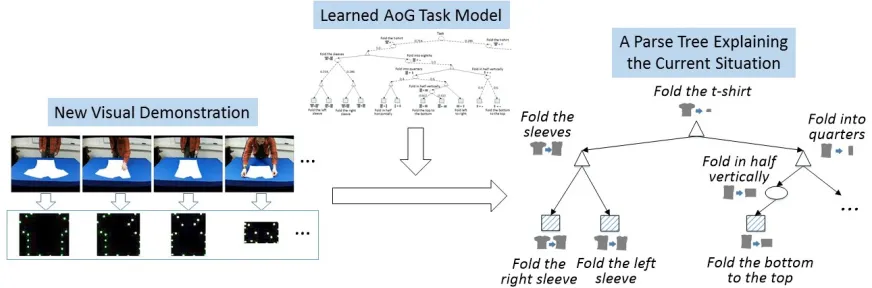
Figure 4 illustrates the input and output of our in-ference algorithm. As illustrated by this example,
Figure 4:An illustration of the input and output of our AoG-based inference algorithm.
the parse tree represents a hierarchical structure un-derlying the observed task procedure, and the lin-guistic labels associated with the nodes can be used to describe the primitive and complex actions in-volved in the procedure.
6 Evaluation
Using the setting as described in Section 3, we collected 45 T-shirt folding demonstrations from 6 people to evaluate our AoG learning and inference methods. More specifically, we conducted a 5-fold cross validation. In each fold, 36 demonstrations were used for training to learn a task AoG. Then the remaining 9 demonstrations were used for testing, in which the learned AoG is further applied to process each of the testing visual demonstrations.
Motivated by earlier work on plan/activity recog-nition using CFG-based models (Carberry, 1990; Pynadath and Wellman, 2000), we use an extrin-sic task that automatically assigns linguistic labels to new demonstrations to evaluate the quality of the learned AoG and the effectiveness of the inference algorithm. This involves three steps: (1) parse the video using the learned AoG; (2) identify linguistic labels associated with terminal or nonterminal nodes in the parse tree; and (3) compare the identified lin-guistic labels with the manually annotated labels.
We conduct the evaluation at two levels:
• Primitive actions:use linguistic labels
associ-ated with terminal nodes to describe the primi-tive actions in each video. This level provides detailed descriptions on how the observed task procedure is performed step-by-step.
• Complex actions:use linguistic labels
associ-ated with nonterminal nodes to describe com-plex actions. This provides a high-level “sum-mary” of the detailed low-level actions. The capability to recognize fine-grained primitive actions as well as high-level complex actions in a task procedure and to communicate those in lan-guage is important for many real-world AI applica-tions such as human-robot collaboration (Mohseni-Kabir et al., 2015) and visual question answer-ing (Tu et al., 2014).
6.1 Primitive Actions
We first compare the performance of interpreting primitive actions using the learned AoG with a base-line. The baseline applies a memory-based (or similarity-base) approach. Given a testing video, it extracts all the different visual states and maps each state to the nearest cluster learned from the train-ing data (see Section 5.2.1). It then pairs each two consecutive states as a change of state instance, and uses the linguistic label corresponding to the identi-cal change of state found in the training data as the label of a primitive action.
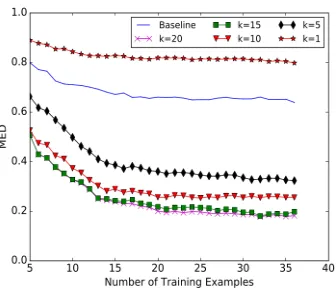
Figure 5: Performance of interpreting primitive actions. Dif-ferent number of state mapping hypotheses (k) are used in the inference algorithm. Thex-axis is the number of training
ex-amples used for learning the AoG.
The performances of the baseline and our AoG-based approach are shown in Figure 5. For the AoG-based approach, Figure 5 also shows the per-formances of incorporating different number of state mapping hypotheses (i.e.,k = 1,5,10,15,20) into
the inference algorithm (Section 5.3). Here we only report the performance of using AoG learned with the tight language integration (see Section 5.2.2), since there is no difference in performance between the tight and loose language integration settings in recognizing primitive actions5.
As Figure 5 shows, the baseline performance is rather weak (i.e., high MED scores). This is largely due to the noise in state clustering and mapping from vision. After manually inspecting the collected demonstration videos, we found 18 unique statuses associated with folding a T-shirt. However the com-puter vision based clustering on average produces more than 30 clusters when all the 36 training ex-amples are used. This makes it difficult to directly match the state changes as in the baseline. For our AoG-based method, when the inference algorithm only takes the single best state mapping hypothesis into consideration (i.e.,k= 1), it yields a very weak
performance because the observed state change se-quence often cannot be parsed using the learned AoG.
However, the performance of the AoG-based
5Because the linguistic labels generated for primitive actions are all from terminal nodes, and the two different AoG learning settings only affect nonterminal nodes.
method is significantly improved when multiple state mapping hypotheses are incorporated into the inference process. When the top-5 (k = 5) state
mapping hypotheses are incorporated into the AoG-based inference, its MED score has already outper-formed the baseline by a0.3gap (p < 0.001using
the Wilcoxon signed-rank test). Whenk = 20, the
MED score has dropped by more than 0.6 compared tok= 1(p <0.001).
These results indicate that our AoG-based method is capable of learning useful task structure from small data. When multiple hypotheses of visual state mapping are incorporated, the learned AoG can compensate the uncertainties in vision processing and identify highly reliable primitive actions from unseen demonstrations.
6.2 Complex Actions
We further evaluate the performance of interpreting complex actions using the learned AoG. The base-line for comparison is similar to the one used in the previous section. It first converts a test video into a sequence of “symbolic” states by mapping each detected visual state to its nearest cluster. It then enumerates all the possible segments that consist of more than two consecutive states and search for the identical segments in the training data. If a matching segment is found, then the corresponding linguistic label (if any) is used as the label for a complex ac-tion. Since complex actions correspond to nontermi-nal nodes in the parse tree generated by AoG-based inference, and some of them may have linguistic la-bels while others may not. We use precision, re-call, andF-scoreto measure how well the generated linguistic labels match the manually segmented and annotated complex actions in testing videos.
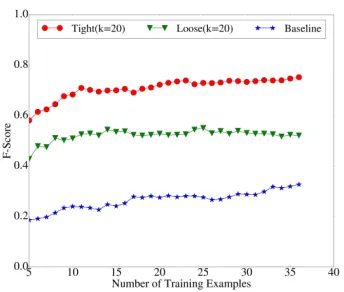
Figure 6 shows the F-scores of recognizing com-plex actions using the AoG learned from theloose and thetight language integration, respectively. In this figure, results are based onk = 20state
map-ping hypotheses incorporated into the inference al-gorithm. As shown here, performances from both settings are significantly better than the baseline (p < 0.001). The AoG learned based on the tight
integration with language yields significantly bet-ter performance than the loose integration (over0.2
gain on F-score,p <0.001).
Figure 6: Performances (F-score) of recognizing complex ac-tions. The lowest curve shows the performance from the base-line. Two other curves represent the performance using the AoG learned from thelooseintegration and thetightintegration with language respectively (wherek= 20is used in inference).
language during AoG learning favors And-node pat-terns that are more likely to be described by natural language (or more consistent with human conceptu-alization of the task structure)6. Such an AoG
repre-sentation can lead to recognition of video segments that can be better explained or summarized by hu-man language. This capability of learning explicit and language-oriented task representations is impor-tant to link language and vision for enabling situated human-agent communication/collaboration.
Table 6.2 further shows the results from different numbers of state mapping hypotheses that are incor-porated into the inference algorithm. As shown here, the trend of performance improvement with the in-crease inkis again observed. When multiple state
mapping hypotheses are incorporated in inference, the learned AoG is capable of compensating uncer-tainties in vision processing and producing better parses for unseen visual demonstrations.
7 Conclusion and Future Work
[image:9.612.100.272.54.200.2]This paper presents an approach on task learning where an agent can learn a grounded task model from human demonstrations and language instruc-tions. A key innovation of this work is grounding language to a perceived structure of state changes 6By further investigating the learned AoG under the two dif-ferent settings, we found that the nonterminal nodes learned from the tight language integration setting is more likely to acquire a linguistic label (33%) than the nonterminal nodes learned from the loose setting (18%).
Table 1:Performance of recognizing complex actions using the AoG learned from the loose and tight integration of language as described in Section 5.2. Different (k) number of state mapping hypotheses are used in the inference algorithm.
k=1 k=5 k=10 k=15 k=20 Precision LooseTight 0.340.34 0.760.8 0.790.86 0.840.89 0.840.9
Recall LooseTight 0.120.12 0.330.51 0.350.59 0.380.64 0.380.65
F-Score LooseTight 0.170.18 0.460.63 0.490.70 0.520.74 0.520.75
based on AoG representation. Once the task model is acquired, it can be used as a basis to support col-laboration and communication between humans and agents/robots. Using cloth-folding as an example, our empirical results have demonstrated that tightly integrating language with vision can effectively pro-duce task structures in AoG that can generalize well to new demonstrations.
Although we have only made an initial attempt on a small task, our approach can be naturally ex-tended to more complex tasks such like assembling and cooking. Both the AoG representation and the task learning approach are general and applicable to different domains. What needs to be adapted is the representation of the visual states and computer vi-sion algorithms to detect these states for a specific task.
Grounding language to a structure of perceived state changes will provide an important stepping stone towards integrating language, perception, and action for human-robot communication and collabo-ration. Currently, our algorithms learn the task struc-tures based on offline parallel data. Our future work will explore incremental learning through human-agent dialogue to acquire grounded task structures.
Acknowledgments
References
Brenna D. Argall, Sonia Chernova, Manuela Veloso, and Brett Browning. 2009. A survey of robot learning from demonstration. Robotics and autonomous sys-tems, 57(5):469–483.
S. R. K. Branavan, Luke S. Zettlemoyer, and Regina Barzilay. 2010. Reading between the lines: Learn-ing to map high-level instructions to commands. In Proceedings of the 48th Annual Meeting of the As-sociation for Computational Linguistics (ACL), pages 1268–1277.
S. R. K. Branavan, Nate Kushman, Tao Lei, and Regina Barzilay. 2012. Learning high-level planning from text. In Proceedings of the 50th Annual Meeting of the Association for Computational Linguistics (ACL), pages 126–135.
Rehj Cantrell, J. Benton, Kartik Talamadupula, Subbarao Kambhampati, Paul Schermerhorn, and Matthias Scheutz. 2012. Tell me when and why to do it! run-time planner model updates via natural language in-struction. In7th ACM/IEEE International Conference on Human-Robot Interaction (HRI), pages 471–478. Sandra Carberry. 1990. Plan recognition in natural
lan-guage dialogue. MIT press.
David L. Chen, Joohyun Kim, and Raymond J. Mooney. 2010. Training a multilingual sportscaster: Using per-ceptual context to learn language. Journal of Artificial Intelligence Research, 37(1):397–436.
Sonia Chernova and Manuela Veloso. 2008. Teach-ing multi-robot coordination usTeach-ing demonstration of communication and state sharing. InProceedings of the 7th international joint conference on Autonomous agents and multiagent systems-Volume 3, pages 1183– 1186.
Sonia Chernova and Manuela Veloso. 2009. Interactive policy learning through confidence-based autonomy. Journal of Artificial Intelligence Research, 34(1):1. Qiaozi Gao, Malcolm Doering, Shaohua Yang, and
Joyce Y. Chai. 2016. Physical causality of action verbs in grounded language understanding. In Pro-ceedings of the 54th Annual Meeting of the Associa-tion for ComputaAssocia-tional Linguistics (ACL), Volume 1: Long Papers, pages 1814–1824.
Till Hofmann, Tim Niemueller, Jens Claßen, and Gerhard Lakemeyer. 2016. Continual planning in golog. In Thirtieth AAAI Conference on Artificial Intelligence. Chad Hogg, Ugur Kuter, and H´ector Mu˜noz-Avila. 2009.
Learning hierarchical task networks for nondetermin-istic planning domains. InProceedings of the Twenty-First International Joint Conference on Artificial Intel-ligence (IJCAI), pages 1708–1714.
James R. Kirk and John E. Laird. 2013. Learning task formulations through situated interactive instruction.
In Proceedings of the Second Annual Conference on Advances in Cognitive Systems (ACS), volume 219, page 236.
Dan Klein and Christopher D. Manning. 2001. An o(n3)
agenda-based chart parser for arbitrary probabilistic context-free grammars. Stanford Technical Report. Thomas Kollar, Stefanie Tellex, Deb Roy, and Nicholas
Roy. 2010. Toward understanding natural language directions. InProceedings of the 5th ACM/IEEE In-ternational Conference on Human-robot Interaction (HRI), pages 259–266.
Thomas Kollar, Jayant Krishnamurthy, and Grant P. Strimel. 2013. Toward interactive grounded language acqusition. InRobotics: Science and Systems. Bo Li, Tianfu Wu, Caiming Xiong, and Song-Chun Zhu.
2016. Recognizing car fluents from video. In Pro-ceedings of the 29th IEEE Conference on Computer Vision and Pattern Recognition (CVPR).
Changsong Liu, Rui Fang, and Joyce Y. Chai. 2012. To-wards mediating shared perceptual basis in situated di-alogue. InProceedings of the 13th Annual Meeting of the Special Interest Group on Discourse and Dialogue, pages 140–149.
Cynthia Matuszek, Nicholas FitzGerald, Luke Zettle-moyer, Liefeng Bo, and Dieter Fox. 2012. A joint model of language and perception for grounded at-tribute learning. Proceedings of the 29th International Conference on Machine Learning (ICML).
Dipendra K. Misra, Jaeyong Sung, Kevin Lee, and Ashutosh Saxena. 2014. Tell me dave: Context-sensitive grounding of natural language to manipula-tion instrucmanipula-tions. InProceedings of Robotics: Science and Systems (RSS).
Dipendra K. Misra, Kejia Tao, Percy Liang, and Ashutosh Saxena. 2015. Environment-driven lexicon induction for high-level instructions. InProceedings of the 53rd Annual Meeting of the Association for Computational Linguistics, pages 992–1002.
Shiwali Mohan, James Kirk, and John Laird. 2013. A computational model for situated task learning with in-teractive instruction. InProceedings of the 12th Inter-national Conference on Cognitive Modeling (ICCM). Anahita Mohseni-Kabir, Charles Rich, Sonia Chernova,
Candace L Sidner, and Daniel Miller. 2015. In-teractive hierarchical task learning from a single demonstration. In Proceedings of the Tenth An-nual ACM/IEEE International Conference on Human-Robot Interaction (HRI), pages 205–212.
segments. InNorth American Chapter of the Associ-ation for ComputAssoci-ational Linguistics Human Language Technologies (NAACL-HLT).
Negin Nejati, Pat Langley, and Tolga Konik. 2006. Learning hierarchical task networks by observation. In Proceedings of the 23rd international conference on Machine learning (ICML), pages 665–672.
Vincent Ng and Claire Cardie. 2002. Improving machine learning approaches to coreference resolution. In Pro-ceedings of the 40th Annual Meeting on Association for Computational Linguistics (ACL), pages 104–111. Mingtao Pei, Zhangzhang Si, Benjamin Z Yao, and Song-Chun Zhu. 2013. Learning and parsing video events with goal and intent prediction. Computer Vision and Image Understanding, 117(10):1369–1383.
David V. Pynadath and Michael P. Wellman. 2000. Prob-abilistic state-dependent grammars for plan recogni-tion. In Proceedings of the Sixteenth conference on Uncertainty in artificial intelligence, pages 507–514. Morgan Kaufmann Publishers Inc.
Joe Saunders, Chrystopher L. Nehaniv, and Kerstin Daut-enhahn. 2006. Teaching robots by moulding behavior and scaffolding the environment. In Proceedings of the 1st ACM SIGCHI/SIGART conference on Human-robot interaction (HRI), pages 118–125.
Lanbo She and Joyce Y. Chai. 2016. Incremental acqui-sition of verb hypothesis space towards physical world interaction. InProceedings of the 54th Annual Meet-ing of the Association for Computational LMeet-inguistics (ACL).
Lanbo She, Yu Cheng, Joyce Y. Chai, Yunyi Jia, Shao-hua Yang, and Ning Xi. 2014a. Teaching robots new actions through natural language instructions. In Proceedings of the 23rd IEEE International Sympo-sium on Robot and Human Interactive Communica-tion, pages 868–873.
Lanbo She, Shaohua Yang, Yu Cheng, Yunyi Jia, Joyce Y. Chai, and Ning Xi. 2014b. Back to the blocks world: Learning new actions through situated human-robot dialogue. InProceedings of the 15th Annual Meeting of the Special Interest Group on Discourse and Dia-logue.
Zach Solan, David Horn, Eytan Ruppin, and Shimon Edelman. 2005. Unsupervised learning of natural lan-guages. Proceedings of the National Academy of Sci-ences of the United States of America, 102(33):11629– 11634.
Stefanie Tellex, Thomas Kollar, Steven Dickerson, Matthew R. Walter, Ashis Gopal Banerjee, Seth J. Teller, and Nicholas Roy. 2011. Understanding natu-ral language commands for robotic navigation and mo-bile manipulation. InProceedings of the Twenty-Fifth AAAI Conference on Artificial Intelligence.
Stefanie Tellex, Pratiksha Thaker, Joshua Joseph, and Nicholas Roy. 2014. Learning perceptually grounded word meanings from unaligned parallel data. Machine Learning, 94(2):151–167.
Kewei Tu, Maria Pavlovskaia, and Song-Chun Zhu. 2013. Unsupervised structure learning of stochastic and-or grammars. InAdvances in Neural Information Processing Systems (NIPS), pages 1322–1330. Kewei Tu, Meng Meng, Mun Wai Lee, Tae Eun Choe,
and Song-Chun Zhu. 2014. Joint video and text pars-ing for understandpars-ing events and answerpars-ing queries. IEEE MultiMedia, 21(2):42–70.
Caiming Xiong, Nishant Shukla, Wenlong Xiong, and Song-Chun Zhu. 2016. Robot learning with a spatial, temporal, and causal and-or graph. InProceedings of the 2016 IEEE International Conference on Robotics and Automation (ICRA).
Shaohua Yang, Qiaozi Gao, Changsong Liu, Caiming Xiong, Song-Chun Zhu, and Joyce Y. Chai. 2016. Grounded semantic role labeling. In Proceedings of the 15th Annual Conference of the North American Chapter of the Association for Computational Linguis-tics: Human Language Technologies (NAACL-HLT), pages 149–159.
Haonan Yu and Jeffrey M. Siskind. 2013. Grounded lan-guage learning from video described with sentences. InProceedings of the 51st Annual Meeting of the As-sociation for Computational Linguistics (ACL), pages 53–63.