This PDF document was made available from www.rand.org as a public service of the RAND Corporation.
6
Jump down to document
Purchase this document Browse Books & Publications Make a charitable contribution
Visit RAND at www.rand.org
Explore RAND Infrastructure, Safety, and Environment
View document details
This document and trademark(s) contained herein are protected by law as indicated in a notice appearing later in this work. This electronic representation of RAND intellectual property is provided for non-commercial use only. Permission is required from RAND to reproduce, or reuse in another form, any of our research documents.
Limited Electronic Distribution Rights
For More Information
Support RAND
The RAND Corporation is a nonprofit research organization providing objective analysis and
effective solutions that address the challenges facing the public and private sectors around the world.
CHILD POLICY
CIVIL JUSTICE
EDUCATION
ENERGY AND ENVIRONMENT
HEALTH AND HEALTH CARE
INTERNATIONAL AFFAIRS
NATIONAL SECURITY
POPULATION AND AGING
PUBLIC SAFETY
SCIENCE AND TECHNOLOGY
SUBSTANCE ABUSE
TERRORISM AND HOMELAND SECURITY
TRANSPORTATION AND INFRASTRUCTURE
Aptitude for Destruction
Volume 2
Case Studies of Organizational Learning
in Five Terrorist Groups
Brian A. Jackson John C. Baker
Kim Cragin John Parachini Horacio R. Trujillo
Peter Chalk
The RAND Corporation is a nonprofit research organization providing objective analysis and effective solutions that address the challenges facing the public and private sectors around the world. RAND’s publications do not necessarily reflect the opinions of its research clients and sponsors.
R® is a registered trademark.
© Copyright 2005 RAND Corporation
All rights reserved. No part of this book may be reproduced in any form by any electronic or mechanical means (including photocopying, recording, or information storage and retrieval) without permission in writing from RAND.
Published 2005 by the RAND Corporation
1776 Main Street, P.O. Box 2138, Santa Monica, CA 90407-2138 1200 South Hayes Street, Arlington, VA 22202-5050 201 North Craig Street, Suite 202, Pittsburgh, PA 15213-1516
RAND URL: http://www.rand.org/
To order RAND documents or to obtain additional information, contact Distribution Services: Telephone: (310) 451-7002;
Fax: (310) 451-6915; Email: [email protected] Library of Congress Cataloging-in-Publication Data
Aptitude for destruction : organizational learning in terrorist groups and its implications for combating terrorism / Brian A. Jackson ... [et al.].
p. cm. “MG-331.”
Includes bibliographical references. ISBN 0-8330-3764-1 (pbk. : alk. paper)
1. Terrorists. 2. Organizational learning. 3. Terrorism—Prevention—Government policy. I. Jackson, Brian A. (Brian Anthony) II.Title.
HV6431.A67 2005 303.6'25—dc22
2005003983 “MG-332.”
ISBN 0-8330-3767-6
Photo courtesy of iStockphoto.com Inc. Copyright 2005 iStockphoto Inc. Online at http://www.iStockphoto.com/Photographer: John Bohannon
Cover design by Stephen Bloodsworth
iii
Preface
Continuing conflicts between violent groups and states generate an ever-present de-mand for higher quality and more timely information to support operations to com-bat terrorism. In particular, better ways are needed to understand how terrorist and insurgent groups adapt over time into more-effective organizations and increasingly dangerous threats. To adapt, terrorist organizations must learn. A group’s ability to learn determines its chance of success, since learning is the link between what the group wants to do and its ability to gather the needed information and resources to actually do it. Despite the importance of terrorist group learning, comparatively little focused research effort has been directed at understanding this process and identify-ing the factors that influence group learnidentify-ing ability. While relevant data and insights can be found in the literature on terrorism and terrorist organizations, this informa-tion has not been collected and systematically analyzed to assess its importance from the perspective of efforts to combat terrorism. This study addresses that need in an effort to both analyze current understanding and stimulate further study and research in this area.
The National Institute of Justice provided funding to the RAND Corporation to conduct an analysis of organizational learning in terrorist groups and assess its im-plications for efforts to combat terrorism. The work was performed between Novem-ber 2003 and NovemNovem-ber 2004, a period during which the threat of international ter-rorism was high and concern about the capabilities of terrorist organizations and how they might change over time was a central focus of policy debate and U.S. homeland security planning. The study is described in this report and in a companion volume,
Aptitude for Destruction, Volume 1: Organizational Learning in Terrorist Groups and Its Implications for Combating Terrorism, MG-331-NIJ, which applies the analytical framework described in the second part of this report to the practical demands of in-telligence and law enforcement activities.
iv Aptitude for Destruction
• Brian A. Jackson et al., Aptitude for Destruction, Volume 1: Organizational Learning in Terrorist Groups and Its Implications for Combating Terrorism, MG-331-NIJ.
• Brian A. Jackson et al., Protecting Emergency Responders: Lessons Learned from Terrorist Attacks, CF-176-OSTP, 2002.
• Kim Cragin and Sara A. Daly, The Dynamic Terrorist Threat: An Assessment of Group Motivations and Capabilities in a Changing World, MR-1782-AF, 2004. • Peter Chalk and William Rosenau, Confronting the “Enemy Within”: Security
Intelligence, the Police, and Counterterrorism in Four Democracies, MG-100-RC, 2004.
• Bruce Hoffman, Insurgency and Counterinsurgency in Iraq, OP-127-IPC/ CMEPP, 2004.
This research was conducted within RAND Infrastructure, Safety, and Envi-ronment (ISE), a division of the RAND Corporation. The mission of RAND ISE is to improve the development, operation, use, and protection of society’s essential built and natural assets; and to enhance the related social assets of safety and security of individuals in transit and in their workplaces and communities. The ISE research portfolio encompasses research and analysis on a broad range of policy areas includ-ing homeland security, criminal justice, public safety, occupational safety, the envi-ronment, energy, natural resources, climate, agriculture, economic development, transportation, information and telecommunications technologies, space exploration, and other aspects of science and technology policy. Inquiries regarding RAND Infra-structure, Safety, and Environment may be directed to:
Debra Knopman, Vice President and Director RAND Infrastructure, Safety, and Environment 1200 South Hayes Street
Arlington, Virginia 22202 703-413-1100
v
Contents
Preface...iii
Figures and Tables...ix
Acknowledgments...xi
Abbreviations and Acronyms...xiii
CHAPTER ONE Introduction Brian A. Jackson ...1
The Need to Both Describe and Explain Learning...2
About This Study...3
About This Report...5
References...6
Part I: Case Studies Prologue...9
CHAPTER TWO Aum Shinrikyo John Parachini ...11
Introduction...11
Background...12
Operations and Tactics...18
Training...25
Logistics...27
Intelligence and Operational Security...31
Conclusions...32
References...34
CHAPTER THREE Hizballah, the Party of God Kim Cragin ...37
Introduction...37
Background...37
vi Aptitude for Destruction
Training...47
Logistics...48
Intelligence and Operational Security...51
Conclusions...53
References...54
CHAPTER FOUR Jemaah Islamiyah John C. Baker ...57
Introduction...57
Background...59
Operations and Tactics...66
Training...76
Logistics...79
Intelligence and Operational Security...80
Conclusions...84
References...89
CHAPTER FIVE Provisional Irish Republican Army Brian A. Jackson ...93
Introduction...93
Background...94
Operations and Tactics...97
Training...119
Logistics...125
Intelligence and Operational Security...126
Conclusions...133
References...138
CHAPTER SIX The Radical Environmentalist Movement Horacio R. Trujillo ...141
Introduction...141
Background...142
Operations and Tactics...152
Training...161
Intelligence and Operational Security...163
Conclusions...164
Contents vii
Part II: Theory and Application Prologue...179
CHAPTER SEVEN Theory: Organizational Learning as a Four-Component Process Horacio R. Trujillo and Brian A. Jackson ...181
Acquisition...183
Interpretation...185
Distribution...186
Storage...187
References...187
CHAPTER EIGHT Application: The Four Components of Organizational Learning in the Case Study Groups Brian A. Jackson ...191
Acquisition...191
Interpretation...195
Distribution...196
Storage...198
ix
Figures and Tables
Figures
3.1. Organizational Structure of Hizballah...45
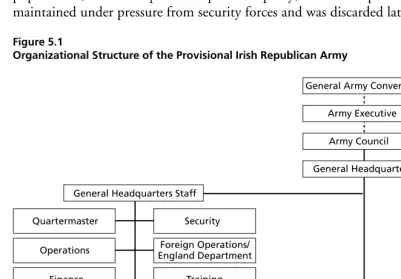
5.1. Organizational Structure of the Provisional Irish Republican Army...96
5.2. Results of PIRA Use of RPGs, IPGs, and PRIGs, May 1981–March 1992...109
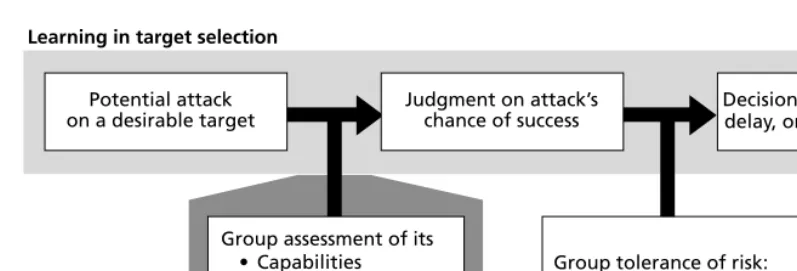
5.3. Model of Tactical Decisionmaking by Terrorist Organizations...111
5.4. Learning Processes in Tactical Planning...114
7.1. Component Processes of an Organizational Learning Framework...182
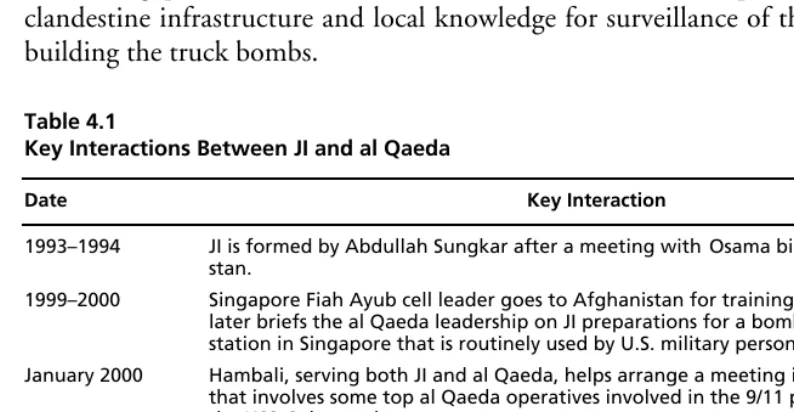
Tables 4.1. Key Interactions Between JI and al Qaeda...65
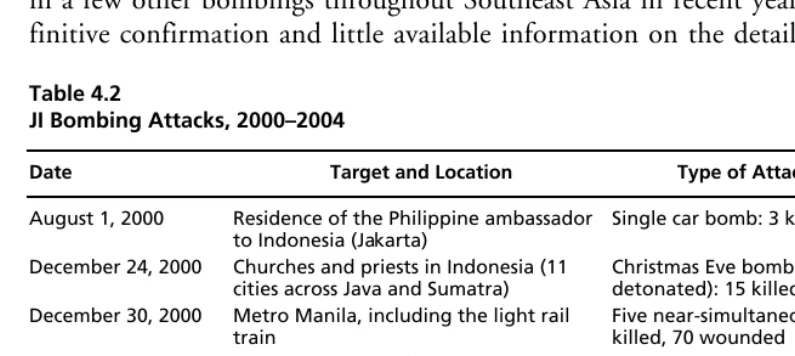
4.2. JI Bombing Attacks, 2000–2004...67
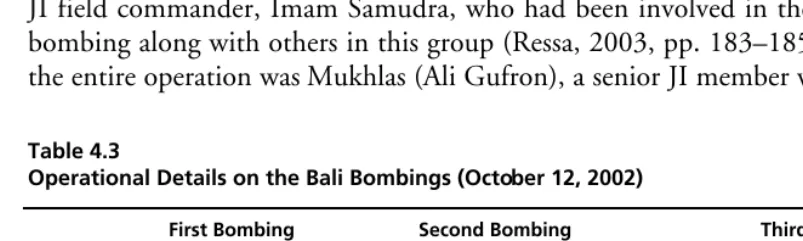
4.3. Operational Details on the Bali Bombings (October 12, 2002) ...70
xi
Acknowledgments
The members of the research team would like to extend their thanks to the many in-dividuals in governments, academic institutions, and other organizations around the world who gave generously of their time and expertise as the study progressed. Study workshop participants from a variety of law enforcement, homeland security, and intelligence agencies provided critical input that made the analysis possible. Because of the sensitivity of the topics involved, these outside contributors are not identified here, but the necessity of maintaining their anonymity in no way diminishes our gratitude for their participation.
We gratefully acknowledge the funding from the National Institute of Justice that supported this research. The direct assistance and support we received from Marvene O’Rourke and Sandra Woerle, who served as the NIJ grant monitors for this effort through the period of research and writing, were also invaluable in facili-tating our efforts.
We also gratefully acknowledge the contributions of our reviewers, Dennis Pluchinsky and Terrence Kelly. The report benefited greatly from their thoughtful and thorough reviews and the insights and suggestions they provided.
A number of our RAND colleagues gave generously of their time and insights. We would like to acknowledge Claude Berrebi, Sara Daly, Bruce Don, David Frelinger, Scott Gerwehr, Bruce Hoffman, Angel Rabasa, Bill Rosenau, and Mike Wermuth. Susan Bohandy of RAND’s Research Communications Group provided valuable assistance and input that greatly improved the report. Jeremy Roth and Merril Micelli provided administrative support for both the project workshop and the overall project. Janet DeLand also provided extremely valuable input during the final edit of the text that greatly improved the report’s readability.
xiii
Abbreviations and Acronyms
ASG Abu Sayyaf Group Aum Aum Shinrikyo
ELF/ALF Earth Liberation Front/Animal Liberation Front ETA Basque Fatherland and Liberty
GHQ general headquarters IDF Israeli Defense Forces
IPG improvised projected grenade JDA Japanese Defense Agency JI Jemaah Islamiyah
KMM Kumpulan Majahidin Malaysia MILF Moro Islamic Liberation Front MMI Mujahidin Council of Indonesia NPA National Police Agency (Japan)
PFLP-GC Popular Front for the Liberation of Palestine-General Council PIRA Provisional Irish Republican Army
PRIG projected recoilless improvised grenade RPG rocket-propelled grenade
SLA Southern Lebanese Army
1
CHAPTER ONE
Introduction
Brian A. Jackson
In today’s environment, the threat of terrorism1 and insurgent violence,2 including
high-impact and unconventional attacks, is constant. The evolving nature of this threat has created the need for new ways to examine the terrorism problem and to analyze the behavior of terrorist groups. Novel approaches can provide new insights into the level of threat a group poses, expose unanticipated vulnerabilities, help an-ticipate how the group might change over time, and suggest potentially effective countermeasures.
One such innovative approach is to examine terrorist organizational learning. Terrorist groups are organizations that operate in volatile environments where the ability to change is the linchpin not only of effectiveness, but also of survival.3
Change, in turn, usually requires learning. While a terrorist group may have ample motivations for change—technological developments, counterterrorism measures, shifts in people’s reactions to attacks—change does not occur automatically. To be able to transform itself when needed and wanted, an organization must be able to learn. Otherwise, change is no more than good luck and far from calculated.4
____________
1 In this report, we adopt the convention that terrorism is a tactic—the systematic and premeditated use, or
threatened use, of violence by nonstate groups to further political or social objectives to coerce an audience larger than those directly affected. With terrorism defined as a tactic, it follows that individual organizations are not inherently “terrorist.” We use the terms “terrorist group” and “terrorist organization” as shorthand for “group that has chosen to utilize terrorism.”
2 Though many of the violent substate groups discussed in this study use tactics that are not purely terroristic
in nature—for example, mixing traditional military operations against opposing security forces with terrorist bombings or assassinations—we use “terrorism,” “terrorist violence,” and “counterterrorism” as generic descrip-tors of groups’ violent activities and government efforts to counter them.
3 For a variety of discussions of change and adaptation in terrorism and terrorist group activities, see Cragin and
Daly, 2004; Crenshaw, 2001; Gerwehr and Glenn, 2003, pp. 49–53; Hoffman, 2001; Jackson, 2001; Kitfield, 2001; Stern, 2003; Thomas and Casebeer, 2004, pp. 35–38. We particularly acknowledge Lutes (2001), an un-published paper that did not come to our attention until late in the study. Lutes brings the literature on organiza-tional learning to bear on terrorism, specifically on al Qaeda.
4 While change in the way a group carries out its activities is frequently indicative of learning, the occurrence of
2 Aptitude for Destruction
A terrorist group skilled at learning can find solutions to many problems, mod-ify tactics and behaviors, systematically fulfill its needs, and advance its strategic agenda by design. Learning enables groups to adapt in response to a changing envi-ronment. This learning can range from efforts to continuously improve skills in activi-ties the group already carries out, such as improving marksmanship or bomb-construction skills, or more dramatic, discontinuous changes, such as adopting entirely new weapons or tactical approaches. The greater a group’s learning capabilities, the more threat it poses to its adversaries and the more resilient it is to the pressures ex-erted by law enforcement and intelligence agencies.
In the face of this sort of adaptive threat, the law enforcement and intelligence communities must try to stay one step ahead of the enemy. Understanding the pro-cess by which terrorist groups learn—i.e., organizational learning—can help provide that advantage.
The Need to Both Describe and Explain Learning
Organizational learning in a terrorist group is the acquisition of new knowledge or technologies that the group uses to make better strategic decisions, plan and design tactics more skillfully, increase morale and confidence, and conduct more-successful operations. In short, learning is change devoted to improving a group’s performance.
While organizational learning requires that individual members of a group build new skills and knowledge, it is more than simply the sum of what each individual member knows or can do. An organization is a system with a “memory” greater than that of any individual member. This memory enables the organization to utilize the capabilities of individual members to achieve group goals, while at the same time re-ducing its reliance on any one person. When knowledge is fully organizational, a group has attained new or expanded capabilities in such a manner that it need not depend on particular individuals to exploit them.
To understand how a group changes to improve its performance, we must be able to describe what the group has learned (or has tried to learn) and why; discern the outcomes of its efforts; and explain how the group actually went about learning. With this knowledge, we may be able to better map out ways for counterterrorist specialists and the law enforcement community to make their strategies and opera-tions more effective.
__________________________________________________________________
Introduction 3
This study focuses on learning in terrorist groups at the tactical and operational level, specifically, the efforts terrorist groups make to
• Become more effective at applying their chosen tactics and weapons • Adopt new, often increasingly damaging, tactics and weapons
• Alter their behavior to fend off attempts to infiltrate, undermine, and destroy them
About This Study
This research effort addresses two basic questions:
• What is known about how terrorist groups learn?
• Can that knowledge be used by law enforcement and intelligence personnel in their efforts to combat terrorism?
To answer these questions, we designed a methodology to explore why and what terrorist groups learn, to gain insights into their learning processes, and to iden-tify ways in which the law enforcement and intelligence communities might apply those insights. The research process comprised four main tasks:
1. Review of the literature on organizational learning. The rich literature on learning in organizations is focused predominantly on learning in legitimate groups, particularly commercial organizations, but it provides a wealth of models and hypotheses on group learning practices that can be applied to terrorist groups. Later phases of our study were informed by ideas and concepts drawn from this literature.
2. Review of available literature on terrorism and insurgent violence. We reviewed the published literature and other data sources on groups that have used terrorism to assess what was already known about organizational learning activities in such groups and to assist in selecting individual groups for detailed study.
3. Terrorist group case studies. The research process consisted primarily of prepar-ing and reviewprepar-ing a set of case studies of organizations that have used terrorism as a component of their violent activities. We selected five organizations for these case studies:5
____________
5 Al Qaeda was deliberately not selected to be a case study group. The goal of the study was to examine
4 Aptitude for Destruction
• Aum Shinrikyo • Hizballah
• Jemaah Islamiyah (JI)
• Provisional Irish Republican Army (PIRA) • The Radical Environmentalist Movement
These groups, having a variety of characteristics, were selected to cover the full spectrum of organizations that have used terrorism: Aum Shinrikyo is a religious cult that pursued chemical and biological weapons; Hizballah is a social and po-litical movement with insurgent and terrorist aims and activities; JI is a smaller, better defined terrorist group linked to and influenced by the global jihadist movement; PIRA is a traditional ethnic terrorist group with a long operational history; and the radical environmentalist movement (focusing on terrorist activi-ties claimed by organizations identified as the Earth Liberation Front and the Animal Liberation Front, among others)6 is an example of a much less-defined
terrorist “front” of a broader ideological movement. These organizations are de-scribed in more detail in Part I of this volume.
In addition, to focus the study on learning behavior, we chose terrorist groups that have a reputation for innovative activities.7 The wide variety of group types
____________
6 It should be noted that the radical environmental movement is significantly different from the other groups
examined in this study. Examining the actions claimed by organizations identifying themselves as the Earth Li b-eration Front (ELF), the Animal Libb-eration Front (ALF), and others from the perspective that they are carried out by a defined “group” is problematic as these organizations function as pieces within a broader ideological move-ment, rather than defined and bounded groups in a traditional sense. However, because of assumed crossmembership of individuals and crossfertilization among many groups within the radical environmental move -ment, law enforcement and counterterrorism efforts frequently treat ELF, ALF, and affiliated groups as a single organization for analytical purposes, while recognizing that the organization’s diversity adds a unique dynamic to such analyses. In this study we will refer to these groups as either radical environmentalists or, for shorthand pur-poses, ELF/ALF. Given the relevance of similar movements in modern terrorism—e.g., extremist right-wing, anti-globalization, violent anti-abortion, and global jihad movements—the differences between the learning pro-cesses of ELF/ALF and those of more traditional organizations are of significant interest.
7 Throughout this report, terrorist groups that can learn effectively are contrasted with groups that are not
effec-tive learners and, as a result, pose less serious levels of threat. Because of the design of the study, specific groups that learn poorly were not examined in detail and are generally cited as a class rather than as individual groups. Terrorism-incident databases and compendia, such as the Memorial Institute for the Prevention of Terrorism’s
Terrorism Knowledge Base (http://www.tkb.org), provide a range of examples of groups that are poor learn-ers—groups that staged only single types of attacks of limited effectiveness, communicated so poorly that their agenda and intent were difficult to discern, or were rapidly rolled up by security and law enforcement. It should be noted that even terrorist groups that one might consider poor learners overall obviously learned in some areas, but their inability to do so in the areas most critical to their effectiveness limited their impact. Such groups in-clude the following:
Introduction 5
selected was intentional—addressing the study’s research questions required ex-amining the relevance and utility of organizational learning theories and frame-works across a range of terrorist groups.
To provide a common approach and structure for the individual case studies, the researcher examining each terrorist group began his or her work with a com-mon set of areas to explore, including the group’s motivations for learning, the areas it chose to learn, the outcomes, and—to the extent possible—how it carried out its learning efforts. The case study process included review of available pub-lished information on each group’s learning activities, supplemented by examina-tion of other informaexamina-tion sources and interviews with experts in the academic, in-telligence, and law enforcement communities who had direct experience with the groups being studied.
4. Project workshop. We invited practitioners from law enforcement and the intelli-gence community, along with academic experts, to participate in a workshop held concurrently in RAND’s Washington, DC, and Santa Monica, CA, offices on September 29, 2004. Approximately 25 individuals participated in the workshop, where discussions were held on a not-for-attribution basis. The workshop focused on practical insights into how to improve the design of policies for combating ter-rorism. Starting with the preliminary results of the case studies, the discussion ex-plored how analytical approaches based on organizational learning might be rele-vant and applicable to combating terrorism.
About This Report
This report presents results from our review of the organizational learning and ter-rorism literatures and the case studies of learning in individual terrorist organizations. A companion report, Aptitude for Destruction, Volume 1: Organizational Learning in Terrorist Groups and Its Implications for Combating Terrorism, MG-331-NIJ, focuses on the application of these concepts to policy for combating terrorism. That report
__________________________________________________________________ • Terra Lliure in Spain disbanded after approximately 20 years, during which it never developed effective strate-gies to build significant support among the Catalan population it sought to champion (http://www.tkb.org/ Group.jsp?groupID=4281).
• The Free Papua Movement, partially due to its goals and ideology, did not pursue technologies that would pose a significant threat (http://www.tkb.org/Group.jsp?groupID=4023).
• Black Star in Greece, which carried out attacks via two tactics—using gas canister bombs and setting cars on fire—demonstrated neither the interest nor the ability to carry out operational learning in its attack modes (http://www.tkb.org/Group.jsp?groupID=32).
6 Aptitude for Destruction
presents an abbreviated overview of the research presented here and describes the re-sults of the project workshop.
The present volume has two main parts. Part I contains the five case studies; Part II presents insights drawn from the organizational learning literature and applies those insights to the case study groups.
References
Cragin, Kim, and Sara A. Daly, The Dynamic Terrorist Threat: An Assessment of Group Moti-vations and Capabilities in a Changing World, Santa Monica, CA: RAND Corporation, 2004.
Crenshaw, Martha, “Innovation: Decision Points in the Trajectory of Terrorism,” prepared for the Conference on Trajectories of Terrorist Violence in Europe, Minda de Gunzburg Center for European Studies, Harvard University, Cambridge, MA, March 9–11, 2001. Gerwehr, Scott, and Russell W. Glenn, Unweaving the Web: Deception and Adaptation in
Future Urban Operations, Santa Monica, CA: RAND Corporation, 2003.
Hoffman, Bruce, “Change and Continuity in Terrorism,” Studies in Conflict and Terrorism, Vol. 24, 2001, pp. 417–428.
Jackson, Brian A., “Technology Acquisition by Terrorist Groups: Threat Assessment In-formed by Lessons from Private Sector Technology Adoption,” Studies in Conflict and Terrorism, Vol. 24, 2001, pp. 183–213.
Kitfield, James, “Osama’s Learning Curve,” National Journal, Vol. 33, No. 45, 2001, pp. 3506–3511.
Lutes, Chuck, “Al-Qaida in Action and Learning: A Systems Approach,” 2001, available at http://www.au.af.mil/au/awc/awcgate/readings/al_qaida2.htm (last accessed October 21, 2004).
Stern, Jessica, “The Protean Enemy,” Foreign Affairs, Vol. 82, No. 4, 2003, pp. 27–40. Thomas, Troy S., and William D. Casebeer, Violent Systems: Defeating Terrorists, Insurgents,
9
Prologue
Chapters Two through Six present case studies of organizational learning in five ter-rorist organizations. The studies draw on information available in the literature and expert interviews to explore the groups’ motivations for learning, the areas in which they have chosen to learn, the outcomes of their learning efforts, and—to the extent possible—how they carried out those efforts. In each case study, the author discusses the background of the group, its operations and tactics, its training efforts, its logis-tics, and its intelligence and operational security practices.
11
CHAPTER TWO
Aum Shinrikyo
John Parachini
Introduction
In 1995, a group known as Aum Shinrikyo used the chemical nerve agent sarin in an attack on the Tokyo subway. The attack marked a fundamental shift in the threat posed by terrorist groups. Prior to this event, terrorists had rarely crossed the thresh-old of using chemical agents as a weapon to inflict indiscriminate mass casualties. Equally unexpected, the group responsible for the attack was not a recognized terror-ist organization, but a religious group that many viewed as a cult. Japanese authori-ties were surprised by the scale and scope of the group’s criminal and terrorist activi-ties. In many ways, these unprecedented activities caught Japanese authorities unaware, as did the September 11, 2001, attacks in the United States.
Shoko Asahara, Aum’s self-proclaimed guru, led according to a bizarre philoso-phy that combined elements of Buddhism, Hinduism, fascination with certain scien-tific matters, Nostradamus, and millennialism. Over the course of eight years, Aum Shinrikyo evolved from a small organization offering yoga and meditation classes to a multinational entity with hundreds of millions of dollars and programs to develop and procure types of weapons more commonly found in the arsenals of states. In this period, Aum transformed from a mere religious group to a terrorist group deter-mined to fend off Japanese law enforcement authorities by preemptively attacking the subway lines that led to their offices.
out-12 Aptitude for Destruction
comes. This overall religious motivation accentuated the collective desire of Asahara and his inner circle to use poison to exercise their will over others. Believing that they had divine justification and that death liberated a troubled soul, a key cadre of Aum members embarked upon the task of learning how to make unconventional weapons generally associated with the darkest chapters in the history of state warfare. Thus, a new period of the group’s behavior, development, and learning commenced. Mem-bers with scientific skills and inclinations were engaged in the study and experimen-tation that led to the development and deployment of sarin. While this phase of the organization’s history involved learning by doing, it also had a significant study com-ponent. Aum’s organizational learning regarding the functional tasks of developing and testing unconventional weapons provides insights into the way a religiously mo-tivated organization, or any other determined organization with considerable re-sources, might pursue the violent fulfillment of its vision or prophesies.
Aum proved that a determined group with extensive financial resources, human capital, and a comparatively permissive environment in which to operate can produce weapons and deliver them to vulnerable targets. The outcome of this learning pro-cess—a combination of experiences from religious expansion to crude scientific re-search—was an unprecedented event. Examining Aum’s organizational evolution through the lens of the literature on organizational behavior and learning provides new insights into the group’s activities. These insights may contribute to the ability of intelligence and law enforcement authorities to assess the relative threat posed by different organizations that engage in violence or that may adopt violent practices.
Background
Aum Shinrikyo began as a 15-person meditation group in 1984 and grew into a movement with almost 50,000 members. Its financial assets amounted to hundreds of millions of dollars, and it had facilities in several different countries, including the United States, Germany, Russia, Taiwan, and Sri Lanka. It also engaged in assassina-tions, assembled unconventional weapons programs, plotted to overthrow the Japa-nese government, and contemplated cataclysmic war with the United States. Authori-ties in Japan, the United States, and Russia did not fully appreciate the scale and scope of the threat the group posed until after the Tokyo subway incident.
Aum Shinrikyo 13
craved personal fulfillment, and it exploited Japan’s religious tolerance. Abroad, Aum capitalized on Russia’s vulnerabilities as a newly created post-communist country and the societal openness of countries such as the United States and Australia.
The evolution of Aum Shinrikyo can be divided into five periods that stretch from its creation to the present day. In the first period, it was an embryonic religious group that attracted Japanese adherents, mostly young people seeking spiritual and personal fulfillment. When asked about the initial appeal of Aum, one follower said that “everyone in Aum was aiming for the same thing—raising their spiritual level—so we had lots in common”(Murakami, 2000, p. 250). Aum members were seeking a more peaceful state of being and freedom from earthly troubles. Members attained a heightened level of spirituality through an ascetic lifestyle and meditation. This formative period lasted until the group’s first known killing.
The second period began in fall 1988 and continued until the group’s complete failure in the 1990 national election. In October 1988, a young group member died during a harsh initiation ceremony in front of Asahara and several other group mem-bers. This death called into question the legitimacy and safety of the organization’s practices. Additionally, Aum leaders feared that the death might adversely influence government authorities who were considering an appeal of their decision to delay granting the group certification as a religious organization. The leaders clandestinely disposed of the deceased member’s body, which only added to the discomfort of the members who witnessed the death. A few months later, in April 1989, Asahara’s most devoted followers killed a group member who had witnessed the earlier fatal incident and wanted to leave the organization. Asahara justified this killing as neces-sary to allow Aum to flourish and fulfill its mission of salvation. He and his closest followers harbored an intense sense of grandiosity and mission. Asahara’s righteous-ness and the divine destiny he prophesied Aum would reach enabled them to justify violence and paved the way for more murders to follow.
A number of developments following these two deaths served to increase Asahara’s feelings of grandiosity and his paranoia about being prevented from achieving Aum’s higher ends. The group’s membership growth slowed, it faced un-favorable media coverage, and relatives of members organized an Aum Shinrikyo Victims’ Society. These developments seemed to confirm a conspiracy against Aum. The Victims’ Society retained Tsutsumi Sakamoto, a civil rights attorney who began to investigate a number of Aum activities that he found suspicious. In response, Asahara ordered a small group of his most devoted followers to kill Sakamoto. In the course of the killing, the Aum assassins felt they also had to kill Sakamoto’s wife and 14-month-old son.
14 Aptitude for Destruction
variety of conspiracies to explain the devastating defeat. His sense of alienation and rejection increased dramatically following the election. The group’s problems were compounded by a decrease in the number of new members and an increase in the number of members who sought to leave. Asahara’s rhetoric became increasingly apocalyptic and violent. In many ways, the events of this period established the ideological justification for Aum’s increasingly confrontational stance and its robust weapons development and procurement programs. A part of this worldview included justifying killing people in order to “liberate” them and the use of poison as a societal purgative.
In this same period, Asahara repeatedly alleged that the U.S. military was at-tacking Aum and its facilities with chemical weapons. The organization believed that it needed to acquire sufficient weaponry to battle the forces that jeopardized its divine mission. It was as though Asahara was creating a pretext that justified Aum’s own military preparation, particularly its development of chemical weapons. He projected onto a perceived adversary precisely the evil he and his associates were un-dertaking. In the historical record of terrorist interest in unconventional weapons, there are numerous examples of terrorist groups alleging the use of such weapons by others partly as a justification to pursue them.
The fourth phase began some time after the elections, in 1992–1993, and con-tinued until the 1995 Tokyo subway attack. During this period, the group embarked on an ambitious weapons development and procurement program, using its offices abroad to amass weapons capabilities. Also during this period, Aum’s violence ex-tended beyond attacks on its own members and discrete assassinations to include in-discriminate attacks on locales of its opponents. The group progressed from killing members for a higher purpose to assassinations of outside critics and, eventually, to larger and less-focused attacks. In July 1994, Aum members released sarin near a dormitory that housed three judges who were to rule on a land dispute between Aum and local citizens in Matsumoto who sought to prevent the group from entering their community. The attack killed seven people and injured several hundred, including the judges. The case was postponed, giving Aum another example of how it could use violent methods in service of its cause.
The fifth and final phase began with the trials of Aum leaders and key opera-tives and stretches to the present. Since 1995, the organization has diminished sig-nificantly in size and capability. Moreover, it has apologized to the victims of past Aum attacks, changed its name, and broken into at least two factions, one focused on peaceful spiritual activities and the other still devoted to Asahara.
Aum Shinrikyo 15
as a violent organization, incorporated them operationally, and wielded them for its purposes.
Competition, Struggle, and Violent Worldview
Aum Shinrikyo was one of many religious movements that emerged in Japan during the 1980s. Some groups grew more rapidly than Aum, while others remained small and obscure. Although Aum’s growth as an organization was significant, the group was greatly overshadowed by better-established religious organizations, as well as by other new religious movements. Asahara’s deluded view of his divinity and the role of Aum in the cosmos made him very antagonistic toward several other religious organi-zations he viewed as competitors. Asahara’s insecurity about Aum’s stature and his competitive sense of survival combined to make him willing to do anything to pre-vail. As a consequence, he ordered Aum members to attempt assassinations of mem-bers of two “rival” religious organizations. These experiences contributed to Aum’s organizational learning about struggling with adversaries. Essentially, when the sur-vival of the guru and the organization seemed to be at risk, anything needed to allow Aum to continue its divine mission was considered justifiable. Violent struggle with other religious organizations established a pattern of behavior for how Aum managed relations with all of its adversaries. Defending Aum from critics, which included any-one who could threaten its mission, became, over time, a central objective of the or-ganization’s activities.
As the growth of Aum’s membership in Japan stalled and was greatly surpassed by that of other religious groups, Asahara and his closest associates struggled with the other new religious groups. In particular, they competed with Kofuku no Kagaku and Soka Gakkai, both of which were much larger organizations. Soka Gakkai had strong links to the Komeito Party, which eventually participated in a coalition of par-ties that assumed control of the government and continues to the present day. Aum’s animosity toward these two organizations became so intense that its members tried to assassinate their leaders (Reader, 2000, p. 184). While other factors eventually influ-enced Aum’s drive to develop and use chemical agents, Aum’s early struggles against rival organizations reveal how it managed relations with others whom Asahara and his close associates viewed as obstacles to their divine objectives. Aum’s success in perpetrating these attacks and eluding law enforcement authorities reinforced the no-tion that the organizano-tion could commit violence and get away with it.
16 Aptitude for Destruction
Aum often prevailed in confrontations with external adversaries, from journalis-tic crijournalis-tics to governmental regulatory authorities, by aggressively resisting any oppo-sition. Aum’s belligerence toward individuals and other organizations probably re-sulted from a combination of Asahara’s personality and the lessons the organization learned in its confrontations. Some scholars note that as a partially blind child, Asahara felt he needed to bully other children to get his way and developed a pro-found sense of resentment when he failed to be admitted to Tokyo University. Then, as a young man, he developed an antipathy toward government authorities when he was charged with selling fraudulent herb medicines. Surely a variety of other factors and experiences affected his personality development, but these explain in part how he developed a sense of inferiority and victimhood. Aggressive behavior was his way of asserting himself and countering his sense of inferiority. Aum as an organization expressed Asahara’s aggressive style for dealing with outside entities. This organiza-tional style was further justified in religious terms that only intensified the righteous-ness and intensity of the confrontations.
Aum started to come under assault when families united to free their relatives from the organization. Criticism from family groups coincided with Aum’s applica-tion for designaapplica-tion as a religious organizaapplica-tion that would entitle it to tax benefits common to charities. Not only did Aum seek to guard its reputation, it also desper-ately wanted to obtain these economic advantages. When authorities hesitated to grant it this status, the organization waged an aggressive campaign of protests and accusations. Eventually, authorities gave in to Aum pressure and certified it as a re-ligious organization entitled to the benefits all rere-ligious entities enjoy in Japan. The lesson for Asahara and his close associates was that aggressive tactics work and that if Aum was to achieve its vision, it would need to fight for it. This incremental learning experience built upon and reinforced previous experiences in which Aum succeeded by escalating confrontations. Asahara and his close associates were emboldened by each successive confrontation and viewed each incident as affirmation of the divine character of their struggle. Each confrontation was part of a continuous learning process, but when put in the context of Asahara’s apocalyptic vision, winning or los-ing these struggles became transformational experiences for Aum’s key leaders. At the tactical level, the group’s experiences were incremental, but for a select cadre of the organization, they contributed cumulatively to the desire for dramatic and discon-tinuous change—the acquisition of weapons capabilities generally associated with states.
Organizational Structure
Aum Shinrikyo 17
structure was Shoko Asahara, the group’s founder and “ultimate liberated master.”1
Asahara’s religious vision and leadership style were critical to the evolution of Aum from a small meditation sect to an organization with 10,000 followers in Japan and more than 30,000 followers in other countries. He was charismatic, had delusions of grandeur, and was paranoid. These personality traits combined to make him a domi-neering and controlling leader. He was the guru, and group members were devoted to him above all else. As the organization grew in size, a small group of close associ-ates formed around the guru and aided in the management of the group. Asahara, however, reigned supreme in the organization, and all others were his subjects, even those who formed the core of his inner circle.
While this structure was not the product of an organizational learning process, it influenced the character of the organization’s ability to learn and adapt. Aum’s highly centralized structure and highly disciplined nature allowed it to pursue certain objectives with intense focus. The strength of this focused determination also served to foster an “echo chamber” effect in the organization. No matter how evil and self-destructive Asahara’s command or the command of one of his close associates, Aum members obeyed.
The next levels of organizational leadership were also delineated by religious achievement, as defined by Asahara. Members wore different-colored clothes to indi-cate their levels of religious attainment. Members could rise through the ranks of the organization by paying initiation fees to participate in certain levels of training. To join the broadly defined highest rank, members both paid a fee and had to reject all connections to their previous lives. At this stage, members were frequently urged to give all their assets to Aum.
As the movement grew in size and evolved in character, two classes of members emerged. One class consisted of new recruits drawn to the organization for psycho-logical and religious reasons. The other class developed an affinity for Aum beyond the religious and meditation practices and became totally devoted to Asahara. The guru and their devotion to him became the dominant factor in their participation in the organization. This class of members was called “renunciates” because they re-nounced their previous life and dedicated themselves to Asahara’s service. Of the 10,000 members in Japan, approximately 1,100 were “renunciates.” These devoted members could exploit the financial resources, skills, and mere membership of those drawn to the organization on personal spiritual quests. Moreover, their intense devo-tion to Asahara made them willing to do anything for him, including killing other members and perceived group adversaries.
Within the “renunciates,” there was a small circle of long-term followers of Asahara who were key members of the group. In 1994, during the fourth phase of ____________
1 Different sources translate the titles of the various Aum leaders in different ways. This analysis uses the
18 Aptitude for Destruction
the group’s evolutionary history, Aum established an organizational structure that mirrored the ministry system of the Japanese government.2 All of Aum’s “ministry
leaders” were long-time followers who had demonstrated their devotion to Asahara. These leaders and those who worked with them acted as Aum’s organizational unit to develop and procure weapons and conduct the group’s violent attacks.
This governing structure overlapped with the group’s religious hierarchy. As the weapons programs progressed and the leadership of the organization increasingly warred with critics, defectors, the media, and Japanese authorities, Aum’s activities were governed by Asahara via these ministries and their leaders.
Operations and Tactics
Even though the Tokyo subway incident and the trials of key Aum personnel re-vealed a great deal about the organization, many questions remain about its finances and weapons procurement activities. Similarly, many of the details reported in the period immediately following the subway attack have been revised. The fact that many of Aum’s bizarre and violent activities were unprecedented contributed to con-cern about the implications of those activities for how states view the danger of sub-national groups and their potential for violence. The novelty of Aum’s activities has, in fact, obscured the crudeness and ultimate failure of many of them. There was a considerable gap between what the group envisioned and planned to do and what it was actually capable of doing (Leitenberg, 1999a). Appreciating its learning failures is as important as understanding its learning successes, as insights about the failures may provide information about how future terrorist groups could overcome some of the obstacles that prevented Aum from achieving even greater levels of violence. Additionally, many of Aum’s learning failures provided early indications of its illegal and deadly activities. Had Japanese authorities appreciated the implications of some of these mistakes, they might have intervened before the Tokyo subway attack.
Although many Aum members participated in the construction of weapons production facilities at the Kamikuishiki compound, only a few members highly devoted to Asahara were involved in planning, developing, and using the weapons. The key Aum members included the heads of Aum’s “ministries” and those involved in the group’s “Household Agency” (U.S. Congress, 1996a, p. 57). A U.S. Senate committee report identifies a subset of six “ministry” heads as the key leaders. When Aum announced the ministries, it named twelve ministers, a head of its House Agency, a head of its Secretariat, and Asahara, the founder. The Senate investigators identified 12 people out of a listing of 65 as being “Key Aum Members.” In 1990, the group’s electoral slate included 25 people, none of whom were group ministers. ____________
Aum Shinrikyo 19
Not all of those who were willing to kill on Asahara’s orders had skills that were rele-vant for Aum’s unconventional-weapons or foreign-weapons acquisition activities. However, all those involved in these activities seemed to have been willing to kill. While the small size of this group greatly facilitated its operational security, it proba-bly did not make Aum an efficient learning organization. The core group tended to draw upon its own talents instead of seeking outside expertise, which meant in part that a few key people intensively studied a large number of books and manuals on a variety of topics relevant to developing unconventional weapons. The small size of the group probably impeded the development of its capabilities, which may in part explain the crudeness of some of its efforts as well as its failures. A larger group will-ing to freely exchange ideas might have been able to innovate more effectively.
Biological Weapons Development
Aum’s research about and use of biological weapons remain remarkably obscure in official, journalistic, and scholarly accounts, making it difficult to characterize the learning processes that supported those activities. The story of Aum’s interest in, ex-perimentation with, and dissemination of biological agents lacks forensic evidence and is largely based on news reports and court testimony. These activities warrant considerably more thorough examination than they have received thus far. There are allegations that Aum sought to cause mass casualties using botulinum toxin in 1990, sought to divert police attention by releasing a biological agent in a train station fol-lowing the sarin attack on the Tokyo subway, dispersed anthrax from an Aum building in downtown Tokyo, procured Q fever for cultivation, and sought the Ebola virus. Of these events, the only one in which forensic evidence has been openly reported and examined is the 1993 dispersal of a vaccine strain of anthrax and growth medium in the Komeido district.3 And even this incident presents many
puz-zling questions about how Aum acquired the critical knowledge and materials needed to carry out what eventually proved to be a harmless action.
Aum’s biological program appears to have been small, and the alleged incidents and research and development efforts few. Unless new evidence is brought to light, the scale and scope of Aum’s biological weapons program have been overstated.4
There is no question that Aum’s ambitions to develop biological weapons were genuine and potentially dangerous. But the empirical record indicates that the group never produced any biological agents with sufficient toxicity to incapacitate or kill anyone. Even with all of its financial resources, front companies, members with rele-vant technical expertise, access to foreign scientists and weapons programs, and the ____________
3 The attenuated vaccine strain of anthrax could not produce any harmful effects. As will be discussed further in
this chapter, it is unclear why Aum members dispersed this strain.
4 For a critique of many of the allegations made about Aum’s biological weapons program, see Leitenberg,
20 Aptitude for Destruction
ability to operate in Japan with comparative impunity, Aum could not mount a sin-gle deadly attack using a biological agent. This failure highlights Aum’s learning weaknesses and the considerable learning required for a subnational organization to be able to develop and successfully deliver biological weapons.
The perpetrator or perpetrators of the October 2001 anthrax attacks in the United States achieved a level of weapons sophistication that far exceeded anything Aum seems to have achieved. Aum lacked some key component and failed to learn it. Significant discontinuous and transformative learning was probably required within the time frame of Aum’s existence. Over a longer period of time, or with a more fo-cused and determined effort, Aum might have developed a deadly capability. This insight provides a benchmark for measuring the level of effort a terrorist group must undertake to develop biological weapons and use them in ways that threaten indis-criminate mass casualties.
Two significant sources, one of which cites Japanese National Police Agency (NPA) sources, describe how Aum sought to perpetrate indiscriminate mass casual-ties in 1990 with botulinum toxin. Three other equally credible sources, including two of the NPA White Papers produced in the two years immediately following the 1995 sarin attack, do not even mention this incident. Allegedly, Aum members drove around Tokyo dispersing botulinum toxin at a time when Asahara was warning of pending apocalyptic events and emphasizing the importance of people joining Aum to survive the coming chaos. Some sources suggest that the botulinum toxin was dis-persed at the same time a major Aum retreat was held and was designed to show how Asahara’s prophecies were actually occurring. Yet there is no forensic evidence prov-ing that the toxin was disseminated and no pathological evidence indicatprov-ing that people were sickened or killed by it. Assuming the attacks actually occurred, Aum members most likely mixed up the toxin in a slurry without understanding that it needed to be extracted from the cells. While extracting the deadly agent rather than simply mixing it up in a bowl is a simple operational detail conceptually, it is not so easy to perform operationally. If Aum scientists understood this bench laboratory technique, they were apparently not able to perform it. Alternatively, they may not have realized what they needed to do, which would explain the lack of any reports of people being sickened by the released toxin.
Aum Shinrikyo 21
Kaplan, 2000, p. 221). The group may have realized that its efforts to culture agents from natural samples would be difficult.
In 1992, a delegation of Aum members traveled to Zaire purportedly on a “good will tour,” but later testimony by group members indicated that they sought to obtain a culture of the Ebola virus to use as a biological weapon. Outbreaks of the Ebola virus had occurred in Zaire a few years prior to the Aum delegation’s visit and a few years after the visit, but there were none around the time of the visit. Once again, given Aum’s capabilities, one would think its delegation would have known that it could not obtain Ebola at that time. It has been suggested that Aum members mistook a Japanese tourist’s illness after a trip to Africa for an Ebola infection, when in fact he was suffering from another tropical disease.
Aum’s 1993 release of the vaccine strain of anthrax was either a test of dispersal techniques to obtain critical experience for a major attack or a failed attempt from which the group learned the difficulty of perpetrating a major bacterial-agent attack. Detailed examination of this incident reveals the nature of this conundrum. On June 29, 1993, local residents of the Kameido district of Tokyo smelled a pungent odor and notified city authorities at the Department of the Environment that the odor appeared to come from a building housing the Aum headquarters (Takahashi et al., 2004; see also Keim et al., 2001). When environmental authorities attempted to enter the building, Aum members barred them from doing so. The authorities in-spected the exterior of the building and took air samples from which they could not detect any “readily apparent risk to human health” (Takahasi et al., 2004, p. 177). Two weeks after the initial reports, city authorities gained access to the building and discovered no laboratory or industrial equipment inside.
While many aspects of this incident remain unclear, later examination of the samples taken by the Department of Health revealed that an attenuated vaccine strain of anthrax and growth medium were dispersed out of the top of the building via a crude pumping system. This is the one case in which Aum used biological mate-rial and left forensic evidence to prove it. Evidence of all other biological attacks comes from Aum members’ statements after their arrest. While Aum likely sought to perpetrate the attacks claimed by members, it is not clear whether they ever suc-ceeded. Since the attenuated strain of anthrax was harmless, what were the perpetra-tors of the incident intending to accomplish? It is possible that Aum members did not realize they were working with a harmless strain. The incident occurred during the period when Asahara was predicting Armageddon, leading many to describe it as another attempt to cause mass death to show how the prophesies were coming true. If this was Aum’s intent, the attack was a spectacular failure.
mem-22 Aptitude for Destruction
bers in the building were probably exposed to the results of their effort. If they did not know that the agent they were using was harmless, this lack of awareness provides additional insight into the group’s level of expertise.
Another explanation is that they did know they were using a harmless strain and were attempting to perfect their means of dissemination. A sophisticated under-standing of the challenge of employing biological weapons effectively would certainly focus on dissemination. Perhaps Aum members were experimenting with dissemina-tion using a harmless strain of anthrax, saving a virulent strain for use in a future attack. But there are no reports that authorities found a virulent strain of anthrax at any of Aum’s compounds. Thus, whether Aum was pursuing the use of anthrax in a sophisticated fashion or whether it was fumbling around is an open question. What-ever the stage of development in Aum’s efforts with anthrax, this incident is an example of incremental knowledge development. Even if the group was attempting a mass-casualty attack, the results of the experience advanced its understanding in an incremental rather than a transformative fashion. Since this incident was Aum’s last significant known effort with biological weapons, it is reasonable to assume that the group understood the difficulty of using them in the way they planned and that other avenues might prove more fruitful for their purposes.
Chemical Weapons Development
In contrast to its troubled efforts to develop biological weapons, the group was, tragi-cally, more successful with chemical agents. Although a great deal more is known about Aum’s activities with these agents, many aspects important to understanding how the organization developed the intellectual capacity and assembled the required equipment and material to use them are not well understood.
Aum Shinrikyo 23
Its pursuit of nuclear weapons was much less intense than either its biological or chemical weapons efforts. The group simply explored opportunities as they arose without ever ruling anything out. Producing chemical weapons proved much easier than producing either biological or nuclear weapons because the required skills were easier to master and dual-use chemicals that could be fashioned into weapons were easy to obtain.
Several accounts indicate that in the spring of 1993, Asahara ordered Endo and Masami Tsuchiya, the group’s chief chemist, to work with Hideo Murai to develop a plant that could produce sizable quantities of chemical agents. As Murai, who later was designated Aum’s minister of science and technology, began the construction of a facility large enough to produce these quantities, Endo and Tsuchiya launched a research and testing program that took the group to a remote sheep ranch in the Australian outback.
Aum’s activities in Australia are another example of its attempts to develop knowledge even though the funds it used for those attempts could have been used to more efficiently to acquire the knowledge from external sources. In May 1993, Aum established two Australian companies. Their operations included the purchase of a 500,000-acre ranch in the outback, almost 400 miles north of Perth. While this property may have contained some uranium, which interested Aum, it was ultimately used for testing chemical agents on sheep (U.S. Congress, 1996b). Aum inquired about the price for a nuclear weapon from Russia, but the group spent considerable sums searching for the radioactive ore on its own. When uranium proved too hard to develop, the group turned to using the vast ranch for other deadly purposes. Aum was flexible as a learning organization to the extent that when it encountered obsta-cles, it focused on easier options that it could manage.
In September 1993, Asahara and 25 of his followers traveled to the ranch. The entourage paid a huge sum for excess baggage, and in addition, Australian authorities fined two of the members for clandestinely attempting to ship toxic chemicals in containers marked “hand soap.” With Asahara dressed in brightly colored robes, traveling with five women under the age of 15 and carrying excess baggage, some of which contained highly toxic chemicals, the group drew the attention of Australian authorities. Despite its nefarious activities, Aum did not seem to adopt even modest operational security procedures during this trip. Either its members believed that the rightness of their mission would safeguard them from the authorities or they were incredibly naïve. Both explanations may account for the way they operated. They drew so much attention that the next time Aum members sought to travel to Austra-lia, they were denied visas. A few eventually did succeed in obtaining visas, however, and went to the ranch to conduct a series of tests of toxic agents on sheep.
24 Aptitude for Destruction
large scale (U.S. Congress, 1996b, pp. 610–657). The ability to conduct these tests in such a remote location likely enabled Aum members to learn things that would have been difficult to obtain from mere bench tests. Aum sought to produce chemi-cal weapons in a quantity that would result in mass death. Batch processing entails scaling of chemical engineering processes and poses different challenges than bench-level production experiments do. By analogy, cooking a recipe for two people is a dif-ferent challenge from that of cooking the same recipe for a group of 50 people. Thus, while Aum may not have obtained the nuclear material it sought, it advanced its chemical weapons program by conducting large-scale open tests of chemical agents against sheep. Its activities in Australia are yet another example of the group’s will-ingness to simultaneously pursue more than one area of interest. In this case, it was able to make more progress with chemical agents than with other means of destruc-tion.
Aum’s most significant learning occurred when it obtained the Russian formula for synthesizing sarin. No physical copy of a Russian blueprint for sarin has ever been publicly acknowledged, however, and it has been suggested that a Russian expert may have visited Aum’s sarin production facility. Both are possible and they may have occurred at different stages of Aums efforts. Like some of the other details of Aum’s sarin program, it is not clear when Aum obtained the information, but a number of different sources suggest that the knowledge transfer occurred. Given Aum’s large membership and its access to Russian officials, the idea that this knowledge came from Russia seems credible. The most telling evidence is that the samples of sarin ex-amined by Japanese Defense Agency (JDA) chemical weapons experts revealed that it was synthesized in a fashion that is unique to the Soviet arsenal of chemical agents.5
Getting the blueprint or formula from an external source may explain why Aum was able to produce sarin in such large quantities, why it was the agent they used with the greatest deadly success, and why Asahara refers to it in so many of his writings. His fascination with sarin may have resulted as much from the group’s possession of critical knowledge about how to produce it as from any historical or idiosyncratic interest.
Aum also used the chemical agent VX in assassinations in Japan. Presumably, group members made the agent themselves, but not in large quantities. The quantity of VX they produced is not known, but the production process is much more diffi-cult than that of sarin, and bench-scale quantities seem to have been the extent of the effort. NPA experts believe that Tsuchiya began researching how to make VX in January or February 1994.6 Tsuchiya used foreign books to guide his research, but
his initial attempts were not successful. NPA experts reported that he was able to de-____________
Aum Shinrikyo 25
velop his own synthesis pathway, one that was different from the technique described in the foreign texts, when he discovered the formula for a VX precursor in a chem-istry magazine. Some time prior to July 1994, he informed Asahara that he could produce the agent but that it would require a different facility from the one in which sarin was produced. In late July, Tsuchiya produced one gram of VX and Asahara named the agent “Jintsuriki,” meaning divine power. By early September, Tsuchiya managed to produce 20 grams. The purity of the agent was still not very high, which accounts for the group’s failed assassination attempt using VX in November 1994. A month later, Aum used VX to kill one of its members, who was believed to be a spy (Reader, 2000, p. 206).
Other Weapons Programs
While Aum emphasized unconventional weapons in its growing military program, it also sought to develop ordinary military capabilities such as the use of small arms and explosives. Aum’s training with Russian Spetznaz forces and its purchase of blue-prints for the production of AK-74 rifles suggest that Aum planned to assemble a military to parallel the organizational structure of the Japanese government. In addi-tion to the training and plans to produce rifles, many chemicals were found at the Satian-7 facilities that could have been used for explosives (Tu, 1999, p. 66). With enough time and freedom from pressures from Japanese authorities, Aum might have attempted to assemble a classic insurgent force inside the country.
Training
Aum pursued two types of training for its violent purposes, one formal and generally sought from foreign entities offering training services commercially and another in-formal in the form of repeated experimentation. The few instances of in-formal training focused on specialized expertise in how to operate things. The informal training focused on activities Aum generally wanted to keep secret, such as how to make weapons, including chemical agents. Fortunately, most of Aum’s training was per-formed in-house. The time it had to invest in weapons development and its failure rate from such trial-and-error learning retarded its weapons development programs. Moreover, the informal learning was generally incremental. Nevertheless, the group was able to maintain a high degree of operational security by keeping only a small group of people involved in weapons development.
26 Aptitude for Destruction
construction. These individuals did not know how to weld metal for assembling large metal tanks, so they were initially assigned to assist those who did. Many of these as-sistants injured themselves while working because of their inexperience with welding (Murakami, 2000, pp. 325–326).
The training Aum sought illustrates how the organization exploited aspects of the environment unique to the countries providing the training. In post-Soviet Rus-sia, where a Cold War–sized military was struggling for resources and meaning, of-fering training courses to whomever might pay was understandable. Some Aum members received training from Russian Spetznaz forces, but it is not known what they learned, and the impact of the training on Aum operations is unclear. By the time the training took place, Aum had already engaged in several attempted assassi-nations, including one successful one.
Aum members were getting pilot training in Florida at about the same time, as part of the effort to attain the capabilities the group was attempting to assemble. Aum purchased a civilian version of a military helicopter in Russia and had it disas-sembled and shipped to Japan. One source speculated that Aum planned to use the helicopter to disseminate chemical or biological weapons. While Aum members may have thought about this, the actual use of a helicopter for this purpose is difficult to imagine. Like the September 11 hijackers who investigated the possibility of pur-chasing a crop-duster aircraft, Aum members may have had a vision of nefarious uses, but the practical implementation of that vision remained incomplete.
Tragically, the Aum precedent of using the Florida flight training schools did not attract the attention of American law enforcement authorities. Perhaps this is be-cause it is not clear that the Aum pilots ever had a chance to apply their skills. They do not seem to have ever used the helicopter they purchased in Russia. In contrast, flight training was at the core of the September 11 hijackers’ attack mission. They sought the training and methodically employed it for their deadly purposes.
While it is not clear whether Aum’s formal training was ever put to use, its in-formal training was central to the attack that eventually brought the group inter-national attention.