0003-2877-887X>, COLE, Ian
<http://orcid.org/0000-0002-9207-7528> and BATTY, Elaine <http://orcid.org/0000-0001-7524-3515>
Available from Sheffield Hallam University Research Archive (SHURA) at:
http://shura.shu.ac.uk/11307/
This document is the author deposited version. You are advised to consult the
publisher's version if you wish to cite from it.
Published version
GREEN, Stephen, MCCARTHY, Lindsey, REEVE, Kesia, COLE, Ian and BATTY,
Elaine (2015). Evaluation of the sharing solutions programme. Project Report.
London, Crisis UK.
Copyright and re-use policy
See
http://shura.shu.ac.uk/information.html
Solutions programme
Elaine Batty, Ian Cole, Stephen Green, Lindsey McCarthy
and Kesia Reeve
Solutions programme
Elaine Batty, Ian Cole, Stephen Green, Lindsey McCarthy
and Kesia Reeve
Crisis Head Ofice
66 Commercial Street, London E1 6LT
Tel: 0300 636 1967
Crisis UK (trading as Crisis). Registered Charity Numbers: E&W1082947, SC040094. Company Number: 4024938
© Crisis 2015
ISBN 978-1-78519-009-4
This report is available to download free of charge from www.crisis.org.uk
About Crisis
Crisis is the national charity for single homeless people. We are dedicated to ending homelessness by delivering life-changing services and campaigning for change.
Our innovative education, employment, housing and well-being services address individual needs and help homeless people to transform their lives.
We are determined campaigners, working to prevent people from becoming homeless and advocating solutions informed by research and our direct experience.
About the authors
Elaine Batty is a Research Fellow in the Centre for Regional Economic and Social Research at Shefield Hallam University. She is a qualitative researcher with expertise in homelessness and resilience in low-income communities, and has authored numerous policy reports and papers on these subjects.
Ian Cole is Professor of Housing Studies and a Principal Research Fellow in the Centre for Regional Economic and Social Research at Shefield Hallam University. He has extensive experience of research, teaching and writing in the ield of housing and regeneration policy and practice. Dr Stephen Green is a Research Fellow in Housing in the Centre for Regional Economic and Social Research at Shefield Hallam University. His main area of expertise is housing and disadvantage in the private rented sector. He is an experienced qualitative researcher who has carried out research for numerous local authorities, government departments, charities and Housing Associations. He was the director of this research project.
Lindsey McCarthy is a Research Associate in the Centre for Regional Economic and Social Research at Shefield Hallam University. She has particular expertise in qualitative methods and has recently completed a PhD about women and homelessness.
Contents
Executive Summary ...v
1. Introduction ...1
1.1 Background to the programme ...1
1.2 About the evaluation ...4
1.3 Methods ...5
1.4 Report structure ...5
2. A review of the literature on sharing in the private rented sector ...6
2.1 Introduction ...6
2.2 Experiences of sharing in the private rented sector ...7
2.3 Summary ...11
3. Administering the Sharing Solutions Programme ...12
3.1 Introduction ...12
3.2 The programme model...12
3.3 Crisis’ expertise in the private rented sector ...13
3.4 The role of the Advisory Group ...13
3.5 A dedicated Sharing Solutions Oficer ...14
3.6 Overall delivery achievements ...15
3.7 Summary ...18
4. Evaluating Sharing Solutions models ...19
4.1 Introduction ...19
4.2 Training tenancies ...19
4.3 Lodgings ...23
4.4 Sharing solutions for single parents with non-resident children ...25
4.5 Accessing void student accommodation ...27
4.6 Lead tenants ...28
4.7 Peer mentor ...30
4.8 Summary ...31
5. Cross-cutting issues ...34
5.1 Introduction ...34
5.2 The supply of suitable accommodation ...34
5.3 Cultures of sharing ...36
5.4 Managing sharing ...37
5.5 Support for tenants to sustain tenancies ...40
5.6 Engaging with landlords ...41
5.7 Partnerships ...42
5.8 Summary ...44
6. Outcomes for tenants and landlords ...46
6.1 Introduction ...46
6.2 Outcomes for tenants ...46
6.3 Outcomes for landlords ...51
6.4 Summary ...53
7. Conclusions ...55
7.1 Conclusion ...55
7.2 Recommendations ...56
Bibliography ...58
Figures and tables
Chapter 1
Table 1.1 Sharing Solutions evaluation: case studies ... 3
Figure 1.1 Geographical coverage of the Sharing Solutions programme ... 4
Chapter 3 Figure 3.1 The Sharing Solutions programme Delivery Mechanism ... 12
Table 3.1 Clients provided with accommodation by Sharing Solutions (by January 2015) ... 16
Table 3.2 Clients previous housing situation prior to sharing solutions intervention (by January 2015) ... 16
Table 3.3 Clients tenancy matching by type ... 16
Table 3.4 Clients tenancy agreement by type (by January 2015) ... 17
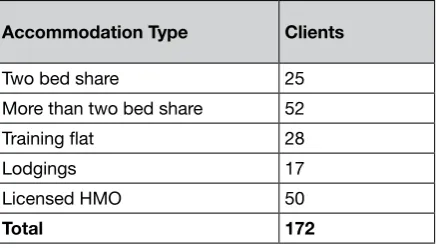
Table 3.5 Types of sharing solutions ... 17
Table 3.6 Making it Count: headline data, October to December 2014 ... 18
Acronyms
AST Assured Shorthold Tenancy
CAB WHABAC Citizens Advice Bureau & Worcester Housing and Beneits Advice Centre CIH Chartered Institute of Housing
CRESR Centre for Regional Economic and Social Research DBS Disclosure and Barring Service
DCLG Department for Communities and Local Government DHP Discretionary Housing Payment
GLA Greater London Authority HB Housing Beneit
HMO House in Multiple Occupation IFS Institute of Fiscal Studies LA Local Authority
NHF National Housing Federation NLA National Landlords Association NPSS National Practitioner Support Service NVQ National Vocational Qualiication PRS Private Rented Sector
RLA Residential Landlords Association RSRS Removal of the Spare Room Subsidy SAR Shared Accommodation Rate
Introduction
The Sharing Solutions programme began in October 2013 and concluded in March 2015. It was funded by a grant of £800,000 from the Department for Communities and Local Government (DCLG) and was administered by Crisis, the national charity for single homeless people. The programme consisted of eight schemes throughout England set up to pilot, develop and promote new models for establishing successful and sustainable sharing arrangements for single people in housing need. Each scheme received £90,000 for a 15 month delivery period, and Crisis retained £80,000 towards its stafing and administration costs. The programme was targeted mainly at the private rented sector (PRS) and at individuals who were receiving Housing Beneit and only eligible for the Shared Accommodation Rate (SAR) of the Local Housing Allowance (LHA). However, the programme also encompassed partnerships with social sector housing organisations and individuals for whom sharing could be a more viable inancial option.
A review of the literature on sharing
in the private rented sector
This analysis of the available evidence indicates that experiences of sharing differ markedly according to the group in question. It can be a starkly different experience for students, young professionals, low-income tenants and those from more vulnerable groups. This review has primarily highlighted literature relating to the increased number of individuals under the age of 35 in shared accommodation under the SAR. Private rented sector tenants are already at a disadvantage, given their occupation of an increasingly crowded, competitive and expensive property sector in most parts of the country. Evidence suggests that access to the private rented sector for those claiming the SAR is still more restricted by the insuficient amount of suitable, or in some cases any, shared housing
available at an affordable cost.
Within the SAR group itself, a growing body of evidence points to the unsuitability of shared accommodation – in its current state – for vulnerable and other groups (such as parents with non-resident children) who are not exempt from the rate. Some have suggested that the exemptions should be extended (Unison, 2014). Although this review has unearthed more challenges than beneits in terms of sharing accommodation under the SAR, in some cases sharing can be a viable housing solution. Indeed, some evidence paints shared living environments in a more positive light if managed in the correct way, especially if it takes full account of tenants’ needs and devolves some of the decision-making and micro-managing processes to the tenants themselves.
Research has, however, only skimmed the surface of examining the diverse experiences of sharing accommodation, especially when this is the result of constraint rather than choice. More work remains to be done on the availability and suitability of shared accommodation and the actual experiences of living in these circumstances for tenants from a range of mixed-needs groups.
Managing the programme
The Sharing Solutions programme has been delivered and managed effectively by Crisis. The programme model - ostensibly seeking an experienced intermediary to manage the project - had signiicant beneits for the manner in which £800,000 of public funds was spent. Crisis was successful as an intermediary fund holder (and signiicantly contributed to the success of the programme) in the following ways:
• Its broad knowledge of the private rented sector;
• Its linkages with a range of stakeholders, particularly its close association with PRS access projects throughout the country;
• The ability to employ a dedicated and experienced programme manager, supported by an experienced and knowledgeable team; and,
• Successful management of its triumvirate role as fund holder (commissioner), campaigner and service provider. Overall, the programme was on course to meet its original targets for clients housed. It is worth bearing in mind that the ability to meet these targets was not by any means the sole criterion for judging the success of the programme. Sharing Solutions was, above all, a learning programme. However, the process of learning has been robust and grounded, simply because the pilot projects managed to house (or re-house) a signiicant number of clients.
By using the Making it Count tool (Rugg and Pleace, 2013), the Sharing Solutions programme demonstrated signiicant savings for public services. For every £1 of grant funding, savings of £5.21 were accrued in the irst quarter of the second year of funding of the programme, by virtue of taking people out of homelessness.
Evaluating sharing solutions models
The Sharing Solutions programme has provided some important lessons about the effectiveness of different delivery models. The irst point of note is the broad and
ambitious nature of the programme that these models attest to. It is fair to say the Sharing Solutions programme has not played it safe. Rather, it has decided to trial some genuinely innovative, and very dificult, models.
Training tenancies are a useful way of introducing tenants to sharing and managing a tenancy in a safe way. Intensive tenancy support, training and thoughtful matching
supports tenants and equips them better for the future. A number of factors which stand out as contributing to the success of training tenancies are:
1. The type of tenancy agreement used was believed to be important to allow lexibility in training tenancies
2. Training tenancies are successful when linked to training courses
3. Sustainment of tenancies requires intensive support, particularly for clients who have never held a tenancy or lived in shared accommodation
4. Careful matching of clients is critical to ensuring that they have a positive experience of sharing
5. Smaller numbers of sharers in training lats makes sharing easier for clients to consider, but market conditions dictate how a shared house ‘stacks up’ inancially
6. It is important to ensure that clients have adequate support to move on from a training tenancy into more permanent accommodation
• Partnerships with social housing providers and local authorities were critical for promoting the scheme
• Providing support for the lodger and the host was important
• Ensuring that the lodging agreement was fair to both parties was a key role for the pilot schemes
• For hosts, it was important to fully understand the inancial connotations of collecting rent, particularly its impact on the host’s beneit claims
Providing shared accommodation for fathers with non-resident children was one of the most challenging aspects of the Sharing Solutions programme. The success of this model hinged on the ability to ind the right kind of accommodation. One project Worcester Citizens Advice Bureau & Worcester Housing and Beneits Advice Centre (CAB WHABAC) found a property that was ideal in its form and function, and also was owned by a charity who offered it to the scheme at a reasonable rent. These circumstances will be dificult to replicate, and there is a case for PRS access schemes (in partnership with landlords) to develop appropriate properties rather than seeking them out. However, CAB WHABAC’s experience suggested that once this hurdle is overcome, sharing is a viable solution for this particular client group. It can generate positive outcomes for fathers’ continued contact with their children, and provide some support and security after a relationship breakdown that stabilises their lives.
There is signiicant potential to increase shared accommodation by using former student accommodation, particularly where more ‘traditional’ student renting markets have altered in favour of purpose built student accommodation. However, the key obstacle to overcome was convincing landlords to rethink their lettings strategies. Although this was challenging, these could be
overcome by providing ‘professional’ services to landlords to offset the risks they perceived. This included: intensive support for sharers, thorough matching, and (where necessary/ practical) management and guaranteed rental income. However, projects should be aware that accommodation must be suitable for the target client group. Larger, more dificult to let houses in multiple occupation (HMOs) may be more readily available, but may not always be the best sharing solution.
Lead tenant models have merits in different sharing scenarios. Where it had been successful:
• It enabled better communication between the sharers and the project, allowing personal and practical issues to be identiied quicker;
• It enabled better relationships between the tenants and the landlord; and
• Houses tended to be kept tidier, and were more ‘harmonious’.
The Crisis Housing Coach Service
demonstrated that volunteer Peer Mentors
can deliver positive outcomes for the volunteer, the organisation and clients accessing a PRS access service. The peer mentors thrived because there was a well-resourced programme of support for them and individual staff who could dedicate time to their development and training needs. Recruiting people with the right skills and knowledge was important, but the key lessons from the Crisis Housing Coach Service were that communication skills were equally important, and volunteers required support to make the transition from ‘client’ to ‘advice provider’.
Making sharing work
The supply of suitable accommodation: access to affordable and suitable
accommodation formed the basis of the Sharing Solutions schemes’ success and varied by local housing market contexts. While the barriers faced by different schemes were never exactly identical, there were common threads that grouped a few schemes together. Great Yarmouth and Gateshead struggled with a lack of supply of shared accommodation, whereas other areas (London, Ryedale and Worcester) had plentiful supplies of shared accommodation but excessive demand and competition. Sharing tended to ‘work’ more in areas where student property markets were changing, where schemes could tap into ex-student housing.
Cultures of sharing: these varied across areas and local housing market contexts. Sharing Solutions schemes could ‘get off the ground’ more readily in areas where sharing was culturally accepted. Expectations endured of being able to access social housing or self-contained lats in the PRS, and the lack of choice around sharing inherent in the SAR reforms was understandably a bitter pill to swallow for many clients. All schemes reported the necessity of working towards an attitudinal shift in terms of sharing amongst wider society.
How sharing is ‘managed’: schemes succeeded by managing shared
accommodation from both a ‘supply’ side (landlords) and a ‘demand’ side (tenants). Schemes had a series of considerations to negotiate to ensure that each side worked in tandem and ‘what was best’ for the client also met the needs of the landlord. Such management issues revolved around deciding on the best type of tenancy agreement; the best party to manage the property; the project’s stafing; and how to match, support, and assess tenants.
Supporting tenants to sustain tenancies: intensive tenancy support was crucial for the sustainment of tenancies and outcomes of
schemes. Although the ‘type’ of support on offer varied, the high level of support was consistent across all schemes and it was made evident that this was essential both for tenants’ wellbeing and landlord retention.
Landlord engagement: schemes took advantage of existing landlord relationships and this gave them a head start; and taking steps to incentivise landlords also proved successful (whether sourcing, vetting, matching and supporting tenants or paying Housing Beneit (HB) directly to the landlord). Getting landlords on board was nevertheless still a time consuming and resource intensive process.
The role of partnerships: partnerships with other organisations proved vital in order to secure appropriate client referrals, as well as to make referrals in the other direction where necessary. Good relationships with stakeholders from partner organisations made a vast difference to the operation of the scheme, and where there was a sense that these relationships were at risk of breaking down (for instance with local beneits teams) this was a cause for concern. The partnership between Nomad and South Yorkshire
Housing Association (SYHA) was given as one example of good practice.
Outcomes for tenants
Although it is dificult to clearly assess what in particular contributed to tenants’ outcomes
in sharing without tracking tenants in the long-term, it is evident that sharing as part of Sharing Solutions was a largely positive experience, and provided tenants with stable and secure housing in a supportive environment. Speciically, tenants beneited from Sharing Solutions in the following ways:
• The acquisition and development of skills necessary for independent living and tenancy maintenance
• The space and support to focus on and improve other aspects of their lives
• Having a ‘safety net’ of support to cope with issues that might otherwise put tenancies at risk
• Being inancially ‘better off’
There were a number of ways that schemes helped to make the experience of sharing more successful for tenants:
• Offering intensive support packages tended to work better when staff could go to tenants (offering regular house visits, for instance) rather than when tenants were expected to seek the support themselves
• Tenants were happier when sharing with a smaller number of people, and contrasted this with their experience of sharing at hostels
• Including bills in one rent payment meant that tenants could manage their inances and budget more effectively
• Employing a cleaner for communal areas helped to prevent potential conlicts over cleaning responsibilities and to keep the property in good repair
Outcomes for Landlords
Landlords beneited from tenants being supported and trained: supported and knowledgeable tenants were more likely to pay rent, look after their properties, and have a good relationship with their landlord. In this case, what worked for tenants simultaneously worked for landlords. As Section 5.6 demonstrates, landlords were attracted to schemes largely by non-inancial incentives: because schemes acted as a trusted mediator who could ‘micro-manage’ any issues. The majority of outcomes were not speciic to sharing necessarily, but revolved more around working with a trusted
PRS access scheme and the support they provided in terms of management, tenant support, and inancial help. However, this support was only viable for schemes to carry out through being part of the Sharing Solutions programme. The way that landlords beneited through their involvement with Sharing Solutions is summarised below:
• Landlords saved time and averted risk if tenants were referred by schemes who took responsibility for inding, assessing, vetting and matching potential tenants
• Supported tenants meant more sustainable (and less risky) tenancies as problems could be resolved before they got out of hand. Having access to expert support/project workers meant that landlords did not have to spend time supporting tenants or carrying out conlict management themselves
• Landlords beneited directly from the speciic landlord support/advice on offer at CAB WHABAC and the Crisis Housing Coach Service
• Landlords’ properties were kept in ‘good repair’ by schemes’ use of a cleaning service and regular house visits where project staff could conduct informal property checks
• Landlords received some inancial gain through more stable rental yields, a reduced propensity to be forced to evict, and pre-payment of deposits and the irst month’s rent
Conclusions
The increased pressure on housing markets across the country, as the result of lack of supply, patterns of new household formation, persistent affordability pressures, and
their housing needs. However, there is also a reluctance to enter into sharing with ‘strangers’ rather than family members or friends, and these concerns are highlighted for many members of vulnerable groups facing challenges such as living with others, gaining access to the PRS, and then sustaining a tenancy. In terms of supply, landlords are also often reluctant to take on shared accommodation due to the management complexities (and costs) that can arise (for example on termination of tenancy) and because they fear returns may be lower than in self-contained accommodation. In this context, Sharing Solutions is an opportune programme which has been able to test out various ideas for making shared accommodation a more attractive option for tenants and landlords alike. The evidence in this report suggests that a number of the potential barriers to developing more, and better, shared accommodation can be overcome, if additional support, effective partnership working and the dissemination of good practice are to the fore.
The Sharing Solutions programme has demonstrated that shared accommodation can be made to work effectively for low-income tenants who are in receipt of welfare beneits, given intensive support and training. This in turn requires both additional funding and expertise of working in the sector, which is at a premium in many local areas. This review of the eight pilot schemes indicated that staff, volunteers and stakeholders all understood the needs of the client groups involved and had experience of engaging with, and intervening in, the private rented sector. However, their capacity to develop sustainable networks and ways of working is inevitably hampered by their reliance on grant funding. The speciic funds for the programme made available by DCLG had a very positive impact. The programme provided assistance for around 200 clients over a 15 month period. By January 2015 it had provided accommodation to 172 clients
and at the time of writing only 19 of these tenancies had ended for negative reasons. But in the current (and future) spending climate, it is essential that any new scheme can produce savings as well as meet housing needs. The use of the Crisis’ Making it Count
tool showed that there was a total gross saving (through reducing homelessness) of £625,000 per quarter, against a cost of £120,000. For every £1 of grant
Recommendations
Recommendations for private rented sector access schemes
• Extend the use of training lats, especially in partnership with the housing association sector, and with detailed prior client
assessment, compulsory training and regular contact with a support worker
• Develop ‘lead tenant’ schemes, with appropriate incentives, especially in areas where there is little culture of sharing
• Promote pre-tenancy training, and ensure that courses consider issues around shared accommodation
• Provide worked examples of possible inancial gains for landlords letting at the SAR as opposed to self-contained accommodation (e.g. stability of rental yields, reducing the propensity to be forced to evict, pre-payment of deposits)
• Provide examples of possible management gains for landlords participating in
schemes similar to Sharing Solutions (e.g. undertaking more comprehensive tenant vetting on their behalf)
• Extend the range of options for prospective tenants - e.g. lodgings in the social housing sector - coupled with vigorous host recruitment and training and written lodgings agreements; this will be more applicable in tighter housing markets
• Work with local universities to develop links with larger landlords who specialise in the student market to encourage broadening their offer to HB/LHA tenants, especially where purpose-built student accommodation is planned for expansion
• Encourage private landlords to apply for Empty Homes grants to use properties subsequently for sharing
• Undertake a ‘health check’ of tenancies in shared accommodation at least every two months
• Further develop the peer mentor scheme piloted by The Crisis Housing Coach Service. This received positive feedback, as clients responded well to peers who had experienced similar dificulties and hardships, but a well-resourced programme of support needs to be in place to ease the transition from service user to volunteer
Recommendations for local authorities
• Fund or provide match funding for a range of options for prospective tenants - e.g. lodgings in the social housing sector - coupled with vigorous host recruitment and training and written lodgings agreements
• Promote wider use of the Rent-a-Room scheme by owner occupiers
• Use Discretionary Housing Payments to ease access to shared accommodation (through paying deposits etc.)
• Use Discretionary Housing Payments to support groups and individuals that struggle to access shared accommodation
• Prioritise Empty Homes grants for landlords to use to renovate their properties to shared houses
Wider recommendations for organisations working with (young) people accessing shared accommodation
• Appraise all applicants of their realistic chances of being rehoused - to
concentrate minds on other options and manage expectations
• Housing associations should consider taking on tenant matching and tenancy management responsibilities in shared accommodation from private landlords
Recommendations for government
• Provide additional funding for PRS access schemes to set up, trial and establish sharing schemes
• Promote sharing to local authorities as a viable housing option but in doing so recognise and highlight the additional resource, stafing and support capacity which is required to make schemes successful
• Promote existing good practice across all Government departments whose work impact on those subject to the SAR
• The government should review the operation of the Shared Accommodation Rate and consider in particular, a) whether it is working adequately in all housing markets, and b) whether exemptions from the SAR are adequate to meet the needs of under-35s with speciic housing needs
Recommendations for Crisis
• Promote the success of the models trialled by the Sharing Solutions Schemes elsewhere to allay some of the speciic concerns about sharing from this group of tenants
• Promote the use of landlord/property sharing protocols to areas with a large PRS outside London
• Promote Practitioners’ Forums in larger PRS housing markets (for example, Greater Manchester, West Midlands) following the London example
1.1 Background to the programme
The Sharing Solutions programme began in October 2013 and concluded in March 2015. It was funded by a grant of £800,000 from the Department for Communities and Local Government (DCLG) and was administered by Crisis, the national charity for single homeless people. The programme consisted of eight schemes throughout England set up to pilot, develop and promote new models for establishing successful and sustainable sharing arrangements for tenants in housing need. Each scheme received £90,000 over 15 months, and Crisis retained £80,000 towards its stafing and administration costs. The programme was targeted mainly at the private rented sector (PRS) and at individuals who were receiving Housing Beneit and only eligible for the Shared Accommodation Rate (SAR) of the Local Housing Allowance (LHA). However, the programme also encompassed partnerships with social sector housing organisations and individuals for whom sharing could be a more viable inancial option (for instance, those who are eligible for a self-contained one-bedroom lat but who, for inancial reasons, choose to share), or a more preferable social option (for instance, where sharing could bring increased social interaction).
Since the mid-1990s, Crisis has made an important contribution to improving access to, and sustainment of, PRS tenancies for single people who are homeless or at risk of becoming homeless. In 2010, Crisis received funding from DCLG for its Private Rented Sector Access Development programme (see
Rugg, 2014). This has provided funding and support to PRS access schemes throughout England, which help homeless or vulnerably housed single people to access and sustain private rented accommodation. Evidence suggested that the PRS access schemes were struggling to assist under-35 year old single people who were only eligible for the SAR rate of LHA. Crisis identiied this as an
area that required a dedicated programme of support, as well as extending knowledge and understanding of the needs and
circumstances of this group. Crisis worked with DCLG to secure grant funding for the Sharing Solutions programme.
The housing needs of single people under the age of 35 in the PRS are of growing signiicance, given the rapid expansion of the sector in the past ten years, and the recent extension of the SAR threshold to 35 for those receiving Housing Beneit (HB). The proportion of households in England living in the PRS has nearly doubled from just over ten per cent in 2003/4 to 19 per cent by 2013/14. In London the proportion has increased from 14 per cent in 2003/4 to 30 per cent by 2013/14, making it as large as the mortgagor sector in the city (DCLG, 2015: paras 2.6, 2.9). Among households aged between 25 and 34, the proportion living in the PRS increased from 21 per cent to 48 per cent during this period (para 2.14). Nineteen per cent of single person households under the age of 60 in the PRS were in receipt of HB (para 2.40). The age threshold below which the SAR applied to single adults with non-dependent children in receipt of HB was increased from 25 to 35 for all new claimants in January 2012, and during 2012 for existing claimants. Some of the early impacts of this measure are discussed in more detail in the following chapter; the changes have raised concerns about the consequences for those affected by extending the SAR (Work and Pensions Select Committee, 2014). The need to develop schemes that can mitigate some of the negative impacts of sharing on this group is therefore paramount.
The objectives of the Sharing Solutions programme were to:
• Develop eight PRS access schemes for sharers in a range of housing markets across England;
• Provide in-depth support and advice, from proposal development through to set up and delivery, including support with data collection and quality checking;
• Research, publish and disseminate a framework for developing sharing schemes based on the experience of the pilot schemes funded and other relevant projects and with relevance to different housing markets and client groups;
• Ensure that all eight schemes will have proved their worth and be in the best possible position to be sustained beyond Crisis funding;
• Communicate indings regularly through variety of means and through two speciic events to share best practice with wider audience; and,
• Establish Crisis as a national lead for information and expertise on successful sharing in the PRS, through the projects it supports and more widely through its activities.
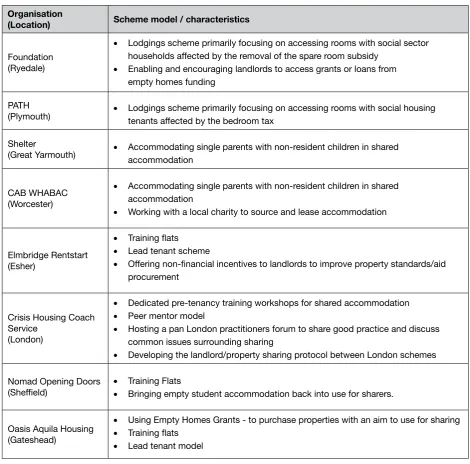
The fund was held by Crisis, and distributed to the eight successful applicants (see Table 1.1). The programme included a number of distinctive models to be tested, such as:
• Training lats: where clients would receive intensive support in their tenancies for a maximum of six months before moving on to more independent shared accommodation, having been equipped with skills to sustain a tenancy
• Peer mentors and lead tenants: schemes where more experienced tenants provide peer support and advice to new clients
• Lodgings with households affected by the Removal of the Spare Room Subsidy (RSRS): where clients are housed with households who have a ‘spare’ room
• Accessing former student shared accommodation: so that this could be used for clients in receipt of HB
• Improving the quantity and quality of shared accommodation: by offering support to private landlords
• Developing pre-tenancy training schemes: in order to achieve better sustainment of shared tenancies
Table 1.1: Sharing Solutions evaluation: case studies
Organisation
(Location) Scheme model / characteristics
Foundation (Ryedale)
• Lodgings scheme primarily focusing on accessing rooms with social sector households affected by the removal of the spare room subsidy
• Enabling and encouraging landlords to access grants or loans from empty homes funding
PATH
(Plymouth) • Lodgings scheme primarily focusing on accessing rooms with social housing tenants affected by the bedroom tax Shelter
(Great Yarmouth) • Accommodating single parents with non-resident children in shared accommodation
CAB WHABAC (Worcester)
• Accommodating single parents with non-resident children in shared accommodation
• Working with a local charity to source and lease accommodation
Elmbridge Rentstart (Esher)
• Training lats
• Lead tenant scheme
• Offering non-inancial incentives to landlords to improve property standards/aid procurement
Crisis Housing Coach Service
(London)
• Dedicated pre-tenancy training workshops for shared accommodation
• Peer mentor model
• Hosting a pan London practitioners forum to share good practice and discuss common issues surrounding sharing
• Developing the landlord/property sharing protocol between London schemes Nomad Opening Doors
(Shefield)
• Training Flats
• Bringing empty student accommodation back into use for sharers. Oasis Aquila Housing
(Gateshead)
• Using Empty Homes Grants - to purchase properties with an aim to use for sharing
• Training lats
Figure 1.1: Geographical coverage of the Sharing Solutions programme
1.2 About the evaluation
In December 2014, Crisis appointed the Centre for Regional Economic and Social Research (CRESR) at Shefield Hallam University to undertake an evaluation of the Sharing Solutions programme. The objectives of the evaluation were to:
• assess the extent to which the project met its aims and objectives;
• provide evidence of successful sharing models and lessons learned from the pilot schemes;
Oasis Aquila Housing Gateshead
Foundation, Ryedale
Shelter, Great Yarmouth NOMAD Opening Doors,
Shefield
Crisis Housing Coach, N&E London
Elmbridge Rentstart, Esher PATH, Plymouth
CABWABAC, Worcester
• provide evidence of how the pilots were successful;
• provide evidence of the additional value given by Crisis to the pilot schemes, through support, advice and dissemination of best practice;
• explore the broader implications for policy and practice so as to inform the future development of shared accommodation options in the private rented sector.
1.3 Methods
The evaluation was carried out in three key stages.
Literature review: A brief review of the key academic and policy/practice literature on sharing in the private rented sector was carried out, and this is presented in Chapter 2.
Interviews with Crisis staff and Advisory Group members: Interviews were carried out with three Crisis oficers directly involved in the programme and ive members of the Advisory Group for the programme. These interviews explored the funding process, the nature of support, assistance and expertise Crisis provided to the programme, the operation of the advisory group and the perceptions of the programme’s achievements.
Pilot scheme case studies: Research was carried out in each of the eight pilot projects. This involved:
• Interviews with project workers;
• Interviews with tenants supported through the schemes;
• Interviews with key representatives of other organisations involved in the programme (including landlords and supporting local authorities); and,
• Analysis of local monitoring data and other available information gathered by the schemes.
1.4 Report structure
2.1 Introduction
The availability and quality of shared accommodation in the private rented sector (PRS) has been problematic for many years. While regulation of houses in multiple occupation (HMOs) and other measures to improve standards have been implemented, one unintended consequence of this intervention has been to reduce the number of landlords willing to provide shared accommodation. The scarcity of decent shared accommodation is especially acute for those people who are in vulnerable situations that make sharing with others dificult.
Particular groups are poorly provided for, such as young women seeking female-only accommodation.
Such problems have intensiied since 2011 due to changes to the Local Housing Allowance (LHA) system of Housing Beneit (HB) in the PRS which have: a) reduced the amount of HB available to claimants; and b) amended the rules relating to the shared accommodation rate (SAR), extending it from the under-25s to under-35 year old claimants. The latter measure is particularly important as it is likely to both increase the demand for shared accommodation and confront individuals from an older age cohort with the often dificult prospect of sharing. At the same time, the PRS is increasingly being relied upon to address the housing needs of homeless people, as the social rented sector contracts, and the Localism Act 2011 gave local authorities (LAs) the right to discharge their homelessness duty into the private rented sector, close waiting lists and prioritise allocations to people in work.
The recent evaluation of the impact of the LHA reforms undertaken by CRESR for the Department for Work and Pensions (DWP) (Beatty et al., 2014) highlighted the effects of changes to the SAR rules. The evaluation found:
• The HB caseload for single 25 to 34 year olds with no dependent children increased in the two years leading up to the change in the SAR age threshold (January 2012). Once the SAR age threshold was raised, the number of claimants in the 25-34 age group fell by 13 per cent between the end of 2011 and June/August 2013. The reduction was especially pronounced in the high rent areas of London where the 25-34 caseload fell by 39 per cent in central London and by around 25 per cent in outer London.
• In analysis undertaken by the Institute for Fiscal Studies (IFS), the average reductions for existing claimants in this age cohort who were affected by the SAR changes was £13.06 per week. This resulted in higher rental shortfalls for tenants of £8.25 per week. Contractual rents had been reduced by landlords, on average, by £4.80 per week, indicating that the incidence of the reduction in LHA was 63 per cent on tenants and 37 per cent on landlords.
• In wave two of the research project, a signiicantly higher proportion of landlords in inner London (29 per cent) compared to the sample as a whole (17 per cent) said they no longer let to the under-35s. The proportion of landlords in wave two who planned to expand the shared accommodation they let increased from ive per cent in wave one to 13 per cent by wave two; in Inner London it increased from one per cent to 22 per cent.
There was considerable concern beforehand about the potential impact of the SAR
changes on young people (Rugg et al., 2011) and this has intensiied since the measure was introduced (Unison, 2014; Work and Pensions Select Committee, 2014). There are
two main sources for these concerns. The irst focuses on the lack of available shared accommodation in the PRS, especially for low-income groups (Rugg, 2008). The second concern focuses on the actual experience of sharing for the individual, and whether it is a suitable housing option, especially for vulnerable groups. It is not, however, possible to provide a robust review of evidence in terms of this latter concern, given the scarcity of qualitative data on the experiences of ‘enforced’ sharing in the PRS, speciically for low-income and vulnerable groups. This review covers what evidence is available on the SAR and the experience of sharing in the private rented sector. Overall, the review underlines the gaps in knowledge about this topic, as well as the need for further research to explore the appropriateness and consequences of the SAR for single claimants under-35 previously living in self-contained accommodation
2.2 Experiences of sharing in the
private rented sector
Little research, to date, has focused on sharing amongst young people. Moreover, a signiicant part of this body of work is preoccupied with sharing either as an
exercise of choice by relatively afluent single young people or ‘young professionals’ (Heath and Kenyon, 2001; Kenyon, 2000; Kenyon and Heath, 2001), or as a temporary stage in the housing careers of students (Kenyon, 1999). With a few exceptions (Kemp and Rugg, 1998; Rugg et al., 2011; Kemp, 2011; Unison, 2014), relatively little research has focused on young sharers within the PRS who are on SRA. This is despite claims by some writers (Kenyon and Heath, 2001) that shared households are typically represented as products of economic constraint rather than choice.
This section focuses on the existing literature that analyses residents’ views on their shared housing environment in terms of ‘what works’ and ‘what doesn’t work’ - especially for a
range of groups requiring support (in the ields of mental health, learning disability, domestic violence, young people, single homeless, ex-offenders). The following themes were identiied from the literature (based on both stakeholder perceptions and residents’ experiences) as reasons why shared accommodation may not be appropriate for certain groups, given their different characteristics and vulnerabilities.
Reduced choice
Kemp (2011) emphasises the difference between the main groups of sharers (students/young professionals and low-income tenants) in terms of choice and
constraint. Focusing on the routes into shared accommodation, Rugg et al. (2011) found that a lack of choice about where to live was a common thread that drew respondents together. Choice was limited because of the lack of shared accommodation – and geographical variations were evident in this, with more affordable areas of London attracting more competition – and this was narrowed down even further by “the fact that any available property might present a shared arrangement that is simply not suitable”
(Rugg et al., 2011: 11), and compounded by additional fees charged by many letting agencies.
The ‘lived experience’ of shared
accommodation is likely to be starkly different for both students/young professionals
long as it was a ‘friendly share’, many young people related that they preferred sharing to living alone as it satisied desires for companionship, and a need to economise on their rent and living costs (Kemp and Rugg, 1998). Tenants were much more likely to experience dificulties with shared accommodation when occupying a ‘stranger share’. This inding was echoed in a study by Kemp and Rugg (1998): younger people preferred sharing lats or houses with friends as opposed to renting a room in a large house with strangers, and often experienced feelings of loneliness and insecurity when sharing with strangers. In both of these studies, tenants only opted for sharing or experienced it as positive when it was a
choice. Vickery and Mole (2007) found that a tenant’s attitude is greatly inluenced by whether they had a choice to live in shared accommodation or whether they were forced to live there because it was the only accommodation on offer. In terms of the SAR, it will be interesting to note if the top-down requirement to rent a room in a shared property will have a bearing on tenants’ feelings towards the accommodation.
Young people are similarly constrained in the choice of accommodation. A growing body of evidence points to the decreasing supply of suitable accommodation available to those on the SAR. This group is in competition with other, more afluent or (perceived as) favourable groups of sharers such as students and young professionals. A study by Clapham et al. (2014) of the housing pathways of young people found that some young people had tried to access affordable shared accommodation but reported that it was solely for student use. Research by Crisis (2014) found that less than 2 per cent of rooms in shared houses are available as well as affordable to those on the SAR, and an earlier study by Crisis (2012) found that out of the 4,360 rooms advertised on Gumtree and Spareroom.com, only 13 per cent were priced within the SAR and just 66 (or 1.5 per cent) had landlords who were
willing to rent to people receiving beneits. As well as the lack of physical stock, landlords are also increasingly unwilling to let their accommodation to under 35s on the SAR (Unison, 2014). The LHA evaluation carried out by Beatty et al. (2014) found that, in certain areas, landlords were reluctant to rent shared accommodation due to the perceived management challenges it presented, were turning away single under 35 year olds due to experiences with previous tenants (who could not keep up with their rent payments), or were unable to rent out shared accommodation due to planning restrictions designed to limit the number of HMOs in the local authority area.
Health and poverty
As a whole, private tenants are just as likely to be in poverty as social housing tenants, and much more likely to be in poverty than owner-occupiers (Kemp, 2011). It is dificult to distinguish in Kemp’s (2011) research an accurate comparison with private renters in shared accommodation, due to the homogeneity of the socio-economic characteristics within that group, simultaneously occupied by students, young urban professionals and low-income tenants. The relationship between
similar challenges for residents. Barratt (2011) found that HMOs may pose a greater threat to the mental health of residents because of greater insecurity, less control, and poorer social networks, and it is likely that this link may also exist in other types of shared accommodation. In fact, research by Rugg
et al. (2011) highlighted particular tenants’ concerns about the environment of shared accommodation around noise and cleanliness of communal areas - factors that may have a detrimental effect on well-being.
Several studies report on the poor quality of the existing stock of shared accommodation in LHA markets, with landlords unlikely to see the inancial beneits of investing more in shared accommodation for under-35s (Unison, 2014). The Work and Pensions Select Committee report (2014) includes a statement by St. Mungo’s, which afirms that the majority of PRS accommodation available to those in the SAR group is near the ‘lower limit’ of minimal standards of accommodation. Physical standards are a concern in the PRS as a whole – with 37 per cent of properties classiied as ‘non-decent’ (Crisis, 2014) – so those people on the SAR have an even more restricted choice (Unison, 2014). Of course, there are signiicant overlaps between the themes in these sections, and it is possible that each challenge might impact on a tenant’s mental or physical health (for instance, feelings of insecurity or a lack of control over one’s space may impact on health and well-being of residents).
Family relationships and parenting
Due to the nature of shared accommodation, a recurrent theme in the literature is the dificulty of maintaining relationships with family members and non-resident children. Unison (2014), for example, refers to the poor quality of shared accommodation and how the nature of sharing with strangers puts visiting children at risk. In addition, a lack of privacy in shared accommodation impinges on the time parents can spend with
non-resident children, and ‘may prevent parents from building close intimate relationships with their children’ (Barratt et al., 2012). The same study by Barratt et al. (2012) notes the restricted ‘play space’ for children in shared accommodation, which might feature as an additional source of stress for parents. One source (Rugg et al., 2011) draws attention to the potential conlicts that might arise between parents in the same shared properties, who want their children to be able to stay overnight. Plans always had to work around other parents, and child contact often had to be rearranged, due to the unpredictability of other tenants in the accommodation. Other issues included the unsuitability of the environment of shared accommodation for children, with concerns around noise, cleanliness, and the unknown backgrounds of other tenants (Rugg et al., 2011).
Unsuitability of shared accommodation for vulnerable groups
behaviour may exacerbate feelings of stress and anxiety (Crisis, 2014).
Ex-offender sharers, especially those in ‘stranger shares’ where criminal activity is taking place, are at risk of reoffending if placed in this kind of unstable environment (Rugg et al., 2011). Likewise, tenants who are recovering from addictions are also placed at extra risk if they end up in an environment where drug-taking activity is common (Rugg
et al., 2011). A inal question concerns the suitability of shared accommodation for formerly homeless people who may have a range of support needs. The possibility of feeling the need to escape from unsuitable shared accommodation contexts may lead to repeat episodes of homelessness. Indeed, this issue has been identiied as an area that demands further exploration (Rugg et al., 2011).
On-site management dificulties
Shared accommodation might either be arranged as a joint tenancy, where all tenants are liable to meet the rent payments, or as a number of separate tenancies where tenants pay separate rent payments but share the same facilities. Rugg et al. (2011) found that some tenants experienced dificulties in managing joint tenancies. Some tenants faced problems when other tenants (on the joint tenancy) did not pay their share of the rent. This problem also arose when relationships ended and the party who was left in the accommodation could not afford to cover the rent, given the change in circumstances. In the case study outlined in the Rugg et al. (2011) report, the respondent exited the tenancy, owing money to the landlord.
Inherent to the experience of sharing, and evidenced in several sources, are the conlicts that might arise between tenants and the dificulty of coping with low-level anti-social behaviour. This tension is inevitably heightened when it involves two strangers, who may ind it more dificult to arrive at
a compromise, or where one party might even be afraid to broach the subject if they are unsure about the reaction of the other to criticism (Rugg et al., 2011). Barratt et al. (2012: 41) summarise this issue succinctly in relation to HMOs, suggesting that shared accommodation offers signiicantly less control than other types of housing: ‘HMOs by their deinition, include some element of shared space, which instantly reduces the control that individual residents have over the space in which they live’.
Examples of good practice, where residents felt that managing shared tenancies ‘worked’, were reported in properties where landlords took a more active role in ‘generic property management’, and dealt with problems promptly. One such property had a security oficer and rules in place to disallow overnight visits from adults while allowing visits from non-resident children with the permission of the landlord, as well as rooms set aside for that purpose (Rugg et al., 2011). Instances of good sharing practices from other studies cite the importance of ‘fair cleaning rotas’ (checked by staff, where possible), and the encouragement of resident involvement in management. This may include, for example, the opportunity to have input in the selection of new tenants or in setting criteria or
requirements for the prospective tenant to meet (Vickery and Mole, 2007).
Insecurity
Poor quality housing, in particular, has been shown to lead to insecurity through problems with maintenance and other potential dangers from the accommodation, or simply having to live with other tenants’ behaviour (Barratt
the strength of locks on rooms and on the front door to the building. This evidence is reafirmed in the report by Unison (2014), which noted their concern over the poor quality of shared accommodation with broken locks, many keys in circulation, people
wandering in and out of the property, and residents not knowing who they were sharing with.
Respondents in the Rugg et al. (2011) report were similarly anxious about the anonymity of other residents, especially given the high turnover of tenants in shared accommodation. In one case, a female respondent felt that her personal safety was directly at risk after having her door ‘kicked in’ during a rowdy party whilst living at a men-only house. Rugg et al. (2011) found drug-use to be prevalent in the shared accommodation visited as part of the research, and acts of minor theft (such as stealing food from the fridge) all added to tenants’ feelings of insecurity in their shared properties. As mentioned earlier, these kinds of insecure environments are even more unsuited for particular groups: those with non-resident children; those with mental and physical health problems, past dependency or offending problems; and for people escaping domestic violence.
2.3 Summary
This analysis of the available evidence indicates that experiences of sharing differ markedly according to the group in question. It can be a starkly different experience for students, young professionals, low-income tenants and those from more vulnerable groups. This review has primarily highlighted literature relating to the increased number of individuals under the age of 35 forced
to share accommodation under the Shared Accommodation Rate. Private rented sector tenants are already at a disadvantage, given their greater likelihood of being inancially insecure than social housing tenants and owner-occupiers, and their occupation of an increasingly crowded, competitive and
expensive property sector in most parts of the country. Evidence suggests that access to the private rented sector for those claiming the SAR is still more restricted, by the
insuficient amount of suitable, or in some cases any, shared housing available at an affordable cost.
Within the SAR group itself, a growing body of evidence points to the unsuitability of shared accommodation – in its current state – for vulnerable and other groups (such as parents with non-resident children) who are not exempt from the rate. Some have suggested that the exemptions should be extended (Unison, 2014). Although this review has unearthed more challenges than beneits in terms of sharing accommodation under the SAR, in some cases sharing can be a viable housing solution. Indeed, some evidence paints shared living environments in a more positive light if managed in the correct way, especially if it takes full account of tenants’ needs and devolves some of the decision-making and micro-managing processes to the tenants themselves.
3.1 Introduction
This chapter examines the way in which Crisis has administered the Sharing Solutions programme. As stated previously, Sharing Solutions was funded by a grant from DCLG which was administered by Crisis. Of the £800,000 grant, £720,000 was provided for eight pilot schemes (£90,000 each) and £80,000 was retained by Crisis. This included stafing, project support, best practice
materials and event organisation. The full programme ran for 18 months between October 2013 and March 2015 with schemes funded and operational for 15 months. Crisis established an Advisory Group to oversee the project. Members came from a range of different organisations including DCLG, Homeless Link, National Practitioner Support Service (NPSS), Greater London Authority (GLA), St Basils, and South London YMCA. The Advisory Group was initially tasked with tendering the project and
deciding which projects to award funding to. Application was restricted to projects that Crisis had worked with previously under its Private Rented Sector Access Development programme. The Advisory Group has been responsible since then for monitoring the project and offering advice and support to Crisis oficers.
A dedicated Sharing Solutions Oficer was appointed by Crisis to deliver the
programme. This role has involved monitoring the performance of the eight pilot projects, providing them with advice and support, organising conferences, disseminating good practice and (latterly) producing a good practice toolkit.
3.2 The programme model
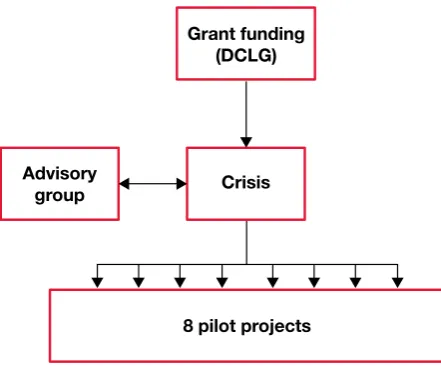
This section will spotlight the effectiveness of the programme delivery model. Figure 3.1 provides a simplistic overview of the programme delivery mechanism - one which gives Crisis an intermediary role. This would be in contrast to a programme model in which the grant funder (DCLG in this case) would fund pilot projects directly.
3. Administering the Sharing Solutions Programme
Grant funding (DCLG)
Advisory
group Crisis
[image:27.595.300.521.363.547.2]8 pilot projects
Figure 3.1: The Sharing Solutions programme Delivery Mechanism
There is strong evidence that this model provides signiicant beneits. This stems from:
• Crisis’ expertise in the private rented sector
• The role of the Advisory Group
• The selection of pilot schemes
3.3 Crisis’ expertise in the private
rented sector
Since the mid-1990s, Crisis has been involved in debate and practice towards improving access to, and sustainment of, PRS tenancies for single people who are homeless or at risk of becoming homeless (Rugg, 2014). In 2010, Crisis received funding from DCLG for its Private Rented Sector Access Development programme (see Rugg, 2014) which provided both funding and support to PRS access schemes throughout England, which help homeless or vulnerably housed single people to access and sustain private rented accommodation. By this initiative, Crisis has successfully developed expertise in the ield and important contacts and linkages with other organisations working to improve access and conditions in the PRS (Pleace and Bretherton, 2014). Crisis, therefore, was very well positioned to deliver a pilot programme to promote sharing accommodation for low income groups. Indeed, Crisis used its knowledge and expertise to identify that PRS access projects were struggling to assist under-35 year old single people who were only eligible for the SAR rate of LHA, and that this issue required a dedicated approach and an improvement in knowledge. It worked with DCLG to secure grant funding for the Sharing Solutions programme.
Interviews with Crisis staff and members of the Advisory Group underlined Crisis’ position at the forefront of efforts to improve conditions in the private rented sector and make it more suitable as a route away from homelessness. Several respondents commented that Crisis had gained a signiicant amount of knowledge and expertise about the PRS via previous grant funded programmes. This had been constructed on a core team of Crisis staff members working speciically with private sector housing issues.
Furthermore, Advisory Group members and Crisis staff pointed out the importance attached to Crisis’ ability to disseminate
information widely. They recognised that Crisis had established a strong network of contacts with a broad range of organisations - local authorities, government departments, other charities and support organisations - and had a good reputation for using these linkages to both disseminate good practice and campaign/lobby for improvements. Advisory Group members and oficers from the pilot schemes also highlighted the important linkages that Crisis has established with clients through its practice-based
work. The organisation, it was reported, understands the needs of its client base and has developed effective ways of supporting them directly (such as through its Skylight projects).
Respondents also discussed Crisis’ increasing engagement with private sector landlords via its practice-based work, its dissemination of good practice and its engagement with landlord forums.
3.4 The role of the Advisory Group
Interviews with Advisory Group members, Crisis staff and DCLG staff provided evidence about the effectiveness of the Advisory Group. All respondents believed that that group had been successful, and that it represented a useful model. Crisis staff reported that the group provided useful input at all stages of the project, responding to requests for assistance both at regular meetings and more sporadically, via email exchanges.
One of the key tasks that the Advisory Group undertook was commissioning the pilot programmes. The group assessed the shortlisted bids and decided on the eight that should receive funding. This was done against a number of criteria, including:
• Evidence that the scheme was innovative;
• The ability to deliver.
Crisis had previously made the decision to only invite applications from organisations that had been funded by Crisis in the past. The objective of this was to determine that applicant organisations were suficiently established in their local areas and know to be capable of delivering outcomes. It was also believed to be important that they had a ready-made relationship with Crisis, all of which provided greater opportunity to ‘hit the ground running’.
This decision appears to have been an asset to the programme for a number of reasons:
• It ensured that the pilots were run by experienced organisations with a track record of successful delivery and engagement with Crisis; and,
• It ensured that ‘Sharing Solutions’ schemes were located within an organisational structure that provided other ways of supporting its clients. For example, CAB WHABAC reported that Sharing Solutions worked well within their overall structure:
“It could be that someone can’t sustain a tenancy in one property, so we move them to another one. … if there are issues [with tenants], it’s not ‘we can’t deal with that’, it’s ‘how can we deal with that’.”
Similarly, for Nomad – who had previously received grant support to further establish their Smart Renting service – Sharing Solutions provided an opportunity to build upon previous success. Nomad reported that they had a core group of clients who they felt ill equipped and resourced to help (they were not priority need on the affordable housing register). Their needs were also ‘too high’ to move them straight into the PRS as they would struggle to sustain a tenancy. Sharing Solutions, therefore, provided funding to
operate training lats and intensive support in partnership with a local housing association. One other important beneit of having an independent Advisory Group was the ability to appoint Crisis Housing Coach Service as a pilot scheme and remain fair and impartial. Respondents from Crisis, DCLG and Advisory Group members believed that this scheme’s application had been treated in the same manner, and against the same criteria as other proposals.
3.5 A dedicated Sharing Solutions
Oficer
Unanimously, respondents from the eight pilot schemes valued the appointment of a dedicated Sharing Solutions Oficer. The oficer was responsible for the day-to-day running of the project and offering support and advice to pilot schemes.
“[Name] always got new things that we can try that might help. The support is invaluable.”
“You don’t feel like it’s just ‘here’s your money, hit your targets’. ‘It’s good in this pilot that it isn’t your…. your targets are important but they aren’t the ‘be all and end all’ and that’s been quite clear from the beginning.”
All projects reported that they had regular contact with the Sharing Solutions Oficer throughout the span of the programme. This included regular reviews, discussion of individual clients/cases, progress made, and challenges encountered.
unnecessarily delay delivery.
“Crisis has been invaluable… I can phone her up for guidance and say ‘we’ve got this issue with our scheme. Do you know of any other similar schemes that have had this issue?’ And she will point me in the right direction… she will do the digging for me and ind out.”
Another key strength of Crisis’ involvement, and one routed in the presence of a
dedicated Sharing Solutions Oficer was the opportunity to share knowledge and experience amongst the eight pilot schemes. For example, Elmbridge Rentstart reported that being part of a ‘sharing solutions network’ was an opportunity to learn from other projects:
“That’s how you get to learn things isn’t it, by listening to different projects and things that have gone well, that they found dificult… so then really you can learn from things that other people have learnt from experience.”
Beyond this individual support, Crisis has also organised two well-attended national events (October 2014) and a number of other meetings and seminars/webinars. Both Advisory Group members and pilot scheme managers reported that these were very useful:
“Sharing Solutions has started a national conversation about sharing as a solution to poverty and homelessness. Even if local authorities are saying that they don’t have the resources, at least they’re considering it as an option.” (Advisory Group member)
“[Attending a London meeting of Sharing Solution project managers] was interesting inding out about the other projects as well… I’ve never had any involvement with Crisis or going down to the meetings before. I’d just assumed that the other projects were exactly the same…and
actually they weren’t of course, they were quite different…so I found it interesting listening about those other projects.” (Pilot scheme manager)
3.6 Overall delivery achievements
This section highlights the overall headline outcomes achieved by the Sharing Solutions programme, based on monitoring data supplied by Crisis. While it is important to remember that the main thrust of the programme was to explore new, untried and innovative measures, it is worth providing a context of the scope and reach of the programme.
Table 3.1: Clients provided with accommodation by Sharing Solutions (by January 2015)
Organisation name
Number of clients housed
Target
CAB WHABAC 22 30
The Crisis Housing Coach
Service 24 30
Elmbridge Rentstart 25 30
Foundation 22 25
Nomad 27 25
Oasis Aquila Housing 11 25
PATH 24 30
Shelter Great Yarmouth 17 25
Total 172 220
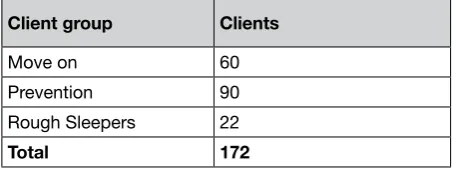
The programme has also assisted clients from a range of previous housing circumstances. As Table 3.2 shows, 60 clients moved from other accommodation; in 90 cases Sharing Solutions provided accommodation as prevention against
[image:31.595.56.282.177.370.2]homelessness; and 22 clients had been rough sleepers immediately prior to being housed via the programme. This provides some evidence that sharing can be a viable option for clients with varying support needs. This claim will be reinforced in later chapters. Table 3.3 shows the number of clients on the programme who were pre-matched (they came to the project as a group), matched by the scheme, or entered into sharing accommodation without being matched.
Table 3.2: Clients previous housing situation prior to sharing solutions intervention (by January 2015)
Client group Clients
Move on 60
Prevention 90
Rough Sleepers 22
Total 172
Table 3.3: Clients tenancy matching by type
Match status Clients
Matched 48
Unmatched 80
Pre-matched 44
Total 172
Of the 172 tenancies created, 44 had ended by January 2015 (26%). 25 of these were adjudged in the monitoring data to be for ‘positive reasons’; and 19 for ‘negative reasons’. Where tenancies had ended in a positive manner these were for reasons of:
• Returning to live with a family member;
• Moving to take up employment elsewhere; and,
• The client found and funded their own suitable accommodation.
Where tenancies had ended for a negative reason, these were mainly due to:
• A breakdown in the relationship with the landlord;
• The property was unsuitable for the needs of the client;
• A breakdown in the relationship with other sharers;
• A move to a custodial sentence; or,
• Abandonment of the tenancy.
In cases of abandonment, pilot scheme managers were not fully aware of why this was in every case. But some clients were believed to have returned to rough sleeping, sofa suring or some other inadequate accommodation.
[image:31.595.56.284.672.757.2]up their tenancy, or during their tenancy. As we will go on to report in subsequent sections, tenancy training had played a key role in sustaining shared tenancies.
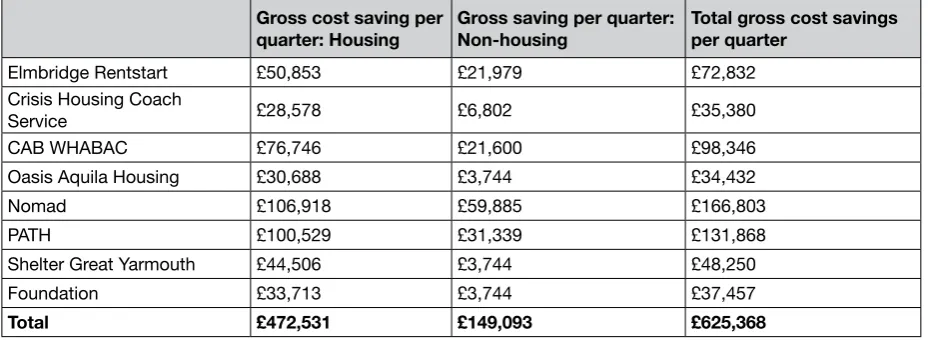
The eight pilot schemes used the Making it Count tool (Rugg and Pleace, 2013), a resource developed for Crisis by the University of York to help demonstrate the value of Private Rented Access Schemes.1 The tool uses a set of indicators and costing assumptions to determine the cost savings attributable to a scheme that offsets costs associated with homelessness, poor health and criminal justice. Table 3.6 shows headline results for ‘housing’ and ‘non-housing’
gross savings for a three month period. Across the programme, there was a total gross cost saving per quarter of £625,368. Sharing Solutions funding for a three month period equates to £120,000. Therefore, the Making it Count tool suggests that the Sharing Solutions programme provided a net saving of over half a million pounds between October and December 2014.2 Or put another
way, for every £1 of grant funding, £5.21 of savings was generated.
The