Cross-Border Banking Services and Determinants of Bank Selection
from Corporate Customer’s Perspective: Evidence from Vietnam
Nguyen Thi Nhung1, Tran Thi Thanh Tu1 & Tran Minh Anh2 1
Faculty of Finance and Banking - University of Economics and Business (UEB)-VNU, Vietnam 2
Foreign Trade University, Vietnam
Correspondence: Tran Thi Thanh Tu, Faculty of Finance and Banking - University of Economics and Business (UEB)-VNU, Vietnam. E-mail:[email protected]
Received: December 28, 2018 Accepted: January 20, 2019 Online Published: January 23, 2019 doi:10.5430/afr.v8n1p138 URL: https://doi.org/10.5430/afr.v8n1p138
Abstract
This paper focuses on assessment of cross-border services in the Vietnam banking system in the context of international integration from customer’s perspective. The authors used Exploratory Factor Analysis (EFA) in SPSS from survey of 153 corporate clients of Vietnamese banks in 2018 to evaluate the current situation of offering cross-border services as well as competitiveness of banking system in Vietnam. Research results show that from customers’ perspective three key factors relating to marketing policy, infrastructure and financial capacity of banks are the most important factors in selection of using cross-border banking services in Vietnam. Survey results show that competitiveness of Vietnamese banks is reaching medium level but much lower than the expectation of customers. Therefore, the authors propose to Vietnam banking system some recommendations including: (i) Improving the services’ quality, especially in terms of technology and depth of cross-border banking services; (ii) Focusing more on customer care activities by developing more useful applications on smartphones, tablets and computers, create the linkage among banks and end-users, develop digital marketing instead of traditional marketing methods; (iii) Maintaining domestic market as well as finding new markets abroad, especially in the ASEAN countries, in order to gradually increase the diversification as well as the quality of cross-border financial and banking services.
Keywords: cross-border banking, ASEAN Economic Community (AEC), banking system in Vietnam
1. Introduction
Today, Vietnam is actively integrating into the regional and global economy by participating in various international organizations such as ASEAN Economic Community (AEC) and Trans-Pacific Strategic Economic Partnership (TPP). Under the AEC Blueprint, ASEAN seeks to achieve a well-integrated and smoothly functioning regional financial system, characterized by more liberalized capital account regimes and inter-linked capital markets. In the banking sector, ASEAN accelerates regional banking integration. The ASEAN Banking Integration Framework (ABIF) facilitates the entry and operation of Qualified ASEAN Banks (QABs) in other ASEAN countries to promote equal access and treatment among ASEAN banks and facilitate the expansion of intra-regional trade. According to the TPP, the banking system of Vietnam will carry out commitments on four major areas: (i) The level of foreign ownership in domestic banks, (ii) Market share of foreign banks, (iii) Scope of application of standards, regulations in accordance with international practice, and (iv) Scope of offering banking services (resident households and enterprises).
The process of international integration is gradually eliminating all conditions for accessing markets. By 2020, the AEC will remove barriers and differences in the banking industry among its members to create an open banking system that allows all ASEAN banks to operate equally. Member countries must allow all foreign banks to offer cross-border financial services without establishing subsidiaries or branches in their domestic market. It is clearly seen that the process of international integration brings the commercial banks in Vietnam a lot of opportunities as well as challenges, especially competition pressure from foreign banks.
integrations today. By sending questionnaires to 200 corporate clients who are using cross-border services from banks and 100 bank staffs who have at least 2 working year experiences, we receive 57 responses from banks and 153 responses from corporate managers in the period of February 2018 to August 2018 through the support from Vietnam Bank Association. Then using SPSS, we apply EFA to test the determinants of cross-border services development in Vietnamese banks from both demand and supply sides.
This paper is divided into 5 parts, including: (i) Introduction; (ii) Literature Review, which presents concepts, characteristics, opportunities and risks of cross-border banking services as well as key determinants of choosing banks offering these services; (iii) Methodology part that describes data and methods of analysis; (iv) Empirical results to show estimations about competitiveness as well as cross-border banking services of banks in Vietnam, in particular, key factors effecting corporate decision-making in choosing banks in Vietnam; and (v) Conclusions and Recommendations.
2. Literature Review
2.1 Definition of Cross-Border Banking Services
In recent years, cross-border banking has become an increasingly important structural feature of the global banking industry. In many emerging economies, anywhere between 67% and 100% of banking assets are in foreign hands. In Europe, in 2004, around 30% of the EU banking sector was owned by non-resident banking groups, up from around 20% in 1997. Approximately 70% of the domestic banking sector assets in the new member countries on average, are foreign-owned. The importance of cross-border banking activity in Europe is also indicated by the soar in large cross-border banking groups. In 2006, more than 40 banking groups undertook notable cross-border activities in up to 17 EU member countries, 14 of which already had contributed to nearly one-third of total EU banking assets. The cross-border provision of financial services has also increased significantly. While the cross-border share of securities holdings and interbank loans stood at around 20% in 1997, the respective figures reached 50% and 30% in 2005 (González-Páramo, 2006). Meanwhile, in Asia, overseas bank financing increased substantially from 0.8 trillion USD in 2008 to 1.7 trillion USD in 2014. During the same period, cross-border banking activities in Latin America and Africa/Middle East went up by 60% and 17%, respectively.
Momentum around cross-border banking, which refers to any banking service that crosses national border, has been generated since the financial globalization wave after the mid-1990 and strengthened since the 2008 global financial crisis. According to Martino et al (2015), in practice, banks planning to prospect new – or serve existing – customers in a foreign country may either establish a branch in the client’s country of residence or may provide services across borders remotely or by allowing CRMs to travel to the client’s country of residence. Meanwhile, according to Claessens et al. (2006), cross-border banking refers to “both cross-border capital flows and cross-border entry in banking”. Cross-border capital flows have long been important drivers of financial integration. Especially in the form of cross-border entry, cross-border banking has risen sharply in the last decade and has placed a great impact on the financial systems of a great many countries in a variety of ways and dimensions. In this paper, we will examine cross-border banking in both definitions.
2.2 The Benefits of Cross-Border Banking to Banks and Corporate Clients
To begin with, the advantage of stability that banks benefit from cross-border banking will outweighs the disadvantages if there is no undue cross-border banking. This happens thanks to the fact that diversification benefits are undeniably enormous and the presence of contagion effects, which are usually seen as the most prominent disadvantage of cross-border banking, seems unlikely to outweigh these (Allen et al, 2011). The assets of cross-border banks will be less exposed to country-specific shocks, which will reduce their likelihood of failure or ending up in a situation where they are constrained in their lending. In addition, Allen et al (2011) emphasize that the presence of foreign banks in a country can also carry a stabilizing force, since when domestic banks are hit by a shock, foreign banks can substitute for them in the lending market. Foreign banks may also be more efficient and foreign banks that enter developing markets tend to have more advanced risk-management systems. Larger and more diversified banking systems are, in many aspects, better equipped to absorb economic shocks. Spread of best practice may then benefit domestic banks as well, further enhancing stability.
The last impact, which may be considered as a neutral impact, as it poses both advantages and disadvantages for banks and firms, particularly industrial firms, is on competition. Jayaraman and Kothari (2015), using mandatory adoption of International Financial Reporting Standards (IFRS) as identifying variation in cross-border financing, posit that cross-border banking activities reduces firms’ dependence on domestic banks, which leads to greater competition in the domestic banking sector. In response to this situation, banks resort to more risk-taking as competition intensifies their product markets (Hellman, Murdock and Stiglitz, 2000). The idea is that banks trade off the benefits of risk-taking, such as more profits, with the costs of doing so, such as inability to have future rents as a consequence of bank failures. Competition lowers the stream of future profits, thus reducing the marginal cost of bank failure. The aforementioned situation is known as the charter-value hypothesis. Keeley (1990) also offers evidence that affirm the charter-value hypothesis. He looks into how the easing of banking restrictions leads to increased competition in the banking sector which forces banks to resort to risk-taking. He finds that a rise in bank competition decreases banks’ franchise values and that banks respond by taking on more risks.
2.3 Risks Inherent with Cross-Boarder Banking Services
As far as risks are concerned, cross-border banking services can pose significant risks for banks, some of which have been thoroughly investigated in previous studies.
Cross-border banking poses the risk of contagion. Banks may become conduits for financial contagion at the system and institutional levels, which can be explained by Hellmann et al (2000) the common lender effect and the wake-up
call effect (Rijckeghem and Weder, 2003). Under a common lender effect, when a home bank’s balance sheet is unfavorably impacted, it spills over to a host country or many host countries as losses incurred in a host country. A bank creditor withdraws from one country in which it holds a position to restore capital adequacy ratios, meet margin calls, acts according to the dictates of its Value-at-Risk model when it experiences a loss in another country, leading to contagion. For instance, Popov and Udell (2010) reach the conclusion that different types of financial distress at western European and U.S. parents banks are associated with a considerable effect on business lending to central and eastern European banks and firms during the 2008 financial crisis. It is also found that, in a foreign-dominated market, foreign banks are more inclined to shrink their portfolio in response to financial distress, particularly low Tier 1 capital ratios – the measure of financial distress that is most consistently associated with credit rationing. Moreover, under the influence of financial distress, banks and firms that are high-risk and firms whose tangible assets are few are likely to suffer the most. Meanwhile, under a wake-up call effect, the withdrawal of a bank creditor from a country is due to a change in perceptions for an entire class of assets following a crisis, or to a general rise in risk aversion (Gochoco-Bautista and Remolona, 2016).
Rijckeghem and Weder (2003) found that banks may suffer from liquidity risk related to foreign currency funding in USD, given the restricted depth of local markets to provide local currency liquidity and to distribute such liquidity more evenly across domestic banks. Much of the USD funding of foreign banks is obtained from global wholesale markets and derivatives markets and lent through cross-border flows. Cross-border flows are a less stable source of foreign currency financing than are foreign claims extended through affiliates of foreign banks. In time of stress, the funding of foreign currency is less stable than that of local currency, most of which comes from core deposits (Remonola and Shim, 2015). The lack of local currency funding by foreign banks in a host jurisdiction is seen in their having a local currency funding gap, i.e. their local currency liabilities are less than their local currency assets. Banks could convert US dollars into local currency to fill this gap, but then they would also face exchange rate risk, also given the limited opportunities for hedging such risk in light of the relative underdevelopment of capital markets (Gochoco-Bautista and Remolona, 2016).
Gochoco-Bautista and Remolona (2016) states that the shortening of the tenor of foreign may have an adverse impact on banks. At the same time, Remonola and Shim (2015) finds that the ability to continue securing funding even on such short-term tenor or roll over existing debt will be jeopardized by any breakdown in inter-bank market operations.
Besides,as mentioned above, cross-border banking is often associated to the risk of banks’ portfolio and loan rates to transparent and opaque borrowers. About this, Kozak et al. (2009), employing a novel set of data on banks’ portfolios, posit that higher participation of foreign banks exert negative impact on the loan portfolios quality of domestic banks (Ingves, 2007).
consequence is that this change in regulatory structure may be less suited for efficient supervision and regulation of the specific banking group, which may lead to performance inefficiency in the long term.
Ingves (2007) posits that conflicting national interests would actually emerge as banks become truly cross-border. National authorities of each country have a national mandate and take responsibility of the national government or parliament. As a result, they are unlikely to take into consideration the full extent of the impact of their actions on other nations. Different countries may also have different priorities in terms of resources for financial and banking supervision as well as crisis management, or in terms of their regulatory structures. One explanation may be that financial systems differ quite significantly between countries. Another one is that the use of public funds can never be completely omitted when dealing with crises. In a cross-border context, severe conflicts of interest can arise when it comes to the agreement of how to share the potential burden of such interventions.
From demand side, it can be seen that customers also have to face a variety of risks in using cross-border services.
Customers should be prepared for any legal risk, which is the risk of loss that arises from an unexpected application of law or regulation or because a cross-border service contract cannot be enforced. The ability to obtain perfected collateral interests, particularly interests of the customer, may be jeopardized by the lack of clarity, as well as the discordant nature of various countries' lien and bankruptcy laws, which may lead to reluctance to undertake transactions, failure by intermediaries or Customer Relationship Management (CRMs) to protect themselves, or the upsetting of legitimate commercial expectations if arrangements in which collateral is assigned are not respected by a bankruptcy court (The Securities Settlement Sub-Committee, 1995).
The time gap risk can be seen as the risk of loss that derives from the absence of timing synchronization of key milestones in the settlement process, should also be taken into consideration. As far as timing related analysis is concerned, the best-case scenario exists when a cross-border service happens in a country pair situated within the same time zone. This at least increases the probability of settlement overlapping in terms of time. In this context, the concern is limited to absolute differences with regards to irrevocable commitment and finality. The worst case occurs when the countries are located in different geographic regions as this situation allows for additional timing differences and, thus, limited processing overlap (The Securities Settlement Sub-Committee, 1995).
Cross-border banking also exposes customers to credit risk. On one hand, foreign banks often have more foreign currency loans in their portfolios. And as local currencies have depreciated in a great many emerging economies, customers, or borrowers, who do not receive their income in foreign currency, may struggle to service their loans. On the other hand, the fact that foreign banks’ portfolios have shorter loan maturity allowing these banks to protect their balance sheets but imposes credit constraints on borrowers (Kozak et al., 2009). Moreover, according to Claeys and Hainz (2007), foreign banks tend to lend more to large transparent firms at the expense of individual customers and small- and medium-sized enterprises (SMEs). In the long term, this cherry-picking tendency would negatively affect the overall local credit expansion. However, with new technology and better credit scoring among foreign banks working in emerging markets, that actually over the medium to long term, does not adversely affect lending rates to smaller businesses.
To reduce risks and strengthen the financial integration and stability aspects of cross-border banking, previous studies have suggested several policies, particularly in the area of banking supervision and crisis management. With respect to banking supervision, the first and foremost thing to do is to ensure that all competent authorities involved in the supervision of a cross-border bank have adequate access to information regarding the risk exposures and management of the respective institution. This requires thoroughly and timely information-sharing between home and host authorities, during both normal times and times of distress. The enhancements of both governmental and regional arrangements for banking regulation and supervision are an adequate institutional response.
2.4 Cross-Border Banking Services: Determinants
cross-border banking services is to facilitate the establishment of financial institutions in the member countries EU (Almudena de la Mata Muñoz, 2010).
At the bank level, bank’s competitiveness is a controversial topic when cross-border banking services are discussed.
Only qualified banks can be able to develop in the context of international integration. According to Aldington Report (1985), competitive commercial banks are banks that can provide products and services with higher quality at lower prices than other domestic and international competitors. Competitiveness means achieving the long-term goals of commercial banks and the ability to maintain good incomes for employees and managers. The competitiveness of commercial banks should be linked to the achievement of the objectives of the enterprise in terms of three factors: the main values of commercial banks, the main purpose and different objectives that help commercial banks to perform their functions (Buckley et al, 1988). Thus, the competitiveness of commercial banks can be defined as the ability of providing the best banking services in comparison with other banks, and expressed through the capacity of improving profitability, expanding market share, attracting and using capital effectively to achieve high economic benefits in the competitive environment.
Blattner N. (1992) divides the criteria for assessing the bank’s competitiveness into 2 groups: (i) Attractiveness includes location and business network of bank as well as characteristics of bank deposits and accounts; (ii) Operation results conclude bank performance, bank market value, bank total asset, bank profit, bank margin profit, bank credit rating, bank asset abroad, human resources, bank capitalization, liquidity, ... etc. The authors underline the important role of financial capacity for bank’s competitiveness. Using a different approaching method, Cetindamar and Kilitcioglu (2013) propose a framework for measuring the competitiveness of commercial banks with 3 pillars, including outcome indicators, resources and managerial and risk management processes. Outcome indicators is evaluated through profitability capacity, risk level, market share and customer satisfaction. Banking resources include financial resources, board of direction, human resource, current products and services, reputation, business networking and technology level. The third pillar is analyzed for credit risk, operation risk and market risk in terms of completeness of regulations and guidelines about risk management and knowledge of bank staff on these documents as well as appropriateness of organizing implementation of regulation and guidelines on risk management in banks.
In a customers’ perspective, there are many criteria to select a bank. In theory, Fontinelle (2018) lists up 4 key criteria to consider when choosing where to open your checking account. There are: (i) Legitimacy and Reputation, (ii) Online Only and Brick-and-Mortar, (iii) Location and (iv) Size, Fees. Based on a number of researches about criteria of bank selection in Europe, Africa, North and South America, Oceania/Australia, Asia, Zulfiqar et al (2014) decide to choose 8 principal criteria including: (i) Bank Appearance, (ii) Quality of Services, (iii) Technology/Reputation, (iv) Convenience, (v) Word of Mouth Advertising, (vi) Price and Cost, (vii) Easy banking process and (viii) Bank Staff, to evaluate the customer’s behavior towards the bank selection in Sahiwal Division, Pakistan. Questionnaires designed on 5-point Likert scale are sent to 150 respondents. As result, the authors find out Convenience, Quality of services and Price-cost as the 3 most important factors. In the same research topic, Mohamad Sayuti Md.Seleh et al (2013) shows that Accessibility is a significant choice criterion. Moreover, reliability, responsiveness, value added service, convenience and assurance have increased in importance.
When investigating the determinants of commercial banks selection by students at the University of Zambia, Mwange (2017) found out the most 10 affecting factors, including: bank proximity to the university, recommendation by a friend, many tellers in bank, presence of bank branch on campus; bank’s university, convenient location, reputation of the bank, staff courtesy, proximity to student’s home, and innovative e-banking services. In the same research field, Rashid (2012) examined the bank selection criteria employed by university students in Dhaka, Bangladesh. By using Exploratory factor analysis (EFA) to reveal five criteria such as E-Banking, Competence, Influence, Convenience and Appearance, he identifies that electronic banking and competence of the bankers appeared as two most important criteria.
Also, in future research, there is a need of formal competition models as fully-specified empirical competitiveness studies are scarce, with mostly single-country studies available at present.
3. Methodology
3.1 Developing Questionnaire
The authors evaluate the current situation of offering cross-border services as well as competitiveness of banking system in Vietnam by conducting surveys with banks and corporate managers. From the survey resutls, the authors try to determine key factors affecting corporate decision-making in choosing banks when enterprises want to use cross-border services. Therefore, there are two surveys distributed to two interviewee groups such as managers in banks and managers in companies.
In order to make sure the effectiveness of questionnaire, the authors did pilot testing. 2 types of questionnaires were distributed to 20 managers in both commercial banks and enterprises that are located in Hanoi and Ho Chi Minh City. The principal objective of pilot testing is to ask respondents if they understand the questionnaire, if there have any comments about both contents and format of survey or any suggestions in order to make survey clearer and more significant. Based on the sample group’s feedback about how they understand and what they still concern about questions, … etc., the authors made necessary adjustments and amendments in order to make sure that the question had face validity. After that, the authors distributed a 200 questionnaires to managers in commercial banks and a 100 questionnaires to managers in firms in Vietnam.
A structured questionnaire for managers in banks includes three parts: (i) General information about interviewee with 8 simple questions about his/her name, his/her bank, his/her position, his/her working experience, etc.; (ii) Competitiveness of bank with 08 questions; (iii) Cross-border banking services with 15 questions. To ensure the accuracy of responses, the research used various kinds of questions including close-ended and open-ended questions as well as Likert scale questions with a five-point scale from 1 to 5 (Note 1) which allows the individual to express how much they agree or disagree with a particular statement. The competitiveness of banks is estimated based on 3 main pillars that Cetindamar D. and Kilitcioglu H. (2013) mentioned, such as outcome indicators, resources and Managerial and risk management processes while the current situation of offering cross-border services is evaluated through some criteria as below: (i) Depth of cross-border services; (i) Risk management for cross-border services; (iii) Financial capacity; (iv) Marketing policy; (v) Infrastructure; (vi) Human resources; (vii) Variety of products and services; (viii) Investment in research and development activities; (ix) Technology.
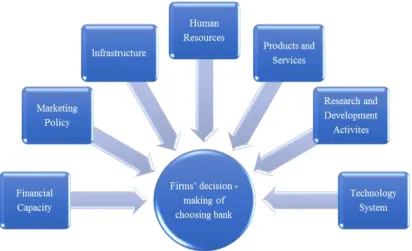
There are 31 questions in a structured question for managers in firms. The contents aim to evaluate understanding level of firms about these services, as well as to estimate current situation of using them in firms, and to ask which factors have impacts on their decision -making about choosing banks. Concerning the later objective, it is clearly seen that criteria affecting the choice of cross-border banking services in a firms’ perspective haven’t been studied yet. Therefore, the authors realized an expert survey via Vietnamese banking managers as well as firm managers in order to determine key factors affecting a firm’s decision- making of choosing bank offering cross-border banking services. As results, there are 7 variable factors to be considered, such as: (i) Financial capacity of banks; (ii) Marketing policy of banks; (iii) Infrastructure of banks; (iv) Human resources of banks; (v) Products and services offered by banks; (vi) Research and Development activities of banks for new products; (vii) Technology System
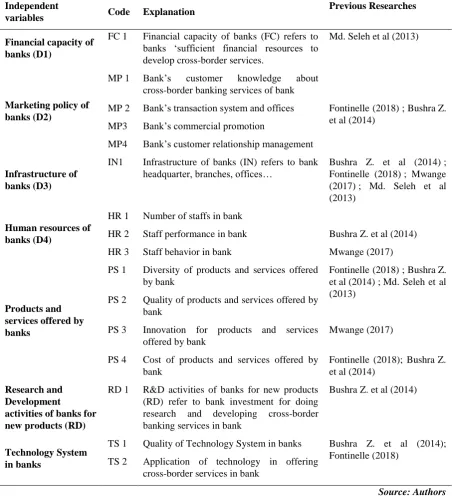
Table 1. Independent variables Independent
variables Code Explanation
Previous Researches
Financial capacity of banks (D1)
FC 1 Financial capacity of banks (FC) refers to banks ‘sufficient financial resources to develop cross-border services.
Md. Seleh et al (2013)
Marketing policy of banks (D2)
MP 1 Bank’s customer knowledge about cross-border banking services of bank
MP 2 Bank’s transaction system and offices Fontinelle (2018) ; Bushra Z. et al (2014)
MP3 Bank’s commercial promotion
MP4 Bank’s customer relationship management
Infrastructure of banks (D3)
IN1 Infrastructure of banks (IN) refers to bank headquarter, branches, offices…
Bushra Z. et al (2014) ; Fontinelle (2018) ; Mwange (2017) ; Md. Seleh et al (2013)
Human resources of banks (D4)
HR 1 Number of staffs in bank
HR 2 Staff performance in bank Bushra Z. et al (2014) Mwange (2017) HR 3 Staff behavior in bank
Products and services offered by banks
PS 1 Diversity of products and services offered by bank
Fontinelle (2018) ; Bushra Z. et al (2014) ; Md. Seleh et al (2013)
PS 2 Quality of products and services offered by bank
PS 3 Innovation for products and services offered by bank
Mwange (2017)
PS 4 Cost of products and services offered by bank
Fontinelle (2018); Bushra Z. et al (2014)
Research and Development
activities of banks for new products (RD)
RD 1 R&D activities of banks for new products (RD) refer to bank investment for doing research and developing cross-border banking services in bank
Bushra Z. et al (2014)
Technology System in banks
TS 1 Quality of Technology System in banks Bushra Z. et al (2014); Fontinelle (2018)
TS 2 Application of technology in offering cross-border services in bank
Figure 1. Research Design
Source: Authors
And the firms’ decision- making of choosing bank (MD) – dependent factor, is estimated by their valuation about cross-border banking services offered by banks through 03 aspects including: (MD1) Bank supplies divers cross-border banking services that meet customers’ demands; (MD 2) Bank supplies cross-border banking services of good quality that satisfy customers; (MD 3) Bank is always interested in improving cross-border services, both in quality and quantity, to meet the needs of customers.
3.2 Data
Data are collected from surveys sent to managers in commercial banks and bank corporate clients in Vietnam, who directly work in the field of cross-border banking services. The research receives 57 responses from bank managers and 153 responses corporate managers. Most of responses from enterprises are CFOs and CEOs with more than 10 years of working experience on average while bank managers responses have working experience of 3 years at least and 22 years maximum.
All questionnaires will be collected randomly from network of Alumni of National Economics University and Vietnam National University in the Banking and Finance specification through google survey tools from March 2018 to August 2018.
To estimate competitiveness of banking system in Vietnam, the research used data extracted from a structured questionnaire for managers in banks. Variables collected from survey in enterprises are used for determining key factors affecting corporate decision-making in choosing banks when enterprises want to use cross-border services. In addition, in order to evaluate the current situation of offering cross-border services in banks in Vietnam, the research explore results of both types of survey.
3.3 Methods of Data Analysis
There are 07 hypothesis need to be verified, including:
- Hypothesis H1: Financial capacity of banks (FC) has impact on corporate decision-making in choosing banks when enterprises want to use cross-border services.
- Hypothesis H2: Marketing policy of banks (MP) has impact on corporate decision-making in choosing banks when enterprises want to use cross-border services.
- Hypothesis H3: Infrastructure of banks (IR) has impact on corporate decision-making in choosing banks when enterprises want to use cross-border services.
- Hypothesis H4: Human resources of banks (HR) have impact on corporate decision-making in choosing banks when enterprises want to use cross-border services.
- Hypothesis H5: Products and services offered by banks have impact on corporate decision-making in choosing banks when enterprises want to use cross-border services.
- Hypothesis H6: Research and Development activities of banks for new products (RD) have impact on corporate decision-making in choosing banks when enterprises want to use cross-border services.
- Hypothesis H7: Technology System (TS) has impact on corporate decision-making in choosing banks when enterprises want to use cross-border services.
To determine factors affecting corporate decision-making in choosing banks when enterprises want to use cross-border services, the research approach Exploratory Factor Analysis (EFA) in SPSS. First of all, data have to be examined by Cronbach’ Alpha in SPSS. Cronbach’ Alpha is considered to be a measure of scale reliability (Amit, 2010). A reliability coefficient of 0.70 is considered “acceptable”. Simultaneously, data must have Corrected Item-Total Correlation equal or bigger than 0.3. In particular, in case the previous condition is satisfied but Cronbach Alpha if Item Deleted is bigger than Cronbach’ Alpha, data should be verified carefully.
After testing Cronbach’s Alpha in SPSS, the research only keeps appropriate factors by removing unsuitable variables from data. Suitable variables are introduced in SPSS to test EFA. Analysis results can be interpreted as bellow:
- The Kaiser Meyer Olkin (KMO) measuring the sampling adequacy should be close than 0.5 for a satisfactory factor analysis to proceed.
- Bartlett’s test is another indication of the strength of the relationship among variables. This ratio should be less than 0.05 to reject the null hypothesis. In other words, correlation matrix is not an identity matrix.
- Eigenvalue actually reflects the number of extracted factors whose sum should be equal to number of items which are subjected to factor analysis. Factors with Eigenvalue bigger than 1 will be kept in analysis model. Total Variance Explained bigger than 50% indicate the appropriateness of EFA model.
Factor Loading indicates the correlation between the observation variable and the factor. The higher the factor loading is, the greater the correlation between the observation variable and the factor is and vice versa. Because of sample of 153, the authors use factor loading of 0.5.
The next step of research is to compute variables in appropriate groups before correlation analysis. Correlation is a bivariate analysis that measures the strength of association between two variables and the direction of the relationship. In terms of the strength of relationship, the value of the correlation coefficient varies between +1 and -1. In this research, the authors use Pearson correlation to measure the degree of the relationship between linearly related variables. Finally, the regression analysis is used in order to estimate the relationship between a dependent variable and 7 independent variables. This analysis allows to determine which is the most important independent variable that has the highest impact on the firms’ decision - making of choosing bank.
4. Empirical Results
4.1 Current Situation Overview of Cross-Border Services in Vietnam Banking System
According to the survey results, 75% bank managers said that their banks have offered these services for more than 10 years. 16% and 9% interviewees indicate that these services have been executed in their banks for 5 to 10 years and for less than 5 years accordingly. The survey results show that in Vietnam, cross-border services have been existing in banking system for a long time.
domestic and foreign partners (3.70) and broadening market share in ASEAN area (3.75), in particularly.
Both bank managers and corporate managers confirmed that they don not have many difficulties when offering or using cross-border banking services in ASEAN countries by giving quite good marks of 2.71 and 2.74 accordingly. However, these services haven’t been diversified enough. Only 50% responses justified that banks have all types of cross-border services like Letter of credit (L/C), Transfer Remittance, Collection, etc. and 46% bank managers admitted that their banks only offered services related to Transfer Remittance. And according to survey for enterprises’ managers, Transfer Remittance is their favorite payment mode. Moreover, bank and corporate managers agreed that legal framework in Vietnam hasn’t been in accordance with international practices yet. Regulations and procedures are quite complicated and service fees are quite high. Enterprises don’t have enough knowledge to understand and follow regulations and laws on cross-border banking services.
Figure 2. Current situation of offering cross-border services in banks in Vietnam
Source: Authors’ survey
Figure 3. Competitiveness of banks in Vietnam
Source: Authors ‘survey 4.2 Factors Influencing Corporate Decision-Making in Choosing Cross-Border Banking Services in Vietnam
Cronbach’ Alpha is executed in SPSS for groups of factors related to Marketing Policy (04 factors), Human Resources (03 factors), Products and Services (03 factors) and Technology System (02 factors) as well as Decision-Making (03 factors). Based on the rules such as: (i) A reliability coefficient of higher than 0.70 is considered “acceptable”; (ii) Simultaneously, data must have Corrected Item-Total Correlation equal or bigger than 0.3; and (iii) Cronbach Alpha if Item Deleted is bigger than Cronbach’ Alpha, data should be verified carefully, the authors shows in the appendixes from 1 to 5 that:
- 07 groups of factors (including FC, MP, HR, PS, JS, RD and IN) are appropriate and suitable to be introduced in SPSS to test Exploratory Factor Analysis (EFA).
- All 4 factors such as MP 1, MP 2, MP 3, MP 4 are appropriate.
- HR 2 and HR 3 are appropriate. HR 1 with Cronbach Alpha if Item Deleted of 0.983 bigger than Cronbach’ Alpha of 0.873 is removed.
- PS 1 and PS 2 are appropriate. PS 3 with Cronbach Alpha if Item Deleted of 0.986 bigger than Cronbach’ Alpha of 0.881 is removed.
- All 2 factors such as TS 1, TS 2 are appropriate.
- Only MD 2 is kept in the next analysis because MD 1 and MD 3 have Cronbach Alpha if Item Deleted of 0.997 bigger than Cronbach’ Alpha of 0.995
Then, all appropriate factors are introduced in SPSS to test Exploratory Factor Analysis (EFA). Table 2. KMO and Bartlett’s Test
Kaiser-Meyer-Olkin Measure of Sampling Adequacy. .520
Bartlett's Test of Sphericity
Approx. Chi-Square 2699.822
Df 91
Sig. .000
Source: Exploratory Factor Analysis (EFA) extracted in SPSS
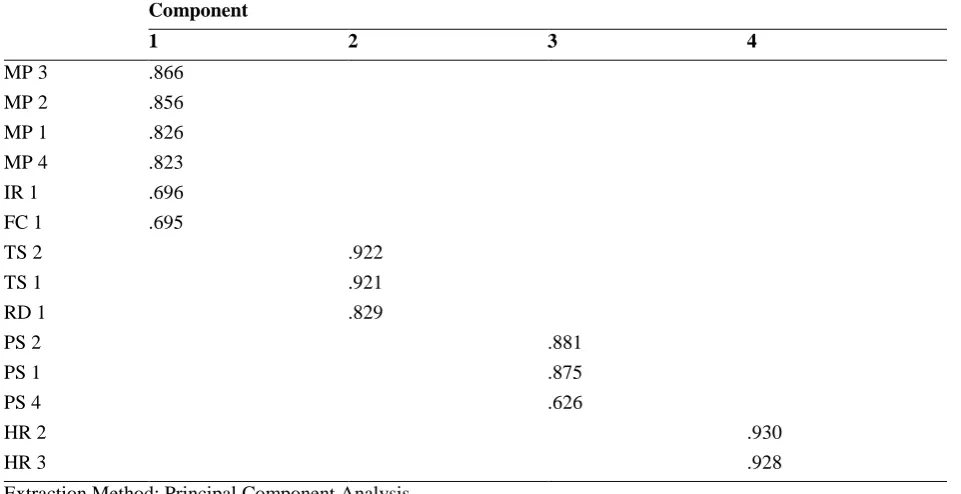
Table 3. Rotated Component Matrix Component
1 2 3 4
MP 3 .866
MP 2 .856
MP 1 .826
MP 4 .823
IR 1 .696
FC 1 .695
TS 2 .922
TS 1 .921
RD 1 .829
PS 2 .881
PS 1 .875
PS 4 .626
HR 2 .930
HR 3 .928
Extraction Method: Principal Component Analysis. Rotation Method: Varimax with Kaiser Normalization. a. Rotation converged in 6 iterations.
Source: Exploratory Factor Analysis (EFA) extracted in SPSS
It is clearly seen that factors are divided into 4 groups of components [Table 3]. The authors give the name of MPIRFC, TSRD, PS and HR to the first group of MP 1, MP 2, MP 3, MP 4, IR 1 and FC 1, the second one including TS 1, TS1 and RD 1, the third one of PS 1, PS 2 and PS 4, and the last group of HR 2, HR 3 accordingly.
Table 4. Correlations
MD 2 MPIRFC TSRD PS HR
MD 2
Pearson Correlation 1 .589** .248** .094 .138
Sig. (2-tailed) .000 .002 .250 .090
N 153 153 153 153 153
MPIRFC
Pearson Correlation .589** 1 .443** .098 .264**
Sig. (2-tailed) .000 .000 .228 .001
N 153 153 153 153 153
TSRD
Pearson Correlation .248** .443** 1 .202* .201*
Sig. (2-tailed) .002 .000 .012 .013
N 153 153 153 153 153
PS
Pearson Correlation .094 .098 .202* 1 .524**
Sig. (2-tailed) .250 .228 .012 .000
N 153 153 153 153 153
HR
Pearson Correlation .138 .264** .201* .524** 1
Sig. (2-tailed) .090 .001 .013 .000
N 153 153 153 153 153
**. Correlation is significant at the 0.01 level (2-tailed). *. Correlation is significant at the 0.05 level (2-tailed).
Table 4 shows that Sig of PS and MD 2 as well as Sig of HR and MD 2 are 0.25 and 0.090 accordingly, bigger than 0.05. This means that there is no linear relationship between the variables. In theory, PS and HR should be removed. However, considering their important role and impacts on the firms’ decision – making about choosing banks, the authors decide to keep these variables in the next regression analysis.
Table 5. Model Summary
Model R R Square Adjusted R Square Std. Error of the
Estimate Durbin-Watson
1 .593a .351 .334 .562 1.843
a. Predictors: (Constant), HR, TSRD, MPIRFC, PS b. Dependent Variable: MD 2
Source: Regression Analysis extracted in SPSS
Adjusted R Square of 0.334 means that 07 independent variables (including (i) Financial Capacity; (ii) Marketing policy of banks; (iii) Infrastructure of banks; (iv) Human resources of banks; (v) Products and services offered by banks; (vi) Research and Development activities of banks for new products; (vii) Technology System) have an impact on a change of 33,4% in dependent factor. 67,6% of change in dependent factor come from random or other variables, which has never been mentioned. And Durbin-Watson of 1.843 indicate positive autocorrelation [Table 5]. Table 6. ANOVA
Model Sum of Squares Df Mean Square F Sig.
1
Regression 25.324 4 6.331 20.024 .000b
Residual 46.793 148 .316
Total 72.118 152
a. Dependent Variable: MD 2
b. Predictors: (Constant), HR, TSRD, MPIRFC, PS
Source: Regression Analysis extracted in SPSS
Table 7. Coefficients
Model Unstandardized Coefficients Standardized Coefficients
t Sig. Collinearity Statistics
B Std. Error Beta Tolerance VIF
1
(Constant) 1.211 .393 3.084 .002
MPIRFC .724 .090 .608 8.017 .000 .763 1.310
TSRD -.025 .078 -.024 -.323 .747 .778 1.285
PS .076 .090 .067 .845 .399 .707 1.414
HR -.052 .080 -.053 -.656 .513 .679 1.472
a. Dependent Variable: MD 2
Source: Regression Analysis extracted in SPSS
Table 6 & Table 7shows clearly that MPIRFC has the highest standardized coefficients beta of 0.608. This shows a very significant impact of Marketing Policy, Infrastructure and Financial Capacity of banks on firms’ decision - making of choosing bank. The other variables like Technology System, Products and Services as well as Human Resources impact lightly this decision because of standardized coefficients beta of (-0.024), 0.067 and (-0.053) accordingly.
5. Discussions and Conclusions
however, it has not been much improved, both in quality and quantity, leading to the low competitiveness in the domestic market compared to foreign competitors.
Secondly, cross-border services play an important role for banks’ development but according to corporate managers’ estimation, their quality has not yet satisfied the firm clients. This is an obvious sign of firms’ displeasure. The survey results form 57 bank managers also agreed that the bank’s service quality is still in the average of 3.44, below the expectation of corporate customers. These findings supports for Zulfiqar et al (2014) deciding to choose 6 principal criteria including: (i) Bank Appearance, (ii) Quality of Services, (iii) Technology/Reputation, (iv) Convenience, (v) Word of Mouth Advertising and Fontinelle (2018) listing up 4 key criteria to consider when choosing where to open your checking account, including (i)Legitimacy and Reputation, (ii) Online Only and Brick-and-Mortar, (iii) Location and (iv) Size, Fees. That means, although Vietnam banking sector has not been well-developed, the customers require higher and higher service quality from banks.
Thirdly, the 03 first hypothesis like H1, H2 and H3 are true while the hypothesis H4, H5, H6 and H7 are not statistically significant by firms’ perception. This means that Marketing Policy, Infrastructure and Financial Capacity of banks are three important factors that Vietnamese firms consider most in decision to choose cross-border banking services. These suggestions are consistent with Mwange (2017) figuring out the most 10 affecting factors, including: bank proximity to the university, recommendation by a friend, many tellers in bank, presence of bank branch on campus; bank’s university, convenient location, reputation of the bank, staff courtesy, proximity to student’s home, and innovative e-banking services and Rashid (2012) examined the bank selection criteria employed by university students in Dhaka, Bangladesh by using Exploratory factor analysis (EFA) to reveal five criteria such as E-Banking, Competence, Influence, Convenience and Appearance. Factors like human resources of banks, products and services, research and development activities as well as technology system are not main factors influencing decision-making process of vietnamese firms when they want to choose a bank offering cross-border banking services.
In brief, this research shows that in the context of international integration, vietnamese commercial bank experience the medium level of competitiveness, with very modest outcome indicators in comparision with foreign competitors. Although cross-border services have played an important role for banks’ development for 10 years but according to corporate managers’ estimation, their quality has not satisfied firm clients. In particular, in the customers’ perspective, marketing Policy, Infrastructure and Financial Capacity of banks are considered as the most three key factors in selection of using cross-border banking services.
To our best knowledge, this is the first paper emphasize on the cross-bordering banking services in Vietnam, especially in the context of deeply integration into the regional and global economic association. The findings of the paper will contribute to the literature review on development of cross-border service of domestic banks before the competition from foreign banks in the free trade agreements and economic integration of Vietnam financial sector. Moreover, the research’s emperical findings will provide good references in increasing competitiveness for vietnamese commercial banks. Based on the research results, the authors propose Vietnam banking system some recommendations as follow:
- Vietnamese commercial banks should take appropriate measures in order to improve theses services’ quality, especially in terms of technology and depth of cross-border banking services. Additionally, they need to actively improve their position, increase market share, maintain traditional markets as well as find new markets in order to compete with foreign banks. Furthermore, they should seek and develop new markets abroad, especially in the ASEAN countries, in order to gradually increase the diversification as well as the quality of cross-border financial and banking services. These suggestions are made from the research results as well as supported by findings of (Almudena de la Mata Muñoz, 2010) to suggest European countries to take cross-border banking services is to facilitate the establishment of financial institutions in the member countries EU.
- In the growing competition, because of international integration, Vietnamese banks should pay more attention to all three pillars such as managerial and risk management processes, banking resources and outcome indicators. - In order to develop cross-border banking services, Vietnamese commercial banks should focus more on customer care activities by developing more useful applications on smart devices, create the linkage among banks and end-users, develop digital marketing instead of traditional marketing measures.
- The State Bank of Vietnam and related authorities should pay more attention on Vietnamese banks when they provide cross-border services out of the countries to help them reduce political risk, country risk by providing information channels as well as supporting legal agencies out of the country.
Acknowledgments
We would like to thank Vietnam National University, Hanoi (VNU) for financing the Research Project number QG.17.34“AEC integration impact on competitiveness of Vietnamese banking system”. This paper has been extracted from this research.
References
Aldington Report. (1985). The Report from the Select Committee of the House of Lords on Overseas Trade.
Allen F., Beck T., Carletti E., Lane P.R., Schoenmaker D. and Wagner W. (2011). Cross-Border Banking in Europe: Implications for Financial Stability and Macroeconomic Policies. Centre for Economic Policy Research (CEPR). Retrieved from https://voxeu.org/sites/default/files/file/cross-border_banking.pdf
Almudena de la Mata Muñoz. (2010). The future of cross-border banking after the crisis - Facing the challenges through regulation and supervision. European Business Organization Law Review (EBOR), 4. https://doi.org/10.1017/S156675291040004X
Beck T., Fuchs M., Singer D., Witte M. (2014). Making Cross-Border Banking Work for Africa. Deutsche Gesellschaft für Internationale Zusammenarbeit (GIZ) GmbH. Retrieved from https://openknowledge.worldbank.org/bitstream/handle/10986/20248/892020WP0Makin00Box385274B00PUB LIC0.pdf
Blattner N. (1992). La competitivite des banques. Revue d'economie financiere, 21. https://doi.org/10.3406/ecofi.1992.1856
Buckley P.J., Pass C.L., Prescott K. (1988). Measure of International Competitiveness: A Critical Survey. Journal of Marketing Management, 4(2), 175-200. https://doi.org/10.1080/0267257X.1988.9964068
Cetindamar D., Kilitcioglu H. (2013). Measuring the competitiveness of a firm for an award system. Competitiveness Review: An International Business Journal, 23(1), 7-22. https://doi.org/10.1108/10595421311296597
Claeys S. & Hainz C. (2007). Acquisition versus Greenfield: The Impact of the Mode of Foreign Bank Entry on Information and Bank Lending Rates.Working Paper Series, No.210.
Claessens S., Demirgüç-Kunt A., & Huizinga H. (2000). How does foreign entry effect domestic banking markets.
Journal of Banking & Finance, 25, 891-911. https://doi.org/10.1016/S0378-4266(00)00102-3
Fontinelle, A. (2018, 08 16). Investopedia. Retrieved 8 16, 2018, from Investopedia: https://www.investopedia.com/university/banking/banking2.asp
Gochoco-Bautista M.S., Remolona E.M. (2016). The Promises of Bank Integration: Is There a Catch?ASEAN@50 (2016): 145-158. Retrieved from http://www.eria.org/5.5.ASEAN_50_Vol_5_Bautista_and_Remolona.pdf González-Páramo J.M. (2006). Statistical challenges raised by globalisation. Retrieved from
https://www.ecb.europa.eu/press/key/date/2006/html/sp061024.en.html
Hellmann T.F., Murdock K.C & Stiglitz J.E. (2000). Liberalization, Moral Hazard in Banking, and Prudential Regulation: Are Capital Requirements Enough?. American Economic Review, Vol.90 (1) (2000): 147-165. https://doi.org/10.1257/aer.90.1.147
Ingves S. (2007). Regulatory challenges of cross-border banking: Possible ways forward. Speech at Conference on Financial System: Structure and Resilience Reserve Bank of Australia, Sydney. Retrieved from https://www.rba.gov.au/publications/confs/2007/ingves.html
Jayaraman S. & Kothari S. P. (2015). Cross-Border Financing by the Industrial Sector Increases Competition in the Domestic Banking Sector. Working Paper No. FR 15-23. Retrieved from http://aaajournals.org/doi/abs/10.2308/accr-51199?journalCode=accr
Keeley M.C. (1990). Deposit Insurance, Risk, and Market Power in Banking. American Economic Association, 80(5), 1183-1200.
Kozak S., Jurzyk E.M., Degrypse H. & Havrylchyk O. (2009). Foreign Bank Entry and Credit Allocation in Emerging Markets. IMF Working Paper. https://doi.org/10.5089/9781451874150.001
Martino. P., Vanoverschelde J. & Ranchin E. (2015). Inside. Quarterly Insights from Deloitte, issue 10.Retrieved from
https://www2.deloitte.com/content/dam/Deloitte/ch/Documents/financial-services/ch-en-financial-services-insid e-magazine-issue-10-october-2015.pdf
Mohamad Sayuti Md.Seleh, Mohamad Rahimi Mohamad Rosman, Nur Khashima Nani. (2013). Bank Selection Criteria in a Customers' Perspective. IOSR Journal of Business and Management (IOSR-JBM), 7(6), 15-20. Retrieved from https://pdfs.semanticscholar.org/af52/36e1e31fe62302143dcad96a8d65583baf21.pdf
Mwange, A. (2017). Determinants of Bank Selection Criteria: The Case of University of Zambia Students. Imperial Journal of Interdisciplinary Research (IJIR), 3(3). Retrieved from https://www.onlinejournal.in/IJIRV3I3/053.pdf
Popov A. A. & Udell G.F. (2010). Cross-Border Banking and The International Transmission of Financial Distress during the Crisis of 2007-2008. Working Paper Series No.1203.
Rashid, M. (2012). Bank Selection Criteria in Developing Country: Evidence from Banladesh. Asian Journal of Scientific Research, 5, 58-69. https://doi.org/10.3923/ajsr.2012.58.69
Remonola E. M. & Shim I. (2015). The Rise of Regional Banking in Asia and the Pacific. BIS Quarterly Review, September Issue (2015): 119-134. Retrieved from https://www.bis.org/publ/qtrpdf/r_qt1509j.pdf
Rijckeghem C.V and Weder B. (2003). Spillovers through Banking Centers: A Panel Data Analysis of Bank Flows.Journal of International Money and Finance, Vol.22 (4) (2003): 483-509. https://doi.org/10.1016/S0261-5606(03)00017-2
Shirota T. (2015). What is the major determinant of cross-border banking flows? Journal of International Money and Finance, 53, 137-147. https://doi.org/10.1016/j.jimonfin.2015.01.001
The Securities Settlement Sub-Committee. (1995). A Report on Cross-Border Risks. New York: Federal Reserve Bank. Retrieved from https://www.newyorkfed.org/medialibrary/microsites/prc/files/report.pdf
Zulfiqar B., Hafiz M., Arshad H. and Fareed Z., Shahzad F., Hussain R.S. (2014). Criteria of selecting bank in Pakistani banking sector: Study of banking customers in Sahiwal, Pakistan. International Journal of Managing Value and Supply Chains (IJMVSC), 5(4). https://doi.org/10.5121/ijmvsc.2014.5402
Note
APPENDIX
Appendix 1: Cronbach's Alpha for Marketing Policy
Reliability Statistics
Cronbach's Alpha N of Items
.900 4
Item-Total Statistics
Scale Mean if Item Deleted
Scale Variance if Item Deleted
Corrected Item-Total Correlation
Cronbach's Alpha if Item Deleted
MP 1 10.80 3.742 .812 .863
MP 2 10.68 3.285 .797 .865
MP 3 10.60 3.478 .790 .866
MP 4 10.61 3.674 .724 .890
Source: Cronbach’ Alpha extracted in SPSS
Appendix 2: Cronbach's Alpha for Human Resources
Reliability Statistics
Cronbach's Alpha N of Items
.873 3
Item-Total Statistics
Scale Mean if Item Deleted
Scale Variance if Item Deleted
Corrected Item-Total Correlation
Cronbach's Alpha if Item Deleted
HR 1 7.43 1.918 .565 .983
HR 2 7.39 1.515 .877 .706
HR 3 7.38 1.526 .852 .730
Source: Cronbach’ Alpha extracted in SPSS
Reliability Statistics
Cronbach's Alpha N of Items
.983 2
Item-Total Statistics
Scale Mean if Item Deleted
Scale Variance if Item Deleted
Corrected Item-Total Correlation
Cronbach's Alpha if Item Deleted
HR 2 3.72 .493 .966 .
HR 3 3.71 .483 .966 .
Appendix 3: Cronbach's Alpha for Products and Services
Reliability Statistics
Cronbach's Alpha N of Items
.881 3
Item-Total Statistics
Scale Mean if Item Deleted
Scale Variance if Item Deleted
Corrected Item-Total Correlation
Cronbach's Alpha if Item Deleted
PS 1 7.33 1.393 .876 .731
PS 2 7.31 1.375 .883 .723
PS 3 7.54 1.868 .577 .986
Source: Cronbach’ Alpha extracted in SPSS
Reliability Statistics
Cronbach's Alpha N of Items
.986 2
Item-Total Statistics
Scale Mean if Item Deleted
Scale Variance if Item Deleted
Corrected Item-Total Correlation
Cronbach's Alpha if Item Deleted
PS 1 3.78 .477 .972 .
PS 2 3.76 .471 .972 .
Source: Cronbach’ Alpha extracted in SPSS
Appendix 4: Cronbach's Alpha for Technology System
Reliability Statistics
Cronbach's Alpha N of Items
.983 2
Item-Total Statistics
Scale Mean if Item Deleted
Scale Variance if Item Deleted
Corrected Item-Total Correlation
Cronbach's Alpha if Item Deleted
TS 1 3.39 .582 .966 .
TS 2 3.39 .569 .966 .
Appendix 5: Cronbach's Alpha for Decision-Making
Reliability Statistics
Cronbach's Alpha N of Items
.995 3
Item-Total Statistics
Scale Mean if Item Deleted
Scale Variance if Item Deleted
Corrected Item-Total Correlation
Cronbach's Alpha if Item Deleted
MD 1 7.61 1.910 .985 .997
MD 2 7.61 1.898 1.000 .986
MD 3 7.60 1.899 .985 .997
Source: Cronbach’ Alpha extracted in SPSS
Appendix 6: Total Variance Explained
Component Initial Eigenvalues Extraction Sums of Squared Loadings
Rotation Sums of Squared Loadings
Total % of Variance
Cumulative % Total % of Variance
Cumulative % Total % of Variance
Cumulative %
1 5.562 39.731 39.731 5.562 39.731 39.731 4.099 29.277 29.277 2 2.793 19.947 59.678 2.793 19.947 59.678 2.813 20.095 49.372 3 1.825 13.037 72.714 1.825 13.037 72.714 2.160 15.430 64.802 4 1.006 7.184 79.898 1.006 7.184 79.898 2.114 15.096 79.898 5 .732 5.227 85.126
6 .570 4.074 89.200 7 .506 3.613 92.813 8 .344 2.456 95.269 9 .290 2.068 97.337 10 .152 1.088 98.425 11 .136 .972 99.396 12 .066 .473 99.869 13 .018 .126 99.995 14 .001 .005 100.000
Extraction Method: Principal Component Analysis.