Open Access
Research article
Gene expression profiles in developing nephrons using
Lim1
metanephric mesenchyme-specific conditional mutant mice
You-Tzung Chen
1, Akio Kobayashi
1, Kin Ming Kwan
1, Randy L Johnson
2and
Richard R Behringer*
1Address: 1Department of Molecular Genetics, University of Texas M. D. Anderson Cancer Center, Houston, Texas 77030, USA and 2Department of
Biochemistry and Molecular Biology, University of Texas M. D. Anderson Cancer Center, Houston, Texas 77030, USA
Email: You-Tzung Chen - [email protected]; Akio Kobayashi - [email protected]; Kin Ming Kwan - [email protected]; Randy L Johnson - [email protected]; Richard R Behringer* - [email protected]
* Corresponding author
Abstract
Background: Lim1 is a homeobox gene that is essential for nephrogenesis. During metanephric kidney development, Lim1 is expressed in the nephric duct, ureteric buds, and the induced metanephric mesenchyme. Conditional ablation of Lim1 in the metanephric mesenchyme blocks the formation of nephrons at the nephric vesicle stage, leading to the production of small, non-functional kidneys that lack nephrons.
Methods: In the present study, we used Affymetrix probe arrays to screen for nephron-specific genes by comparing the expression profiles of control and Lim1 conditional mutant kidneys. Kidneys from two developmental stages, embryonic day 14.5 (E14.5) and 18.5 (E18.5), were examined.
Results: Comparison of E18.5 kidney expression profiles generated a list of 465 nephron-specific gene candidates that showed a more than 2-fold increase in their expression level in control kidney versus the Lim1 conditional mutant kidney. Computational analysis confirmed that this screen enriched for kidney-specific genes. Furthermore, at least twenty-eight of the top fifty (56%) candidates (or their vertebrate orthologs) were previously reported to have a nephron-specific expression pattern. Our analysis of E14.5 expression data yielded 41 candidate genes that are up-regulated in the control kidneys compared to the conditional mutants. Three of them are related to the Notch signaling pathway that is known to be important in cell fate determination and nephron patterning.
Conclusion: Therefore, we demonstrate that Lim1 conditional mutant kidneys serve as a novel tissue source for comprehensive expression studies and provide a means to identify nephron-specific genes.
Background
Kidney is one of the main excretory and homeostatic organs of the body. The basic structural and functional
unit of the kidney is the nephron. The development of a nephron involves a series of reciprocal tissue inductions between the ureteric bud and the metanephric
mesen-Published: 07 February 2006
BMC Nephrology2006, 7:1 doi:10.1186/1471-2369-7-1
Received: 10 October 2005 Accepted: 07 February 2006
This article is available from: http://www.biomedcentral.com/1471-2369/7/1 © 2006Chen et al; licensee BioMed Central Ltd.
chyme. Induced metanephric mesenchyme cells condense to form pretubular cell aggregates and go through a mes-enchyme to epithelial transition and a series of morpho-logical changes, including the formation of nephric vesicles, comma- and S-shaped bodies and eventually the formation of mature nephrons. A mature nephron is com-posed of the vascular loop of the glomerulus, Bowman's capsule, the proximal convoluted tubule, the loop of Henle and the distal convoluted tubule that connects to the drainage system. Genes expressed in developing and mature nephrons may be important for their develop-ment, structural integrity, and physiological function. In humans, mutations in such genes may cause kidney dis-ease [1].
Mouse has been widely used as a model organism for bio-medical research. This is because the mouse is anatomi-cally and physiologianatomi-cally similar to human. Recent progress in the human and mouse genome projects fur-ther indicates that the organization of these two mamma-lian genomes are highly conserved [2]. Over 95% of human genes can find their counterparts in the mouse genome [3,4]. This high similarity between mouse and human underscore the use of the mouse as the model organism par excellence for studies of many aspects of human biology.
Although genes involved in kidney organogenesis or asso-ciated with kidney disease have been identified, there is still limited molecular genetic knowledge of kidney devel-opment and homeostasis. Recent progress in microarray technology provides a powerful tool to study the kidney [5-14]. Mice with mutations that alter specific aspects of kidney development and function provide unique tissue resources for microarray studies [15-18].
Lim1, also called Lhx1, is a LIM-class homeobox gene that is expressed in the ureteric bud and pretubular cell aggre-gate prior to epithelialization of the developing metane-phric kidney [19,20]. Most Lim1 null mutants die around E10.5, an embryonic stage prior to the development of the metanephros [21]. Rare Lim1-null mutant mice survive to birth but do not have kidneys, demonstrating an essential role for this gene in kidney organogenesis [21]. To bypass the early lethality that hinders the analysis of Lim1 func-tion in kidney organogenesis, a Lim1 conditional null allele in mouse was generated [22]. An Rarb2-Cre trans-gene was trans-generated and used for metanephric mesen-chyme-specific ablation of Lim1 that resulted in newborn mice that had kidneys but no nephrons [20].
Nephrogenesis is a continuous process that begins with the induction of metanephric mesenchyme by the ureteric bud, around embryonic day 10.5 (E10.5), and persists several weeks after birth in mice [1]. The first mature
nephron is observed at E16.5 [23]. Histological analysis suggests that the development of Lim1 mutant nephrons stops at the nephric vesicle stage, which begins around E11.0. Loss of a nephric vesicle polarity marker, Brn1, expression in the E13.5 conditional mutant kidneys fur-ther indicated that the Lim1 is required for correct pattern-ing of the nephric vesicle [20]. The developpattern-ing nephric vesicle represents an important developmental stage in which nephron polarity is established. Disruption of its patterning results in a failure to form nephron structures such as proximal tubules and glomerular epithelium [24].
In this study, we hypothesized that Lim1 mutant nephron-deficient kidneys could be used as a novel tissue resource for microarray experiments to identify genes expressed in the developing nephrons. Kidneys of two developmental stages were examined. Control and conditional mutant kidneys of E14.5 mouse embryos were used to identify genes involved in early nephron development including pattern formation. In contrast, E18.5 kidneys were used to isolate functional genes that are expressed in mature nephrons.
Methods
Generation of conditional mutant mice and genotyping All procedures performed on animals were done in accordance with guidelines of the American Physiological Society and were approved by The University of Texas MD Anderson Cancer Center Institutional Animal Care and Use Committee (Richard R. Behringer, IACUC Protocol Number: 02-90-01735). Mice carrying a targeted Lim1
null allele (Lim1lacZ, [25]), a Lim1 conditional null allele (Lim1flox, [22]) and an Rarb2-Cre transgene in which Cre is expressed in the metanephric mesenchyme of the devel-oping kidney [20], were used in this study. Lim1lacZ/+ and Lim1flox/flox mice were maintained on a C57BL/6J × 129/ SvEv genetic background. Rarb2-Cre transgenic mice were initially generated on a C57BL/6J × SJL/J genetic back-ground.
To obtain mouse embryos with metanephric mesen-chyme-specific Lim1 deficient (Lim1flox/lacZ; Rarb2-Cretg/+)
kidneys, timed matings between Lim1+/lacZ; Rarb2-Cretg/+
males and Lim1flox/flox females were established. Kidney samples of two different embryonic stages (E14.5 and E18.5) were isolated. Their genotypes were assigned unambiguously using real time PCR assays detecting the presence of lacZ and Cre alleles, which were established in the M. D. Anderson Cancer Center DNA Analysis Core Facility. For the E14.5 time point, a total of 71 embryos were collected, 17 of them were genotyped as conditional mutants (Lim1flox/lacZ; Rarb2-Cretg/+). Kidneys from 23 Lim1flox/+; Rarb2Cretg/+ embryos were used as "control"
harvested, 9 of them were genotyped as conditional mutants and 14 of them were genotyped as controls.
Tissue collection and RNA preparation
Embryonic kidney tissue from each individual was placed in a separate tube with 0.5 ml TRIzol (Invitrogen, Carlsbad, CA) and stored at -75°C until the correspond-ing visceral tissue could be genotyped. After a genotype was unambiguously assigned to each individual, TRIzol preserved kidneys of the same genotype were pooled and total RNA was prepared as per the manufacturer's instruc-tions. Total RNA was then processed using a QIAGEN RNeasy Midi Kit before in vitro transcription-labeling reac-tion per Affymetrix (Santa Clara, CA) recommendareac-tion. Once purified, RNA quality was determined by electro-phoretic methods using an agarose gel or analysis using an Agilent Bioanalyzer 2100 (Palo Alto, CA) and by spectros-copy at 260 and 280 nm.
Microarray processing
Five to forty micrograms of total RNA from each pooled embryonic kidney sample was used to produce the cRNA target for the microarray. The target was created using a reverse transcription reaction to produce cDNA (Super-cript Choice System, Gibco), which was subsequently sub-jected to in vitro transcription with biotinylated cytidine-5'-triphosphate and uridine-cytidine-5'-triphosphate using the ENZO BioArray High Yield RNA Transcript Labeling Kit to produce biotinylated cRNA. The target was then frag-mented and hybridized to Mouse Genome 430 2.0 Affymetrix GeneChip Arrays (Affymetrix, Santa Clara, CA) in duplicates using an Affymetrix GeneChip Fluidics Sta-tion 400, according to the manufacturer's standard proto-cols. The arrays were stained with phycoerythrin-coupled avidin and scanned using a GeneArray Scanner 3000. The resultant output was analyzed using Affymetrix Microar-ray Suite software and examined for excessive background or evidence of RNA degradation. All microarray process-ing was performed in the Murine Microarray and Affyme-trix Facility at the University of Texas M. D. Anderson Cancer Center.
After scanning, all probe sets were scaled to a signal inten-sity of 250 and relative levels of expression of each tran-script (signal) were determined using Microarray Suite 5.0 software (Affymetrix). The images of all arrays were inspected for physical anomalies and for the presence of excessive background hybridization. Generally, all array results used in this study were of good quality, and no major manufacturer's defects or abnormalities were detected.
Microarray analysis
Microarray experiment on each time point and genotype was performed in technical duplicates (ie. a single RNA
preparation of pooled kidneys of one genotype used for two separate target preparations). Data from a total of 8 independent arrays were used in this study, 2 arrays were used for RNA samples from E18.5 control kidneys, 2 for E18.5 Lim1 conditional mutant kidneys, 2 for E14.5 con-trol kidneys, and the other 2 for E14.5 Lim1 conditional mutant kidneys. Data generated from all arrays that satis-fied the preliminary analysis were exported and loaded into DNA-Chip Analyzer (dChip2004) [26,27], where sta-tistical and comparative analyses were performed to verify the data. The data were normalized using the default nor-malization method. Briefly, an iterative procedure was used to identify an invariant set of probes, which presum-ably consisted of non-differentially expressed genes. A piecewise-linear running median curve was then calcu-lated and used as the normalization curve. After normali-zation, all arrays had similar brightness. Median intensities around 155 (between 155 to 158) were obtained after normalization. Percent gene present (P call%) values between 55.7% and 63.6% were observed using default detection p-value cut offs (a1 = 0.04 and a2 = 0.06). Array outlier (%) and single outlier (%) were detected at ranges from 0.016% to 0.080% and from 0.009% to 0.045%. Expression data obtained from all arrays used is provided in Additional file 1.
Expression specificity and ontological analysis
To evaluate kidney expression specificity of identified genes, gene symbols and locus numbers were used to retrieve their relevant expression information in the Genomics Institute of the Novartis Foundation (GNF) Gene Expression Atlas 2 and Unigene databases. The GNF Atlas 2.0 contains two replicates each of 61 mouse tissues run over Affymetrix probe arrays. It was accessed using the Gene Sorter server provided by the University of Califor-nia at Santa Cruz [29]. Gene Sorter provides a score, between -4 to 4, to describe the relative expression level of a gene in different tissues presented in the GNF Atlas 2 [30]. In contrast Unigene is a system automatically parti-tioning GenBank sequences, including expressed sequence tags (ESTs), into a non-redundant set of gene-oriented clusters [31]. The Unigene data were obtained from SOURCE [32], which provides a normalized expres-sion level, based on the number of ESTs within the cluster found in cDNA libraries of different sources, expressed in percentages, to represent the relative abundance of a tran-script in different tissues or organs [33]. To understand the composition of the genes identified in our study, ontological analysis was performed using DAVID (Data-base for Annotation, Visualization and Integrated Discov-ery) and EASE (Expression Analysis Systematic Explorer) from the National Institute for Allergy and Infectious Dis-ease (NIAID) [34-37]. Data obtained were processed and charts were drawn using Microsoft Excel 5.0 software.
Results
Identification of stage-specific kidney genes
The first protocol used was to compare gene expression levels in kidney samples of the two developmental stages
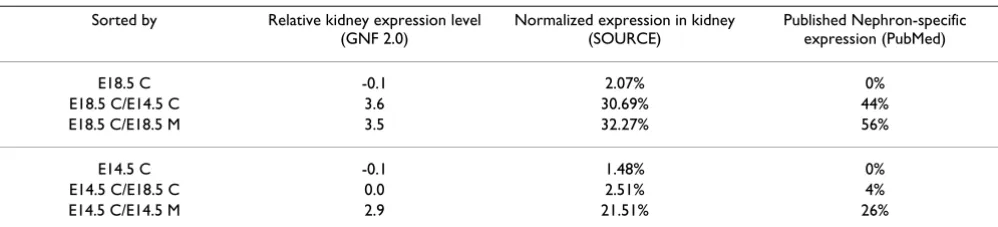
so that stage-specific kidney genes could be identified. To enrich for E18.5 kidney-specific genes, signals obtained from E18.5 control kidney samples (E18.5C) were used to compare with E14.5 control kidney data (E14.5C). Genes sorted according to their expression signal fold changes (E18.5C/E14.5C) generated a list enchriched for E18.5 mouse kidney genes. A list of 1,006 genes showed more than 2 fold change was identified (Table 1 and Additional file 2). As shown in Table 2, the enrichment for kidney specificity was dramatic. The average relative kidney expression level among the top 50 genes on the list reported by Gene Sorter is 3.6 whereas that of the gene list sorted using raw signals (E18.5C) is only -0.1. Similarly the average normalized expression level in the kidney, reported by SOURCE [33], of the top 50 genes also showed a nearly 15 fold increase (30.69% compare to 2.07%). Although a PubMed search did not find any of the top 50 genes in the list sorted by raw signals (E18.5C; 0%), 22 of the top 50 (44%) genes sorted by fold change (E18.5C/E14.5C) were described to have a nephron-spe-cific expression pattern.
The same approach was applied to the E14.5 experiment to identify 796 gene that showed more than a 2 fold change (Table 1 and Additional file 3), however the enrichment for kidney- or nephron-specificity was not sig-nificant. As shown in Table 2, the average relative kidney expression levels of the top 50 genes were not much dif-ferent in lists sorted by the raw signals and fold changes (-0.1 and 0.0). A slight increase in the average normalized expression in the kidney was observed (1.48% and 2.51%). There were only 2 genes (4%) among the top 50 reported to have a nephron-specific expression pattern in Table 1: Numbers of genes that showed more than a 2-fold increase in different expression level comparisons.
Experiment/Baseline E18.5 C E18.5 M E14.5 C E14.5 M
E18.5 C - 47 796
-E18.5 M 465 - 481 341
E14.5 C 1,006 476 - 2
E14.5 M - 331 41
-Table 2: Expression profile comparison between E18.5 control and Lim1 conditional mutant kidney generated a gene list enriched for nephron-specificity.
Sorted by Relative kidney expression level (GNF 2.0)
Normalized expression in kidney (SOURCE)
Published Nephron-specific expression (PubMed)
E18.5 C -0.1 2.07% 0%
E18.5 C/E14.5 C 3.6 30.69% 44%
E18.5 C/E18.5 M 3.5 32.27% 56%
E14.5 C -0.1 1.48% 0%
E14.5 C/E18.5 C 0.0 2.51% 4%
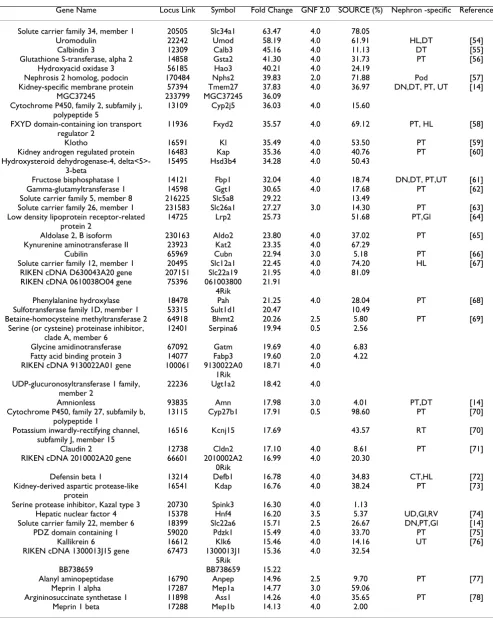
Table 3: Top 50 genes upregulated in the E18.5 control kidney when compared to the Lim1 conditional mutant kidney.
Gene Name Locus Link Symbol Fold Change GNF 2.0 SOURCE (%) Nephron -specific Reference
Solute carrier family 34, member 1 20505 Slc34a1 63.47 4.0 78.05
Uromodulin 22242 Umod 58.19 4.0 61.91 HL,DT [54]
Calbindin 3 12309 Calb3 45.16 4.0 11.13 DT [55]
Glutathione S-transferase, alpha 2 14858 Gsta2 41.30 4.0 31.73 PT [56] Hydroxyacid oxidase 3 56185 Hao3 40.21 4.0 24.19
Nephrosis 2 homolog, podocin 170484 Nphs2 39.83 2.0 71.88 Pod [57] Kidney-specific membrane protein 57394 Tmem27 37.83 4.0 36.97 DN,DT, PT, UT [14]
MGC37245 233799 MGC37245 36.09 Cytochrome P450, family 2, subfamily j,
polypeptide 5
13109 Cyp2j5 36.03 4.0 15.60
FXYD domain-containing ion transport regulator 2
11936 Fxyd2 35.57 4.0 69.12 PT, HL [58]
Klotho 16591 Kl 35.49 4.0 53.50 PT [59]
Kidney androgen regulated protein 16483 Kap 35.36 4.0 40.76 PT [60] Hydroxysteroid dehydrogenase-4,
delta<5>-3-beta
15495 Hsd3b4 34.28 4.0 50.43
Fructose bisphosphatase 1 14121 Fbp1 32.04 4.0 18.74 DN,DT, PT,UT [61] Gamma-glutamyltransferase 1 14598 Ggt1 30.65 4.0 17.68 PT [62] Solute carrier family 5, member 8 216225 Slc5a8 29.22 13.49
Solute carrier family 26, member 1 231583 Slc26a1 27.27 3.0 14.30 PT [63] Low density lipoprotein receptor-related
protein 2
14725 Lrp2 25.73 51.68 PT,Gl [64]
Aldolase 2, B isoform 230163 Aldo2 23.80 4.0 37.02 PT [65] Kynurenine aminotransferase II 23923 Kat2 23.35 4.0 67.29
Cubilin 65969 Cubn 22.94 3.0 5.18 PT [66]
Solute carrier family 12, member 1 20495 Slc12a1 22.45 4.0 74.20 HL [67] RIKEN cDNA D630043A20 gene 207151 Slc22a19 21.95 4.0 81.09
RIKEN cDNA 0610038O04 gene 75396 061003800 4Rik
21.91
Phenylalanine hydroxylase 18478 Pah 21.25 4.0 28.04 PT [68] Sulfotransferase family 1D, member 1 53315 Sult1d1 20.47 10.49
Betaine-homocysteine methyltransferase 2 64918 Bhmt2 20.26 2.5 5.80 PT [69] Serine (or cysteine) proteinase inhibitor,
clade A, member 6
12401 Serpina6 19.94 0.5 2.56
Glycine amidinotransferase 67092 Gatm 19.69 4.0 6.83 Fatty acid binding protein 3 14077 Fabp3 19.60 2.0 4.22 RIKEN cDNA 9130022A01 gene 100061 9130022A0
1Rik
18.71 4.0
UDP-glucuronosyltransferase 1 family, member 2
22236 Ugt1a2 18.42 4.0
Amnionless 93835 Amn 17.98 3.0 4.01 PT,DT [14]
Cytochrome P450, family 27, subfamily b, polypeptide 1
13115 Cyp27b1 17.91 0.5 98.60 PT [70]
Potassium inwardly-rectifying channel, subfamily J, member 15
16516 Kcnj15 17.69 43.57 RT [70]
Claudin 2 12738 Cldn2 17.10 4.0 8.61 PT [71]
RIKEN cDNA 2010002A20 gene 66601 2010002A2 0Rik
16.99 4.0 20.30
Defensin beta 1 13214 Defb1 16.78 4.0 34.83 CT,HL [72] Kidney-derived aspartic protease-like
protein
16541 Kdap 16.76 4.0 38.24 PT [73]
Serine protease inhibitor, Kazal type 3 20730 Spink3 16.30 4.0 1.13
Hepatic nuclear factor 4 15378 Hnf4 16.20 3.5 5.37 UD,Gl,RV [74] Solute carrier family 22, member 6 18399 Slc22a6 15.71 2.5 26.67 DN,PT,Gl [14] PDZ domain containing 1 59020 Pdzk1 15.49 4.0 33.70 PT [75]
Kallikrein 6 16612 Klk6 15.46 4.0 14.16 UT [76]
RIKEN cDNA 1300013J15 gene 67473 1300013J1 5Rik
15.36 4.0 32.54
BB738659 BB738659 15.22
Alanyl aminopeptidase 16790 Anpep 14.96 2.5 9.70 PT [77] Meprin 1 alpha 17287 Mep1a 14.77 3.0 59.06
Argininosuccinate synthetase 1 11898 Ass1 14.26 4.0 35.65 PT [78] Meprin 1 beta 17288 Mep1b 14.13 4.0 2.00
the gene list sorted by developmental stage-specific fold change (E14.5C/E18.5C). A closer look of the gene list revealed that this list enriched for genes generally expressed in undifferentiated, embryonic tissues but do not necessarily show kidney-specificity (data not shown).
Identification of nephron-specific genes of different developmental stages
A second protocol was to take advantage of the nephron-deficient Lim1 conditional mutant kidneys to identify nephron-specific genes of different developmental stages [20]. To generate an E18.5 nephron-specific gene list, we compared gene expression data of E18.5 control kidney (E18.5C) and Lim1 conditional mutant kidney (E18.5M). Fold changes were calculated and used to sort genes. A total of 465 genes showed a more than 2 fold increase in expression in the control kidney compared to the condi-tional mutant kidney (Table 1 and Addicondi-tional file 4). The top 50 genes on the list were further evaluated computa-tionally for their kidney specificity. The results indicate that the gene list generated by this protocol is highly enrich for nephron-specific genes. The average relative kidney expression level, based on GNF 2.0, reached 3.5, and the normalized kidney expression level, according to SOURCE, is 32.27%. There is also a slight increase in the ratio of genes with published nephron-specific expression patterns (56%) compared to the gene list generated using the previous protocol (44%). The details of the gene list are described in Table 3.
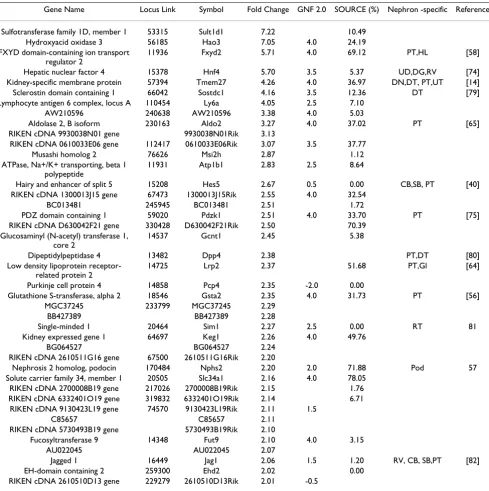
A gene list enriched for E14.5 nephron-specific genes was generated using the same protocol. Comparison of the E14.5 control kidney and Lim1 conditional mutant kid-ney gene expression profile picked up only 41 genes that showed a more than 2 fold change (Table 1). Unlike the gene list sorted by the comparison made between devel-opmental stages (E14.5C/E18.5C), which does not signif-icantly enrich for E14.5 kidney genes, the comparison between control and Lim1 conditional mutant kidney helped to identify kidney-specific genes, especially those expressed in the nephrons. As shown in Table 2, the aver-age relative kidney expression level is as high as 2.9, and there is also a nearly 15 fold increase in the average nor-malized kidney expression level (21.51 % compare to 1.48%). Thirteen (26%) genes on the top 50 list were also previously described to have a nephron-specific expres-sion pattern. Notably 3 genes related to the Notch signal-ing pathway, Msih2, Hes5, and Jag1 were found in the list. The details of this gene list are summarized in Table 4.
Ontological analysis on nephron-specific genes of different developmental stages
To gain insight into the functional aspects of the microar-ray data, we exploited the web-based annotation tool, DAVID, to help identify functional themes that showed
differences between the control kidney and the Lim1 con-ditional mutant kidney [36]. Each of the top 1,000 genes on the lists that displayed upregulation in the control kid-ney compared to the Lim1 conditional mutant kidney at either E18.5 or E14.5 were used for this analysis. Ontolog-ical analyses were performed at Molecular Function Level 1, Biological Process Level 2, and Cell Component Level 4 [35]. The results of major functional categories are shown in Figure 1. The numbers of genes that fell in major cate-gories were normalized by the number of genes annotated in each list and were expressed in percentages. Generally speaking nephron-specific genes identified at E18.5 were better studied. Close to 60% of these genes were anno-tated in Molecular Function and Biological Process ontol-ogies and 32% in Cell Component at the levels our analyses were performed. In contrast, only about 30% and 11% of the genes on the E14.5 nephron-specific gene list were annotated at the same levels.
Comparisons made at Molecular Function Level 1 (Figure 1A) revealed that the majority of the E18.5 nephron genes identified in our screen were described to possess catalytic activity (58.49%) whereas molecules found in the E14.5 nephron gene list were better studied for their physical interactions with other molecules (e.g. binding, 64.48%). The E18.5 gene list is also characterized by a relatively high proportion of transporter proteins (25.79%) whereas the E14.5 gene list contains a higher ratio of genes with signal transducer (13.73%), transcription reg-ulator (8.06%), enzyme regreg-ulator (4.48%), motor (1.19%) and translation regulator (0.90%) functions.
Ontological analysis at Biological Process Level 2 (Figure 1B) indicated that the E14.5 nephron-specific gene list favors molecules involved in cell communication (20.79%) and morphogenesis (11.11%). Metabolism is detected as a very significant functional theme in the E18.5 gene list with an EASE score of 7.72 E-5 (data not shown) [37].
nucle-oplasm (12.96%), cytosol (11.11%), chromatin (3.70%) and basal lamina (2.78%) was found in the E14.5 gene list.
Discussion
The mouse is one of the most widely used animal models to study human biology especially after the development of embryonic stem (ES) cells and the assembly and
anno-tation of the mouse genome sequence [2-4,38]. ES cells and gene targeting technology allow the construction of transgenic mice with defined genetic modifications. The availability of whole genome sequences forms the basis of the development of high-throughput technologies, such as microarrays, to conduct research at a genomic level. Since it is relatively difficult to collect significant numbers of genetically well-defined human samples, it is impor-Table 4: Top 41 genes upregulated in the E14.5 control kidney when compared to the Lim1 conditional mutant kidney.
Gene Name Locus Link Symbol Fold Change GNF 2.0 SOURCE (%) Nephron -specific Reference
Sulfotransferase family 1D, member 1 53315 Sult1d1 7.22 10.49 Hydroxyacid oxidase 3 56185 Hao3 7.05 4.0 24.19 FXYD domain-containing ion transport
regulator 2
11936 Fxyd2 5.71 4.0 69.12 PT,HL [58]
Hepatic nuclear factor 4 15378 Hnf4 5.70 3.5 5.37 UD,DG,RV [74] Kidney-specific membrane protein 57394 Tmem27 4.26 4.0 36.97 DN,DT, PT,UT [14] Sclerostin domain containing 1 66042 Sostdc1 4.16 3.5 12.36 DT [79] Lymphocyte antigen 6 complex, locus A 110454 Ly6a 4.05 2.5 7.10
AW210596 240638 AW210596 3.38 4.0 5.03
Aldolase 2, B isoform 230163 Aldo2 3.27 4.0 37.02 PT [65] RIKEN cDNA 9930038N01 gene 9930038N01Rik 3.13
RIKEN cDNA 0610033E06 gene 112417 0610033E06Rik 3.07 3.5 37.77
Musashi homolog 2 76626 Msi2h 2.87 1.12
ATPase, Na+/K+ transporting, beta 1 polypeptide
11931 Atp1b1 2.83 2.5 8.64
Hairy and enhancer of split 5 15208 Hes5 2.67 0.5 0.00 CB,SB, PT [40] RIKEN cDNA 1300013J15 gene 67473 1300013J15Rik 2.55 4.0 32.54
BC013481 245945 BC013481 2.51 1.72
PDZ domain containing 1 59020 Pdzk1 2.51 4.0 33.70 PT [75] RIKEN cDNA D630042F21 gene 330428 D630042F21Rik 2.50 70.39
Glucosaminyl (N-acetyl) transferase 1, core 2
14537 Gcnt1 2.45 5.38
Dipeptidylpeptidase 4 13482 Dpp4 2.38 PT,DT [80]
Low density lipoprotein receptor-related protein 2
14725 Lrp2 2.37 51.68 PT,Gl [64]
Purkinje cell protein 4 14858 Pcp4 2.35 -2.0 0.00
Glutathione S-transferase, alpha 2 18546 Gsta2 2.35 4.0 31.73 PT [56] MGC37245 233799 MGC37245 2.29
BB427389 BB427389 2.28
Single-minded 1 20464 Sim1 2.27 2.5 0.00 RT 81
Kidney expressed gene 1 64697 Keg1 2.26 4.0 49.76
BG064527 BG064527 2.24
RIKEN cDNA 2610511G16 gene 67500 2610511G16Rik 2.20
Nephrosis 2 homolog, podocin 170484 Nphs2 2.20 2.0 71.88 Pod 57 Solute carrier family 34, member 1 20505 Slc34a1 2.16 4.0 78.05
RIKEN cDNA 2700008B19 gene 217026 2700008B19Rik 2.15 1.76 RIKEN cDNA 6332401O19 gene 319832 6332401O19Rik 2.14 6.71
RIKEN cDNA 9130423L19 gene 74570 9130423L19Rik 2.11 1.5
C85657 C85657 2.11
RIKEN cDNA 5730493B19 gene 5730493B19Rik 2.10
Fucosyltransferase 9 14348 Fut9 2.10 4.0 3.15
AU022045 AU022045 2.07
Jagged 1 16449 Jag1 2.06 1.5 1.20 RV, CB, SB,PT [82] EH-domain containing 2 259300 Ehd2 2.02 0.00
RIKEN cDNA 2610510D13 gene 229279 2610510D13Rik 2.01 -0.5
tant to perform research on an evolutionarily close species prior to their human applications. In this study, we took advantage of the nephron-deficient kidneys from metane-phric mesenchyme-specific Lim1 conditional mutant mice to perform a genome-wide screen for developing nephron genes. Whereas similar studies have been performed on kidneys from meprin β, vitamin D receptor, aquaporin-1,
or metallothionein knockout mice, our study is the first to use a tissue-specific approach in the kidney [15-18].
Computational analysis and PubMed search suggested that the expression profile comparison between control and Lim1 conditional mutant kidneys generated gene lists enriched for nephron-specific genes. In global gene Ontological analyses of the top 1,000 genes upregulated in E18.5 and E14.5 control kidneys
Figure 1
expression level studies, ribosomal genes and other housekeeping genes that are highly expressed but do not show any tissue- or developmental stage-specificity are always identified. In this study, we used two different pro-tocols to enrich for developmental stage-specific kidney genes and nephron-specific genes of different develop-mental stages. Two independent online gene expression databases, namely GNF Expression Atlas 2.0 and Unigene were used to evaluate the tissue-specific enrichment com-putationally. Our results indicated dramatic enrichments for kidney-specific genes by both protocols in the E18.5 experiments. However, the comparison made between E14.5 and E18.5 control kidneys did not generate a kid-ney-specific gene list. In our opinion, there are at least two possible reasons. Firstly, data from the two online data-bases we used were based on experiments performed using either adult or neonate kidney tissues. Neither of them are likely to reflect gene expression profiles during early nephron development. Secondly, since many impor-tant molecular pathways and fundamental developmen-tal processes are repeatedly observed in different organ systems, genes predominantly expressed during early nephron development are also likely to be found in other undifferentiated tissues. A closer look of the gene list results in a conclusion consistent with this latter assump-tion. Many of the genes identified by this comparison are commonly found in undifferentiated tissues (data not shown). In contrast, the comparison between E14.5 con-trol and Lim1 conditional mutant kidneys identified mol-ecules that are also found in mature nephrons, which predominantly contributed to the kidney-specificity in our evaluation, and molecules involved in early nephron development. For example, podocin (Nphs2) is only expressed in terminally differentiated podocytes [39]. Ele-vated podocin level observed in E14.5 control kidney sug-gests that the first podocyte is found before or around E14.5. Notably, regulatory genes important in early neph-ron development, such as Msi2h, Hes5, and Jag1, which are involved in Notch signaling [40-45], do not show kid-ney-specificity based on GNF Atlas 2.0 and UniGene data. However, our screening protocol placed them on top of our list. Therefore, the use of Lim1 conditional mutant tis-sue as an RNA source in our microarray experiment helped to identify nephron developmental genes.
The results of our ontological comparison made between the E18.5 and E14.5 nephron-specific gene lists are con-sistent with current concepts of kidney organogenesis and a previous study [46,47]. Gene ontology (GO) annota-tions provide structured, precisely defined, common, con-trolled vocabulary for describing the roles of genes and their products in any organism. It is the current represen-tation of biological knowledge as well as serving as a guide for organizing new data [35]. However, one should keep in mind that the gene ontology is a dynamic, web-based
resource, the annotations are not complete and their accu-racy is limited by current knowledge of the molecules. Although kidney organogenesis is a continuous process, the first nephron is not seen until around E16.5 [1,23]. Nephrons forming in a E14.5 kidney are mainly com-posed of reciprocally induced tissues, stem cell growth and differentiation, cell polarization, mesenchyme to epi-thelia transformation, branching morphogenesis, angio-genesis, apoptosis, proximal-distal segmentation and the differentiation of several interesting cell types. In our oncological analysis, E14.5 forming nephron-specific genes are composed of those better studied for their pro-tein-protein interaction (binding) and possess signal transducer, transcription regulator and enzyme regulator activities. A higher portion of them are involved in cell communication and morphogenesis process. Interest-ingly, they are associated with cytoskeleton and nuclear compartments (nucleoplasm and chromatin). In contrast, there are many mature nephrons present in an E18.5 kid-ney. Therefore, we were expecting to observe genes related to kidney function, e.g. those involved in solute transport and energy metabolism. Our results indicate a relatively high number of E18.5 nephron-specific genes possess cat-alytic activity (presumably related to energy metabolism and the extensive extracellular matrix change in late kid-ney development) and exert their function as transporters. Consistently, an extremely high proportion of them encoded proteins located in the mitochondria.
Ontological analysis and a detailed examination of the top 1,000 E14.5 nephron-specific gene list suggest that genes with modest upregulation in the control kidney (fold changes less than 2 in our experiment) are also inter-esting. For example, Brn1 (1.34) and EphA4 (1.67) were previously shown to be downstream of Lim1 [20,25]. Fzd4
(1.71) has been considered a candidate receptor to trans-duce Wnt4 signals during kidney organogenesis [1,48].
Irx2 (1.52) and Irx3 (1.28) are homeobox genes
previ-ously reported to be expressed in the developing neph-rons [49]. Crb3 (1.40) is known to localize to kidney epithelia and is essential for ciliogenesis [50,51]. The top 1,000 genes upregulated in the E14.5 control kidney is supplied in Additional file 5.
more specificity. Nevertheless, our study demonstrates that genetically engineered mouse organs can be used to identify tissue-specific and developmentally regulated genes during mammalian organogenesis.
Conclusion
Our experimental results indicate that the expression pro-file comparisons between the control and the Lim1 condi-tional mutant kidneys generated nephron-specific gene lists. Our results demonstrate the feasibility of exploiting genetically engineered kidneys to identify developing nephron-specific genes.
Competing interests
The author(s) declare that they have no competing inter-ests.
Authors' contributions
YTC designed the study, carried out sample collection, performed computational analysis, and prepared the manuscript. AK conceived the study, participated in sam-ple collection, and participated in discussions. KMK helped in sample collection and contributed to the discus-sion. RLJ provided microarray chips and contributed to the discussion. RRB participated in study design, super-vised data collection, and prepared the manuscript.
Additional material
Acknowledgements
We thank Sara Rizvi, Mona Varia, and Mini Kapoor in the M. D. Anderson Cancer Center Murine Microarray and Affymetrix Facility (MMAF) for array processing. Jin Wang for assistance on initial data analysis. These stud-ies were supported by a grant from the National Institutes of Health (NIH) HD30284 to R.R.B. and by EY012311 to R.L.J. MMAF and veterinary resources were supported by the NIH Cancer Center Support Grant CA16672.
References
1. Vainio S, Lin Y: Coordinating early kidney development: les-sons from gene targeting. Nat Rev Genet 2002, 3:533-543. 2. Waterston RH, Lindblad-Toh K, Birney E, Rogers J, Abril JF, Agarwal
P, Agarwala R, Ainscough R, Alexandersson M, An P, Antonarakis SE, Attwood J, Baertsch R, Bailey J, Barlow K, Beck S, Berry E, Birren B, Bloom T, Bork P, Botcherby M, Bray N, Brent MR, Brown DG, Brown SD, Bult C, Burton J, Butler J, Campbell RD, Carninci P, Cawley S, Chiaromonte F, Chinwalla AT, Church DM, Clamp M, Clee C, Collins FS, Cook LL, Copley RR, Coulson A, Couronne O, Cuff J, Curwen V, Cutts T, Daly M, David R, Davies J, Delehaunty KD, Deri J, Dermitza-kis ET, Dewey C, Dickens NJ, Diekhans M, Dodge S, Dubchak I, Dunn DM, Eddy SR, Elnitski L, Emes RD, Eswara P, Eyras E, Felsenfeld A, Fewell GA, Flicek P, Foley K, Frankel WN, Fulton LA, Fulton RS, Furey TS, Gage D, Gibbs RA, Glusman G, Gnerre S, Goldman N, Goodstadt L, Grafham D, Graves TA, Green ED, Gregory S, Guigo R, Guyer M, Hardison RC, Haussler D, Hayashizaki Y, Hillier LW, Hinrichs A, Hlavina W, Holzer T, Hsu F, Hua A, Hubbard T, Hunt A, Jackson I, Jaffe DB, Johnson LS, Jones M, Jones TA, Joy A, Kamal M, Karlsson EK, Karolchik D, Kasprzyk A, Kawai J, Keibler E, Kells C, Kent WJ, Kirby A, Kolbe DL, Korf I, Kucherlapati RS, Kulbokas EJ, Kulp D, Landers T, Leger JP, Leonard S, Letunic I, Levine R, Li J, Li M, Lloyd C, Lucas S, Ma B, Maglott DR, Mardis ER, Matthews L, Mauceli E, Mayer JH, McCarthy M, McCombie WR, McLaren S, McLay K, McPherson JD, Meldrim J, Meredith B, Mesirov JP, Miller W, Miner TL, Mongin E, Montgomery KT, Morgan M, Mott R, Mullikin JC, Muzny DM, Nash WE, Nelson JO, Nhan MN, Nicol R, Ning Z, Nusbaum C, O'Connor MJ, Okazaki Y, Oliver K, Overton-Larty E, Pachter L, Parra G, Pepin KH, Peterson J, Pevzner P, Plumb R, Pohl CS, Poliakov A, Ponce TC, Ponting CP, Potter S, Quail M, Reymond A, Roe BA, Roskin KM, Rubin EM, Rust AG, Santos R, Sapojnikov V, Schultz B, Schultz J, Schwartz MS, Schwartz S, Scott C, Seaman S, Searle S, Sharpe T, Sheridan A, Shownkeen R, Sims S, Singer JB, Slater G, Smit A, Smith DR, Spencer B, Stabenau A, Stange-Thomann N, Sugnet C, Suyama M, Tesler G, Thompson J, Torrents D, Trevaskis E, Tromp J, Ucla C, Ureta-Vidal A, Vinson JP, Von Niederhausern AC, Wade CM, Wall M, Weber RJ, Weiss RB, Wendl MC, West AP, Wetterstrand K, Wheeler R, Whelan S, Wierzbowski J, Willey D, Williams S, Wilson RK, Winter E, Worley KC, Wyman D, Yang S, Yang SP, Zdobnov EM, Zody MC, Lander ES: Initial sequencing and comparative anal-ysis of the mouse genome. Nature 2002, 420:520-562. 3. Okazaki Y, Furuno M, Kasukawa T, Adachi J, Bono H, Kondo S,
Nikaido I, Osato N, Saito R, Suzuki H, Yamanaka I, Kiyosawa H, Yagi K, Tomaru Y, Hasegawa Y, Nogami A, Schonbach C, Gojobori T, Baldarelli R, Hill DP, Bult C, Hume DA, Quackenbush J, Schriml LM, Kanapin A, Matsuda H, Batalov S, Beisel KW, Blake JA, Bradt D, Brusic V, Chothia C, Corbani LE, Cousins S, Dalla E, Dragani TA, Fletcher CF, Forrest A, Frazer KS, Gaasterland T, Gariboldi M, Gissi C, Godzik A, Gough J, Grimmond S, Gustincich S, Hirokawa N, Jackson IJ, Jarvis ED, Kanai A, Kawaji H, Kawasawa Y, Kedzierski RM, King BL, Kona-gaya A, Kurochkin IV, Lee Y, Lenhard B, Lyons PA, Maglott DR, Maltais L, Marchionni L, McKenzie L, Miki H, Nagashima T, Numata K,
Additional file 1
Expression data for all the microarrays used in this study. Click here for file
[http://www.biomedcentral.com/content/supplementary/1471-2369-7-1-S1.xls]
Additional file 2
E18.5 kidney gene list. Sorted by E18.5C/E14.5C; 1,006 genes showed a more than 2 fold change.
Click here for file
[http://www.biomedcentral.com/content/supplementary/1471-2369-7-1-S2.xls]
Additional file 3
E14.5 kidney gene list. Sorted by E14.5C/E18.5C; 796 genes showed a more than 2 fold change.
Click here for file
[http://www.biomedcentral.com/content/supplementary/1471-2369-7-1-S3.xls]
Additional file 4
E18.5 nephron gene list. Sorted by E18.5C/E18.5M; 465 genes showed a more than 2fold change; top 1,000 genes.
Click here for file
[http://www.biomedcentral.com/content/supplementary/1471-2369-7-1-S4.xls]
Additional file 5
E14.5 nephron gene list. Sorted by E14.5C/E14.5M; 41 genes showed a more than 2 fold change; top 1,000 genes.
Click here for file
Okido T, Pavan WJ, Pertea G, Pesole G, Petrovsky N, Pillai R, Pontius JU, Qi D, Ramachandran S, Ravasi T, Reed JC, Reed DJ, Reid J, Ring BZ, Ringwald M, Sandelin A, Schneider C, Semple CA, Setou M, Shi-mada K, Sultana R, Takenaka Y, Taylor MS, Teasdale RD, Tomita M, Verardo R, Wagner L, Wahlestedt C, Wang Y, Watanabe Y, Wells C, Wilming LG, Wynshaw-Boris A, Yanagisawa M, Yang I, Yang L, Yuan Z, Zavolan M, Zhu Y, Zimmer A, Carninci P, Hayatsu N, Hirozane-Kishikawa T, Konno H, Nakamura M, Sakazume N, Sato K, Shiraki T, Waki K, Kawai J, Aizawa K, Arakawa T, Fukuda S, Hara A, Hashizume W, Imotani K, Ishii Y, Itoh M, Kagawa I, Miyazaki A, Sakai K, Sasaki D, Shibata K, Shinagawa A, Yasunishi A, Yoshino M, Waterston R, Lander ES, Rogers J, Birney E, Hayashizaki Y: Analysis of the mouse tran-scriptome based on functional annotation of 60,770 full-length cDNAs. Nature 2002, 420:563-573.
4. Kawai J, Shinagawa A, Shibata K, Yoshino M, Itoh M, Ishii Y, Arakawa T, Hara A, Fukunishi Y, Konno H, Adachi J, Fukuda S, Aizawa K, Izawa M, Nishi K, Kiyosawa H, Kondo S, Yamanaka I, Saito T, Okazaki Y, Gojobori T, Bono H, Kasukawa T, Saito R, Kadota K, Matsuda H, Ash-burner M, Batalov S, Casavant T, Fleischmann W, Gaasterland T, Gissi C, King B, Kochiwa H, Kuehl P, Lewis S, Matsuo Y, Nikaido I, Pesole G, Quackenbush J, Schriml LM, Staubli F, Suzuki R, Tomita M, Wagner L, Washio T, Sakai K, Okido T, Furuno M, Aono H, Baldarelli R, Barsh G, Blake J, Boffelli D, Bojunga N, Carninci P, de Bonaldo MF, Brown-stein MJ, Bult C, Fletcher C, Fujita M, Gariboldi M, Gustincich S, Hill D, Hofmann M, Hume DA, Kamiya M, Lee NH, Lyons P, Marchionni L, Mashima J, Mazzarelli J, Mombaerts P, Nordone P, Ring B, Ringwald M, Rodriguez I, Sakamoto N, Sasaki H, Sato K, Schonbach C, Seya T, Shibata Y, Storch KF, Suzuki H, Toyo-oka K, Wang KH, Weitz C, Whittaker C, Wilming L, Wynshaw-Boris A, Yoshida K, Hasegawa Y, Kawaji H, Kohtsuki S, Hayashizaki Y: Functional annotation of a full-length mouse cDNA collection. Nature 2001, 409:685-690. 5. Schwab K, Patterson LT, Aronow BJ, Luckas R, Liang HC, Potter SS:
A catalogue of gene expression in the developing kidney. Kid-ney Int 2003, 64:1588-1604.
6. Yoshida T, Muller E, Stears R, Shirota S, Tsuchiya K, Akiba T, Gullans SR: Osmoadaptation-related genes in inner medulla of mouse kidney using microarray. Biochem Biophys Res Commun
2004, 322:250-257.
7. Stuart RO, Bush KT, Nigam SK: Changes in gene expression pat-terns in the ureteric bud and metanephric mesenchyme in models of kidney development. Kidney Int 2003, 64:1997-2008. 8. Valerius MT, Patterson LT, Witte DP, Potter SS: Microarray
analy-sis of novel cell lines representing two stages of metanephric mesenchyme differentiation. Mech Dev 2002, 110:151-164. 9. Supavekin S, Zhang W, Kucherlapati R, Kaskel FJ, Moore LC,
Devar-ajan P: Differential gene expression following early renal ischemia/reperfusion. Kidney Int 2003, 63:1714-1724.
10. Gumz ML, Popp MP, Wingo CS, Cain BD: Early transcriptional effects of aldosterone in a mouse inner medullary collecting duct cell line. Am J Physiol Renal Physiol 2003, 285:F664-673. 11. Kieran NE, Doran PP, Connolly SB, Greenan MC, Higgins DF,
Leon-ard M, Godson C, Taylor CT, Henger A, Kretzler M, Burne MJ, Rabb H, Brady HR: Modification of the transcriptomic response to renal ischemia/reperfusion injury by lipoxin analog. Kidney Int
2003, 64:480-492.
12. Susztak K, Bottinger E, Novetsky A, Liang D, Zhu Y, Ciccone E, Wu D, Dunn S, McCue P, Sharma K: Molecular profiling of diabetic mouse kidney reveals novel genes linked to glomerular dis-ease. Diabetes 2004, 53:784-794.
13. Kim JH, Ha IS, Hwang CI, Lee YJ, Kim J, Yang SH, Kim YS, Cao YA, Choi S, Park WY: Gene expression profiling of anti-GBM glomerulonephritis model: the role of NF-kappaB in immune complex kidney disease. Kidney Int 2004, 66:1826-1837. 14. Takasato M, Osafune K, Matsumoto Y, Kataoka Y, Yoshida N, Meguro H, Aburatani H, Asashima M, Nishinakamura R: Identification of kidney mesenchymal genes by a combination of microarray analysis and Sall1-GFP knockin mice. Mech Dev 2004,
121:547-557.
15. Norman LP, Jiang W, Han X, Saunders TL, Bond JS: Targeted dis-ruption of the meprin beta gene in mice leads to underrep-resentation of knockout mice and changes in renal gene expression profiles. Mol Cell Biol 2003, 23:1221-1230.
16. Li X, Zheng W, Li YC: Altered gene expression profile in the kidney of vitamin D receptor knockout mice. J Cell Biochem
2003, 89:709-719.
17. McReynolds MR, Taylor-Garcia KM, Greer KA, Hoying JB, Brooks HL: Renal medullary gene expression in aquaporin-1 null mice. Am J Physiol Renal Physiol 2005, 288:F315-321.
18. Miura N, Koizumi S: Gene expression profiles in the liver and kidney of metallothionein-null mice. Biochem Biophys Res Com-mun 2005, 332:949-955.
19. Karavanov AA, Karavanova I, Perantoni A, Dawid IB: Expression pattern of the rat Lim-1 homeobox gene suggests a dual role during kidney development. Int J Dev Biol 1998, 42:61-66. 20. Kobayashi A, Kwan KM, Carroll TJ, McMahon AP, Mendelsohn CL,
Behringer RR: Distinct and sequential tissue-specific activities of the LIM-class homeobox gene Lim1 for tubular morpho-genesis during kidney development. Development 2005,
132:2809-2823.
21. Shawlot W, Behringer RR: Requirement for Lim1 in head-organizer function. Nature 1995, 374:425-430.
22. Kwan KM, Behringer RR: Conditional inactivation of Lim1 func-tion. Genesis 2002, 32:118-120.
23. Kaufman MH, Bard JBL: The anatomical basis of mouse development San Diego, California, U.S.A.: Academic Press; 1999.
24. Wang P, Pereira FA, Beasley D, Zheng H: Presenilins are required for the formation of comma- and S-shaped bodies during nephrogenesis. Development 2003, 130:5019-5029.
25. Kania A, Johnson RL, Jessell TM: Coordinate roles for LIM home-obox genes in directing the dorsoventral trajectory of motor axons in the vertebrate limb. Cell 2000, 102:161-173. 26. Li C, Wong WH: Model-based analysis of oligonucleotide
arrays: expression index computation and outlier detection. Proc Natl Acad Sci U S A 2001, 98:31-36.
27. Schadt EE, Li C, Ellis B, Wong WH: Feature extraction and nor-malization algorithms for high-density oligonucleotide gene expression array data. J Cell Biochem Suppl 2001:120-125. 28. Brazma A, Hingamp P, Quackenbush J, Sherlock G, Spellman P,
Stoeckert C, Aach J, Ansorge W, Ball CA, Causton HC, Gaasterland T, Glenisson P, Holstege FC, Kim IF, Markowitz V, Matese JC, Parkin-son H, RobinParkin-son A, Sarkans U, Schulze-Kremer S, Stewart J, Taylor R, Vilo J, Vingron M: Minimum information about a microarray experiment (MIAME)-toward standards for microarray data. Nat Genet 2001, 29:365-371.
29. UCSC Mouse Gene Sorter [http://genome.ucsc.edu/cgi-bin/ hgNear]
30. Su AI, Wiltshire T, Batalov S, Lapp H, Ching KA, Block D, Zhang J, Soden R, Hayakawa M, Kreiman G, Cooke MP, Walker JR, Hogenesch JB: A gene atlas of the mouse and human protein-encoding transcriptomes. Proc Natl Acad Sci U S A 2004, 101:6062-6067. 31. Wheeler DL, Barrett T, Benson DA, Bryant SH, Canese K, Church
DM, DiCuccio M, Edgar R, Federhen S, Helmberg W, Kenton DL, Khovayko O, Lipman DJ, Madden TL, Maglott DR, Ostell J, Pontius JU, Pruitt KD, Schuler GD, Schriml LM, Sequeira E, Sherry ST, Sirotkin K, Starchenko G, Suzek TO, Tatusov R, Tatusova TA, Wagner L, Yaschenko E: Database resources of the National Center for Biotechnology Information. Nucleic Acids Res 2005, 33:D39-45. 32. SOURCE [http://source.stanford.edu]
33. Diehn M, Sherlock G, Binkley G, Jin H, Matese JC, Hernandez-Bous-sard T, Rees CA, Cherry JM, Botstein D, Brown PO, Alizadeh AA:
SOURCE: a unified genomic resource of functional annota-tions, ontologies, and gene expression data. Nucleic Acids Res
2003, 31:219-223.
34. Database for Annotation, Visualization and Integrated Dis-covery [http://apps1.niaid.nih.gov/DAVID]
35. Ashburner M, Ball CA, Blake JA, Botstein D, Butler H, Cherry JM, Davis AP, Dolinski K, Dwight SS, Eppig JT, Harris MA, Hill DP, Issel-Tarver L, Kasarskis A, Lewis S, Matese JC, Richardson JE, Ringwald M, Rubin GM, Sherlock G: Gene ontology: tool for the unification of biology. The Gene Ontology Consortium. Nat Genet 2000,
25:25-29.
36. Dennis G Jr, Sherman BT, Hosack DA, Yang J, Gao W, Lane HC, Lem-picki RA: DAVID: Database for Annotation, Visualization, and Integrated Discovery. Genome Biol 2003, 4:P3.
37. Hosack DA, Dennis G Jr, Sherman BT, Lane HC, Lempicki RA: Iden-tifying biological themes within lists of genes with EASE. Genome Biol 2003, 4:R70.
39. Miner JH: Focusing on the glomerular slit diaphragm: podocin enters the picture. Am J Pathol 2002, 160:3-5.
40. Piscione TD, Wu MY, Quaggin SE: Expression of Hairy/Enhancer of Split genes, Hes1 and Hes5, during murine nephron mor-phogenesis. Gene Expr Patterns 2004, 4:707-711.
41. McCright B: Notch signaling in kidney development. Curr Opin Nephrol Hypertens 2003, 12:5-10.
42. McCright B, Lozier J, Gridley T: A mouse model of Alagille syn-drome: Notch2 as a genetic modifier of Jag1 haploinsuffi-ciency. Development 2002, 129:1075-1082.
43. McCright B, Gao X, Shen L, Lozier J, Lan Y, Maguire M, Herzlinger D, Weinmaster G, Jiang R, Gridley T: Defects in development of the kidney, heart and eye vasculature in mice homozygous for a hypomorphic Notch2 mutation. Development 2001,
128:491-502.
44. Li L, Krantz ID, Deng Y, Genin A, Banta AB, Collins CC, Qi M, Trask BJ, Kuo WL, Cochran J, Costa T, Pierpont ME, Rand EB, Piccoli DA, Hood L, Spinner NB: Alagille syndrome is caused by mutations in human Jagged1, which encodes a ligand for Notch1. Nat Genet 1997, 16:243-251.
45. Okano H, Imai T, Okabe M: Musashi: a translational regulator of cell fate. J Cell Sci 2002, 115:1355-1359.
46. Saxen L: Organogenesis of the Kidney Cambridge: Press Syndicate of the University of Cambridge; 1987.
47. Stuart RO, Bush KT, Nigam SK: Changes in global gene expres-sion patterns during development and maturation of the rat kidney. Proc Natl Acad Sci U S A 2001, 98:5649-5654.
48. Stark MR, Rao MS, Schoenwolf GC, Yang G, Smith D, Mauch TJ: Friz-zled-4 expression during chick kidney development. Mech Dev 2000, 98:121-125.
49. Houweling AC, Dildrop R, Peters T, Mummenhoff J, Moorman AF, Ruther U, Christoffels VM: Gene and cluster-specific expression of the Iroquois family members during mouse development. Mech Dev 2001, 107:169-174.
50. Lemmers C, Michel D, Lane-Guermonprez L, Delgrossi MH, Medina E, Arsanto JP, Le Bivic A: CRB3 binds directly to Par6 and regu-lates the morphogenesis of the tight junctions in mammalian epithelial cells. Mol Biol Cell 2004, 15:1324-1333.
51. Makarova O, Roh MH, Liu CJ, Laurinec S, Margolis B: Mammalian Crumbs3 is a small transmembrane protein linked to pro-tein associated with Lin-7 (Pals1). Gene 2003, 302:21-29. 52. White KP, Rifkin SA, Hurban P, Hogness DS: Microarray analysis
of Drosophila development during metamorphosis. Science
1999, 286:2179-2184.
53. Mikulowska-Mennis A, Taylor TB, Vishnu P, Michie SA, Raja R, Horner N, Kunitake ST: High-quality RNA from cells isolated by laser capture microdissection. Biotechniques 2002, 33:176-179. 54. Zhu X, Cheng J, Gao J, Lepor H, Zhang ZT, Pak J, Wu XR: Isolation
of mouse THP gene promoter and demonstration of its kid-ney-specific activity in transgenic mice. Am J Physiol Renal Physiol
2002, 282:F608-617.
55. Li H, Christakos S: Differential regulation by 1,25-dihydroxyvi-tamin D3 of calbindin-D9k and calbindin-D28k gene expres-sion in mouse kidney. Endocrinology 1991, 128:2844-2852. 56. Rabahi F, Brule S, Sirois J, Beckers JF, Silversides DW, Lussier JG:
High expression of bovine alpha glutathione S-transferase (GSTA1, GSTA2) subunits is mainly associated with ster-oidogenically active cells and regulated by gonadotropins in bovine ovarian follicles. Endocrinology 1999, 140:3507-3517. 57. Moeller MJ, Sanden SK, Soofi A, Wiggins RC, Holzman LB: Two gene
fragments that direct podocyte-specific expression in trans-genic mice. J Am Soc Nephrol 2002, 13:1561-1567.
58. Jones DH, Golding MC, Barr KJ, Fong GH, Kidder GM: The mouse Na+-K+-ATPase gamma-subunit gene (Fxyd2) encodes three developmentally regulated transcripts. Physiol Genomics
2001, 6:129-135.
59. Kato Y, Arakawa E, Kinoshita S, Shirai A, Furuya A, Yamano K, Naka-mura K, Iida A, Anazawa H, Koh N, Iwano A, INaka-mura A, Fujimori T, Kuro-o M, Hanai N, Takeshige K, Nabeshima Y: Establishment of the anti-Klotho monoclonal antibodies and detection of Klotho protein in kidneys. Biochem Biophys Res Commun 2000,
267:597-602.
60. Meseguer A, Catterall JF: Mouse kidney androgen-regulated protein messenger ribonucleic acid is expressed in the prox-imal convoluted tubules. Mol Endocrinol 1987, 1:535-541.
61. Stein S, Liehr T, Eschrich K: Characterization of the mouse liver fructose-1,6-bisphosphatase gene. Gene 2001, 264:215-224. 62. Darbouy M, Chobert MN, Lahuna O, Okamoto T, Bonvalet JP,
Far-man N, Laperche Y: Tissue-specific expression of multiple gamma-glutamyl transpeptidase mRNAs in rat epithelia. Am J Physiol 1991, 261:C1130-1137.
63. Lee A, Beck L, Markovich D: The mouse sulfate anion trans-porter gene Sat1 (Slc26a1): cloning, tissue distribution, gene structure, functional characterization, and transcriptional regulation thyroid hormone. DNA Cell Biol 2003, 22:19-31. 64. Oleinikov AV, Makker SP: Increased expression of cytoplasmic
tail-containing form of gp600/megalin in active Heymann nephritis. J Pathol 2000, 192:251-256.
65. Vallet V, Bens M, Antoine B, Levrat F, Miquerol L, Kahn A, Vandewalle A: Transcription factors and aldolase B gene expression in microdissected renal proximal tubules and derived cell lines. Exp Cell Res 1995, 216:363-370.
66. Christensen EI, Verroust PJ: Megalin and cubilin, role in proxi-mal tubule function and during development. Pediatr Nephrol
2002, 17:993-999.
67. Igarashi P, Vanden Heuvel GB, Payne JA, Forbush B 3rd: Cloning, embryonic expression, and alternative splicing of a murine kidney-specific Na-K-Cl cotransporter. Am J Physiol 1995,
269:F405-418.
68. Lichter-Konecki U, Hipke CM, Konecki DS: Human phenylalanine hydroxylase gene expression in kidney and other nonhepatic tissues. Mol Genet Metab 1999, 67:308-316.
69. Delgado-Reyes CV, Wallig MA, Garrow TA: Immunohistochemi-cal detection of betaine-homocysteine S-methyltransferase in human, pig, and rat liver and kidney. Arch Biochem Biophys
2001, 393:184-186.
70. Zhang MY, Wang X, Wang JT, Compagnone NA, Mellon SH, Olson JL, Tenenhouse HS, Miller WL, Portale AA: Dietary phosphorus transcriptionally regulates 25-hydroxyvitamin D-1alpha-hydroxylase gene expression in the proximal renal tubule. Endocrinology 2002, 143:587-595.
71. Enck AH, Berger UV, Yu AS: Claudin-2 is selectively expressed in proximal nephron in mouse kidney. Am J Physiol Renal Physiol
2001, 281:F966-974.
72. Schnapp D, Reid CJ, Harris A: Localization of expression of human beta defensin-1 in the pancreas and kidney. J Pathol
1998, 186:99-103.
73. Mori K, Ogawa Y, Tamura N, Ebihara K, Aoki T, Muro S, Ozaki S, Tanaka I, Tashiro K, Nakao K: Molecular cloning of a novel mouse aspartic protease-like protein that is expressed abun-dantly in the kidney. FEBS Lett 1997, 401:218-222.
74. Taraviras S, Monaghan AP, Schutz G, Kelsey G: Characterization of the mouse HNF-4 gene and its expression during mouse embryogenesis. Mech Dev 1994, 48:67-79.
75. Capuano P, Bacic D, Stange G, Hernando N, Kaissling B, Pal R, Kocher O, Biber J, Wagner CA, Murer H: Expression and regulation of the renal Na/phosphate cotransporter NaPi-IIa in a mouse model deficient for the PDZ protein PDZK1. Pflugers Arch
2005, 449:392-402.
76. Petraki CD, Karavana VN, Skoufogiannis PT, Little SP, Howarth DJ, Yousef GM, Diamandis EP: The spectrum of human kallikrein 6 (zyme/protease M/neurosin) expression in human tissues as assessed by immunohistochemistry. J Histochem Cytochem 2001,
49:1431-1441.
77. Yang XF, Milhiet PE, Gaudoux F, Crine P, Boileau G: Complete sequence of rabbit kidney aminopeptidase N and mRNA localization in rabbit kidney by in situ hybridization. Biochem Cell Biol 1993, 71:278-287.
78. Wakui H, Komatsuda A, Itoh H, Kobayashi R, Nakamoto Y, Miura AB:
Renal argininosuccinate synthetase: purification, immuno-histochemical localization, and elastin-binding property. Ren Physiol Biochem 1992, 15:1-9.
79. Yanagita M, Oka M, Watabe T, Iguchi H, Niida A, Takahashi S, Aki-yama T, Miyazono K, Yanagisawa M, Sakurai T: USAG-1: a bone morphogenetic protein antagonist abundantly expressed in the kidney. Biochem Biophys Res Commun 2004, 316:490-500. 80. Dinjens WN, ten Kate J, Wijnen JT, van der Linden EP, Beek CJ,
Lend-ers MH, Khan PM, Bosman FT: Distribution of adenosine deam-inase-complexing protein in murine tissues. J Biol Chem 1989,
Publish with BioMed Central and every scientist can read your work free of charge "BioMed Central will be the most significant development for disseminating the results of biomedical researc h in our lifetime."
Sir Paul Nurse, Cancer Research UK
Your research papers will be:
available free of charge to the entire biomedical community
peer reviewed and published immediately upon acceptance
cited in PubMed and archived on PubMed Central
yours — you keep the copyright
Submit your manuscript here:
http://www.biomedcentral.com/info/publishing_adv.asp
BioMedcentral
81. Fan CM, Kuwana E, Bulfone A, Fletcher CF, Copeland NG, Jenkins NA, Crews S, Martinez S, Puelles L, Rubenstein JL, Tessier-Lavigne M:
Expression patterns of two murine homologs of Drosophila single-minded suggest possible roles in embryonic pattern-ing and in the pathogenesis of Down syndrome. Mol Cell Neu-rosci 1996, 7:1-16.
82. Leimeister C, Schumacher N, Gessler M: Expression of Notch pathway genes in the embryonic mouse metanephros sug-gests a role in proximal tubule development. Gene Expr Pat-terns 2003, 3:595-598.
Pre-publication history
The pre-publication history for this paper can be accessed here: