R E S E A R C H
Open Access
Bio-evaluation of functional date bars using
rats as model organism against
hypercholesterolemia
Muhammad Sajid Arshad
1*, Syeda Mamoona Batool
1, Muhammad Kamran Khan
1, Muhammad Imran
1,
Muhammad Haseeb Ahmad
1, Faqir Muhammad Anjum
2and Shahzad Hussain
3Abstract
Background:The present research project was designed to evaluate the cholesterol lowering potential of different date varieties including one exotic (Ajwa) and three Pakistani varieties (Aseel, Khudravi, Hallawi).
Methods:The albino rats were divided into six groups on the basis of different diets which includes, control having basal diet, high cholesterol high sucrose diet, high cholesterol high sucrose diet plus Khudravi dates, high
cholesterol high sucrose diet plus Hallawi dates, high cholesterol high sucrose diet plus Aseel dates, high cholesterol high sucrose diet plus Ajwa dates to evaluate maximum cholesterol lowering potential of each date variety.
Results:The results showed that Hallawi and Ajwa have lower crude fiber content as 2.02 ± 0.03% and 2.43 ± 0.04% however, lowest crude fat content (0.26 ± 0.01%) was also observed in ajwa. Mineral profile depicted that sodium (9.50–18.00 mg/100 g) was found to be in lesser amount among all varieties whereas, higher amount of potassium (465.00 to 887.20 mg/100 g) depicted that it is suitable for people having hypertension. Higher amount of reducing sugar was also observed in ajwa (79.45 ± 1.22%) followed by Hallawi (77.68 ± 1.42%). Total phenolic contents were found higher in Aseel (291.36 mg/100 g) whereas, minimum was observed in Khudravi (232.64 mg/100 g).
Furthermore, date varieties were also examined rat modeling to evaluate their maximum cholesterol lowering efficiency. Ajwa and Hallawi were observed to suppress the cholesterol efficiently as 110 mg/dL and 103 mg/dL respectively. On the basis of chemical profiling and other parameters, two date varieties Ajwa and Hallawi showed almost similar results and found to have maximum serum cholesterol, LDL and triglyceride reduction potential with good kidney and liver functions. Functional date bar was also developed by using Hallawi variety andsubjected to sensory evaluation.
Conclusion:In nutshell, Hallawi date variety was considered as better cholesterol lowering potential among other indigenous varieties and very close to Ajwa variety. So that Hallawi can be used to suppress the deadly effects of obesity and allied discrepancies particularly hypercholesterolemia.
Keywords:Date varieties, Rats modelling, Antioxidant profile, Hypercholesterolemia
© The Author(s). 2019Open AccessThis article is distributed under the terms of the Creative Commons Attribution 4.0 International License (http://creativecommons.org/licenses/by/4.0/), which permits unrestricted use, distribution, and reproduction in any medium, provided you give appropriate credit to the original author(s) and the source, provide a link to the Creative Commons license, and indicate if changes were made. The Creative Commons Public Domain Dedication waiver (http://creativecommons.org/publicdomain/zero/1.0/) applies to the data made available in this article, unless otherwise stated.
* Correspondence:[email protected];[email protected] 1Institute of Home and Food Sciences, Government College University, Faisalabad, Pakistan
Introduction
The diseases which are associated with life style are due to the behavioral and dietary risk factors which have hazard-ous effects on metabolic and physiological conditions of people. According to World health organization (WHO), these diseases are also called the non-communicable dis-eases (NCD) and death burden was 57 million out of which 36 million were due to NCDs worldwide [1]. In low and middle income countries death rate are due to NCDs and 80% contributing major and frequent cause of adult mortality and morbidity globally [2]. Major types of non-communicable diseases are CVDs, cancer, diabetes, obesity, neurological disorders and respiratory diseases. From past few decades CVDs remain the single largest cause of death representing 30% of all deaths and about 50% of NCDs deaths [3,4]. Several modifiable and non-modifiable risk factors are associated with the occur-rence of non-communicable metabolic diseases. World health organization (WHO) has prioritized modifiable risk factors including unhealthy diet, less physical activ-ity and metabolic abnormalities like serum lipid dis-order to prevent or reduce the occurrence of diseases. Elevation of metabolic risks is directly linked with food we consume and how we utilize that food energy. These foods only provide fats and sugars which only exert unhealthy effects on human health. Consumption of energy dense foods and less physical activities are be-coming a leading cause of obesity and other metabolic factors like hypercholesterolemia, hypertension, insulin resistance and many others. Interventions supported by dietary recommendations pose healthier effects in low-ering metabolic risks [5]. Diet based therapy includes use of organic foods such as fruits and vegetables due to the presence of phytochemicals (dietary fiber, carot-enoids and polyphenols (phenolics and flavonoids) in them which have pharmacological potential against diseases. Date fruit is very much popular among the Muslim community. Pakistan’s commercially important date varieties include Begum Jangi, Aseel, Fasli, Muzawati, Hillawi, Khudravi, Rabai and Dhakki. Global date produc-tion was 6.9 million tons and Pakistan is among top ten date producing countries and during the year 2007–08 production of date palm (Phoenix dactylifera) in Pakistan was 557.6 thousand [6]. Dates have both nutritious and medicinal benefits and are called “Tree of life” by Arabs. Higher concentration of polyphenols is present in dried fruits and dates with admirable nutritional profile that en-hance the lipoproteins in blood and prevent from oxida-tion [7]. Date fruit contain carbohydrates (44–48%), dietary fiber (9.6%, with 2.5%), minute amount of fat (0.2 to 0.5%), protein (2.3 to 5.6%) and higher amount of macro minerals potassium calcium and vitamins. Its com-position makes it suitable to lower the occurrence of certain coronary diseases, diabetes and most important
obesity which is a major heath threatening risk factor [8]. It is the need of time to produce foods with high nutri-tional quality that could be useful in providing the ne-cessary nourishment and combating malnutrition and nutrient deficiencies, in this regard development of functional foods containing valuable phytochemicals is of great attention worldwide among diet based therapies [9]. Dates are good options in this regard due to their wide ranging health promoting parameters and are abundantly produced [10]. Considering the aforementioned essentials this project was designed to produce a nourishing date bar with commercial value which surely would have su-perior nutritional profile and wholesomeness to that of existing products. A date based food bar supplemented with chick peas as a cheap source of high quality protein containing lysine an essential amino acid and 22 other amino acids including 8 essential amino acids present in date flesh. Their low moisture can complement the high moisture content (60%) of date flesh giving the date bar suitable matrix without addition of water externally and thereby increasing storability and nuts can be prepared and utilized to reduce the risk factors of obesity [11]. Keeping in view the above facts, the study was designed to explore the physico-chemical attributes and nutritional profile of different indigenous and exotic date varieties. Bio-efficacy of indigenous and exotic date varieties using rats as model organisms and to develop functional date bar and its sensory evaluation.
Materials and methods
The present study was carried out at Institute of Home and Food Sciences Government College Uni-versity Faisalabad and Food Technology section, Ayub Agricultural Research Institute, Faisalabad, Pakistan. This study comprises of three phases, physiochemical profiling, functional evaluation and finally bio-efficacy study through rats. The material used and procedures adopted are described as under:
Procurement of raw materials
Chemical assay
Moisture content in samples was determined according to the hot air oven method as described in AOAC [12]. Crude protein percentage in the samples was estimated
using the Kjeldahl’s method AOAC [12]. Crude fat
was determined by solvent extraction method using
soxhlet apparatus as mentioned in AOAC [12]. Crude
fiber in the samples was estimated by following the standard procedure as given in AOAC [12]. Total ash was determined by incineration of sample as inorganic matter by following the procedure as mentioned in AOAC [12]. The NFE was calculated by difference using following formula:
NFEð Þ ¼% 100−ð%CPþ%EEþ%CFþ%AshÞ
Physical analysis of different date varieties
Texture and weight analysis
Texture and fruit weight of the different date varieties were determined according to the method given by Piga et al [13].
Minerals estimation
Sample for mineral analysis was prepared by the wet digestion method. 0.5 g of dried date sample was first digested at low temperature (60-70 °C) with 10 mL
HNO3 for 20 min in a 100 mL conical flask on hot
plate, and then it was digested at high temperature
(190 °C) with 5 ml 60% HCLO4 till the contents of
flask become clear. The digested sample was trans-ferred to 100 mL volumetric flask and volume was made with double distilled and deionized water and then filtered [14]. The filtered sample solution was run by the atomic absorption spectrophotometer. Sample of known strength were first run for each mineral to obtain standard curve. The mineral con-tents of the samples were determined by using the re-spective standard curve prepared for each element
described in AACC [15]. Sodium and potassium were
estimated by flame photometer according to the method given in AOAC [12].
Antioxidant profile
DPPH free radical scavenging assay
2, 2-Diphenyl-1-picrylhydrazyl radical (DPPH•) assay was carried out to measure the free radical scavenging activity of the samples as described by Rababah et al [16]. The extract of date varieties in methanol (1–
100μg/mL) were mixed with 2 mL of 90μM methanol
solution of DPPH. After 30 min incubation period at room temperature, the absorbance was read at 517 nm. Butylated hydroxytoluene (BHT) and butylated hydroxyl anisole (BHA) were used as positive control
for comparison and 90μM DPPH solutions was taken
as blank. The percent scavenging was calculated by following formula:
Inhibitionð Þ ¼% Ablank−Asample
Ablank
100
Where Ablankis the absorbance of the DPPH solution
and Asampleis the absorbance of the extract solution.
Total phenolics contents (TPC)
Date fruit sample (25 g) of each variety was extracted with 100 mL of 80% (v/v) ethanol in a mechanical shaker for 6 h. It was centrifuged at 10,000 rpm for 20 min. The supernatant was filtered using Whatman No. 1 filter paper and evaporated to dryness at 40 °C under vacuum in a rotary evaporator. The dried extract obtained was again diluted to 100 ml with distilled water and stored in an air tight container at -21 °C until further use. Total phenols were analyzed with UV spectrophotometer (Spe-cord®200 Plus Germany) by Folin-Ciocalteu reagent method as described by Singh et al [17]. From prepared sample solution 125μl of sample were taken in a test tube. 500μl distilled water and 125μl of Folin-Ciocalteu reagent were added in it and gave a stand of 6 min. Then 1.25 mL of sodium carbonate (7%) was added in it. Final volume was made to 3 mL by adding 1 mL distilled water. The samples were incubated at room temperature for 120 min for completion of reaction. The absorbance of the samples was measured in triplicate at 760 nm by using a UV-VIS spectrophotometer. Gallic acid was run to prepare standard curve and its absorbance was taken at 725 nm. 0.5 g Gallic acid was dissolved in 10 mL etha-nol and then diluted to 100 mL with distilled water (5 g/ L). Dilutions of 1, 2, 5 and 10 ml to 100 mL with distilled water were prepared to create standards curve with 50, 100, 250 and 500 mg/L concentrations, respectively and its standard curve was used for the calculation of total phenolic contents in the samples.
Reducing sugar
Reducing sugars were determined according to Lane and
Eynon method as described in method No. 925–36 of
AOAC [18]. Reducing sugars have free aldehyde or Ke-tone group and have the ability to reduce the copper in Fehling solution to brick red insoluble Cuprous Oxide. The sugar content in date fruit sample is estimated by determining the volume of unknown sugar solution re-quired to completely reduce the measured volume of Fehling’s solution.
Efficacy study
to evaluate the impact of date paste from different var-ieties in suppressing obesity. 36 Male albino rats of 8–9 weeks were procured and housed in the animal room of Department of Pharmacy, Government College Univer-sity Faisalabad. Initially, the rats were acclimatized by feeding basal diet for one-week period. During the ex-periment, the environmental conditions were maintained i.e. temperature 23 ± 2 °C and relative humidity 55 ± 5% with 12 h light-dark period. In the animal modeling, six groups of rats were shaped assigning 6 rats in each group and through simultaneous synchronization obesity was induced in all 5 groups of rats through high choles-terol high sucrose diet. Group 3 to group 6 were fed with high cholesterol high sucrose diet + date paste intervention except group 1 which is control. The ex-perimental rats were monitored for the feed and water intake along with body weight gain throughout the trial. At the termination (56th day) of trial overnight fasted rats were decapitated and blood samples were collected in EDTA coated tubes. Furthermore, the serum was sep-arated after centrifuging the blood through centrifuge machine for 6 min @ 4000 rpm. The collected serum samples were kept for biochemical evaluation through Microlab 300 (Merck, Germany). The results were in-ferred statistically to establish a conclusive approach.
Blood assay
Blood assay including total cholesterol, high density lipo-proteins, low density lipoproteins and triglycerides, urea,
creatinine and Alanine aminotransferase (ALT) were
measured according to their respective protocols. Total cholesterol levels of the rat’s serum samples were
deter-mined using CHOD–PAP method following the protocol
of Stockbridge et al [19]. High density lipoprotein (HDL) samples were measured by HDL Cholesterol Precipitant method as mentioned by Assmann [20]. Low density li-poproteins (LDL) were determined by following the pro-cedure of McNamara et al [21]. Total triglycerides in all samples were determined by liquid triglycerides (GPO– PAP) method as outlined by Annoni et al [22]. Blood urea and creatinine (GLDH-method) were determined using commercial kits Jacobs et al [23] to assess the renal functionality. Alanine aminotransferase (ALT) was also assessed. Level of ALT was measured by the
dinitro-phenyl hydrazine (DNPH) method using Sigma Kits 59–
50 and 58–50 described by Basuny [24] to assess liver function test. On the basis of bioefficacy study best date variety having high anti-obesity perspective was used further for the development of date bar.
Preparation of date bars
Pre-treatment of dates
Dates were pitted, washed and dried. Pitted dates were steamed for 3 min. These were then dried. Peanuts and
almond were shelled, skin removed and crushed to form grits. Roasted gram was ground to form flour.
Development of date bars
After preparation of raw materials, dates were passed through mincing machine to make paste. Other ingredi-ents (roasted gram flour, skim milk, peanuts and al-monds) were mixed thoroughly to distribute uniformly and to make a blend. After mixing sheeting was done this was cut into bars of 2.5 cm width and 7 cm in length. The quantity of roasted gram flour, skim milk, peanuts and almonds remained constant while date paste was used in different proportions.
Sensory evaluation
The sensory evaluation of the four treatments of pre-pared date bars was conducted by a trained taste panel of 10 judges for attributes like color, flavor, taste, texture, mouth feel and overall acceptability following the pro-cedure of Heintz and Kader [25]. All evaluations were conducted at room temperature under white light. Pan-elists were provided with distilled water to rinse their mouths between the samples. The samples were pre-sented in random order and panelists were asked to rate their acceptance by giving a score for all the parameters.
Statistical analysis
The data obtained for different parameters were ana-lyzed statistically by applying Completely Randomized Design (CRD). Levels of significance (P≤0.05) were de-termined by applying ANOVA by following the
princi-ples outlined by Steel et al [26]. The means were
compared by using LSD.
Results and discussion
Proximate composition
and Hallawi (2.02 ± 0.13%). Due to similar processing conditions the moisture contents were observed to be more or less similar and ranged from 22.99 ± 0.02% to 25.75 ± 0.03%. Higher moisture content was observed in Aseel and Ajwa (25.75 ± 0.03%) followed by Khudravi (24.85 ± 0.06%) and Hallawi (22.99 ± 0.02%). Likewise, the recorded NFE values were ranged from 92.18 ± 0.13% to 93.08 ± 0.20 g %. Higher NFE was recorded in Hallawi (93.08 ± 0.20%) trailed by Ajwa (93.08 ± 0.16%) and minimum was observed in Khudravi (92.18 ± 0.13%) variety as shown in Table 1. The results of the present study are in agreement with findings of Nadeem et al [27] who narrated the values for moisture, crude protein, crude fat, crude fiber, ash and NFE as 24.79 g/100 g, 2.55 g/100 g, 0.47 g/100 g, 3.62 g/100 g, 1.31 g/100 g and 92.06 g/100 g respectively for different date varieties. Likewise, Al-Shahib and Marshal [11] had also carried out proximate profiling and observed that percent values of moisture content of different dates ranged between 9.2 to 32.1%, crude protein in the range of 1.7 to 3.0%, crude fat ranged from 0.1 to 0.5%, crude fiber in the range from 1.7 to 4.6%, and ash in the range of 0.3 to 2.4%. The results of this study are also in correspond-ence with Ismail et al [28] who evaluated the date var-ieties for their percent moisture, crude protein and ash as 20.25 to 22.14%, 2.3 to 2.7% and 1.83 to 2.36%.
Similarly, Yosef and Kado [29] evaluated Hallawi
and Khudravi for their moisture content as Hallawi (7.30 g/100 g) followed by Khudravi (9.50 g/100 g), pro-tein value for Hallawi (2.30 g/110 g) trailed by Khudravi (2.43 g/110 g), fat content in Hallawi (0.51 g/100 g) and Khudravi (0.47 g/100 g), ash content in Hallawi (1.92 g/ 100 g), Khudravi (2.12 g/100 g) and crude fiber in Hallawi (1.82 g/100 g) followed by Khudravi (2.28 g/100 g) and these results are in compliance with the present study. The slight variations in proximate composition of instant findings might be due to various factors, basically date fruit matures after passing through four main ripening stages kimri (unripe), khalal (full-size, slightly crunchy; ed-ible), rutab (ripe, soft; eded-ible), and tamar (ripe, reduced moisture; edible) [30]. Many researchers are of view that as date fruit progresses towards maturity ash, fibre and moisture content follow a decreasing trend. This reduc-tion is due to the common dates preservareduc-tion method of
sun drying. Moisture content also depends upon the stage of ripening and it decreases as it ripened for further stages from Kimri to Tamar [31].
Texture analysis
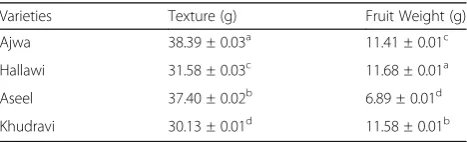
Results regarding mean values of texture analysis and fruit weight were showed in Table2. Mean value for texture of four different date varieties ranged from 30.13 ± 0.01 g to 38.39 ± 0.03 g. The highest value of texture was found in Ajwa (38.39 ± 0.03 g), followed by Aseel (37.40 ± 0.02 g) and minimum was observed in Khudravi in Table2. Simi-larly fruit weight of different date varieties ranged from 6.89 ± 0.01 g to 11.68 ± 0.01 g. Results for Fruit weight of four date verities showed maximum values for Hallawi
(11.68 ± 0.01 g), followed by Khudravi (11.58 ± 0.01 g) and minimum was observed in Aseel (6.89 ± 0.01 g) as shown in Table2. The present outcomes for texture and weight are in close agreement with the findings of Nadeem et al [32] who investigated that twenty-one date palm varieties for fruit weight among them Aseel and Hillawi were (6.98 g) and (11.72 g), respectively and the maximum value of texture was recorded in Aseel (38.49 g) followed by Hallawi (35.32 g). In another study conducted by Khan et al [33] where they observed the physical characteristics of different date varieties. Highest fruit weight was found in Dhakki (13.89 g) followed by Dora Basraywal (11.87 g) and Hillawi (11.72 g) and minimum weight was observed in Desi simple (3.04 g).
Mineral profile
During the present study, different macro and micro min-erals were determined in different date varieties. The mineral analysis of 4 different date varieties elucidated that calcium, iron, magnesium, potassium and zinc were present
Table 1Proximate composition of different date varieties
Varieties Ash
%
Moisture %
Fat %
Fiber %
Protein %
NFE %
Ajwa 1.68 ± 0.05c 25.75 ± 0.04a 0.26 ± 0.01b 2.43 ± 0.04a 2.77 ± 0.01a 93.08 ± 0.02a
Aseel 1.68 ± 0.04c 25.75 ± 0.03a 0.28 ± 0.05b 2.64 ± 0.04a 2.77 ± 0.04a 92.62 ± 0.20b
Hallawi 1.90 ± 0.03b 22.99 ± 0.02c 0.49 ± 0.04a 2.02 ± 0.03b 2.49 ± 0.13b 93.08 ± 0.20a
Khudravi 2.15 ± 0.19a 24.85 ± 0.06b 0.55 ± 0.03a 2.47 ± 0.02a 2.64 ± 0.02a 92.18 ± 0.13c
Different letters showed significant variations (p≤0.05) in column; values are expressed as means ± standard deviation of three independent determinations
Table 2Texture analysis and fruit weight of different date varieties
Varieties Texture (g) Fruit Weight (g)
Ajwa 38.39 ± 0.03a 11.41 ± 0.01c
Hallawi 31.58 ± 0.03c 11.68 ± 0.01a
Aseel 37.40 ± 0.02b 6.89 ± 0.01d
Khudravi 30.13 ± 0.01d 11.58 ± 0.01b
in momentous amounts whereas, non-momentous trend was observed among sodium. The highest value was found in Ajwa (191.00 ± 1.07 mg/100 g), followed by Aseel (160.03 ± 1.02 mg/100 g) and minimum was ob-served in Khudravi (135.03 ± 0.95 mg/100 g) as shown in Table3. Similarly, higher sodium content was observed in Aseel (18.00 ± 1.06 mg/100 g) followed by Hallawi (12.00 ± 1.04 mg/100 g) and minimum was found in Ajwa (9.50 ± 0.1 mg/100 g). The iron content found to be higher in Hallawi (5.40 ± 0.01 mg/100 g) followed by Khudravi (4.40 ± 0.01 mg/100 g) and minimum was found in Ajwa (3.13 ± 0.01 mg/100 g). Magnesium content found to be high in Ajwa (146.93 ± 0.01 mg/100 g) followed by Aseel (56.00 ± 0.02 mg/100 g) and minimum was observed in Hallawi (50.32 ± 0.02 mg/100 g) as presented in Table 3. Maximum value for potassium was found in Khudravi (887.20 ± 1.02 mg/100 g) followed by Hallawi (849.33 ± 0.98 mg/100 g) and minimum was observed in Aseel (465.00 ± 2.95 mg/100 g). The amount of zinc was higher value was noticed in Aseel (1.80 ± 0.01 mg/100 g) followed by Hallawi (1.40 ± 0.01 mg/100 g) and minimum was ob-served in Khudravi (1.27 ± 0 mg/100 g) in Table3. The re-sults of present findings are in harmony with the rere-sults documented earlier by Assirey [34] who reported that different varieties of date fruit contain highest amount of potassium ranged from 289.6–512 mg/100 g, calcium 123-187 mg/100 g, magnesium ranged between 56 and 150
mg/100 g and sodium ranged from 4.9–8.9 mg/100 g.
Nasir et al [31] has evaluated that date fruit contain potas-sium as (713 mg/100 g), magnepotas-sium as (64.2 mg/100 g), copper as (0.24 mg/100 g) and selenium as (0.31 mg/ 100 g) respectively. The present outcomes are also in
accordance with Yousef and Kado [30] who reported
mineral composition for different date varieties including hallawi and Khudravi for their macro and micro minerals. Hallawi contains (184 mg/100 g) calcium, (854 mg/100 g) potassium, (14 mg/100 g) sodium, (56 mg/100 g) mag-nesium, (5.26 mg/100 g) iron and (1.39 mg/100 g) zinc. Khudravi contains (133 mg/100 g) calcium, (894 mg/100 g) potassium, (16 mg/100 g) sodium, (60 mg/100 g) magne-sium, (4.5 mg/100 g) iron, (1.29 mg/100 g) zinc. Vinita and Punia [35] depicted that the results are in line with the current findings. Maximum values of potassium (853.33 mg/100 g), calcium (159.66 mg/100 g), magnesium (53.33 mg/100 g), iron (5.34 mg/100 g) and zinc (1.41 mg/100 g)
for Hallawi were observed. Similarly, for Khudravi highest value of potassium (893.66 mg/100 g), calcium (139.00 mg/100 g), magnesium (58.33 mg/100 g), iron (4.45 mg/100 g) and zinc as (1.2 5 mg/100 g). Assirey
[34] narrated the mineral composition of Ajwa date
fruit as potassium (476.3 mg/100 g), calcium (187 mg/100 g), magnesium (150 mg/100 g), sodium (7.5 mg/100 g) and these results are in line with the present outcomes for Ajwa date fruit. The variations in outcomes ob-served in the present studies might be related to cli-mate, soil type, varietal differences and developmental stage. The transition of date fruit from Kimri to the tamar stage is associated with a reduction in the amounts of all minerals [30, 36–38]. The percentages of calcium, magnesium, phosphorus, potassium, so-dium and zinc decreased from Kimri to Tamar stage.
Antioxidant profile
Polyphenols are the most abundant antioxidants in our diet and are extensive constituents of fruits, cereals, vegetables, legumes, coffee and tea. As antioxidants, polyphenols may protect cell constituents against oxida-tive damage and, therefore, limit the risk of various degenerative diseases associated to oxidative stress [39]. In plants, phenolic and polyphenolic compounds repre-sent the main class of natural antioxidants that are directly responsible for anti-oxidative action [40]. The highest value of TPC was found in Aseel (291.36 ± 0.04 mg/100 g) trailed by Hallawi (282.65 ± 0.04 mg/100 g) and lowest was found in Khudravi (232.64 ± 0.07 mg/100 g) Table4. It has been proved through studies that many fruits and vegeta-bles exhibit total antioxidant activity significantly owing to the presence of many flavonoids and related polyphenols [41]. Therefore, these four varieties of dates (Hallawi, Ajwa, Khudravi and Aseel) were probed for its free radical scavenging activity. Maximum value of free rad-ical scavenging activity was observed in Aseel (89.15 ± 1.65%) followed by Khudravi (84.65 ± 1.65%) and minimum was observed in Hallawi (66.14 ± 2.55%) as shown in
Table 4. The outcomes of present study for phenolic
compounds in different date varieties are in line with Al-Farsi and Lee et al [42] who narrated phenolics of dates ranged from 193.7 mg/100 g for fresh dates to 239.5 mg/100 g for dried dates. Saleh et al [43] re-ported the concentration of total polyphenols in three
Table 3Mineral composition of different date varieties (mg/100 g)
Varieties Sodium Calcium Iron Magnesium Potassium Zinc
Ajwa 9.50 ± 0.1d 191.00 ± 1.07a 3.13 ± 0.01d 146.93 ± 0.01c 482.00 ± 2.98c 1.30 ± 0.01b
Aseel 18.00 ± 1.06a 160.03 ± 1.02b 3.30 ± 0.01c 56.00 ± 0.02ab 465.00 ± 2.95d 1.80 ± 2.01a
Hallawi 12.00 ± 1.04b 165.66 ± 0.99b 5.40 ± 0.01a 50.32 ± 0.02b 849.33 ± 0.98b 1.40 ± 0.01b
Khudravi 11.00 ± 1.02c 135.03 ± 0.95c 4.40 ± 0.01a 52.35 ± 0.01a 887.20 ± 1.02a 1.27 ± 0.01b
Saudi premium quality date varieties (Ajwa, Sukari, Khalal). According to him polyphenols concentration depends upon date variety and extraction solvent. Polyphenols in the aqueous extract were significantly higher compared to the alcohol extract. Ajwa water extract contains polyphenols as (455.88 mg/100 g) and Ajwa alcohol extract contain polyphenols as (245.66 mg/100 g). Sukari water extract contains polyphenols as (377.66 mg/100 g) and Sukari alcohol extract con-tain polyphenols as (222.7 mg/100 g). Khalal water ex-tract contains polyphenols as (238.54 mg/100 g) and Khalal alcohol extract contain polyphenols as (106.06 mg/100 g). Total phenolic content of Ajwa fruit varied between 245 and 455 mg/100 g. Ajwa date contain higher phenolic contents at Kimri stage (290 mg/100 g) followed by Khalal (150 mg/100 g), Rutab (20 mg/100 g) and at Tamar stage (10 mg/100 g). Mansouri et al [44] and Biglari et al [45] reported that total phenolic content ranged from 2.49 to 8.36 mg/100 g Gallic acid equivalents per 100 g of fresh weight of Algerian and Iranian dates, respectively. Saafi et al [46] recorded the phenolic contents of dates de-rived from four commercial varieties. The analysis showed that the total phenolic in Kentichi on fresh weight basis ranged from 209.4 mg/100 g of Gallic acid equivalents and 447.7 mg/100 g of Gallic acid equivalent. Present findings are also in correspondence with Nadeem et al [32] who narrated the total phenolic values of some Pakistani date varieties on fresh basis as in Dhakki (296.67 mg/100 g) followed by Aseel (283.33 mg/100 g) Hallawi (275.67 mg/ 100 g). The lowest mean value of total phenols was ob-served in Desi red small (140.67 mg/100 g) followed by Desi black (148.0 mg/100 g) and Shungust (163.33 mg/ 100 g). Antioxidant activity of present study was in com-pliance with Anjum et al [47] who has observed three Pakistani date varieties for their antioxidant activity by DPPH in methanol extract. Highest antioxidant activity was found in Karbalane as (90.965%) followed by Dora (89.79%) and Dhaki as (85.75%).
Sugar profile
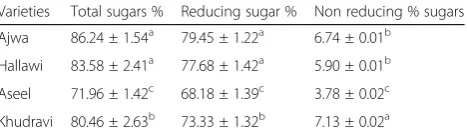
Maximum value for total sugar content was observed in Ajwa (86.24 ± 1.54%) followed by Hallawi (83.58 ± 2.41%) and minimum was recorded in Aseel (71.96 ± 1.42%) as
shown in Table 5. Reducing sugar content in four
different date varieties ranged from 68.18 ± 1.39% to 79.45 ± 1.22%. Highest mean value for reducing sugar content were observed in Ajwa (79.45 ± 1.22%) followed by Hallawi (77.68 ± 1.42%) and minimum was found in Aseel (68.18 ± 1.39%). Non-reducing sugars ranged be-tween 3.78 ± 0.02% to 7.13 ± 0.02%. Higher content of non-reducing sugars was recorded in Khudravi (7.13 ± 0.02%), followed by Ajwa (6.74 ± 0.01%) and minimum was recorded in Aseel (3.78 ± 0.02%) as presented in Table 5. Results regarding total sugars, reducing sugars and non-reducing sugars in the present study corroborate with the previous findings of Nadeem et al [27] who narrated the values of total sugars, reducing sugars and non-reducing sugars of different Pakistani date varieties. Maximum value for total sugars ranged between 59.03– 73.92%. Karblain (73.92%), Zaidy (72.87%), Aseel (67.11%) and Hallawi (67.16%). Reducing sugars ranged from 52.76–68.95%. Karblain (68.95%), Zaidy (967.13%), Aseel (62.46%), Hallawi (59.50%). In case of non-reducing ranged vary between 4.65–7.66%. Karblain (4.97%), Zaidy (5.72%), Aseel (4.65%), Hallawi (7.66%) respectively. Ismail et al [29] has studied two different date varieties and ob-served that reducing sugars ranged between 69.9–75.2%. Current findings are strongly in line with Ramadan [48] reported that reducing sugars in different date varieties
ranged from 70.28–80.52%, non-reducing ranged from
0.59–3.28% and total sugars ranged between 70.87–
83.80% respectively. Assirey [34] had reported the sugar composition of 10 date fruit cultivars in which Ajwa con-tains total sugars (74.3%) and reducing sugars (71.1%). Yousef and Kado [30] reported Hallawi and Khudravi for their total and reducing sugars. Hallawi (87.91%) total sugars and (82.72%) reducing sugars followed by Khudravi contains (87.74%) total sugars and (81.91%) reducing sugars. Present outcomes of this study are in correspond-ence with Vinita and Punia [35] who observed Hallawi and Khudravi for their total, reducing and non-reducing sugars. In Hallawi total sugars (82.50%), reducing sugars (76.60%) and non-reducing sugars (5.82%) trailed by Khudravi, total sugars (81.39%), reducing sugars (75.24%) and non-reducing sugars (6.15%).
Sugar level of date fruits increases as dates move from Rutab to Tamar stage because of dryness. Dried and
Table 4Antioxidant profile of different varieties
Varieties TPC (mg/100 g) % DPPH scavenging
Ajwa 252.65 ± 0.05c 75.13 ± 2.78c
Hillawi 282.65 ± 0.04b 66.14 ± 2.55d
Aseel 291.36 ± 0.04a 89.15 ± 1.65a
Khudravi 232.64 ± 0.07d 84.65 ± 1.65b
Different letters show significant variations (p≤0.05) in columns; values are expressed as means ± standard deviation in three
independent determinations
Table 5Total, reducing and non-reducing sugars of different date varieties
Varieties Total sugars % Reducing sugar % Non reducing % sugars
Ajwa 86.24 ± 1.54a 79.45 ± 1.22a 6.74 ± 0.01b
Hallawi 83.58 ± 2.41a 77.68 ± 1.42a 5.90 ± 0.01b
Aseel 71.96 ± 1.42c 68.18 ± 1.39c 3.78 ± 0.02c
Khudravi 80.46 ± 2.63b 73.33 ± 1.32b 7.13 ± 0.02a
Different letters showed significant variations (p≤0.05) in columns; values are expressed as means ± standard deviation in three
fresh dates levels of sugars variations due to stages of maturity and moisture reduction. Glucose (reducing sugars) results in fast elevation of blood glucose level than sucrose. Fructose sugar two times sweeter than glu-cose exert feeling of fullness and reduce total caloric intake than consuming fat rich diets is more suitable for obese patients [34].
Bio-efficacy study
Four date varieties, three indigenous (Aseel, Hallawi and Khudravi) and one exotic (Ajwa) were subjected to effi-cacy trials through male albino rats modeling to assess its nutraceutical potential against lifestyle-related disor-ders. Ease in handling, organized supervision, controlled diet and environmental conditions were the key factors to conduct experimental trials in rodents rather than humans. Efficacy study was divided into six modules on the basis of different diets i.e. group I (normal diet), group II (high cholesterol high sucrose diet), group III (high cholesterol high sucrose diet+ Khudravi date variety), group IV (high cholesterol high sucrose diet + Hallawi date variety), group V (high cholesterol high sucrose diet + Aseel date variety) and group VI (high cholesterol high sucrose diet + Ajwa date variety). In each group the re-spective diet was given to the rat groups along with date paste intervention in a proportion as selected from sen-sory and compositional study. Role of dates against obesity, high cholesterol, high triglyceride, HDL, LDL and oxidative stress was observed. The results of the investi-gated parameters in all studies were interpreted collect-ively for better understanding of concern.
Total cholesterol
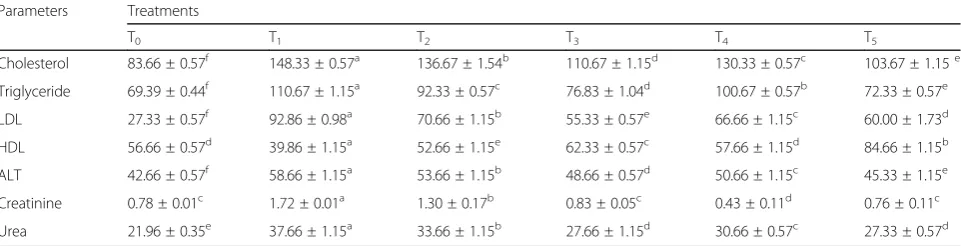
Higher value (148.33 ± 0.57 mg/dL) of total cholesterol was found in T1(high cholesterol high sucrose diet) trailed by
(136.67 ± 1.54 mg/dL) in T2(high cholesterol high sucrose
diet + Khudravi date variety) and minimum (83.66 ± 0.57 mg/dL) was found in T0(control) as presented in Table6.
In T0the value was lowest as they are not fed on any
ex-perimental diet. T1has the highest value of cholesterol as
they were fed on high cholesterol high sucrose diet to in-duce obesity. In all other groups obesity was inin-duced with intervention of dates of different varieties to investigate the highest cholesterol lowering effect of each date variety. Lowest value (103.67 ± 1.15 mg/dL) of total cholesterol was observed in T5(high cholesterol high sucrose diet + Ajwa
date variety). This significant variation in all treatments shows that all varieties have lowers the cholesterol signifi-cantly when compared to T1(high cholesterol high sucrose
diet). The present outcomes are in harmony with Prasanna et al [49] who narrated that aqueous extract of Phoenix dactyliferadates significantly lowers the serum cholesterol level in male wistar rat’s groups (control, high fat diet, high fat diet Phoenix dactylifera) extract as 83.0 mg/dL, 156.1 mg/dL, 84.3 mg/dL respectively. In another study Pushpa and Jayachitra [50] has observed the effect ofPhoenix dac-tyliferaon cholesterol in four groups of Albino wistar rats (control, control+ Phoenix dactylifera, Triton, Triton+
Phoenix dactylifera) as 82.11 mg/dL, 87.31 mg/dL, 204.51 mg/dL and 92.41 mg/dL respectively. Al-Saif et al [51] in-vestigated that the cholesterol reduction by date palm phy-tochemicals fed male hamsters by incorporating date pulp in diet at the rate of 50% and observed 11.03% reduction in blood cholesterol when compared with the control group. From the outcomes of present study regarding serum chol-esterol level, it is concluded that Polyphenols in date palm fruit are effective for the management of elevated choles-terol level due to consumption of high energy foods.
Low density lipoprotein
Higher value (92.86 ± 0.98 mg/dL) of LDL was found in T1 (high cholesterol high sucrose diet) trailed by T2
Table 6Total Cholesterol, Triglycerides, LDL, HDL, ALT, Creatinine and Urea in animal blood
Parameters Treatments
T0 T1 T2 T3 T4 T5
Cholesterol 83.66 ± 0.57f 148.33 ± 0.57a 136.67 ± 1.54b 110.67 ± 1.15d 130.33 ± 0.57c 103.67 ± 1.15e
Triglyceride 69.39 ± 0.44f 110.67 ± 1.15a 92.33 ± 0.57c 76.83 ± 1.04d 100.67 ± 0.57b 72.33 ± 0.57e
LDL 27.33 ± 0.57f 92.86 ± 0.98a 70.66 ± 1.15b 55.33 ± 0.57e 66.66 ± 1.15c 60.00 ± 1.73d
HDL 56.66 ± 0.57d 39.86 ± 1.15a 52.66 ± 1.15e 62.33 ± 0.57c 57.66 ± 1.15d 84.66 ± 1.15b
ALT 42.66 ± 0.57f 58.66 ± 1.15a 53.66 ± 1.15b 48.66 ± 0.57d 50.66 ± 1.15c 45.33 ± 1.15e
Creatinine 0.78 ± 0.01c 1.72 ± 0.01a 1.30 ± 0.17b 0.83 ± 0.05c 0.43 ± 0.11d 0.76 ± 0.11c
Urea 21.96 ± 0.35e 37.66 ± 1.15a 33.66 ± 1.15b 27.66 ± 1.15d 30.66 ± 0.57c 27.33 ± 0.57d
Different letters show significant variations (p≤0.05) in rows; values are expressed as mean ± standard deviation of three independent determinations T0: Control
T1: High sucrose high cholesterol diet
T2: High sucrose high cholesterol diet + Intervention (Khudravi)
T3: High sucrose high cholesterol diet + Intervention (Hallawi)
T4: High sucrose high cholesterol diet + Intervention (Aseel)
(high cholesterol high sucrose diet + Khudravi date variety) (70.66 ± 1.15 mg/dL) and minimum (27.33 ± 0.57 mg/dL) was found in T0 (control) as presented in
Table 6. In T0 the value was lowest as they are not
fed on any experimental diet. T1 has the highest value
of LDL as they were fed on high cholesterol high su-crose diet to induce obesity. In all other groups obes-ity was induced with intervention of dates of different varieties to investigate the highest LDL lowering effect of each date variety. Lowest value (55.33 ± 0.57 mg/ dL) of LDL was observed in T3 (high cholesterol high
sucrose diet + Hallawi date variety). This significant variation in all treatments shows that all varieties
have lowers the LDL when compared to T1 group
(high cholesterol high sucrose diet). Research con-ducted by Bursill et al [52] who observed that at 50% diet supplementation with date pulp 37.27 mg/dL re-duction in LDL level. Low density lipoproteins lower-ing potential of date fruit is attributed due to the presence of bioactive polyphenols most important phenolics and flavonoids. Function of polyphenols is to up regulate LDL receptor to lower blood choles-terol level. As much as these receptors will increase more LDL cholesterol will be up taken from blood circulation [52]. It is evident from the above discus-sion that Ajwa and Hallawi has more potential to be introduced as dietary intervention against elevated LDL and other lipid related abnormalities. The find-ings of present research are in accordance with Pra-sanna et al [50] who narrated that aqueous extract of
Phoenix dactylifera dates significantly lowers the
serum LDL level in male Wistar rat’s groups (control, high fat diet, high fat diet Phoenix dactylifera) extract as 27.5 mg/dL, 94.3 mg/dL, 31.5 mg/dL respectively. Pushpa and Jayachitra [51] has recorded the effect ofPhoenix
dactyli-feraon LDL in four groups of Albino Wistar rats (control, control+ Phoenix dactylifera, Triton, Triton+ Phoenix dactylifera) as 26.18 mg/dL, 30.70 mg/dL, 158.59 mg/dL and 31.93 mg/dL respectively.
High density lipoproteins
Higher value (84.66 ± 1.15 mg/dL) of HDL was found in T5(high cholesterol high sucrose diet + Ajwa date variety)
trailed by (62.33 ± 0.57 mg/dL) in T3 (high cholesterol
high sucrose diet + Hallawi date variety) and minimum (39.86 ± 1.15 mg/dL) was found in T1 (High cholesterol
high sucrose diet) to induce obesity which significantly lowers the HDL level, as presented in Table6. In all other groups obesity was induced with intervention of dates of different varieties to investigate the highest HDL increas-ing effect of each date variety. Highest value (84.66 ± 1.15 mg/dL) of HDL was observed in T5(high cholesterol high
sucrose diet + Ajwa date variety). This significant variation in all treatments showed that all varieties increased the
HDL. Cholesterol in blood is transported via small pack-ages called lipoproteins i.e. LDL and HDL. HDL is consid-ered as good cholesterol as they carry toxins and free fatty acids from blood stream to liver where they are eliminated from the system thus reduces the chances of increase in plasma cholesterol and prevents the occurrence of chronic diseases [53]. LDL on the other hand facilitates cholesterol circulation in blood stream [54]. The outcomes of current study are in accordance with the findings of Al-Saif et al [52] who reported that after administering 50% supple-mented rat diet with date pulp increases 8.63% HDL level. All above discussed varieties significantly increases HDL level more prominently Ajwa and Hallawi thus advocating their use as functional food or functional food ingredient. The findings of present research are in accordance with Prasanna et al [50] who narrated that aqueous extract of
Phoenix dactylifera dates significantly increase the HDL level in male Wistar rat’s groups (control, high fat diet, high fat diet Phoenix dactylifera) extract as 58.3 mg/dl, 39.6 mg/dl, 56.4 mg/dl respectively. Pushpa and Jayachitra [51] has recorded the effect of Phoenix dactylifera on HDL in four groups of Albino Wistar rats (control, con-trol+Phoenix dactylifera,Triton, Triton+Phoenix dactyli-fera) as 24.70 mg/dl, 25.61 mg/dl, 19.08 mg/dl and 24.78 mg/dl respectively.
Triglycerides
Higher value (110.67 ± 1.15 mg/dL) of total triglyceride was found in T1 (high cholesterol high sucrose diet)
trailed by (100.67 ± 0.57 mg/dL) in T4 (high cholesterol
high sucrose diet + Aseel date variety) and minimum (69.390 ± 0.44 mg/dL) was found in T0(control) as
pre-sented in Table6. In T0the value was lowest as they are
not fed on any experimental diet. T1has the highest value
of total triglyceride as they were fed on high cholesterol high sucrose diet to induce obesity. In all other groups obesity was induced with intervention of dates of different varieties to investigate the highest total triglyceride lower-ing effect of each date variety. Lowest value (72.33 ± 0.57 mg/dL) of total triglyceride was observed in T5(high
chol-esterol high sucrose diet + Ajwa date variety). This signifi-cant variation in all treatments shows that all varieties have lowers the total triglyceride when compared to T1
group (high cholesterol high sucrose diet).
Prasanna et al [50] narrated that aqueous extract of
Phoenix dactylifera dates significantly lowers the tri-glyceride level in male Wistar rat’s groups (control, high fat diet, and high fat diet + Phoenix dactylifera) extract as 18.5 mg, 22.06 mg, and 18.7 mg respectively. Pushpa and Jayachitra [51] has observed the effect of
Phoenix dactylifera on triglyceride in four groups of
Albino Wistar rats (control, control+Phoenix dactylifera,
lipid digestion and absorption requires the enzymatic hy-drolysis of triglycerides, thus, many researchers suggest that, the inhibition of pancreatic lipase is a possible strategy to prevent hyperlipidaemia by decreasing lipid absorption. Polyphenols have been reported to decrease pancreatic lipase activity [55].
Urea
Higher value (37.66 ± 1.15 mg/dL) of urea was found in T1
(high cholesterol high sucrose diet) trailed by (33.66 ± 1.15 mg/dL) in T2 (high cholesterol high sucrose diet +
Khu-dravi date variety) and minimum (21.96 ± 0.35 mg/dL) was found in T0 (control) as presented in Table 6. In T0 the
value was lowest as they are not fed on any experimental diet. T1has the highest value of urea as they were fed on
high cholesterol high sucrose diet to induce obesity. In all other groups obesity was induced with intervention of dates of different varieties to investigate the highest urea lowering effect of each date variety. Lowest value (27.33 ± 0.57 mg/dL) of urea was observed in T5(high cholesterol
high sucrose diet + Ajwa date variety). This significant vari-ation in all treatments shows that all varieties have lowers the urea level significantly when compared to T1.
Agarwal et al [56] has narrated that in human body kidney is a major organ which involved in several life sus-taining functions including Blood pressure regulation, body homeostatic, and toxins removal in the form of urine from body. In the recent era rapid increase of chronic dis-eases and chronic renal disease in developing countries is due to bad dietary habits, chemical and toxins exposure. Amira et al [57] has narrated that in male Wistar rats 0.5 and 2 g/L DCA was administered as drinking water to in-duce nephrotoxicity. Some of the experimental rats were gavage aqueous date extract (ADE) before administrating DCA. When after two months of experiment results were evaluated as those rats fed with DCA caused increased level of renal MDA with considerable depletion of GSH levels and significantly altered the antioxidant enzymes ac-tivities. By elevating the levels of plasma urea, uric acid and creatinine levels it affects the renal functioning as compared to control rats. On the other side the ADE treatment normalized the increased plasma levels of cre-atinine, urea and uric acid, reduced the elevated MDA levels, significantly normalized the antioxidant enzyme ac-tivities and GSH level and restored the altered kidney hist-ology in rats treated significantly. Nephrons lost their structural integrity and leads towards reduce glomerulus filtration and increase in urea and creatinine level. This risk is more prevalent in patients suffering from high blood pressure, obese, diabetic and CVDs [58].
Creatinine
Higher value (1.72 ± 0.01 mg/dL) of creatinine was found in T1 (high cholesterol high sucrose diet) trailed by
(1.30 ± 0.17 mg/dL) in T2(high cholesterol high sucrose
diet + Khudravi date variety) and minimum (0.43 ± 0.11 mg/dL) was found in T4 (high cholesterol high sucrose
diet + Aseel date variety) as presented in Table6. T1has
the highest value of creatinine as they were fed on high cholesterol high sucrose diet to induce obesity. In all other groups obesity was induced with intervention of dates of different varieties to investigate the highest cre-atinine lowering effect of each date variety. Lowest value (0.43 ± 0.11 mg/dL) of creatinine was observed in T4
(high cholesterol high sucrose diet + Aseel date variety). This significant variation in all treatments shows that all varieties have lowers the creatinine level significantly when compared to T1.
Amira et al [57] has narrated that in male wistar rats 0.5 and 2 g/L DCA was administered as drinking water to induce nephrotoxicity. Some of the experimental rats were gavage aqueous date extract (ADE) before adminis-trating DCA. When after two months of experiment re-sults were evaluated as those rats fed with DCA caused increased level of renal MDA with considerable deple-tion of GSH levels and significantly altered the antioxi-dant enzymes activities. By elevating the levels of plasma urea, uric acid and creatinine levels it affects the renal functioning as compared to control rats. On the other side the ADE treatment normalized the increased plasma levels of creatinine, urea and uric acid, reduced the elevated MDA levels, significantly normalized the antioxidant enzyme activities and GSH level and re-stored the altered kidney histology in rats treated signifi-cantly. Nephrons lost their structural integrity and leads towards reduce glomerulus filtration and increase in urea and creatinine level. This risk is more prevalent in patients suffering from high blood pressure, obese, dia-betic and CVDs [58].
Alanine aminotransferase (ALT)
Higher value (58.66 ± 1.15 U/L) of ALT was found in T1
(high cholesterol high sucrose diet) trailed by (53.66 ± 1.15 U/L) in T2 (high cholesterol high sucrose diet +
Khudravi date variety) and minimum (42.66 ± 0.57 U/L) was found in T0 (control) as presented in Table 6. T1
has the highest value of ALT as they were fed on high cholesterol high sucrose diet to induce obesity. And T0
has the minimum value as they were not fed on any ex-perimental or intervention diet. In all other groups obes-ity was induced with intervention of dates of different varieties to investigate the highest ALT lowering effect of each date variety. Lowest value (45.33 ± 1.15 U/L) of ALT was observed in T5(high cholesterol high sucrose
diet + Ajwa date variety). This significant variation in all treatments shows that all varieties have lowers the ALT level significantly when compared to T1. Liver is
first line of defense to prevent the deposition on exogen-ous and endogenexogen-ous substances. The indicators of liver health are ALT and AST and their elevated level in blood indicates liver malfunctioning. Elevated cholesterol cause increase intracellular lipids deposition and increases the amount of ALT and AST which results in liver function-ing failure. Increased level of ROS due to consumption of cholesterol rich diet causes oxidative damage to cells and tissues and structural integrity of the cells damages allowing release of ALT, ALP, AST and bilirubin in blood circulation as they present in cytoplasm [59–61].
Sensory evaluation
Hedonic response is crucial to judge the product for ac-ceptance and marketability. Good sensory response en-sures consumer acceptance and confidence on the developed product. The prepared date bars were assessed for various sensory attributes including color, flavor, taste, mouth feel, texture and overall acceptability and the results gathered are presented herein [25]. Four treatments of date bar from Hallawi were prepared by varying the amount of date paste and chick pea flour while keeping the other ingredients same like skim milk and almonds. Mean values of all the parameters color, flavor, taste, texture, mouthfeel and overall acceptability are shown in Table 7. Scores of color in all treatments ranged from 5.60 ± 0.54 to 8.40 ± 0.54. Highest scores (8.40 ± 0.54) for color given by the panel of judges was recorded in T2 (40% Date paste, 30% Chick pea flour)
followed by T3 (30% Date paste, 40% Chick pea flour)
(7.60 ± 0.54) and minimum (5.60 ± 0.54) was recorded in T4 (20% Date paste, 50% Chick pea flour) as shown in
Table7. Flavor scores in all four treatments ranged from 5.20 ± 0.44 to 8.40 ± 0.54. Highest scores (8.40 ± 0.54) for flavor given by the panel of judges was recorded in T2
(40% Date paste, 30% Chick pea flour) followed by T3
(30% Date paste, 40% Chick pea flour) (7.40 ± 0.54) and
minimum (5.20 ± 0.44) was recorded in T4 (20% Date
paste, 50% Chick pea flour) as presented in Table 7. Taste values were ranged from 4.40 ± 0.54 to 8.80 ± 0.44, Highest scores (8.80 ± 0.44) for taste given by the panel
of judges was recorded in T2 (40% Date paste, 30%
Chick pea flour) followed by T3 (30% Date paste, 40%
Chick pea flour) (7.60 ± 0.54) and minimum (4.40 ± 0.54)
was recorded in T1 (50% Date paste, 20% Chick pea
flour) as presented in Table 7. Texture parameter was ranged between 4.80 ± 0.44 to 8.40 ± 0.54. Highest scores (8.40 ± 0.54) for texture given by the panel of judges was recorded in T2 (40% Date paste, 30% Chick pea flour)
followed by T3 (30% Date paste, 40% Chick pea flour)
(7.00 ± 0.7) and minimum (4.80 ± 0.44) was recorded in T4 (20% Date paste, 50% Chick pea flour) as presented
in Table7. Mouth feel values in all four treatments were ranged between 4.40 ± 0.54 to 8.00 ± 0. Highest scores (8.00 ± 0.02) for mouth feel given by the panel of judges
was recorded in T2 (40% Date paste, 30% Chick pea
flour) followed by T3 (30% Date paste, 40% Chick pea
flour) (7.40 ± 0.54) and minimum (4.40 ± 0.54) was re-corded in T1(50% Date paste, 20% Chick pea flour) as
presented in Table 7. Overall acceptability was ranged from 5.20 ± 0.44 to 8.60 ± 0.54. Highest scores (8.60 ± 0.54) for overall acceptability given by the panel of judges was recorded in T2 (40% Date paste, 30% Chick
pea flour) followed by T3 (30% Date paste, 40% Chick
pea flour) (7.40 ± 0.54) and minimum (5.20 ± 0.44) was recorded in T1(50% Date paste, 20% Chick pea flour) as
presented in Table7.
Among all the four treatments T2had the maximum
score which contain 40% date paste and 30% chickpea flour. Yousif et al [62] reported that utilization of date paste as flour replacer in bread making showed excellent results regarding decrease in malt index and delaying gelatinization. They narrated that date paste addition in bread as partial replacer of wheat flour at 4% than
8–12% showed good physical and sensory attributes
as well as total gas production and retention was im-proved at 4–6%. 4–8% addition of date paste has re-tarded the firming of crumb texture significantly. Manickavasagan et al [63] observed that utilization of date fruit as functional or substituted ingredient in many food preparations is of great importance as it could be ideal to use to substitute added sugars which only cause an in increase in calories without giving any health benefits.
Table 7Sensory attributes of different date bars
Treatment Color Flavor Taste Texture Mouth feel Overall
T1 6.40 ± 0.54c 5.80 ± 0.83c 4.40 ± 0.54d 5.40 ± 0.54c 4.40 ± 0.54b 5.20 ± 0.44c
T2 8.40 ± 0.54a 8.40 ± 0.54a 8.80 ± 0.44a 8.40 ± 0.54a 8.00 ± 0a 8.60 ± 0.54a
T3 7.60 ± 0.54b 7.40 ± 0.54b 7.60 ± 0.54b 7.00 ± 0.7b 7.40 ± 0.54a 7.40 ± 0.54b
T4 5.60 ± 0.54d 5.20 ± 0.44c 5.20 ± 0.44c 4.80 ± 0.44c 5.00 ± 0.7b 5.40 ± 0.54c
Different letters show significant variations (p≤0.05) in columns; values are expressed as means ± standard deviation in ten independent determinations T1: (50% Date paste, 20% Chick pea flour)
Conclusion
On the basis of above mentioned attributes this project was designed to explore the therapeutic and medicinal value of three Pakistani date varieties (Aseel, Hallawi and Khudravi) in comparison with one exotic date var-iety (Ajwa). Exotic Ajwa and indigenous Hallawi showed almost similar physico-chemical attributes like they both have very minimum amount of crude fiber and crude fat which make them suitable for hypercholesterolemic and hyperlipidemic patients. Lower levels of sodium were present in Ajwa, Hallawi and Khudravi which is benefi-cial for hypertensive patients. Aseel, Ajwa and Hallawi showed strong antioxidant potential and total phenolic contents. In bio-efficacy study, Ajwa and Hallawi showed maximum total cholesterol, LDL, triglyceride ALT, urea and creatinine lowering potential. According to the study it was concluded that Hallawi dates have the simi-lar nutritional and therapeutic potential as Ajwa of being used as a cure of many metabolic disorders and date bar was prepared from Hallawi on the basis of bio-evaluation results. This study should also be done on humans for the validation of results. In nutshell, Hallawi could be potentially used for the treatment of hypercho-lesterolemic patients instead of Ajwa because it is very expensive date variety.
Acknowledgements
The authors are highly acknowledged Institute of Home and Food Sciences for providing the facilities for conducting the research work. The authors also extend their appreciation to the International Scientific Partnership Program (ISPP) at King Saud University, for funding this research work through ISPP# 0023.
Authors’contributions
The contribution of the each author for this manuscript was as follows, MSA, FMA, MKK designed and executed the experimental plan. SMB, MHA and MI conducted the analysis and drafted the manuscript. SH reviewed and improved the manuscript. It is also confirmed that all the authors read and approved the final manuscript.
Funding
The funding for this manuscript was provided by Higher Education Commission, Islamabad, Pakistan.
Availability of data and materials
The data generated for this study available in the manuscript.
Ethics approval and consent to participate
The ethical approval was obtained from the Animal care committee (ACC) of Government College University Faisalabad, Pakistan.
Consent for publication
Not applicable.
Competing interests
The authors declare that they have no competing interests.
Author details 1
Institute of Home and Food Sciences, Government College University, Faisalabad, Pakistan.2Vice Chancellor Secretariat, University of the Gambia, Banjul, The Gambia.3College of Food and Agricultural Sciences, King Saud University, Riyadh, Saudi Arabia.
Received: 4 April 2019 Accepted: 10 June 2019
References
1. World Health Organization. Preventing chronic diseases: a vital investment: WHO global report.ISBN 9241563001. 2005.
2. Nasreddine L, Hwalla N, Saliba A, Akl C, Naja F. Prevalence and correlates of preschool overweight and obesity amidst the nutrition transition: findings from a National Cross-Sectional Study in Lebanon. Nutrients. 2017;9(3):266. 3. World Health Organization. Global health risks. Geneva: World Health
Organization; 2009a.
4. World Health Organization. Global health estimates for deaths by cause, age, and sex for years 2000–2011. Geneva: World Health Organization; 2013a.
5. Reeves GK, Balkwill A, Cairns BJ, Green J, Beral V. Hospital admissions in relation to body mass index in UK women: a prospective cohort study. BMC Med. 2014;12(1):45.
6. GOP (Government of Pakistan) Fruit, Vegetable and Condiments Statistics of Pakistan. Ministry of Food,Agriculture and Livestock (Economic Wing).2008.
Islamabad.
7. Vinson JA, Zubik L, Bose P, Samman N, Proch J. Dried fruits: excellent in vitro and in vivo antioxidant. J Am Coll Nutr. 2005;24:44–50.
8. Jain S. M. Health benefits of dates: Phytochemicals and their functions. In regional workshop on the improvement of the dates value chain in the near east and North Africa region Kuwait. 2013;9–12.
9. Rosa N, Jauregui RACC, Maria EM, Pinto ES, Jose AGA. Acceptability of snacks produced by the extrusion of amaranth and blends of chickpea and bovine lung. Int J Food Sci Technol. 2003;38:795–8.
10. Saini RK, Nile SH, Park SW. Carotenoids from fruits and vegetables: chemistry, analysis, occurrence, bioavailability and biological activities. Food ResInt. 2015;76:735–50.
11. Al-Shahib W, Marshall RJ. The fruit of the date palm: it’s possible use as the best food for the future? Int J Food Sci Nutr. 2003;54(4):247–59.
12. AOAC. Official methods of analysis, 15thed. Association of Official Analytical Chemists. Arlington, Va., USA. 2000.
13. Piga A, Catzeddu P, Farris S, Roggio T, Sanguinetti A, Scano E. Texture evolution of“Amaretti”cookies during storage. Eur Food Res Technol. 2005; 221(3–4):387–91.
14. Duhan A, Khetarpaul N, Bishnoi S. Changes in phytates and HCl extractability of calcium, phosphorus and iron of soaked, dehulled, cooked and sprouted pigeon pea cultivar (UPAS-120). Plant Foods Hum Nutr. 2002; 57:275–84.
15. AACC. Official methods of analysis. 15th ed. USA: Association of Official Analytical Chemists. Arlington, Va; 2000.
16. Rababah TM, Ereifej KI, Esoh RB, Al-u’datt MH, Alrababah MA, Yang W. Antioxidant activities, total phenolics and HPLC analyses of the phenolic compounds of extracts from common Mediterranean plants. Nat Prod Res. 2011;25:596–605.
17. Singh V, Guizani N, Essa MM, Hakkim FL, Rahman MS. Comparative analysis of total phenolics, flavonoid content and antioxidant profile of different date; 2012.
18. AOAC. Official Methods of Analysis. Vol 1 and 2. 15thEd. Association of Official Analytical Chemists. Arlington, Va., USA. 1998.
19. Stockbridge H, Hardy RI, Glueck CJ. Photometric determination of cholesterol (CHOD-PAP method). J Clin Med. 1989;114:142–51. 20. Assmann G. HDL-cholesterol precipitant. Randox Labs Ltd Crumlin Co
Antrim, N Ireland Internist 1979;20: (559)64.
21. McNamara JR, Cohn JS, Wilson PW, Schaefer EJ. Calculated values for low-density lipoprotein cholesterol in the assessment of lipid abnormalities and coronary disease risk. Clin Chem. 1990;36(1):36–42.
22. Annoni G, Botasso BM, Ciaci D, Donato MF, Tripodi A. Liquid triglycerides (GPO-PAP). Medi Diagnostic Italy. J Clin Med. 1982;9:115.
23. Jacobs D. S, DeMott W. R, Grady H. J, Horvat R. T, Huestis D.W. and Kasten B.L. Laboratory test handbook, 4th ed. Lexi-comp Inc., Hudson (Cleveland) 1996.
24. Basuny AM, Gaafar AM, Arafat SM. Tomato lycopene is a natural antioxidant and can alleviate hypercholesterolemia. Afr J Biotechnol. 2009;8(23):6627–33. 25. Heintz CM, Kader AA. Procedures for the sensory evaluation of horticultural
Cropsl’2. HortScience. 1983;18:1.
27. Nadeem M, Rehman SU, Anjum FM, Bhatti IA. Quality evaluation of some Pakistani date varieties. Pak J Agr Sci. 2011b;48:305–13.
28. Ismail B, Haffer I, Baalbaki R, Henry R. Physico-chemical characteristics and sensory quality of two date varieties under commercial and industrial storage conditions. Lebenson Wiss Techno. 2008;41:896–904. 29. Yousif AK, Benjamin ND, Kado A, Mehi Alddin S, Ali SM. Chemical
composition of four Iraqi date cultivars. Date Palm J. 1982.
30. Ahmed A, Ahmed AW, Robinson RK. Chemical composition of date varieties as influenced by the stage of ripening. Food Chem. 1995;54:305–9. 31. Nasir MU, Hussain S, Jabbar S, Rashid F, Khalid N, Mehmood A. A review on
the nutritional content, functional properties and medicinal potential of dates. Sci Lett J. 2015;3:17–22.
32. Nadeem M, Salim-ur-Rehman AF, Bhatti IA. Textural profile analysis and phenolic content of some date palm varieties. J Agric Res. 2011a;49(4):525–39. 33. Khan H, Nouroz F, Khan M. F. and Rizwan S. Nutritional values of selected
date palm varieties in Pakistan. 2015.
34. Assirey EAR. Nutritional composition of fruit of 10 date palm (phoenix dactylifera L.) cultivars grown in Saudi Arabia. JTUSCI. 2014;8:423–7. 35. Vinita and Punia D. Nutritional composition of fruit of four date palm
(Phoenix dactylifera L.) cultivars grown in Haryana, India. Asian J Dairy & Food Res. 2016;35(4).
36. Gasim AAA. Changes in sugar quality and mineral elements during fruit development in five date palm cultivars in Al-Madinah Al-Munawwarah. JKAU. 1994;6:29–36.
37. Ibrahim A, Akasha IA, Campbell L, Euston SR. Extraction and Characterization of Protein Fraction from Date Palm Fruit Seeds. WASET. 2012;70:2012. 38. Shaheen MA, Al-Qurashi AD. Fruit chemical composition and its correlation
with some date palm cultivars during fruit development stages. JKAU: Met Environ Arid Land Agric Sci. 2007;18:19–26.
39. D Archivio M, Filesi C, Di Benedetto R, Gargiulo R, Giovannini C, Masella R. Polyphenols, dietary sources and bioavailability. Ann Ist Super Sanita. 2007;43(4):348.
40. Awika JM, Rooney LW, Wu X, Prior RL, Cisneros-Zevallos L. Screening methods to measure antioxidant activity of sorghum (Sorghum bicolor) and sorghum products. J Agric Food Chem. 2003;51:6657–62.
41. Liu H, Jiao Z, Liu J, Zhang C, Zheng X, Lai S, Chen F, Yang H. Optimization of supercritical fluid extraction of phenolics from date seeds and characterization of its antioxidant activity. Food Anal Methods. 2013;6:781–8. 42. Al-Farsi M.A. and Lee C.Y. (2008a). Nutritional and functional properties of
dates: a review. Crit. Rev. food Sci. Nutr.2002; 48:877–887.
43. Saleh EA, Tawfik MS, Abu-Tarboush HM. Phenolic contents and antioxidant activity of various date palm (Phoenix dactyliferaL.) fruits from Saudi Arabia. Food Nutr Sci. 2011;2:1134–41.
44. Mansouri A, Embarek G, Kokkalou E, Kefalas P. Phenolic profile and antioxidant activity of the Algerian ripe date palm fruit (Phoenix dactylifera). Food Chem. 2005;89:411–20.
45. Biglari F, Abas A, FM A, Essa AM. Antioxident activity and phenolics content of various date palm (Phoenix dactylifera L.) fruits from Iran. Food Chem. 2008a;107:1636–41.
46. Saafi EB, Louedi M, Elfeki A, Zakhama A, Najjar MF, Hmmami M, Achour L. Protective effect of date palm fruit extract (Phoenix dactliferaL) on dimethoate induced-oxidative stress in rat liver. Exp Toxicol Pathol. 2009; 63(5):433–41.
47. Anjum FM, Bukhat SI, El-Ghorab AH, Khan MI, Nadeem M, Hussain S, Arshad MS. Phytochemical characteristics of date palm (Phoenix dactylifera) fruit extracts. Pak J Food Sci. 2012;22:117–27.
48. Ramadan BR. Preparation and evaluation of Egyptian date syrup. Assuit, Egypt: Food Science and Technology Dept., Faculty of Agric., Assiut Univ; 1995.
49. Prasanna G, Vembu S, Sivanasan D. Effect of Phoenix dactylifera on high fat diet induced obesity. J Chem Pharm Res. 2012;4(1):348–52.
50. Pushpa I. and Jayachitra J. Hypolipidemic and antioxidant activity of phoenix dactylifera l. In albino wistar rats 2015.
51. Alsaif MA, Khan LK, Alhamdan AH, Alorf SM, Harfi SH, Al-Othman AM, Arif Z. Effect of dates and gahwa (Arabian coffee) supplementation on lipids in hypercholesterolemic hamsters. IntJ Pharmacol. 2007;3(2):123–9. 52. Bursill CA, Abbey M, Roach PD. A green tea extract lowers plasma
cholesterol by inhibiting cholesterol synthesis and upregulating the LDL receptor in the cholesterol-fed rabbit. Atherosclerosis. 2007;193:86–93. 53. Ohashi R, Mu H, Wang X, Yao Q, Chen C. Reverse cholesterol transport and
cholesterol efflux in atherosclerosis. Oxford J Medi. 2005;98:845–56.
54. Albertini R, Moratti R, De Luca GD. Oxidation of low-density lipoprotein in atherosclerosis from basic biochemistry to clinical studies. Curr Mol Med. 2002;2:579–92.
55. Kawaguchi K, Mizuno T, Aida K, Uchino K. Hesperidin as an inhibitor of lipases from porcine pancreas and pseudomonas. Biosci Biotechnol Biochem. 1997;61:102–4.
56. Agarwal R, Sinha AD. Thiazide diuretics in advanced chronic kidney disease. J Am Soc Hypertens. 2012:1–10.
57. El Arem A, Thouri A, Zekri M, Saafi EB, Ghrairi F, Zakhama A, Achour L. Nephroprotective effect of date fruit extract against dichloroacetic acid exposure in adult rats. Food Chem Toxicol. 2014;65:177–84.
58. Chauhan V, Vaid M. Dyslipidemia in chronic kidney disease: managing a high-risk combination. Postgrad Med J. 2009;121(6):54–61.
59. Wang TC, Su YP, Hsu TY, Yang CC, Lin CC. 28-day oral toxicity study of the aqueous extract from spider brake (Pteris multifida Poiret) in rats. Food Chem Toxicol. 2007;45:1757–63.
60. Noori S, Rehman N, Qureshi M, Mahboob T. Reduction of carbon tetrachloride-induced rat liver injury by coffee and green tea. PJN. 2009; 8(4):452–8.
61. Ramesh E, Jayakumara T, Elanchezhiana R, Sakthivel M, Geraldinea P, Thomas PA. Green tea catechins alleviate hepatic lipidemic-oxidative injury in Wistar rats fed an atherogenic diet. Chem Biol Interact. 2009;180:10–9. 62. Yousif AK, Morton ID, Mustafa AI. Functionality of date paste in bread
making. Cereal Chem. 1991;68(1):43–7.
63. Manickavasagan A, Mathew TA, Al-Attabi ZH, Al-Zakwani IM. Dates as a substitute for added sugar in traditional foods-a case study with idli. Emir J Food Agric. 2013;25(11):899.
Publisher’s Note