R E S E A R C H A R T I C L E
Open Access
Consensus workshops on the development
of an ADHD medication management
protocol using QbTest: developing a clinical
trial protocol with multidisciplinary
stakeholders
Charlotte L. Hall
1*, Susan Brown
1, Marilyn James
2, Jennifer L. Martin
1, Nikki Brown
1, Kim Selby
3, Julie Clarke
4,
Laura Williams
1, Kapil Sayal
5, Chris Hollis
6and Madeleine J. Groom
1Abstract
Background:The study design and protocol that underpin a randomised controlled trial (RCT) are critical for the ultimate success of the trial. Although RCTs are considered the gold standard for research, there are multiple threats to their validity such as participant recruitment and retention, identifying a meaningful change, and non-adherence to the protocol. For clinical RCTs, involving patients and clinicians in protocol design provides the opportunity to develop research protocols that are meaningful to their target audience and may help overcome some of the inherent threats in conducting RCTs. However, the majority of protocols do not describe the methodology underpinning their development, limiting the amount of learned experience shared between research groups. Method:With the purpose of reporting a collaborative approach towards developing a protocol, we present the findings from three sequential workshops that were conducted with the aim of developing a protocol to
investigate the feasibility of adding a computerised test of attention, impulsivity and activity (QbTest) to medication management of children and young people with Attention deficit hyperactivity disorder (ADHD). Based on previous qualitative interviews with clinicians and families, each workshop prioritised topics for focused discussion.
Information from the workshops was fed back to the participants for reflection in advance of the next workshop. Results:The workshops involved 21 multi-disciplinary ADHD experts, including clinicians, patient and public involvement (PPI) members, parents of young people with ADHD and researchers. The consensus workshops addressed key research issues such as: the most relevant outcome measures/ resource drivers; methods and time points for data collection; and the clinical protocol for utilising the QbTest, including when best to use this within the medication management process. The resulting protocol details a feasibility RCT design describing these factors. Conclusion:Protocols which are co-developed may help overcome some of the risks associated with RCT
completion (e.g. recruitment, retention, protocol adherence) and help prioritise outcomes of greater relevance to the populations under study. The methodology has potential value for researchers and organisations developing clinical guidelines, and offers insights into the valuable impact of PPI upon trial design.
(Continued on next page)
© The Author(s). 2019Open AccessThis article is distributed under the terms of the Creative Commons Attribution 4.0 International License (http://creativecommons.org/licenses/by/4.0/), which permits unrestricted use, distribution, and reproduction in any medium, provided you give appropriate credit to the original author(s) and the source, provide a link to the Creative Commons license, and indicate if changes were made. The Creative Commons Public Domain Dedication waiver (http://creativecommons.org/publicdomain/zero/1.0/) applies to the data made available in this article, unless otherwise stated.
* Correspondence:[email protected]
1Division of Psychiatry and Applied Psychology, Institute of Mental Health,
University of Nottingham Innovation Park, Triumph Road, Nottingham NG7 2TU, UK
(Continued from previous page)
Trial registration:Clinicaltrials.govNCT03368573, 11th December 2017 (retrospectively registered).
Keywords:Protocol development, Expert workshop, QbTest, Medication, Management, Titration, Patient and public involvement
Background
Although every clinical trial should be underpinned by a rigorously developed protocol [1] there is little published evidence or guidance on the development of randomised controlled trial (RCT) protocols. Tezlaff et al. [1] outline the range of stakeholders for whom well-constructed protocols are pivotal, which include: trial participants, researchers, ethics committees, research funders and systematic reviewers. With the exponential growth of evidence-based medicine since the term was first coined in the early 1990s [2], there has been increasing
acknow-ledgment and preference for RCTs [3], which are often
advocated as the ‘gold standard’ in research designs.
However, there are multiple, well-reported pitfalls in con-ducting RCTs, including: low participant recruitment, dif-ferential drop-out across study arms, participants not wishing to be randomised, developing a suitable control intervention, identifying a meaningful change (that is of importance to individuals seeking treatment), and non-adherence to the protocol [4, 5]. In light of this, there is growing recognition of the need to involve patients and clinicians to improve the feasibility and acceptability of trial protocols, develop protocols which are meaningful to their target audience, and reduce the risk of trial failure. Indeed, the importance of patient and public involvement (PPI) in the early stages of trial design is recognised by major funding bodies across Europe and America, and is highlighted in National Institute for Health and Care Ex-cellence (NICE) [6] guidelines.
PPI is increasingly recognised as a crucial part of re-search, and is now a condition of funding for most (if not all) health research within the UK. Inclusion of PPI goes beyond simply improving trial design and conduct (although this is one of its benefits), rather it reflects the rights of citizens to have a say in research that might affect their lives [7]. When meaningful PPI is achieved, it can have a positive impact on the design, conduct and success of research (including RCTs) [8]. Inclusion of PPI in the research process can be challenging for various reasons including experience and training of researchers, differing expectations (amongst researchers and PPI members) about the processes underpinning PPI, and its scope and purpose [9]. Methods of involvement (and its subsequent impact) vary widely, and there is increasing emphasis placed on the need to both adequately report PPI (with new guidance emerging to do this) [10], and assess its im-pact. Evidence is slowly building about its impact–both
positive and negative–on the research process, research outcomes, and the experience of both researchers and PPI
members themselves (see PiiAF guidance [11]). In the
spirit of elucidating the impact of PPI as one of a range of voices in the protocol design process, this paper describes the development of a trial protocol with attention paid to the needs, opinions and rationale of the different expert groups that fed into it.
Over the past few years there has been an increased recognition of the importance of standardised reporting of clinical trial protocols. To this end, the SPIRIT (Standard Protocol Items: Recommendations for Inter-ventional Trials) guidelines [12] were developed through a series of Delphi consensus surveys, consensus work-shops and a systematic review of the literature. The pri-mary aim of the SPIRIT checklist was to increase the rigour of reporting of trial protocols, however, the ma-jority of protocols do not describe their methodological development [1]. Providing details of how the protocol was shaped and developed facilitates the opportunity for critical appraisal of the trial design and provides a plat-form for the sharing of learned-experiences across re-search groups. This is critical for the improvement of trial designs. It also highlights the potential impact of PPI on trial design, which is increasingly important to demonstrate.
The aim of this paper is to report the methodological development of the protocol for a feasibility study, the
‘QbTest Utility in Optimising Treatment for ADHD’
(QUOTA) study [13]. The study aims to develop a
The QbTest combines a computer test of attention and impulsivity with a measure of activity in order to assess the three core symptom domains of ADHD: attention, im-pulsivity and activity. The QbTest takes approximately 20-min to complete and provides an instant report which graphically displays summary score relevant to each symp-tom domain (inattention, hyperactivity, impulsivity) with reference to a large age- and gender-stratified normative database. This report is available to download from the Qbtech server within minutes of completion of the test. The clinician is then able to discuss the test report imme-diately with the family, or book a separate appointment to discuss the report alongside the results of other question-naire measures. Further details on the QbTest can be found elsewhere [20]. Although research has indicated the utility of the test to aid assessment and management of ADHD [17–19,22–24], there is a need to develop a stan-dardised protocol for its use in routine clinical settings, in line with Medical Research Council (MRC) guidance [25], as well as to evaluate the feasibility of the protocol before proceeding to a fully-powered clinical trial. To enable this, the protocol for QUOTA was developed through work-shops comprised of stakeholders and experts in ADHD. The aim of this paper is not to evaluate the protocol per se,but to describe the approach to co-creating a research protocol with multi-disciplinary members. By reporting and reflecting upon the key stages involved in these work-shops, the resulting decisions and the rationale under-pinning them, and the perspectives that they reflect, this paper aims to inform the development of future research protocols for RCTs of clinical interventions.
Method
The study team initially considered seeking expert opin-ion through a Delphi method. However, due to time and budgetary constraints, a workshop approach with mul-tiple expert stakeholders was considered the most suit-able option. Additionally, the team felt a workshop approach would allow greater interaction and discus-sion/reflection between members.
Workshop members
Members of the research team, who were study co-applicants (MG, CLH, NB) invited 21 experts to attend three workshops. Members were selected to ensure rep-resentation from key stakeholders. The experts included four PPI members (parents of young people with ADHD whose children had received medication; including PPI co-applicant and co-author NB), one education expert with experience of using QbTest in schools, two repre-sentatives and clinical advisors from Qbtech (on hand to answer technical questions only), one health economics expert with prior experience of ADHD studies, nine healthcare professionals from a range of backgrounds
(including five consultant child and adolescent psychia-trists, three consultant paediatricians and one nurse spe-cialist - including co-authors CH, KS, KSe, JC), three academic team members (MG, CLH, MJ), and two rep-resentatives from National Institute for Health Research (NIHR) MindTech MedTech Co-operative (MindTech) (JLM and SB), who acted as facilitators and note-takers and also brought additional PPI expertise to the work-shop design. Not all experts attended every workwork-shop. The experts were informed that the aim of the work-shops was to develop a medication protocol around QbTest, including selecting key outcomes and resource drivers that affect the child and their family. The bility of the protocol would then be evaluated in a
feasi-bility RCT design, with the comparator being
assessment-as-usual. The finalised protocol for the QUOTA study received ethical approval from West of Scotland Research Ethics Committee (REC) 1 REC refer-ence 17/WS/0209.
Selection of initial topics for discussion
The topics discussed at the workshops were based on thematic analysis of interview data collected from clini-cians and parents who had previously taken part in an RCT of QbTest (this method and findings have been re-ported elsewhere [12]). These interviews revealed a clin-ical need to develop a more standardised approach to medication management using QbTest. In particular, they highlighted areas of uncertainty around; a) how, why and when QbTest should be used in medication management, b) how the optimum dose should be de-fined, and c) which outcomes are most meaningful to clinicians and families. One workshop was therefore dedicated to explore each of these topics resulting in a total of three workshops. When designing the work-shops, content and format was driven by researchers, in collaboration with a PPI co-applicant (NB) who had pre-vious experience of PPI in ADHD research studies.
on the use of QbTest in everyday practice, which may vary from clinician-to-clinician. In sum, the workshops were designed to address specific details of the protocol whilst recognising that some elements of the research design and some aspects of clinical practice, cannot be changed.
Format of workshops
All workshops were held at the Institute of Mental Health at the University of Nottingham in England. The
workshops took place between April – June 2017, with
one workshop being held every month. Each workshop was scheduled to last for two hours.
Workshops were chaired by the Chief Investigator (MG) and facilitated by a researcher outside the study team (JLM). The facilitator’s primary role was to ensure the voices of each member were heard, paying particular attention to the inclusion of PPI members. The discus-sions of the meetings were noted by research team members CLH and SB as well as by JLM. The notes were collated and summarised by CLH and checked for accuracy by SB before being fed back to the group by email for consideration and reflection in advance of the next workshop.
In the first two workshops, members were initially di-vided into two groups to aid discussions and ensure each member had the chance to express their opinion. The groups were divided to ensure mixed composition of ex-pertise. Both groups fed back their discussions to the en-tire workshop after initial discussions were completed, allowing for further discussion, particularly in relation to any areas of disagreement or uncertainty. In the second workshop, the choice was made to have the groups dis-cuss different topics due to time constraints, as there was a need to cover sufficient content within the two
hour workshop. In order to ensure wide input and‘
con-sensus’, each group fed back their discussion to the other, including describing the rationale behind decisions, and this was followed by facilitated discussion to debate and refine decision making.
In the third (and final) workshop, members remained as one group due to the comparatively low attendance rate and the need to reflect as a whole on the final protocol. The research team collated decisions and main discussion points after each workshop and fed this back to all members (regardless of whether they attended) be-tween workshops. The start of the next workshop began with a reflection of the discussions from the previous workshop and the opportunity for members to raise any further discussion points.
Results
Attendance at each workshop varied from 13 to 17 mem-bers (62–81-% of those invited), but always included at least four PPI members, a clinician and representatives
from the research team and MindTech. Participants who could not attend were updated on the group discussion via telephone or email by the Trial Manager.
Workshop 1: introduction and defining the medication protocol
The aim of the first workshop was to reach consensus on the medication protocol and therefore how best to use QbTest alongside current clinical practice to moni-tor the effects of stimulant medication.
The expert group (n= 15) consisted of six clinical
members, four PPI members, two researchers, two MindTech representatives (as facilitator and note-taker) and one clinical advisor from Qbtech. The group was di-vided into two small groups consisting of seven
mem-bers per group, which included at least one
representative from each role (e.g. PPI, clinician, re-searcher). The additional member was the clinical ad-visor to Qbtech, who did not participate in group decision-making (to avoid conflicts of interest), and was present to provide expert advice on the use of the QbTest if required. The groups were informed of the aim of the workshop and given two points of guidance in developing the protocol: 1) the medication protocol must include a baseline assessment of symptoms prior to medication initiation; 2) follow-up assessments should be within 12-weeks from baseline (due to restrictions im-posed by funding limitations). No other guidance was given. The group were encouraged to develop a feasible and ac-ceptable protocol based on their expertise in ADHD. In order to provide some anchor points for discussion, the groups were set three main questions to answer.
Q1: When should the first follow-up QbTest (on medi-cation) take place?
The groups discussed when the first (baseline) QbTest should be conducted. One clinician noted there is no
‘gold standard’ in assessing ADHD, and as such there
appointments due to difficulties gaining permission for time away from school. Thus, any clinic baseline meas-ure (and consent) should be collected at the point the family consent to take part in the study.
With regard to when the first follow-up QbTest should be conducted, group one considered that 1–2 weeks after medication initiation was ideal. In this group, the clinical experts noted the importance of identifying early non- re-sponders or partial rere-sponders to medication in order to switch medications or increase dosages to facilitate early optimal responding. This was supported by PPI members who noted that they had often experienced a substantial delay in receiving the ADHD diagnosis and were keen to receive the most appropriate medication as soon as pos-sible. In contrast, the second group had selected a longer first follow-up of 6–8 weeks after medication initiation. Although this group noted the importance of a telephone review two weeks after starting medication, the clinicians in this group raised concerns with the feasibility for clinics of conducting a face-to-face follow-up assessment after two weeks. PPI members in this group echoed the senti-ments of those in group one, but they also noted that they felt their child may be reluctant to sit two QbTests in quick succession.
When the two groups presented their discussions back to the whole workshop there were a range of critical fac-tors discussed, including the need to monitor side-effects quickly (an issue raised by both PPI members and clinicians), to be able to adjust dose or switch to an alternative medication as soon as possible if there was a sub-optimal response (important to both PPI and clini-cians), and the issue of limited clinic appointments avail-able and/or families being unwilling to attend clinic too frequently. All members were in unanimous agreement that there would need to be some early checking of ad-verse effects, and it was discussed this could be done by
the child’s General Practitioner (GP). However, PPI
members raised concern about getting access to GP ap-pointments and research team members noted that it would be difficult to make this a standard part of the study protocol without involving GPs directly in the re-search. Critically, after group reflection, it was agreed by all members that having the first follow-up QbTest con-ducted at 6–8 weeks would not allow for early identifica-tion of sub-optimal responses, and could lead to a lengthy titration schedule.
Recommendations
If children have received a QbTest as part of diagnostic assessment within 12 weeks before medication initiation, no additional baseline QbTest will be conducted. This diagnostic QbTest will be
used as the baseline assessment against which to monitor medication effects.
The first follow-up QbTest would be conducted 2–4 week after baseline. This time frame was selected through group discussion to allow early monitoring of adverse effects and sub-optimal response, but provide a sufficient time window for organising clinic appointments.
Q2: After the first follow-up assessment how fre-quently should QbTest be repeated?
The need for QbTest to provide insight into the efficacy of medication was counterbalanced by the additional de-mand this places on clinicians and families. There was consensus from all members that performing a QbTest as-sessment at each dose titration would not be feasible. Group one felt that two follow-up QbTests could be con-ducted within the 12-week period (one at 1–2 weeks after
medication initiation and one at approximately 8–10
weeks), whereas during their initial discussions group two had felt that only one follow-up QbTest was required (at 6–8 weeks with a telephone review at 2 weeks). The com-bined group agreed that the clinician should not alter their medication review process apart from adding the QbTest, and thus supplementary telephone/clinic reviews could be conducted in accordance to the clinician’s standard prac-tice. It was also noted that the control group may not be seen at all during the follow-up period and there was a need to balance any effect of additional clinic contact. The clinicians felt that arranging additional appointments to treatment as usual in the control group would be a clinical burden and not feasible, however, telephone contacts were viable. The final recommendations to resolve the conflict-ing opinions from group one and two were made through whole group discussion, and the decision was partly based
on pragmatism and compromise between ‘best practice’
and ‘real world demands’. After this whole group discus-sion, both groups endorsed the recommendations.
Recommendations
After whole group reflection, it was agreed that a second follow-up QbTest on medication should be conducted within an 8–10 week period (and no more than 12 weeks), to provide an additional op-portunity to check medication response. This would therefore lead to a protocol with one baseline as-sessment, one follow-up assessment 2–4 weeks after baseline/prescription of medication and a final follow-up 8–10 weeks after baseline/prescrip-tion of medicabaseline/prescrip-tion.
There should be at least two contacts for
period) to control for the additional assessments be-ing conducted in the QbTest group.
Q3: How should we define the optimum dose?
Both group one and two expressed strong opinions that the optimum dose should not be defined by reach-ing a set score on a symptom ratreach-ing scale. This was unanimous across PPI members and clinicians who felt that reaching a pre-defined score did not capture the complex nature of ADHD, nor the impact of the symp-toms on school, family and the young person. Import-antly, PPI members noted the desire to have a child who
was a ‘true reflection of themselves’ and not
over-medicated to the point they lost ‘their personality’ and
‘the things that make them who they are’; rather, an
optimum dose would be one that reduced a child’s
symptoms until the condition was‘manageable’.
Recommendations
The definition of ‘optimal dose’from which no further adjustments are needed would be defined by the clinician integrating the opinions of the young person, the family and schools, alongside the QbTest report in the QbTest group.
Workshop 2: study outcomes and instruments
The aim of the second workshop was to gain expert opinion on which outcome measures should be used in the research protocol and to ascertain the resource im-plications of introducing QbTest for the NHS and a broader societal perspective including the education sec-tor and parents \ carers. It should be noted that for a feasibility RCT the focus is on the completion rates of outcome measures and the acceptability to the partici-pants, rather than to collect sufficient data to conduct a fully-powered definitive answer on effectiveness.
Seventeen experts, including six clinicians, four PPI members, two researchers, two representatives from MindTech, two advisors from Qbtech, and one health
economist, were divided into two groups. Group 1 (n=
8) primarily discussed possible outcome measures to as-sess change in symptom or global functioning. Group 2
(n= 9) primarily discussed issues surrounding
imple-menting a health economic measure. Each group fo-cussed on their assigned topic before feeding back to the group as a whole.
Selecting suitable measures of symptom outcome and global functioning
Group 1 were presented with a range of outcome mea-sures typically used in ADHD research trials to guide their discussion. They were informed that the SNAP-IV (Swanson, Nolan, and Pelham Rating Scale [26]), a
well-used measure of ADHD symptoms, had previously been selected by academic research team members as a highly valuable assessment to include in this study as part of the funding application. Therefore, the choice of this measure was not part of the discussion. The group were asked to discuss the possible use of six additional measures.
Strengths and Difficulties Questionnaire (SDQ) [27]. The SDQ provides a brief measure of behavioural and emotional difficulties and was considered important to use at baseline to help describe the core functioning and behaviours of the sample. However, clinical and PPI members unanimously agreed that the SNAP-IV com-prehensively measured symptom change that was more relevant to ADHD.
Children’s Global Assessment (CGAS) [28]. The CGAS is a clinician completed measure of global functioning. The CGAS was seen by clinicians as being too generic, thus making it difficult to accurately complete. Both cli-nicians and PPI members felt the data would not be clinically meaningful due to this.
Clinical Global Impressions (CGI) [29]. The CGI is a clinician-completed assessment of symptom severity and improvement. Assessing these issues was seen as import-ant by all members and the CGI was considered a quick and easy method to achieving this. Both clinical and PPI members felt that the clinician should complete this measure as part of their consultation with the family, reflecting joint rather than clinician-only judgements. However, all parties observed that the wording of the CGI was not always appropriate for children with ADHD and that clinicians should be careful to re-phrase the questions when discussing the CGI with the family. A clinician with research expertise also pointed out that completing the CGI throughout the intervention may in-fluence clinicians’ practice, as such, it should only be completed at baseline and at the end of the intervention.
EQ-5D-Y [30]. The EQ-5D-Y is a widely used
assess-ment of quality of life, comprised of a Likert scale and a Visual Analogue Scale (VAS). The health economist and research team members stressed the importance of hav-ing a measure of quality of life. All group members con-sidered the VAS as a user-friendly way to capture how the young person felt in general. However, not all items (e.g. mobility) were believed to be relevant to ADHD, this was voiced by both clinicians and PPI members.
Child Health Utility 9D[31].The CHU9D isa paediat-ric quality of life measure for use in health care resource-allocation decision making. This was discussed as an alternative to the EQ-5D-Y. The group unani-mously felt the questions such as being‘worried’or ‘sad’ were more relevant and the questionnaire was deemed fit for inclusion.
impact of medication. A clinical academic lead highlighted the importance of only the researchers having access to parent and young person completed versions of this scale so as not to influence practice. Alongside this, researchers noted the importance of having a brief measure of medi-cation adherence, to ensure participants were taking their medication. Members felt this should be a simple question which asks over the past 4 weeks how often has the child taken their medication (every day, most days, occasionally, never/withdrawn).
QbTest.All group members stressed the importance of
discussing the results of the QbTest with the family. Their previous experience revealed this was not always standard practice [19], and the need to interpret and dis-cuss QbTest scores would be a key part of the study protocol. It was also discussed whether the control group should complete a QbTest at the second follow-up (at 8–10 weeks), with the result being withheld from the clinician until the participant exits the trial, so that the scores can be used as an outcome measure. How-ever, PPI members felt it was not ethical to bring fam-ilies in to sit the test without receiving the benefits of
the results. Ultimately the PPI members’ concerns
(around the burden of gathering extra data without it benefitting the child’s treatment) took precedence over the desire for additional data from the control group.
Recommendations
SDQ should only be used to describe the sample characteristics at baseline rather than a measure of outcome.
CGAS should not be included as a measure. CGI should be completed at baseline and at the end
of the intervention through joint parent and clinical discussions.
CHU9D rather than the EQ5DY should be used as the proxy of quality of life measure.
Side effects scale should be included with an additional medical adherence question.
QbTest would not be conducted in the control arm to monitor medication effects.
Capturing health and education resource use
Group 2 was co-led by the research team’s Health
Economist (MJ). The group discussed issues related to capturing use of health services and used the Client Ser-vice Receipt Inventory (CSRI) [33] as a starting point for discussion. As an inventory, the CSRI allows researchers to flexibly select the items best suited to the needs of the individual research project.
The first issue centred on how often a measure of re-source use should be completed in the trial. PPI mem-bers discussed difficulties in recall, but also the burden
of completing the measure too frequently. They felt that some items would remain the same (such as the school the child attended) and over-duplication of the same in-formation would be tiresome. However, other informa-tion such as attending numerous clinic appointments and seeing various healthcare professionals was difficult to remember and they may not know the professional background of their clinician (e.g. whether they have seen a nurse or a psychiatrist). A member of the re-search team suggested that participants could keep a diary of appointments. However, consensus was not reached on whether such an approach would capture the important information or be feasible to implement in this trial. The trial was not considered large enough to test both options (standard health resource measure completion vs. the diary method), but that this could be an avenue for future research.
The second issue considered who should complete the resource use questionnaire. The research team presented the group with a modified CSRI, with instructions that the items should only be viewed as starting point. Group members believed that ideally parents should complete this assessment, but the current format was complex and didn’t lend itself to self-completion in its standard format. In addition, its purpose was not immediately obvious from the listed items, and the PPI members said it risked re-sembling an assessment for state-funded financial aid which could deter parents from completing it. They felt that parents should receive a clear explanation from the researcher before its completion. PPI members also noted that they did not necessarily consider the economic im-pact of ADHD as an important outcome, seeing improve-ment in the symptoms as their main goal. Instead they identified costs around the family/relationships (such as parental stress and depression, parental sickness\absence from work, relationship counselling and divorce) as im-portant. Some of these are not captured in a typical stand-ard CSRI form and although they were considered important, it was outside the scope of this research to in-clude these elements. Further research could investigate the feasibility of collecting such outcomes. Although fi-nancial costs, such as damage to household objects was noted by PPI members (and recorded on the CSRI), it was considered difficult to attribute a cost to these damages. Using the full CSRI inventory was not considered to cap-ture factors most important to families, and there was concern the families would not complete the inventory as a result. As such, consensus was reached that a purpos-ively designed targeted resource use questionnaire should preferably be administered as an investigator-based struc-tured interview, with attention paid to explaining why this assessment is carried out as part of the study.
support). PPI members and the education expert noted that they may not always know the exact school re-sources allocated to their child. Both these stakeholders felt that schools were best placed to answer these ques-tions, and the health resource use should be split into two forms, one for school completion and one for the family. The education expert noted the importance of using the correct wording to describe school placements and suggested that, where available, schools should also provide the child’s Provision Map to accurately identify resource use. On the basis of these discussions two draft
health resource use pro formas were created, the ‘
Re-source Use – Services in Education’ (RUSE) for school
completion and the ‘Resource Use–Services for Health
(RUSH)’ for families to complete (available on request
from the corresponding author).
Recommendations
Repetition should be minimised; the CSRI inventory should be used to inform a targeted resource use pro forma (RUSH) only collecting data items that cannot be retrieved from elsewhere in the study. To minimise participant burden, items that are not expected to change over time should not be included.)
The targeted resource use questionnaire should be administered as an investigator- based structured interview, which can be done by telephone (with clear explanation as to its purpose).
The targeted health resource data collection tools should be split into two forms, one for school completion (RUSE) and one for the family (RUSH).
Workshop 3: selecting a primary outcome and recording clinical decision making
The last workshop had the lowest attendance (n= 13,
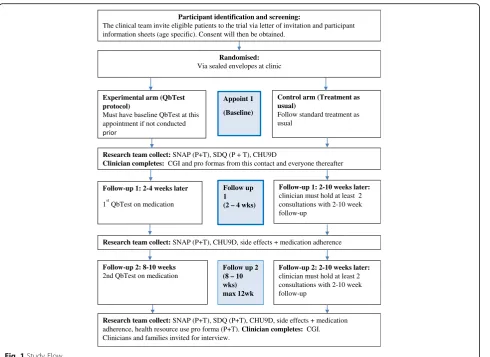
62%). Reasons for non-attendance included annual leave (4, 19%), prior clinical commitments (2, 9.5%), and feel-ing that the protocol was sufficiently developed (2, 9.5%) . The aim of the final workshop was to reflect on the discussions, decide on a potential primary outcome and develop a clinician completed pro-forma. Thirteen mem-bers attended this workshop, including four clinicians, 4 PPI members, two researchers, two MindTech represen-tatives and one advisor from Qbtech. The research team presented the proposed study flow to the team (Fig.1).
PPI members and clinicians felt that general function-ing at school had not been adequately addressed, there-fore a decision was made to include both a parent- and teacher- completed SDQ at final follow-up to measure change in global mental health difficulties. Although this
addition contrasts with the decision in workshop 1 not
to have a second SDQ at final follow-up, upon further reflection the need to capture functioning at school was
considered important and felt to be best captured by the SDQ, meriting inclusion as a secondary outcome meas-ure. It was also noted that, where possible, the same teacher should complete the baseline and follow-up SDQs, but this was recognised to not always be possible if follow-ups span changes in school years.
Developing a clinician completed pro forma
The expert members were presented with a clinician pro
forma used in a previous ADHD trial [20] which would
be necessary to record clinical decision making through-out the trial. The members discussed issues around the need to capture: the frequency and length of appoint-ments, the timing of QbTest, a formal record that the QbTest was discussed with the family, the methods used to diagnose the young person, other methods used to in-form monitoring and medication decision-making, the drug and dose, and any other concomitant information. Clinicians noted the importance of having simple-to-complete questions using tick-boxes. A draft pro forma was created on the basis of this which underwent two rounds of further email discussions with the clinical members before a finalised pro forma was reached. The pro forma is included in Appendix 3. Additionally, clini-cians felt that they were more likely to complete mea-sures online than on paper as the latter would involve an additional step of posting results back to the research team. PPI members also felt online measure completion was easier, however, families should be offered the op-tion of postal or telephone compleop-tion for all outcome measures to accommodate individual family preferences.
Selecting a primary outcome
The group were unanimous that a change on SNAP-IV score should be the primary outcome. Symptom im-provement was considered of key importance for both clinicians and PPI members. The group discussed whether reaching a normalised score was the best option (as per workshop 1), however, as in the first workshop, some clinicians felt that was not achievable, and PPI members stressed the importance of having a child that was a true reflection of themselves, and being ‘
normal-ised’ was not always desirable. Following the landmark
Multimodal Treatment of ADHD (MTA) [34], a 25%
re-duction of symptoms was considered the most suitable primary outcome with normalization as secondary out-come for a future definitive RCT.
with peers). The team concluded that teacher completion rates will be monitored as part of the QUOTA feasibility study to determine the suitability of teacher completed SNAP-IV as the primary outcome for the future RCT. The decisions made in the workshop, including the reasoning behind them, were circulated to non-attending members for their approval. All were in agreement.
Recommendations
A parent and teacher completed SDQ should be included at final follow-up to gain a measure of gen-eral difficulties.
A simple tick-box clinician completed pro forma should be recorded online.
Change (of 25%) on SNAP-IV score should be the primary outcome.
Teacher completion rates should be monitored as part of the QUOTA feasibility study to determine the suitability of teacher completed SNAP-IV in the full RCT.
Discussion
The consensus workshops provided rich, multifaceted information to support the development of an ADHD medication management protocol for QbTest which would be tested in a feasibility RCT. Given the increas-ing awareness of the importance of involvincreas-ing patients, caregivers and public members in research trials [35], this methodologically-driven report has broad applicabil-ity to researchers working in all fields of clinically-facing research, but particularly for those working in ADHD and other related areas such as in the child mental health or neurodevelopment fields, who can draw upon the preferences expressed to inform future trial design.
It was interesting to note the broad consensus across both clinicians and PPI members in numerous areas, with agreement on the need to balance the burden of data collection against the need to gather important in-formation. It is also noteworthy that many RCTs collect multiple secondary outcomes which may not be pertin-ent to the aim of the study. Our findings suggest these should be streamlined in future research. Furthermore, there was consensus across clinicians and PPI members
Participant identification and screening:
The clinical team invite eligible patients to the trial via letter of invitation and participant information sheets (age specific). Consent will then be obtained.
Randomised:
Via sealed envelopes at clinic
Experimental arm (QbTest protocol)
Must have baseline QbTest at this appointment if not conducted
Appoint 1
(Baseline)
Control arm (Treatment as usual)
Follow standard treatment as usual
Research team collect: SNAP (P+T), SDQ (P + T), CHU9D
Clinician completes: CGI and pro formas from this contact and everyone thereafter
Follow-up 1: 2-4 weeks later
1stQbTest on medication
Follow up 1 (2 – 4 wks)
Follow-up 1: 2-10 weeks later:
clinician must hold at least 2 consultations with 2-10 week follow-up
Research team collect: SNAP (P+T), CHU9D, side effects + medication adherence
Follow-up 2: 8-10 weeks
2nd QbTest on medication
Follow up 2 (8 – 10 wks) max 12wk
Follow-up 2: 2-10 weeks later:
clinician must hold at least 2 consultations with 2-10 week follow-up
Research team collect: SNAP (P+T), SDQ (P+T), CHU9D, side effects + medication adherence, health resource use pro forma (P+T). Clinician completes: CGI. Clinicians and families invited for interview.
that the importance of reaching a meaningful reduction
in symptoms was more important than achieving a‘
nor-malised’score. When selecting primary outcomes there
can be a tendency for research teams to define clinically meaningful change from a clinician’s perspective, how-ever, the opinion and lived experience of the patient and caregiver should inform this judgement.
Members of the consensus workshop were over-whelmingly positive about their experience of being part of the group, with each member feeling they had an op-portunity to be heard. A protocol was developed on the basis of these workshops, which has been published [13]. The QUOTA study is in the early stages of participant recruitment so we cannot comment on whether recruit-ment was successful or protocol adherence was good as a result of this approach to its development. The QUOTA study will record and publish these outcomes as part of the feasibility assessment. It is recognised that it is difficult to record, measure and quantify the impact that involving patient and public members in research may have. To discern the impact that PPI members had in this instance, we have recorded where they contrib-uted (and where they did not) which provides a route into charting their impact on decision making; logging of recommendations is a helpful way to capture impact [36]. It is not possible to know exactly how the protocol
would have differed without PPI inclusion (as with the
removal of any expert from the process) but mapping their specific contribution to decision making can help to reveal a footprint of sorts.
We now consider specific of the workshop design and identify possible areas for further research. One of the chal-lenges of conducting the workshops was the need to balance opinions for‘best practice’with real-world time and finance constraints. There also remain challenges around whose viewpoint holds prominence when there are competing views. A key example is where the workshops highlighted outcomes that mattered to parents (relating to changes in the impact of the child’s ADHD on family life more gener-ally) but would be difficult to capture and had less relevance to clinical outcomes. Given the constraints of the study, these were ultimately considered secondary to the other re-search aims (by the rere-searchers, at least). However, this would be a useful development for future research in this field. Additionally, some points were raised (such as modifi-cations to the methodology of completing economic mea-sures through the diary method) which were outside the remit of this study to investigate. In terms of limitations, des-pite good representation across key stakeholders, our find-ings reflect the opinions of members who agreed to participate in the groups, who may be specifically motivated to develop a more closely-monitored titration process. Fur-thermore, the participants were invited through the study
team’s known contacts in the field (including an ADHD
support group for parents) and participation was not adver-tised. Additionally, it was not possible for children or young people to participate in the workshops. Although our invita-tion to participate was extended to both parents and their child, difficulties in organising groups outside of school hours and the nature of the workshops (several hours of focussed time), precluded young people from attending. Designs that provide a more child-friendly format would be useful in fu-ture to ensure the views of this group are included.
In the current study, each workshop comprised a slightly different format: two comprised small sub-groups (in one the same point was discussed and in the other the groups discussed separate points); the third involved whole-group discussion only. This was a reactive decision, rather than pre-planned, driven by the number of people available to attend each workshop (there were fewer people available for the third workshop) and time limitations. However, the choice was also strategic. The first workshop covered the most fundamental basic outline of the design on which consensus had to be obtained to allow progression; this was the most important element of its design and was given the most attention by making it the focus of discussion for both sub-groups. In the second workshop, although participants discussed different topics, they presented their discussions to the other group to ensure whole-group discussion. The third workshop (with no sub-groups) was designed to en-courage discussion by all participants. At this stage, the members felt comfortable with all other members and thus smaller groups would not have been as necessary. Although maintaining the same format for every workshop would have led to greater consistency in the methodology, the more flexible approach chosen here ensured that the group format was best suited to the topics for discussion at each point and the group numbers at each stage. Further re-search could investigate the extent to which the structure and make-up of groups is best kept constant or should be made flexible to elicit information effectively.
reflected the needs and views of different stakeholders, we felt the group method was preferable to individual interviews [36]. The Delphi method requires individual participants to answer questions/rate items and give feedback (usually remotely) which is collated by the re-search team. The protocol is then refined and partici-pants are asked to re-rate each item. Although this approach ensures that individuals are not unduly influ-enced by a group-norm, it is timely and costly. More-over, we felt that the information gathered through group discussions would be richer and enable a more meaningful consensus to be reached, driven by the stakeholders, rather than the researchers. Furthermore, built into the study design (but not part of the work-shops) is a phase of qualitative data collection (work-shops and interviews) exploring the experience of the
protocol from clinician and family perspectives – both
in a combined group setting and also individually in
in-terviews – to draw out what its impact was in practice,
and whether further adaptations to the protocol are re-quired. So whilst the protocol design phase used group discussion alone, this sits within a broader inquiry that uses additional methods.
It should be noted that although this design was specific to designing a medication protocol for chil-dren, the concept of the formulation and delivery of the workshop, with relevant PPI members is pertinent for any trial involving human participants. We would also like to emphasise that although involving differ-ent stakeholders is an important and under-practiced part of research design, this should not be the exclu-sive process in designing a trial. Considerations for quality standards and scientific rigour must always be of paramount importance.
Conclusions
By presenting the approach and findings of the work-shops involving multidisciplinary members to develop a medication and trial protocol, we illuminate some of the consultative processes under-pinning the development of clinical protocols to enhance their acceptability and feasibility. By sharing our methodological approach, we hope to improve the transparency of protocol develop-ment and strongly advocate that researchers actively engage with clinical teams, industry, and patient and public members when developing protocols. Protocols which are co-developed may help overcome some of the barriers associated with successful completion of RCTs, such as issues with recruitment, retention and adher-ence. Our methodology and findings may also be useful for groups and organisations that develop clinical con-sensus guidelines, and for clinicians and researchers working in the field of ADHD in particular.
Abbreviations
ADHD:Attention deficit hyperactivity disorder; CGAS: Children’s Global Assessment Scale; CGI: Clinical Global Impressions; CHU9D: Child Health Utility 9D; CSRI: Client Service Receipt Inventory; GP: General Practitioner; MRC: Medical Research Council; MTA: Multimodal Treatment of ADHD; NICE: National Institute for Health and Care Excellence; NIH: National Institute for Health; NIHR: National Institute for Health Research; PiiAF: Public involvement impact assessment framework guidance; PPI: Patient and Public Involvement; QUOTA: QbTest Utility in Optimising Treatment for ADHD; RCT: Randomised Controlled Trial; REC: Research Ethics Committee; RUSE: Resource Use–Services in Education’; RUSH: Resource Use–Services for Health; SDQ: Strengths and Difficulties Questionnaire; SNAP-IV: Swanson, Nolan and Pelham 4th version; SPIRIT: Standard Protocol Items:
Recommendations for Interventional Trials
Acknowledgements
We would like to thank all members of our expert workshops who helped us develop this protocol, including: Dr. Maria Moldavsky, Dr. Carsten Vogt, Joe Kilgariff, Dr. Margaret Murphy, Dr. Rosemary Gradwell, Christine Jarvis, Anna Saunders, Zoe Coles and Helen Mellor. We would like to extend our thanks and appreciation to members of Qbtech: Tony Doyle, Charlotte Keizer, Hans Bostrom and Fredrik Ulberstad for their advice and ongoing support. Finally, we would like to thank Angela Summerfield for her continued support and help.
Author’s contributions
The QUOTA project was conceived by MJG and CLH. MJG is the Chief Investigator. The workshops were designed by MJG, CLH, SB, JLM and NB. NB took a lead role in co-ordinating PPI activities with support from SB. MJ took a lead role on the development of the health economic measures. CH, KSe, KSa, and JC took a lead role in the clinical involvement in the work-shops. MJG, CLH, SB and JLM oversaw the conduct of the workwork-shops. CH, KSe, KSa, and JC took a lead role in the clinical involvement in the work-shops. The manuscript was drafted by CLH and critically reviewed by LW, SB and MJG, with additional input from all co-authors. All authors read and approved the final manuscript.
Funding
This paper presents independent research funded by the National Institute for Health Research (NIHR) Research for patient benefit (RfPB), grant number PB-PG-1215-20026. The views expressed are those of the author(s) and not necessarily those of the NHS, the NIHR or the Department of Health. CH, JLM, and SB acknowledge funding from the NIHR Nottingham BRC and NIHR MindTech Medtech and In-vitro diagnostics Co-operative (MIC). The study sponsor and funders have no role in study design, including; collection, man-agement, analysis and interpretation of data; writing of the report; and the decision to submit the report for publication.
Availability of data and materials
Data sharing is not applicable to this article as no datasets were generated or analysed during the current study.
Ethics approval and consent to participate
The paper presents the methodological development of the protocol created by a steering group. Members were not recruited by public recruitment in the NHS nor were the activities considered‘data collection’or
‘research’(but rather, involvement in shaping the research design) and thus ethical approval for the workshops was not sought; this was agreed by the study Sponsor (Nottinghamshire Healthcare NHS Foundation Trust; Ref: Groom050917). Nonetheless, although not required by an ethics committee, all members of the workshops were adults who provided their verbal consent to participate. The resulting protocol that stemmed from the process described in this manuscript did receive Ethical approval: QUOTA protocol (v1.1) approved by West of Scotland REC 1 (REC reference 17/WS/ 0209) on 7th November 2017.
Consent for publication
Not applicable.
Competing interests
Author details
1Division of Psychiatry and Applied Psychology, Institute of Mental Health,
University of Nottingham Innovation Park, Triumph Road, Nottingham NG7 2TU, UK.2Division of Rehabilitation and Ageing, University of Nottingham, Nottingham, UK.3Department of Community Paediatrics, Medway NHS Foundation Trust, Kent, UK.4Acting Consultant Community Paediatrics, Grantham and District Hospital, United Lincolnshire Hospitals NHS Trust, Grantham, UK.5Child and Adolescent, Developmental Psychiatry, School of Medicine, University of Nottingham and CANDAL (Centre for ADHD and Neuro-developmental Disorders across the Lifespan), Institute of Mental Health, University of Nottingham Innovation Park, Triumph Road,
Nottingham NG7 2TU, UK.6Devlopmental Psychiatry Queens Medical Centre, School of Medicine, and MindTech, Institute of Mental, University of Nottingham, Innovation Park, Triumph Road, Nottingham NG7 2TU, UK.
Received: 12 September 2018 Accepted: 9 June 2019
References
1. Tetzlaff JM, Moher D, Chan A-W. Developing a guideline for clinical trial protocol content: Delphi consensus survey. Trials. 2012;13:176.
2. Group E-BMW. Evidence-based medicine. A new approach to teaching the practice of medicine. JAMA. 1992;268:2420.
3. Grossman J, Mackenzie FJ. The randomized controlled trial: gold standard, or merely standard? Perspect Biol Med. 2005;48:516–34.
4. Fogg L, Gross D. Focus on research methods-threats to validity in randomized clinical trials. Res Nurs Health. 2000;23:79–87.
5. Neugebauer EA, Rath A, Antoine S-L, Eikermann M, Seidel D, Koenen C, Jacobs E, Pieper D, Laville M, Pitel S. Specific barriers to the conduct of randomised clinical trials on medical devices. Trials. 2017;18:427.
6. NICE. Patient and Public Involvement Policy.https://www.nice.org.uk/media/ default/About/NICE-Communities/Public-involvement/Patient-and-public-involvement-policy/Patient-and-public-involvement-policy-November-2013. pdf. Accessed 23 Mar 2018.
7. Involve. Briefing notes for researchers: involving the public in NHS, public health and social care research.https://www.involve.org.uk/resources. Accessed 12 Mar 2018.
8. Brett J, Staniszewska S, Mockford C, Seers K, Herron-Marx S, Bayliss H: The PIRICOM Study: A systematic review of the conceptualisation, measurement, impact and outcomes of patients and public involvement in health and social care research. 2010. Warwick: University of Warwick,http://wrap. warwick.ac.uk/47235/.
9. Wilson P, Mathie E, Keenan J, McNeilly E, Goodman C, Howe A, Poland F, Staniszewska S, Kendall S, Munday D. ReseArch with Patient and public invOlvement: a RealisT evaluation–the RAPPORT study. Health Services and Delivery Research. 3(38).
10. Staniszewska S, Brett J, Simera I, Seers K, Mockford C, Goodlad S, Altman D, Moher D, Barber R, Denegri S. GRIPP2 reporting checklists: tools to improve reporting of patient and public involvement in research. Research Involvement and Engagement. 2017;3:13.
11. Popay J, Collins M, Group wtPS: The public involvement impact assessment framework guidance.Universities of Lancaster, Liverpool and Exeter;2014.http:// piiaf.org.uk/documents/piiaf-guidance-jan14.pdf. Accessed 18 Mar 2018. 12. Chan A-W, Tetzlaff JM, Gøtzsche PC, Altman DG, Mann H, Berlin JA, Dickersin K,
Hróbjartsson A, Schulz KF, Parulekar WR. SPIRIT 2013 explanation and elaboration: guidance for protocols of clinical trials. BMJ. 2013;346:e7586. 13. Hall CL, James M, Brown S, Martin JL, Brown N, Selby K, Clarke J, Vijayan H,
Guo B, Sayal K. Protocol investigating the clinical utility of an objective measure of attention, impulsivity and activity (QbTest) for optimising medication management in children and young people with ADHD‘QbTest utility for Optimising treatment in ADHD’(QUOTA): a feasibility randomised controlled trial. BMJ Open. 2018;8:e021104.
14. NICE: Attention deficit hyperactivity disorder:diagnosis and managment of ADHD in children, young people and adults.Clinical Guideline 72. In.
London: National Institute for Health and Clinical Excellence 2008. 15. Kovshoff H, Williams S, Vrijens M, Danckaerts M, Thompson M, Yardley L,
Hodgkins P, Sonuga-Barke EJ. The decisions regarding ADHD management (DRAMa) study: uncertainties and complexities in assessment, diagnosis and treatment, from the clinician’s point of view. Eur Child Adolesc Psychiatry. 2012;21:87–99.
16. Hall CL, Taylor JA, Newell K, Baldwin L, Sayal K, Hollis C. The challenges of implementing ADHD clinical guidelines and research best evidence in routine clinical care settings: Delphi survey and mixed-methods study. Br J Psychiatry Open. 2016;2:25–31.
17. Hall CL, Selby K, Guo B, Valentine AZ, Walker GM, Hollis C. Innovations in practice: an objective measure of attention, impulsivity and activity reduces time to confirm attention deficit/hyperactivity disorder diagnosis in children–a completed audit cycle. Child Adolesc Mental Health. 2016;21(3):175–8. 18. Hall CL, Valentine AZ, Groom MJ, Walker GM, Sayal K, Daley D, Hollis C. The
clinical utility of the continuous performance test and objective measures of activity for diagnosing and monitoring ADHD in children: a systematic review. Eur Child Adolesc Psychiatry. 2016;25:677–99.
19. Hall CL, Valentine AZ, Walker GM, Ball HM, Cogger H, Daley D, Groom MJ, Sayal K, Hollis C. Study of user experience of an objective test (QbTest) to aid ADHD assessment and medication management: a multi-methods approach. BMC Psychiatry. 2017;17:66.
20. Hall CL, Walker GM, Valentine AZ, Guo B, Kaylor-Hughes C, James M, Daley D, Sayal K, Hollis C. Protocol investigating the clinical utility of an objective measure of activity and attention (QbTest) on diagnostic and treatment decision-making in children and young people with ADHD—‘assessing QbTest utility in ADHD’(AQUA): a randomised controlled trial. BMJ Open. 2014;4:e006838.
21. Hollis C, Hall CL, Guo B, James M, Boadu J, Groom MJ, Brown N, Kaylor-Hughes C, Moldavsky M, Valentine A, et al. The impact of a computerised test of attention and activity (QbTest) on diagnostic decision-making in children and young people with suspected attention deficit hyperactivity disorder: single-blind randomised controlled trial. J Child Psychol Psychiatry. 2018.https://doi.org/10.1111/jcpp.12921.
22. Groom MJ, Young Z, Hall CL, Gillott A, Hollis C. The incremental validity of a computerised assessment added to clinical rating scales to differentiate adult ADHD from autism spectrum disorder. Psychiatry Res. 2016;243:168–73.
23. Vogt C, Shameli A. Assessments for attention-deficit hyperactivity disorder: use of objective measurements. Psychiatrist. 2011;35:380–3.
24. Vogt C, Williams T. Early identification of stimulant treatment responders, partial responders and non-responders using objective measures in children and adolescents with hyperkinetic disorder. Child Adolesc Mental Health. 2011;16:144–9.
25. Craig P, Dieppe P, Macintyre S, Michie S, Nazareth I, Petticrew M. Developing and evaluating complex interventions: the new Medical Research Council guidance. BMJ. 2008;337:a1655.
26. Swanson JM, Kraemer HC, Hinshaw SP, Arnold LE, Conners CK, Abikoff HB, Clevenger W, Davies M, Elliott GR, Greenhill LL. Clinical relevance of the primary findings of the MTA: success rates based on severity of ADHD and ODD symptoms at the end of treatment. J Am Acad Child & Adolesc Psychiatry. 2001;40:168–79.
27. Goodman R. The strengths and difficulties questionnaire: a research note. J Child Psychol Psychiatry. 1997;38:581–6.
28. Shaffer D, Gould MS, Brasic J, Ambrosini P, Fisher P, Bird H, Aluwahlia S. A children's global assessment scale (CGAS). Arch Gen Psychiatry. 1983;40: 1228–31.
29. Guy W. CGI clinical global impressions. EC-DEU Assessment Manual for Psychopharmacology. 1976:76–338.
30. Wille N, Badia X, Bonsel G, Burström K, Cavrini G, Devlin N, Egmar A-C, Greiner W, Gusi N, Herdman M. Development of the EQ-5D-Y: a child-friendly version of the EQ-5D. Qual Life Res. 2010;19:875–86. 31. Stevens K: The child health utility 9D (CHU9D). A new, paediatric,
preference-based measure of health related quality of life PRO newsletter.
2010, 43:11–12.
32. Hill P, Taylor E. An auditable protocol for treating attention deficit/ hyperactivity disorder. Arch Dis Childhood. 2001;84:404–9.
33. Beecham J, Knapp M. Costing psychiatric interventions: Gaskell in measuring mental health needs. London: Edited by Thornicroft G; 2001.
34. Group MC. A 14-month randomized clinical trial of treatment strategies for attention-deficit/hyperactivity disorder. Arch Gen Psychiatry. 1999;56:1073.
35. Vale C, Fitzgibbon J, Hanley B: Public involvement in clinical trials: supplement to the briefing notes for researchers. http://www invo org uk/ wpcontent/uploads/2012/04/
36. Mann C, Chilcott S, Plumb K, Brooks E, Man M-S. Reporting and appraising the context, process and impact of PPI on contributors, researchers and the trial during a randomised controlled trial - the 3D study. Research Involvement and Engagement. 2018;4(1):15. https://doi.org/10.1186/s40900-018-0098-y.
Publisher’s Note