ARTICLE
Evaluation of polyembryony for genetic
resources and efficacy of simple sequence
repeat markers for the identification of nucellar
and zygotic embryo-derived individuals in citrus
Jin‑kyu Woo
1†, Young Chul Park
2†, Ju Won Lee
3, Su‑Hyun Yun
4, Minju Kim
4, Sukman Park
4, Yi Lee
5,
Kwan Jeong Song
6,7*and Ho Bang Kim
1*Abstract
Many citrus cultivars have the polyembryony trait that develops many nucellar embryos alongside a single zygotic embryo in an individual seed by sporophytic apomixis. This unique botanical trait hinders citrus breeding by genetic hybridization and affects breeding efficiency and cost. Techniques to efficiently identify nucellar and zygotic indi‑ viduals in citrus are still very limited. For a systematic and targeted citrus breeding program, we collected 101 cit‑ rus genetic resources and determined their embryo types, which revealed 22 monoembryo, 54 polyembryo, and 25 mixed types. We also developed 17 simple sequence repeat (SSR) markers showing polymorphism among the genetic resources from the public resources and our own comparative genome analysis. Seventeen SSR markers detected a total of 181 alleles, ranging from 5 to 16 alleles per locus. The average polymorphism information content value was 0.67, ranging from 0.43 to 0.84. Genetic cluster analysis based on similarity matrices of alleles revealed that several genetic resources of the genus Citrus were fragmented and/or scattered throughout the entire dendrogram, not forming unique groups, due to frequent natural or intended genetic crossings. Application of these polymorphic SSR markers to F1 individuals derived from several genetic crosses using polyembryonic citrus cultivars as a female parent revealed that the polyembryony trait decreased the breeding efficiency due to the poor occurrence rate of zygotic individuals. Therefore, our results suggest that identification of nucellar and zygotic embryo‑derived F1 indi‑ viduals using SSR markers as a genotyping technology may be a powerful tool for establishing a systematic molecular breeding program in citrus.
Keywords: Citrus, Genetic resource, Molecular breeding, Polyembryony, SSR marker, Zygotic embryo
© The Author(s) 2019. This article is distributed under the terms of the Creative Commons Attribution 4.0 International License (http://creat iveco mmons .org/licen ses/by/4.0/), which permits unrestricted use, distribution, and reproduction in any medium, provided you give appropriate credit to the original author(s) and the source, provide a link to the Creative Commons license, and indicate if changes were made.
Introduction
Citrus is a major fruit crop that generates the largest amount of fruit production in the world and is grown throughout the tropical and subtropical regions world-wide. Citrus fruit is an important nutritional source for
human health due to its high content of vitamin C and other health-promoting compounds, including unique flavonoids such as tangeretin and hesperidin [1, 2]. Despite the tremendous extent and value of citrus pro-duction, most of the citrus cultivars have arisen from natural hybridizations and bud sport mutations, not as a consequence of systematic and targeted breeding pro-grams [3]. Citrus is considered the most difficult crop for developing new cultivars through conventional breeding approaches due to its large plant size, long juvenility, high level of heterozygosity, and various unique reproductive
Open Access
*Correspondence: [email protected]; [email protected]
†Jin‑kyu Woo and Young Chul Park have contributed equally to this work 1 Life Sciences Research Institute, Biomedic Co., Ltd., Bucheon 14548,
Republic of Korea
6 Major in Horticultural Science, Faculty of Bioscience and Industry,
College of Applied Life Sciences, Jeju National University, Jeju 63243, Republic of Korea
biological characteristics, including apomictic nucellar embryony.
In most flowering plants, an individual seed usu-ally develops a single zygotic embryo in the embryo sac. However, in many citrus cultivars, many nucel-lar embryos develop in an individual seed alongside a zygotic embryo by sporophytic apomixis, resulting in the development of polyembryos in a single seed. The nucellar embryos are initiated directly from the maternal, nucellar tissue surrounding the embryo sac containing a developing zygotic embryo and give rise to seedlings with the same genotype as the female parent [4, 5]. Apomic-tic polyembryony is a heritable trait found in many citrus varieties and greatly impedes progress in scion breeding via genetic crosses in citrus. Nucellar embryony is also essential in citrus rootstocks because it allows rootstock breeders to propagate F1 hybrid trees on highly
heterozy-gous but genetically uniform seedling populations [3, 5]. Systematic citrus breeding programs require reproduci-ble, objective, and labor-saving methods to easily identify nucellar and zygotic individuals.
Several methods have been developed and used for identifying nucellar and zygotic plants in citrus, includ-ing vegetative morphology characterization [6], infra-red spectroscopy [7], chromatography [8], isozyme pattern analysis [9], random amplified polymorphic DNA (RAPD) analysis [10], and inter-simple sequence repeat-polymerase chain reaction (ISSR-PCR) [11]. However, these methods are unreliable due to problems with repro-ducibility, accuracy and efficiency of the selection and labor intensiveness of these techniques. Simple sequence repeats (SSRs) are highly informative DNA markers due to their high degree of polymorphism and co-dominant mode of inheritance and genome-wide distribution. SSR markers have been successfully used for the identification of zygotic seedlings or nucellar rootstock candidates for rootstock breeding programs [12–14]. However, these previous studies used seedling populations derived from a very limited number of genetic crosses. The versatility of the previously reported SSR markers has also not been determined.
To establish systematic and targeted citrus breed-ing programs, we collected 101 citrus genetic resources. In this paper, we determined the polyembryony of the germplasm collection. We isolated 17 SSR markers show-ing polymorphism among several citrus cultivars from previous reports [15, 16] and the comparative genome analysis between Citrus clementina ‘Fina Sodea’ and C. platymamma Hort. et Tanaka and between C. natsu-daidai and C. natsudaidai ‘Whanggumhagyul’. Using 17 polymorphic SSR markers that we selected from the pol-ymorphism test, we determined allele sizes from the frag-ment analysis for all citrus germplasms that we collected.
Based on the genotype information, we applied the poly-morphic SSR markers for the identification of zygotic or nucellar individuals derived from several genetic crosses using polyembryonic cultivars as female parents.
Materials and methods
Plant materials and genomic DNA isolation
Leaf tissues were harvested from the citrus genetic resources that were collected by Agricultural Research and Extension Services, Jeju Special Self-Governing Province, Republic of Korea. The harvested leaf tis-sues were rinsed with tap water and then were stored at − 80 °C until use. Genomic DNA was purified using the Biomedic® Plant gDNA Extraction Kit (Biomedic Co., Ltd., Korea; www.ibiom edic.co.kr). The DNA quantity and quality for genotyping were determined using the
DeNovix DS-11 + Spectrophotometer (DeNovix,
Wilm-ington, DE, USA).
Polyembryony test of citrus genetic resources
Seed number was measured by counting the number of total seeds in five ripened fruits. After counting the seed number, total number of seeds from each cultivar were mixed together and five seeds were randomly selected to determine embryo type. An individual seed was cut in half and observed under a stereoscopic microscope for the determination of embryo type: monoembryony, pol-yembryony or mixed type. For cultivars showing mixed embryo type, an additional five fruits were further inves-tigated for the final confirmation of embryo type.
Whole genome sequencing
The paired-end DNA libraries for whole genome sequenc-ing were constructed ussequenc-ing TruSeq® DNA Library Prep Kits (Illumina, San Diego, CA, USA) for four citrus cul-tivars: C. clementina ‘Fina Sodea’, C. platymamma Hort. et Tanaka, C. natsudaidai, and C. natsudaidai ‘Whang-gumhagyul’. Approximately six gigabytes of sequence information per each sample were obtained from whole genome sequencing by the Illumina HiSeq 2500 platform. The produced raw reads were trimmed using the Dynam-icTrim and LengthSort softwares of the SolexaQA pack-age (v.1.13) [17]. Then left clean reads were mapped to the reference genome of C. clementina ‘Clemenules’ [18] to obtain consensus sequences using Burrows-Wheeler Aligner (BWA) program (0.6.1-r104) [19].
SSR identification, primer design, and in silico analysis of SSR polymorphism
ipk-gater slebe n.de/misa/). To identify the presence of SSRs, only 2–10 nucleotide motifs were considered, and the minimum repeat unit was defined as 6 for di-, 5 for tri-, 4 for tetra-, 3 for penta-, and 2 for hexa-, hepta-, octa-, nona- and deca-nucleotides [20]. The character-istics of SSRs were obtained by statistical analysis from the MISA files. The information from MISA was used for designing primers flanking the SSR motif. The Primer3 software (v2.3.5) was used to design primers flanking the SSR loci [21]. The following parameters were used: primer length 18–24 base pairs (bp), with 20 bp as an
optimum; primer GC % = 20–80%, with an optimum
value of 50%; primer Tm 55–65 °C, with 60 °C as an opti-mum, and product size ranging from 150 to 500 bp. In silico polymorphism analysis of SSR markers was per-formed using the virtual PCR approach, in which pairs of primer sequences from the reference were mapped onto the consensus sequence of each sample [22]. We also obtained SSR marker information from the previous reports [15, 16].
Polymorphism test of SSR marker candidates
Putative polymorphic SSR markers were selected from the routine PCR using genomic DNAs from 11 cultivars belonging to six citrus groups, such as lemon, manda-rin, sour orange, citron, orange, and tangor. PCR was conducted using the ABI 2720 thermal cycler (Applied Biosystems, Foster City, CA, USA) in a total volume of 10 μL, containing 20 ng DNA, 5 μL 2x HS™ Taq mix (Dongsheng Biotech, China), and 0.2 μL of each 10 pmol forward and reverse primers. The conditions for PCR amplification were as follows: 5 min for initial denatura-tion at 94 °C, 30 cycles of 30 s at 94 °C, 30 s at 55–58 °C, and 1 min at 72 °C, concluding with 1 cycle of 10 min at 72 °C. PCR products were separated on a 2.5% (w/v) aga-rose gel to check PCR amplification and polymorphism among the tested cultivars.
Genotyping using M13‑tailed PCR
The M13-tailed PCR method was used for the genotyp-ing analysis usgenotyp-ing the selected polymorphic SSR mark-ers [23]. PCR was conducted using the ABI 2720 thermal cycler (Applied Biosystems) in a total volume of 10 μL, containing 20 ng DNA, 5 μL 2x HS™ Taq mix (Dongsheng Biotech), 0.2 μL 10 pmol M13-tailed forward primer, 1 μL 10 pmol reverse primer, and 1 μL 10 pmol 6-FAM labeled
M13 primer (5′-6-FAM-TGT AAA ACG ACG GCC AGT
-3′). The conditions for PCR amplification followed the protocol described previously by Schuelke [23]. Fragment analysis of the PCR products was described previously [24]. Allele sizes were analyzed using the GeneMapper software (ver. 4.0; Applied Biosystems).
Data analysis
Genetic parameters such as major allele frequency, num-ber of alleles, genetic diversity, observed heterozygosity, and polymorphic information content were measured by calculating the shared allele frequencies using the PowerMarker software (v. 3.25) [25]. The unweighted pair group method with arithmetic mean (UPGMA) tree was implemented using the MEGA software (v. 5.0) [26], which is embedded in the PowerMarker, with the UPGMA algorithm.
Results and discussion
Polyembryony in citrus genetic resources
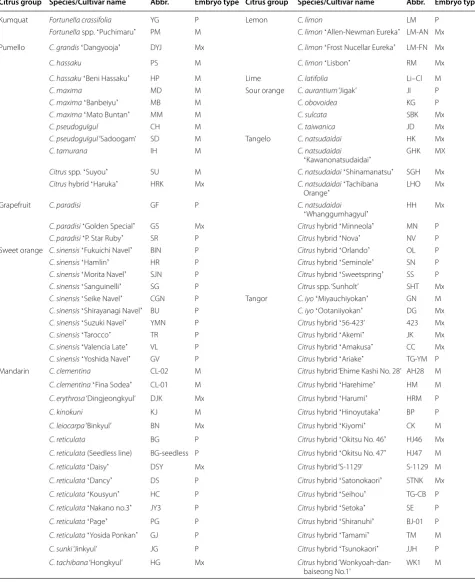
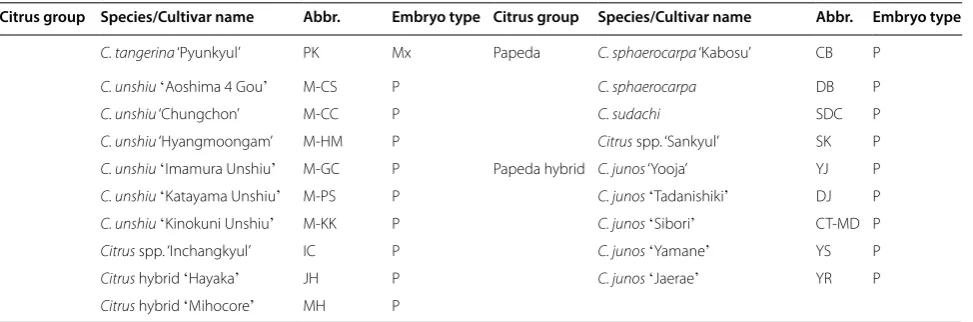
We collected 101 accessions of citrus genetic resources for systematic and targeted breeding programs. In citrus, the polyembryony trait is a barrier for the conventional citrus breeding by cross hybridization. Prior to the use of the collected germplasms for our citrus breeding pro-gram, we first performed polyembryony tests of mature seeds to investigate which germplasms had a polyembryo phenotype caused by nucellar embryony. Monoembryo and polyembryo phenotypes were observed in 22 and 54 genetic resources, respectively. The other 25 accessions showed a mixed type, with a mixture of seeds contain-ing a scontain-ingle embryo or multiple embryos. These results of the current citrus germplasm revealed that the polyem-bryony trait is widely distributed in various citrus groups (Table 1). According to previous reports, the frequency of nucellar seedlings in major citrus groups ranged from 0 (ʻKishiuʼ mandarin and 11 pumello cultivars) to 100% (ʻDancyʼ and ʻKaraʼ mandarins), depending on the cit-rus group [5, 27]. Except for the C. grandisʻDangyoojaʼ
and the Citrus hybrid ʻHarukaʼ that were classified into a mixed type, all of the pumellos investigated in this study were monoembryonic. In contrast, all accessions belong-ing to the papeda, its hybrid, and sweet orange groups showed the polyembryony phenotype. Not every seed produced by a tree with nucellar embryony trait has mul-tiple mature embryos. Normal sexual reproduction can also occur in genotypes with the nucellar embryony trait. A genotype with this trait can produce several different types of seeds, that is, seeds with one mature nucellar embryo, seeds with multiple mature nucellar embryos, and seeds with one mature zygotic and one or more mature nucellar embryos [5, 28]. The 25 accessions show-ing a mixed type could be therefore classified into the polyembryony group.
Development of polymorphic SSR markers and genotyping of citrus genetic resources
Table 1 Polyembryony test of citrus germplasm collection used in this study. M, P, and Mx indicate monoembryony, polyembryony, and mixed type, respectively
Citrus group Species/Cultivar name Abbr. Embryo type Citrus group Species/Cultivar name Abbr. Embryo type
Kumquat Fortunella crassifolia YG P Lemon C. limon LM P
Fortunella spp. ʻPuchimaruʼ PM M C. limonʻAllen‑Newman Eurekaʼ LM‑AN Mx
Pumello C. grandisʻDangyoojaʼ DYJ Mx C. limonʻFrost Nucellar Eurekaʼ LM‑FN Mx
C. hassaku PS M C. limonʻLisbonʼ RM Mx
C. hassakuʻBeni Hassakuʼ HP M Lime C. latifolia Li–Cl M
C. maxima MD M Sour orange C. aurantium ‘Jigak’ JI P
C. maximaʻBanbeiyuʼ MB M C. obovoidea KG P
C. maximaʻMato Buntanʼ MM M C. sulcata SBK Mx
C. pseudogulgul CH M C. taiwanica JD Mx
C. pseudogulgul ‘Sadoogam’ SD M Tangelo C. natsudaidai HK Mx
C. tamurana IH M C. natsudaidai
ʻKawanonatsudaidaiʼ GHK MX
Citrus spp. ʻSuyouʼ SU M C. natsudaidaiʻShinamanatsuʼ SGH Mx
Citrus hybrid ʻHarukaʼ HRK Mx C. natsudaidaiʻTachibana
Orangeʼ LHO Mx
Grapefruit C. paradisi GF P C. natsudaidai
ʻWhanggumhagyulʼ HH Mx
C. paradisiʻGolden Specialʼ GS Mx Citrus hybrid ʻMinneolaʼ MN P
C. paradisiʻP. Star Rubyʼ SR P Citrus hybrid ʻNovaʼ NV P
Sweet orange C. sinensisʻFukuichi Navelʼ BIN P Citrus hybrid ʻOrlandoʼ OL P
C. sinensisʻHamlinʼ HR P Citrus hybrid ʻSeminoleʼ SN P
C. sinensisʻMorita Navelʼ SJN P Citrus hybrid ʻSweetspringʼ SS P
C. sinensisʻSanguinelliʼ SG P Citrus spp. ‘Sunholt’ SHT Mx
C. sinensisʻSeike Navelʼ CGN P Tangor C. iyoʻMiyauchiyokanʼ GN M
C. sinensisʻShirayanagi Navelʼ BU P C. iyoʻOotaniiyokanʼ DG Mx
C. sinensisʻSuzuki Navelʼ YMN P Citrus hybrid ʻ56‑423’ 423 Mx
C. sinensisʻTaroccoʼ TR P Citrus hybrid ʻAkemiʼ JK Mx
C. sinensisʻValencia Lateʼ VL P Citrus hybrid ʻAmakusaʼ CC Mx
C. sinensisʻYoshida Navelʼ GV P Citrus hybrid ʻAriakeʼ TG‑YM P
Mandarin C. clementina CL‑02 M Citrus hybrid ‘Ehime Kashi No. 28’ AH28 M
C. clementinaʻFina Sodeaʼ CL‑01 M Citrus hybrid ʻHarehimeʼ HM M
C. erythrosa ‘Dingjeongkyul’ DJK Mx Citrus hybrid ʻHarumiʼ HRM P
C. kinokuni KJ M Citrus hybrid ʻHinoyutakaʼ BP P
C. leiocarpa ‘Binkyul’ BN Mx Citrus hybrid ʻKiyomiʼ CK M
C. reticulata BG P Citrus hybrid ʻOkitsu No. 46ʼ HJ46 Mx
C. reticulata (Seedless line) BG‑seedless P Citrus hybrid ʻOkitsu No. 47ʼ HJ47 M
C. reticulataʻDaisyʼ DSY Mx Citrus hybrid ‘S‑1129’ S‑1129 M
C. reticulataʻDancyʼ DS P Citrus hybrid ʻSatonokaoriʼ STNK Mx
C. reticulataʻKousyunʼ HC P Citrus hybrid ʻSeihouʼ TG‑CB P
C. reticulataʻNakano no.3ʼ JY3 P Citrus hybrid ʻSetokaʼ SE P
C. reticulataʻPageʼ PG P Citrus hybrid ʻShiranuhiʼ BJ‑01 P
C. reticulataʻYosida Ponkanʼ GJ P Citrus hybrid ʻTamamiʼ TM M
C. sunki ‘Jinkyul’ JG P Citrus hybrid ʻTsunokaoriʼ JJH P
C. tachibana ‘Hongkyul’ HG Mx Citrus hybrid ‘Wonkyoah‑dan‑
C. natsudaidai, and C. natsudaidai ʻWhanggumhagyulʼ
using the C. clementina ʻClemenulesʼ genome as a refer-ence [25], and obtained genome sequence information covering 17.68-, 16.42-, 19.18-, and 16.3-fold of the cit-rus reference genome (Additional file 1: Table S1). The comparative genome analysis resulted in in silico mining of 521 putative polymorphic SSRs between C. clemen-tina ʻFina Sodeaʼ and C. platymamma (Additional file 2: Table S2) and 169 SSRs between C. natsudaidai and
C. natsudaidai ʻWhanggumhagyulʼ (Additional file 3: Table S3).
As a first step to select polymorphic SSR markers for identifying nucellar and zygotic embryos or plants in citrus, we selected 41 EST (expressed sequence
tag)-derived SSRs [15] and 77 BAC (bacterial artificial
chromosome) end-derived SSRs [16]. To obtain more
polymorphic SSR markers, we further selected 40 puta-tive polymorphic SSRs mined in silico from the com-parative genome analysis between C. clementina ʻFina Sodeaʼ and C. platymamma along with 10 SSRs from the comparative analysis between C. natsudaidai and
C. natsudaidai ʻWhanggumhagyulʼ. Based on agarose gel electrophoresis and fragment analyses using these SSR markers, we screened polymorphic SSR markers among 11 cultivars belonging to several citrus groups:
C. limon ʻLisbonʼ for lemon; C. clementina, C. unshiu
‘Miyagawa Waseʼ, C. unshiu ʻOkitsu Waseʼ, and C. unshiu ʻNichinan 1 gouʼ for mandarin; C. natsudaidai
for tangelo, C. sinensis ʻSanguinelliʼ for sweet orange;
C. sphaerocarpa and C. junos for papeda and its hybrid; and Citrus hybrid ʻShiranuhiʼ and Citrus hybrid ʻKiyomiʼ
for tangor. ʻOkitsu Waseʼ was obtained from nucel-lar embryo-derived seedlings of the crossing ‘Miya-gawa Waseʼ×Poncirus trifoliata. ‘Miyagawa Waseʼ
and ʻNichinan 1 gouʼ were originated from bud sport mutation of C. unshiu and ʻOkitsu Waseʼ, respectively [29]. No polymorphic SSR loci were identified between
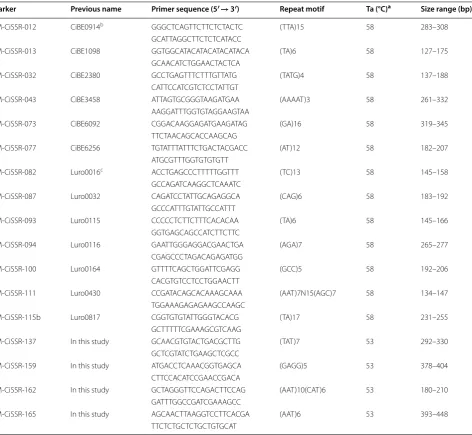
nucellar embryo- or somatic mutation-derived cultivar and its corresponding parent (data not shown). From the screening, we finally selected 17 polymorphic SSR mark-ers with high specificity and high amplification efficiency (Table 2).
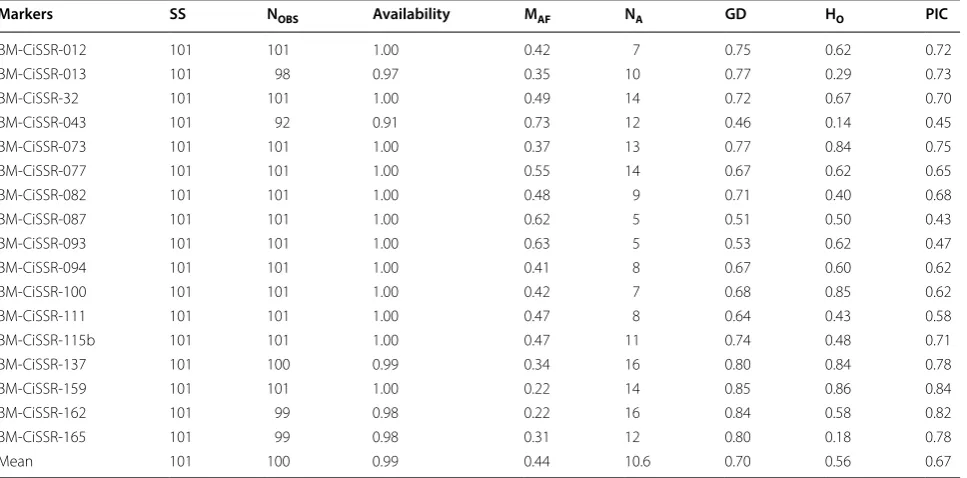
As a next step, we determined the genotypes of 17 pol-ymorphic SSR loci among 101 citrus genetic resources showing the monoembryony, polyembryony and mixed embryo phenotypes (Additional file 4: Table S4). Table 3 summarizes the characteristics of 17 SSR loci based on the fragment analysis of the 101 accessions belonging to 12 citrus groups. Several markers such as BM-CiSSR-013, -43, -137, -162, -165 failed to achieve PCR amplification from several accessions, possibly due to sequence varia-tion, resulting in null alleles in the accessions (Additional file 4: Table S4). A total of 181 alleles, ranging from 5 (BM-CiSSR-087, and -93) to 16 alleles (BM-CiSSR-137 and -162), were observed among the 101 citrus acces-sions with a mean value of 10.6 alleles per locus. Major allele frequency (MAF) varied from 0.22 (BM-CiSSR-159
and -162) to 0.73 (BM-CiSSR-043). The average values of genetic diversity (GD, expected heterozygosity) and polymorphism information content (PIC) were 0.70 and 0.67, ranging from 0.46 (BM-CiSSR-043) to 0.85 (BM-CiSSR-159) and from 0.43 (BM-CiSSR-087) to 0.84 (BM-CiSSR-159), respectively. The average observed heterozygosity (HO) was 0.56 with the lowest average in
CiSSR-043 (0.14) and the highest average in BM-CiSSR-159 (0.86) (Table 3).
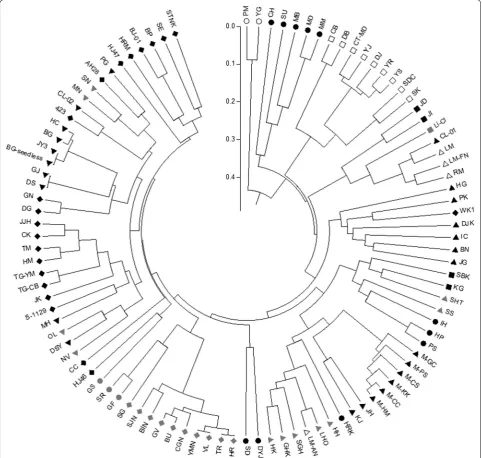
A total of 181 alleles from 17 polymorphic SSRs were used to evaluate genetic diversity and relationships among the 101 citrus accessions. A UPGMA tree was constructed based on the genetic similarity matrices among the accessions. Figure 1 illustrates results from cluster analysis based on the SSR data. The resulting tree revealed that the citrus genetic resources could be largely classified into 2 clusters. Cluster I contained
Table 1 (continued)
Citrus group Species/Cultivar name Abbr. Embryo type Citrus group Species/Cultivar name Abbr. Embryo type
C. tangerina ‘Pyunkyul’ PK Mx Papeda C. sphaerocarpa ‘Kabosu’ CB P
C. unshiuʻAoshima 4 Gouʼ M‑CS P C. sphaerocarpa DB P
C. unshiu ‘Chungchon’ M‑CC P C. sudachi SDC P
C. unshiu ‘Hyangmoongam’ M‑HM P Citrus spp. ‘Sankyul’ SK P
C. unshiuʻImamura Unshiuʼ M‑GC P Papeda hybrid C. junos ‘Yooja’ YJ P
C. unshiuʻKatayama Unshiuʼ M‑PS P C. junosʻTadanishikiʼ DJ P
C. unshiuʻKinokuni Unshiuʼ M‑KK P C. junosʻSiboriʼ CT‑MD P
Citrus spp. ‘Inchangkyul’ IC P C. junosʻYamaneʼ YS P
Citrus hybrid ʻHayakaʼ JH P C. junosʻJaeraeʼ YR P
2 accessions of the kumquat group (F. crassifolia and
Fortunella spp. ʻPuchimaruʼ), which belongs to the genus Fortunella. Cluster II contained the remaining 99 accessions belonging to the genus Citrus. However, except for the papeda and its hybrid, limon, lemon, and sweet orange groups, several groups were fragmented and/or scattered throughout the entire UPGMA tree and did not form unique groups. For example, acces-sions of the mandarin group were largely fragmented into 3 subclades. This fragmentation and/or scatter-ing patterns are possibly attributable to frequent natu-ral or intended genetic crossings. C. sinensisʻHamlinʼ
Table 2 Information on 17 polymorphic SSR markers selected finally from the screening
a Ta means annealing temperature. bInformation of SSR markers starting with CiBE was obtained from Ollitrault et al. [16]. cSSR markers starting with Luro were
obtained from Luro et al. [15]
Marker Previous name Primer sequence (5′→ 3′) Repeat motif Ta (°C)a Size range (bp)
BM‑CiSSR‑012 CiBE0914b GGG CTC AGT TCT TCT CTA CTC (TTA)15 58 283–308
GCA TTA GGC TTC TCT CAT ACC
BM‑CiSSR‑013 CiBE1098 GGT GGC ATA CAT ACA TAC ATACA (TA)6 58 127–175
GCA ACA TCT GGA ACT ACT CA
BM‑CiSSR‑032 CiBE2380 GCC TGA GTT TCT TTG TTA TG (TATG)4 58 137–188
CAT TCC ATC GTC TCC TAT TGT
BM‑CiSSR‑043 CiBE3458 ATT AGT GCG GGT AAG ATG AA (AAAAT)3 58 261–332
AAG GAT TTG GTG TAG GAA GTAA
BM‑CiSSR‑073 CiBE6092 CGG ACA AGG AGA TGA AGA TAG (GA)16 58 319–345
TTC TAA CAG CAC CAA GCA G
BM‑CiSSR‑077 CiBE6256 TGT ATT TAT TTC TGA CTA CGACC (AT)12 58 182–207
ATG CGT TTG GTG TGT GTT
BM‑CiSSR‑082 Luro0016c ACC TGA GCC CTT TTT GGT TT (TC)13 58 145–158
GCC AGA TCA AGG CTC AAA TC
BM‑CiSSR‑087 Luro0032 CAG ATC CTA TTG CAG AGG CA (CAG)6 58 183–192
GCC CAT TTG TAT TGC CAT TT
BM‑CiSSR‑093 Luro0115 CCC CCT CTT CTT TCA CAC AA (TA)6 58 145–166
GGT GAG CAG CCA TCT TCT TC
BM‑CiSSR‑094 Luro0116 GAA TTG GGA GGA CGA ACT GA (AGA)7 58 265–277
CGA GCC CTA GAC AGA GAT GG
BM‑CiSSR‑100 Luro0164 GTT TTC AGC TGG ATT CGA GG (GCC)5 58 192–206
CAC GTG TCC TCC TGG AAC TT
BM‑CiSSR‑111 Luro0430 CCG ATA CAG CAC AAA GCA AA (AAT)7N15(AGC)7 58 134–147
TGG AAA GAG AGA AGC CAA GC
BM‑CiSSR‑115b Luro0817 CGG TGT GTA TTG GGT ACA CG (TA)17 58 231–255
GCT TTT TCG AAA GCG TCA AG
BM‑CiSSR‑137 In this study GCA ACG TGT ACT GAC GCT TG (TAT)7 53 292–330
GCT CGT ATC TGA AGC TCG CC
BM‑CiSSR‑159 In this study ATG ACC TCA AAC GGT GAG CA (GAGG)5 53 378–404
CTT CCA CAT CCG AAC CGA CA
BM‑CiSSR‑162 In this study GCT AGG GTT CCA GAC TTC CAG (AAT)10(CAT)6 53 180–210
GAT TTG GCC GAT CGA AAG CC
BM‑CiSSR‑165 In this study AGC AAC TTA AGG TCC TTC ACGA (AAT)6 53 393–448
TTC TCT GCT CTG CTG TGC AT
and C. sinensis ʻTaroccoʼ of the sweet orange group showed completely identical genotypes for 17 SSR loci. These isogenic genotypes were also found between C. sinensis ʻSuzuki Navelʼ and ʻValencia Lateʼ, between C. reticulata ʻDancyʼ and ʻYosida Ponkanʼ, and between
UPGMA tree (Fig. 1). The PIC value obtained from 17 SSR markers in this study was higher than 0.625 of the previous report [30]. Biswas et al. [20] mined a total of 50,846 SSRs from genome wide in silico analysis of the sweet orange and identified 534 SSRs showing poly-morphism among only 16 citrus accessions covering 7 citrus species. Two-thirds of the marker were trans-ferable to 16 citrus relatives [20]. In contrast, 17 mark-ers developed in this study were transferable to all 101 accessions belonging to 28 species (Additional file 4: Table S4), indicating the universality and versatility of our SSR markers.
Application of SSR markers to genetic crosses
While polyembryony is a unique characteristic in citrus, it serves as an obstacle of citrus breeding by traditional genetic hybridization. To better understand the underly-ing molecular mechanism of the polyembryony phenom-enon in citrus, genes associated with the polyembryony have been characterized [31]. Several markers associ-ated with polyembryony trait in citrus, including QTL (quantitative trait loci), SCAR (sequence characterized amplified regions), and AFLP (amplified fragment length polymorphism), have been reported [32–34]. To increase breeding efficiency and to save breeding cost by identify-ing nucellar and zygotic embryo-derived plants, molecu-lar markers including SSR, ISSR, and SCAR also have been developed [11–13, 33]. Polyembryony test for the
germplasm collection revealed that the polyembryony trait is widely distributed in various citrus groups, except for pumello (Table 1).
We investigated whether SSR markers showing poly-morphism between female and male parents could effectively identify zygotic embryo-derived individu-als from F1 plant population, which was derived from
the genetic crossing combinations using polyembry-onic cultivars as a female partner. We crossed poly-embryonic cultivars, such as Citrus hybrid ʻSetokaʼ,
Citrus hybrid ʻHarumiʼ, C. reticulata ʻNovaʼ, and C. reticulataʻPageʼ as a female parent, to either C. max-ima ʻBanbeiyuʼ or C. maxima as a male parent. As a control, we crossed monoembryonic cultivars, such as Citrus hybrid ʻKiyomiʼ, Citrus hybrid ‘Ehime Kashi No. 28’, and Citrus hybrid ʻHarehimeʼ as a female par-ent, to either Citrus hybrid ʻSeminoleʼ or Citrus hybrid ʻOrlandoʼ as a male parent (Table 4). SSR markers and their allele sizes showing polymorphism between
female and male parents are listed in Table 4 and
Additional file 4: Table S4. We performed genotyping analysis for identifying between nucellar and zygotic embryo-derived individuals for eight different genetic crosses using the selected SSR markers. Among the five genetic crosses using polyembryonic cultivars as a female parent, we found one zygotic individual among 98 plants investigated from the ʻSetokaʼ× ʻBanbeiyuʼ cross and three zygotic individuals among 48 plants
Table 3 Characteristics of 17 polymorphic SSR markers developed in this study
SS sample size, NOBS number of observations, MAF major allele frequency, NA number of alleles, GD genetic diversity, which is often referred to as expected
heterozygosity, HO observed heterozygosity, PIC polymorphism information content
Markers SS NOBS Availability MAF NA GD HO PIC
BM‑CiSSR‑012 101 101 1.00 0.42 7 0.75 0.62 0.72
BM‑CiSSR‑013 101 98 0.97 0.35 10 0.77 0.29 0.73
BM‑CiSSR‑32 101 101 1.00 0.49 14 0.72 0.67 0.70
BM‑CiSSR‑043 101 92 0.91 0.73 12 0.46 0.14 0.45
BM‑CiSSR‑073 101 101 1.00 0.37 13 0.77 0.84 0.75
BM‑CiSSR‑077 101 101 1.00 0.55 14 0.67 0.62 0.65
BM‑CiSSR‑082 101 101 1.00 0.48 9 0.71 0.40 0.68
BM‑CiSSR‑087 101 101 1.00 0.62 5 0.51 0.50 0.43
BM‑CiSSR‑093 101 101 1.00 0.63 5 0.53 0.62 0.47
BM‑CiSSR‑094 101 101 1.00 0.41 8 0.67 0.60 0.62
BM‑CiSSR‑100 101 101 1.00 0.42 7 0.68 0.85 0.62
BM‑CiSSR‑111 101 101 1.00 0.47 8 0.64 0.43 0.58
BM‑CiSSR‑115b 101 101 1.00 0.47 11 0.74 0.48 0.71
BM‑CiSSR‑137 101 100 0.99 0.34 16 0.80 0.84 0.78
BM‑CiSSR‑159 101 101 1.00 0.22 14 0.85 0.86 0.84
BM‑CiSSR‑162 101 99 0.98 0.22 16 0.84 0.58 0.82
BM‑CiSSR‑165 101 99 0.98 0.31 12 0.80 0.18 0.78
from the ʻPageʼ× ʻBanbeiyuʼ cross (Table 4, Figs. 2 and 3). However, no zygotic individuals were found from the ʻHarumiʼ× ʻBanbeiyuʼ, ʻNovaʼ× ʻBanbeiyuʼ, and ʻSetokaʼ×C. maxima crosses (Table 4). In con-trast, all F1 individuals from three genetic crosses
using monoembryonic cultivars as a female par-ent (that is, ʻKiyomiʼ× ʻSeminoleʼ, ‘Ehime Kashi No. 28’ × ʻOrlandoʼ, and ʻHarehimeʼ× ʻOrlandoʼ crosses)
were zygotic plants that have both alleles of the female parent and alleles of the male parent (Table 4).
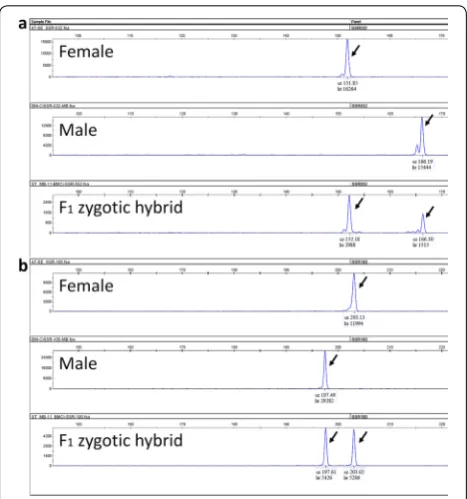
Three plants from the genetic cross ʻPageʼ× ʻBanbeiyuʼ were identified as zygotic indi-viduals. Genotype analysis using BM-CiSSR-115b resulted in either the allele of the male parent having low peak intensity for two individuals (No. 37 and 45) or the allele of the male parent without the allele of
the female parent for one individual (No. 40) (Fig. 3a). To further determine if these three individuals are zygotic plants, we performed genotype analysis using the BM-CiSSR-077 marker. The results identified two individuals (No. 40 and 45) with both alleles of the female parent and allele of the male parent, indicating that the plants are zygotic. In contrast, one of the two
alleles detected from the No. 37 plant was identical to that of the female parent, whereas the other allele was a new allele that was not present in either female or male parent (Fig. 3b). In the No. 40 plant, the allele of only the male parent was detected from the genotype analysis using BM-CiSSR-115b (Fig. 3a), whereas alleles of both female and male parents were detected from the genotyping analysis using BM-CiSSR-077 (Fig. 3b). Genotyping analysis on the female parent ‘Page’ for the Bm-CiSSR115b locus detected a single allele (231 bp) for the genetic locus (Additional file 4: Table S4), indi-cating that the locus is possibly homozygous. However, the Bm-CiSSR115b locus in the female parent ‘Page’ was essentially in the heterozygous state containing a null allele on either chromosome. Therefore, the F1
plant derived from fertilization with a female gamete having the null allele contained an allele only from the male parent for the Bm-CiSSR115b locus. A new allele that was not present in either the female or male parent was detected from the genotyping analysis in the No. 37 plant for the BM-CiSSR-077 locus. The BM-CiSSR-077 marker is composed of a 2 bp repeat (AT) motif (Table 2). The new allele detected in the F1 plant was 4 bp longer or shorter than the allele of either female or male parent (Fig. 3B). SSR mutation rates are known to be very high (10−2 to 10−6 events/genetic
locus/genera-tion) compared with the point mutation rates at coding gene loci [35]. The instability of SSR is largely mani-fested as changes in the numbers of the repeat motif. Two major mechanisms of SSR mutation (increase or decrease in repeat units) involve DNA slippage dur-ing DNA replication and recombination between DNA strands [35, 36]. Therefore, the occurrence of a new allele for BM-CiSSR-077 in the No. 37 plant is possibly
Table 4 Frequency test of genetic hybrids from various genetic crosses using polymorphic SSR markers
P polyembryony, M monoembryony
Genetic crosses Embryo type
of female plant Used SSR markers No. of tested plant No. of genetic hybrid
Citrus hybrid ʻSetokaʼ×C. maximaʻBanbeiyuʼ P BM‑CiSSR‑032
BM‑CiSSR‑100 98 1
Citrus hybrid ʻHarumiʼ×C. maximaʻBanbeiyuʼ P BM‑CiSSR‑115b 38 0
C. reticulataʻNovaʼ×C. maximaʻBanbeiyuʼ P BM‑CiSSR‑115b 98 0
C. reticulataʻPageʼ×C. maximaʻBanbeiyuʼ P BM‑CiSSR‑115b
BM‑CiSSR‑077 48 3
Citrus hybrid ʻSetokaʼ×C. maxima P BM‑CiSSR‑032 54 0
Citrus hybrid ʻKiyomiʼ×Citrus hybrid ʻSeminoleʼ M BM‑CiSSR‑013 5 5
Citrus hybrid ‘Ehime Kashi No. 28’ ×Citrus hybrid ʻOrlandoʼ M BM‑CiSSR‑012
BM‑CiSSR‑087 5 5
Citrus hybrid ʻHarehimeʼ×Citrus hybrid ʻOrlandoʼ M BM‑CiSSR‑012 BM‑CiSSR‑013 BM‑CiSSR‑087
6 5
Fig. 2 Genotyping analysis using BM‑CiSSR‑032 marker (a) and BM‑CiSSR‑100 marker (b) in the genetic cross ʻSetokaʼ×ʻBanbeiyuʼ. Female parent, ʻSetokaʼ; male parent, ʻBanbeiyuʼ; F1 zygotic hybrid,
caused by one of these two mechanisms during the pro-duction of female and/or male gametes.
The genotyping analysis using polymorphic SSR mark-ers on F1 plants that were derived from the genetic
crosses using various polyembryonic cultivars as a female parent revealed that polyembryony not only decreases the breeding efficiency, but also enormously increases the breeding cost. Therefore, our results demonstrate that the identification of zygotic embryo-derived individu-als using the polymorphic SSR markers may be a power-ful tool for establishing a systematic molecular breeding program in citrus.
In conclusion, polyembryony, which is caused by spo-rophytic apomixis and is a unique botanical trait in cit-rus, hinders its breeding by genetic hybridization and affects breeding efficiency and cost. In this study, we determined embryo types of 101 citrus genetic resources that we collected for targeted and systematic breed-ing program. We also developed 17 polymorphic SSR markers to efficiently identify nucellar and zygotic indi-viduals. Application of the polymorphic SSR markers to F1 individuals derived from the genetic crosses using
polyembryonic cultivars as an ovule donor revealed that the identification of zygotic embryo-derived individuals using the SSR markers would be a powerful genetic tool for establishing a systematic molecular breeding program in citrus. The powerful transferability and versatility
of the markers developed in this study suggest that the markers are valuable for diverse genetic studies including population structure analyses, cultivar identification, and identification of genetic hybrids in citrus and its relatives.
Additional files
Additional file 1. Genome sequence information obtained from C. clementina ‘Fina Sodea’, C. platymamma, C. natsudaidai, and C. natsudaidai
‘Whanggumhagyul’ after trimming of raw reads.
Additional file 2. Distribution pattern of putative SSRs showing polymor‑ phism between C. clementina ‘Fina Sodea’ and C. platymamma.
Additional file 3. Distribution pattern of putative SSRs showing polymor‑ phism between C. natsudaidai and C. natsudaidai ‘Whanggumhagyul’. Additional file 4. Allele size data of 101 citrus genetic resources deter‑ mined by 17 polymorphic SSR markers.
Acknowledgements
This research was supported by Korea Institute of Planning and Evaluation for Technology in Food, Agriculture, and Forestry (IPET) through Golden Seed Project (213007‑05‑3‑WTP11), funded by Ministry of Agriculture, Food and Rural Affairs (MAFRA), Ministry of Oceans and Fisheries (MOF), Rural Develop‑ ment Administration (RDA) and Korea Forest Service (KFS), and Cooperative Research Program for Agriculture Science & Technology Development (Project No. PJ01344501), Rural Development Administration, Korea. Authors are grate‑ ful to Dr. Kyung Uk Yi for helpful comments on the manuscript.
Fig. 3 Genotyping analysis using BM‑CiSSR‑115b marker (a) and BM‑CiSSR‑077 marker (b) in the genetic cross ʻPageʼ×ʻBanbeiyuʼ. Female parent, ʻPageʼ; male parent, ʻBanbeiyuʼ; F1 zygotic hybrid, hybrid having both allele of female parent and allele of male parent. Arrows indicate allele peaks
Authors’ contributions
KJS, S‑HY, HBK: Conceived and designed of the experiments. J‑KW, YCP: Performed the experiments. YL: Analyzed the data. JWL, SP, MK: Contributed reagents/materials/analysis tools. KJS, HBK: Wrote the paper.
Competing interests
The authors declare that they have no competing interests.
Author details
1 Life Sciences Research Institute, Biomedic Co., Ltd., Bucheon 14548, Republic
of Korea. 2 Jeju Agricultural Research and Extension Services, Jeju Special
Self‑Governing Province, Seogwipo 63556, Republic of Korea. 3 Seed Busi‑
ness Department, Jenong Co., Ltd., Jeju 63309, Republic of Korea. 4 Citrus
Research Institute, National Institute of Horticultural and Herbal Science, Seogwipo 63607, Republic of Korea. 5 Department of Industrial Plant Science
and Technology, Chungbuk National University, Cheongju 28644, Republic of Korea. 6 Major in Horticultural Science, Faculty of Bioscience and Industry,
College of Applied Life Sciences, Jeju National University, Jeju 63243, Republic of Korea. 7 Research Institute for Subtropical Agriculture and Biotechnology,
Jeju National University, Jeju 63243, Republic of Korea.
Received: 7 March 2019 Accepted: 14 May 2019
References
1. Benavente‑García O, Castillo J (2008) Update on uses and properties of citrus flavonoids: new findings in anticancer, cardiovascular, and anti‑ inflammatory activity. J Agric Food Chem 56:6185–6205
2. Iranshahi M, Rezaee R, Parhiz H, Roohbakhsh A, Soltani F (2015) Protective effects of flavonoids against microbes and toxins: the cases of hesperidin and hesperetin. Life Sci 137:125–132
3. Talon M, Gmitter FG (2008) Citrus genomics. Int J Plant Genom Article ID 528361
4. Koltunow AM, Hidaka T, Robinson SP (1996) Polyembryony in Citrus: accumulation of seed storage proteins in seeds and in embryos cultured
in vitro. Plant Physiol 110:599–609
5. Kepiro JL, Roose ML (2007) Nucellar embryony. In: Khan IA (ed) Citrus genetics, breeding and biotechnology. CAB International, Oxfordshire, pp 141–149
6. Cameron JW (1979) Sexual and nucellar embryony in F1 hy‑brids and
advanced crosses of Citrus and Poncirus. J Am Soc Hortic Sci 104:408–410 7. Pieringer AP, Edwards GJ (1967) Identification of nucellar and zygotic
citrus seedlings by infrared spectroscopy. J Am Soc Hortic Sci 86:226–234 8. Weinbaum SA, Cohen E, Spiegel‑Roy P (1982) Rapid screen‑ing of ‘Sat‑
suma’ mandarin progeny to distinguish nucellar and zygotic seedlings. Hort Sci. 17:239–240
9. Anderson CM, Castle WS, Moore GA (1991) Isozymic iden‑tification of zygotic seedlings in Swingle citrumelo Citrus paradise×Poncirus trifoliata
nursery and field populations. J Am Soc Hortic Sci 116:322–326 10. Yun JU, Yang HB, Jung YH, Yun SH, Kim KS, Kim CS, Song KJ (2007)
Identification of zygotic and nucellar mandarin seedlings using randomly amplified polymorphic DNA. Hortic Environ Biotechnol 48:171–175 11. Shareefa M, Singh AK, Manish S, Dubey AK (2009) Differentiation of
nucellar and zygotic seedlings in citrus using ISSR markers. Indian J Agric Sci 79:884–889
12. Rao MN, Soneji JR, Chen C, Huang S, Gmitter FG Jr (2008) Characteri‑ zation of zygotic and nucellar seedlings from sour orange‑like Citrus
rootstock candidates using RAPD and EST‑SSR markers. Tree Genet Genomes 4:113–124
13. Yildiz E, Kaplankiran M, Demirkeser TH, Uzun A, Toplu C (2013) Identifi‑ cation of zygotic and nucellar individuals produced from several citrus crosses using SSRs markers. Not Bot Horti Agrobot 41:478–484 14. Kim HB, Kim JJ, Oh CJ, Yun S‑H, Song KJ (2016) Current status and
prospects of molecular marker development for systematic breeding program in citrus. J Plant Biotechnol 43:261–271
15. Luro FL, Costantino G, Terol J, Argout X, Allario T, Wincker P, Talon M, Ollitrault P, Morillon R (2008) Transferability of the EST‑SSRs developed on Nules clementine (Citrus clementina Hort ex Tan) to other Citrus
species and their effectiveness for genetic mapping. BMC Genom 9:287
16. Ollitrault F, Terol J, Pina JA, Navarro L, Talon M, Ollitrault P (2010) Development of SSR markers from Citrus clementina (Rutaceae) BAC end sequences and interspecific transferability in Citrus. Am J Bot 97:e124–e129
17. Cox MP, Peterson DA, Biggs PJ (2010) SolexaQA: at‑a‑glance quality assessment of Illumina second‑generation sequencing data. BMC Bioinform 11:485
18. Wu GA, Prochnik S, Jenkins J, Salse J, Hellsten U, Murat F et al (2013) Sequencing of diverse mandarin, pummelo and orange genomes reveals complex history of admixture during citrus domestication. Nat Biotechnol 32:656–662
19. Li H, Durbin R (2009) Fast and accurate short read alignment with Bur‑ rows–Wheeler transform. Bioinformatics 25:1754–1760
20. Biswas MK, Xu Q, Mayer C, Deng X (2014) Genome wide characteriza‑ tion of short tandem repeat markers in sweet orange (Citrus sinensis). PLoS ONE 9:e104182
21. Untergrasser A, Cutcutache I, Koressaar T, Ye J, Faircloth BC, Remm M, Rozen SG (2012) Primer3‑new capabilities and interfaces. Nucleic Acids Res 40:e115
22. Lexa M, Horak J, Brzobohaty B (2001) Virtual PCR. Bioinformatics 17:192–193
23. Schuelke M (2000) An economic method for the fluorescent labeling of PCR fragments. Nat Biotechnol 18:233–234
24. Kim HB, Jeon JH, Han AR, Lee Y, Jun S‑S, Kim T‑H et al (2012) Genetic evaluation of domestic walnut cultivars trading on Korean tree markets using microsatellite markers. Afr J Biotechnol 11:7366–7374
25. Liu KJ, Muse SV (2005) PowerMarker: an integrated analysis environ‑ ment for genetic marker analysis. Bioinformatics 21:2128–2129 26. Tamura K, Peterson D, Peterson N, Stecher G, Nei M, Kumar S (2011)
MEGA5: molecular evolutionary genetics analysis using maximum likelihood, evolutionary distance, and maximum parsimony methods. Mol Biol Evol 28:2731–2739
27. Frost HB, Soost RK (1968) Seed reproduction: development of gametes and embryos. In: Reuther W, Batchelor LD, Webber HJ (eds) The citrus industry, vol 1. University of California Press, Berkeley, pp 290–324 28. Wakana A, Uemoto S (1988) Adventive embryogenesis in Citrus (Ruta‑
ceae). II. Post‑fertilization development. Am J Bot 75:1031–1047 29. Park YC, Heo T‑H, Kang J‑H, Kang S‑H, Lee C‑H, Kim J‑Y, Kim Y‑C (2016)
Citrus variety. Jeju Agricultural Research and Extension Services, Jeju Special Self‑Governing Province, Jeju (in Korean)
30. Barkley NA, Roose ML, Krueger RR, Federici CT (2006) Assessing genetic diversity and population structure in a citrus germplasm collection utilizing simple sequence repeat markers (SSRs). Theor Appl Genet 112:1519–1531
31. Nakano M, Kigoshi K, Shimizu T, Endo T, Shimada T, Fujii H, Omura M (2013) Characterization of genes associated with polyembryony and in vitro somatic embryogenesis in Citrus. Tree Genet Genomes 9:795–803
32. García R, Asíns MJ, Forner J, Carbonell EA (1999) Genetic analysis of apomixis in Citrus and Poncirus by molecular markers. Theor Appl Genet 99:511–518
33. Kang SK, Yun SH, Lee DH (2008) Development a SCAR marker linked to polyembryonic trait in Citrus. Kor J Hortic Sci Technol 26:51–55 34. Kepiro JL, Roose ML (2010) AFLP markers closely linked to a major gene
essential for nucellar embryony (apomixis) in Citrus maxima×Poncirus trifoliata. Tree Genet Genomes 6:1–11
35. Li YC, Korol AB, Fahima T, Beiles A, Nevo E (2002) Microsatellites: genomic distribution, putative functions and mutational mechanisms: a review. Mol Ecol 11:2453–2465
36. Ellegren H (2004) Microsatellites: simple sequences with complex evolu‑ tion. Nat Rev Genet 5:435–445
Publisher’s Note