RESEARCH REPORT
Introduction
Despite improved understanding of paediatric pain physiology and clinical pharmacology, children remain vulnerable to both medication error and ineffective analgesia prescribing.1-3 Medication errors are the most common in-hospital errors, occurring three times more often in paediatric compared to adult patients.3-5 Variations in organ maturity and the inability of children to report adverse drug reactions make medication errors potentially more harmful.4 Lack of knowledge about good prescribing practice and weight-based prescribing in children increases the risk for medication error,1,6 with incorrect dosage accounting for the majority of errors.3,4
Effective analgesia should be multimodal and tailored to both child and procedure. Nonsteroidal anti-inflammatory drugs (NSAIDs) are a crucial part of multimodal treatment of pain in children7,8 including musculoskeletal injuries and acute fractures.9-11 South Africa has a high burden of paediatric accidental and non-accidental injury and sepsis, often requiring orthopaedic interventions.12 These and children in other low- and middle-income countries (LMICs) are at increased risk for pain and suffering compared to their high-income country counterparts, yet there is a paucity of published literature from Africa regarding paediatric pain management or good prescribing practice (GPP).13
The primary objectives of the study were to evaluate the types of analgesia prescribed as well as prescribing and dispensing practice in a specialised referral paediatric orthopaedic centre. This allowed us to ascertain if the principals of good prescribing
practice and the use of multimodal analgesia had been adhered to.
Methods
We performed a retrospective audit of prescription charts from February 2013 to October 2013. The study was performed at a tertiary referral hospital in Durban, South Africa. Eligibility criteria included children aged 6 months to 12 years who had undergone one or more orthopaedic procedures in theatre and a minimum of an overnight admission. Exclusion criteria were children who were admitted to high care or intensive care and those with epidural or regional catheter infusions. Patients who had surgery for Blount’s disease or slipped upper femoral epiphysis were also excluded due to their association with obesity thus making weight-based calculations difficult.14
Potential eligible cases were identified from operative records and an attempt was made to retrieve the patient files for all cases. Data were collected and entered into a data collection tool. Patient identity was pseudo-anonymised by the provision of a unique identifier for each patient. Patient characteristics including age, sex, type of procedure and whether elective or emergent (acute trauma or sepsis) were documented from the inpatient file. The surgical procedure for which the prescription was written was classified and documented as: minor (no skin penetration, e.g. change of cast), intermediate (soft tissue surgery only) or major (soft tissue and bony surgery, e.g. open reduction and internal fixation).
Background: A key element of paediatric pain management is prescribing and dispensing analgesia. This process differs in children, putting them at greater risk of drug error.
Methods: This study was a retrospective postoperative analgesia prescription chart review of children who had orthopaedic surgery in a tertiary hospital in Durban, South Africa. Patient records of 202 children, aged 6 months to 12 years, with 232 theatre visits were reviewed. Prescription charts were inspected for patient characteristics, evidence of good prescribing practice and data regarding the prescribing and administration of analgesia.
Results: Of the 257 analysed charts 254 (99%) had paracetamol, 208 (81%) had an opioid and 49 (19%) had a nonsteroidal anti-inflammatory drug (NSAID) prescribed. Underdosing was evident in all groups of analgesics prescribed. Opioids were more often prescribed with a pro-re-nata caveat and were the least correctly dispensed. There were no prescription charts in which all the requirements for good prescribing practice were complete.
Conclusions: This study demonstrates a high rate of paediatric drug error in both the prescribing and dispensing of analgesia. Potential under-utilisation of NSAIDs in this orthopaedic population is also noted. Lack of knowledge or confidence needed by clinicians to adhere to principles of paediatric dosing and multimodal analgesia may be contributing factors. Issues pertaining to paediatric analgesia prescribing and dispensing are highlighted and should be targeted by institution and population specific interventions.
Keywords: (MeSH) anesthesia and analgesia, medication errors, orthopaedics paediatrics, pain
Paediatric postoperative analgesia prescribing report card: “could do better”
C van den Bosch, L Cronjé, K de Vasconcellos, D Skinner
Postoperative paper-based prescription charts were written by a member of the paediatric orthopaedic surgery team after each procedure and only these prescription charts were analysed.
The following data were collected from these prescription charts: classes of analgesia prescribed, dosage, whether documented in milliliters (ml), milligrams (mg) or drops, dosing intervals, route of administration and proof of administration as given by the presence of a date and signature. The South African Society of Aneasthesiologists (SASA) Acute Pain guideline was used as a source for correct milligram per kilogram dose for the analgesics described in this study.15 Dosing error was considered if the prescribed dose was not within ± 10% of the recommended dose. Dosing errors were divided into two categories: either under dose or overdose.
The World Health Organisation (WHO) advocates a systematic 6-step process for the safe and rationale prescribing and dispensing of medication.16 With this as a guide the composite variables used to define good prescribing practice (GPP) were the presence of the following information on each prescription chart: patient name, hospital number, procedure/pathology, allergies and weight. The inclusion of these variables on medication prescription chart is an important part of safe prescribing as they help ensure the correct patient receives the correct drug for the correct reasons.
In the absence of a documented weight on the prescription chart, one was sought on the anaesthetic record or inpatient notes and used if available. If the child’s weight was unavailable, the Advanced Pediatric Life Support (APLS) weight for age formula, (weight (kg) = (age+4) x 2) was used to estimate a weight for the child.17
Statistical analysis
No pre-specified sample size was calculated but a minimum sample of 150 charts was considered a representative sample. Means and standard deviations (SD) are reported for normally distributed data; median and inter-quartile range (IQR) for data
not normally distributed. The χ2 test and Fisher’s exact test were used for categorical data, and independent samples t-test, Kruskall-Wallis, or Mann-Whitney U test for continuous data where appropriate. All p-values are reported to three decimal places and statistical significance was defined as a two-sided p-value < 0.05. All data analyses were performed using SPSS 25.0 (SPSS, IBM, Chicago, IL).
Results
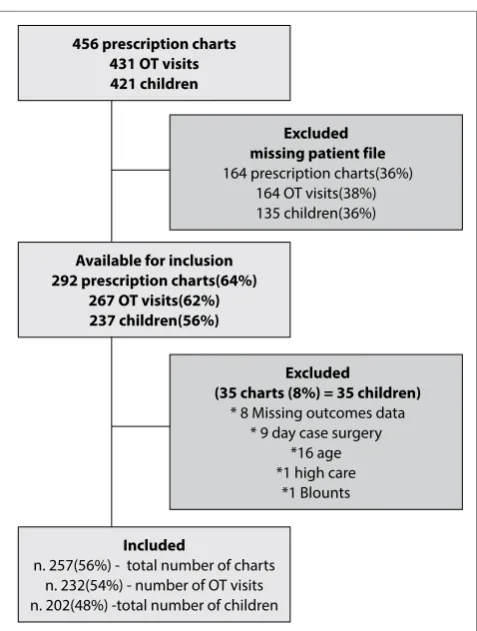
A total of 421 potential patients were identified between 1 January 2013 to 31 October 2013, with a final recruitment of 202 patients. There were 232 operative visits and 257 prescription charts available for analysis (Figure 1).
The characteristics of the cohort are displayed in Table 1. Median patient age was 6 (IQR 3.0–9.0) Most children had an intermediate (57.8%) or major (38.4%) grade of surgery. The majority (68.0%) of patients presented for emergency surgery, however, patients in the 6 months to 6 years age category were more likely to undergo elective than non-elective surgeries (p < 0.001). A documented weight was available in 85% of children and the remainder of weights were calculated based on the APLS formula.
Table 2 is a summary of analgesic drug prescribing practice. Of the 257 charts analysed, 254 (99%) had paracetamol and 208 (81%) had an opioid prescribed. Nonsteroidal anti-inflammatory drugs (NSAIDs) were prescribed in 49 (19%) of the 257 charts.
Underdosing was evident in all analgesic classes, with 193 (76%) paracetamol doses, 30 (61%) NSAID doses and 103 (61%) opioid doses being lower than the recommended individual divided dose. The median 24-hour dose for paracetamol was 30 mg/kg (IQR 24-44 mg/kg). There were 26 analgesic orders that were above the recommended individual dose: thirteen Tilidine hydrochloride, one Omnopon® and two tramadol doses. Paracetamol had ten orders above the recommended individual dose; however, due to incorrect dosing interval only two of these resulted in a higher than recommended 90 mg/kg maximum 24 hour dose (100 mg/kg/24 hours and 143 mg/kg/24 hours).
Table 1. Characteristics of cohort
Cohort by patient Cohort by theatre visit Total
n = 202 Weight (kg) Total
Surgical severity Indication Minor Intermediate Major Trauma/sepsis Elective
Age Median (iqr) Median (iqr) n (%) n (Row %) n (Row %) n (Row %) n (Row %) n (Row %)
Mean Median
6.0 (3.0-9.0) X (y-z)
Age category N. (%)
0-2 31 (15.3) 11.0 (10.0-13.0) 42 (18.1) 5 (11.9) 33 (78.6) 4 (9.5) 16 (38.0) 26 (62.0)
3-4 42 (20.8) 15.0 (14.0-15.0) 49 (21.1) 2 (4.1) 30 (61.2) 17 (34.7) 30 (61.0) 19 (39.0)
5-6 40 (19.8) 18.0 (17.5-20.5) 44 (19.0) 1 (2.3) 23 (52.3) 20 (45.5) 31 (70.0) 13 (30.0)
7-8 32 (15.8) 24.5 (24.0-28.0) 32 (13.8) 0.0 16 (50) 16 (50.0) 26 (81.0) 6 (19.0)
9-10 38 (18.8) 28.0 (26.0 -32.0) 44 (19.0) 0.0 20 (45.5) 24 (54.5) 36 (82.0) 8 (18.0)
11-12 19 (9.4) 32.0 (30.0-35.0) 21 (9.1) 1 (4.8) 12 (57.1) 8 (38.1) 18 (86.0) 3 (14.0)
Table 2. Drug pr escr ibing pr ac tic
es (per char
t): dosages
Par
ac
etamol
n = 254
NSAID n = 49
O
pioids n = 208
O ver all O ver all Individual drug O ver all Individual drug Ibupr of en D iclof enac Tilidine HCL Pethidine M orphine O mnopon Tr amadol n (%)
254 (98.8)
49
(19.0)
25 (9.7) 24 (9.3) 208 (81.0) 202 (97.1)
2
(1.0)
1
(0.5)
1 (0.5)
2
(1.0)
Dose median (IQR) or n (%) Individu
al dose M edian dose (mg/kg/dose) 9.6 (9.6-13.3) NA 5.3 (4.0-6.9) 0.76 (0.6-1.2) NA 0.8 (0.6-0.9) 1.6 (1.5-1.7) 0.1 0.25 1.6 (1.5-1.7) Cor rec t dose 51 (20.1) 19 (38.8) 11 (44.0) 8 (33.3) 89 (42.8) 86 (42.6) 2 (100.0) 1 (100.0) 0 0 Under dosed 193 (76.0) 30 (61.2) 14 (56.0) 16 (66.7) 103 (49.5) 103 (51.0) 0 0 0 0 O ver dosed 10 (3.9) 0 0 0 16 (7,7) 13 (6.4) 0 0 1 (100.0) 2 (100.0)
24-hour dose Median 24-hour dose mg/kg/24hrs
30 (24.0-44.1) NA 12.5 (10.2-16.6) 1.52 (1.2-2.4) NA UC UC UC UC UC N omencla tur e used n (%) mg 61 (24.0) 31 (63.3) 18 (72) 24 (100.0) 6 (2.9) 0 2 (100.0) 1 (100.0) 1 (100.0) 2 (100.0) ml 193 (76.0) 18 (36.7) 7 (28.0) 0 0 0 0 0 0 0 dr ops NA NA NA NA 202 (97.1) 202 (100.0) 0 0 0 0 Pr escribing in ter val n (%) Corr ec t 67 (26.4) 41 (83.7) 17 (68.0) 24 (100) 154 (74.0) 151 (74.8) 0 1 (100.0) ? Pr n 0 La tin used 245 (96.5) 43 (84.8) 22 (88.0) 21 (87.5) 186 (89.4) 181 (89.7) 2 (100.0) 0 (0.0) 1 (100.0) 0 (0.0) od 0 0 0 0 1 (0.5) 1 (0.5) 0 0 0 NA bd 6 (2.4) 29 (59.2) 8 (32.0) 21 (87.5) 3 (1.4) 3 (1.5) 0 0 0 NA td s 180 (70.9) 14 (28.6) 14 (56.0) 0.0 110 (52.9) 107 (53.0) 1 (50.0) 0 0 NA qid 59 (23.2) 0 0 0 24 (11.5) 24 (11.9) 0 0 0 NA pr n only 0.0 0 0 0 48 (23.1) 46 (22.8) 1 (50.0) 0 1 (100.0) NA H our ly used 9 (3.5) 6 (12.2) 3 (12.0) 3 (12.5) 22 (10.6) 21 (10.4) 0 (0.0) 1 (100.0) 0 (0.0) 2 (100.0) 12 0 3 (6.1) 0 3 (12.5) 0 0 NA 0 NA 0 8 1 (0.4) 3 (6.1) 3 (12.0) 0 6 (2.9) 6 (3.0) NA 0 NA 0 6 8 (3.1) 0 0 0 14 (6.7) 14 (6.9) NA 0 NA 0 4 0 0 0 0 2 (1.0) 1 (0.5) NA 1 (100.0) NA 2 (100.0) Rout e n (%) po 229 (90.2) 28 (57.1) 25 (100) 3 (12.5) 204 (98.1) 202 (100.0) x x 0 2(100.0) iv 19 (7.5) 0 0 0 1 (0.5) 1 (0.5) 0 1 (100.0) 0 0 pr 6 (2.4) 20 (40.8) 0 20 (83.3) x x x x x x im 0 1 (2.0) 0 1 (4.2) 3(1.4) 0 2 (100.0) 0 1 (100.0) x
NA: not applicable
UC: unable t
o calcula
Dosing intervals were written in Latin nomenclature in 245 (97%) paracetamol prescriptions, 43 (85%) NSAID prescriptions and 186 (89%) opioid prescriptions. The minority of prescriptions were correctly prescribed as ‘hourly’. Dosing intervals were correct in 67 (26%) paracetamol prescriptions, and only eight of these
scripts also had the correct nomenclature i.e. 6 hourly. Most paracetamol intervals, 180/257 (71%), were documented as ‘TDS’ (i.e. ter die senmundum). Intervals were correctly documented in 41 (84%) NSAIDs and 154 (74%) opioid prescriptions.
There were no prescription charts in which all the requirements for GPP were complete (Table 3). “Name” was the most completely documented (96% of prescription charts) followed by hospital number, age and procedure. The presence or absence of an allergy was only documented in 117 (55%) charts. “Weight” was the least frequently documented with only 8 (3%) prescription charts displaying this information.
Scheduling without a pro-re-nata (i.e. “as needed” or PRN) caveat was prescribed for 246 (97%) paracetamol, 48 (98%) NSAIDs and 120 (58%) opioid prescriptions. There was no paracetamol or NSAID prescriptions in which the interval was written as PRN only, compared to 48 (23%) opioid prescriptions that were written as PRN only (Table 4). For drugs prescribed in a scheduled manner (i.e. “around the clock” or ATC), paracetamol was dispensed correctly in 162 (66%) charts, NSAIDs in 36 (75%) and opioids in only 18 (15%) of charts.
There was no difference found between severity of the surgical procedure and classes of analgesics prescribed (Table 5). For patients undergoing minor surgery, only 11% had a NSAID prescribed yet more than three-quarters of these children had an opioid prescribed specifically for that minor procedure.
Discussion
The key findings of this study are that all classes of analgesics were underdosed and NSAIDS were only prescribed for 1 in 5 orthopaedic procedures. The principles of good prescribing and
456 prescription charts 431 OT visits 421 children
Excluded missing patient file
164 prescription charts(36%) 164 OT visits(38%) 135 children(36%)
Excluded
(35 charts (8%) = 35 children)
* 8 Missing outcomes data * 9 day case surgery
*16 age *1 high care
*1 Blounts
Available for inclusion 292 prescription charts(64%)
267 OT visits(62%) 237 children(56%)
Included
n. 257(56%) - total number of charts n. 232(54%) - number of OT visits n. 202(48%) -total number of children
Figure 1. Consort diagram of the study recruitment, described per chart
Table 2. Drug pr escr ibing pr ac tic
es (per char
t): dosages
Par
ac
etamol
n = 254
NSAID n = 49
O
pioids n = 208
O ver all O ver all Individual drug O ver all Individual drug Ibupr of en D iclof enac Tilidine HCL Pethidine M orphine O mnopon Tr amadol n (%)
254 (98.8)
49
(19.0)
25 (9.7) 24 (9.3) 208 (81.0) 202 (97.1)
2
(1.0)
1
(0.5)
1 (0.5)
2
(1.0)
Dose median (IQR) or n (%) Individu
al dose M edian dose (mg/kg/dose) 9.6 (9.6-13.3) NA 5.3 (4.0-6.9) 0.76 (0.6-1.2) NA 0.8 (0.6-0.9) 1.6 (1.5-1.7) 0.1 0.25 1.6 (1.5-1.7) Cor rec t dose 51 (20.1) 19 (38.8) 11 (44.0) 8 (33.3) 89 (42.8) 86 (42.6) 2 (100.0) 1 (100.0) 0 0 Under dosed 193 (76.0) 30 (61.2) 14 (56.0) 16 (66.7) 103 (49.5) 103 (51.0) 0 0 0 0 O ver dosed 10 (3.9) 0 0 0 16 (7,7) 13 (6.4) 0 0 1 (100.0) 2 (100.0)
24-hour dose Median 24-hour dose mg/kg/24hrs
30 (24.0-44.1) NA 12.5 (10.2-16.6) 1.52 (1.2-2.4) NA UC UC UC UC UC N omencla tur e used n (%) mg 61 (24.0) 31 (63.3) 18 (72) 24 (100.0) 6 (2.9) 0 2 (100.0) 1 (100.0) 1 (100.0) 2 (100.0) ml 193 (76.0) 18 (36.7) 7 (28.0) 0 0 0 0 0 0 0 dr ops NA NA NA NA 202 (97.1) 202 (100.0) 0 0 0 0 Pr escribing in ter val n (%) Corr ec t 67 (26.4) 41 (83.7) 17 (68.0) 24 (100) 154 (74.0) 151 (74.8) 0 1 (100.0) ? Pr n 0 La tin used 245 (96.5) 43 (84.8) 22 (88.0) 21 (87.5) 186 (89.4) 181 (89.7) 2 (100.0) 0 (0.0) 1 (100.0) 0 (0.0) od 0 0 0 0 1 (0.5) 1 (0.5) 0 0 0 NA bd 6 (2.4) 29 (59.2) 8 (32.0) 21 (87.5) 3 (1.4) 3 (1.5) 0 0 0 NA td s 180 (70.9) 14 (28.6) 14 (56.0) 0.0 110 (52.9) 107 (53.0) 1 (50.0) 0 0 NA qid 59 (23.2) 0 0 0 24 (11.5) 24 (11.9) 0 0 0 NA pr n only 0.0 0 0 0 48 (23.1) 46 (22.8) 1 (50.0) 0 1 (100.0) NA H our ly used 9 (3.5) 6 (12.2) 3 (12.0) 3 (12.5) 22 (10.6) 21 (10.4) 0 (0.0) 1 (100.0) 0 (0.0) 2 (100.0) 12 0 3 (6.1) 0 3 (12.5) 0 0 NA 0 NA 0 8 1 (0.4) 3 (6.1) 3 (12.0) 0 6 (2.9) 6 (3.0) NA 0 NA 0 6 8 (3.1) 0 0 0 14 (6.7) 14 (6.9) NA 0 NA 0 4 0 0 0 0 2 (1.0) 1 (0.5) NA 1 (100.0) NA 2 (100.0) Rout e n (%) po 229 (90.2) 28 (57.1) 25 (100) 3 (12.5) 204 (98.1) 202 (100.0) x x 0 2(100.0) iv 19 (7.5) 0 0 0 1 (0.5) 1 (0.5) 0 1 (100.0) 0 0 pr 6 (2.4) 20 (40.8) 0 20 (83.3) x x x x x x im 0 1 (2.0) 0 1 (4.2) 3(1.4) 0 2 (100.0) 0 1 (100.0) x
NA: not applicable
UC: unable t
o calcula
te
Table 3. Good prescribing practice (per chart)
Prescription chart
variable NAME HOSPITAL NUMBER AGE PROCEDURE ALLERGY WEIGHT n (row %) n (row %) n(row %) n (row %) n (row %) n (row %)
Documented YES YES YES YES YES YES
Age category
6 months-2 years 43 (97.7) 42 (95.5) 43 (97.7) 37 (84.1) 25 (56.8) 1 (2.3)
3-4 years 51 (98.1) 49 (94.2) 46 (88.5) 38 (73.1) 28 (53.8) 0
5-6 years 47 (97.9) 44 (91.7) 46 (95.8) 37 (77.1) 25 (52.1) 1 (2.1)
7-8 years 37 (100.0) 36 (97.3) 35 (94.6) 32 (86.5) 16 (43.2) 3 (8.1)
9-10 years 50 (100.0) 50 (100.0) 49(98) 43 (86.0) 31 (62.0) 3 (6.0)
11-12 years 26 (100.0) 26 (100.0) 26 (100) 22 (84.6) 15 (57.7) 0
Total (257) 254 (98.8) 247 (96.1) 245 (95.3) 209 (81.3) 140 (54.5) 8 (3.1)
Table 4. Dispensing practices
No. of times prescribed Manner prescribed ATC dispensing ATC only ATC & PRN PRN only Correctly Incorrectly
n. n (%) n (%) n (%) n (% ) n (%)
Paracetamol 254 246 (96,9) 8 (3.1) 0 (0.0) 162 (65.8) 84.(34.2)
NSAIDs 49 48 (97.9) 1 (2.1) 0 (0.0) 36 (75.0) 12 (25.0)
dispensing practice were also not adhered to and no prescription chart was correct for all aspects of GPP.
An important part of safe and effective paediatric pain management is appropriate prescribing and dispensing of analgesic medication. Drug errors are common in children and include the incorrect drug, route of administration, interval, known allergy and contra-indications.3-5 Incorrect dosing is the most common, accounting for almost three quarters of paediatric drug errors. This is likely related to the need for age and weight-related dosage calculation, unlike the routine fixed dose regime commonly used in adults.3,5
Dosing error is a pervasive problem that has been highlighted in paediatric prescribing practice for decades without much resolve.18 The finding in our study that most doses were under or over the recommended dose, confirms this problem. Paracetamol was the most often incorrectly dosed with more than three-quarters of individual paracetamol doses being underdosed. Only 1 in 4 prescriptions had the correct dosing interval resulting in a median 24-hour dose of 30 mg/kg (IQR 24-44 mg/kg) which is less than one third the recommended maximum 24-hour dose of 90 mg/kg. These results are similar to those found in a recent paediatric prescription chart review where analgesics were the most commonly underdosed drugs with 77% of paracetamol doses being lower than the suggested dose.19 The authors suggested that lack of knowledge and skill at calculating weight based formulas, high physician work-load, unclear prescribing guidelines and multiple dosing formulations of one drug were some of the possible reasons for the high rate of dosage error in their study. It has also been proposed that the frequent rate of paracetamol underdosing could be due to clinicians being over-sensitised to the risks of overdosing and less concerned about treatment failure associated with underdosing.20
The reasons for the high rate of dose error in this study are not clear. However, the finding, in conjunction with the high rate of incorrect interval and dose nomenclature, points toward “knowledge based errors” described by Sutcliffe et al.18 This suggests that the prescribing doctors lack the knowledge, skill or confidence needed to adhere to the age and weight-related rules of paediatric dosing. Potential steps that could be taken to reduce dosing error include continued medical education about weight-based dosing in paediatrics, dose calculation training and the implementation of institution and patient specific analgesia protocols. Clinicians also need to be made aware of the importance of correct analgesic dosage. The risks of
underdosing and associated treatment failure should receive the same attention as the risk of overdosing.19
An important finding in this study was the low rate of NSAIDs prescribed: only 19% of charts contained a NSAID order. There is well documented evidence that NSAIDs play a critical role in the prevention and treatment of moderate to severe pain in children, as well as a crucial role in the concept of multimodal analgesia.7,8 They have also been shown to be successful in the treatment of pain due to musculoskeletal injury and acute fractures in children.9,10
NSAIDs appear to be under-utilised for the treatment of bone fracture pain due to clinical concern that their use may delay bone healing. This well documented misconception appears to have originated from various low quality animal and adult human studies that produced conflicting results.9,21 As a result, clinicians have for many years felt obliged to avoid NSAIDS in this population group.22 However, following a critical literature review and a meta-analysis, authors agree that when only high quality studies were assessed there was no increased risk of non-union or delayed fracture healing associated with the use of NSAIDs.9,21 Evidence from recent studies done specifically in children provides further support for the safe use of NSAIDs as no significant association between a short course of ibuprofen administration and complications with bone healing were found.10,23,24
Withholding NSAIDs may also increase the need for opioids to deal with pain, increasing opioid exposure and risks.25 Opioids were commonly prescribed in our study with 81% of charts containing an opioid order. There was no significant difference in the percentage of opioids prescribed for minor, intermediate and major surgery (p = 0.178). Of concern was that following 13% of major bony surgeries no opioid was prescribed. This suggests a lack of tailoring of postoperative analgesia to the patients and their procedure.
In our study opioid prescriptions had a greater rate of PRN interval instruction (both with and without an hourly interval instruction) compared to other analgesic classes. In addition, opioids, even when prescribed as ATC, were two to three times more often dispensed incorrectly (i.e. not given) compared to paracetamol or NSAIDs. These findings are not unique to our study. Multiple reviews have noted that the stronger a drug is perceived to be the more likely it is to be prescribed in a PRN fashion and the less likely it is to be administered.26,27
Table 5. Drug prescription according to procedure severity
prescriptionsTotal Paracetamol prescriptions NSAID prescriptions Opioid prescriptions
n n (%) p-value n (%) p-value n (%) p-value
Procedure severity
Minor 9 9 (100.0) 0.923 1 (11.1) 0.826 7 (77.8) 0.178
Intermediate 150 148 (98.7) 29 (19.3) 116 (77.3)
Major 98 97 (99.0) 19 (38.8) 85 (86.7)
A significant flaw of the ‘pro-re-nata’ order is that it relies on the dispenser of medication to identify a child in pain. Multiple factors such as dispensers’ clinical experience, personal pain beliefs as well as systemic issues such as staff shortages, lack of time and institution specific pain assessment tools and protocols all play a role in dispensing practice. Without a trained individual using an age appropriate pain scoring system, relying on a nurses’ instincts to identify a child in pain has been shown to be extremely subjective and unreliable.28 Discouraging the use of PRN prescribing could be valuable at our institution as no acute pain team or acute pain protocols exist and nursing staff shortages are a significant challenge. Multiple studies have demonstrated that analgesic drugs (both opioid and non-opioid) are more likely to be administered if prescribed at regular intervals.26,27,29
In this study, no prescription charts fulfilled all the criteria for good prescribing practice. The presence or absence of an allergy was missing in just under half the prescription charts and only 3% had a documented weight. This is concerning, especially in a population where weight-based dosing is paramount. In the absence of a computerised prescription system, hand written charts should be completed meticulously to ensure patient safety.
Study strength and limitations
Limitations of this study include its retrospective nature and the inability to retrieve 46% of theatre visit files as they were lost or misplaced in the site’s paper-based archive system. Despite this, the 257 prescription charts that were recovered were deemed a representative sample. While only 3% of prescription charts had a weight documented, a patient weight could be retrieved in 85% of cases from the inpatient case notes or anaesthetic record. Weight-for-age based calculations were therefore required for 15% of prescription chart analyses. The inclusion of these charts may be questioned, however the APLS weight-for-age calculation has been validated in a South African study and was deemed appropriate for use.17
Although this study clearly demonstrates the inadequacies of analgesic prescribing and dispensing at the study site, it cannot give any information about the clinical presence or quality of pain management in the study population. Similarly, dosing error that could have resulted in treatment failure or toxicity cannot be established.
This was a single centre study focusing on a specific patient population which may limit external validity. However, the site has a high annual paediatric orthopaedic case load and as a tertiary referral centre, serves upward of three million children. The hospital is also attached to a nursing college and is the main university training platform for medical students and registrars in KwaZulu-Natal (KZN). The findings from this study and any remedial interventions which follow will thus impact positively on a large patient population and assist in the future education of trainee doctors and nurses. Remedial interventions for consideration at the study site include the development and
implementation of institution specific paediatric acute pain management and analgesia prescribing guidelines. Highlighting the importance of correct paediatric analgesic prescribing and dispensing to doctors and nurses through training and lectures would also be imperative. Further, it is recommended that the anaesthetic team take a more proactive role in paediatric perioperative analgesia prescribing as this is currently not common practice in the public hospitals of Durban, KZN.
Conclusion
This study demonstrates a high rate of paediatric analgesic drug error, with incorrect dosing being a significant finding. Notably there were no charts that fulfilled the criteria for good prescribing practice. Potential under-utilisation of NSAIDs in this orthopaedic population is also noted. While the exact cause of these results cannot be identified, a potential explanation is that the prescribing doctors either lack the knowledge or confidence needed to adhere to the age and weight-related rules of paediatric dosing. Issues pertaining to paediatric analgesia prescribing and dispensing in South Africa have been highlighted and should be targeted by institution and population specific interventions.
Ethics approval
Permission to conduct research was granted by the University of KwaZulu-Natal’s Biomedical Ethics committee (BE065/15), KwaZulu-Natal Department of Health (KZ-2015RP21_675) as well as the study site.
Declaration
None of the authors declare a conflict of interest.
References
1. Palmer GM. Pain management in the acute care setting: Update and debates. J Paediatr Child Health. 2016;52(2):213-20.
2. Beckett K, Henderson EM, Parry S, Stoddart P, Fletcher M. A mixed‐method study
of pain management practice in a UK children’s hospital: identification of barriers
and developing strategies to maintain effective in‐patient paediatric pain
management. Nurs Open. 2016;3(1):19-29.
3. Smith HS, Lesar TS. Analgesic prescribing errors and associated medication characteristics. J Pain. 2011;12(1):29-40.
4. Gonzales K. Medication administration errors and the pediatric population: a systematic search of the literature. J Pediatric Nurs. 2010;25(6):555-65.
5. Rinke ML, Bundy DG, Velasquez CA, Rao S, Zerhouni Y, Lobner K, et al. Interventions to reduce pediatric medication errors: a systematic review. Pediatrics. 2014:peds. 2013-3531.
6. Size M, Soyannwo O, Justins D. Pain management in developing countries. Anaesthesia. 2007;62:38-43.
7. Lönnqvist P-A, Morton N. Postoperative analgesia in infants and children. Br J Anaesth. 2005;95(1):59-68.
8. Kokki H. Nonsteroidal anti-inflammatory drugs for postoperative pain. Pediatr Drugs. 2003;5(2):103-23.
9. Kurmis AP, Kurmis TP, O’Brien JX, Dalén T. The effect of nonsteroidal anti-inflammatory drug administration on acute phase fracture-healing: a review. JBJS. 2012;94(9):815-23.
10. Drendel AL, Gorelick MH, Weisman SJ, Lyon R, Brousseau DC, Kim MK. A randomized clinical trial of ibuprofen versus acetaminophen with codeine for acute pediatric arm fracture pain. Ann Emerg Med. 2009;54(4):553-60.
11. Clark E, Plint AC, Correll R, Gaboury I, Passi B. A randomized, controlled trial of acetaminophen, ibuprofen, and codeine for acute pain relief in children with musculoskeletal trauma. Pediatrics. 2007;119(3):460-7.
12. Bösenberg AT. Pediatric anesthesia in developing countries. Curr Opin Anesthesiol. 2007;20(3):204-10.
14. Matson KL, Horton ER, Capino AC. Medication Dosage in Overweight and Obese Children. J Pediatr Pharmacol Ther. 2017;22(1):81-3.
15. (SASA) SASoA. South African Acute Pain Guideline: Medpharm Publications (Pty) Ltd. ; 2016 [Available from: https://painsa.org.za/wp-content/uploads/2016/07/ SASA-Acute-Pain-Guidelines_2015.pdf.]
16. de Vries TP HR, Hogerzeil HV, Fresle DA. Guide to good prescribing. A practical manual. World Health Organization Action Programme on Essential Drugs. 1994 [Available from: http://apps.who.int/medicinedocs/en/d/Jwhozip23e/.] 17. Geduld H, Hodkinson PW, Wallis LA. Validation of weight estimation by age and
length based methods in the Western Cape, South Africa population. J Emerg Med. 2010:emj. 2010.098640.
18. Sutcliffe K, Stokes G, O’Mara-Eves A, Caird J, Hinds K, Bangpan M. Paediatric medication error: a systematic review of the extent and nature of the problem in the UK and international interventions to address it. EPPI-Centre. Social Science Research Unit, Institute of Education, University of London London; 2014. 19. Tank N, Bhansali N, Karelia B. Study of prescribed dose calculation in pediatric
patients. International Journal of Pharmaceutical Science and Research 2016;7(8):3465-71.
20. Kazouini A, Mohammed BS, Simpson CR, Helms PJ, McLay JS. Paracetamol prescribing in primary care: too little and too much? Br J Clin Pharmacol. 2011;72(3):500-4.
21. Dodwell ER, Latorre JG, Parisini E, Zwettler E, Chandra D, Mulpuri K, et al. NSAID exposure and risk of nonunion: a meta-analysis of case–control and cohort studies. Calcif Tissue Int. 2010;87(3):193-202.
22. Pountos I, Georgouli T, Calori GM, Giannoudis PV. Do nonsteroidal anti-inflammatory drugs affect bone healing? A critical analysis. The Scientific World Journal. 2012;2012.
23. DePeter KC, Blumberg SM, Becker SD, Meltzer JA. Does the use of ibuprofen in children with extremity fractures increase their risk for bone healing complications? J Emerg Med. 2017;52(4):426-32.
24. Nuelle JA, Coe K, Oliver H, Cook JL, Hoernschemeyer DG, Gupta SK. Effect of NSAID use in the acute phase of skeletally immature bone healing: a prospective, randomized, controlled study [Poster]. 2017 [Available from: https:// mospace.umsystem.edu/xmlui/bitstream/handle/10355/59662/NSAID-AAOS-2017-poster.pdf?sequence=1&isAllowed=y.]
25. Marquez-Lara A, Hutchinson ID, Nuñez Jr F, Smith TL, Miller AN. Nonsteroidal anti-inflammatory drugs and bone-healing: a systematic review of research quality. JBJS reviews. 2016;4(3).
26. Kozlowski LJ, Kost-Byerly S, Colantuoni E, Thompson CB, Vasquenza KJ, Rothman SK, et al. Pain prevalence, intensity, assessment and management in a hospitalized pediatric population. Pain Manag Nurs. 2014;15(1):22-35.
27. Twycross A, Forgeron P, Williams A. Paediatric nurses’ postoperative pain management practices in hospital based non-critical care settings: A narrative review. Int J Nurs Stud. 2015;52(4):836-63.
28. Twycross A, Collis S. How well is acute pain in children managed? A snapshot in one English hospital. Pain Manag Nurs. 2013;14(4):e204-e15.