Psychometric Properties of the Persian Version of
Screening for Somatic Symptom Disorders-7(SOMS-7)
Amrollah Ebrahimi1*, Winfried Rief2, Peyman Mirshahzadeh1, Hamid Afshar Zanjani3, Hamid Nasiri Dehsorkhi3, Hamidreza Roohafza4, Awat Feizi5, Peyman Adibi6
Abstract
Objective: Somatic symptoms are one of the most prevalent complaints in both psychiatric and general population, and validated scales are required to assess these problems. The present study was conducted to determine psychometric properties of the Persian version of Screening for Somatic Symptom Disorders-7(SOMS-7) in an Iranian population.
Method: This was a multi centric comprehensive study conducted in Psychosomatic Research Center of Isfahan University of Medical Sciences in collaboration with Department of Clinical Psychology of Philipp University of Marburg, Germany. This part of the study includes 100 patients with anxiety/mood disorders and 291 healthy individuals. All participants completed the Patient Health Questionnaire (PHQ-15) and Screening for Somatic symptom disorders 7(SOMS-7). Data were analyzed by Pearson and Spearman correlation coefficient, factor analysis, independent t test, and discriminant analysis using SPSS-20 software.
Results: Reliability coefficient based on Cronbach’s alpha was 0.92 and 0.94 (clinical vs. healthy sample). Validity index of the SOMS according to correlation between factor 1 and 2 with PHQ somatic subscale was. 51 and. 59, respectively. Score of 15.5 as cut-off point was accompanied with sensitivity of 77% and specificity of 66%. Factor analysis extracted 2 factors in patients and 4 factors in healthy population.
Conclusion: Findings of this study indicated that the Persian version of SOMS-7 has appropriate reliability and validity for the assessment of somatic symptoms disorder and evaluation of treatment effects in these patients.
Key words: Persian Version, Reliability, Screening for Somatic Symptom Disorders, SOMS-7, Validity
S
omatoform disorders, also called somatic symptoms disorder (SSD) in the Diagnostic and Statistical Manual of Mental Disorders –fifth edition (DSM-5), are a prevalent broad group of diseases that includes somatic signs and symptoms that cannot be sufficiently explained by medical. These diseases cause unreasonable visits to primary care centers and inappropriate care giving (1).This diagnostic category for some of them includes physical symptoms that have lasted at least 6 months and led to disruption of daily life. These intrusive thoughts are about a particular illness or excessive concern about a disease that may cause overspending of energy and
time to keep track of these symptoms (2). Patients affected by somatic symptoms are deeply concerned about the slightest problems in their body and interpret them in a negative manner.
The etiology of this disorder has been explained through biopsychosocial approach. Hypersensitivity to pain and/or proprioception is mentioned for biologic factors, history of familial violence, or child abuse for social factors, and over-attention gained due to an illness for psychological factors (3).
This disorder may be accompanied with other disorders such as depression, anxiety, or personality disorders. Also, it should be differentiated from transient physical
Original Article
1. Behavioral Sciences Research Center, Department of Psychiatry, Isfahan University of Medical Sciences, Isfahan, Iran.
2. Department of Clinical Psychology and Psychotherapy, Philipps-University of Marburg, Marburg, Germany.
3. Psychosomatic Research Center, Department of Psychiatry, Isfahan University of Medical Sciences, Isfahan, Iran.
4. Cardiac Rehabilitation Research Center, Cardiovascular Research Institute, Isfahan University of Medical Sciences, Isfahan, Iran.
5. Department of Biostatistics and Epidemiology, School of Health, Isfahan University of Medical Sciences, Isfahan, Iran.
6. Integrative Functional Gastroenterology Research Center, Isfahan University of Medical Sciences, Isfahan, Iran.
*Corresponding Author:
symptoms, fear with physical symptoms induced in anxiety disorders, psychotic disorders, and withdrawal signs (4).
The prevalence of somatic symptom disorder is estimated to be11%- 21% in youths, 10%-20% in adults, and 1.5%-13% in the elderly. These patients receive high rates of medical care that impose heavy economic burden on the community.
Thus, a special strategy is needed to reduce signs and symptoms of these patients to lower their health care costs (5).
Diagnosticians are dissatisfied about categorization and diagnosis of this disorder, as most of these patients are generally categorized in undifferentiated groups, in particular in ICD-10. One problem in this context is that the diagnostic criteria for these disorders only focus on symptoms, while psychological and psychophysiological processes are neglected (6). Thus, an appropriate tool is needed to screen and assess this disorder. In fact, a valid and reliable questionnaire in which all aspects of this disorder are considered is necessary. Also, the questionnaire should be reliable and valid. To diagnose and determine SSD severity, various scales, including Somatization Scale of the Symptom Checklist and SCL-90R or MMPI, have been used (7). SOMS has numerous advantages compared to other tools that had been used for evaluation of somatoform disorders (SFD). This questionnaire assesses extensive somatic symptoms and is directly in accordance with ICD-10 and DSM-5. Another superiority of SOMS is the formation of questions in which the patient only reports symptoms with no obvious underlying organic disorders (8). In 2014, a cross sectional study was conducted in Denmark for somatic symptom disorder screening. The questionnaire’s validity and reliability were evaluated. Its primary 30-assessed items were reduced to 25 items and satisfactory psychometric results were obtained (9). Another study with 98 items was conducted in Germany based on the somatic symptom disorder-B criteria scale (SSD-12). SSD-12 reliability and validity were also assessed (10). Considering the prevalence of psychosomatic disorders, especially somatic symptoms disorder in Iran and the need for screening and identifying these disorders in primary care setting and general population, designing appropriate tools are highly important. Unfortunately, there are no adopted or validated questionnaires specialized to assess somatoform disorder or somatic symptoms disorder in Iran.
Thus, the present study was conducted to prepare, localize, and determine the psychometric properties of SOMS-7 (validity, reliability, factor structure) and determine the clinical cut-off point accompanied with sensitivity and specificity in healthy population and in patients with anxiety/mood disorder in Iran.
Materials and Methods
This cross sectional methodological study was conducted on 391 participants, including 100 patients with anxiety/mood disorders and 291 healthy participants, in Isfahan Province, Iran, in 2016. Based on a calling plan, all accessible patients with anxiety disorders who referred to psychiatric clinics and private clinics were included. Healthy participants were selected through online call, governmental and private centers, and students. The non-clinical samples were matched according to the demographic characteristics, such as age, gender, and education. Moreover, the total sample size included 1216 participants in the original project.
Inclusion Criteria for the Patients
Persian male and female patients, aged 18-60 years, with the education level of at least reading and writing, who had one of the anxiety disorders (generalized anxiety disorder, panic, and phobias) and were diagnosed by psychiatrists according to DSM-5 were included in the study.
Patients with other mental disorders, such as psychosis, schizoaffective, bipolar disorder, and Substance or Medication Induced Anxiety Disorder, major cognitive problems, non-Persian speaking, and lack of desire to continue cooperation were excluded.
Criteria for the General Population
psychiatrists to assess the items based on the aims of the study and determine the content validity.
Finally, opinions of patients, participants, and specialists were asked and the expert panel reevaluated the results. Finally, the Persian version of SOMS-7 Questionnaire was provided. In the next step, the final questionnaire was presented to gastroenterologists, psychiatrists, and clinical psychologists to evaluate content validity based on the aims of the study. To assess test-retest reliability, 50 persons, including anxiety/mood disorders patients and healthy individuals, were asked to complete the final questionnaire.
Instruments
1 )Clinical psychiatric interview with the patients according to the DSM-5 for primary diagnosis
2 )Demographic questionnaire with 28 questions about individual, familial, social, economic, and medical history
3 )SOMS-7 questionnaire: Screening for Somatic Symptom Disorders-7(SOMS-7) is a questionnaire with 53 items designed to evaluate the effects of treatment in patients with somatic symptom disorders. This tool consists of all aspects of somatic symptom disorder and evaluates patients' signs/symptoms in 7 days. Signs/symptoms severity is defined using Likert scale: score of 0 for the least severity and 4 for Maximum severity. SOMS-7 is a new scale that shows 2 different indices including signs/symptoms of somatic symptom disorders and their severity. These 2 indices help differentiate patients with somatic symptom disorders who do not meet the complete criteria compared to those who do. This questionnaire has high reliability and sensitivity reported by Hiller et al. Also, 72-hour test-retest of this questionnaire showed the reliability of 0.85 and validity of 0.75 through self-reported symptoms and clinical interview (7).
4 )Patient Health Questionnaire (PHQ-15): This questionnaire was presented by Kroenke, Spitzer et al. and has 5 subscales, including physical symptoms, anxiety, depression, panic, and eating disorder. It is scored based on a 4-point Likert scale. Internal consistency of PHQ-15 was 0.72 and test-retest value 0.87(11, 12).
Statistical Analysis
Descriptive data were reported in mean and standard deviation. To assess reliability and internal consistency, Cronbach's alpha and test-retest with 2-week interval was used. With respect to validity assessment, Pearson correlation coefficient of SOMS-7 scores with that of PHQ-15 was performed. Exploratory factor analysis was used to determine factor structure. Discriminant analysis and the ROC curve were used to determine the discriminant validity and obtain cut-off point and sensitivity and specificity. P-value<0.05 was considered significant.
Results
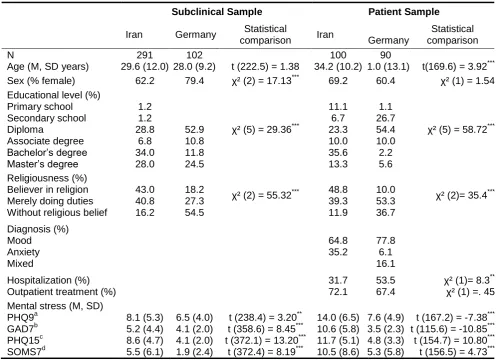
This study was conducted on 291 healthy individuals and 100 patients with anxiety/mood disorder in Iran. The mean age of the healthy individuals and patients was 29.6 ±12.0 and 34.2 ±10.2, respectively. In terms of sex, 62.2% of the healthy individuals and 69.2% of the patients were female. Other demographic characteristics are displayed in Table 1.
Reliability
Internal consistency based on Cronbach's alpha was 0.94 for the general population and 0.92 for patients. In addition, test-retest was conducted with a 2-week interval, and reliability was 0.86 and 0.70 for the general population and patients, respectively. Cronbach's alpha of factors is presented in Tables 2 and 3.
Factor Analysis of the Persian Version SOMS-7 Scale in the Healthy Population
This part of the study consisted of 291 cases who filled in the questionnaire. KMO and Bartlett’s test was used (0.818), and the result ensured the adequacy of sample size for factor analysis. Eigenvalues above 1 was considered. Points in screen plots showed that the 47 items in SOMS-7 questionnaire contain 4 main factors (dimensions). Varimax rotating method was used and based on the Rotated Component Matrix Table, questions loading on each factor were as follow (Table 2):
A) First factors (pain, cardiovascular and respiratory symptoms): Questions 1, 2, 3, 4, 5, 6, 11, 12, 15, 24, 25, 26, 27, 28, 29, 30, 31, 32, 41, and 42 .
B) Second factors (gastrointestinal and urologic symptoms): Questions 2, 7, 8, 9, 10, 12, 13, 14, 16, 17, 18, 19, 20, 33, 36, and 37.
C) Third factors (neurological functioning symptoms): Questions 34, 37, 39, 40, 42, 43, 44, 45, 46, and 47 . D) Fourth factors (musculoskeletal symptoms): Questions 4, 5, 18, 19, 34, and 35.
Some questions were placed in more than 1 category. This condition occurred because of a high score or high number of patients complaining about symptoms in more than 1 category. Questions 21, 22, and 23 were removed due to weak factor loading.
Factor analysis of the Persian Version of SOMS-7 Scale among Anxiety/Mood Disorder Patients
In the present study, there were 100 anxiety/mood disorder patients. KMO and Bartlett’s test indicated sample size adequacy for factor analysis .
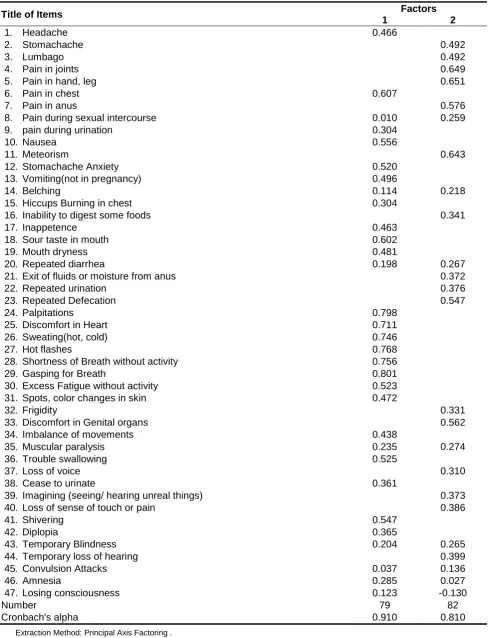
Factor analysis revealed that the 47 questions in SOMS-7 loaded on 2 main factors (dimensions). To rotate these factors, Varimax method was used and based on Rotated Component Matrix Table, questions loading on each factor were as follow (Table 3):
B) Second factors (pain, musculoskeletal and neurological symptoms): Questions 2, 3, 4, 5, 7, 8, 11, 14, 16, 20, 21, 22, 23, 32, 33, 35, 37, 39, 40, 43, 44, 45, 46, and 47 .
Some questions were placed in more than 1 factor, which was due to a high score or high number of patients complaining about symptoms in more than 1 category. Questions 8, 14, 20, 35, 43, 45, 46, and 47 were candidates to be removed due to inappropriate factor loading in each scale.
Validity
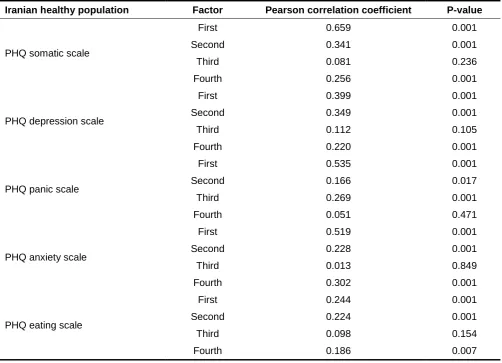
Validity of SOMS-7 was determined through construction, discriminant, and convergent validity assessment. Convergent validity was assessed by considering the correlation of factor analysis scores with subscales of PHQ-9 (Table 4).
Findings in Table 4 reveals that SOMS-7 questionnaire is significantly correlated with PHQ somatic scale. Thus,
these findings indicated that SOMS-7 can be a valid scale.
This assessment was also performed for patient groups. Table 5 displays the correlation of SOMS-7 score and PHQ score in patients with anxiety/mood disorder. Findings of Table 5 show that SOMS-7 questionnaire has a significant correlation with PHQ somatic scale . The difference in the mean scores of SOMS-7 of the general population and patients was compared (Table 6). Discriminant analysis and the ROC curve were used to determine distinction validity.
Mean scores of the general population, compared to patients, are presented in Table 1, and showed significant differences, which indicated discrimination validity of this scale.
ROC Curve (Figure 1) for distinction validity of SOMS-7 questionnaire is presented below (P-value<0.001; CI, 0.713-0.812). The score of ≥ 15.5 from SOMS-7 questionnaire has 77% sensitivity and 66% specificity in the diagnosis of patients with anxiety/mood disorder.
Table 1. Descriptive Statistics of Psychometric Properties of the Persian Version of the Patients and the Healthy Sample in Iran and Germany
Subclinical Sample Patient Sample
Iran Germany Statistical
comparison Iran Germany
Statistical comparison N
Age (M, SD years)
291 29.6 (12.0)
102
28.0 (9.2) t (222.5) = 1.38
100 34.2 (10.2)
90
41.0 (13.1) t(169.6) = 3.92***
Sex (% female) 62.2 79.4 χ² (2) = 17.13*** 69.2 60.4 χ² (1) = 1.54
Educational level (%) Primary school Secondary school Diploma Associate degree Bachelor’s degree Master’s degree 1.2 1.2 28.8 6.8 34.0 28.0 52.9 10.8 11.8 24.5
χ² (5) = 29.36***
11.1 6.7 23.3 10.0 35.6 13.3 1.1 26.7 54.4 10.0 2.2 5.6
χ² (5) = 58.72***
Religiousness (%) Believer in religion Merely doing duties Without religious belief
43.0 40.8 16.2 18.2 27.3 54.5
χ² (2) = 55.32*** 48.8
39.3 11.9
10.0 53.3 36.7
χ² (2)= 35.4***
Diagnosis (%) Mood Anxiety Mixed 64.8 35.2 77.8 6.1 16.1 Hospitalization (%) Outpatient treatment (%)
31.7 72.1
53.5 67.4
χ² (1)= 8.3**
χ² (1) =. 45 Mental stress (M, SD)
PHQ9a GAD7b PHQ15c SOMS7d 8.1 (5.3) 5.2 (4.4) 8.6 (4.7) 5.5 (6.1) 6.5 (4.0) 4.1 (2.0) 4.1 (2.0) 1.9 (2.4)
t (238.4) = 3.20**
t (358.6) = 8.45***
t (372.1) = 13.20***
t (372.4) = 8.19***
14.0 (6.5) 10.6 (5.8) 11.7 (5.1) 10.5 (8.6) 7.6 (4.9) 3.5 (2.3) 4.8 (3.3) 5.3 (5.8)
t (167.2) = -7.38***
t (115.6) = -10.85***
t (154.7) = 10.80***
t (156.5) = 4.73***
Note. N = Sample size, M = Mean, SD = Standard deviation, t = t value, χ² = Chi-square value, a Depression score of the PHQ, b
Anxiety score of the PHQ, c Score for somatoform symptoms of the PHQ, d Score for somatization symptom count of the SOMS7 * p<
Table 2. Factor Analysis of Screening for Somatic Symptom Disorders-7(SOMS-7) in Healthy Population
Title of Items Factors
1 2 3 4
1. Headache 0.454
2. Stomachache 0.420 0.410
3. Lumbago 0.491
4. Pain in joints 0.433 0.671
5. Pain in hand, leg 0.471 0.670
6. Pain in chest 0.662
7. Pain in anus 0.361
8. Pain during sexual intercourse 0.221
9. Pain during urination 0.346
10. Nausea 0.556
11. Meteorism 0.533
12. Stomachache Anxiety 0.526 0.399
13. Vomiting(not in pregnancy) 0.530
14. Belching 0.410
15. Hiccups Burning in chest 0.490
16. Inability to digest some foods 0.400
17. In appetence 0.526
18. Sour taste in mouth 0.394 0.399
19. Mouth dryness 0.438 0.450
20. Repeated diarrhea 0.650
21. Exit of fluids, moisture from anus 0.287
22. Repeated urination 0.265
23. Repeated Defecation 0.239
24. Palpitations 0.825
25. Discomfort in Heart 0.776
26. Sweating(hot, cold) 0.638
27. Hot flashes 0.709
28. Shortness of Breath without activity 0.702
29. Gasping for Breath 0.715
30. Excess Fatigue without activity 0.542
31. Spots, color changes in skin 0.464
32. Frigidity 0.480
33. Discomfort in Genital organs 0.316
34. Imbalance of movements 0.450 0.411
35. Muscular paralysis 0.497
36. Trouble swallowing 0.324
37. Loss of voice 0.471
38. Cease to urinate 0.371
39. Imagining (seeing/ hearing unreal things) 0.385
40. Loss of sense of touch or pain 0.451
41. Shivering .520
42. Diplopia .401 0.387
43. Temporary Blindness 0.798
44. Temporary loss of hearing 0.829
45. Convulsion Attacks 0.835
46. Amnesia 0.375
47. Losing consciousness 0.551
Number 254 233 274 272
Cronbach's alpha 0.923 0.836 0.770 0.820
Extraction Method: Principal Axis Factoring.
Table 3. Factor Analysis of Screening for Somatic Symptom Disorders-7(SOMS-7) in Patients with Anxious/Mood Disorder
Extraction Method: Principal Axis Factoring .
Rotation Method: Varimax with Kaiser Normalization.a
Title of Items Factors
1 2
1. Headache 0.466
2. Stomachache 0.492
3. Lumbago 0.492
4. Pain in joints 0.649
5. Pain in hand, leg 0.651
6. Pain in chest 0.607
7. Pain in anus 0.576
8. Pain during sexual intercourse 0.010 0.259
9. pain during urination 0.304
10. Nausea 0.556
11. Meteorism 0.643
12. Stomachache Anxiety 0.520
13. Vomiting(not in pregnancy) 0.496
14. Belching 0.114 0.218
15. Hiccups Burning in chest 0.304
16. Inability to digest some foods 0.341
17. Inappetence 0.463
18. Sour taste in mouth 0.602
19. Mouth dryness 0.481
20. Repeated diarrhea 0.198 0.267
21. Exit of fluids or moisture from anus 0.372
22. Repeated urination 0.376
23. Repeated Defecation 0.547
24. Palpitations 0.798
25. Discomfort in Heart 0.711
26. Sweating(hot, cold) 0.746
27. Hot flashes 0.768
28. Shortness of Breath without activity 0.756
29. Gasping for Breath 0.801
30. Excess Fatigue without activity 0.523
31. Spots, color changes in skin 0.472
32. Frigidity 0.331
33. Discomfort in Genital organs 0.562
34. Imbalance of movements 0.438
35. Muscular paralysis 0.235 0.274
36. Trouble swallowing 0.525
37. Loss of voice 0.310
38. Cease to urinate 0.361
39. Imagining (seeing/ hearing unreal things) 0.373
40. Loss of sense of touch or pain 0.386
41. Shivering 0.547
42. Diplopia 0.365
43. Temporary Blindness 0.204 0.265
44. Temporary loss of hearing 0.399
45. Convulsion Attacks 0.037 0.136
46. Amnesia 0.285 0.027
47. Losing consciousness 0.123 -0.130
Number 79 82
Table 4. Correlation between Screening for Somatic Symptom Disorders-7(SOMS-7) Factors and PHQ Scores in Normal Population
P-value Pearson correlation coefficient
Factor Iranian healthy population
0.001 0.659
First
PHQ somatic scale Second 0.341 0.001
0.236 0.081
Third
0.001 0.256
Fourth
0.001 0.399
First
PHQ depression scale Second 0.349 0.001
0.105 0.112
Third
0.001 0.220
Fourth
0.001 0.535
First
PHQ panic scale Second 0.166 0.017
0.001 0.269
Third
0.471 0.051
Fourth
0.001 0.519
First
PHQ anxiety scale Second 0.228 0.001
0.849 0.013
Third
0.001 0.302
Fourth
0.001 0.244
First
PHQ eating scale Second 0.224 0.001
0.154 0.098
Third
0.007 0.186
Fourth
Table 5. Correlation between Screening for Somatic Symptom Disorders-7(SOMS-7) Factors and PHQ Scores in Patients
Anxiety/Mood Disorder Patients Factor Pearson Correlation Coefficient P-value
PHQ somatic questions First 0.516 0.001
Second 0.592 0.001
PHQ depression questions First 0.304 0.010
Second -0.044 0.718
PHQ panic questions First 0.187 0.125
Second -0.006 0.960
PHQ anxiety questions First 0.140 0.248
Second 0.212 0.078
PHQ eating questions First -0.005 0.967
Table 6. Differences of the Mean Score of SOMS-7 in Patients with Mood/Anxiety Disorder
and Healthy Population
Number
Score of SOMS-7 Mean ± Standard
Deviation
P-value
Normal
population 285 15.43±17.90
<0.001 Anxiety
disorder patients
35 32.65±23.56
Mood disorder
patients 64 34.50±24.15
Figure 1. ROC Curve of SOMS-7 Questionnaire for Anxiety/Mood Disorder Patients
Discussion
Interviewing with psychiatric patients is the cornerstone of psychiatric diagnosis, however, to screen large populations and determine the effectiveness of therapeutic interventions, there is a need for precise assessment tools. Thus, the need for finding particular instruments for early diagnosis of SDD to lower health care costs and family pressure is elucidated.
Considering the above-mentioned and lacking a valid Persian Questionnaire to screen SSD and SFD, this study was conducted on an Iranian population. To determine factor structure and validation of SOMS-7, exploratory factor analysis was used in the general population. Four
factors including (1) pain, cardiovascular and respiratory symptoms, (2) gastrointestinal and urologic symptoms, (3) neurological functioning symptoms and (4) musculoskeletal symptoms were found. All symptoms can be divided to 4 factors, and somatic symptoms disorders can be screened and diagnosed using the mentioned factors. Questions 21, 22, and 23 were candidates to be removed from the healthy population, and this might have been due to cultural differences of the Iranian population compared to the German population. Meanwhile, this questionnaire was divided into 2 categories for mood/anxiety disorder patients. Also, 8 questions were candidates to be removed again. Another study conducted by Wilma L. Zijlema et al. divided SOMS-7 questionnaire to 5 factors and reported this questionnaire as suitable for screening somatic symptoms disorder (13).
Test-retest assessment of the Persian SOMS-7 with a 2-week interval revealed a reliability of 0.86 in the healthy population and 0.70 in anxiety/mood disorder patients. This finding is comparable with that of a study which found SOMS-7 retest reliability of 0.76 in a period of 4 months and severity index of 0.71 (8). Another study reported 72-hour retest assessment of SOMS-7 and presented reliability of 0.85 and validity of 0.75(7). Few studies have been done using this questionnaire, but other questionnaires have been assessed including Composite International Diagnostic Interview (CIDI) with test-retest value of 0.74, 0.68, and 0.71 for somatization disorder, pain disorder, and hypochondriasis, respectively(14). Somatoform Disorders Schedule (SDS) Questionnaire was another that had a reliability of 0.76 (15).
In this study, reliability of 0.92- 0.94 was found. This Cronbach's alpha is somewhat similar to what was reported in other studies. Rief W et al. presented Cronbach's alpha of 0.92 (7).. Other questionnaires were reported to have high internal consistency. Thus, in term of reliability, SOMS-7 is as valuable as Symptom Questionnaire and SCL-90-R. Moreover, the internal consistency of SOMS-7 questionnaire is higher than what was reported for the Whiteley Index (0.80) and the Illness Attitude Scales (0.90) (8). Therefore, it can be concluded that SOMS-7 has acceptable validity for diagnosis of somatic symptom disorder in non-Iranian communities similar to what we found in this Persian version.
with PHQ-15 scores as well. Findings of this study support those of Naz study (2016), which was conducted in Pakistan. They designed SSS questionnaire and found significant correlations in conversion, pain, hypochondriasis, and body dysmorphic syndromes with SOMS scores (16). In the study of Zijlema WL et al., this correlation between SOSM-7 and SCL-R was 0.76, and the highest correlation was seen between SOMS-7 and PHQ-15 (13), which is similar to the present study. Patients with anxiety/mood disorder obtained significantly higher scores on SOMS-7 compared to healthy population, which could indicate another validity index of the Persian SOMS-7 version .
Discriminant analysis was conducted to determine cut-off point score and its sensitivity and specificity. Findings showed that obtaining the score of 15.5 and above can predict somatic symptom disorder with sensitivity of 77% and specificity of 66%. SOMS-7 questionnaire had sensitivity of 98% and specificity of 63% in another study (7). These differences may be due to the diversity of assessed populations in the current study, in which we compared healthy population with anxiety/mood disorder patients, while in the study of Hiller W et al., healthy population was compared with somatoform disorder patients (7).
Limitation
The most important limitation of this study was lack of cut-off determination of the Persian version of SOMS-7 based on patients with SSD. These cut-off points and their sensitivity and specificity can be used to discriminate between the general population and patients with mood/anxiety disorder based on somatic symptoms in mood/anxiety disorder. Thus, we suggest that future studies consider SOMS-7 discriminant validity based on cut-off point and sensitivity and specificity between the general population and patients with somatic symptoms disorder.
Conclusion
Findings of this study indicate that the Persian version of SOMS-7 has suitable validity and reliability for screening healthy population for abnormal somatic symptoms complaints. The findings of this study also indicated that this tool can be used to measure the effects of psychological interventions.
Acknowledgment
The authors wish to appreciate the Head of the
Behavioral Sciences Research Center, Director and staff of psychosomatic Research Center for their warm cooperation.
Conflict of Interest
The authors declare that they have no competing interests
References
1. De Gucht V, Fischler B. Somatization: a critical review of conceptual and methodological issues. Psychosomatics 2002; 43: 1-9.
2. Association AP. Diagnostic and statistical manual of mental disorders (DSM-5®): American Psychiatric Pub; 2013.
3. Sadock BJ, Sadock VA, Levin Ze. Kaplan and Sadock's study guide and self-examination review in psychiatry: Lippincott Williams & Wilkins; 2007.
4. Hilderink P, Collard R, Rosmalen J, Voshaar RC. Prevalence of somatoform disorders and medically unexplained symptoms in old age populations in comparison with younger age groups: a systematic review. Ageing Res Rev 2013; 12: 151-156.
5. Eliasen M, Kreiner S, Ebstrup JF, Poulsen CH, Lau CJ, Skovbjerg S, et al. (2016) Somatic Symptoms: Prevalence, Co-Occurrence and Associations with Self-Perceived Health and Limitations Due To Physical Health – A Danish Population-Based Study. PLoS ONE 2016; 11: e0150664 .
6. Rief W, Hiller W. Toward empirically based criteria for the classification of somatoform disorders. Journal of Psychosomatic Research 1999; 46: 507-518.
7. Rief W, Hiller W. A new approach to the assessment of the treatment effects of somatoform disorders. Psychosomatics 2003; 44: 492-498.
8. Hiller W, Janca A. Assessment of somatoform disorders: a review of strategies and instruments. Acta Neuropsychiatrica 2003; 15: 167-179.
9. Budtz-Lilly A, Fink P, Ørnbøl E, Vestergaard M, Moth G, Christensen KS, et al. A new questionnaire to identify bodily distress in primary care: the ‘BDS checklist’. J Psychosom Res 2015; 78: 536-545.
10. Toussaint A, Murray A, Voigt K, Herzog A, Gierk B, Kroenke K, et al. Development and validation of a new self-report measure: The ‘Somatic Symptom Disorder-B Criteria Scale (SSD-12)’. Psychosom Med 2016; 78: 5-12.
11. Zhang YL, Liang W, Chen ZM, Zhang HM, Zhang JH, Weng XQ, et al. Validity and reliability of Patient Health Questionnaire‐9 and Patient Health Questionnaire‐2 to screen for depression among college students in China. Asia Pac Psychiatry 2013; 5: 268-275.
12. de Vroege L, Hoedeman R, Nuyen J, Sijtsma K, van der Feltz-Cornelis CM. Validation of the PHQ-15 for somatoform disorder in the occupational health care setting. J Occup Rehabil 2012; 22: 51-58.
13. Zi. jlema WL, Stolk RP, Löwe B, Rief W, White PD, Rosmalen JG. How to assess common somatic symptoms in large-scale studies: a systematic review of questionnaires. J Psychosom Res 2013; 74: 459-468.
Interview (CIDI): a critical review. J Psychiatr Res 1994; 28: 57-84.
15. Janca A, Burke J, Isaac M, Burke K, Costa J, Silva E, et al. The World Health Organization somatoform disorders schedule. A preliminary report on design and reliability. Eur Psychiatry 1995; 10: 373-378.
16. Naz F, Kausar R. Somatic symptoms scale: Psychometric properties in clinical and normal sample. JPMA the Journal of the Pakistan Medical Association 2016; 66: 8-12.