Rowland J. O. Ekeocha (Correspondence)
ekeochaj @ yahoo.com
+This article is published under the terms of the Creative Commons Attribution License 4.0 Author(s) retain the copyright of this article. Publication rights with Alkhaer Publications. Published at: http://www.ijsciences.com/pub/issue/2018-05/
DOI: 10.18483/ijSci.1681; Online ISSN: 2305-3925; Print ISSN: 2410-4477
Application of Queuing Process in the
Optimization of Baggage Handling System of
Murtala Muhammed International Airport
Rowland J.O. Ekeocha
1
, Samuel A. Ushe
1
1
Mechanical Engineering Department, Covenant University, Ota
Abstract: Baggage handling systems (BHS) take up a significant portion of an airport's overall operation. As an
entryway BHS is an essential component as it facilitates a smooth transition for baggage flowing from the check-in area to the departure gates (loading points) by reconstituting a dynamic baggage flow into a stable flow on a conveyor system. The main purpose of this paper is to review different baggage models and their usage in the BHS line shared by multiple airlines. This is particularly relevant in the Nigerian context, as imbalances have been observed in the BHS designed for Murtala Mohammed international Airport. These imbalances lead to a lower customer satisfaction rates for most airline as well as a reduction in the level of service provided by the airport during peak hours. In this study, we shall consider several work of different researchers on the baggage handling systems using different models to solve the entryway BHS. We shall also consider the most appropriate operation of BHS in Nigerian Airport which will improve efficiency and reduce waiting time of passenger baggage. The results indicate that this suggested algorithm reduces the imbalances for the airlines sharing the BHS collection conveyor, while maintaining overall BHS performance at an acceptable level. The relationships between the variables used in the algorithm and overall performance are discussed further.
Keywords: Queuing Process; Baggage Handling System; Optimization
Introduction
An airport baggage handling system (BHS) is one of the most complex airport operational systems. It is responsible for moving,controlling, screening, sorting and storing passenger baggage from the check-in area to the departure gates. Because the system is mainly composed of a series of conveyors that are connected as a whole system, a bottleneck in any part of the system could possibly affect the entire system. For this reason, an analysis of the system in the design phase has been emphasized to ensure system capacity under any circumstances by identifying the potential bottleneck area and assessing the deliverable capacity (de Neufville, 1994). If an effective design is not achieved, customer satisfaction rates decline due to delayed baggage or increased waiting times in passenger queues. In fact, these problems have become evident in numerous airports that are unable to handle baggage demands during peak operating hours. With respect to potential bottlenecks in the BHS, check-in systems have often been identified as problem areas, particularly because several input conveyors merge into a collection conveyor (Le et al., 2012). A check-in system layout is shown in Fig. 1. It is identical to a merged configuration in a
Application of Queuing Process in the Optimization of Baggage Handling System of Murtala Muhammed International Airport
http://www.ijSciences.com
Volume 7
– May
2018 (05
)
98
simplifying and approximating the nonlinear optimization problem by a mixed-integer linear programming (MILP) problem. Model predictive control (MPC) was used to solve the route choice
problem, which was found to give a better performance compared with the MILP, except for its high computational effort.
[Source: Kim et al, (2017) Journal of Air Transport Management].
Huang et al (2016) modeled the chute assignment gap as a stochastic vector assignment problem (SVAP) since airport baggage operations have inherent uncertainties like flight delays, number of bags and assignment time of baggage chutes to outgoing flights, which if not handled in an efficient way can lead to high baggage handling cost. The work tried to tackle the assignment of baggage unloading zones (chutes) to scheduled outgoing flights under uncertainty in such a way that the total expected assignment cost in the system is minimized. When the model was compared with the traditional first come first out (FIFO) model, the FIFO total cost was about 27% higher than the optimal solution. However, the work did not handle the online assignment problem. This could be an area for future work.
Yoon and Jeong (2015) in a case study of Incheon International Airport, came up with an alternative methodology for planning baggage carousel capacity expansion over a series of steps that includes both a simulation and a cost analysis. This was borne out of the increase in air transport and passenger competition. The methodology was divided into three stages: passenger demand forecasting with the SARIMA model, simulation modeling and analysis for estimating passenger delay time reflected by detailed operational activities and a simulation-based heuristic algorithm for maximizing benefit over cost. The result shows that the optimal capacity expanded
over a period of three years and the benefit over cost ratio was 1.65, 1.79 and 1.76 respectively.
Swartjes et al (2017) developed a model-based design of supervisory controllers for an actual industrial baggage handling system, and for real-time emulation model of an actual international airport. The modelling framework supports combined continuous–time/discrete-event modelling techniques, based on hybrid auto data. This design allows early and shorter testing and error correction iterations. This early validation was found to be of more advantage when compared to the traditional model-based engineering which depends on hardware in-the-loop.
Application of Queuing Process in the Optimization of Baggage Handling System of Murtala Muhammed International Airport
http://www.ijSciences.com
Volume 7
– May
2018 (05
)
99
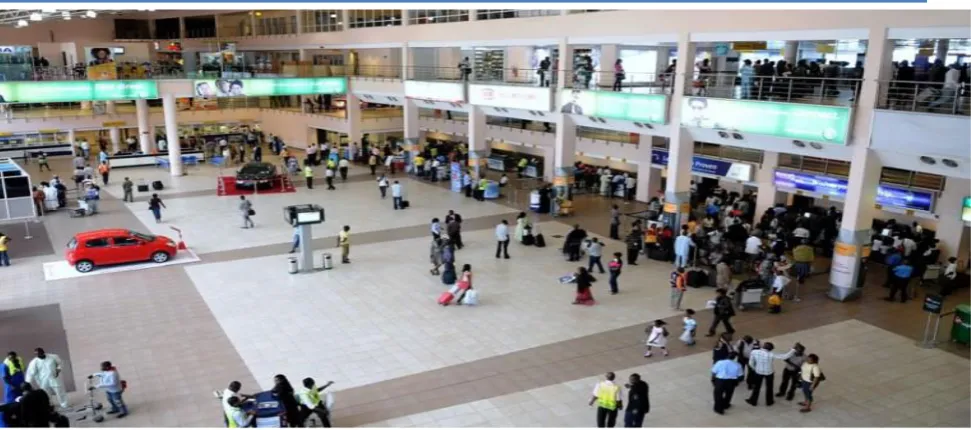
FIGURE 2: MURTALA MOHAMMED INTERNATIONAL AIRPORT LOCAL WING 2 (MM2) (SCOURCE: BUZZ NIGERIA)
: Murtala Mohammed International Airport
The airport at Ikeja near Lagos was built during World War II. West African Airways Corporation (WAAC) was formed in 1947 and had its main base at Ikeja. De Havilland Doves were initially operated on WAAC Nigerian internal routes and then West African services. Larger Douglas Dakotas were added to the Ikeja-based fleet from 1957.
It was originally known as Lagos International Airport. It was however renamed in the mid1970s, during construction of the new international terminal, after a former Nigerian military head of state Murtala Muhammed. The international terminal was modelled after Amsterdam Airport Schiphol. The new terminal opened officially on 15 March 1979. It is the main base for Nigeria's largest airline, Arik Air.
Murtala Muhammed International Airport consists of an international and a domestic terminal, located about one kilometer from each other. Both terminals share the same runways. The domestic terminal used to be the old Ikeja Airport. International operations moved to the new international airport when it was ready while domestic operations moved to the Ikeja Airport, which became the domestic airport. The domestic operations were relocated to the old Lagos domestic terminal in 2000 after a fire incidence. A new domestic privately funded terminal known as MMA2 has been constructed and was commissioned on 7 April 2007.
Murtala Muhammed International Terminal 2 (MM2)
The maximum capacity of the terminal is five million passengers per annum. Set over four levels, it
features separate arrival and departure halls, restaurants, lounges and entertainment areas. Travellators and six air bridges provide access, with a possible expansion to 12 air bridges in the future.
The main terminal building has a total of 31 check-in counters. Electronic information display screens have been extensively installed to guide arriving travelers and to provide departure schedules for various airlines. Flight announcements and other customer information are relayed through a state-of-the-art public address system.
Seating capacity in the departure hall is about 1,000, with part of the facility dedicated to food courts and comfortable lounges for both VIP and economy class passengers.
Facilities constructed around the terminal as part of the project include a six-storey, four-star, 148-room hotel with swimming pool, a casino, a dedicated conference center and a direct bridge connection to the terminal building.
In May 2010, Bi-Courtney Aviation Services started cargo operations at MMA2. The cargo services include automated and calibrated weighing scales, large cargo capacity, online payment and 24-hour security services.(Mmia, 2014)
BAGGAGE HANDLING SYSTEM
Application of Queuing Process in the Optimization of Baggage Handling System of Murtala Muhammed International Airport
http://www.ijSciences.com
Volume 7
– May
2018 (05
)
100
Table 1: Number of passengers movements into the airport, according to the Federal Airports Authority of Nigeria's Aviation Sector Summary Reports.
DOMESTIC AND INTERNATIONAL AIRLINES
Airlines using MM2 include the following: 1. Aero Contractors
2. Dana Airlines 3. Medview airlines 4. Azman Airline 5. British Airways
6. Ethiopian Airlines and others
ArIk Air and Air Peace use the MM1 Domestic terminal.
Passengers leaving on a trip normally want to spend as little time as possible in the terminal. They want to have baggage carts readily available, a fast check-in and little waiting time before boarding prior to a timely departure. Passengers do not appreciate repetitive security checks, crowded departure areas, long queue for boarding and delayed departure. However, the rise in terrorist activity requires more stringent security measure. Therefore passengers' identity must be verified, luggage must be x-rayed by the deployment of metal detectors and other security techniques. As a result, passengers must arrive early at the terminal hours before departure, queue at the security checkpoint, show their boarding passes /passport and wait while luggage is matched with boarded passengers. This causes a lot of delay and economic loss.
Baggage leaves the passenger’s custody at the airline’s check-in stand. Thereafter the baggage is weighed, tagged and placed on a conveyor belt that takes it into a bag room where it is further searched
as necessary. At this point, it becomes the responsibility of the airport handling company. In more advanced airports, scanners are deployed on the conveyor belt to scan the bag tag while directing the luggage to the pier or carousel for the appropriate airline. Here, the luggage is placed in baggage carts. Unfortunately, it is not the case at Murtala Mohammed Airport because most of the technology in MMA is outdated according to the staff of a baggage handling company (NAHCO). There are conveyor belts with non-existent scanners and faulty baggage carousels, which leads to situation where the ground handling staff have to move the luggage from the bag room to the baggage carts directly. In local flights, where this process is not existing, most local airlines, usually placed the luggage on a baggage cart at the airline’s ticket stand and taken directly to the plane by airline staff. The bags are brought to the aircraft about 30 minutes before the flight takes off. Thereafter, a team of NAHCO staff loads the bags on board the plane according to a load plan. The load plan details how many bags go in each cargo compartment to ensure appropriate weight balance and fuel efficiency of the aircraft. When the plane arrives its destination, another team offloads the bags into baggage carts which are moved to a baggage carousel. The baggage is then offloaded onto the carousel which brings it into the terminal for identification and collection by passengers. (Pulse news Published: 03.04.2017, Refreshed: 29.05.2017 Segun Akande).
Year 2005 2006 2007 2008 2009 2010 2011 2012 2013 2014 2015
Passengers 3,817,338 3,848,757 4,162,424 5,136,920 5,644,572 6,273,545 6,746,290 6,879,286 7,261,178 7,374,507 7,164,169
Growth (%)
6.74% 0.82% 8.15% 23.41% 9.88% 11.74% 7.54% 1.97% 5.55% 1.56% 2.8%
Source: Federal Airports Authority of Nigeria (FAAN). Aviation Sector Reports (2010-2013,[16] 2014,[17] Q3-Q4 of 2015,[18]
and Q1-Q2 of 2016,[19])[20]
Application of Queuing Process in the Optimization of Baggage Handling System of Murtala Muhammed International Airport
http://www.ijSciences.com
Volume 7
– May
2018 (05
)
101
play
Fig.3. The baggage carousel at Murtala Muhammed Airport where lucky passengers can claim their baggage (Buzz Nigeria)
Methodology
Time is of essence both in passenger check-in and baggage handling and must be minimized. Number of passenger arrival does not follow a particular pattern, it occurs at random, hence it could be said to follow a Poisson distribution. The Poisson distribution is applicable only when the events occur completely at random and the number that occurs is small compared to the potential number that could occur. The Poisson distribution is given by
|
)
(
X
e
X
P
x
Where P(X) = Probability of exactly X occurrences, e = Naperian constant (2.71 828) and μ = Expected or average number of occurrences. The mean and variance of Poisson function are both . The Poisson/exponential distribution will be employed in queuing problem as follows. Let the arrival rate, in arrivals per unit time period, follow a Poisson distribution with λ average arrivals per period, then we have the following equation:
|
)
(
X
e
X
P
x
It can be shown that the time between arrivals has an exponential distribution with the following probability density.
Pd(Ta) = λe-λT
Where Ta is the time between arrivals measured in
periods T. The cumulative probability becomes the time between arrivals of Ta or less as given by
Pc (Ta) = I – e-λ T
Application of Queuing Process in the Optimization of Baggage Handling System of Murtala Muhammed International Airport
http://www.ijSciences.com
Volume 7
– May
2018 (05
)
102
Fig.4: Typical counter with three service points
According to Humphreys (1991), the simplest model is single channel, single phase and single queue with an infinite population. Consider an interval of time Ta
(period between arrivals) during which one item will enter the service channel and remain there for Ts
periods (servicing time). Ta is greater than Ts to avoid
queue forming. If Cw is the cost for one item waiting
one time period, the cost for the waiting is CwTs. The
cost of servicing is also considered. The size of the servicing channel is optional. It is assumed that the time for servicing an item Ts is inversely proportional
to the size of the channel and the period cost of a servicing channel is proportional to its size. Let a service channel which can service an item in one time period cost Cf to operate in one time period. If the
servicing time to service one unit is Ts and not a unity
time period, then a service channel of a different size will be required and its cost for one time period is given by Cf/Ts.
The cost for a time interval Ta will be the sum of the
cost for the lost or waiting time for the unit being serviced plus the cost of operating the service channel for Ta time periods which is
CwTs + a s
f
T
T
C
The total cost for one time period Ct is obtained by
dividing with Ta which is given by
Ct =
s f a s w
T
C
T
T
C
Differentiating with respect to Ts and equating to
zero, we obtain the minimum cost/period.
0
2
s f a w s tT
C
T
C
dT
dC
w a f opt s C T C T. .a w f opt t T C C
C. .2 (Putting Ts.opt. in Ct)
Please note that Cf is the cost for one time period for
a servicing channel which when working full time would service one item. If there are L channels or servicing facilities instead of one, then
Ct =
s f a s w
T
L
C
T
T
C
w a f opt s C L T C T. .a w f optt t T L C C
C. .2
But in this case it is only one service channel, hence the letter L is not relevant here.
Result
Consider the Aero Contractor Airline that departs Lagos to Abuja with one hundred and fifty passengers who have at least one baggage each. The passengers are expected to arrive the airport terminal 45 minutes before departure. Assuming the arrival rate is constant at 80 passengers /hour, the cost of providing and maintaining baggage service facility is N30/hour and it can serve 200 baggage/hour working full time. If the total optimum cost Ct.opt is N25, then
the cost of delay or waiting cost for one baggage for one hour can be derived as follows:
Time between arrivals,Ta = 1/80 =0.0125 baggage
/hour
Facility maintenance cost, Cf = 30/200 = 0.15
But Total optimum cost,
a w f opt t T C C C. .2 ,
Therefore Baggage waiting cost,
=13.02
This implies that each bag attracts about N13 cost for one hour delay. It also implies that a loss of about N1950 for an hour delay will be recorded for the Aero Contractor Airline flight that departed Lagos to Abuja with one hundred and fifty passengers who possessed at least a bag each.
Year 2005 2006 2007 2008 2009 2010 2011 2012 2013 2014 2015
Passengers 3,817,338 3,848,757 4,162,424 5,136,920 5,644,572 6,273,545 6,746,290 6,879,286 7,261,178 7,374,507 7,164,169
Application of Queuing Process in the Optimization of Baggage Handling System of Murtala Muhammed International Airport
http://www.ijSciences.com
Volume 7
– May
2018 (05
)
103
Discussion
Table 2 shows the projected baggage cost for an hour delay based on passenger movements from 2005 to 2015 presented in table 1 assuming that each passenger possesses at least a bag.
The baggage cost increased from about N49.63 million in 2005 to about N95.87 million in 2014 with a drop to N93.13 million in 2015. This is huge loss which can be mitigated by the installation of adequate and appropriate baggage handling facilities at the airport for operational efficiency. The deployment of efficient baggage handling system (BHS) will reduce the delays experienced at the airport, which will translate to reduction in baggage cost.
The drop in baggage cost in 2015 is due mainly to drop in passenger movement for the year. It has nothing to do with baggage handling facilities.
The high baggage cost recorded in the study for MM2 corroborates the finding of Aguilera-venegas et al (2014) in their study of baggage handling system of situation similar to MM2. They therefore recommended the use of the accelerated time simulation of baggage in an airport terminal (ATISBAT) model to determine appropriate baggage handling facilities before deployment at the airport.
Conclusion
An airport baggage handling system (BHS) is one of the most complex airport operational systems. It is responsible for moving,controlling, screening, sorting and storing passenger baggage from the check-in area to the departure gates. Without adequate baggage handling facilities baggage delays will definitely be experieneced which can translate into cost and result into a huge economic loss. MM2 therefore need to be adequately equiped with more service conveyors and the
operational delays by the airlines should be minimised in order to reduce the costs associated with delays. Manual handling of baggages should be eliminated completely.
Applications like the ATISBAT model may be used to betermine the appropriate BHS before deployment in an airport
Reference
1. Aguilera-venegas, G., Galán-garcía, J. L., and Mérida-casermeiro, E. (2014). An accelerated-time simulation of baggage traffic in an airport terminal. Mathematics and Computers in Simulation, 104, 58–66. https://doi.org/10.1016/j.matcom.2013.12.009
2. Huang, E., Mital, P., Goetschalckx, M., and Wu, K. (2016). Optimal assignment of airport baggage unloading zones to outgoing flights. Transportation Research Part E, 94, 110– 122. https://doi.org/10.1016/j.tre.2016.07.012
3. Humphreys, K.K. (1991). Jelen's cost and optimization engineering, 3rd edition, Chapters 8 and 11. McGraw Hill Inc. 4. Kim, G., Kim, J. and Chae, J. (2017). Journal of Air Transport Management Balancing the baggage handling performance of a check-in area shared by multiple airlines.
Journal of Air Transport Management, 58, 31–49. https://doi.org/10.1016/j.jairtraman.2016.08.017
5. Mmia, I. A. (2014). Users Perceptions of Service Quality in Murtala Muhammed International Airport ( MMIA ), (September).
6. Swartjes, L., Beek, D. A. Van, Fokkink, W. J. and Eekelen, J. A. W. M. Van. (2017). Simulation Modelling Practice and Theory Model-based design of supervisory controllers for baggage handling systems. Simulation Modelling Practice
and Theory, 78, 28–50.
https://doi.org/10.1016/j.simpat.2017.08.005
7. Tar, A. N. (2010). Predictive Control for Baggage Handling Systems using Mixed Integer Linear Programming, 16–21. https://doi.org/10.3182/20100908-3-PT-3007.00004 8. Yoon, S. W. and Jeong, S. J. (2015). Journal of Air Transport
Management An alternative methodology for planning baggage carousel capacity expansion : A case study of Incheon International Airport. Journal of Air Transport
Management, 42, 63–74.
https://doi.org/10.1016/j.jairtraman.2014.09.001