Copyright © 2017 (Ralina L. Joseph). Licensed under the Creative Commons Attribution Non-commercial No Derivatives (by-nc-nd). Available at http://ijoc.org.
What’s the Difference With “Difference”?
Equity, Communication, and the Politics of Difference
RALINA L. JOSEPH
1University of Washington, USA
Can use of the word difference help communication scholars to rethink communication with equity central, with the politics of difference at its center, or, in other words, where a deviation from an assumed norm is embraced as an intrinsic and valued part of the process of change making? Does adopting the words difference and equity in lieu of tolerance, diversity, and multiculturalism help bring us to a place where racialized minorities are not just window dressing, the tokens that stave off allegations of racism? In this essay, I briefly trace various discourses surrounding tolerance, multiculturalism, and diversity, before moving to difference to think to equity. Linguistic change coincides with and can foment historical and political change, yet we do not need more or different words: We need more equitable universities. Interrogating the language around this potentially change-making word uncovers, in the words of Herman Gray, a politics of difference that is unutterable without demands for equity.
Keywords: difference, equity, multiculturalism, tolerance, diversity
Academics of color who “do race” are cautioned that we need to be mindful of not “preaching to the choir.” What goes unsaid in this admonition is that it directs us to neglect the choir to meet the needs of the parishioners who are reluctantly dragged into church. But choirs need fortifying: Harry Belafonte recalled Martin Luther King, Jr., saying, “If I don’t preach to the choir then the choir might stop singing” (Belafonte, 2015). Besides neglecting the needs of the choir, this rebuke places the job of change-making squarely on the shoulders of the ones singing and preaching their hearts out, instead of those observing the co-constitutive performance on stage: The observers are the audience of the disengaged.
Ralina L. Joseph: [email protected] Date submitted: 2016–10–06
However, to truly appreciate and eventually sing new music, the audience must first learn to listen to different melodies, which might, to new ears, sound dissonant. I define difference,2 the word and concept on which I expound in this article, as a deviation from an assumed norm. Difference means appreciating dissonance, what jazz scholar Ajay Heble (2000) calls “sounds . . . that are ‘out of tune’ with orthodox habits of coherence and judgment” (p. 9) and not upholding traditional harmonies as the ideal standard. As communication scholars, we care about language and meaning; we care about all of the circuitous, fork-in-the road, and wrong-way paths where the message between sender and receiver gets transformed, forestalled, and eventually delivered in one form or another (Hall, 1993; Jensen, 1991; McQuail, 2010): We care that the song we are singing is heard as the melody we aim for it to be. “Communication is central,” communication scholar Raka Shome (2012) reminds us in her mediations on multiculturalism, “to . . . reconsiderations” (p. 146) of race, nation, and culture. Because of the centrality of communication, we need to carefully consider why and how and where we are using terms that tell us something about race, gender, class, sexuality, and disability as the umbrella term difference, as well as its predecessors tolerance, multiculturalism, and diversity, do.3 But what does each of these words tell us today? And more important, what songs do they enable our preacher, choir, and audience to sing?
Interrogating such terms should not simply be a means to sanction safe language. Those of us embroiled in “diversity work”—whether difference is at the center of our scholarship or we happen to be marked (and mark ourselves) by our own difference—are often confronted by anxious allies wanting to use “the right words.” They tiptoe up to me after a talk, or slip me an e-mail saying, “Just tell me what to say. I am a good person. I don’t want to get in trouble.” Many of these people simply want to know what language to iterate: Is African American better than Black? Is a plural gender-neutral pronoun, they, better than a singular gendered pronoun, he or she? Is woman better than girl? Is difference better than diversity? This “right word,” “better than” question might be a positive first step to opening oneself up to accepting people on their own terms. But carefully sanctioning one’s language can also be a silencing device that temporarily presses mute on racist, homophobic, transphobic, misogynistic, or generally prejudiced sentiments, providing a radio-edited version to the explicit lyrics gleefully sung in homogenous spaces that have been evacuated of difference. I also question whether the desire to use the “right words” mutes another reality: that minoritized people do not have the responsibility to provide the right words if the interest in different people only goes as far as different words. For minoritized people, for whom such language has historically been given, not chosen, our language is our power.
Indeed, even that word—minoritized—spotlights powers relations in the construction of the so-called minority/majority divide. I do not use the old term minority. Whereas minority means smaller in numbers, minoritized means smaller in power in a racialized economy that systemically denigrates people of color. Although smaller numbers signify important demographic relationships, they are but one factor in understanding processes of power; increased numbers alone rarely increase power. Minoritized, as an
2 In this essay, I italicize words when I am referring to them as specific terms and leave them un-italicized when I am referring to them as the concept.
process as opposed to a static word, shows that those in the “minority” group are not smaller in significance or even, in many parts of our country, fewer in number (Colby & Ortman, 2015), but that they have been constructed as such.
In a second example of language shifting to illuminate (instead of mute) the machinations of power, in the introduction to the 1999 edition of her canonical 1985 book, Ar’n’t I a Woman? historian Deborah Gray White explains one important change she would make between the different editions: How “were I to write Ar’n’t I a Woman? today, I would use the verb ‘enslaved’ rather than the noun ‘slave’ to implicate the inhumane actions of white people” (p. 8). White describes how “the noun ‘slave’ suggests a state of mind and being that is absolute and unmediated by an enslaver”; by comparison, the verb “‘enslaved’ says more about what happened to black people without unwittingly describing the sum total of who they were” (p. 8). Slave is a flattening gesture that follows narrow and hegemonic historical scripts, whereas “‘enslaved’ forces us to remember that black men and women were Africans and African-Americans before they were forced into slavery and had a new—and denigrating—identity assigned to them” (p. 8). The linguistic change from all-encompassing noun to acted-on verb better captures the ways in which the subject position slave only means anything relationally. These changes in language illuminate a desire on the part of speakers to change the power produced and echoed by the historiographies of racialized language in the United States.
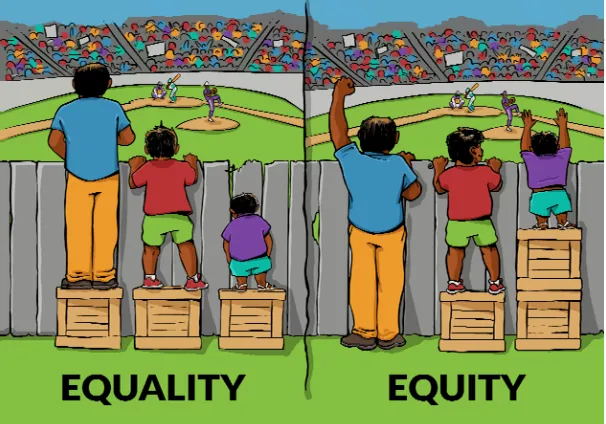
In this article, I examine a change in language and power when the move is not from minority to minoritized or slave to enslaved, but other words that signify demographic change: from the “old school” words tolerance, multiculturalism, and diversity to the more recently popular term difference. In certain academic circles and in certain discussions of demographic changes in U.S. curriculum and culture, the word difference has come into prominence along with its frequent companion equity, as other words have begun to recede. Indeed, equity and not equality is central to this calculus. One twist on a well-circulated meme (the twist being Brown and not White figures; see Figure 1) shows before and after pictures of two boys and a man of different heights outside a baseball game, looking over a fence. As fans of this most American of pastimes, the boys and man experience equality in the before picture, standing on equal-height boxes that do not actually allow all of them to see over the fence; in the equity picture, all can see the game as they stand on the ground or on boxes of appropriate, although different sized, height. Nevertheless, these Brown males are outsider spectators to a sport that does not allow them into the stands, much less the field. Even when visualized in a social justice meme, equity only goes so far.
language around this potentially change-making word uncovers, in the words of Herman Gray (2005), a politics of difference unutterable without demands for equity.4
Figure 1. Visualizing equity and equality. Source: Interaction Institute for Social Change (http://interactioninstitute.org/illustrating-equality-vs-equity/). Artist: Angus Maguire.
Tolerating Tolerance
Tolerance, as it circulates today, is the initial step of putting up with difference. It is not engagement, approval, acceptance, openness, or embrace, and it is certainly not about shifting the locus of power; it is also not a word exclusively wedded to race, gender, class, sexuality, and ability. When I ask students what they tolerate, they tell me they tolerate a roommate’s clipping her toenails on the common room coffee table because they do not want to get into a fight. They tell me they tolerate filling and cheap but sodium- and fat-laden packets of ramen noodles because their financial aid check has been tapped out buying textbooks. They tell me they tolerate the prying fingers of new dorm mates on their hair because they do not want to call out people they live day in and day out with their racism. In other words, we always tolerate something unpleasant. We bite our tongues and bide our time, remaining silent about poor grooming habits, dietary compromises, and racial microaggressions. More, in tolerating the unpleasant entity, there is no impetus for whom or what we are tolerating to change, as those of us observing the distasteful behavior do not express our objections: Our tolerance depends on our silence, even if the silence is a silent dissent.
“Racial tolerance,” in particular, is tied to our mythology about the Civil Rights movement: The story goes that a multiracial coalition of activists fought for “tolerance” so that Blacks could participate harmoniously in integrated spaces such as schools, lunch counters, and buses. However, in the words of critic Slavoj Žižek, for Martin Luther King, Jr., “it would have been an obscenity to say White people should learn to tolerate us more.”5 Žižek claims that King never used the word tolerance, as his goals were far more expansive and intrusive. He demanded a share of this country: the equity that was kept from and continues to elude Black Americans. King’s politics were closer to those espoused by critical race scholar Kimberlé Williams Crenshaw (2007): “It’s not about supplication, it’s about power. It’s not about asking, it’s about demanding. It’s not about convincing those who are currently in power, it’s about changing the very face of power itself.” In other words, changing racial structures of power does not come about through meting out tolerance: It comes about through fighting for equity.
And yet, the phrase Civil Rights movement itself is one of tolerance. Today, many scholars of African American history use the phrase Black Freedom Struggle to talk about the two interconnected parts of the 1960s movement, civil rights and Black Power; they deliberately write against the historiography that unfairly and inaccurately splits the two into the “good” White-friendly and “bad” Black-focused campaigns (Joseph, 2006; Williamson, 2007). Historian Joy Williamson (2007) notes that “this artificial split in the movement feeds the conventional narrative’s message that moral suasion, normative and institutionalized routes to social reform, interracialism, and nonviolence are the only valid means of bringing grievances” (p. 41). Williamson continues, “They are positioned against each other as a way to turn difference into polar opposites” (p. 42). Softening and revising history to tolerance is dangerous, Williamson writes, because it erases the racialized violence endemic to the country.
The word tolerance has historically been upheld as progress in a social justice context by organizations such as the Southern Poverty Law Center (SPLC). The SPLC, which was founded in 1971 by Joseph Levin and Morris Dees, two White civil rights lawyers, launched an outreach and education arm in the 1990s called “Teaching Tolerance” (https://www.splcenter.org/our-history). Although Teaching Tolerance’s repository of antibias materials pushes people into antiracist action, which is arguably far beyond putting up with difference, the organization’s language bears the mythological stamp of the past that frames the materials as safe and nonthreatening. And yet, philosopher Wendy Brown (2006) describes tolerance as a way to “regulate aversion.” Tolerance, Brown notes,
a mere generation ago . . . was widely recognized in the United States as a code word for mannered racialism . . . a subtle form of Jim Crow, one that did not resort to routine violence, formal segregation, or other overt tactics of superordination but reproduced white supremacy all the same. (p. 1)
Brown marks the 1980s as a “global renaissance in tolerance talk” (p. 2) because of the emergence of multiculturalism. Tolerance, like multiculturalism, fails to center equity in its reluctant acceptance, or in Brown’s words “regulated aversion,” of difference.
What’s Missing in Multiculturalism
The nonengagement nature of tolerance falls to the wayside with the more active bent of multiculturalism. As opposed to tolerance, which is not denotatively connected to race and ethnicity, multiculturalism—literally, many cultures—is. In the case of Canada, which boasts coinage of the term, multiculturalism emerged from fights over Quebecois nationalism in Canada in the 1960s. When multiculturalism became Canadian state policy in 1971, it arose as, in the optimistic words of race scholar Tariq Modood (2013),
a fundamental characteristic of the Canadian heritage and identity [which] promotes the full and equitable participation of individuals and communities of all origins in the continuing evolution and shaping of all aspects of Canadian society and assists them in the elimination of any barrier to that participation. (p. 15)
Less optimistically, sociologist Elke Winter (2015) asserts that when Canadian multiculturalism became governmental policy, it was less about achieving equity and more about promoting assimilation, as multiculturalism was “a policy aiming at the integration of immigrants” (p. 638). This particular governmental policy, in name, fostered “cultural pluralism,” but it was nevertheless trumped by a government mandate that an overarching “Canadian identity [will] not be undermined by multiculturalism” (House of Commons, 1971, para. 32).
In addition, when “visible minorities” began immigrating to Canada in greater numbers in the 1980s, multiculturalism moved from a focus on culture to a focus on antidiscrimination; at that point, some critics dismissed multiculturalism as a barrier to Quebec’s independence (Winter, 2015). In other words, multiculturalism became an affront when it became more about equal rights (especially for people of color) rather than equal culture (especially if the culture was Quebecois). In the 1990s, Canadian multiculturalism took the definition it holds now, according to political scientists Yasmeen Abu-Laban and Christina Gabriel (2002): a business strategy of “selling diversity” with “an emphasis on markets, efficiency, competitiveness, and individualism” (p. 2) for the purposes of globalization. Canada is not alone in elements of this story. Throughout Western Europe, Australia, and the United States, multiculturalism emerged as a marketing device heavily reliant on discourses of cultural pluralism meets tolerance, what cultural studies scholars Jon Stratton and Ien Ang (1998) call “the recognition of co-existence of a plurality of cultures within the nation” (p. 135).
In the United States, multiculturalism enjoys a variety of origin stories, with one being that it grew not out of governmental or business policy, but as a bottom-up push from the Black Freedom Struggle and subsequent Pride movements (Joseph, 2006). In the university, multiculturalism has taken the strongest hold in the field of education (Banks, 2013; Banks & McGee Banks, 2012). Multicultural education, as education scholar Marilyn Cochran-Smith (2001) writes, argues that
tensions that will always exist around the twin goals of providing learning opportunities that are excellent and equitable for all, not some. (p. 93)
Education scholar Geneva Gay (2000) names “culturally responsive teaching” as a pedagogical instantiation of multiculturalism and an intervention against the harmful and hegemonic approach that “students [of color] need to forget about being different and learn to adapt to [White] U.S. society” (p. 21). This is cultural competency with an antiracist lens; it is not the cultural competence of White teachers looking at students of color through the window, but of all educators looking at themselves in the mirror first to fully see their students (Winn, 2017). Multiculturalism with an antiracist lens has also taken hold in a variety of other subdisciplines in the field of education, including school psychology, where, psychologist Janine Jones (2014) writes, “multicultural competence provides a solid base for practice where a school psychologist’s beliefs, commitments, and behaviors are explored with diverse experiences in mind” (p. 2). Such multicultural approaches center equity.
But not all critics are happy with multiculturalism, especially those approaches that focus on equity. Multiculturalism in education has been rejected by some, such as education scholar Sandra Stotsky (1999), as “anti-intellectualism” that is to blame for decreasing standards in U.S. K–12 education; the wordy subtitle of her book proclaims “multicultural classroom instruction has undermined our children’s ability to read, write, and reason.” Nevertheless, despite such fears of multiculturalism functioning as anti-intellectual brainwashing, other critics assert that adoption of the term multiculturalism does not unilaterally translate into pedagogical and social justice interventions, which require a wholesale reimagining of our world and classroom and not a mere tweaking (Goldberg, 2004; Gordon & Newfield, 1996). Subsequently, multiculturalism also has antiracist, equity-centered skeptics such as education scholars Christine Sleeter and Peter McLaren (1995) who trace “multicultural education” to the concern of mainly White educator/activists for African American students in the Civil Rights movement. Sleeter and McLaren describe how “the term ‘culture’ [in multiculturalism] rather than ‘racism’ was adopted mainly so that audiences of white educators would listen” (p. 12). In other words, race—which is often synonymous with Black—is a hot-button issue that must be muted for White educators, and multiculturalism, as a benign “culture” and not “race” term, aids in this muting. Such a tempered approach—one of not naming the truly discordant issue at hand—might have helped institutionalize multicultural education within university settings, but because of the erasure of the word racism, “many white educators have pulled multicultural education away from social struggles and redefined it to mean the celebration of ethnic foods and festivals” (Sleeter & McLaren, 1995, p. 12). Not only is equity not institutionalized in all veins of multiculturalism, but its focus on “culture” means that race and racialized disproportionality remain muted.
Debating Diversity
racism?” (p. 3). Not all scholars are convinced that diversity, particularly when called forth in a university setting, leads to its often-paired word, inclusion. In other words, not all scholars are convinced that diversity leads to equity.
The incorporation of certain difference terms over others provides insights into what happens when social justice ideals, those articulated to manage difference and quell dissent, as well as those intended to usher forth structural change, meet an institution. The questions remain: How can institutions—entities that move at glacial paces and largely thrive on reproducing themselves—address difference and equity and do more than simply manage diversity? How do we arrive at the point that critic Sarah Ahmed (2012) names as true “institutional diversity,” a time “when [diversity] becomes part of what an institution is already doing” (p. 27)? At the university, does diversity work amount to, as education scholar Sonia Nieto (2012) writes, “tinkering with the edges of the system [to] yield few positive results” or does it disrupt “the very center of power” (pp. xiv–xv)? To answer both questions, one might follow diversity to its institutional definition. Like many research-intensive, large state institutions, even those bound by antiaffirmative action statues, the University of Washington carefully and prominently features “diversity.” For a number of years, on the main page of the University of Washington’s diversity website portal, the word diversity was featured in large, bold, school-colored (purple) font. Directly next to this word in a smaller font but equally emphatic wording was the heart of the university’s diversity mission statement: “At the University of Washington, diversity is integral to excellence. We value and honor diverse experiences and perspectives, strive to create welcoming and respectful learning environments, and promote access, opportunity, and justice for all.”6
In this proclamation, “diversity” was not additive or ancillary to the academic mission of the university; it was central. The active verbs value, honor, strive, and promote claim that the university was a dynamic, conscientious, and hard-working participant in the creation, fostering, and maintenance of “diversity.”7 Such strong statements about diversity and minoritized individuals spoke back in code to antiaffirmative action legislated in Washington State through Initiative 200 (I-200) despite attempts at legislative hand-tying. This statement can be read as claiming a space for underrepresented minorities, or URM, at the university, although the term URM itself, which is used to acknowledge the disproportionately low acceptance and retention numbers for students of Black, Latinx, Native American, Southeast Asian and Pacific Islander descent, remains absent. The University of Washington’s actual definition of diversity is no different from that implied in the mission statement:
Groups or individuals with differences culture or background, including, but not limited to, race, sex, gender, identity, socioeconomic status, ethnicity, sexual orientation, age, disability, nationality, religion, and military status. The term diversity is fluid in that the status and representation of groups shifts over time.8
6 http://www.washington.edu/diversity/index.shtml 7 http://www.washington.edu/diversity/cdo.shtml
Although illuminating the constructedness and mutability of categories, this statement does not name disproportionality, power, and access, as diversity remains a vague concept tied to certain bodies, but not named through experiences of minoritization or differential access. This is not to say that the University of Washington is better or worse at diversity than other schools, but rather that diversity seems to do best in an aspirational document, a beautiful aria, unsullied by discordant equity issues, by demands for equity.
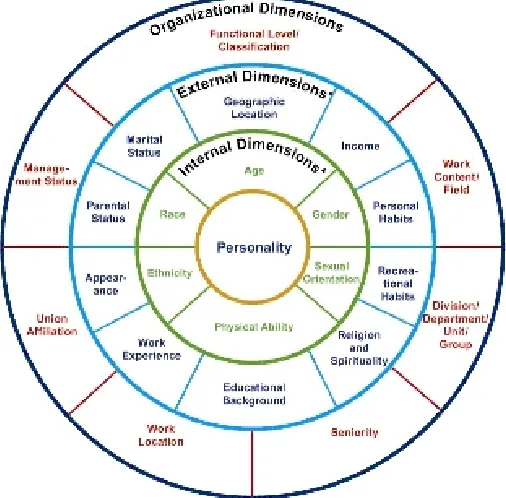
[image:9.612.180.433.381.630.2]Indeed, because of the persistent gap between aspiration and reality, some scholars remain skeptical about “diversity initiatives” creating true equity. Some, such as transnational feminist scholar Chandra Mohanty (2003), write of diversity as a discourse which “bypasses power as well as history to suggest a harmonious empty pluralism” (p. 193) that is akin to tolerance. Mohanty’s critique can be seen in the growing ubiquity of “diversity wheels,” a way for people, often participants in a “diversity training,” to visualize the multiple aspects of identity. Diversity wheels come from a positive urge that attempts to see multiple identities and intersectionality, the “multi-axis framework” defined by Kimberlé Crenshaw (1989, p. 140) in her coining of the term. But in the wrong hands—taught outside of equity and the politics of difference—identity can be imagined as a “Wheel of Fortune”-style spinner where identity becomes a single note, where identity simply depends on the spin: Is it time for race? Is it time for gender? This wheel from the U.S. Coast Guard (see Figure 2) puts “personality” at the very center. Oppression and privilege, history and structure, opportunity and access—and, ultimately, difference and equity—remain mute in the diversity wheel of identity.
Defining Difference
Tolerance, multiculturalism, and diversity are all predecessors to the term difference. Like diversity, difference is used as an aspirational word; like diversity and unlike multiculturalism, difference means “not just race”; like tolerance, difference denotes meaning outside of identity. These three other terms are not simply lead-up or lead-in terms. As aspects of the discourse, they have difference within them, and difference exceeds the spaces delimited by the other words. Difference is claimed by post-Civil Rights era late 20th- and early 21st-century race, gender, disability, and sexuality scholars and critics, but not as much by practitioners who favor diversity and multiculturalism. Difference signifies apart from—and yet in a continuum with—tolerance, multiculturalism, and diversity. But difference—as a newer buzz word—can remain largely untheorized and used almost reflexively instead of being rooted in the meeting of identity and poststructuralism.
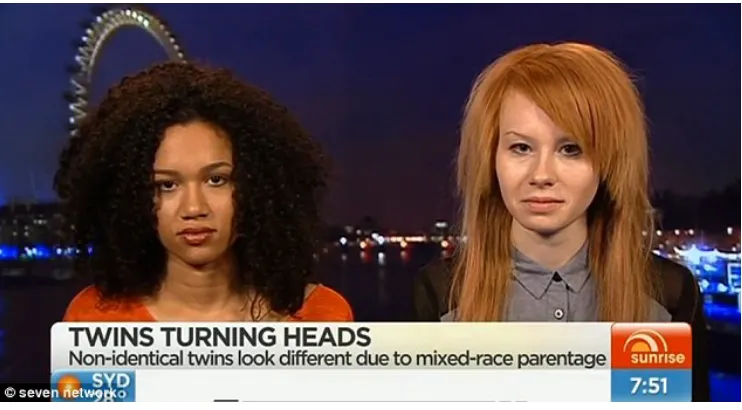
Difference as predecessor to our 21st century identity-based usage of the term emerged from structuralism by way of Swiss linguist Ferdinand de Saussure and gained popularity in poststructuralism by way of French philosopher Jacques Derrida. Saussure (1916/1959) writes that meaning in language emerges from comparison, not from some inherent denotation of the object being named. Such comparison is neither objective nor neutral, but is about constructing distinctions; in Saussure’s words, “in language there are only differences” (p. 121). Although Saussure identifies the conjuring of meaning through language, difference heard or difference seen, for example, race, is often (although not always) a visual medium (Nakamura, 2008). The logic goes: We know it when we see it, as racialized meaning in language comes about through visual registers. In the United States, defining race through the visual comes from a particular history in U.S. jurisprudence (Gualteri, 2008; Lesser, 1985–86; Lopez, 2006; Wong, 1993), where equity has eluded people of color.
Figure 3. Difference visualized through coverage of mixed-race twins.
Derrida (1968/1982) extends Saussure’s difference to his idea of différance, a word that sounds the same in French, but is spelled differently with its “anomalous a” that “remains silent, secret, and discreet, like a tomb” (p. 4). Différance, rooted in the verb différer, means to differ and to defer. Just as Stuart Hall (2003) reads Derrida’s definition of différance as pivoting between these two meanings, Derrida writes, that to differ is to see “difference as distinction, inequality or discernibility” (p. 8). In contrast, to defer is to “express the interposition of delay, the interval of spacing and temporalizing that puts off until ‘later’ what is presently denied, the possible that is presently impossible” (p. 8). Differ implies an interplay of meaning, and defer questions the timing of meaning. In the former, meaning is always in the process of relational change transformed into a new, always in flux creation; in the latter, meaning is always in the process of temporal change, postponed for some later, never to be determined moment.9
With Hall’s (2003) nudge of Derrida, we can relate differing/deferring to a difference word, postracial. Postracial, like difference itself, is a little-defined word that is nevertheless used as though it is self-evident. The post in postracial might mean after or next stage, but it also might mean later and quieter. In postrace, race is changed in some nebulous way (perhaps simply by being silenced), but also inevitably and perpetually postponed (only to be trotted out in more coded, or differed, and delayed, or deferred, forms). “Coded race” might be akin to different racialization, or different ways of reading Blackness, through, for example, the lens of “hope and change,” the way in which postrace was deployed during the utopian, first Black president, “Yes, we can” euphoria that overtook many liberal and progressive circles in Barack Obama’s 2008 U.S. presidential election campaign. After the euphoria died
and the continuing realities of racialized violence did not magically dissipate simply because our first Black president was in office, postrace emerged not a new way of understanding race, but instead as a slippery escape from race talk under the guise of an allegedly new phenomenon: not after race but later race. Postrace is a quintessential difference (but not difference and equity) word because it might be said with a hopeful twinkle and an idealistic gaze (as differed race, positive race, even end of/after race) or a dejected sigh and a tired-of-the-same-old grimace (as deferred race, still race, never-solved race).
Relatedly, feminism, and particularly feminism branded as poststructuralist (aka “French feminism”), picked up this notion of “difference” as it pertains to gender. Difference in poststructural feminism means three things, according to Christine Delphy (1995): “‘sexual difference’ between women and men which includes morphological differences, functional differences in reproduction, and psychological difference,” “the belief that sexual attraction between [heterosexual] people is the desire for ‘difference,’” and “the belief that the only significant difference between people is ‘sexual difference’” (p. 198). “Difference feminism,” particularly popular in the 1980s, feminist historian Joan Scott argues (1988), provides the opportunity to shunt aside narrow, binaristic variances in lieu of “differences that confound, disrupt, and render ambiguous the meaning of any fixed binary opposition” (p. 48). Such a challenge to binaries is essential for feminists who “know that power is constructed on and so must be challenged from the ground of difference” (p. 48). The journal Differences: A Journal of Feminist Cultural Studies emerged from this historical moment (1989) when gender theories strove for gendered equity through “a moment of critical encounter . . . of theories of difference (primarily Continental) and the politics of diversity (primarily American).”10
However, whereas “difference feminism” rarely, if ever, centered issues of race, scholars of race and its intersections adopted a Derrida-through-Hall-inspired take on racialized difference and its intersections. Race politics in the 1990s , as articulated by Cornel West (1990), proclaims “a new politics of difference” that “highlight[ed] issues like . . . class, race, gender, sexual orientation” (p. 93), the same year that political theorist Iris Marion Young writes in Justice and the Politics of Difference (1990/2011) that achieving justice must begin with the movements for “feminism, Black Liberation, American Indian movements, and gay and lesbian liberation” (p. 3). Stuart Hall (1987/1996, 1993, 2003) uses the word difference in his 1980s and 1990s critiques of presenting identity as essentialized, singular, and monolithic. More recently, sound scholar Josh Kun (2005) riffs on critic Ann Pellegrini’s (1997) notion of “the seen of difference,” or the ways in which a deviation from an assumed norm registers as such through visual means, with the idea of the “heard of difference” (Kun, 2005, p. 51), or how sound also regulates like and not-like-us ideals in a race–gender–nation fashion.
If you start to pay attention to the word, you will notice that difference that centers equity is all around us. Roderick Ferguson and Grace Hong currently coedit a book series for the University of Minnesota Press called “Difference Incorporated” that “theoriz[es] the intersection of race, gender, sexuality, knowledge production, and capitalism . . . to examine how the dominant affirmation of minority cultures reinforces structural inequalities and violence.”11 Textbooks that focus on race, gender, class, and
10 https://www.dukeupress.edu/differences/
sexual orientation from an intersectional perspective have titles such as Difference Matters (Allen, 2004/2011) and Power, Privilege, and Difference (A. G. Johnson, 2005). Scholars and critics write that difference means “more than just race” (i.e., race, gender, class, sexuality) and “not just diversity” (i.e., equity, not simply inclusion).
What these works demonstrate is that difference is always a word in flux, in the constant state of creation, or, as Stuart Hall (2003) writes about identity and race, a word of “becoming” and not simply “being,” as “living with, living through difference” is concomitant with the “notion of displacement as a place of identity” (p. 116). Cornel West (1990) describes “the new cultural politics of difference” as “neither simply oppositional in contesting the mainstream (or malestream) for inclusion, nor transgressive in the avant-gardist sense of shocking conventional bourgeois audiences” (p. 94). West sees difference as action-oriented, whereby
distinct articulations of talented (and usually privileged) contributors to culture who desire to align themselves with demoralized, demobilized, depoliticized, and disorganized people in order to empower and enable social action and, if possible, enlist collective insurgency for the expansion of freedom, democracy, and individuality. (p. 94)
More recently, sociologist Roderick Ferguson (2008) questions the ability of queer studies to embody such “insurgency,” writing, “What changes does a mode of difference undergo in administrative contexts?” (p. 158). Ferguson ends his article with the provocative question, “By what countercalculus can we maneuver difference for the purposes of rupture?” (p. 168), as rupturing traditional, institutional instantiations of tolerance, multiculturalism, and diversity provides opportunities to achieve equity.
And yet the question remains, does embracing the word difference (especially when equity is not iterated) help create the countercalculus Ferguson conjures? On the one hand, by some measures, unlike diversity or multiculturalism, difference has not yet been completely incorporated by institutions. But while I have yet to see a university “office of difference” (whereas there are many offices of multicultural affairs), a “difference hire” (in lieu of a diversity hire), or “difference committees” (instead of diversity committees), universities are embracing difference to designate new intersectional programs, many of which interrogate power. For example, Western Illinois University runs a “Dealing With Difference Institute”; what many schools call a diversity requirement, Pomona College calls “The Dynamics of Difference and Power”; UCLA has a public policy initiative called “Diversity, Disparities, and Difference”; Harvard runs a workshop on “Power and Difference” through its public policy school’s Office of Diversity and Inclusion; the University of Washington’s communication department houses a Center for Communication, Difference, and Equity.12 The word difference has taken home inside of some intuitions, if not hold.
Thought of outside of its institutional context, difference—the state of being unlike—remains largely a word without an anchor. It means “dissimilar,” a “change,” a “distinguishing characteristic,” a “distinction.”13 Difference makes no sense without a landmark, the special addition of “compared with.” It has a fluid, decentered nature. In this fluid state, difference can replace or, rather, revise other terms that have come to mean a deviation from the perceived norm. Proclaiming the state of difference announces opposition, and as such it can be antiestablishment and antiassimilationist. Difference does not have to conform, fit in, or make people feel more comfortable by pretending that the ways in which we differ from each other, in terms of race and other imbricated identity categories, are not significant roadblocks to life chances and life choices, those two elements that enable or disable equity. Intersectionality is woven into the fabric of difference: One is not forced to pick Chicana or female or queer but can be all of the above. The politics of difference—or difference and equity—can embrace the qualities of connections and pride from multiculturalism, along with the realities of intersectional disparities. Difference, as a relational word, can be imagined as the very expression of minoritized identity, and centering difference and equity can provide a path to eradicating disproportionality for the minoritized.
Difference at its most aspirational is an expansive word without confines. Part of the possibility inscribed in and difficulty of understanding difference is the openness of the term and its relational nature, especially when it is not connected to equity. However, I do not want to romanticize a move to difference. Herman Gray (2013) writes that television markets, for example, have found a way to co-opt difference in a form that is far from liberatory. A move to difference—without equity at its center—might be a flattening gesture at the moment it becomes incorporated into the academic institution. It might also be an attractive alternative for those who seek to silence words such as race and racism, gender and misogyny, and sexuality and homophobia. In other words, difference could become a moment to pretend sameness in our so-called postracial, postidentity world where talk of difference means that those of us in the choir cannot even hum music that sounds discordant to some listeners, the uncomfortable and difficult-to-hear bars of the race–gender–class–sexuality–ability song. Our moment of calling forth difference (without equity) could actually be a sign of the strength of the rallying cry of conservative postracialism, All Lives Matter (a flip rejoinder to the #BlackLivesMatter movement), which signifies as a moment of indifference and silences the realities of anti-Black racism and violence.
If we embrace difference without striving for equity, we re-create inequality through forces that pretend sameness, such as, for example, in All Lives Matter. As difference without equity, race appears to be volitional, a choice; it is whitewashed, part of a sanitized version of history in which racial progress is on the continual upswing; it is individual, not experienced systemically by multiple community members; and it is interchangeable, not about specific experiences. But if we read race as difference with equity, as constituted, for example, in #BlackLivesMatter, we see it as ascribed (not volitional), as community-based (not individual), as historical and structural (not whitewashed), and even as embodied (not interchangeable). Difference—when conjoined with equity—provides the lyrics for the choir and audience to sing new choruses of access, power, and change.
Creating Spaces for Difference and Equity
If difference and equity present a solution, the misrecognition or demonizing of difference, or the conjuring of difference without equity, presents a problem. Such misrecognition and demonization happen when crucial experiences of discrimination, anti-Black violence, and anti-intersectionality are refuted, ignored, or dismissed. What happens when difference is mismanaged without equity or when the discordant notes that tolerance, diversity, and multiculturalism were supposed to resolve, remain dissonant?
Students across the country, including a wide array of communication majors, are singing about their own experiences of the misrecognition of their differences and the shunting aside of demands for their equity on college campuses. Emboldened by the rallying cry of #BlackLivesMatter across cities and campuses, students such as undergraduate Sade Britt articulate pain without apology, regret, or concern; they critique and contradict the narrative of progress inherent in tolerance–multiculturalism–diversity discourse. In Spring 2016, at the request of the University of Washington’s alumni association board, Britt and two other Black students shared their experiences on campus. With an impassioned, incredulous tone, Sade questioned,
How could it be when you’re the only Black face in a lecture hall of 600 people and your professor shows a video of a 17-year-old Black child (not once, but twice) being punched brutally in the face by police and then flicks to the next slide which features an interactive class poll in which every student can chime in on whether or not the officer overstepped his bounds or if the girl truly deserved it—all the while, your classmates laugh at seeing her small, crumpled body on the ground? How could learning in that kind of environment ever be easy after, when you e-mail him with hot, thick tears spilling out of your eyes about how small you felt, how on display you were, how he could’ve used any example to prove that seeing was subjective instead of the very one that shattered your humanity and made you feel more hurt and unwanted in a classroom than you’ve ever felt in your entire life and he doesn’t even bother to respond? . . .What about when you email another professor about incorrectly using AAVE, African American Vernacular English, a language you speak, on a class slide, and he tells you that the phrase he used “was widely cited on Wikipedia” and that “maybe you need to do a little more research on the topic”?14
Her testimony left the room in stunned silence, in part because the board meeting at which she spoke immediately preceded the university’s celebration event for student of color scholarship winners. Britt, like the other students who spoke, was not celebrating an accumulation of victories won through tolerance, multiculturalism, or diversity. She was talking about the fact that her difference has been rejected and equity still eludes her.
These comments have stuck with me because Britt is a communication student and the discipline, as I understand it, has the ability to embrace Britt’s questions and, indeed, embrace her. Although many
communication theories embrace high-minded ideals, such theories run counter to many practices. In the 1990s, when the discipline experienced a moment of critical self-reflection, vaunted communication scholars such as Karl Erik Rosengren (1993) noted but did not decry “fragmentation” replacing “fermentation” in the field, and James Beninger (1993) exhorted communication scholars to reach outside of our “intellectual ghetto” (p. 19) to “turn their collective gaze away from the past half century to the future [and] . . . fully embrace the subject of communication itself” (p. 25). John Durham Peters (1999) echoed such inclusive rhetoric, writing that “the task [of communication] is to recognize the creature’s otherness, not to make it over in one’s own likeness and image.” Peters continued, “the ideal of communication, as Adorno said, would be a condition in which the only thing that survives the disgraceful fact of our mutual difference is the delight that difference makes possible [emphasis added]” (1999, p. 31).
In Peters’s conjuring of Adorno, communication is delightful particularly because of “mutual difference.” But in Britt’s experience, difference in her Communication classrooms summons fear, alienation, hostility, and racism, but rarely delight. How do we reconcile the painful rejection of difference for minoritized students’ experience alongside a lofty desire for a disembodied difference articulated in academic theory? In this article, I have questioned what understanding the word difference and its antecedents tells us about, as Sade’s testimony illustrates, how students experience a lack of equity in our classrooms, how identity and power operate in the academy, and, in Peters’s words, how power constructs “the creature’s otherness.”
We live in a world that is racially diverse, racially stratified, and profoundly unequal and inequitable. When we talk about racial disproportionality, we often do not discuss the role that language plays in constructing or maintaining our racialized world. In other words, we do not talk enough about the relationship between language and inequality. And yet, our language has the ability to name, solidify—and even create—our world. Our language is our power. We as a nation are finally beginning to compose new tunes out of such old material. Not just the we of race scholars, or the we of people of color. All Americans are having to engage in conversations about racism and what we, as individuals, can do to change our world. As communication scholars, I believe we can work to change our world by changing how our classrooms, our scholarship, and our institutions iterate and aspire toward difference and equity.
diversity, and multiculturalism. To iterate difference without equity lays it bare to become co-opted, softened, and stripped of its ability to truly change relations of power. The linguistic change to difference must happen with the central and explicit centering of the works of equity.
References
Abu-Laban, Y., & Gabriel, C. (2002). Selling diversity: Immigration, multiculturalism, employment equity, and globalization. Toronto, Canada: University of Toronto Press.
Ahmed, S. (2012). On being included: Racism and diversity in institutional life. Durham, NC: Duke University Press.
Allen, B. J. (2011). Difference matters: Communicating social identity (2nd ed.). Long Grove, IL: Waveland Press. (Original work published 2004)
Banks, J. (2013). An introduction to multicultural education (5th ed.). Boston, MA: Pearson.
Banks, J., & McGee Banks, C. A. (2012). Multicultural education: Issues and perspectives (8th ed.). Hoboken, NJ: Wiley.
Belafonte, H. (2015, October 6). An evening with Harry Belafonte, interview with Valerie Curtis Newton. Presented at University of Washington, Seattle. (personal notes of presentation)
Beninger, J. R. (1993). Communication—Embrace the subject not the field. Journal of Communication, 43(3), 18‒25.
Billig, M., & Tajfel, H. (1973). Social categorization and similarity in intergroup behavior. European Journal of Social Psychology, 3(1), 27–52.
Britt, S. (2016, May 17). Blackfaced. Reading presented at the University of Washington, Seattle [Public reading].
Brown, W. (2006). Regulating aversion: Tolerance in the age of identity and empire. Princeton, NJ: Princeton University Press.
Cochran-Smith, M. (2001). Multicultural education: Solution or problem for American schools? Journal of Teacher Education, 52(2), 91–93.
Colby, S. L., & Ortman, J. M. (2015). Projections of the size and composition of the U.S. population: 2014 to 2060. Retrieved from
Crenshaw, K. W. (1989). Demarginalizing the intersection of race and sex: A Black feminist critique of antidiscrimination doctrine, feminist theory and antiracist politics. University of Chicago Legal Forum, 140, 139–167.
Crenshaw, K. W. (2007, September). Women, power, and peace 2007. Presented at the Omega Institute, Rhinebeck, NY.
Delphy, C. (1995). The invention of French feminism: An essential move. Yale French Studies, 87, 190– 221.
Derrida, J. (1982). Différance. In Margins of philosophy (Alan Bass, Trans.; pp. 1‒28). Chicago, IL: University of Chicago Press. (Original work published 1968)
Ferguson, R. (2008). Administering sexuality; or, The will to institutionality. Radical History Review, 100, 158–169.
Gay, G. (2000). Culturally responsive teaching: Theory, research and practice. New York, NY: Teachers College Press.
Goldberg, D. T. (Ed.). (2004). Multiculturalism: A critical reader. Malden, MA: Blackwell.
Gordon, A., & Newfield, C. (1996). Mapping multiculturalism. Minneapolis, MN: University of Minnesota Press.
Gray, H. (2005). Cultural moves: African Americans and the politics of representation. Berkeley, CA: University of California Press.
Gray, H. (2013). Subject(ed) to recognition. American Quarterly, 65(4), 771–798.
Gualtieri, S. (2008). Becoming “White”: Race, religion, and the foundations of Syrian/Lebanese ethnicity in the United States. In P. Holloway (Ed.), Other Souths: Diversity and difference in the U.S. South, Reconstruction to present (pp. 89–116). Athens, GA: University of Georgia Press.
Hall, S. (1993). Encoding, decoding. In S. During (Ed.), The cultural studies reader (pp. 90–103). London, UK: Routledge.
Hall, S. (1996). Minimal selves. In H. A. Baker, Jr., M. Diawara, & R. H. Lindeborg (Eds.), Black British cultural studies: A reader (pp. 114–119). Chicago, IL: University of Chicago Press. (Original work published 1987)
Heble, A. (2000). Landing on the wrong note: Jazz, dissonance, and critical practice. New York, NY: Routledge.
House of Commons. (1971). Debates. Ottawa, Canada: Queen’s Printer. Retrieved from http://canadahistory.com/sections/documents/Primeministers/trudeau/docs-onmulticulturalism.htm.
Jensen, K. B. (1991). When is meaning? Communication theory, pragmatism, and mass media reception. In J. A. Anderson (Ed.), Communication yearbook 14 (pp. 3–32). Newbury Park, CA: SAGE Publications.
Johnson, A. G. (2005). Privilege, power, and difference (2nd ed.). New York, NY: McGraw-Hill.
Johnson, B. (1980). The critical difference: Essays in the contemporary rhetoric of leading. Baltimore, MD: Johns Hopkins University Press.
Jones, J. (2014). Best practices in providing culturally responsive interventions. In A. Thomas & P. Harrison (Eds.), Best practices in school psychology: Foundations (Vol. 4, 6th ed., pp. 49–60). Bethesda, MD: National Association of School Psychologists.
Joseph, P. (2006). Black studies, student activism, and the Black Power movement. In P. Joseph (Ed.), The Black Power movement: Rethinking the Civil Rights–Black Power era (pp. 251–278). New York, NY: Routledge.
Kun, J. (2005). Audiotopia: Music, race, and America. Berkeley, CA: University of California Press.
Lesser, J. H. (1985–1986). Always “outsiders”: Asians, naturalization, and the Supreme Court. Amerasia, 12(1), 83–100.
Lopez, I. H. (2006). White by law: The legal construction of race (rev. 10th anniversary ed.). New York, NY: New York University Press.
McQuail, D. (2010). McQuail’s mass communication theory (6th ed.). London, UK: SAGE Publications.
Modood, T. (2013). Multiculturalism: A civic idea (2nd ed.). Cambridge, UK: Polity Press.
Mohanty, C. T. (2003). Feminism without borders: Decolonizing theory, practicing solidary. Durham, NC: Duke University Press.
Nieto, S. (2012). Foreword. In C. Clark, K. J. Fasching-Varner, & M. Brimhall-Vargas (Eds.), Occupying the academy: Just how important is diversity work in higher education? (pp. xiii‒xvi). Lanham, MD: Rowman & Littlefield.
Nishime, L. (2014). Undercover Asian: Multiracial Asian Americans in visual culture. Urbana, IL: University of Illinois Press.
Peters, J. D. (1999). Speaking into the air: A history of the idea of communication. Chicago, IL: University of Chicago Press.
Pelligrini, A. (1997). Performance anxieties: Staging psychoanalysis, staging race. New York, NY: Routledge.
Rosengren, K. E. (1993). From field to frog ponds. Journal of Communication, 43(3), 6‒17.
Saussure, F. (1959). Course in general linguistics. New York, NY: New York Philosophical Library. (Original work published 1916)
Scott, J. W. (1988). Deconstructing equality-versus-difference: Or, the uses of poststructural theory for feminism. Feminist Studies, 14(1), 33–50.
Shome, R. (2012). Mapping the limits of multiculturalism in the context of globalization. International Journal of Communication, 6, 144–165.
Sleeter, C., & McLaren, P. (1995). Introduction: Exploring connections to build a critical multiculturalism. In C. Sleeter & P. McLaren (Eds.), Multicultural education, critical pedagogy, and the politics of difference (pp. 5–32). Albany, NY: State University of New York Press.
Stotsky, S. (1999). Losing our language: How multicultural classroom instruction has undermined our children’s ability to read, write, and reason. New York, NY: Free Press.
Stratton, J., & Ang, I. (1998). Multicultural imagined communities: Cultural difference and national identity in the USA and Australia. In D. Bennett (Ed.), Multicultural states: Rethinking difference and identity (pp. 135–162). New York, NY: Routledge.
Van Boom, D. (2015, April 26). “Good on her!” The cringeworthy moment Sam Armytage congratulates a mixed race twin on her “fair skin” while sister with darker complexion looks on . . . but Seven says she was “having a dig at herself.” Retrieved from
http://www.dailymail.co.uk/tvshowbiz/article-3056811/Good-Samantha-Armytage-causes- outrage-congratulates-one-million-mixed-race-twin-fair-skin-sister-darker-complexion-watches-on.html
White, D. G. (1999). Ar’n’t I a woman? Female slaves in the plantation South. New York, NY: Norton. (Original work published 1985)
Williamson, J. A. (2007). A tale of two movements: The power and purpose of misremembering Brown. In A. F. Ball (Ed.), With more deliberate speed: Achieving equity in literacy: Realizing the full
potential of Brown v. Board of Education (pp. 36–57). Washington, DC: National Society for the Study of Education.
Winn, S. (2017, March 27). Leading with a racial equity lens for structural transformation. Workshop presented at the University of Washington, Seattle.
Winter, E. (2015). Rethinking multiculturalism after its “retreat”: Lessons from Canada. American Behavioral Scientist, 59(6), 637–657.
Wong, S. C. (1993). Reading Asian American literature: From necessity to extravagance. Princeton, NJ: Princeton University Press.