Ground beetle (Coleoptera: Carabidae) assemblages in the
Conservation Reserve Program crop rotation systems in interior
Alaska
ALBERTO PANTOJA
1 2, DEREK S. SIKES
3, AARON M. HAGERTY
1,
SUSAN Y. EMMERT
1, AND SILVIA RONDON
4ABSTRACT
To improve knowledge of ground beetle communities and the influence of habitat succession on these communities in Alaska, adult ground beetle (Coleoptera: Carabidae) activity and diversity were documented on Conservation Research Program (CRP) agricultural lands in Delta Junction, Alaska (64º N, 145º W). Twenty species, comprising a total sample of 6,116 specimens, were collected during 2006 and 2007 from plots that were in the CRP for 9 years (young-field plots) and 19 years (old-field plots). Two species, Cymindis cribricollis Dejean and Amara obesa Say, are reported for the first time for Alaska. Species richness of carabids for our study plots was estimated, using the Chao 1 and Chao 2 estimators (Chao 1987), to be 22 and 28 species, respectively. Ninety-four percent of the specimens belonged to five species: Pterostichus adstrictus Eschscholtz (42.9%), Agonum cupreum Dejean (17.9%), Calathus ingratus Dejean (15%), Amara obesa (11.1%), and Dicheirotrichus cognatus (Gyllenhaal) (7.1%). Only Ag. cupreum showed significant effects based on plot age, with 7.5 times more specimens caught on younger plots. The majority of carabid activity occurred late in the season, from mid-September to early October. A comparison of our findings with historical data (1943–1956) from the collection of the Matanuska Experiment Station, in Palmer, Alaska, indicates that only three of the 44 carabid species from the historic Palmer collection are among the CRP fauna sampled.
Key Words: Alaska, beneficial, Carabidae, CRP, diversity
INTRODUCTION
Little is known about the beneficial insect fauna associated with Alaska’s agricultural or natural systems (Hagerty et al. 2009). Given anticipated expansion of agriculture in Alaska and current trends in climate change, which is most pronounced in northern latitudes (Serreze et al. 2000; Chapin et al. 2006; Chen
et al. 2011), it is important to establish baseline knowledge of the state’s insect fauna from which subsequent comparisons can be made. Ground beetles (Coleoptera: Carabidae) have been used as ecological indicators for many years (Pearce and Venier 2006; Menalled et al. 2007; Work et al. 2008) and
are also known predators of agricultural pests and seeds of weed plants (Lövei and Sunderland 1996; Kromp 1999; Harrison and Regnier 2003; O’Neal et al. 2005; Harrison and Gallandt 2012). Alaskan farmers have enrolled more than 10,000 hectares under the National Resources Conservation Service (NRCS 2003), Conservation Reserve Program (CRP), most of which is located near the city of Delta Junction to control erosion by wind (Schoephorster 1973; Lewis et al. 1979). Conservation Reserve Program land in other states has been positively correlated with wildlife diversity, including butterflies
1United States Department of Agriculture, Agricultural Research Service, Subarctic Agricultural Research Unit,
Fairbanks, AK 99775 USA
2Current address of corresponding author, United Nations, Food and Agriculture Organization, Regional Office for
Latin America and the Caribbean, Av. Dag Hammarskjöld 3241, Vitacura, Santiago, Chile. Email: [email protected]
3Curator of Insects, University of Alaska Museum, 907 Yukon Drive, Fairbanks, AK 99775-6960 USA
4Extension Entomologist Specialist, Oregon State University, Hermiston Agricultural Research and Extension
(Davros et al. 2006), birds (Johnson and Schwartz 1993; Millenbah et al. 1996; Best et al. 1997; Delisle and Savidge 1997), mammals (Chapman and Ribic 2002), and herptiles (Semlitsch and Bodie 2003).
The Conservation Reserve Program promotes the conservation of habitats beneficial to wildlife (NRCS 2003). However, participation in the CRP programs requires that CRP fields be mown every two to three years to slow succession to shrubs and trees (Seefeldt et al. 2010). Agricultural practices are known to affect the presence, activity, and abundance of ground beetles in agricultural settings (O’Rourke et al. 2008; Ward et al. 2011). However, despite the long history of CRP in Alaska (Seefeldt et al. 2010), little is known about the effects of CRP-management practices on ground beetles in the state. Additionally, due to the state’s large size, remoteness, vast regions of roadless lands, and historic dearth of in-state entomological professionals, the insect fauna of Alaska is one of the most poorly documented in the US (Sailer 1954).
Few detailed descriptions of entire, extant carabid assemblages in Alaska exist. These include Lindroth's (1963) description of the carabids of the Aleutian Islands and studies on the carabid fauna of Kodiak Island (Ball 1969; Lindroth 1969b; Lindroth and Ball 1969). Most of the detailed assemblage descriptions are checklists, often lacking within-state
locality or ecological data. The earliest Alaskan records are known from Russian coleopterist Mannerheim (1843, 1846, 1852, 1853). When Hamilton (1894) summarized the beetle fauna of Alaska, he reported 43 carabid species now considered valid. Schwarz (1900) of the Harriman Expedition reported 28 now-valid species. As part of an environmental impact statement prior to the planned, but later aborted, detonation of a multi-megatonne nuclear device, Watson et al. (1966) documented 19 species of carabids from the Cape Thompson region of Alaska. The most thorough treatments of the family for Alaska, including Canada, is the classic six-volume work by Lindroth (1969a). Bousquet (1991) listed 231 Alaskan species, and Bousquet and Larochelle (1993), listed 234 species. An excellent summary of the carabidae of the Yukon, which lists 209 s p e c i e s a n d i n c l u d e s s y n t h e s e s o f biogeographic and habitat data, was prepared by Ball and Currie (1997). However, these more recent synthetic works, from Lindroth (1969a) to Ball and Currie (1997), summarize data across vast regions rather than describe restricted assemblages as we do here.
This research was initiated to study the species composition, seasonal activity, and effects of plot age on dominant carabid species in CRP lands in Delta Junction, Alaska, and to aid state-wide efforts to document Alaska’s entomofauna.
MATERIALS AND METHODS
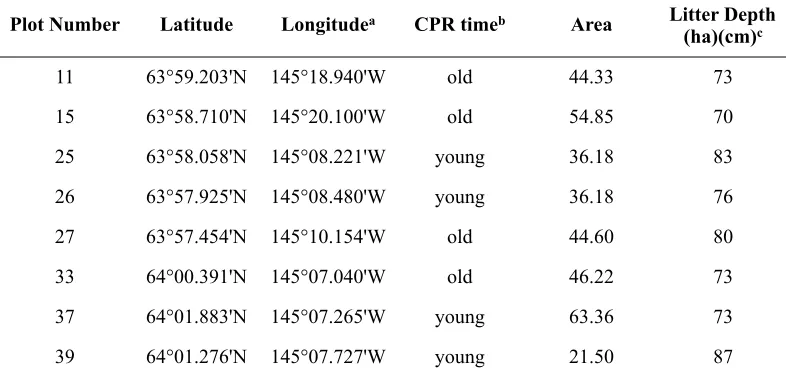
Study Site. Land registered under theCRP near Delta Junction, Alaska, (64º N, 145º W) was surveyed for ground beetles. Eight plots were selected based on their time under the CRP program (Table 1). Plots were assigned to two age groups, with four plots per group according to the plot history under CRP management that Seefeldt et al. (2010) describe. Plots with nine years under the CRP program were grouped as young plots, while plots with 19 years under CRP management were considered old plots. Older plots have more disturbance events over time (mowing and weed control): this was expected to reduce the relative abundance of carabids.
The Seefeldt et al. (2010) report was also used to assign a litter cover to each plot (Table 1) and compare those parameters to relative
ground beetle species’ frequencies. Plots are located in the Interior Bottomlands Ecoregion of the Alaska boreal forest (Gallant et al. 1995), adjacent to the outwash plain of the Tanana River. The area ranges in elevation from 330 to 385 m; soils are silt loam (NRCS 2013). Surrounding forest vegetation is a mix of white and black spruce [Picea glauca
250 to 300 mm. The study area was cleared from 1979 to 1982 as part of Delta Agricultural Projects (Lewis et al. 1979). Fields are farmed on a three-year rotation, with two years of spring barley or oats followed with one year of tilled fallow (Seefeldt et al. 2010).
Trap Methods. Insects were collected using pitfall traps, which are a standard method used to measure ground beetle activity density in both agricultural and natural systems (Southwood 1978; O’Rourke et al. 2008; Ward et al. 2011). Although often interpreted as measures of relative abundance, pitfall trap catches more accurately measure activity density and have been criticized for their demonstrable limitations and biases (e.g., Topping and Sunderland 1992; Melbourne 1999). Pitfall traps consisted of two plastic 480 ml containers (10.5 cm diameter X 7.5 cm deep), one inside the other. Holes were dug with a standard hand-held post-hole digger, and containers were placed in each hole so that the rim of the inner container was flush with the ground. The outer container had holes in the bottom to allow drainage. The inner container was filled approximately one-quarter full with a solution of 25 % propylene glycol. Each trap was covered with a white
23-cm-diametre plastic plate. Plates were held in place by three landscaping staples pushed through the top. The traps were placed in the field in a diamond pattern (approx. 1 m between each trap), using five traps within each of the eight plots, for a total of 40 traps. Traps were deployed as early as holes could be dug to set traps.
Insect counts from the five traps per site and sampling date were combined and considered as a sample for statistical analysis. Based on relative plant density, traps were placed in plot areas that seemed representative of the overall plot. Traps were emptied and reset on a weekly basis in 2006 and 2007. Sampling dates were 6 June to 20 October 2006 and 8 May to 28 September 2007. At times, voles were caught in traps.
Sample Processing. Samples were transported to the US Department of Agriculture (USDA), Agricultural Research Service (ARS) laboratory on the University of Alaska–Fairbanks campus and processed. Ground beetles were pinned and identified primarily by the third author, using methods described by Lindroth (1969a), Bousquet and Larochelle (1993), and Ball and Bousquet (2001). Most identifications were confirmed by George E. Ball (University of Alberta,
Table 1
Eight study plots near Delta Junction, Alaska, USA, on Conservation Research Program land.
Plot Number Latitude Longitudea CPR timeb Area Litter Depth
(ha)(cm)c
11 63°59.203'N 145°18.940'W old 44.33 73
15 63°58.710'N 145°20.100'W old 54.85 70
25 63°58.058'N 145°08.221'W young 36.18 83
26 63°57.925'N 145°08.480'W young 36.18 76
27 63°57.454'N 145°10.154'W old 44.60 80
33 64°00.391'N 145°07.040'W old 46.22 73
37 64°01.883'N 145°07.265'W young 63.36 73
39 64°01.276'N 145°07.727'W young 21.50 87
a Geo-coordinates have a precision of +/– 150 m (WGS84 datum); elevation of all plots: 330–350 m.
Canada), Robert Davidson (Carnegie Museum of Natural History, Pittsburg, Pennsylvania), and Christopher J. Marshall (Oregon State Arthropod Collection, Corvallis, Oregon). Voucher specimens were deposited in the insect collection of the University of Alaska Museum (UAM), Fairbanks, Alaska. Records of these specimens are available online via the UAM database (Arctos 2013a). Species names follow the classification of Bousquet and Larochelle (1993), and Ball and Bousquet (2001).
Species Richness. EstimateS v8.2 (Colwell 2009) was used to calculate estimated species richness using nine estimators. Species-richness estimators allow one to extrapolate beyond one’s data to infer the total number of species in these plots if sampling were continued using the same methods, thus providing an estimate of completeness. The results over the combined two-year sample for two of the most frequently used estimators, Chao 1 and Chao 2, were calculated (Chao 1987). Chao 1 is an abundance-based estimator, in that it uses the number of species represented by one or two individuals, whereas Chao 2 is an incidence-based estimator, in that it relies on the number of species found in only one or two sample units, regardless of the number of individuals (Chazdon et al. 1998).
Data Analysis. The number of insects per trap per 14-day period was calculated by combining weekly captures and used to present seasonal variation. Insect counts from
the five traps per site were pooled for statistical analysis. Insect counts for species for which at least 50 specimens were collected during the two-year sampling period (O’Rourke et al. 2008) were analyzed using PROC GLIMIX (SAS 2008), and means were compared with the LSMEANS statement with the ILINK option. The Poisson distribution was used to model the counts, the Generalized Chi-square/DF was used to test fitness, and the Type III Tests of Fixed Effects were used to test significance for time under CRP.
Historic Data. The University of Alaska Museum Insect Collection (UAM) was examined to provide additional information on ground beetle species in Alaska. This collection, formerly housed at the Matanuska Experiment Station of the University of Alaska Agricultural and Forestry Experiment Station in Palmer, Alaska, is the only large agricultural insect collection maintained in the state (Washburn 1972). Some of the carabid records of the collection were published previously (Lindroth 1969a) and all of the species have been reported from the state by other workers. However, because this collection was assembled as part of early agricultural research in Alaska, we report the Alaskan records here for comparative purposes. Specimen data for these records are available via UAM’s online database (Arctos 2013b). The majority of specimens housed in the UAM Insect Collection were previously identified by J. M. Valentine and C. H. Lindroth in the 1940s and 1960s, respectively.
RESULTS
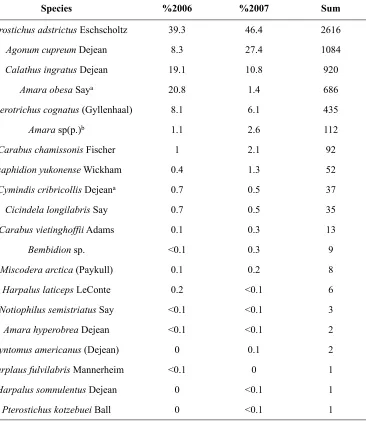
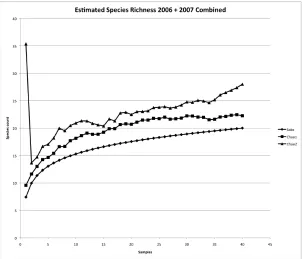
Species Richness. A total of 6,116 specimens representing 20 species from 14 genera were collected (Table 2). The full set of estimators (±1 SD) yielded estimates that ranged from 19.7 to 28 species (Fig. 1): 22.8 (ACE); 23.8 ± 0.01 (ICE); 22.3 ± 3.4 (Chao 1); 28 ± 11.7 (Chao 2 ); 23.9 ± 1.9 (Jack 1); 26.8 (Jack 2); 21.7 (Bootstrap mean); 19.7 (MMRuns Mean); 20 (Cole Rarefaction; Colwell, 2009).Activity Density. The total number of specimens from CRP plots was almost equal between years, with 3,099 and 3,017 specimens for 2006 and 2007, respectively (Table 2). However, A. cupreum specimens were 3.2 times more abundant in 2007
(n=828) than in 2006 (n=256), and A. obesa
activity was 15.3 times higher in 2006 (n=644) than in 2007 (n=42). Ninety-four percent of the specimens belong to five species: P. adstrictus (42.9%), A. cupreum
(17.9%), C. ingratus (15%), A. obesa (11.1%), and D. cognatus (7.1%). Two species, A. obesa and C. cribricollis, represent new records for Alaska.
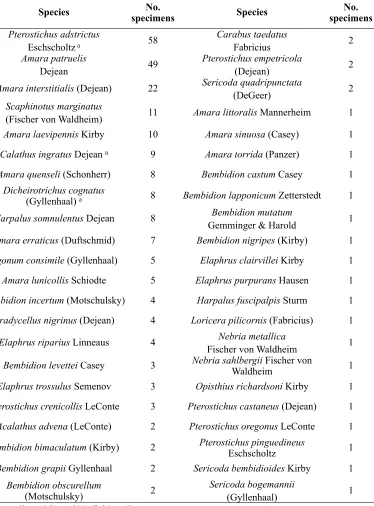
(Table 1). P. adstrictus was also the most abundant species in the historic data (Arctos, 2013b), with 58 specimens (Table 3).
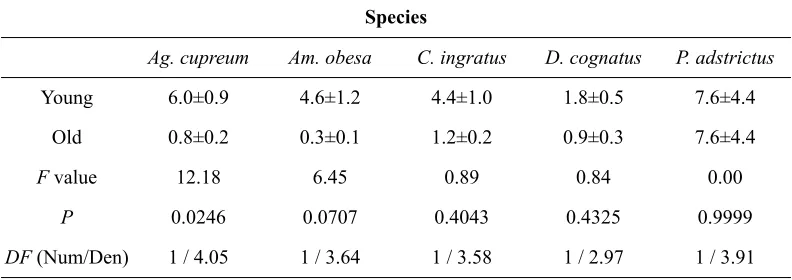
Ground beetle activity density differed by the amount of time the plot had been under the CRP program, but was not affected by the depth of the litter cover on plots. However, the
response varied by species (Table 1 and 4). All species with at least 50 specimens in each year in the total dataset were found in both old and young plots, but not in equal proportions. A significantly lower number (7.5 times less) of
A. cupreum was recorded for plots with a long h i s t o r y ( 1 9 y e a r s ) u n d e r t h e C R P
Table 2
Activity densities of 20 ground beetle species, for which at least 50 specimens were collected during the two-year sampling period from CRP land, sorted from most to least abundant. Percent within yearly totals and sums across both years are presented. Delta Junction, Alaska, USA, 2006– 2007.
Species %2006 %2007 Sum
Pterostichus adstrictus Eschscholtz 39.3 46.4 2616
Agonum cupreum Dejean 8.3 27.4 1084
Calathus ingratus Dejean 19.1 10.8 920
Amara obesa Saya 20.8 1.4 686
Dicherotrichus cognatus (Gyllenhaal) 8.1 6.1 435
Amara sp(p.)b 1.1 2.6 112
Carabus chamissonis Fischer 1 2.1 92
Asaphidion yukonense Wickham 0.4 1.3 52
Cymindis cribricollis Dejeana 0.7 0.5 37
Cicindela longilabris Say 0.7 0.5 35
Carabus vietinghoffii Adams 0.1 0.3 13
Bembidion sp. <0.1 0.3 9
Miscodera arctica (Paykull) 0.1 0.2 8
Harpalus laticeps LeConte 0.2 <0.1 6
Notiophilus semistriatus Say <0.1 <0.1 3
Amara hyperobrea Dejean <0.1 <0.1 2
Syntomus americanus (Dejean) 0 0.1 2
Harplaus fulvilabris Mannerheim <0.1 0 1
Harpalus somnulentus Dejean 0 <0.1 1
Pterostichus kotzebuei Ball 0 <0.1 1
n = 3099 and 3017 individuals for 2006 and 2007, respectively. a New record for Alaska
management, compared to plots with a mean of nine years under CRP (Table 4). However, frequencies of A. obesa, C. ingratus, D. cognatus, and P. adstrictus were not significantly affected by time under CRP management.
The maximum activity density observed was 32.9 P. adstrictus per 14-day sampling period for October 15, 2007. Pterostichus adstrictus was collected after first snowfall and can be active until early October. In 2006, snow/rain was registered as early as September 25, snow was registered by September 30, and insects were collected up to October 30 (Fig. 2).
Activity was observed from May to October (Fig 2). Traps were deployed as early as holes could be dug to set traps. During both
years, ground beetles were active during the first week after traps were deployed, before the soils thawed. Depending on the year and species, ground beetle activity, as measured by the mean number of adults per 14-day period, started increasing rapidly in late September (2006) or late August (2007).
Historic Data. The UAM holdings from the Experiment Station, in Palmer, Alaska, which were assembled as an agricultural research collection, includes 44 confidently identified carabid species (Table 3). Three species occur in both the historic data and the CRP findings (P. adstrictus, C. ingratus, and
D. cognatus). Phenology data from the historic sampling shows three peaks of activity, with both early (April 3) and late (November 17) records (Fig. 3).
DISCUSSION
Species Richness. The majority of estimators predict species richness close to our observation of 20, although some estimators, like the Chao2, indicate the fauna could be
much richer than we sampled. The species-accumulation curve (Fig. 1) does not reach an asymptote, suggesting additional species in the community remain unsampled. The large
Table 3
Forty-four carabid species, based on 254 Alaskan specimens with confident determinations collected primarily by R. H. Washburn, G. W. Gasser, and J. C. Chamberlin between 1943 and 1956, held in the UAM Insect Collection, and formerly housed at the Matanuska Experiment Station of the University of Alaska Agricultural and Forestry Experiment Station, in Palmer, Alaska, USA. Specimen determinations were made primarily by C. H. Lindroth and J. M. Valentine. Specimen data available online via the UAM database (Arctos 2013b). Species sorted by number of specimens.
Species specimensNo. Species specimensNo.
Pterostichus adstrictus
Eschscholtz a 58
Carabus taedatus
Fabricius 2
Amara patruelis
Dejean 49
Pterostichus empetricola
(Dejean) 2
Amara interstitialis (Dejean) 22 Sericoda quadripunctata
(DeGeer) 2
Scaphinotus marginatus
(Fischer von Waldheim) 11 Amara littoralis Mannerheim 1
Amara laevipennis Kirby 10 Amara sinuosa (Casey) 1
Calathus ingratus Dejean a 9 Amara torrida (Panzer) 1
Amara quenseli (Schonherr) 8 Bembidion castum Casey 1
Dicheirotrichus cognatus
(Gyllenhaal) a 8 Bembidion lapponicum Zetterstedt 1
Harpalus somnulentus Dejean 8 Bembidion mutatum
Gemminger & Harold 1
Amara erraticus (Duftschmid) 7 Bembidion nigripes (Kirby) 1
Agonum consimile (Gyllenhaal) 5 Elaphrus clairvillei Kirby 1
Amara lunicollis Schiodte 5 Elaphrus purpurans Hausen 1
Bembidion incertum (Motschulsky) 4 Harpalus fuscipalpis Sturm 1
Bradycellus nigrinus (Dejean) 4 Loricera pilicornis (Fabricius) 1
Elaphrus riparius Linneaus 4 Nebria metallica
Fischer von Waldheim 1
Bembidion levettei Casey 3 Nebria sahlbergiiWaldheim Fischer von 1
Elaphrus trossulus Semenov 3 Opisthius richardsoni Kirby 1
Pterostichus crenicollis LeConte 3 Pterostichus castaneus (Dejean) 1
Acalathus advena (LeConte) 2 Pterostichus oregonus LeConte 1
Bembidion bimaculatum (Kirby) 2 Pterostichus pinguedineusEschscholtz 1
Bembidion grapii Gyllenhaal 2 Sericoda bembidioides Kirby 1
Bembidion obscurellum
(Motschulsky) 2
Sericoda bogemannii
(Gyllenhaal) 1
number of species with small counts (Table 2) also indicates sampling of this fauna is incomplete. Because these plots are not isolated habitats, a low number of “tourist” species, which pass through but do not breed or spend much time in the sampled habitats, are expected. However, the intent of this study was to document the dominant carabid species, which these estimators indicate we have done.
New State Records. Both of the two species, A. obesa and C. cribricollis, that are new records for Alaska are reported from all t h r e e m a j o r n o r t h w e s t e r n C a n a d i a n jurisdictions (YK, NT, BC) by Bousquet (1991), so their presence in interior Alaska is not surprising. Bousquet and Larochelle (1993) list C. cribricollis, but not A. obesa, as previously reported from Alaska, but based on doubtful record(s) that need verification.
Amara obesa is reported to prefer dry, usually sandy, soil with sparse vegetation (Larochelle and Lariviere 2003). This species was the fourth most abundant, with 686 specimens collected. Ninety-four percent of these specimens were collected in 2006.
Cymindis cribricollis is a similarly xerophilous species collected mainly from dry, sandy moraines with sparse or absent plant cover (Lindroth 1969a; Ball and Currie 1997; Larochelle and Lariviere 2003). In our study, 36 C. cribricollis specimens were collected, 75% of which were from two sandy plots where little vegetation other than moss was present; the other 25% of the specimens collected were from a plot with sandy soils and sparse bushes, mostly covered by grass.
Our results agree with previously published accounts of this species’ habitat associations. It is unknown how widespread this species is distributed in the state. Given that the agriculture-associated collecting done in interior Alaska by the USDA station in Palmer during the mid-1900s sampled less than 20% of the state’s carabid fauna (Table 3), these two species’ status as new records for Alaska is probably an artifact of past under-sampling rather than natural range expansions or human introductions. Nevertheless, it is perplexing that A. obesa was so common in our 2006 samples in a region of the state easily accessed by collectors, and yet had remained previously undetected.
Trophic Classifications. The top five most active species (Table 4) are all exclusively predators, with the exception of D. cognatus, which is also known to feed on seeds (Calluna
in Europe), and is thus also granivorous (Larochelle and Lariviere 2003). These species are recorded as known predators of flies (Ag. cupreum), lepidopteran larvae (Ag. cupreum, C. ingratus, and P. adstrictus), lepidopteran eggs (D. cognatus and P. adstrictus), sawfly pupae, dipteran eggs, and elaterids (P. adstrictus), and grasshopper eggs and nymphs (Am. obesa) (Larochelle and Lariviere 2003).
Activity Density. The high capture rate of one species, P. adstrictus, is not uncommon. O’Rourke et al. (2008) and Hajeck et al. (2007) reported dominant carabid species in studies from Iowa and New York, respectively.
Pterostichus adstrictus is a habitat generalist, and is found from lowlands to alpine zones,
Table 4
Mean number of ground beetles (±SE) with at least 50 specimens per year, in plots with different time under CRP management (years under CRP: old = 19 years; young = 9 years). Delta Junction, Alaska, USA, 2006–2007.
Species Species Species Species Species Species
Ag. cupreum Am. obesa C. ingratus D. cognatus P. adstrictus
Young 6.0±0.9 4.6±1.2 4.4±1.0 1.8±0.5 7.6±4.4
Old 0.8±0.2 0.3±0.1 1.2±0.2 0.9±0.3 7.6±4.4
F value 12.18 6.45 0.89 0.84 0.00
P 0.0246 0.0707 0.4043 0.4325 0.9999
interior forests, grasslands, and coastal zones (Larochelle and Lariviere 2003).
Conservation Reserve Program plots were mowed in 2006 (Seefeldt et al. 2010), which might have affected insect relative densities such as the observation that more than three times more A. cupreum specimens were collected in 2007 than in 2006. O’Rourke et al. (2008) and Hajek et al. (2007) reported strong yearly variation in ground beetle populations from disturbed areas in Iowa and New York, respectively. French et al. (1998) reported large differences in ground beetle abundances between years, most likely due to differences in rainfall. However, this year- to-year variation is not unusual in Alaska: leafhoppers (Pantoja et al. 2009), moths (Landolt et al. 2007), click beetles (Pantoja et al. 2010a, b), and aphids (Pantoja et al. 2010c) displayed significant year-to-year variation in different areas of Alaska, including Delta Junction. The differences in ground beetles’ adult-activity densities could not be explained with current knowledge of the biology of this group in the state, but might be associated with relative plant types in the plots. Some carabids are known to consume weed seed (Toft and Bilde 2002; Ward et al. 2011), and population size and presence is affected by
agronomic practices and the seed bank in natural and managed ecosystems (Menalled et al. 2007). Seefeldt et al. (2010) reported an increase in plant diversity and increased density of shrubs with increased time in the CRP in Alaska. Ground beetle activity might be affected by reduced grass seed as the shrub densities increase in the plots. However, plant diversity increased at a rate of about two species per 1000 m2 per year (Seefeldt et al. 2010), and effects of plant successions on seed bank will not immediately be seen in insect densities. Research is needed to study the possible effects of mowing, plant density, and seed bank on carabid relative densities in subarctic Alaska. Additional research is also needed to understand the components of ground beetles’ diets in Alaska CRP lands and to elucidate the possible influence of CRP management practices on their abundance.
Effects on ground beetle abundance by plot variables such as time in the CRP program (Table 4) varied by species. Gobbi and Fontaneto (2008) suggest that the effects of human intervention on ground beetle species’ richness are species dependent. O’Rourke et al. (2008) elaborated on the possibility of manipulating habitat for carabid diversity and preservation.
Figure 2. Mean number of P. adstrictus, Ag. cupreum, Am. obesa, C. ingratus, and D. cognatus
Late-seasonal adult activity, as we have found for the most abundant species of the CRP sites (Fig. 2) and the historic data (Fig. 3), has been associated with carabid species that overwinter as adults (Hajek et al. 2007; Ward et al. 2011). In Iowa, carabids were captured until late September, but peak activity was recorded from early June to late July (O’Rourke et al. 2008). Our data suggest that mowing CRP plots should occur early in the season, when carabids are less active (Fig. 2).
Historic Data. Only three of the 44 carabid species from the historic Palmer collection are among the sampled CRP fauna. This may seem surprising; however, the entire state’s fauna includes more than 240 carabid species, making the lack of shared species among these small samples less remarkable. Not surprisingly, these three species are among the eight most abundant species of the historic dataset. At least Am. laevipennis and
Sc. marginatus, which were also among the top eight most abundant in the historic data,
are understandably absent from the CRP data, because these species are known only from south of the Alaska Range. The CRP study site is north of the Alaska Range. Scaphinotus marginatus is abundantly collected along the Alaskan coast from the southeast of the state through the Aleutian chain.
To our knowledge, this is the first report on species composition and population dynamics of ground beetles in interior Alaska, and specifically from CRP lands. Information on ground beetles’ geographic distribution, population dynamics, dispersal, and biology is needed to understand their roles as predators and seed consumers in natural systems. This study provides some of the information necessary to guide future research in subjects such as species composition, seasonality, a framework for sampling, and time to mow fields. Additional research is needed to study the ecology of the dominant species and their relationships with soil type and CRP management practices, including the pest species on which they are assumed to prey.
ACKNOWLEDGEMENTS
We thank Alaska growers H. Olson and the
Schultz Brothers for use of their farms. P. Kaspari, University of Alaska Extension Agent, provided invaluable assistance in
Figure 3. Phenology of Palmer, Alaska, carabidae. Total counts of all carabid species from historic sample (Table 3), with date data (n = 231 specimens) aggregated into 14-day periods from the earliest date across all years.
gaining access to producers’ fields. Technical assistance in the field laboratory was provided by B. Sweet, B. Torgerson, C. Flint, C. Curlee, N. Jenkins, B. Fleshman, D. Fleming, and R. Ranft. S. Seefeldt and E. Carr, USDA, ARS Alaska, provided information on CRP land.
Critical comments on an earlier draft of this manuscript were provided by USDA, ARS entomologists J. Munyaneza, D. Fielding, and D. Horton. The authors are indebted to B. Mackey (ARS) and V. Boero (FAO) for statistical guidance and analysis.
REFERENCES
Arctos, 2013a. http://arctos.database.museum/saved/CRP-Carabidae (accessed Feb 6, 2013). Arctos, 2013b. http://arctos.database.museum/saved/Palmer-Carabidae (accessed Feb 6, 2013).
Ball, G. E. 1969. The species of the subgenus Cryobius of the Kodiak Island Archipelago (Pterostichus, Carabidae, Coleoptera). Pages 156–194 in T. N. V. Karlstrom and G. E. Ball (Eds.), The Kodiak Island Refugium: its geology, flora, fauna, and history. Ryerson Press, Toronto.
Ball, G. E., and D. C. Currie. 1997. Ground beetles (Coleoptera: Trachypachidae and Carabidae) of the Yukon: Geographical distribution, ecological aspects, and the origin of the extant fauna. Pages 445–489 in H. V. Danks and J. A. Downes (eds.), Insects of the Yukon. Biological Survey of Canada (Terrestrial Arthropods), Ottawa. 1034 pp.
Ball, G. E., and Y. Bousquet. 2001. Carabidae Latreill, 1810. Pages 32–132 in Arnett, R. H. , Thomas, M. C. (eds.), American Beetles, volume 1: Archostemata, Myxophaga, Adephaga, Polyphaga: Staphyliniformia. CRC Press, Boca Raton, London, New York, Washington, D.C.
Best, L. B., H. Campa III, K. E. Kemp, R. J. Robel, M. R. Ryan, J. A. Savidge, H. P. Weeks, and S. R. Winterstein. 1997. Bird abundance and nesting CRP fields and cropland in the Midwest: a regional approach. Wildlife Society Bulletin 25:864–877.
Bousquet, Y. 1991. Checklist of beetles of Canada and Alaska. Research Branch, Agriculture Canada. Publication 1861/E. Ottawa. 430 pp.
Bousquet, Y., and A. Larochelle. 1993. Catalogue of the Geadaphaga (Coleoptera: Trachypachidae, Rhysodidae, Carabidae including Cicindelini) of America north of Mexico. Mem. Entomol. Soc. Can. 167:1–397.
Chapman, E. W., and C. A. Ribic. 2002. The impact of buffer strips and stream-side grazing on small mammals in southwestern Wisconsin. Agriculture, Ecosystems and Environment 88:49–59.
Chapin, F. S. III, M. W. Oswood, K. Van Cleve, L. A. Viereck, and D. L. Verbyla (eds). 2006. Alaska’s Changing Boreal Forest. Oxford University Press, New York. xiv + 354 pp.
Chao, A. 1987. Estimating the population size for capture-recapture data with unequal catchability. Biometrics 43:783–791.
Chazdon, R. L., R. K. Colwell, J. S. Denslow, and M. R. Guariguata. 1998. Statistical methods for estimating species richness of woody regeneration in primary and secondary rain forests of northeastern Costa Rica. Pages 285–309 in Dallmeier, F. & Comiskey, J. A. (eds.), Forest Biodiversity Research, Monitoring and Modeling. Conceptual Background and Old World Case Studies. UNESCO Paris and The Parthenon Publishing Group, Carnforth, UK.
Chen, I. C., J. K. Hill, R. Ohlemuller, D. B. Roy, and C. D. Thomas. (2011) Rapid range shifts of species associated with high levels of climate warming. Science 333:1024-1026.
Colwell, R. K. 2009. EstimateS: Statistical estimation of species richness and shared species from samples. Version 8.2. User's Guide and application published at: http://purl.oclc.org/estimates.
Davros, N. M., D. M. Debinski, K. F. Reeder, and W. L. Hohman. 2006. Butterflies and continuous conservation reserve program filter strips: Landscape considerations. Wildlife Society Bulletin 34:936–943.
Delisle, J. M., and J. A. Savidge. 1997. Avian use and vegetation characteristics of Conservation Reserve Program fields. Journal of Wildlife Management 61:318–325.
French, B. W., N C. Elliott, and R. C. Berberet. 1998. Reverting conservation reserve program lands to wheat and livestock production: effects on ground beetle (Coleoptera: Carabidae) assemblages. Environmental Entomology 27:1323–1335.
Gallant, A. L., R. F. Binnian, J. N. Omernik, and M. B. Shasby. 1995. Ecoregions of Alaska: U. S. Geological Survey Professional Paper 1567. United States Government Printing Office, Washington, DC, USA.
Gobbi, M., and D. Fontaneto. 2008. Biodiversity of ground beetles (Coleoptera: Carabidae) in different habitats of the Italian Po lowland. Agriculture, Ecosystems and Environment 127:273–276.
Hajek, A. E., J. J. Hannam, C. Nielsen, A. J. Bell, and J. K. Liebherr. 2007. Distribution and Abundance of Carabidae (Coleoptera) Associated with Soybean Aphid (Hemiptera: Aphididae) Populations in Central New York. Ann. Entomol. Soc. Am. 100:876–886.
Hamilton, J. 1894. Catalogue of the Coleoptera of Alaska. With the synonymy and distribution. Transactions of the American Entomological Society. vol. XXI. pp. 1–38.
Harrison, S. K., and E. E. Regnier. 2003. Postdispersal predation of giant ragweed (Ambrosiatrifida) seed in no-tillage corn. Weed Sci. 51:955–964.
Harrison, S., and E. R. Gallandt. 2012. Behavioural studies of Harpalusrufipes De Geer: an important weed seed predator in northeastern US agroecosystems. International Journal of Ecology 2012:1-6. doi: 10.1155/2012/846546
Hulten, E. 1968. Flora of Alaska and Neighboring Territories. Stanford University Press, Stanford, California, USA.
Johnson, D. H., and M. D. Schwartz. 1993. The Conservation Reserve Program and grassland birds. Conservation Biology 7:934–937.
Kromp, B. 1999. Carabid beetles in sustainable agriculture: a review on pest control efficacy, cultivation impacts and enhancement. Agriculture, Ecosystems and Environment 74:187–228.
Landolt, P. J., A. Pantoja, A. Hagerty, L. Crabo, and D. Green. 2007. Moths trapped in Alaska with feeding attractant lures and the seasonality of potential agricultural pests. Canadian Entomol. 139: 278–291.
Larochelle, A., and M. C. Lariviere. 2003. A natural history of the ground-beetles (Coleoptera: Carabidae) of America north of Mexico. Pensoft, Sofia-Moscow, pp. 1–583.
Lewis, C. E., G. D. Franklin, and D. M. Quarberg. 1979. Delta-Clearwater lands opened for agriculture use— 2000 acre clearing—trial project. Agroborealis 11:32–34.
Lindroth, C. H. 1963. The Aleutian Islands as a route for dispersal across the North Pacific. Zoological Institute, University, Lund, Sweden. pp. 121–131.
Lindroth, C. H. 1969a. The ground-beetles (Carabidae, Excl. Cicindelinae) of Canada and Alaska. Opuscula Entomologica Supplementum, Series 1963–1969. Entomologiska Sällskapet, Lund, Sweden.
Lindroth, C. H. 1969b. An analysis of the carabid beetle fauna of the refugium. Pages 195–210 in: T. N. V. Karlstrom and G. E. Ball (Eds.), The Kodiak Island refugium: Its geology, flora, fauna, and history. Ryerson Press; Toronto. 262 p.
Lindroth, C. H., and G. E. Ball. 1969. An annotated list of invertebrates of the Kodiak Island Refugium. Pages 122–153 in T. N. V. Karlstrom and G. E. Ball (Eds.), The Kodiak Island Refugium: Its geology, flora, fauna, and history. Ryerson Press; Toronto. 262 p.
Lövei, G. L., and K. D. Sunderland. 1996. Ecology and behavior of ground beetles (Coleoptera: Carabidae). Annual Review of Entomology 41:231–256.
Mannerheim, C. G. 1843. Beitrag zur Kaefer-Fauna der Aleutischen lnseln, der Insel Sitkha und Neu-Californiens. Bulletin de la Société Impériale Des Naturalistes Moscou 16:175–314.
Mannerheim, C. G. 1846. Nachtragzur Kaefer-Fauna der Aleutischen Inseln, und der Insel Sitkha. Bulletin de la Société Impériale Des Naturalistes Moscou 19:501–16.
Mannerheim, C. G. 1852. Zweiter Nachtrag zur Kaefer-Fauna der Nord-Amerikanischen Laender des Russischen Reiches. Bulletin de la Société Impériale Des Naturalistes Moscou 25:283–387.
Mannerheim, C. G. 1853. Dritter Nachtrag zur Kaefer-Fauna der Nord-Amerikanischen Laender des Russischen Reiches. Bulletin de la Société Impériale Des Naturalistes Moscou 26:95–273.
Menalled, F. D., R. G. Smith, J. T. Dauer, and T. B. Fox, 2007. Impact of agricultural management on carabid communities and weed seed predation. Agriculture, Ecosystems and Environment 118:49–54.
Melbourne, B. A. 1999. Bias in the effect of habitat structure on pitfall traps: An experimental evaluation. Australian Journal of Ecology 24:228–239.
Millenbah, K. F., S. R. Winterstein, H. Campa, L. T. Furrow, and R. B. Minnis. 1996. Effects of Conservation Reserve Program field age on avian relative abundance, diversity, and productivity. Wilson Bulletin 108:760– 770.
NRCS (Natural Resource Conservation Service). 2003. National handbook of conservation practices: conservation practice standard, filter strip. Natural Resource Conservation Service Code 393, Washington, D.C., USA.
NRCS (Natural Resource Conservation Service). 2013. Alaska Soil Survey Information. Available at http:// www.ak.nrcs.usda.gov/soils/index.html (accessed March 2013)
O’Neal, M. E., J. R. Prasifka, N. P. Schmidt, J. W. Singer, R. L. Hellmich, and K. A. Kohler. 2005. Assessing Carabid Contribution to Ecosystem Services: Does It Matter If There Are More Beetles? American Entomologist 51(4):231–233.
Pantoja, A., A. Hagerty, S. Y. Emmert, and J. Munyaneza. 2009. Leafhoppers (Homoptera: Cicadellidae) associated with potatoes in Alaska: species composition, seasonal abundance, and potential phytoplasma vectors. American Journal of Potato Research 86:68–75.
Pantoja, A., A. Haggerty, and S. Y. Emmert. 2010a. A seasonal survey of click beetles in a potato production area near Palmer, Alaska. American Journal of Potato Research 87:188–194.
Pantoja, A., A. M. Hagerty, and S. E. Emmert. 2010b. A seasonal survey of click beetles in two potato production areas in interior Alaska. American Journal of Potato Research 87:531–536.
Pantoja, A., A. M. Hagerty, S. Y. Emmert, J-C. Kuhl, K. Pike, J. M. Alvarez, and A. Jensen. 2010c. Aphids (Hemiptera: Aphididae) associated with rhubarb in the Matanuska Valley, Alaska: Species composition, seasonal abundance, and potential virus vectors. Journal of Entomology Society of British Columbia 107:75– 81.
Pearce, J. L., and L. A. Venier. 2006. The use of ground beetles (Coleoptera: Carabidae) and spiders (Araneae) as bioindicators of sustainable forest management: A review. Ecological Indicators 6:780–793.
Sailer, R. I. 1954. Invertebrate research in Alaska. Arctic 7:266–274.
SAS. 2008. Statistical Analysis System Ver. 9. 2. SAS Institute, Cary North Carolina, USA
Schoephorster, D. B. 1973. Soil survey of Salcha-Big Delta area, Alaska. USDA Soil Conservation Service, U. S. Government Printing Office, Washington, D. C.
Schwarz, E. A. 1900. Papers from the Harriman Alaska expedition. XVIII. Entomological Results (12): Coleoptera. Proceedings of the Washington Academy of Sciences 2:523–537.
Seefeldt, S., J. Conn, M. Zhang, and P. Kaspari. 2010. Vegetation changes in Conservation Reserve Program Lands in Interior Alaska. Agriculture Ecosystems and Environment 135:119–126.
Serreze, M. C., J. E. Walsh, F. S. Chapin III, T. Osterkamp, M. Dyurgerov, V. Romanovsky, W. C. Oechel, J. Morison, T. Zhang, and R. G. Barry. 2000. Observational evidence of recent change in the northern high-latitude environment. Climatic Change 46:159–207.
Semlitsch, R. D., and J. R. Bodie. 2003. Biological criteria for buffer zones around wetlands and riparian habitats for amphibians and reptiles. Conservation Biology 17:1219–1228.
Southwood, T. R. E. 1978. Ecological methods with particular reference to the study of insect populations. Chapman and Hall, New York.
Toft, S., and T. Bilde. 2002. Carabid diets and food value. Pages 81–110 in J. M. Holland (Ed.), the agroecology of Carabid beetles. Intercept, Androver, UK.
Topping, C. J., and K. D. Sunderland. 1992. Limitations to the use of pitfall traps in ecological studies exemplified by a study of spiders in a field of winter wheat. Journal of Applied Ecology 29:485–491.
Washburn, R. H. 1972. The research insect collection. Agroborealis 4:6–7.
Ward, M. J. Ward, M. R. Ryan, W. S. Curran, M. E. Barbercheck, and D. A. Mortensen, 2011. Cover Crops and Disturbance Influence Activity-Density of Weed Seed Predators Amara aenea and Harpalus pensylvanicus
(Coleoptera: Carabidae). Weed Science 59:76–81.
Watson, D. G., J. J. Davis, and W. C. Hanson. 1966. Terrestrial Invertebrates. Pages 565–584 in N. J. Wilimovsky and J. N. Wolfe (Eds.), Environment of the Cape Thompson Region, Alaska. United States Atomic Energy Commission, Division of Technical Information.