R E V I E W
Pain Scales in Neonates Receiving Mechanical
Ventilation in Neonatal Intensive Care Units
–
Systematic Review
This article was published in the following Dove Press journal: Journal of Pain Research
Hanna Popowicz 1
Katarzyna Kwiecień -Jaguś 2
Jolanta Olszewska1 Wioletta A Mę drzycka-Dąbrowska2
1Department of Obstetric and
Gynaecological Nursing, Medical University of Gdansk, Gdansk, Poland;
2Department of Anaesthesiology Nursing
and Intensive Care, Medical University of Gdansk, Gdansk, Poland
Introduction: Recently, interest in the problem of proper prevention and monitoring of
pain, especially acute, has been increasing in relation to various age groups. Greater aware-ness of the problem prompts discussion about the purpose of analgesia in newborns treated with mechanical ventilation.
Aim:The purpose of the systematic review was to analyze current research on the use of pain scales in newborns treated with mechanical ventilation in the Neonatal Intensive Care Unit.
Methods: Medline databases: PubMed, OVID, EBSCO, Web of Science and Cochrane
Library were traced using the appropriate keywords. The search was limited to studies in English. The review took into account the years 2006–2019. Considering the criteria, 12 articles were included in further analysis, to which full access was obtained.
Results: The analyzed scientific research showed differences in beliefs about the validity
and credibility of the scales used. Researchers indicated that staff with practical experience in using scales in their daily practice was very skeptical of the results obtained on their basis.
Conclusion:Based on this review, no explicit evidence can be obtained to support the use
of one proper scale in pain assessment. It can be inferred that the COMFORT and N-PASS scales are effective for pain assessment and for determining the need for analgesics in mechanically ventilated neonates. These scales may be equally effective in assessing chronic pain, especially in mechanically ventilated children. On the other hand, the PIPP and CRIES scales are most commonly recommended for assessing acute and postoperative pain.
Keywords:pain, scales, newborn, NICUs
Introduction
The issue of adequate prophylaxis and therapy of pain has become a matter of growing concern in recent years.1,2 The increased recognition of this problem has led to a discussion about the usefulness of analgesia in neonates receiving mechanical ventilation.3,4It is well known that the lower the gestational age of the child, the lower the threshold and higher the sensitivity for pain. Available studies clearly indicate that pain signals reach the brain as early as in the 22nd week of gestation, whereas corticothalamic tracts, which are responsible for the conscious perception of pain, develop in the 29th week of gestation.5Due to the fact that the nervous system is still very undeveloped, most prematures present a lower pain threshold, which is associated with the high density of receptors in supraspinal centres. Despite these scientific reports, researchers are still unable to determine how much pain neonates
Correspondence: Wioletta A Mę
drzycka-Dąbrowska
Department of Anaesthesiology Nursing and Intensive Care, Medical University of
Gdansk, Dębinki Str.7, 80-211 Gdansk,
Poland
Email wioletta.medrzycka-dabrowska @gumed.edu.pl
Journal of Pain Research
Dove
press
open access to scientific and medical research
Open Access Full Text Article
Journal of Pain Research downloaded from https://www.dovepress.com/ by 118.70.13.36 on 27-Aug-2020
feel consciously. On the other hand, however, the analysis of available literature reveals the negative impact that pain and distress have on the further psychomotor development of the affected child. It has been proven that neonates are equipped with all systems required for pain perception from the moment of their birth, yet they are not capable of defending themselves against excessive pain, due to the increased excitability of metabolic and endocrine systems.1,2,6
Speci
fi
cation and Classi
fi
cation of
Pain in Neonates
Diagnosing and assessing pain in neonates is a challenge for medical personnel, due to the inhibited identification of whether this is an expression of pain experience or perhaps the effect of a situation that is unpleasant for the child, for example, hunger. Clinical observations indicate that patients of intense therapy wards are subject on average to 7.5–17.3 procedures per day, which are a source of stress, anxiety and pain.7,8
Progress in clinical research, including in the area of medical disciplines such as neonatology, shows that pre-vention and control as well as the soothing of pain bring both short- and long-term benefits, both to full-term and pre-term newborns. A nociceptive stimulus that is repeated systematically for a longer period will cause disorders in the central nervous system, leading finally to irreversible changes, including: the transformation of acute pain into chronic pain, hyperalgesia, a deficit in pain expression and psychophysiological effects in adult life.9–12
The knowledge of medical personnel regarding the mechanism and indicators of pain in neonates helps in the prophylactics, monitoring and alleviation of pain. The mode of reacting to pain as well as its intensity is an individual
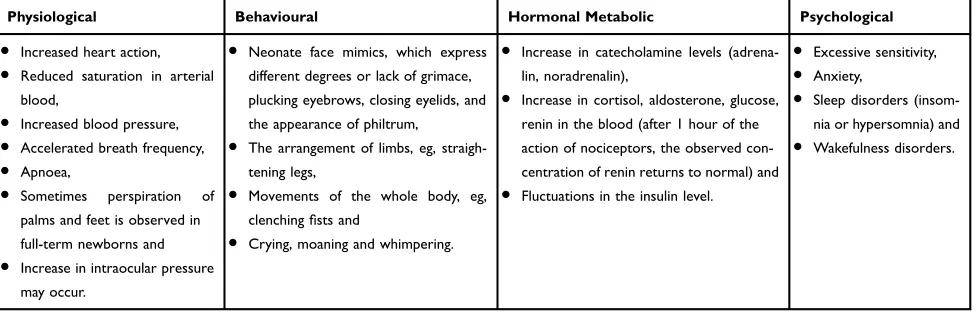
characteristic of every neonate and undoubtedly depends, to a large degree, on the level of neonate maturity. The reac-tions of a neonate to pain stimuli can be divided into phy-siological, behavioural, hormonal, metabolic and mental. A detailed list of pain indicators is presented inTable 1.2,13,14 An essential element in monitoring a pain experience is the identification and knowledge of its source. Based on the relevant literature, the following types of pain have been distinguished in neonatal intensive care units:
1. pain due to procedures, so-called procedural pain; 2. pain related to an illness:
a) acute pain that persists, b) chronic pain.15–18
In the case of the frequently described procedural pain, its source should be sought in the diagnostic-therapeutic procedures conducted every day on neonates. When ana-lysing pain due to the level of experienced pain, the procedures are distinguished into those with:
● mild pain intensity, eg, venepuncture or artery punc-ture, subcutaneous and intramuscular injections, and urinary bladder catheterization;
● moderate pain intensity, eg, bronchial toilet, lumbar puncture, intubation, heel puncture, and physiother-apy of the respiratory system; and
● acute pain intensity, eg, applying a drain into a pleural cavity, and surgical interventions.
One source of acute pain experiences is conditions after surgical procedures, when the continuity of skin and of deeper structures, for example, muscles, is interrupted. Chronic pain in neonates, although it is not a new subject,
Table 1Neonate Reactions to Pain Experiences2,13,14
Physiological Behavioural Hormonal Metabolic Psychological
● Increased heart action,
● Reduced saturation in arterial
blood,
● Increased blood pressure,
● Accelerated breath frequency,
● Apnoea,
● Sometimes perspiration of
palms and feet is observed in
full-term newborns and
● Increase in intraocular pressure
may occur.
● Neonate face mimics, which express
different degrees or lack of grimace,
plucking eyebrows, closing eyelids, and
the appearance of philtrum,
● The arrangement of limbs, eg,
straigh-tening legs,
● Movements of the whole body, eg,
clenchingfists and
● Crying, moaning and whimpering.
● Increase in catecholamine levels
(adrena-lin, noradrenalin),
● Increase in cortisol, aldosterone, glucose,
renin in the blood (after 1 hour of the
action of nociceptors, the observed
con-centration of renin returns to normal) and
● Fluctuations in the insulin level.
● Excessive sensitivity,
● Anxiety,
● Sleep disorders
(insom-nia or hypersom(insom-nia) and
● Wakefulness disorders.
Journal of Pain Research downloaded from https://www.dovepress.com/ by 118.70.13.36 on 27-Aug-2020
continues to be difficult to define. Numerous researchers agree that causes of chronic pain in neonates include perinatal necrotizing enterocolitis, meningitis, and system-atically repeated nociceptive stimuli, such as persistent ailments after surgical operations as well as mechanical ventilation.17–20
The introduction in every healthcare centre of the duty to monitor and soothe pain symptoms in children is reflected in the recommendations of domestic and interna-tional Scientific Societies. This is also an indisputable right of every human being. Actions taken to prevent pain in healthcare centres that treat the youngest patients also meet the expectations of the parents of children who experience pain and suffering.6,21
The interpretation of pain sensations in such a different population as neonates can be realistic through the careful and comprehensive observation of the child and the appli-cation of an adequate assessment tool (scale) which will be suitable for the age group and the clinical condition of the patient. According to the recommendations of Scientific Societies, a neonate intensive therapy unit should prepare an individual programme of therapy and the prevention of pain based on state-of-the-art standards. The success of actions taken is possible only if all personnel respect the recommendations, which include: systematic monitoring of potential and actual pain symptoms, minimising the number of painful procedures, prophylactics and soothing of acute pain due to invasive procedures and postoperative pain, counteracting stress symptoms and acute pain.6,22 The repeatability and long-term character of invasive breathing support cause excitation and stress in a neonate. This leads to changes regarding psychophysio-logical, endocrinal and behavioural fields, resulting in chronic stress.23 The assessment of pain in invasively ventilated neonates is difficult, in particular in pre-term newborns, which have a limited behavioural repertoire and a higher sensitivity to pain threshold.24,25 Validated and implemented tools used to measure pain have been devel-oped mostly within research into acute procedural pain, which is directly related to the number of performed invasive procedures at intensive therapy wards.26,27
Aim
The aim of this systematic review was to analyse current studies on the use of pain scales in neonates receiving mechanical ventilation in neonatal intensive care units (NICUs).
Materials and Methods
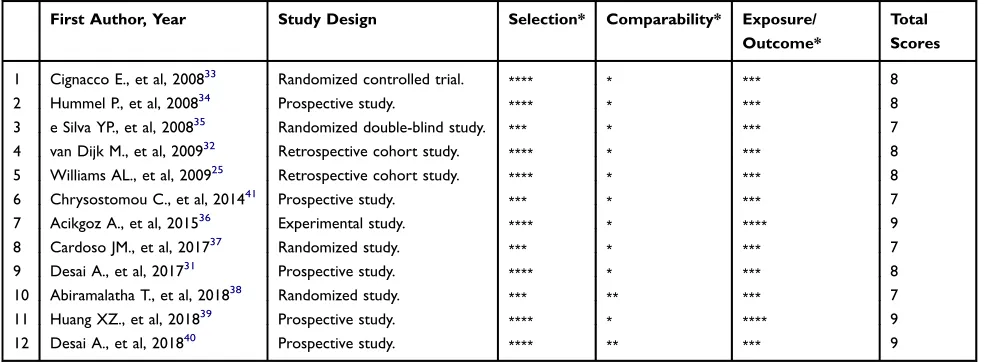
This systematic review was carried out according to the Preferred Reporting Items for Systematic Reviews and Meta-Analyses (PRISMA) recommendations. The proto-col of selecting papers was based on the Cochrane Handbook for Systematic Reviews of Interventions, PICOS model.28 Papers included for further analysis were assessed using the Newcastle–Ottawa Survey (NOS) scale. The above-mentioned tool was developed in order to assess properly the quality of research included in the systematic review or meta-analysis. The maximum number of available points in three different dimensions amounted to 9. The scale assesses three main categories, including the selection of the study group, the comparabil-ity of the groups; and the ascertainment of either the exposure or outcome of interest for case-control or cohort studies, respectively. Assessed papers are scored with a star system. The scale was validated and was recognised by a number of authors of systematic reviews.29
Search Strategy
The following databases were searched: PubMed, OVID, EBSCO, Cochrane Library and Web of Science. The fol-lowing key words were used for verification: pain, neona-tal intensive care unit, neonate, scales and mechanical ventilation. Single key words or their combinations using AND, OR or both operators were entered. The search was limited to studies published in English and carried out in the period between 2006 and 2019. The timeframe for preparing the review results from a relatively low number of publications that concern pain in neonatology patients. Moreover, the first recommendations and guidelines con-cerning pain therapy in neonates were developed in 2006 by the American Academy of Pediatrics and the Canadian Pediatric Society, which were thefirst to recommend that healthcare systems include programmes of pain assess-ment and prevention in neonatology wards as routine actions for personnel.30 The number of citations for each search attempt was scanned and reduced according to the inclusion criteria.
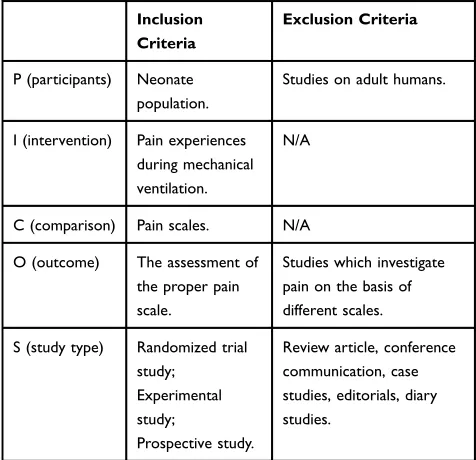
The selection of suitable papers was based on the PICOS model framework. The individual criteria of searching for scientific research concerned the following: P–neonates, I–pain experience during mechanical ven-tilation, C–pain scale used in the assessment of pain in pediatric patients, S – experimental studies, randomized trail study (Table 2).28
Journal of Pain Research downloaded from https://www.dovepress.com/ by 118.70.13.36 on 27-Aug-2020
Study Selection
Only papers describing studies that had been carried out in neonatal intensive care units and which analysed the efficacy of pain assessment using different scales were selected for further analysis. This selection was based on specific inclu-sion criteria. The search spectrum was limited to neonatal patients who required mechanical ventilation.
Inclusion Criteria
* studies evaluating the efficacy of tools for pain assess-ment in neonates being treated in NICUs,
* studies which included patients admitted to NICUs, mechanically ventilated,
* studies analysing tools for pain assessment in an NICU setting, which were designed for medical personnel (nurses, physicians).
The eligibility of each paper found was assessed according to the availability of the full-text version and an independent evaluation performed by two reviewers using the above-mentioned inclusion criteria. In cases where the two reviewers did not reach a consensus to qualify the article for further assessment, the paper was consulted by a third reviewer.
Data Extraction
The initially eligible papers were assessed by two inde-pendent reviewers, who used a normalised data extraction form. The following criteria were taken into account:
author, publication year, type and aim of the study, method of pain assessment and limitations of the study.
The quality of the study was assessed based on the following:
●description of the inclusion and exclusion criteria,
●study method,
●type of study.
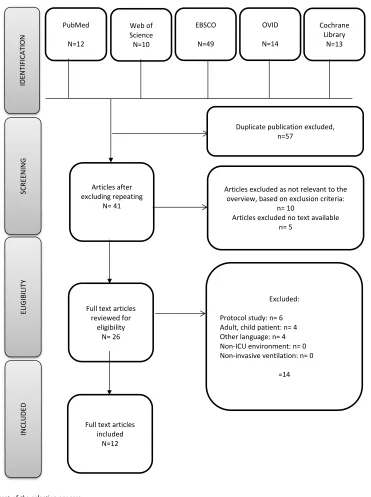
Finally, out of 27 articles, 12 papers were considered eligible for the review (Figure 1). Manuscripts covered by the review were given a minimum of 7 points in the NOS scale. A detailed list of the assessment results is given in
Table 3.
Results
As part of the search of the library-abstract databases, 98 publications were obtained in total (12 from PubMed, 14 from OVID, 49 from EBSCO, 13 from Cochrane Library and 10 from Web of Science). After excluding 57 duplicates, 41 papers were analysed; the full-text analysis was verified as well as the eligibility criteria for the research. Initially, 12 papers that fulfilled the criteria were included in the review. Having assessed the quality of the included papers with the Newcastle–Ottawa Scale, they were then taken into consid-eration in the review. They focus on mechanically ventilated neonates (except for 3 studies,25,31,32in which also neonates that were breathing efficiently were covered; however, every group was analysed separately).
In their papers, notwithstanding their purpose, the authors apply suitable tools recommended by the Scientific Societies to measure every type of pain experience. Two studies con-cern the simultaneous evaluation of procedural pain and chronic pain (N-PASS and NIPS scales were applied),five studies use scales for assessing procedural pain (PIPP was used most often), and five to measure the chronic pain sensation (N-PASS was used most often). In studies by Hummel et al (2008), van Dijk et al (2009), Desai et al (2017) and Huang et al (2018), a primary objective was to assess the efficiency and reliability of tools to measure pain experience. Other papers analysed analgesia, the impact of an open and closed sucking system to assess pain experiences in mechanically ventilated neonates, and behavioural reactions in neonates (Table 4).25,31-41
Many of the available papers compare both the efficacy of the scales and attempts to validate tools for acute and chronic pain assessment. The analysed material indicates that tools developed to measure acute pain in neonates
Table 2Selection Criteria for the Systematic Review (PICOS)28
Inclusion Criteria
Exclusion Criteria
P (participants) Neonate
population.
Studies on adult humans.
I (intervention) Pain experiences
during mechanical ventilation.
N/A
C (comparison) Pain scales. N/A
O (outcome) The assessment of
the proper pain scale.
Studies which investigate pain on the basis of different scales.
S (study type) Randomized trial
study; Experimental study;
Prospective study.
Review article, conference communication, case studies, editorials, diary studies.
Journal of Pain Research downloaded from https://www.dovepress.com/ by 118.70.13.36 on 27-Aug-2020
have to be multidimensional and take into account the combination of physiological and behavioural symptoms. Most tools have been developed to assess pain in neonates who are not treated with mechanical ventilation. Only a few of the available scales were validated for pain assessment in mechanically ventilated children; therefore, skilful use of the adequate instrument for acute, postopera-tive or chronic pain assessment by NICU personnel is of crucial importance. The tool should be selected with regard to both the age of the child and the diagnostic and therapeutic methods they receive.6,42,43
Discussion
A multicentre study by Carbajal et al concerning the prophylaxis, therapy and monitoring of pain indicates that actions aimed at reducing and preventing pain should have priority in neonatal care, once neonates are admitted to NICUs.44The analysis of data obtained from 370 neo-natal intensive care units in various European countries reveals that pain was monitored with standardised scales in only 32 units, and the spectrum of scales used for pain assessment was quite wide.44,45 Results of studies carried out in other European countries, including Spain, confirm
IDENTIFICATI
ON
INCLUD
E
D
ELIGIBILITY
SCREENING
PubMed
N=12
Web of Science N=10
Articles after excluding repeating
N= 41
Duplicate publication excluded, n=57
Articles excluded as not relevant to the overview, based on exclusion criteria:
n= 10
Articles excluded no text available n= 5
Full text articles reviewed for
eligibility N= 26
Full text articles included
N=12
Excluded:
Protocol study: n= 6 Adult, child patient: n= 4 Other language: n= 4 Non-ICU environment: n= 0 Non-invasive ventilation: n= 0
=14 EBSCO
N=49
OVID
N=14
Cochrane Library
N=13
Figure 1Theflowchart of the selection process.
Journal of Pain Research downloaded from https://www.dovepress.com/ by 118.70.13.36 on 27-Aug-2020
that there no uniform guidelines are available. On the other hand, following the recommendations and guidelines in pain therapy and prophylactics, including the application of scales may significantly reduce the quantities of applied opioid and sedative drugs.46
Observations revealed that pain suffered by patients receiving mechanical ventilation was principally assessed after they received analgesics or sedatives. The following scales are mostly recommended for acute pain assessment: Neonatal Infant Pain Scale (NIPS) and Premature Infant Pain Profile (PIPP). On the other hand, CRIES (crying, oxygenation, vital signs, facial expression, and sleepless-ness) is recommended to assess postoperative pain, while the COMFORT and N-PASS (Neonatal-Pain, Agitation and Sedation Scale) scales are suggested for chronic pain assessment in invasively ventilated children.47Studies by Elella et al confirmed that the COMFORT scale may be applied in children who require mechanical ventilation, including in post-surgery periods. What is more, the appli-cation of this assessment explicitly reduces the time of respirotherapy.48 Other authors suggest that no uniform guidelines for pain assessment in neonatal patients are available, despite the fact that they receive both analgesics and sedatives.44,47 A study performed in Sweden and Norway by Andersen et al compared the practice of pain assessment in NICUs.49It revealed that in Swedish hospi-tals pain was assessed and documented more frequently than in Norway. The tools for pain assessment were used more often by the former as well. The most commonly used tools for measuring nociception intensity in Sweden included Astrid Lindgren’s Pain Scale (ALPS), as well as COMFORT, Échelle Douleur Inconfort Nouveau-Né
(EDIN), Face, Legs, Activity, Cray, Consolability (FLACC), N-PASS and NIPS, while the Norwegians used the Echelle EDIN, ALPS, PIPP and CRIES scales. The analysis revealed that Norwegian nurses not only had more confidence in the tools used for pain assessment in children, but also recognised their validity to a greater extent than nurses working in Sweden.49Studies analysing the usefulness and reliability of scales for pain assessment tend to evaluate acute pain. Although possible, the assess-ment of long-lasting or chronic pain is performed very rarely. This has been proved by Desai et al,31,40 whose primary aim was to evaluate the usefulness of the N-PASS scale for pain assessment in invasively ventilated children. The first study consisted of two phases. The initial stage was to answer the question of whether neonates receiving assisted ventilation suffer from prolonged acute pain, which was done using the PIPP scale. The second stage was to compare the N-PASS and PIPP scales in the context of prolonged acute pain assessment in neonates receiving assisted ventilation. The results confirmed that invasively ventilated neonates suffer from prolonged acute pain, as the PIPP score was over 6, which is equivalent to moder-ate pain. This project confirmed the reliability and useful-ness of the N-PASS scale for pain assessment.31 Another project by the same authors confirmed the usefulness of the N-PASS scale for measuring chronic pain in invasively ventilated children. The primary aim of this second study was to improve the quality of pain prophylaxis and therapy in NICU patients. The authors compared the NIPS and N-PASS scales tofind the most efficient tool for measuring acute and chronic pain. These analyses revealed that it is the N-PASS scale that is more adequate and more reliable
Table 3Quality Assessment of the Included Studies Using the Newcastle–Ottawa Scale
First Author, Year Study Design Selection* Comparability* Exposure/ Outcome*
Total Scores
1 Cignacco E., et al, 200833 Randomized controlled trial. ∗∗∗∗ ∗ ∗∗∗ 8
2 Hummel P., et al, 200834 Prospective study. ∗∗∗∗ ∗ ∗∗∗ 8
3 e Silva YP., et al, 200835 Randomized double-blind study. ∗∗∗ ∗ ∗∗∗ 7
4 van Dijk M., et al, 200932 Retrospective cohort study. ∗∗∗∗ ∗ ∗∗∗ 8
5 Williams AL., et al, 200925 Retrospective cohort study. ∗∗∗∗ ∗ ∗∗∗ 8
6 Chrysostomou C., et al, 201441 Prospective study. ∗∗∗ ∗ ∗∗∗ 7
7 Acikgoz A., et al, 201536 Experimental study. ∗∗∗∗ ∗ ∗∗∗∗ 9
8 Cardoso JM., et al, 201737 Randomized study. ∗∗∗ ∗ ∗∗∗ 7
9 Desai A., et al, 201731 Prospective study. ∗∗∗∗ ∗ ∗∗∗ 8
10 Abiramalatha T., et al, 201838 Randomized study. ∗∗∗ ∗∗ ∗∗∗ 7
11 Huang XZ., et al, 201839 Prospective study. ∗∗∗∗ ∗ ∗∗∗∗ 9
12 Desai A., et al, 201840 Prospective study. ∗∗∗∗ ∗∗ ∗∗∗ 9
Notes:*A star is awarded for each numbered item within the selection and outcome categories. A maximum of two stars can be given for comparability.
Journal of Pain Research downloaded from https://www.dovepress.com/ by 118.70.13.36 on 27-Aug-2020
T able 4 Systematic Re vie w of Papers Pr esenting Studies Using Pain Scales in Neonates T reated with Mechanical V entilation Author/Y ear of Publication T ype of the Study Aim of the Study Study Gr oup/ Sample Siz e (N) Instrument Used to Measur e P ain Character of P ain Outcomes of Measur ement Conclusion Limitation of the Study Cignacco E., Hamers JP , van Lingen RA. (2008) 33 Randomized study . The aim of the study was to assess the impact of morphine and non-pharmacological methods on pain and str ess reduction during endotracheal suctioning of br onchial secr etion.
30 mechanical ventilated neonates
PIPP scale BPSN scale (Bernese Pain Scale for Neonates) Pr ocedural pain. The av erage pain score s w er e higher in pr eterms who receive d sensorial stimulation as compared to the standar d of care, e ven in the placebo gr oup . The re sear cher used the re commended scales. Nurses reported signi fi cant pr oblems with pain assessment using the PIPP scale , since it focuses mainly on an infant ’ s facial expr essions. A small number of patients included in the study . Hummel P., Puchalski M., Cre ech SD ., W eiss MG. (2008) 34 Pr ospective study . The aim of the study was to assess the utility and reliability of N-P ASS in mechanically ve ntilated neonates and/or after a postoperativ e surger y.
46 mechanical ventilated neonates
N-P ASS scale, PIPP scale Chr onic pain. N-P ASS is a clinically useful, re liable and importan t tool used to assess persistent pain/excitation and sedation in ve ntilated children and/or children after a postoperativ e pr ocedur e. The re sear cher used the re commended scales in the study . It con fi rms the reliability of the scale. A small number of patients included in the study . e Silva YP ., Gomez RS., Mar catto J de O. , Maximo T A., Barbosa RF ., e Silva CS., (2008) 35 Randomized in apr
ospectiv e double- blinded study . The aim of the pr esent study was to compar e a continuous infusion of remifentanil and morphine during mechanical ventilation of pr ematur e neonates with re spirator y distr ess syndr ome (RDS).
20 mechanical ventilated neonates
NIPS scale, COMFOR T scale Chr onic pain. Both infusions pr ovided adequate analgesia and sedation, as demonstrated by the NIPS (<4) and COMFOR T scales (<20). The re sear cher used the re commended scales in the study . No refer ence to the scale . A small number of patients included in the study . ( Continued )
Journal of Pain Research downloaded from https://www.dovepress.com/ by 118.70.13.36 on 27-Aug-2020
T able 4 (Continued). Author/Y ear of Publication T ype of the Study Aim of the Study Study Gr oup/ Sample Siz e (N) Instrument Used to Measur e P ain Character of P ain Outcomes of Measur ement Conclusion Limitation of the Study van Dijk M., Roofthooft DW ., Anand KJ., Guldemond F. et al (2009) 32 Pr ospective cohort study . The aim of this study was to validate the COMFOR Tneo scale.
286 neonates: ●194 mechanical ventilated neonates, ●92
own br eath COMFOR Tneo scale Chr onic pain. The COMFOR Tneo scale show ed initial usefulness both in pr eterms and in term neonates. Further studies ar e re commended to establish validity with other instruments of pain contr ol in a patient gr oup with a high pr obability of ongoing pain. The measur ement of pain intensity by the same person, a nurse, in all the scales, ma y result in the low er objectivity of the
assessment. To
compare, the use of a validated scale to assess pain in a neonate might give a better pictur e of the utility of the COMFOR Tneo tool. Williams AL., Khattak AZ., Garza CN., Lasky RE. (2009) 25 Pr ospective cohort study . The aim of the study was to assess the beha vioural pain reaction in neonates using the NIPS scale. 36 neonates: ● 22 mechan-ical venti-lated neonates NIPS scale Pr ocedural pain. The NIPS scale pr ov ed useful in assessing pain in neonates. The re sear cher used the re commended scales in the study . It con fi rms the reliability of the scale. A small number of patients included in the study . Chr ysostomou C. , Schulman SR., Herr era CM., Cofer BE., Mitra S., Rocha MG., et al (2014) 41 Pr ospective study . The aim of the study was to determine the pharmacokinetic impact of dexmedetomidine on pr e-term and full-term ne wborns.
42 mechanical ventilated neonates
N-P ASS scale Chr onic pain. The N-P ASS scale re vealed that dexmedetomidine pr ovided sedation and analgesia. The re sear cher used a re commended scale in the study . No refer ence to the scale . N/A
Journal of Pain Research downloaded from https://www.dovepress.com/ by 118.70.13.36 on 27-Aug-2020
Acikgoz A., Yildiz S. (2015) 36 Experimental study . The aim of this pr oject was to compare the impact of open and closed suctioning systems on pain assessment in ne wborns tr eated with mechanical ventilation. 42 neonates mechanical ventilation. N-P ASS scale Pr ocedural pain. This study d id not re vea l any d iffe ren ce in the assessment of pain su ffer ed du ri n g the evacuatio n of the secr eti on betw een the o pen and closed syste m s (p = 0.19 4). T he resear chers n ot iced that the N-P A SS scor e d uri ng endot rach e al suct io ni ng wi th th e o pen syst em w as slightly hi gh er as compa red to th e clo sed method. The re sear cher used a re commended scale in the study . The N-P ASS scale is effectiv e in measuring pain in this gr oup of patients. A small number of patients included in the study . Car doso JM., K usahara, DM., Guinsburg R., P edr eira MLG., (2017) 37 Randomized study . The aim of this pr oject was to compare the impact of open and closed suctioning systems on pain assessment in ne wborns tr eated with mechanical ventilation. 13 neonates mechanical ventilation. PIPP Pr ocedural pain. The PIPP scale did not re veal an y major differ ences in both studied suction techniques of an endotracheal tube. The re sear cher used a re commended scale in the study . No refer ence to the scale . A small number of patients included in the study . Desai SA, Nana vati RN, Jasani BB et al (2017) 31 Pr ospective study . The aim of this study
included: -the
assessment of the incidence of chr onic pain in neonates receiving assisted
ventilation, -a
comparison of the usefulness of N-P ASS with PIPP in pain monitoring in mechanically ve ntilated neonates. Is tage: 15 neo nate s re ce iv ing
assisted vent
ila ti o n fo r mo re than 4 8 hou rs w er e inc lu d ed in th e st udy . The m ean ge st ati o nal age was 34.3 ± 4.5 6 w eek s. II st age: 42 neo nate s with the m ea n ge st ati o nal age of 3 3.5 ± 4. 23 we re in cl ud ed in th e st udy . PIPP scale, N-P ASS scale Chr onic pain. This study pr ov ed that neonates receiving assisted ve ntilation experience pr olonged acute pain . the re liability of the N-P ASS scale was comparable to the PIPP scale in term neonates re ceiving in vasiv e ve ntilation. N-P ASS scale is re liable and useful for the assessment of chr onic pain. The re sear cher used a re commended scale in the study . It con fi rms that the N-P ASS scale is re liable and useful in assessing chr onic pain. The study was limited to one NICU only . ( Continued )
Journal of Pain Research downloaded from https://www.dovepress.com/ by 118.70.13.36 on 27-Aug-2020
T able 4 (Continued). Author/Y ear of Publication T ype of the Study Aim of the Study Study Gr oup/ Sample Siz e (N) Instrument Used to Measur e P ain Character of P ain Outcomes of Measur ement Conclusion Limitation of the Study
Abiramalatha T., Mathe
w SK., Mathe w BS. et al (2018) 38 Randomized study . The aim of this study was to assess the impact of fentan yl analgesia on the clinical status of the child depending on the method of its administration.
100 mechanically ventilated neonates
N-P ASS scale, NIPS scale Chr onic
pain. Procedural pain.
Pain intensity was similar in both gr oups, regardle ss of the scale used. The NIPS scor e of 1 – 3 and N-P ASS scor e (0 – 3) w er e similar , which indicates adequate pain re lief with low serum fentan yl concentrations 0.4 – 0.6 ng/ mL. The re sear cher used a re commended scale in the study . No refer ence to the scale . N/A Huang XZ., Li L., Zhou J. et al (2018) 39 Pr ospective study . The aim of this study was to assess the re liability and clinical usefulness of thr ee pain scales: N-P ASS, NIAP AS, PIPP-R. 90 neonates in vasiv ely ventilated. N-P ASS scale, NIAP AS scale, PIPP-R scale. Pr ocedural pain. the sensitivity and speci fi city of the N-P ASS scale for term and pr eterm neonates receiving in vasive ve ntilation is comparable to the NIAP AS and PIPP-R scales. the N-P ASS scale is re liable and useful to measur e acute pain. Nurses consider the N-P ASS scale as more functional when being performed and mor e clinically useful. The re sear cher used a re commended scale in the study . The primar y result of this pr oject shows that all thr ee scales ar e reliable, yet the N-P ASS scale is mor e clinically sensitiv e and ef fi cient in measuring acute pain in neonates re ceiving in vasive ventilation, as compared to the NIAP AS and PIPP-R scales. A small number of mechanically ventilated patients included in the study . The study was limited to one hospital only . The sequence of using pain scales was not randomised
Journal of Pain Research downloaded from https://www.dovepress.com/ by 118.70.13.36 on 27-Aug-2020
for chronic and acute pain assessment in neonates. The additional advantage of this project was the fact that the nursing personnel of the neonatal units had been trained, which in turn improved their knowledge and recognition of the available tools, as well as the need for adequate pain assessment in neonates receiving assisted ventilation.40 The reliability of the N-PASS scale for pain monitoring in invasively ventilated children was also confirmed by the results of another prospective study carried out by Huang et al.39 The priority in this study was to define the reliability, feasibility and clinical usefulness of three scales, namely the N-PASS, NIAPAS (Neonatal Infant Acute Pain Assessment Scale) and PIPP-R (Premature Infant Pain Profile-Revised). This project revealed that all three scales are reliable and clinically useful. However, the N-PASS scale was more clinically sensitive and functional for acute pain assessment in mechanically ventilated neonates when compared to the NIAPAS and the PIPP-R. The evaluation of the usefulness of these scales by the personnel revealed clearly that the N-PASS scale presented greater clinical usefulness and was evalu-ated as better.39 Experimental studies carried out by Acikgoz and Yildiz36seem to confirm the results presented by the above-mentioned authors. The aim of this project was to compare the intensity of pain in mechanically ventilated neonates during the evacuation of secretion from the bronchial tree with closed and open systems. These results clearly showed that the procedure itself is associated with moderate pain, whereas its intensity was assessed as slightly higher during the procedure in which the open system was used for endotracheal suctioning. The above-mentioned studies seem to confirm that the N-PASS scale is effective and useful for procedural pain measure-ment in mechanically ventilated neonates.36
Abiramalatha et al and Chrysostomou et al in their studies confirmed the efficiency of applying the NIPS and N-PASS scales to evaluate chronic pain experiences in neonates subject to invasive ventilation and receiving opioids.38,41
Another recommended tool to evaluate procedural pain in mechanically ventilated neonates is the PIPP scale, which was used in a randomized study by Cardoso et al. The purpose of the study was to analyse the impact of open and closed suction systems on pain assessment in neonates treated with mechanical ventilation. The study confirmed that the procedure is painful for a neonate to a mild or moderate degree.37
Desai
A.,
Aucott
S.,
Frank
K.,
Silbert-Flagg J.(2018) 40
Pr
ospective
study
.
The
aim
of
this
pr
oject
included
the
assessment
of:
-the
usefulness
and
reliability
of
the
NIPS
and
N-P
ASS
scales,
-the
quality
of
pain
intensity
measur
ement
carried
out
by
the
personnel, -education
of
the
personnel
on
the
issues
of
pain
and
the
tools
used
to
assess
it.
44 mechanical ventilated neonates
N-P
ASS
scale,
NIPS
scale
Pr
ocedural
pain. Chr
onic
pain.
The
N-P
ASS
scale
is
mor
e
clinically
sensitiv
e
and
ef
fi
cient
in
measuring
acute
and
chr
onic
pain
in
neonates
as
compared
to
the
NIPS
scale
.
Effectiv
e
education
had
a
signi
fi
cant
clinical
impact
on
the
impr
ov
ement
of
the
knowledge
of
personnel.
The
re
sear
cher
used
a
re
commended
scale
in
the
study
.
The
re
sear
cher
re
commends
the
continuation
of
re
sear
ch,
which
should
focus
on
the
utility
of
the
N-P
ASS
scale
in
sedated
neonates.
The
study
was
limited
to
one
hospital
only
.
Abbre
viation:
N/A,
not
applicable.
Journal of Pain Research downloaded from https://www.dovepress.com/ by 118.70.13.36 on 27-Aug-2020
The selection of a reliable, feasible and practical mea-surement tool for pain intensity is the primary step in adequate procedural pain management for ventilated neo-nates. Such a tool would aid the precise identification of pain, and improve the quality of nursing care of the neonate.
The assessment of pain intensity, and its measurement and documentation in this patient group pose a challenge for the personnel of many NICUs, because differentiating between suffering and pain or stress is not an easy task. Such experiences may appear concomitantly and stimulate each other. The literature reveals that pain causes suffering, anxiety, stress and agitation. The adequate differentiation between them is clinically important, as each of these nega-tive experiences requires a totally different method of man-agement. An analysis of the obtained material showed that there is currently no tool (either physiological or beha-vioural) available which would allow a differentiation between suffering and pain. This issue is emphasised by Maaskant et al in their meta-analysis.50 They suggest that the interpretation of all information concerning the situation of the affected child is necessary in everyday practice. Data on the clinical entity, and its management or previous experience may, for example, be very valuable for the adequate assessment of suffering and pain. One of the available tools, which includes more important criteria and was originally developed to measure stress in children up to 18 years of age receiving mechanical ventilation is the COMFORT scale. A research study by Dijk et al32
con-firmed the reliability of the COMFORT scale for measuring pain intensity and the level of sedation in such a population. It is currently one of the well-known and recommended methods for monitoring analgesia in invasively ventilated neonates.32,50
Apart from emphasising the problems of differentiating pain-dependent suffering, Bellieni pays special attention to other difficulties in evaluating pain. The author states that due to the complexity of multidimensional tools for pain control, each measurement should be carried out by at least two nurses. As the person who carries out the given procedure is focused on its correct realisation, this often hinders the calm and error-free observation of a child’s behaviour during measurement. Moreover, the author emphasises that none of the scales for chronic pain mea-surement adequately represents the true pain assessment, as the measurement is most commonly performed every 3–4 hours. Therefore, the results apply only to the time of the examination and observation.51,52
Pain monitoring is an undeniable right of every human being and patient, regardless of age. The literature reveals that neonates admitted to NICUs experience pain, which comes from multiple diagnostic, therapeutic and medical procedures. Clinical observations of children receiving mechanical ventilation indicate that such patients not only experience acute pain, but also repeatedly suffer from chronic pain. Therefore, an individual approach to each patient associated with their clinical situation is not only essential, but above all, they require the modulation of sedatives and an adequate assessment of pain. The authors of the above-mentioned studies emphasise the differences in attitudes and opinions of nursing personnel who assess the usefulness of the scales based on their practical use in everyday practice. This was especially noticed in a study carried out by Cignacco,33where nurses reported problems with the analysis of pain intensity using the PIPP method, both for neonates with extreme prema-turity and term neonates.33 The results of many studies reveal that the primary obstacle in using adequate scales is the lack of knowledge presented by nursing personnel or the lack of adequate training. This issue undoubtedly requires further analysis and research. All the authors of the presented papers emphasised that extensive education is an effective method of improving awareness among the medical personnel of the utility, and the adequate scale selection with regard to the clinical situation of the indi-vidual patient.
The guidelines of the American Academy of Paediatrics, the Canadian Paediatric Society and the Polish Neonatal Society indicate that NICU personnel should measure and document pain intensity and accom-panying symptoms. The analysis of pain in such a diverse patient group as neonates is possible only by profound observation of the child and the use of methods adequate for the age group and their clinical situation. The authors of the above-mentioned guidelines emphasise that each NICU should develop its own program for the prevention and therapy of pain, which would be based on the most recent standards. The success of such actions is possible only when each member of the team complies with and follows the recommendations, including: the assessment of pain and its symptoms on an everyday basis, the reduction of painful procedures, the prophylaxis and reduction of acute pain associated with invasive procedures and post-operative pain, the prevention of stress and chronic pain. Each intervention in an NICU should include prophylactic actions with documented efficacy, ie using analgesia
Journal of Pain Research downloaded from https://www.dovepress.com/ by 118.70.13.36 on 27-Aug-2020
before every potentially painful procedure, the exclusion of unnecessary stimuli and painful procedures, support during procedures given to a neonate by the personnel or a parent, a combination of procedures and their perfor-mance at the same time, the delay of nursing activities by at least an hour from nociceptive stimulus and a combination of non-pharmacological and pharmacologi-cal methods.6,22,30
Every action aimed at the monitoring and therapy of pain in neonates has a positive impact on the child in every aspect of their functioning, ie, psychomotor, physiological and hormonal.24 Moreover, as indicated by clinical obser-vations, the application of a pain guideline protocol increases the level of satisfaction among nursing person-nel. Furthermore, it very often results in reduced doses of applied opioids.53The lack of a single, universal scale for the assessment of pain intensity, as well as the lack of recommendations concerning pain therapy depending on age, leads to a situation where the adequate assessment of pain intensity is remarkably difficult. Some of the authors suggest that biological markers, such as stress hormones in saliva (adrenalin, cortisol), as well as examinations, such as electroencephalography, positron emission tomography, magnetic resonance imaging, near-infrared spectroscopy and NIPE, may be used to assess pain in NICU patients. The above-mentioned methods are extraordinarily objec-tive, yet due to the relative unavailability of highly sophis-ticated equipment, it is impossible to use them in clinical practice.54–57
Conclusions
Despite the available guidelines and recommendations, the assessment and monitoring of pain in neonates is not a standard procedure. Moreover, the availability of many scales leads to a situation where every institution may freely choose an assessment tool.
Based on this review, no explicit evidence can be obtained to support the use of one proper scale in pain assessment. It can be inferred that the COMFORT and N-PASS scales are effective for pain assessment and for determining the need for analgesics in mechanically ven-tilated neonates. These scales may be equally effective in assessing chronic pain, especially in mechanically venti-lated children. On the other hand, the PIPP and CRIES scales are most commonly recommended for assessing acute and postoperative pain.15,22,34,58
Strength and Limitations of the
Systematic Review
The conducted analysis did not show in full which of the tools used for pain assessment should be essential in assessing pain among mechanically ventilated patients in NICUs. What is more, pain cannot be assessed explicitly if the analysed scale used to assess pain refers only and exclusively to acute or chronic pain, because, as the rele-vant literature indicates, pain can have different dimen-sions. A child that requires mechanical ventilation usually experiences both acute and chronic pain. Therefore, it is hard to determine a clear boundary. Another limitation of the analysed papers was the low number of observations, restricted, as a rule, to a single research centre and ward. Observations very often concerned a low number of patients. Moreover, the analysed material did not always include answers to the question regarding the effective-ness of the applied scales of pain assessment. There is no doubt that the strength of the conducted analysis is the number of databases that were searched through. The strict criteria for the inclusion of papers in the further research analysis using the PICOS model as well as their assessment using the Newcastle–Ottawa Scale warrant that the qualified papers meet the criteria of eligibility for the analysis. The review included only and exclusively research, prospective, randomized or experimental papers, which also affects the benefits of the conducted analysis. One potential limitation of the paper may be the fact that the selected papers are only and exclusively in English, which may naturally exclude papers dedicated to pain issues published in other languages. On the other hand, the scope of matters discussed limits the number of research papers dedicated to this problem to a low number.
Implications for Nursing Practice
Although there are no universal guidelines with respect to the applied pain assessment scales in neonatal patients, the research explicitly shows that the application of tools recommended by the International Scientific Societies sig-nificantly reduces the quantity of administered anaesthetic drugs. There is no doubt that the application of scales means not only the comfort of a patient, but also greater satisfaction from work among nursing personnel. The effi -ciency of each scale used in daily nursing practice has to be based on training and education. Therefore, every healthcare centre should implement a training system on
Journal of Pain Research downloaded from https://www.dovepress.com/ by 118.70.13.36 on 27-Aug-2020
a regular basis, similarly to the practices of cardiopulmon-ary resuscitation and blood donation.
Disclosure
None of the authors discloses potential conflict of interest in this work.
References
1. Simons SH, van Dijk M, Anand KS, Roofthooft D, van Lingen RA, Tibboel D. Do we still hurt newborn babies? A prospective study of procedural pain and analgesia in neonates. Arch Pediatr Adolesc Med.2003;157(11):1058–1064. doi:10.1001/archpedi.157.11.1058 2. Zielińska M. Czy noworodek odczuwa ból? Adv Clin Exp Med.
2006;15(2):339–344.
3. Ambalavanan N, Carlo WA. Analgesia for ventilated neonates: where do we stand? J Pediatr. 1999;135(4):403–405. doi:10.1016/s0022-3476(99)70156-3
4. Kennedy KA, Tyson JE. Narcotic analgesia for ventilated newborns: are placebo-controlled trials ethical and necessary? J Pediatr.
1999;134(2):127–129. doi:10.1016/s0022-3476(99)70399-9 5. Fitzgerald M. The development of nociceptive circuits. Nat Rev
Neurosci.2005;6:507–520. doi:10.1038/nrn1701
6. American Academy of Pediatrics. AAP committee on fetus and newborn and section on anesthesiology and pain medicine. Prevention and management of procedural pain in the neonate: an update. Pediatrics. 2016;137(2):e20154271. doi:10.1542/ peds.2015-4271
7. Cruz MD, Fernandes AM, Oliveira CR. Epidemiology of painful procedures performed in neonates a systematic review of observa-tional studies.Eur J Pain.2016;20(4):489–498. doi:10.1002/ejp.757 8. Carbajal R, Rousset A, Danan C, et al. Epidemiology and treatment of painful procedures in neonates in intensive care units. JAMA.
2008;300:60–70. doi:10.1001/jama.300.1.60
9. Anand KJ, Aranda JV, Berde CB, et al. Summary proceedings from the neonatal pain-control group. Pediatrics. 2006;117(3 Pt 2):S9– S22. doi:10.1542/peds.2005-0620C
10. Schwaller F, Fitzgerald M. The consequences of pain in early life: injury-induced plasticity in developing pain pathways. Eur J Neurosci.2014;39:344–352. doi:10.1111/ejn.12414
11. Vinall J, Grunau RE. Impact of repeated procedural pain-related stress in infants born very preterm.Pediatr Res.2014;75:584–587. doi:10.1038/pr.2014.16
12. Grunau RE. Neonatal pain in very preterm infants: long-term effects
on brain, neurodevelopment and pain reactivity. Rambam
Maimonides Med J.2013;4(4):e0025. doi:10.5041/RMMJ.10132 13. Stevens BJ, Johnston CC. Physiological responses of premature
infants to a painful stimulus. Nurs Res. 1994;43:226–231. doi:10.1097/00006199-199407000-00007
14. Anand KJS, Hickey PR. Halothane - morphine compared with high dose- sufentanil for anesthesia and postoperative analgesia in neona-tal cardiac surgery. N Engl J Med. 1992;326(1):1–9. doi:10.1056/ NEJM199201023260101
15. Panek M, Kwinta P. Ocena bólu oraz niefarmakologiczne metody jego łagodzenia u noworodków. Standardy Medyczne/Pediatria.
2014;11:249–256.
16. Stevens B, Yamada J, Lee GY, Ohlsson A. Sucrose for analgesia in newborn infants undergoing painful procedures.Cochrane Database Systematic Rev.2013;1:CD001069.
17. Stevens BJ, Pillai Riddell RR, Oberlander TE, et al. Assessment of pain in neonates and infants. In W: Anand KJS, Stevens BJ, McGrath PJ, editors.Pain in Neonates and Infants. Elsevier;2007. 67–90.
18. Anand KJS. Defining pain in newborns: need for a uniform taxonomy? Acta Paediatr. 2017;106:1438–1444. doi:10.1111/ apa.13936
19. van Ganzewinkel CJ, Anand KJS, Kramer BW, Andriessen P. Chronic pain in the newborn: toward a definition. Clin J Pain.
2014;30:970–977. doi:10.1097/AJP.0000000000000056
20. Pillai Riddell RR, Stevens BJ, McKeever P, et al. Chronic pain in hospitalized infants: health professionals’ perspectives. J Pain.
2009;10:1217–1225. doi:10.1016/j.jpain.2009.04.013
21. Franck LS, Allen A, Cox S, Winter I. Parents’views about infant pain in neonatal intensive care. Clin J Pain. 2005;21:133–139. doi:10.1097/00002508-200503000-00004
22. Gulczyńska E, Piotrowski A.Profilaktyka I Leczenie Bólu u Noworodka. Standardy Opieki Medycznej Nad Noworodkiem w Polsce. 2019 Zalecenia Polskiego Towarzystwa Neonatologicznego. Wyd: Media-Press Sp. z o.o Warszawa;2019:118–128.
23. Hall RW, Boyle E, Young T. Do ventilated neonates require pain management?Semin Perinatol.2007;31(5):289–297. doi:10.1053/j. semperi.2007.07.002
24. Grunau RE, Holsti L, Haley DW, et al. Neonatal procedural pain exposure predicts lower cortisol and behavioral reactivity in preterm infants in the NICU. Pain. 2005;113:293–300. doi:10.1016/j. pain.2004.10.020
25. Williams AL, Khattak AZ, Garza CN, Lasky RE. The behavioral pain response to heelstick in preterm neonates studied longitudinally: description, development, determinants, and components.Early Hum Dev.2009;85(6):369–374. doi:10.1016/j.earlhumdev.2009.01.001 26. Hatfield LA, Ely EA. Measurement of acute pain in infants: a review
of behavioral and physiological variables. Biol Res Nurs.
2015;17:100–111. doi:10.1177/1099800414531448
27. Stevens B, Gibbins S. Clinical utility and clinical significance in the assessment and management of pain in vulnerable infants. Clin Perinatol.2002;29:459–468. doi:10.1016/S0095-5108(02)00016-7 28. Higgins JPT, Green S.Cochrane Handbook for Systematic Reviews of
Interventions Version 5.0.0. The Cochrane Collaboration;2008. 29. Wells. GA. http://www.ohri.ca/programs/clinical_epidemiology/
oxford.asp. Accessed July 14, 2020.
30. American Academy of Pediatrics Committee on Fetus and Newborn, American Academy of Pediatrics Section on Surgery, Canadian Pediatric Society Fetus and Newborn Committe i wsp. Prevention and management of pain in the neonate: an update. Pediatrics.
2007;119(2):425. doi:10.1542/peds.2006-2277
31. Desai A, Nanavati RN, Jasani BB, Kabra N. Comparison of neonatal pain, agitation, and sedation scale with premature infant pain profile for the assessment of acute prolonged pain in neonates on assisted ventilation: a prospective observational study.Indian J Palliat Care.
2017;23(3):287–292. doi:10.4103/IJPC.IJPC_42_17
32. van Dijk M, Roofthooft DW, Anand KJ, et al. Taking up the chal-lenge of measuring prolonged pain in (premature) neonates: the COMFORTneo scale seems promising. Clinical J Pain. 2009;25 (7):607–616. doi:10.1097/AJP.0b013e3181a5b52
33. Cignacco E, Hamers JP, van Lingen RA, et al. Pain relief in venti-lated preterms during endotracheal suctioning: a randomized con-trolled trial.Wiss Med Wkly.2008;138(4344):635–645.
34. Hummel P, Puchalski M, Creech SD, Weiss MG. Clinical reliability and validity of the N-PASS: neonatal pain, agitation and sedation scale with prolonged pain. J Perinatol. 2008;28(1):55–60. doi:10.1038/sj.jp.7211861
35. e Silva YP, Gomez RS, Marcatto J, de O, Maximo TA, Barbosa RF, e Silva CS. Early awakening and extubation with remifentanil in ventilated premature neonates. Pediatric Anesthesia. 2008;18 (2):176–183. doi:10.1111/j.1460-9592.2007.02378.x
36. Acikgoz A, Yildiz S. Effects of open and closed suctioning systems on pain in newborns treated with mechanical ventilation. Pain Management Nursing.2015;16(5):653–663. doi:10.1016/j.pmn.2015. 01.002
Journal of Pain Research downloaded from https://www.dovepress.com/ by 118.70.13.36 on 27-Aug-2020
37. Cardoso JM, Kusahara DM, Guinsburg R, Pedreira MLG. Randomized crossover trial of endotracheal tube suctioning systems use in newborns.
Nurs Crit Care.2017;22(5):276–283. doi:10.1111/nicc.12170 38. Abiramalatha T, Mathew SK, Mathew BS, et al. Continuous infusion
versus intermittent bolus doses of fentanyl for analgesia and sedation in neonates: an open-label randomised controlled trial.Arch Dis Child.
2019;104(4):F433F439. doi:10.1136/archdischild-2018-315345 39. Huang XZ, Li L, Zhou J, He F, Zhong CX, Wang B. Evaluation of
three pain assessment scales used for ventilated neonates.J Clin Nursing.2018;27(1920):3522–3529. doi:10.1111/jocn.14585 40. Desai A, Aucott S, Frank K, Silbert-Flagg J. Comparing N-PASS and
NIPS: improving pain measurement in the neonate.Adv Neonatal Care.2018;18(4):260–266. doi:10.1097/ANC.0000000000000521 41. Chrysostomou C, Schulman SR, Herrera Castellanos M, et al.
A Phase II/III, multicenter, safety, efficacy, and pharmacokinetic
study of dexmedetomidine in preterm and term neonates.
J Pediatrics.2014;164(2):276-282. doi:10.1016/j.jpeds.2013.10.002 42. Milesi C, Cambonie G, Jacquot A. Validation of a neonatal pain scale
adapted to the new practices in caring for preterm newborns.Arch Dis Child Fetal Neonatal Ed. 2010;95(4):F263F266. doi:10.1136/ adc.2008.144758
43. Hünseler C, Merkt V, Gerloff M, Eifinger F, Kribs A, Roth B. Assessing pain in ventilated newborn and infants: validation of the Hartwig score. Eur J Pediatr. 2011;170(7):837–843. doi:10.1007/ s00431-010-1354-9
44. Carbajal R, Eriksson M, Courtois E, et al. EUROPAIN Survey Working Group. Sedation and analgesia practices in neonatal intensive care units: results from the prospective observational EUROPAIN study.Lancet Respir Med.
2015;3(10):796–8122015. doi:10.1016/S2213-2600(15)00331-8
45. Anand KJS, Eriksson M, Boyle EM, et al. Assessment of continuous pain in newborns admitted to NICUs in 18 European countries.Acta Paediatr.2017;106(8):1248–1259. doi:10.1111/apa.13810
46. Rana D, Bellflower B, Sahni J, et al. Reduced narcotic and sedative utilization in a NICU after implementation of pain management guidelines.J Perinatol.2017;37(9):1038–1042. doi:10.1038/jp.2017.88 47. Avila-Alvarez A, Carbajal R, Courtois E, et al. Grupo español del proyecto Europain. Valoración clínica del dolor en unidades de cui-dados intensivos neonatales españolas. Annales De Pediatria.
2016;85(4):167–220. doi:10.1016/j.anpedi.2015.09.019
48. Elella RA, Adalaty H, Koay YN, et al. The efficacy of the COMFORT score and pain management protocol in ventilated pedia-tric patients following cardiac surgery.Int J Pediatr Adolesc Med.
2015;2(34):123-127. doi:10.1016/j.ijpam.2015.11.001
49. Andersen RD, Munsters JMA, Vederhus BJ, Gradin M. Pain assess-ment practices in Swedish and Norwegian neonatal care units.Scand J Caring Sci.2018;32(3):1074–1082. doi:10.1111/scs.12553 50. Maaskant J, Raymakers-Janssen P, Veldhoen E, Ista E, Lucas C,
Vermeulen H. The clinimetric properties of the Comfort scale: A systematic review. European j Pain. 2016;20(10):1587–1611. doi:10.1002/ejp.880
51. Bellieni C. Reasons to avoid pain scales in newborns, and reasons to use them. J Clin Anesthesia and Pain Manage. 2017;1(1):17–19. doi:10.36959/377/318
52. Bellieni CV, Cordelli DM, Caliani C, et al. Inter-observer reliability of two pain scales for newborns.Early Hum Dev.2007;83:549–552. doi:10.1016/j.earlhumdev.2006.10.006
53. Deindl P, Unterasinger L, Kappler G, et al. Successful implementa-tion of a neonatal pain and sedaimplementa-tion protocol at 2 NICUs.Pediatrics.
2013;132(1):e211e218. doi:10.1542/peds.2012-234
54. Herrington CJ, Olomu IN, Geller SM. Salivary cortisol as indicators of pain in preterm infants: a pilot study. Clin Nurs Res.2004;13 (1):53–68. doi:10.1177/1054773803259665
55. Guinsburg R, Kopelman BI, Anand KJ, de Almeida MF, Peres CA, Miyoshi MH. Physiological, hormonal, and behavioral responses to a single fentanyl dose in intubated and ventilated preterm neonates.
J Pediatr.1998;132(6):954–959. doi:10.1016/S0022-3476(98)70390-7 56. Bellieni CV. Pain Assessment in human fetus and infants.AAPS J.
2012;14(3):456–461. doi:10.1208/s12248-012-9354-5.
57. Benoit B, Martin-Misener R, New- Man A, Latimer M, Campbell-Yeo M. Neurophysiological assessment of acute pain in infants: a scoping review of research methods. Acta Paediatr. 2017;106:1053–1066. doi:10.1111/apa.13839
58. de Melo GM, Lélis AL, de Moura AF, Cardoso MV, da Silva VM. Pain assessment scales in newborns: integrative review. Revista Paulista Pediatria. 2014;32(4):395–402. doi:10.1016/j.rpped.2014. 04.007
Journal of Pain Research
Dove
press
Publish your work in this journal
The Journal of Pain Research is an international, peer reviewed, open access, online journal that welcomes laboratory and clinicalfindings in thefields of pain research and the prevention and management of pain. Original research, reviews, symposium reports, hypothesis formation and commentaries are all considered for publication. The manuscript
management system is completely online and includes a very quick and fair peer-review system, which is all easy to use. Visit http:// www.dovepress.com/testimonials.php to read real quotes from pub-lished authors.
Submit your manuscript here:https://www.dovepress.com/journal-of-pain-research-journal
Journal of Pain Research downloaded from https://www.dovepress.com/ by 118.70.13.36 on 27-Aug-2020