RESEARCH ARTICLE
Progress in tear microdesiccate analysis
by combining various transmitted‑light
microscope techniques
Felipe Traipe‑Salas
1, Leonidas Traipe‑Castro
2, Daniela Salinas‑Toro
2, Daniela López
2, Felipe Valenzuela
2,
Christian Cartes
2, Héctor Toledo‑Araya
1, Claudio Pérez
2and Remigio López Solís
1*Abstract
Background: Tear desiccation on a glass surface followed by transmitted‑light microscopy has served as diagnos‑ tic test for dry eye. Four distinctive morphological domains (zones I, II, III and transition band) have been recently recognized in tear microdesiccates. Physicochemical dissimilarities among those domains hamper comprehensive microscopic examination of tear microdesiccates. Optimal observation conditions of entire tear microdesiccates are now investigated. One‑μl aliquots of tear collected from individual healthy eyes were dried at ambient conditions on microscope slides. Tear microdesiccates were examined by combining low‑magnification objective lenses with transmitted‑light microscopy (brightfield, phase contrasts Ph1,2,3 and darkfield).
Results: Fern‑like structures (zones II and III) were visible with all illumination methods excepting brightfield. Zone I was the microdesiccate domain displaying the most noticeable illumination‑dependent variations, namely trans‑ parent band delimited by an outer rim (Ph1, Ph2), homogeneous compactly built structure (brightfield) or invisible domain (darkfield, Ph3). Intermediate positions of the condenser (BF/Ph1, Ph1/Ph2) showed a structured roughly cylindrical zone I. The transition band also varied from invisibility (brightfield) to a well‑defined domain comprising interwoven filamentous elements (phase contrasts, darkfield).
Conclusions: Imaging of entire tear microdesiccates by transmitted‑light microscopy depends upon illumination. A more comprehensive description of tear microdesiccates can be achieved by combining illumination methods. Keywords: Tear, Tear ferning test, Transmitted‑light microscopy, Tear microdesiccate, Dry eye
© 2016 The Author(s). This article is distributed under the terms of the Creative Commons Attribution 4.0 International License (http://creativecommons.org/licenses/by/4.0/), which permits unrestricted use, distribution, and reproduction in any medium, provided you give appropriate credit to the original author(s) and the source, provide a link to the Creative Commons license, and indicate if changes were made. The Creative Commons Public Domain Dedication waiver (http://creativecommons.org/ publicdomain/zero/1.0/) applies to the data made available in this article, unless otherwise stated.
Background
Desiccation of microvolumes of tear fluid on a flat glass surface at ambient conditions followed by a morpho-logical assessment by light microscopy of the non aque-ous remains has been widely used as a laboratory test in the assessment of patients suspected of Dry eye disease [1–6]. To date, such characterization has almost exclu-sively consisted in the observation of the occurrence
of fern-like crystalloids [6–9]. Such method gained
popularity after Rolando included a four-level scoring
scale, from I to IV, whereby score I stands for abundant fern-like crystalloids (healthy tears) and, at the other end, score IV stands for the absence of those fern-like crystalloids (altered tears) [10, 11]. The method is
com-monly named as tear ferning test [1]. Recent studies
have shown that tear microdesiccates are much more complex structures which are regularly formed by four main discrete concentrically organized morphological domains or zones. Fern-like crystalloids are just a part of such complexity [12]. A first domain (zone I), which is the one of earliest formation during desiccation, is formed by a hyaline material that surrounds the whole area of the tear microdesiccate and exhibits a variable number of transverse and highly refringent structures that resemble fractures or cracks. A second domain or
Open Access
*Correspondence: [email protected]
1 Cellular and Molecular Biology Program, Faculty of Medicine‑ICBM,
University of Chile, Independencia 1027, Independencia, Postal code 8380453 Santiago, Chile
zone II comprises a band of very homogeneous fern-like or leaf-fern-like crystalloids emerging centripetally from regularly spaced points in proximity to zone I. A third domain (zone III) corresponds to the centermost area of the desiccate and is characterized by the pres-ence of major crystalloid structures differing in robust-ness, length and branching. Finally, the transition band, is a morphologically distinct domain with the appear-ance of a narrow strip which is located along the entire interphase between zones I and II and whose relevance seems to be associated with the organization of the major morphological domains I and II [12, 13]. All those morphological domains have been jointly described on the basis of single observations by transmitted-light microscopy, particularly the one corresponding to the dark-field variant [12, 13]. Although such procedure is focused on the analysis of the whole tear microdesic-cate, it probably misses objective and relevant data from particular domains of tear desiccates because it is based on a single setting of the light microscope. Such omis-sion would be particularly relevant considering that the whole set of features of tear microdesiccates can be a direct reflection of the complex tear composition. In this regard, the assessment of tear desiccates should consider the examination of all four morphological domains instead of the sole consideration of fern-like crystalloids as it usually happens [6–9]. In the present study microscope settings were adjusted for the assess-ment of any single tear microdesiccate so that each of the main microdesiccate domains could be observed under optimized experimental conditions. In addition to confirm the occurrence of the four main morphologi-cal and structural domains in normal tear microdesic-cates novel insights into the organization of some of these tear specimens have been gained.
Results
Volume of tear fluid for viewing entire microdesiccates under the microscope
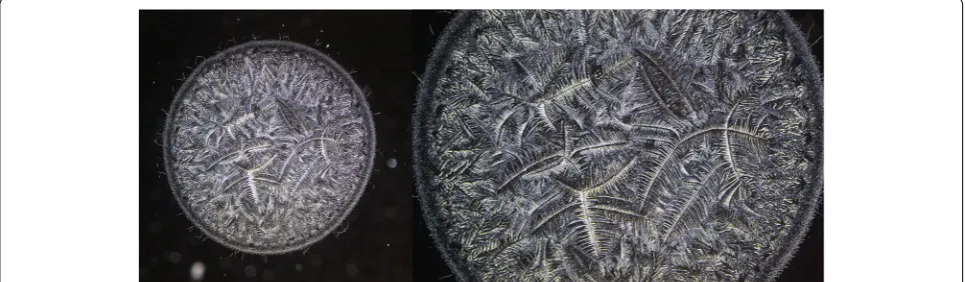
Conventional tear microdesiccates are produced when aliquots of 1–3 μL of tear fluid taken from a single eye are allowed to dry on a horizontal glass surface [12]. Volumes of tear fluid over 1.5 μL consistently generate microdes-iccates covering a surface usually higher than the larg-est observation fields of standard light microscopes fitted with a 4–5× objective lens. Thus, for comparison purposes the present study was focused on microdesic-cates produced from 1 μl of tear fluid whose circular images (about 3 mm diameter) were captured by using microscopes fitted with 10× eyepieces and a 2.5× objec-tive lens (field of view 10.62 mm) (Fig. 1). Under cur-rent experimental conditions in this study, desiccation of those tear aliquots usually took place in about 7–8 min and tear microdesiccates were highly reproducible [13]. In effect, multiple tear microdesiccates produced from identical aliquots taken from a single sample of tear fluid showed marked similarities in terms of morphological features and distribution of their main morphological domains (zones I through III and transition band) (Fig. 2). By contrast, tear microdesiccates produced simultane-ously from identical aliquots of tear fluid sampled from different healthy subjects usually presented marked dif-ferences from each other respecting morphological and structural features although they could exhibit a common design based on the occurrence of domains I through III and a transition band (see below).
Microscopic observation of single tear microdesiccates using different transmitted‑light techniques
Every single tear microdesiccate was observed through an orderly sequence of transmitted-light brightfield (BF),
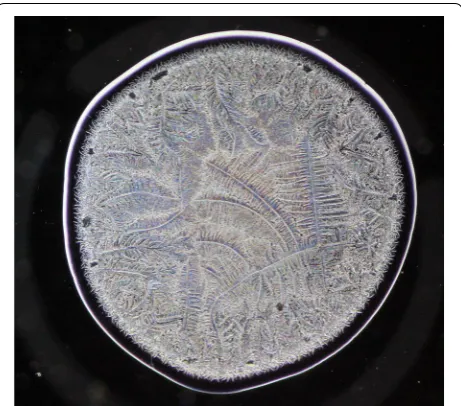
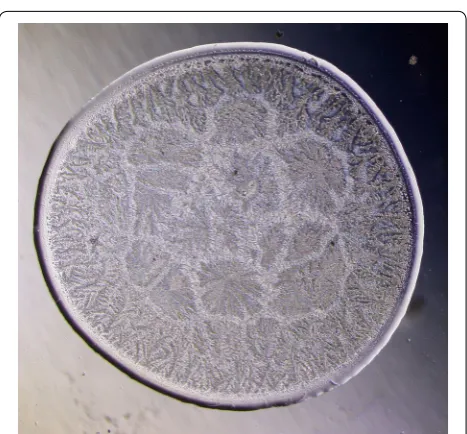
phase contrast (Ph1, Ph2, Ph3) and darkfield (DF) micro-scope techniques. As shown in Figs. 3, 4, 5, 6 and 7, each of those techniques provided different but complemen-tary images. Transmitted-light brightfield microscopy of tear desiccates provided sufficiently contrasted images showing a regular mostly homogeneous bulky continu-ous structure (zone I) serving as an external boundary for the whole microdesiccate (Fig. 3). Such feature was better defined by lowering of light intensity. Toward the inside of the desiccate and close to zone I, poorly defined bunches of relatively small fern-like structures could be seen. These would represent zone II. A few major fern-like crystalloid structures in zone III at the center of the microdesiccate were hardly seen. The transition band was not seen at all. Transmitted-light phase contrast tech-nique for observing tear microdesiccates was conducted using successively the phase stop positions Ph1, Ph2 and Ph3 of a universal 5-position condenser system tur-ret. Using the stop position Ph1, a translucent perimetral band (zone I) was a remarkable feature of microdesiccates (Fig. 4). With this observation method, the external bor-der of zone I represented a well-defined limit of the whole microdesiccate. Individual or interconnected filamentous structures crossing the whole width of zone I were visible. This was a highly variable feature among microdesiccates
Fig. 2 Morphological zones in a normal tear microdesiccate imaged with phase contrast (Ph3) microscopy. A hardly seen hyaline zone I Z1 surrounds the whole circular area of the body of the tear desiccate in close proximity to a clearly structured transition band Tb. At the centermost area of the desiccate (demarcated by a black circumfer‑ ence) abundant major fern‑like crystalloids feature zone III Z3. A compact homogeneous band of short fern‑shaped or leaf-shaped crystalloid structures located between the transition band and zone III represents zone II Z2. Some bright filamentous structures (f ) can be also seen as part of zone I
Fig. 3 Representative image of a normal tear microdesiccate as observed by transmitted‑light microscopy with bright‑field illumina‑ tion. A tear microdesiccate was produced from 1 µL of a tear sample and then observed with a microscope fitted with a 10× eyepiece and a 2.5× objective lens and a universal 5‑position condenser system turret. Zone I is seen as a homogeneous bulky continuous structure that surrounds a mass of highly diverse poorly defined crystalloids
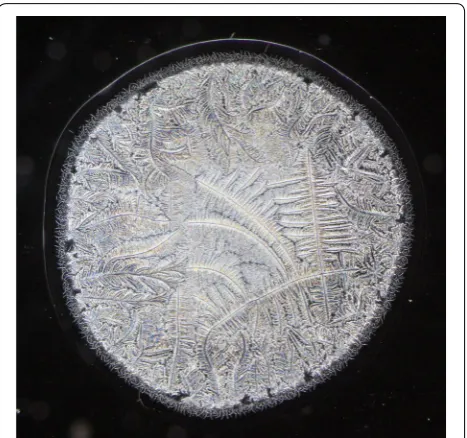
from different subjects. The internal border of zone I was now shown to be in contact with a distinctive structured transition band. Using Ph1, the transition band could be seen as composed of highly interwoven filamentous ele-ments (invisible with the brightfield microscopy!) delim-iting the whole mass of tear crystalloids. Ph1 microscopy also showed that fern-like and leaf-like centripetally ori-ented structures emerge from the transition band and seem to be anchored to it. Though individually those structures were not well-defined, as a group they con-figured a better defined zone II of tear microdesiccates. Likewise, the centermost part of the desiccate (zone III) could be identified by default after the identification of the inner limits of zone II but own structures of zone III could be seen without much structural details. When the stop position of the condenser was changed to Ph2, zone I became barely visible although some filamentous struc-tures crossing it (whose number was dependent upon the particular tear sample) were easily seen (Fig. 5). By this observation method a well-defined transition band consisting of highly convoluted filamentous components with nitid limits both toward zone I and zone II could be appreciated. Toward the center of the microdesiccate, crystalloids of zones II and III became better resolved. Using the stop position Ph3 of the condenser, zone I fully Fig. 5 Representative image of a normal tear microdesiccate as
observed by transmitted‑light microscopy with phase 2 illumina‑ tion. Both tear microdesiccate production and the lens system of the microscope were those described in the legend to Fig. 3. Both the outer border of zone I and its close contact with a well‑defined transi‑ tion band are two main features of tear microdesiccates derived from Ph2 illumination. Fern‑like crystalloids of zones II and III are also seen
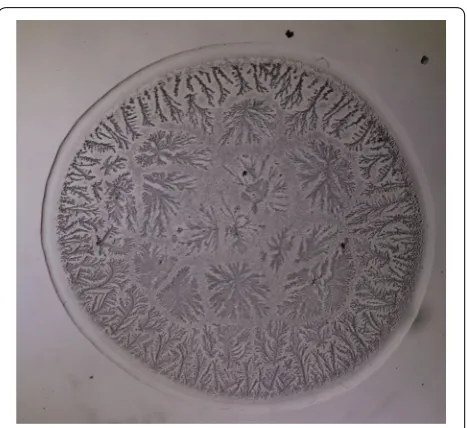
Fig. 6 Representative image of a normal tear microdesiccate as observed by transmitted‑light microscopy with phase 3 illumina‑ tion. Both tear microdesiccate production and the lens system of the microscope were those described in the legend to Fig. 3. Zone I is not visible but the transition band is well‑defined. In addition, opti‑ mum contrast of fern‑like crystalloids is achieved so that the border between zones II and III can readily be identified
disappeared and filamentous elements previously seen as part of this zone were readily visible without a wrap-ping structure (Fig. 6). The transition band could be seen as an even more discrete zone of the microdesiccate dis-playing a clear distinction from zone II. Toward the center of the microdesiccate, Ph3 allowed to remark the minor and major crystalloids from zones II and III, respectively, and to set clear-cut differences between those zones. Fine structural details of those crystalloids, as well as their differential distribution in the microdesiccate, could be readily appreciated. Finally, using the transmitted-light darkfield technique and with a proper control of the intensity of light coming out of the condenser, zone I was mostly invisible but the presence of (a variable number of) transverse filamentous structures revealed its pres-ence (Fig. 7). Although less evident, the transition band was again the outermost structured visible component of the desiccate. In addition, crystalloids of zones II and III became properly resolved. With this observation tech-nique, both main and secondary axes of major crystalloids occurring in zone II, and a fraction of those occurring in zone III, displayed strong light-scattering properties. A summary of the effects of illumination on the main fea-tures of tear microdesiccates is shown in Table 1.
Optimizing the observation of entire tear microdesiccates by transmitted‑light microscopy
Apart from data collection from tear microdesiccates using the standard fixed positions of a universal 5-posi-tion condenser system turret, addi5-posi-tional observa5-posi-tions were conducted by setting the condenser in interme-diate positions between some of the standard ones. This study aimed at getting single images of tear desic-cates showing optimally their four main morphological domains. Because post-Ph2 positions in the turret disk, including Ph3 and DF, had resulted in a marked invisi-bilization of zone I, the new observations were focused on positions between BF and Ph1 as well as between Ph1
and Ph2. Turret positions between BF and Ph1 (Fig. 8)
as well as others between Ph1 and Ph2 (Figs. 9, 10) pro-duced microdesiccate images in which both zone I and the structured body of the tear desiccate could be jointly appreciated. Using these settings, zone I could be seen as a continuous seemingly compact cylindrical structure that borders the whole desiccate (Figs. 8, 9, 10). A highly variable number of filamentous substructures appeared as integral parts of zone I. Thus, condenser positions over
the range Ph1/Ph2 but closer to Ph2 (Ph1/Ph2+) showed
the filamentous substructures as carvings on zone I (Fig. 10). On the other hand, the transition band could be seen as a complex substructure displaying morphologi-cal differences when observed by setting the condenser at various positions over the intermediate ranges BF/Ph1 and Ph1/Ph2. In addition, the body of the desiccate dis-played a variety of major and minor crystalloids, includ-ing fern-like structures. Altogether, positions over the range Ph1–Ph2, either closer to Ph1 (Ph1+/Ph2) (Fig. 9)
or closer to Ph2 (Ph1/Ph2+) (Fig. 10) proved successful
in producing “balanced” images of desiccates in which the main features of both zone I, transition band, zone II and zone III could be jointly observed. Such images were highly reproducible, that is, microdesiccates produced out of several tear samples taken from single healthy sub-jects and analyzed using selected illumination conditions over the range Ph1/Ph2 showed with no exception highly similar morphological profiles (Fig. 11).
Table 1 Summary for the influence of illumination on the visibility of the main features of tear microdesiccates
BF brightfield; Ph1 Phase 1 contrast; Ph2 Phase 2 contrast; Ph3 Phase 3 contrast;
DF darkfield
Visibility:– nil; + scarce; ++ intermediate; +++ high
BF Ph1 Ph2 Ph3 DF
Zone I ++ ++ + – –
Zone I filaments – + ++ ++ +
Bulky appearance of zone I ++ + – – –
Transition band – ++ +++ +++ +
Zone II‑ferns + + ++ +++ ++
Zone III‑ferns + ++ ++ +++ ++
Discussion
In this study we have identified experimental conditions that will support the assessment of tear microdesiccates by variants of light microscopy. To date, studies involving characterization of single tear microdesiccates have fre-quently used either darkfield microscopy or phase con-trast microscopy and have been exclusively focused on assessing either presence or absence of fern-like crystal-loids. Furthermore, consideration of any other structural element of microdesiccates being formed during tear water evaporation has been disregarded consistently [1,
8–11]. Recent studies using light microscopy have shown that a normal tear microdesiccate comprises several annularly distributed morphological domains or zones, namely zones II and III (two highly distinctive zones whose organization is based on fern-like crystalloids), a transition band (a narrow compact band whose structure is based on rope-like elements) and zone I (a translucent and barely visible outer circle of desiccates) [12]. By mak-ing adjustments in the method of focusmak-ing light onto the dry tear specimen by means of an Abbé condenser with 5-position turret (brightfield, phase contrasts 1, 2 and 3 and darkfield) we have now been successful in identifying optimal conditions for the differential (and simultane-ous) observation of some of those structural domains of tear microdesiccates. Thus, by using illumination systems other than those of the usual darkfield or phase contrast microscopy, zone I became clearly noticeable as an archi-tectural distinct component of normal tear microdesic-cates. To date, zone I of tear microdesiccates has gone mostly unnoticed among tear fern analysts despite it was originally described in 1955 by Solé as an amorphous and barely visible structure which can be penetrated by tiny
rod-like elements [14–16]. Furthermore, by means of
finer adjustments consisting in positioning the condenser in intermediate positions between brightfield and phase 1, or between phases 1 and 2, both fern-like crystalloids and zone I, that is, the two most distinctive elements of a normal tear microdesiccate, could be seen simultane-ously and with a properly balanced resolution.
An analysis of the specialized literature shows that practically none of the reports concerning tear micro-desiccates—with the exception of that of Horwath et al.
[17]—present either whole tear microdesiccates or
their outer zone I [17–21]. Moreover, descriptions in
those reports are referred only to presence or absence of tear fern-like crystalloids. Such observational bias of researchers and clinicians using light microscopy of tear microdesiccates as a diagnostic test for the assessment of the ocular surface seems to derive from very differ-ent sources. Firstly, production of tear microdesiccates Fig. 9 Representative image of a normal tear microdesiccate as
observed by transmitted‑light microscopy with Ph1+/Ph2 illumina‑ tion. Both tear microdesiccate production and the lens system of the microscope were those described in the legend to Fig. 3. Again, both a roughly cylindrical continuous zone I, a complex transition band and the structured body of the tear desiccate displaying clearly defined major and minor crystalloids could be jointly appreciated. Filaments can be also seen as integral parts of zone I
on glass surfaces and their analysis by light microscopy is widely known as the tear ferning test. Certainly, such nomenclature draws attention to a single goal [10, 17,
18]. On the other hand, most of reports on tear
micro-desiccates do coincide in documenting just a very minor area of every single microdesiccate [2, 7, 8, 20, 21]. Con-sidering both variety and abundance of structures and domains that are usually present in normal tear micro-desiccates, such selection is by far a confounding fac-tor. Another also important factor accounting for the only partial use of the information derived from any tear microdesiccate is the lack of standardization among the observation procedures used in different studies. Thus, observations reported to have been made at magnifica-tions of either 10× [21–23], 40× [8], 25 and 125× [17], 40–100× [24], 100× [25], or even 400× [9], are hardly comparable. Moreover, reports rarely indicate the par-ticular combination of ocular and objective lenses used in the observations, which can also preclude compari-sons and be of great significance for appropriate data collection. Quite often, the areas of the fields of view
10] or polarized-light microscopy [20]. Some reports do not provide sufficient technical data in this respect [15]. Morphological information obtained by using those dif-ferent experimental approaches can differ markedly. Concerning tear microdesiccates we have now shown that darkfield microscopy enhances imaging of fern-like crystalloids but, in turn, makes zone I practically invisible.
In an already classical report aimed to systematize the assessment of tear microdesiccates, Rolando proposed the use of a 4-level numeric scale (I through IV) to evalu-ate the power of tear fluid to form fern-like crystalloids following spontaneous desiccation on a glass surface at ambient conditions [1, 10]. In addition, those authors showed that levels I and II (higher fern-forming capa-bility) were more frequent among tear fluids collected from normal eyes whereas levels III and IV (lower fern-forming capability) were more common in tear fluids of patients with keratoconjunctivitis sicca [1, 10]. Given the remarkable diversity of procedures to produce and evalu-ate tear microdesiccevalu-ates, it has not been surprising that the Rolando’s scale has been used or interpreted very dif-ferently by different authors (e.g. ref. [20] versus ref. [22]). Also, in a recent analytical study on typing tear micro-desiccates in association with the tear ferning test, a new 5-point scale displaying improved discrimination, repeat-ability and relirepeat-ability over the conventional Rolando’s scale was proposed in order to provide a better support to researchers and clinicians using the test [18]. Such study was also focused only on the fern-like crystalloids with no consideration to any other structural element of tear microdesiccates [18]. Despite these various techni-cal, methodological and interpretive limitations, accept-able sensitivity and specificity values of the tear ferning test in screening Dry eye have been reported [20, 26, 27]. Certainly, the properties displayed by a tear microdesic-cate should account at least partly for the quality of the tear fluid from which it is produced. In this context, the link made by Rolando between a morphological feature of tear microdesiccates and tear quality is highly valu-able and should be given first consideration. In accord-ance with that premise, our study was aimed at defining basic experimental conditions allowing the observer to characterize whole tear microdesiccates being produced under standard conditions. Thus, the combined use of a tear volume of 1–1.5 µL to produce a microdesiccate and a 2.5× objective lens for its analysis represented pri-mary conditions to recognize a whole microdesiccate. To resolve and characterize the main morphological domains of a tear microdesiccate the use of alternative illumination settings, in reference to the basic positions of a standard 5-position turret condenser, was found to be equally important. In this study, some of the domains
of a tear microdesiccate could be consistently resolved by using particular types of illumination. In agreement with a number of previous reports, the major tear fern-like crystalloids can be properly resolved using darkfield microscopy or some types of phase contrast illumination (Ph3). However, under this type of illumination zone I of tear microdesiccated specimens becomes practically invisible. Contrarily, by using some phase contrast illu-minations (Ph1) the borders of zone I become clearly demarcated but resolution of the centermost fern-like crystalloids is reduced significantly. On the other hand, because of the consistent lack of use of stains in the assessment of tear microdesiccates, brightfield micros-copy has not been exploited yet for the assessment of tear microdesiccates. Accordingly, none of the standard posi-tions of the 5-position condenser by itself has allowed to describe comprehensively a whole tear microdesiccate. In order to attain views of microdesiccates in which both the zone I and the domains displaying fern-like crystal-loids were jointly resolved, additional illumination set-tings provided by intermediate positions between the five fix positions in the turret condenser were explored. Thus, illuminations of tear microdesiccates from healthy subjects provided by intermediate positions between the standard brightfield and phase 1 positions or between the standard phase 1 and phase 2 positions resulted in whole tear microdesiccates showing simultaneously both fern-like crystalloids of zones II and III, a compact and struc-tured zone I and a complex transition band. Recently reported studies from our laboratory have shown that the main domains of tear microdesiccates have distinc-tive physicochemical characteristics [28]. In that regard, using energy dispersive X-ray analysis (EDXA) coupled to scanning electron microscopy, Pearce and Tomlinson
showed the presence of sulphur (together with K+ and
Cl−) at the edge of the dried teardrop but not in the
morphology of whole tear microdesiccates with struc-tural, compositional and functional aspects of tear fluid in individual patients and eyes. Clinical research in that direction should shed important lights on this new con-sideration of tear microdesiccates.
Conclusions
Imaging of entire tear microdesiccates by transmitted-light microscopy depends upon illumination. A more comprehensive description of tear microdesiccates on the basis of structural domains can be achieved by combining illumination methods (bright-field, phases 1–3 and dark-field). Optimal conditions for the differential observation of structural domains of tear microdesiccates were iden-tified. Thus, zones II and III (fern-like crystalloids) and zone I (the outermost homogeneous continuous struc-ture) can be considered now as the two most distinctive elements of a normal tear microdesiccate, Both of them can be seen simultaneously and with a properly balanced resolution by transmitted-light microscopy.
Methods
Subjects
Fourteen subjects (10 men and 4 women; age range 18–27 years old) served as healthy volunteers. All of them fulfilled the following criteria: (a) Ocular Sur-face Disease Index (OSDI) score of 12 or less [32], (b) Schirmer I score of 10 mm or more at 5 min [33], (e) Flu-orescein break-up time (FBUT) score of 5 s or more [34], (f) Ferning score I or II [10, 11], (g) tear osmolarity (Tear Lab Osmolarity System®) of 316 m Osm/L or less [35]. In addition, all subjects were neither contact lens wearers nor artificial tear users and had not taken any medication during the 3 months before tear assessment. All subjects acted as unilateral tear donor volunteers and signed an Informed Consent. The study was conducted according to the recommendations of the Declaration of Helsinki and approved by both the Ethics Committee of the Fac-ulty of Medicine, University of Chile and the Ethics Com-mittee of Fondecyt (Fondo de Desarrollo Científico y Tecnológico)-Chile.
Tear collection
From each eye a single 3-min tear sample was taken by using absorbing polyurethane mini sponges as detailed elsewhere [36]. Aliquots of each tear sample were taken for desiccation assays immediately after collection.
Tear desiccation and image capture
Unless otherwise specified, from each fresh tear sample 1.0-μL aliquots were taken using a 2-μL Gilson micropi-pette fitted with a ultrafine tip and placed sharply on the center of individual glass microscope slides that had been
positioned horizontally. Tear aliquots were allowed to dry spontaneously at ambient conditions (temperature range of 18–25 °C, relative humidity range of 36–40 % and 570 meters above sea level (MASL). Micrographs of the dry specimens, named microdesiccates, were taken using a Zeiss Axiostar Plus microscope (objective lens = 2.5×, ocular lenses = 10×) fitted with a universal 5-position condenser system turret (bright-field, Phases 1, 2 and 3 and dark-field) and with a Canon Powershot G10 14.7 megapixel digital camera. Microdesiccates were routinely prepared in triplicate and classified as types I through IV according to Rolando’s criteria [1, 10].
Materials
Ultrafine micropipette tips (Natural round Microflex ™, round capillary section, OD 0.57 mm) were acquired from Therapak Pharma Services Ltd. (Hayes, Middlesex, United Kingdom). Glass microscope slides were obtained from W. Knittel Glass (Braunschweig, Germany). Mini-sponges for tear collection (Pele Tim, sizes 0 or 1) were purchased from VOCO GmbH (Cuxhaven, Germany).
Authors’ contributions
All authors contributed extensively to the work presented in the paper. FT‑S car‑ ried out transmitted‑light microscopy data collection from tear microdesiccates and produced graphic representation of experimental data; LT‑C, FV, CC and CP conducted clinical assessments of patients to screen for normal ocular surfaces; DS‑T and DL performed tear collection and morphological analysis of tear microdesiccates; HT‑A designed experiments and carried out a critical review of the manuscript; RL‑S participated in the various stages of the experiments, including identification of morphological domains in tear microdesiccates and manuscript writing. All authors read and approved the final manuscript.
Author details
1 Cellular and Molecular Biology Program, Faculty of Medicine‑ICBM, University
of Chile, Independencia 1027, Independencia, Postal code 8380453 Santiago, Chile. 2 Fundación Oftalmológica Los Andes Ophthalmology Clinic (FOLA), Las
Hualtatas 5951, Vitacura, Postal code 7650710 Santiago, Chile.
Acknowledgements
This study was partially supported by Grant Fondecyt 1151005 from Comisión Nacional de Investigación Científica y Tecnológica (CONICYT)‑Chile.
Competing interests
All authors declare that they have no competing interests.
Received: 26 January 2016 Accepted: 24 May 2016
References
1. Rolando M. Dry eye: diagnostic test template. Ocul Surf. 2007;5:147–8. 2. Srinivasan S, Joyce E, Jones LW. Tear osmolality and ferning patterns in
postmenopausal women. Optom Vis Sci. 2007;84:588–92.
3. Tabbara KF, Okumoto M. Ocular ferning test. A qualitative test for mucus deficiency. Ophthalmology. 1982;89:712–4.
4. Maragou M, Vaikousis E, Ntre A, Koronis N, Georgiou P, Hatzidimitriou E, Sotsiou F, Dantis P. Tear and saliva ferning tests in Sjögren’s syndrome (SS). Clin Rheumatol. 1996;15:125–32.
• We accept pre-submission inquiries
• Our selector tool helps you to find the most relevant journal • We provide round the clock customer support
• Convenient online submission • Thorough peer review
• Inclusion in PubMed and all major indexing services • Maximum visibility for your research
Submit your manuscript at www.biomedcentral.com/submit
Submit your next manuscript to BioMed Central
and we will help you at every step:
6. Miranda‑Torricelli AA, Novaes P, Matsuda M, Alves MR, Monteiro ML. Ocular surface adverse effects of ambient levels of air pollution. Arq Bras Oftalmol. 2011;74:377–82.
7. Evans KS, North RV, Purslow C. Tear ferning in contact lens wearers. Oph‑ talmic Physiol Opt. 2009;29:199–204.
8. Beden Ü, Turgut‑Çoban D, Aygün C, Ulu‑Güngör I, Süllü Y, Erkan D, Kücüködük S. Tear secretion and ferning patterns among premature and full‑term newborns. Turk J Pediatr. 2008;50:155–9.
9. Li M, Zhang M, Lin Y, Xiao Q, Zhu X, Song S, Lin J, Chen J, Liu Z. Tear func‑ tion and goblet cell density after pterygium excision. Eye. 2007;21:224–8. 10. Rolando M. Tear mucus ferning test in normal and keratoconjunctivitis
sicca eyes. Chibret Int J Ophthalmol. 1984;2:32–41.
11. Rolando M, Baldi F, Zingirian M. The effect of hyperosmolarity on tear mucus ferning. Fortschr Ophthalmol. 1986;83:644–6.
12. López‑Solís RO, Traipe‑Castro L, Salinas‑Toro D, Srur M, Toledo‑Araya H. Microdesiccates produced from normal human tears display four distinc‑ tive morphological components. Biol Res. 2013;46:299–305.
13. Traipe‑Castro L, Salinas‑Toro D, López D, Zanolli M, Srur M, Valenzuela F, Cáceres A, Toledo‑Araya H, López‑Solís R. Dynamics of the in vitro tear fluid desiccation on a glass surface: a contribution to tear quality assess‑ ment. Biol Res. 2014;47:25. doi:10.1186/0717‑6287‑47‑25.
14. Solé A. Die stagoskopie der tränen. Klin Monatsbl Augenheilkd. 1955;126:446–51.
15. Del Rosario D. Prueba de cristalización lagrimal. In: Murube J, editor. Ojo Seco‑dry eye, 73 Congreso S.E.O., Granada: 1997: Cap. 29. http://www. oftalmo.com/publicaciones/ojoseco.
16. Murube J. Tear crystallization test: two centuries of history. Ocul Surf. 2004;2:7–9.
17. Horwath J, Ettinger K, Bachernegg M, Schmut O. Ocular ferning test. Effect of temperature and humidity on tear ferning patterns. Ophthalmo‑ logica. 2001;215:102–7.
18. Masmali AM, Murphy PJ, Purslow C. Development of a new grading scale for tear ferning. Contact Lens Ant Eye. 2014;37:178–84.
19. Tiffany JM. Tears in health and disease. Eye (Lond). 2003;17:923–6. 20. Felberg S, Cordeiro H, Sato EH, Martini Filho D, Nishiwaki‑Dantas MC,
Endo RM, Dantas PE. Reproducibility of the classification of ocular ferning patterns in Sjogren’s syndrome patients. Arq Bras Oftalmol. 2008;71:228–33.
21. Rolando M, Baldi F, Calabria G. Tear mucus crystallization in children with cystic fibrosis. Ophthalmologica. 1988;197:202–6.
22. Masmali AM, Purslow C, Murphy PJ. The tear ferning test: a simple clinical technique to evaluate the ocular tear film. Clin Exp Optometry. 2014;97:399–406.
23. Masmali AM, Al‑Qhtani S, Al‑Gasham TM, El‑Hiti GA, Purslow C, Murphy PJ. Application of a new grading scale for tear ferning in non‑dry eye and dry eye subjects. Contact Lens Ant Eye. 2015;38:39–43.
24. Peponis V, Papathanasiou M, Kapranou A, Magkou C, Tyligada A, Melidonis A, Drosos T, Sitaras NM. Protective role of oral antioxidant supplementation in ocular surface of diabetic patients. Br J Ophthalmol. 2002;86:1369–73.
25. Iester M, Orsoni GJ, Gamba G, Taffara M, Mangiafico P, Giuffrida S, Rolando M. Improvement of the ocular surface using hypotonic 0.4 % hyaluronic acid drops in keratoconjunctivitis sicca. Eye. 2000;14:892–8.
26. Pensyl CD, Dillehay SM. The repeatability of tear mucus ferning grading. Optom Vis Sci. 1998;75:600–4.
27. Norn M. Quantitative tear ferning. Clinical investigations. Acta Ophthal‑ mol. 1994;72:369–72.
28. López‑Solís R, Salinas‑Toro D, López D, Segovia C, Villar K, Agüero P, Valen‑ zuela F, Traipe‑Castro L. Stratification of tear components during tear microdesiccation on vertical glass surfaces: a novel approach in tear fluid assessment. Cornea. 2015;34:959–66.
29. Pearce EI, Tomlinson A. Spatial location studies on the chemical composi‑ tion of human tear ferns. Ophthal Physiol Opt. 2000;20:306–13. 30. Wolff E. Muco‑cutaneous junction of the lid margin and the distribution
of tear fluid. Trans Ophthalmol Soc UK. 1946;66:291–308. 31. Holly FJ, Lemp MA. Tear physiology and dry eyes. Surv Ophthalmol.
1977;22:69–87.
32. Schiffman RM, Christianson MD, Jacobsen G, Hirsch JD, Reis BL. Reli‑ ability and validity of the ocular surface disease index. Arch Ophthalmol. 2000;118:615–21.
33. Vitali C, Moutsopoulos HM, Bombardieri S. The European Community Study Group on diagnostic criteria for Sjogren’s syndrome. Sensitivity and specificity of tests for ocular and oral involvement in Sjogren’s syndrome. Ann Rheum Dis. 1994;53:637–47.
34. Abelson M, Ousler G, Nally L. Alternate reference values for tear film break‑up time in normal and dry eye populations. Adv Exp Med Biol. 2002;506(Part B):1121–5.
35. Tomlinson A, McCann LC, Pearce EI. Comparison of human tear film osmolarity measured by electrical impedance and freezing point depres‑ sion techniques. Cornea. 2010;29:1036–41.