R E S E A R C H A R T I C L E
Open Access
Effectiveness of computerized clinical decision
support systems for asthma and chronic
obstructive pulmonary disease in primary
care: a systematic review
Mariam Fathima
1,2*, David Peiris
1,3, Pradnya Naik-Panvelkar
2, Bandana Saini
4and Carol Lyn Armour
1,2Abstract
Background:
The use of computerized clinical decision support systems may improve the diagnosis and ongoing
management of chronic diseases, which requires recurrent visits to multiple health professionals, disease and
medication monitoring and modification of patient behavior. The aim of this review was to systematically review
randomized controlled trials evaluating the effectiveness of computerized clinical decision systems (CCDSS) in the
care of people with asthma and COPD.
Methods:
Randomized controlled trials published between 2003 and 2013 were searched using multiple electronic
databases Medline, EMBASE, CINAHL, IPA, Informit, PsychINFO, Compendex, and Cochrane Clinical Controlled Trials
Register databases. To be included, RCTs had to evaluate the role of the CCDSSs for asthma and/or COPD in primary care.
Results:
Nineteen studies representing 16 RCTs met our inclusion criteria. The majority of the trials were conducted in
patients with asthma. Study quality was generally high. Meta-analysis was not conducted because of methodological
and clinical heterogeneity. The use of CCDSS improved asthma and COPD care in 14 of the 19 studies reviewed (74%).
Nine of the nineteen studies showed statistically significant (p < 0.05) improvement in the primary outcomes measured.
The majority of the studies evaluated health care process measures as their primary outcomes (10/19).
Conclusion:
Evidence supports the effectiveness of CCDSS in the care of people with asthma. However there is very
little information of its use in COPD care. Although there is considerable improvement in the health care process
measures and clinical outcomes through the use of CCDSSs, its effects on user workload and efficiency, safety, costs of
care, provider and patient satisfaction remain understudied.
Keywords:
CCDSS, Computerized clinical decision support systems, Asthma, COPD, Computerized clinical decision
making, Systematic review
Background
Chronic respiratory diseases, particularly asthma and
chronic obstructive pulmonary disease (COPD), kill more
than four million people every year world-wide and affect
hundreds of millions more [1]. Around 300 million people
suffer from asthma world-wide, with a projected increase
of an additional 100 million people by 2025 [1]. The
economic burden of asthma has been estimated to be the
highest among chronic diseases [2] and includes both
dir-ect (e.g. hospital admissions and costs of medications) and
indirect costs (e.g. days away from work) [2,3]. The Global
Burden of Disease Study projected that COPD, which
ranked sixth as a cause of death in 1990, will become the
third leading cause of death in 2030 [4].
Effective management of chronic diseases requires
op-timal dissemination and implementation of guidelines,
however there is a gap between scientific evidence-based
medicine and real clinical practice, especially in primary
care [5]. Although effective therapies and guidelines are
* Correspondence:[email protected]1
Sydney Medical School, University of Sydney, Sydney, New South Wales, Australia
2
Woolcock Institute of Medical Research, Sydney Medical School, University of Sydney, Sydney, New South Wales, Australia
Full list of author information is available at the end of the article
© 2014 Fathima et al.; licensee BioMed Central Ltd. This is an Open Access article distributed under the terms of the Creative Commons Attribution License (http://creativecommons.org/licenses/by/4.0), which permits unrestricted use, distribution, and reproduction in any medium, provided the original work is properly credited. The Creative Commons Public Domain Dedication waiver (http://creativecommons.org/publicdomain/zero/1.0/) applies to the data made available in this article, unless otherwise stated.
available, many patients with asthma still have frequent,
uncontrolled symptoms and do not receive optimal care.
Research demonstrates that only a quarter of patients with
persistent asthma symptoms take anti-inflammatory
medi-cations as recommended by the guidelines [6]. Much of
the cost of asthma care is attributable to poor disease
trol due to non-adherence to guideline-recommended
con-troller therapies [7,8], over reliance on reliever medication
[9], inadequate monitoring of disease severity and
insuffi-cient patient education for effective self-management [10].
Similarly, the care provided for patients with COPD in
community settings indicates low level of awareness and
implementation of guidelines [11-13], despite the high
level of evidence for the efficacy of guideline-based
inter-ventions. Medication use is often not in accordance with
the guidelines [14] and a high proportion of patients
prescribed with inhalers use them incorrectly [15,16].
Smoking cessation can reduce the rate of decline in lung
function, yet many with COPD continue to smoke.
In-fluenza and pneumococcal vaccinations can reduce the
rate of exacerbations, hospitalizations and death [12].
However, in Australia, for example, based on the 2004-05
National Health Survey 25% and 59% of those with
self-reported COPD had never been administered influenza or
pneumococcal vaccinations respectively [3].
Globally, studies evaluating the provision of care by
clinicians suggest that evidence-based care was delivered
approximately 40-55% of the time [17-19]. The reasons
for sub-optimal uptake of guidelines into practice are
complex and occur at the patient, provider and system
levels [20]. Given, the rising global disease burden from
asthma and COPD and intractable health system deficits
in providing evidence based care there is a pressing need
to identify systems-focused solutions. Computerized
Clinical Decision Support System (CCDSS) is well
estab-lished as one strategic method of improving care for
pre-vention and management of chronic conditions. A
CCDSS is
“
any electronic information system based on a
software algorithm designed to aid directly in clinical
deci-sion making, in which characteristics of individual patients
are used to generate patient-specific assessments or
rec-ommendations that are then presented to clinicians for
consideration
”
[21]. CCDSS is valuable not only to the
cli-nicians, but can also provide other health care providers,
patients, or caregivers with clinical knowledge and
patient-specific information to help them make decisions that
en-hance patient care [22]. Typically CCDSS interventions
include forms and templates for entering and documenting
patient information, and alerts, reminders, and order sets
for providing suggestions and other support.
Importantly, CCDSS interventions can increase
adher-ence to evidadher-ence-based medical knowledge, reduce
un-necessary variation in clinical practice and improve their
clinical decision-making process [21,23].
CCDS systems that are well designed and implemented
have the potential to improve health care quality, increase
ef-ficiency by reducing mental workload, improve clinical
work-flow and reduce health care costs [23,24]. CCDSS has been
used in the management of various chronic conditions such
as diabetes [25,26], hypertension [27,28], dyslipidemia [29,30]
and cardiac care [31] across various health care settings.
Although there have been reviews of the effectiveness of
CCDSSs in the management of various disease states in
different clinical settings [32,33], there have been no
sys-tematic appraisals of their impact on chronic respiratory
diseases such as asthma and COPD in primary care. Our
systematic review aimed to synthesize evidence for its use
in the care of patients with asthma and COPD and to
iden-tify the key features of those systems that have the potential
to overcome health system barriers and improve outcomes.
Methods
CCDSS definition
CCDSS was defined as an automated process for
com-paring patient-specific characteristics against a
comput-erized knowledge base with resulting recommendations
or reminders presented to the provider (or the user) to
consider, to help them in clinical decision making.
Search strategy
The electronic databases MEDLINE, EMBASE, CINAHL,
IPA, Informit, PsychINFO, Compendex, and Cochrane
Clinical Controlled Trials Register databases were reviewed
by the primary author. MeSH terms
‘
clinical decision
sup-port systems/tools/techniques/aids/guidelines
’
,
‘
computer
assisted therapy/diagnosis/decision making
,
’
‘
computeris(z)
ed decision making
’
,
‘
CCDSS
,
’
‘
medical informatics
’
,
‘
asthma
’
,
‘
COPD
’
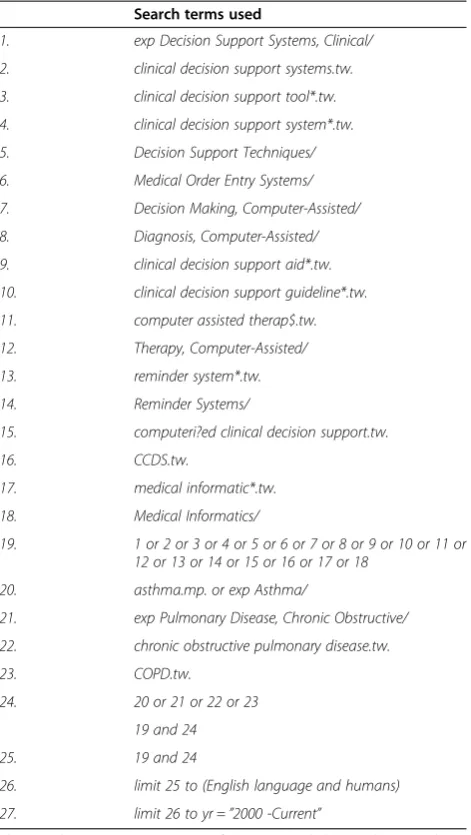
and combinations thereof were included. The
de-tailed search strategy that was used in MEDLINE is
out-lined in Table 1. This search strategy was repeated in all
other databases. We also systematically searched the
refer-ence lists of all the included studies and relevant reviews.
Inclusion criteria
Empirical studies published in the English language
between 2003 to May 2013;
Pediatric or adult CCDSS interventions involving
COPD and/or asthma screening, prevention, case
detection, and management;
Randomized controlled trials comparing CCDSS with
explicitly defined clinical or process outcome measures;
CCDS system used by any clinicians (physicians,
physician assistants, pharmacists, dentists,
pulmonary specialists or nurse practitioners) directly
involved in patient care;
CCDSS targeting patients in improving
self-management.
Exclusion criteria
Review articles, conference proceedings, meeting
abstracts;
Paper-based tools (e.g. flow charts and
non-electronic clinical pathway tools);
CCDSS interventions in people with other
conditions (rather than asthma and COPD),
including other respiratory diseases;
CCDSS for medical education purposes or
only providing summaries of information for
patients;
Group based interventions that did not include
individual clinical assessment;
Evaluations which focused only on the technical
performance of the system as opposed to its effect
on clinical practice;
In-patient hospital based systems.
Study selection
Two authors (MF and PNP) independently reviewed
the titles, index terms, and abstracts of the identified
references and rated each paper as
“
potentially
rele-vant
”
or
“
not relevant
”
based on study design, subjects,
setting, and intervention. These two authors then
independently reviewed the full texts of the selected
potentially relevant articles and again rated each paper
as
“
potentially relevant
”
or
“
not relevant
”
. After
appli-cation of the full set of inclusion and exclusion criteria
to the potentially relevant studies, a further limitation
was then applied, and only RCTs were included.
Disagreements between reviewers were resolved by
discussion with a third author (CA) until consensus
was reached.
Data extraction and quality assessment
The primary author (MF) independently extracted data
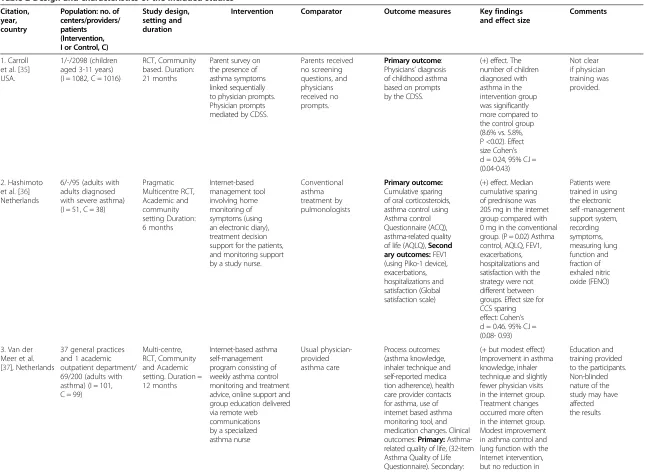
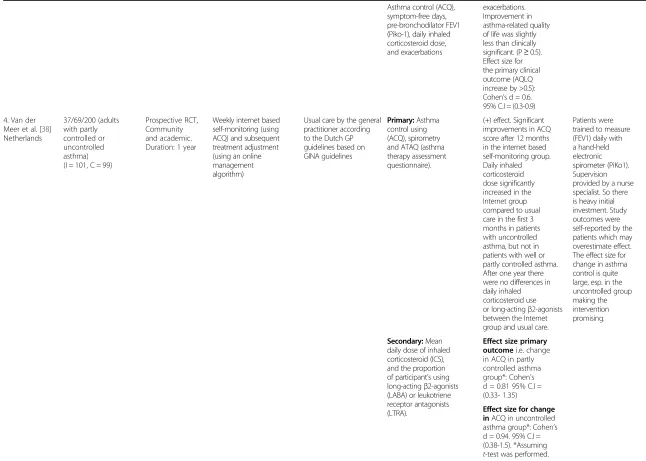
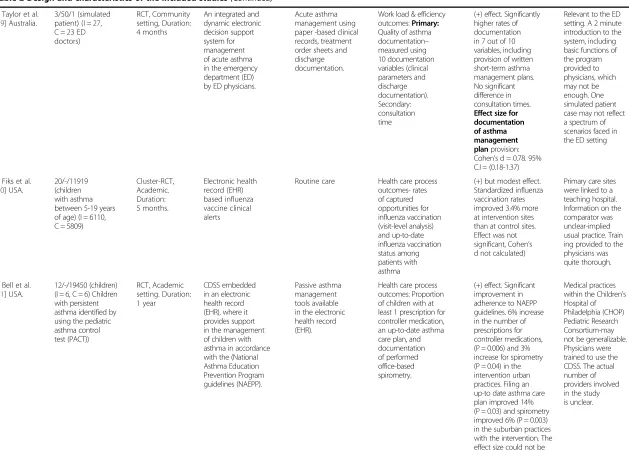
related to Participants, Intervention, Comparator,
Out-comes and Study design by utilizing the PICOS strategy
for describing trials (Table 2). The second author (PNP)
then independently examined the studies and extracted
data to confirm accuracy. The data abstracted included
the following information: manuscript authors, year of
publication, the study design and duration, participant
characteristics (health practitioners, patients), the type of
CCDSS intervention, the comparator (usual care or
another form of CDSS) and the outcomes measured
(clinical, process, workload and efficiency, economic and
implementation). Bias was assessed using the Cochrane
risk of bias tool [34], and was based on the following five
dimensions:
randomization,
allocation
concealment,
blinding of participants, personnel or outcome assessors,
selective outcome reporting and completeness of
follow-up [duration of follow-follow-up, intention to treat (ITT)
analysis, withdrawals, and reasons for dropouts]. Each of
the above attributes was assessed as being high, low or
unclear and an overall risk of bias was reached for each
of the included studies (Table 3).
Assessment of intervention effects
Type of CCDSS intervention provided
Trials were organized into three categories based on the
type of CCDSS intervention provided (Table 4):
1) Diagnostic advice only;
2) Drug therapy management only; and
3)
‘
Multi-faceted
’
interventions comprising two or
more different intervention components.
Table 1 Search strategy for Medline
Search terms used
1. exp Decision Support Systems, Clinical/
2. clinical decision support systems.tw.
3. clinical decision support tool*.tw.
4. clinical decision support system*.tw.
5. Decision Support Techniques/
6. Medical Order Entry Systems/
7. Decision Making, Computer-Assisted/
8. Diagnosis, Computer-Assisted/
9. clinical decision support aid*.tw.
10. clinical decision support guideline*.tw.
11. computer assisted therap$.tw.
12. Therapy, Computer-Assisted/
13. reminder system*.tw.
14. Reminder Systems/
15. computeri?ed clinical decision support.tw.
16. CCDS.tw.
17. medical informatic*.tw.
18. Medical Informatics/
19. 1 or 2 or 3 or 4 or 5 or 6 or 7 or 8 or 9 or 10 or 11 or 12 or 13 or 14 or 15 or 16 or 17 or 18
20. asthma.mp. or exp Asthma/
21. exp Pulmonary Disease, Chronic Obstructive/
22. chronic obstructive pulmonary disease.tw.
23. COPD.tw.
24. 20 or 21 or 22 or 23
19 and 24
25. 19 and 24
26. limit 25 to (English language and humans)
27. limit 26 to yr =”2000 -Current”
The asterisk (*) represents any group of characters, including no character. The question mark (?) represents any single character. The dollar sign ($) represents zero or one character (used when searching for expressions).
Citation, year, country
Population: no. of centers/providers/ patients (Intervention, I or Control, C)
Study design, setting and duration
Intervention Comparator Outcome measures Key findings
and effect size
Comments
1. Carroll et al. [35] USA.
1/-/2098 (children aged 3-11 years) (I = 1082, C = 1016)
RCT, Community based. Duration: 21 months
Parent survey on the presence of asthma symptoms linked sequentially to physician prompts. Physician prompts mediated by CDSS.
Parents received no screening questions, and physicians received no prompts.
Primary outcome: Physicians’diagnosis of childhood asthma based on prompts by the CDSS.
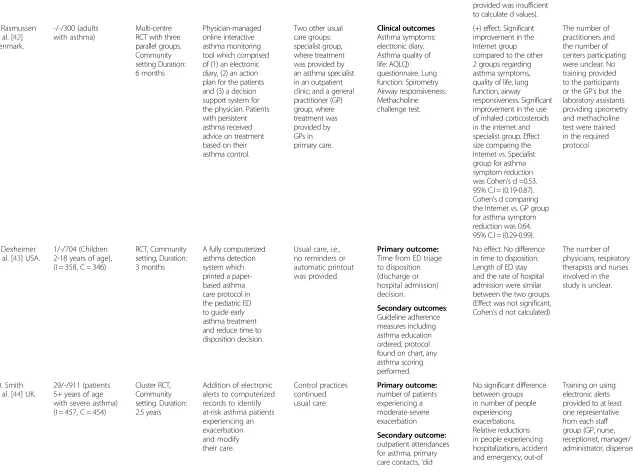
(+) effect. The number of children diagnosed with asthma in the intervention group was significantly more compared to the control group (8.6% vs. 5.8%, P <0.02). Effect size Cohen’s d = 0.24, 95% C.I = (0.04-0.43) Not clear if physician training was provided. 2. Hashimoto et al. [36] Netherlands
6/-/95 (adults with adults diagnosed with severe asthma) (I = 51, C = 38)
Pragmatic Multicentre RCT, Academic and community setting Duration: 6 months Internet-based management tool involving home monitoring of symptoms (using an electronic diary), treatment decision support for the patients, and monitoring support by a study nurse.
Conventional asthma treatment by pulmonologists Primary outcome: Cumulative sparing of oral corticosteroids, asthma control using Asthma control Questionnaire (ACQ), asthma-related quality of life (AQLQ),Second ary outcomes:FEV1 (using Piko-1 device), exacerbations, hospitalizations and satisfaction (Global satisfaction scale)
(+) effect. Median cumulative sparing of prednisone was 205 mg in the internet group compared with 0 mg in the conventional group. (P = 0.02) Asthma control, AQLQ, FEV1, exacerbations, hospitalizations and satisfaction with the strategy were not different between groups. Effect size for CCS sparing effect: Cohen’s d = 0.46. 95% C.I = (0.08- 0.93)
Patients were trained in using the electronic self -management support system, recording symptoms, measuring lung function and fraction of exhaled nitric oxide (FENO)
3. Van der Meer et al. [37], Netherlands
37 general practices and 1 academic outpatient department/ 69/200 (adults with asthma) (I = 101, C = 99)
Multi-centre, RCT, Community and Academic setting. Duration = 12 months
Internet-based asthma self-management program consisting of weekly asthma control monitoring and treatment advice, online support and group education delivered via remote web communications by a specialized asthma nurse Usual physician-provided asthma care Process outcomes: (asthma knowledge, inhaler technique and self-reported medica tion adherence), health care provider contacts for asthma, use of internet based asthma monitoring tool, and medication changes. Clinical outcomes:Primary: Asthma-related quality of life, (32-item Asthma Quality of Life Questionnaire). Secondary:
(+ but modest effect) Improvement in asthma knowledge, inhaler technique and slightly fewer physician visits in the internet group. Treatment changes occurred more often in the internet group. Modest improvement in asthma control and lung function with the Internet intervention, but no reduction in
Asthma control (ACQ), symptom-free days, pre-bronchodilator FEV1 (Piko-1), daily inhaled corticosteroid dose, and exacerbations
exacerbations. Improvement in asthma-related quality of life was slightly less than clinically significant. (P≥0.5). Effect size for the primary clinical outcome (AQLQ increase by >0.5): Cohen’s d = 0.6. 95% C.I = (0.3-0.9)
4. Van der Meer et al. [38] Netherlands
37/69/200 (adults with partly controlled or uncontrolled asthma) (I = 101, C = 99)
Prospective RCT, Community and academic. Duration: 1 year
Weekly internet based self-monitoring (using ACQ) and subsequent treatment adjustment (using an online management algorithm)
Usual care by the general practitioner according to the Dutch GP guidelines based on GINA guidelines
Primary:Asthma control using (ACQ), spirometry and ATAQ (asthma therapy assessment questionnaire).
(+) effect. Significant improvements in ACQ score after 12 months in the internet based self-monitoring group. Daily inhaled corticosteroid dose significantly increased in the Internet group compared to usual care in the first 3 months in patients with uncontrolled asthma, but not in patients with well or partly controlled asthma. After one year there were no differences in daily inhaled corticosteroid use or long-actingβ2-agonists between the Internet group and usual care.
Patients were trained to measure (FEV1) daily with a hand-held electronic spirometer (PiKo1). Supervision provided by a nurse specialist. So there is heavy initial investment. Study outcomes were self-reported by the patients which may overestimate effect. The effect size for change in asthma control is quite large, esp. in the uncontrolled group making the intervention promising.
Secondary:Mean daily dose of inhaled corticosteroid (ICS), and the proportion of participant’s using long-actingβ2-agonists (LABA) or leukotriene receptor antagonists (LTRA).
Effect size primary outcomei.e. change in ACQ in partly controlled asthma group*: Cohen’s d = 0.81 95% C.I = (0.33- 1.35)
Effect size for change inACQ in uncontrolled asthma group*: Cohen’s d = 0.94. 95% C.I = (0.38-1.5). *Assuming
t-test was performed.
et
al.
BMC
Pulmonary
Medici
ne
2014,
14
:189
Page
5
o
f
2
4
w.biomedce
ntral.com/1
5. Taylor et al. [39] Australia.
3/50/1 (simulated patient) (I = 27, C = 23 ED doctors)
RCT, Community setting, Duration: 4 months
An integrated and dynamic electronic decision support system for management of acute asthma in the emergency department (ED) by ED physicians.
Acute asthma management using paper -based clinical records, treatment order sheets and discharge documentation.
Work load & efficiency outcomes:Primary: Quality of asthma documentation– measured using 10 documentation variables (clinical parameters and discharge documentation). Secondary: consultation time
(+) effect. Significantly higher rates of documentation in 7 out of 10 variables, including provision of written short-term asthma management plans. No significant difference in consultation times. Effect size for documentation of asthma management planprovision: Cohen’s d = 0.78. 95% C.I = (0.18-1.37)
Relevant to the ED setting. A 2 minute introduction to the system, including basic functions of the program provided to physicians, which may not be enough. One simulated patient case may not reflect a spectrum of scenarios faced in the ED setting
6. Fiks et al. [40] USA.
20/-/11919 (children with asthma between 5-19 years of age) (I = 6110, C = 5809)
Cluster-RCT, Academic. Duration: 5 months. Electronic health record (EHR) based influenza vaccine clinical alerts
Routine care Health care process outcomes- rates of captured opportunities for influenza vaccination (visit-level analysis) and up-to-date influenza vaccination status among patients with asthma
(+) but modest effect. Standardized influenza vaccination rates improved 3.4% more at intervention sites than at control sites. Effect was not significant, Cohen’s d not calculated)
Primary care sites were linked to a teaching hospital. Information on the comparator was unclear-implied usual practice. Train ing provided to the physicians was quite thorough.
7. Bell et al. [41] USA.
12/-/19450 (children) (I = 6, C = 6) Children with persistent asthma identified by using the pediatric asthma control test (PACT)) RCT, Academic setting. Duration: 1 year CDSS embedded in an electronic health record (EHR), where it provides support in the management of children with asthma in accordance with the (National Asthma Education Prevention Program guidelines (NAEPP). Passive asthma management tools available in the electronic health record (EHR).
Health care process outcomes: Proportion of children with at least 1 prescription for controller medication, an up-to-date asthma care plan, and documentation of performed office-based spirometry.
(+) effect. Significant improvement in adherence to NAEPP guidelines. 6% increase in the number of prescriptions for controller medications, (P = 0.006) and 3% increase for spirometry (P = 0.04) in the intervention urban practices. Filing an up-to date asthma care plan improved 14% (P = 0.03) and spirometry improved 6% (P = 0.003) in the suburban practices with the intervention. The effect size could not be calculated, as data
provided was insufficient to calculate d values).
8. Rasmussen et al. [42] Denmark.
-/-/300 (adults with asthma)
Multi-centre RCT with three parallel groups. Community setting Duration: 6 months Physician-managed online interactive asthma monitoring tool which comprised of (1) an electronic diary, (2) an action plan for the patients and (3) a decision support system for the physician. Patients with persistent asthma received advice on treatment based on their asthma control.
Two other usual care groups: specialist group, where treatment was provided by an asthma specialist in an outpatient clinic; and a general practitioner (GP) group, where treatment was provided by GPs in primary care. Clinical outcomes Asthma symptoms: electronic diary. Asthma quality of life: AQLQ) questionnaire. Lung function: Spirometry Airway responsiveness: Methacholine challenge test.
(+) effect. Significant improvement in the Internet group compared to the other 2 groups regarding asthma symptoms, quality of life, lung function, airway responsiveness. Significant improvement in the use of inhaled corticosteroids in the internet and specialist group. Effect size comparing the Internet vs. Specialist group for asthma symptom reduction was Cohen’s d =0.53. 95% C.I = (0.19-0.87). Cohen’s d comparing the Internet vs. GP group for asthma symptom reduction was 0.64. 95% C.I = (0.29-0.99).
The number of practitioners and the number of centers participating were unclear. No training provided to the participants or the GP’s but the laboratory assistants providing spirometry and methacholine test were trained in the required protocol
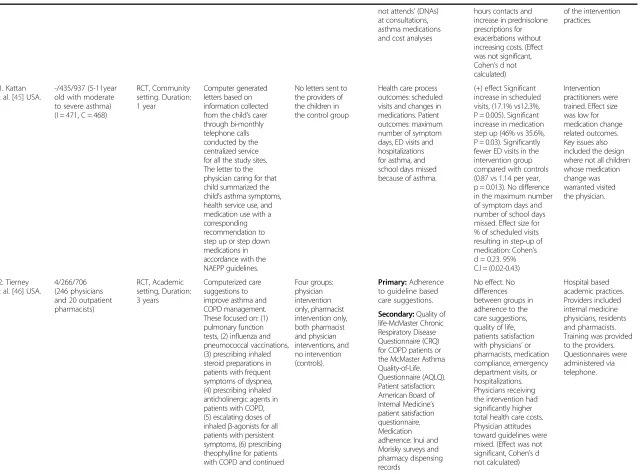
9. Dexheimer et al. [43] USA.
1/-/704 (Children 2-18 years of age), (I = 358, C = 346)
RCT, Community setting, Duration: 3 months
A fully computerized asthma detection system which printed a paper-based asthma care protocol in the pediatric ED to guide early asthma treatment and reduce time to disposition decision.
Usual care, i.e., no reminders or automatic printout was provided.
Primary outcome: Time from ED triage to disposition (discharge or hospital admission) decision.
No effect. No difference in time to disposition. Length of ED stay and the rate of hospital admission were similar between the two groups. (Effect was not significant, Cohen’s d not calculated)
The number of physicians, respiratory therapists and nurses involved in the study is unclear.
Secondary outcomes: Guideline adherence measures including asthma education ordered, protocol found on chart, any asthma scoring performed.
10. Smith et al. [44] UK.
29/-/911 (patients 5+ years of age with severe asthma) (I = 457, C = 454)
Cluster RCT, Community setting. Duration: 2.5 years
Addition of electronic alerts to computerized records to identify at-risk asthma patients experiencing an exacerbation and modify their care. Control practices continued usual care. Primary outcome: number of patients experiencing a moderate-severe exacerbation
No significant difference between groups in number of people experiencing exacerbations. Relative reductions in people experiencing hospitalizations, accident and emergency, out-of
Training on using electronic alerts provided to at least one representative from each staff group (GP, nurse, receptionist, manager/ administrator, dispenser) Secondary outcome:
outpatient attendances for asthma, primary care contacts,‘did
hours contacts and increase in prednisolone prescriptions for exacerbations without increasing costs. (Effect was not significant, Cohen’s d not calculated)
of the intervention practices. not attends’(DNAs)
at consultations, asthma medications and cost analyses
11. Kattan et al. [45] USA.
-/435/937 (5-11year old with moderate to severe asthma) (I = 471, C = 468)
RCT, Community setting. Duration: 1 year
Computer generated letters based on information collected from the child’s carer through bi-monthly telephone calls conducted by the centralized service for all the study sites. The letter to the physician caring for that child summarized the child’s asthma symptoms, health service use, and medication use with a corresponding recommendation to step up or step down medications in accordance with the NAEPP guidelines.
No letters sent to the providers of the children in the control group
Health care process outcomes: scheduled visits and changes in medications. Patient outcomes: maximum number of symptom days, ED visits and hospitalizations for asthma, and school days missed because of asthma.
(+) effect Significant increase in scheduled visits, (17.1% vs12.3%, P = 0.005). Significant increase in medication step up (46% vs 35.6%, P = 0.03). Significantly fewer ED visits in the intervention group compared with controls (0.87 vs 1.14 per year, p = 0.013). No difference in the maximum number of symptom days and number of school days missed. Effect size for % of scheduled visits resulting in step-up of medication: Cohen’s d = 0.23. 95% C.I = (0.02-0.43)
Intervention practitioners were trained. Effect size was low for medication change related outcomes. Key issues also included the design where not all children whose medication change was warranted visited the physician.
12. Tierney et al. [46] USA.
4/266/706 (246 physicians and 20 outpatient pharmacists) RCT, Academic setting, Duration: 3 years Computerized care suggestions to improve asthma and COPD management. These focused on: (1) pulmonary function tests, (2) influenza and pneumococcal vaccinations, (3) prescribing inhaled steroid preparations in patients with frequent symptoms of dyspnea, (4) prescribing inhaled anticholinergic agents in patients with COPD, (5) escalating doses of inhaledβ-agonists for all patients with persistent symptoms, (6) prescribing theophylline for patients with COPD and continued
Four groups: physician intervention only, pharmacist intervention only, both pharmacist and physician interventions, and no intervention (controls). Primary:Adherence to guideline based care suggestions.
No effect. No differences between groups in adherence to the care suggestions, quality of life, patients satisfaction with physicians’or pharmacists, medication compliance, emergency department visits, or hospitalizations. Physicians receiving the intervention had significantly higher total health care costs. Physician attitudes toward guidelines were mixed. (Effect was not significant, Cohen’s d not calculated) Hospital based academic practices. Providers included internal medicine physicians, residents and pharmacists. Training was provided to the providers. Questionnaires were administered via telephone. Secondary:Quality of
symptoms despite aggressive use of inhaled anticholinergic agents, b-agonists, and steroids, and (7) encouraging smoking cessation.
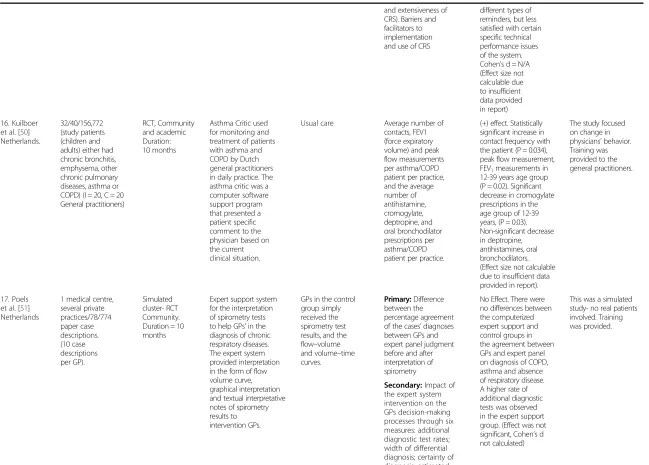
13. Martens et al. [47] Netherlands.
-/53/- Clustered RCT, Community setting Duration: 1 year
A decision support system with reactive computer reminders (CRS) to improve drug prescribing behaviors. 25 GPs received reminders on antibiotics and asthma/COPD prescriptions.
28 GPs received reactive computer reminders (CRS) to improve prescribing of cholesterol-lowering drugs
Primary outcome: prescription according to the guidelines as a percentage of total prescriptions of a certain drug. Secondary outcome: user friendliness.
(+) but not significant effect. CRS with reactive reminders improved drug prescribing behavior. Preliminary results also indicate reduction in the number of prescriptions according to the advice of the computerized guidelines not to present certain drugs. It was perceived stable and user friendly. (Effect was not significant, Cohen’s d not calculated)
Preliminary study. Both groups served as control to one another. Not specific to asthma/COPD.
14. Martens et al. [48] Netherlands. Follow-up of the above study
14/53/- Clustered RCT, Community setting. Duration: 1 year
CRS focused on drug-prescribing behavior of GPs. 25 GPs received reminders on antibiotics and asthma/COPD prescriptions
28 GPs received CRS reminders on cholesterol prescriptions
Guideline appropriate prescriptions as a percentage of total prescriptions (of the drug category involved) for the same diagnosis on the individual GP level. Absolute number of prescriptions for a specific diagnosis per GP per 1000 enlisted patients.
No effect. No favorable effects were found for CRS with the message to prescribe certain drugs. On the other hand, CRS with the message not to prescribe certain drugs sometimes positively influenced the prescribing behavior of GPs. (Effect was not significant, Cohen’s d not calculated)
Not specific to asthma/COPD. Both groups served as a control group to one another. Authors report the study to be underpowered due to high inter doctor variation in prescribing behavior (Cluster effect). Training was provided.
15. Martens et al. [49] Netherlands. Follow-up of the above study.
20/48/- Clustered RCT, Community setting. Duration: 1 year
25 GPs received reactive computer reminders on antibiotics and asthma/COPD prescriptions
28 GPs received (reactive) reminders on cholesterol
prescriptions
Number of GPs (competent and willing) with CRS still functioning after 1 year. Number of GPs having technical problems or are unwilling. Number of reminders/GP/month/ 1000 enlisted patients. GP user satisfaction (satisfaction questionnaire). GP experience (content
(+) learning effect from the CRS. 9% of GPs dropped out after 1 year. A significant learning curve was found (P = 0.03) for the reminders on antibiotics, asthma and COPD. GPs were satisfied with the user-friendliness and the content of the
Not specific to asthma/COPD. Both groups served as a control to one another. GP’s were trained.
et
al.
BMC
Pulmonary
Medici
ne
2014,
14
:189
Page
9
o
f
2
4
w.biomedce
ntral.com/1
and extensiveness of CRS). Barriers and facilitators to implementation and use of CRS
different types of reminders, but less satisfied with certain specific technical performance issues of the system. Cohen’s d = N/A (Effect size not calculable due to insufficient data provided in report)
16. Kuilboer et al. [50] Netherlands.
32/40/156,772 (study patients (children and adults) either had chronic bronchitis, emphysema, other chronic pulmonary diseases, asthma or COPD) (I = 20, C = 20 General practitioners)
RCT, Community and academic Duration: 10 months
Asthma Critic used for monitoring and treatment of patients with asthma and COPD by Dutch general practitioners in daily practice. The asthma critic was a computer software support program that presented a patient specific comment to the physician based on the current clinical situation.
Usual care Average number of contacts, FEV1 (force expiratory volume) and peak flow measurements per asthma/COPD patient per practice, and the average number of antihistamine, cromogylate, deptropine, and oral bronchodilator prescriptions per asthma/COPD patient per practice.
(+) effect. Statistically significant increase in contact frequency with the patient (P = 0.034), peak flow measurement, FEV1measurements in 12-39 years age group (P = 0.02). Significant decrease in cromogylate prescriptions in the age group of 12-39 years, (P = 0.03). Non-significant decrease in deptropine, antihistamines, oral bronchodilators. (Effect size not calculable due to insufficient data provided in report).
The study focused on change in physicians’behavior. Training was provided to the general practitioners.
17. Poels et al. [51] Netherlands
1 medical centre, several private practices/78/774 paper case descriptions. (10 case descriptions per GP).
Simulated cluster- RCT Community. Duration = 10 months
Expert support system for the interpretation of spirometry tests to help GPs’in the diagnosis of chronic respiratory diseases. The expert system provided interpretation in the form of flow volume curve, graphical interpretation and textual interpretative notes of spirometry results to intervention GPs.
GPs in the control group simply received the spirometry test results, and the flow–volume and volume–time curves.
Primary:Difference between the percentage agreement of the cases’diagnoses between GPs and expert panel judgment before and after interpretation of spirometry
No Effect. There were no differences between the computerized expert support and control groups in the agreement between GPs and expert panel on diagnosis of COPD, asthma and absence of respiratory disease. A higher rate of additional diagnostic tests was observed in the expert support group. (Effect was not significant, Cohen’s d not calculated)
This was a simulated study- no real patients involved. Training was provided.
Secondary:Impact of the expert system intervention on the GPs decision-making processes through six measures: additional diagnostic test rates; width of differential diagnosis; certainty of diagnosis; estimated
et
al.
BMC
Pulmonary
Medici
ne
2014,
14
:189
Page
10
of
24
w.biomedce
ntral.com/1
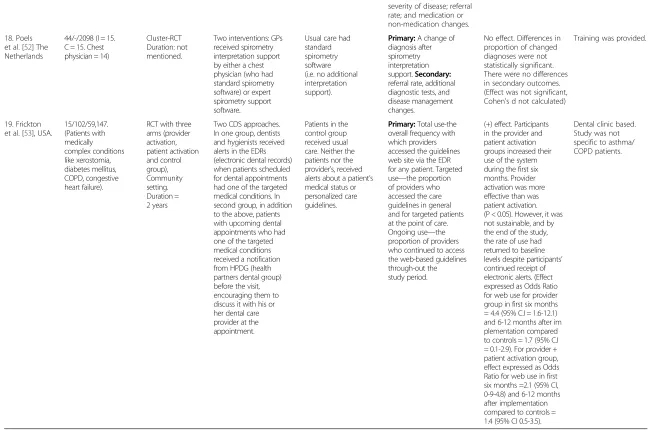
severity of disease; referral rate; and medication or non-medication changes.
18. Poels et al. [52] The Netherlands
44/-/2098 (I = 15. C = 15. Chest physician = 14)
Cluster-RCT Duration: not mentioned.
Two interventions: GPs received spirometry interpretation support by either a chest physician (who had standard spirometry software) or expert spirometry support software.
Usual care had standard spirometry software (i.e. no additional interpretation support).
Primary:A change of diagnosis after spirometry interpretation support.Secondary: referral rate, additional diagnostic tests, and disease management changes.
No effect. Differences in proportion of changed diagnoses were not statistically significant. There were no differences in secondary outcomes. (Effect was not significant, Cohen’s d not calculated)
Training was provided.
19. Frickton et al. [53], USA.
15/102/59,147. (Patients with medically complex conditions like xerostomia, diabetes mellitus, COPD, congestive heart failure).
RCT with three arms (provider activation, patient activation and control group), Community setting. Duration = 2 years
Two CDS approaches. In one group, dentists and hygienists received alerts in the EDRs (electronic dental records) when patients scheduled for dental appointments had one of the targeted medical conditions. In second group, in addition to the above, patients with upcoming dental appointments who had one of the targeted medical conditions received a notification from HPDG (health partners dental group) before the visit, encouraging them to discuss it with his or her dental care provider at the appointment.
Patients in the control group received usual care. Neither the patients nor the provider’s, received alerts about a patient’s medical status or personalized care guidelines.
Primary:Total use-the overall frequency with which providers accessed the guidelines web site via the EDR for any patient. Targeted use—the proportion of providers who accessed the care guidelines in general and for targeted patients at the point of care. Ongoing use—the proportion of providers who continued to access the web-based guidelines through-out the study period.
(+) effect. Participants in the provider and patient activation groups increased their use of the system during the first six months. Provider activation was more effective than was patient activation. (P < 0.05). However, it was not sustainable, and by the end of the study, the rate of use had returned to baseline levels despite participants’ continued receipt of electronic alerts. (Effect expressed as Odds Ratio for web use for provider group in first six months = 4.4 (95% C.I = 1.6-12.1) and 6-12 months after im plementation compared to controls = 1.7 (95% C.I = 0.1-2.9). For provider + patient activation group, effect expressed as Odds Ratio for web use in first six months =2.1 (95% CI, 0-9-4.8) and 6-12 months after implementation compared to controls = 1.4 (95% CI 0.5-3.5).
Dental clinic based. Study was not specific to asthma/ COPD patients.
Cohen’s d values calculated only for significant primary outcomes. Where primary data were not available, formulae to use P values/frequency tables to estimate d were used based on the Campbell Collaboration free online effect size calculator (available online athttp://www.campbellcollaboration.org/escalc/html/EffectSizeCalculator-SMD2.php, accessed 9th September 2014). It must be noted that these effect sizes are estimates only.
et
al.
BMC
Pulmonary
Medici
ne
2014,
14
:189
Page
11
of
24
w.biomedce
ntral.com/1
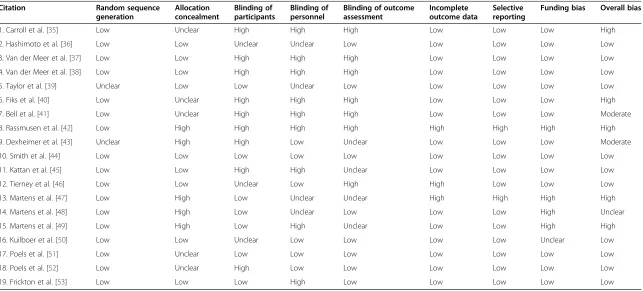
Table 3 Quality assessment of the included randomized controlled trials
Citation Random sequence
generation
Allocation concealment
Blinding of participants
Blinding of personnel
Blinding of outcome assessment
Incomplete outcome data
Selective reporting
Funding bias Overall bias
1. Carroll et al. [35] Low Unclear High High High Low Low Low High
2. Hashimoto et al. [36] Low Low Unclear Unclear Low Low Low Low Low
3. Van der Meer et al. [37] Low Low High High High Low Low Low Low
4. Van der Meer et al. [38] Low Low High High High Low Low Low Low
5. Taylor et al. [39] Unclear Low Low Unclear Low Low Low Low Low
6. Fiks et al. [40] Low Unclear High High High Low Low Low High
7. Bell et al. [41] Low Unclear High High High Low Low Low Moderate
8. Rassmusen et al. [42] Low High High High High High High High High
9. Dexheimer et al. [43] Unclear High High Low Unclear Low Low Low Moderate
10. Smith et al. [44] Low Low Low Low Low Low Low Low Low
11. Kattan et al. [45] Low Low High High Unclear Low Low Low Low
12. Tierney et al. [46] Low Low Unclear Low High High Low Low Low
13. Martens et al. [47] Low High Low Unclear Unclear High High High High
14. Martens et al. [48] Low High Low Unclear Low Low Low High Unclear
15. Martens et al. [49] Low High Low High Unclear Low Low High High
16. Kuilboer et al. [50] Low Low Unclear Low Low Low Low Unclear Low
17. Poels et al. [51] Low Unclear Low Low Low Low Low Low Low
18. Poels et al. [52] Low Unclear High Low Low Low Low Low Low
19. Frickton et al. [53] Low Low Low High Low Low Low Low Low
et
al.
BMC
Pulmonary
Medici
ne
2014,
14
:189
Page
12
of
24
w.biomedce
ntral.com/1
Citation CCDSS setting and format
CCDSS user Type of CCDSS Effect of CCDSS
Diagnostic/Drug therapy management only/Multifaceted CCDSS
Health care process outcomes (recommended preventative care, clinical study ordered,
treatment ordered)
Clinical outcomes (morbidity, mortality, HRQOL, hospitalization, adverse events)
User workload and Efficiency outcomes (user knowledge, clinician workload, efficiency)
Relationship centered outcomes (patient satisfaction)/Economic outcomes (cost and cost effectiveness)/Use and implementation (health care provider acceptance, satisfaction, use and implementation)
1. Caroll et al. [35], USA.
Community/ Integrated with the EMR
Practitioners Diagnostic CCDSS: Clinician prompted to make an asthma diagnosis based on the results of a pre-screening questionnaire
Primary outcome: Significantly more children diagnosed with asthma (+ effect)
2. Hashimoto et al. [36], Netherlands.
Hospital/Stand alone (Internet based)
Patients Drug therapy management based CCDSS:Corticosteroid treatment decision support for the patients based on symptoms, lung function and exhaled NO (nitric oxide)
Primary outcome: Significant decrease in corticosteroid consumption in patients with steroid dependent asthma (+ effect)
No difference in asthma control, quality of life, FEV1, exacerbations, hospitalizations between groups. (+ effect)
No difference in patient satisfaction between groups
3. Van der Meer et al. [37], Netherlands.
Community/ Stand-alone (Internet based)
Patients Multifaceted CCDSS: Weekly asthma monitoring and advice, online and group education and remote web communications
Patients’ asthma knowledge, inhaler technique improved. Medication changes occurred more often. Health care provider contacts were fewer. (+ but modest effect)
Primary outcome:Asthma related quality of life improved.Secondary: Asthma control, lung function improved, symptom-free days increased, exacerbations did not differ between groups. (+ but modest effect)
4. Van der Meer et al. [38], Netherlands.
Community/ Stand-alone (Internet based)
Patients Multifaceted CCDSS: Weekly asthma monitoring and self-management advice.
Secondary:Significant increase in the corticosteroid dose in patients with uncontrolled asthma, but not in patients with well or partly controlled asthma. (+ effect). Adherence to ACQ monitoring gradually declined in the first month to the seventh month and then remained stable. No difference in dose of corticosteroids or LABA or LRTA after 12 months
Primary outcome: Significant improvement in asthma control in patients with partly and uncontrolled asthma. (+ effect)
et
al.
BMC
Pulmonary
Medici
ne
2014,
14
:189
Page
13
of
24
w.biomedce
ntral.com/1
5. Taylor et al. [39], Australia.
Hospital/ Integrated
Practitioners (ED doctors)
Multifaceted CDSS: The system integrated asthma management pathways based on current guidelines into clinical and discharge documentation. Including triage and registration, clinical documentation, treatment orders, order entry and discharge documentation.
Primary outcome: Significantly higher rate of asthma documentation. Secondary outcome: No significant difference in consultation time. (+ effect)
6. Fiks et al. [40], USA.
Hospital/ Integrated into EHR
Practitioners Multifaceted CCDSS: EHR based clinical alerts for influenza vaccine
Primary outcome: Increased Influenza vaccination rates. (+ effect, but not significant)
7. Bell et al. [41], USA.
Hospital/ Integrated into EHR
Practitioners Multifaceted CCDSS: EHR based CDS alerts and reminders based on pediatric asthma management tool (PACT) which captured asthma symptom frequency, asthma severity, facilitated ordering of controller medications, spirometry and ACP (asthma action plan)
Primary outcome: Increase in the number of controller medication prescriptions, and up-to-date asthma action plan (ACP). (+ effect, but not significant). Increase in the use of spirometry in the intervention group (+ effect, but not significant)
8. Rasmussen et al. [42], Denmark
Stand-alone (internet based)
Patients Multifaceted CCDSS: Internet based asthma monitoring tool consisting of an asthma diary, action plan and a decision support for the physician
Significantly more patients using inhaled corticosteroids in the internet and specialist group (+ effect)
Primary outcome: Significant improvement in asthma symptoms, AQLQ, lung function, but no change in airway responsiveness (+ effect)
9. Dexheimer et al. [43], USA.
Hospital/ Integrated
Practitioners (ED physician)
Multifaceted CCDSS: Computerized detection system screened and identified patients with asthma exacerbation and a guideline based management protocol
Secondary outcome: No difference in asthma education charted, medication prescribed, follow-up appointment scheduled (No effect)
No difference in admission rate or ED length of stay (no effect)
Primary outcome: No significant difference in the time taken to make a ED disposition decision (no effect)
10. Smith et al. [44], UK.
Community/ Integrated (with the EHR)
Practitioners Multifaceted CCDSS: EHR based alerts to flag the at-risk status of patients to improve patient access and opportunistic management
Relative increase in LABA usage and decrease in nebulized B-agonists (+ effect)
Primary outcome: No significant difference in the number of people experiencing exacerbations. Relative reduction in people experiencing hospitalizations,
Cost–effectiveness outcome: Adjusted mean health care (NHS) cost lower among intervention practices compared to control practices (+ effect)
et
al.
BMC
Pulmonary
Medici
ne
2014,
14
:189
Page
14
of
24
w.biomedce
ntral.com/1
accident and
emergency attendances, out-of-hour
contacts and other health care use. (+ effect, but not significant)
11. Kattan et al. [45], USA.
Community/ Stand-alone
Practitioners Drug therapy management based CCDSS: Computer generated letter recommending change in controller medications based on NAEPP guidelines
Primary outcome: Significant increase in scheduled visits leading to stepping up of asthma medications (+ effect)
Significant decrease in ED visits. No difference in maximum number of symptom days and school days missed, decrease in the number of days with activity limitation.
Intervention-reduced asthma related cost to the health services and was cost-effective. (+ effect)
12. Tierney et al. [46], USA.
Hospital/ Integrated
Practitioners (Physicians and pharmacists)
Multifaceted CCDSS: Care suggestions focusing on immunization, prescription and smoking advice
Primary outcome:No difference in the adherence to guideline-based care suggestions measured as the number of tests and treatment ordered (No effect)
No effect on quality of life, clinical symptoms, medication adherence and compliance, ED visits or hospitalizations (No effect)
Significantly higher health care costs in the group receiving only physician intervention. Physicians attitude towards guidelines was mixed
13. Martens et al. [47], Netherlands.
Community/ Integrated
Practitioners (GPs)
Drug therapy management
based CCDSS:Guideline based reminders when prescribing antibiotics, asthma/COPD and cholesterol prescriptions
Primary outcome: Reductions in the number of prescriptions according to the guidelines (+ effect, but not significant)
Providers perceived the CRS as stable and user friendly (+ effect, but not significant)
14. Martens et al. [48], Netherlands.
Community/ Integrated
Practitioners (GPs)
Drug therapy management based CCDSS:Guideline based reminders when prescribing antibiotics, asthma/COPD and cholesterol prescriptions
Primary outcome:Clinically meaningful results seen in not prescribing certain drugs in the intervention group (+ effect, but not significant)
15. Martens et al. [49], Netherlands.
Community/ Integrated
Practitioners (GPs)
Drug therapy management based CCDSS:Guideline based reminders when prescribing antibiotics, asthma/COPD and cholesterol prescriptions
Significant learning curve was found (shows improvement in user knowledge) (+ effect)
Primary outcome: Provider use: Only 9% drop-out rate (because of technical problems requiring multiple updates) (+but not significant effect) Provider satisfaction: Positive attitude to the content of the reminders and satisfied with the user friendliness
et
al.
BMC
Pulmonary
Medici
ne
2014,
14
:189
Page
15
of
24
w.biomedce
ntral.com/1
16. Kuilboer et al. [50], Netherlands.
Community/ Integrated
Practitioners (General practitioners)
Multifaceted CCDSS: Asthma critic evaluates whether the patient has asthma or COPD, reviews the physicians treatment, and generates feedback
Primary outcome:Significant increase in the average number of contacts. Significant decrease in the average number of cromogylate prescriptions. No statistically significant change in the antihistamines, deptropine, and oral bronchodilator
prescriptions per asthma/COPD patient per practice (+ effect)
Significant increase in FEV1 (forced expiratory volume), and peak-flow measurements per asthma/COPD patient per practice (+ effect)
17. Poels et al. [51], Netherlands.
Community/ Stand-alone (spirometry expert system)
Practitioners (GPs)
Multifaceted CCDSS: Presentation of data for diagnosis and management of chronic airway disease
Primary outcome:No
difference in between the two groups (Spirometry expert system and sham information) in the diagnosis of COPD, asthma and absence of respiratory disease or in medication changes. Secondary: Slightly more additional diagnostic tests in the expert group (No effect)
18. Poels et al. [52], Netherlands.
Community/ Integrated? (not clear)
Practitioners (GPs)
Multifaceted CCDSS: Spirometry expert support for change in diagnosis and management
Primary outcome: No differences in the proportion of changed diagnosis between the three groups (spirometry expert system, chest physician and usual care). Also no difference between the groups in referral rate, additional diagnostic tests and medication changes (No effect)
19. Frickton et al. [53], USA.
Community/ Integrated (with the EDR)
Practitioners (Dentists) and patients
Multifaceted CCDSS: EDR (Electronic dental record) based alerts notifying the dentists of the presence of a medically complex condition in a patient with a link to modify dental care appropriately
Primary outcome: Significant increase in the frequency of dentists accessing guidelines (number of website hits and number of providers using the guideline). Only number of hits sustained after 6 months. After 9 months provider use returned to baseline levels (+ effect)
et
al.
BMC
Pulmonary
Medici
ne
2014,
14
:189
Page
16
of
24
w.biomedce
ntral.com/1
Effectiveness of CCDSS
Using classifications published in previous reviews
per-taining to CCDSS [54], we assessed CCDSS effectiveness
based on the following key outcomes:
(1)Clinical outcomes: Morbidity, health related quality
of life, hospitalizations and mortality. [e.g. asthma
symptoms (measured using symptom diary), asthma
control (Asthma control Questionnaire-ACQ), lung
function (Piko-1 device, peak flow meter),
health-related quality of life (measured using HRQOL) and
adverse events (leading to unscheduled doctors visit
or hospitalization)];
(2)Healthcare process measures: Recommended
preventive care services ordered or completed (e.g.
influenza vaccination), recommended clinical study
ordered or completed (including spirometry),
recommended treatment ordered or completed
(including rescue medication prescriptions and
antibiotic prescriptions)];
(3)User workload and efficiency outcomes: Effect on
user knowledge, number of patients seen per unit
time, clinician workload, and efficiency;
(4)Relationship-centered outcomes: Patient
satisfaction surveys;
(5)Economic outcomes: Cost and cost effectiveness of
the CCDSS used; and
(6)Use and Implementation outcomes: Health care
provider acceptance, health care provider satisfaction,
and health care provider use and implementation.
A CCDSS was considered effective if it produced a
statis-tically significant (p <0.05) improvement in the primary
outcome or improvement in
≥
50% of multiple relevant
pre-specified outcomes. If the authors did not designate a
primary outcome, we considered the outcome used to
cal-culate the trial
’
s sample size to be primary. Studies that
in-cluded multiple intervention arms were considered effective
if any of the CCDSS based treatment arms was evaluated
as effective.
Although we had intended to conduct meta-analyses,
this was abandoned owing to the marked heterogeneity
in participants, clinical settings, interventions, and the
outcomes measured in the included studies. However,
effect sizes (Cohen
’
s d value) of the significant primary
outcomes were calculated wherever possible.
Results
The PRISMA guidelines for conducting/reporting
sys-tematic reviews were consulted and a completed
check-list is attached as Additional file 1. We screened 1042
abstracts, identified 173 full-text potentially relevant
arti-cles and included 19 artiarti-cles representing 16 RCTs in
the review (Figure 1).
Studies
were
predominantly
conducted
in
the
Netherlands (n = 9) and the USA (n = 7) with one study
conducted in each of the following countries: Australia,
United Kingdom and Denmark.
Eleven studies evaluated asthma care [35-45], 5 studies
involved patients with asthma and COPD [46-50], and 3
studies focused on people with medically complex
con-ditions including COPD [51-53]. There were no studies
conducted exclusively on people with COPD (Table 2).
Study quality
A summary of the study quality of the included studies
is reported in Table 3. Of the 19 trials, 10 studies had a
low risk of bias [36-39,44-46,51-53]. Eleven studies
de-scribed an appropriate method of sequence generation
[35-38,44-46,50-53], 9 studies reported adequate
con-cealment of allocation [36-39,42,44,46,50,53], and 13
studies showed either no differences in baseline
characteris-tics between study groups or performed appropriate
adjust-ments [35-37,39,40,42-46,50,51,53]. Eleven studies used
objective outcomes or blinding of outcome assessments
[36,39,40,43-45,48,50-53], and 11 studies achieved a
≥
90%
follow-up rate for their unit of analysis [35-39,44-46,48-50].
CCDSS and study characteristics
healthcare practitioners [39,41-52], while patients were
trained to use the internet based CCDSS in 3 trials [36-38].
The CCDSS user interface characteristics were described in
only 42% (8) of the trials [35,38,39,43,48-50,53].
Studies included a highly varied number of healthcare
practitioners, patients and health services.
Since CCDSS is primarily focused on altering provider
behavior, the unit of randomization in most CCDSS
studies was the provider. Thirty-seven percent (7) of the
studies reviewed were randomized at the provider, practice
or community level [39,45,46,50-53], while 31% (6) used
cluster randomization either between clinics or groups of
providers that worked closely together [40,41,44,47-49].
Thirty-one percent (6 studies) were randomized at the
pa-tient level [35-38,42,43].
In all studies that included patient level randomization
there was potential for contamination given a single
pro-vider could care for both intervention and control arm
patients. The principal summary measures used to
com-pare effects between intervention and control groups
varied and included: proportions [35,39,41,45]; difference
in medians [36,38,43,50]; difference in means [46,48];
relative risk [37] and odds ratios [40,42,44,51-53].
Three trials did not clearly report their source of
fund-ing [41,42,53]. Of the remainfund-ing, 9 trials were publicly
funded [36,37,41,43,45,46,51-53], 5 trials were conducted
with only private funds [40,44,47-49], 1 trial was
con-ducted with a combination of private and public funding
[42], while another trial did not receive any funding [35].
Five trials declared that at least one author was involved
in the development of the CCDS system [37,38,47-49],
while the remaining trials did not indicate at all if the
authors were independent of development.
Type of CCDSS interventions
The included studies utilized CCDSS for a variety of
pur-poses, and were categorized in to three main categories,
such as those focusing on screening/diagnosis, drug
ther-apy management, and multifaceted interventions which
involved various aspects of disease management along
with self-management advice (Table 4).
There was only one study, conducted by Caroll et al.
that used the CCDSS (Child Health Improvement
through Computer Automation-CHICA system) for the
purpose of diagnosing pediatric asthma [35]. Five
stud-ies (26%) used the CCDSS for drug therapy
manage-ment [36,45,47-49], and thirteen used a multi-faceted
form of CCDSS [37-44,46,50-53].
The studies evaluating the CCDSS focusing on drug
therapy management included the study by Hashimoto
Figure 1PRISMA flow diagram of the included and excluded studies [55].et al. which utilized an Internet based treatment decision
support system to guide people with severe asthma in
tapering the dose of oral corticosteroids depending on
their asthma control [36]. The study by Kattan et al.
in-volved provision of a computer-generated letters to the
treating physician summarizing the appropriate treatment
recommendations based on the child
’
s asthma symptoms,
health service and medication use [45]. The three studies
conducted by Martens et al. also involved a CCDSS in the
form of reactive computer reminders (CRS) to improve
drug prescribing in general practice [47-49].
The remaining 13 studies (68%) evaluated multifaceted
forms of CCDSS [37-44,46,50-53]. These CCDSSs ranged
from simple activation of electronic alerts to identify
people at risk of an asthma exacerbation [44], or prompts
to alert the physician to modify treatment in people with
medically complex conditions at the point of care [53], to
more complex forms of CCDSS interventions involving a
series of care suggestions on drug therapy and disease
management [46]. Internet-based multifaceted CCDSS
in-terventions were evaluated in three trials which focused
on the self-management of asthma [37,38,42]. These
stud-ies utilized online self-management programs which
in-volved weekly online asthma control monitoring and
feedback in the form of treatment advice by a specialized
asthma nurse [37,38], or by the patients
’
physician [42].
Another type of multifaceted CCDS interventions
evalu-ated in two other studies were in the form of EHR-based
clinical alerts either to improve influenza vaccination in
children with asthma [40], or to improve overall asthma
care in these children [41]. The multifaceted CCDSS
eval-uated by Kuilboer et al. was a critiquing system integrated
with the general practitioners
’
electronic medical records
which reviewed physicians
’
treatment decisions and
gener-ated feedback [50]. Another two studies evalugener-ated the
im-pact of an expert spirometry system on the physician
’
s
decision making during asthma diagnosis [51] and during
management [52]. The remaining two trials also tested the
effects of another multifaceted CCDSS on the clinician
’
s
performance in the form of an electronic interface system
to manage asthma patients in ED [39] and in the form of
an automated asthma detection system used to identify
and manage people at risk of asthma exacerbation in the
emergency department [43].
CCDSS effectiveness
There was marked variability in the outcomes reported.
Therefore we assessed the effectiveness of the CCDSS
on the primary outcomes measured. In majority of the
trials reviewed, the primary outcomes assessed were
health care process measures, clinical outcomes, user
work load and efficiency, and use and implementation
outcomes. Relationship-centered outcomes and
eco-nomic outcomes were measured by few trials, but only
as secondary outcomes. Fourteen trials (74%) showed
positive effect from the use of CCDSS on the primary
outcome measured, of these 9/19 (47.3%) showed a
sig-nificantly positive effect [35,36,38,39,41,42,45,50,53].
Clinical outcomes
The different clinical outcomes reported in the studies
included asthma symptoms [42], asthma/COPD
symp-toms [46] asthma control (ACQ) [36-38], Health related
Quality of life [36,37,42,46], frequency of health care
uti-lizations including hospitauti-lizations [36,44], admission
rate and ED length of stay [43], frequency of
exacerba-tions [36,37,44], lung function (FEV1) in asthma patients
[36,37,42], exhaled nitric oxide [36], symptom free days
[37], airway hyper responsiveness [42], number of ED
visits [45,46] number of school days missed [45],
medi-cation adherence [46], FEV1 and peak flow
measure-ments in asthma/COPD patients [50].
Five of the nineteen trials assessed clinical outcomes
as the primary outcome measure [35,37,38,42,44], of
which three showed clinically significant improvements
[35,38,42], one showed a positive but modest
improve-ment in the asthma related quality of life [37] and
an-other one did not show any effect on the number of
people experiencing an exacerbation from the use of
EHR embedded asthma risk alerts [44].
Significant improvement was found in the rate of
diagnosis of asthma in children by implementation of a
parent survey linked to physician prompts using
com-puter decision support system called the CHICA system
[35]. Significant improvement was also found in asthma
control measured weekly using the asthma control
ques-tionnaire (ACQ) [38], in asthma symptoms using an
elec-tronic diary to record symptoms daily and in the asthma
quality of life measured using asthma quality of life
ques-tionnaire (AQLQ) [42]. The effect sizes (Cohen
’
s d)
calcu-lated for the studies showing significant improvement in
the primary clinical outcomes ranged from 0.24 to 0.94,
with three studies showing a reasonably large effect size
[37,38,42].
Health care process outcomes
change in the number of prescriptions [47,48,50], change in
the diagnostic ability of the general practitioner [51,52],
diagnostic tests ordered [51,52] and the rate of referral [52].
Ten trials assessed health care process measures as the
primary outcome [36,40,41,45-48,50-52], of which four
showed significant improvement in these outcomes.
Sig-nificant improvement was seen in process outcomes like
cumulative sparing of prednisone dose adjusted weekly
according to the internet based CDSS [36], percentage
of children given at least one prescription of
corticoster-oid [41], percentage of visits to the physician leading to
medication step up of asthma medication [45] and in the
number of contacts with the patients
’
physician [50].
The effect size calculated for the two studies [36,45]
with significantly positive improvement was however
poor. Three trials showed a positive but modest effect of
which one showed a modest improvement in the rate of
influenza vaccination by the use of EHR alerts [40]. The
other 2 trials showed a modest improvement in the drug
prescribing behavior of GPs from the use of the CRS
re-minders [47,48]. The remaining 3 studies did not show
any effect from the use of CCDSS on the primary health
care process outcome assessed.
User workload and efficiency outcomes
Workload and efficiency outcomes assessed in the trials
included asthma documentation by emergency
depart-ment (ED) doctors [39], consultation time [39], time for
disposition decision in the ED [43], and user knowledge
[49]. These outcomes were assessed as the primary
out-come by only two trials [39,43], of which one trial showed
significant improvement in the rate of asthma
documenta-tion by the ED doctors in the management of acute
asthma [39]. The size of the effect calculated for this trial
was relatively large (Cohen
’
s d =0.78). However the other
trial did not show any effect from the use of CCDSS on
the time taken by the ED physicians to make a disposition
decision [43].
Use and implementation outcomes
The outcomes assessed under this category were physicians
attitude to guidelines [46], user friendliness [48,49],
pro-vider satisfaction [49], and the rate of accessing guidelines
[53]. Two trials assessed these outcomes as the primary
outcome, of which one showed a significant improvement
in the rate of use of guidelines by dentists in the
manage-ment of people with chronic diseases including COPD [53].
The study showed that the use of CCDSS increased the
number of times the dentists accessed the guidelines. The
other trial also showed a positive but modest effect in the
use of CRS (reactive computer reminders) by general
prac-titioners, not to prescribe certain drugs [49].
Other outcomes
Outcomes such as patient satisfaction with CCDSS use
was measured as a secondary outcome by two trials and
found no difference in patient satisfaction between the
intervention and the control group patients [36,46].
Mea-sures such as health care provider satisfaction were also
assessed as secondary outcomes. Of the three studies that
measured these outcomes [46,47,49], two found that the
provider perceived the CCDSS as user friendly. Only one
trial measured cost of the intervention and found that the
patients in the group receiving the CCDSS intervention
had significantly elevated total health care charges [46].
Two other trials measured the cost-effectiveness of the
CCDSS used and both found that its use was more cost
ef-fective than usual asthma care [44,45].
Discussion
This is the first comprehensive review of CCDSS in the
care of patients with chronic respiratory diseases, asthma
and COPD. The review focused only on studies conducted
in primary care as the bulk of the management of these
chronic diseases happens in primary care. The review
found that the use of CCDSS can have a positive impact
on the diagnosis and management of asthma and COPD
in primary care. Overall 74% of the studies reviewed
showed improvement in the primary outcomes. Although
there is literature available on the use of CCDSS in
pa-tients with asthma, there is very little literature on its use
in the management of people with COPD.
The review also found that 83% (5/6) of the studies
that utilized CCDSS with a stand-alone design showed
positive outcomes as compared to studies testing CCDSS
which were integrated with the EHR or the EMR
sys-tems (38%) (5/13). This indicates that syssys-tems presenting
advice within electronic health records or order entry
sys-tems were much less likely to improve care or outcomes
than stand-alone programs. It has been found that when
integration of alerts within an institution
’
s electronic health
records becomes possible and more alerts are added,
prac-titioners might become overwhelmed and begin to ignore
the prompts. This
“
alert fatigue
”
phenomenon [56]
could be responsible for limiting behavior change.
Studies estimate that as many as 96% of alerts are over
ridden [57-59] and suggest that the threshold for alerting
is too low (that is, alerts are sensitive but not specific).
Sys-tems requiring the practitioner to give a reason for
over-riding advice were more likely to succeed than systems
missing this feature [60].
reviews of CCDSS for chronic disease management in
pri-mary care [33,61]. A key feature of these interventions was
the active incorporation of a patient self-management
com-ponent for use outside of the clinical encounter. The
CCDSS interventions included in the studies involved
regu-lar monitoring and feed-back along with patient education
and follow-up. These results confirm the value of
collabora-tive care in chronic respiratory disease management.
Also CCDSS interventions consisting of multiple
com-ponents such as reminders and education were associated
with greater improvement in outcomes than single-target
interventions with fewer components. This is also reflected
in other reviews evaluating the effectiveness of such
multi-component CCDSSs engaging patients in the management
of other chronic conditions like diabetes [33] and
osteo-porosis [62]. Given the advent of personal health records,
patient portals, and mobile applications aimed at better
engaging patients, the findings suggest that there is a need
to consider multiple components and targets in the
devel-opment of any future interventions.
Of the outcomes measured many of the included studies