Research article Available online www.ijsrr.org
ISSN: 2279–0543
International Journal of Scientific Research and Reviews
A New Model for Teaching Writing at Tertiary Level
Vijayakumar.S
11
Assistant Professor, Department of English,
B.S Abdur Rahman Crescent Institute of Science & Technology, Chennai, India
ABSTRACT
Multimedia Technologies are increasingly used in language teaching classrooms for achieving the learning objectives. However, multimedia tools are not effectively used in second language writing classrooms.The purpose of this study is to explore the effectiveness of integrating multimedia technologies for developing writing skills at the tertiary level. A new pedagogy for teaching writing namely multimedia enhanced process approach is proposed in this study. Multimedia tools are implemented during all the three stages of writing such as prewriting stage, while writing stage and post-writing stage. Idea formulating tools such as ‘Freemind’ and ‘E-draw’ were used at the prewriting stage. ‘Multimedia Graphic Organizers’ and ‘Bright pod’ were used at the while writing stage and editing tools namely ‘Plag-Tracker’ and ‘Grammarly’ were used in post writing stages for editing and revision. The student feedback and focus group interviews were used to evaluate the effectiveness of the new approach. The results of the focus group interviews and student feedback indicated that the learners preferred multimedia technologies.
KEY WORDS:
Educational Technology, pedagogy, survey method, multimedia technologies, process approach*Corresponding Author
Vijayakumar S
Assistant Professor Department of English
INTRODUCTION
An Engineering student is expected to express the ideas precisely and concisely in academic essays and workplace communication. According to Zhu1 Written communication skills are crucial because a graduate must interact on a daily basis with fellow colleagues, superiors, and with representatives of external firms. His writing skills include e-mail, letters and reports which require top-notch writing skills. Unfortunately, writing skills are not at the expected level among ESL students. This is because of improper methodologies of teaching writing. Storms2 claims thatWriting, has not received the attention it deserves due to methodologies like Communicative Language Teaching (CLT) and Task Based Language Teaching (TBLT). The advancements in the above mentioned areas have reaffirmed the view that primary importance should be given to speaking in the L2 classes, since language is ultimately a medium of communication. Yet, most of the evaluation patterns are oriented towards testing writing skills.
There are many reasons as to why writing occupies an important position in our second language syllabus. In this regard Raimes3states that writing helps our students to learn all the core subjects effectively. First, writing reinforces the grammatical structures, and vocabulary which isindispensable for academic purposes. Second, when our students write they also have a
chance to be adventurous with the language. Third, when they write they necessarily become involved with the new language. As writers struggle with what and how to put down on paper, they discover something new to write or a new way of expressing their idea. They discover a real need for writing by searching for a right word and right sentence. Raimes further adds that the
close relationship between writing and thinking makes writing a valuable part of any language course. The same idea is echoed by Cho4.
Writing difficulties of ESL Students
As Scarcella6rightly remarks, “The writing process requires the writer to develop
higher-level thinking and communication skills, including abstract conceptualization, inference, creativity, organization, and summarization of complex ideas”. To help the target learner achieve
this objective a proper frame work is required. Hence a new pedagogy named multimedia enhanced process approach is attempted in this paper.
Multimedia is increasingly used in language learning since it has proved to be useful andstimulating. Warschauer7 notes that multimedia technologies enable the students to interactively use a combination of text, images, audio and video. According to Pritchard, & Honeycutt8very little research is carried out when it comes to using multimedia for writing skills.In their research on best approaches to teaching writing they claim that Process writing is widely accepted pedagogy for developing writing skills. Incorporating multimedia at every stage of process writing will enable the target learners to produce better pieces of writing. Hence, the scope of this paper is to suggest a proper approach to teach writing.
Research Questions
What are the student’s perceptions on the use of Multimedia technologies in a writing classroom?
Does the multimedia contribute to their overall development of writing skills?
Expected outcome
The expected outcome is that, when multimedia approach is followed in every stage of process writing especially in the pre-writing stage there would be discernable improvement in the writing skills of the target learners.
MATERIALS AND METHODS
Learner’s Profile
Approach Employed:The Process Approach
The approach employed in this study is the process approach. In this approach, students are trained to generate ideas for writing, think of the purpose and audience, and write multiple drafts. During the writing process, the students engage in pre-writing, planning, drafting, and post-writing activities. However, as the writing process is recursive in nature, they do not necessarily engage in these activities in that order .She also states that the process approach to writing is ideal especially at tertiary and advanced levels.
The Proposed Model
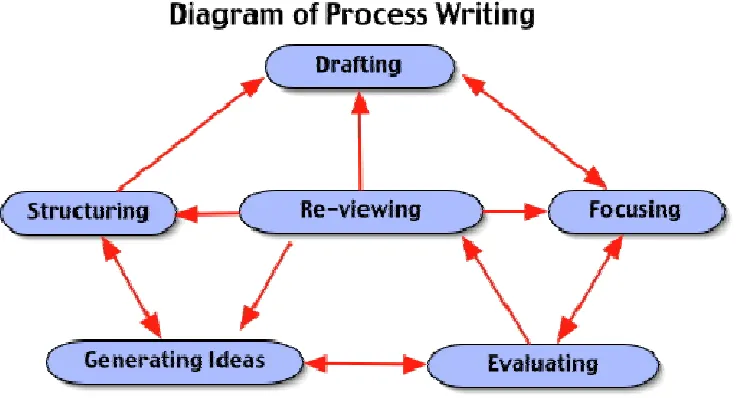
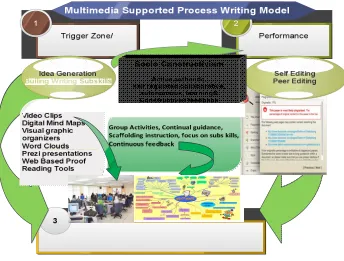
A new model named multimedia supported process writing model was designed to conduct the study. The proposed model is based on the principles of White and Arndt’s model9of process writing which is represented in the figure given below.
Figure 1: A model of writing (White and Arndt)
Rationale of the New Model
The proposed model recommends multimedia integration in all the three stages. The model is designed to accommodate all writing genres. It is expected to create a constructivist learning environment. The proposed model is expected to fulfil the following criteria.
i) There will be more learner engagement.
ii) The activities will be learner centric and supported by multimedia tools. iii) There will be emphasis on developing the micro aspects of writing.
The new approach is expected to develop the student’s ability to construct, organize, revise and write effectively.
The model advocates fluency activities in the initial stages and accuracy activities in the later stages. To achieve fluency and accuracy in writing the following principles are applied in the model.
Description of the Proposed Model
Graham, Henrie, & Gibbons10 claim that future research on educational technology
should focus more on developing pedagogical models to fit the virtual environment. The model proposed by the researcher is based on three aspects. They are i) Socio constructivist
theory ii) process approach to writing and iii) multimedia integration. As mentioned earlier, the proposed model is grounded on three premises of process writing such as pre-writing, drafting and rewriting also called as trigger zone, performance zone and assessment zone. In the trigger zone there will be idea generation strategies such as group brainstorming, questioning, discussion and debates supported by multimedia tools such as video clips, digital mind maps, word clouds, and web based interactive grammar exercises. During the while writing stage the students will organize their ideas using graphic organizers. Peer editing and self-editing activities will be initiated using the online tool paper ratter. In the post writing stage their writings will be published.
Description of Multimedia Technologies Used in the Study
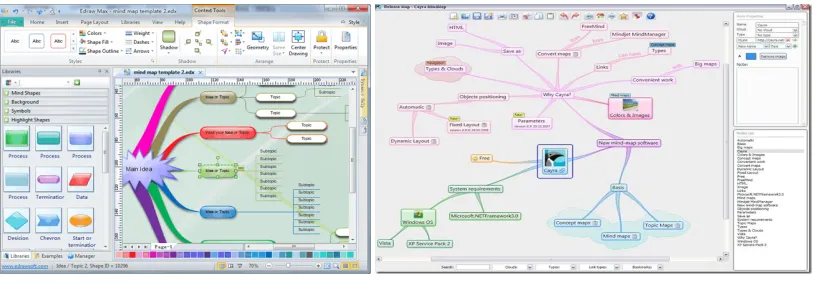
Free mind: it is a freeware that could be productively used for brainstorming sessions and for clustering of ideas. Relevant images can be imported in this tool to initiate better response from the target learners. Operation and navigation is quite user-friendly. This software is that is available for free downloads at www.freemind.com.
Ed-draw: Ed-draw is another tool that is user friendly. Edraw Max is comprehensive mind mapping and planning tool that allows the user to creating mind maps and graphs from an
easy-to-use, interface. The interface is attractive and simple to use. There's a large selection of Help options, and the start-up screen displays all the templates available, making it easy to start any process. The templates of the mind maps created by the students are presented below.
Bright-pod
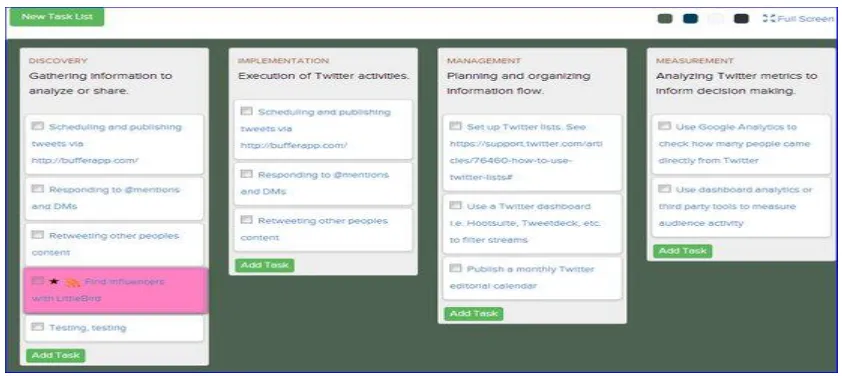
The students organized their ideas using bright pod. A screen shot of the organizing activity is presented here. It helped the students to organize the writing tasks and helped them to
integrate their assignments in web-tools such as e-mail and drop box.
Figure 4 Screen Shot of the organization task
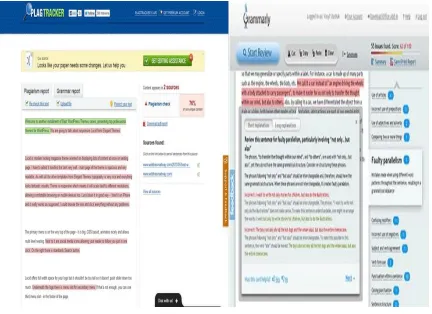
Plagtracker was used in the post writing where the students checked the originality of
their writing tasks. Free version of this software was used to avoid plagiarism. Using this software the students restructured the sentences.
Figure-5 Screen shot of Plagtracker Figure-6 Screen shot of Grammarly
RESULTS AND DISCUSSION
Student Feedback
After the instruction phase an online student survey questionnaire was administered to all the 64 participants. Smith & Higgins11 report that classroom interaction and feedback are indicators of effective course delivery. Hence a student questionnaire was administered. 38 students responded to the questionnaire. The response rate was 59.3%. The objective of the questionnaire is to understand the student’s perception on the proposed model and to understand the effectiveness of the multimedia tools used in the study. It was also intended to find if the tools have contributed to the writing skills. According to Fowler12 survey method provides a
Table-1: Results of the feedback questionnaire
S.No Descriptions Frequency Percentage
1 I found the new model very useful 37 97.4
2 I found these tools very interesting 36 94.7
3 The tools used in the study were user friendly 19 50
4 The tools in prewriting stage helped me to generate ideas 33 86.8
5
The tools in while writing stage helped me to organize my
ideas 32 84.2
6
The tools in the post writing helped me to improve the
structures 37 97.4
7
Given a choice, I would prefer multimedia tools to improve my
writing 35 92.1
8
The multimedia technologies helped me to develop my overall
writing skills 34 89.5
The first question was related to the usefulness of the new model used in the study. Out of 38 respondents 37 have responded in the affirmative. So it is clear that 97.4% of the
writing skills. The last question was related to the overall development in writing skills.89.5% of
the respondents have stated that the tools has helped them in the overall development of writing skills. It is clear from the feedback questionnaire that the multimedia technologies were indeed
effective for the development of writing skills.
Figure 7 Feedback on Multimedia Technologies
Focus group interviews
According to the guidelines provided by McLafferty14 focus group interviews were conducted. Three focus groups were selected for focus group interviews. There were five members in each group. Informed consent was obtained from the participants. All three groups willingly participated in the study. The interview questions were given 10 minutes before the interview by the moderator. An assistant moderator recorded the transcript and offered logistical support. The participants were encouraged to give genuine answers without any bias. A transcript analysis of the focus groups was carried out. Some of the extracts of the focus groups
are presented here. The students were greeted and made to be seated in the language laboratory. The questions were open ended. They were asked questions such as i) what are your perceptions about the proposed model used in this research? ii) Do you feel that e-draw and free mind helped you to generate ideas? iii) To what extent has the software ‘Bright pod’ helped you to organize your ideas? iv) How has the software ‘plagtracker’ helped you to understand the originality of
0 5 10 15 20 25 30 35 40 37 36 19 33 32 37 3 4 1 2 19 5 6 1 35 34 F re q u en cy
Effectiveness of Multimedia Technologies
Student Feedback
YES
your writing? v) Did the software ‘grammarly’ help you to improve your sentence structures?
vi) How has the tools contributed the development in your overall writing skills?
Select extracts from the focus group interviews
Q.1.Perceptions about the new approach.
I found this new approach to writing interesting. From my school days I was accustomed
to write in pen and paper. I found that practice boring. I never thought that writing would be as
interesting as this.
Q.2 Views on the softwares e-draw and free mind.
E-draw was useful in mind mapping ideas. It was extremely useful in the prewriting stage
as it facilitated the writing process. Although ‘e-draw’ and ‘freemind’ serve the same purpose I
found e-draw more user-friendly.
Q.3 Perception on Bright Pod for organization of ideas.
Bright pod was useful not only for organizing the ideas but also for archiving our
assignments for future reference.
Q.4 Effectiveness of the software plagtracker for enhancing the originality of writing.
I referred the internet extensively during my prewriting stages. But I understood that
certain paragraphs that I wrote lacked originality. I later restructured my sentences. Therefore,
it was extremely important in helping me to reduce plagiarism.
Q.5 Effectiveness of the software ‘grammarly’ for improving the overall structure.
I am usually unsure of my punctuation and grammar. This software helped me to
fine-tune my writing. However a pre-training on the use of these tools would have helped me to use
these tools effectively.
Q.6 Effectiveness of the software ‘grammarly’ for improving the overall structure.
I sincerely feel that the tools used in the writing classrooms has helped me to
significantly improve my writing skills. If I use these tools continuously my writing skills will
become even better.
It was found that writing could be facilitated if the instructor narrows down his focus to
content generation in the initial stages and later to other micro skills such as vocabulary, organization, mechanics etc. Most importantly if multimedia technologies are integrated at every
stage of process writing it would yield better results. Barlett, Kotrlik, & Higgins15claim that a large sample size will increase the research validity. But the sample size of the study is only 64.This small sample size is a major limitation in the study. There are practicalexigencies in implementingtechnology in the classrooms because only a few students are proficient in computers. In this study only 50% of the participants were proficient in the use of multimedia technologies. A training on the use of multimedia technologies should be given prior to the course to overcome this lacunae. Future studies could focus on a larger sample size for better reliability and validity.
CONCLUSION
Multimedia tools have already permeated in to every facet of teaching learning process. But the greatest challenge lies in integrating it judiciously and not just for the sake of using it. Another challenge lies in using it according to the needs and level of the target learners. Since we are stepping in to digital revolution it is high time that teachers embrace it enthusiastically and stop being skeptical about it.
REFERENCES
1. Zhu, W. Faculty views on the importance of writing, the nature of academic writing, and teaching and responding to writing in the disciplines. Journal of second language Writing, 2004; 13(1): 29-48.
2. Storms, C. G. What business school graduates say about the writing they do at work: Implications for the business communication course. ABCA Bulletin, 2004; 46(4), 13-18. 3. Raimes, Ann. Techniques of Teaching English, Oxford: Oxford University Press.1984.
4. Cho, D. W. Science journal paper writing in an EFL context: The case of Korea. English for Specific Purposes, 2009; 28(4): 230-239.
5. Yang, M., Badger, R., & Yu, Z. A comparative study of peer and teacher feedback in a Chinese EFL writing class. Journal of second language writing, 2006; 15(3): 179-200.
7. Warschauer, M. Technology and writing. International handbook of English language
teaching. Springer, Boston, MA. 2007; 907-917.
8. Pritchard, R. J., & Honeycutt, R. L. Best practices in implementing a process approach to
teaching writing. Best practices in writing instruction, 2007; 28-49. 9. White, R and Arndt, V. Process Writing. Harlow: Longman. 1991.
10. Graham, C.R., Henrie, C.R., & Gibbons, A.S. Developing models and theory for blended learning research. In Picciano, A.G., Dziuban, C.D. & Graham, C.R. Blended learning: Research perspectives, New York. 2;2014.
11. Smith, H., & Higgins, S. Opening classroom interaction: the importance of feedback. Cambridge Journal of Education, 2006; 36(4): 485-502.
12. Fowler Jr, F. J. Survey research methods. Sage publications. 2013.
13. Rossi, P. H., Wright, J. D., & Anderson, A. B. (Eds.) Handbook of survey research. Academic Press. 2013.
14. McLafferty, I. Focus group interviews as a data collecting strategy. Journal of advanced nursing, 2004; 48(2): 187-194.