Licensed under Creative Common Page 606
http://ijecm.co.uk/
ISSN 2348 0386
KNOWLEDGE MANAGEMENT ON THE
SME’s PERFORMANCE IN SOUTHEAST ASIAN
COUNTRIES: AN INITIAL META-ANALYTIC REVIEW
Muhammad Adam
Economic Faculty of Syiah Kuala University - Banda Aceh, Indonesia [email protected]
Abstract
The purpose of this study is investigate some researches on knowledge management, business
environment as well as competitive strategies applied in small and middle companies that will
provide best practices for the improvement of performance of coffee processing company in
ASEAN. This study consists of systematic reviews of 17 empirical scientific papers in regard to
knowledge management, business environment, and competitive strategies that influence the
performance of coffee processing company in ASEAN. Given the importance of the existence of
coffee processing company in Indonesia, the application of knowledge management has to be
prioritized by the concerned companies in order to accelerate their competitive advantages. This
paper provides a better understanding on how to develop good knowledge management
application, industry environment as well as strengthen the competitive strategies specifically in
coffee processing company by learning from other sectors. The result of this study is believed to
give worth understanding about actual situation in this field of research. It proposed some
notions that will stimulate more intensive researches in this field in the future. Even though,
there are no systematic literatures in academic journal that cover all the topics discussed in this
study.
Keywords: Knowledge Management, Business Environment, Competitive Strategies,
Licensed under Creative Common Page 607
INTRODUCTION
Commodity Coffee ranks as the first most traded in the world with total sales of $9 billion during 1999 and 2006, outperform oil, As a commodity coffee create new jobs for about 25 million people, filling about 400 billion cups each year with about 40 percent of the world's population is believed to consume coffee regularly (Kaplinsky, 2005). About 25 million families who derive their main income from this commodity are settled in developing countries (Potts, 2008). Coffee productions and its trading have an important role in most of families' life, even though the price had ever been drop in 1989 following the collapsed of International Coffee Agreement (ICA). The decline in price at that time is known as the biggest-ever coffee crisis in this world.
ASEAN is a major producer of coffee in the world and coffee products of a wide variety. Thus, coffee is one of leading export commodities that have a significant contribution for the national economy of ASEAN countries. Besides as a strategic commodity trading, coffee also has an important role as the source of foreign exchange, employment provider and the source of farmers' income or other economic actors whom are involved both on-farm and off-farm. Coffee processing companies also provide more jobs for million families and a decent income for them. Those companies are able to employ people from production, processing to marketing of the commodity.
The two largest coffee producer countries in this region are Indonesia and Vietnam where both are ranked as second and third in world biggest countries that produce coffee. With increasing consumption of coffee in ASEAN‟s region, there is clear space for further
development so it is obvious need for investment. The capital required to take ASEAN's coffee industry to the next stage presents attractive prospects for investors, while the countries‟
burgeoning coffee culture additionally brings opportunities for international exporters. At present, the main export destinations for ASEAN coffee are Japan, the US, China, Western Europe, and also for the quick increasing demand in the ASEAN region itself.
The coffee productions in ASEAN countries are mostly produced by small holders company. Therefore the small company in coffee production play a crucial role in the ASEAN countries economy in terms of economic growth and providing employment. Thus, it is very important for those SMEs in this industry to continue competitive and sustain in today dynamic economy.
The ongoing issues that limit production in this industry include low quality, limited knowledge management, uncertified planting materials and some other proble such as, less productive trees, weather patterns and random changes
Licensed under Creative Common Page 608 Management (hereinafter abbreviated as KM) system since it is meaningful and strategic for that such organization. The core of knowledge-based view has to give appreciation for the company. The objects in this study are business units in coffee industry in ASEAN countries, a potential plantation commodity that is exported to the world market. This export commodity needs a well-managed knowledge commodity to compete in a tight competitive industry environment.
To explore existing literatures, this paper defines KM as a process and structure that is available in coffee industry in ASEAN to support a wide range knowledge different way of production, such as storage and creation . Except, corporates have to known how to manage these aspects in a balanced manner, which presents particular challenges for SMEs because they usually weak of materials needed to produce full utilization over the stock of knowledge that they possess. “The operations of cooperation has become the most important strategic factor in Knowledge (Spender, 1996) as it relates to the ability of the company to achieve competitive advantage (Teece, 2000)”. However, this does not mean that the appropriate
approach to address issues of KM is not significant for the success of coffee industry unit in ASEAN. It may be just emphasized that an appropriate treatment for knowledge is a very important factor that determines whether a business will survive or not.
Since 2001, McAdam and Reid, said that KM is created and developed in large organizations to be implimented in other types of community-based businesses, such as SMEs. But the question is, whether KM received full attention from actors in coffee industry sector?. Moved from that question, this paper would like how KM system takes place in a different business unit. Therefore, the business unit in coffee industry might adopt best practices from other business units.
The purpose of this study is to explore the problems and learn what had happened with KM in the coffee business units in ASEAN in the last ten years. This will help highlighting the current situation of this issue and recognize the existing problems. Therefore, on this study is to review researches on management knowledge in Asean coffe processing company to identify the gaps in the field and asses the future research activities and clarify other research areas which are no need to be studied in the future.
Licensed under Creative Common Page 609
LITERATURE REVIEW
Knowledge Management (KM) within Organization
Knowledge Management concept began to be popular in 1990s decade and begin to be implimented in various companies and organizations. Knowledge is information combined with reflection, interpretation, context, and experience which is prepared to apply to choices and activities (Davenport et al., 1999) and KM is often defined as „the management of organizational knowledge to create and retain greater value from the core business competencies and generate competitive advantage‟ (Klasson, 1999; Chong & Choi, 2005). In addition, KM is
affected by the organizational factors, behavioral, operational, technological and management of cultural (Wong, 2008). Therefore, in a holistic sense, KM can be defined as the “optimal management of a complex mixture of knowledge based system, artificial intelligence, software engineering, business process improvement, human resources management and organizational behavior concepts‟ (Liebowitz, 2000)”.
KM plays an important role as a dynamic dialectical element of various activities which are developed and experienced by organization. KM also extends significant contributions as the capitals for all of organization's members. The objective is to build organizational capacity through knowledge sharing interactions among organization's citizen in order to create the same deals. Thus finally it will creates knowledge conversion from tacit to explicit, vice versa, fundamentally and sustainably (Nonaka & Takeuchi, 1995). KM in an organization also has significant in facing the challenges of complexity and the business environment turbulence in this sector. Business people, business entrepreneurs and even business units from small to large scale have to understand KM. This becomes one of the important issues that should be considered in order to keep the competition on track and to sustain good industry.
A Competitive advantage is gained from the value of a knowledge that is created for their customer‟s outweigh the costs they spent for creating that value (Porter, 1990).
Furthermore, KM is the essence of an innovation and competition. One indicator of the occurrence of excellence strategy process in an organization is the knowledge and innovation those are generated in harmony by not rule out a thriving business environment. Moreover, to strengthen trade and investment of the coffee industry in this region, the knowledge management system in this industry must be technically and practically feasible.
Licensed under Creative Common Page 610 for, then obviously the have to secure existing resources that should be the primary responsibility. The last ten years has witnessed an explosion of information generated in the company because of the increased use of technology. The usage of data and information which is stored in the data warehouse is one of the methods to achieve the advanced industrial performance (Matusik and Hill, 1998). Organizations that create and use information assets make more prominent progress than organizations that depend more on immaterial assets (Autio et al., 2000).
Most of the cancelation in dealing with security KM is due to the misinterprestation of securing knowledge which is considered the same as securing and information data. If the knowledge is a power and a source of competitive advantage (Salisbury, 2003), it is necessary to put special attention on it to ensure the sustainability and the repository of knowledge in the company to secure its core assets. Managing data, information and knowledge within the organization and use it to gain a competitive advantage in an organization has evolved in the field of KM. KM basically consists of processes and tools to capture and share data as well as using the knowledge of individuals within an organization effectively.
In some other literatures reviewed the by authors, a variety of different approaches of KM are continue to grow, as research conducted by Wong and Aspinwall, 2004; Egbu et al., 2005; Hutchinson and Quintas, 2008. Nevertheless, it is true as asserted by Beesley and Cooper (2008) that the same definition of KM building is poor. Studies of KM has tended to focus on the processes and structures within the organization, such as transfer of knowledge from tacit to explicit, culture and organizational learning, and technologies for the storage and sharing of knowledge in order to improve productivity and sales, reduce costs, or improve innovation and quality (Kluge et al., 2001; Quintas, 2002; O'Dell, 2003; Edvardsson, 2011; Jashapara, 2011).
Knowledge Management plays very necesssary role in company concerning whit developing and continuing best of knowledge management practices in company in order to ensure their rivals in the starting business area that have to be raised (Hanzidc, 2006).
Business and Industry Environment
Licensed under Creative Common Page 611 most strategic resource that is owned by the company (Nonaka & Takeuchi, 1995; Tuomi 1999; Probst et al. 2000). Moreover, Sharkie (2003) state that the ability to manage KM is a management function that enables organizations to explore and develop sources of competitive advantage compared to its competitors, as well as creating a uniqueness that contributed to its successful in the future.
Ghani et al. (2010) studied in Malaysia found that the internal and external are critical factors of business environment in and which become opportunities for companies are supported and encouraged by the government, while bureaucratic procedures are the threats that represented by companies that must be face to obtain several verifications and certifications. This bureaucratic procedures often being complicated processes that has to be faced by most of the companies. This led to the delay on the development of coffee processing unit in this region.
Company has to create a more interested and favourable business environment that will drive export-oriented (Jegathesan, 1996). According to Jegathesan, governments has to play the character of provider and initiator of a safe and favourable regulatory environment that provide suitable returns on investment this argument calls for.
The influence of industry environment is viewed as most critical for the phase of the life cycle of the industry on firm performance yet not noteworthy for other industry basic measures, for example, industry concentration, entry barriers and product differentiation (Robinson, 1998). Some researchers argues that industry structure is not too significant impact on the company performance. This is because company does not exist in a static environment. The industry environment will differ from one market to the next (Sundqvist et al., 2000). Different industry environment will require different decision about strategic choice and implementation (Craven, 2000).
Competitiveness and Competitive Strategy
ASEAN countries have to realistically asses its competitive advantages in light of reduced government intervention and increasing integration into the global trade market. They future competitiveness will depend on an understanding of these new trade dynamics and on preparing themselves with well-functioning institutions that is transparent to increase competition.
Licensed under Creative Common Page 612 Increase
Competitiveness Invest in
R&D
Acquire technology
Improve management
practice
Market effectively
most coffee industry today, once an acceptable baseline quality standard is met, consistency and price are the key factors for competitiveness.
As per (Bryson 1995) Company have to operate in a more efficient in order to gain competitive advantage otherwise higher quality manner than the companies it competes with, and which results in benefits accruing to that company. In theory the competition we know there is a theory of the very famous Porter (1988) when analyzing the competition or competition analysis. The point is actually Porter assess that companies significantly not only to compete with existing companies in the industry today. The analysis used a company is who the direct competitors of the company and eventually they get stuck in the competitor oriented, so it does not have a clear vision of the market. In the five forces model of illustrated that we also compete with our potential competitors, ie they would enter, the supplier or suppliers, buyers or consumers, and manufacturers of substitute products. Thus, we must know that there are five forces that determine the characteristics of an industry.
The studies carried by Kergley (1990) compared between a companies which carried out strategic planning with those which did not using on sales value, sales and earnings per share, and net incomes as parameters. They concluded that companies which used strategic planning have better result performance than those that did not plan. However, David (2003) cited in Lawrence, (2011) carried studies that conclude that not all companies that used strategic planning are necessarily successful.
In case of small and medium companies, especially in coffee industry, they need contineuosly improve their variable cost and increase their product image, work more efficiency by doing research consumen and innovation by using new technology, cross functional in business function , and create market oriented for their products to increase their profitablity.
Licensed under Creative Common Page 613
RESEARCH METHOD
This research adopted meta-analytic review by scoping review, comprehensive research, quality asses coffee producing unit, data extraction and reviewing the similar researches. The meta-analysis also serves as a useful starting-point for further primary research into the relationship between industry environment and competitive strategy and the performance of organization because derived from ex insights existing studies are of pivotal importance for the development for future research tutorial.
Borg (1983) stated that meta-analysis is a newest approach that developed to help researchers find the consistency and inconsistency of their cross studies. The advantage of this approach is can be identified the relationships and indicators, comparing the effect of the use of another methods, and tracing factors that are responsible for differing results among of research. However, there are some limitations and difficulties as well.
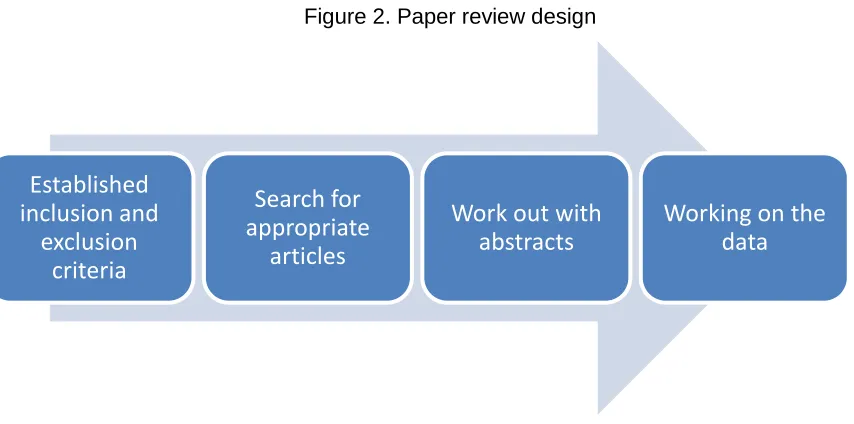
Figure 2. Paper review design
We decided to use knowledge management implementation in SMEs and coffee industry as the keywords. To answer the research questions, first, we established the inclusion and exclusion criteria. Inclusion criterions are: publications within 2000-2012 periods, empirical research paper, peer-reviewed, KM focus in general, English, and ASEAN countries. The papers which are published before 2001, the papers which are related to cooperation and regional cluster, grey literatures like reports and non-academic researches, another language such as English, and non-ASSEAN countries represent exclusion criteria. As an additional, an excel data which consists of key factors that coherent with study is produced. In the given case, among others: authors‟ name, publication year, research purposes, method, theoretical framework, results, and
conclusion.
Established
inclusion and
exclusion
criteria
Search for
appropriate
articles
Work out with
abstracts
Licensed under Creative Common Page 614 Next step is to search for appropriate articles. We used the keywords both “knowledge management and “KM” which is combined with SMEs and coffee industry and results 121
findings. The third is work out with abstract and, if relevance, will go further to the next section of the article to ensure that those articles are truly covers the scope that had been determined.
The fourth, relevant data that related to research objectives into excel sheet, then working on the data and discuss the contents. In case of there are parts that might be passes to be read, the papers will be re-working through questions. This approach can diminish the likelihood that the analysis and the conclusion drawn might be inconsistent. Finally, summarized that allows in categorizing the findings with the theme.
RESULT AND DISCUSSION
With regard to the likelihood of analysis result in the research model, this will deliver an alternative condition as follow:
a) Knowledge Management and its effect on the competitive strategy and the company competitiveness.
This paper has been review empirical papers on KM in coffee processing unit , based on knowledge management is one of the main issue that are facing by most of company processing unit. However, Previous studied in KM area tended to emphasize on large companies. By keeping in mind that coffee processing unit is an important driving factor for most countries in the world. The Analysis on this paper indicates that three KM are relatively seems to be studied in the coffee processing unit, such as; KM implementation, KM Perceptions, and Knowledge transfer.
Licensed under Creative Common Page 615 c) Competitive strategy on the performance of coffee industry in ASEAN
In case of coffee processing company as one of the small and middle enterprises form, knowledge management and industry environment do not play important roles in for their performance, because it rarely implemented in such those companies level. However, according to the alternative condition above, the variables reflects that the SME is actually able to apply new knowledge within their firm.
FUTURE RESEARCH
This research can be continue for the future research by conducting empirical research in several coffee company in ASEAN region. The researcher can add some new variables and indicators for measuring coffee company performance and make hypotheses testing in order to test which variable is significantly positive on coffee company performance among variables conducted in the study.
REFERENCES
Arben Asllani, Fred Luthans, (2003) "What Knowledge Managers Really Do: an Empirical and Comparative Analysis", Journal of Knowledge Management, Vol. 7 Iss: 3, pp.53 – 66.
Autio E, Sapienza HJ, Almeida JG. 2000. Effects of age at entry, knowledge intensity, and imitability on international growth. Academy of Management Journal 43(5): 909-924
Borg, G. (1983). Perceived exertion: A note on history and method. Medicine and Science in Sport and Exercise, 5, 90-93.
Bryson, J. M. (1995) Strategic Planning for Public and Nonprofit Organizations: A Guide to Business And Management, 5(9). Cases (8th ed.), FT Prentice Hall.
C. Hofer, R. Charan. 1998. The transition to professional management: mission impossible? American Journal of Small Business, 9 (1), pp. 1–11.
David, F.R. (2003) Strategic Management: Concepts and Cases (9thed.) New Jersey Ohmae, K. (1989) The Mind of the Strategist: The Art of Japanese Business, Penguin Books.Organizational Development. (The Case of Telecom Services Sector of Pakistan) Mediterranean Journal Of Social Sciences 2 (2). Ghani, K. D. A., Nayan, S., Izaddin, S. A., Ghazali, S. M. & Shafie, L. A. (2010). Critical internal and external factors that affect firms strategic planning. International Research Journal of Finance and Economics, Issue 51, 50-58.
Giovannucci, D., P. Liu, and A. Byers. 2008. Adding value: certified coffee trade in North America. Pages 33–49 in P. Liu, editor. Value-adding standards in the North American food market–trade opportunities on certified products for developing countries. FAO.
Handzic. M. “Knowledge management in SMEs.” Confederation of Asia Pacific Chambers of Commerce and Industry Journal. Vol1, 2006. pg:29-34.
I.R. Edvardsson. 2009. Is knowledge management losing ground? Developments among Icelandic SMEs. Knowledge Management Research & Practice, 7 (1) (2009), pp. 91–99.
J.‐C. Spender, (1996) "Organizational knowledge, learning and memory: three concepts in search of a theory", Journal of Organizational Change Management, Vol. 9 Iss: 1, pp.63 – 78
Licensed under Creative Common Page 616 Jegathesan, J. 1996. Creating and marketing and ideal investment environment. Asian Academy of Management Journal, 1 (1), pp. 1-14.
Kaplinsky, R., & Santos-Paulino, A. (2005). Innovation and competitiveness: Trends in unit prices in global trade. Oxford Development Studies, 33(3-4), 333-355.
Kergley, G. (1990), Broker with a Difference. Roanoke Times World News. April 13: B-6.
King, W.R., P. Marks, and S. McCoy. 2002. The most important issues in knowledge management. Communications of the ACM 45(9): 93–97.
Kluge, J., Wolfram, S. og Licht, T. (2001). Knowledge Unplugged. The McKinsey & Company global survey on knowledge management. Houndsmills: Palgrave.
Kuan Yew Wong, Elaine Aspinwall, (2005) "An empirical study of the important factors for knowledge‐management adoption in the SME sector", Journal of Knowledge Management, Vol. 9 Iss: 3, pp.64 – 82
Lawrence. A (2011) An Evaluation of Strategies for Achieving Competitive Advantage in the Leaders‟ Behavioral Integrity, TQM Implementation and Organizational Performance of Public Hospitals in Pakistan Paper Presented at The International Conference on Business and Economic Research.Management Practices on Business Performance: A Study of Manufacturing Firms of Pakistan International Journal of Business and Social Science 2(9).Management, 16(3), 226-237.Management, 20(11), 1293-1312. Marketplace: Core Concepts, Analytical Tools and Cases, McGraw-Hill.
Lewin, B., Giovannucci, D., Varangis, P., 2004. Coffee markets: New Paradigms in Global Supply and Demand. Agriculture and Rural Development Discussion Paper No. 3.World Bank, Washington D.C. Liebeskind, J. P. "Knowledge, strategy, and the theory of the firm," Strategic Management Journal (17: Winter), 1996, pp. 93-107.
Lisa G.A. Beesley, Chris Cooper, (2008) "Defining knowledge management (KM) activities: towards consensus", Journal of Knowledge Management, Vol. 12 Iss: 3, pp.48 – 62.
Maria-Alejandra Gonzalez-Perez, Santiago Gutierrez-Viana, (2012),"Cooperation in coffee markets: the case of Vietnam and Colombia", Journal of Agribusiness in Developing and Emerging Economies, Vol. 2 Iss: 1 pp. 57 – 73
Mark W. Salisbury, (2003) "Putting theory into practice to build knowledge management systems", Journal of Knowledge Management, Vol. 7 Iss: 2, pp.128 – 141.
Matusik, F.S., & Hill, C.W.L. (1998). The utilization of contingent work, knowledge creation, and competitive advantage, The Academy of Management Review, 23(4), 680-97.
McAdam, R. and Reid, R. (2001), „„A comparison of public and private sector perceptions and use of knowledge management‟‟, Journal of European Industrial Training, Vol. 24 No. 6, p. 317.
Nonaka, I., Takeuchi, H., (1995). The knowledge creating company: how Japanese companies create the dynamics of innovation. New York: Oxford University Press.
O'Dell, c. & Grayson, C. J. 1998. If only we knew what we know: Identification and transfer of internal best practices. California Management Review, 40, 154-174.
Porter, M.E. (1980), Competitive Strategy: Techniques for Analyzing Industries and practices and outcomes. Managing Service Quality. Vol. 13, No. 5, pp. 370-381.Practices and Performance. Managing Service Quality, 12(6), 394-404.practices and quality results: a comparison of manufacturing and service sectors in Taiwan. Managing Service Quality, Vol. 8, No. 1, pp. 46-54.
Porter, M.E. (1980), Competitive Strategy: Techniques for Analyzing Industries and practices and outcomes. Managing Service Quality. Vol. 13, No. 5, pp. 370-381.Practices and Performance. Managing Service Quality, 12(6), 394-404.practices and quality results: a comparison of manufacturing and service sectors in Taiwan. Managing Service Quality, Vol. 8, No. 1, pp. 46-54.
Licensed under Creative Common Page 617 Potts, J. (2008) „The International Coffee Agreement 2007. An instrument for building a sustainable coffee economy‟, Sustainable Coffee Partnership. Winnipeg, IISD.http://www.iisd.org/publications/pub.aspx?id=1038
Quintas, P. (2002), Managing knowledge in a new century. in Little, S., Quintas, P., Ray, T. (Eds), Managing knowledge – An essential reader; pp. 1-14; London: The Open University & SAGE Publications Ltd.
Rob Sharkie, (2003) "Knowledge creation and its place in the development of sustainable competitive advantage", Journal of Knowledge Management, Vol. 7 Iss: 1, pp.20 – 31.
Robinson, R.B. Jr. (1982), „The importance of „outsiders‟ in small firm strategic planning‟,Academy of Management Journal 25(1): 80-93.
Soo C, Devinney T, Midgley D and Deering A (2002) Knowledge management: philosophy, processes, and pitfalls. California Management Review 44(4).
Teece, D. (2000). Strategies for managing knowledge assets: The role of firm structure and industrial context. Long Range Planning, 33, 35–54.
Tuomi, I.,(1999). Corporate Knowledge: Theory and Practice of Intelligenkt Organizations. Metaxis. Viere, Tobias, Jan von Enden, and Stefan Schaltegger. "Life cycle and supply chain information in environmental management accounting: A coffee case study." Environmental Management Accounting and Supply Chain Management. Springer Netherlands, 2011. 23-40.