Competency to Reduce Transaction
Costs: Examining the Moderating Role
of Learning Orientation
Pornlapas Suwannarat
ABSTRACT
Manuscript type: Research paper
Research aims: The purpose of this study is to ascertain the effects of valuable resources on two factors: the competency to reduce clients’ transaction costs and the performance of export intermediaries. The impact of intermediaries’ competency to reduce clients’ transaction costs on performance is also investigated while the moderating effect of intermediaries’ learning orientation on resources, competency to reduce clients’ transaction costs, and performance is further examined.
Design/ Methodology/ Approach: A postal survey of 400 export
intermediary firms was conducted. Samples were accessed from the official database of the Department of Export Promotion, the
Ministry of Commerce, Thailand. Ordinary least square (OLS) regression analysis was employed to test the hypotheses of the study.
Research findings: Based on the three theoretical framework of transaction cost theory, agency cost theory and resource-based theory, results show that resources positively affect both intermediaries’ competency to reduce clients’ transaction costs and performance. It is also noted that intermediaries’ competency to reduce clients’ transaction costs positively impact on performance. In addition, no moderating effect of learning orientation is found.
Theoretical contributions/ Originality: This study is an original attempt to examine the moderating effect of learning orientation on three factors: the relationship among resources, the competency to reduce clients’ transaction costs, and performance.
Practitioner/ Policy implications: The results show export intermediaries’ resources and competencies improve their performance. This will indirectly facilitate export promotion efforts.
Research limitations/ Implications: This study surveyed the export
intermediary firms in Thailand. Future research may be conducted on a larger scale by focusing on other ASEAN countries as well as survey the performance of firms using export intermediaries. Keywords: Agency Theory, Export Intermediary Firm, Export Management Firm, Learning Orientation, Resource-Based Theory,
Transaction Costs
JEL Classification: M21
1. Introduction
Export intermediary firms assist inexperienced exporters in breaking into
overseas markets and experienced exporters (including multinational corporations) in entering unfamiliar countries (Peng & York, 2001). They
are defined as “specialist firms that function as the export departments
for several manufacturers in non-competitive lines” (Root, 1994, p. 102). Peng and York (2001), Kumar and Bergstrom (2007), and Shahrul (2011)
argue that these firms play an important role in enabling exporters to
enter a wider overseas market. By mediating between individuals and organisations which would not, otherwise, have come into contact, such
firms are providing valuable services. Smaller firms may be alarmed by
the problems not anticipated if they move into exporting while larger
firms, in spite of their extensive resources, may be reluctant to make
the effort to enter new markets especially, when they are performing
satisfactorily in their existing markets. Both types of firms may view
export agencies as a kind of distribution channel which link them to
foreign customers. The services provided by such intermediary firms
in the exporting country range from freight forwarding and customs
broking to trading, while in the importing country, the same firms can
act as the manufacturers’ representatives and distributors.
largely concentrated on firms which export their own products (Vogel, 2009; Cho & Tansuhaj, 2013); the roles of export intermediary firms from developed countries (Bernard, Jensen, Redding, & Schott, 2010; Bernard, Grazzi, & Tomasi, 2011; O’Gorman & Evers, 2011; Balabanis, 2015); or the focus is on major emerging market economies such as China (Bai, Krishna, & Ma, 2013; Li, 2013; Feng, Li, & Swenson, 2014;
Chen & Li, 2014). A more rigorous understanding of the determinants
of export intermediary firms’ performance could therefore, fill in the
critical missing link noted in existing research (Peng & IIinitch, 1998).
In addition, a number of researchers (e.g., Siamwalla, 1997; Thomsen, 1999; Indro & Richards, 2007) have pointed out that the economy of the Association of Southeast Asian Nations (ASEAN) has grown considerably in the past three decades, particularly, the ASEAN4
countries of Thailand, Malaysia, the Philippines, and Indonesia. This claim is endorsed by Indro and Richards (2007) who cited the World
Bank statistics report on average GDP per capita growth for over 200 countries in the 1990s as showing the ASEAN4 as being among the top
15 countries with the highest growth rate.
Foreign investors have been a driving force behind the ASEAN4
region’s economic development. In addition, foreign direct investment
(FDI) has also played an important role in reviving the region’s economies particularly during the financial crisis of Asia in 1997. It was
also an essential source of foreign capital during that time. Although
foreign firms are not the only actors, they have served an important role in developing the industrial sectors of the ASEAN countries (Thomsen,
1999).
The switch to export promotion policies for the ASEAN4 countries
began at different times in different countries. Malaysia started to
promote exports in as early as the 1970s but just like Thailand, the real export push only began to thrive in the mid-1980s. Following this,
Indonesia and the Philippines adopted the export-oriented approach in the late 1990s. According to Thomsen (1999), the external factors that are important in encouraging this change in investment policies are: (1) the
example of the successful and outward-orientated approach of the first
tier of industrialised economies of Taiwan, South Korea, Hong Kong,
and Singapore; (2) the prolonged commodity slump in the 1980s; and (3)
integrate ASEAN4 more closely into the global economy (Thomsen, 1999; Talerngsri & Vonkhorporn, 2005). On the basis of such evidence,
one can expect an increased interest in the exporting trade of the
ASEAN4 countries.
Altogether, this study proposes a research framework, concentrating
on the competency of export intermediary firms in reducing transaction
costs of exporting for their clients, moderated by the learning orientation.
This paper is structured as follows: firstly, the theoretical foundations of the study and related literature are discussed. Next, the conceptual model and hypotheses development are presented. Following this is the research methodology, findings and discussion, and the theoretical and managerial contribution of the study. Finally, the paper concludes by
considering the limitations of the study and making recommendations for future research agenda.
2. Literature Review and Hypotheses Development
Current literature suggests that the examination of the determinants
of export intermediary firms’ performance may provide insights to
those who are engaged in the export industry, policy makers as well as
academicians (Peng & llinitch, 1998; Blum, Claro, & Horstmann, 2010; Tang & Yifan, 2012; Crozet, Lalanne, & Poncet, 2013). Despite previous studies, a number of academic issues still need elucidation. For example,
why is it there is no steady progress noted in the internalising processes
in much of the literature (Leonidou & Katsikeas, 1996; Peng & York,
2001)? This phenomenon may be due, in part, to the contribution of
export intermediary firms or intermediaries which facilitate the dramatic
increase of exports by certain manufacturers (llinitch et al., 1994). On the other hand, some export intermediaries may deliberately seek to inhibit manufacturers’ rapid progress of exports for fear that their services
may no longer be required. Needless to say, this fear might be a
short-sighted practice which can alienate existing clients and deter potential
customers. Export intermediaries need to find a way to optimise their
own performance without alienating customers.
Interestingly, Sharma (2005) proposes that the rapid growth of e-business could positively affect the survival of export intermediaries. To overcome this, such intermediaries could incorporate e-business into their operations. Sharma (2005) concludes that well-established intermediaries should not only be able to enhance their capabilities
Nonetheless, this issue remains to be a topic of debate among
researchers. In another study, Shahrul (2011) presents a framework of factors that could affect intermediaries’ competitive strategies and export performance and these factors, appear to be moderated by external environments.
Recently, Balabanis (2015) observes that most of the existing research looking at export intermediaries tends to focus on the service structure and the factors influencing the intermediaries’ choice of transaction. He points out that such literature has failed to take into account how external and internal factors are linked to the intermediaries’ services and how the combination of the services offered can affect the performance of the intermediaries. In his study, Balabanis
finds that co-alignment of an export intermediary’s service mixed with configuration to a number of contingencies can lead to higher levels of profitability and efficiency.
This finding is clearly of practical importance to export
intermediaries and of commercial benefit to their clients. Establishing
the determinants of export intermediaries’ performance may also assist
policy makers in their attempt to promote exports (Peng, 1998; Kumar
& Bergstrom, 2007).
2.1 Theoretical Background
Three theories underpin this study. The transaction cost theory explains
why exporters may choose export intermediaries in the first place, while the agency theory provides insights into the cost and benefits associated
with intermediaries. Lastly, the resource-based theory explains why some intermediaries outperform others.
2.1.1 Transaction Cost Theory
The central contention of the transaction cost theory is that transactions
can be classified by organisational forms. Coase (1937) presents the
idea that trading on the open market and keeping everything within
the firm are alternative ways of organising similar kinds of transaction,
and that one way or the other, may help to reduce cost, depending on the circumstances of the transaction. The theory is further developed by
Williamson (1975; 1985; 1988; 2005), who introduces the classification of “markets” and “hierarchies”. This classification defines a set of human
factors and a set of environmental factors which, when taken together,
factors are bounded rationality and opportunism while environmental
factors are uncertainty and small numbers. “Opportunism allows for
strategic thinking and guile in exchanges. People can lie, cheat and steal. One cannot necessarily trust everybody. Therefore agreements need to be monitored during execution – hence the need for an organisation. Theoretically, with large numbers of exchangers one could avoid those who exhibit opportunistic behaviour, effectively punishing it. But in situations of small numbers of exchangers, one may not be able to avoid it” (Williamson, 1975, p. 20). Where these factors are problematic, they may encourage intermediaries to bypass the market and to resort to hierarchical modes of organisation, thereby, keeping transactions ‘in-house’.
Companies make choices with the aim of minimising their transaction costs. Such costs are likely to increase due to the bounded rationality of the decision makers, the uncertainty and complexity of the environment, and the asymmetric distribution of information between parties to an exchange. Because these costs are likely to be substantial when transacting across borders is involved, export intermediaries
may be chosen “in order to minimise the cost of achieving export sales”
(Beamish, Karavis, Goerzen, & Lane, 1999, p. 39 cited in Peng & York, 2001). To explain the application of the transaction cost theory in an international context, it needs to be recognised that when exporting, manufacturers have two options: to export directly, or to export indirectly via intermediaries. If exporters are to be persuaded to choose the second option, export intermediaries need to be able to reduce their clients’ export-related transaction costs relative to direct exporting. The performance of these intermediaries depends on how successful they are in reducing such costs.
2.1.2 Agency Theory
If the transaction cost theory focuses on the choice between trading in-house and the open market, the agency theory focuses on the differing interests of the principal and the principal’s agent (Jensen & Meckling,
1976; Peng & York, 2001; Shapiro, 2005). While exporters seek to enhance
their export performance through the use of agents, agents (export
intermediary firms) may be primarily interested in maximising the fees
to minimise information asymmetry by monitoring the activities of the intermediaries so as to curb the agents’ (intermediaries’) opportunism, or structure incentives. This can help to ensure that the interest of both
parties are aligned. The costs incurred in “monitoring expenditures of
the principal, bonding expenditures by the agent, and residual loss” are
known as agency costs (Jensen & Meckling, 1976, p. 308; Shapiro, 2005).
Theoretically, the best performing intermediaries would be those who minimise the agency costs for their clients.
2.1.3 Resource-Based Theory
Resource-based theory emphasises on the resources which firms possess, some of which may be firm-specific and non-transferable. Though these resources, which are often intangible, are embedded within the firm, and are knowledge-based, firms can gain a competitive advantage, thereby enhancing their performance (Barney, 1991; Barney & Clark,
2007). In the case of export intermediaries, their market knowledge and negotiation skills are important for the purpose of minimising the search and negotiation costs which are associated with export transactions.
From the standpoint of this theory, the success or otherwise of export
intermediaries will depend on the extent to which they are able to acquire and deploy unique resources. Without this, manufacturers may decide to develop their own in-house export competency. Many large
manufacturers do just that, obliging intermediaries to service smaller firms, or to concentrate on larger firms’ marginal markets (Julien &
Ramangalahy, 2003).
2.1.4 Integration
Each of these theories illustrates one aspect of export management. Transaction cost theory attempts to predict the firms’ governance choices, while agency theory draws attention to the underlying conflict
existing between principals and agents. Indeed, most transaction cost and agency theory-based research focus on the ways manufacturers arrive at decisions on how to implement export policies (Aulakh &
Kotabe, 1997; Campa & Guillen, 1999). Export intermediaries, however, can also employ resources to influence the relationship (Peng & York,
Transaction cost theory has been criticised as having limited applicability and placing too much emphasis on the structural features
of trading at the expense of other important aspects. Zajac and Olsen
(1993) suggest that this limitation has encouraged management to focus more on anticipated gains than on anticipated losses incurred when attempting to restrict opportunistic behaviours. This approach is also criticised as being a mistake when making explicit or implicit
assumptions that firms in a given industry are homogeneous. In the real world, “firm’s homogeneity is unrealistically assumed” (Robson, Leonidou, & Katsikeas, 2002, p. 389) as no two firms have identical resources and technologies (Kogut, 1988; Dyer, 1997).
Likewise, the agency theory has also been criticised for its overlap with the transaction cost theory as has been pointed out by Williamson (1988, p. 569) who argues that these two theories are very similar in their
orientation on managerial discretion and efficient contracting, and that their behavioural assumptions are “substantially identical”.
Resource-based theory, meanwhile, is also criticised for defining
competitive advantage as a value-creating strategy that is based on resources that are, along with other characteristics, valuable. The
reasoning is said to be circular and therefore, “operationally invalid”
(Priem & Butler, 2001a, p. 31). Resource-based theory is said to ignore external factors which are related to an industry as a whole. Lippman and Rumelt (1982) suggest that the industry structure as well as other external factor analysis should also be considered. Through external
changes, an initial competitive advantage may be nullified or even transformed into a weakness (Priem & Butler, 2001b; Peng, 2001; Peteraf, 1993; Rumelt, 1984).
Given these deficiencies, a combination of the three theories seems likely to provide a more satisfactory conceptual framework. An integrated approach suggests that export intermediaries can be seen as agents whose resources help to reduce export-related agency costs and
transaction costs for their principals (Peng, 2001; Peng, 1998).
2.2 Conceptual Framework and Hypotheses Development
Peng and York (2001) suggest that transaction cost, agency, and resource-based theories indicate that export-related costs can be broken down
into three main constituent parts: (1) search costs; (2) negotiation costs;
possessed by export intermediaries are likely to enable exporters to reduce such costs. Peng and York (2001) develop a model by focusing
on the ability of export intermediary firms to lower transaction costs
on export intermediary’s performance. Their model posits that as long
as export intermediary firms have resources that will help exporters to
lower export-related costs along these three dimensions, their services will be in demand and their survival is viable with more likelihood of success (Peng & York, 2001). Barney (1991), however, claims that resources can be in a number of forms, both tangible and intangible. Moreover, resources may have relationships among themselves and so affect export intermediaries’ performance. In the current study, a
different approach is applied by re-defining the variables. To do so,
this study operationalises resources separately from competency to reduce transaction costs in order to study the effect of resources on the competency as a way of reducing transaction costs. It also looks at the impact of competency on the performance of the export intermediary
firms to reduce transaction costs.
Given that the competitive advantage of export intermediary firms
increase based on their intangible resources, it is undeniable that the strategic management literature looking at the resource-based view
of the firm (Barney, 1991; Barney & Clark, 2007), the transaction cost
paradigm (Williamson, 1975, 1985), and also the agency theory (Jensen & Meckling, 1976) can generate a more suitable research model. This is
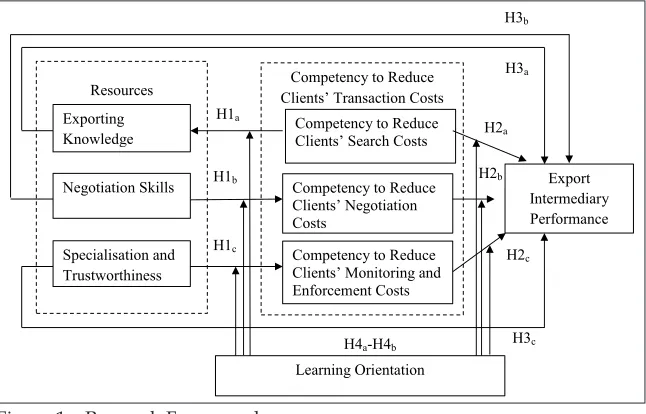
illustrated in Figure 1 for the purpose of generating a set of hypotheses.
According to Leonidou and Katsikeas (1996, p. 543) and Peng
and Ilinitch (1998), most export development researches adopt “an
explicit marketing frame of reference”. Marketing researchers are
familiar with the transaction cost perspective, which “is the currently accepted paradigm that guides the subject of forward integration in
marketing channels” (Rangan, Corey, & Cespedes, 1993, p. 445). Since manufacturers’ export channel choice is primarily driven by transaction cost considerations, there are three options: (1) to vertically integrate
the channel function, i.e., ‘direct export’ (Anderson & Coughlan, 1987; Majumdar & Ramaswamy, 1995); (2) to employ domestically based ‘export intermediaries’ (Perry, 1992); or (3) to adopt overseas-based
‘import intermediaries’ (Karunaratna & Johnson, 1997). To succeed, export intermediaries must have the competency to reduce clients’ export-related transaction costs which are relative to the other two channel choices. Otherwise, there will be no rationale for their existence
2.2.1 Competency to Reduce Clients’ Transaction Costs Search costs
Search costs typically include the upfront costs of market research and planning. Without extraneous help, this can be expensive and
time-consuming (Eriksson, Johanson, Majkgard, & Sharma, 1997). Peng and
York (2001), Julien and Ramangalahy (2003), and Abel-Koch (2013) argue that these costs deter many manufacturers from expanding into
international markets. If such firms resort to cutting corners, inadequate
prior information increases the likelihood of unsuccessful ventures.
Export intermediaries provide crucial knowledge about foreign markets,
and are likely to be familiar with export procedures and international
marketing strategies (Madsen, Moen, & Hammervold, 2012; Ellis,
2010). They can also leverage this knowledge across a plurality of client
firms and products thereby, achieving big scale economies in overseas
distribution. This is something which is beyond the reach of individual
exporters. Leading export intermediary firms have the knowledge and
competency to leverage, seen in terms of resource-based theory as a
unique, intangible resource. Peng and York (2001) find strong evidence to support the influence of knowledge on the performance of export intermediary firms.
Competency to Reduce
Clients’ Transaction Costs
Resources
Export Intermediary Performance Exporting
Knowledge
Negotiation Skills
Specialisation and Trustworthiness
Competency to Reduce Clients’ Search Costs
Competency to Reduce
Clients’ Negotiation
Costs
Competency to Reduce Clients’ Monitoring and Enforcement Costs
Learning Orientation H1a
H1b
H1c
H2a
H2b
H2c
H3c
H3b
H3a
H4a-H4b
Negotiation costs
Negotiation costs include direct costs such as travelling, communication
and staff, and also the costs of potential risk when dealing with
unfamiliar foreign customers (Tung, 1988: Weiss, 1994). Exporters may find their lack of experience exacerbated by a lack of knowledge about
culturally derived negotiation norms (Lewicki, Litterer, Minton, & Saunders, 1994). This can be disadvantageous. The expertise of export
intermediary firms often enables them to obtain better deals for their clients. For instance, their skill of acquiring and excelling in the handling of export negotiations can give them a competitive edge (DeNoble, Castaldi, & Moliver, 1989; Peng & York, 2001; Shahrul, 2011). The partial influence of negotiation skills on the performance of the intermediary firms is shown in the study of Peng and York (2001).
Monitoring and enforcement costs
According to Peng and York (2001), once a contract is signed, the parties are concerned with the ex post monitoring and the enforcement of
contractual obligations. Non-performance may be the result of foreign buyers’ misunderstanding of contract specifics due to cultural differences,
or from their deliberate opportunistic behaviour (Williamson, 1985).
Exporters who have direct dealings with foreign buyers must constantly
be on guard for such hazards. Thus, intermediaries will be sought to help lower these costs.
To sum up, as reiterated by Williamson (1985), Peng and Ilinitch (1998), Peng (1998), and Peng and York (2001), the competency of export intermediaries to reduce clients’ export-related transaction costs can be subdivided into three main competencies: (1) competency to reduce
clients’ search costs; (2) competency to reduce clients’ negotiation costs;
and (3) competency to reduce clients’ monitoring and enforcement costs. These competencies, according to Peng (1998) and Peng and York (2001), can be affected by a number of factors, which will be discussed in section 2.2.2 below.
2.2.2 Resources Export knowledge
This knowledge has been studied and measured in many studies
(e.g., Bikey, 1982; Cavusgil & Zou, 1994; Eriksson et al., 1997; Peng & York, 2001). Employing a multidimensional approach, Peng (1998),
and Peng and York (2001) measured the export knowledge of export intermediaries by eliciting information focusing on the export agent’s experience with key decision maker’s experience in foreign cultures, experience in the particular industry, and so forth. It is found that export knowledge can positively affect the competency to reduce clients’ search costs. This knowledge, says Peng (1998), can be regarded as a unique, valuable, intangible resource, that cannot be easily replicated by rivals.
Negotiation skills
Negotiation skills have also been regarded as a valuable asset [resource]
as it can positively impact on the competency of export intermediary
firms to reduce clients’ negotiation costs. In Tung (1988) and Peng
and York (2001), this antecedent factor has been operationalised as negotiation expertise and frequency. Peng and York (2001) further
define it as “possessing an intangible resource embodied in ability [competency] to handle export negotiations” (Peng & York, 2001, p. 333).
Specialisation and trustworthiness
In addition, Peng and Ilinitch (1998) also stress that export intermediary
firms normally specialise in certain areas. They deal with products made
by locals or by foreign market or both. Because of this specialisation, these
firms know the products and the markets they serve very well. They
usually have well-established networks of foreign distribution already in place. Hence, specialisation could be regarded as a valuable asset of intermediaries that cannot be easily transferred or imitated by others. This specialisation can enhance their competency to reduce transaction costs for clients, especially clients’ monitoring and enforcement costs whilst also positively impacting on their own performance.
Trust is the mutual confidence between parties who understand
that no party to an exchange will exploit another party’s vulnerabilities
(Sable, 1993; Barney & Hansen, 1994; Pinho, 2012; and Yusuf, Meera,
Ghani, Manap, & Larbani, 2015). Parties involved can be vulnerable in
several ways. For example, when a party finds it costly to accurately
evaluate the quality of the resources or assets which the other party
to adverse selection vulnerabilities (Akerlof, 1970). When one party
finds it costly to accurately evaluate the resources or assets offered by another party, the former is subjected to moral hazard vulnerabilities
(Holmstrom, 1979). When one party makes a large, asymmetric
transaction-specific investment, it is subjected to hold-up vulnerabilities
(Klein, Crawford, & Alchian, 1978). Sable (1993) argues that when
parties trust each other, they share a mutual confidence that the other
party will not exploit any adverse selection, moral hazard, hold-up, or other vulnerabilities that might exist. Sable (1993) also points out that
the definition of trustworthiness follows from the definition of trust.
As the word implies, an exchange partner is trustworthy when he/she is worthy of the trust of others. Barney and Hansen (1994) highlight that whilst trust is an attribute of a relationship between two persons,
trustworthiness is an attribute of an exchange partner. From their study,
they conclude that trustworthiness can be a valuable resource and a
competitive advantage for the respective firms.
Bergen, Dutta, and Walker (1992), and Peng and Ilinitch (1998)
argue that the use of intermediaries can introduce potential agency costs into the manufacturer-intermediary relationship. As agents, intermediaries may behave in a way that is not always in the best interest of their principals. If agency costs in this relationship is deemed to be too high, the manufacturer (principal) may (1) opt to integrate the
intermediary function, i.e., ‘direct export’; (2) elect to use an overseas-based ‘import intermediary’; and/or (3) quit exporting at all. Each of
these options depresses the demand for export intermediaries’ services. Thus, the chances of export intermediaries being selected and retained by exporters also depend on whether they can assure their clients that the potential agency costs will be less than the monitoring/enforcement costs incurred by manufacturers when engaging in direct exports (Peng, Ilinitch, & Hill, 1998). Apart from export knowledge and negotiation skills in exporting, it appears that the trustworthiness of intermediary
firms can be regarded as an important resource in reassuring clients and
enhancing their competency to reduce the monitoring and enforcement costs for clients. This leads to a better chance of intermediaries being selected by their clients, thereby, leading to better performance
(Cosimano, 1996; Peng & IIinitch, 1998; Peng & York, 2001; Shahrul,
2011).
Based on the literature above, it is hypothesised that valuable and
intangible resources possessed by export intermediary firms are likely
Hypothesis 1:
H1a: There is a positive relationship between exporting knowledge and competency to reduce clients’ search costs.
H1b: There is a positive relationship between negotiation skills and competency to reduce clients’ negotiation costs.
H1c: There is a positive relationship between specialisation and trustworthiness, and competency to reduce clients’ monitoring and enforcement costs.
Hunt and Morgan (1995), and Peng and Ilinitch (1998) emphasis that literature on marketing and strategic management has generally,
concentrated on the determinants of firms’ performance as its main
question. Research should focus on the factors that determine the
performance of export intermediary firms. This issue has been puzzling
scholars, practitioners, and policymakers worldwide (Peng, 1998). The
competitive advantage of export intermediary firms focusing on their
intangible resources particularly in the form of export knowledge, negotiation skills, specialisation and trustworthiness has been indicated in literature. These intangible resources could reduce the transaction costs of clients or exporters and ultimately, enhance their chances of being selected by their clients, thereby, achieving better performance
(Cosimano, 1996; Peng & IIinitch, 1998; Peng & York, 2001; Shahrul,
2011). Based on this, the following hypotheses are formulated.
Hypothesis 2:
H2a: There is a positive relationship between competency to reduce clients’ search costs and performance of export intermediary
firms.
H2b: There is a positive relationship between competency to reduce clients’ negotiation costs and performance of export
intermediary firms.
H2c: There is a positive relationship between competency to reduce clients’ monitoring and enforcement costs, and performance of
export intermediary firms.
Hypothesis 3:
H3a: There is a positive relationship between exporting knowledge
and performance of export intermediary firms.
H3c: There is a positive relationship between specialisation and
trustworthiness, and performance of export intermediary firms.
2.2.3 Learning Orientation
The role of the learning orientation has been examined extensively, for
instance, by grounding on the agency theory. Dou, Li, Zhou, and Su (2010) studied the relationship between global professional service firms (GPSF) and local clients in terms of knowledge asymmetry and goal
incongruence, which is moderated by the learning orientation. They
find that the level of knowledge asymmetry positively affects the level of goal incongruence between the GPSF (agent) and the local clients
(principal). However, this positive relationship between knowledge asymmetry and incongruence has been partially weakened by greater
learning orientation. In their study, Dou et al. (2010) mention that Swart and Kinnie (2007) had argued that foreign agents rely on the refinement
of an existing knowledge base to overcome local knowledge asymmetry and to deliver customised solutions which suit local clients’ needs. In this
regard, learning orientation plays a critical role as it influences the extent of proactive learning of local market knowledge by the GPSFs. Without an adequate task-related knowledge of how the GPSFs handle their
assignments, local clients would not know how to specify the service requirement details (Sharma, 1997). Hence, the learning orientation of local clients is essential in how they interpret, evaluate, and accept new
knowledge, that is, task-related for the GPSFs (Argyris & Schon, 1978).
A learning orientation is an important organisational characteristic which encourages employees to question the norms guiding
organisational actions (Garvin, 1993; Sinkula, 1994; Sinkula, Baker, & Noordewier, 1997). According to Moorman and Miner (1998), Garvin (1993), Calantone, Cavusgil, and Zhao (2002), and Dou et al. (2010), learning orientation has been defined as a set of organisational values
and skills which is aimed to create, acquire, and use new knowledge to modify an organisation’s behaviour. These researchers argue that
asymmetry results largely from the global agent’s oversight, it is logical to posit that the global agent may counterbalance the negative effect of local knowledge asymmetry by engaging more active learning activities
(Dou et al., 2010).
In the conceptual model of this study, as mentioned earlier, constructs of variables are underpinned by the transaction cost theory, agency theory and resource-based theory. The resources of export
intermediary firms can enable exporters to reduce export-related costs,
thereby, enhancing trust between the two parties. This is perceived as a satisfactory performance of the intermediaries. In this study,
the learning orientation of an export intermediary firm refers to an
organisation’s innate characteristic, with no reference to the other party. It is hypothesised that learning orientation moderates the impact of resources on the competency to reduce transaction costs. In other words,
an export intermediary firm with strong learning orientations could have a high tendency to utilise its resources efficiently and effectively
for the purpose of enhancing its competency to reduce transactions costs for clients and thus, enhances its own performance. Based on this, the following hypotheses are formulated:
Hypothesis 4:
H4a: Learning orientation of export intermediary will moderate the relationship between resources (exporting knowledge, negotiation skills, and specialisation and trustworthiness) and the competency to reduce clients’ transaction costs (search costs, negotiation costs, and monitoring and enforcement costs)
H4b: Learning orientation of export intermediary will moderate the relationship between the competency to reduce clients’ transaction costs (search costs, negotiation costs, and monitoring and enforcement costs) and export intermediary performance.
3. Methodology
3.1 Sample and Data Collection
sampling was determined by using the sample size table of Krejcie and
Morgan (1970). A simple random sample of 400 export intermediary
firms were retrieved via a random numbering table that was identified from the population firms. Postal questionnaires using the five Likert-scale point was formulated in Thai and English and then sent to the sample firms. They were addressed to the target respondents, the chief executive officer (CEO) or the managing director of the export
intermediary firm. The response rate was 25.50 per cent. To test non-response bias, a comparison was made between early and late respondents, as suggested by Armstrong and Overton (1977). The results
show no significant differences between early and late responses.
3.2 Measurement
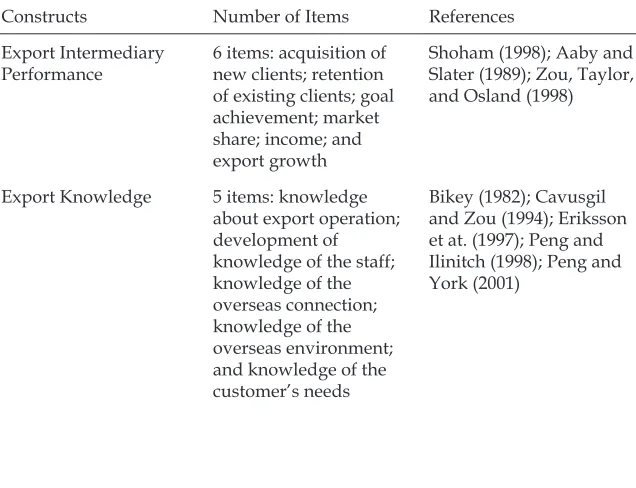
The items in the survey questionnaire used to measure each construct were adapted from prior studies. These constructs’ items and their sources are presented in Table 1. In addition, firm size and firm
operational capital were made the control variables of this study. Firm
size was measured by the number of employees working full time
(Christmann, 2000), while firm operational capital was established
from the value of operational capital (Husted & Allen, 2007). According to Husted and Allen (2007), and Ciliberti, Pontrandolfo, and Scozzi
(2008), larger firms tend to have more resources and are more active than smaller firms in strategic planning; they are also better in utilising resources to accomplish firms’ goals. Hence, the dummy variables used to distinguish firms’ size and firms’ operational capital. Dummy coding
provides one way of using categorical predictor variables in various
kinds of estimation models such as linear regression. Dummy coding
uses only one (1) and zero (0) to convey all of the necessary information on group membership. In general, with k groups there will be k-1
coded variables. Each of the dummy coded variables uses one degree of freedom, so k groups has k-1 degrees of freedom, just like in analysis
of variance (Aulakh, Kotabe, & Teegen, 2000).
In this study, firm size is demonstrated by a dummy variable where: • 100 is a firm that has the number of employees lower than 50
persons;
• 001 is a firm that has the number of employees between 201 to 350 persons; and
• 000 is a firm that has the number of employees more than 350
persons.
Also, firm operational capital is measured by a dummy variable
where:
• 100 is a firm that has the value of operational capital less than THB5,000,000 (approximately USD166,000);
• 010 is a firm that has the value of the operational capital between THB5,000,000 (approximately USD166,000) to THB15,000,000 (approximately USD500,000);
• 001 is a firm that has the value of operational capital more than THB15,000,000 (approximately USD500,000) to THB25,000,000 (approximately USD830,000); and
• 000 is a firm that has the value of the operational capital more than THB25,000,000 (approximately USD830,000).
Table 1: Constructs’ Items and Sources
Constructs Number of Items References
Export Intermediary
Performance 6 items: acquisition of new clients; retention of existing clients; goal achievement; market share; income; and
export growth
Shoham (1998); Aaby and Slater (1989); Zou, Taylor,
and Osland (1998)
Export Knowledge 5 items: knowledge
about export operation;
development of
knowledge of the staff;
knowledge of the
overseas connection;
knowledge of the
overseas environment;
and knowledge of the customer’s needs
Bikey (1982); Cavusgil and Zou (1994); Eriksson et at. (1997); Peng and Ilinitch (1998); Peng and
Negotiation Skills 5 items: negotiation
skills; successful negotiation; negotiation strategy; compromise skills; and exchange of
negotiation techniques and strategy
Bikey (1982); Cavusgil and Zou (1994); Eriksson et at. (1997); Peng and Ilinitch (1998); Peng and
York (2001)
Specialisation and
Trustworthiness 5 items: reputation and image; honesty and trustworthiness; expertise; specialisation transformation; and
mindfulness of the interests of clients
Sable (1993); Barney and Hansen (1994); Peng and Ilinitch (1998); Peng and York (2001); Peng (1998)
Competency to Reduce
Clients’ Search Costs 4 items: ability to lower clients’ search costs, which are the costs of searching for information about the legal procedures and environment of
overseas countries;
characteristics and needs
of foreign customers; exporting procedure;
and knowledge across multiple parties
Peng and Ilinitch (1998);
Peng and York (2001)
Competency to Reduce
Clients’ Negotiation
Costs
4 items: ability to lower clients’ negotiation costs, which are
negotiation direct costs;
negotiation indirect
costs; communication difficulties; and losses
incurred through negotiation
Peng and Ilinitch (1998);
Peng and York (2001)
Competency to Reduce Clients’ Monitoring and
Enforcement Costs
3 items: ability to lower clients’ monitoring and enforcement costs, which are the costs of monitoring and
Peng and Ilinitch (1998);
enforcing compliance by overseas partners with
contractual obligations;
costs of monitoring and protecting the interests
of clients; and costs of
helping clients’ overseas partners to understand the contracts and agreements correctly Learning Orientation 4 items: understanding
and focusing on the dynamic business
environment; supporting
and enhancing the knowledge and skills of
employees; encouraging
staff to exploit new knowledge gained
from the work process;
and building the past experience as a guideline for improving work practice
Calantone, Cavusgil, and
Zhao (2002); Dou et al.
(2010)
3.3 Reliability and Validity
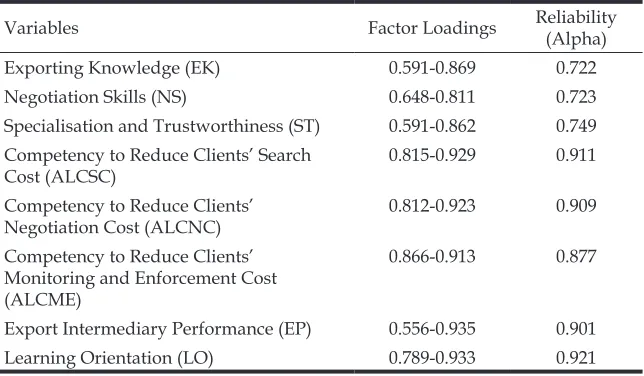
Reliability of the measurements was computed by Cronbach’s Alpha
coefficients. In the scale of reliability, the coefficient values in this study are greater than 0.70; this can be interpreted as meaning that the scale of all measures is internally consistent (Nunnally & Bernstein, 1994). Factor analysis is employed to test the validity of data in the questionnaire. According to the rule of thumb stated by Nunnally and
Bernstein (1994), if all factor loadings are greater than 0.40 cut-offs and
are statistically significant, this can be taken as showing the validity of
Table 2: Result of Measure Validation
Variables Factor Loadings Reliability (Alpha)
Exporting Knowledge (EK) 0.591-0.869 0.722
Negotiation Skills (NS) 0.648-0.811 0.723
Specialisation and Trustworthiness (ST) 0.591-0.862 0.749 Competency to Reduce Clients’ Search
Cost (ALCSC) 0.815-0.929 0.911
Competency to Reduce Clients’
Negotiation Cost (ALCNC) 0.812-0.923 0.909
Competency to Reduce Clients’
Monitoring and Enforcement Cost (ALCME)
0.866-0.913 0.877
Export Intermediary Performance (EP) 0.556-0.935 0.901
Learning Orientation (LO) 0.789-0.933 0.921
3.4 Statistical Technique
Ordinary least square (OLS) regression analysis is employed to test the hypothesis of the relationships between the resources, the competency to reduce export-related costs, and intermediaries’ performance. According to Aulakh, Kotabe, and Teegen (2000), if all dependent, independent, and control variables in the research are neither nominal data nor categories data, then OLS is the appropriate method for examining the hypotheses’ relationships. In this study, the models of these relationships are as follows:
ALCSC = β01 + β02EK + β03FA1 + β04FA2 + β05FA3 + β06FC1 (1)
+ β07FC2 + β08FC3 + ε
ALCNC = β09 + β10NS + β11FA1 + β12FA2 + β13FA3 + β14FC1 (2)
+ β15FC2 + β16FC3 + ε
ALCME = β17 + β18ST + β19FA1 + β20FA2 + β21FA3 + β22FC1 (3)
+ β23FC2 + β24FC3 + ε
EP = β25 + β26ALCSC + β27FA1 + β28FA2 + β29FA3 (4)
+ β30FC1 + β31FC2 + β32FC3 + ε
EP = β33 + β34ALCNC + β35FA1 + β36FA2 + β37FA3 (5)
EP = β41 + β42ALCME + β43FA1 + β44FA2 + β45FA3 (6)
+ β46FC1 + β47FC2 + β48FC3 + ε
EP = β49 + β50EK + β51FA1 + β52FA2 + β53FA3 (7)
+ β54FC1 + β55FC2 + β56FC3 + ε
EP = β57 + β58NS + β59FA1 + β60FA2 + β61FA3 (8)
+ β62FC1 + β63FC2 + β64FC3 + ε
EP = β65 + β66ST + β67FA1 + β68FA2 + β69FA3 (9)
+ β70FC1 + β71FC2 + β72FC3 + ε
ALCSC = β73 + β74EK + β75LO + β76LO*EK + β77FA1 + (10)
β78FA2 + β79FA3 + β80FC1 + β81FC2 + β82FC3 + ε
ALCNC = β83 + β84NS + β85LO + β86LO*NS + 87FA1 + (11)
β88FA2 + β89FA3 + β90FC1 + β91FC2 + β92FC3 + ε
ALCME = β93 + β94ST + β95LO + β96LO*ST + β97FA1 + (12)
β98FA2 + β99FA3 + β100FC1 + β101FC2 + β102FC3 + ε
EP = β103 + β104ALCSC + β105LO + β106LO*ALCSC + (13)
β107FA1 + β108FA2 + β109FA3 + β110FC1 + β111FC2 +
β112FC3 + ε
EP = β113 + β114ALCNC + β115LO + β116LO*ALCNC + (14)
β117FA1 + β118FA2 + β119FA3 + β120FC1 + β121FC2 +
β122FC3 + ε
EP = β123 + β124ALCME + β125LO + β126LO*ALCME + (15)
β127FA1 + β128FA2 + β129FA3 + β130FC1 + β131FC2 +
β132FC3 + ε
Where, EK = Exporting Knowledge
NS = Negotiation Skills
ST = Specialisation and Trustworthiness
ALCSC = Competency to Reduce Clients’ Search Costs
ALCNC = Competency to Reduce Clients’ Negotiation Costs ALCME = Competency to Reduce Clients’ Monitoring and
Enforcement Costs
LO = Learning Orientation
EP = Export Intermediary Performance
FA = Firm Size
FC = Firm Operational Capital
4. Findings and Discussion
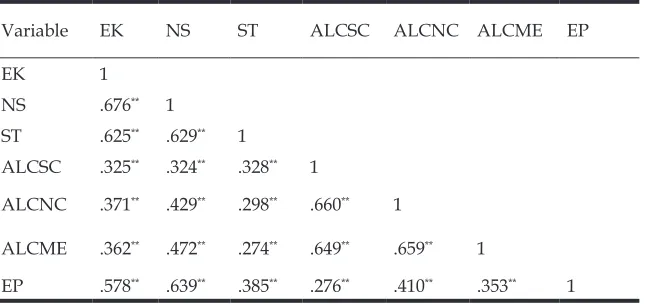
Table 3 shows the correlation matrix of the variables. Possible problems relating to multicollinearity occur when two or more independent variables are linearly related very closely. This problem was also monitored. Hair, Black, Babin, Anderson, and Tatham (2006) state that a correlation with a value above 0.80 should be considered a serious problem. After the simple correlations between independent variables
and standard errors of the estimated coefficients had been examined, the
data showed that there was no serious multicollinearity which would
distort the efficiency of the estimate.
Table 3: Correlation Matrix of Variables
Variable EK NS ST ALCSC ALCNC ALCME EP
EK 1
NS .676** 1
ST .625** .629** 1
ALCSC .325** .324** .328** 1
ALCNC .371** .429** .298** .660** 1
ALCME .362** .472** .274** .649** .659** 1
EP .578** .639** .385** .276** .410** .353** 1
Notes: EK = Export Knowledge; NS = Negotiation Skill; ST = Specialisation and Trustworthiness; ALCSC = Competency to Reduce Clients’ Search Costs; ALCNC = Competency to Reduce Clients’ Negotiation Costs; ALCME = Competency to Reduce Clients’ Monitoring and Enforcement Costs; EP = Export Intermediary Performance.
** indicates significance at 0.01 level.
4.1 The Influence of Resources on Competency to Reduce Clients’
Transaction Costs.
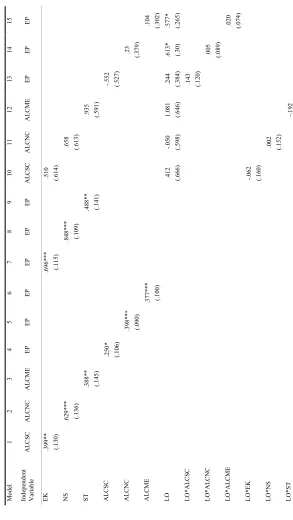
Table 4 (Model 1, Model 2, and Model 3) shows the results of the relationship among the intangible resources of the export intermediary
firms and their competency to reduce transaction costs for clients.
The results indicate that all intangible resources: export knowledge,
positive effects on the competency to reduce the transaction costs of
the intermediaries’ clients (β02= 0.399, p<0.01; β10=0.629, p<0.001, β18=0.388, p<0.01). Overall, the regression explains the range from 5
per cent (0.053) to 75 per cent (0.751) of the variation of the dependent variable in each model as the competency to reduce clients’ search cost (ALCSC) in Model 1, the competency to reduce clients’ negotiation costs
(ALCNC) in Model 2, and the competency to reduce clients’ monitoring and enforcement costs (ALCME) in Model 3. The outcome of this study is
consistent and complementary to those noted in previous studies (Peng
& Ilinitch, 1998; Peng & York, 2001). Hence, hypothesis 1 is supported.
4.2 The Impact of the Competency to Reduce Clients’ Transaction Costs and Resources on Performance
Table 4 (Model 4, Model 5, and Model 6) shows the findings of the impact
of the competency in reducing transaction costs for export intermediary
firms’ clients on the performance of the intermediary firms. Model 7,
Model 8, and Model 9 indicate the effects of the intangible resources of
export intermediary firms on their performance. The results indicate
that the competency in reducing the transaction costsof the clients has
positive impacts on the performance of the firms (β26= 0.250, p<0.05; β34=0.398, p<0.001, β42=0.377, p<0.001) as shown in Table 4. The
regression can explain, from the range of 8.6% (0.086) to 20.7% (0.207) of the variation of the dependent variable, the performance of the
intermediary firms in each model. These findings can be interpreted as suggesting that export intermediary firms with higher competency
to reduce transaction costs that is, search cost, negotiation cost, and monitoring and enforcement costs, could achieve better performance. This leads to the acceptance of hypothesis 2.
A number of international business researchers such as Cosimano (1996), Peng, IIinitch, and Hill (1998), and Peng and York (2001)
emphasis that the likelihood of export intermediary firms being selected and retained by exporters (clients) depends on whether the firms can
assure their clients that the transaction costs of the exporting operation will be less than the costs exporters incur if the transaction is done by the clients themselves. In other words, intermediaries that help to reduce these transaction costs will be better sought after by the exporters. By producing a better and tighter deal, thereby, reducing the probability
would opt for their services, leading to the better performance of
intermediary firms.
The findings shown in Table 4 (Models 7, 8, and 9) indicate that
the intangible resources of export intermediaries that is, their export knowledge, negotiation skills, and specialisation and trustworthiness,
have positive effects on their performance (β50= 0.696, p<0.001; β58=0.848, p<0.001, β66=0.488, p<0.01). This suggests that export intermediary firms with greater intangible resources, in terms of export
knowledge, negotiation skills, and specialisation and trustworthiness, appear to have better performance. This outcome is consistent with
main stream literature on export intermediaries. Export knowledge,
negotiation skills, and specialisation and trustworthiness are commonly regarded as the intangible resources that cannot be easily replicated
(Barney, 1991); they could enhance the competitiveness of the firms and, accordingly, improve the firms’ performance (Peng & York, 2001).
Hence, hypothesis 3 is supported.
4.3 The Moderating Effects of Learning Orientation
Table 4 (Model 10, Model 11, and Model 12) shows the findings of the
moderating impacts of learning orientation on the relationship between
the export intermediary firms’ resources and the competency to reduce
clients’ transaction cost. The results signify that there is no moderating impact of learning orientation on the following relationships: exporting
knowledge and the competency to reduce clients’ search cost (β76= -0.062, p>0.05); negotiation skills and competency to reduce clients’ negotiation cost (β86= 0.002, p>0.05); and specialisation together with
trustworthiness and competency to reduce monitoring and enforcement
costs (β96= -0.192 p>0.05). Table 4 (Model 13, Model 14, and Model 15) shows the findings of the moderating impacts of the learning
orientation on the relationship between the competency to reduce
clients’ transaction costs and export intermediary firms’ performance.
The results also show that no moderating effects of learning orientation on this relationship can be found in the following pairs: the competency
to reduce clients’ search cost and performance (β106= 0.143, p>0.05);
the competency to reduce clients’ negotiation cost and performance
(β116= 0.005, p>0.05); the competency to reduce clients’ monitoring and enforcement cost and performance (β126= 0.020, p>0.05). Therefore,
Notes: E K is E xp or t Kn ow le dg e; NS is Ne go tiatio n S kill ; ST is Sp ec ialis atio n a nd T ru st w or th in es s; AL C SC is C om peten cy to R ed uce C lie nt s' S ea rch C os ts ; AL C N C is C om pete nc y to R ed uce C lie nt s' Ne go tiatio n C os ts ; AL C ME is C om pete nc y to R ed uce C lien ts ' Mo nito rin g an d E nf or ce m en t C os ts ; L O is L ea rn in g O rien tatio n; EP is E xp or t In ter m ed iar y P er fo rm an ce ; F A is Fir m Size; F C is F irm Op er atio nal C ap ital. Un sta nd ar dis ed co ef ficien ts with sta nd ar d er ro rs in p ar en th es is , w her e ** *, * *, an d * in dic ate sig ni fica nce at th e le vels of 0 .1 %, 1 %, an d 5% resp ec tiv el y. FA : DFS 1 -.3 25 (.39 8 ) -.2 62 (.40 4) -.4 64 (.40 7 ) -.7 82 (.40 2 ) -.6 91 (.37 4) -.6 66 (.38 6) -.5 34 (.35 0) -.4 96 (.31 9) -.6 67 (.39 2) -.3 29 (.40 5) -.2 68 (.41 0) -.1 63 (-.11 5) .2 4 (.22 9) .1 29 (.21 6) -.4 36 (.31 4) FA : DFS 2 -0. 080 (.38 9) -.2 01 (.39 4) -.2 43 (.39 8) -.6 24 (.39 3 ) -.5 35 (.36 7) -.5 36 (.37 6) -.4 12 (.34 2) -.4 50 (.31 1) -.5 00 (.38 2) -.1 21 (.39 7) -.2 00 (.40 0) .1 27 (-.08 3) .3 13 (.21 1) .1 92 (.20 3) -.4 67 (.30 3) FA : DFS 3 -.2 24 (.41 4) -.1 75 (.42 1) -.4 27 (.42 4) -.9 67 * (.41 9) -.9 04 * (.39 1) -.8 47 * (.40 3) -.7 75 * (.36 4) -.7 56 * (.33 2) -.8 80 * (.28 4) -.3 04 (.42 8) -.1 62 (.43 1) -.0 28 (-.14 5) -.6 18 ** (.21 8) .4 51 * (.21 2) -.9 27 ** (.32 5) FC: DFC1 .2 03 (.28 4) .1 21 (.29 3) .0 42 (.29 6) .1 57 (.29 0) .0 85 (.27 1) .1 54 (.27 7) .1 14 (.25 1) -.0 73 (.23 2) .0 30 (.28 4) .2 15 (.28 6) .1 09 (.30 0) -.0 81 (.02 6) -.4 28 (.32 2) -.4 33 (.30 2) .1 85 (.22 2) FC: DFC2 .2 46 (.26 1) .4 43 (.26 5) .1 64 (.26 7) -.0 02 (.26 6) -.1 38 (.25 1) -.0 28 (.25 4) .1 27 (.23 0) .0 14 (.21 0) .0 02 (.25 7) .3 09 (.26 7) .4 23 (.27 8) .3 16 (.26 8) -.4 32 (.31 4) -.4 55 (.29 3) .2 79 (.20 7) FC: DFC3 .3 00 (.27 2) .5 41 (.27 8) .2 23 (.27 9) .3 54 (.27 8) .1 76 (.26 4) .3 37 (.26 5) .3 36 (.23 9) .2 66 (.21 9) .3 65 (.26 8) .3 66 (.27 8) .5 22 (.28 9) .3 27 (.27 6) -.9 04 ** (.33 9) -.9 41 ** (.31 5) .5 76 ** (.21 5) A dju ste d R 2 .7 51 .2 02 .0 53 .0 86 .2 07 .1 66 .3 17 .4 29 .1 46 .0 69 .1 84 0. 99 .4 51 .5 05 .4 68 Notes: EK = Export Knowledge; NS = Negotiation Skill; ST = Specialisation and Trustworthiness; ALCSC = Competency to Reduce Clients’ Search Costs; ALCNC = Competency to Reduce Clients’ Negotiation Costs; ALCME = Competency to Reduce Clients’ Monitoring and Enforcement Costs; LO
= Learning Orientation; EP = Export Intermediary Performance; F
A = Firm Size; FC = Firm Operational Capital.
In respect of the moderating effect of learning orientation, previous
studies show a mixed outcome. For instance, in the study focusing on global professional service firms (GPSF) in China, Dou et al. (2010) find
negative moderating effect on the relationship between professional knowledge asymmetry and goal congruence. However, the interacting effect of learning orientation between local knowledge asymmetry and
goal congruence is non-significance. Dou et al. (2010), Baker and Sinkula (1999), and Senge (1990) mention that a firm with a strong learning orientation has more flexibility in applying the new knowledge gained
on its own adaptability and management. In the model used in this study, all constructs of the variables are underpinned by the transaction cost theory, agency theory and resource-based theory. The resources
of an export intermediary firm can enable exporters to reduce
export-related costs and this is perceived to be satisfactory performance. The
learning orientation of a firm may positively affect the relationship
between its resources and its competency to reduce export-related costs and the relationship between its competency to reduce transaction costs
and performance. However, the results of this study do not significantly
show the moderating effect of the learning orientation.
Dou et al. (2010) further argue that learning orientation takes time
for it to become embedded into the organisation. If it does happen, learning orientation could become a part of the organisation’s shared
values and norms which support lifelong learning. Its influence may
affect (and be affected by) and become latent in other factors, especially behavioural factors. This might be the reason why learning orientation plays no role as a moderator in this study.
Table 4 (Model 4 – Model 9, and Model 13 – Model 15) shows
that the control variable of firm size can explain the variance in the intermediary firm’s performance (β29= -0.967, p<0.05; β37= -0.904,
p<0.05; β45= -0.847, p<0.05; β54= -0.775, p<0.05; β62= -0.756, p<0.05; β72= -0.880, p<0.05; β109= -0.618, p<0.01; β119= -0.451, p<0.05; β129=
-0.927, p<0.01). The results shown in Table 4 (Model 13 – Model 15) also indicate that the control variable of the firm’s operational capital affects the variance in the performance of the firm (β112= -0.904, p<0.01; β122=
-0.941, p<0.01; β32= 0.576, p<0.01). This implies that firm size and firm operational capital affect the performance of the firm. Bigger firms tend to have more resources, and so they are more active than smaller firms
in utilising their resources to accomplish their goals, thereby, achieving
5. Theoretical and Managerial Contribution
This study makes valuable contributions to current literature as well as
providing various benefits to practitioners and policy makers through
the outcomes derived from using an integrated approach.
First of all, this paper integrated three complementary theoretical
approaches. Although transaction cost theory and agency theory help to clarify the relationship between manufacturers (exporters) and agents, both theories have come under criticisms as being too bias towards the perspective of principals. Resource-based theory has, for its part, been criticised for being too general as resources, often, cannot be accurately
or even clearly described (Peng, 1998; Peng & York, 2001; Peng, 2001; Priem & Butler, 2001a; 2001b). In the context of the performance of intermediary firms in the export trade, these three theories are combined so as to develop an empirical model. Specifically, transaction cost theory and agency theory can be used to “inform the generic decision
(of governance choice)…while (resource-based) competence brings in particulars” (Peng & York, 2001, p. 339). In this paper, transaction cost theory and agency theory are used for the underlying analysis of the empirical evidence, while resource-based hypotheses are formulated. Thus, the resource-based view can be seen as providing an important solution to overcoming the inadequacies of transaction cost theory and agency theory.
Further, this study contributes to current literature by focusing
on the moderating effect of learning orientation on the relationship between resources, competency to reduce clients’ transaction costs,
and export intermediary firms’ performance. This study is the first
attempt to augment the sparseness of knowledge in this area, since an
export intermediary firm with a strong learning orientation is better positioned to utilise its resources efficiently and effectively, thereby
enhancing its competency in reducing transaction costs for clients. In
addition, the findings also benefit policy makers who can gain more
knowledge about the role of export intermediaries and this knowledge can greatly facilitate the export promotion efforts which most nations
are involved in (Brewer, 1993; Peng & Ilinitch, 1998; Sharma, Tainai, &
Sariteke, 2006). By giving recognition to the potential roles of export intermediaries, the respective government could create more successful promotional efforts for exportations. Hence, such knowledge is valuable
for countries, especially ASEAN4 countries which are all aspiring to
Lastly, this paper also benefits practitioners. As customers become more demanding, export intermediaries must be able to deliver “true
added value” to remain a viable organisational form (Peng & Ilinitch, 1998, p. 619). In this regard, the intermediaries need to ceaselessly, acquire, utilise and develop their resources and capabilities in reducing
their clients’ export-related transaction costs. Specifically, they should
put in more efforts to acquire knowledge about foreign markets and export processes so as to strengthen their negotiation skills, develop their specialisations and trustworthiness, and to access other important resources for sustaining and developing their competitive edge (Peng,
1998; Kumar & Bergstrom, 2007).
6. Limitations of the Study and Future Research Agenda
This study hypothesised that learning orientation would have a positive moderating impact on the relationship between resources and the competency to reduce clients’ transaction cost, and the relationship between competency to reduce clients’ transaction costs and performance
of export intermediaries. Nonetheless, this is not supported. Ideally,
future research should be conducted on a larger scale by focusing on
other ASEAN countries so as to compare the results of this study. Also, this study shows that control variables: firm size and firm operational capital can explain the variance in the intermediary firm’s performance, standing at the 95 to 99 per cent confidence interval. Hence, it could be implied that firm size and firm operational capital also affect the performance of export intermediaries. Larger firms tend to have
more resources and so are more active in strategic planning. They are also better at utilising their resources to accomplish their goals, unlike
smaller firms. Future research needs to conduct a more in-depth study
of these control variables.
Finally, as stated by Peng and York (2001), results of a survey as is done in this study, makes it difficult to demonstrate empirically, whether
References
Aaby, N., & Slater, S. (1989). Management influences on export performance:
A reviews of the empirical literature, 1978-88. International Marketing
Review, 6(4), 7-26.
Abel-Koch, J. (2013). Who uses intermediaries in international trade? Evidence from firm-level survey data. The World Economy, 36(8), 1041-1064. Ahn, J., Khandelwal, A., & Wei, S.J. (2011). The role of intermediaries in
facilitating trade. Journal of International Economics, 84(1), 73-85.
Akerlof, G.A. (1970). The market for lemon quality uncertainty and the market
mechanism. Quarterly Journal of Economics, 84(3), 488-500.
Argyris, C., & Schon, D.A. (1978). Organisational Learning: A Theory of Action
Perspective. Reading, MA: Addison-Wesley.
Armstrong, J., & Overton, T. (1977). Estimating nonresponse bias in mail
surveys. Journal of Marketing Research, 14(August), 396-402.
Anderson, E., & Coughlan, A.T. (1987). International market and expansion via
independent or integrated channels of distribution. Journal of Marketing,
51(1), 71-82.
Aulakh, P., & Kotabe, M. (1997). Antecedents and performance implications
of channel integration in foreign markets. Journal of International Business
Studies, 28(1), 145-175.
Aulakh, P.S., Kotabe, M., & Teegan, H. (2000). Export strategy and performance of firms from emerging economies: Evidence from Brazil, Chile, and
Mexico. Academy of Management Journal, 43(3), 342-361.
Bai, X., Krishna, K., & Ma, H. (2013). How You Export Matters: Export Mode,
Learning and Productivity in China. Available at http://www.princeton.
edu/~ies/IESWorkshopS2013/KrishnaPaper.pdf (accessed on5 October 2016).
Baker, W.E., & Sinkula, J.M. (1999). The synergistic effect of market orientation
and learning orientation on organizational performance. Journal of the
Academy of Marketing Science, 27(4), 411-427.
Balabanis, I.G. (2015). Matching service mixes to internal and external
contingencies in export intermediary firms: Profitability and efficiency implications. In H.E. Spotts (Ed.), Assessing the Different Roles of Marketing Theory and Practice in the Jaws of Economic Uncertainty: Proceedings of the
2004 Academy of Marketing Science (AMS) Annual Conference (pp.123-123).
London: Springer International Publishing.
Barney, J.B. (1991). Firm resources and sustained competitive advantage. Journal
of Management, 17(1), 99-120.
Barney, J.B., & Clark, D.N. (2007). Resource-Based Theory: Creating and Sustaining
Competitive Advantage. Oxford: Oxford University Press.
Barney, J.B., & Hansen, M.K. (1994). Trustworthiness as a source of competitive
Beamish, P., Karavis, L., Goerzen, A., & Lane, C. (1999). The relationship
between organization structure and export performance. Management
International Review, 39(1), 37-54.
Bergen, M., Dutta, S., & Walker, C.O. (1992). Agency relationships in marketing:
A review. Journal of Marketing, 56(3), 1-24.
Bernard, A.B., Grazzi, M., & Tomasi, C. (2011). Intermediaries in international
trade: Products and destinations. Review of Economics and Statistics, 97(4),
916-920.
Bernard, A.B., Jensen, B., Redding, S., & Schott, P. (2010). Wholesalers and
retailers in US Trade. American Economic Review, 100(2), 408-413.
Bikey, W. (1982). Variables associated with export profitability. Journal of
International Business Studies, 13(2), 39-55.
Blum, B., Claro, S., & Horstmann, I. (2010). Facts and figures on intermediated
trade. American Economic Review Papers and Proceedings, 100(2), 408-413.
Brewer, T. (1993). Government policies, market imperfections, and foreign
direct investment. Journal of International Business Studies, 24(1), 101-120.
Calantone, R.J., Cavusgil, S.T., & Zhao, Y. (2002). Learning orientation, firm
innovation capabilities, and firm performance. Industrial Marketing
Management, 31(6), 515-524.
Campa, J., & Guillen, M. (1999). The internalization of exports. Management
Science, 45(11), 1463-1478.
Cavusgil, S.T., & Zou, S. (1994). Marketing strategy performance relationship:
An investigation of the empirical link in export market ventures. Journal
of Marketing, 58(1), 1-21.
Chen, B., & Li, Z. (2014). An anatomy of intermediaries in China’s export market.
China Economic Journal, 7(2), 187-213.
Christmann, P. (2000). Effects of ‘Best Practices’ of environmental management
on cost advantage: The role of complementary assets. Academy of
Management Journal, 43(4),663-680.
Cho, H., & Tansuhaj, P.S. (2013). Becoming a global SME: Determinants of SMEs; Decision to use e-intermediaries in export marketing. Thunderbird
International Business Review, 55(5), 513-530.
Ciliberti, F., Pontrandolfo, P., & Scozzi, B. (2008). Investigating corporate social responsibility in supply chains: A SME perspective. Journal of Cleaner
Production, 16(15), 1579-1588.
Coase, R.H., (1937). The nature of the firm. Economica, 4 (November), 386-405. Cosimano, T.F. (1996). Intermediation. Economica, 63(249), 131-143.
Crozet, M., Lalanne, G., & Poncet, S. (2013). Wholesalers in international trade.
European Economic Review, 58(February), 1-17.
DeNoble, A.F., Castaldi, R.M., & Moliver, D.M. (1989). Export intermediaries:
Small business perceptions of service and performance. Journal of Small