This may be the author’s version of a work that was submitted/accepted for publication in the following source:
Gibbings, Peter,Lidstone, John, & Bruce, Christine (2015)
Students’ experience of problem-based learning in virtual space. Higher Education Research and Development,34(1), pp. 74-88. This file was downloaded from: https://eprints.qut.edu.au/64630/
c
Consult author(s) regarding copyright matters
This work is covered by copyright. Unless the document is being made available under a Creative Commons Licence, you must assume that re-use is limited to personal use and that permission from the copyright owner must be obtained for all other uses. If the docu-ment is available under a Creative Commons License (or other specified license) then refer to the Licence for details of permitted re-use. It is a condition of access that users recog-nise and abide by the legal requirements associated with these rights. If you believe that this work infringes copyright please provide details by email to [email protected]
Notice:Please note that this document may not be the Version of Record (i.e. published version) of the work. Author manuscript versions (as Sub-mitted for peer review or as Accepted for publication after peer review) can be identified by an absence of publisher branding and/or typeset appear-ance. If there is any doubt, please refer to the published source.
Students’ experience of problem-based learning in virtual space
Peter Gibbings
Associate Professor, University of Southern Queensland, Toowoomba, Australia [email protected]
Corresponding Author
Telephone: Australia 0746312553 Facsimile: 0746312526
John Lidstone
Professor, Queensland University of Technology, Brisbane, Australia [email protected]
Christine Bruce
Students’ experience of problem-based learning in virtual space
Abstract: This paper reports outcomes of a study focussed on discovering qualitatively different
ways students’ experience problem-based learning in virtual space. A well accepted and
documented qualitative research method was adopted for this study. Five qualitatively different
conceptions are described, each revealing characteristics of increasingly complex student
experiences. Establishing characteristics of these more complex experiences assists teachers in
facilitating students engagement and encouraging deeper learning.
Keywords: Problem Based Learning, E-learning, Virtual learning, Engineering Education
Introduction
This paper reports outcomes from an investigation into variations in students’ experience of problem-based learning (PBL) in virtual space. Outcomes from this study describe what students are actually attending to when engaged in PBL in virtual space, it does not investigate factors shaping students’ strategies to cope with demands of PBL in virtual space. The research was carried out to inform pedagogy and improve student learning outcomes.
have been established, can curriculum design be enhanced to support this learning and to introduce students to more sophisticated and deeper ways of learning.
Online learning
For various reasons, and facilitated by advances in information and communication technology, many higher education institutions have recently begun to develop and offer online distance education courses (for example Long, Stannard, Chenery, & Joordens, 2012; Rowlands, 2012). A major benefit to students is that online distance education allows them to study and work simultaneously, which is an important consideration in today’s economic climate. For many students this means studying entirely in virtual space since, in many cases, no physical meetings between students and academic staff are possible due to time and geographic constraints.
Factors that contribute to an effective online education experience are well known. For example, it is generally accepted that for the online learning environments to be effective they need to adhere to several key principles (for example Ally, 2004; Anderson, 2004; Caplan, 2004; Hughes, 2004), and these have been neatly summarised and explained in the literature (for excellent examples see Reushle, 2005, 2006). Key principles relevant to this paper are: connectivity through a cohesive e-community of learners; the provision of authentic meaningful activities; and critical reflective practice.
Problem-Based Learning
For the purposes of this paper, PBL is defined as an educational approach concerned with engaging students in learning activities by requiring them to seek solutions to open-ended problems presented in real-life contexts. As the problems are usually presented to small teams, it also encourages learners to develop generic transferable attributes such as team work skills (Gibbings & Brodie,
2008b).
proponents (as an example Ryberg, Koottatep, Pengchai, & Dirckinck-Holmfeld, 2006, p. 156) agree that PBL is entirely in accordance with the ‘constructivist paradigm’ (Biggs, 1999; Resnick, 1991; Salmon, 1993) and ‘collaborative learning’ (Dillenbourg, 1999; Roschelle & Teasley, 1995).
Problem-Based Learning in Virtual Space
Unfortunately there is a dearth of research into different ways of experiencing PBL when it is conducted in virtual space. Most literature on PBL is concerned with instruction that includes at least some face-to-face meetings of the teams and facilitators at some stage of the instruction (some
examples are Alocilja, 2007; Gabb, Vale, & Krishnan, 2006; Polanco, Calderón, & Delgado, 2004; Ribeiro & Mizukami, 2005). These studies are therefore of limited value with respect to using the approach in a virtual learning environment.
A key aspect of this research is that it investigates the nexus between online learning and PBL. In the context of PBL in virtual space, Gibbings and Brodie (2008b) describe the use of a learning management system (LMS) and appropriate pedagogical principles to produce a virtual e-leaning environment conductive to student learning. They also found that the appropriate use of the
communication features on the LMS, coupled with course design that encouraged critical reflection and validation of new ideas and experiences, provided a mechanism conducive to social constructivism. However, they did not specifically concentrate on how students experienced the course.
(USQ), this study is only concerned with the external offer, which is delivered entirely online and studied by students exclusively in virtual space.
Aim of this study
The aim of the research reported here was to identify the qualitatively different ways in which students experience PBL when studying in virtual space. In this study we are interested in emphasising collective experience rather than the learning experience of any individual.
Method
Methodology
Students studying by PBL make decisions about how they construct their own knowledge (Savin-Baden, 2004). For this and other reasons, the authors believe it reasonable to expect that learners studying a PBL course in virtual space will experience that course in different ways.
Phenomenography was chosen as the research method since it is concerned with the discovery of different ways in which people experience a phenomenon (such as PBL in virtual space) and is
sympathetic to constructivism and transformational learning. It should be noted that the object of study in this paper is not the PBL course itself (ENG1101), but rather how students experience PBL in that course. Phenomenography is an ideal research method for this study since it focusses on the variation in students’ collective experience, rather than individual experience (Marton & Booth, 1997). The primary outcome of the research, which is commonly known as the ‘outcome space’, is the constitution of a limited number of categories of description, including explicit description of key qualitative similarities within and differences between the categories, and the structural relationship between these categories (Akerlind, 2002).
closely related to the post-modern understanding of knowledge as social construction as opposed to the earlier modernist idea of knowledge being a mirror of reality (Kvale, 1995). However, social and individual constructivism usually adopt a dualist view where the self and the outer world are seen as separate. In contrast, phenomenography adopts a non-dualist stance where the outer world is not constructed internally by an individual, and nor is it imposed on an individual from the outside – rather it is considered that there is only one world that includes the individual and the ‘real world’ around them. This is described by Marton and Booth (1997, p. 13) as, ‘There is only one world, but it is a world we experience, a world in which we live, a world that is ours.’
Though it is recognised that other qualitative methods may also be suitable, phenomenography was chosen to investigate the variation in students’ experience of PBL in virtual space: firstly because it focuses on the variation; secondly because it focusses on collective voice as opposed to individual; and thirdly because it shares ontological and epistemological assumptions with PBL. Note that the collective voice is important since it helps to surface the broader themes ‘that – while not the true story of any one of us – at some level help to define the story of all of us’ (Cherry, 2005, p. 58).
Context and Participant Profile
Context
conducted in virtual space. Students’ learning is supported through the formation of collaborative learning communities that encourage them to focus and reflect on their own learning needs, attitudes and processes (Gibbings & Brodie, 2012). This is facilitated by effective use of electronic
communication and other technology including e-mail, web conferencing, social media, discussion boards, synchronous and asynchronous chat facilities and web resources that are available in a modern LMS. External students study from various geographic locations around the world, which enriches the learning experience due to cultural diversity, but also creates its own set of logistical problems
(Gibbings & Brodie, 2006). These problems are further complicated in the problem solving courses since students in the same team may be studying at Associate Degree (two year degree), Bachelor of Technology (three year degree), or Bachelor (four year degree) levels.
Assessment in the course involves both individual and team assessment, and includes a mix of summative and formative assessments. There is no final examination in the course (for full details on assessment strategy see Gibbings & Brodie, 2008a). The course objectives reflect what are considered important learning outcomes, and these are correlated to national standards and USQ graduate
attributes. Students’ work is assessed against these objectives through five main mechanisms: communications log; team submission of project reports; peer assessment of contribution within the team; individual contributions; individual portfolio of set work and individual reflection on learning.
Participant Profile
The participant group included both males and females (87% males and 13% females), each of the study majors were represented, and responses were received from students of various age groups (ages ranged from 17 to 58 years with an average of 28). Note that the analysis of possible effects of students’ attributes such as age and gender are outside the scope of this initial study and are reported elsewhere (Gibbings, Bruce, & Lidstone, 2009; Gibbings, Lidstone, & Bruce, 2010).
Data collection
Data for this study were text-based responses to four questions before the course and a further four questions after the course, presented on the LMS. There was no face-to-face dialogue with the participants. The ‘before’ questions were presented in the week leading up to the start of the course at a time when all students had an opportunity to read the course specifications and course learning objectives. The ‘after’ questions were presented in the final week of the course at a time when some students’ work had been assessed, but no final course grades had been awarded. Since the main focus of this paper is on the outcome space in general, no details on the ‘before’ and ‘after’ analysis, nor the subsequent superimposition of frequency distribution are provided (for these details interested readers are referred to Gibbings, 2008; Gibbings, et al., 2009).
It is common, and desirable, in phenomenographical studies for questions to be designed so that they direct the students towards the phenomenon, but still be broad enough to obtain meaningful responses without forcing or leading them into a particular structure or manner of response. The
allow students to develop their responses in order to achieve an understanding of the phenomenon in focus.
• What did you learn in this course?
• How did you go about this learning in this course?
• What role did your team facilitator play in this learning?
The first question was to allow students to discuss direct outcomes from learning in this course. The question was open enough to elicit responses detailing dynamics of team work such as trust, having a common and shared goal, and commitment to succeed. The second question was designed to provide students an opportunity to discuss the ‘how’ aspect of learning such as some specific details on the processes that were followed to achieve learning, or mention benefits of team diversity and
mentoring in relation to achievement of learning goals. Asking students about both the ‘what’ and ‘how’ of learning was designed to elicit a more robust data set given the second order nature of the analysis method. The final question was designed to get students to reflect on how the course was designed and delivered and to think about the pedagogy involved.
One of the major limitations of the process of electronic data collection was the lack of verbal cues such as facial expressions, body language, and voice tone and pitch that are able to be detected and considered in face-to-face interviews. Weiss (2000) identified this drawback and believed that it could lead to a reduced ability to fully discern the meaning of some messages. Linked to this, and consistent with finding of Foster (1994), another limitation is the loss of ability to ask probing follow up questions that is possible in a face-to-face interview. To offset these disadvantages, three major benefits of the data collection process were: the speed and efficiency of the process; alignment with the students’ study mode; and easy management of the large amount of data that was collected.
Data analysis
An analysis was undertaken of the data in accordance with accepted phenomenographic practices. The responses as a group were analysed to map (discover) the limited number of categories of description that represent the qualitatively different ways that the group as a whole experienced PBL in virtual space. The goal was to discover the main holistic meanings (qualitatively different ways of experiencing) that were revealed in the responses to PBL in virtual space. After initial analysis by the lead author, data was then analysed as a ‘team endeavour’ as described in Bowden and Green (2005, p. 2). The only evidence used in the development of the categories of description was that contained in the responses.
the differences are grounded in reflective thought and not necessarily in immediate physical experience (Barnard & Gerber, 1999; Marton & Booth, 1997; Marton & Pang, 1999; Pang, 2002).
Data analysis concentrated on developing a representation of the qualitative differences in students’ interpretations of their experience of PBL in virtual space. In accordance with the non-dualistic view (Marton & Pang, 1999; Pang, 2002) mentioned in the ‘Methodology’ subsection earlier in this paper, the students and their understanding of PBL in virtual space were considered together during the data analysis.
Initial data analysis involved familiarisation with the data considered in its entirety so as to discover the collective, rather than any individual, experience (Barnard & Gerber, 1999). As this data familiarisation progressed, preliminary themes began to emerge. The analysis process was grounded in seeking variations in meaning associated with the responses that in turn revealed these variations in the learning experience. Groups of emerging themes were then considered as the beginnings of draft categories of description. The process was highly iterative and involved continual consideration of these emerging categories of description and the response data to check meaning and context. After numerous iterations the meanings stabilised and a statement was developed to describe the meaning of each categories of description. By analyzing that data in this manner each category of description revealed variation in how students experience PBL in virtual space. The categories of description were justified and elaborated by representative quotations from the responses to exemplify the meanings.
Later the analysis process turned to determining if a logical organised structure existed that would represent the relationship between these emerging categories of description and this relationship then became part of the outcome space.
Results
Outcome Space
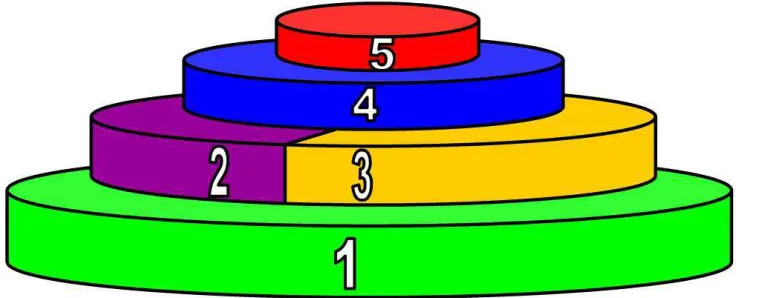
experiencing PBL in virtual space as expressed by the students. The categories of description, and the structural relationship between them, became the primary ‘outcome space’ (Marton, 1981, 1984) from the data analysis. The outcome space from this study is represented in graphical form in Figure 1. The categories of description reveal that PBL in virtual space may be experienced as: Category 1: ‘A necessary evil for program progression’; Category 2: ‘Developing skills to understand, evaluate, and solve technical problems’; Category 3: ‘Developing skills to work effectively in teams in virtual space’; Category 4: ‘A unique approach to learning how to learn’; or Category 5: ‘Enhancing personal growth’. The range of categories represent increasing awareness of certain aspects of the phenomenon.
Although the outcome space represents the collective experience, Figure 1 demonstrates that some students may discern only one aspect, others may sequentially become aware of more than one aspect, while others may be simultaneously aware of more than one aspect. This demonstrates that some ways of experiencing are more complex, fuller, or richer than others. Figure 1 represents the collective meaning and experience and does not represent any particular individual nor groups of students in each category.
Figure 1 – Graphical representation of expanding awareness associated with categories
elements of lower levels. Categories of description two and three are considered at the same level in the hierarchy such that category four may include aspects of awareness from category two only, or from category three only, or from both categories two and three. It should be noted that, in the context of this paper, ‘category of description’ is used to describe the outcome space while ‘conception’ is used to describe a more generalised and abstract way of experiencing – for practical purposes the reader may consider these terms interchangeably.
In this study we are less interested in the learning experience of any individual and more interested in emphasising collective meaning and experience. The aim is to capture the richness of experience, and consequently the final outcome space represents a collective interpretation that goes beyond any individual’s experience of the phenomenon. The qualitatively different ways of
experiencing PBL in virtual space are elaborated below in the meaning statement (referential aspects) of each category of description. As outlined in the Data Analysis subsection, the meaning of each category of description is supplemented with representative quotations from the responses to exemplify the meanings. In a study of this type it is important to faithfully represent students’ quotations so the reader can make a fully informed judgement on all aspects related to the quotations. Therefore quotations are exactly as entered by the students with spelling and grammatical mistakes included.
The number after the quotations represent a unique number assigned to each student response during the data analysis process. The outcome space also presents the relationship between these different ways of seeing PBL in virtual space. These are represented in the structural aspect of each category.
Category 1: ‘A necessary evil for program progression’
… all I wanted to aim for was a pass so that I would not have to undertake this course again. - 74074 … i want to achieve my bachlor - 70670
In category one, there is an understanding that team work in virtual space is necessary to solve the PBL scenarios in order to successfully submit assessment items, but this is restricted to mechanics of team work and does not extend to how the team operates, nor issues associated with team dynamics. Students in this category are simultaneously attending to individual and team assessment items, and the operational logistics of preparing and submitting team assessment work.
Category 2: ‘Developing skills to understand, evaluate, and solve technical problems’
PBL in virtual space is experienced as gaining knowledge and practical skills of a technical nature that may be useful in students’ future professional endeavours. When going about PBL in this way, students are interested in acquiring new, as well as enhancing existing, skills and competence. Students are simultaneously attending to solving technical problems; acquiring new and enhancing existing technical knowledge, skills and competence; and the practical application of these skills in the work environment.
… neccessary required skills for me to understand, evaluate and solve the technical problems presented – 30510
I have improved on some skills and armed myself with new skills and information. – 53471
Category 3: ‘Developing skills to work effectively in teams in virtual space’
PBL in virtual space is experienced as developing skills and knowledge of how to work effectively in virtual teams. When going about PBL in this way, students focus on skills necessary to effectively operate in teams in virtual space. Students are simultaneously attending to: team work in general; and the practical application of these skills to effectively operate in teams in virtual space, and there is an awareness of the real-life application of these skills.
The predominant areas I have gained knowledge in are leadership, team dynamics and emotional intelligence.. – 40193
… ground rules need to be laid down when a team first forms and that there has to be a consequence if these rules are not adhered to – 12494
In category three the physical separation of the team causes students to consider learning to use communication and other technologies as an object of study itself and a means to aid better team work. Students in this category are simultaneously attending to team work in general; and the practical
application of these skills to effectively operate in teams in virtual space.
Category 4: ‘A unique approach to learning how to learn’
PBL in virtual space is experienced as learning about, and gaining understanding of, the process of how to learn. When going about PBL in this way, students’ central focus is on processes concerned with their own learning. Students are simultaneously attending to what they are learning as well as external acts and internal (personal) processes relevant to how they are achieving that learning.
I basically learnt how I learn aswell as how my team mates learn!! – 8713
From studying this course I have learnt a lot about myself and the way I study … due to its emphasis on learning. – 94897
to what they are learning as well as external acts and internal (personal) processes relevant to how they are achieving that learning.
Category 5: ‘Enhancing personal growth’
PBL in virtual space is experienced as providing an opportunity for personal satisfaction, self-improvement, and to grow as a person. When going about PBL in this way, students see the
opportunity to reach their full potential and to be the best they can be, which is considered a move towards an instinctual human need for self-actualisation. Students are simultaneously attending to: professional careers; their own personal lives; and to future society and ethical responsibilities to this society.
I have already discovered the benefits of reflection and find it invaluable in my day-to-day living, and I feel that many students will grow as a person through an introduction to the technique. – 27029
I have found some of the activities valuable for personal development. – 8413
In category five, students have been issued a difficult challenge to study PBL in virtual space and when they successfully achieve this they experience a great sense of accomplishment. Students in this category are simultaneously attending to professional careers and their own personal lives, and future society and ethical responsibilities to this society.
Dimensions of Variation
Table 1 summarises two critical aspects that are held relatively constant within each particular category, and that systematically vary across the categories. These are commonly referred to as the dimensions of variation. This Table is also designed to provide further insights into the data analysis the led to the categories being discovered.
Table 1. Dimensions of Variation
Dimensions of Variation Categories
Time Team relationship
1 Takes too much time which
impacts on marks, and impacts
on private life.
2 Course takes too much time
which led to developing time management skills.
Students see themselves as an individual who is part of a team. Properly identify as being part of a team, but learning is an individual enterprise.
3 Teamwork impinges on time
which impacts personal lives and necessitates developing time management
Similar to category two, except students work as part of the team.
4 Takes too much time but tacit
acceptance that time commitment is worthwhile investment since benefits may outweigh disadvantages
Students see themselves operating genuinely as a team player. Evidence of deeper forms of interaction - cooperation, collaboration, shared dialogue, formation of a learning community.
5 Time mentioned very little -
realisation that struggle with the workload is worthwhile since benefits outweigh disadvantages.
Students have appreciation of benefits of deep collaboration on aspects of PBL projects that lead to learning and knowledge building. Consensus opinion and debate precede most team decisions, demonstrating students are not just sharing understanding, but are synthesizing and debating to gain, or test, new knowledge.
Discussion
Student Learning
Conception two sees the emergence of students’ awareness that they may acquire technical skills from the PBL activities in the course. These technical skills include pure discipline specific technical skills and competence as well as a set of soft or transferable skills such as problem solving techniques and research skills. The appreciation of the relevance of these skills to future professional careers is at least partly due to the context of the learning and the real-life scenarios presented in the PBL problems. This arms students with the ability to adapt to changes and solve problems in unusual situations in their future professional work.
Team work skills and ability to work cooperatively in a virtual global environment begin to take prominence in conception three, and the acquisition of these rely heavily on students developing
encouraged to take responsibility for their own performance largely through the judicious use of a team code of conduct. Details of how teams are formed and maintained can be found in earlier publications (readers are particularly referred to Gibbings & Brodie, 2008a, 2008b). These skills are necessary in workplace team environments regardless of whether the teams operate in the virtual environment or face-to-face. The results from this study suggest that the PBL strategy can encourage the development of these skills (for 'before' and 'after' analysis and frequency distribution refer to Gibbings, 2008; Gibbings, et al., 2009).
Today, professionals also need the ability to be independent learners and to continue this learning throughout their professional lives (Abrandt Dahlgren, Hult, Dahlgren, Hard af Segerstad, & Johansson, 2006). Conception four demonstrates this connection between continuous life-long learning and students’ future professional life.
The self-improvement and personal change aspect identified in conception five has also been identified in some earlier studies for example, Marton et al. (1993) and elaborated by Lin (2011). The personal satisfaction feature of the learning is something that has largely been ignored in ENG1101 to date.
Learning in Virtual Space
Students see the virtual space aspect of learning differently in each of the identified
more traditional face-to-face learning. For example, from a total of 138 responses, interpolation from Figure 5.2 in Gibbings, et al. (2009, p. 192) indicates a change in Category 5 (Enhancing personal growth) from five before to 50 after the PBL course in virtual space.
Conclusion
The aim of this paper was to report findings from a study to identify the qualitatively different ways in which students experience PBL when studying in virtual space so as to inform pedagogy.
The study reported in this paper provides knowledge about what students are experiencing when studying by PBL in virtual space. Of prime importance is that students experiencing PBL in virtual space focus on issues such as communication at a lower level and complex educational issues associated with their own learning at higher levels. These elements encourage the kind of learning that is needed to operate effectively in today’s virtual global environment, and logically we would like to encourage student learning at these higher levels.
Students who experience high quality learning outcomes experience learning differently from students with lower level quality outcomes - this is described by Prosser and Trigwell (1999, p. 3) as students experiencing ‘better and worse ways of learning’. It is reasoned that, armed with an enhanced understanding of qualitatively different ways students experience learning in a particular context, educators may be able to usher students into better ways of learning and therefore improve their learning. The findings from the study reported in this paper reveal information about how students approach and experience their learning by PBL in virtual space. The question remains: what should be done to facilitate and encourage higher level learning?
the course, of a student-centric version of the outcome space (a version of the outcomes space condensed to a single page and concise enough for easy use by students). Similarly, making course facilitators aware of the different ways students may experience PBL in virtual space may allow them to guide students into higher learning. It is therefore considered that the outcome space reported in this paper should be provided during facilitator training sessions.
References
Abrandt Dahlgren, M., Hult, H., Dahlgren, L. O., Hard af Segerstad, H., & Johansson, K. (2006). From senior student to novice worker: learning trajectories in political science, psychology and mechanical engineering. Studies in Higher Education, 31(5), 569-586.
Akerlind, G. S. (2002, November). Principles and Practice in phenomenographic research. Paper presented at the International Symposium on Current Issues in Phenomenography, Canberra, Australia.
Ally, M. (2004). Foundations of Educational Theory for Online Learning. In T. Anderson & F. Elloumi (Eds.), Theory and Practice of Online Learning (pp. 3-31). Athabasca, Canada: Athabasca University.
Alocilja, E. C. (2007). A Case Study on Problem-based Learning in a Bio-resource Optimization Course. International Journal of Engineering Education, 23(4), 710-715.
Anderson, T. (2004). Teaching in an Online Learning Context. In T. Anderson & F. Elloumi (Eds.),
Theory and Practice of Online Learning (pp. 273-294). Athabasca, Canada: Athabasca
University.
Barnard, A., & Gerber, R. (1999). Understanding technology in contemporary surgical nursing: a phenomenographic examination. Nursing Inquiry, 6(3), 157-166.
Biggs, J. (1999). Teaching for Quality Learning at University (1st ed.). Buckingham: Society for Research into Higher Education and Open University Press.
Bowden, J. A., & Green, P. (Eds.). (2005). Doing Developmental Phenomenography. Melbourne: RMIT UNIVERSITY PRESS.
Caplan, D. (2004). The Development of Online Courses. In T. Anderson & F. Elloumi (Eds.), Theory
and Practice of Online Learning (pp. 175-194). Athabasca, Canada: Athabasca University.
Cherry, N. (2005). Phenomenography as seen by an action researcher. In J. Bowden & P. Green (Eds.),
Doing Developmental Phenomenography (pp. 56-62). Melbourne: RMIT University Press.
Dillenbourg, P. (Ed.). (1999). Collaborative Learning: Cognitive and Computational Approaches. New York: Pergamon.
Foster, G. (1994). Fishing with the Net for Research Data. British Journal of Educational Technology,
25(2), 91-97.
Gabb, R., Vale, C. M., & Krishnan, S. (2006, 10-13 December). A study of problem based learning in
first year electrical engineering: student learning approaches and outcomes. Paper presented at
the 17th Annual Conference of the Australasian Association for Engineering Education, Auckland, New Zealand.
Gibbings, P. D. (2008). Experience of Problem-Based Learning (PBL) in Virtual Space: A
Phenomenographical Study. Doctor of Education, Queensland university of Technology,
Gibbings, P. D., & Brodie, L. M. (2006, 24-26 July). Skills Audit and Competency Assessment for
Engineering Problem Solving Courses. Paper presented at the International Conference on
Engineering Education, Liverpool, England.
Gibbings, P. D., & Brodie, L. M. (2008a). Assessment Strategy for an Engineering Problem Solving Course. International Journal of Engineering Education, 24(1), 153-161.
Gibbings, P. D., & Brodie, L. M. (2008b). Team-Based Learning Communities in Virtual Space.
International Journal of Engineering Education, 24(6), 1119-1129.
Gibbings, P. D., & Brodie, L. M. (2012). The Importance of Focal Awareness to Learning in Virtual Communities. In H. Li (Ed.), Virtual Community Participation and Motivation:
Cross-Disciplinary Theories. Hershey, PA, USA: Information Science Reference (an imprint of IGI
Global).
Gibbings, P. D., Bruce, C., & Lidstone, J. (2009). Problem-Based Learning (PBL) in virtual space:
Developing Experiences for Professional Development. Saarbrucken, Germany: VDM Verlag
Dr Muller Aktiengesellschaft & Co KG.
Gibbings, P. D., Lidstone, J., & Bruce, C. (2010). How do student attributes influence the way students experience PBL in Virtual Space? Australasian Journal of Engineering Education, 16(1). Hughes, J. A. (2004). Supporting the Online Learner. In T. Anderson & F. Elloumi (Eds.), Theory and
Practice of Online Learning (pp. 367-384). Athabasca, Canada: Athabasca University.
Kvale, S. (1995). The Social Construction of Validity. Qualitative Inquiry, 1(1), 19-40.
Lin, H.-M. (2011). A Phenomenographic Approach for Exploring Conceptions of Learning Marketing among Undergraduate Students. Business and Economic Research, 1(1).
Lindsay, E., Naidu, S., & Good, M. (2007). A Different Kind of Difference: Theoretical Implications of Using Technology to Overcome Separation in Remote Laborities. International Journal of
Engineering Education, 23(4), 772-779.
Long, J. M., Stannard, W. B., Chenery, K., & Joordens, M. A. (2012, 3-5 December 2012). Physics
Practicals for Distance Education in an Undergraduate Engineering Course. Paper presented at
the 23rd Annual Conference for the Australasian Association for Engineering Education, Melbourne - Victoria.
Marton, F. (1981). Phenomography: Describing conceptions of the world around us. Instructional
Science, 10, 177-200.
Marton, F. (1984). Phenomenography - A Reserch Approach to Investigating Different Understandings of Reality. Journal of Thought, 21(3), 28-49.
Marton, F., & Booth, S. (1997). Learning and Awareness. Mahwah, New Jersey: Lawrence Erlbaum Associates.
Marton, F., Dall'Alba, G., & Beaty, E. (1993). Conceptions of learning. International Journal of
Educational Research, 19(3), 277-300.
Marton, F., & Pang, M.-F. (1999, 24-28 August). Two Faces of Variation. Paper presented at the 8th European Conference for Learning and Instruction, Goteborg University, Goteborg, Sewden. Pang, M.-F. (2002, November). Two Faces of Variation: On continuity in the phenomenographic
movement. Paper presented at the International Symposium on Current Issues in
Phenomenography, Canberra, Australia.
Polanco, R., Calderón, P., & Delgado, F. (2004). Effects of a problem-based learning program on engineering students' academic achievements in a Mexican university. Innovations in Education
and Teaching International 41(2), 145-155.
Prosser, M., & Trigwell, K. (1999). Understanding Learning and Teaching: The experience in higher
education. Buckingham: Open University Press.
Resnick, L. B. (1991). Shared cognitions: Thinking as social practice. In L. B. Resnick, J. M. Levine & S. D. Teasley (Eds.), Perspectives on socially shared cognition (pp. 1-20). Washington DC, USA: American Psychological Association.
Reushle, S. E. (2005). Inquiry into a transformative approach to professional development for online
educators. Doctoral, University Southern Queensland, Toowoomba, Toowoomba.
Reushle, S. E. (2006, 13-17 October). A framework for designing higher education e-learning
environments. Paper presented at the World Conference on E-Learning in Corporate,
Government, Healthcare, & Higher Education, Honolulu, Hawaii.
Ribeiro, L. R. d. C., & Mizukami, M. d. G. N. (2005). Student Assessment of a Problem-Based Learning Experiment in Civil Engineering Education. Journal of Professional Issues in
Engineering Education and Practice, 131(1), 13-18.
Roschelle, J., & Teasley, S. (1995). The construction of shared knowledge in collaborative problem solving. In C. O'Malley (Ed.), Computer Supported Collaborative Learning. Berlin: Springer-Verlag.
Rowlands, W. (2012, 3-5 December 2012). On-line Learning Systems in Introductory Physics: How Do
Students Use Them and Why? Paper presented at the 23rd Annual Conference for the
Australasian Association for Engineering Education, Melbourne - Victoria.
Ryberg, T., Koottatep, S., Pengchai, P., & Dirckinck-Holmfeld, L. (2006). Conditions for productive learning in networked learning environments: a case study from the VO@NET project. Studies
in Continuing Education, 28(2), 151-170.
Salmon, G. (Ed.). (1993). Distributed cognitions: Psychological and educational considerations. Cambridge, UK: Cambridge University Press.
Savin-Baden, M. (2004). Understanding the impact of assessment on students in problem-based learning. Innovations in Education and Teaching International, 41(2).