An Empirical Study of the Attention in the Interface of
Learning Management System
Patricia Etcheverry
1, Calixto Alejandro Maldonado
1and Manuel Pérez Cota
21 Universidad Empresarial Siglo21, [email protected] and [email protected] 2 Universidad de Vigo, [email protected]
Abstract
This study aims to communicate the preliminary results of the Research taken forward by a UESiglo21 Research Group (Cordoba, Argentina). The same one focuses on the attention as cognitive process of renewed format, linked to the learning, from tools of the Platform Learning Management System (LMS), of two matters of the Bachelor in Computer Science and Software Engineering of the University. The methodological design applied is mixed, called DexPlis, of quantitative and qualitative phases. The quantitative preliminary phase has proved a differential performance of the attention according to support, text and video, from which limits are defined for the qualitative stage in order to interpret the motivations that all the statisticians sublie to, and at the same time, justify the renewed attentional format, framed in an imaginary social effect of the telematic environment, where learning is supported by Information and Communication Technologies (ICT).
Keywords: attention, cognitive process, Learning Management System, DexPlis, Social Imaginary, Information’s and Communication’s.Technologies.
Received on 15 October 2015, accepted on 03 February 2015, published on 17 March 2013
Copyright © 2015 Patricia Etcheverryet al., licensed to ICST. This is an open access article distributed under the terms of the Creative Commons Attribution licence (http://creativecommons.org/licenses/by/3.0/), which permits unlimited use, distribution and reproduction in any medium so long as the original work is properly cited.
doi: 10.4108/el.2.5.e6
1. Introduction
The precedent to the research work has been an article published in the TE&-ET Magazine [5]. The same one refers to the influence of the Information and Communication Technology (ICT) in the Social Imaginary [1] of Secondary School level students of the City of Buenos Aires, Argentina.
The article considers a methodological qualitative designing research through Focus Group data collection. From this analysis and the first results, interesting conclusions are considered: the students link, spontaneously, ICTs with the Social Networks, especially Facebook, in the level of social leisure significance. That is to say, the ICT generate attention and interest for this population only in narrow entail with the social leisure.
In this context the research group inquired, if it is possible from the digital environment mediated by LMS platforms, generate attention and interest, but addressed to the learning.
At present, authors of the Cognitive Psychology, have analyzed the impact of the ICT in the cognitive processes [15]
Patricia Etcheverry et al.
skills and its application to different contexts from the one that gave origin to his/her learning [15].
Definitively, this particular relation established with the computer would make it possible to possess cognitive residue and, in this way, real learning, that is to say, with remembrance an evocation capacity. From the establishment of the analytical characterized relation, the socio-cultural theory contribute to what has been conceptualized in terms of distributed cognitions. [2, 10, 12, 13, 16].
The distributed cognition is conceptualized from the Theory of Vigotzky's Historical - cultural Activity [11]. This theory has been refloated and has a significant current force. It holds that a cognitive process like the learning one, is not considered to be only a property to the interior of an individual, but it is exactly a learning mediated always by the culture and, because of this reason, distributed in individuals, colleagues, materials, tools and semiotic resources. That is to say, from this conception the individual is so important as his/her context and both, individual and context, must be considered in process and interaction depending on a structural and systemic built knowledge. Even Roy Pea [10] confirms this position indicating that a possible design of the intelligence in distributed terms might considered as an educational goal to the development of research lines, orientated towards the most exact achievement of a learning more according to the actual times. Where many of the thinking processes are displaced towards appliances that do the mediation times in the human intelligence.
Since the importance of the cognitive residue linked to the royal learning of meta-cognitive nature, that is to say, that one that supposes bearing in mind the processes that make it possible, it becomes indispensable to consider Engestrom’s [4] and Solomon’s [15] contributions in relation to the learning suppositions and the possible transfer subtypes. From this point of view the learning is considered to be a phenomenon of many layers, three process levels being distinguished, that of the learning for conditioning, that of the comprehension of the rules of game and adjustment to the environment and the expansive learning. The latter characterized by his innovation and rarety [4].
To the conditioned behavior's learnings and of adjustment to the context would correspond to them two possible routes. To the first, the transfer for low route, of automatic character with low mental commitment, and to the second one the high route, characterized by his mental commitment using psychological upper processes not of automatic but
conscious and reflexive form, guided by a meta-cognitive process [15].
From the previously mentioned words, it is interesting for the investigation team, any learning that is accompanied of conscious effort, through a high route and thereby, requires an attention to be internalized and to allow this the cultive of cognitive and meta-cognitive skills, with transfer possibilities.
Now then, if the condition to acquire and internalize a transferable cognitive residue, implies counting with a subject with strong will and conscious reflection, it becomes indispensable to count on a student willing to an attentive abstraction to the procedures, to the auto regulation and to the strategies [15].
Bearing in count the research's purpose to sustain perceptively and with attention the learning in a digital environment, there remain established the questions that orientate the research group: the students influenced by the connective digital environment and their different supports, do they take forward cognitive-singular processes in order to focus the attention? The native digital ones [14] for influence of this new environment have they apprehended other attentional capacities? In such way, do we know anything about them? And if the aptitude "to pay attention" voluntarily has changed, do we know the form that it has been acquired?
On the basis of the questions proposed by this team, it is interesting for the research work, to find answers on the basis of the information that could be obtained in the Learning Management System (LMS) from the activity of current students who attend two matters corresponding to the Bachelor in Computer science and Software Engineering, using the platform EPIC. The input that is in used in terms of instrument of investigation is the analysis of the activity reports and use of the materials that bring this tool through the Qualifications Notebook. By considering this, the University is advancing strongly on the study of competitions for the education in the digital environments [18].
2. Work and Methodology elements
Depending on the research advance, one proceeds to the reduction of the conceptual variable attention and the concept is analyzed in relation to the most significant aspects for our study. In this respect the term "to pay attention" links itself with three subtypes,
First one associates itself to the aptitude to leak environmental stimuli and to focus on stimuli that have been willingly selected.
Second one links itself to paying attention in terms of duration time on the same stimulus.
Third one links itself to paying attention to more than one stimulus at the same time.
This three attentional processes are intimately tied to interests and motivations that grant tune and direction [8].
The conceptual variable "to pay attention" defines itself as the aptitude to select and support stimuli on a volitional and conscious way, facilitating then the product of the cognitive transferable residue.
The operational variable "to pay attention" is measured by the quantity of accesses to the materials of the LMS, time assigned to each one and the level of the cognitive transferred residue achieved from the self evaluation of every material type.
The research design selected is mixed, integrating the strengths of both approaches, quantitative and qualitative, departing from the idea that in the practice, there exists neither the total objectivity nor the total subjectivity, is inter-subjective, in correspondence with the contributions of the pos positivist and constructivist paradigms [3].
The methodological Design applied to the work of investigation is the Sequential DexPlis [7] considered from a double perspective, explanatory and exploratory. It starts with the compilation of the quantitative information, all the probable data and its analysis, and it goes on with the second stage of compilation of qualitative information, where it would result the questions to all the significant data arisen in the first period and at the same time, the deep motivations that sublie to the studied phenomenon. Finally the qualitative results are analyzed and join a final analysis of the results.
It is necessary to emphasize that on having integrated both approaches, the aim is to achieve the most wide and deep perspective of the phenomenon's knowledge, the modality that the attention process acquires in the learning digital interface, and at the same time to corroborate the scientific inferences.
There have been a universe of 322 cases in the quantitative phase, all of them students of the subjects “Data Base 1” and “Informatics Resources” corresponding to the Careers of Bachelor in Computer science and Software Engineering. Have been considered the access reports that measure the reading time of every learning material stored in the LMS and their self-evaluation in text format and video format.
In the qualitative stage, it is foreseen to apply Focus Group's technic according to a Sample Design that contemplates a segmentation for an age level considering ages according to habits of digital natives and digital immigrants [14] and gender status according to general representation of University Learning Centres (CAUs) of the Cities of Cordoba and Buenos Aires.
For the qualitative outcome has been made a guide of patterns bearing in mind the interesting matters arisen from the previous stage. Like an example, we mention that from the EPIC Platform records, the study has detected cases in which the students seemingly do not see the videos or do not read the PDF but anyhow they have obtain good marks in their self-evaluations, with which we suppose that they must download the material or maybe have contact through others or in group, which means, we are not sure it brings over the habitual procedures that go forward to approach the study material. In case of keeping that information, it would be of relevant importance for the clarification of the investigation in its whole. This topic will be included in the Guide of patterns as a main question.
The Guide of patterns will consider the following sense lines according with the studying.
Meanings associated with the Distance Education Category with e - learning with identification of its elements and context (forum, wiki, e-mail, auto evaluations, among others). Degree of impact and interest. Recalling. Links and identity.
Spontaneous Classification Criteria of study materials of the LMS in correlation with text and video (spoken ppt, flash animations, interviews with opinion leaders, among others). Avantages and disadvantages assignments of each one.Attributes assigned to the supports text and video. Personification and supporting scenaries. Use modality and procedural of the supporting
text and video as for: material treatment of study (individual? Grupal? Is it printed? downloaded?). Reasons and preferences.
Innovative expectations and opportunity assigned to the Virtual Worlds as material of study in the LMS [9].
Patricia Etcheverry et al.
3. Results
The matters in the LMS integrates material in text and video format. The supporting text consists basically in PDF files, while in the supporting video and ppt presentations are included by explanations through image and audio and videos like the available ones in YouTube. The self-evaluation for text and video formats, are in all the cases of 20 closed questions, with one true/false option or five options with more than one correct options or five options with only one true answer.
There was obtained from 215 cases of the Matter Database I analysis, the following information:
Table 1. Text files reading results
Text File
Analysis categories
Accesses quantity/ minutes
Material quantity
Material average
Accesses 1893 22 86,5
Using time 358,9 22 16,31
Table 2. Video results
Video File
Analysis Categories
Access quantity/
minutes
Material quantity
Material average
Accesses 155 10 15,5
Using time 123,5 10 12,35
Table 3. Cognitive Residue Analysis by Material Qty
Self Evaluation
Analysis categories
Acerting Points
sum
Material quantity
Self-evaluation Average
Text 276 4 69
Video 282 4 70,5
The collected data shows that the text format has in major average access quantity and demands more Reading time, while the average self-evaluation shows a lightly minor qualification than one of the video format.
The video format shows in its average performance, minor access quantity and the need of
less time of visualization, nevertheless the auto evaluation shows a better qualification.
The preliminary analysis indicates that for the videos neither so many accesses nor so much time is necessary to the material in order to obtain top notes in the auto evaluation.
This results are merged with Informatics Resources, the other matter, and are arranged by the analysis, adding 117 cases to the study.
Table 4. Analysis file type/open minutes
Text File Video File
Analysis Categories Open minutes amount
Using Time 8199 2253
Coeficient
(Reading/ video) 3,64
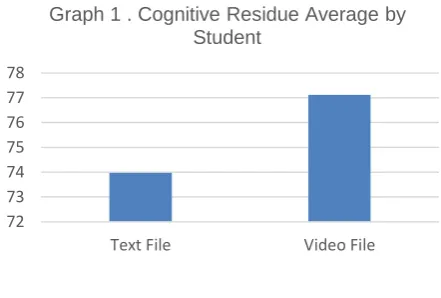
Table 5. Cognitive Residue Analysis by File type
Text File Video File
Self evaluation/
Student average 73,97 77,12
Where it is observed, by facing similar stimulus as the text and video material complexity, less time dedicated to the video support, less than of three times, and nevertheless a result and sensitively scoring, major in the self-evaluation achieved with the supporting text.
4. Discussion
As it has been indicated, from the quantitative vision of the selective attention - "to pay attention" - promoted by the video format is relatively major that the one generated by the text format. In this context, it is interesting to clarify the "attentional modality” from the deepest motivations that support this preference; with which ones, from the analysis and cognitive findings it would be possible to optimize the construction of the LMS’s interface in order to
72 73 74 75 76 77 78
Text File Video File
improve the usability aspects of the distance learning significantly.
Bearing in mind a later stage, the possibility to contrast the auto evaluations with a final examination of the subject learning, in this case it would be ratified and/or would rectify the analysis of the present study in the specific relation between cognitive residue and the final performance of the subject in the LMS interface.
Nowadays the MIT’s group - Massachusetts Technological Institute - of the Laboratory of Artificial Intelligence and Computing Sciences [6] develops a research that brings over the students' performance in the on-line courses, the MOOCs. It focuses on what they have detected the weak point of his tool is: the videos.
There has been analyzed the information provided by the educational on-line platform edX directed by the same institute and by Harvard's University. They carried out an investigation on the habits of visualization of more than 100.000 students though 6.9 millions of video sessions. The principal study aim has been the level measures of student implication in relation to the visualization time dedicated to the video, that is to say, the supported attention, in order to verify if after the task the student can really solve the evaluations, which means, until which objective he/she possesses cognitive transferable residue.
Beyond the conclusions on the classification of the videos and his optimization from the obtained results, we understand that the environment MOOC, as context of learning holistic provider of significance, it is more informal than that one in that is played, since in case of a platform LMS, methodical guidelines are foreseen for the academic graduation. So, the MOOCs characteristic allow the construction of a PLE (Personal Learning Environment) of a free way constructed by the student himself, granting a significance and connotation to the tool and its materials, among them, the video format, very different from the one that could be assigned to the LMS academic Platform organized of a linear and methodical way in its pedagogic didactic aim and planning, educational foreseen. In this respect it is debatable if the results obtained from the study on the video support in the context MOOC with PLEs's creation on the part of the students, could be transferred to the context of the Platform of LMS academic learning of contextual significance well differentiated in its general connotation.
Surely it might turn out to be interesting to confirm these first results in the LMS context in order to ratify or to rectify the obtained results.
5. Conclusion
Thinking in terms of educational aims and thinking that there really exists a singular cognitive effect from the influence of the technologies, the questions link themselves with the possibility of "giving form" to a cognitive attentional effect derived from the ITCs that could be developed through a given design, the activity and the environment exactly with the purpose of promoting the conscious abstraction of skills and strategies.
If it is considered that the performance in the auto evaluation is equivalent to the cognitive transferred residue in a high way from the conscious, volitional and reflective guided cognition, it is possible to infer that the selective attention promoted by the video format is major that the generated one for the text format.
Though this difference is minimal, the preference takes in attentional consideration of the video format in terms of introductory hypothesis for the exit to the qualitative stage. In this respect and by means of the exploratory boarding, it is imposed to trace the motivations that support the interest for this support, as well as the new cognitive processes stirred into action from the new digital environment.
Acknowledgements.
We want to send our acknowledgement to the Universidad Empresarial Siglo 21 of Cordoba, Argentina where the Project of Investigation 2013 "The impact of the connective digital environment in the cognitive processes, especially the attention; towards the design of environments of learning with Information and Communication Technologies (ICT) that generate attention” is done and to the Universidad de Vigo.
References
[1] Castoriadis, C. (1989). La institución imaginaria de la sociedad (Vol. 2). Barcelona: Tusquets.
[2] Cole, Michael and Engestrom Yrjo (2001): Distributed cognitions. Psychological and educational considerations. Edite by Gavriel Salomon. Cambridge University Press. USA.
[3] Collado, C. F., Sampieri, R. H., & Lucio, P. B. (1998). Metodología de la investigación. McGraw-Hill Interamericana.
[4] Engeström, Y. (1999). Activity theory and individual and social transformation.Perspectives on activity theory, 19-38. [5] Etcheverry, P. (2013). “Imaginario social y construcción de
Patricia Etcheverry et al.
[6] Guo, P. J., Kim, J., & Rubin, R. (2014) How video production affects student engagement, an empirical study of moc’s videos. Proceedings of the first ACM Conference on Learning@ scale conference (PP. 41-50). ACM. ISBN 978-1-4503-2669-8
[7] Hernández Sampieri, R., Fernández Collado, C., & Baptista Lucio, P. (2007). Fundamentos de metodología de la investigación. Madrid [etc.]: McGraw-Hill.
[8] Lozano Fernández, L. M., & García-Cueto, E. (2000).
Relación entre motivación y
aprendizaje. Psicothema, 12(Suplemento), 344-347. [9] Maldonado, C.; Etcheverry P (2013).” Hacia el uso de
Mundos Virtuales en “Blended Learning 2.0” Conaiisi 2013 Congreso Nacional de Ingeniería Informática/Sistemas de Información (En línea) ISSN : 2347-0372 Córdoba, Argentina (2013).
[10] Pea, R. D. (1993). Practices of distributed intelligence and designs for education. Distributed cognitions: Psychological and educational considerations, 47-87
[11] Perinat, A. (2011). Vygotsky's socio-cultural approach as an alternative to the biological-maturationist and idealistic explanations of human development.Psychologia. Avances de la Disciplina, 5(2), 137-145.
[12] Perkins, David N. (1986). “Knowledge as design: Teaching thinking through content. And Thinking frames: An Integrative Perspective on Teaching Cognitive Skills” en J. B. Baron y R. J. Stemberg (eds.). New York: W. H. Freeman, 1986.
[13] Perkins, D. N., Globerson, T., & Salomon, G. (1992). Coparticipando en el conocimiento: la ampliación de la inteligencia humana con las tecnologías inteligentes. CL & E: Comunicación, lenguaje y educación, (13),6-22. [14] Prensky, M. (2001). Digital natives, digital immigrants part
1. On the horizon,9(5), 1-6.
[15] Salomon, G. (1992). Las diversas influencias de la tecnología en desarrollo de la mente. Infancia y Aprendizaje: Journal for the Study of Education and Development, (58), 143-159.
[16] Salomon, G. (2001). Cogniciones distribuidas. Consideraciones psicológicas y educativas. Buenos Aires: Amorrortu.
[17] Téllez, J. A., & Muñoz, J. A. T. (2005). La comprensión de los textos escritos y la psicología cognitiva: más allá del procesamiento de la información. Librería-Editorial Dykinson.|
[18] UESiglo21. (2013). Modelo de Aprendizaje basado en Competencias