Geschke Center
Doctoral Dissertations Theses, Dissertations, Capstones and Projects
Winter 2018
Experiences of Women STEM Professors Who Are
Considering Leadership Positions at Research
Universities
Cheri Liebow
Follow this and additional works at:https://repository.usfca.edu/diss
Part of theEducational Administration and Supervision Commons,Educational Leadership Commons, and theOrganization Development Commons
This Dissertation is brought to you for free and open access by the Theses, Dissertations, Capstones and Projects at USF Scholarship: a digital repository @ Gleeson Library | Geschke Center. It has been accepted for inclusion in Doctoral Dissertations by an authorized administrator of USF Scholarship: a digital repository @ Gleeson Library | Geschke Center. For more information, please [email protected].
Recommended Citation
Liebow, Cheri, "Experiences of Women STEM Professors Who Are Considering Leadership Positions at Research Universities" (2018).Doctoral Dissertations. 420.
EXPERIENCES OF FEMALE STEM PROFESSORS WHO ARE CONSIDERING LEADERSHIP POSITIONS AT RESEARCH UNIVERSITIES
A Dissertation Presented to
The Faculty of the School of Education Department of Leadership Studies Organization and Leadership Program
In Partial Fulfillment
of the Requirements for the Degree Doctor of Education
ii
UNIVERSITY OF SAN FRANCISCO
Dissertation Abstract
Experiences of Women STEM Professors Who Are Considering Leadership Positions at Research Universities
Empirical evidence is needed to discern the reasons for inequities among those
with doctorates hired in science, technology, engineering, and mathematics (STEM)
fields. It is necessary to create a successful and motivational atmosphere for various types
of female leaders who are seeking opportunities to become leaders, especially in STEM
fields. This qualitative-method study used an exploratory design. The study first sought to
gather information about female STEM professors’ experiences through open-ended
qualitative interviews to explain gaps in details of women’s experiences as professors in
STEM departments of universities. Second, the researcher sought to discern common
themes in interview responses for the study to report on data analysis and findings. This
research built on educational-leadership and educational-psychology theories and
perspectives where the research problems closely follow the research questions. The data
collection involved one-to-one interviews with female professors of universities, and
interview responses and observations guided the data analysis and findings. Most
interpretation rested on coding similar themes and trends discovered during the
transcription of interview responses. This study explored the deep internal vulnerabilities
iii
This dissertation, written under the direction of the candidate’s dissertation committee
and approved by the members of the committee, has been presented to and accepted by
the Faculty of the School of Education in partial fulfillment of the requirements for the
degree of Doctor of Education. The content and research methodologies presented in this
work represent the work of the candidate alone.
Cheri Liebow November 29, 2017
Cheri Liebow, Candidate
Dissertation Committee:
Patricia Mitchell Ph.D. November 29, 2017
Patricia Mitchell Ph.D., Chairperson
Walter Gmelch, Ph.D.
Date
November 29, 2017
Walter Gmelch Ph.D., Committee Member
Richard Greggory Johnson III Ph.D. Date
November 29, 2017
Richard Greggory Johnson III Ph.D., Committee Member
iv
v
ACKNOWLEDGMENTS
Ever since I was 15 years old, I fell in love with the phrase from the Eclogue X of
Virgil: Amor vincit omnia, et nos cedamus amori. Being young, I did not understand the
entire meaning until my graduate studies in Classical Languages. Instead, as a child, I
clutched onto the literal meaning that Love conquers all things. My journey to finding
love powerful enough conquer all things has been long and arduous, and in a heartbeat, I
would do it all over again. I was privileged to be placed on many shoulders so I could be
raised to see the path set before me, and my journey could not have been possible without
the vision of the mountain I wanted to conquer: my dissertation. This journey for the
doctorate degree in education has taught me so much more than education scholarship
and pedagogy; I learned so much about myself and my community of support all around
the world.
I would like to express my sincere gratitude and appreciation to those who have
been instrumental along this journey. I am grateful for the love and support of those who
have been influential throughout this journey where, without them, I doubt I would have
the honor and privilege of being in this space. First and foremost, I would like to thank
the Creator/Universe/God Almighty. I want to thank my parents, who have given me life
and love to know about my past, present, and future. I also want to thank my own family:
(ALES) Adam, Lauren, Elise, and Sophia. Without their love and devotion, I could not
have survived this journey.
I would also like to acknowledge my extended family across the world, most of
them in the army and their families. Especially, I am grateful for Sue, Michael, Mikaella,
vi
acknowledge all my EdD colleagues who have gone before me and gave me excellent
advice and pearls of wisdom that I carried with me, relied upon constantly, and pass on to
others. Thank you, Jessica and Claudia, and editor, Sue.
I would like to acknowledge my University of San Francisco family, starting with
my wonderful dissertation committee: my chair Dr. Patricia Mitchell, Dr. Walt Gmelch,
and Dr. Richard Greggory Johnson III. Dr. Mitchell, you are an amazing advisor, mentor,
advocate, professor, woman leader, and woman warrior. Your constant guidance of my
studies at USF has been instrumental in finding my inner voice as a woman leader. Your
instruction and knowledge in leadership have demonstrated invaluable lessons on courage
and dedication.
Last but not least, I would like to extend deep gratitude to my research
participants, Professor Penelope, Professor Rosita, Professor Ophelia, Professor Gloria,
Professor Regina, Professor Elizabeth, Professor Sophia, and Professor Stephania. I am
deeply grateful for your dedication to research and education; thank you from the bottom
of my heart for confiding in me and trusting me with your beautiful, courageous, and
extraordinary experiences. I am beyond grateful to each of you for your time away from
your very busy schedules. I am honored to have been trusted with your stories, and I
deeply appreciate your advice, understanding, and love of learning. I will always be
grateful for your thoughtful interviews and having the opportunity to share your
experiences was my favorite part of the study. You will always be in my heart, and
everyone who dares to become a trailblazer in STEM! I am eternally grateful to all of you
who have been instrumental in my journey and thank you for helping me learn the
vii
TABLE OF CONTENTS
ABSTRACT ... II
SIGNATURE PAGE ...III
DEDICATION ... IV
ACKNOWLEDGMENTS ... V
LIST OF FIGURES ... X
CHAPTER I THE RESEARCH PROBLEM ...1
Statement of the Problem ...1
Background and Need ...7
Purpose of the Study ...9
Theoretical Framework ...9
Research Questions ...12
Limitations ...13
Educational Significance ...13
Definition of Terms...14
Summary ...15
CHAPTER II LITERATURE REVIEW ...17
Introduction ...17
Barriers to Women’s STEM Participation ...22
Factors Motivating Women Students to Lead in STEM ...24
Ways and Factors to Facilitate the Leadership of Female STEM Professors ...25
Leadership Theory ...28
Organizational Theory and Female Faculty ...33
Self-Efficacy and Social-Cognitive Career Theory ...40
Future of Professor Leadership ...45
Summary ...46
CHAPTER III RESEARCH METHODOLOGY ...47
Restatement of the Purpose of the Study ...47
Research Design...48
Research Setting...51
Population and Sample ...51
Validity ...52
Instrumentation ...53
Reliability ...54
Data Collection ...56
Ethical Considerations ...58
Data Analysis ...60
viii
CHAPTER IV: FINDINGS ...66
Professor Penelope’s Experience ...67
Work Environment...68
Gender ...69
Workplace Support/Motivation ...71
Leadership ...71
Program Accountability in Hiring and Retention ...73
Professor Rosita’s Experience ...74
Work Environment...75
Gender ...76
Work Place Support and Motivation ...78
Leadership ...79
Programs of Accountability ...80
Professor Ophelia’s Experience ...84
Work Environment...84
Gender ...86
Work Place Support and Motivation ...87
Program Accountability in Hiring and Retention ...89
Leadership ...90
Professor Gloria’s Experience ...92
Work Environment...93
Gender ...95
Work Place Support/Motivation ...100
Program Accountability ...101
Leadership ...102
Professor Regina’s Experience ...104
Work Environment...104
Professor Elizabeth’s Experience ...118
Professor Sophia’s Experience ...124
Professor Stephania’s Experience ...135
Work Environment...135
Female Leadership ...139
Summary of Findings According to Research Questions ...141
CHAPTER V: SUMMARY, DISCUSSION, REFLECTIONS, RECOMMENDATIONS, AND CONCLUSION ...149
Summary ...149
Discussion ...150
Themes ...150
Postdoctorate Studies ...150
Mentorship and Motivation...151
Male Academicians Contribute Toward Positive Support in STEM Academic Careers ...153
Results of Survey Questions ...156
Paradigm Shift ...158
Three Pillars ...159
ix
Family ...160
Summary ...161
Reflections ...162
Research Process ...162
Survey Method Research Group ...162
Recommendations ...164
Participants’ Recommendations...164
Professor Penelope ...164
Professor Rosita ...165
Professor Ophelia ...165
Professor Gloria ...166
Professor Regina ...167
Professor Elizabeth ...169
Professor Sophia ...171
Professor Stephania ...171
Researcher’s Recommendations ...173
Recommendations for Future Research ...174
Recommendations for Practice ...175
Conclusion ...176
REFERENCES ...186
APPENDIX A INTERVIEW QUESTIONS ...195
APPENDIX B LETTER OF INTRODUCTION TO POPULATION ...197
APPENDIX C APPLICATION FOR IRB REVIEW OF NEW RESEARCH INVOLVING HUMAN SUBJECTS ...198
x List of Figures
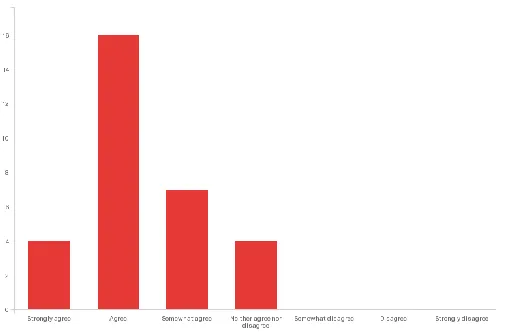
Figure 1. I have strong support from my male coworkers (SD = 0.86). ...157
Figure 2. I had strong support from my male peers in college (SD = 1.01). ...157
CHAPTER I
THE RESEARCH PROBLEM
Statement of the Problem
Women’s roles as scientists and engineers have steadily increased over the past 40
years, yet women continue to face challenges that hinder them from full participation in
academic faculty positions; even more challenging is aspiration to take on university
academic-leadership roles (National Academy of Sciences, 2006). The number of female
science, technology, engineering, and mathematics (STEM) doctorates hired for
academic positions has increased over the years; however, the low number in female
leadership roles may be “due to lack of supply” (National Academy of Sciences, 2010, p.
12). The underrepresentation of female leaders in STEM could be attributed to their
decisions not to participate in the application process (National Academy of Sciences,
2010). To fully understand where the leadership component needs to be supported, it is
important to fully grasp the context of the most recent findings on female-professor
leadership. Low participation is problematic for women because, despite years of
academic training, women lack equal access to leadership, due to lower salaries than men
and lack of leadership positions open to women who desire to fulfill their social need
(National Academy of Sciences, 2006). Gender stereotypes and biases against caregivers
also affect women’s chances for leadership roles.
Women’s overall income levels have increased by 10% since the 1970s, but in the
21st century, women’s wages are still lower than men’s wages (Organisation for
Economic Co-operation and Development [OECD], 2016). U.S. women’s employment
now lower than those of women in Germany and Japan (National Academy of Sciences,
2006). Although growth has rebounded from the recession of 2008, it remains unequally
distributed across socioeconomic groups. Income inequality continues to increase,
women typically receive lower salaries than men, and some groups are disadvantaged in
the labor market with few prospects to return to work (OECD, 2016).
The decline in participation for prime-age individuals is in marked contrast to
elsewhere in the OECD, particularly for women. Certain population groups face greater
difficulties in finding rewarding work and removing the barriers they currently face that
would help boost chances to obtain employment. Immigration reform presents another
means to boost labor supply, though moving forward on different proposals has proven to
be politically difficult. The Economic Survey recommended that access to paid family
leave be expanded nationally (National Academy of Sciences, 2006). The Survey also
recommended improving the flexibility of working arrangements, increasing access to
quality preschool and childcare to help struggling families better balance work and family
commitments. Federal employment laws mandate that employees can sue and employers
can be sued for family-responsibilities discrimination (Title VII of the Civil Rights Leave
Act, as cited in National Academy of Sciences, 2006). Second earners, most of who are
women, generally would pay a higher proportion of their income in taxes for choosing to
work, due to the U.S. family-based tax system in combination with progressive tax rates
(OECD, 2016). Improving opportunities not only requires breaking down barriers to
finding work but also being appropriately remunerated.
The gender pay differential, measured by differences in median wages for men
across states (National Academy of Sciences, 2006). Part of this wage inequality arises
from sorting by occupation and firm. Men typically work at higher paying firms and
receive larger wage increases when they switch jobs. Further progress in closing gender
wage gaps requires changes in job structure and remuneration, particularly if job
flexibility comes at the cost of reduced hourly wages (Goldin, 2015).
According to National Science Foundation (NSF) report (2014), women have
earned 57% of all bachelor’s degrees and about half of all science and engineering (S&E)
bachelor’s degrees since the late 1990s. However, although women’s levels of
participation in S&E fields vary, they tend to be consistent over every degree level. In
most fields, the proportion of degrees awarded to women has risen since 1993. The
proportion of women is lowest in engineering, computer sciences, and physics. Women
earn about one-third of the doctorates in economics and slightly more than one-fourth of
doctorates in mathematics and statistics. The S&E workforce comprises largely people
who earned S&E degrees over 4 decades (NSF, 2014). Because older cohorts of S&E
workers are disproportionately White and male, women and minorities constitute a
smaller percentage of the overall S&E workforce than of degree recipients who recently
joined the workforce. In the past 20 years, participation of women in the academic
doctoral workforce has increased considerably. Growth in the participation of
underrepresented minorities has been slower. Women and underrepresented minorities in
academic employment continue to differ from their male, White, and Asian counterparts
in rank, tenure, salary, and federal support.
They found that male faculty members who start families within 5 years of
(Mason & Goulden, 2004). For every three women who take a fast-track (elite or
research) university job before having a child, only one ever becomes a mother. In
contrast, the group they define as “second-tier” women PhDs—those who are not
working or who are adjunct, part-time, or “gypsy” scholars and teachers—have children
and experience marital stability, much like men who become professors (Mason &
Goulden, 2004). Conflict between work and family is a barrier to women. Male faculty
members with young children are 50% more likely to enter tenure-track jobs than
comparable women (Stacy, as cited in National Academy of Sciences, 2006).
Another aspect of balancing career and family affects dual-career couples. Such
couples face problems in academia in obtaining tenure-track positions at the same
institution, particularly if they are in the same field. The dual-career issue is especially
salient for female scientists because 83% of female scientists have academic partners who
are scientists, compared with 54% of their male peers (Schiebinger, Henderson, &
Gilmartin, 2008).
Unmarried women are significantly more likely to have tenure trackjobs than
unmarried men (Ginther, as cited in National Academy of Sciences, 2006). Marriage
provides a significant advantagefor men relative to women. Presence of children,
especially young children, significantly disadvantages women while having no impact on
menin obtaining tenure-track jobs. Also, no significantgender differences arise in the
probability of obtaining tenure in life science, physical science, and engineering or in
promotion to full professor (National Academy of Sciences, 2006). Female scientists may
have fewer graduate and postdoctoral students to support their work than men and less
Graham, 2007). In addition, female faculty report fewer referrals from collegial networks
to participate in the commercial marketplace by being asked to consult, serve on science
advisory boards, and interact with industry.
States with more flexible work arrangements tend to have greater employment
rates and smaller gender wage gaps. With women increasingly outperforming men at all
levels of education, failure to make occupations attractive to women will constrain the
economy and individual well-being in STEM occupations. Substantial gaps in the median
earnings of full-time workers also exist across races. Black and Latino male workers earn
a bit less than three quarters of earnings by White males. The gaps between female
workers across races are less pronounced. Black and Hispanic workers tend to work in
lower-paying jobs and their returns are lower. People with disabilities are also
underrepresented in the S&E workforce, compared with the college-educated population
as a whole. Disabilities acquired at birth or at an early age may influence decisions to
pursue S&E studies; those acquired at later ages may influence opportunities to continue
or seek employment.
Inequities between male and female instructors or tenure-track faculty persist
(National Research Council, 2010). Empirical evidence is needed to discern the reasons
behind inequities among doctorates hired in STEM fields. It is necessary to create a
successful and motivational atmosphere for all various types of female leaders who are
seeking opportunities to become leaders, especially in STEM fields. It is necessary and
important to start a discussion of barriers that female graduate students and doctorates
face, leading a way to start planning the paths to solutions. It is critical to address
(Byars-Winston & Fouad, 2008). Perhaps a major shift in the paradigm is necessary to challenge
the hierarchical practices of female faculty in universities to engage in more supportive
and positive practices to increase and maintain the female student population in STEM
areas. Academics need to seek motivation and knowledge as to why some female faculty
persevere and some choose not to stay in academic pursuits in higher education
institutions, thereby uncovering why a lack of female leaders persists in STEM fields.
For example, students who possess engineering degrees tend to earn top salaries
(Jacobs & Simpkins, 2005). Those students, on average, with 4-year institution degrees
and experiences, earn approximately $40,000 per year more than students without a high
school diploma (Sum, Khatiwada, McLaughlin, Tobar, & Palma, 2007).
Problems in female leadership may trace back to adult education in general.
Merriam and Caffarella (1999, as cited in Bates & Norton, 2002) initiated discussion on
the two most cited reasons for lack of participation in adult education: insufficient time
and insufficient money. Valentine and Darkenwald (1990, as cited in Bates & Norton,
2002) highlighted the following five barriers that deter adults from participation: personal
problems, lack of confidence, high educational costs, lack of interest in the educational
process in general, and lack of interest in specific courses offered. These are general
barriers women experience as adult learners; for example, female students face
harassment in male-dominated schools, society, home, and work-related fields.
The underrepresentation of female leaders in STEM fields could also align with
obligations of maternity leave, childrearing, or household duties (OECD, 2016). Women
weigh the possibility of relinquishing their desire to have children to enable them to
children and request time off (varying numbers of months to a year) to care for their
parental obligations. Thus, it would seem the choice to have children undermines the
chances of becoming leaders in their fields. Therefore, female learners either postpone or
set aside their chances of accumulating continuous experience to becoming leaders,
perhaps explaining why so few women reach leadership positions in STEM areas. This
paper aims to discern why so few women have leadership positions in such critical areas
of academia.
Even through Title IX, 43 years ago, prohibited gender discrimination in any
educational program that receives federal funding, the number of female students
enrolled in STEM fields in high schools is still quite low when compared to male
participation. Even with all legal ramifications to protect female learners, disparities
continue and female students suffer due to lack of support.
Background and Need
Gender differences in STEM representation emerge early (De Welde, Laursen, &
Thiry (2010). Two-thirds of young children—boys and girls alike—say they like science,
but gender differences, attitudes, and interests surface in middle school (American
Association of University Women [AAUW], 1992; NSF, 2007b). Girls now take as many
high school science courses as boys, and perform as well (AAUW, 2004), but many girls
who take advanced science courses in high school do not continue to study science in
college. Such disparities continue despite women’s interest in STEM fields. For example,
African American women have been shown to have higher levels of interest in science
select life science majors, but only one fourth of undergraduate women choose physics
(NSF, 2007a).
In technology, the gender disparity exists in time spent learning how to use
technological tools. Computer interest, use, and skills across genders have been well
documented from early studies (AAUW, 2000: Margolis & Fisher, 2002). However, the
number of women pursuing computer-science degrees has declined since the mid-1980s
(Spertus, 2004; Wolverton, 2015).
The number of women who are earning engineering degrees in colleges have
leveled, with no increase since 2007 (NSF, 2007a). However, the number of women
earning degrees in the subfields varies: women earn 35% of chemical engineering
degrees, but only 14% of electrical engineering degrees (NSF, 2007a). At higher levels of
STEM education, the percentage of women continues to decline, dubbed a “leaky
pipeline” (NSF, 2007a). As an example, women who are enrolled in colleges and
institutions earn nearly half of mathematics bachelor’s degrees on average, but only 27%
of doctoral degrees in mathematics.
The disparity spreads across the spectrum of STEM majors, although women are
catching up to male student numbers in life sciences doctorate degrees, for example,
agriculture, chemistry, and geoscience. However, female students are still far behind their
male counterparts in earning doctorate degrees in physics, computer science, and
engineering (NSF, 2007b). Across all STEM fields, the proportion of women of color is
even smaller, almost miniscule. Of particular note, the number of minority women in
In employment, men far outnumber women (NSF, 2007a). The gap is alarming in
that 73% of employees in all sectors of S&E are men. An even larger gap separates men
and women employed in business and industry sectors (79% men) and in federal
government jobs (73% men). Only in the education sector do women outnumber men in
elementary, middle, and high schools; 2-year colleges, junior colleges, and technical
institutes, where employees tend to have lower salaries and less societal recognition
(NSF, 2007a).
Purpose of the Study
The purpose of this study was to examine the experiences of female academic
leaders with academic backgrounds in STEM fields. This research study entailed
observing their experiences in their pathways toward leadership as well as the role they
see for themselves in fostering leadership of other women from STEM backgrounds in
the Silicon Valley and Greater Bay areas. General trends identified through an initial
exploratory process was explained through an in-depth interview survey with female
STEM professors.
Theoretical Framework
The theoretical framework for this study was rooted in social-cognitive career
theory (SCCT), developed to build on the conceptual linkages with other theories of
career development, embracing constructivist theory of humans’ capacity to influence
their own development and surroundings (Lent, Brown, & Hackett, 1994). Development
of SCCT was influenced by vocational psychology, cognitive sciences, and other
psychological and counseling domains (Lent et al., 1994). SCCT builds on Bandura’s
expectations, and personal goals depend on one’s interests, abilities, and values, and on
environmental factors. Women who are university professors have accomplished
overcome a great many obstacles to obtain their doctorate degrees in STEM fields, thus
channeling social-cognitive theoretical concepts. Concepts of SCCT could help in
building steps to leadership positions that are generally maintained by men in STEM
departments.
Social-cognitive theory rests on the ways the mind functions as a “computational
program,” observing others’ behaviors and processes directly as a “conceptual model.”
According to Bandura (1995), in social cognitive theory, people must develop skill in
regulating the motivational, effective, and social determinants of their intellectual
functioning as well as the cognitive aspects. Hence, self-influence is the key addition to
every aspect of learning process. For women who are learning in an environment with
male prevalence in academic STEM spaces, the women’s learning is greatly impacted not
only by the instructor, but by peers as well. “Self-regulatory skills will not contribute
much if students cannot get themselves to apply them persistently on the face of
difficulties, stressors, or competing attractions” (Bandura, 1995, p. 18).
Learning experiences, whether direct or vicarious, shape people’s occupational
interests, values, and choices (Krumboltz, 1979). SCCT acknowledges the influence of
genetic factors, special abilities, and environmental conditions on career decisions (Lent
et al., 1994). More importantly, SCCT links with other cognitively oriented models of
career and academic behavior (Eccles, 1987) and certain theories of work motivation, as
well as theory and research on women’s and racial-ethnic minority members’ career
This study considered the hiring practices of various institutions as part of the
critical analysis of findings from each participant. This knowledge gave the research
paper the ability to inform and guide readers on ways to promote higher tolerance to
attain and motivate women leaders for spaces usually occupied by male role models
(Montgomery, 2009). The research included the study of women at colleges, universities,
and institutions in the Greater Bay area to discern how many female applicants who
possess degrees in STEM subjects faced challenges to achieve their goals, and what
leadership roles they will be motivated to earn in the future.
SCCT was applied to steer the collection and analysis of data throughout the
research study and in-depth interviews described the lived experiences of the women who
studied or practice in STEM careers (S. D. Brown & Lent, 1996, 2011). It was necessary
to create a successful and motivational atmosphere for all different types of women
leaders, and it is important to start a discussion of barriers faced by the female
practitioners of STEM. It was crucial to listen to, understand, and offer solutions that
focus on the positive interactions for female professors in the universities with STEM
departments (Byars-Winston & Fouad, 2008, p. 340). This study will inform future
generations of female STEM professors. As academics promote an increased number of
female participants in STEM fields, it is important to study the motivations and
hindrances female instructors have experienced to aid future female practitioners of
STEM.
According to the observation by Lent, Brown, and Hackett,
Counselors, theorists, and researchers are also well aware that career development
(external and internal) barriers to choice, change, and growth … a complex array
of factors such as culture, gender, genetic endowment, socio-structural
considerations, and disability or health status operate in tandem with people’s
cognitions, affecting the nature and range of their career possibilities. (2002,
p. 256)
As Tobias (1993) stated, “mathematics avoidance is not a failure of intellect, but a
failure of nerve” (Tobias, 1993, p. 9). Girls choose their occupation based on their values
and expectations of how well they succeed in matters or at work. Tobias outlined
differences between male and female brain organization and function, especially when
solving puzzles, problems, and solution strategies. Women usually become the victims of
a gendered view of mathematics due to “sex differences” in brain organization and
function (Tobias, 1993). The general perception accepted by the greater society is women
have lower levels of confidence and self-esteem in areas generally understood as
male-dominated fields, such as mathematics, engineering, and technology. It is important to
deeply understand how the lived experiences of female students, instructors,
practitioners, and leaders could lead to empowering the underserved population of
women in STEM fields. Through in-depth interviews and observations, the researcher
will explore the experiences of female instructors of STEM and try to attain a better
understanding of their accomplishments and motivating internal beliefs that made them
capable of being successful leaders in their STEM work environment.
Research Questions
1. To what extent do female STEM professors commit themselves to help
cultivate women’s learning and working environment?
2. What are female STEM professors in leadership doing differently to shape
their learning and working environment in terms of SCCT?
3. What practices facilitated the preparation and persistence of female STEM
professors when they were enrolled in the STEM graduate program?
4. In what ways do female STEM professors’ gender identities shape their
learning experiences?
5. What do female STEM professors attribute to their success?
Limitations
This study has limitations, particularly because it was one-gender study and will
focus on study of female instructors engaged in STEM fields. The sample of participants
was gathered from private and public universities and institutions and postsecondary
educational settings willing to participate in this research project. The study used
anonymous surveys (possibly circulated by e-mail) and some potential participants did
choose not to respond. The survey questions may or may not pertain closely to their
accurate and precise answers; most responses were limited to Bay Area locations. The
geographic location of the study is northern California, the Bay Area, and the research
was not generalizable to all areas of the United States. The study also closely considered
public and private institutions.
Educational Significance
This study aimed to contribute to a greater understanding of how women
experiences of women professors before, during and after their training in STEM
program and the trajectory that led them to academic institution will add their voices to
the literature in the hopes of paving the way for other women who are interested in
pursuing STEM professorship in the universities and research institutions. All instructors
have unique learning experiences that was inspirational or motivational to be shared and
analyzed for the benefit of future generations of STEM students. Having a better
knowledge of the motivation and barriers of this particular STEM female population, the
institutions and policies can be directed toward better pedagogy to guide future students
toward behaviors and attitudes, maximizing their success in attaining their goals in
STEM. This research was generalizable to educators by eliciting educators’
self-awareness and efficacy in the area of STEM. It could promote school policies and guide
general attitudes and outlooks of women teaching and studying in STEM fields. This
research guided instructors in their professional development and hiring practices,
providing practical applications for educators and future female STEM students.
This study contributed to expanding knowledge on recruiting female professionals
and workers in STEM fields. This is important as a means of addressing a societal issue
that has been difficult to solve through decades. The research serves as an addition to
literature examining the career choices of women studying STEM majors (Byars-Winston
& Fouad, 2008; Fouad & Smith, 1996; Montgomery, 2009).
Definition of Terms
The following terms have been operationalized for this study:
Faculty member of a higher education institution: an educator or a professor who
Gender bias: Sex is the basis for prejudice and presumed inferiority implicit in
the term sexism. The term gender bias is more inclusive than the term sexism, as it
includes prejudice (attitudes) and discrimination (Blackwell Encyclopedia of Sociology,
2015).
Unequal treatment in employment opportunity (such as promotion, pay, benefits,
and privileges), and expectations due to attitudes based on the gender of an
employee or group of employees is gender bias. Gender bias can be a legitimate
basis for a lawsuit under antidiscrimination statutes. (Hill & Hill, 2017, para 1)
STEM: An acronym that stands for science, technology, engineering, and
mathematics; “STEM is an educational program developed to prepare primary and
secondary students for college and graduate study in STEM. In addition to
subject-specific learning, STEM aims to foster inquiring minds, logical reasoning, and
collaboration skills” (Rouse, 2017).
Stereotype threat: A stereotype threat is the experience of anxiety or concern in a
situation when a person has the potential to confirm a negative stereotype about their
social group. Since the term was introduced into the academic literature in 1995,
stereotype threat has become one of the most widely studied topics in the field of social
psychology (Rhys, n.d.).
Summary
Chapter 1 provided an introduction to the research topic, the problem statement,
the purpose of the study, research questions, and definitions of terms. The research’s
limitations and significance were also presented. In Chapter 2, a historical perspectives of
and STEM field leadership. Chapter 3 will focus on the proposed methodology, including
an overview of the phenomenological design, an introduction to the research setting and
CHAPTER II
LITERATURE REVIEW
Introduction
The purpose of this study is to examine the experiences of female professors with
academic backgrounds in STEM fields. This literature review focuses on seven main
themes: (a) barriers to women STEM participation, (b) factors motivating women
students to major in STEM, (c) ways and factors to facilitate leadership in female STEM
professors, (d) leadership theories, (e) organizational theory and female faculty, (f)
self-efficacy and SCCT, and (g) future of professor leadership. It is crucial to discuss the
obstacles and challenges faced by women in STEM departments at the university level,
and it would benefit future STEM professors if one could identify the factors that
motivate and hinder their degree process. Once women earn their degree, it is also critical
to maintain their status in hopes of elevating to leadership positions in the university.
These themes will be discussed in detail to help identify the areas of STEM that need to
be examined further.
The origin of the underrepresentation of women in STEM programs has been
largely structural, created in and through the social structures of institutions, the
segmentation of the labor market, and the socialization and internalization of values and
beliefs about appropriate gender roles and expectations (Dominguez, 2010). These factors
manifest in a host of barriers to women’s participation, general and specific to the
workplace and academia, particularly higher education. The researcher proposes a thesis
to discover findings through carefully interviewing participants who are willing to share
The ongoing assault on the public and the growing preponderance of a
free-market economy and corporate culture that compounds a culture of consumption, issues
of critical education, resistance, politics, and social transformation (Giroux, as cited in
Tierney, 2008). The main objective of higher institution and organizations must be to
provide a working framework to diagnose culture in colleges and universities so distinct
problems can be overcome those inequities: “larger social formations that bear down on
the forms of resistance waged by educations, teachers, students, and others attempting to
challenge dominant teaching practices as well as systemic forms of oppression, such as
tracking” (Tierney, 2008, p. 45). Therefore, any theory pertaining to politics and
resistance must address the conditions, the agents, and the current levels of struggle that
lead to social formation.
Women—single, married, or divorced—are coming back to schools and joining
the work force. They are daughters, sisters, mothers, and aunts seeking a gateway to
social integration. For a hundred years, many women have been searching for separation
from their ties to the domestic model, and consistently transforming their position in
society (Hayes & Flannery, 2000). Just as Solomon (1985) explained the first woman in
Massachusetts to receive her A. B. degree, Fryer (2017) created a timeline that illustrates
the struggle for women’s entry into colleges, seminaries and universities as early as the
1800s; women of today continually look closely at the dynamics of the learning that
occurs in academia. Although better motivated and supported by institutions compared to
decades ago, this group of graduate students as female learners still face many barriers as
adult students. Therefore, it is crucial to address the barriers and obstacles for female
education, as well as to incorporate the necessary steps to create successful female
leaders in STEM fields.
Bates and Norton (2002) presented an analysis of the barriers to participating in
adult education. Citing the work of Merriam and Caffarella (1999), the authors discussed
the two most cited reasons for lack of participation in adult education: insufficient time
and lack of money. Valentine and Darkenwald (1990, as cited in Bates & Norton, 2002)
listed the following five barriers that deter adults from participation: personal problems,
lack of confidence, high educational costs, lack of interest in the educational process in
general, and lack of interest in specific courses offered. Although these are general
barriers faced by all adult learners, these factors are certainly faced by female students as
well.
Public and private institutions must allow successful integration of women in all
disciplines and fields. For the past 4 decades, the number of women in STEM fields has
been increasing, however, the pervasive stereotypical threats allow men to be dominantly
associated with careers in STEM starting from very early stages. These observations can
even start as early as kindergarten, when a female teacher exhibits anxiety about
mathematics during her instruction (Miller, Eagly, & Linn, 2015). Only 31% of full-time
STEM faculty and 27% of STEM deans and department heads are women (National
Academy of Sciences, 2006). The University of California, Los Angeles reported in their
study that 40–60% of students who originally entered college as engineering and science
majors have ultimately opted to switch to another field of study or even failed to receive a
degree at the end of their academic years at their university (Christensen, Knezek, &
college degrees tend to earn about $7,000 more than women with college degrees. It is
important to research and comprehensively understand the source of women’s
experiences in STEM courses of study. Many women want to pursue these courses, yet
face barriers and lack of motivation to succeed in these areas or to contemplate any
leadership position in colleges and universities in STEM fields.
For women to stay competitive in the job or network in work-related ways, they
must have some mathematics or science background. For example, students who possess
engineering degrees tend to earn top salaries (Jacobs & Simpkins, 2005). Those students
with a 4-year degree and experience earn approximately $40,000 more per year than a
student without a high school diploma (Sum et al., 2007). As reported in the proceedings
of National Academy of Sciences (2006), bias against hiring female STEM doctorates
may have subsided; however, the low number in women in leadership roles may be
present “due to lack of supply” (Rydell, Shiffrin, Boucher, Van Loo, & Rydell, 2010, p.
12). Underrepresentation of female leaders today may be due to women’s decisions or
determination to not participate in the application process, rather than because they are
unavailable. Women must weigh the chance of bearing children against securing a
position at a university and then ask for maternity leave for 4 months to 1 year; such
decisions undermine the years of experience they require to become leaders (National
Academy of Sciences, 2006). Hence, female learners postpone acquiring any post or
leadership role, along with postponing their years of dedication and study in the subject
area. This reason alone may discourage a female applicant with a PhD degree from
This study can have practical applications for future female leaders and future
female doctorate students in STEM fields. Female leaders in STEM areas possess a
unique set of learning experiences that needs to be voiced and heard by upcoming female
leaders to sustain a continuing culture of understanding and maintain a permanent space
in academia. The information from this proposed research can be shared and studied by
future female leaders of colleges and universities in the nation. This research will help
academics and future leaders gain better insight and knowledge about the motivation and
barriers female learners face, especially in STEM areas (Miller et al., 2015; Saucerman &
Vasquez, 2014). Not only will this research give a clearer understanding of the situation
for female STEM practitioners and educators but will also guide instructors of female
students to understand their locus in the academia.
SCCT will be applied to steer the collection and analysis of data throughout the
research study. Comprehensive interviews will describe the lived experiences of women
who studied or practiced in STEM careers (S. D. Brown & Lent, 1996, 2011). It is
necessary to create a successful and motivational atmosphere for many types of female
leaders, and it is important to start a discussion of the barriers female doctoral students
face and to offer solutions that address the successful integration in the academic setting
for women in STEM fields (Byars-Winston & Fouad, 2008). This study will aim to
challenge negative connotations of universities’ sexist or bias hiring practices as well as
to bring topics to light as to why potential female leaders are not taking a stance on
representing the minority group in STEM fields. This study will enhance and encourage
more female-leadership roles for future generations of female STEM professors. This
higher attainment of female leaders for spaces usually taken by their male counterparts
(Montgomery, 2009). The study will peruse information from universities across states
and countries in their hiring practices by asking how many female applicants they hire,
when compared to male applicants who possess similar if not equal doctorate degrees. It
is important to an attain ethical hiring practices in higher education when more than half
the population attending schools are women.
Barriers to Women’s STEM Participation
Saucerman and Vasquez (2014) discussed the psychological barriers that are
already in place for young girls that set a negative undertone and send perceived
messages about social roles. Even teachers sharing their mathematics anxiety begin the
process of influences from society that undermine a young girl’s chances of continuing
study in STEM areas. Society needs to address the issue of psychological barriers in
place for young girls, to raise their self-esteem, help them develop autonomy, and help
them cope with role conflict and discrimination. Changes in social norms and attitudes
must take place and focus on providing support services as well as establishing a learning
environment free of threat and considerate of the influence of prior socialization
(Saucerman & Vasquez, 2014).
It is necessary to create a successful learning atmosphere for all types of female
learners, and it is important to start a discussion of barriers women face while
participating in STEM, and to offer solutions that address successful integration in
academic learning for women. The perspectives of 66 nations strongly associated science
with men more than women, even in countries where women were treated equally with
and women with approximately equal stance on college degrees tended to stereotype
STEM professions being reserved for men. This perspective emphasizes a paradoxical
situation for women in higher leaning, where women are working hard to meet the
demands of equal status, family, and their own needs, but also need to work harder than
men to be recognized in their workplace and schools: Female STEM academicians often
confront multiple responsibilities (Miller et al., 2015).
Jacobs and Simpkins (2005) employed Eccles’s (1987) expectancy-value model
to provide a historical overview of the research on gender differences and role of beliefs
predicting STEM-career outcomes. Female adolescents chose not to participate in
subjects leading to careers in STEM because educators failed to address gender and
ethnic differences in STEM (Jacobs & Simpkins, 2005). Women were particularly
vulnerable because expectancy of female students’ roles in these subjects and careers is
not favorable. The proposed study agrees with the perspectives gathered from research by
Miller et al. (2015).
In taking a closer look at 364 high school students’ perspectives and attitudes
toward science and mathematics, surprisingly, 11th-grade female academy students on a
university campus had more positive dispositions than male students. However,
12th-grade students’ results were inverted and male students had more positive responses
toward science and mathematics than female students (Christensen et al., 2014). Further
investigations may provide accurate and specific detail as to how adolescents blossoming
into young adulthood lose the zest of pursuing or studying in STEM fields in colleges or
The role of stereotypic threats in STEM fields is the main underlying theory of the
loss of girls’ and women’s performance and interest (Shapiro & Williams, 2012).
Negative stereotypes are one root cause of destabilizing or dislocating female students’
attitudes toward pursuing goals in STEM. Supporting findings of Saucerman and
Vasquez (2014), Shapiro and Williams (2012) implicated parents and teachers in
transmitting negative stereotypes through anxiety or stress related to teaching or
acquiring mathematics skills.
Stereotypic threats do not have to be internalized to impact a girl’s mind; merely
the threats could cause one to believe others might hold these stereotypes. In other words,
young girls merely have to know these stereotypes exist to deter or hinder them (Shapiro
& Williams, 2012). Female students face factors of internal and external barriers
including difficulties of enrolling in a college or university due to various external
barriers like expected social role and anticipated marriage and family demands.
Understanding the phenomenon of stereotypic threat that can lead to understanding how
such challenges undermine women’s and girls’ performance and interest in STEM
domains, even when women and girls have positive mathematics attitudes (Christensen et
al., 2014; Shapiro & Williams, 2012).
Factors Motivating Women Students to Lead in STEM
The transition from academic high school to university is not the sole factor to
decrease interest in a career in science (Buschor, Berweger, Frei, & Kappler, 2014). An
early passion for science at a very young age is key to enhance girls’ competence and
self-efficacy for identifying themselves as future scientists, technicians, engineers, and
educators to maintain awareness of their own gender stereotypes relating to STEM areas.
Parental and teacher support are the main source of girls’ positive attitude toward STEM
(Buschor et al., 2014).
It is important to acquire early and positive responses for young girls to have a
chance at opportunities to connect their interests in STEM fields (McEwen, 2013).
Women who started strongly in the male-dominated engineering course at a Swedish
University had fathers or close male relatives with strong background in STEM fields.
All the women identified and described their fathers as the most important person who
had introduced them to traditionally masculine technology. Through these masculine
influences, women were able to benefit and thrive in rigorous STEM programs in the
Swedish University (McEwen, 2013). These positive factors contested stereotypic threats
and negative influences in female students and women pursuing careers in STEM fields.
Ways and Factors to Facilitate the Leadership of Female STEM Professors
In developing the leadership capacity and efficacy of college women in STEM
fields, Dugan, Fath, Howes, Lavelle, and Polanin (2013) examined the extent to which
college women in STEM majors demonstrated different levels of leadership capacity and
leader efficacy compared to non-STEM peers. Their results indicated similar levels of
capacity but significantly lower leader efficacy for women in STEM majors. The
researchers recommended gathering collective calls from scholars to more refined
exploration of the component parts of leader efficacy and exploration of resilient efficacy
to navigate across threats to female STEM majors. Such study would allow identification
development points in the educational process of female students in STEM fields (Dugan
et al., 2013).
By sharing strategies and results in a case study format, Gorman, Durmowicz,
Roskes, and Slattery (2010) demonstrated a model for what contributes to the success of
Stevenson University’s track record of 71% female full-time STEM professors and
among them, 100% of the academic leadership in STEM being provided by women. Over
the years, the enrollment in the School of the Sciences has grown dramatically and
influenced the trend in undergraduate students as well. The School of the Sciences at
Stevenson University has local and national STEM outreach programs to serve and
complement undergraduate programs and strengthen the STEM workforce and education
pipelines at multiple points (Gorman et al, 2010).
Gender differences in STEM emerge early (De Welde et al., 2010). Two-thirds of
young children—boys and girls alike—say they like science, but gender differences in
attitudes and interest surface in middle school (AAUW, 1992; NSF, 2007b). Girls now
take as many high school science courses as boys, and perform as well (AAUW, 2004),
but many girls who take advanced science courses in high school do not continue to study
science in college. Disparities persist despite women’s interest in STEM fields. For
example, African American women have higher levels of interest in science than their
Caucasian counterparts (Hanson, 2004). College women’s representation varies by field
and by ethnicity or race; women comprise more than half of all undergraduate degree
earners in life science, but one-fourth of those in physics (NSF, 2007a). In technology,
(AAUW, 2000; Margolis & Fisher 2002) and the proportion of women among those
pursuing computer-science degrees has declined since the mid-1980s (Spertus, 2004).
In engineering, trends have flattened, and are highly variable in subfields: women
earn 35% of chemical-engineering degrees, but only 14% in electrical engineering (NSF,
2007a). At higher levels of STEM education, the percentage of women continues to
decline; this is the so-called “leaky pipeline.” For example, though women earn nearly
half of mathematics bachelors’ degrees, they earn only 27% of doctoral degrees. Women
are well represented among life science doctorates, and approach equity in agriculture,
chemistry, and geoscience; women are less strongly represented in physics, computer
science, and engineering (NSF, 2007a). Across all STEM fields, the proportion of women
of color is small, and drops at each level of degree attainment (Commission on
Professionals in Science and Technology, 2006; NSF, 2006b).
Employed men outnumber women (73%) in all sectors of employment for S&E
(NSF, 2007a). Gaps between men and women are larger in business and industry (79%
men) and in federal government jobs (73% men). Women do outnumber men in
educational institutions such as K–12 schools, 2-year colleges, junior colleges, and
technical institutes, where they have lower salaries and lower prestige. In the last 25
years, the share of S&E occupations has more than doubled for Black men and women
(2.6% to 6.9%) and for all women (12% to 25%), yet disparities by race and ethnicity
remain (NSF, 2007a). White women comprise 20% of the 4.9 million S&E workers;
Asian American women, 4%; Black women, 2%; Hispanic women, 1.2%; and American
in the general population, Asians are not considered an “underrepresented” minority in
S&E.
In general, across disciplines and sectors of employment, Whites outnumber all
minorities by almost three to one. Women in STEM academic employment is an area of
particular concern because faculty educate and influence students. Representation of
women in STEM academic careers has improved consistently, but slowly, and remains
disparate across disciplines. Some discrepancy is explained by the age structure in
academia (Long, 2002) in that faculty careers are long and do not turn over rapidly. The
gender gap is closing in many fields at the assistant-professor rank. However, at any
given career stage, men in STEM are more likely to hold a higher rank than women.
Without aggressive changes to recruitment and retention, the proportion of women
among faculty cannot reach parity with the hiring pool (Marschke, Laursen, Nielsen, &
Dunn-Rankin, 2007). Women are concentrated in lower-status positions including early
tenure-track ranks, nontenure-track academic positions, and lower status institutions, and
inequities relate to gender and race/ethnicity (NSF, 2007a; Nelson & Rogers, 2005).
Leadership Theory
The peer-reviewed article by Wise and Wright (2012) focused on the relationship
between female leadership and early childhood education. The article’s main objective
was to extend and continue the discussion about female leadership roles in early
childhood education and the gender associated with a giving, caring, and nurturing
environment for children. In addition, the article aimed to discuss the connection between
female leaders and younger age children who seek emotional support during the early
models proposed by Gilligan (1982), Beck (1992), and Bloom (1998). Also, working
from Kagan and Bowman’s (1997) theory, the researchers developed a more
comprehensive model to discuss early childhood education by beginning a discourse on
the omitted aspect of understanding how women hold their leadership positions. The
authors espoused and advocated for the idea that, from a very early stage of formal
education, women teach in classrooms whereas men become principals or leaders of
schools. Again, the traditional set of patriarchal setting recurs such that the male
administrative leader watches over the busy working classroom teachers comprising a
majority of women; this culture is emphasized and reproduced for future generation of
students to witness and follow (Wise & Wright, 2012). This type of stereotypical
education setting needs to change.
Authors interviewed 25 female leaders for 2 years about their challenges and
achievements, based on the model of centered leadership (Barsh, Cranston, & Lewis,
2011). The model was constructed from experience-based solutions for women who
previously desired to lead, had the talent and knowledge to lead, and possessed the
capacity for change. The model for centered leadership hoped to achieve the outcome of
leadership effectiveness, sustainable performance, and fulfillment from the achievement
of being a leader. The majority of the exemplary leadership portrayed pertained to
childhoods that ultimately set the paths for the futures of these individuals with amazing
empowerment for women leaders around the world. Although the majority of the women
leaders were business oriented, their backgrounds and their individual childhoods were
connections or ingredients to the centered leadership model are meaning, framing,
connecting, engaging, and energizing.
Barsh et al. (2011) interviewed approximately 100 possible study participants
over a period of 5 years. The researchers used direct observation that entailed exploring a
wide range of participants using videotaped interviews and surveys to understand the
experiences of leading thinkers from a variety of fields such as management,
organizational behavior, psychology, gender studies, sociology, and biology. Of 25
personal accounts from remarkable women leaders, the personal story that stood out most
was that of Shirley Tilghman, a molecular geneticist and the first woman president of
Princeton University. Throughout her childhood, she grew up with very supportive
parents who helped her become a scientist and met phenomenal mentors and professors at
Queens University in Kingston, Ontario. Tilghman learned to navigate life as a scientist
and then a leader at a university. Her sponsors and mentors took risks in the early stages
of her development to provide opportunities for Tilghman to achieve success as a leader.
The valuable lessons learned gave her the support to leap from being a scientist to being
the leader of an Ivy League university. Barsh et al. described women who leapt and
bounded beyond stereotypes of women, supporting a management approach to promote
empowerment of women.
Furthermore, in support of remarkable women who are directing and steering
organizations as leaders, the authors modeled women with influential connections,
providing insights for future women leaders (Barsh et al., 2011). This book inspired and
empowered this researcher, as she looks forward to furthering her leadership ability. The
communities, provided a wide spectrum of personal qualities that led to exemplary
leadership with pragmatic frameworks built from inferences of the centered-leadership
model. Leaders of both genders may apply the concepts and theories discussed, as the
authors defined and refined the model of centered leadership. The authors delved into the
positive psychology that explained in detail how the centered-leadership model is useful
and effective for all leaders.
When discussing leadership, the names of Northouse, Drucker, and Greenleaf
loom large. Northouse (2013) understood that even though the discussion of ethics has
been ongoing for thousands of years, insufficient formal study or theoretical research
supports leadership. Ultimately, unethical leaders do not hold lasting executive positions.
The ethics of caring, resonated the most strongly (Greenleaf, as cited in Northouse,
2013).
Greenleaf’s (2002) servant leadership provided the necessary elements to uphold
the importance of listening, and mentioned prophetic visions that guide future leaders as a
true calling that should not be ignored or spurned, especially aligned with the “ethics of
caring.” Greenleaf emphasized that the key to leadership is to listen to the community of
followers, and serve them. Greenleaf’s discussion of the “importance of listening” in
servant leadership supports issues in one’s personal practice and endeavors in learning.
Path–goal leadership is important for a leader to demonstrate the ability to support
management with a common goal. Specifically, weaknesses and strengths attributed
toward the path-goal leadership were unaddressed in any research on female professors in
STEM leadership. Path–goal leadership is quite complex, incorporating many aspects of
between leadership behavior and worker motivation. The approach treats leadership as a
one-way event where the leader affects the subordinate, placing a great deal of
responsibility on the leader and less on subordinates, rendering them too dependent on
the leader. Path–goal leadership has received only partial support from many empirical
studies. House and Mitchell (1974) addressed task structure as a moderator of college
principals’ leadership behaviors and subordinates’ outcomes. Directive leader behavior
had a negative effect on subordinates’ job satisfaction when the task was dissatisfying or
structured. However, researchers found support for path–goal theory because the leader
motivates a subordinate by reducing the negative aspects of the work environment. High
participative leadership had a negative impact on job satisfaction with supervision, and
subordinates working under highly directive and participative leadership positively
impacted motivation when the task was unstructured.
Path–goal leadership provides a useful theoretical framework to understand how
various leadership behaviors affect the satisfaction and performance of subordinates.
Strengths of path–goal leadership are the following:
• Attempts to integrate the motivation principles of expectancy theory into a
theory of leadership. Path–goal leadership is the only theory that addresses
motivation.
• Provides a model that is quite practical in certain ways.
• Reminds leaders of their purpose, which is to guide and coach employees as
they move along the path to achieve a goal.
Northouse (2013) directed attention toward the minority group in leadership.
Moreover, not enough ethnicities or minority groups are represented in those places.
Northouse suggested the importance of conducting more studies that address women’s
leadership. Much of the literature discusses women’s leadership from the perspective of
Western cultures; cross-cultural studies are needed to enlarge the perspective.
The definition of leadership from The Drucker Foundation (2008) “The only
definition of a leader is someone who has followers.” Drucker took a literal approach to
leadership, affirming the definition of a true leader, averring that, without followers, there
is no leadership. Leaders who are thrust into leadership positions must do their best.
Maxwell (1998) wrote, “Leadership is influence—nothing more, nothing less” (p. 40).
Must one be subjected to public scrutiny and criticism as a leader, when the leader was
propelled into the leadership position?
Organizational Theory and Female Faculty
A curriculum is an ideological statement that derives from organizational
participants’ understanding of the curriculum. “The point is less that each institution is
different, or ‘to each his own,’ and rather that knowledge is constantly redefined. One
place where these definitions get worked out is at the curricular level in postsecondary
institution” (Tierney, 2008, p. 85) found it more important to consider ways for an
organization’s participants to think of the organizational culture as multi-vocal instead of
new rather than a way to assimilate new participants. The key component of culture, that
advances or retards organizational learning, is communication when in governance and
decision making at multiple levels and in multiple forms (Tierney, 2008). In
socialization, which functions to enable “cultural integrity,” allowing creativity and
innovation to occur among participants rather than mere assimilation.
Reality is not something objective or external to the participants. Instead,
Participant reality is defined through a process of social interchange in which
perceptions are affirmed, modified, or replaced according to their apparent
congruence with the perceptions of others. Rather than a biological or ecological
model, the model of the enacted environment is based on a social construction of
reality. (Berger & Luckmann, 1967, p. 25)
The role of the college or department leader in understanding and interpreting the
environment to different constituencies becomes increasingly important. In particular,
how leaders communicate and interpret institutional goals and values focuses
participants’ comprehension of the environment (Tierney, 2008). Identity begins with
mission but goes beyond it to include vestiges of history and traces of the personalities of
many current organizational participants. Organizational identity includes certain
capacities inherent in how participants arrange resources and the configuration of values,
structure, and environment. Identity contains all elements that define what the
organization is and suggests what it could become. Inchoate identity provides the
framework for participants to address existential issues of their own words and meaning
in the organization. Tierney’s point is not simply to suggest that institutions cultivate the
production of knowledge more intensively than do disciplines; rather, knowledge is a
discourse constantly reconstructed over time and place (Tierney, 2008). The production