SETTING SCIENCE AGENDAS FOR EUROPE
Annual Report
2007
2 European Science Foundation
Professor Ian Halliday: President’s Message
...
4-5
Dr. John Marks, 2007 Chief Executive:
2007 – Steps to position ESF in the European Research Area
...
6
The 2007 Assembly
...
8
2007 in Review
...
20
- European Science Foundation says farewell to its Chief Executive Bertil Andersson . 20 - ESF names Sir Roderick Floud as the Chair of the Social Sciences ... 21
- ESF names Professor Jean-Pierre Swings as New Chair of the Space Sciences Committee ... 22
- International Review Panel commends ESF’s efforts in EUROCORES ... 23
- The ESF and the European Commission sign contract for COST in FP7 ... 25
- ERA needs full involvement of non-governmental stakeholders, ESF & EUROHORCs comment to EC’s Green Paper ... 27
- Poto nik, 52 countries’ representatives ponder research integrity in Lisbon ... 29
- EURYI 2007: 20 researchers receive Nobel Prize-sized awards in Helsinki ... 30
- ESF meeting sets cornerstone for science communication ... 32
- IPCC’s Nobel Peace Prize win underlines International collaboration spirit, ESF involvement ... 34
- UK House of Commons report lauds Marine Board’s works ... 36
- ESF awards European Latsis Prize to Willi Kalender on Medical Imaging achievement ... 37
- ESF’s 1st Science Policy Conference ponders questions on ERA, Global Research Area ... 39
- Korea Research Foundation eyes entry into EUROCORES, RNPs ... 41
European Science Foundation 3
Highlights from 2007
...
44
- European Launch of International Polar Year ... 44
- Systems Biology to boost the understanding of cell function and disease ... 45
- Watching what we eat: ESF - COST conference on Food Systems ... 46
- Space scientists, humanities scholars explore outer space from new perspective ... 48
- Astronomers get their hands dirty as they lift the veil on galactic dust ... 49
- Investigating Life in Extreme Environments report gives hints on life ... 51
ESF’s principal activities in 2007
...
54
- Forward Looks ... 54
- Science Policy Briefings ... 57
- Member Organisation Fora ... 59
- Research Infrastructures (RI) ... 61
- Exploratory Workshops ... 63
- Research Networking Programmes ... 74
- Research Conferences ... 79
- World Conferences ... 85
- EUROCORES ... 87
- EU Framework Programme Projects ... 115
ESF’s Science Structure and their highlighted activities in 2007
...
123
- European Medical Research Councils (EMRC) ... 124
- Humanities (SCH) ... 128
- Life, Earth and Environmental Sciences (LESC) ... 134
- Physical and Engineering Sciences (PESC) ... 138
- Social Sciences (SCSS) ... 144
- Marine Board– ESF ... 149
- European Polar Board (EPB) ... 154
- European Space Sciences Committee (ESSC) ... 156
- Committee on Radio Astronomy Frequencies (CRAF) ... 159
- Nuclear Physics European Collaboration Committee (NuPECC) ... 161
- Science Advisory Board ... 164
Finance & Administration
...
166
Human Resources
...
179
Communications
...
182
COST
...
184
ESF structure
...
186
ESF Member Organisations in 2007
...187
Governing Council / Finance and Audit Committee
...
191
European Science Foundation 5
2007
has seen a major change at the top of ESF. At the end of March Bertil Andersson left us for the lush tropical charms of Singapore. John Marks took over as Chief Executive. Finally the new Chief Executive Marja Makarow took the reign at the start of 2008.We owe Bertil many thanks for his many achievements with ESF. I pick three. The capabilities, management and environment within the ESF organisation improved markedly. Bertil was heavily involved in the restructuring of the COST domains and peer-review. This is seen as a real improvement and the ESF relationship with the COST Committee of Senior Officials also continued to grow. The ESF stewardship of the EURYI scheme was seen to be an outstanding success with peer-review of the highest standard. Imitation being the highest form of flattery, we were thrilled that the ERC took the style and methodology of EURYI to heart in its first round of funding.
Indeed ESF should claim its share of the praise in making the case for the creation of the European Research Council (ERC) which I see as a beacon of hope on the European science landscape.
John Marks, equally, has served ESF well during his tenure of the Chief Executive post. The most contentious area was the negotiations over the new COST contract (for effectively
e210 millions). The satisfactory conclusion of these negotiations was a major coup.
Our new Chief Executive Marja comes from a background in Finland that encompasses major University involvement in both research and research management as Vice-Rector in the University of Helsinki and in National Science Policy making as a member of the Finnish Government’s National Council for Science and Technology Policy. On the European scene she has been actively involved with EMBO. I welcome her here to ESF and wish her good luck in her new post.
The year has also seen the implementation of the Governance changes agreed in 2006; back to back Governing Council meetings with EUROHORCs; the new Governing Council Steering Committee; the new Science Advisory Board.
The year has seen delivery of interesting Forward Looks and policy advice from Systems Biology to Arctic environmental studies. I thank all the committees and panels that make this work both possible and influential. We continue to improve our relationships with our Member Organisations to increase the relevance of this work and to maximise the impact.
In the wider context the series of meetings held under the Portuguese Presidency, allied to the dynamism of Minister José-Mariano Gago, has moved the European Agenda forwards. Given the success of the ERC the expectant gaze of European Science has turned to the EUROHORCs and national budgets. How can they contribute to the ERA in the style pioneered by EURYI? Whatever the answer I am sure ESF will contribute.
6 European Science Foundation
Bertil Andersson, who said farewell to ESF as Chief Executive in March 2007, gave 2006 the motto “From Strategy to Implementation”. In 2007 we took further steps on the path of implementing the
Strategic Plan 2006-2010, bringing us closer to the Member Organisations and further building their trust. Especially at the strategic level, we invested consider-able effort.
We started to professionalise our flagship instrument Forward Looks by taking a more systematic approach to identifying topics of strategic concern to our Member Organisations and by introducing fore-sight methodologies. During the year we initiated Forward Looks on topics such as
Investigator Driven Clinical Trials, Pensions and Health as well as Religion and Belief Systems. In each case the focus is on the research agenda while at the same time each topic is of considerable societal
in-terest. The Forward Look report Systems
Biology: a Grand Challenge for Europe
has been brought to the attention of the research organisations in Europe in order to discuss concrete actions.
ESF has notably strengthened its collabo-ration with EUROHORCs (European Heads of Research Councils) in 2007. Our initiative jointly with EUROHORCs and the Czech Science Foundation to start a debate in 2006 on European level Peer Review has resulted in a Member Organisation Forum with active participation from Member Organisations addressing best practices in peer review and developing shared (da-tabase) resources for peer review. This has
led to the increasing number of requests from the MOs to assist their peer review of national programmes.
The 2007 EURYI Award ceremony in Helsinki, the fourth and last one, demon-strated the enthusiasm and appreciation for EURYI by new and previous awardees and signalled trust in the quality of the ESF peer review procedures for the prize. EURYI has served as a prime example of the successful joint operation between ESF and EUROHORCs.
Together with the EUROHORCs we pub-lished a response to the EC’s Green Paper on the Future of the ERA. In a next step a joint Task Force will define concrete activi-ties that we will undertake together to con-tribute to building the European Research Area.
As the development of science has un-doubtedly a global impact, the European Research Area (ERA) would only make sense if it is conducted in a global context. The first ESF Science Policy Conference in November was therefore dedicated to exploring the ERA as part of a Global Research Area (GLOREA). Also in the global arena ESF could serve as a platform for its Member Organisations, in order to organise the interaction with the non-European countries in a more efficient and effective manner.
In 2007 the world conference on Research Integrity held in September in Lisbon, marked ESF’s return to the arena of best practice in research conduct which we entered in 2000 with the Science Policy
2007 –
Steps to position ESF
European Science Foundation 7 Briefing on Good Scientific Practice in
Research and Scholarship. The joint initiative with the US Office of Research Integrity has generated a lot of healthy discussion and debate within the science and science policy community worldwide. It was the first global event that allowed researchers and organisations to confer on such a pivotal issue. The Conference is followed up by a Member Organisation Forum to develop the role of our Member Organisations in these matters.
ESF’s central role in scientific networking in Europe will continue also under FP7 as a result of the successful conclusion of the
210 M€ COST contract. The negotiations
required a major effort from all parties in-volved with an outcome of which we can be proud. The good interaction with the European Commission added a positive note to the not always easy negotiations.
The focus on strategy was not just con-fined to external activities. Our Standing Committees have successfully made the transition from scientific coordination and proposal review to developing strategic directions as is illustrated by the EMRC White Paper on the present status and the future strategy for medical research in Europe and the Position Paper published by the Humanities Committee on the role of the Committee in the changing context of the Humanities. Only through this stra-tegic thinking can our Committees influ-ence the European sciinflu-ence agenda in their disciplinary areas.
Central to our operations is the quality of the staff. Our human resources policy was improved by introducing a performance-based salary system and a job classification with salary levels based on relevant markets such as our Member Organisations. In ad-dition training of staff in management and foresight will give us a more professional edge in the ever-changing environment.
ESF membership continued to grow. The National Foundation for Science, Higher Education and Technological Development of the Republic of Croatia, the Agence National de la Recherche of France and the Slovenian Research Agency joined ESF.
I want to thank the staff of the ESF in Strasbourg, Brussels and Ostend for their support during this year of transi-tion under my leadership. ESF is also ex-tremely grateful to the Chairs of Standing Committees and the Expert Boards, who are the real driving forces of our science endeavours. Finally I would like to thank Bertil Andersson for his dynamic contribu-tions and trail-blazing efforts to push ESF forward.
I welcome our new Chief Executive Professor Marja Makarow joining us in the beginning of 2008. Her extensive experi-ence in research and sciexperi-ence policy will give us the edge to rise to the challenges facing the ESF.
8 European Science Foundation
The 34th annual Assembly of the European
Science Foundation (ESF), attended by over 70 senior representatives from the ESF Member Organisations and other international bodies, took a number of important decisions of the organisation in order to strengthen the future.
The Assembly, which took place on November 30 at the Maison de la Région Alsace in Strasbourg, unanimously ap-proved the admission of three new Member Organisations (MOs), bringing the total number of members to 77 from 30 countries – a move that will further secure ESF’s position as an important force in the European research landscape.
The new Member Organisations are the National Foundation for Science, Higher Education and Technological Development of the Republic of Croatia, the Agence National de la Recherche of France and the Slovenian Research Agency, who join the ESF with effect from 1 January 2008.
On informing the delegates of these or-ganisations of the Assembly’s decision, ESF President Professor Ian Halliday remarked “We welcome you very warmly and we hope we can work together suc-cessfully in the future, for the benefit of your organisations, for the benefit of ESF, and most importantly for the benefit of European research”.
Another major decision made by the Assembly was to approve two new Vice-Presidents, Dr. Arnold Migus, Director General of the French CNRS, and Professor Matthias Kleiner, President of the German DFG, for a three-year period, starting from 1 January 2008. They would replace
Dr. Richard Dyer and Professor Katherine Richardson Christensen.
In his annual address to the Assembly, Dr. John Marks, ESF Chief Executive, high-lighted the wide range of ESF’s successes during 2007: “It has been highly rewarding to see the growing engagement of MOs and the increasing support for both the stra-tegic role of ESF through Forward Looks and for the researcher driven collaborative research programmes EUROCORES,” Dr. Marks told the Assembly.
He pointed out that there is a growing evidence of the increased trust of Member Organisations in ESF especially when it comes to the relation with EUROHORCs, both with the research funding agency members and the research performing agency members of EUROHORCs, the strong support of EUROHORCs for the strategic role of ESF and the support for EUROCORES as the main instrument for research collaboration. There was also increased interaction with the Academy members of ESF.
Dr. Marks highlighted the following ex-amples to substantiate this claim.
■ The establishment of the Forward Look
(FL) on Investigator Driven Clinical Trials with the support from major players in the medical field: such as the UK’s Medical Research Council, INSERM, Deutsche Forschungsgemeinschaft (DFG) and the US’s National Institutes of Health (NIH).
■ The EURYI Awards 2007 with the
enthu-siastic support and participation of new and previous Awardees and the strong advocacy for the instrument by Nobel Prize winner Tim Hunt. A sign of trust in
European Science Foundation 9 the quality of the ESF peer review
proce-dures. (p. 30)
■The successful conclusion of the 210 M€
COST contract which shows a sign of trust in ESF’s ability to manage efficiently, and with high quality, financially and con-tractually complex contracts and provide efficient management support for this key European networking instrument. (p. 184)
■The publication of research articles from
EUROCORES in leading high impact journals. A sign that EUROCORES are attracting excellent researchers and pro-ducing excellent results. (p. 87)
■ The role of ESF in initiating and now
co-ordinating new science in Life in Extreme Environments – this demonstrates the ability of ESF’s Committees, Standing and Expert, to collaborate and generate really new interdisciplinary frontier topics. (p. 51)
■ The high profile of attention for the
Conference on Research Integrity in Lisbon. It shows the ability of ESF to cre-ate worldwide partnerships to address important topics. (p. 85)
European Science Foundation 11
■
ESF’s Science Advisory
Board
Dr. Marks also informed the Assembly about the activities of the newly created Science Advisory Board (SAB). The SAB held its first meeting on 26 September in Copenhagen, where it discussed EUROCORES themes and Forward Look topics, making recommendations to the Governing Council, and also the develop-ments of its wider role within the ESF.
The Board is chaired by Raimo Väyrynen, the former President of the Academy of Finland, with a scientific high-level mem-bership of five other independent members covering the whole research spectrum appointed using nominations made by the ESF Member Organisations, plus the five Chairs of the ESF Scientific Standing Committees, acting first and foremost in their scientific capacity.
■
Collaboration with groups of
ESF Member Organisations:
EUROHORCs
The closer working relationship with the EUROHORCs has been significantly de-veloped and strengthened during 2007. In addition to the relatively simple expedient of greater coordination of EUROHORCs and Governing Council meetings, the ties have developed strongly in a number of practical and strategic ways.
Building on the mutual experience in EUROCORES and with EURYI, EUROHORCs have made common pot peer review mechanisms a priority and have strongly supported the continuation
of EUROCORES, in revised and new mod-els, after the end of the FP6 coordination contract.
In a major strategic opportunity, the ESF and EUROHORCs established a joint working party to provide a joint response to the EC’s “Green Paper on the Future of the ERA”. The response identifies the need to consider the ERA as a richer landscape than the Green Paper indicates, and indi-cates that ESF and EUROHORCs will take responsibility for implementing their part of the ERA agenda and have identified an 11 point agenda. (p. 28)
■
Collaboration with groups of
ESF Member Organisations:
ALLEA
Another significant group of ESF MOs, the academies, also collaborates in ALL European Academies (ALLEA.) ALLEA is represented in the Governing Council by an observer. The Strategic Plan an-nounces that ESF will address the needs and wishes of its various categories of members. The role of the Academies is of particular significance when it comes to the strategic and quality assurance roles of ESF, where the academies have been especially invited to nominate candidate members for the Science Advisory Board and they could potentially play a significant role in Forward Looks.
Together with the President of ALLEA, the ESF Chief Executive has sent a letter to those Academy members of ESF which are also ALLEA members. In that letter acad-emies were invited to share their needs and expectations regarding the role of ESF.
12 European Science Foundation
A significant number of responses were received and served as input to a work-shop between ESF and the academies in 2008.
■
The European Commission
ESF and the Commission have interacted over the years in multiple ways and the start of the implementation of FP7 has been no exception. High-level staff meetings now take place on a regular basis, covering not just direct relationships (e.g. COST and ERA-NET contracts), but also exchange of information on strategic developments at ESF and the EC, and the potential for the use of ESF instruments and expertise (e.g. Forward Looks, scientific reviews, peer review) to assist in delivery of the mutual ERA development objectives of ESF, its MOs and the EC.
Standing Committees are acting as “qual-ity gatekeepers” in a major RI Survey and the transfer of know-how and best prac-tice from the EURYI scheme to assist the ERC in establishing their programmes and procedures.
■
Other Partnerships
A major highlight in ESF’s work with part-ners outside its membership was when more than 300 participants from 52 coun-tries gathered in Lisbon in September for the First World Conference on Research Integrity (p. 85). The event was initiated and organised by the European Science Foundation (ESF) and the US Office for Research Integrity (ORI), together with the Portuguese EU Presidency. The con-ference itself marked a milestone for the science community as it linked, for the first
time, all the concerned parties in a global effort to tackle fraud, falsification and pla-giarism in science and share their growing concerns over misconduct in science. Alongside the initiatives taken by other participants, the ESF with EUROHORCs has published a compilation of policies of its MOs in Europe and this, and together with the Conference report, will form the basis of an MO Forum.
■
Instruments
The ESF Strategic Plan identifies the in-struments with which ESF will implement the strategy. In this section illustrative highlights will be presented for the vari-ous instruments. The section is organised according to the three strategic pillars: strategy, synergy and management.
European Science Foundation 13
Strategy
■
Forward Looks
ESF continues to fine tune Forward Looks (FLs) in all phases such as its interaction with the Member Organisations in the identification of topics, professional man-agement by the Office of FLs, and atten-tion from the beginning for the possibilities of implementing the recommendations from the Forward Looks have all been ad-dressed during the year. In January 2007 a workshop to shape a structured approach to Forward Looks was held, involving the US National Academies of Sciences, NSF, OECD, ESF FL Chairs and Member Organisations with experience in foresight. In September a workshop with Directors of Strategy of MOs was held to discuss ways of improving the identification of FL topics and how the implementation in MOs could be promoted.
In August the Forward Look report Systems Biology: a grand challenge for Europe was published. The report concludes with a set of specific recommendations that aims at bringing together Systems Biology efforts in Europe. The report, which includes 12 essays from the scientific experts in aca-demia and industry, illustrates “Europe’s potential to be at the forefront of pinpointing the systemic causes of diseases” aiming at the rational design of targeted therapies and drugs. (p. 45) Building on the report, an ESF Task Force of nine experts in the field, has published a series of recommen-dations including setting out a road map to establish a pioneering Systems Biology research programme in Europe.
■
Exploratory Workshops
The Exploratory Workshops instrument con-tinues to be highly valued by the scientific community. 172 applications were received in 2007 and 64 were selected for funding. Between 2005 and 2007 a reduction in the number of applications was observed but in the opinion of Standing Committees the quality of applications remained very high. As the number of events funded annu-ally stays unchanged the success rates in-creased from 20% in 2005 to around 30% in 2006 and 2007. In 2007 an information campaign was conducted to promote the new profile of the Exploratory Workshops being more focused on exploring frontiers in science and developing follow-up strate-gic actions. This was to result in redoubled interests in the instrument in 2008.
The recent changes in the management of the awarded workshops ensure that the instrument plays an increasingly important role as an input into the strategic work of the Standing Committees.
The use of the ESF Pool of Reviewers, as reported last year, has continued to show a very significant improvement in overall quality and efficiency in peer review for the instrument.
■
MO Fora
14 European Science Foundation
The MO Forum on Peer review had its kick-off meeting in October 2006 with a Conference Peer Review – its pres-ent and future state and is continuing to develop. The Fora approved in April 2007, Evaluation of Funding Schemes and Research Programmes and Research Careers, each attracting interest from about 40 MOs and other stakeholders, held or will hold their kick off meetings in October and November respectively.
Research Infrastructure at the Corporate level.
The results of the EC–ESF-EUROHORCs collaboration on the (2nd) Survey of current research infrastructures at the European level of scale and excellence were pre-sented by ESF at the major RI Conference held during the German EU Presidency in Hamburg in June. Since it focuses on current operational infrastructures, the Survey has been complementary to the
ESFRI roadmap exercise. Discussions are well advanced for the launch of an on-line database of European RIs, using as its starting point the survey, in which ESF Standing Committees would act as quality gatekeepers for new entries, as they did for the survey. Discussions are also ongoing concerning the possibility for ESF contribution in future ESFRI Roadmap contexts, either in terms of Forward Looks or reviews of existing RI landscapes.
Other RI activities have included: participa-tion in ESFRI meetings; work with Member Organisations in coordinating approaches to Research Information Systems (CRIS systems); and participation in initiatives re-lated to open access to research data and the permanent preservation of research data.
European Science Foundation 15
Synergy
■
EUROCORES
EUROHORCs and the Governing
Council have given their strong support to EUROCORES as their mechanism for cross-border research cooperation of choice. There has been a debate on both the structural models and funding models of EUROCORES and in addition to a fur-ther streamlined “classic” EUROCORES a new TOP-CORES model should operate in parallel. It combines further developed science programme proposals with the building of commitment in the funding or-ganisations. This should shorten decision time lines to 9 months.The Collaborative Research Toolkit, a selection of operational processes and expertise representing best practice from EUROCORES and other programmes, is now available to MOs. Though the long-term objective for the funding of EUROCORES research remains a full common pot, for the medium term funding organisations have agreed to fund-ing solutions on a case by case basis.
Currently 30 EUROCORES Programmes are in their active phase, representing 125M€ of research funding, supporting more than 5500 scientists and involv-ing 66 fundinvolv-ing organisations. The early Programmes, such as OMLL, SONS1 and EUROMARGINS are now reaching the end of their life cycle, and it is rewarding to see the increasing number of high impact publications emerging. Following the 2007 Call, six new EUROCORES themes have been selected, on the recommendations of the Science Advisory Board. With the EUROCORES coordination contract from the Commission coming to an end in 2008, MOs and ESF are now preparing for the funding of scientific networking and coor-dination costs from their own resources.
■
Research Networking
Programmes
The 2006 Call received a substantial increase (nearly 50%) in the number of proposals, at 132, indicating both the continuing popularity of this classic à la carte ESF instrument with the scientific community, and the increasing success of the common call. Following lessons learnt with the rather disappointing viability rate of 8, launched in early 2007, from 18 pro-pusals recommended to MOs in response to the 2005 call, a lower number of 15 from the 2006 Call are presently with MOs for funding consideration. The response to the 2007 Call will be reported at the Assembly.
■
ESF Conferences
16 European Science Foundation
Management
■
EuroBioFund
EuroBioFund (EBF) is an initiative hosted by the ESF and funded by the Sixth Frame-work Programme to facilitate the develop-ment of research programmes for emerg-ing life sciences areas. Followemerg-ing the first EuroBioForum, held in December 2006 in Helsinki, EBF launched a second Call for Expressions of Interest (EoIs) in February. At the close of the Call, 23 eligible EoIs were received, representing 175 proposers from 25 countries, including the US and Canada. Following review, six groups were presented at EuroBioForum 2007 on 5-7 December in Lisbon, in a Portuguese EU Presidency event.
■
EURYI
On 27 September in Helsinki, Nobel Prize winner Tim Hunt gave a stirring endorse-ment of the Scheme as he presented 20 excellent young investigators with their
Awards of more than 1 M€. This was the
fourth and final year that EUROHORCs and ESF have made these EURYI Awards. Re-ward excellence and the potential for scien-tific leadership, allow researchers to create their own research teams in independence, attract young researchers to continue their career in Europe, these were the goals of EURYI. The Scheme itself has become renowned amongst Funding Agencies, top scientists and applicants through its high quality and very competitive selec-tion processes and its high value awards. EURYI has demonstrated that common peer review and common pot mechanisms without juste retour are possible, with over one third of the about 100 M€ scheme budget moving across national borders. The 4th Call was the last under the EURYI
Scheme, though its final awards will
contin-ue, with ESF providing basic coordination, until 2013. The reason for this is that the European Research Council has decided to take forward the objectives of the Scheme at a considerably higher level of funding, al-lowing more grants to be given out. Experience from EURYI has been trans-ferred to the European Research Council and has formed a template or informed a significant part of their Starting Investigator Research Grants scheme.
■
COST
The closing of the FP6 contract and the implementation of the 210 M€ FP7 contract between the ESF and the European Com-mission, signed in July 2007, were a major focus for the first part of 2007. The new contract sets out a series of work pack-ages that focus on improving conditions for COST Actions and Domain Committees, the development of new ideas for interdisciplin-ary science initiatives, a better exploitation of the European “Near Neighbours” policy and a stronger focus on outreach and com-munications. The increased annual budget and duration of the FP7 contract result in an expanded scope of activities, with a conse-quent restructuring of the COST Office, the introduction of new management systems and new activities, and a renewed focus on ESF-COST scientific synergies.
The changes implemented during the FP6 period, notably in proposal generation and assessment and of the Domain Commit-tees, will be carried forward.
The collection date of 30 September 2007 resulted in about 500 Preliminary Propos-als for new COST Actions of which 25 were approved in June 2008. The previ-ous collection date in March resulted in the approval of 25 new Actions in November 2007.
European Science Foundation 17
Operations
Quality assurance is a key to trust in ESF’s procedures, where a crucial aspect is selec-tion of referees and Committee and Panel members. An important step in improving the quality of the peer review processes has been the creation of the ESF pool of review-ers. Following its successful introduction in
18 European Science Foundation
In recent years, ESF has received an in-creasing number of requests from MOs and partner bodies for assistance and support in peer review. Such requests are a recognition of ESF’s reputation and ex-pertise. The level of requests has reached the stage where the Governing Council has approved a range of measures and principles which will allow ESF to respond more effectively and professionally in the future.
On another level, ESF is looking to improve other aspects of its handling of instruments and activities. To do this a system of Per-formance Indicators has been developed and is being refined which, alongside the use of “Scorecards”, provides information on efficiency and the use of resources. The data and trends enable ESF management to address use of human resources and matters of concern and Governance to address matters of balance in the use of ESF’s budget.
■
Communication
Putting Member Organisations in the cen-tre of ESF’s mission is not just a matter for the science and strategic activities of ESF. It is an even more basic priority for ESF’s mission that what ESF is doing and what it can offer is communicated to the MOs. During 2007 ESF has launched its com-pletely redesigned website and a corpo-rate level Member Organisation Newsletter which it publishes twice a year, following the Governing Council meetings in April and September/October.
The Communications strategy has seen the visibility of ESF increase, particularly with high profile news items (e.g. Nanomedicine, EURYI) gaining wide press coverage. In-creasing visibility and contacts with MOs
own communication teams is also an impor-tant part of that strategy and the ESF Com-munications team has established a network with their MO counterparts to both improve information flow and to act as a “mini-MO Forum” on communications issues.
■
Finance
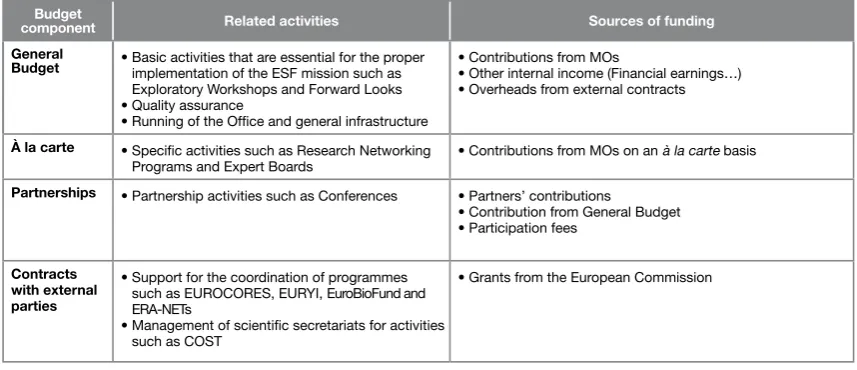
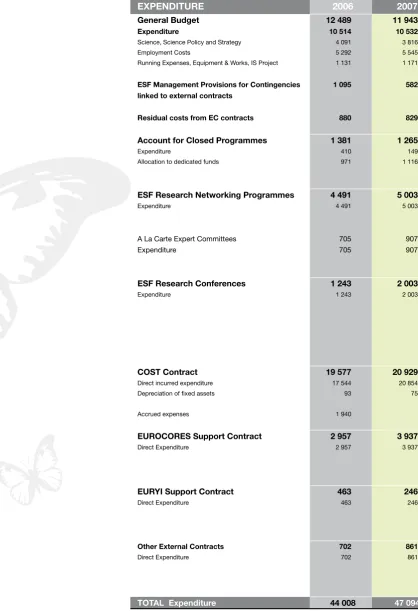
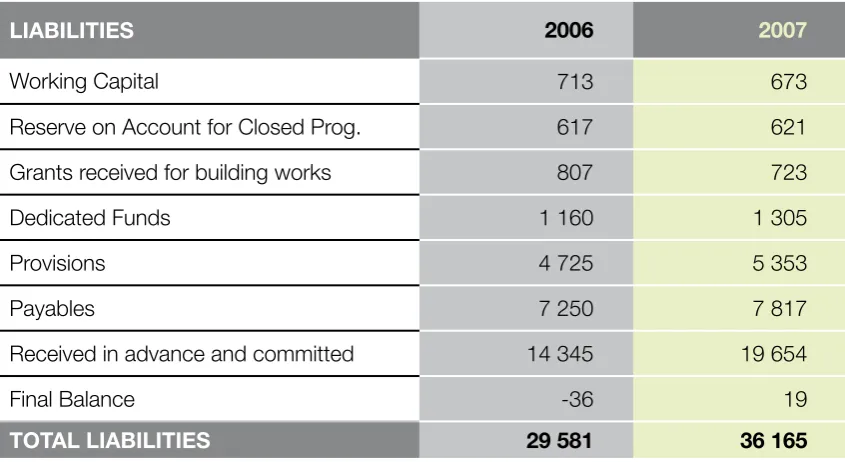
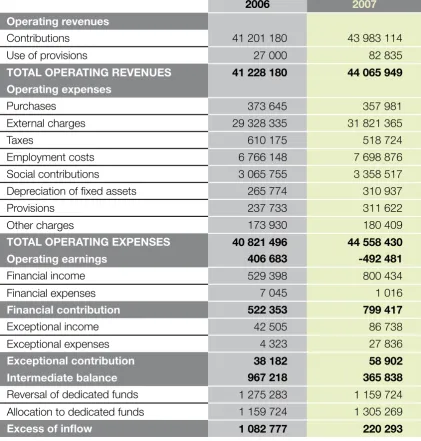
On the basis of the achievements of 2006 in respect of the accounts and budget framework, 2007 saw the full initiation of the annual cycle of strategic budget discussions taking place in the “new look” Governing Council, with the broad strategic directions being debated in April and their financial consequences being debated and decided in September. The Governing Council gave its approval to a budget which will reach a level of about 50 M€, with about 7.4 M€ coming from MO contributions to the General Budget.
In the last week of July 2007 the European Commission and ESF signed the con-tract for ESF to continue to provide and manage the administrative, technical and scientific secretariat of COST (European Cooperation in Science and Technology) under the Seventh Framework Programme (FP7). This contract covers the first 12 months of COST operations with a budget of 30 M€. This initial agreement will be continued smoothly through appropriate amendments along the FP7 period until June 2014 with an overall funding of at least 210 M€. The signing of this contract represents a massive vote of confidence in ESF, and provides further impetus for the increasing professionalisation of ESF’s fi-nancial, HR and management services. At the same time, ESF, with the great support of colleagues in the COST office, success-fully closed the COST FP6 contract.
European Science Foundation 19 As one of its moves to implement best
practice in management, and with the full support of the Finance and Audit Commit-tee (FAC), ESF has begun to develop a Risk Register which identifies crucial issues and potential “failure points” in ESF’s activities, especially in terms of financial impact and legal liability. The creation of the register and its monitoring will allow ESF senior management to identify, manage, and where necessary implement remedial ac-tion, on business critical issues.
■
The ESF offices
The rapid growth in recent years of ESF staff in Strasbourg and Brussels to a total of 136 has largely ceased, with a few ad-ditional specialist positions being added in response to strategic priorities e.g. science staff to support the Forward Look instru-ment and dedicated positions to deliver specific aspects of the COST work plan. Almost two thirds of the staff is directly or indirectly employed through funding from external contracts, mainly from the Commission. With the assistance of our MOs, we hope to be able to maintain the excellent level of science support provided by the EUROCORES Coordinators after the termination of the contract with the Commission at the end of 2008. ESF’s Human Resources strategic plan is being implemented, with increased management training, improved clarity of structure and position responsibilities as well as acceler-ated introduction of a performance based remuneration system across the office.
In order to strengthen the links with Member Organisations, ESF has created positions for short term project-oriented secondments from Member Organisations for periods of 4-6 months. Six secondees from Italy, the Netherlands, Finland and
Hungary have been hosted so far and other selections are in the pipeline.
In line with this policy, the ESF has also agreed to act as an international host in the fellowship programme of the Spanish MEC.
20 European Science Foundation
2007 in Review
■
European Science Foundation says farewell to its Chief
Executive Bertil Andersson
After more than three years as the Chief Executive of the Strasburg-headquartered European Science Foundation (ESF), Bertil Andersson left in March 2007 for the Far East to take up the post of Rector at the Nanyang Technological University in Sin-gapore.
Professor Andersson’s works have helped the 34-year old ESF further develop into the science platform that its 77 Member Organisations can count on to implement a pan-European science agenda through interdisciplinary science activities.
In the course of his tenure with the ESF, Professor Andersson has been instru-mental in some of the most significant re-structurings that have taken place over the organisation’s more than three decade-old history. One of them was the introduction of the Strategic Plan for 2006–2010 which was resulted from the extensive research and consultation with the Member Organi-sations (MOs).
Also during his time at the ESF Professor Andersson led the way in changing the organisation’s governing structure which had long been considered to be overly complicated.
European Science Foundation 21
■
ESF names Sir Roderick Floud as the Chair of the Social
Sciences
The European Science Foundation named Professor Sir Roderick Floud from London Metropolitan University as the Chair of the Standing Committee for the Social Sci-ences (SCSS) in May 2007.
Professor Floud, who is the President Emeritus of London Metropolitan Univer-sity, received a knighthood for services to higher education in the Queen’s Birthday Honours in 2005.
He is an economic historian and author of books and articles on technological change, the use of IT in the study of his-tory, and on the evolution of technical edu-cation and on changes in human height, health and welfare which have drawn on the expertise of human biologists, de-mographers, economists, nutritionists, physiologists and others to create the new
22 European Science Foundation
2007 in Review
■
ESF names Professor Jean-Pierre Swings as New Chair
of the Space Sciences Committee
The European Science Foundation (ESF) named Professor Jean-Pierre Swings as the new Chair of the European Space Sci-ences Committee (ESSC) in April 2007.
Professor Swings replaced Professor Gerhard Haerendel who ended his term as Chair on 10 May 2007. Professor Swings completed his doctorate and postdoc-toral training at Liège University, Belgium in 1974. He held two postdoctoral fellow-ships in Boulder, Colorado and Pasadena, California. His current research interests include extragalactic astrophysics; very large telescopes and instrumentation; space astrophysics and solar system exploration. He is a member of a number of prestigious international organisations including the International Astronomical Union (IAU), where he was formerly the General Secretary, the European Space Agency (ESA) and the European Southern Observatory, where he has chaired several working groups and task forces.
European Science Foundation 23
■
International Review Panel commends ESF’s efforts
in EUROCORES
A detailed Review Panel Report submitted to and approved by the ESF Governing Council on 19 - 20 April 2007 outlines how to best develop the EUROCORES (Euro-pean Collaborative Research) Scheme.
The Scheme currently has 30 active programmes which each encompass be-tween three to 16 Collaborative Research Projects. It offers a flexible framework for researchers to come together to tackle sci-entific questions which are best addressed in larger scale collaborative research proj-ects. Since its creation in 2001, the EU-ROCORES Scheme has developed into a widely accepted tool for interdisciplinary scientific cooperation on a European level and a means for improved interaction be-tween national research funding agencies.
“EUROCORES leads to very high-quality projects involving worthwhile cooperation or researchers from across Europe,” com-mented the Irish ESF Member Organisa-tion, Enterprise Ireland.
As part of the Scheme Review Panel Re-port, which also included an independent survey, the EUROCORES Scheme was identified as the instrument of choice for fighting the fragmentation of research in Europe. This is an important starting point for developing the Scheme. Seventy per cent of the science community feel that the Scheme is a useful instrument which complements other EU instruments, but
is more open and flexible in terms of the subject areas, types of project and types of networking activities supported. Out of the 33 consulted ESF Member Organisa-tions, 25 were positive towards the EU-ROCORES Scheme but would like to see some improvements.
“ESF as an agency of the agencies can offer a healthy new system,” said Reinhard Grunwald, Chair of the Scheme Review Panel, at the ESF Governing Council.
However, while the survey found that EUROCORES has considerable strengths, it has yet to build a high profile and credibil-ity within many communities. The Scheme is not well known within many scientific communities mainly due to its small scale compared to other EU instruments and also due to the fact that EUROCORES is still a relatively new scheme. Other areas for improvement were the lengthy time-scale of procedure and the risk of duplica-tion of naduplica-tional efforts.
24 European Science Foundation
2007 in Review
The Report identifies key areas for im-provement through three operative models which aim to improve the speed and reli-ability of the Scheme procedures, by add-ing features such as a common pot which would improve and speed up the funding process, a binding peer review and clearer procedures. It was also recommended that the theme selection process could be shortened by requiring more detailed theme proposals and by linking these to other ESF instruments such as Forward Looks.
Nevertheless, the Scheme is also de-scribed as more scientifically driven, more focused on fundamental research, less politically motivated, more suitable for collaboration between small teams, and less bureaucratic than EU instruments. It is considered to support high quality work, and employ good processes.
“EUROCORES stimulates free/bottom up European cooperation as a comple-ment to the more directed initiatives of the European Commission,” commented the Swedish Research Council.
European Science Foundation 25
■
The European Science Foundation and the European
Commission sign contract for COST in FP7
In the last week of July 2007 the European Commission (EC) and the European Sci-ence Foundation (ESF) signed the contract for ESF to continue to provide and manage the administrative, technical and scientific secretariat of COST (European Coopera-tion in Science and Technology) under the Seventh Framework Programme (FP7). The Seventh Framework Programme fore-sees 210 M€ in support for COST with the possibility of another 40 M€ depending on a positive mid-term evaluation in 2010.
The decision strengthens the working relationship between COST and ESF, two principal networking organisations in Europe which have been interacting at various levels for more than three de-cades. It builds on the previous EC-ESF contract for COST under FP6, signed in 2003, and guarantees the continuation of COST activities through FP7. The ini-tial provision of 210 M€ – compared to 80 M€ in the previous contract – gives COST the opportunity to expand activities and to enhance the support of the COST Domain Committees (the nine scientific and technical committees) as well as of the COST Actions (the networks of research-ers).
The contract sets out a series of work pack-ages which reflect the increase in funding through new and expanded activities and the number of running Actions, the
devel-opment of new ideas for interdisciplinary science initiatives, a better exploitation of the European “Near Neighbours” policy and a stronger focus on outreach and communications.
“The negotiation of this contract and the transition between FP6 and FP7 were two challenging processes. The ESF team’s commitment to COST, with its experience of managing such a complex operation, a constructive and efficient cooperation with the European Commission and with the COST Committee of Senior Officials (CSO) have been essential in allowing the suc-cessful completion of this important agree-ment” commented David Weber, ESF’s Director of Administration and Finance.
“This agreement leads to a three-win situ-ation – win for the ESF, win for COST and most importantly a win for the European research community thanks to the syn-ergy that the two organisations created by working together. All of us are very happy and proud of the outcome” stated Dr. John Marks, ESF Chief Executive.
26 European Science Foundation
2007 in Review
initiatives and strengthening the synergy between the various research actors in Europe.”
“I very much welcome the positive con-clusion of the negotiations for the signa-ture of the EC-ESF contract for COST,” commented the President of the COST
European Science Foundation 27
■
A comprehensive ERA needs full involvement
of non-governmental stakeholders, ESF &
EUROHORCs comment to EC’s Green Paper
The European Commission needs toengage and focus more on the national research funding and performing or-ganisations, the private sector, and the non-European research systems for the development of the European Research Area (ERA) if it is serious about establish-ing a comprehensive ERA, accordestablish-ing to the Heads of European Research Councils (EUROHORCs) and the European Science Foundation (ESF) in a joint response.
The response came in September 2007 after a request by the EU Science and Research Commissioner Janez Poto nik to seek public comment and recommen-dation for the Green Paper on the ERA.
“The Commission’s analysis of the strengths and weaknesses of the European Research System (ERS) concentrates too much on the perspective of the Commission’s role and on that of governments and inter-governmental structures,” commented Dr. John Marks, Chief Executive of the ESF. “The analysis presented in the Green Paper is a good start but ignores important partners and misses promising opportuni-ties considering that more than 90 percent of public R&D funding occurs at national level. EUROHORCs and ESF, together with other organisations, should continue to take an important part in the creation of the ERA.”
To promote competition and increase qual-ity, EUROHORCs and ESF are suggesting that the EU should inject more resources
into basic research through programmes such as the European Research Council (ERC), a move to reduce EU’s bureaucracy, and to put pressure on its member states to remove the still abundant barriers to the mobility of researchers.
“The national players including research funders and research performers on the one hand and governments, on the other, have to implement a common strategy to increase their efforts to remove the insti-tutional barriers such as the shortage of human and monetary resources, to adopt common peer review systems, to imple-ment jointly funded schemes and ease the sharing of research infrastructure” commented Pär Omling, President of EUROHORCs.
28 European Science Foundation
2007 in Review
“The main aim behind such an endeavour must be to fund excellent scientific pro-jects in a transparent and fair manner – only with this base will it be possible to establish a successful and competitive European Research Area,” added Marks. “It is essential to involve all stakeholders of science and science strategy in Europe, thereby also including the private sector in its function of funding and executing re-search, contributing more than half to the total expenses of R&D in Europe.”
ESF and EUROHORCs have raised 11 points of activities and measures:
■
Develop a concerted vision for steering
scientific research in Europe through coordinated foresight exercises
■
Establish more bottom up
researcher-driven programmes based on the EUROCORES
■
Introduce a new funding mechanism
for linking the Research Performing Organisations under the EU Research Framework
■
Developing cooperation schemes
be-yond the borders of the ERA towards a global research area GLOREA
■
Developing programmes for early stage
researchers
■
Pursuing closer collaboration on PhD
training programmes
■
Create more joint public-private funding
partnership sources
■
Developing closer interactions with the
universities
■
Developing the Money follows
re-searcher and Money follows cooperation schemes
■
Enable scientists in EU countries to
ap-ply to the funding agencies in any EU country
■
Establish or extend medium-sized
European Science Foundation 29
■
Poto nik, 52 countries’ representatives ponder research
integrity in Lisbon
EU Commissioner for Research Janez Poto nik, Angel Gurria, the Secretary-General of the Organisation for Economic Co-operation and Development (OECD), and José-Mariano Gago, the Portuguese Minister of Science, Technology and Higher Education along with more than 300 par-ticipants from 52 countries gathered in Lisbon, Portugal in September 2007 for the First World Conference on Research Integrity. This unprecedented gathering of concerned scientists, scientific managers and magazine editors from around the world was driven by the common belief that research integrity is not just an impor-tant issue for the research community as policy makers and the general public also have a great stake in it.
The issue of research integrity has dogged the science community in recent years as many high-profile misconduct cases have brought unwelcome attention and cast doubt on the credibility of the science re-search field.
Credibility and competence are only one side of the coin. The other side has to do with the economic and financial losses due to misbehaviour.
30 European Science Foundation
2007 in Review
■
EURYI 2007: 20 researchers receive Nobel Prize-sized
awards in Helsinki
Twenty young researchers gathered in Helsinki on 27 September 2007 to receive awards of as much as 1.2 M€ from the fourth and final Call of the European Young Investigator Awards (EURYI) scheme.
EURYI is designed to attract outstanding young scientists from around the world to create their own research teams at European research centres and launch potential world-leading research careers. Most awards are
between €1,000,000 and €1,250,000,
comparable in size to the Nobel Prize.
The average age of 2007’s winners is 33.1, making it the youngest group in EURYI’s history. (The average age of last year’s winners was 35.4.). Six of the awardees are women, making it the high-est number of female winners in any year.
The list of the 2007 Awardees includes re-searchers who will be based in eight coun-tries – Czech Republic, France, Germany, Netherlands, Poland, Sweden, Switzerland and Turkey. Their original ideas range from new techniques to manipulate antimatter to disease gene mapping and functional genomics in the domestic dog.
“It has been amazing to witness how the EURYI scheme has evolved and become a force to be reckoned with in recognising young researchers’ works by granting them Nobel Prize-scale funding for the past four years,” commented Dr. John Marks, Chief Executive of the ESF.
The EURYI awards were offered in this 4th Call by 17 research councils from 15
countries in an open competition with no ‘juste retour’. Candidates are selected on the basis of their future potential and their academic and research excellence.
Competition in 2007 was as intensive as ever, with 474 applications received. The EURYI Awards scheme was developed by the European Heads of Research Councils (EUROHORCs), in collaboration with the European Science Foundation (ESF), to at-tract outstanding young researchers from anywhere in the world to work in Europe for the further development of European science, contributing to building up the next generation of leading European re-searchers.
The first Call of the scheme was launched in September 2003, and the first three Calls have resulted in 75 awards. Candidates are selected by a two-stage process, firstly at the national level by the relevant Participating Organisation and secondly at the international level by high-level scientific panels managed by the ESF. ESF’s role in the coordination and selection processes of EURYI is supported by funds from the European Commission’s Framework Programme 6.
European Science Foundation 31
List of Awardees
■ Dr. Anastasia Ailamaki (Switzerland) - Efficient data management for scientific applications
■ Dr. Jeroen J.L.M. Cornelissen
(The Netherlands) - Virus Capsids as Confined Reaction Spaces
■ Dr. Nynke Hester Dekker
(The Netherlands) - Molecular Motors Handling DNA and RNA: Single-Molecule Experiments and Implications for Cellular Function
■ Dr. Hilmi Volkan Demir (Turkey) -
Novel molecular optoelectronic
nanodevices hybridized on micro chips for new functionality
■ Dr. Andre Fischer (Germany) - Epigenetic mechanisms in learning processes, age related cognitive decline and neurodegenerative diseases
■ Dr. Karl Gademann (Switzerland) - Directing neurite outgrowth through synthetic natural products
■ Dr. Sonia Garel (France) -
Wiring the forebrain: roles and
mechanisms of tangential cell migration in the basal ganglia
■ Dr. Oscar Gelderblom (The Netherlands) - The evolution of financial markets in Pre-Industrial Europe: A Comparative Analysis
■ Dr. Masaki Hori (Germany) - Precise
laser and microwave spectroscopy of antimatter atoms – new techniques to manipulate antimatter
■ Dr. Kerstin Lindblad-Toh (Sweden) - Disease gene mapping and functional genomics in the domestic dog
■ Dr. Matthias Lutolf (Switzerland) - Bioengineering Microarrayed Stem Cell Niches
■ Dr. Gregor Rainer (Switzerland) -
Cholinergic Mechanisms of Learning and Cognition
■ Dr. Philippe Schlenker (France) -
Presupposition: A Formal Pragmatic Approach
■ Dr. Kai Phillip Schmidt (Germany) - Exotic phases and excitations of unconventional Mott insulators
■ Dr. Martin Schnabl (Czech Republic) - Exploring String Field Theory - Can It Explain Quantum Birth of the Universe or Properties of Elementary Particles?
■ Dr. Natalie Sebanz (Germany) - Cognitive
and Neural Mechanisms of Joint Action
■ Dr. Sylvia Serfaty (France) - Mathematical
study of some equations related to physics, mechanics and optimal control
■ Dr. Terence Strick (France) -
Single-molecule studies of biological nanomachines
■ Dr. Rufin Van Rullen (France) - Perceptual and Attentional Dynamics: Periodic Operations of the Brain
32 European Science Foundation
2007 in Review
■
ESF meeting sets cornerstone for science communication
Scientists are not generally regarded as good communicators when it comes to explaining their research to the outside world. Hence the European Science Foundation (ESF) decided to hold a com-munications network meeting in October 2007 in Strasbourg, France to facilitate a forum for communication practitioners from various European science organisa-tions and academies to discuss their chal-lenges and ideas.
“I believe this meeting has created a cor-nerstone for the future interaction among the communication experts from the ESF’s 77 Member Organisations,” said Claus Nowotny, Communications Director of the ESF. “This network could potentially im-prove the way how scientists express their ideas to a wider audience.”
The meeting, which took place on 18-19 October 2007, was attended by the ESF’s Member Organisations, representatives from 18 countries.
A study entitled ‘Factors Affecting Science Communication’, which is conducted by the UK’s Royal Society, shows that, in the case of British universities, a ‘research driven’ culture, the pressure to publish
research, to attract funding to their depart-ments and build career on ‘hard research’ are key barriers to scientists communi-cating their work with the public. Some scientists even went as far as describing public engagement work, such as de-bates, dialogues, exhibitions and media appearances, as being bad for their ca-reers as some reasoned that these activi-ties are ‘done by those who were not good enough’ for an academic career. That it was ‘light’ or ‘fluffy’ and risked reinforcing negative stereotypes for women involved in these activities”.
European Science Foundation 33 At a round table discussion session
partic-ipants expressed some major challenges that befall on them while working as a bridge between the scientists and their audiences. Some of the issues that have been raised include:
■
Researchers do not know how to express
their ideas to politicians
■
To convince scientists of the benefits of
communicating what they do
■
To raise national government’s priorities
in science
■
To convince the media to write about a
wider range of science topics
■
To increase public interest in science and
the desire in the young generation to study science
34 European Science Foundation
■
IPCC’s Nobel Peace Prize win underlines International
Collaboration spirit, ESF involvement
The awarding of the 2007 Nobel Peace Prize to the Intergovernmental Panel on Climate Change (IPCC) has not only dem-onstrated a remarkable commitment to the dedication of the worldwide experts’ effort into climate change research, it has also highlighted the spirit of collaboration that has been avidly embraced by the ESF since 1974.
“This Prize confers honours to the whole climate change community and recog-nizes the importance of disseminating our scientific knowledge. It values scientific research and its role in our society,” said Dr. Didier Hauglustaine, Science Officer in the ESF’s Life, Earth and Environmental Sciences (LESC) Unit and one of the lead authors of the last two IPCC assessment reports.
Through its various programmes and ac-tivities, the ESF has contributed to the ef-fort of better understanding of the climate system, its past and future evolutions, and its link with humankind. Among several oth-ers, programmes such as EuroCLIMATE, BOREAS, EPICA, EuroDIVERSITY have directly contributed to the research and education on global climate change. Several researchers, who are actively involved in LESC, are lead authors in the last IPCC’s Working Group I assessment report.
Hauglustaine is the scientific coordina-tor at ESF for the EUROCORES pro-grammes EuroMARC (Challenges of Marine Coring Research), TOPO-EUROPE (4-D Topography Evolution in Europe:
Uplift, Subsidence and Sea level Change) and EUROMARGINS (Processes at the Passive Continental Margins). Jean Jouzel from the Laboratoire des Sciences du Climat et de l’Environnement (LSCE), Dominique Raynaud from the Laboratoire de Glaciologie et Géophysique de l’Environnement (LGGE), and Thomas Stocker from the University of Bern were part of the EPICA (European Programme for Ice Coring in Antarctica) research network. Jouzel was also a Core Group member of the ESF Standing Committee for Life, Earth and Environmental Sciences from 1995 to 2000. Eystein Jansen from the University of Bergen is the project leader within EuroMARC. Filippo Giorgi from the Abdus Salam International Centre for Theoretical Physics in Trieste is involved in the MedCLIVAR project and Martin Heimann from the Max-Planck Institut für Biochemie was involved in SIBAE (Stable Isotopes in Biospheric-Atmospheric Exchange). Jouzel and Giorgi are the Vice-chair of IPCC Working Group I.
European Science Foundation 35 the 1992 UN Framework Convention on
Climate Change.
The IPCC Plenary will meet in Valencia, Spain, to adopt and approve the fourth volume of its “Climate Change” assess-ment report. This meeting represents the final step in integrating and presenting the enormous amounts of scientific information contained in this report and in the sum-mary for policy makers explicitly targeted to policymakers. The Synthesis Report will be launched on 17 November 2007.
“ESF wishes to contribute with a strong portfolio of activities to a better under-standing of global change and its impact, and these activities were fortunate to have leading European researchers involved,” commented ESF Chief Executive Dr. John Marks, who was also the chair of the first ESF Forward Look “Earth System Science: Global Problems, Global Science - Europe‘s future role in global change re-search” which was published in 2003.
Other Nobel Prizes
ESF’s association with this year’s Nobel Prize doesn’t just end there. Two other prominent winners for the prestigious award also have a long history with the organisation.
Gerhardt Ertl, professor emeritus at the Fritz-Haber Institute in Berlin, was award-ed the honour in science for his studies on the reactions between chemicals and solid surfaces. Ertl was on the ESF’s Standing Committee for Physical and Engineering Sciences (PESC) from 1995 to 1998. He was one of two German members to serve on PESC when it was established in 1995. His work laid the foundations for an entire field of modern research known as surface chemistry, which describes how individual atoms and molecules behave when they come into contact with pure surfaces.
36 European Science Foundation
■
UK House of Commons report lauds Marine Board’s works
The European Science Foundation (ESF) Marine Board’s effort in promoting marine science has been commended and recognised by the UK House of Commons in a published report on marine research in Britain.
According to the report of the House of Commons Select Committee for Science and Technology Investigating the Oceans
published on 18 October 2007, the Marine Board plays “an important role in bringing together the marine community… highlighting the contribution that marine science can make to the policy agenda”. The Committee has also acknowledged the Marine Board’s Position Paper 8Navigating the Future III (November 2006) as “an excellent synthesis of the perspectives on marine science and technology in Europe”.
“These remarks in the House of Commons report emphasise the role of the Marine Board-ESF in promoting collaboration amongst the marine research stakeholder community throughout Europe. Recognition of the role of the Marine Board as a pan-European advisory body, supporting the development of informed policy by decision makers, is a welcome confirmation at the highest political level of the continued work and commitment of the Board and its Member Organisations,” commented Dr. Niamh Connolly, the Executive Scientific Secretary of the Marine Board.
The Marine Board has also been highlighted as the main networking forum in Europe for marine research policy while the role of MarinERA (the ERA-NET which the Marine Board jointly coordinates with Ifremer - France) is being recognised as “significant.” In addition to the policy work of the Marine Board, the Committee has also lauded the Board’s effort on the EurOCEAN 2007 Conference and the resultant Aberdeen Declaration (June 2007). The Marine Board was instrumental in organising the conference and in drafting the associated Declaration, which serves as a collective position statement on the role of marine science and technology in Europe.
European Science Foundation 37 The European Science Foundation (ESF)
awarded the 2007 European Latsis Prize to Professor Willi Kalender from the Institute of Medical Physics at the Friedrich-Alexander-University Erlangen-Nürnberg in Germany for his contribution and in-depth research on the medical imaging field.
The European Latsis Prize, valued at 100,000 Swiss francs (€65,000) is financed by the Geneva-based Latsis Foundation and awarded by the ESF to an individual or group who, in the opinion of their peers, has made the greatest contribution to a particular field of European research.
His main research interest is in the area of diagnostic imaging with a focus on the de-velopment and introduction of volumetric spiral computer tomography (CT). His other fields of research are radiation protection and the development of quantitative diag-nostic procedures, e.g. for assessment of osteoporosis, lung and cardiac diseases. His work is widely documented in more than 700 scientific papers and 175 plus original publications.
The award of the European Latsis Prize to Kalender is to recognise his achieve-ments in developing, testing and estab-lishing spiral CT. Spiral CT enabled the transition from sequential two-dimensional (2D) CT imaging to fast volumetric three-dimensional (3D) imaging, which led to a complete change of paradigm in imaging. Spiral CT also allows diagnostic imaging of a level and in areas that were not possible with conventional 2D CT imaging.
Kalender received his Master`s Degree and PhD in Medical Physics from the Univer-sity of Wisconsin, US in 1979. In 1988 he completed all postdoctoral lecturing quali-fications (Habilitation) for Medical Physics at the University of Tübingen. From 1979 to 1995 he worked in the research labo-ratories of Siemens Medical Systems in Erlangen, Germany, from 1988 to 1995 as head of the department of Medical Physics. Since 1991 he has been Adjunct Associate Professor of Medical Physics at the University of Wisconsin, from 1993 to 1995 he lectured at the Technical Univer-sity of Munich. In 1995 he was appointed full professor and director of the newly established Institute of Medical Physics at the Friedrich-Alexander-University Erlangen-Nürnberg, Germany.
He also holds appointments as Distin-guished Visiting Professor at Stanford University, Department of Radiology, and as Visiting Professor to the University of Wisconsin, Madison, Department of Medical Physics. He is a member of the International Commission on Radiation Units and Measurement (ICRU).