Original Research Article
A comparative study of depression among the elderly living in old age
homes and community in Visakhapatnam, India
Deepthi Karini
1*, Siva Kumar Lotheti
2, Devi Madhavi Bhimarasetty
2INTRODUCTION
The world is rapidly aging, the number of people aged 60 and over as a proportion of the global population will double from 11% in 2006 to 22% by 2050.1 India has acquired the label of an aging nation with 8.6% of its population being more than 60 years old.2 Ageing is a natural process. As age advances there is increased morbidity and loss of functional efficiency, along with the decline of social support system causing loneliness
and isolation with the occurrence of varying life events such as being widowed or divorced, lack of close family ties, being retired/unemployed which have a great bearing on one’s psychological status, making them more susceptible to depression. Depression is a common mental disorder characterized by sadness, loss of interest or pleasure, feeling of guilt or self-esteem, disturbed sleep or appetite and poor concentration. It can affect anyone, of any culture, age or background but older people are affected than any other age group.3
ABSTRACT
Background: Depression in old age is an emerging public health problem leading to morbidity and disabling effect on the quality of life. Depression in elderly is not yet perceived as a public health problem and is grossly underdiagnosed and undertreated. The physical and social environment plays an important role on the mental health of the elderly. Hence the present study was undertaken to assess and compare the depression among elderly residing in old age homes (OAHs) and community. The objective of the study was to assess and compare depression among elderly residing in OAHs and those living in community.
Methods: A cross sectional study was done from October to December, 2016 among 100 elderly, of which 50 were inmates of old age homes and 50 were living in community selected by house to house survey. A pre tested, externally validated short form geriatric depression scale (GDS-15) in the local language is used after taking informed consent.
Results: Prevalence of depression was high among inmates of old age homes (80%) compared to those of community (52%), this difference was statistically significant (p=0.003). On analyzing the association between sociodemographic factors and depression among the elderly residing in the community, it was found that marital status and presence of chronic disease were significantly associated with depression (p<0.05). Whereas among the elderly residing in old age homes, no significant asociation was found between depression and the sociodemographic factors.
Conclusions: High prevalence of depression observed among the studied population indicates the need of screening for depression among elderly.
Keywords: Depression, Elderly, Geriatric depression scale, Old age homes, Visakhapatnam
Department of Community Medicine, 1Gayathri Vidya Parishad Institute of Health Care and Medical Technology,
2Andhra Medical College, Visakhapatnam, Andhra Pradesh, India
Received: 29 October 2018
Revised: 21 February 2019
Accepted: 26 February 2019
*Correspondence:
Dr. Deepthi Karini,
E-mail: [email protected]
Copyright: © the author(s), publisher and licensee Medip Academy. This is an open-access article distributed under the terms of the Creative Commons Attribution Non-Commercial License, which permits unrestricted non-commercial use, distribution, and reproduction in any medium, provided the original work is properly cited.
The World Health Organization (WHO) has projected that by 2020, depression is going to be the second biggest health problem and leading cause of disability and death world-wide, second to cardiovascular disease.4 Depressive disorders among elderly people go undetected even more often than the younger adults because they are often mistakenly considered as a part of the ageing process.5 The depression in the elderly should never be considered as a natural consequence of ageing. It usually has an atypical presentation. It can manifest as a symptom e.g. as a reaction to stress: as a syndrome ex: secondary to hypertension or Parkinson’s disease; and as an illness e.g. endogenous depression.6 Higher suicidal rates are also associated with depression. Over the past decades India’s health programmes and policies have been concentrating on issues like population stabilisation, maternal and child health and disease control, However the current statistics for the elderly in India gives a overture to a new set of medical, social and economic problems that could arise if a timely initiative in this direction is not taken by the program managers and policy makers.7 With the rapid spread of modernization, growing urbanization and consequent change in family structure, there has been a surge in the concept of old age homes even in countries like India. The physical and social environment plays an important role on the mental health of the elderly. Hence the present study was undertaken to assess and compare the depression among elderly residing in old age homes (OAHs) and community.
Objectives
To determine the sociodemographic factors associated with depression among the elderly.
To assess and compare depression among elderly residing in OAHs and those living in community.
METHODS
A cross sectional descriptive study was conducted to assess the depression among elderly population.
Study population and sampling
For the purpose of the current study, individuals aged 60 and above are considered as elderly.8
A pilot study with 30 samples in each group (Home, Old age home) was conducted to calculate the sample size. The study showed that,
Proportion of depression in elderly staying at home was P1=0.49.
Proportion of depression in elderly staying at old age home was P2=0.76.
The following formula was used to calculate sample size:
n = (Zα/2+Zβ) 2 × (P1 (1-P1) + P2 (1-P2)) / (P1-P2)2
Zα/2= 1.96, Zβ = 0.84
n=47 ≈ 50
Finally 50 samples in each group in the same region of Visakhapatnam district were selected for the study.
Inclusion criteria
Permanent residents of Visakhapatnam living with family members in their own home and individuals who have been living in old age home for at least 6 months.
Exclusion criteria
Elderly people who are terminally ill and are unable to answer the questionnaire and those who are not willing to participate in the study.
The study participants residing in community were selected by house to house survey from the urban field practice area of Department of Community Medicine, Andhra Medical College and study participants residing in old age home were selected from 5 registered Old age homes, chosen by random sampling from 25 old age homes in Visakhapatnam city. The study participants are contacted individually and face-to-face interview was conducted by the principal investigator and responses were noted.
Study period: October 2016 to December 2016
Study tool
The questionnaire consisted of two sections:
Section 1: A self-designed, pretested semi structured questionnaire consisting of questions related to sociodemographic factors. The study participants were also enquired about their physical health, if they are suffering from any chronic illness like hypertension, diabetes, arthritis etc. Regarding financial status, those elderly persons receiving pension either from government or private source are considered as having financial security.
Section 2: A standard, pre tested, externally validated geriatric depression scale – short form (GDS-15) consisting of 15 questions translated in the local language was used.9
Of the 15 items, 10 indicated the presence of depression when answered positively, while the rest (question numbers 1, 5, 7, 11, 13) indicated depression when answered negatively. Scores of 0-4 are considered normal, depending on age, education, and complaints; 5-8 indicate mild depression; 9-11 indicate moderate depression; and 12-15 indicate severe depression.
Ethical considerations
Ethical approval was obtained from the Institutional Ethics Committee Andhra Medical College, Visakhapatnam, before the study was commenced. Permission was obtained from the authorities of Old age homes after explaining the purpose and method of study and informed consent was taken from all the study participants before including them in the study. For those who were illiterates, the consent was read out and explained to them and consent was obtained by taking their thumb impression in the presence of a witness.
Data analysis
Data was entered in Microsoft excel worksheet 2013 and analysed using SPSS trial version 21.
RESULTS
Regarding socio-demographic variables, as shown in Figure 1 about the age distribution, out of 50 participants in the community, 29 were in the age group of 60-69 years, 20 were in the age group of 70-79 years and only one was above 80 years. Whereas among old age home residents, 16 were in the age group of 60-69 years, 14 were in the age group of 70-79 years and 20 were very old (80 years old and above), this was statistically significant with a p value of 0.0001. The mean age of the study participants living in the community is calculated to be 67±5.62 and those living in old age homes is 75.96±9.69.
Figure 1: Age wise frequency distribution of respondents.
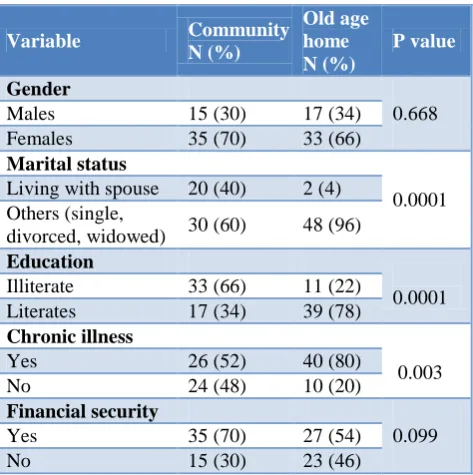
Table 1 shows the other sociodemograhic characteristics of the respondents. Females formed a majority in both community (70%) as well as old age homes (66%), and it did not show a significant difference in the two settings.
60% of the respondents in community were living alone i.e. they were never married, widowed or divorced whereas in old age homes 96% of them are living alone and it was statistically significant with a p value of 0.0001.
Table 1: Baseline characteristics of respondents.
Variable Community
N (%)
Old age home N (%)
P value
Gender
0.668 Males 15 (30) 17 (34)
Females 35 (70) 33 (66)
Marital status
0.0001 Living with spouse 20 (40) 2 (4)
Others (single,
divorced, widowed) 30 (60) 48 (96)
Education
0.0001 Illiterate 33 (66) 11 (22)
Literates 17 (34) 39 (78)
Chronic illness
0.003 Yes 26 (52) 40 (80)
No 24 (48) 10 (20)
Financial security
0.099 Yes 35 (70) 27 (54)
No 15 (30) 23 (46)
Regarding educational status, 66% of those living in community were illiterates whereas only 22% were illiterates among old age home residents and it was statistically significant with a p value of 0.0001. Presence of chronic illness like hypertension, diabetes mellitus etc. was high among those residing in old age homes (80%) as compared to those in the community (52%) and it was statistically significant with a p value of 0.003. There was no statistically significant difference in the financial security of respondents in both the settings.
Figure 2: Overall depression in the total Elderly population.
As shown in Figure 2, among the total elderly population interviewed, prevalence of depression was 66%, of which
29
20
1 16
14
20
0 5 10 15 20 25 30 35
Young old (60-69 years)
Middle old (70-79 years)
Very old (80 years & above) Community Old age home
34%
29%
18%
19% 66%
29% of them were having mild depression, 18% having moderate depression and 19% had severe depression.
On comparing the level of depression among elderly in both the settings as shown in Figure 3, the prevalence of depression was found to be more in old age homes (80%) with 40% having mild depression, 18% having moderate depression and 22% having severe depression. Whereas in community 52% were depressed with 18% having mild depression, 18% having moderate depression and 16% having severe depression, and this is found to be
statistically significant with a p value of <0.05. Figure 3: Depression in community and old age
homes.
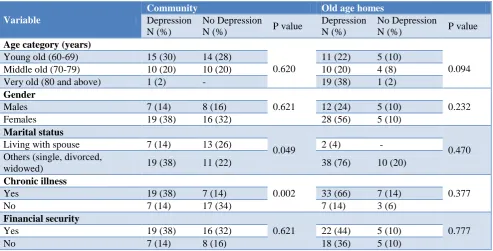
Table 2: Comparison of association between risk factors and depression among the elderly residing in community and old age homes.
Variable
Community Old age homes
Depression N (%)
No Depression
N (%) P value
Depression N (%)
No Depression
N (%) P value
Age category (years)
0.620 0.094
Young old (60-69) 15 (30) 14 (28) 11 (22) 5 (10) Middle old (70-79) 10 (20) 10 (20) 10 (20) 4 (8) Very old (80 and above) 1 (2) - 19 (38) 1 (2)
Gender
0.621 0.232
Males 7 (14) 8 (16) 12 (24) 5 (10)
Females 19 (38) 16 (32) 28 (56) 5 (10)
Marital status
0.049 0.470
Living with spouse 7 (14) 13 (26) 2 (4) - Others (single, divorced,
widowed) 19 (38) 11 (22) 38 (76) 10 (20)
Chronic illness
0.002 0.377
Yes 19 (38) 7 (14) 33 (66) 7 (14)
No 7 (14) 17 (34) 7 (14) 3 (6)
Financial security
0.621 0.777
Yes 19 (38) 16 (32) 22 (44) 5 (10)
No 7 (14) 8 (16) 18 (36) 5 (10)
On comparing the association between sociodemographic factors and depression among the elderly residing in community and old age homes in Table 2, it was found that marital status and presence of chronic illness had statistically significant association with depression for elderly residing at their own homes with a p value of <0.05. Age, gender and financial security had no association with depression. Whereas among the elderly residing in old age homes, there was no significant association between depression and the sociodemographic factors.
DISCUSSION
Our study results show that very old population (80 years and above) are higher in number in the OAHs than in the community and this was statistically significant with a P value of 0.0001. This is in accordance to studies conducted by George et al and Rayirala et al.3,10 This points that the household members might be unable to
provide for the growing needs of the old people and most of them land up in old age homes for support and care. Females formed a majority in both community (70%) as well as old age homes (66%) and it did not show a significant difference in the two settings. Similar findings were reported by George et al but was statistically significant with a p value of <0.001.3 Maximum number of individuals in both the groups were living alone i.e. they were never married, widowed or divorced and it was highest in OAH (96%) when compared to community group (60%). Difference of values in both groups is statistically significant with a p value of 0.0001. This is keeping with the observations made by George et al and Rayirala, et al.3,10 This might be due to the fact that lack of support at home, who happens to be a life partner in most of the instances, might have disposed the elderly to admit in OAHs. Regarding educational status, illiterates were more in the community group (66%) than in the other group (22%), this difference was statistically significant with a P value of 0.0001. This was consistent with the observations made by Rayirala, et al and Kumar
18% 18% 16%
48% 40%
18% 22% 20%
0% 10% 20% 30% 40% 50% 60%
Mild Moderate Severe Normal
et al.10,11 This implies that educated individuals might be able to sustain themselves and might have wished to stay in OAHs independently when they had difficulties with their children. Presence of chronic diseases like hypertension, diabetes mellitus etc. was high among old age home residents (80%) when compared to those in the community (52%) and it showed a statistically significant difference with a p value of 0.003. This finding was in contrast to the observations made by George et al where the health problems were high in the respondents and it did not show a significant difference in both the settings.3 In the current study, financial security was more frequently present in elders living in their home when compared to those living at old age homes but it did not show any statistically significant difference in both the settings. Financial security is provided by State Government Old age pension schemes for below poverty line Senior citizens in the state of Andhra Pradesh apart from other social security schemes.
15 item GDS (Short form) was used for screening depression in a randomly sampled population in Visakhapatnam district, Andhra Pradesh.9 Study findings revealed a higher prevalence of depression among the total elderly population interviewed (66%). Depresssion rates were higher in the old age home group (80%) than in the community (52%). This difference was statistically significant with a p<0.05.
Studies from various other states like Kerala, Telangana, Kuppam, Andhra Pradesh, Gujarat and Haryana reported similar results.3,10-13 This can be due to the detachment from social or other activities, lack of sense of belonging and support from family members, resulting in the feeling of loneliness in the old age homes, as authenticated by the results from this study. When scores on Short form-GDS were analysed, majority of them had mild depression in the OAH group than in the community group. Relating the sociodemographic factors and prevalence of depression among the elderly residing in the community, it was found that those who are living alone/divorced/widowed and those suffering from chronic diseases were more depressed, and this was statistically significant association with a p<0.05. There was no impact of age, gender and financial security on the depression level. Whereas among the elderly residing in Old age homes, none of the sociodemographic factors had significant asociation with depression. This finding was in contrast to the observations made by George et al where among the elderly residing in old age homes, female gender and presence of co-morbidities had statistically significant association and marital status was not associated with depression.3 Among the elderly residing in own homes, age >80 years, female gender, marital status and financial status showed statistically significant association, while presence of co-morbidities was not associated with depression.
Limitations
Chronic illnesses were reported by the study participants themselves and not confirmed by medical reports or tests.
CONCLUSION
The results of the study affirm that there is high magnitude of depression among the total geriatric population interviewed (66%). Depression rates were higher in the old age home group (80%) than in the community (52%) and this is found to be statistically significant with a p<0.05.
Recommendations
High prevalence of depression in the studied population emphasize the need to focus on creating awareness regarding depression among the general population and to ensure accessibility and availability of proper healthcare services for early identification of depression and its management.
A multi-dimensional approach is required to take care of these problems and improve the quality of life of the elderly persons. In particular, the old age home residents require regular counselling sessions by trained professionals to encourage them to be more active, apart from gentle love, care and special attention to address these issues, which is the need of the hour.
Similar study should be carried out on a large sample to obtain more precise results.
ACKNOWLEDGEMENTS
We are thankful to all the elderly persons who participated in the study and the five old age homes for giving permission to conduct this study and facilitating the research process.
Funding: No funding sources Conflict of interest: None declared
Ethical approval: The study was approved by the Institutional Ethics Committee
REFERENCES
1. WHO. Geneva. Aging and Life course, Family and Community Health. Global Age-Friendly Cities, 2007.
2. Elderly in India- Profile and Programmes, 2016. Available at: http://www.mospi.gov.in. Accessed on 15 June 2017.
3. George S, Francis PT, Paul N, Leelamoni K. Depression among elderly: A comparative study among the elderly living in old age homes and own homes in Ernakulam, Kerala state, India. Int J Emerging Tech Res. 2015;2(4):62-6.
4. World Health Organization (WHO). Global Health and Aging. Available at: http://www.who.int/ ageing/publications/global_health.pdf. Accessed on 21 May 2016.
6. Kumar V. Care of the elderly. A training manual for multipurpose health workers and medical officers of primary health care system in India 1996, AIIMS, New Delhi, India, 1996.
7. Ingle, Gopal K, Nath A. Geriatric health in India: Concerns and solutions. Indian J Community Med. 2008;33(4):214-8.
8. World health organization (WHO). Health situation and trend assessment. Available at: http://www. searo.who.int/entity/health_situation_trends/data/chi /elderly−population/en/. Accessed on 21 July 2016. 9. Yesavage JA. Geriatric depression scale (short
version);Psychopharmacol Bull. 1998;24:709-11. 10. Rayirala A, Nallapaneni RN. Mandadi GD,
Bhogaraju A. A cross sectional comparative study assessing the psychiatric morbidity in elderly living in old age homes and community. AP J Psychol Med. 2014;15(1):86-92.
11. Praveen Kumar BA, Udayar SE, Sravan S, Arun D. Depression and anxiety among the elderly persons
from institutional and noninstitutional settings in the field practice area of a tertiary-care institute, Andhra Pradesh: a comparative study. Int J Med Sci Public Health. 2016;5(11):1-4.
12. Parikh P. Comparative Study on Depression among Old Age Persons Residing with Family and Old Age Homes. Int J Indian Psychol. 2017;4(3):60-8. 13. Sharma M, Sharma T. Comparative study to assess
& compare depression among elderly population living in selected old age homes & community. Int J Multidisciplinary Res Develop. 2016;3(8):318-20.