http://www.ijcmph.com pISSN 2394-6032 | eISSN 2394-6040
Original Research Article
Breastfeeding practices of nursing mothers in Tamil Nadu:
a hospital based cross sectional study
Shalini S.
1, Gopalakrishnan S.
2*
INTRODUCTION
Breastfeeding is a natural process and standard way of feeding the baby.1 Breast milk is widely acknowledged as a complete form of nutrition for infants providing benefits to infant’s health, growth, immunity and development.2 It enhances the cognitive and sensory development of a child. Breastfeeding is a cost effective way to reduce the infant mortality and morbidity.
Breastfeeding reduces all the mortalities related to infant and childhood. World Health Organization recommends the practice of early initiation of breastfeeding with exclusive breast-feeding up to 6 months and continues till 2 years along with complementary feeding.3
According to World Health Organization, starting breast feed within 1 hour is referred to as “early initiation of breast feeding”.4
As per Indian Academy of Pediatrics
ABSTRACT
Background: Breastfeeding is an essential component of maternal and child health. It has been envisaged that early initiation and exclusive breastfeeding are two key factors, which prevent mortalities relating to newborn and infants, and is also a great source of health and wellbeing of the mother and child. This study was conducted to estimate the prevalence of early initiation of breastfeeding and the reasons for delay among postnatal mothers, in selected health centers in and around Chennai, Tamil Nadu.
Methods: This hospital based cross sectional study was carried out among 450 post natal mothers who delivered in primary, secondary and tertiary care government hospitals in Chennai and its peripheries. The participants were selected by two-stage sampling. A pre-tested structured interview schedule was used to elicit data regarding breastfeeding practices. The data was analyzed using SPSS version 21 software and results presented using descriptive and analytical statistics.
Results: A majority of the study participants (84.2%) belonged to 21–30 years age group and 48% mothers had normal delivery while 52% had a caesarean section. The prevalence rate of early initiation of breastfeeding was 55.8%. The reasons for delay in early initiation of breastfeeding were found to be due to ignorance of the mother (28.2%), pain after delivery (27.2%), respiratory distress (11.1%) and low birth weight of babies (7.5%). Caesarean section, birth in tertiary care hospitals and birth order of the child significantly influenced the timing of initiation of breastfeeding.
Conclusions: This study emphasizes the need for an increased effort to propagate and popularize the concept of early initiation of breastfeeding among the community, especially to antenatal mothers.
Keywords: Feeding practices, Early initiation, Delivery, Pre-lacteal feeds
1
RVS Institute of Medical Sciences and Research Center, RVS Nagar, Tirupathi Road, Chittoor, Andhra Pradesh, India
2
Department of Community Medicine, Sree Balaji Medical College and Hospital, Bharath Institute of Higher Education and Research, Chrompet, Chennai, Tamil Nadu, India
Received: 16 July 2018
Revised: 24 August 2018
Accepted: 27 August 2018
*Correspondence:
Dr. Gopalakrishnan S., E-mail: [email protected]
Copyright: © the author(s), publisher and licensee Medip Academy. This is an open-access article distributed under the terms of the Creative Commons Attribution Non-Commercial License, which permits unrestricted non-commercial use, distribution, and reproduction in any medium, provided the original work is properly cited.
guidelines, breast feeding must be initiated as early as possible after the birth, for all normal newborns including those born by caesarean section avoiding delay beyond an hour.5 Early initiation of breast feeding saves over 1 million newborn infants every year.6 In spite of its known advantages, several factors related to the mother and the child affect early initiation of breast feeding. This includes mother’s knowledge about benefits of breast feeding, problems faced during nursing, mother’s socio- cultural and economic situation, the attitude, the support system available, the recommendation of hospital and health professionals, hospitals and national policies, etc.7 The highest prevalence of early initiation of breastfeeding is seen in Latin America, The Caribbean, East and North Africa. In South Asian countries like India, Pakistan and Bangladesh, only 24-26% of the babies are breast fed within one hour, the result of which is high neonatal mortality rates found in India, Pakistan and Bangladesh with 40–50 per 1000 live births.6 According to World Breastfeeding Trends Initiative report, every year among 26 million newborn, only 8 million babies in India were breastfed within an hour of birth. India ranks 31st, out of the 51 countries surveyed for early initiation of breastfeeding practices.8
The overall prevalence of early initiation of breastfeeding in India was 24.5% according to National Family Health Survey- III data (2005).9 In states like Bihar and Uttar Pradesh, the prevalence rates were very low as 3.7% and 7.3%. The highest prevalence rate was found in the state Nagaland with 66.4%. The states like Meghalaya, Mizoram, Tamil Nadu, Manipur, Goa, Orissa shows the prevalence rates above the national level of 24.5%.9,10 A study conducted by Anaiappan in Chennai city, showed the prevalence rate of the children breast fed within one hour was 54.5%.11 As per another study conducted by Raj in Tiruvallur district, the prevalence rate was 89%.3 The Baby Friendly Hospital Initiative (BFHI) was launched in the year 1991-1992, by World Health Organization and UNICEF, in around 156 countries throughout the world with a goal to ensure initiation of breast feeding in all infant before their discharge from the hospital.12 The hospitals which implemented the ten recommendations for successful breast feeding were declared as Baby Friendly Hospitals.7 By strengthening this initiative in the community, a better child survival can be achieved. WHO and UNICEF implemented a revised and expanded version of BFHI in the year 2009.5 Many cultural beliefs and traditional factors affect breastfeeding. Colostrum is considered as harmful in many cultures and is discarded. Pre-lacteal feeds like sugar water, honey, cow/ buffalo milk, castor oil are some of the cultural feeds introduced even before initiation of breastfeeding.13 However, early initiation of breast feeding is an important indicator for breast feeding practices. The prevalence of early initiation of breast-feeding was 58.8% in Tamil Nadu, which was higher than the national level of 23.5% according to NFHS- 3
data.14,15 Though it is higher than many other states in the country, it does not match with the BFHI standards, considering the fact that Tamil Nadu has a higher prevalence of institutional deliveries (around 98.4%).15-17 Though prevalence of early initiation of breastfeeding is in an increasing trend in the study area, there is a wide gap in achieving the national target of 80%. 18 Considering all these factors and due to lack of similar studies, this study was carried out in hospitals in and around Chennai to find out the gap in prevalence of early initiation of breast feeding in spite of high institutional delivery and awareness created by the health professionals in the government hospitals as well as during antenatal period.
Objectives of the study
To estimate the prevalence of early initiation of breastfeeding among the newly delivered mothers in the study area.
To identify the reasons for delay in early initiation of breastfeeding.
METHODS
Study setting
This study is a hospital based cross-sectional study carried out in Government hospitals in and around Chennai for a period of six months. The hospitals included primary, secondary and tertiary care hospitals in Chennai and its neighboring Thiruvallur districts. Official Permission was obtained for carrying out the study in Primary Health Centers and District Head Quarters Hospital Thiruvallur District and Institute of Obstetrics & Gynecology, Chennai. The district of Thiruvallur is subdivided into 13 Blocks. There are 13 Block Level PHCs, 6 Upgraded PHCs [CHCs], 24 Additional PHCs, 3 Urban PHCs, 8 Taluk & Non-taluk hospitals and 1 District Head Quarters Hospital which caters to all the health care needs of the people of this District. The Institute of Obstetrics & Gynecology in Chennai caters to the maternity health care need of the people in the northern region of the State.
Study population
The study population identified was any mother who had delivered the babies (normal as well as cesarean section) in the selected government hospitals, within 5 days of delivery.
Inclusion criteria
Exclusion criteria
Exclusion criteria were mothers who were not willing to participate in the study were excluded. Any serious illness in the childlike birth injuries, severe jaundice and congenital anomalies and twin deliveries were excluded. The mothers under influence of sedation and other complications like postpartum psychosis, postpartum hemorrhage, mastitis, etc. and any maternal/neonatal complication which warranted delay/ avoidance of breastfeeding were excluded.
Sample size and sampling technique
According to NFHS–3 data, the prevalence of early initiation of breast-feeding in Tamil Nadu was found to be 58.8%.15 Considering this prevalence rate, at 95% level of significance and 8% relative precision, the final sample size was calculated as 421. It was finally rounded off to 450.
The sampling technique employed in this study was a two-stage sampling. The study area comprised of 13 hospitals at primary care level, nine hospitals at secondary care level and one tertiary care hospital. The first stratification was carried out at the level of care, and the sample size of 150 participants was equally distributed to each level. In each level, the postnatal mothers were identified based on consecutive sampling. Data was collected among postnatal mothers who delivered in these hospitals within 48 hours of delivery.
The study period
The study was done during the period from October 2015 to March 2016
Ethical approval and informed consent
Approval was obtained from the Institutional Ethics Committee prior to the commencement of the study. Each participant was explained in detail about the study and informed consent was obtained prior to data collection.
Data collection
A pretested structured interview schedule was used for the data collection. The schedule consisted of the following sections: 1) Demographic variables like age of the mother, sex of child, educational status, family income, occupation, religion and socio-economic status of mother. 2) Antenatal details like medical problems faced by the mother, antenatal registration and risk factors during antenatal period. 3) Delivery particulars like place of delivery, birth order of present delivery, term of delivery, mode of delivery, complication during delivery, assistance adopted in normal delivery, indication for caesarean delivery and mode of anesthesia. 4) Postnatal details like postnatal problems, breast
symptoms and conscious of the mother after delivery. 5) Neonatal particulars like birth weight, APGAR score and complications of neonate. 6) Breast feeding practices like time of delivery, time of initiation of breast feeding, time of breast milk secretion after initiation of breast feeding, suckling reflex, cultural factors affected breast feeding and artificial feeding given to the child. Few details like birth weight, APGAR score, delivery time, indication for caesarean section were collected from hospital records from the duty nurses available.
Operational definitions
Prevalence of early initiation of breastfeeding: It is the Percentage of mothers who initiated breastfeeding their child within one hour of delivery during the study period.
Initiation of breastfeeding: It is an act of allowing the baby to suck the mother’s nipple or to feed the baby with her expressed breast milk for the first time after delivery.
Early initiation of breastfeeding: It refers to initiation of breastfeeding within one hour of delivery.
Exclusive breastfeeding: It is the practice of feeding the infants with breast milk alone, (no other foods or liquids given) for the first 6 months.
Pilot study
A pilot study was carried out among 45 postnatal mothers from primary, secondary and tertiary health centers (15 from each center), and based on the outcome the questionnaire was validated.
Statistical analysis
Data was entered and analyzed using EPIDATA and SPSS version 21. The descriptive statistics like mean, frequency distribution and percentage is used to assess the various variables. The analytical statistics like P-value, Chi-square, Odds ratio and Confidence interval were used to determine the association of early initiation of breastfeeding with selected variables.
RESULTS
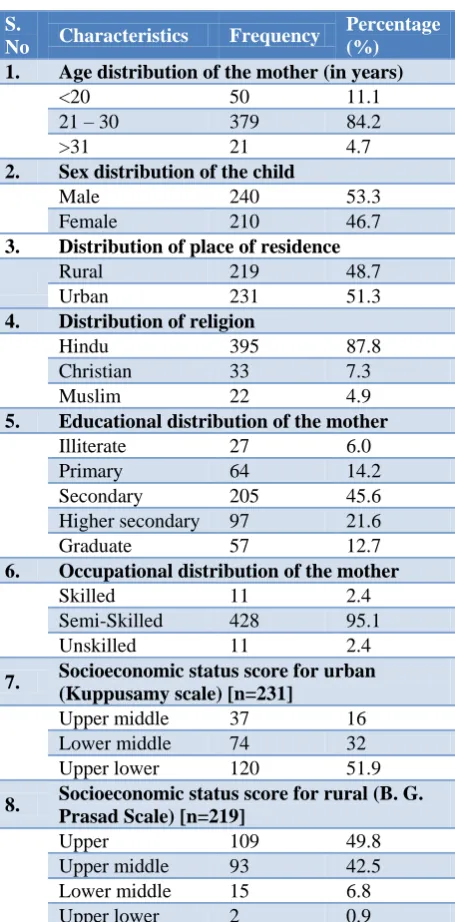
The study was conducted among 450 mothers admitted for delivery in the hospitals in and around Chennai. The
socio-demographic characteristics of the study
Christians and 22 (4.9%) Muslims. Among the study subjects, 94% were literate with 45.6% mothers had the level of secondary education. Out of 450 mothers, house wives were 428 (95.1%).
Table 1: Socio-demographic characteristics of the study participants.
S.
No Characteristics Frequency
Percentage (%) 1. Age distribution of the mother (in years)
<20 50 11.1
21 – 30 379 84.2
>31 21 4.7
2. Sex distribution of the child
Male 240 53.3
Female 210 46.7
3. Distribution of place of residence
Rural 219 48.7
Urban 231 51.3
4. Distribution of religion
Hindu 395 87.8
Christian 33 7.3
Muslim 22 4.9
5. Educational distribution of the mother
Illiterate 27 6.0
Primary 64 14.2
Secondary 205 45.6
Higher secondary 97 21.6
Graduate 57 12.7
6. Occupational distribution of the mother
Skilled 11 2.4
Semi-Skilled 428 95.1
Unskilled 11 2.4
7. Socioeconomic status score for urban (Kuppusamy scale) [n=231]
Upper middle 37 16
Lower middle 74 32
Upper lower 120 51.9
8. Socioeconomic status score for rural (B. G. Prasad Scale) [n=219]
Upper 109 49.8
Upper middle 93 42.5
Lower middle 15 6.8
Upper lower 2 0.9
The health problems and risk factors during antenatal period are given in Table 2. About 33 (7.4%) mothers had antenatal health problems like hypothyroidism (4.9%), wheezing (0.7%) and congenital heart disease (0.7%). Regarding the presence of risk factors, 11.1% of mothers had anaemia, 4.9% of mothers had pregnancy-induced hypertension, 3.3% of mothers had gestational diabetes and 0.7% of mothers had placenta praevia. About 0.9% had both pregnancy induced hypertension and gestational diabetes.
Table 2: Health problems and risk factors present during the antenatal period.
S.
No Characteristics Frequency % 1. Antenatal problems [n=33]
Hypothyroidism 22 4.9
Wheezing 3 0.7
Congenital heart disease 3 0.7
Others 5 1.1
2. Risk factors identified during antenatal period [n=99]
Anaemia 50 11.1
Pregnancy induced
hypertension 22 4.9
Gestational diabetes 15 3.3
Pregnancy induced
hypertension and gestational diabetes
4 0.9
Anaemia & gestational
diabetes 2 0.4
Placenta previa 3 0.7
Anaemia & Pregnancy
induced hypertension 2 0.4
Anaemia & Placenta previa 1 0.2
Table 3: Delivery particulars of the study participants.
S.
No Characteristics Frequency % 1. Birth order of the child
1st 169 37.6
2nd 241 53.6
3rd 40 8.8
2. Term of delivery
Pre term 7 1.6
Term 437 97.1
Post term 6 1.3
3. Mode of delivery
Normal 216 48.0
Caesarean 234 52.0
4. Time of delivery
7:00 a.m-2:00 pm 198 44.0
2:00 pm-7:00 pm 82 18.2
7:00 pm-7:00 am 170 37.8
5. Complications during delivery
Foetal distress 18 4.0
Meconium stain 11 2.4
Meconium stain with foetal
distress 6 1.3
None 415 92.2
6. Assistance adopted in normal delivery [n=216 ]
Episiotomy 172 79.6
Episiotomy & Forceps 21 9.7
The delivery particulars of the study participants are given in Table 3. Regarding birth order of the child 169 (37.6%) mothers gave birth to first child, 241 (53.6%) mothers gave birth to second child. Out of 450 deliveries, 437 (97.1%) were term deliveries and 234 (52%) were caesarean section deliveries. In 450 deliveries, 44% of the deliveries happened between 7 am to 2 pm (shift 1). Regarding complication during delivery, 92.2% of new-borns had no complications. Out of 216 normal deliveries, 23 deliveries were conducted without any assistance.
Table 4: Characteristics regarding the new born.
S.
No Characteristics Frequency % 1. Birth weight of the child (in kg)
<2 17 3.8
2.1 – 2.5 92 20.4
2.5 – 4.0 338 75.1
>4.1 3 0.7
2. APGAR score
Good (>7 points) 423 94.0
Poor (4-6 points) 25 5.6
Very poor (<4 points) 2 0.4
3. Complications of neonate
Low birth weight 17 3.8
Respiratory distress 24 5.3
Jaundice 17 3.8
Others 4 0.9
No complications 388 86.2
The particulars regarding the new-born are given in Table 4. Regarding birth weight of the child, 3.8% of the babies were low birth weight babies (i.e., less than 2 kilograms) and 20.4% babies were between 2.1 - 2.5 kilograms. Out of 450 new-borns, APGAR score was above 7 points in 94% of the babies. Complications of neonate found in this study were respiratory distress (5.3%), low birth weight (3.8%), jaundice (3.8%), and other unspecified medical problems (0.9%).
Figure 1: Prevalence of early initiation of breast feeding among the study participants.
The prevalence of early initiation of breastfeeding is given in Figure 1. The overall prevalence of early
initiation of breastfeeding in this study was 56% with the range between 51.1 and 60.3 (95% CI).
Figure 2: Reasons for delay in initiating breastfeeding among the new-born.
Out of 450 mothers, 199 mothers delayed initiation of breastfeeding (Figure 2) by one hour after delivery, due to ignorance (28.2%), pain in the mother (27.2%) and respiratory distress (11.1%) as the most common causes. The mean hours of delay in early initiation of breast feeding among normally delivered mothers was 3.7±7.4 hours and that of caesarean delivered mothers was 10.6±19.1 hours. The overall hours delayed by all the mothers were 8.4±16.7 hours.
Table 5: Breast feeding practices among the study participants.
S.
No Characteristics Frequency %
1. Suckling reflex after initiation of breast feeding
Immediately 443 98.4
Delayed 7 1.6
2. Suckling started after initiation of breast feeding
0-5 Hours 445 98.8
6-10 Hours 1 0.2
11-15 Hours 2 0.4
>15 Hours 2 0.4
3. Pre-lacteal feeds given
Sugar solution 18 4
Water 34 7.5
Sugar solution and water 12 2.6
Formula milk 3 0.7
Cow’s milk 16 3.5
Others 4 0.9
No feeds given 363 80.7
The breastfeeding practices among the study participants are given in Table 5. Suckling reflex of babies was good among 98.4% babies whereas 1.6% of the babies felt it difficult. Out of 450 babies, 87 babies were fed with
pre-Early initiation
56% Delayed
initiation 44%
28.2%
27.2% 11.1%
7.5% 7.5%
6.5%
5.0% 5.0% 2.0%
Ignorance Pain
Respiratory distress Low Birth Weight
lacteal feeds. 7.5% of babies were fed with lukewarm water, 6.6% of babies were fed with sugar solution, 3.5% of babies were fed with Cow’s milk, 0.9% of babies were
fed with others which include tea and donkey’s milk and 0.7% of babies were fed with formula milk.
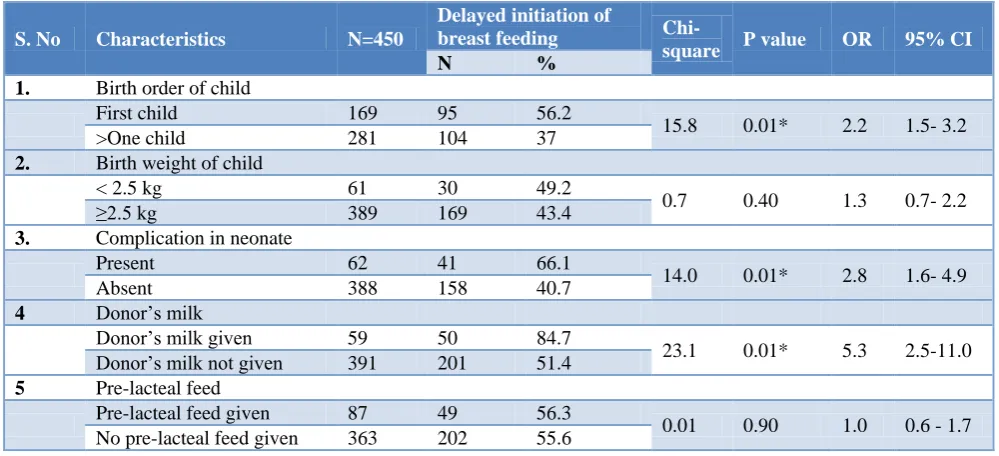
Table 6: Association between certain characteristics and early initiation of breastfeeding.
S. No Characteristics N=450
Delayed initiation of
breast feeding Chi-
square P value OR 95% CI
N %
1. Age of mother (years)
≥26 141 79 56
13.6 0.01* 2.0 1.3 -3.0
≤25 309 120 38.8
2. Place of residence
Urban 231 116 50.2
6.9 0.01* 1.6 1.1 -2.4
Rural 219 83 37.9
3. Risk factors in antenatal period
Present 99 63 63.6
19.4 0.01* 2.8 1.7 -4.4
Absent 351 136 38.7
4. Place of delivery
Tertiary Health Centre 150 96 64
36.0 0.01* 3.4 2.3 -5.1
Primary/Secondary Health
Centre 300 103 34.3
5. Mode of delivery
Caesarean 234 137 58.5
40.6 0.01* 3.5 2.4 -5.2
Normal 216 62 28.7
6 Breast symptoms
Present 16 10 62.5
2.3 0.10 2.2 0.8- 6.1
Absent 434 189 43.5
Table 7: Association between neonatal factors and early initiation of breastfeeding among the study participants.
S. No Characteristics N=450
Delayed initiation of
breast feeding Chi-
square P value OR 95% CI
N %
1. Birth order of child
First child 169 95 56.2
15.8 0.01* 2.2 1.5- 3.2
>One child 281 104 37
2. Birth weight of child
< 2.5 kg 61 30 49.2
0.7 0.40 1.3 0.7- 2.2
≥2.5 kg 389 169 43.4
3. Complication in neonate
Present 62 41 66.1
14.0 0.01* 2.8 1.6- 4.9
Absent 388 158 40.7
4 Donor’s milk
Donor’s milk given 59 50 84.7
23.1 0.01* 5.3 2.5-11.0
Donor’s milk not given 391 201 51.4
5 Pre-lacteal feed
Pre-lacteal feed given 87 49 56.3
0.01 0.90 1.0 0.6 - 1.7
No pre-lacteal feed given 363 202 55.6
The association between the socio-demographic and maternal risk factors on early initiation of breast-feeding is given in Table 6. Regarding the age of the mother and early initiation of breast-feeding, there is a significant association between the both. Among the mothers aged ≥26 years, there was a delay in initiation of breastfeeding with an odds ratio of 2.01 (1.34-3.0), which is statistically
significant (x2=13.6 and p=0.01). There was a significant association between the place of residence and early initiation of breastfeeding (x2=6.9, p=0.01) with odds ratio of 1.6 (1.1–2.4).
The association was found statistically significant with odds ratio of 2.8 (1.7–4.4) (x2=19.4, p=0.01). It was identified that early initiation of breast-feeding in primary and secondary health centres had a positive results and also found to be statistically significant (x2=36.0, p=0.01). The mode of delivery had seen to influence the early initiation of breast-feeding among mothers. About 28.7% of normally delivered and 58.5% of caesarean delivered mothers initiated breast-feeding after one hour of delivery, which was statistically significant (2=40.6, p=0.01).
The association between neonatal factors and early initiation of breastfeeding is given in Table 7. Birth order of the child and early initiation of breast-feeding had a significant association (x2=15.8, p=0.01). In this study, there was a significant association between complication in neonate and delay in early initiation of breast-feeding with an odds ratio of 2.8 (1.6–4.9), which is statistically significant (x2=14.0, p=0.01). The babies who were fed with donor’s breast milk also delayed the initiation of breast-feeding, and was found to be statistically significant (X2=23.1, p=0.01).
DISCUSSION
The prevalence of early initiation of breastfeeding among mothers in this study reveals several interesting factors. The main findings of this study are discussed here in relation to similar studies conducted in India as well as outside India.
This study reveals that the mothers aged ≤25 years initiated the breastfeeding within 1 hour, whereas the mothers aged ≥26 years delayed the initiation of breast-feeding which is found to be statistically significant. This study was supported by a study done by Mallik showing that increasing age of mothers had a negative influence on early initiation of breastfeeding. Knowledge score was good in 80.5% mothers below 20 years, 89.8% between 20-25 years, 91.2% between 26-30 years and 100% in mothers above 30 years. It also coincided with the result of adverse effects of early initiation of breastfeeding below 20 years of age.19
About 37.9% of mothers from rural areas and 50.2% of mothers from urban areas delayed early initiation of breastfeeding. It is a statistically significant finding. This study shows a better prevalence among rural mothers than urban mothers, which coincide with NFHS–3 data of Tamil Nadu. According to which the prevalence of early initiation of breast-feeding among rural mothers is 52.3% and urban mothers is 58.8%. 14
This study shows that there is a significant association between mode of delivery and initiation of breastfeeding. This study was supported by the study done by Motee et al which reveals that 42.6% of normally delivered mothers and 23.9% of caesarean delivered mothers had initiated breast feeding within one hour.20 For caesarean
delivered mothers, management of pain along with support of family members and health care providers, helps in early initiation of breast-feeding.
The birth order of the child and early initiation of breastfeeding had no significant association. Among the mothers with first child, 43.8% of the mothers initiated breastfeeding within one hour and 56.2% of the mothers after one hour of delivery respectively. Whereas among the mothers with more than one child, 63% of the mothers initiated breast feeding within one hour and 37% of the mothers after one hour of delivery respectively. But according to a study conducted by Tori Sutherland, Pierce the results were in reverse showing an increasing trend of non- initiation with increasing birth order.21 Regarding birth weight of the child and early initiation of breast feeding, 50.8% of children weighing <2.5 kilograms and 56.6% of children weighing ≥2.5 kilograms were breast fed within one hour of delivery whereas 49.2% of children weighing <2.5 kilograms and 43.4% of children weighing ≥2.5 kilograms were breast fed after one hour of delivery. This finding was supported by the study done by Emel Örün et al, which showed that birth weight had no effect on early initiation of breastfeeding.22
About 33.9% of neonates with complications and 59.3% of neonates without complications were able to breast feed within one hour of delivery. This study correlates with the study done by Anaiappan showing the influence of neonatal complications on early initiation of breast-feeding.11
Pre-lacteal feeds had no influence on early initiation of breast-feeding. 56.3% of mothers who practiced pre-lacteal feeds didn’t initiated breast-feeding within one hour of delivery. It is statistically not significant. The study done by Yadavannavar, Shailaja showed that, 91.6% of mothers gave pre-lacteal feeds to their children.13 In India and other developing countries pre-lacteal feeds (feeds given to neonates before the initiation of lactation) are very common and are an important factor in delaying the initiation of breast feeding.23
This study was conducted to estimate the prevalence of early initiation of breastfeeding among postnatal mothers in selected health centres. In this study the prevalence rate is 55.8%, which is more or less similar to the state prevalence of 58.8% (NFHS-3) and the study done by Anaiappan showing a prevalence rate of 54.4%.11 Awareness among mothers and the family members is important to achieve higher rate of prevalence in early initiation of breast-feeding.
Limitations
could not be addressed. This study shows a lower prevalence of early initiation of breastfeeding for mothers delivered in tertiary care hospitals. This may not reveal the actual situation in the community because tertiary care centres receive complicated cases for delivery and postnatal care.
CONCLUSION
In this study the breastfeeding practices and prevalence of early initiation of breastfeeding were estimated. Factors like age of mother, place of residence, risk factors during antenatal period, place of delivery, mode of delivery, birth order of the child and complications in the neonate had a significant effect on early initiation of breast feeding. Some of the reasons for delay including problems faced during nursing like pain in suture site, ignorance of the mother and rooming-in delay can be overcome by providing pain management services, health educating mothers and measures like initiation of breast feeding in the labour or recovery room and early rooming-in of mother and child respectively. Also, complications in mother and neonate can be reduced to some extent by regular antenatal check-up. In caesarean delivered mothers, early initiation of breastfeeding can be made better by the positive attitude of the mother and encouragement of the family members.
Knowledge about the advantages of breastfeeding practices, particularly importance of early initiation of breastfeeding may improve the current status of early initiation of breastfeeding. The support system available and the recommendations of the hospital and health professionals may play a major role in early initiation of breast feeding by not only creating awareness regarding the right practices, but also efforts to abolish cultural taboos associated with breastfeeding. Multi-pronged approach is needed to enhance the knowledge and practice of early initiation of breastfeeding, which will help to reduce neonatal and infant mortality is the long run. Baby Friendly Hospital Initiative should be universalized in all the public and private hospitals in the country along with the RCH program.
Funding: No funding sources Conflict of interest: None declared
Ethical approval: The study was approved by the Institutional Ethics Committee
REFERENCES
1. Shwetal B, Pooja P, Neha K, Amit D, Rahul P. Knowledge, attitude and practice of postnatal mothers for early initiation of breast-feeding in the obstetric wards of a tertiary care hospital Vadodara city. National J Community Med. 2012;3(2):305-9. 2. Nrdc.org. Benefits of Breastfeeding - Healthy Milk,
Healthy Baby, NRDC. Available at: http://www. nrdc.org/breastmilk/benefits.asp. Accessed on 13 June 2018.
3. Raj RJ, Sriram C, Yasobant S, Venkatesh R, Arunmozhivarman K, Maria JM. Breast Feeding Practices: A Predictor Based Study from Tiruvallur District, Tamilnadu. OIIRJ. 2014;4(2):78-86.
4. Who.int, (2014). WHO, Early initiation of
breastfeeding. Available at: http://www.who.int/ elena/titles/early_breastfeeding/en/. Accessed on 2 July 2018.
5. Indian academy of paediatrics. India: Infant and Young Child Feeding Guidelines; 2010. Available at: http://medind.nic.in/ibv/t10/i12/ibvt10i12p995. pdf. Accessed 13 June 2018
6. Jana AK. Interventions for promoting the initiation of breastfeeding: RHL commentary (last revised: 2 March 2009). The WHO Reproductive Health Library; Geneva: World Health Organization. Available at: http://apps.who.int/rhl/pregnancy_ childbirth/care_after_childbirth/cd001688_JanaAK_ com/en/. Accessed 13 June 2018.
7. Cakmak H, Kuguoglu S. Comparison of the
breastfeeding patterns of mothers who delivered their babies per vagina and via caesarean section: An observational study using the LATCH
breastfeeding charting system. IJNS.
2007;44(7):1128-37.
8. IANS. India lags behind in breastfeeding practices. 2012. Available at: http://www.thehealthsite.com/ news/india-lags-behind-in-breastfeeding-practices/. Accessed 23 June 2018.
9. National Institute of Public Cooperation and Child Development. World breast feeding trends initiative
(WBTi): India report 2012. Available at:
http://www.worldbreastfeedingtrends.org/report/WB Ti-India-2012.pdf. Accessed 23 September 2017. 10. Family welfare statistics. India: Ministry of Health
and Family Welfare Government of India; 2011. Available at: http://www.2cnpop.net/uploads/1/0/2/ 1/10215849/mohfw_statistics_2011_revised_31_10 _11.pdf. Accessed 30 June 2018.
11. Anaiappan J. A cross sectional study on estimate the prevalence of early initiation of breastfeeding among mothers in a zone of Chennai PG thesis.
Dr.MGR University; 2010. Available at:
http://repository-tnmgrmu.ac.in/1171/1/201500110 anaiappan.pdf. Accessed 30 June 2018.
12. Gladius JH, Muthukumar K. A Cross-sectional Descriptive Study was to Estimate the Prevalence of the Early Initiation of and Exclusive Breast Feeding in the Rural Health Training Centre of a Medical College in Tamilnadu, South India. J Clin Diagnostic Res. 2012;6(9):1514-7.
13. Yadavannavar MC, Shailaja SP. Socio cultural factors affecting breast-feeding practices and decisions in rural women. IJPAES. 2011;1(2):46-50. 14. Family welfare statistics. India: Ministry of Health
15. Fact sheet - NFHS 3. Tamil Nadu:Ministry of Health and Welfare Government of India;2006. Available at:http://hetv.org/india/nfhs/nfhs3/NFHS-3-TN.pdf. Accessed 30 June 2018.
16. Fact sheet - NFHS 3. Goa:Ministry of Health and Welfare Government of India;2006. Available at:http://hetv.org/india/nfhs/nfhs3/NFHS-3-GO.pdf. Accessed 30 June 2018.
17. Fact sheet - NFHS 3. Nagalanad:Ministry of Health and Welfare Government of India;2006. Available at:http://hetv.org/india/nfhs/nfhs3/NFHS-3-NA.pdf. Accessed 30 June 2018.
18. Elizabeth JB, Linda CS, Nadra F. Early initiation of and exclusive breast feeding in large scale community- based programme in Bolivia and Madagascar. JHPN. 2006;24(4):530-9.
19. Sarmila M, Urmila D, Subhrajyoti N, Debjani S, Kantibhusan C, Salil K. Knowledge of breast feeding and timely initiation of among postnatal mothers:An experience from a baby friendly teaching. IOSR-JDMS. 2013;4(1):25-30.
20. Motee A, Ramasawmy D, Gunsam PP, Jeewon R. An Assessment of the Breastfeeding Practices and
Infant Feeding Pattern among Mothers in Mauritius. J Nutrition Metabol. 2013|: 1-8.
21. Sutherland T, Pierce CB, Blomquist JL, Handa VL. Breastfeeding practices among first-time mothers and across multiple pregnancies. Matern Child Health J. 2012;16(8):1665-71.
22. Emel O, Songul YS, Yusuf M, Zeynep U, Senaz K,
Kadriye Y. Factors associated with breast feeding initiation time in a baby friendly hospital. The Turkish J Pediatr. 2010;52(1):10-6.
23. Bmj.com, (2014). Pre-lacteal feeds and the initiation of breastfeeding. Available at: http://www.bmj.com/ rapid-response/2011/10/27/prelacteal-feeds-and-initiation-breastfeeding Accessed 30 June 2018.