Original Research Article
Laparoscopic versus open cholecystectomy
Norah Ahmed Al Mallohi
1*, Moatez Khalaf Almofarreh
2, Basil Abdalruhman Alfarrah
3,
Mohammed Basheer Albalbisi
4, Abdulrahim Mohammed Alamoudi
4,
Mohammed Nasser Sharahili
5, Hanan Mohammed Alsharif
6, Rayan Mubarak M. Alomaim
7,
Faris Adnan Mohammed Baawad
4, Abdulaziz Osama Abukhodair
4INTRODUCTION
The common indications for laparoscopic
cholecystectomy are the same as those for the comparing open procedure. Despite the fact that laparoscopic cholecystectomy was initially saved for thin and young patients, it now is also presented to obese and elderly
patients; actually, these concluding patients can advantage much more from surgery through small incisions.1 Laparoscopic cholecystectomy has rapidly become the procedure of choice for routine gallbladder removal and is currently the most commonly performed major abdominal procedure in Western countries.2 Trials have presented that laparoscopic cholecystectomy ABSTRACT
Background: Laparoscopic cholecystectomy has promptly emerged as a popular alternative to traditional open laparotomy and cholecystectomy. The Objective of the current meta-analysis is to evaluate the effect of Laparoscopic versus open cholecystectomy.
Methods: We conducted this meta-analysis using a comprehensive search of Cochrane database of systematic reviews, PubMed, Medline, EMBASE, and Cochrane central register of controlled trials till 15 March 2018 for studies that evaluated laparoscopic versus open cholecystectomy.
Results: Eleven studies have been included with a total of 80691 patients: 41485 in the laparoscopic and 39206 into the open cholecystectomy groups. Odds ratios were regularly on the side of laparoscopic operation, in terms of respiratory complications (OR=0.32, 95%CI: 0.34-2.64, p<0.0001), mortality (OR=0.19, 95%CI: 0.08-1.05, p<0.0001), and morbidity (OR=0.31, 95%CI: 0.11-0.45, p<0.0001).
Conclusions: Using laparoscopic cholecystectomy decreased morbidity, mortality, and respiratory complications rates. Large-scale and long-term randomized controlled trials in various populations must be carried out in future studies to deliver more significant evidence.
Keywords: Laparoscopic cholecystectomy, Open cholecystectomy, Surgery, Meta-analysis, Morbidity, Mortality
1
Unaizah College of Medicine, Saudi Arabia
2
Aljouf University, Saudi Arabia
3
Almaarefa Colleges, Saudi Arabia
4
King Abdulaziz University, Saudi Arabia
5
King Saud bin Abdulaziz University for health sciences, Saudi Arabia
6
Batterjee Medical College, Saudi Arabia
7
Royal College of Surgeons, Ireland
Received: 14 April 2018
Revised: 13 May 2018
Accepted: 14 May 2018
*Correspondence:
Dr. Norah Ahmed Al Mallohi, E-mail: [email protected]
Copyright: © the author(s), publisher and licensee Medip Academy. This is an open-access article distributed under the terms of the Creative Commons Attribution Non-Commercial License, which permits unrestricted non-commercial use, distribution, and reproduction in any medium, provided the original work is properly cited.
patients in outpatient settings and those in inpatient settings recover equally well, indicating that a greater proportion of patients should be offered the outpatient modality.3
A critical concern for surgeons performing a laparoscopic cholecystectomy is whether and when the technique ought to be changed over to an open cholecystectomy.4 Change to an open technique ought not to be viewed as a difficulty, and the likelihood that it will demonstrate fundamental or fitting ought to be examined with the patient preoperatively. In many arrangements, transformation rates are higher with emergency operations. Revealed rates range from 1.5% to 15%, with most examinations detailing rates around 5% in elective cases.5
Complete contraindications for laparoscopic
cholecystectomy comprise an incapability to tolerate uncontrolled coagulopathy and general anesthesia. Patients with congestive heart failure or severe obstructive pulmonary disease might be better assisted with open cholecystectomy if cholecystectomy is completely required as they might not accept carbon dioxide pneumoperitoneum.6
The purpose of the current meta-analysis is to review the current literature comparing open and laparoscopic cholecystectomy in terms of morbidity, mortality, and pulmonary disease.
METHODS
Search methodology
We conducted this meta-analysis using a comprehensive search of Cochrane Database of Systematic Reviews, PubMed, MEDLINE, EMBASE, and Cochrane Central Register of Controlled Trials till 15 March 2018 for studies that evaluated laparoscopic versus open cholecystectomy. Reference lists of relevant articles were also searched for appropriate studies. There were no language or publication restrictions.
Data collection
Two reviewers screened abstracts according to predefined study inclusion criteria. Full text articles were retrieved and reviewed if a decision on inclusion could not be made solely based on the abstract. Any disagreements were resolved by consensus between the two reviewers.
Selection criteria
Studies were included in this meta-analysis if they fulfilled the following criteria:
Include a comparative study of LC and OC; and report cholecystectomy in terms of morbidity, mortality, and pulmonary disease. Studies were excluded if they did not
meet the inclusion criteria. Flow diagram showing the selection criteria of assessed studies.7
Statistical analysis
The present meta-analysis utilized Stata version 12.0 software for statistical analysis. Mean Difference (MD) were calculated for continuous variables. Pooled odds ratios (OR) were calculated for discrete variables. Heterogeneity amongst the trials was determined by means of the Cochran Q value and quantified using the I2 inconsistency test with a significance set at the P-value <0.10 or I2 score >50% 8. Whenever it was possible, results were evaluated either considering all the included studies or considering only the randomized trials.
RESULTS
We recognized 585 citations using the search strategy. Of these, we excluded 222 after examining the title and abstract including removal of duplicates. We retrieved and evaluated 17 articles in more detail, of which 6 articles were excluded, leaving 11 studies 9-19 that were eligible for inclusion (Figure 1). Major characteristics of included studies have been summarized in Table 1.
Figure 1: Flow diagram showing the selection criteria of assessed studies.7
Ten studies reported morbidity rates. 36718 patients were treated with open cholecystectomy and 31896 with laparoscopic cholecystectomy Table 2. There was no significant difference in heterogeneity among the studies (OR=0.31, 95% CI: 0.11-0.45, p<0.0001).
Table 1: Summary of the included studies.
Study year Study design Number of
patients
Open
cholecystectomy
Laparoscopic cholecystectomy
Samkoff9 1995 Prospective randomized 63920 34189 29731
Eldar10 1997 Retrospective with hystorical
control-group 243 97 146
Kiviluoto11 2001 Retrospective 209 115 94
Tucker12 2011 Prospective randomized 11926 2402 9524
Johansson13 2005 Prospective randomized 70 35 35
Chau14 2002 Retrospective 73 42 31
Pessaux15 2001 Prospective non-randomized 139 89 50
Huang16 1996 Randomized Control Trial 27 12 15
Lucier17 1995 Prospective randomized 3907 2138 1769
Boo18 2007 Prospective randomized 33 15 18
Catena19 2012 Prospective randomized 144 72 72
Table 2: Morbidity in laparoscopic and open cholecystectomy.
Laparoscopic Open Odds Ratio
Study Events Total Events Total 95%, CI
Samkoff9 252 29731 1523 34184 0.18 [0.16, 0.21]
Eldar10 24 146 25 97 0.57 [0.30, 1.07]
Kiviluoto11 1 32 13 31 0.04 [0.01, 0.37]
Johansson13 2 35 3 35 0.65 [0.10, 4.13]
Chau14 4 31 17 42 0.22 [0.06, 0.74]
Pessaux15 9 50 19 89 0.81 [0.33, 1.95]
Huang16 0 15 3 12 0.09 [0.00, 1.89]
Lucier17 200 1769 354 2138 0.64 [0.53, 0.77]
Boo18 0 15 2 18 0.21 [0.01, 4.80]
Catena19 24 72 25 72 0.94 [0.47, 1.87]
Total (95% CI) 31896 36718 0.31 [0.11, 0.45]
Total Events 516 1984
Table 3: Morbidity in laparoscopic and open cholecystectomy.
Laparoscopic Open Odds Ratio
Study Events Total Events Total 95%, CI
Samkoff9 252 29731 1523 34184 0.18 [0.16, 0.21]
Tucker12 67 9524 65 2402 0.25 [0.18, 0.36]
Chau14 0 31 3 42 0.18 [0.01, 3.60]
Pessaux15 0 50 4 89 0.19 [0.01, 3.57]
Lucier17 16 1769 116 2138 0.16 [0.09, 0.27]
Total (95% CI) 41105 38855 0.19 [0.08, 1.05]
Total events 335 1711
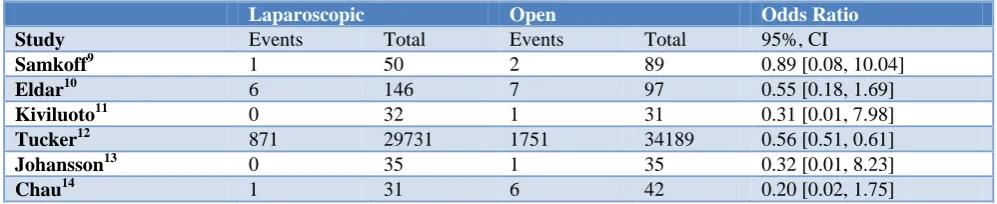
Table 4: Respiratory complications in laparoscopic and open cholecystectomy.
Laparoscopic Open Odds Ratio
Study Events Total Events Total 95%, CI
Samkoff9 1 50 2 89 0.89 [0.08, 10.04]
Eldar10 6 146 7 97 0.55 [0.18, 1.69]
Kiviluoto11 0 32 1 31 0.31 [0.01, 7.98]
Tucker12 871 29731 1751 34189 0.56 [0.51, 0.61]
Johansson13 0 35 1 35 0.32 [0.01, 8.23]
Chau14 1 31 6 42 0.20 [0.02, 1.75]
Laparoscopic Open Odds Ratio
Pessaux15 0 133 5 131 0.09 [0.00, 1.57]
Huang16 0 15 1 12 0.25 [0.01, 6.64]
Lucier17 25 1769 64 2138 0.46 [0.29, 0.74]
Boo18 0 15 1 18 0.38 [0.01, 9.93]
Catena19 4 72 5 72 0.79 [0.20, 3.06]
Total (95% CI) 32029 36854 0.32 [0.34, 2.64]
Total events 908 1844
All studies reported data on respiratory complications. There was no significant difference in heterogeneity between the studies (I2=0%) (Table 4). With the random effect model there were a reduction in pneumonia during the post-operative course with the laparoscopic approach (OR=0.32, 95%CI: 0.34-2.64, p<0.0001).
DISCUSSION
One study which provide homogeneity of patients and randomization of procedures, were in favor of laparoscopic cholecystectomy. Correspondingly, the results favored laparoscopic cholecystectomy in cholecystolithiasis, acute cholecystitis was relative homogeneity of the study populations of two studies, whereas both preferred the laparoscopic technique.14-16 The current meta-analysis demonstrated that the overall morbidity rate was decreased with laparoscopic cholecystectomy when the intervention was performed in the same admission. Though cholecystectomy has a comparatively low operative mortality of 0.4–0.6% post-operative mortality is allied with emergency admission, co-morbid cardiorespiratory disease, and advanced age.20,21 The current analysis presented the positive impact on mortality of laparoscopic cholecystectomy. In fact mortality rate was decreased by laparoscopic procedures.
The greater part of studies was of poor methodological quality, which can bias the outcomes for either technique. One study was of high methodological quality, accomplishing seven of 8 NOS stars. The authors tentatively included 139 patients with cholecystitis over a 7-year time period. They found a steady pattern for the laparoscopic arm considering the result measures of this study, even though statistical significance was not extended. Three examinations, which encompassed patients with comparable ASA score or potentially cardiopulmonary sickness, all reduced mortality, morbidity and rate of heart and respiratory difficulties.
14-16
Initial evidence proposes diminished inflammatory reaction in laparoscopic cases when contrasted with open procedure, which may unfavorably influence aspiratory function.22,23 This relation turns out to be more essential in the elderly, where useful reserves are diminished, and recurrent co-morbidities make postoperative recovery more complex.24
In the present analysis, respiratory complications were decreased by the use of laparoscopy. It seems that the bile leakage rate had no relation with the technique. Moreover, the positive impact on mortality of laparoscopic cholecystectomy. In fact mortality rate was decreased by laparoscopic technique. Recommendations for the prevention of bile duct injuries include early conversion of laparoscopic cholecystectomy to open cholecystectomy and the use of the critical view technique.25
Early laparoscopic cholecystectomy is recommended in mild cholecystitis. Early or delayed cholecystectomy might be certain for moderate cholecystitis however, early laparoscopic procedure ought to be completed only by highly experienced surgeons and promptly terminated by conversion to open procedure if operative conditions make anatomical identification difficult.
CONCLUSION
Using laparoscopic cholecystectomy decreased
morbidity, mortality, and respiratory complications rates. Large-scale and long-term randomized controlled trials in various populations must be carried out in future studies to deliver more significant evidence. Severe hemorrhage and bile leakage rate are not influenced by the technique. Cholecystectomy in acute cholecystitis ought to be tried by laparoscopy at first.
Funding: No funding sources Conflict of interest: None declared
Ethical approval: The study was approved by the Institutional Ethics Committee
REFERENCES
1. Potts JR 3rd. What are the indications for cholecystectomy? Cleve Clin J Med. 1990;57(1):40-7.
2. Litwin DE, Cahan MA. Laparoscopic
cholecystectomy. Surg Clin North Am.
2008;88(6):1295-313.
3. Lillemoe KD, Lin JW, Talamini MA, Yeo CJ,
Snyder DS, Parker SD. Laparoscopic
cholecystectomy as a true outpatient procedure: initial experience in 130 consecutive patients. J Gastrointest Surg. 1999;3(1):44-9.
during Laparoscopic Cholecystectomy: Retrospective Analysis of Ten Years' Experience at a Single Tertiary Referral Centre. Dig Surg. 2013;30(1):51-5.
5. Hunter JG. Acute cholecystitis revisited: get it while it's hot. Ann Surg. 1998;227(4):468-9.
6. Visser BC, Parks RW, Garden OJ. Open
cholecystectomy in the laparoendoscopic era. Am J Surg. 2008;195(1):108-14.
7. Moher D, Liberati A, Tetzlaff J, Altman DG. Preferred reporting items for systematic reviews and meta-analyses: the PRISMA statement. PLoS Med. 2007;6(7):e1000097.
8. Higgins JP, Thompson SG, Deeks JJ. Altman DG. Measuring inconsistency in meta-analyses. BMJ. 2003;327(7414):557-60.
9. Samkoff JS, Wu B. Laparoscopic and open
cholecystectomy outcomes in Medicare
beneficiaries in member states of the Large State PRO Consortium. Am J Med Qual. 1995;10:183–9. 10. Eldar S, Sabo E, Nash E, Abrahamson J, Matter I.
Laparoscopic versus open cholecystectomy in acute cholecystitis, Surg Laparosc Endosc. 1997;7:407-14.
11. Kiviluoto T, Sirén J, Luukkonen P, Kivilaakso E. Randomised trial of laparoscopic versus open cholecystectomy for acute and gangrenous cholecystitis. Lancet. 1998;351(9099):321-5. 12. Tucker JJ, Yanagawa F, Grim R, Bell T, Ahuja V.
Laparoscopic cholecystectomy is safe but underused in the elderly. Am Surg. 2011;77:1014–20.
13. Johansson M, Thune A, Blomqvist A, Nelvin L, Lundell L. Impact of choice of therapeutic strategy for acute cholecystitis on patient's health-related quality of life. Results of a randomized, controlled clinical trial. Dig Surg. 2004;21(5-6):359-62. 14. Chau CH, Tang CN, Siu WT, Ha JP, Li MK.
Laparoscopic cholecystectomy versus open
cholecystectomy in elderly patients with acute cholecystitis: retrospective study. Hong Kong Med J. 2002;8:394–9.
15. Pessaux P, Regenet N, Tuech JJ, Rouge C, Bergamaschi R, Arnaud JP. Laparoscopic versus open cholecystectomy: a prospective comparative study in the elderly with acute cholecystitis. Surg Laparosc Endosc Percutan Tech. 2001;11:252–5. 16. Huang SM, Wu CW, Lui WY, P’eng FK. A
prospective randomised study of laparoscopic v.
open cholecystectomy in aged patients with cholecystolithiasis. S Afr J Surg. 1996;34:177–9. 17. Lucier MR, Lee K. Trends in laparoscopic
cholecystectomy in Indiana. Indiana Med. 1995;88:200–4.
18. Boo YJ, Kim WB, Kim J, Song TJ, Choi SY, Kim YC, et al. Systemic immune response after open versus laparoscopic cholecystectomy in acute cholecystitis: a prospective randomized study. Scand J Clin Lab Invest. 2007;67(2):207-14. 19. Catena F, Ansaloni L, Bianchi E, Di Saverio S,
Coccolini F, Vallicelli C, et al. The ACTIVE (Acute Cholecystitis Trial Invasive Versus Endoscopic) Study: multicenter randomized, double-blind, controlled trial of laparoscopic versus open surgery for acute cholecystitis. Hepatogastroenterology. 2013;60(127):1552-6.
20. Sandblom G, Videhult P, Crona Guterstam Y, Svenner A, Sadr-Azodi O. Mortality after a cholecystectomy: a population-based study. HPB : Official J International Hepato Pancreato Biliary Assoc. 2015;17(3):239-43.
21. McMahon AJ, Fischbacher CM, Frame SH,
MacLeod MC. Impact of laparoscopic
cholecystectomy: a population-based study. Lancet. 2000;356(9242):1632-7.
22. Wang G, Jiang Z, Zhao K, Li G, Liu F, Pan H, et al. Immunologic response after laparoscopic colon cancer operation within an enhanced recovery program. J Gastrointest Surg. 2012;16:1379–88. 23. Schietroma M, Piccione F, Carlei F, Clementi M,
Bianchi Z, de Vita F, et al. Peritonitis from perforated appendicitis: stress response after laparoscopic or open treatment. Am Surg. 2012;78:582–90.
24. Evers BM, Townsend CM, Thompson JC. Organ physiology of aging. Surg Clin North Am. 1994;74:23–39.
25. MacFadyen BV Jr, Vecchio R, Ricardo AE, Mathis CR. Bile duct injury after laparoscopic cholecystectomy. The United States experience. Surg Endosc. 1998;12(4):315-21.