Effect of n-heptane on Cold Flow Properties of
Biodiesel Blends and Performance of a DI Diesel
Engine
Murari Mohon Roy*,
Assistant Professor, Mechanical Engineering, Lakehead University, Thunder Bay, Ontario,Canada, P7B 5E1
Tel: (1) 807-766-7175, E-mail:
[email protected]Wilson Wang,
Professor, Mechanical Engineering, Lakehead University, Thunder Bay, Ontario, Canada, P7B 5E1Antonio F. G. Da Silva,
Research Assistant, Mechanical Engineering, Lakehead University, Thunder Bay, Ontario,Canada, P7B 5E1
Abstract--
This study investigates the effect of n-heptane on cold
flow properties of biodiesel blends, and the performance and emissions of a direct injection (DI) diesel engine with 5, 10 and 20 vol. % n-heptane with B5, B10, B20, B50 and B100. Fifteen fuels of H20, H10 and H5 series are tested and compared for performance and emissions under conditions of rated engine speed of 1800 rpm and different loading conditions for each fuel sample. The research results show that the blends up to B10 with 5%, 10% and 20% n-heptane have similar cloud points (CP) and pour points (PP). The brake specific fuel consumption (bsfc) increases with the increase of biodiesel in the blends at different load conditions. The engine emits lower carbon monoxide (CO) with higher amount of biodiesel and n-heptane in the blends. Peak value of hydrocarbon (HC) is noticed with B5 blends. Nitric oxide (NO) and oxides of nitrogen (NOx) emissions follow similar trends, which increases with the increase of biodiesel in the blends while less n-heptane in the blends.
Index Term--
Canola biodiesel, n-heptane,
biodiesel-diesel-heptane blends, DI diesel engine, engine performance and emissions, different engine loading conditions.
1. INTRODUCTION
Biodiesel has been widely accepted as a substitute for diesel fuel because it is renewable but does not contribute to global warming. Many countries have subsidised biodiesel production so as to help meet their commitments to reduce greenhouse gas emissions. Canada started using 2% biodiesel in diesel in 2012 and this percentage will increase to 5% by 2015. In general, diesel engine performance and emissions vary significantly depending on engine running conditions and types of biodiesels used. The following summary will provide an insight to current biodiesels and their use in diesel engines.
The research in reference [1] observed a minor increase in bsfc but a decrease in brake thermal efficiency (ηth)
for biodiesel and its blends compared with diesel fuel. However, significant reduction of CO and smoke were found for biodiesel and its blends at high engine loads, even though NOx were slightly higher for biodiesel and its blends. The authors’ research team produced biodiesel from pure and used canola oil and DI diesel engine testing was performed using canola biodiesel–diesel and canola oil–diesel blends at high idling operations [2]. It was found that up to 5% biodiesel and
canola oil in diesel fuel, NOx emissions were similar to those of diesel fuel. They also investigated canola biodiesel and its blends (B0-B100) for engine performance and emissions at different load conditions [3]. It was found that under low load operation, biodiesel could significantly reduce CO and HC but increase NOx emission than that of diesel; however, under high load operation, biodiesel and diesel did not show clear difference in NOx emissions.
References [4,5] used the palm biodiesel and its blends for analysis. For example, Ng et al. observed significant reduction of tailpipe NO, unburned HC and smoke opacity with neat biodiesels [4]. The experimental investigation in [5] indicated that with the comparison of diesel, biodiesels could reduce the brake power a little, CO moderately, unburned HC about 17–26%, CO2 a little and
smoke opacity moderately; however the bsfc and NOx would increase about 9% and 16%, respectively. Shrivastava et al. used neat jatropha biodiesel for their research, and realized that NOx emission could be reduced with the cooled exhaust gas recirculation (EGR) [6].
Anand et al. tested waste cooking oil methyl ester biodiesel in a stationary diesel engine [7]. It was observed that the use of waste cooking oil methyl ester biodiesel could yield higher bsfc due to its low calorific value. Debnath et al. [8] examined emulsified palm oil methyl ester (POME). The use of emulsified POME increased the fuel burning rate. As a result, less fuel and better efficiency resulted along with the reduction of CO and CO2 emissions. Furthermore, the
evaporation of water during mixing process and combustion consumes heat from surroundings. This fact reduced NOX
formation by 20%.
lower biodiesel blend ratios; however, these additives did not show any clear effect on the CP of both the neat biodiesel and its blend with petroleum diesel. Paper [10] investigated the effect of ozonized vegetable oils and found no significant CP depression for soybean, sunflower, and rapeseed, even though the CP of the palm oil biodiesel was reduced by 5°C to 12°C. Bhale et al. [11] studied the effect of ethanol, Lubrizol 7671 and kerosene on the cold flow properties of neat madhuca indica biodiesel; it was observed that the CP was reduced by 10°C (with 20% ethanol) and 13°C (with 20% kerosene), respectively, whereas the ethanol-blended biodiesel E20 generated the lowest NOx emissions. Yasin et al. [12] tested a 5 vol.% methanol in a 20% biodiesel, a 80% mineral diesel blend and a neat mineral diesel separately. Test results showed that the operation of the 20% biodiesel blend generated lower brake power, higher bsfc (4–6%) and NOx emissions (up to
13%), but lower CO and CO2 emissions (up to 17–18%) in
comparing to mineral diesel. Zhu et al. [13] studied the emissions and performance of a 4-cylinder naturally-aspirated DI diesel engine with diesel fuel, pure biodiesel, and biodiesel with additives. It was found that compared to diesel fuel, the blended fuels could reduce both NOx and PM, whereas the biodiesel–methanol blends outperformed the biodiesel–ethanol blends. An experimental investigation carried out in [14] demonstrated that with the addition of diethyl ether into biodiesel, the ηth and bsfc were improved with the use of 5%
biodiesel blend, which also lowered CO and smoke emissions than other fuel blends and biodiesel. In reference [15], 20% kerosene and 80% cottonseed biodiesel blend in a single cylinder DI diesel engine was examined. Experimental results showed that the 20% kerosene and 80% biodiesel blend could slightly reduce the exhaust emissions as compared to diesel fuel, which could also improve the performance of compression ignition engine. Palash et al. [16] tested antioxidant additive N,N′-diphenyl-1,4-phenylenediamine (DPPD) on the performance and emissions of a diesel engine fueled by jatropha biodiesel blends. The results showed that this antioxidant additive could reduce NOx emissions significantly with a slight penalty in terms of engine power and bsfc.
The authors’ research team also investigated the performance and emissions of a DI diesel engine in [17] with three fuel series: biodiesel-diesel, biodiesel-diesel-additive and kerosene-biodiesel. Their investigation results showed that the 5% biodiesel blend with additive Wintron XC 30 (2 vol. %) outperformed diesel in HC emissions and cold flow property.
The alkane hydrocarbon n-heptane, which has a cetane number (56) close to that of diesel fuel and for which the oxidation chemistry is very well known, has been widely considered as a surrogate for hydrocarbon fuels in diesel engines [18–21]. Most of these studies examined n-heptane as a prospective surrogate for diesel fuel for its lower soot formation mechanism. Despite significant efforts in biodiesel research, there is hardly any literature on n-heptane blended biodiesel combustion in diesel engines. Although reference [22] examined the combustion characteristics of pure
n-heptane, rapeseed biodiesel and diesel to compare the soot formation potential, its conclusion was that n-heptane had much lower soot formation tendency than that of diesel. From a previous work of the main author [23], n-heptane was obtained as an eye irritation improver, but longer ignition delay, higher HC and aldehyde emissions were noticed.
The objective of this study is to systematically investigate the performance and emissions of a DI diesel engine by n-heptane blended biodiesel fuels especially in comparison with the standard fuel of Canadian ultra-low sulfur winter diesel (ULSD). Advanced research of this paper will focus on cold flow properties of n-heptane blended fuels and analysis of emission trends.
2. MATERIALS AND METHODS
The biodiesel feedstock used in this study is pure canola oil, which is purchased from a local supermarket. Methanol and sodium hydroxide, two main ingredients of biodiesel production, and additive n-heptane are purchased from Canadawide Scientific. A batch reactor of one liter is used to produce canola biodiesel following the procedures described in reference [24]. The reaction temperature is maintained at 55-60˚C. The crude biodiesel is washed twice by water and dried. The final collection efficiency (after washing) is about 85%. The quality of biodiesel is tested by ASTM 6751 standard, which is presented in Table 1. All the properties tested are satisfactory according to ASTM limit.
Advanced investigation will be performed in this study to determine physical properties (e.g., density and viscosity), burning property (e.g., heating value) and cold flow properties (e.g., CP and PP).Density is computed by:
ρ = M / V (1)
where ρ is the density, M the mass and V is the volume of fuel samples. Viscosity is measured by using an Ostwald viscometer and a water bath at a constant temperature of 40˚C.
Table I
Properties of canola biodiesel
Test name Test
method
ASTM limit
Results
Free Glycerin (mass %) ASTM D6584
Max. 0.020
0.000
Total Glycerin (mass %)
ASTM D6584
Max. 0.240
0.112
Flash Point, Closed Cup (°C)
ASTM D93
Min. 130
169
Water & Sediment (vol. %)
ASTM D2709
Max. 0.050
0
TAN (mg KOH/g) ASTM
D664
Max. 0.50
0.14
Copper Corrosion, 3h @ 50°C (rating)
ASTM D130
Max. 3a
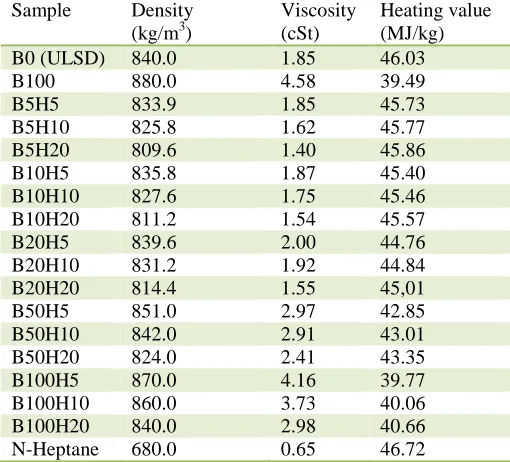
Heating value of fuels is determined by using a bomb calorimeter (Parr 6200 calorimeter). The CP is determined by using an automated MPP 5G CP tester. Tables II and III summarize the cold flow, physical and burning properties of different fuels. From Table II, it is seen that samples from B5H5 to B10H20 have very similar cold flow properties. Although B5H20 has the lowest CP of -45˚C, even lower than the ULSD, it has the highest heating value among these blends (Table III).
Table II
Cloud point and pour point of diesel, biodiesel, n-heptane and blends
Sample Cloud point (˚C) Pour point (˚C)
B0 (ULSD) -44 -52
B100 -2 -7
B5H5 -43 -46
B5H10 -44 -48
B5H20 -45 -51
B10H5 -43 -43
B10H10 -43 -43
B10H20 -44 -51
B20H5 -34 -38
B20H10 -35 -41
B20H20 -35 -45
B50H5 -20 -24
B50H10 -20 -24
B50H20 -24 -27
B100H5 -6 -9
B100H10 -6 -9
B100H20 -7 -15
N-Heptane <-105 <-105
Table III
Density, viscosity and heating value of diesel, biodiesel, n-heptane and blends
Sample Density
(kg/m3)
Viscosity (cSt)
Heating value (MJ/kg)
B0 (ULSD) 840.0 1.85 46.03
B100 880.0 4.58 39.49
B5H5 833.9 1.85 45.73
B5H10 825.8 1.62 45.77
B5H20 809.6 1.40 45.86
B10H5 835.8 1.87 45.40
B10H10 827.6 1.75 45.46
B10H20 811.2 1.54 45.57
B20H5 839.6 2.00 44.76
B20H10 831.2 1.92 44.84
B20H20 814.4 1.55 45,01
B50H5 851.0 2.97 42.85
B50H10 842.0 2.91 43.01
B50H20 824.0 2.41 43.35
B100H5 870.0 4.16 39.77
B100H10 860.0 3.73 40.06
B100H20 840.0 2.98 40.66
N-Heptane 680.0 0.65 46.72
3.ENGINE TEST SETUP AND PROCEDURE
A DI diesel engine is tested to examine its performance and emissions with three fuel series: H5, H10 and H20. H5 series is composed of B0 (neat diesel), B5H5 (5 vol. % heptane and 95 vol. % B5), B10H5 (5 vol. % heptane and 95 vol. % B10), B20H5 (5 vol. % heptane and 95 vol. % B20), B50H5 (5 vol. % heptane and 95 vol. % B50) and B100H5 (5 vol. % heptane and 95 vol. % B100). Similarly, H10 and H20 series are composed of B0, B5H10, B10H10, B20H10, B50H10 and B100H10, and B0, B5H20, B10H20, B20H20, B50H20 and B100H20, respectively.
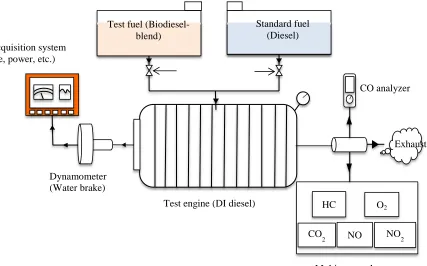
Fig. 1 illustrates the schematic diagram of engine experiment workstation. The tested engine is a DI diesel engine whose specifications are summarized in Table 4. All experimental data are collected after the engine has been warmed up. The testing is undertaken at the rated speed of 1800 rpm under three engine load conditions, as summarized in Table 5. Loads are supplied by a water brake dynamometer with torque measurement sensitivity of 0.1 lb-ft (≈ 0.14 N.m). The engine room temperature is maintained at 20˚C. The engine is started using diesel; once the engine is warmed up, it is switched to the fuel blends.
Exhaust gas analyzers are used to measure the CO, NO, NO2, HC, CO2 and oxygen (O2) of exhaust gases.
Smoke/PM data is not analyzed in this study due to the lack of the facilities. Therefore, the results and usefulness of different blends will be justified based on the available emission and cold flow data. Gas analyzers’ specifications are summarized in Table 6. The exhaust gas temperatures are measured using a K-type thermocouple with the range of -50˚C to 1300˚C with resolution of 1˚C. Each fuel testing is repeated three times and the averaged results are used for the following analysis.
4. RESULTS AND DISCUSSION 4.1. Engine performance
The most important parameters for judging engine performance are engine power, torque, fuel consumption and thermal efficiency. This study will use bsfc and ηth as engine
performance parameters. Engine torque is measured by the aforementioned dynamometer and brake power is calculated by
P = 2ᴨNT × 10-3 (2)
where P is the brake power in kW, N in rev/s and T in N.m.
The ηth is the ratio of brake power to input energy. Input
energy is calculated from fuel consumption and heating value data:
Input energy (kW) = mf × CV (3)
where mf is the mass flow rate of fuel in kg/s and CV is the
calorific value in kJ/kg.
4.1.1 Brake specific fuel consumption
Table IV Engine specifications Engine make and
model
Lister Peter; PH2W
Engine type Four stroke DI diesel engine Number of cylinder Two
Bore × Stroke 87.3 × 110 mm
Swept volume 1318 cc
Compression ratio 16.5 : 1
Rated power 11.2 kW @ 1800 rpm
Fuel injection
timing
24ºBTDC (below 1650 rpm);
28ºBTDC (above 1650 rpm) Injector nozzle
opening pressure
15.5 MPa (below 1100 rpm); 22 MPa (above 1100 rpm)
Table V Engine operating conditions Engine
speed (rpm)
Rated power (kW)
Load Power
(kW)
bmep (kPa)
Load (%)
1800 11.2
Low 0.54 ≈ 25 ≈ 5
Medium 5.22 ≈ 264 ≈ 47
High 8.26 ≈ 419 ≈ 74
Table VI
Exhaust gas analyzers’ specifications
Method Species Unit Range Resol
-ution
Accura -cy
NDIR CO2 % 0-20% 0.1% ±1%
NDIR HC ppm 0-20000
ppm
10 ppm
±1%
Electroch emical
CO ppm 0-2000
ppm
1 ppm
±10 ppm<1 00 ppm ±5% of reading >100 ppm Electroch
emical
O2 % 0-25% 0.1% ±1%
Electroch emical
NO ppm 0-5000
ppm
1 ppm
±1%
Electroch emical
NO2 ppm 0-800
ppm
1 ppm
±1%
conditions, where B0 indicates neat ultra-low sulfur winter diesel, which is used for comparison of the results. B100 includes n-heptane in different percentages (5, 10 and 20%) without diesel fuel. Other blends will contain biodiesel, diesel and n-heptane. It is seen that the bsfc increases with the increase of biodiesel in the blend, due to lower heating value
Data acquisition system (Torque, power, etc.)
Dynamometer (Water brake)
Test engine (DI diesel) HC
NO CO
2
O2
NO
2
Multi-gas analyzer CO analyzer
Exhaust Test fuel
(Biodiesel-blend)
Standard fuel (Diesel)
Fig. 2. Bsfc of different biodiesel-diesel-heptane blends at various loads
of biodiesel than that of diesel. H20 series generates improved (lower) bsfc than H10 and H5 series, because of its higher heating value. Neat biodiesel blended with n-heptanes increases bsfc significantly compared to neat diesel, 8.7-11.1% at low, 13.5-15.4% at medium and 18.7-21.0% at high load operations.
4.1.2 Brake thermal efficiency
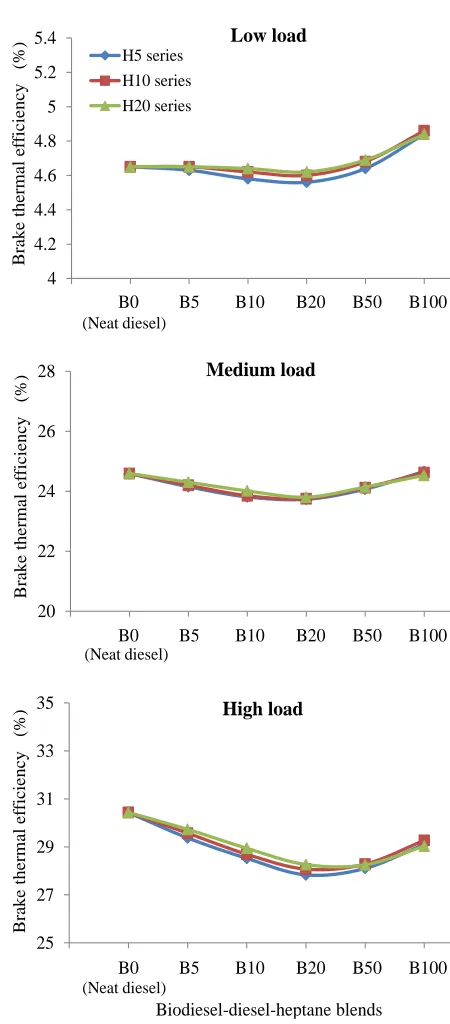
Fig. 3 illustrates the ηth of the engine for different blends at
various loading conditions. Efficiency gradually decreases up to B20 blends, and then increases. At low load condition, neat biodiesel blended with n-heptanes has a slight increase (less than 5%) in efficiency and H5 series has the lowest efficiency
Fig. 3. Brake thermal efficiency of different biodiesel-diesel-heptane blends at various loads
1650 1700 1750 1800 1850 1900
0 1 2 3 4 5 6 7
bsfc
(
g
/kW
h)
Low load
H5 series H10 series
H20 series
310 320 330 340 350 360 370 380
0 1 2 3 4 5 6 7
bsfc
(
g
/kW
h)
Medium load
240 255 270 285 300 315 330
0 1 2 3 4 5 6 7
bsfc
(
g
/kW
h)
Biodiesel-diesel-heptane blends
High load
B0 B5 B10 B20 B50 B100
B0 B5 B10 B20 B50 B100
B0 B5 B10 B20 B50 B100
(Neat diesel) (Neat diesel)
(Neat diesel)
4 4.2 4.4 4.6 4.8 5 5.2 5.4
0 1 2 3 4 5 6
B
ra
ke
ther
mal e
ffic
ienc
y
(
%)
Low load H5 series
H10 series
H20 series
20 22 24 26 28
0 1 2 3 4 5 6
B
ra
ke
ther
mal e
ffic
ienc
y
(
%
) Medium load
25 27 29 31 33 35
0 1 2 3 4 5 6
B
ra
ke
ther
mal e
ffic
ienc
y
(
%
)
Biodiesel-diesel-heptane blends
High load
B0 B5 B10 B20 B50 B100
B0 B5 B10 B20 B50 B100
B0 B5 B10 B20 B50 B100
for the biodiesel-diesel-heptane blends. At medium load condition, there is almost no change in efficiencies among the blends. However, at high load operation, B20 blends suffer a 7-8.5% penalty in efficiency in comparison to neat diesel, whereas neat biodiesel blends have about 3.8-4.6% lower efficiency than diesel. This suggests that high load condition is unfavorable for efficiency with n-heptane blended fuels due to low boiling point (98˚C) of n-heptane for which some fuel vapor may escape the combustion without burning.
4.2. Engine exhaust emissions
This study will examine the emissions of CO, HC, NO, NO2
and NOx of different biodiesel blends at different engine
loading conditions.
4.2.1 CO emissions
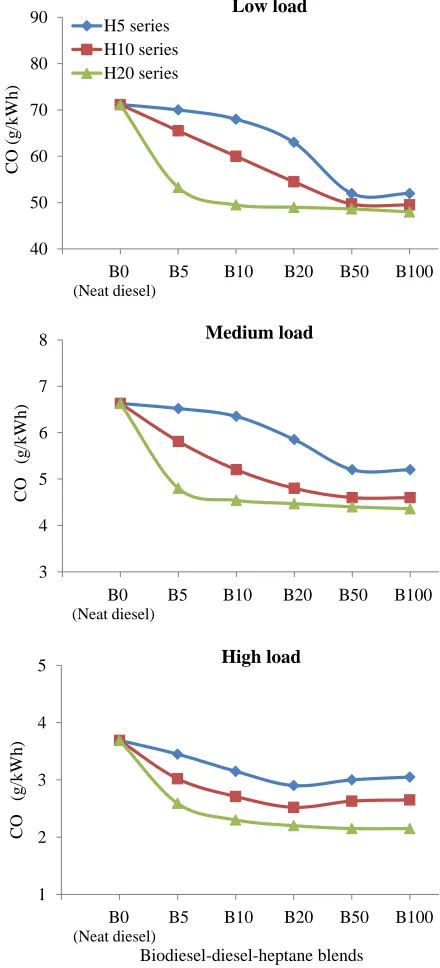
Fig. 4 shows CO emissions of different biodiesel blends. For standard diesel, CO emissions are approximately 70, 6.6 and 3.7 g/kWh at low, medium and high load conditions, respectively. It is seen that high load and medium load conditions produce only 5% and 11% of CO, respectively, compared to low load condition with diesel-only testing. This suggests that low load engine operation should be avoided if possible. It is also noticed that the increase of n-heptane in the blend can further decrease CO; for example, the average CO reductions for H20 series and H5 series are about 36% and22%, respectively, at different load levels. Here, n-heptane plays a key role in improving air fuel mixture due to n-heptane’s superior volatility. H20 series also demonstrate an early CO reduction (as early as B5) than H5 series. The effect of CO reduction for H10 series lies between H20 and H5.
4.2.2 HC emissions
Fig. 5 illustrates HC emissions from different biodiesel blends. HC emission trend does not follow the CO emission trend for different n-heptane series, although both components are the product of incomplete combustion. In this case, H20 series produce the highest HC while B5 blends have the peak values of HC at all load conditions. At low load operation, B100 blend with H5 generates about 33% less HC in comparison with standard diesel; however, B100 blend with H10 has similar level of HC as the standard diesel and B100 blend with H20 produces about 33% more HC than standard diesel. At medium and high load operations, HC emission for diesel is not significant, which is only about 7% and 4%, respectively, compared to that at low load operation. It is seen that heptane plays a detrimental role in HC emissions; the more n-heptane in the blend, the higher HC emission is produced, although the efficiency is a little higher with higher amount of n-heptane (H20 series) than H5 series (Fig. 3). Usually, the higher the efficiency, the lower the HC emission is. Therefore, there is a reason to believe that higher HC emission with H20 series than H5 series is related to the local overleaning of the mixture due to low boiling point of n-heptane. Local overleaning is an important reason for HC emissions, and this is dominating over higher efficiency for higher amount of
n-heptane in the blend. B5 blends with n-n-heptane generate the maximum HC emission, which is believed due to the maximum local overleaning of this series. In B5 series, only 5% neat biodiesel is used and the rest is ULSD and n-heptane. But this effect diminishes with the increase of biodiesel percentage in the blends, because biodiesel is much less volatile than winter diesel. Correspondingly, a caution needs to be practiced in the selection of the amount of n-heptane in the blend.
Fig. 4. CO emissions of different biodiesel-diesel-heptane blends at various loads
40 50 60 70 80 90
0 1 2 3 4 5 6
C
O (
g
/kW
h)
Low load
H5 series H10 series H20 series
3 4 5 6 7 8
0 1 2 3 4 5 6
C
O (
g
/kW
h)
Medium load
1 2 3 4 5
0 1 2 3 4 5 6
C
O (
g
/kW
h)
Biodiesel-diesel-heptane blends
High load
B0 B5 B10 B20 B50 B100
(Neat diesel)
B0 B5 B10 B20 B50 B100
(Neat diesel)
B0 B5 B10 B20 B50 B100
Fig. 5. HC emissions of different biodiesel-diesel-heptane blends at various loads
4.2.3 NO emissions
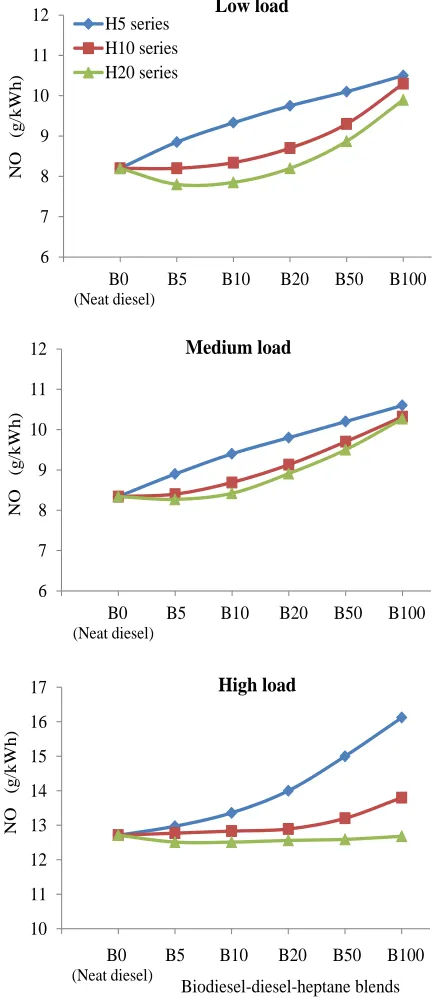
Fig. 6 shows NO emissions of different biodiesel blends. At low and medium load operations, NO emissions are pretty similar; however, at high load operation, the NO emission is about 50% higher than those at low and medium load conditions. When the engine runs at high load, it consumes
more fuel; as a result, higher in-cylinder temperature produces more NO emissions than those at light load operations. Higher amount of biodiesel in the blends will produce higher amount of NO in the exhaust, because biodiesel contains about 11% O2. H20 series generates the minimum NO increase with
higher biodiesel blends, and there is almost no increase in NO with H20 series at high load condition in comparison with
Fig. 6. NO emissions of different biodiesel-diesel-heptane blends at various loads
2 6 10 14 18 22
0 1 2 3 4 5 6
H
C (
g
/kW
h)
Low load H5 series
H10 series H20 series
0 0.2 0.4 0.6 0.8 1 1.2 1.4 1.6
0 1 2 3 4 5 6
HC (g
/kW
h)
Medium load
0 0.2 0.4 0.6 0.8 1 1.2
0 1 2 3 4 5 6
HC (g
/kW
h)
Biodiesel-diesel-heptane blends
High load
B0 B5 B10 B20 B50 B100
(Neat diesel)
B0 B5 B10 B20 B50 B100
(Neat diesel)
B0 B5 B10 B20 B50 B100
(Neat diesel)
6 7 8 9 10 11 12
0 1 2 3 4 5 6
NO
(g
/kW
h)
Low load H5 series
H10 series H20 series
6 7 8 9 10 11 12
0 1 2 3 4 5 6
NO
(g
/kW
h)
Medium load
10 11 12 13 14 15 16 17
0 1 2 3 4 5 6
N
O
(
g
/kW
h)
Biodiesel-diesel-heptane blends High load
B0 B5 B10 B20 B50 B100
(Neat diesel)
B0 B5 B10 B20 B50 B100
(Neat diesel)
B0 B5 B10 B20 B50 B100
standard diesel. Therefore, H20 added biodiesel blends appear to be a great substitute to diesel at high load operation. Lower NO production of H20 series, in comparison to H5 series or standard diesel, is attributed to n-heptane’s higher enthalpy of evaporation (317 kJ/kg) compared to 250 kJ/kg of diesel. When n-heptane blended fuel evaporates, it takes more heat from the surrounding areas and lowers the mixture temperature and the combustion temperature than that of diesel. Lower combustion temperatures favor lower NO production. Lower average exhaust temperatures of about 250˚C of H20 series at high load condition compared to that of about 260˚C for neat diesel supports this claim.
4.2.4 NO2 emissions
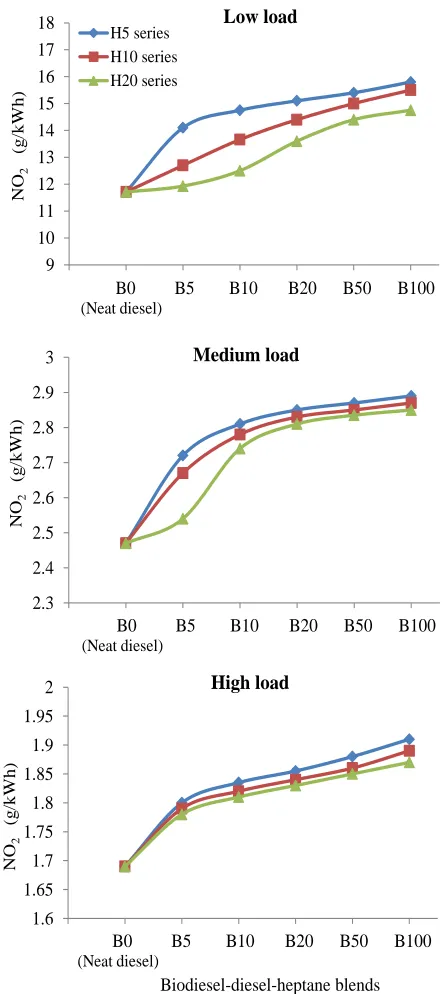
Fig. 7 illustrates NO2 emissions of different biodiesel blends.
It is found that low load/low temperature operation produces much higher NO2 (about 7 times higher) than high load/high
temperature operation. It seems that temperature is not a deciding factor for NO2 emission. At low load operation, there
are many cooler regions in the cylinders and NO2 formed in
the flame is quenched and could not be converted back to NO. Hence, higher amount of NO2 is produced at light load
operations [25]. Higher percentage of biodiesel in the blend produces higher amount of NO2 in the exhaust, which
indicates that inherent oxygen in biodiesel might have taken part in NO2 production. Here also H20 series generates lower
NO2 emissions than other series. The average NO2 increase is
11-13%, 15-17%, and 26-35% at high load, medium load, and low load conditions, respectively, with B100 blends than that of ULSD fuel.
4.2.5 NOx emissions
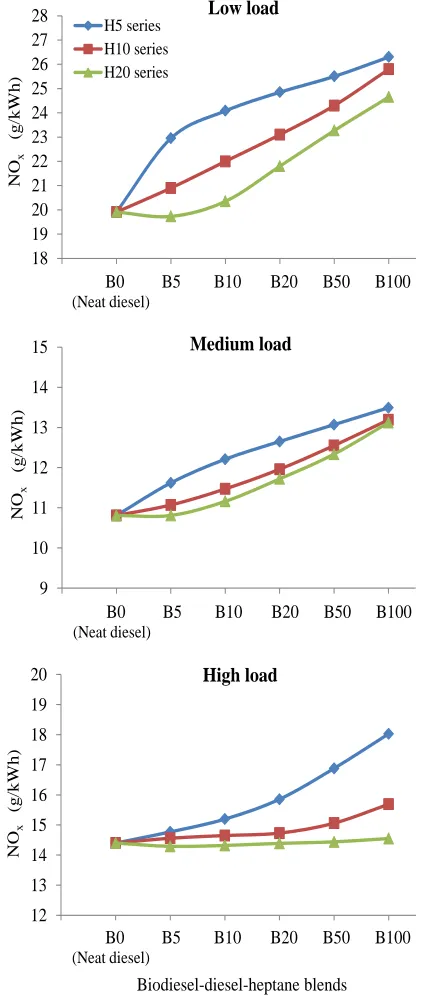
Fig. 8 shows NOx emissions for different fuel blends. The
trend of NOx emission is similar to that of NO emission. At
low load condition, total NOx for diesel is about 20 g/kWh,
which increases to 24.5 g/kWh and 26 g/kWh (i.e., about 23-30% increase) for B100 blended with H20 and H10 series, respectively. At medium load operation, NOx increases about
20% for B100 blended with H20 and H10, whereas B100 blended with H5 produces about 25% increase in NOx. At
high load condition, B100 blended with H10 has about 9% increase in NOx whereas B100 blended with H5 produces 25%
increase in NOx. On the other hand, H20 series again
demonstrates its best characteristics for low NOx emissions.
5. CONCLUSIONS
This work has systematically investigated the effect of n-heptane on cold flow properties of biodiesel blends, and the performance and emissions of a DI diesel engine with low percentage of n-heptane with biodiesel blends. The research results suggest the following conclusions: the blends up to B10 with 5%, 10% and 20% n-heptane have similar CP and PP compared to ULSD. The bsfc increases with the increase of biodiesel in the blends, while H5 series experiences the highest bsfc at different load operations. The ηth of the engine
decreases up to B20 blends at all load conditions; although at low and medium load conditions B100 blends have similar
efficiency as that of diesel, they have lower efficiencies than diesel at high load condition. Although the engine emits lower CO with higher amount of biodiesel and n-heptane in the blends at different load conditions, there is no further reduction after B50 blends. Peak value of HC is noticed with B5 blends, which decreases gradually up to B100 blends,
Fig. 7. NO2 emissions of different biodiesel-diesel-heptane blends at various
loads
9 10 11 12 13 14 15 16 17 18
0 1 2 3 4 5 6
NO
2
(g
/kW
h)
Low load
H5 series H10 series H20 series
2.3 2.4 2.5 2.6 2.7 2.8 2.9 3
0 1 2 3 4 5 6
NO
2
(g
/kW
h)
Medium load
1.6 1.65 1.7 1.75 1.8 1.85 1.9 1.95 2
0 1 2 3 4 5 6
NO
2
(g
/kW
h)
Biodiesel-diesel-heptane blends High load
B0 B5 B10 B20 B50 B100
(Neat diesel)
B0 B5 B10 B20 B50 B100
(Neat diesel)
B0 B5 B10 B20 B50 B100
Fig. 8. NOx emissions of different biodiesel-diesel-heptane blends at various
loads
while H20 series has the maximum HC emissions. NO emission of the engine increases with the increase of biodiesel in the blends while less n-heptane in the blends (5 vol. %) generates higher NO emissions. NO2 emissions increase with
higher amount of biodiesel and lower amount of n-heptane in the blends at all load conditions. NOx emissions follow the
trend of NO emissions, which will increase with the increase in biodiesel and the decrease in n-heptane in the blends;
however there are no changes in NO and NOx emissions with
different biodiesel blends with H20 series at high load operation.
ACKNOWLEDGEMENT
The authors acknowledge Lakehead University and Brazilian Government for their financial support to this project through science without borders (SWB) program. Thanks also to Mr. Majed Alawi, a previous graduate student at Lakehead University and Mr. Joe Ripku, a technologist in the Department of Mechanical Engineering at Lakehead University, for their help in biodiesel production and engine tests.
REFERENCES
[1] Qi DH, Chen H, Geng LM, Bian YZH. Experimental studies on the combustion characteristics and performance of a direct injection engine fueled with biodiesel/diesel blends. Energ Convers Manage 2010;51:2985–92.
[2] Roy MM, Wang W, Bujold J. Biodiesel production and comparison of emissions of a DI diesel engine fueled by biodiesel– diesel and canola oil–diesel blends at high idling operations. Appl Energy 2013;106:198-208.
[3] Roy MM, Alawi M, Wang W. Effects of Canola Biodiesel on a DI Diesel Engine Performance and Emissions. Int J Mech Mechatro Eng 2013; 13(2):46-53.
[4] Ng JH, Ng HK, Gan SY. Characterisation of engine-out responses from a light duty diesel engine fuelled with palm methyl ester (PME). Appl Energy 2012;90:58–67.
[5] Ozsezen AN, Canakcı M. Determination of performance and combustion characteristics of a diesel engine fueled with canola and waste palm oil methyl esters. Energ Conv Manage 2011;52(1):108-16.
[6] Shrivastava N, Varma SN, Pandey M. A Study on reduction of oxides of nitrogen with Jatropha oil based biodiesel. Int J Renew Energy Research 2012;2(3):497-503.
[7] Anand R, Kannan G, Nagarajan S, Velmathi S. Performance, emission and combustion characteristics of a diesel engine fueled with biodiesel produced from waste cooking oil. SAE Technical Paper 2010-01-0478, 2010, doi:10.4271/2010-01-0478.
[8] Debnath BK, Sahoo N, Saha UK. Adjusting the operating characteristics to improve the performance of an emulsified palm oil methyl ester run diesel engine. Energ Conv Manage 2013;69:191-98.
[9] Dunn R, Shockley M, Bagby M. Improving the low-temperature properties of alternative diesel fuels: Vegetable oil-derived methyl esters. J American Oil Chemists’ Society, 1996;73(12): 1719–28. [10] Soriano NU, Migo VP, Matsumura M. Ozonized vegetable oil as
pour point depressant for neat biodiesel. Fuel 2006;85(1), 25–31. [11] Bhale PV, Deshpande NV, Thombre SB. Improving the low
temperature flow properties of biodiesel fuel. Renewable Energy 2009;34(3):794-800.
[12] Yasin MHM, Yusaf T, Mamat R, Yusop AF. Characterization of a diesel engine operating with a small proportion of methanol as a fuel additive in biodiesel blend. Appl Energy 2014;114:865-73. [13] Zhu L, Cheung CS, Zhang WG, Huang Z. Emissions
characteristics of a diesel engine operating on biodiesel and biodiesel blended with ethanol and methanol. Sci Total Environ 2010;408(4):914–21.
[14] Sivalakshmi S, Balusamy T. Effect of biodiesel and its blends with diethyl ether on the combustion, performance and emissions from a diesel engine. Fuel 2013;106:106–10.
[15] Aydin H, Bayindir H, Ilkilic C. Emissions from an engine fueled with biodiesel-kerosene blends. Energy Sources 2011; Part A, 33:130–37.
[16] Palash SM, Kalam MA, Masjuki HH, Arbab MI, Masum BM, Sanid A. Impacts of NOx reducing antioxidant additive on performance and emissions of a multi-cylinder diesel engine fueled
18 19 20 21 22 23 24 25 26 27 28
0 1 2 3 4 5 6
NO
x
(g
/kW
h)
Low load
H5 series H10 series H20 series
9 10 11 12 13 14 15
0 1 2 3 4 5 6
NO
x
(g
/kW
h)
Medium load
12 13 14 15 16 17 18 19 20
0 1 2 3 4 5 6
NO
x
(g
/kW
h)
Biodiesel-diesel-heptane blends High load
B0 B5 B10 B20 B50 B100
(Neat diesel)
B0 B5 B10 B20 B50 B100
(Neat diesel)
B0 B5 B10 B20 B50 B100
with Jatropha biodiesel blends. Energ Conv Manage 2014;77:577-85.
[17] Roy MM, Wang W, Alawi M. Performance and emissions of a diesel engine fueled by biodiesel–diesel, biodiesel–diesel-additive and kerosene–biodiesel blends. Energ Conv Manage 2014;84:164-73.
[18] A. D’Anna, M. Alfe`, B. Apicella, A. Tregrossi, A. Ciajolo. Effect of fuel/air ratio and aromaticity on sooting behavior of premixed heptane flames. Energy Fuels 2007;21:2655–2662.
[19] Noel L. Maroteaux F. Ahmed A. Numerical Study of HCCI Combustion in Diesel Engines Using Reduced Chemical Kinetics of N-Heptane With Multidimensional CFD Code. SAE Technical Paper 2004-01-1909, 2004.
[20] Hasegawa R. Sakata I. Koyama T. Yanagihara H. Numerical Analysis of Ignition Control in HCCI Engine. SAE Technical Paper 2003-01-1817, 2003.
[21] J. Luo, M. Yao, H. Liu, B. Yang. Experimental and numerical study on suitable diesel fuel surrogates in low temperature combustion conditions. Fuel 2012;97:621–629.
[22] Mancaruso E, Vaglieco BM. An experimental comparison of n-Heptane, RME and diesel fuel on combustion characteristics in a compression ignition engine. Fuel Process Technol 2013;107:44– 49.
[23] Roy MM, Tsunemoto H, Ishitani H. Effects of injection timing and fuel properties on exhaust odor in DI diesel engines. SAE Technical Paper 1999-01-1531, 1999.
[24] Make your own biodiesel.
http://journeytoforever.org/biodiesel_make.html.