Original Research Article.
Ophthalmology Resources and Services Provided in Health Ministry
Hospitals at Tabuk city, Saudi Arabia
Ashwaq Abdullah Alghamdi
1*, Afaf Atallah Albalawi
1, Weam Saeed Alomar
1,
Najlaa Samran Almutairi
1, Yara Mohsen Albalawi
1, Hani ALBalawi
21Medical Intern, Ministry of Health, Kingdom of Saudi Arabia.
2Assistant Professor of Ophthalmology, Faculty of Medicine, University of Tabuk, Tabuk, Saudi Arabia.
ABSTRACT
Introduction: Health care improvement has been an ongoing
high priority process in Saudi Arabia. The government current expenditures on health estimated to be around 4.7% of its GDP. These efforts resulted in remarkable development in the services provided by the government. One of the initiative taken to aid in the development was endorsing ‘’vision 2020’’ a global eye health action aims to reduce avoidable visual impairment. In Tabuk city review of the current situation of ophthalmology services and disease burden is unknown. These services need to be better documented and disseminated so that we make sure that the country is on track to reach its target.
Methods: This was a situation analysis of the current personnel and equipment available provided by ophthalmology
department. Claimed data will examine personnel and equipment available at the health ministry hospitals in Tabuk city.
Results: The number of ophthalmology consultants is five (Three are general ophthalmologists, one oculoplastic and a vitreoretinal), nine ophthalmology specialist, six ophthalmology residents, ten optometrist, four technicians, five nurses and there are no orthoptists and ophthalmic assistants. In our
study, we found that the ophthalmologist to population ratio is 1/63,643.
Conclusion: In conclusion, the ophthalmology services much improved in Kingdom of Saudi Arabia in general and in Tabuk city specifically. However, this improvement is still needed to increase with the availability of expert's ophthalmologist with subspecialties like retina, glaucoma, and others.
Keywords: Ophthalmologist, Eye Care, Ophthalmology
Services.
*Correspondence to:
Ashwaq Abdullah Alghamdi, Medical Intern,
Ministry of Health, Kingdom of Saudi Arabia. Article History:
Received: 19-12-2017, Revised: 04-01-2018, Accepted: 22-01-2018
Access this article online Website:
www.ijmrp.com
Quick Response code
DOI:
10.21276/ijmrp.2018.4.1.071
INTRODUCTION
Health care improvement been an ongoing high priority process in Saudi Arabia.1,2 The government current expenditures on health
estimated to be around 4.7% of its GDP.3 These efforts resulted in
remarkable development in the services provided by the government. Realizing the impending challenges and the urgency in addressing those challenges are given utmost priority.1`One of
the initiative taken to aid in the development was endorsing ‘’vision 2020’’ a global eye health action aims to reduce avoidable visual impairment.4 To achieve this vision a situational analysis,
need to be conducted to proper implement the policies and plan suggested by the draft of ‘’vision 2020’’. Globally there is of all ages 284 million persons with a visual impairment5, the blindness
and visual disabilities magnitude in Saudi Arabia is unknown.6 If
we used the estimated data from other eastern Mediterranean countries we will find 27,000 blind individuals and 197,000 individuals with low vision disability in the Kingdom.6 The burden
of diseases is increasing duo to congenital anomalies in children
and metabolic syndromes in the adult population in the Kingdom, hence there will be high visual disabilities related to the consequences of these condition in near future.6 In Tabuk city with
population estimated at 2016 by the general authority of statics to be: 890,922 people (including 180,223 non-Saudis).7 Review of
the current situation of ophthalmology services and disease burden is unknown. These services need to be better documented and disseminated so that we make sure that the country is on track to reach its target, working to its full potential, learning from them and use them while deciding on the most appropriate way to implement the policies and plans endorsed.8,9
OBJECTIVES/HYPOTHESIS
The data on resources available is deficient. Providing an accurate and up to date list of ophthalmology workforce will help utilizing the available resources and determine which steps should be avoided, kept, and implemented based on the result.
MATERIALS AND METHODS
This was a situation analysis of the current personnel and equipment available provided by ophthalmology department. Claimed data will examine personnel and equipment available at the health ministry hospitals in Tabuk city.
Resources were tabulated using the databases of the ministry of health hospitals in Tabuk. Data collected and it includes:
▪ The Professional’s Manpower and Technical Services in Ophthalmology Department.
▪ Medical Products and The Technical Services
▪ The number of OR rooms
▪ The OR Supplements (equipment)
▪ And the essential ophthalmic drugs
The provided data from our study will be compared to Guidelines for ophthalmology recommendations provided by world health organization.
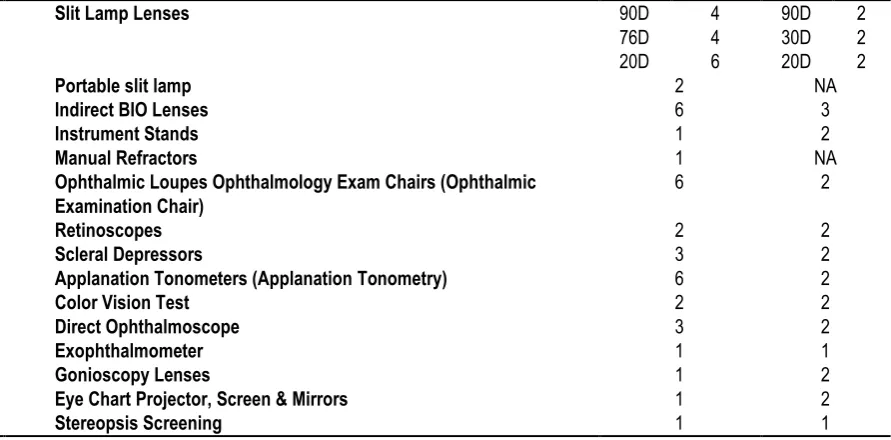
Table 1: Show the status of ophthalmic technical services.
Resources KFSH KKH
1 Academic and training activities. (Regularly held any workshops). 2 lectures per
week
1 lecture per month
2 Plan to open residency program After 2 years yes
3 The Professional’s Manpower and Technical Services in ophthalmology Department According to Hospital Bed Number
Shared with surgical ward-12
beds
Shared with surgical ward
Mostly 80% day surgery 4 THE TECHNICAL SERVICES :
1. Ophthalmology Service Reception Area 1 NA
2. Ophthalmology Service Patient Area/ Optometry Service Patient Area NA NA
- Pre-Testing/Intake Room NA NA
- Visual Fields Room 1 NA
- Photography Room 1 NA
- Ultrasound Room 1 1
- Tomography Room 1 NA
- Imaging Room 1 NA
- Ophthalmology Laser Rooms 1 1
- Electrodiagnostics (ED) Room NA NA
- Dilation Waiting room NA NA
- Procedure Room 1 NA
- Low Vision / Polytrauma Training Room NA NA
3. NO. examination rooms 4 3
4. Ophthalmology Service Staff and Administrative Area 1 NA
5. Optometry Service Reception Area 1 NA
6. Optical Fitting Area NA 1
4. The Ophthalmology Exam/Treatment Room equipped by
Slit Lamp / Biomicroscopic Slit Lamps 6 2
80%
20%
Fig 1: Number of Ophthalmology Consultants
Slit Lamp Lenses 90D 4 90D 2
76D 4 30D 2
20D 6 20D 2
Portable slit lamp 2 NA
Indirect BIO Lenses 6 3
Instrument Stands 1 2
Manual Refractors 1 NA
Ophthalmic Loupes Ophthalmology Exam Chairs (Ophthalmic Examination Chair)
6 2
Retinoscopes 2 2
Scleral Depressors 3 2
Applanation Tonometers (Applanation Tonometry) 6 2
Color Vision Test 2 2
Direct Ophthalmoscope 3 2
Exophthalmometer 1 1
Gonioscopy Lenses 1 2
Eye Chart Projector, Screen & Mirrors 1 2
Stereopsis Screening 1 1
RESULTS
The current study was conducted at the two leading hospitals managed by the ministry of health in the Tabuk city, King Khalid hospital and king Fahad specialist hospital. The number of ophthalmology consultants is five (Three are general ophthalmologists, one oculoplastic and a vitreoretinal) (Figure 1), nine ophthalmology specialist, six ophthalmology residents, ten optometrist, four technicians, five nurses and there are no orthoptists and ophthalmic assistants.
Starting with academic activities, KFSH is doing two lectures weekly, while they are carried on a monthly base in KKH. Regarding examination rooms, KFSH has four well-equipped room, while KKH 3 rooms.
Both hospitals are sharing admission beds with the surgical department. The tables show the status of ophthalmic technical services, or supplements and essential ophthalmic drugs respectively.
Table 2: Show the status of OR supplements.
Operating Room KFSH KKH
1 The number of OR rooms:- 1 ( specific or shared with other departments )
Specific-1room
Shared with Main
O.R 2 The OR Supplements:
1. Mini Auto Claves 1 1
2. Instrument trolleys 1 1
3. Cataract set 4 2
4. Operating lights, mobile one 1 1
5. Operating Microscope (with teaching attachment) 2 1
6. Operating tables 1 1
7. Operating Chairs NA 1
• Surgical instruments as per the requirements of the sub
specialties
1- Phaco Machine 2 0
2- Vitrectomy Machine 0 0
3- Cryo Machine 1 0
4- Bipolar diathermy 1 1
5- Drill with saw and wire 1 0
6- Endoscope 1 0
7- Trabeculectomy set 2 0
8- Keratoplasty set NA 0
9- R D Surgery Set NA 0
10- Chalazion set 6 3
11- DCR set 4 1
12- Squint set 4 0
13- Orbital/Oculoplasty 3 0
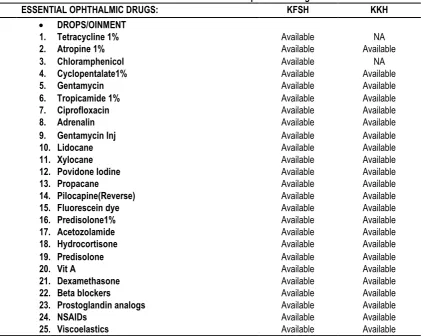
Table 3: Show the status of essential ophthalmic drugs.
ESSENTIAL OPHTHALMIC DRUGS: KFSH KKH
• DROPS/OINMENT
1. Tetracycline 1% Available NA
2. Atropine 1% Available Available
3. Chloramphenicol Available NA
4. Cyclopentalate1% Available Available
5. Gentamycin Available Available
6. Tropicamide 1% Available Available
7. Ciprofloxacin Available Available
8. Adrenalin Available Available
9. Gentamycin Inj Available Available
10. Lidocane Available Available
11. Xylocane Available Available
12. Povidone Iodine Available Available
13. Propacane Available Available
14. Pilocapine(Reverse) Available Available
15. Fluorescein dye Available Available
16. Predisolone1% Available Available
17. Acetozolamide Available Available
18. Hydrocortisone Available Available
19. Predisolone Available Available
20. Vit A Available Available
21. Dexamethasone Available Available
22. Beta blockers Available Available
23. Prostoglandin analogs Available Available
24. NSAIDs Available Available
25. Viscoelastics Available Available
DISCUSSION
Highly skilled health workers in sufficient numbers at the right place and time are critical for the development of health system.10
Healthcare improvement has been an ongoing high priority process in Saudi Arabia.1,2 The government current expenditures
on health is estimated to be around 4.7% of its GDP.3 These
efforts resulted in remarkable development in the services provided by the government. However, Despite internationally and wide national recognition of its importance, there is a lack of data on the state of human resources in eye care in Saudi Arabia in general and Tabuk region specifically.11 King Khaled Hospital
(KKH) and King Fahd Specialist Hospital (KFSH) are the main tertiary referral hospital for the region. The definition of ophthalmologist is: a physician who is holding a board certificate in ophthalmology. In city like Tabuk with a relatively large population (estimated at 2016 by the general authority of statics to be: 890,922 people) and expected to reach 1 million very soon we can see that the total number of ophthalmology consultant is only five, two of them are with subspecialty (oculoplasty, and vitreoretinal) others are general ophthalmologist. This number increased by only one consultant since Motowa et al., research that was conducted 2012 in which found that the total number of an ophthalmologist in Tabuk were four.6 The ophthalmologist to
population ratio recommended by the WHO has been achieved in Saudi Arabia4 in general, but there is a wide variation in the
administrative zones6, Motowa, and his colleague found that the
ophthalmologist to population ratio in Saudi Arabia 1/45,500 where in Tabuk is 1/158,900.6 We found that the ophthalmologist
to population ratio is 1/63,643 so in Tabuk, the number of ophthalmologists is improving compared to past.(Table 4)6
Globally there is still a high need for a skilled ophthalmologist for both high and low-income countries5 and there is currently a
significant shortfall of ophthalmologists in developing countries.12
Research conducted by ICO worldwide (Serge Resnikoff et al.) stated that: The average number of ophthalmologists per million population differ according to economic development as defined by the World Bank.12 The World Health Organization Eastern
Mediterranean Region reported that at Nigeria the number of an ophthalmologist to population ratio is 1:300,000.13 Eye medical
centers at Saudi Arabia in the Kingdom can train 30 ophthalmologists a year.6 This is still a small number to fill the gap
for high demand ophthalmologist for coming years. At the moment the health system largely depends on ophthalmologist from outside countries.6 In Tabuk city, there is a plan to start
In KFSH, the operating room is one and specifically designed for Ophthalmology services, where in KKH a single room is shared with main O.R. Close look inside operating room in both hospitals we will find instruments like Mini Auto Claves, Cataract set, Instrument trolleys, Operating lights mobile one, Operating Microscope and Operating tables.
Surgical instruments availability as per the requirements of the subspecialties in KFSH as following, in oculoplasty we will find Chalazion set, DCR set and Drill with saw and wire, but in vitreoretinal subspecialty only available medical retina services, with a big deficit in surgical retina services, for example, no vitrectomy machine. Although the Trabeculectomy set are ready, No surgical glaucoma services and no glaucoma expert in all
Tabuk region. Main eye operations in tabuk are emergencies like rupture globe, or general elective surgeries like cataract, however, because there is oculoplastic consultant more advances oculoplastic surgeries done. Furthermore, neuro-ophthalmology, pediatric ophthalmology, ophthalmic pathology, cornea and anterior segment are not available in Tabuk, and all patients in need are referred to high eye centers at Riyadh, Jeddah and other Saudi cities.
Ophthalmology medications are available and easy access to ophthalmologist prescription. Finally, the King Salman Armed Forces Hospital it was not included in our study because of limited eligibility and the main pediatric and maternity hospital in Tabuk do not included any ophthalmology services.
Table 4: Show the ophthalmologist to population ratio in Tabuk. Administrative
area
Population 2012
Ophthalmologists Ratio Population
2016
Ophthalmologists Ratio
Tabuk 635,675 4 158,900 890,922 14 63,643
CONCLUSION
In conclusion, the ophthalmology services much improved in Kingdom of Saudi Arabia in general and in Tabuk city specifically. However, this improvement is still needed to increase with the availability of expert's ophthalmologist with subspecialties like retina, glaucoma, and others.
REFERENCES
1. Albejaidi, F. M. (2010). Healthcare system in Saudi Arabia: An analysis of structure, total quality management and future challenges. Journal of Alternative Perspectives in the Social Sciences, 2(2), 794-818.
2. Almalki, Mohammed, Gerard FitzGerald, and Michele Clark. “Health care system in Saudi Arabia: An overview.” Eastern Mediterranean health journal 17.10 (2011): 784.
3. World Health Organization [website] Countries: Saudi Arabia. accessed 22 NOV 2017 (http://www.who.int/countries/sau/en/). 4. Zero draft of Action plan for the prevention of avoidable blindness and visual impairment for 2014-2019.
[Last accessed on 2017 NOV 23]. Available from:
http://www.who.int/blindness/Zerodraftactionplan2014-19.pdf . 5. Pascolini, D., & Mariotti, S. P. (2012). Global estimates of visual impairment: 2010. Br J Ophthalmol, 96(5), 614-618.
doi:10.1136/bjophthalmol-2011-300539
6. Al Motowa S, Khandekar R, Al-Towerki A. Resources for eye care at secondary and tertiary level government institutions in Saudi Arabia. Middle East Afr J Ophthalmol 2014;21:142-6 7. General Authority of Statistics, Kingdom of Saudi Arabia, Statistical Yearbook of 2017.viewed 20 NOV 2017 (https://www.moh.gov.sa/en/Ministry/Statistics/book/Documents/St atistical-Yearbook-1437H.pdf ).
8. Geneva: Switzerland: Published by WHO; 2007. World Health Organization. Human Resource development in VISION 2020 Global Initiative for the Elimination of Avoidable Blindness: Action Plan 2006-2011; pp. 42–5.(6)
9. Cairo: World Health Organization, Eastern Mediterranean Regional Office; 2003. Report on the conference on ‘VISION 2020’ Planning for the Eastern Mediterranean Region, December 2003, Cairo, Egypt .
10. WHO. Increasing Access to Health Workers in Remote and Rural Areas through Improved Retention: Global Policy Recommendations. Geneva, Switzerland: World Health Organization, 2010. http://whqlibdoc.who.int/publications/2010/ 9789241564014_eng.pdf (accessed 2 Jun 2011).
11. Human Resource Development Working Group. Global human resource development Assessment for Comprehensive Eye Care. 2006. (Accessed 2 Jun 2011)
http://vision2020.org/mediaFiles/downloads/27686346/Global_Hu man_Resource_Development_Assessment_For_Comprehensive_ Eye_Care_pdf.pdf
12. Resnikoff S, Felch W et al. The number of ophthalmologists in practice and training worldwide: A growing gap despite more than 200,000 practitioners. Br J Ophthalmol 2012;96:783-7.
[
Source of Support: Nil. Conflict of Interest: None Declared.
Copyright: © the author(s) and publisher. IJMRP is an official publication of Ibn Sina Academy of Medieval Medicine & Sciences, registered in 2001 under Indian Trusts Act, 1882. This is an open access article distributed under the terms of the Creative Commons Attribution Non-commercial License, which permits unrestricted non-commercial use, distribution, and reproduction in any medium, provided the original work is properly cited.