R E S E A R C H
Open Access
A process evaluation of how the routine
vaccination programme is implemented at
GP practices in England
Tim Crocker-Buque
1*, Michael Edelstein
1,2and Sandra Mounier-Jack
1Abstract
Background:In recent years, the incidence of several pathogens of public health importance (measles, mumps,
pertussis and rubella) has increased in Europe, leading to outbreaks. This has included England, where GP practices implement the vaccination programme based on government guidance. However, there has been no study of how implementation takes place, which makes it difficult to identify organisational variation and thus limits the ability to recommend interventions to improve coverage. The aim of this study is to undertake a comparative process evaluation of the implementation of the routine vaccination programme at GP practices in England.
Methods:We recruited a sample of geographically and demographically diverse GP practices through a national
research network and collected quantitative and qualitative data as part of a Time-Driven Activity-Based Costing analysis between May 2017 and February 2018. We conducted semi-structured interviews with practice staff involved in vaccination, who then completed an activity log for 2 weeks. Interviews were transcribed and coded using a framework method.
Results:Nine practices completed data collection from diverse geographic and socio-economic contexts, and 52
clinical and non-clinical staff participated in 26 interviews. Information relating to 372 vaccination appointments (233 childhood and 139 adult appointments) was captured using activity logs. We have defined a 14-stage care delivery value chain and detailed process map for vaccination. Areas of greatest variation include the method of reminder and recall activities, structure of vaccination appointments and task allocation between staff groups. For
childhood vaccination, mean appointment length was 15.9 min (range 9.0–22.0 min) and 10.9 min for adults (range
6.8–14.1 min). Non-clinical administrative activities comprised 59.7% total activity (range 48.4–67.0%). Appointment
length and total time were not related to coverage, whereas capacity in terms of appointments per eligible patient may improve coverage. Administrative tasks had lower fidelity of implementation.
Conclusions:There is variation in how GP practices in England implement the delivery of the routine vaccination
programme. Further work is required to evaluate capacity factors in a wider range of practices, alongside other contextual factors, including the working culture within practices.
Keywords:Vaccination, Immunisation, Implementation, Health service, Primary care
* Correspondence:[email protected]
1Faculty of Public Health and Policy, London School of Hygiene and Tropical
Medicine, 15-17 Tavistock Place, London WC1H 9SH, UK Full list of author information is available at the end of the article
© The Author(s). 2018Open AccessThis article is distributed under the terms of the Creative Commons Attribution 4.0
International License (http://creativecommons.org/licenses/by/4.0/), which permits unrestricted use, distribution, and
Background
The introduction of vaccinations into public health pro-grammes in European countries over the last century has resulted in a dramatic reduction in vaccine prevent-able diseases (VPDs), including the elimination of small-pox and polio from the region. However, in recent years, the incidence of several pathogens of public health im-portance such as measles, mumps, pertussis and rubella has increased in Europe [1]. Coverage of the combined measles, mumps and rubella vaccine (MMR) is below herd immunity thresholds in many European countries, and in 2018, several countries such as Italy, Greece, France, Romania and the UK were affected by outbreaks [2,3]. The causes of disparities in coverage are complex, multifactorial and country-specific but include suboptimal delivery mechanisms, alongside inequities in access for some populations, particularly those living in low-income urban environments [1,4,5].
In England, primary care clinics (GP practices) are re-sponsible for arranging most routine childhood and adult vaccinations for their local population. The regular addition of antigens into routine vaccine programmes has meant organising service delivery has become in-creasingly complex [6]. In 1990, the programme con-sisted of eight vaccinations for children and adolescents against diphtheria, pertussis, tetanus, polio, measles, mumps, rubella and tuberculosis [7]. The programme for 2016–2017 (study period) and changes for 2018 are presented in Table 1 and now contains 16 childhood, 2 adolescent and 3 adult vaccinations, as well as 2 in pregnancy and a wide range for people with medical co-morbidities [8].
Delivering these vaccinations has required an increase in the number of contacts needed with the healthcare system for a wider range of patients, alongside associated administrative activities, including reminding and recal-ling patients and collecting and submitting data. These activities add significantly to the cost base of a practice and have taken place contemporaneously with increasing demand for GP services from an ageing population with more complex health needs, without commensurate in-creases in funding or staffing [9]. In addition, the public health system in England underwent a dramatic reorga-nisation in 2013 following the implementation of the Health and Social Care Act 2012. This moved local public health functions from NHS providers into local government, created a new executive agency for public health within the Department of Health called Public Health England and moved commissioning of public health services to a new agency called NHS England, with the aim of putting‘clinicians at the centre of commission-ing, free[ing] up providers to innovate, empower[ing] pa-tients and giv[ing] a new focus to public health’ [10]. However, this had unintended consequences for the
vaccination programme, resulting in a ‘complex mesh’ of ‘fractured’ commissioning, policy and service provision organisations and reduced oversight and support [11].
Vaccination is a highly complex public health programme with multiple interdependent activities which currently ex-hibits divergent outcomes [12]. Routine coverage statistics derived from GP practice records show that while coverage for childhood vaccinations remains relatively high, there have been multi-year decreases in coverage across many vaccines (Fig. 1) [13]. While this could be a result of expected fluctuations, coverage had previ-ously been on an upward trend for most vaccines over the preceding decade. Further year-on-year decreases may result in coverage for some vaccines reducing below international targets (> 95% coverage) and popu-lation immunity thresholds to prevent outbreaks (> 90% coverage). For example, MMR at 24 months increased every year between 2007-2008 and 2012-2013 and, how-ever, has now reduced from a high of 92.7% (2013–2014) to 91.6%. The decreases shown for the DTaP/IPV booster and MMR at 5 years may mean the > 90% target will not now be reached. This is particularly concerning for the measles-containing vaccines in the context of current large outbreaks in several European countries and five UK locations [2,3].
National averages also hide significant geographic in-equities. For example, coverage is significantly lower in London than elsewhere in England (e.g. in 2016–2017 DTaP-IPV-Hib 12 months: England 93.4%, London 88.8%; MMR2 5 years: England 87.6%, London 79.5%). There is also lower coverage in some ethnic groups and in areas of higher deprivation [14, 15]. The causes for this are unclear at present, and this study aims to provide more information about what is happening at GP practice level.
a comparative process evaluation of the implementation of the routine vaccination programme at GP practices in England.
Methods
We collected quantitative and qualitative process data in line with the Medical Research Council’s process
evaluation guidance as part of Time-Driven Activity-Based Costing (TDABC) analysis [12]. TDABC is a method for allocating costs to complex processes within organisations to identify cost drivers and opportunities for lowering costs while improving quality [19–21], which has been extensively applied to complex health service delivery in primary and secondary care [21]. Steps 1–4
Table 1The 2016–2017 routine vaccine programme in England, adapted from Public Health England (2018) [8]
Age Disease(s) Vaccine (trade name) Notes, including schedule changes
implemented during the study period
8 weeks Diphtheria, tetanus, pertussis, polio, Haemophilus influenza type b (Hib)
DTaP/IPV/Hib (Pediacel or Infanrix IPV Hib)
Changed to Infanrix Hexa, with hepatitis B (Hep B) included in 2018
Pneumococcal (13 serotypes) Pneumococcal Conjugate (PCV) (Prevenar 13)
Meningococcal group B (MenB) MenB (Bexsero)
Rotavirus Rotavirus (Rotarix)
12 weeks Diphtheria, tetanus, pertussis, polio and Hib
DTaP/IPV/Hib (Pediacel or Infanrix IPV Hib)
Changed to Infanrix Hexa, with hepatitis B (Hep B) included in 2018
Rotavirus Rotavirus (Rotarix)
16 weeks Diphtheria, tetanus, pertussis, polio and Hib
DTaP/IPV/Hib (Pediacel or Infanrix IPV Hib)
Changed to Infanrix Hexa, with hepatitis B (Hep B) included in 2018
MenB MenB (Bexsero)
Pneumococcal (13 serotypes) PCV (Prevenar 13)
1 year Hib and MenC Hib/MenC booster (Menitorix)
Pneumococcal 13 PCV Booster (Prevenar 13)
Measles, mumps and rubella (MMR) MMR (VaxPRO or Priorix)
MenB MenB booster (Bexsero)
2–6 years Influenza (seasonal) Live attenuated influenza vaccine (LAIV) (Fluenz Tetra)
Seasonal vaccine—excluded from this study
From 3 years 4 months Diphtheria, tetanus, pertussis and polio
DTaP/IPV (Infanrix IPV or Repevax)
MMR MMR (VaxPRO or Priorix)
Females 12–13 years Human papillomavirus (HPV) HPV (two doses 6 to 24 months separated) (Gardasil)
Usually given in school—excluded from this study unless given in the GP practice
14 years Tetanus, diphtheria and polio Td/IPV (Revaxis) Usually given in school—excluded from this study unless given in the GP practice
Meningococcal groups A, C, W and Y
Men ACWY (Nimenix or Menveo) Usually given in school—excluded from this study unless given in the GP practice
65 years Pneumococcal (23 serotypes) Pneumococcal polysaccharide (PPV) (Pneumovax II)
> 65 years Influenza (seasonal) Inactivated influenza vaccine (strain dependent)
Seasonal vaccine—excluded from this study
70 years Shingles Shingles (Zostavax)
Condition Disease(s) Vaccine (trade name) Notes
Pregnancy Influenza (seasonal) Inactivated influenza vaccine
(strain dependent)
Seasonal vaccine—excluded from this study
Pertussis DTaP/IPV (Boostrix-IPV) From 16 weeks gestation
Various underlying medical conditions
Meningococcal Pneumococcal Influenza Hepatitis A and B HiB
Various Patients with a wide range of medical
of the 7-step TDABC analysis generate process evalu-ation data [22]. Steps 5–7 involve calculation and allo-cation of costs and are excluded from this analysis. Qualitative components of this study have been re-ported in line with COREQ guidelines [23].
– Step 1: Define the condition and population
The condition under analysis is a patient registered at a GP practice who is eligible for a routine vaccin-ation. The organisational boundary of this analysis is those activities that are undertaken within the GP practice by employees. Patients attending for all rou-tine childhood and adult vaccinations were included (Table 1), except seasonal influenza, as this is funded through a different mechanism and activity is uneven throughout the year. Non-routine vaccines (e.g. travel vaccinations) and vaccines not given in GP practices (e.g. HPV vaccine given at school) were also excluded.
– Steps 2 and 3: Define the delivery value chain and develop a process map
The care delivery value chain (CDVC) is a visual representation of the main activities involved in pro-viding routine vaccinations at GP practices [21, 22]. To define the CDVC, we conducted semi-structured interviews using primarily open questions with a se-lection of staff from each practice (individually or in groups depending on availability) using a pre-defined
topic guide (Appendix). One author (TCB) conducted all the interviews during a single day at each practice, which were recorded, transcribed verbatim and uploaded into NVIVO v11 for analysis. Contemporan-eous field notes were made during site visits. Coding was completed by one author (TCB) using a framework method. A deductive code tree was constructed from core process evaluation elements (inputs, processes, activities, outputs, outcomes and impact) as well as temporal associations within the implementation process (pre-appointment, (pre-appointment, post-appointment) and age-group codes (children and adults). Inductive codes were used to identify important issues arising from the data (e.g. funding, outbreaks, appointment length). During the first pass, we coded all data using deductive codes and generated the inductive codes. We then undertook a second pass to universally apply the inductive codes and check completeness and overall accuracy. The framework and a selection of transcripts were reviewed by a second author (SMJ) [24].
– Step 4: Allocate time estimates for each process step
We provided all staff involved in vaccination at each practice an activity log to contemporaneously record all clinical and non-clinical vaccination activ-ity over a 2-week period. We modified logs used in a study conducted in New Zealand [25] and vali-dated them with practice managers (PMs), practice
nurses (PNs) and GPs at two non-participating prac-tices. The first practice recruited was used as a pilot before data collection tools were finalised following minor changes to the interview guide and to the data collection tools, primary for clarity and usabil-ity. Following the interviews (step 2), a list of every member of staff involved in vaccination was devel-oped for each practice who were then trained and provided with an activity log to keep for 2 weeks. Data were extracted and placed into a Microsoft Excel file for analysis.
Sampling
We recruited GP practices to participate through the National Institute for Health Research Clinical Research Network (CRN) [26]. This comprises an extensive network of primary and secondary care organisations in all regions of England, including more than 2000 GP practices, who apply to join a scheme of payment for participating in research projects funded by the
Department of Health. We aimed to recruit a
non-representative convenience sample of 10 practices (due to our available capacity) from a range of geo-graphic and socio-economic contexts. Following circu-lation of the study details, 14 practices retuned expressions of interest to participate over a 9-month period before recruitment was ended. We excluded 4 practices as they were geographically similar to already included practices, and 1 did not complete data collection. A £350 shopping voucher (£500 in London) was provided to participating practices as compensation for staff time. Agreement to participate was made with the practice manager, who we then asked to identify relevant members of staff to partici-pate in interviews to explore the organisation of vaccin-ation within the practice. Due to the significant variation in size, staff profile and administrative organ-isation between practices, we specified only that the practice manager and a practice nurse must be in-cluded, and the manager was then free to recruit other relevant staff to participate based on the research aims.
Consent and ethical approval
We gained written, informed consent from each par-ticipating staff member prior to commencing data collection. No patients were involved. The study re-ceived ethical approval from the LSHTM Ethics Committee and the NHS Health Research Authority (project ID 212278).
Results
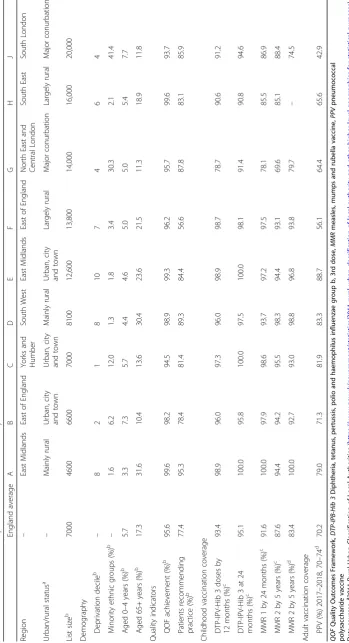
Nine practices completed data collection activities be-tween May 2017 and February 2018. Their characteris-tics are presented in Table 2, which demonstrate wide
geographic and demographic diversity. Two quality met-rics are routinely collected and reported at GP practice level: Quality Outcomes Framework (QOF), a pay for performance scheme in which vaccination is not in-cluded (except influenza coverage in people with medical co-morbidities), and the proportion of patients recom-mending the practice to friends and family. All practices aside from C and J score higher QOF points than aver-age, and every practice scores higher on the friends and family test, except F, which scores very low (56.6%). For childhood vaccination coverage, the smaller practices have higher than average coverage for most vaccinations (A, B, C, D, E and F) whereas the three largest practices (G, H and J), including the two in London, have lower coverage, with practice G having the lowest coverage overall. Adult vaccinations are similar with the smaller practices scoring above average and the four larger prac-tices (F, G, H and J) below with particularly low coverage in practice J.
Care delivery value chain and process map
In total, 52 people participated in 26 interviews at the 9 practices. Interviews ranged from 10 to 75 min. The number and type of staff who participated at each prac-tice is presented in Table 3. In one practice, a GP pro-vided oversight to the programme out of personal interest (J), but otherwise, no doctors were involved in vaccination.
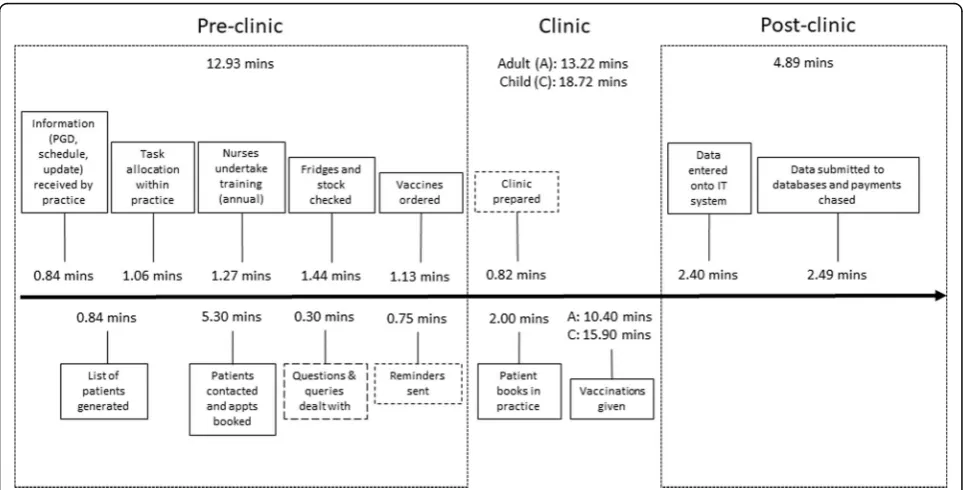
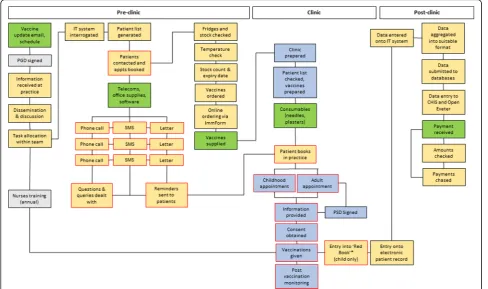
Interview data were supplemented with the activity log data to confirm details provided in the inter-views, and information relating to 372 vaccination appointments was captured, comprising 233 child-hood and 139 adult appointments. The resulting CDVC is presented in Fig. 2. Fourteen core activities were common to all practices and took place within the GP practice building, aside from the nurses’ an-nual training, which was usually at another local or-ganisation. Timings for three of the activities (dashed boxes) were aggregated with other activities by some practices. Although this is presented as a linear process, these activities often take place concurrently or non-sequentially creating a constant responsive workflow. A process map from the perspective of the practice is presented in Fig. 3.
Activities and task allocation
having an oversight role and some being directly in-volved in activities such as reminder/recall; some practices had general administrators with various roles in managing reminder/recall activities, following up patients, planning clinics and submitting data, while others employed specialist administrators with specific roles, such as data management, target focussed roles or managing aspects of finance. In other practices, an assistant practice manager (APM) filled this role. Most receptionists had a role booking in appoint-ments and checking patients in on arrival, but in
some practices, they had a large role in reminder/re-call activities and counselling patients over the phone. The two components that had the greatest variation between practices were (i) the mechanism and fre-quency of reminder/recall activities (Table 4, row 2) and (ii) the structure of the vaccination appointments, which varied in length and distribution throughout the week (Table 4, row 4). Several practices had specific clinics for vaccination: C (two clinics weekly, one for babies and one for older children), D and H (one weekly clinic for babies and children) and F (weekly baby clinic only). Elsewhere appointments were diffused throughout the week.
Outputs
The number of childhood vaccination appointments (Table 1) ranged from 9 to 71 during the 2-week data collection periods (Table 5). The mean appointment length across all practices was 15.9 min (range 9.0– 22.0 min). Smaller practices (A and C) had the lon-gest appointments, and the shortest were observed in F and H both medium-large practices in rural areas. We asked clinical staff to add information on any other issues occurring in the appointment that could have impacted on time, and no appointments were
Fig. 2The care delivery value chain for routine vaccinations from the perspective of a primary care practice. (The black arrow shows the process
over time within the GP practice, with activities involving the practice above the line and patient-facing activities below the line. The blue arrow represents the patient’s interaction with the practice during the process). Activity steps with dashed outline are those where times were sometimes recorded together with other activities by practices, so timings are less reliable. Timings are mean times calculated across the included practices for each step
Table 3Number and type of staff group participating in semi-structured interviews at each practice
A B C D E F G H J TOTAL
Practice nurse (PN) 2 2 2 2 6 1 3 2 3 23
Healthcare assistant (HCA)
0 0 0 0 4 0 1 2 0 7
Practice manager (PM)
1 1 1 1 1 1 1 0 1 8
Administrator (AD)
0 1 2 1 2 1 1 3 1 12
Receptionist (R) 0 0 1 0 0 0 1 0 0 2
identified that had a significant non-vaccination-related component.
To estimate the capacity available for vaccination, the number of children aged 0–4 was divided by an estimate of the annual number of child appointments (number during the study period multiplied by 25, equal to 50 working weeks). Practices A and D had the highest num-ber (1.53 and 1.56 appts/child respectively) and are small-medium practices in rural areas of low deprivation with high coverage (Table 2). Practice B had relatively lower capacity (0.76 appts/child) and slightly lower coverage. Practice G (large practice in London) also had lower capacity (0.81 appts/child) and significantly lower coverage, whereas practice J (large practice with high number of registered children in London) had higher capacity (1.24 appts/child) and somewhat higher cover-age overall.
The number of adult vaccination appointments ranged from 4 to 26 and are not related to practice size. The high number of adult vaccination appoint-ments at practice A was due to a concurrent shingles campaign (23 of 26 appointments), and practice C
was running a meningococcal ACWY campaign for adolescents (18 of 22 appointments). Appointment capacity was estimated by dividing the number of adults aged 65+ by an estimate of the annual number of adult appointments. This ranged from 0.04 (prac-tice E) to 0.57 (prac(prac-tice C) and was not related to overall performance. This is likely due to the large number of PPV vaccinations delivered alongside the seasonal flu campaign, which has been excluded from this analysis. Observed appointment length ranged from 6.8 min (E) to 14.1 min (C), with the mean being 10.4 min. Overall mean time spent across the nine practices for each stage in the CDVC is presented in Fig.2.
The mean proportion of total practice vaccination time (TPVT) spent on non-clinical activities was 59.7% (range 48.4–67.0%). At most practices (A, B, C, F, G, H), around two thirds TPVT was spent on non-clinical work, and in the remainder (D, E, J), it was split evenly. Practice J was the only location where clinical time (51.9%) outweighed non-clinical time due to the large number of childhood appointments.
Fig. 3A process map of the system of implementing routine vaccination at GP practices in England. Green box = resources; yellow
box = non-clinical/administrative activities and processes; grey box = activity undertaken off GP practice site; blue box = clinical activity and processes; red outlines = activities and process with direct patient contact. *The Red Book is a paper health record held by a child’s carers. PGD patient group directive, SMS text message (short message service), PSD patient-specific directive; CHIS Child Health
Table 4 Organisation of responsibilities for processes involved in routine vaccination at the included practices Activities A B C D E F G H J 1. Pre-clinic administration (receiving info; generating patient list) The PM runs search es and allocates tasks to the R staff. An AD runs the searches and manages the list. The PM runs searches and the PN has a role in allocating tasks. The PM runs search es and allocates tasks to the R staff. The APM is responsibl e for running searches and allocating tasks. The PM runs the searches and then tasks allocated to the PN and AD. An AD generates the list and allocates tasks, with some support from the PN. An AD generates the lists of eligible patien ts, from info from CHIS and local records. An AD is responsible for generatin g th e lis t o f p at ien ts. 2. Patient
contact, appointment booking
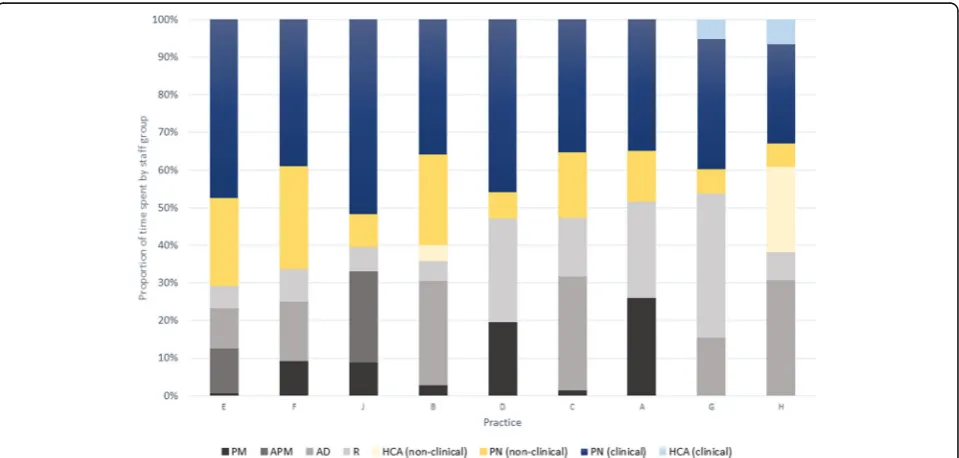
To account for practice size, TPVT was divided by list size to give time per patient. The relative time per patient was calculated where the mean time per pa-tient equalled 1. Practices A and C (smaller practices with long childhood appointments and a high propor-tion of non-clinical time) spent the most time on vac-cination activities, whereas practices E and H spent relatively little time overall. Figure 4 shows the pro-portion of TPVT spent by different staff groups with practice ranked in order of total proportion of time spent by the PN (from 70.8% at practice E to 32.6% at practice H). Practice E had a relatively streamlined and automated administration system, reducing the overall administration time. Practices E, F and B all had relatively large proportions of PN time spent on non-clinical activities, which was primarily due to a significant role in checking the fridges, stock and or-dering vaccines. Practice G had a particularly large proportion of administrative time due to receptionist in-volvement on reminder/recall activities. Practice H’s sys-tem of having two PNs and two HCAs in a vaccine clinic significantly reduced the overall amount of time spent by the PN. Overall, the PM had relatively small roles in vac-cination, except in A where they were the only member of administrative staff and D where they had a large role in both running searches and submitting data.
Comparison to service requirements
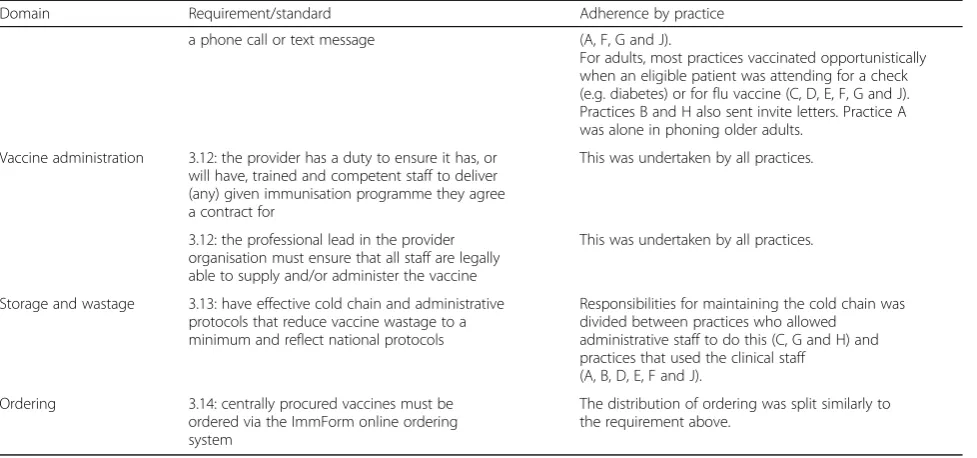
Table 6 maps the provider requirements from the core service specification and quality standards (QS)
recommended by NICE (except QS5 that relates to young offenders) [17, 18]. No practices had a focus on reducing disparities in coverage or interventions to focus on underserved population groups. Similarly, no local communication strategies had been implemented and only practices G and J had patient involvement. A range of contact, reminder and recall systems were used for childhood vaccines; however, for adults, most practices vaccinated only when the patient was at-tending for another purpose (e.g. health check or for seasonal flu).
Discussion
This is the first study to evaluate how GP practices or-ganise the delivery of the routine vaccine programme in England. We have defined a 14-stage CDVC for vaccin-ation at primary care level alongside a process map. Overall, two thirds (59.7%) of activity was spent on ad-ministrative tasks and there was significant variation in allocation of activities between clinical and non-clinical staff, with some models of delivery placing a higher time burden for administration onto nurses. Doctors were largely not involved in vaccination. The mean appoint-ment length for childhood appointappoint-ments was 2.4 times the length in the practice with the longest appointments (C) than the shortest (H). This was due to significant variation in how appointments were arranged within the practice’s working week, as well as the fixed appoint-ment length (10, 15 or 20 min) on the booking system. The range for adult appointments was narrower but still
Fig. 4Proportion (%) of total practice vaccination time spent by different staff groups on clinical and non-clinical tasks (PM = practice manager;
Table 6A comparison between implementation of NHS England requirements and NICE quality standards by practices
Domain Requirement/standard Adherence by practice
Outcome 2.4: to offer immunisation to 100% of eligible individuals in accordance with guidance.
Childhood: coverage at the large practices G, H and J is much lower than average and well below the 95% target.
Adulthood: similarly, coverage at the larger practice (F, G, H and J) is significantly lower than average.
Equity 2.11: to be able to demonstrate what systems are in place to address health inequalities and ensure equity of access to immunisation.
None of the included practices had any specific interventions or services in place to increase uptake in any population or demographic groups with low coverage.
2.11: to have procedures in place to identify and support those persons who are considered vulnerable/hard-to-reach
None of the included practices had any specific system in place to identify vulnerable or hard-to-reach populations. All practices did follow-up with parents of all young children who did not attend for vaccination.
Service delivery 3.6: to provide core programme elements, as covered in The Green Book.
18 programme elements are described, of which were met by all practices, except reducing variation (none), patient involvement (G and J only) and local communications strategies (nothing, aside from information provision within practice).
3.10: to address poor uptake for the services where local delivery is lower than the key deliverables to reduce the variation in local levels of performance.
None of the included practices had a system for accessing, evaluating and discussing data relating to their immunisation outcomes or focus on reducing local variation in their local population.
Missed opportunities 3.8: to take every appropriate opportunity to check vaccination status and offer immunisation to individuals who may have missed or not fully completed the national routine schedule. QS2: children and young people identified as having missed a childhood vaccination are offered the outstanding vaccination.
Practices A, E, G and J discussed having a commitment to opportunistic vaccination. However, this was primarily for providing adults with singles and PPV when attending for influenza or other chronic disease health checks. Children were followed up more intensively by all practices at earlier ages, leaving less room for opportunistic vaccination. None of the practices had a specific strategy or protocol for reducing missed opportunities.
Consent 3.9: to adhere to The Green Book guidance on consent.
This was undertaken by all practices.
Assessment 3.10: to have systems in place to assess eligible individuals for suitability by a competent individual prior to each immunisation. QS4: children and young people have their immunisation status checked at specific educational stages.
Aside from the use of searches on computer systems and the general commitment to opportunistic vaccination by some practices (A, E, G and J), no specific protocol or plan was used to check immunisation status. This was especially true for adolescents unless subject to a specific campaign (e.g. meningitis campaign).
Information systems 3.10: assessed the immunisation record of each individual to ensure that all vaccinations are up to date
QS3: children and young people receiving a vaccination have it recorded in their GP record and the Child Health Information System (CHIS) and in their personal child health record.
Record keeping was a high priority for all practices, although it was found to be time consuming and complex.
3.10: systems in place to identify those in clinical risk groups and to optimise access for those in underserved groups
In all practices, the electronic record system was used to identify patients in clinical risk groups, as per the schedule; however, no practices used it to identify people in specific underserved groups.
3.10: arrangements in place to report and co-ordinate responses to outbreaks of diseases
This was undertaken by all practices.
Reminder, recall 3.10: systems in place to identify, follow up and offer immunisation to eligible individuals 3.10: arrangements in place that enable them to identify and recall under- or unimmunised individuals and to ensure that such individuals are offered immunisation in a timely manner. QS1: children and young people who do not attend their immunisation appointment are followed up with a written recall invitation and
a more than twofold differential in length (2.1). Total time spent on vaccination relative to practice size varied greatly; however, this was not related to overall perform-ance. Small- to average-sized practices, whether urban (B, C) or rural (A, D), had better performance overall. Greater capacity, as measured by appointments per pa-tient, may be associated with higher coverage in children, but not for adults, and this requires further investigation.
Fidelity
To further compare and analyse the variation in imple-mentation between the different practices, we have drawn on the concept of fidelity, which is defined as‘the degree to which programs are implemented as intended by the program developers’, which acts to modify the relationship between the intervention (vaccination) and outcomes (coverage, VPD incidence) [27]. Vaccination is a long-standing complex public health intervention that has been modified over time to reflect an emerging evidence base. Implementation here is defined as ‘a con-trolled activity aiming to introduce and encourage uptake of a new policy or intervention that embodies pre-defined criteria’[28]. In this context, the controlled activity is pro-viding the routine vaccination programme and the pre-defined criteria include national evidence-based policy and guidelines. Changes to policy and guidelines are out-side the control of the practices and act as interventions with variable penetration. This raises the question of im-plementation fidelity: To explore this further, we have drawn on the conceptual framework developed by Carroll et al. as modified by Pérez et al., which considers the following factors that affect implementation fidelity:
adherence (including content and amount (coverage, frequency and duration)), moderators (complexity, fa-cilitation, quality and participant responsiveness) and adaptation [27, 29].
Adherence
Adherence is defined as whether the programme is de-livered as it has been designed. The use of evidence by practices when delivering the programme was variable de-pending on the content. For the vaccination programme, there are two relevant elements of content to consider: the clinical and administrative components. For the clin-ical component (i.e. the schedule), there was very high ad-herence from all practices for children. However, this was much lower for adult vaccines with six practices only vac-cinating when an eligible patient attended for another service.
For the administrative components in both adults and children, there was very variable content adherence, par-ticularly in terms of reminder/recall activities, communi-cations and service design (Table4). A range of systems was used for contacting patients, most often involving letters and phone calls (in which administrative and re-ception staff have a large role) with a smaller number of practices using text messages, which have good evidence of effectiveness at increasing coverage [30]. Only two practices used active recall for adult vaccines (G and J), despite evidence for interventions that reminder/recall activities can increase coverage [31]. This creates vari-ability in the amount of intervention delivered to the population (sometimes described as the ‘dose’—e.g. number of reminder letters, availability, frequency and
Table 6A comparison between implementation of NHS England requirements and NICE quality standards by practices(Continued)
Domain Requirement/standard Adherence by practice
a phone call or text message (A, F, G and J).
For adults, most practices vaccinated opportunistically when an eligible patient was attending for a check (e.g. diabetes) or for flu vaccine (C, D, E, F, G and J). Practices B and H also sent invite letters. Practice A was alone in phoning older adults.
Vaccine administration 3.12: the provider has a duty to ensure it has, or will have, trained and competent staff to deliver (any) given immunisation programme they agree a contract for
This was undertaken by all practices.
3.12: the professional lead in the provider organisation must ensure that all staff are legally able to supply and/or administer the vaccine
This was undertaken by all practices.
Storage and wastage 3.13: have effective cold chain and administrative protocols that reduce vaccine wastage to a minimum and reflect national protocols
Responsibilities for maintaining the cold chain was divided between practices who allowed
administrative staff to do this (C, G and H) and practices that used the clinical staff
(A, B, D, E, F and J).
Ordering 3.14: centrally procured vaccines must be ordered via the ImmForm online ordering system
duration of appointments, availability of education mate-rials). This was particularly important for the larger practices with lower coverage, which all spent relatively little time delivering the vaccine programme (F, G, H). In a large, busy practice with no dedicated clinic (G, J), patients may have difficulty in accessing appointment time for vaccination and could have contributed to these practices’ lower coverage. Despite low coverage for childhood (G, H and J) and adult (F, G, H and J) vaccina-tions, no practices had interventions or services in place to increase uptake in any population or demographic groups with low coverage and none had community in-formation or education plans.
Reducing missed opportunities for vaccination (MOV) features in both the service specification and quality stan-dards, the practices that did report a commitment to op-portunistic vaccination (A, E, G and J) did not have a system of reducing MOV. This could potentially be a suit-able programme intervention that may increase coverage without requiring significant increases in capacity (such as patient tracking or provider prompts), although evidence is limited for effective interventions [32].
Moderators
Organising vaccination is highly complex and thus is likely to have lower implementation fidelity as a re-sult [27]. This in part is because the programme has evolved over time, rather than implemented from scratch, but also because some ability for local tai-loring of the administrative content is planned into the guidance [17]. This means that the administra-tive recommendations are less specific than the clin-ical recommendations, which is known to reduce likelihood of implementation [33]. Research on NICE guidelines specifically has shown that initially imple-mentation is strategic, but as time passes, it becomes increasingly sporadic and subject to local contextual factors [28].
Similarly, the facilitation strategies (training, support and guidance) are more robust for the clinical elements of the programme. Changes to the vaccine schedule and guidance in The Green Book are followed closely [34], particularly via the vaccine update email from Public Health England [35]. Nurses also undertake annual training, which is primarily clinical. However, there is no equivalent guidance for the non-clinical components to the programme and administrative staff do not receive any training, despite having a significant patient-facing role. Aside from outcome data, this study did not collect any quality metrics from practices, making quality, in terms of patient experience, difficult to assess. This may be a significant modifying factor affecting performance. Of note, the single practice with a low score for friends and family recommendation (F) also had very poor adult
vaccination coverage (56.1%), suggesting a quality factor may be important. However, the family and friends test has been criticised as lacking robust rationale and evi-dence, so further work is required on relevant service quality factors for vaccination.
Participant responsiveness is related to a patient’s view of whether an intervention is useful and relevant to them, thus affecting uptake. All practices reported some experience of having parents and patients decline vacci-nations; however, overall, this was described as being a relatively minor problem. However, vaccine hesitancy is an increasing trend in high-income countries and inter-ventions to reduce hesitancy require specific training to implement effectively [36, 37]. More common was per-sistent non-attenders, who either did not respond to let-ters or calls or booked appointments and did not attend (DNA). These patients were well known to the practices and often DNA for other appointment types as well. There is little research evidence on how to identify and provide services to improve coverage in persistent non-attending patients.
Adaptation
Adaptation is the process of an intervention being chan-ged by an organisation after implementation and may be a critical component for intervention success [29]. The clinical component of the programme shows very little scope for adaptation and is delivered with high fidelity. However, both task allocation and administrative activ-ities show relatively high adaptability, as evidenced by the different organisational structures in place at each of the practices included here. This is significant as people management factors within healthcare organisations, in-cluding role descriptions, performance management, stress and leadership, are known to impact organisation effectiveness [38]. It is likely that this adaptation is re-lated to the specific organisational context of each prac-tice, which will be explored in a subsequent analysis of the qualitative data.
Reducing inequities
access to data in sufficient detail to be able to assess local inequities and are unlikely to have the capacity to design and deliver a bespoke intervention without sup-port and guidance. This is despite there being evidence of effectiveness for several categories of interventions to reduce inequities in low-income, ethnically diverse urban settings, such as community-designed multi-component interventions, focussed, escalating reminder-recall activ-ities or alternative service provision models such as home visiting [4]. In practice, the responsibility of identi-fying and addressing inequities in immunisations is shared among organisations in the public health admin-istration, where local, regional and national public health teams are best placed to identify inequities and suggest evidence-based approaches to addressing them, with general practice implementing these approaches in order to vaccinate those underserved communities. However, since the implementation of the reforms in 2013, data sharing is more complex and the role of regional vaccin-ation managers has changed, reducing their ability to support and evaluate practices’ performance [11]. None of the practices in this sample had experience of working with any external organisation in this way.
Capacity
A large review of the organisation and implementation of health improvement interventions in primary care identified the strong evidence base for GP practice-led interventions but also noted the increasing complexity of public health services commissioning following the organisation reforms implemented in 2013, including the contracting arrangements for the vaccine programme [47]. Relative time spent delivering the vaccination programme did not appear to have an effect on coverage. Of the two, large practices in London, practice G spent slightly less than average time on vaccination during the study period but had very low rates of coverage overall, and practice J spent roughly average amount of time but also had very low coverage. However, higher cap-acity for children, in terms of appointments per patient, may be associated with higher coverage. The strength of this association will need to be evaluated with a lar-ger study. While one solution may be to expect these practices to increase the availability or frequency of vaccination appointments, this may not be possible due to the multiple competing demands on staff time at a busy, urban practice with a relatively deprived popula-tion with high need, without commensurate increases in funding [9,48].
Implications for policy
Mandatory reforms of locally determined systems by national-level bodies are unlikely to be successful given the level of variation between practices. However, information
relating to variation in staffing structure and task allo-cation should be distributed to practices to compare their model and determine if it could be made more ef-ficient, particularly in terms of allocated appointment length. The role of administrators and receptionists was significant, and support in terms of education and training to this group of professionals could improve local service delivery. Task shifting, including support for a greater use of HCAs, could also increase practice capacity by reducing time spent by nurses. Either add-itional support needs to be given to practices to imple-ment strategies to reduce inequities or this function should be allocated to another branch of the public health system. Rationalisation of the data collection and reporting systems required could also reduce the ad-ministrative time burden on practices.
Strengths and limitations
The strengths of this study include the collection of standardised information, using multiple methods simul-taneously, to evaluate implementation of vaccination de-livery at a broad range of GP practices in England. This has enabled detailed comparison of GP practice organ-isation for the first time. Limitations are that this is a small, convenience sample of practices and thus sub-ject to selection bias, making them unlikely to be rep-resentative of the population of GP practices at large, especially as practices had higher QOF and recommen-dation scores than average. No very small or very large practices were included in the sample. The methods rely on self-reporting of activities, which may be sub-ject to reporting bias. Activity logs were kept during different weeks at each practice and activity is not con-sistent throughout the year. The sample was too small for further statistical analysis to measure association effects.
Conclusions
Appendix Topic guide
Table 7A modified version of the below guide was used if the interview only had administrative staff
Topic Prompt Notes and possible questions
Welcome and introduction
Intro - Background to the project
- My role and LSHTM
Scope of interview - Overview of purpose - Confidentiality - Topics to be covered - Time for questions - Confirm consent
Organisation and role Intro This section is looking to understand how the routine vaccination programme is organised within your GP practice.
Role and responsibility - Please describe your role within the practice team in delivering the vaccination programme.
- How long have you been in this position for?
- How much of your working time do you spend on vaccination per week?
Vaccination programme organisation - How is the vaccination programme organised within your GP practice? - Which other staff members are involved?
Inputs Intro - This section is looking to understand how the practice uses information
to make decisions about how to run the programme.
Information sources and use - What information sources do you use?
- How are you informed of changes to the programme? - How often to you undertake training?
Data knowledge and management - Where do you get information from relating to your practice’s performance?
- How often do you receive updates about coverage levels?
Resources (financial and human) - Do you have responsibility for the financial management of the programme?
- Do you know how the programme is funded? - Is the funding adequate to provide the programme?
- What do you think about the current system of payments for the vaccination programme?
Networks - Are you a member of any local or national networks relating to vaccination? - What organisations do you interact with locally related to vaccination? - What information do you receive from these sources?
- Do the networks provide any other benefits?
- Which other external organisations (e.g. schools, local government) do you interact with regularly?
Sensemaking Intro This section is seeking to understand how vaccination is perceived and prioritised within your practice.
Leadership - Is there an identified person who leads the programme? - If the leadership role is split, please describe how this works?
- Is leadership important for delivery of the programme in your practice?
Decision-making - Who is responsible for making decision relating to the programme? - Do you have a regular practice meeting to discuss vaccination? How often?
Who attends?
- Is there a local or regional committee or board that meets? How often? Who attends?
- How often do you make changes in how you deliver the programme?
Climate and culture - How much of a priority is vaccination when compared to other areas? - Are staff members and the management supportive of vaccination? - Could the way your practice organises the programme be improved? If so,
what are the barriers?
Interpersonal relationships - Do staff work together well to deliver the programme? - Do staff interact with external organisations well?
- Are there any interpersonal barriers to running the programme?
Abbreviations
AD:Administrator; APM: Assistant practice manager; CDVC: Care delivery value chain; CHIS: Child Health Information System; CI: Confidence interval; CRN: Clinical Research Network; DH: Department of Health; DTaP/IPV/Hib: Diphtheria, tetanus, pertussis, polio,haemophilus influenza
type bvaccine; GP: General practitioner; HCA: Healthcare assistant; Hep
B: Hepatitis B vaccine; Hib:Haemophilus influenza type bvaccine; HPV: Human papillomavirus; HSCA: Health and Social Care Act; Men ACWY: Meningococcal groups A, C, W and Y; Men B: Meningococcal group B; Men C: Meningococcal group C; MMR: Measles, mumps and rubella; MOV: Missed opportunities for vaccination; NHSD: National Health Service Digital; NHSE: National Health Service England; NICE: National Institute for Health and Care Excellence;
PCV: Pneumococcal conjugate vaccine; PHE: Public Health England; PM: Practice manager; PN: Practice nurse; PPV: Pneumococcal polysaccharide vaccine; QOF: Quality Outcomes Framework; QS: Quality standard; R: Receptionist; SMS: Short message service (text message); TDABC: Time-Driven Activity-Based Costing; TPVT: Total practice vaccination time; VPD: Vaccine preventable disease
Acknowledgements
We would like to thank the NIHR Clinical Research Network for their assistance in recruiting practices and Dr. Mary Ramsay and other staff at PHE for their input into this project.
Ethical approval and consent to participate
We gained written, informed consent from each staff member participating prior to commencing data collection. No patients were involved. The study received ethical approval from the LSHTM Ethics Committee and the NHS Health Research Authority (project ID 212278).
Funding
The research was funded by the National Institute for Health Research Health Protection Research Unit (NIHR HPRU) in Immunisation at the London School of Hygiene and Tropical Medicine in partnership with Public Health England (PHE). The funding body had no role in the design of the study and collection, analysis, and interpretation of data.
Availability of data and materials
The datasets used and analysed during the current study are available from the corresponding author on reasonable request.
Authors’contributions
TCB conceived the study and chose the methods with support from SMJ and ME. TCB identified the practices, undertook the interviews, trained staff on use of the activity logs, collected and entered data, undertook the quantitative analysis, coded the transcripts (reviewed by SMJ) and wrote the final manuscript. SMJ and ME reviewed and edited the final manuscript. All authors read and approved the final manuscript.
Table 7A modified version of the below guide was used if the interview only had administrative staff(Continued)
Topic Prompt Notes and possible questions
Activities and outputs Intro This section is seeking to understand what vaccination activities you undertake and the uptake of these.
Task allocation - How are roles and responsibilities distributed? - Is it always clear who is supposed to be doing what?
Time allocation - How much time is dedicated to vaccination? - Is this enough? Or too much/little?
Systems and processes - Is the way the programme organised suitable? - Is the system of delivering vaccinations clear to all staff? - Could it be improved?
- How are incidents reported?
Data collection and submission - How are data collected and submitted? - What is your role in this process? - Is it done well? Or could it be improved?
Uptake and access - Is there good uptake of vaccination in your practice? - Do you think patients have any problems accessing services?
Interventions - Are you involved with any interventions to improve access/uptake? If so, please describe.
- If no, do you think there would be any role for an intervention at your practice? If so, for what purpose?
Workload and capacity - How do you find the workload of running the programme? - Do your colleagues feel the same way?
- Do you have capacity to increase uptake of the programme?
Outcomes Intro This section is seeking to understand what the overall outcomes of
the programme are in your practice.
Patient factors and perception - Do you think the type of population you service makes any difference to the coverage levels you achieve?
- Do your patients hold any views that affect vaccination coverage?
Community relationship - Is the practice integrated into the local community? - How do you feel about the patients in your local area?
Coverage levels and performance - Do you know how well your practice performs? - What indicators do you use?
- Do you feel this could be improved? If so, how?
Wrap up Open space for discussion and questions
- Has everything been covered?
Consent for publication No applicable
Competing interests
The authors declare that they have no competing interests.
Publisher’s Note
Springer Nature remains neutral with regard to jurisdictional claims in published maps and institutional affiliations.
Author details
1
Faculty of Public Health and Policy, London School of Hygiene and Tropical Medicine, 15-17 Tavistock Place, London WC1H 9SH, UK.2Department of Immunisation, Hepatitis and Blood Safety, Public Health England, 61 Colindale Avenue, London NW9 5EQ, UK.
Received: 18 July 2018 Accepted: 9 October 2018
References
1. Wicker S, Maltezou HC. Vaccine-preventable diseases in Europe: where do we stand? Expert Rev Vaccines. 2014;13:979–87.
2. ECDC. Measles. 2018. Accessed 28 Feb 2018. Available from:https://ecdc. europa.eu/en/measles
3. PHE. Measles outbreaks confirmed in 5 areas across UK. 2018. Accessed 28 Feb 2018. Available from: https://www.gov.uk/government/news/measles-outbreaks-confirmed-in-leeds-liverpool-and-birmingham
4. Crocker-Buque T, Edelstein M, Mounier-Jack S. Interventions to reduce inequalities in vaccine uptake in children and adolescents aged<19 years: a systematic review. J Epidemiol Community Health. 2017;71:87–97. 5. Comité d’orientation de la concertati on citoyenne sur la vaccination.
Rapport sur la vaccination. 2016. Accessed 01 Mar 2018. Available from: http://concertation-vaccination.fr/
6. Atchison CJ, Hassounah S. The UK immunisation schedule: changes to vaccine policy and practice in 2013/14. JRSM Open. 2015;6: 205427041557776.
7. Leese B, Bosanquet N. Immunization in the UK: policy review and future economic options. Vaccine. 1992;10:491–9.
8. PHE. The routine immunisation schedule 2016–2017. London: Pub. Public Health England; 2017.
9. Baird B, Charles A, Honeyman M, Maguire D, Das P. Understanding pressures in general practice. London: Pub. The King’s Fund; 2016. 10. DH. Health and Social Care Act 2012: fact sheets. 2018. Accessed 27/09/
2018. Available from: https://www.gov.uk/government/publications/health-and-social-care-act-2012-fact-sheets
11. Chantler T, Lwembe S, Saliba V, Raj T, Mays N, Ramsay M, et al.“It’s a complex mesh”- how large-scale health system reorganisation affected the delivery of the immunisation programme in England: a qualitative study. BMC Health Serv Res. 2016:1–14.
12. Moore G, Audrey S, Barker M, Bond L. Process evaluation of complex interventions. London: Pub. Medical Research Council; 2014.
13. Digital NHS. Childhood vaccination coverage statistics 2016–2017. London: Pub. NHS Digital; 2017.
14. Ward C, Byrne L, White JM, Amirthalingam G, Tiley K, Edelstein M.
Sociodemographic predictors of variation in coverage of the national shingles vaccination programme in England, 2014/15. Vaccine. 2017;35:2372–8. 15. Byrne L, Ward C, White JM, Amirthalingam G, Edelstein M. Predictors of
coverage of the national maternal pertussis and infant rotavirus vaccination programmes in England. Epidemiol Infect. 2018;146:197–206.
16. Dane AV, Schneider BH. Program integrity in primary and early secondary prevention: are implementation effects out of control? Clin Psychol Rev. 1998;18:23–45.
17. England NHS. NHS public health functions agreement 2017–18: Core service specification. National immunisation programme. London: Pub. NHS England; 2017.
18. NICE. Vaccine uptake in under 19s. Pub. National Institue for Health and Care Excellence: London; 2017.
19. Kaplan RS, Witkowski M, Abbott M, Barboza Guzman A, Higgins LD, Meara JG, et al. Using Time-Driven Activity-Based Costing to identify value improvement opportunities in healthcare. J Healthc Manag. 2014; 59:399–412.
20. Kaplan RS, Anderson SR. Time-driven activity based costing. Boston: Pub. Harvard Business School Press; 2007.
21. Keel G, Savage C, Rafiq M, Mazzocato P. Time-driven activity-based costing in health care: a systematic review of the literature. Health Policy. 2017;121: 755–63.
22. Kaplan RS, Porter ME. How to solve the cost crisis in health care. Harv Bus Rev. 2011;89:47–64.
23. Tong A, Sainsbury P, Craig J. Consolidated criteria for reporting qualitative research (COREQ): a 32-item checklist for interviews and focus groups. Int J Qual Heal Care. 2007;19:349–57.
24. Gale NK, Heath G, Cameron E, Rashid S, Redwood S. Using the framework method for the analysis of qualitative data in multi-disciplinary health research. BMC Med Res Methodol. 2013;13:117.
25. Turner N, Rouse P, Airey S, Petousis-Harris H. The cost of immunising at the general practice level. J Prim Health Care. N. Turner, Immunisation Advisory Centre, School of Population Health, The University of Auckland, PB 92019 Auckland New Zealand. 2009;1:286–96.
26. NIHR. NIHR Clinical Research Network. 2018. Accessed 27 Sept 2018. Available from:https://www.nihr.ac.uk/about-us/how-we-are-managed/ managing-centres/crn/
27. Carroll C, Patterson M, Wood S, Booth A, Rick J, Balain S. A conceptual framework for implementation fidelity. Implement Sci. 2007;2:1–9. 28. Spyridonidis D, Calnan M. Opening the black box: a study of the process of
NICE guidelines implementation. Health Policy. 2011;102:117–25. 29. Pérez D, Van der Stuyft P, Zabala MC, Castro M, Lefèvre P. A modified
theoretical framework to assess implementation fidelity of adaptive public health interventions. Implement Sci Implementation Science. 2016;11:1–11.
30. Jacobson Vann J, Jacobson R, Coyne-Beasley T, Asafu-Adjei J, Szilagyi P. Patient reminder and recall interventions to improve immunization rates. Cochrane Database Syst Rev. 2018;1:CD003941.
31. Thomas RE, Lorenzetti DL. Interventions to increase influenza vaccination rates of those 60 years and older in the community. Cochrane Database Syst Rev. 2018;5:CD005188.
32. Jaca A, Mathebula L, Iweze A, Pienaar E, Wiysonge CS. A systematic review of strategies for reducing missed opportunities for vaccination. Vaccine. 2018;36:2921–7.
33. Grol R, Dalhuijsen J, Thomas S, Rutten G, Mokkink H. Attributes of clinical guidelines that influence use of guidelines in general practice: observational study. Br Med J. 1998;317:858–61.
34. PHE. Immunisation against infectious disease - The Green Book. 2017. Accessed 13 Dec 2017. Available from:https://www.gov.uk/government/ collections/immunisation-against-infectious-disease-the-green-book#the-green-book
35. PHE. Vaccine update. 2018. Accessed 02 July 2018. Available from:https:// www.gov.uk/government/collections/vaccine-update
36. Jarrett C, Wilson R, O’Leary M, Eckersberger E, Larson HJ. Strategies for addressing vaccine hesitancy–a systematic review. Vaccine. 2015;33:4180–90. 37. Larson HJ, Jarrett C, Eckersberger E, Smith DMD, Paterson P. Understanding
vaccine hesitancy around vaccines and vaccination from a global perspective: a systematic review of published literature, 2007–2012. Vaccine. 2014;32:2150–9.
38. Michie S, West M. Managing people and performance: an evidence based framework applied to health service organizations. Int J Manag Rev. 2004;5/ 6:91–111.
39. Hawker JI, Olowokure B, Wood AL, Wilson RC, Johnson R. Widening inequalities in MMR vaccine uptake rates among ethnic groups in an urban area of the UK during a period of vaccine controversy (1994-2000). Vaccine. 2007;25:7516–9.
40. Coupland C, Harcourt S, Vinogradova Y, Smith G, Joseph C, Pringle M, et al. Inequalities in uptake of influenza vaccine by deprivation and risk group: time trends analysis. Vaccine. 2007;25:7363–71.
41. Baker D, Garrow A, Shiels C. Inequalities in immunisation and breast feeding in an ethnically diverse urban area: cross-sectional study in Manchester, UK. J Epidemiol Community Health. 2011;65:346–52.
42. Fisher H, Audrey S, Mytton JA, Hickman M, Trotter C, et al. Examining inequalities in the uptake of the school-based HPV vaccination programme in England: a retrospective cohort study. J Public Health. 2014;36:36–45. 43. Hutt P, Gilmour S. Tackling inequalities in general practice: an inquiry
44. Roberts SA, Brabin L, Stretch R, Baxter D, Elton P, Kitchener H, et al. Human papillomavirus vaccination and social inequality: results from a prospective cohort study. Epidemiol Infect. 2011;139:400–5.
45. ECDC. Review of outbreaks and barriers to MMR vaccination coverage among hard-to-reach populations in Europe. Venice II Consort.–Sept. 2012. Stockholm: Pub. European Centre for Disease Control; 2013.
46. Semenza JC, Giesecke J. Intervening to reduce inequalities in infections in Europe. Am J Public Health. 2008;98:787–92.
47. Peckham S, Falconer J, Gillam S, Hann A, Kendall S, Nanchahal K, et al. The organisation and delivery of health improvement in general practice and primary care: a scoping study. Heal Serv Deliv Res. 2015;3(29):1-180. 48. Kennedy SI, Dixon DM, Field PS, Gallagher PU, Rosen DR. Improving the
![Table 1 The 2016–2017 routine vaccine programme in England, adapted from Public Health England (2018) [8]](https://thumb-us.123doks.com/thumbv2/123dok_us/632344.1559197/3.595.61.535.98.638/routine-vaccine-programme-england-adapted-public-health-england.webp)
![Fig. 1 Coverage (%) of selected vaccinations by age in England 2011–2017, from NHS Digital (2017) [11]](https://thumb-us.123doks.com/thumbv2/123dok_us/632344.1559197/4.595.57.542.87.324/fig-coverage-selected-vaccinations-age-england-nhs-digital.webp)