R E S E A R C H
Open Access
Public health program capacity for sustainability:
a new framework
Sarah F Schell
1, Douglas A Luke
1*, Michael W Schooley
4, Michael B Elliott
2, Stephanie H Herbers
1,
Nancy B Mueller
3and Alicia C Bunger
5Abstract
Background:Public health programs can only deliver benefits if they are able to sustain activities over time. There is a broad literature on program sustainability in public health, but it is fragmented and there is a lack of consensus on core constructs. The purpose of this paper is to present a new conceptual framework for program sustainability in public health.
Methods:This developmental study uses a comprehensive literature review, input from an expert panel, and the results of concept-mapping to identify the core domains of a conceptual framework for public health program capacity for sustainability. The concept-mapping process included three types of participants (scientists, funders, and practitioners) from several public health areas (e.g., tobacco control, heart disease and stroke, physical activity and nutrition, and injury prevention).
Results:The literature review identified 85 relevant studies focusing on program sustainability in public health. Most of the papers described empirical studies of prevention-oriented programs aimed at the community level. The concept-mapping process identified nine core domains that affect a program’s capacity for sustainability: Political Support, Funding Stability, Partnerships, Organizational Capacity, Program Evaluation, Program Adaptation,
Communications, Public Health Impacts, and Strategic Planning. Concept-mapping participants further identified 93 items across these domains that have strong face validity—89% of the individual items composing the framework had specific support in the sustainability literature.
Conclusions:The sustainability framework presented here suggests that a number of selected factors may be related to a program’s ability to sustain its activities and benefits over time. These factors have been discussed in the literature, but this framework synthesizes and combines the factors and suggests how they may be interrelated with one another. The framework presents domains for public health decision makers to consider when developing and implementing prevention and intervention programs. The sustainability framework will be useful for public health decision makers, program managers, program evaluators, and dissemination and implementation researchers.
Keywords:Program sustainability, Concept mapping, Chronic disease programs, Evaluation, Dissemination and implementation
* Correspondence:[email protected]
1Center for Public Health Systems Science, George Warren Brown School of
Social Work, Washington University in St. Louis, 700 Rosedale Ave, Campus Box 1009, St. Louis, MO 63112, USA
Full list of author information is available at the end of the article
Background
What keeps effective public health programs sustained over time? This is becoming an increasingly important question for researchers, evaluators, funders, and com-munity partners. Public health programs focused on areas such as tobacco control and injury prevention have been shown to deliver positive health outcomes [1,2], but it is often challenging to maintain programs over long periods of time. Financial resources may only be promised from a particular funder for a short period of time, after which the program is expected to find other sources of funding. Programs may lose political and community support, or even become the targets of polit-ical or commercial opposition.
The emergence of the new discipline of dissemination and implementation science has driven a rapid increase in studies of how new scientific discoveries are trans-lated and developed into programs, policies, and prac-tices [3]. However, we have paid much less attention to what happens to programs once they have been imple-mented [4]. Programs typically need time to reach a cer-tain level of maturity and allow health benefits to accrue. If we as a society are to get the full benefit of the signifi-cant investment in public health research and subsequent program development, we need to better understand what factors can promote long-term program sustainability.
Over time, a program ideally can sustain various ele-ments, including its activities, community-level partner-ships, organizational practices, benefits to its clients, and the salience of the program’s core issue. These are called ‘sustainability outcomes’ by Scheirer and Dearing [5], and reflect the various ways that a program can continue to have its intended effects. However, this begs the ques-tion of how a program can posiques-tion itself to best ensure that these sustainability outcomes can be realized. We propose in this paper that sustainability itself is the small set of organizational and contextual factors that build the capacity for maintaining a public health program over time. That is, sustainability is the ability to maintain programming and its benefits over time.
More formally, we define sustainability capacity as the existence of structures and processes that allow a pro-gram to leverage resources to effectively implement and maintain evidence-based policies and activities. This def-inition is deliberately broad, and moves beyond the char-acteristics of the program itself that might support its sustainability to include organizational and systems characteristics. In this sense it is very similar to how others have conceptualized the ‘sustainment’ or ‘ main-tenance’ of public health and public service programs [6]. Sustainability capacity is a critical element of a pub-lic health program. If a program does not have sustain-ability capacity, it can waste money and resources, damage trust between the program and community [7],
and may be limited in its ability to achieve its public health goals. Programs with a higher capacity for sus-tainability may be better prepared when threatened (e.g., funding cuts, infrastructure changes). Savaya et al. esti-mated that up to 40% of all new programs do not last beyond the first few years after the end of initial funding [8]. The high costs of program termination further high-lights the need to understand which factors contribute to sustainability and how they can be measured and improved.
In this paper, we focus our conceptual development on the capacity of public health programs for sustainability. It is challenging to precisely define ‘public health pro-gram,’but we follow the guidance laid out in Centers for Disease Control and Prevention (CDC) Framework for Program Evaluation in Public Health[9]. A public health program is any organized public health action, such as direct services, community mobilization, research, evalu-ation, surveillance, policy development, laboratory diag-nostics, and communication campaigns. Despite this orienting definition, we developed this framework with the understanding that it might also be applied to other types of complex programs that are part of the clinical, public, or social service systems.
When a program has the necessary human, informa-tional, and financial resources, it is more likely to achieve program goals and positively affect health [10,11]. However, little is known about the infrastructure and processes that transform these resources into posi-tive health outcomes [12]. National guidelines such as
The Guide to Community Preventive Services [13] and the Cochrane Reviews [14] identify the most effective strategies, based on current research, and guide public health professionals on what to do. But it is less clear how these evidence-based strategies are to be carried out efficiently and strategically with available resources.
Many public health agencies and foundations (e.g., CDC, Robert Wood Johnson Foundation, California Health Care Foundation, Kaiser Permanente) now re-quire that programs provide evidence for the likelihood of program continuation, or implement tiered funding levels for multi-year grants to ensure that grantees seek new funds. There is a growing body of literature on sus-tainability, but neither the definition of sustainability nor the factors that affect it are well understood [15-18] Des-pite increasing interest, there are few evidence-based resources and no validated tools available to help public health program practitioners ensure their programs will be sustainable over time.
be of interest to a variety of public health program stake-holders, including decision makers, practitioners, fun-ders, researchers, and evaluators. It was also intended to be applicable to smaller (community-level) and larger (state or national-level) programs. Finally, the framework was meant to establish the basis for instrument develop-ment, so that a program’s capacity for sustainability can be better assessed in real-world public health settings.
Methods
This is a developmental study using mixed methods to create a conceptual framework for program sustainabil-ity. Data informing the framework were collected through a literature review and an expert-informed con-cept-mapping process. Concept mapping is an ideal method for developing a conceptual framework. It has been used widely in public health, social, and clinical sciences for developing conceptual models, setting re-search and practice agendas, building logic models for program development and evaluation, and for theory de-velopment [20-23]. It has also been used recently to aid in the conceptual development of translational and im-plementation science [24-26].
Literature review
The first step in the development of the sustainability conceptual framework was to identify the domains of sustainability that would be relevant for public health programs via a comprehensive literature review. A broad approach was taken, with the goal of discovering the contributors to sustainability that would be relevant for different types of public health areas (e.g., tobacco con-trol, injury prevention), and would operate at multiple levels (e.g., state and community-level programs).
Searches were carried out by two project team mem-bers for published articles in Canada and the United States. Five electronic databases (Academic Search Premier, MedLine, CINAHL Plus, PsychINFO, and PubMed Central) were searched using a list of 17 key-words related to public health program sustainability. The article reference lists were examined for publica-tions not captured in the original search. Finally, the terms ‘sustainability,’ ‘public health,’and ‘program’ were searched in Google Web and Google Scholar to capture any existing grey literature. Articles included in the final set made attempts to name specific factors related to sustainability or maintenance. Those articles that men-tioned sustainability without explanations of elements necessary to achieve it were excluded.
To further depict the existing literature, each article was examined for four characteristics: the health topic area, the program’s level of focus (community, state, or both), the number of sites evaluated, and the type of
literature (empirical, conceptual, review, tool develop-ment, or funder report).
Concept mapping
Concept-mapping was used to identify the conceptual structure of sustainability more precisely than was pos-sible through review of the sustainability literature. Con-cept mapping is a mixed methods approach that combines qualitative group processes (e.g., brainstorm-ing, categorizing ideas) with descriptive statistical ana-lyses to help a group describe its ideas and represent them graphically [19]. Through this process, a visual representation of dimensions of program sustainability was created that represents the ideas of diverse repre-sentatives throughout public health.
Approach
We followed established concept-mapping protocols [19], as described in the following eight steps.
Step one: create a focus prompt
A focus prompt was developed to elicit the list of ideas to be analyzed in the study. The prompt used for this study was: ‘For a public health program to successfully continue over time it needs. . .’ This prompt was devel-oped by the project team in consultation with Concept SystemsW trainers and an advisory committee of a small set of public health content experts.
Step two: develop a participant matrix to ensure representation
Using the advisory committee as the core group of infor-mants, a snowball sampling process was used to identify experts in public health and program sustainability. These experts were included in a participant matrix to ensure that the appropriate stakeholders participated in each step of the concept-mapping process. The sample included broad expert representation from a range of public health areas, including, but not limited to: tobacco control, physical activity and nutrition, heart disease and stroke prevention, and injury prevention. Within each public health area, individuals representing research and scientific institutions, funding and advisory agencies, and state and community programs were included. The participant matrix reflected the diversity of the expert input that was used to develop the framework.
Step three: recruit a sample according to participant matrix
Step four: brainstorm responses to the focus prompt
The purpose of the brainstorming is to generate a set of ideas that describe the concept of interest. An online brainstorming session was held using Concept Systems Global MAXW software. In total, 106 individuals were sent a link to the Concept Systems website and invited to brainstorm responses to the focus prompt listed in step one. The study site remained open for two weeks, and a total of 230 statements were generated. The web program does not collect information on who accesses the site for the initial item generation phase, so it is not possible to determine the number of individuals who completed this part of the exercise; this is a limitation of the present study.
Step five: reduce the number of items
Reducing and clarifying the generated statements is ne-cessary to ensure success in the subsequent steps of con-cept mapping. The project team grouped the statements into broad themes, and eliminated or combined state-ments that represented the same idea. Through this process, the number of statements was reduced from 230 to 93.
Step six: perform sorting and rating
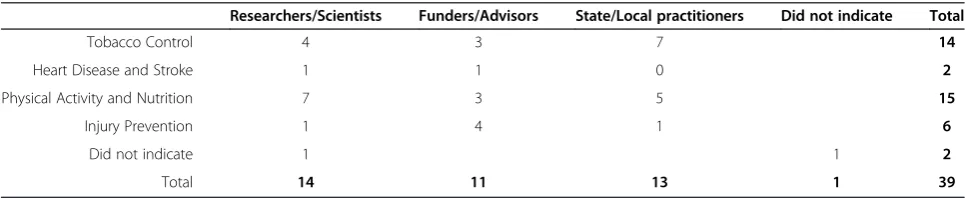
In order to understand how the generated statements are related to one another, participants are asked to sort them into piles based on similarity. Sixty-nine people from the original 106 brainstorming invitees were selected based on their responsiveness to the initial invi-tation. A total of 39 participants completed the sorting and rating phase of the concept mapping process. These 39 participants represented all four of the public health areas and all three job types from our participant matrix in step two (see Table 1). These sorts formed the basis for a concept map. Next, participants rated each statement according to scales of importance and modifiability. The instructions read as follows:‘Please rate each statement on a 1 to 5 scale based on how important you think it is for a program to continue over time, compared to the rest,’(1 = Not important; 2 = Somewhat important; 3 = Important; 4 = Very important; 5 = Extremely important), and‘Now we want to know how likely it is that these items can be chan-ged or influenced. Please rate each statement on a 1 to 5
scale in terms of how modifiable you think it is by a public health program, compared to the rest.’(1 = Not modifiable; 2 = Somewhat modifiable; 3 = Modifiable; 4 = Very modifi-able; 5 = Extremely modifiable).
Step seven: create initial concept map
A concept map was created based on the aggregated item sorts. Concept mapping creates the map using multidimensional scaling and hierarchical cluster ana-lysis of the sorting data. Items that were sorted together by multiple concept-mapping participants are more likely to appear in the same clusters. Thus, items that were viewed as most similar by the participants end up close together on the concept map. The goal was to cre-ate a map that was simultaneously easily and quickly understood, and detailed enough to reveal useful infor-mation on sustainability. Using input from the advisory committee and project team, it was agreed that a nine-cluster solution provided the best fit to the data. The stress statistic for this concept map was .284. Stress is a measure of goodness-of-fit for the underlying multidi-mensional scaling solution. Previous reviews of concept mapping studies estimated an average stress value of .285, so the solution here is well in line with typical con-cept mapping studies [19].
Step eight: obtain feedback and produce final map
The grouping of the statements (i.e., content of the clus-ters) was then used to determine the most appropriate labels for these clusters. Feedback regarding the map was obtained from the advisory committee via a webinar, and appropriate edits were implemented. The advisory committee reviewed and approved the final statements, agreed with the final number of clusters selected, and recommended a few cluster label changes.
Development of the capacity for sustainability framework
The face validity of the framework was established by the study team and advisory committee by examining the support for individual items in the framework, as well as for the overall structure of the framework. Three criteria were applied to each item for final inclusion in the framework: support in the literature, above-average ratings for importance, and above-average ratings for
Table 1 Concept mapping sorting and rating participant characteristics
Researchers/Scientists Funders/Advisors State/Local practitioners Did not indicate Total
Tobacco Control 4 3 7 14
Heart Disease and Stroke 1 1 0 2
Physical Activity and Nutrition 7 3 5 15
Injury Prevention 1 4 1 6
Did not indicate 1 1 2
modifiability. Each framework item was given a binary code of 0 (no support found) or 1 (support found) de-pending on whether an analogous idea was found in the peer-reviewed sustainability literature. The project team considered it important to assess modifiability, given that a long-term goal of sustainability is a program’s continued effectiveness and the capacity to change [27].
Results
Literature review
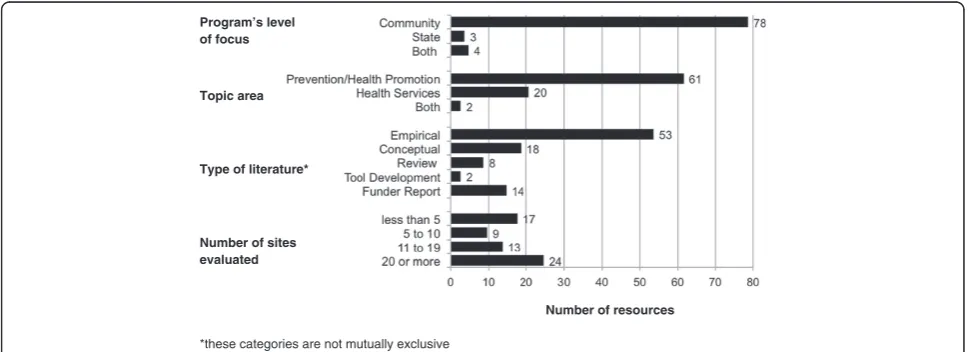
The current literature on sustainability spans nearly 20 years and represents an array of public health issue areas, including tobacco control, physical activity, car-diovascular health, diabetes, and asthma. We identified 85 relevant publications that encompass peer-reviewed and grey literature. Publications included empirical stud-ies (where original data and/or analyses are presented) as well as a variety of non-empirical papers (i.e., concep-tual papers, review papers, tool development, and fund-ing agency reports). (A complete bibliography of these 85 sustainability papers is included as an Additional file 1: Appendix 1.) Figure 1 summarizes these findings.
Sustainability has been explored across many areas of public health. Over 70% of reviewed articles featured programs focusing on prevention, with most of these coming from chronic disease prevention. The other pre-vention programs represented a variety of topics such as substance abuse prevention [28,29], older adult health [30], and behavior change in the prevention of antibiotic resistance [31]. The remaining publications examined programs working in health service delivery or some combination of multiple categories.
The overwhelming majority of the literature examined the sustainability of community programs. There was
variety in the number of program sites examined, though most publications examined 20 or more sites at which the program was being implemented. Of the peer-reviewed articles, 53 included an empirical component, 17 made some attempt at conceptualizing sustainability, and only two developed a tool to assess program sustainability. Of the tools that do exist, none have been successfully tested for reliability or validity [15,32], nor have the developed measures been retested in subsequent studies.
Most of the evidence of sustainability reported was gener-ated by exploratory and descriptive methods. While some pieces highlighted the relevance of institutional theory [33], Schien’s work on organizational culture [34], or diffusion of innovations [35], the majority of the empirical and evaluative publications failed to draw on theory to either explain their observations or test hypotheses. There was also little con-sensus on definitions for major constructs such as‘ sustain-ability,’ ‘capacity,’or‘collaboration’[36].
Concept mapping
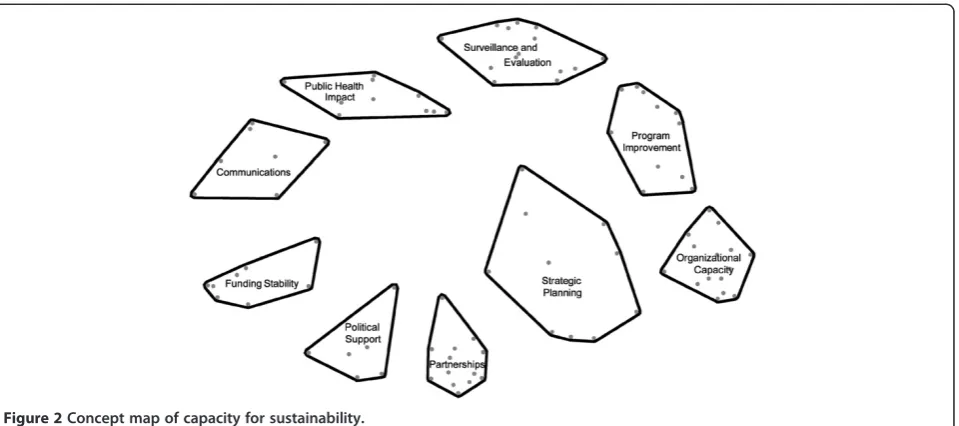
Results of our concept mapping analysis identified nine domains of capacity for sustainability: Political Support,
Funding Stability, Partnerships, Organizational Capacity,
Program Evaluation, Program Adaptation, Communica-tions,Public Health Impacts, andStrategic Planning. These domains are shown in Figure 2. The position of the domain blocks relative to each other indicates the conceptual simi-larities between the domains; those shown closer together are more similar than those that are farther apart. The size of each block suggests the perceived cohesiveness of the domain. The statements within smaller, tighter groupings (e.g., organizational capacity) were more conceptually co-hesive than the statements within more diffuse blocks (e.g., strategic planning).
Type of literature* Topic area of focus
Number of sites evaluated
Number of resources
*these categories are not mutually exclusive
Program’s level
Development of capacity for sustainability framework
Using the items that emerged from the concept map-ping, we created a crosswalk with the results of our lit-erature review. As shown in Table 2, 89% of the items in the final framework had specific support from the litera-ture; moreover, most of these items were rated as im-portant or very imim-portant in their domains. There was greater variability across the domains in the modifiability scores. After discussion with participants and the expert panel, we feel this reflects a recognition that program managers often have limited control over some of the aspects of program sustainability, such as external polit-ical support for their program. The combination of sup-port from the sustainability literature and input from public health experts ensures that the framework
cap-tures the important components of sustainability
capacity.
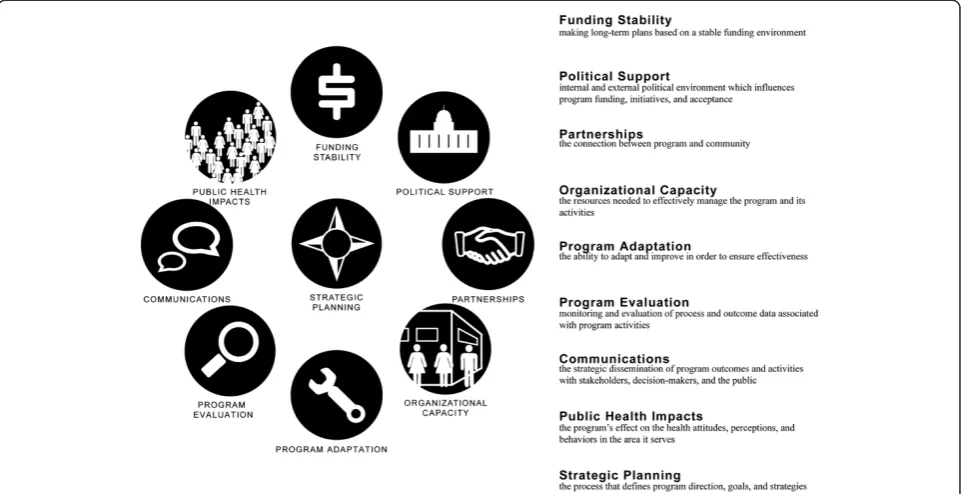
Figure 3 presents the final sustainability framework that came out of the developmental process and briefly
describes each domain. For both empirical and concep-tual reasons, the framework is organized in a circular pattern with strategic planning centrally positioned. Similar to the concept map, adjacent domains have more in common with one another. For example, Program Adaptation is often driven by data obtained as part of Program Evaluation activities. Furthermore, it is reason-able to apply a structural interpretation to the framework, based on the orthogonal nature of the two-dimensional domain map [37]. Specifically, the framework can be bisected diagonally to reveal an internal/external locus of control among the domains. Organizational Capacity, Pro-gram Adaptation, ProPro-gram Evaluation, Communications, and Strategic Planning all involve activities that primarily occur or are managed within the program itself. Con-versely, Public Health Impacts, Funding Stability, Political Support, and Partnerships are influenced by factors exter-nal to the program. This interexter-nal/exterexter-nal map interpret-ation has proven to be useful with program managers
Figure 2Concept map of capacity for sustainability.
Table 2 Literature and concept-mapping support for framework items
Domain # of Items % of Items Supported in Literature Average Importance Score* Average Modifiability Score*
Political Support 6 66.7% 4.09 2.73
Funding Stability 8 100.0% 4.02 2.44
Partnerships 13 92.3% 3.83 3.34
Organizational Capacity 15 93.3% 4.03 3.31
Program Evaluation 14 78.6% 3.80 3.50
Program Adaptation 10 90.9% 3.65 3.27
Communications 7 85.7% 3.71 3.84
Public Health Impacts 10 100.0% 3.61 3.17
Strategic Planning 10 90.0% 3.62 3.31
TOTAL 93 89.2% 3.81 3.24
when they have worked with the framework; in particular, it helps them organize a coherent approach to program sustainability strategic planning.
Conclusions
In this paper we present a new nine-domain framework of public health program capacity for sustainability. This framework can help establish a shared understanding of sustainability for practitioners, funders, and researchers working in a range of public health areas, and is respon-sive to calls for greater theoretical and definitional struc-ture and clarity [36]. Programs that are able to sustain themselves are more likely to produce lasting outcomes and result in healthier communities [17]. By reconciling a broad but fragmented literature with an expert-informed framework, we have taken a step to aid pro-grams in conceptualizing their capacity for sustainability. While researchers in varied fields have studied sustain-ability of their specific programs, this knowledge is gen-erally not cumulative [5,18]. Studies that have focused on a single type of program, coupled with a lack of com-mon definitions, have prevented the field of sustainabil-ity research from moving forward [5]. The sustainabilsustainabil-ity framework presented in this study is uniquely poised to promote consensus regarding definitions of sustainability for public health professionals working in a variety of substantive areas.
Previous publications on the conceptualization of sus-tainability have wrestled with its definition and framing: Is sustainability a process or an outcome? In a 2005
review, Scheirer makes the case that sustainability is something to be achieved [18]. However, in order to achieve sustainability, it is important to have specific program components in place. Determining the point at which a program is sustained may also prove difficult, given programs’ varying sizes, fidelity, and stage in life cycle. In addition to tracking sustained elements of a program (i.e., sustainability outcomes), it is critical to assess the characteristics of a program, its parent organization, and place in the larger service system con-text that lead to program sustainability (i.e., capacity for sustainability). The framework presented here explicitly focuses on sustainability capacity, as it identifies organizational and contextual characteristics that we hypothesize are necessary conditions for successfully sustaining programs over time.
This is a developmental study, and the approach we took has a number of strengths. The literature review was wide in its scope. We gathered peer-reviewed publi-cations and grey literature from diverse topic areas within public health. Experts working in diverse public health settings informed the concept-mapping process. Concept mapping was an effective approach for en-gaging public health experts in diffuse geographic loca-tions, and we were able to include expert input from more than four important public health areas (i.e., tobacco control, heart disease and stroke, physical activ-ity and nutrition, and injury prevention). The concept-mapping methodology mixes qualitative input with stat-istical processes. These complementary methods provide
a framework that is applicable across public health areas at the local, state, and national levels.
Despite these strengths, there are a number of import-ant limitations in this study that some of which suggest a set of future research activities. First, concept mapping is a useful and flexible research tool, but at its core it is reliant on expert opinion. Therefore, it will be important to validate the framework to show that the various domains are all important aspects of sustainability and, more importantly, relate organizational capacity for pro-gram sustainability to sustainability outcomes such as those outlined by Scheirer and Dearing [5]. Also, al-though we have suggested that our capacity for sustain-ability framework may be applicable to programs in the clinical and social service areas, the items in our frame-work came from public health experts and literature. So, specific work remains to be done about determining the boundaries of this sustainability framework. Finally, the presence of many frameworks but few applicable tools suggests a need to organize the field and develop a single set of measures to assess capacity for program sustain-ability. Future efforts by the project team will include development of a tool based on the sustainability frame-work and validation of the tool across a range of public health programs. This framework grounded in the litera-ture presents domains we believe to be critical for public health decision makers to consider when developing and implementing sustainable programs.
Consent
Written informed consent was obtained from the parti-cipants for publication of this report and any accom-panying images.
Additional file
Additional file 1: Appendix 1.Sustainability capacity literature review.
Competing interests
All authors declare no competing interests.
Authors’contributions
SFS managed the concept-mapping process and wrote the first draft of the paper. DAL conceived of the study, and participated in all drafts of the paper. MWS contributed to the conceptual framework of the study and participated in the concept-mapping process. MBE assisted in the management of the concept-mapping process, and contributed to the methods and results sections of the paper. SHH provided general guidance to the study, and participated in editing of the paper. NBM developed the original plan for the sustainability study and participated in the editing process. ACB directed the literature review and participated in editing the drafts of the paper. All authors read and approved the final paper.
Acknowledgements
This project was funded by National Association of Chronic Disease Directors, contract #1055500590023. The authors extend special thanks the project’s advisory committee: Ross Brownson, Washington University in St. Louis; Don Compton, CDC Division of Nutrition, Physical Activity, and Obesity; Karen Deleeuw, Colorado Department of Public Health; Geri
Lester-Baldasare; South Carolina Department of Public Health and Environmental Control; Enola Proctor, Washington University in St. Louis; Mary Ann Scheirer, Scheirer Consulting; and Elisa Wong, Kaiser Permanente. Concept-mapping analysis and results conducted using The Concept System software: Copyright 2004-Current Year; all rights reserved. Concept Systems Inc. The findings and conclusions in this report are those of the authors and do not necessarily represent the official position of the CDC.
Author details 1
Center for Public Health Systems Science, George Warren Brown School of Social Work, Washington University in St. Louis, 700 Rosedale Ave, Campus Box 1009, St. Louis, MO 63112, USA.2Saint Louis University School of Public Health, Saint Louis University, 3545 Lafayette Ave, Room 478, St. Louis, MO 63104, USA.3Insitute for Public Health, Washington University in St. Louis, 600 Euclid Avenue, Campus Box 8217, St. Louis, MO 63110, USA.4Applied Research and Evaluation Branch, Division for Heart Disease and Stroke Prevention, Centers for Disease Control and Prevention, 4770 Buford Highway, Mailstop F-72, Atlanta, GA 30341, USA.5The Ohio State University College of Social Work, 1947 College Road, Columbus, OH 43210, USA.
Received: 19 April 2012 Accepted: 22 January 2013 Published: 1 February 2013
References
1. Farrelly M, Pechacek T, Thomas K, Nelson D:The impact of tobacco control programs on adult smoking.Am J Public Health2008,98:304–309. 2. Miller T, Levy D:Cost-outcome analysis in injury prevention and control:
eighty-four recent estimates for the United States.Med Care2000, 38:562–582.
3. Proctor E, Landsverk J, Aarons G, Chambers D, Glisson C, Mittman B: Implementation research in mental health services: an emerging science with conceptual, methodological, and training challenges.Adm Policy Ment Health2009,36:24–34.
4. Aarons GA, Hurlburt M, Horwitz SM:Advancing a conceptual model of evidence-based practice implementation in public service sectors.
Adm Policy Ment Health2011,38:4–23.
5. Scheirer MA, Dearing JW:An agenda for research on the sustainability of public health programs.Am J Public Health2011,101:2059–2067. 6. Glasgow RE, Klesges LM, Dzewaltowski DA, Estabrooks PA, Vogt TM:
Evaluating the impact of health promotion programs: using the RE-AIM framework to form summary measures for decision making involving complex issues.Health Educ Res2006,21:688–694.
7. Goodman RM, Steckler A:A model for the institutionalization of health promotion programs.Fam Community Health1989,11:63–78. 8. Savaya R, Spiro S, Elran-Barak R:Sustainability of social programs: a
comparative case study analysis.Am J Eval2008,29:478–493. 9. Centers for Disease Control and Prevention:Framework for program
evaluation in public health.MMWR Recomm Rep1999,48:1–40. 10. Handler A, Issel M, Turnock B:A conceptual framework to measure
performance of the public health system.Am J Public Health2001, 91:1235–1239.
11. Hawe P, Noort M, King L, Jordens C:Multiplying health gains: the critical role of capacity-building within health promotion programs.Health Policy
1997,39:29–42.
12. Harris JK, Luke DA, Burke RC, Mueller NB:Seeing the forest and the trees: using network analysis to develop an organizational blueprint of state tobacco control systems.Soc Sci Med2008,67:1669–1678.
13. Zaza S, Briss PA, Harris KW:Task Force on Community Preventive Services, The Guide to Community Preventive Services: What Works to Promote Health? New York: Oxford University Press; 2005.
14. The Cochrane Library. Chichester: Wiley; Issue 1; 2013.
15. Mancini JA, Marek LI:Sustaining community-based programs for families: Conceptualization and measurement.Fam Relat2004,53:339–347. 16. Pluye P, Potvin L, Denis J-L:Making public health programs last:
conceptualizing sustainability.Eval Program Plann2004,27:121–133. 17. Shediac-Rizkallah MC, Bone LR:Planning for the sustainability of
community-based health programs: conceptual frameworks and future directions for research, practice and policy.Health Educ Res1998, 13:87–108.
19. Kane M, Trochim WMK:Concept Mapping for Planning and Evaluation. Thousand Oaks: Sage; 2007.
20. Rosas SR:Concept mapping as a technique for program theory development: an illustration using family support programs. Notes.Am J Eval2005,26:389–401.
21. Brownson RC, Kelly CM, Eyler AA, Carnoske C, Grost L, Handy SL, Maddock JE, Pluto D, Ritacco BA, Sallis JF, Schmid TL:Environmental and policy approaches for promoting physical activity in the united states: a research agenda.J Phys Act Health2008,5:488–503.
22. Trochim WMK, Milstein B, Wood BJ, Jackson S, Pressler V:Setting objectives for community and systems change: an application of concept mapping for planning a statewide health improvement initiative.Health Promot Pract2004,5:8–19.
23. Anderson LA, Gwaltney MK, Sundra DL, Brownson RC, Kane M, Cross AW, Mack JR, Schwartz R, Sims T, Carol WR:Using concept mapping to develop a logic model for the prevention research centers program.Prev Chronic Dis2006,3:A06.
24. Graham AL, Kerner JF, Quinlan KM, Vinson C, Best A:Translating cancer control research into primary care practice: a conceptual framework.
Am J Lifestyle Med2008,2:241–249.
25. Arrington B, Kimmey J, Brewster M, Bentley J:Building a local agenda for dissemination of research into practice.J Public Health Manag Pract2008, 14:185–192.
26. Green A, Aarons G:A comparison of policy and direct practice stakeholder perceptions of factors affecting evidence-based practice implementation using concept mapping.Implement Sci2011,6:104. 27. Bowman C, Sobo E, Asch S, Gifford A, Initiativet HHQER:Measuring
persistence of implementation: QUERI series.Implement Sci2008,3:21. 28. Akerlund KM:Prevention program sustainability: the state’s perspective.
J Community Psychol2000,28:353–362.
29. Johnson K, Hays C, Center H, Daley C:Building capacity and sustainable prevention innovations: a sustainability planning model.Eval Program Plann2004,27:135–149.
30. Evashwick C, Ory M:Organizational characteristics of successful innovative health care programs sustained over time.Fam Community Health2003,26:177–193.
31. Edgar T, Boyd SD, Palam A, Megan J:Sustainability for behaviour change in the fight against antibiotic resistance: a social marketing framework.
J Antimicrob Chemother2009,63:230–237.
32. Steckler A, Goodman RM, McLeroy KR, Davis S, Koch G:Measuring the diffusion of innovative health promotion programs.Am J Health Promot
1992,6:214–224.
33. Pluye P, Potvin L, Denis J-L, Pelletier J, Mannoni C:Program sustainability begins with the first events.Eval Program Plann2005,28:123–137. 34. Scott-Findlay S, Golden-Biddle K:Understanding how organizational
culture shapes research use.J Nurs Adm2005,35:359–365.
35. Jansen M, Harting J, Ebben N, Kroon B, Stappers J, Van Engelshoven E, de Vries N:The concept of sustainability and the use of outcome indicators. A case study to continue a successful health counseling intervention.
Fam Pract2008,25:i32–i37.
36. Wiltsey Stirman S, Kimberly J, Cook N, Calloway A, Castro F, Charns M:The sustainability of new programs and innovations: a review of the empirical literature and recommendations for future research.
Implementation science: IS2012,7:17–17.
37. Davidson ML:Multidimensional Scaling. New York: John WIley and Sons, Inc.; 1983.
doi:10.1186/1748-5908-8-15
Cite this article as:Schellet al.:Public health program capacity for sustainability: a new framework.Implementation Science20138:15.
Submit your next manuscript to BioMed Central and take full advantage of:
• Convenient online submission
• Thorough peer review
• No space constraints or color figure charges
• Immediate publication on acceptance
• Inclusion in PubMed, CAS, Scopus and Google Scholar
• Research which is freely available for redistribution