A CULTURALLY EMPOWERING PERSPECTIVE OF AFRICAN-AMERICAN PARENTS’ AND THEIR ADOLESCENT DAUGHTERS’ HPV VACCINE ACCEPTANCE
Kayoll Veronique Galbraith
A dissertation submitted to the faculty at The University of North Carolina at Chapel Hill in partial fulfillment of the requirements for the degree of Doctor of Philosophy in the School of
Nursing.
Chapel Hill 2016
© 2016
ABSTRACT
Kayoll Veronique Galbraith: A Culturally Empowering Perspective of African-American Parents’ and their Adolescent Daughters’ HPV Vaccine Acceptance
(Under the direction of Coretta Jenerette)
The human papillomavirus (HPV) vaccination literature supports the role of culture on African-Americans’ HPV vaccination acceptance. However, the evidence supporting the role of culture on this health behavior is limited. Few studies examine the influence of culture on HPV vaccination acceptance among African-Americans using theoretical frameworks grounded in culture, and few studies examine the influence of culture from the perspective of adolescent females. Therefore, using a dyadic approach, this dissertation explored the role of culture on African-American parents’ and their adolescent daughters’ (12 to 17 years old) HPV vaccination acceptance using both the PEN-3 cultural model and the Health Belief Model. Grounded theory techniques and quantitative descriptive statistics were used to explore the cultural factors that influence the HPV vaccine acceptance of 29 African-American parent-daughter dyads (n = 30 parents; n = 34 daughters) residing in the Southeastern and Northeastern United States.
ACKNOWLEDGEMENTS
This dissertation would not have been possible without my Lord and Savior Jesus Christ. The scripture says, “Trust in the Lord with all thine heart; and lean not unto thine own
understanding. In all thy ways acknowledge him, and he shall direct thy paths” (Proverbs 3:5-6 King James Version). This scripture has guided me through the long days and even longer nights of writing. Thank you Lord for your faithfulness, and abounding grace.
To my dissertation chair: Dr. Coretta Jenerette. Your infectious enthusiasm for research is something that I admire. Thank you for always being available when I needed you, and for your support and guidance. To Dr. Jill B. Hamilton, having you as my advisor when I entered this program was more than I could have ever asked for. Thank you for challenging the way I approach writing and the way I think about a problem. I am forever grateful for your time and effort invested in me. Dr. Julia Lechuga, working with you has been a very rich experience. Thank you for always being ready to answer my many questions no matter how simple or complex. LTC Angelo D. Moore (Ret), thank you for being the voice of reason. Thank you for teaching me to pay attention to the big picture, to stay focused on the end goal and to be diligent in my work ethic. Dr. Mary H. Palmer, thank you for the unique perspective you brought to my work and for your attention to detail that pushed me to think deeper by asking thoughtful questions.
when deciding the best way to protect the health of your children and yourself. I am forever grateful for your participation. To the UNC faculty who supported my training and dissertation work. Thank you to Dr. Shawn M. Kneipp for graciously assisting me with access to the
Greensboro Department of Health. I would like to thank the staff at Guilford County Department of Health and Highpoint Health Department: Judy Southern, Vonda Pabon, LaTanya Pender, Karen Ritter, Cordelia Weant, Susan Horvath, and Ashley Gunnell. Thank you for providing an avenue for the voices of parents and adolescent females within the community you serve to be heard. Dr. Noel T. Brewer, thank you for the valuable experience of being an intern in your lab. Dr. Jennifer S. Smith, thank you for exposing me to other areas of cervical cancer research. Dr. Melissa Gilkey, thank you for your time, guidance and support in preparing my first first-authored published manuscript. Dr. Linda Beeber, thank you for training in data collection and management, and for your many advise. To Dr. Debra Barksdale, Dr. Cheryl Woods Giscombe, Dr. Sheilda G. Rodgers, and Dr. Rumay Alexander, thank you for your support, advising, and research opportunities throughout my doctoral studies. Thank you to Mrs. Beverly Johnson. Not only for your time in transcribing my data, but also for your encouraging words and uplifting spirit. It is truly a blessing to have gotten to know you through this process.
many more throughout the years. Thank you for always reminding me of your confidence in me and teaching me to always recognize, nurture and adhere to the spirit within me. I love you Dad. To my father, Devon Galbraith, thank you for instilling in me the value of an education and encouraging me in all my endeavors. To Frank, thank you for your friendship and love. I am grateful to experience life with you. You are a blessing from the Lord. I look forward to our journey through this life together. To my family: my grandmother Zelma Walters, my aunts Elaine, Debbie, Sheryl, Marie, Laurice, Marcia, and Javon, my uncles Turbo, Paul, Bobby, and Tommy, and numerous cousins, Breanna, Ricky, Anthony, Jermaine, Alyssa, Melisa, Kimberly, Lenworth, Gerald, Nicholas, Richard, Kareen, Devon, Mark, and Christopher.
To my church family: Faithful Mission Holiness Church of God. To Pastor Rosalind Constantine, Mother Marshall, Deacon Constantine, Overseer Lydia T. Grenade and the Grenade family, Mr. and Ms. Whiteman, Sis. Cheryl Small, Sis. Jessica Edwards, Mr. and Mrs. Watson, Jayden Watson, and Deacon and Deaconess Padmore. Thank you for the many prayers, and encouraging texts and calls. It means the world to have your love and support. To my second church family in North Carolina: my Summit Church Small Group. To Sam and Cristina Benton, Katie and Travis Smith, Ed and Lorna Spence, Shannon and Marty Stam, Morgan Locklear, Dr. Lee Hutson, Jean Ahn, Jasmyne Jones, Dr. Derek Vermeulen, Dr. Carolyn Barnes, Jonathan Zebulske and Steven Thomsen. All of you have made my time here so amazing. We have laughed together, prayed together and served together. I pray God continue to bless each of you. Thank you for your continual support, spiritually, emotionally and physically. I love you all.
Vanessa Pierre, Bolanle Ajomagberin, Kemi Bolutayo, Valerie Tanis, Wales Cruz, Evette Cordoba, Samantha Aaron, Dr. Jennifer Stevenson, Tamara Taggart, Kathleen Tedford Day, Jasmine Stringer, Kristen Black, and Christian Douglass. Thank you for the outings, the many phone calls to share your day with me, your encouragement and just for being a friend.
To Stephanie Devane-Johnson: my fellow doctoral candidate. I am thankful God allowed our paths to cross. You are a true sister and friend. I could not have prayed for a better “Alice” to go through this dissertation process with! To my School of Nursing PhD cohort, congratulations to those who are finishing up and to those who are still working towards finishing: Keep on pressing!
To Dr. Sharon A. Bryant, and Dr. Shanise Kent from SUNY Binghamton’s Collegiate Science and Technology Entry Program and the Ronald E. McNair Scholars Program. Thank you for providing me with my first experience with research. I credit the two of you and these
outstanding and instrumental programs for exposing me to research and to the possibility of this being a career path. To Dean Sheldon D. Fields, thank you for advising and supporting me when I first entertained the thought of pursuing a doctorate in nursing. To Dr. Leo Wilton, Dr. Sue Seibold-Simpson, and Dr. Gale A. Spencer for my first research opportunities during my undergraduate experience at SUNY Binghamton. To the SUNY Binghamton Educational
Opportunity Program staff: Wesley A. Van Dunk, Karima Legette, Yulanda Whyte-Johnson, and Vanessa Young. Thank you for welcoming me into the EOP family, for my first teaching
experience, and for your constant support during my undergraduate experience.
Award for the Interventions to Prevent and Manage Chronic Illness, the Jonas Nurse Leaders Scholar Cohort IV, the Carol Ann Beerstecher Graduate Scholarship, the Mary P. Speight Scholarship Foundation, the Sigma Theta Tau International Honor Society of Nursing
TABLE OF CONTENTS
LIST OF TABLES ... xv
LIST OF FIGURES ... xvi
LIST OF ABBREVIATIONS ... xvii
CHAPTER 1: INTRODUCTION ... 1
Statement of the Problem ... 1
Conceptual Framework ... 2
Purpose ... 5
REFERENCES ... 6
CHAPTER 2: PARENTAL ACCEPTANCE AND UPTAKE OF THE HPV VACCINE AMONG AFRICAN-AMERICANS AND LATINOS IN THE UNITED STATES: A LITERATURE REVIEW ... 8
Introduction ... 8
Methods ... 11
Results... 13
Awareness and Knowledge of HPV and the HPV Vaccine ... 17
HPV Vaccination Barriers ... 19
HPV Vaccine Acceptability and Intentions to Vaccinate ... 20
HPV Vaccine Uptake ... 22
HPV Vaccine Series Completion ... 27
Discussion ... 28
Future Research ... 35
Conclusion ... 38
REFERENCES ... 52
CHAPTER 3: AFRICAN AMERICAN PARENTS’ AND DAUGHTERS’ HPV VACCINATION ACCEPTANCE: AN INQUIRY GROUNDED IN CULTURE ... 63
Introduction ... 63
Conceptual Framework ... 65
Methods ... 66
Participants and Procedures ... 67
Data Analysis ... 68
Results... 69
Positive Perceptions ... 70
Exotic Perceptions ... 72
Negative Perceptions ... 72
Positive Enablers ... 74
Exotic Enablers ... 75
Messages in the media. ... 75
Negative Enablers ... 76
Nurturers Perceived as Positive ... 77
Nurturers Perceived as Negative ... 79
Discussion ... 80
Limitations ... 87
Implications... 88
Conclusion ... 89
CHAPTER 4: THE INFLUENCE OF CULTURE ON AFRICAN-AMERICAN PARENTS AND DAUGHTERS’ HEALTH BELIEFS TOWARDS HPV
VACCINE ACCEPTANCE... 102
Introduction ... 102
Conceptual Framework ... 104
Methods ... 105
Participants ... 106
Procedure ... 106
Data analysis ... 107
Results... 108
Perceived Susceptibility ... 109
Perceived Severity ... 109
Perceived Benefit ... 110
Perceived Barriers ... 111
Cues to Action... 113
Self-Efficacy ... 114
Discussion ... 114
Limitations ... 119
Implications... 120
Conclusion ... 121
REFERENCES ... 125
CHAPTER 5: SYNTHESIS OF FINDINGS AND IMPLICATIONS ... 129
Findings and Implications... 129
Summary of Findings ... 129
Manuscript 2: A cultural perspective of perceptions, enablers, and nurturers that promote and prevent African-American parents’ and
daughters’ HPV vaccination acceptance ... 130
Manuscript 3: The influence of culture on African-American parents’ and daughters’ health beliefs towards HPV vaccine acceptance ... 132
Strengths and Limitations ... 133
Implications in Research and Practice ... 134
Conclusion ... 137
LIST OF TABLES
Table 2.1. Characteristics of Studies Included in Review. ... 41
Table 2.2. Major Findings Related to African-American and Latino Parental Acceptance and Uptake for the HPV Vaccine. ... 50
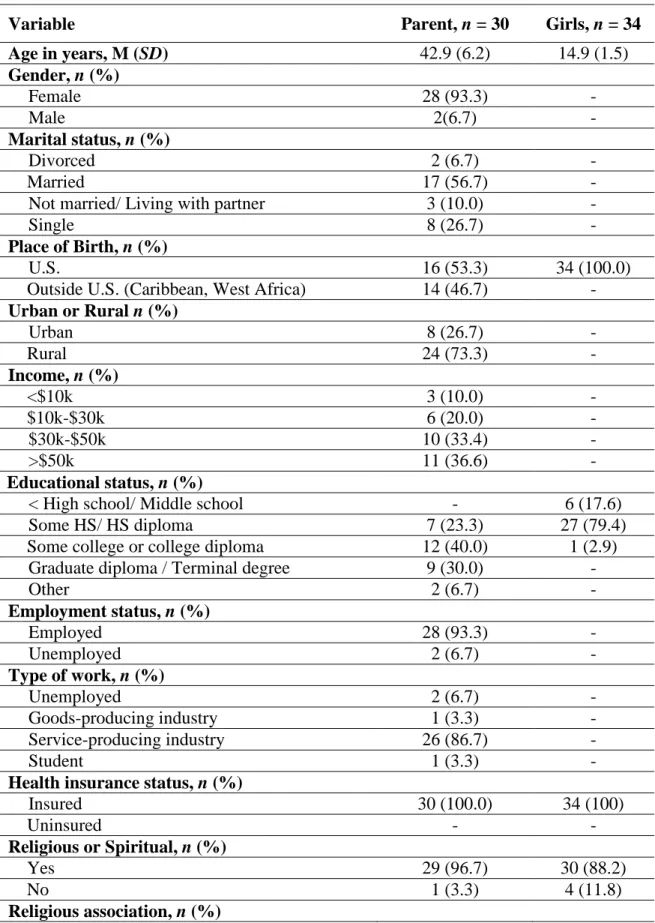
Table 3.1. Demographic Characteristics of Study Sample (N = 64). ... 90
Table 3.2. Perceptions, Enablers and Nurturers that Influence African-American Parents and Daughters HPV Vaccine Acceptance. ... 92
Table 3.3. Cultural Factors that Influence HPV Vaccine Acceptance among Parents and Daughters... 93
Table 3.4. Parents and Daughters Attitudes and Beliefs Towards HPV Vaccine. ... 94
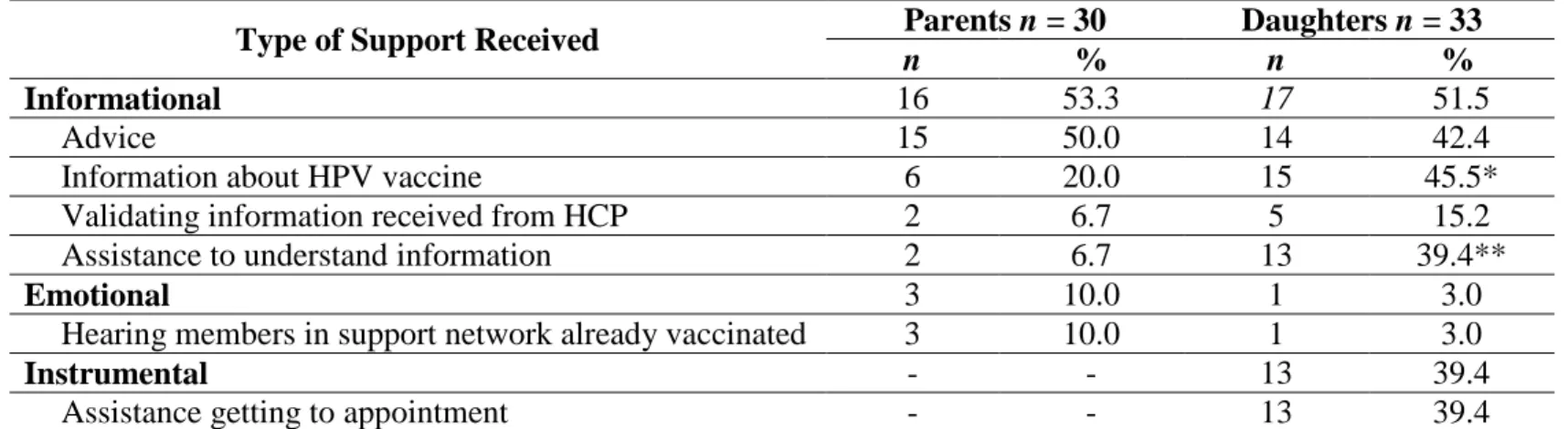
Table 3.5. Type of Social Support Parents and Daughters Received from Support Network. ... 95
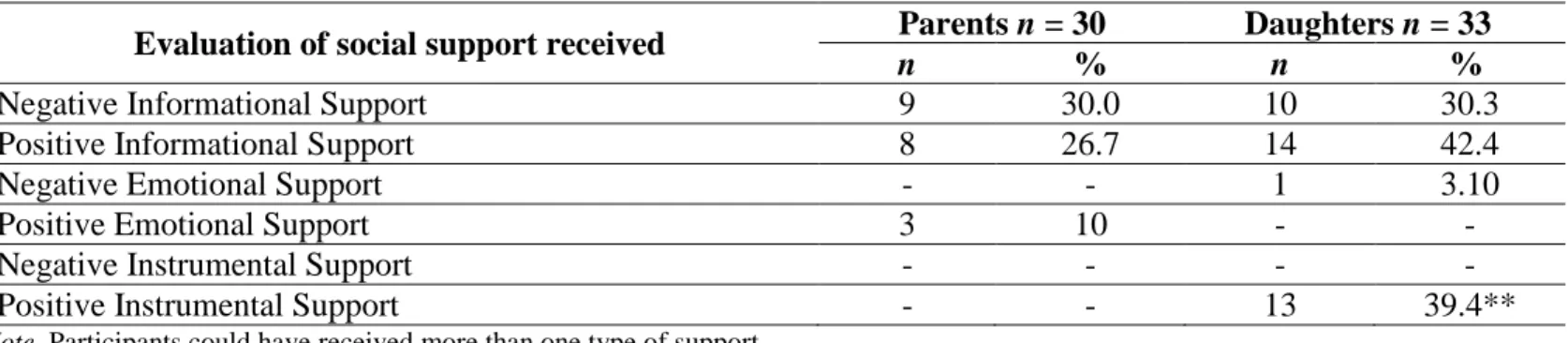
Table 3.6. Evaluation of Social Support Parents and Daughters Received from Support Network. ... 96
Table 4.1. HPV Vaccine Acceptance among Parents and Daughters. ... 122
Table 4.2. Health Belief Model Constructs by Parents and Daughters. ... 123
LIST OF FIGURES
LIST OF ABBREVIATIONS ACIP Advisory Committee on Immunization Practices CHAMP Child Health Assessment and Monitoring Program
X2 Chi Squared Test
DTAP Diphtheria, Tetanus and Pertussis
FET Fisher’s Exact Test
OB/GYN Obstetrics and Gynecology
HBM Health Belief Model
HCP(s) Health Care Provider(s)
HPV Human papillomavirus
NC North Carolina
PEN Perceptions, Enablers, Nurturers
SES Socio-Economic Status
STD(s) Sexually Transmitted Disease(s) STI(s) Sexually Transmitted Infection(s)
CHAPTER 1: INTRODUCTION Statement of the Problem
Since the 1940’s, cervical cancer has been a major cause of death among women in the United States (US) (National Institutes of Health, 2010). In response to this, the Papanicolaou smear was introduced in the 1950s as a cervical cancer screening test, resulting in significant decreases in cervical cancer deaths in the U.S. by more than 60% between 1955-1992 (National Cancer Institute (NCI), 2013; (National Women's Health Network, 2015). Yet this success has only been to a certain extent. Although African-American women are among those with the highest cervical cancer screening rates, African-American women still have the highest cervical cancer mortality rate (4.0 per 100,000 persons) compared to Hispanic and non-Hispanic white women (2.7 deaths per 100,000 persons, and 2.1 deaths per 100,000 persons, respectively (NCI, 2015).
Prevention (CDC), 2015). Ultimately, the HPV vaccination coverage rate is well below the Healthy People 2020 three-dose coverage goal of 80% for adolescent females (CDC, 2015; HealthyPeople.gov, 2015). More research to increase HPV vaccination acceptance (initiation and completion) among African-Americans is needed.
The HPV vaccination literature supports the role of culture on African-Americans’ HPV vaccination acceptance. However, the evidence in support of the role of culture on this health behavior is limited. Religion (Thompson, Arnold, & Notaro, 2011; Thompson, Arnold, & Notaro, 2012), social norms (Lechuga, Swain, & Weinhardt, 2011), mistrust of health care providers (HCP) and healthcare system (Bynum et al., 2012) are among those cultural factors previously identified. Although these factors have been identified as preventing
African-Americans’ HPV vaccination acceptance, these studies were lacking detail and were not specific to the culture of an American population. Also missing are perspectives among African-American adolescent population of those cultural factors relevant to HPV vaccination acceptance and their input into the design of a behavioral intervention that addresses their needs. This study will help to further understand the role of culture on African-American parents and daughters’ HPV vaccination acceptance by comprehensively exploring its role among parents and
daughters.
Conceptual Framework
The conceptual models that guided this dissertation are the PEN-3 cultural model
(Airhihenbuwa, 1992) and Health Belief Model (HBM) (Rosenstock, 1990). The PEN-3 is a
model for understanding the intersection of culture and health and is useful for understanding
how culture influences HPV vaccine acceptance among African-American parents and
adolescent females. Within this model, culture is defined as shared values, norms, and codes that
their environments (Airhihenbuwa, 1999). It centralizes culture in studying health beliefs, health behavior and health outcomes and also places culture at the center of developing, implementing, and evaluating public health interventions. The PEN-3 emphasizes the role of the collective (family, community) in influencing the individual's health experiences and health decisions (Iwelunmor, Newsome, & Airhihenbuwa, 2014). The model also takes into account the multiple factors that determine health status and identifies them into three domains: (1) Relationships and Expectations, (2) Cultural Empowerment, and (3) Cultural Identity. The PEN-3 is influenced by traditional health behavior theories such as the HBM (Rosenstock, Strecher, & Becker, 1988), Theory of Reasoned Action (Fishbein & Ajzen, 1974), and the PRECEDE-PROCEED
framework (Green & Kreuter, 1999). The letters, P E N, are acronyms referring to constructs within three interrelated and intersecting domains of the model.
While there are three domains within the PEN-3, only the Relationships and Expectations and Cultural Empowerment domains were used to guide this study. These two domains are used during the assessment phase of a study to explore the factors that influence a population’s health behavior change. On the other hand, the Cultural Identity domain is used during the intervention phase of a study to determine the best point of entry the intervention should be targeted; either at the level of Persons, Extended family members, or Neighborhoods. The Relationships and Expectations domain (Iwelunmor et al., 2014) examines the Perceptions, Enablers, and Nurturers that influence health behavior. Perceptions include knowledge, attitudes and beliefs that may prevent or promote performing a health behavior. Enablers are community or structural factors that prevent or promote performing a health behavior. Nurturers are family or members of kinship networks who prevent or promote performing a health behavior. The Cultural
domain (Perceptions, Enablers, and Nurturers) are considered Positive, Exotic (or unique), or Negative. Beliefs or behaviors identified as positive promote a health behavior and should be viewed as an asset; beliefs or behaviors identified as exotic are not harmful and can be
continued; and beliefs or behaviors identified as negative prevent performing a health behavior (Iwelunmor et al., 2014).
The HBM is a value expectancy model developed to predict people's decision to use preventive health behaviors (Becker & Maiman, 1975; Janz & Becker, 1984), and useful for understanding African-American parents’ and daughters’ HPV vaccine acceptance. The constructs of the HBM used in this study were perceived susceptibility, perceived severity, perceived benefits, perceived barriers, cues to action, and self-efficacy. The model posits that individuals take preventive health action in response to a perceived level of threat (susceptibility and severity) if the benefits of the new behavior outweighs the barriers or cost of performing that new health behavior (Rosenstock, 1966). The other important constructs of the model that
influences whether the individual engages in the new health behavior are cues to action and self-efficacy. Cues to action are factors motivate individuals to perform a new health behavior. Self-efficacy is the belief in one’s ability to successfully perform a new behavior (Bandura, 1997). Hence, parents and daughters will accept the HPV vaccine if they perceive a threat is likely and severe, if they perceive HPV vaccination to be effective and safe, if they have a sufficient cue or motivation for vaccination, and if they believe they are able to obtain the HPV vaccine.
Together, the PEN-3 and HBM (Figure 1.1) may strengthen our understanding of the role
of culture on African-American parents and daughters HPV vaccine acceptance by factors that
are relevant to this population. Both the PEN-3 and HBM assess beliefs and cues to motivate
factors beyond the individual level into a broader socio-cultural context. The PEN-3 and HBM may produce a more meaningful set of factors to address diverse factors that influence African-American parents and daughters HPV vaccine acceptance (Bynum et al., 2012).
Figure 1.1. The PEN-3 cultural model and Health Belief Model. Source: Adapted from Scarinci, Bandura, Hidalgo, & Cherrington (2012).
Purpose
The purpose of this dissertation is to explore the role of culture on African-American parents and adolescent females ages 12 to 17 years old’ HPV vaccine acceptance. This dissertation will use qualitative and quantitative methods to answer the following research questions:
1) What is the state of the literature on the role on African-Americans HPV vaccine acceptance? 2) How does culture influence African-American parents and adolescent females HPV vaccine acceptance?
REFERENCES
Airhihenbuwa, C. O. (1992). Health promotion and disease prevention strategies for African Americans: A conceptual model. In R. L. Braithwaite & S. E. Taylor (Eds.), Health issues in the Black community (First ed., pp. 267-280). San Francisco, CA: Jossey-Bass Health Series.
Airhihenbuwa, C. O. (1999). Of culture and multiverse: Renouncing 'the Universal Truth'. Journal of Health Education, 30, 267-273.
Bandura, A. (1997). Self-efficacy: The exercise of control: New York: Freeman.
Becker, M. H., & Maiman, L. A. (1975). Sociobehavioral determinants of compliance with health and medical care recommendations. Medical Care, 13(1), 10-24.
doi:10.2307/3763271
Bynum, S. A., Brandt, H. M., Annang, L., Friedman, D. B., Tanner, A., & Sharpe, P. A. (2012). Do health beliefs, health care system distrust, and racial pride influence HPV vaccine acceptability among African American college females? Journal of Health Psychology, 17(2), 217-226. doi:10.1177/1359105311412833
CDC. (2015). National, regional, state and selected local area vaccination coverage among adolescents aged 13-17 years-United States, 2014. Morbidity and Mortality Weekly Report, 64(29), 784-792.
Fishbein, M., & Ajzen, I. (1974). Attitudes towards objects as predictors of single and multiple behavioral criteria. Psychological Review, 81(1), 59-74.
Green, L., & Kreuter, M. (1999). The precede–proceed model. Health promotion planning: An educational approach. 3rd ed. Mountain View (CA): Mayfield Publishing Company, 32-43.
HealthyPeople.gov. (2015). Immunization and infectious diseases. Retrieved from https://www.healthypeople.gov/2020/topics-objectives/topic/immunization-and-infectious-diseases/objectives
Iwelunmor, J., Newsome, V., & Airhihenbuwa, C. O. (2014). Framing the impact of culture on health: a systematic review of the PEN-3 cultural model and its application in public health research and interventions. Ethnicity & health, 19(1), 20-46.
doi:10.1080/13557858.2013.857768
Janz, N. K., & Becker, M. H. (1984). The Health Belief Model: A decade later. Health Educuation Quarterly, 11(1), 1-47.
NCI. (2015). SEER Stat fact sheets: Cervix uteri cancer. Retrieved from http://seer.cancer.gov/statfacts/html/cervix.html
NCI (2013). Cancer advances in focus: Cervical cancer. Retrieved from
http://www.cancer.gov/cancertopics/factsheet/cancer-advances-in-focus/cervical NIH. (2010). Cervical cancer fact sheet. Retrieved from
https://report.nih.gov/nihfactsheets/Pdfs/CervicalCancer(NCI).pdf
National Women's Health Network (2015). Cervical Cancer Fact Sheet. Retrieved from https://www.nwhn.org/wp-content/uploads/2015/07/Cervical-Cancer.pdf
Rosenstock, I. M. (1966). Why people use health services. Milbank Mem Fund Q, 44(3), Suppl:94-127.
Rosenstock, I. M. (1990). The Health Belief Model: Explaining health behavior through expectancies. In K. Glanz, F. M. Lewis, & B. K. Rimer (Eds.), Health behavior and health education: Theory, research, and practice (Vol. First, pp. 39-61). San Francisco, CA: Jossey-Bass.
Rosenstock, I. M., Strecher, V. J., & Becker, M. H. (1988). Social learning theory and the Health Belief Model. Health Education Quarterly, 15(2), 175-183.
Scarinci, I. C., Bandura, L., Hidalgo, B., & Cherrington, A. (2012). Development of a theory-based (PEN-3 and health belief model), culturally relevant intervention on cervical cancer prevention among Latina immigrants using intervention mapping. Health Promotion
Practice, 13(1), 29-40. doi: 10.1177/1524839910366416.
Thompson, V. L., Arnold, L. D., & Notaro, S. R. (2011). African American parents' attitudes toward HPV vaccination. Ethnicity & disease, 21(3), 335-341.
CHAPTER 2: PARENTAL ACCEPTANCE AND UPTAKE OF THE HPV VACCINE AMONG AFRICAN-AMERICANS AND LATINOS IN THE UNITED STATES: A
LITERATURE REVIEW Introduction
In the United States (US), it is estimated that 12,900 new cervical cancer cases occur and 4,100 result in death yearly (American Cancer Society (ACS), 2015). African-American women and Latinas have the highest cervical cancer incidence rates (9.2 and 9.9 new cases per 100,000 persons, respectively) compared to non-Hispanic white women (7.7 new cases per 100,000 persons). African-American women and Latinas also have a higher cervical cancer mortality rate (4.0 and 2.7 deaths per 100,000 persons, respectively) compared to non-Hispanic white women (2.1 deaths per 100,000 persons) (National Cancer Institute, 2015).
survival rate of African-American women (ACS, 2013, 2015), making it lower (59%) than that of non-Hispanic white women (69%) (ACS, 2013).
Latinos, the fastest growing population in the US, have had the lowest mortality and incidence rates for all cancers combined compared to non-Hispanic whites (Ennis, Rios-Vargas, & Albert, 2011; Siegel, Naishadham, & Jemal, 2012). With regard to cervical cancer however, Latinas have the second highest cervical cancer mortality rate and are 64% more likely to be diagnosed with cervical cancer than non-Hispanic white women (ACS, 2012; Ennis et al., 2011). Similar to African-Americans, one contributing factor to Latinas’ higher cervical cancer
mortality rate is delayed diagnosis. Likewise, Latinas are also more likely to be diagnosed with cervical cancer at later stages of the disease (ACS, 2012).
Cervical cancer is caused by persistent infection with the Human Papillomavirus (HPV), which is the most common sexually transmitted infection (STI) in the US (Centers for Disease Control and Prevention (CDC), 2014; Walboomers et al., 1999). While cervical cancer is the most common HPV-associated cancer, HPV is also associated with other types of cancers (vulvar, vaginal, anal, penile, and oropharyngeal cancers), which result in disparities that extend to women and men of varied races and ethnicities. For example, more non-Hispanic white women get vulvar cancer than women of other races or ethnicities, and more African-American and non-Hispanic white men and women, respectively, get oropharyngeal cancer than Asian Pacific Islander and American Indian/Alaska Native men and women (CDC, 2012). Among African-Americans and Latinos, a greater proportion of African-American women and Latinas are diagnosed with vaginal cancers than non-Hispanic white women. Similarly,
In 2006, a quadrivalent vaccine that protects against four types of HPV (6, 11, 16, 18), responsible for approximately 70% of cervical cancer cases (high risk strains) and 90% of genital warts cases (low risk strains), was licensed in the US. In 2014, a 9-valent (9vHPV) vaccine that protect against the four HPV types (6, 11, 16, 18) targeted in the quadrivalent vaccine plus five additional high risk types (31, 33, 45, 52, and 58) was also licensed (Joura et al., 2014). The 9vHPV vaccine offers the potential to increase overall prevention of cervical cancer from approximately 70% to approximately 90% (Serrano et al., 2012). The Advisory Committee on Immunization Practices (ACIP) recommends the HPV vaccines for routine administration for males and females ages 11 to 12. The ACIP also recommends catch-up vaccination to males ages 13 to 21 and females ages 13 to 26 (CDC, 2015a). The HPV vaccines are administered in a three-dose series at 0 month, 1-2 months and 6 months and research indicates that the vaccines are safe and effective (Garland et al., 2015; Joura et al., 2015; Markowitz et al., 2013; Stokley et al., 2014).
below the Healthy People 2020 three-dose HPV vaccination coverage goal of 80% for adolescent females (CDC, 2015b; HealthyPeople.gov, 2015).
The purpose of this systematic literature review is to condense the research findings of studies conducted with the two largest ethnic groups in the US: African-Americans and Latinos to understand factors associated with HPV vaccine acceptability and uptake among parents of adolescent females. Equally important, is understanding African-American and Latino parents’ decisions to accept the HPV vaccine for adolescent males. However, this study focuses on African-American and Latino parents of adolescent females due to the increased availability of studies focused on this population as ACIP recommendations for routine administration of vaccination for males occurred years later (CDC, 2011). A review of the literature on parental HPV vaccine acceptance among African-American and Latinos is timely as it is imperative to provide direction to future HPV vaccine acceptability research and practice before current disparities in vaccination rates exacerbate existing disparities in cervical cancer incidence and mortality.
Methods
Standards for conducting an integrative review described by Whittemore and Knafl (2005) and Cooper (2009) were used. Studies in the following databases were searched:
adolescents only, or male adults only, (3) studies that consisted of healthcare providers only, (4) reports that consisted of editorials, commentaries, dissertations, conference abstracts or literature reviews, and (5) studies that were duplicates. Studies were limited to African-American and Latino parents since these populations experience a greater burden of HPV-related cancers compared to non-Hispanic whites and since African-American adolescent females have below optimal HPV vaccine completion rates in comparison to non-Hispanic whites. Studies were limited to adolescent females and their parents given that, typically, it is the female parent of adolescent females who are the key decision makers for HPV vaccination at the optimal age of 11-12 years old (McRee, Reiter, & Brewer, 2010). Studies were also limited to U.S. population since the availability and policies governing the HPV vaccine differ from other parts of the world. For instance, the HPV vaccine was promptly available in the US after licensure but not in other parts of the world, and other industrialized countries now mandate the HPV vaccine, which is not the case in the US.
separately added to the primary search term: AND attitude*; aware*; AND knowl*; AND barrier*; AND perception*. The searches conducted in CINAHL were limited to exclude
Medline records. The matrix method was used to examine and organize the studies included. The matrix method is an organizational tool to extract specified data for each subgroup classification (study design, theoretical framework, independent variables, dependent variables, etc.) for comparison on specific variables and sample characteristics (race/ethnicity, age, urban and rural, etc.) (Garrard, 2010; Whittemore & Knafl, 2005).
Results
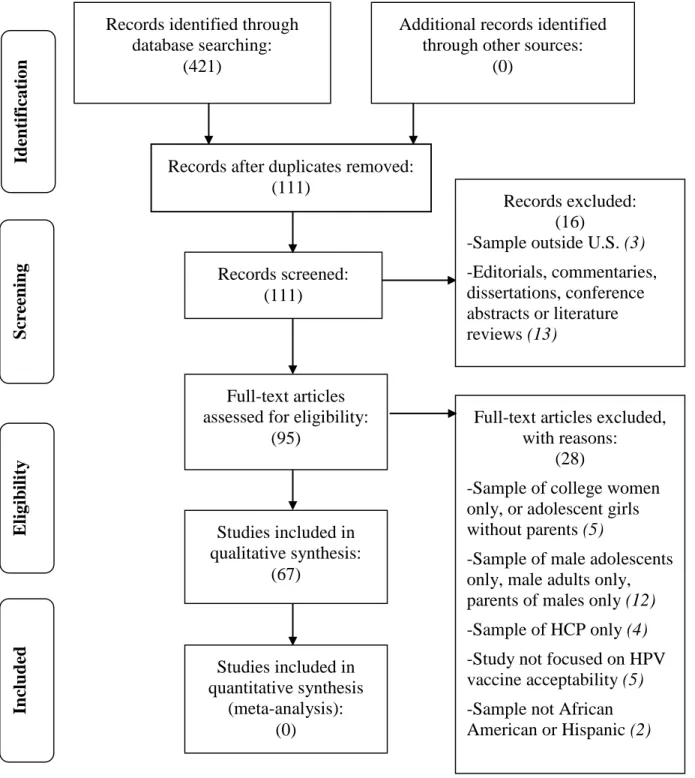
Initially, 421 studies were retrieved from all three databases. Figure 1 presents the study screening process. Two hundred ninety nine studies were retrieved from PubMed, 27 studies were retrieved from CINAHL (excluding Medline records) and 95 studies were retrieved from PsycINFO. All 421 studies were transferred to Endnote, and then into Excel where they were reviewed based on the inclusion and exclusion criteria. Three hundred and ten duplicates were eliminated and 44 other studies were eliminated according to specific exclusion criteria described in Figure 1. A total of 354 studies were eliminated leaving 67 studies in this systematic literature review.
and quantitative methods (Brawner et al., 2012; Constantine & Jerman, 2007; Getrich et al., 2014; Warner et al., 2014), and one study used a longitudinal cohort design (Fishman, Taylor, Kooker, & Frank, 2014). Five studies tested interventions (Brawner et al., 2012; Cox, Cox, Sturm, & Zimet, 2010; Kepka, Coronado, Rodriguez, & Thompson, 2011; Kepka, Coronado, et al., 2012; Lechuga, Swain, & Weinhardt, 2011).
All studies, except for 12, collected data from an urban setting (Cates, Brewer, Fazekas, Mitchell, & Smith, 2009; Fazekas, Brewer, & Smith, 2008; Kepka et al., 2011; Kepka, Ding, Bodson, Warner, & Mooney, 2015; Kepka, Warner, Kinney, Spigarelli, & Mooney, 2014; Kepka, Coronado, et al., 2012; Kepka, Ulrich, & Coronado, 2012; Lechuga et al., 2011; Luque et al., 2012; Thomas, Strickland, Diclemente, & Higgins, 2013; Thomas, Strickland, DiClemente, Higgins, & Haber, 2012). The sample sizes ranged from 17 mothers to 148,350 mother-daughter dyads derived from Kaiser Permanente California electronic medical record. Only 15 studies were conducted with Blacks or African-Americans (Allen et al., 2012; Blackman et al., 2013; Brawner et al., 2012; Cates et al., 2009; Fazekas et al., 2008; Fishman et al., 2014; Hamlish et al., 2012; Hughes et al., 2011; Hull et al., 2014; Joseph et al., 2012; Read, Joseph, Polishchuk, & Suss, 2010; Sanders Thompson et al., 2012; Thomas et al., 2013; Thomas et al., 2012;
Thompson, Arnold, & Notaro, 2011), and sample composition ranged from 59% to 100%, of which, only eight used exclusively Black or African-American samples studies (Blackman et al., 2013; Brawner et al., 2012; Hamlish et al., 2012; Hull et al., 2014; Joseph et al., 2012; Sanders Thompson et al., 2012; Thomas et al., 2012; Thompson et al., 2011). Additionally, 26 studies had an all or predominantly Latino sample composition.
2008; Joseph et al., 2012; Read et al., 2010; Thomas et al., 2013; Thomas et al., 2012; Thompson et al., 2011), five (~33%) used a qualitative design (Allen et al., 2012; Hamlish et al., 2012; Hughes et al., 2011; Hull et al., 2014; Sanders Thompson et al., 2012), one (~7%) used a longitudinal design (Fishman et al., 2014), and one (~7%) used a quantitative and qualitative design (Brawner et al., 2012). The majority (~67%) of the studies did not report being informed by any theory, while five studies were informed by traditional health behavior theories, such as the Health Belief Model (n=3; 21%) (Fazekas et al., 2008; Joseph et al., 2012; Thomas et al., 2013; Thomas et al., 2012) and the Theory of Planned Behavior (n=1; 7%) (Brawner et al., 2012). Only one study (~7%) was informed by a combination of social science theories: the Dissemination of Innovation Theory and the Community Based Participatory Marketing Method (Hull et al., 2014).
Kepka, Ulrich, et al., 2012; Lechuga et al., 2014; Luque et al., 2012; Morales-Campos et al., 2013; Podolsky et al., 2009; Ramirez et al., 2014; Sanderson et al., 2009; Stevens et al., 2013; Warner et al., 2014; Wu et al., 2010; Yeganeh et al., 2010). Fifteen (~58%) consisted of
quantitative surveys (Gerend et al., 2013; Kepka et al., 2015; Kepka et al., 2014; Kepka, Ulrich, et al., 2012; Lechuga et al., 2014; Middleman & Tung, 2010; Podolsky et al., 2009; Reimer et al., 2013; Robitz et al., 2011; Sanderson et al., 2009; Savas et al., 2012; Stevens et al., 2013; Watts et al., 2009; Wu et al., 2010; Yeganeh et al., 2010), five (~19%) were qualitative studies (Bair et al., 2008; Kepka, Coronado, et al., 2012; Luque et al., 2012; Morales-Campos et al., 2013), three (~12%) employed mixed methods (Constantine & Jerman, 2007; Getrich et al., 2014; Warner et al., 2014), one (~4%) was a secondary analysis (Sadigh et al., 2012), and two (~8%) tested educational interventions (Kepka et al., 2011; Kepka, Coronado, et al., 2012). Six studies (23%) were informed by traditional health behavior change theories (i.e., the health belief model and the theory of planned behavior) (Kepka, Ulrich, et al., 2012; Lechuga et al., 2011; Lechuga et al., 2014; Luque et al., 2012; Reimer et al., 2013; Warner et al., 2014) with the others not reporting use of any theory. Only one study (Lechuga et al., 2011) was informed by alternate theories, which consider the influence of culture-related factors. Only three studies were informed by the more expansive Social Ecological Framework (Kepka et al., 2014; Kepka, Ulrich, et al., 2012; Warner et al., 2014).
Awareness and Knowledge of HPV and the HPV Vaccine
Regarding awareness and knowledge pre-licensure, Bair et al. (2008) indicated that approximately 85% of Latina parents had not heard of HPV and were not aware of the HPV-cervical cancer link. Similarly, Fazekas et al. (2008) documented low awareness of the HPV vaccine (19%), and low correct knowledge of HPV (32%) in a sample of mostly
African-American women from the rural south. Cates et al. (2009) corroborated these findings indicating low correct knowledge of HPV (29%) in a predominantly African-American sample.
Studies conducted post-licensure of the vaccine showed a reverse in the trend of low knowledge and awareness as is expected due to an increase in marketing campaigns promoting the HPV vaccine. Studies conducted with Latina mothers, who varied in SES, country of origin, urban versus rural residence, insurance, immigration status, and acculturation levels, indicated that knowledge and awareness levels ranged from moderate (43%) to high (80%) with levels becoming higher as years passed after licensure. By 2010, Wu et al. (2010) and Yeganeh et al. (2010) reported an awareness of HPV as high as 71% to 73%, with 58% being aware of the HPV-cervical cancer link. In a similar fashion, Hughes et al. (2009) found that compared to previous awareness and knowledge levels reported pre-licensure, HPV awareness and knowledge had increased greatly post-licensure in African-American parents. McRee et al. (2010) reported that 91% of parents had heard of the HPV vaccine and Allen et al. (2010) found that 88% of parents had heard about HPV and 65% about the HPV vaccine. However, even post-licensure, some studies composed of multi-ethnic samples reported that more Blacks (48%) and Latinas (39%) had never heard of the HPV vaccine than non-Hispanic Whites (25%) (Allen et al., 2010).
al., 2011) and those who were aware of HPV were female, employed, had some years of college, an annual income ≥ $40,000, had a regular pediatrician, were younger than 41 years and had fewer children on average. HPV awareness in African-American women was also associated with a cervical cancer diagnosis. Those who were aware of HPV had either been diagnosed with HPV, cervical dysplasia or cervical cancer and 46% knew someone diagnosed with HPV or cervical cancer (Davlin, Berenson, & Rahman, 2015; Thompson et al., 2011). An analysis of the 2010 National Health Interview Survey revealed an HPV vaccine awareness of 62.6%, with parents more likely to have heard of the HPV vaccine if they were parents of older children, non-Hispanic white, female, insured, English speakers, born in the US, had higher income and had a well-child visit in the last 12 months (Wisk, Allchin, & Witt, 2014). A similar HPV awareness level of 66% was found in a study that examined information sources for the HPV vaccine among African-Americans and Latinos (Baldwin, Bruce, & Tiro, 2013). The study found that those who heard about the vaccine from their doctor were more likely to discuss it with close others compared to those who heard of it from media sources (Baldwin et al., 2013).
that it consists of three doses. In this study, acculturation was also measured as English language competence.
HPV Vaccination Barriers
Among Latino parents, the most common vaccination barriers were concerns that vaccination may condone sexual activity in pre-adolescent children (Gerend et al., 2013; Kepka et al., 2015; Kepka et al., 2014; Kepka, Ulrich, et al., 2012; Luque et al., 2012; Morales-Campos et al., 2013; Ramirez et al., 2014; Warner et al., 2014; Wu et al., 2010), concerns about safety of the HPV vaccine, and low perceived risk of vaccine-eligible children contracting HPV (Gilkey et al., 2014; Watts et al., 2009; Wu et al., 2010). Among African-American parents, the most common vaccination barriers were concerns about safety of the HPV vaccine (Allen et al., 2012; Blackman et al., 2013; Brawner et al., 2012; Dorell et al., 2014; Hull et al., 2014; Rand et al., 2011; Sanders Thompson et al., 2012), sexuality-related concerns, which refers to concerns that HPV vaccination would lead daughters to engage in premarital sexual activity and give a false perception that parents condoned premarital sex (Allen et al., 2010; Brawner et al., 2012; Dorell et al., 2014; Dorell, Yankey, Santibanez, & Markowitz, 2011; Hull et al., 2014; Joseph et al., 2012), not having enough information about the vaccine (Allen et al., 2012; Guerry et al., 2011; Rand et al., 2011; Read et al., 2010), reporting not receiving a healthcare provider
2011), religion (religious denomination, frequency of religious service attendance) (Shelton, Snavely, De Jesus, Othus, & Allen, 2013; Thomas et al., 2012), pragmatic barriers such as cost (Allen et al., 2010), and lack of time (Brawner et al., 2012), concern that vaccination may create a false sense of protection against all HPV strains associated with cervical cancer (Hamlish et al., 2012), concern about effectiveness of the vaccine (Dorell et al., 2014), and concern about
daughters being too young to be vaccinated (Hull et al., 2014). HPV Vaccine Acceptability and Intentions to Vaccinate
As early as 2007, studies emerged indicating that Latina mothers are twice more likely to accept vaccination compared to other ethnicities (Constantine & Jerman, 2007). Subsequent studies, conducted pre and post-licensure, indicated that despite low knowledge of HPV and the HPV vaccine, acceptability ranged from 80% to 97% (Bair et al., 2008; Sanderson et al., 2009; Watts et al., 2009). Importantly, Sanderson et al. (2009) documented acceptance as high as 90% for daughters and sons among a sample of Latina mothers. However, Wu et al. (2010) was the exception reporting a lower acceptance rate of 64% among a group of Latina mothers with access to health care services. Among Latina mothers, reasons for vaccination acceptance were belief in the importance of adoption of preventive health measures and a preference to adopt preventive measures as early as possible to avoid regret, and general positive attitudes towards other vaccines, (Constantine & Jerman, 2007) perceived risk of daughters contracting HPV, beliefs in the importance of protection against diseases, and belief that the HPV vaccine is like any other vaccine that protects against disease (Bair et al., 2008; Sanderson et al., 2009; Wu et al., 2010).
Message framing and communication sources also influence HPV vaccine intentions to vaccinate. Cox et al. (2010) found that three different formats of presenting information
rhetorical question) had positive effects on parents’ intention to vaccinate their daughters. While, Casillas et al. (2011) reported that hearing about the HPV vaccine from a family or friend
increased the odds for women perceiving the vaccine as effective compared to those who heard about the vaccine from a medical source.
Among African-American and Latino parents, intention to vaccinate was influenced by parental views on sexuality and daughters’ risk for HPV, and by healthcare provider
recommendations. Sadigh et al. (2012) indicated that Latino parents who conveyed acceptance of premarital sex among young adults were 2.45 times more likely to intend to vaccinate their children against HPV. A more recent publication (Lechuga et al., 2014) indicated that receiving a provider recommendation, worry about side-effects, believing that other parents have vaccinated their children, perceived severity of daughter contracting HPV, and worry that vaccination may encourage initiation of sexual relations emerged as a significant predictors of intentions among Latino parents.
Among African-American parents, acceptance of the HPV vaccine varied more widely. African-American parents were motivated to accept HPV vaccination in anticipation of
indicating that parents who were aware of HPV had 3.4 times greater odds of accepting the HPV vaccine for their daughters compared to parents who were unaware of HPV. Subsequent studies pointed to the importance of receiving a provider’s recommendation (Hamlish et al., 2012; Joseph et al., 2012; Litton, Desmond, Gilliland, Huh, & Franklin, 2011; Thompson et al., 2011), social support for vaccination (Brawner et al., 2012)and perceiving the vaccine as having cancer prevention benefits (Hamlish et al., 2012; Perkins et al., 2010; Read et al., 2010).
Interestingly, religion emerged as significantly associated with acceptability among African-Americans. For example, Thomas et al. (2012) reported that non-Baptists were 3.6 times more likely accept the HPV vaccine for their daughters compared to Baptists. Another study indicated that parents who had already vaccinated or intended to vaccinate their children were 2.7 times more likely to have a religious affiliation other than Baptist (Thomas et al., 2013). Shelton et al. (2013) also examined the influence of religion on HPV vaccine acceptance and found that parents with frequent religious services attendance were more likely to have decided against HPV vaccination than parents who did not attend services, and Protestant parents were more likely to report that they had not vaccinated compared to parents of non-protestant denominations (Shelton et al., 2013).
HPV Vaccine Uptake
likely to perceive their daughters as being at risk for HPV infection (Wu et al., 2010). Yeganeh et al. (2010) reported a vaccination rate of 37% among a predominantly medically underserved Latino sample (80% reported having a regular health care provider). The authors also report that 36% of these mothers had indicated they refused the HPV vaccine for their daughters. Regarding factors associated with vaccine uptake, results indicated that being Latino, belief in the
effectiveness of the vaccine to prevent cervical cancer, and belief in the general safety of the vaccine emerged as predictors of vaccine uptake.
By 2012, studies continued to report low levels of vaccine uptake in Latina pre-adolescent daughters. Kepka, Ulrich, et al. (2012) reported a 35% vaccination initiation rate among primarily Spanish speaking Latina mothers living in a rural community. This study was the first to report a significant association between awareness of HPV and uptake. Among other predictors of uptake was the belief that the daughter’s father approves of the daughter’s
vaccination and the belief that only one dose is necessary. The emergence of these two factors as significantly associated with uptake resulted from the authors’ innovative use of the more
expansive Social Ecological Framework of behavior change to inform survey content.
Tsui et al. (2013) examined how the geographic location of safety health clinics
influenced HPV vaccine initiation rates among a sample of predominantly Latina mothers living in Los Angeles County. This was among the earliest study to examine access among a sample of Latina mothers (51.6%) who had previously heard of the HPV vaccine (60.7%). The study reported an HPV vaccine initiation rate of 25% for adolescent girls, and reported that having an increased proximity to clinics was not associated with HPV vaccine uptake. Instead, daughters’ age and having insurance was associated with higher HPV vaccine uptake.
In 2013, Gerend et al. (2013) published a study, which incorporated sociocultural variables such as acculturation. Acculturation was measured as English language competence, identity, and cultural competence. In this study, only 18% of Latino parents reported initiating vaccination for their daughters. Variables independently associated with vaccination uptake were U.S. acculturation and a physician’s recommendation. The acculturation scale used examined U.S. acculturation and native culture acculturation. Interestingly, only Latina mothers with higher levels of U.S. acculturation were more likely to have their daughters vaccinated with the HPV vaccine.
Reimer et al. (2013) study was the first to explore the influence of other sociocultural factors such as sexual activity and mother-daughter communication and the potential moderating influence of ethnicity. Results showed that vaccination uptake decreased by a factor of .77 when Latinas engaged in value-specific sexuality-related communication (in relation to moral, cultural, and religious values) and vaccination uptake increased a factor of 1.9 when non-Hispanic white mothers engaged in value-specific sexuality-related communication with their daughters. Across studies conducted with primarily African-American parents, Chao, Slezak, Coleman, and
already initiated the HPV vaccine, and found that a mother’s Pap test history was associated with their daughter’s HPV vaccine initiation (odds ratio [OR] = 1.47; 95% confidence interval [CI] = 1.43, 1.52) regardless of race/ethnicity. Pap test history was defined as having no pap test or at least one pap test in the last three years.
Subsequently, several studies that examined HPV vaccine initiation rates among African-Americans within statewide samples were published. Reimer et al. (2013) examined HPV vaccine uptake correlates among parents of adolescent girls who completed the 2008 Child Health Assessment and Monitoring Program (CHAMP) survey for North Carolina and found that 31.3% of parents reported that their daughters had received at least 1 dose of the HPV vaccine. Cates et al. (2010) also analyzed this same 2008 CHAMP survey for the state of North Carolina and found a similar vaccine initiation rate of 31%. Forty six percent of those who had initiated the HPV vaccine reported to have heard about the HPV vaccine from a healthcare provider and that parents who had heard about the HPV vaccine from a healthcare provider were more likely to vaccinate.
Lin, and Flores (2012) documented a low HPV vaccine initiation rate of 20% for a pooled sample of non-Hispanic whites, Latinos, and African-Americans, with non-Hispanic whites having a higher HPV vaccine initiation rate (61%) compared to Latinos (16%), and African-Americans (15%). In this study, parental report of receiving a healthcare provider
recommendation was associated with approximately 18 times the odds of initiating the HPV vaccine series. Laz, Rahman, and Berenson (2012) in a similar fashion continued to document a low overall HPV vaccine initiation rate (28.9%), with non-Hispanic whites (29.6%), Blacks (26.9%) and Hispanics (31.1%) having similarly low HPV vaccine initiation rates. The factors associated with vaccine initiation included having an influenza vaccine in the past year and parental awareness of the vaccine.
provider’s recommendation for the HPV vaccine was significantly lower for black (27%) and Hispanic (14%) adolescent girls than non-Hispanic white adolescent girls (Polonijo & Carpiano, 2013). All models controlled for child’s age, mother’s age and marital status, total children in household, adult respondent who provided the information, census region, and year of
observation. In 2013, Kester, Zimet, Fortenberry, Kahn, and Shew (2013) documented an HPV vaccine initiation rate of slightly more than half (51.1%). Unlike the Polonijo and Carpiano (2013) study however, socioeconomic and demographic factors were not associated with vaccine initiation. This difference may be related to mothers in Kester et al. (2013) being of a higher socioeconomic status and characterized as having some college education, working and married, and
HPV Vaccine Series Completion
Yeganeh et al. (2010) was the first and only study, to our knowledge, to report HPV vaccine completion rates in a sample of primarily Latina mothers. In this study, 37% of mothers reported initiating the vaccine for their daughters and of these, 43% and 26% reported that daughter had received two and three doses, respectively.
dose series. The study also documented that of those who initiated the vaccine, 16.1% of non-Hispanic white, 10.9% of black, and 12.3% of Latina adolescent girls had received 3 or more doses.
In 2013, Polonijo and Carpiano (2013) reported a completion rate of 21.7%. The study examined SES and race/ethnicity on HPV vaccine completion and reported a positive association between completion and higher maternal education. Also, adolescents in middle and low-income households had significantly lower odds (23% to 25%) of completing the series. Additionally, estimates for black adolescents indicated a 34% lower odd of completing the vaccination series, while the estimate for Latino adolescents was 13%. Kester et al. (2013) reported a similarly low HPV vaccine completion rate of 38.3%. In this study, black and Latina girls were also
significantly less likely to complete the 3-dose series than non-Hispanic white girls. Discussion
parents. However, findings were mixed regarding the direction of association between
acculturation and knowledge among Latino parents. It is important to note that acculturation has been assessed primarily as English proficiency and English proficiency is strongly associated with socioeconomic status. It will be important to replicate research on acculturation to include other facets of acculturation such as ethnic identity and cultural knowledge for both U.S. and native culture as done by Gerend and colleagues(Gerend et al., 2013). It is important to note that awareness is not enough to motivate vaccination as findings from this review indicate that higher levels of awareness increased over time to a greater extent than actual vaccination rates. In addition, some studies reported finding no significant association. In fact, research has pointed to hesitancy to vaccinate among parents who are aware of the vaccine and the HPV-cervical cancer link. Notwithstanding the weak awareness/knowledge-uptake link, research has not explored why Latino and African American parents may be less aware/knowledgeable compared to other population groups. A possible explanation is lack of targeted communication campaigns in sources considered credible by Latino and African-American parents. For example, research documenting the credibility of specific sources has been sparse. Our review indicated that among Latinos, having heard about the HPV vaccine from health care providers increased uptake
compared to learning about the vaccine from other sources. Recent research suggests that trust in information sources is an influential factor in parental vaccination yet this type of research has been sparse in the US (Yaqub, Castle-Clarke, Sevdalis, & Chataway, 2014).
This finding is in contrast with findings of research conducted with non-Hispanic white parents for whom sexuality-related concerns are low (Brewer et al., 2011; Marlow, Forster, Wardle, & Waller, 2009). This contrast in findings is important as it suggests other fruitful avenues of parental acceptability research to be pursued among African-Americans and Latinos. For example, few researchers have inquired in depth about the attitudes and values underlying sexuality-related concerns and how best to address them in public health interventions. Importantly, both African-Americans and Latinos share a culture of silence (an unspoken consensus of a group to not mention, discuss, or acknowledge a given subject) regarding
sexuality-related communication within their family and community (Harris, 2010; Meneses, Orrell-Valente, Guendelman, Oman, & Irwin, 2006; West, 1993). Such culture of silence may underlie sexuality-related concerns. Importantly, continuing with research informed solely by prominent health behavior change theories which focus on rational decision making that is devoid of cultural context and centers on attitudes towards the vaccine itself may take
probability rate that they will accurately predict the timing of their children’s sexual debut by using evidence as a credible source.
Concerns about safety also emerged as a shared barrier for African-Americans and Latinos. The U.S. Latino population is a heterogeneous group regarding generational status, immigration patterns, country of origin, language, and ethnic identity. It is important to continue research with diverse segments of the U.S. Latino population. For example, vaccination
mandates are well-regarded in Mexico by the general population. This may be the result of Mexico passing stringent vaccination mandates when vaccines first become available compared to other countries such as the US, which has one of the most liberal vaccination policies often provide support for attributions to the perceived incongruence between stringent mandates and respect for individual liberties. However, the extent to which this general positive attitude generalizes to Latinos born in other countries other than Mexico has not been adequately
researched. In addition, the U.S. Latino population varies regarding generational status and U.S. born Latinos, who may be more acculturated to the U.S. culture and may hold different attitudes than those less acculturated. Acculturation has featured poorly in research on Latino parental HPV vaccine acceptability.
Other barriers cited by African-Americans may be closely associated with safety concerns, such as not having enough information, not receiving a provider recommendation or receiving a hesitant recommendation, mistrust of medical providers and pharmaceutical
innocent little girls to be subjected to HPV vaccination, a vaccine she linked to causing mental retardation (National Public Radio, 2011). This controversy may have been particularly salient for African-American parents whose experience with the healthcare system is often negative (Williams & Wyatt, 2015). To date, research on ethnic parental groups’ acceptability of HPV vaccination has focused on elucidating the proportion of parents who convey safety concerns and the influence of such concerns on vaccination intentions and uptake. Little research has been conducted to elucidate beliefs and attitudes that may underpin such concerns such as mistrust of U.S. entities promoting the vaccine. As mentioned above, research in other countries is emerging indicating the important influence of trust in institutions that mandate health behaviors to
promote the public’s health on the adoption of health preventive behaviors, in particular vaccination (Yaqub et al., 2014). Researching institutional mistrust may be another fruitful avenue to pursue to inform the design of HPV vaccine promotion interventions targeting African-Americans in particular.
Interestingly, similar to review findings about awareness, the acceptability rate varied more widely among African-Americans compared to Latinos. Acceptance and intentions among African-Americans were associated with awareness of HPV, perceived risk of acquiring HPV and cancer, perceived severity of cervical cancer, receipt of a provider’s recommendation, and not being affiliated to the Baptist religion. Among African-Americans in particular, religion emerged as distinct factor influencing their HPV vaccine acceptance and should be explored more in depth. Specifically, exploring the role of faith-based organizations in promoting HPV vaccination while remaining in concordance with religious doctrine. However, acceptability and intentions are imperfectly related to actual behavior. Consequently, our findings in predictors of vaccination uptake are especially important.
predictors of intentions. This may be the result of researchers continuing to follow traditional health behavior change theories to inform uptake studies. However, important findings emerged that point to new research avenues. First, among Latino parents, the research findings regarding the link between knowledge and awareness of HPV and vaccination uptake remain mixed. Among African-Americans, the link between religion and HPV vaccine uptake also remain mixed. Results of studies documenting the influence of sociocultural variables rather than properties of the vaccine (e.g., effectiveness and side-effects) have shown interesting results pointing to the importance of context such as consideration of father of the child in the decision-making process, communication about sexuality between mothers and daughters, mistrust of healthcare providers and pharmaceutical companies, social support for vaccination and belief that members of one’s social network have vaccinated (norms). These findings suggest that future research with Latinos and African-Americans need to expand on the role of sociocultural aspects and be informed by theories other than the prominent health behavior change theories. Interventions focusing only on changing attitudes towards safety and effectiveness are likely to be minimally effective if individuals are making vaccination decisions by considering other aspects as well.
Social network interventions to promote prevention for other sexually transmitted infections among Latinas have shown promise (Ramos, Ferreira-Pinto, Rusch, & Ramos, 2010; Ramos, Green, & Shulman, 2009). Similarly, social support networks are an integral part of African-American culture (McAdoo & Younge, 2008). Social support from network members was identified as influencing African-Americans’ HPV vaccine acceptance. However, studies on the type of social support and the role of social support networks on African-Americans HPV vaccine acceptance are limited. It may be beneficial to examine the role of social support and social support networks on African-American parental HPV vaccine acceptance for future interventions targeted towards increasing HPV vaccine acceptance among this population.
For African-Americans, socio-demographic characteristics associated with uptake such as pap test history, having received the influenza vaccination, having had a well-child visit,
insurance, and cost underscore the key role of the health care provider in recommending the vaccine during other preventative health care visits. Regarding vaccination completion, African-Americans are considerably lagging behind completion rates compared to non-Hispanic white parents. It may be useful to explore the benefits of children initiating HPV vaccination as toddlers and providing follow-up vaccinations across the lifespan.
Future Research
Current academic health promotion discourse (Pasick et al., 2009) points to the
centered theories to unpackage sexuality-related normative concerns among African-Americans and Latinos to explore its connection to religion and other factors salient in these populations.
It is interesting to note that no studies included in this review, investigated factors
associated with vaccinating sons. Research is certainly moving in this direction with publications increasing steadily after the ACIP approved the vaccine for males in 2009, albeit too few to warrant a review of the literature. The few existing studies on the topic indicate that a provider’s recommendation also influence uptake and in the case of Latinos, Spanish-speaking Latinos convey greater intent to vaccinate boys compared to English-speaking Latinos (Reiter et al., 2014). This finding suggests that the time is ripe to conduct further research on culture-related factors associated with vaccination uptake for male children. In particular, what is it about the culture of origin in U.S. Latino immigrants that promote positive attitudes towards vaccines?
Furthermore, our review also pointed to the dearth of studies reporting on the
development and testing of interventions to promote HPV vaccination among African-Americans and Latino parents. The few (five) intervention studies included in this review tested different risk presentation formats to increase HPV vaccine acceptance among a sample of ethnically diverse parents (Cox et al., 2010), tested radionovelas as a platform for increasing HPV vaccine uptake among Latinos (Kepka et al., 2011; Kepka, Coronado, et al., 2012), tested a gain versus loss message framing intervention among ethnically diverse parents (Lechuga et al., 2011), and tested a skills-based intervention to increase HPV vaccine uptake among African-American adolescents and their parents (Brawner et al., 2012).While only a few intervention studies were found in this review, it is encouraging that most of these studies used culturally tailored
intervention studies to increase HPV vaccine acceptance among African-American and Latino parents are needed.
Lastly, it is imperative that interventions be developed to also target HPV vaccination completion. Barriers to completion among the general population seem to center around logistical issues such as lack of reminder systems in clinics (Chao, Preciado, Slezak, & Xu, 2015), inadequate vaccine stock in health care settings given the high cost of the vaccine, (Brisson, Drolet, & Malagon, 2013) and once more the quality of a provider’s recommendation. Completion is higher in patients who attend a pediatrics clinic compared to family or internal medicine or OB/GYN departments (Rubin, Kuttab, Rihani, & Reutzel, 2012). It may be important for future research to examine the meaning of a quality HCP HPV vaccine
recommendation from the perspective of parents and adolescents. Even more, examining how the comfort level of HCPs vary by setting (pediatricians, OBGYN) may reveal important
communication gap that exists among this group that can be incorporated in HPV vaccine interventions. Future research could also shed light on the approach taken by pediatricians and develop educational interventions to train other providers in the use of successful HPV vaccine promotion strategies. However, future studies should also attempt to corroborate that the abovementioned factors associated with completion rates generalize to ethnic minorities in addition to expanding to include other potential barriers.
Limitations
There are limitations to this systematic literature review. Characteristics of studies in this review included how closely the study objective was conceptually relevant to the review’s
methodological rigor and reliability. Another limitation is that the designs of the studies in this review were primarily quantitative cross-sectional, secondary analyses or qualitative descriptive. These designs are low in the level of control that is exerted in the study. Therefore, further studies of more rigorous designs may be needed to prove causation (Brink & Wood, 1997). In addition, we describe the factors that have emerged as significantly associated with vaccination acceptance and uptake and we did not weigh which of these factors may be more important. Regardless of these limitations, this systematic literature review will help guide future research on HPV vaccine acceptability by providing confirmation and new findings about factors that should be included in the design of impactful interventions to promote the vaccine among African-Americans and Latinos. Failing to develop impactful interventions to reverse below optimal initiation and completion rates among these two groups will result in continued disparities and further suffering by African-Americans and Latinos from cervical cancer and other HPV-related cancers.
Conclusion
Among African-Americans in particular, the barriers that religious affiliation poses should be explored more in depth. However, this finding indicates that it may prove fruitful to engage faith-based organizations to promote vaccination. Further research should explore the specific issues that cause mistrust in the medical establishment and interventions may attempt to clarify issues that cause mistrust in health communication campaigns. Similarly, it is necessary to understand the nuanced influence of social support networks as interventions to promote the vaccine may be delivered through social networks.
Our findings indicated that few studies have been published reporting on the
Records identified through database searching: (421) S creen in g Inc lude d E lig ib ilit y Id en ti fi ca ti o n
Additional records identified through other sources:
(0)
Records after duplicates removed: (111)
Records screened: (111)
Records excluded: (16)
-Sample outside U.S. (3) -Editorials, commentaries, dissertations, conference abstracts or literature reviews (13)
Full-text articles assessed for eligibility:
(95)
Full-text articles excluded, with reasons:
(28)
-Sample of college women only, or adolescent girls without parents (5)
-Sample of male adolescents only, male adults only, parents of males only (12) -Sample of HCP only (4) -Study not focused on HPV vaccine acceptability (5) -Sample not African American or Hispanic (2) Studies included in
qualitative synthesis: (67)
Studies included in quantitative synthesis
(meta-analysis): (0)
Figure 2.1. Preferred Reporting Items for Systematic Reviews and Meta-Analyses (PRISMA) flow diagram. U.S.= United States; HCP= Health Care Provider; HPV= Human
41
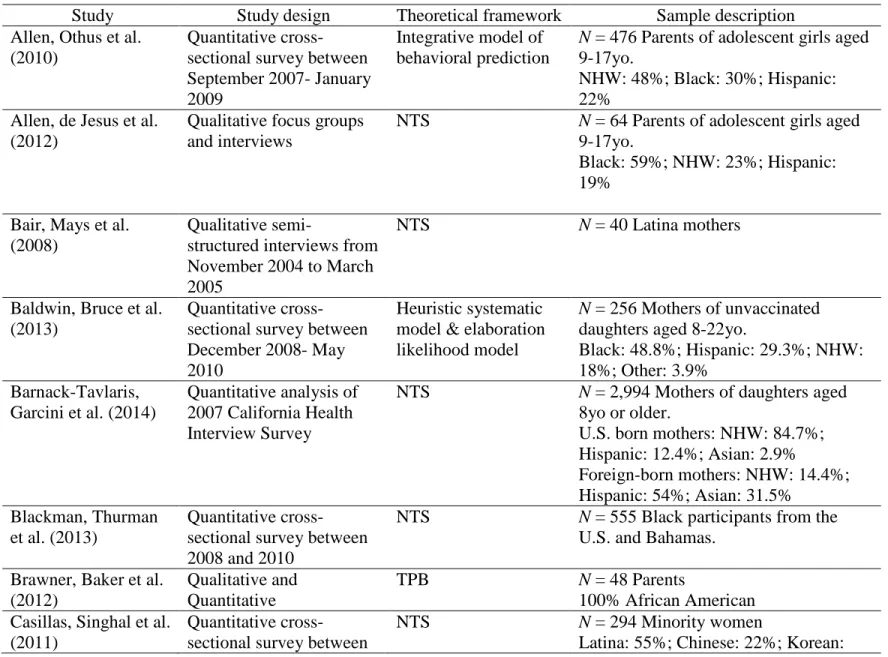
Table 2.1. Characteristics of Studies Included in Review.
Study Study design Theoretical framework Sample description Allen, Othus et al.
(2010)
Quantitative cross-sectional survey between September 2007- January 2009
Integrative model of behavioral prediction
N = 476 Parents of adolescent girls aged 9-17yo.
NHW: 48%; Black: 30%; Hispanic: 22%
Allen, de Jesus et al. (2012)
Qualitative focus groups and interviews
NTS N = 64 Parents of adolescent girls aged 9-17yo.
Black: 59%; NHW: 23%; Hispanic: 19%
Bair, Mays et al. (2008)
Qualitative
semi-structured interviews from November 2004 to March 2005
NTS N = 40 Latina mothers
Baldwin, Bruce et al. (2013)
Quantitative cross-sectional survey between December 2008- May 2010
Heuristic systematic model & elaboration likelihood model
N = 256 Mothers of unvaccinated daughters aged 8-22yo.
Black: 48.8%; Hispanic: 29.3%; NHW: 18%; Other: 3.9%
Barnack-Tavlaris, Garcini et al. (2014)
Quantitative analysis of 2007 California Health Interview Survey
NTS N = 2,994 Mothers of daughters aged 8yo or older.
U.S. born mothers: NHW: 84.7%; Hispanic: 12.4%; Asian: 2.9%
Foreign-born mothers: NHW: 14.4%; Hispanic: 54%; Asian: 31.5%
Blackman, Thurman et al. (2013)
Quantitative cross-sectional survey between 2008 and 2010
NTS N = 555 Black participants from the U.S. and Bahamas.
Brawner, Baker et al. (2012)
Qualitative and Quantitative
TPB N = 48 Parents