EXPLORING EARLY SPORT SPECIALIZATION: ASSOCIATIONS WITH PHYSICAL AND PSYCHOSOCIAL HEALTH OUTCOMES
Shelby Waldron
An undergraduate thesis submitted to the faculty of the University of North Carolina at Chapel Hill in partial fulfillment of the requirements for graduation with honors in
the Department of Exercise and Sport Science in the College of Arts & Sciences.
University of North Carolina at Chapel Hill 2018
Approved by: J.D. DeFreese, PhD
Acknowledgments
I would first like to thank my thesis advisor, Dr. J.D. DeFreese, for his endless support, encouragement, and patience through the ups and downs of the research process. I could not have asked for a better mentor. Your joy and enthusiasm for the research process is contagious and motivational. Thank you for pushing me to reach my potential, for always being available for questions, for your thoughtful feedback, and for sharing endless opportunities with me. You helped me become a more confident writer and researcher and I will forever be grateful for your guidance. Thank you to my committee members, Dr. Register-Mihalik, Dr. Pietrosimone, and Nikki Barczak for your insightful feedback and all of the time you dedicated to this project. Thanks to Honors Carolina for funding this research and the Office for Undergraduate Research for funding the pilot study that inspired the current study.
I would like to dedicate this thesis to my favorite coaches and biggest cheerleaders, my parents. Thank you for introducing me to the world of sports, to the endless hours spent in the volleyball gym, for showing up to every game, and most importantly for picking me up when I fall. I would not be where I am today without you supporting me every step of the way. Dad, thank you for being my rock and the greatest example of how to keep going no matter what life throws at you. You are a true fighter and inspiration. Mom, thank you for the endless phone calls and reminders that “great things come in small packages.” Your positivity and perseverance never fails to amaze me. I would also like to thank the rest of my family for their continuous emotional support. Rhett, thank you for being a big brother I can look up to (figuratively and literally), for giving me big shoes to fill, and for never doubting my abilities even when I doubted myself.
TABLE OF CONTENTS
CHAPTER 1………8
Research Questions………13
CHAPTER 2………..16
Sport Specialization………...16
Theoretical Framework for Sport Specialization………...17
Performance Perspective………17
Development Perspective………...20
Early Specialization Measures………...21
Psychosocial Health Outcomes of Interest………22
Burnout………..22
Other Psychosocial Health Outcomes………24
Theoretical Framework for Specialization Decisions………25
Sport Commitment Theory………25
Self-Determination Theory………27
Physical Health Outcomes of Interest………31
Injury Risk……….31
Other Long-Term Physical Health Outcomes………....36
Pilot Data………...37
Conclusion……….40
CHAPTER 3………..42
Participants…..……….………..42
Instrumentation…..……….…...43
Demographics…..………..…43
Retrospective Measures……….43
Sport Specialization ………..…44
Behavioral Regulation in Sport Questionnaire (BRSQ)………46
Perceived Stress Scale (PSS-4)………..46
Social Support Questionnaire (SSQ)……….47
Past Injury History……….47
Current Measures………...48
Current Injury History………...….48
International Physical Activity Questionnaire (IPAQ)………..48
Intrinsic Motivation Inventory (IMI)……….…49
Connor-Davidson Resilience Scale (CD-RISC)………49
Specialization Knowledge……….50
Procedure………..……….……50
Data Analysis ………52
Data Screening………...52
Primary Research Questions………..52
Exploratory Research Questions………53
CHAPTER 4………..54
Method………...60
Results………69
Discussion………..74
Tables……….83
CHAPTER 5………..87
Method………...90
Discussion………...………….101
Tables………...108
Figures………..……113
Abstract
Despite the current specialization trend in American youth sport and growing number of
cautionary position statements from major medical organizations, limited specialization research exists, especially in regards to potential psychological outcomes and physical effects of early specialization (≤ age 12). Therefore, the current study examined associations among
retrospective sport specialization and both retroactive and current psychological and physical health outcomes. In addition, based on previous theoretical and empirical findings, the potentially moderating role of athletes’ reasons for specialization was examined. 243 college-aged individuals completed an online survey of study variables. Early specializers reported significantly higher levels of multiple maladaptive outcomes (e.g. global athlete burnout, emotional and physical exhaustion, sport devaluation, amotivation, and current sport-related injuries). However, athletes’ reasons for specialization influenced the relationship between specialization and health outcomes, with adaptive and maladaptive reasons associated with adaptive and maladaptive outcomes, respectively. Overall, findings suggest that the
Chapter 1
Organized youth sport in the U.S. has been characterized by professionalism and specialization, or high intensity, year-round training in a single sport at the exclusion of other sports (Andrews, 2010; Wiersma, 2000). This movement away from child-driven recreational play for the purpose of enjoyment, to adult-driven highly structured and intense training in order to develop sport-specific skills, is evident in the increasing number of elite youth competitions (e.g., Junior Olympics and AAUs) and has raised public health concerns (Jayanthi, Pinkham, Dugas, Patrick, & LaBella, 2013; Jayanthi, LaBella, Discher, Pasulka, & Dugas, 2015). Major medical
organizations, such as the International Federation of Sports Medicine, World Health
Organization, and American Academy of Pediatrics, have warned against specialization due to the potential association with both maladaptive physical and psychological health outcomes (Wiersma, 2000). However, despite growing interest and prominent claims, minimal extant evidence exists outlining these potential negative consequences, particularly in regards to psychological health outcomes.
The specialization method arose from past research claiming that intense, structured training at high volumes coupled with critical periods of development is a prerequisite for attainment of elite status in sport. The most prominent of these studies is Ericsson, Krampe, and Tesch-Romer’s (1993) “10,000 hours rule.” Based on findings in elite musicians, the researchers claimed that 10,000 hours of deliberate practice (effortful training designed to develop task-specific skills, which is not inherently enjoyable) is necessary to acquire, develop, and become proficient at task-specific motor skills. However, anecdotal evidence from collegiate,
According to Cote, Baker, and Abernathy’s (2007) Developmental Model of Sport Participation, two distinct pathways to elite performance exist, sampling or early specialization (Cote, Horton, MacDonaldy, & Wilkes, 2009). Sampling refers to involvement in multiple sports and is characterized by high amounts of deliberate play, inherently enjoyable activities, often involving adapted rules and loose monitoring (i.e. street hockey or one-on-one basketball), and low amounts of deliberate practice. In contrast, early specialization refers to involvement in a single sport at or before age twelve, and consists of high amounts of deliberate practice and low amounts of deliberate play (Cote et al., 2007; Cote, Lidor, & Hackfort, 2009). The costs and benefits of each path should be weighed, as researchers have proposed maladaptive associations between sport specialization and health outcomes, such as burnout and injury (DiFiori,
Benjamin, Brenner, & Gregory, 2014).
Athlete burnout is a multidimensional psychological syndrome consisting of a reduced sense of athletic accomplishment, sport devaluation, and physical and emotional exhaustion (Raedeke, 1997). The most prominent model of burnout, cites chronic psychosocial stress (a perceived disparity between sport demands and an individual’s coping resources) as the key antecedent of burnout (Smith, 1986). However, Coakley (1992) argues that burnout may also result from the development of a unidimensional identity and lack of autonomy, factors inherent in the social organization of high performance sport. Researchers have proposed the existence of an adverse relationship between specialization and burnout due to a variety of the
levels of the burnout dimension of emotional exhaustion (reference: “samplers”; Strachan, Cote, & Deakin, 2009). In addition, past research has found mixed results in regards to the
relationship between specialization and psychological health outcomes. McFadden, Bean, Fortier, and Post (2016) found an association between specialization and higher psychological needs dissatisfaction (maladaptive psychological outcome). While, Russell & Symonds (2015) found an association with intrinsic motivation (adaptive psychological outcome). Further research in this area is warranted, as specialization may be associated with a variety of
maladaptive psychological outcomes, such as decreased motivation and increased stress, due to both the relationship with burnout and inherent contextual factors of the specialization
experience (Eklund & DeFreese, 2015).
While limited in scope, the aforementioned findings suggest that specialization’s
relationship with psychological outcomes may be dependent on athletes’ perceptions of the sport environment including: perceived autonomy and control, mastery versus ego climate, and
perceptions of sport stress (Russell & Symonds, 2015). Accordingly, one potential key mediating factor in the relationship between specialization and psychological outcomes is athletes’
reason(s) for specialization. According to Ryan and Deci’s (2000) self-determination theory (SDT), psychological and behavioral outcomes (i.e. burnout and sport attrition, respectively) are influenced by the nature of one’s motivation (i.e. the degree to which the behavior is
self-determined or internalized). In addition, sport commitment theory states that enjoyment, burnout, and dropout depend on a cost-benefit analysis of an individual’s perceived rewards, satisfaction, costs, investments, and attractive alternatives (Schmidt & Stein, 1991). Furthermore, Raedeke (1997) found that athletes experiencing entrapment (perceived need to continue sport
such as high levels of burnout (Raedeke, 1997). Preliminary data from an unpublished pilot study supports these commitment theories, as athletes who cited adaptive reasons for specialization (i.e. pursuit of athletic excellence) exhibited more adaptive psychological outcomes (i.e. engagement, psychological resilience, and decreased sport stress), versus those who cited potentially maladaptive factors (i.e. time demands; Waldron & DeFreese, in review). Therefore, as an exploratory complement to primary research questions, the current study utilizes SDT and sport commitment theory to examine associations of an individual’s reasons for specialization with his/her psychological and behavioral outcomes.
levels of physical activity, but decreased organized sport participation in specializers, when compared to samplers (Russell & Symonds, 2015; Baker et al., 2009).
While specialization may be associated with the aforementioned maladaptive outcomes, of special concern is “early sport specialization” or specialization between the ages of six and twelve (also known as the sampling years), the period typically characterized by participation in (or sampling) several sports (Cote, Horton et al., 2009; Wiersma, 2000). Early specialization carries greater risks due to its occurrence before puberty, as development of motor, sensory, cognitive, and emotional/social skills is still rapidly occurring and may not match the sporting demands/tasks (Cote, Lidor et al., 2009; DiFiori et al., 2014; Wiersma, 2000). Alternatively, researchers argue that athletes in late adolescence have the necessary cognitive, physical, social and emotional skills to understand the benefits and costs of sport specialization, to make an informed, independent decision and to properly invest in highly specialized training when that decision is made (Cote, Lidor et al., 2009).
governing bodies’ policies (Wiersma, 2000). Therefore, this study serves as a first step to corroborate theoretical assumptions with empirical support, test adapted measures of early specialization, and verify the utility of future prospective studies, by examining the relationship between young adults' retrospective early sport specialization and long-term health outcomes. Based on theory, past empirical findings, and extant gaps in knowledge, multiple research questions arose. Primary research questions and hypotheses include:
1. Is early sport specialization associated with young adults’ retrospective, self-reported psychological health?
Hypothesis (H)1. Early sport specialization will be positively associated with
retrospective global athlete burnout, the burnout dimensions, and other retrospective maladaptive psychological outcomes (i.e. amotivation and perceived sport stress), and negatively associated with adaptive psychological outcomes (i.e. perceived social support).
2. Is early sport specialization associated with young adults’ current psychological health? H2. Early sport specialization will be negatively associated with adaptive current psychological health outcomes (i.e. intrinsic motivation for physical activity and psychological resilience).
3. Is early sport specialization associated with young adults’ retrospective, self-reported physical health (i.e. injury risk)?
H3a. Specialization will be positively associated with an increased risk of injuries, especially overuse injuries.
4. Is early sport specialization associated with young adults’ current physical health (i.e. injury risk, physical activity level, and sport participation)?
H4. Early sport specialization will be positively associated with current maladaptive physical health outcomes (i.e. increased risk of overuse injury and decreased long-term sport participation and physical activity levels).
5. Are athletes’ reasons for specialization associated with psychological and physical/behavioral outcomes?
H5a. Specialization for adaptive/enjoyment reasons (i.e. intrinsic motivation, autonomy, competence, relatedness, high enjoyment/satisfaction, low costs with moderate-to-high
investment, low attractive alternatives, and low- to- moderate demands) will be positively associated with adaptive psychological and physical/behavioral outcomes and negatively associated with maladaptive outcomes.
H5b. Specialization for maladaptive/obligation reasons (i.e. extrinsic motivation, little to no autonomy, low enjoyment/satisfaction, high costs and investments, moderate-to-high
attractive alternatives, and high demands) will be negatively associated with adaptive psychological and physical outcomes and positively associated with maladaptive outcomes.
H5c. Early specialization will be associated with more maladaptive reasons for specialization, when compared to late specializers.
6. Do athletes’ reason(s) for specialization play a moderating role in the relationship between specialization and the psychological outcome of burnout?
The current study also examined a few exploratory research questions including:
7. Can athletes’ reasons for specialization be classified into relatively homogenous groups based on theoretically-specified components of sport commitment, motivation, and stress? Do resulting clusters differ based on specialization status?
H7. Clusters similar to Raedeke’s (1997) findings will emerge, which will differ based on athletes’ specialization status. Specifically, early specializers will primarily endorse the sport entrapment profile, while late specializers will primarily endorse the sport attraction profile. 8. Are there group/cluster differences on the psychological outcome of burnout?
Chapter 2 Sport Specialization
Recently, there has been a movement towards specialization in organized youth sport. While lacking a universal definition, the most prominent conceptualization of sport
specialization is high intensity, year-round training in a single sport, with the exclusion of other sports (Wiersma, 2000). Current sport programming is becoming characterized by
institutionalization, elitism, early selection, and early specialization, with many sport programs requiring higher levels of investment from earlier ages and discouraging participation in a diversity of activities (Hecimovich, 2004; Hill & Hansen, 1988). Talented youth are starting to be ranked nationally as early as sixth grade, with a growing number of elite youth competitions, such as the Junior Olympics and AAU being offered (Malina, 2010). The trend is further
supported by media exposure with shows such as The Short Game and Friday Night Tykes, focusing on seven to eight year old golfers and Texas youth football programs, respectively (LaPrade et al., 2016).
physical health concerns (Jayanthi & Dugas, 2017). The discussion concerning early sports specialization is centered on two central issues: whether specialization favors optimal
performance and whether it increases the risk of maladaptive outcomes (Reider, 2017). The latter point will be the main focus of this study, with extant theoretical and empirical support, in
addition to gaps in knowledge, discussed below. Theoretical Framework for Sport Specialization Performance Perspective
The original support for early specialization as the optimal path to elite performance came from Ericsson et al.’s (1993) “10,000” hours rule, which suggests that the acquisition, development, and proficiency of sport-specific motor skills requires 10,000 hours of deliberate practice. “Deliberate practice” refers to any training activity that is undertaken with the goal of increasing performance, requires cognitive and/or physical effort, and is relevant to promoting positive skill development (Ericsson et. al, 1993). Ericsson and Charness (1994) argued that the accumulation of these 10,000 hours must coincide with “critical periods” of biological and cognitive development in childhood. Since the brain’s pathways are not fully developed during these critical periods, theoretically it would be easier to engrain correct neuromotor
programming, critical thinking, and problem solving skills (Marek, 2014). Therefore, someone who started training at a later age could not “catch up”, all other things being equal (Ericsson & Charness, 1994). In addition, Chase and Simon’s (1973) study on chess experts suggested that inter-individual variation in performance is due to differences in quantity and quality of training (learned not innate skill). As a result, they proposed that ten years of deliberate practice is necessary for elite performance (Chase & Simon, 1973).
physiological and psychological adaptations (Baker et al., 2009). However, while there is robust, well-established support for a positive relationship between time spent practicing and level of achievement, there is little evidence suggesting this training must be intensive in one sport (Baker et al., 2009). Research in athletes has not consistently demonstrated that early, intense training is essential for attaining an elite level in all sports, although much of this data is limited by a subset of sports, small sample sizes, retrospective design, and exclusion of younger athletes (Jayanthi et al., 2013). Findings from a meta-analysis suggest that while deliberate practice has a positive association with expert performance, it only explains approximately eighteen percent of the variance in the domain of sports (Mcnamara, Hambrick, & Oswald, 2014). Furthermore, Cote and colleagues (2007) argued that elite status can be achieved with 10,000 hours of total
deliberate play and practice time, only 3,000 of which needs to be sport-specific training (i.e., specialization).
Cote et al.’s (2007) claim is supported by elite athletes’ self-reports, indicating
(Brenner, 2016; Moesch, Elbe, Hauge, & Wikman, 2011; Gullich & Emirch, 2014; Cobley and Baker, 2005). These findings were further supported with longitudinal testing and were
consistent across sport type. In a sample of German world class and national athletes, there was no significant group difference in terms of total training intensity or volume. Only the practice amount in other non-domain sports showed a significant success-differentiating effect, with athletes who were involved in other sports demonstrating a clear positive progress over the next three years, versus a relative decline with exclusive specialization (Gullich & Emrich, 2014). However, these findings may not be applicable to sports in which peak performance occurs before full physical maturation. For example, studies of gymnasts and figure skaters found a significant association between early specialization and elite performance (Law, Cote, & Ericsson, 2007; Cote, Lidor et al., 2009).
the number of practice hours needed to attain national team status and the span of one’s early sporting experiences, in a sample of Australian athletes (Baker, 2003). The extent of transfer may depend on the degree of information processing and/or physical conditioning similarity between the sports (Baker et al., 2009). However, all sports include motor skill refinement, speed, agility, strength, and endurance to some extent, and there was no difference in the success-related effects of training in multiple sports between related and unrelated sports (Gullich & Emrich, 2014).
Development Perspective
The other part of the specialization debate, and the main focus of the current study, is whether sport specialization increases the risk of maladaptive psychological and physical health outcomes. Proponents of diversification argue that theories such as Ericsson et al.’s (1993) 10,000 rule, ignore important developmental, psychosocial, and motivational factors of young athletes (Baker & Cote, 2006). Alternative pathways to elite status may optimize affective, physical, and social development, necessitating an examination of the costs and benefits of each path (Cote, Lidor et al., 2009; DiFiori et al., 2014).
investing (high amount of deliberate practice, low amount of deliberate play, and focus on a single sport) at age sixteen (Cote, Horton, et al. 2009). Furthermore, specialization in late adolescence (high school years, approximately age 15) or after is very common and does not seem to be associated with the same risks as specialization at an earlier age (Cote, Horton, et al., 2009; Wiersma, 2000). However, early specialization (specialization at or before age twelve) has been posited to carry significant risks due to its occurrence before puberty. Pre-pubertal athletes are still rapidly developing their motor, sensory, cognitive, and emotional/social skills and therefore, are less likely to be able to safely and successfully meet the demands inherent in the specialization environment (Cote, Lidor et al., 2009; DiFiori et al., 2014; Wiersma, 2000). While intense sport participation post-puberty still carries inherent risks, especially in regards to injury, athletes in late adolescence are better matched for the demands of sport, possessing the necessary cognitive, physical, social and emotional skills to understand the benefits and costs of sport specialization, to make an informed, independent decision, and to properly invest in highly specialized training when warranted (Cote, Lidor, et al., 2009).
Early Specialization Measures
In spite of the prominent claims of increased risks, there is a significant gap in knowledge surrounding the effects of early specialization. Many specialization studies have not directly assessed athletes’ age at entry into single sport specialization (Post et al., 2017) Other
specialization studies have been limited in design to allow comparison of specialization groups, as the majority of participants reported a similar age of specialization (around age ten; Jayanthi et al., 2015). This may be due to a lack of significant difference in the population and/or
medicine clinic or hospital. Therefore, these studies may be over representing the number of early specializers, explaining the narrow range of reported age of entry into sport specialization (Jayanthi et al., 2015). Additionally, the most widely used 3-point specialization scale, does not take into account individuals who never sampled multiple sports (i.e., instead beginning their entry into sport through specialization in one sport), nor does it take into account athletes’ age of specialization (Jayanthi et. al, 2015). This measure also lacks factors differentiating between specializing in a high-intensity program and a less demanding environment, with the inclusion of other non-sport activities, two experiences posited to have very distinct health and behavioral outcomes (Wiersma, 2000).
Due to their prominence and comprehensive nature, the DSMP and Jayanthi et al.’s (2015) 3-point specialization scale were utilized as the framework for defining early specialization and interpreting findings, in the current study (Cote et al., 2007). However, the specialization scale was supplemented with further questions regarding factors of athlete’s retrospective sport experience and expanded to include individuals who solely participated in one sport throughout their entire athletic career. Modifications were made in order to increase the accuracy of
specialization groupings and minimize the aforementioned methodological limitations of previous sport specialization research.
Psychosocial Health Outcomes of Interest Burnout
One of the major psychological concerns of sport participation, especially early
devaluation is negative attitudes and loss of interest towards sport participation and sports in general. Exhaustion refers to both psychological and physical fatigue due to the demands of training and competition (Raedeke, 1997).
Multiple theories on antecedents and the development of athlete burnout exist. The most prominent burnout theory, Smith’s (1986) cognitive-affective model, suggests that burnout is the result of chronic psychosocial stress, a perceived disparity between sport demands and coping resources. According to the model, athlete burnout is a consequence of the situational, cognitive, physiological, and behavioral components of excessive stress (Smith, 1986). Therefore, the high demands of specialization (i.e. high training loads and time requirements) and low coping resources (i.e. low social support and autonomy) may contribute to maladaptive physiological and psychological responses. In addition to a stress perspective, other models of burnout are applicable to the specialization environment. Coakley (1992) proposed that stress may not be the cause of burnout, but a symptom. Instead, taking a sociological perspective, he argued that burnout resulted from the social organization of high performance sport, in which young athletes often develop a unidimensional identity and lack autonomy. These factors can create stress when maladaptive situations, such as injury or poor performance, occur (Coakley, 1992).
Based on the preceding prominent models of burnout, researchers and medical
organizations have posited a maladaptive relationship between specialization and burnout due to a variety of theoretical components of the specialization experience (i.e. chronic stress,
child’s age-group had an increased risk of burnout. Critics of specialization have also conflated burnout and drop out or withdrawal, two highly correlated but distinct concepts, as support for the theoretical aforementioned maladaptive specialization-burnout relationship (Jayanthi et al., 2013, 2015, 2017). For example, findings of increased sport attrition in both high-school hockey players and elite youth swimmers who began sport participation at an earlier age and engaged in higher training volumes than their peers, is widely cited in specialization literature (Wall & Côté, 2007; Fraser-Thomas et al., 2008; Baker et al., 2009; Jayanthi et al., 2013, 2015, 2017).
However, besides the indirect relationship between specialization and burnout, minimal data exists on the direct relationship between the two variables. One study found that youth athletes classified as “specializers” reported higher levels of the burnout dimension emotional
exhaustion, versus those classified as “samplers” (Strachan et al., 2009). Given the prominent claims, lack of empirical support, and significant implications for athlete well-being, further research on the relationship between specialization and burnout is warranted, guiding the primary research question of the current study.
Other Psychosocial Health Outcomes
deplete an individual’s ability to cope, subsequently, decreasing psychological resilience (Sarkar & Fletcher, 2014). Finally, the intense and high volume of training inherent in early
specialization may interfere with one’s ability to participate in other activities and interfere with normal social relationships, leading to the development of a unidimensional identity and/or “social isolation” (Coakley, 1992; Wiersma, 2000). Highly specialized youth athletes may become overly dependent on their parents and coaches, relying on them for a sense of purpose and structure, potentially creating an unhealthy perception of relationships with adult figures (Malina, 2010). In contrast, sampling multiple sports exposes youth to different social
interactions with peers and adults, fostering the development and adaptation of emotional and self-regulation skills (Cote, Lidor et al., 2009). Wright and Cote (2003) found that diversification during childhood cultivated leadership skills and positive peer relationships in collegiate athletes. In addition, in longitudinal studies, youth who sample many activities report higher personal and social outcome measures, including well-being and positive peer relationships, versus those who specialize (Cote, Lidor et al., 2009). Overall, empirical support for the purposed positive
relationship between specialization and maladaptive psychological outcomes is limited. In addition, extant research has found mixed results, with specialization associated with both maladaptive (higher psychological needs dissatisfaction) and adaptive psychological outcomes (intrinsic motivation to know), warranting further research (McFadden et al., 2016; Russell & Symonds, 2015). One direction for future research is an examination of potential mediating factors in the relationship between specialization and psychological outcomes, such as athletes’ reason(s) for specialization.
Theoretical Frameworks for Specialization Decisions
Raedeke (1997) built on Schmidt and Stein’s (1991) sport commitment theory, by adding Coakley’s (1992) conception of autonomy and unidimensional identity, and Scanlan, Carpenter, Schmidt, Simons, and Keeler’s (1993) concept of social constraints (social expectations that create feelings of obligation) to the model, in order to predict burnout (as cited by Raedeke, 1997). He proposed that athletes may be committed to sport for either reasons of sport attraction (want to be involved) or entrapment (have to be involved). Utilizing cluster analysis based on the theoretical components of sport commitment and entrapment, Raedeke (1997) was able to explain 59% of the variance in the burnout dimensions, in a sample of adolescent swimmers. The four emergent profiles (enthusiastic, malcontented, obligated, and indifferent) largely supported both Schmidt and Stein’s (1991) and Coakley’s (1992) theories, and low perceived control and high social constraints were the most salient sources of entrapment. However, identity and investment received only modest support, and attractive alternatives was not supported as a factor contributing to differences in burnout. The findings suggest that the relationship between theoretical components of commitment and burnout may be dependent on the individual’s stage of burnout (i.e. currently experiencing high levels or already burned out). In addition, a truly low commitment group was not found. This finding is likely due to the use of current athletes as the study sample, since the model predicts these individuals would have already dropped out of sports. Replication of Raedeke’s (1997) findings in different populations, such as highly specialized athletes, is needed.
Self-Determination Theory
Since specialization is characterized by high amounts of “deliberate practice,” activities that are not inherently enjoyable, a lack of intrinsic motivation or amotivation is a prominent
there is a continuum of self-determined motivation with intrinsic motivation and amotivation on opposing ends. Intrinsic motivation is the most self-determined form of motivation, referring to performing an activity for the inherent interest, enjoyment, and satisfaction with the activity itself. In contrast, amotivation refers to a lack of motivation and valuing of the activity, feelings of incompetence, and perceived lack of control. Different types of extrinsic motivation
(performing an activity to attain a separate, external reward) with differing degrees of
self-motivation, lie along the middle of the continuum. SDT posits that the nature of one’s motivation (i.e. the degree of self-determination) impacts both psychological (i.e. burnout) and behavioral (i.e. dropout) outcomes. For example, intrinsic motivation is proposed to be more adaptive in promoting persistence despite failures/challenges and sport commitment, and for overall
specialization-motivation relationship and potential mediating factors is warranted, especially given the detrimental effects of the posited psychological and behavioral outcomes (i.e. burnout and sport attrition, respectively).
Self-determination theory further posits that the three psychological needs of autonomy, competence, and relatedness influence motivation. Autonomy refers to feelings of personal choice and control, competence to feelings of self-efficacy, and relatedness to feelings of belonging and connection to others. These psychological needs are impacted by the social environment (e.g., coach-athlete relationship) and therefore, are potentially impeded by factors characteristic of the specialization environment (i.e. limited peer interaction and high
expectations) (Ryan & Deci, 2000; Cote, Horton et al., 2009; Cote, Lidor et al., 2009). For example, Padaki et al. (2017) found that extrinsic influences are prevalent in specialized athletes, with 22% of single-sport athletes reporting being told not to participate in other sports by a coach, versus only 8% of multi-sport athletes. Additionally, McFadden et al. (2016) found that early youth hockey specializers reported higher psychological needs dissatisfaction (perceived inadequacy of autonomy, competence, and relatedness) compared to recreational athletes, positively predicting mental illness (i.e. depression) and negatively predicting mental health (i.e. emotional, psychological, and social well-being).
gymnasts demonstrated the lowest levels of amotivation, and entrapped gymnasts the highest levels. However, contrary to predictions, but consistent with other research on competitive athletes, both attracted and entrapped gymnasts reported similar levels of extrinsic motivation. Finally, a novel “vulnerable” (to athlete burnout) group was found, which reported moderate levels of all commitment variables, except for high levels of investment. This group was more extrinsically motivated than the other groups and internalized extrinsic motives, creating feelings of obligation to continue participation. The researchers suggest that the vulnerable group is at a critical transition period, in which dependent on changes in their sport environment and
experience, they may have potential to move to either the attracted or entrapped profile (Weiss & Weiss, 2003).
In line with sport commitment theory, SDT, and the preceding findings, in an unpublished pilot study we found that specialized sport environments may not be inherently psychologically maladaptive, as there were limited group differences in psychological outcomes between
specialization groups: low (n = 46, 30.7%), moderate (n = 60, 40.0%), and high (n = 44, 29.3%) (Waldron & DeFreese, in review). Instead, the relationship between specialization and
compared to other specializers. While supported by theory, these findings were exploratory in nature and limited by a small sample (n = 65), warranting further examination. Therefore, the current study utilized sport commitment theory, in combination with SDT, as a framework to guide the examination of the impact of athlete’s reason(s) for specialization on psychological and behavioral outcomes (Ryan & Deci, 2000; Schmidt & Stein, 1991).
Physical Health Outcomes of Interest Injury Risk
One of the most prominent concerns and subsequently, well supported claims is the maladaptive association between specialization and increased risk of injuries, especially overuse injuries. Overuse injuries are diagnosis attributed to a gradual onset without a specific traumatic event, and are often classified as “serious” if sport participation is limited for one month or longer (Jayanthi et al., 2015). One of the most prominent injury risk factors inherent in sport specialization is the high training volume and subsequent, increased exposure. In a sample of high school athletes in a wide range of sports, a linear relationship between exposure and risk of injury was found, with significantly elevated risk and higher reported levels of previous injury when training volume exceeded sixteen hours per week (Rose, Emery, & Meeuwisse, 2008; Post et al., 2017). Additionally, high school athletes who did not take at least one sport season off had an increased risk of sustaining an injury, independent of their classification as a single or
previous injury history on average participated in organized sports for more hours per week and their primary sport for more months of the year when compared with peers without an injury history, even when controlling for age and gender (Post et al., 2017). Other training volume risks include participating in organized sports for more hours per week than one’s age, and exceeding a 2:1 ratio of weekly hours of organized sport activity to free play (Jayanthi et al., 2015; Post et al., 2017).
While retrospective studies limit the ability to control for the effect of high training volumes, theoretical and empirical data research suggest that specialization is an independent risk factor for injury (Reider, 2017; Jayanthi et al., 2015; Pasulka, Jayanthi, McCann, Dugas, & LaBella, 2017; McGuine et al., 2017). Research utilizing a specialization scale illustrates a positive dose-dependent effect of the degree of specialization and risk of injury, especially serious overuse injury, even when controlling for age and time spent in organized sport activity (Myer et al., 2015; Post et al., 2017; Jayanthi et al., 2015; Pasulka et al., 2017). In addition, a prospective study found that both moderate and highly specialized athletes had a higher incidence of lower-extremity injuries (50% and 85%, respectively) than low or non-specialized athletes, even when controlling for sex, age, sport, competition volume, and injury history (McGuine et al., 2017).
spine and/or growth plates is a major concern with youth athletes who repetitively undergo excessive rotational forces, such as in pitching, swimming, or golfing (Marek, 2014).
Retrospective studies have found that athletes who specialize in one sport report higher injury rates versus their multisport peers (1.5 time greater odds for junior tennis players, and 1.5 to 4-fold increase of anterior and chronic knee pain in female athletes) (Jayanthi et al., 2011; Hall et al., 2015). However, mixed results have been found in regards to acute injury, with some studies finding no association and others demonstrating a dose-dependent effect of similar magnitude to overuse injuries (Jayanthi et al., 2015; McGuine et al., 2017; Post et al., 2016).
Early specialization (high intensity, year-round training in a single sport at or before age 12) may carry even greater risks, above and beyond specialization, due to the immature skeleton and developing body (Cote, Horton et al., 2009; Wiersma, 2000). During critical periods of
development, joints and connective tissue are tight and inflexible, due to slower growth rates relative to bone, hindering their ability to resist this excess stress (Dalton, 1992). In addition, during these rapid growth periods, muscle and tendon lengthening often exceeds the rate of muscle hypertrophy. As a result, muscles have to increase their force production by about thirty percent to produce movement, subsequently, increasing the force transferred to tendons.
Together these biomechanical principles suggest that repetitive, intense activity multiplies the baseline injury risk of pre-pubertal athletes (younger than age twelve) (Smucny, Parikh, & Pandya, 2015). There are even overuse injuries that almost exclusively occur in children, such as traction apophysitis at the tibial tuberosity and medial epicondyle of the elbow, in which
presented with higher rates of overuse injuries (43 versus 32%) and serious overuse injuries (17 versus 11%), but almost half the prevalence of acute injuries (17 versus 30%), when compared to team sport athletes (Jayanthi et al., 2017). This may be partly attributable to the highly technical nature of individual sports, requiring a high degree of sport-specific skills and repetitive loading of the same body part, and subsequently, increased rate of specialization. . In addition,
specializers in individual sports often report specializing at a younger age and higher average training volumes than specializers in team sports (Pasulka et al., 2017). These findings suggest that sport type influences both injury type and degree of specialization and therefore, when not controlled for, findings may overestimate the association between injury and specialization for some sports and underestimate it for others (Jayanthi et al., 2015).
Research has also suggested there may be a gender difference in injury rates, with girls presenting with higher rates of overuse injuries than males (Schroeder et al., 2015). Part of this effect may be due to the higher rate of participation in individual sports, which have been shown to have increased overuse injury rates, than males (Pasulka et al., 2017). However, in a hospital-based cohort, females showed a dose-dependent effect between degree of specialization and serious overuse injury rates, whereas males demonstrated a negative relationship between the two variables (Jayanthi et al., 2017). In addition, despite their increased rate of high
specialization, female athletes did not have an increased incidence of lower-extremity injuries compared to male athletes in sex-equivalent sports (McGuine et al., 2017). Other proposed risk factors for girls are earlier maturation and involvement in sports with higher risks of eating disorders, such as figure skating or gymnastics, as early sport specialization has been proposed as an independent risk factor for the female athlete triad (energy availability, menstrual cycle
Finally, specialization may be associated with an increased risk of injury due to the potential interaction between burnout and injury (Brenner, 2007). Similar to Smith’s (1986) cognitive-affective model, Williams and Andersen (1998) suggest a positive relationship exists between the severity of an athlete’s stress response (cognitive appraisal of psychosocial variables and physiological and attentional changes) to a demanding situation, and his/her probability of injury (as cited by Williams, & Scherzer, 2015). Therefore, the combination of high demands (e.g. high training load) and low coping resources (e.g. low social support) of sport specialization, may contribute to both maladaptive physiological and psychological responses (i.e. injury and
burnout and injury will be examined. In addition, the role of sport type and gender as moderating factors, the difference in injury risk based on mechanism of injury, and current training volume recommendations will also be assessed.
Other Long-term Physical Health Outcomes
Specialization has also been associated with the maladaptive long-term physical health outcomes of organized sport attrition and decreased physical activity. Around seventy percent of children drop out of organized sports by age thirteen, citing lack of fun and performance pressure as two of the top reasons (Brenner, 2016; Myer et al., 2015). Youth sport attrition is concerning given the positive relationship between youth sport participation and both adult leisure-time physical activity and sports participation (Russell & Symonds, 2015). Both high-school hockey players and elite youth swimmers who dropped out of sport, began sport participation at an earlier age and engaged in higher training volumes than their peers who continued (Wall & Côté, 2007; Fraser-Thomas et al., 2008). Furthermore, early specializers were less likely to participate in organized sports as adults, while sampling was positively associated with long-term sport participation (Russell & Symonds, 2015; Baker et al., 2009).
predictor of later performance in young adulthood (Cote, Lidor et al., 2009; Gullich & Emrich, 2014; Wiersma, 2000). Finally, early intrinsically motivating behaviors characteristic of sampling (i.e. “deliberate play”) may increase one’s motivation and willingness to engage in more externally controlled activities (i.e. deliberate practice), over time. In addition, sampling various sports increases the likelihood of finding a functional match between the sport and the athlete, subsequently increasing engagement and commitment. A larger percentage of world class German athletes self-reported changing their main sport throughout their career when compared to less successful athletes (Gullich & Emrich, 2014). While withdrawal for involvement in a different preferred activity is normal, it is concerning for one’s mental and physical health when the reasons for withdrawal are negative and a result of the sport environment/system (i.e. lack of enjoyment, excessive stress and performance pressure, and injury due to high training loads) (Wiersma, 2000).
Sampling is also associated with physical activity in adulthood (Cote, Lidor et al, 2009). While results are somewhat mixed, early specialization may hinder later physical activity due to the lack of requisite fundamental motor skills (Russell & Symonds, 2015; Russell et al., 2017). Additionally, deliberate play may foster long-term motivation for sport/physical activity via creating a “mastery” or “task” environment in which progress is valued over performance (Cote, Lidor et al., 2009). Despite the significant individual and societal implications, limited research on long-term health outcomes (i.e. later in life physical activity levels) exists.
Pilot Data
resilience), and methodology (i.e. online survey), as the current study. Findings support an indirect relationship between specialization and maladaptive health outcomes, with statistically significant bivariate correlations among study variables, of expected magnitude and direction. However, a direct relationship was only partially supported, as there were minimal significant group differences between specialization groups: low (n = 46, 30.7%), moderate (n = 60, 40.0%), and high (n = 44, 29.3%).
warranting further research (Coakley, 1992). Together, the aforementioned findings, in addition to the lack of significant group differences for other psychological outcomes, suggest that the specialization environment may not be inherently psychologically maladaptive, but dependent on the individual athlete’s experience and perceptions. This idea merits continued investigation.
The lack of significant group differences may also be explained by the small number of early specializers (n = 10, 6.7%), due to the use of convenience sampling, the small percentage of early specializers in the general population, and/or the previously mentioned limitations of measures of specialization (Jayanthi et al., 2015). Grouping athletes based on their perceptions of key factors in the sport environment (i.e. autonomy, relatedness, and perceived costs and
rewards) and accounting for specialization status, may be a more effective method of comparison than the commonly used 3-point scale (Jayanthi et al., 2015). The utility of the aforementioned classification method was partially supported by the findings in regards to reasons for
specialization, as athletes who cited more intrinsic and positive reasons for specialization, such as the pursuit of athletic excellence (n = 34, 52.3%), reported more positive health outcomes (i.e. reduced sport stress and increased resilience). In contrast, those who cited extrinsic and
potentially negative reasons, such as time demands (n = 40, 61.5%), reported more negative psychological outcomes (i.e. higher global burnout levels and decreased intrinsic motivation for physical activity). While in line with previously mentioned theoretical frameworks, the reasons for specialization were more exploratory in nature, limited by a small sample of individuals (n = 46, 30.67%) and requiring more nuanced choices based on theory and empirical evidence (Ryan & Deci, 2000). Overall, both the findings and limitations of the pilot study informed the scope of the current study, emphasizing the gap in knowledge surrounding early specialization and
Conclusion
Chapter 3
A retrospective, cross-sectional study design was utilized in order to collect participants’ self-reported specialization status and both retroactive and current physical and psychosocial health. The seven questionnaires utilized to measure study variables were the Athlete Burnout Questionnaire (ABQ), Behavioral Regulation Scale Questionnaire (BRSQ), Perceived Stress Scale (PSS-4), Social Support Questionnaire (SSQ), International Physical Activity
Questionnaire (IPAQ), Intrinsic Motivation Inventory (IMI), and Connor-Davidson Resilience Scale (CD-RISC). The specific study procedures are outlined below. We examined the
relationship between athlete specialization status and both retroactive and current, long-term health outcomes.
Participants
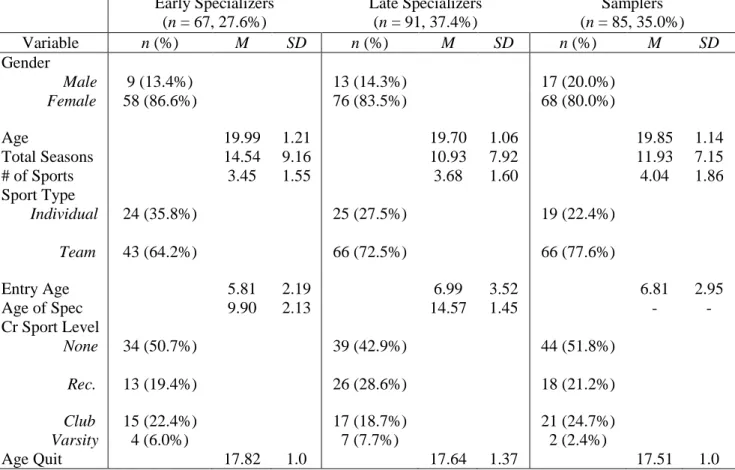
Data was collected from two-hundred and forty-three college aged individuals between the ages of 18-23 years old (Mage = 19.83, SD = 1.13 years). The sample was split between early
specializers (specialized in one sport at or before age twelve; n = 67), late specializers
(specialized in one sport after age twelve; n = 91), and samplers (never specialized in one sport;
Instrumentation
Participants completed an online questionnaire assessing study variables including: demographics, and both retroactive and current psychological (i.e. burnout, sport motivation, perceived sport stress, social support, intrinsic motivation for physical activity, and resilience) and physical (i.e. number and type of injury, and current organized sport participation and physical activity levels) health measures.
The retrospective prompt and all succeeding measures (discussed below) were recently used with a similar sample of young adult athletes in the aforementioned pilot study, Sport Specialization and Current Physical and Psychosocial Health (Waldron & DeFreese, in review). All pilot study measures demonstrated adequate internal consistency reliability, with Cronbach’s alpha scores of .70 or higher. Additionally, bivariate correlations were of expected magnitude and direction for related psychological study variables (i.e. burnout and sport stress). However, measurement limitations in regards to specialization classification, especially early
specialization, demonstrated the need for a more nuanced measure of specialization beyond Jayanthi et al.’s (2015) 3-point scale (adaptation to this measure, utilized in current study, discussed below).
Demographics. Participants were asked to self-report their age, gender, ethnicity, race, school, high school sport participation (sport type, specific sport(s), and total number of seasons), current organized sport participation level (recreational, club, or varsity), and years playing their current sport or age and reason for quitting sport, if applicable.
utilized. Participants were primed via a two-minute reflection of their final season of American high school sport, before beginning the assessment (Mosewich, Crocker, Kowalski, & DeLongis, 2013; Reis et al., 2015). All retrospective questions were in reference to the participant’s final high school sport season.
Sport Specialization
Sport specialization was measured using a modified version of Jayanthi et al.’s (2015) 3-point scale, based on the definition of specialization as year-round intensive training in a single sport, at the exclusion of other sports. Participants responded to three questions, “Did you quit other sports to focus on one sport OR only play one sport throughout your entire athletic
career?”, “Did you train more than eight months out of the year in a single sport?”, and “Did you consider your primary sport more important than other sports?” A response of “yes” was coded as a one, and “no” was coded as zero. If the sum of the three questions was three, participants were classified as a high specializer, moderate for a score of two, and low for a score of zero or one. Early specialization was classified as a response of twelve or less to the question “At what age did you quit other sports to focus on one sport OR start playing your domain sport?”, based on Cote et al.’s (2007) Developmental Model of Sport Participation. Participants were also asked their reason(s) for specialization by selecting all that apply from twenty choices related to
reasons chosen were based on sport commitment theory and findings from previous studies on common reasons for sport participation (Fraser-Thomas et al., 2008; Schmidt & Stein, 1991; Weiss & Weiss, 2003).
Participants also responded to multiple questions regarding a range of factors that are characteristic of the specialization environment. Participants self-reported their age of entry into organized sports, number of different sports they participated in, and if applicable, their current participation status in regards to their domain sport (not participating, recreational, club, or varsity). Finally, participants reported their average number of hours of free, unstructured
play/physical activity, structured, organized sport activity, sports-related training, and non-sports related activities, per week. For the aforementioned variables, participants reported average amounts for 4 time points: 6-12, 13-15, 16-18, and 19-23, based on Cote et al.’s (2007) DMSP.
Athlete Burnout
Self-Determined Sport Motivation
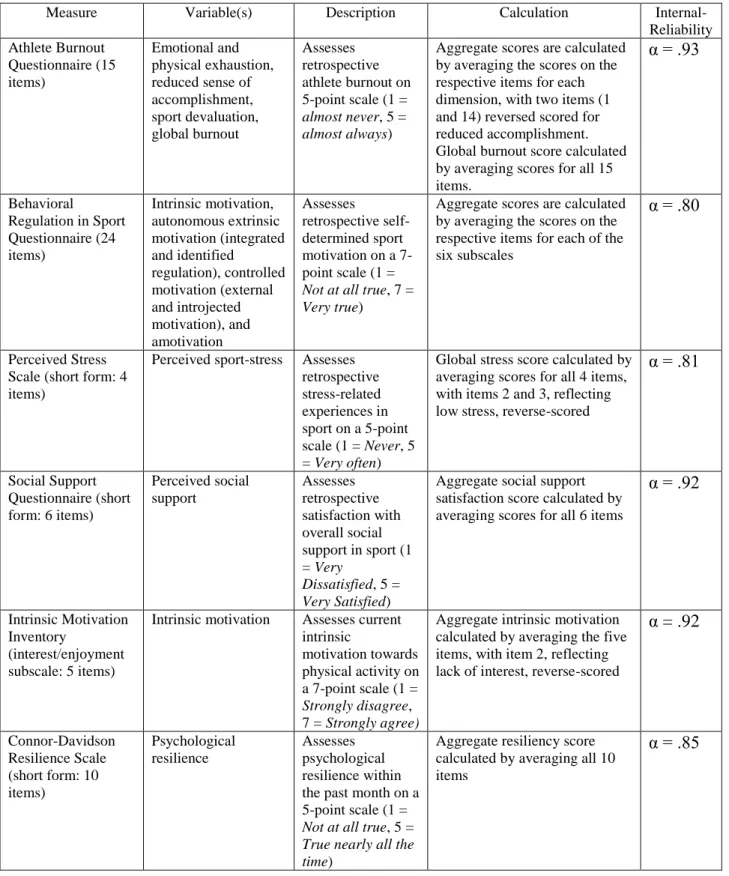
Sport motivation was measured using Lonsdale, Hodge, and Rose’s (2008) twenty-four item Behavioral Regulation in Sport Questionnaire (BRSQ).The BRSQ contains six subscales measuring intrinsic motivation, autonomous extrinsic motivation (integrated and identified regulation), controlled motivation (external and introjected motivation), and amotivation, based on Ryan and Deci’s (2000) self-determination theory (SDT). In the current study, participants responded to the item stem “I participated in my sport…” utilizing a seven-point Likert scale, ranging from 1(Not at all True) to 7 (Very True). The BRSQ was designed specifically for use with competitive sport participants and has shown to be both valid and reliable with elite and non-elite athlete populations (Lonsdale et al., 2008). Internal consistency reliability of scores in the current study was α = .80.
Sport-related Stress
A four-item, short version of Cohen, Kamarch, and Mermelstein’s (1983) Perceived Stress Scale (PSS-4) was utilized to measure sport-related stress. The PSS is a global measure of stress, examining participants’ perceptions of control, overload, and predictability. In this study, the PSS-4 was contextualized to measure sport stress by having participants rate how often they experienced stressful situations in their final American high school sport season on a five-point Likert scale, ranging from 1 (Never) to 5 (Very Often). Example items include: “How often did you feel that you were unable to control the important things in sport?” and “How often did you feel things were going your way in sport?” The average of all four items was computed to obtain a global perceived stress score, with questions two and three reverse scored. The PSS has
Smith, 2001). Despite a slightly lower internal reliability than the full-length questionnaire, the PSS-4 has also been found to be both reliable and valid, and is better suited for short assessments (Cohen & Williamson, 1988). Internal consistency reliability of scores in the current study was α = .81.
Perceived Social Support
Perceived social support was measured using a modified version of Sarason, Sarason, Shearin, and Pierce’s (1987) Social Support Questionnaire (SSQ). The SSQ is designed to
measure perceptions and satisfaction with overall social support. Each question asks participants, in general, how satisfied they are with the social support people in their life provide, using a five point Likert scale, ranging from 1 (Very Dissatisfied) to 5 (Very Satisfied). Example items include: “When you were upset and needed to be comforted.” Overall perceived social support scores were calculated using the mean of the Likert ratings for all six questions. The SSQ has been shown to possess acceptable internal consistency validity and reliability for use in collegiate athlete populations (DeFreese & Smith, 2013). Internal consistency reliability of scores in the current study was α = .91.
Past Injury History
primary injury occurred and any current effects, such as “mobility limitations”, “mental health issues”, “pain”, “no affect”, or “other.” The aforementioned questions were chosen based on findings from previous research (Hughes, 2014; Jayanthi et al., 2013; Post et al., 2017).
Current. Participants were asked to self-report their current injury history, physical activity level, intrinsic motivation towards physical activity, and psychological resilience. Questions on participants’ prior knowledge regarding the topic of sport specialization were also utilized.
Current Injury History
Current injury history was measured using the same questions as the past injury history, discussed above. In addition, participants were asked when their primary or most severe sports-related injury first occurred from the answer choices: “before high school,” “high school”, and “college.”
Physical Activity
Current physical activity levels were measured using the nine-item, short format of the International Physical Activity Questionnaire (IPAQ-SF). The IPAQ is a questionnaire designed to provide cross-national assessment of physical activity (vigorous and moderate activity, walking, and sitting) in adults ages eighteen to sixty-five. In the current study, participants’ average weekly vigorous and moderate activity were calculated by taking the product of the number of days out of the past week and the average amount of time per day participants’ spent performing the activity. Participants’ also reported the average number of hours spent sitting on a weekday (Monday through Friday) and on a weekend day (Saturday or Sunday). This
Intrinsic Motivation
Intrinsic motivation towards physical activity/exercise was measured using the (1982) Intrinsic Motivation Inventory, a multidimensional questionnaire designed to assess participants’ motivation when performing a specific activity (IMI) (SDT, n.d.). The full inventory contains twenty-seven questions spanning seven subscales, with the interest/enjoyment subscale serving as the sole direct self-report measure of intrinsic measure. Research has demonstrated that the inclusion or exclusion of any one of seven subscales does not affect the remaining dimensions (McAuley, Duncan, & Tammen, 1989). Therefore, this study utilized the five questions from the interest/enjoyment subscale to measure participants’ intrinsic motivation regarding physical activity, including sport activity and/or exercising. Each of the items were adapted to the physical activity context, for example, “I enjoy physical activity very much.” Participants indicated how strongly they agreed with a statement regarding their physical activity habits on a seven-point Likert scale, ranging from 1 (Strongly disagree) to 7 (Strongly agree), with question two reverse scored. The IMI has previously demonstrated adequate reliability and validity in a competitive sport context (McAuley et al., 1989). Internal consistency reliability of scores in the current study was α = .92.
Psychological Resilience
generally, if the situation did not occur recently). All self-reported ratings utilized a five-point Likert scale, ranging from 1 (Not at all True) to 5 (True Nearly all the Time). An overall resiliency score was computed by averaging the ten items, with a range of one to five. The CD-RISC 10-item scale has been shown to be both a reliable and valid measure of psychological resilience in sport populations (Gucciardi, Jackson, Coulter, & Mallett, 2011; Gonzalez, Moore, Newton, & Galli, 2016). Internal consistency reliability of scores in the current study was α = .87.
Specialization Knowledge
To conclude the survey, participants were asked three questions regarding their knowledge of the topic of sport specialization in order to assess potential subject bias.
Participants were asked if they had previously heard of the term “sport specialization” before participating in the study, if they were aware that researchers and major medical organizations have warned against the potential harmful effects of sport specialization on athletes’
psychological and physical health, and if they personally believed that sport specialization is harmful for athletes' psychological and physical health.
Procedure
was sent to solicit remaining eligible individuals to complete the study. A second and final reminder email was sent two weeks after the first contact, with no additional contacts following this final reminder. The survey remained open for six weeks with participants recruited
throughout this time period.
Before beginning the survey, participants were provided information detailing the voluntary nature of the study and their right to withdrawal. Participants were told the survey should take no more than twenty minutes. Consent was obtained as part of the online survey protocol. After consent was obtained, participants were asked whether or not they were 1) over the age of eighteen 2) under the age of twenty-four 3) participated in at least one full season of high school sport. If a participant answered “no” to any of the aforementioned questions, he/she was immediately directed to the end of the survey and no data was collected. Additionally, if a participant answered “yes” to having previously participated in the pilot study, which informed this study, no further data was collected. Following the questions regarding inclusion criteria, participants were given general instructions to complete the survey. For the first half of the survey, participants were asked to think about their final season of American high school sport when answering questions, and were reminded to do this for each psychometric scale. For the second half of the survey, participants were asked to reflect on their current thoughts and behaviors, with the specific time period (i.e. past week) stated in each question prompt.
confidentiality, only the primary investigator had access to the incentive survey and the survey and all of its data were deleted once winners were chosen.
Data Analysis
Data Screening
All data analysis was performed using IBM SPSS Statistics, Version 24(IBM Corp., 2016). First, preliminary data screening for missing values, outliers, and violations of
assumptions of multivariate analysis was performed in accordance with Tabachnick and Fidell’s (2013) procedures. Since missing cases did not exceed 5% for any one variable, missing data from a study variable was mean imputed. Assumptions of multivariate analysis were confirmed via examining skewness and kurtosis values, and pairwise scatterplots. In addition, all seven psychometric scales demonstrated internal consistency reliability (α > .70).
Primary Research Questions
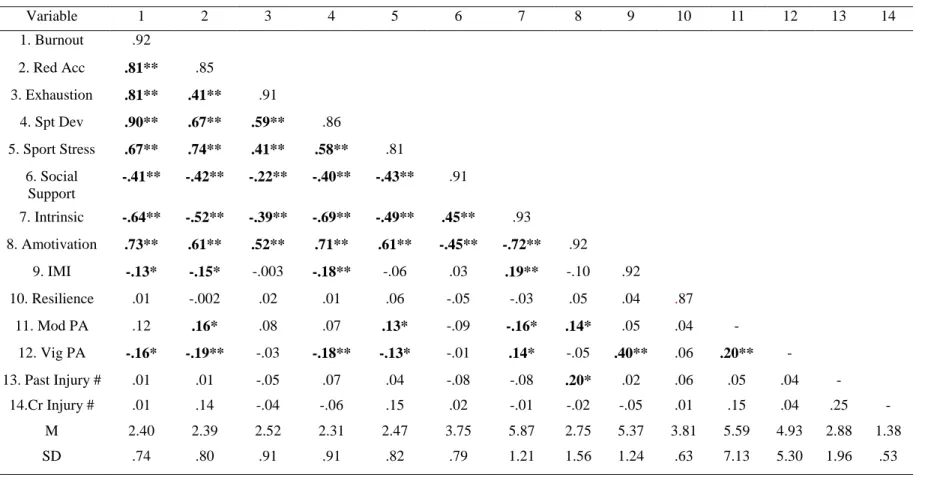
In order to test the primary research hypotheses descriptive statistics, bivariate
Exploratory Research Questions
Chapter 4
There is a trend towards sport specialization (high intensity, year-round training in a single sport at the exclusion of other sports) in American youth organized sport, evident in the increasing number of elite youth competitions, such as the Junior Olympics and AAUs
(Wiersma, 2000). As athletes appear to be investing in sports at younger ages and with greater intensity, the decision to specialize in a single sport has produced intensive debate. (Baker, Cobley, & Fraser-Thomas, 2009; Wiersma, 2000). The debate concerning sports specialization is centered around two main issues, whether specialization is necessary to achieve elite
performance and/or whether it increases the risk of maladaptive psychological and physical outcomes (Reider, 2017). The latter point is the focus of the current study.
According to Cote, Baker, and Abernathy’s (2007) Developmental Model of Sport Participation (DMSP), two distinct pathways to elite performance exist: sampling with late specialization, and early specialization (Cote, Horton, MacDonaldy, & Wilkes, 2009). The pathways differ in their balance of deliberate play (inherently enjoyable activities often involving adapted rules and loose monitoring) and deliberate practice (effortful training designed to
develop task-specific skills, which is not inherently enjoyable). Early specialization is
Organization, and American Academy of Pediatrics, have released cautionary position
statements warning against maladaptive physical and psychological outcomes of specialization, including: injury and athlete burnout, respectively (DiFiori, Benjamin, Brenner, & Gregory, 2014).
Athlete burnout is the multidimensional psychological syndrome consisting of a reduced sense of athletic accomplishment, sport devaluation, and physical and emotional exhaustion (Raedeke, 1997). The respective dimensions (i.e., symptoms) collectively characterize the over-arching burnout experience. Accordingly, burnout research to date examines both the overall experience as well as its individual dimensions in relation to outcomes like sport specialization. Smith’s (1986) cognitive-affective model proposes chronic psychosocial stress, a perceived disparity between sport demands and an individual’s coping resources, as the key antecedent of burnout. However, burnout may also result from the development of a unidimensional identity and lack of autonomy or control, inherent in the social organization of high performance sport (Coakley, 1992). While an adverse specialization-burnout relationship has been posited, due to theoretically inherent “risk factors” (antecedents of burnout, such as high training demands, chronic stress, and limited autonomy) in the specialization environment, limited extant research exists. Strachan, Cote, & Deakin’s (2009) study is the first to associate specialization with higher levels of emotional exhaustion (one of the three burnout dimensions/symptoms), when compared to samplers. Further burnout research is warranted given the well-established association
Furthermore, maladaptive associations between specialization and a variety of
psychological outcomes, such as increased stress and decreased motivation, have been posited due to the aforementioned risk factors for burnout (e.g. high training demands and limited autonomy) and other contextual factors of the specialization experience (e.g. limited diversity in peer interaction and a restricted identity). Long-term maladaptive motivation outcomes have also been posited due to the limited development of general athletic skills (or perceived skills) and decreased early exposure to intrinsically motivating behaviors, such as deliberate play (Wiersma 2000; Cote, Lidor et al., 2009; Ryan & Deci, 2000). However, the limited findings to date have been mixed, with specialization associated with both adaptive (i.e. high levels of intrinsic motivation) and maladaptive (i.e. decreased perceptions of autonomy, competence, and relatedness) psychosocial outcomes, warranting further research (McFadden, Bean, Fortier, & Post, 2016; Russell & Symonds, 2015). Additionally, there is a significant gap in knowledge surrounding long-term psychological outcomes, such as psychological resilience.
In addition to the aforementioned maladaptive psychological outcomes, burnout has also been associated with maladaptive behavioral and physical health outcomes, such as sport
dropout, decreased physical activity, and sports-related injuries (Eklund & DeFreese, 2015). The burnout-injury relationship merits further examination as findings have been mixed. Past