CONSTITUENT ASSEMBLIES, PRESIDENTIAL MAJORITIES AND DEMOCRACY IN CONTEMPORARY LATIN AMERICA
Alissandra T. Stoyan
A dissertation submitted to the faculty of the University of North Carolina at Chapel Hill in partial fulfillment of the requirements for the degree of Doctor of Philosophy in the Department of Political Science of the University of North Carolina at Chapel Hill.
Chapel Hill 2014
Approved by: Jonathan Hartlyn Evelyne Huber
Cecilia Martinez-Gallardo Graeme Robertson
ii
ABSTRACT
Alissandra T. Stoyan: CONSTITUENT ASSEMBLIES, PRESIDENTIAL MAJORITIES AND DEMOCRACY IN CONTEMPORARY LATIN AMERICA
(Under the direction of Dr. Jonathan Hartlyn)
iii
the Judiciary or Electoral Council to allow the initiation of the reform process. By
marginalizing or closing Congress, presidents who successfully implement this strategy have undercut a primary institution of liberal representative democracy. Yet, they have also retained democratic legitimacy by relying on mechanisms of direct democracy and
iv
To those who have always believed in me and the value of this effort: Cory M. Spicer, George A. Stoyan Jr., Susan G. Stoyan, Elizabeth A. Stoyan.
v
ACKNOWLEDGEMENTS
I am very grateful for the many forms of assistance that I received as I completed this dissertation. To begin, none of this would have been possible without the support of my partner, Cory. At times, he seemed to understand the long road of pursuing a Ph.D. better than I did. And particularly in those moments, his relentless encouragement, faith in my abilities, and unqualified love was absolutely essential. Throughout my time at UNC Chapel Hill, my parents and sister conveyed the same level of support from afar. Not a day has gone by that I have not missed them in some way, but it has given me tremendous motivation to know how much they believe in me and the path I have chosen. Whenever I would leave for fieldwork, my family would pull out the map to mark where I was headed. I know that no matter where I may go or how unfamiliar it may be to them, they will always pull out that map to mark where their daughter is headed – and they will always be proud of me.
ii
on single-track. I am also thankful that Amanda Barnes Cook, upon learning that I was ABD, presented me with a coffee mug with stark black text against white ceramic: ―I should be writing my dissertation right now." It served me through countless cups of coffee in front of my computer, a constant reminder of my most pressing task as a Ph.D. candidate. I am appreciative of many other graduate students at UNC, who provided feedback, advice, support, and/or friendship over the course of many years: Russell Bither-Terry, Santiago Anria, Paula Mukherjee, Sarah Shair-Rosenfield, Kevin Banda, Hanna Kleider, and many others.
Beyond my colleagues, I also benefitted greatly from the excellent faculty at UNC. For several years while completing this dissertation, I served as a TA/RA for Andy Reynolds. He has taught me a great deal about teaching undergraduates, as well as conducting research abroad, and for that I am very grateful. I am also appreciative to Lars Schoultz, who provided sharp theoretical and editorial comments on parts of this dissertation; I will always aspire to write as well as he does. Lastly, I am thankful to the professors and graduate students who provided thoughtful criticism at UNC‘s Comparative Working Group, where I presented a paper based on this research in September 2014. Also at UNC, I would like to thank staff in the Political Science Department for their assistance, patience, and kindness over the years: Carol Nichols, Shannon Eubanks, Dana Sadek, Susan Heske, Cynthia Tang, and last but certainly not least Chris Reynolds.
iii
designation as the Quirós Varela Scholar and a Dissertation Field Research Grant; a Pre-Dissertation Field Research Grant; and several conference travel grants that permitted me to present parts of this dissertation at national conferences. I also benefitted from the
Department of Political Science at UNC and the generosity of Tom Uhlman, as I received two Uhlman Summer Research Awards and conference travel support to present this work. I am sincerely thankful for this support.
I conducted eight months of fieldwork in the course of completing this dissertation and the experience taught me a lot about the kindness of strangers. Without the help of several key people in Bolivia and Ecuador, I would not have been able to conduct the interviews that have informed my understanding of the Constituent Assemblies in these countries. In Bolivia, I appreciate the support that I received from Gonzalo Rojas-Ortuste and the Postgrado en Ciencias del Desarrollo (CIDES) in the Universidad Mayor de San Andrés (UMSA), as well as Fernando Molina, Cecilia Villavicencio, and the Fundación Vicente Pazos Kanki. José Luis Evia was also particularly generous with his time and assistance, going above and beyond on several occasions. In Ecuador, I am thankful for the support of Simón Pachano, Maria Fernanda Almeida, and the Facultad Latinoamericana de Ciencias Sociales (FLACSO) Sede Ecuador. I am also profoundly grateful to Rosa Elena de la Torre, who was one of the most generous people I met while abroad, facilitating many of the contacts I made during my time in Quito.
iv
thankful that Carlos Javier Salazar Zapata and his daughter warmly welcomed me into their home in Santa Cruz. Above all, I cannot imagine life in Quito without the supreme kindness and generosity of Nieves Ribadeniera and her beautiful family. We enjoyed delicious meals, concerts, and a trip to Colombia together and shared some moments where we laughed until we cried; I miss her still! I also owe a debt of gratitude to my aunt, Debra Gabos Gatta, who came to Ecuador for a month‘s vacation and spent several weekends with me exploring the city. Many members of my extended family have been extremely supportive over the years, but Aunt Debbie arrived in Quito having read a relevant journal article on constitutional reform in Latin America and carrying a box of Civitello‘s cookies! While traveling, I also had a series of fortuitous connections with: Roger the shoe shiner I met on the Avenida Arce in 2011 and who somehow remembered me upon my return a year later in 2012; the woman I sat next to on the plane to Ecuador; Elpidio, the trainer in a Quito gym where I first
developed a love for running; and my dear friend Fortunata, who I will never forget.
Finally and most importantly, I am deeply indebted to the members of my committee.
v
most. Their input was essential as I refined the conceptual framework, and they both brought their significant knowledge of Latin American politics to bear on this dissertation.
ii
TABLE OF CONTENTS
LIST OF TABLES ... vii
LIST OF FIGURES ... ix
CHAPTER 1: INTRODUCTION ... 1
Executives with Ambitious Reform Agendas ... 1
Why Focus on the Constituent Assembly? ... 2
Outline of the Argument and Dissertation ... 6
CHAPTER 2: LITERATURE, CONCEPUTAL FRAMEWORK, & METHODOLOGY .... 12
Existing Literature, Conceptual Framework, and Hypotheses ... 12
Presidential Policymaking & Executive-Legislative Relations ... 13
Institutional Change, Innovation, & Manipulation ... 18
Diffusion of Innovations ... 22
Liberal Representative vs. Participatory Democracy ... 28
Conceptualization and Measurement ... 31
Executives with Ambitious Agendas ... 31
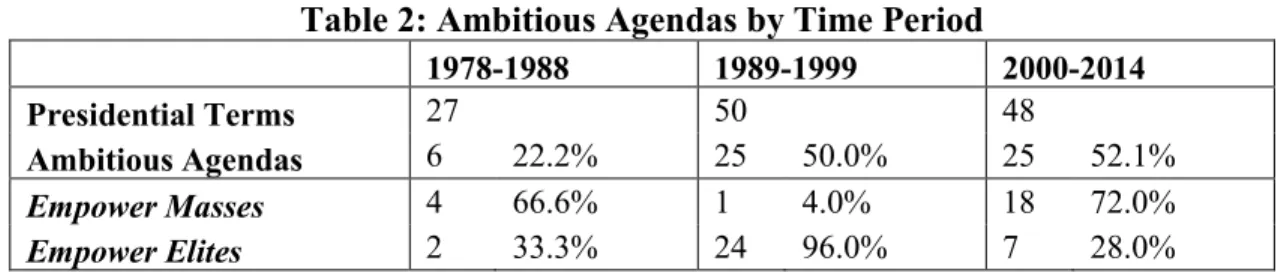
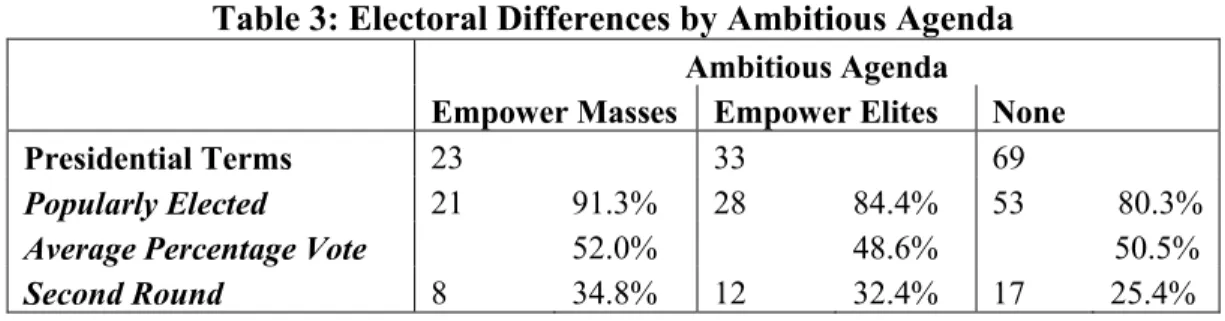
Ambitious Reform in Latin America: 1978-2014 ... 35
Constituent Assembly ... 39
Hypotheses & Alternative Arguments ... 41
iii
Case Selection... 50
Fieldwork in Bolivia and Ecuador ... 55
CHAPTER 3: CONSTITUTIONAL THEORY AND REFORM IN LATIN AMERICA... 58
Democracy, the Social Contract, and Constituent Power ... 59
Democracy ... 59
The Social Contract ... 61
The Constituent Power ... 63
Trends in Latin American Constitution-Making ... 66
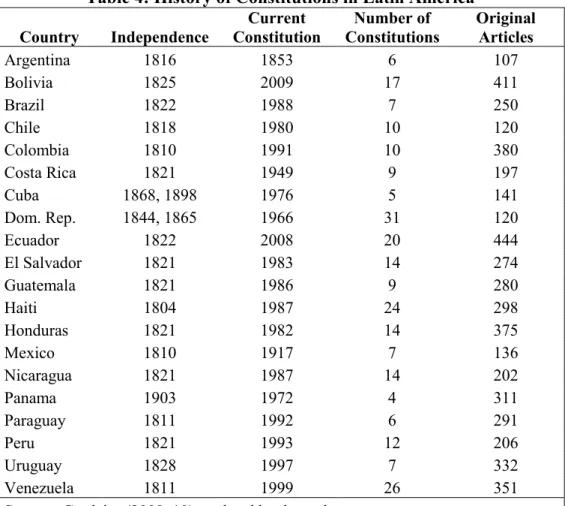
Long-Range, Historical Trends ... 66
Procedures for Amendment and Replacement ... 69
Trends since the Return to Democracy ... 76
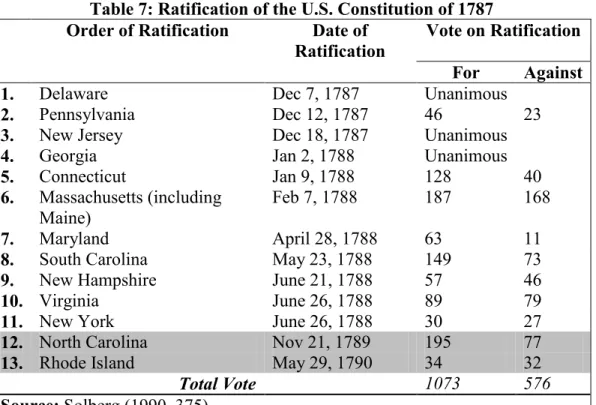
Crisis and a New Constitution in the United States ... 80
CHAPTER 4: THE DECISION TO PURSUE A CA ... 86
Introduction ... 86
Theoretical Model of Presidential Decisions over Policy-Making ... 87
1. Legislative Process (Statutes) ... 91
2. Partial Constitutional Reform ... 95
3. Legal Use of Decree Power ... 97
4. Commit to a Future Legal Path... 99
iv
Case Studies: How to Pursue Ambitious Reform? ... 106
1. Lula and Coalition Building in Brazil, 2002-2011 ... 107
2. Caldera (from) the Legal Use (to the Abuse) of Decree Power, 1994 ... 113
3. Menem and Partial Constitutional Reform in Argentina,1994 ... 118
4. Palacio and a Future Legal Path in Ecuador, 2005-2007 ... 123
5. Collor de Mello and the Abuse of Decree Power in Brazil, 1990-1992 ... 128
6. Ortega and Judicial Override in Nicaragua, 2009 ... 131
7. Serrano and the Autogolpe in Guatemala, 1993 ... 138
8. The Constituent Assembly with Plenos Poderes ... 143
Conclusion ... 160
CHAPTER 5: DETERMINANTS OF SUCCESS OF CA REFORMS ... 164
Introduction ... 164
Conceptual Framework & Measurement ... 167
Methodology & Case Selection... 174
Case Evidence ... 176
Presidential and Legislative Elections ... 178
Constituent Assembly Referendum & Elections ... 188
Process of Drafting the Constitution ... 203
Ratification ... 211
v
Conclusion ... 216
CHAPTER 6: CONSEQUENCES OF REFORM VIA CA FOR DEMOCRACY ... 220
Introduction ... 220
Polyarchy & Conceptions of Democracy ... 225
Conceptualization & Measurement ... 228
Contestation ... 229
Political Participation ... 232
Political Tolerance ... 235
LAPOP Survey Data ... 236
Analysis and Findings ... 239
Contestation ... 239
Formal Participation ... 250
Political Tolerance ... 278
Discussion of Results ... 289
Conclusion ... 293
CHAPTER 7: CONCLUSION ... 296
Summary and Significance of Main Findings ... 296
Areas of Future Research ... 303
Important Theoretical Issues ... 304
vi
vii
LIST OF TABLES
Table 1: Presidents with Ambitious Reform Agendas, 1978-2014 ... 36
Table 2: Ambitious Agendas by Time Period ... 37
Table 3: Electoral Differences by Ambitious Agenda ... 38
Table 4: History of Constitutions in Latin America ... 67
Table 5: Reform Mechanisms in Latin American Constitutions as of 2014... 72
Table 6: Constituent and Constitutional Assemblies in Latin America (1978-2014) ... 76
Table 7: Ratification of the U.S. Constitution of 1787 ... 84
Table 8: Legislative Representation of Governing Parties ... 145
Table 9: Decree Power in Bolivia, Ecuador, Honduras, and Venezuela ... 149
Table 10: Case Studies of Executives with Ambitious Reform Agendas ... 161
Table 11: Component Measures of High Mobilizational and Institutional Leverage ... 172
Table 12: Case Evidence of the Determinants of Success ... 177
Table 13: Presidential Election Results ... 179
Table 14: Electoral Processes Initiating Reform via Constituent Assembly ... 201
Table 15: Referenda to Approve the Constitution ... 211
Table 16: Results of Subsequent Presidential Elections ... 214
Table 17: Partisan Power in the Legislature after Reform ... 215
Table 18: Operationalization of Contestation ... 230
Table 19: Factors Determining Inclusiveness of Participation ... 233
Table 20: Percentage of Women in the Legislature ... 254
Table 21: Compulsory Voting in Bolivia, Ecuador, Honduras, and Venezuela ... 258
viii
Table 23: Determinants of Voting Participation in Bolivia ... 272
Table 24: Determinants of Voting Participation in Ecuador ... 273
Table 25: Determinants of Voting Participation in Honduras ... 274
Table 26: Political Tolerance Mean Significance Tests ... 280
Table 27: Determinants of Political Tolerance in Bolivia ... 283
Table 28: Determinants of Political Tolerance in Ecuador ... 284
Table 29: Determinants of Political Tolerance in Honduras ... 285
Table 30: Overview of LAPOP Dataset Technical Information ... 319
Table 31: Socio-Demographic Determinants of Voting Participation in Bolivia ... 322
Table 32: Socio-Demographic Determinants of Voting Participation in Ecuador ... 323
Table 33: Socio-Demographic Determinants of Voting Participation in Honduras ... 324
Table 34: Socio-Demographic Determinants of Political Tolerance in Bolivia ... 325
Table 35: Socio-Demographic Determinants of Political Tolerance in Ecuador ... 326
ix
LIST OF FIGURES
Figure 1: Density of Ambitious Reform Agendas in Latin America, 1978-2014 ... 39
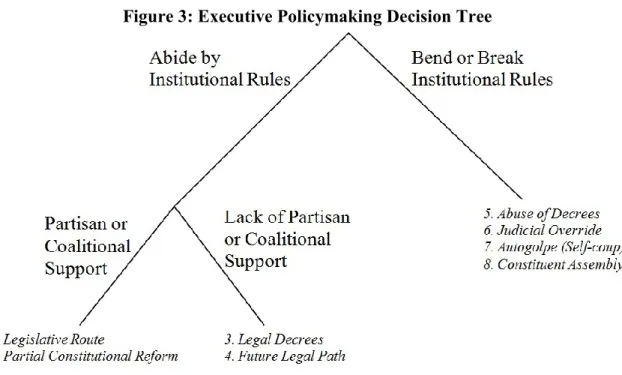
Figure 2: Executive Policymaking Decision Tree ... 41
Figure 3: Executive Policymaking Decision Tree ... 89
Figure 4: Three-Year Averages of Freedom House Democracy Scores ... 102
Figure 5: Executive Policymaking Decision Tree with Examples ... 107
Figure 6: Conceptual Framework for Success of the CA ... 169
Figure 7: Latent Judicial Independence ... 190
Figure 8: Variation in Presidential Approval during Reform ... 209
Figure 9: Lack of Support for Congress and Political Parties in Ecuador, 2004 ... 224
Figure 10: Reform via CA and Trajectories of Democratization ... 226
Figure 11: Freedom of Association, 2006-2014 ... 240
Figure 12: Freedom of Expression, 2006-2014 ... 242
Figure 13: Press Freedom, 2002-2013 ... 244
Figure 14: Mean Voting Participation in Bolivia, Ecuador, and Honduras, 2004-2012 ... 260
Figure 15: Turnout & Invalid Votes in Bolivia, Ecuador, and Honduras, 2001-2014 ... 261
Figure 16: Mean Tolerance in Bolivia, Ecuador, and Honduras, 2004-2012 ... 279
Figure 17: Average Ethnic Composition of Survey Respondents vs. Census Data... 320
Figure 18: Turnout and Invalid Votes in Venezuela, 1993-2013 ... 321
CHAPTER 1: INTRODUCTION
This dissertation centers on executives with an ambitious reform agenda in a democratic context and the decision to implement reform through a Constituent Assembly (CA). I develop a conceptual framework through which it is possible to understand the executive's decision to pursue their agenda through an innovative reform mechanism, the determinants of the success or failure of that reform process, and lastly the short-term consequences of the reform process for contestation and participation, and hence democracy more generally. This dissertation proceeds through an examination of four primary cases: Venezuela under the presidency of Hugo Chávez in 1999, Ecuador under Rafael Correa in 2008, Bolivia under Evo Morales in 2009, and Honduras under Manuel Zelaya in 2009. All four executives had an ambitious reform agenda as defined below, and they chose to pursue them through an innovative use of the CA. Reform was successful in the first three cases while the process attempted by Zelaya failed dramatically and resulted in his removal from office. I also consider a number of shadow cases where executives had an ambitious reform agenda but chose a different strategy for pursuing reform.
Executives with Ambitious Reform Agendas
2
impossible to know the sincere intentions of an executive. Still, presidents are perhaps the most public of elected officials, who regularly state their ambitions during campaigns, speeches, and interviews. Likewise, their failed attempts at policy reform rarely go
unnoticed. Beyond espousing rhetoric openly, the agenda must be observed through some attempt at implementation, even if it fails very early on.
An agenda is ambitious if it proposes a restructuring of laws or political institutions to redistribute power within the political arena. This definition encompasses those executives who endorse and attempt to pass policy altering elites‘ property rights, either decreasing or increasing those rights. Ambitious agendas that empower popular vis-à-vis elite sectors of society include: land reform, nationalization, progressive tax reform, and redistributive social policy. Those that empower elite vis-à-vis popular sectors of society include neoliberal reforms such as privatization, liberalization, balancing budgets primarily through cutting expenditures, regressive tax reform, and other structural adjustment policies associated with IMF standby agreements. I distinguish 'ambitious' from 'revolutionary' agendas. Ambitious agendas may but do not necessarily have to represent a complete break with policies of previous executives.1 An agenda is ambitious as long as it seeks to redistribute power, even if that is through a continuation or deepening of a predecessor's policies.
Why Focus on the Constituent Assembly?
How do presidents with an ambitious reform agenda successfully implement them in a democratic context? This dissertation takes, as its starting point, ambitious attempts by presidents to reform the structure of the state and its institutions. It then analyzes the decision to employ a CA with "plenos poderes" or supreme power to enact such reform. This is only
3
one of many options available to executives in a democratic context. They can enact reform through standard legislative channels, making use of a legislative majority or moderating and building a coalition with other parties in Congress (Brazil under Lula). They can live with stalemate and bypass Congress through other institutions as much as possible, by using executive decree power or by forging alliances with the judiciary (Nicaragua under Ortega). Or, they can marginalizeCongress in a process centered on citizen participation and reform of the Constitution, which is likely to lead to a new Congress with a supportive majority (Venezuela under Chávez in 1999, Ecuador under Correa in 2008, and Bolivia under Morales in 2009). This last strategy is my focus.
By marginalizing or closing Congress, these presidents have undermined one of the primary institutions of liberal representative democracy but they have also retained
democratic legitimacy by relying on mechanisms of direct democracy and constitutional reform. Determining why and how this reform process occurs will lead to a deeper understanding of democracy and power in contemporary Latin America. It will also shed light on the inherent tension between majoritarian democracy and the checks and balances present in representative conceptions of democracy. To this end, I ask three core questions. When might presidents with ambitious reform agendas choose a referendum and CA over other available options? What factors ultimately determine the success of this path of reform? Finally, what are the consequences for democracy of pursuing reform in this way? In
answering these questions, this dissertation offers a conceptual framework for understanding institutional innovation and change in comparative perspective.
4
Venezuela (1999), Ecuador (2008), and Bolivia (2009) through a strikingly similar sequence of events and within a similar socio-political context. Presidents were elected without the comfortable majority in Congress necessary to make sweeping reforms promised during campaigns. Calling a referendum, these presidents encouraged citizens to vote ‗yes‘ to establish a CA to rewrite the Constitution, even though this action was not explicitly allowed under the current Constitution. The presidents then pressured the Supreme Court or Electoral Council to allow this line of action and to entrust the CA with plenos poderes, or supreme powers. Presidents have been able to gain a majority of seats in the CA through elections. In some cases, the CA closed or marginalized the Congress, where the president lacked a majority, calling for early legislative elections. To varying extents, executives were able to control the process of reform and hence its outcome. Likewise, nuances in the dynamics of these processes have led to slightly different consequences for democracy in each case.
Underlying all three cases were demands for social and political inclusion by a poor and/or indigenous majority. Discontent with neoliberal policies in the 1980s and 1990s activated these groups politically and led to a crisis of representation, whereby the majority realized that their interests were not at all represented by traditional parties. As the UNDP acknowledged, ―The replacement of the majority, which awards original legitimacy through elections, by minorities in the exercise of government is a repeated experience in the region. In general, it has left governments isolated from their bases and dependent on particular powers‖ (2010, 37).2 Growing popular dissatisfaction with representation has increasingly led Latin American leaders to acknowledge the active role of citizenship and the rights that follow. There has also been greater theoretical emphasis placed on widespread well-being –
5
including social justice and redistribution – as the end goal of democracy (PNUD 2010, 44), leading to a practical shift toward more majoritarian forms of democracy in the region. The historical elitism and racism embedded in these societies along with the exclusion and exploitation of poor sectors of the population has generated a strong critique of the existing political system, and especially its emphasis on representation. At the same time, these previously excluded sectors of the population have also inspired innovation - an institutional creativity, whereby what has seemed impossible within the confines of existing political structures is now possible in the course of a major project to reconstitute the state.
In Latin America, many presidents have been able to gain widespread popularity because they are political ‗outsiders‘ who can credibly level criticism at the existing structures of government, especially the 'partidocracia' or corrupt elites of the traditional parties entrenched in Congress. In Venezuela, Hugo Chávez had a reputation for challenging the existing political order long before he was elected in 1998, having perpetrated an
6
In stark contrast, an attempt at reform via CA failed in Honduras. Zelaya was the first executive in Latin America who was elected on a moderate right-leaning agenda but then subsequently developed an ambitious left-leaning agenda toward the end of his term in office. Hence, he is the first case of a right-to-left policy switch, though there have been many cases of the reverse. His decision to pursue a CA reflected a miscalculation of the chances of success of this reform process, likely influenced by diffusion of successful examples in Venezuela, Bolivia, and Ecuador. However, he faced growing institutionalized opposition and proceeded with reforms anyway. Zelaya's case demonstrates just how crucial institutional and mobilizational leverage are for successful reform. Moreover, his removal from office after attempting a CA has had dramatic negative consequences on democracy in Honduras in the short-term, proving that failed reform processes may sometime be just as influential as those that are completed successfully.
Outline of the Argument and Dissertation
7
innovative path of reform within the full range of reform mechanisms available to executives. Moreover, academics have often held overly simplistic views of it, claiming that it is
intrinsically authoritarian or unquestionably democratic (Colburn and Trejos 2010; Engler 2010). Instead, I acknowledge the nuances inherent to reform via CA. In doing so, my work on this topic sits at the intersection of four distinct bodies of literature.
Moreover, Chapter 2 explains my methodological approach, which is centrally qualitative and draws on fieldwork in Bolivia and Ecuador where I developed elite
interviews. This approach is supplemented with quantitative analysis of public opinion data in Chapter 6. I also devote attention to the conceptualization and measurement of key concepts advanced through this dissertation, including the concept of an ambitious reform agenda and the CA. To identify the universe of cases, I classify 125 presidential terms in 18 Latin American countries from 1978 to the present according to whether or not the executive advanced an ambitious reform agenda. This demonstrates interesting trends across the region.
8
example, it demonstrates how an environment of crisis can lead to a reform process that violates the existing constitution.
Chapter 4 examines the decision of Latin American presidents to pursue reform via a CA with ―plenos poderes‖ or supreme power to restructure the political system. It advances a theoretical model of executive policy-making that differentiates between clearly legal reform paths (legislative statutes, legal decrees, or partial constitutional reform) and those options that bend or break the institutional rules of the game (abuses of decree power, constituent assemblies, judicial manipulation, or autogolpes). To situate this decision empirically and analyze the conditions that make distinct paths of reform more likely, I engage in qualitative analysis of three cases of reform via CA (Venezuela 1999 - Chávez, Ecuador 2008 - Correa, and Bolivia 2009 - Morales), while also drawing evidence from 7 cases of different reform mechanisms. I find five factors that increase the likelihood of reform via a CA: (1) the number of seats in Congress and/or ability to build a sufficient coalitional majority, (2) decree powers, (3) viability of partial constitutional reform, (4) willingness to bend or break existing institutions, and (5) the perceived chance of success in relation to other strategies. This chapter emphasizes the power of Latin American presidents to navigate the institutions of democracy and enact reform.
9
supreme power.3 I examine this argument qualitatively by examining three cases of success (Venezuela 1999 – Chávez, Bolivia 2009 - Morales, and Ecuador 2008) and a case of failure (Honduras – Zelaya 2009). This analysis leads to a deeper understanding of democracy and power in contemporary Latin America, and sheds light on the inherent tension between majoritarian democracy and representative democracy‘s checks and balances. This chapter contributes to our understanding of the interplay between leadership, popular mobilization, and institutions in flux.
In Chapter 6, I analyze the consequences for democracy of reform via a CA with ―plenos poderes.‖ I focus on two dimensions of democracy, as advanced by Dahl (1971): contestation and participation.4 By contestation, I mean horizontal and vertical mechanisms of accountability. I hypothesize that executive power will be consolidated after this process, potentially leading to a lack of accountability. By participation, I mean the inclusion of minority or previously-excluded voices in the political process. There is likely to be a decrease in representation and participation of elites while the previously-excluded poor and indigenous groups are more likely to participate. In cases where reform via CA has failed dramatically, I expect to find reductions in both contestation and participation. The
investigation pursued in Chapter 6 is preliminary and focuses on short-term effects of these processes, given that three of the four under consideration have occurred only really taken effect within the last five years. For this period, what it demonstrates is that successful cases of reform via CA have, to varying extents, privileged inclusive participation over rights to contestation. There has generally been a concentration of power in the executive everywhere that reforms were successful. This has resulted in practical, and even sometimes legal,
3 Referenda and Constituent Assemblies are not explicitly allowable by the current constitution in these cases.
10
restrictions on the mechanisms of both vertical and horizontal accountability. New
constitutions have also implemented more participatory forms of democracy, including new mechanisms for citizens' participation. In general, the texts of these constitutions emphasize inclusionary language and mechanisms for the incorporation of previously-excluded groups. Perhaps as a result, there have been important socio-demographic shifts across voting participation and political tolerance throughout the time period of reform.
In Chapter 7, I conclude with a summary of the dissertation and my main findings and contributions. By analyzing the causes and consequences of reform via CA, as well as the dynamics for success, I make three principle contributions. First, the framework that I develop places this choice in comparative perspective with the full range of policymaking options, drawing additional theoretical and empirical attention to the point that executives often decide to bend the institutionalized rules in order to have a chance to achieve their preferred policy agendas. Secondly, by drawing out the factors that allow these executives to succeed - mobilizational and institutional leverage - this dissertation provides an explanation behind some of the most remarkable political processes that have occurred in the region in recent years. Lastly, I uncover a preliminary link between the nature of the CA process and its consequences for democracy. The most genuine advances in inclusive participation, and the least backsliding in terms of contestation has occurred where the reform process was more deliberative overall.
11
12
CHAPTER 2: LITERATURE, CONCEPUTAL FRAMEWORK, & METHODOLOGY
This chapter develops a conceptual framework to enhance our understanding of policy-making by executives with ambitious reform agendas. First, it situates the present analysis at the intersection of four larger bodies of literature and defines specific theoretical contributions to each. Thus far, insufficient attention has been dedicated to understanding this innovative reform path and how it fits into the full range of reform options available to Latin American executives. Therefore, I draw upon the findings of previous research to develop a theoretical model of ambitious reforms that encompasses the full range of policy-making options in a democratic context. This model differentiates between reforms which are clearly legal and reforms that bend or break the institutional rules of the game. Next, I lay out a number of expectations about the causes, conditions for success, and results of reform via a CA. Lastly, I elaborate on my methodological approach, justifying the use of a centrally qualitative design supported by fieldwork and interviews.
Existing Literature, Conceptual Framework, and Hypotheses
13
Presidential Policymaking & Executive-Legislative Relations
First, this dissertation advances a strategic choice framework of executive attempts to implement ambitious policy agendas via CA.5 This framework makes the assumption that the executive has discretion over policymaking strategies, albeit constrained by history, context, and institutions. In general, there is a need to move away from scholarship focusing on a single policymaking strategy in isolation. As Carlos Pereira, Timothy J. Power, and Lucio Rennó (2005) have pointed out, in the context of understanding the use of executive decree powers, it is important to consider that the volume of decrees issued represents "a prior choice from a menu of options" and, moreover, that this choice will vary within "different environments of presidential power and executive-legislative relations" (179). Thus, in examining the executive‘s decision to pursue a CA, I contextualize this method of reform as one possible choice. Presidents decide among several key options for how to influence policymaking and change the status quo. When executives have an ambitious reform agenda, they are more likely to employ certain policymaking strategies than others. Additionally, policymaking strategies are not mutually exclusive, and so the executive may try to employ multiple strategies during a single term. These points will be discussed further below.
There is a growing wealth of literature on policymaking in presidential democracies in Latin America.6 It has examined the interactions between the legislature and executives during the process of policymaking (Shugart and Carey 1992; Morgenstern and Nacif 2002). It also has detailed the proactive and reactive powers available to the executive and the conditions under which they are likely to be used (Carey and Shugart 1998; Tsebelis and
5 For an overview of strategic choice analysis, specifically as it relates to Latin American politics, see David Collier and Deborah L. Norden (1992).
14
Alemán 2005; Durán-Martínez 2012). Lastly, it has considered the legislative productivity of the executive vis-à-vis the legislature, through individual case studies (Figueiredo and
Limongi 2000; Cheibub, Przeworski, and Saiegh 2004; Alemán and Navia 2009) and in cross-national studies (Cheibub, Przeworski, and Saiegh 2004; Figueiredo, Salles, and Vieira 2009). This literature has generated a host of important observations about the policymaking process, which will be crucial to understanding the executive‘s decision over how to pursue ambitious reform. I will draw upon these observations in developing a framework of executive policymaking below.
However, very few studies have analyzed executives' decisions over how to pursue policy in light of the full range of options available to them. An important exception is Octavio Amorim Neto‘s (2006) decision-theoretic model of a president's policy-making strategies. In his view, a president may choose between enacting policy through statutes or through executive prerogatives. The former implies the passage of law through standard legislative channels, while the latter implies ―all constitutional and para-constitutional practices that allow presidents to act unilaterally vis-à-vis the legislative branch‖ (Amorim Neto 2006, 416). In this way, he is focused on the ‗legal‘ or constitutionally proscribed powers of presidents with the central goal of examining the relationship between presidential policymaking and patterns of cabinet formation. He finds that executives can use cabinet posts to obtain the approval of statutes; they are less likely to do so when employing the strategy of executive decree.7
15
In Amorim Neto's model, presidents decide which strategy to employ based on the potential value, cost, and probability of success of implementing each. The value of statutes is that they are viewed as legitimate and are much less likely to be overturned than decrees. However, in order to pass laws through legislative channels, the president must have a sufficient majority in Congress or be able to form a coalition, which can be costly because of ―the side payments the president has to make to secure a majority favorable to the bill‖ (Amorim Neto 2006, 420). Furthermore, the president is likely to have to compromise regarding his policy objective. On the other hand, decrees are valued for their relatively short time horizons, allowing presidents to ―immediately affect the policy status quo and move it to the position they want‖ (Amorim Neto 2006, 420). Still, they are seen as exceptional and often may only be used legally in emergencies. Hence, they are costly because they may be considered illegitimate and are more likely to be overturned.
I move beyond Amorim Neto‘s model specifically by considering two additional constitutionally prescribed policymaking options: partial constitutional reform and accepting failure in the short-run. I also consider four quasi- or extra-legal options the executive may seek to employ or rely on: abusing decree power, judicial override, establishing a new legal precedent for the CA, and the self-coup. Therefore, my understanding of the policymaking options available to executives is broader than Amorim Neto‘s model. In considering additional options, I recognize that executives often bend or break the rules of the game, as established by the existing constitution.8 Amorim Neto also makes a key simplifying assumption: presidents can only try statutes or prerogatives but not both. My framework
16
diverges on this point, as I recognize the tendency of executives to attempt multiple strategies within a single term.9
In the model of executive policymaking that I develop below, I make a key starting assumption: presidents are concerned with the success and legitimacy of the policy-making process. They care about the legitimacy of their reforms because they want to minimize their risk of failure or subsequent policy reversal. Therefore, they will prefer to pass reforms legally, if possible. It is also important to note that, although the decision tree below presents incremental steps in the decision making process, we should not always expect to see the same rigid pattern of attempts at reform. While optimal policy may not be self-evident to executives, they can learn from their predecessors and rule out the possibility of certain options based on previous experiences. Instead of always starting with attempts at statutes, the president may rule out this path of reform from the beginning, deciding not to even make an attempt because of a perceived low probability of success.10 They may also attempt one strategy at first, and then attempt a different strategy when the first fails or proves insufficient for accomplishing the preferred reforms.
A reform agenda is ‗ambitious‘ if it aims to redistribute power in the political system between elites and masses. In operationalizing this concept, I take an economic approach. Ambitious agendas that empower popular vis-à-vis elite sectors of society include: land reform, nationalization, progressive tax reform, and redistributive social policy. Ambitious reform agendas that empower elite vis-à-vis popular sectors of society include neoliberal
9 Amorim Neto (2006) also recognizes this tendency (418) but must keep his model simple for computational purposes and so limits himself to explaining executive policymaking behavior under very short time-horizons.
17
reforms such as privatization, liberalization, balancing budgets primarily through cutting expenditures, regressive tax reform, and other structural adjustment policies associated with IMF standby agreements. I am careful to distinguish the ambitious agendas considered here from revolutionary agendas; unlike revolutionary agendas, ambitious ones may be but do not necessarily have to be a complete break with policies of previous executives.11
Susan C. Stokes (2001) analyzes executive 'policy-switching' in Latin America in the 1990s, in other words the tendency of some presidents to campaign on a rejection of
neoliberal ideals but then implement neoliberal policy reforms after winning office. Stokes follows the work of Jon Elster (1995) by envisioning a continuum from "efficiency-oriented policies of market competition to security-oriented policies of state intervention" (2). This definition captures policies with both left and right ideological orientations. My definition does as well, though it conceptualizes left-oriented policies as shifting power to the popular sectors while right-oriented policies shift power to elites. Because Stokes is interested in the phenomenon of policy-switching, she considers only those policies implemented in the first 6 months of the executive's time in office to capture switches that are not generated by
changing economic and political conditions. However, I do not limit my understanding of executive's policy agendas temporally. First, I want to understand how executives attempt to implement an ambitious agenda, regardless of when in their term they initially develop it. Secondly, not placing a time limit on the development of an ambitious agenda allows me to
18
divorce success from the definition of an ambitious agenda.12 Thus, in my consideration, executives may develop a more ambitious policy agenda later in their term.
Lastly, Scott Mainwaring and Aníbal Pérez-Liñán (2013) develop a definition of "radical policy preferences" of political actors, with one key actor being the executive. To be 'radical,' policy preferences must be toward one pole of a policy spectrum (left or right, assuming a unidimensional policy space) sufficiently far from the preferences of other actors as to cause polarization, and also intense enough to lead actors to be intransigent or impatient (Mainwaring and Pérez-Liñán 2013, 15). They measure intransigence or impatience by the executive's: (1) expression of unwillingness to compromise; (2) expression of willingness to subvert the law; (3) implementation of polarizing policies; (4) acts of violence in support of policy (78). My own definition differs substantially in that it does not require intransigence or impatience. Rather, pragmatic executives with an ambitious agenda may realize that they need to respect the rule of law and/or compromise. Quite simply, some presidents may judge that it is worth resorting to non-democratic means to implement their preferred policy so as not to negotiate with the opposition, yet others may find that it is worth compromising and sticking strictly to legal mechanisms of reform. I want to understand both of these decisions, not just the former. Again, to some extent, my definition seeks to separate a decision over implementation from the definition of the ambitious agenda itself. As will be explored below, the degree of intransigence or impatience should help to determine the executive's decision over how to attempt to implement his or her preferred agenda.
Institutional Change, Innovation, & Manipulation
19
Reform via CA represents an innovative process of institutional change. As such, most cases lack legal precedent dictating the normal function of this process. Presidents have had to wade into uncharted territory and appeal to courts to legitimize these processes. Bolivia was the only case where a previous constitutional reform paved the way for the election of a CA. However, even there, many aspects of the process diverged from the letter of the law. During a ceremony in Cochabamba on July 28, 2008, Evo Morales infamously said: ―When some lawyer tells me: ‗Evo, you are lawfully wrong, what you are doing is illegal,‘ I just get started on it, however much it is illegal, and after I say to the lawyers: if it is illegal, then you legalize it. Why else have you studied law?‖13 This statement
simultaneously generated both anger and pride in Bolivia, during a highly polarized CA process. For some, it was a blatant expression of Morales‘ contempt for the rule of law. However, for others, existing institutions were so discredited that the ends justified the means.
Rather than focusing exclusively on the effects of institutions, some scholars have begun from the assumption that institutions matter, seeking to explain the design and implementation of new institutions (North 1990). This research has taken a variety of approaches, some rooted in the historical institutionalist tradition and others within the tradition of rational choice. However, scholars have increasingly argued that these
distinctions are limiting, causing scholars to separate questions of institutional reproduction from institutional change when really there is some value in synthesizing the findings of both approaches (Pierson 2000; Thelen 1999). Research within the tradition of historical
institutionalism has sought not only to explain drastic and dramatic moments of institutional
20
change, but also more gradual processes with significant impact over time (Mahoney and Thelen 2010).
A number of scholars have focused explicitly on determinants of constitutional durability or change (Hayek 1973; Buchanan 1977; North 1981; Voigt 1999). Studies within positive constitutional economics have questioned how constitutions become self-sustaining, and they have diverged starkly from the normative approach by rejecting the idea of the constitution as a social contract. Peter C. Ordeshook (1992) explains the dilemma for positivists:
…if contracts ensure that people do things that they would not otherwise do, it is difficult to isolate the ultimate source of a constitution‘s durability. Are its provisions enforced by yet a second contract, that is enforced by a third, and so on? Are they enforced from within, by the police, the courts and the military? Or must they be enforced by force to be administered by an oligarchy that stands removed from constitutional limits? (144).
Therefore, in the positive view, constitutions are understood as tools to aid
21
During the process of constitutional change, there is a great deal of potential for informal practices and institutional manipulation. In line with a large body of literature, I acknowledge that formal institutions in Latin America may be weak, allowing leaders to manipulate them. Guillermo O‘Donnell (1998) develops the conception of 'delegative democracy' within which a powerful executive is chosen to protect the will of the majority. This often results in a lack of horizontal accountability and the weakening of other
institutions and agencies of the state. ―In the short term, delegative executives tend to ignore such agencies, while elimination, cooptation, or neutralization are the preferred longer-term strategies‖ (O‘Donnell 1998, 120). Likewise, Monica Barczak (2001) recognizes that while tools of direct democracy can potentially enhance participation, "consultas and initiatives can [also] be used in more pernicious ways. An authoritarian-minded president, for example, might see the referendum as a way to circumvent (and thereby weaken) the legislature" (39).
More recently, this literature has recognized the existence of informal institutions. These are unwritten, socially shared rules that are "created, communicated, and enforced outside officially sanctioned channels" (Helmke and Levitsky 2006, 5). My research speaks to this tradition in several ways. First, I acknowledging the central role of the president and other political actors, such as high-ranking elected officials and bureaucrats as well as social movements, in pursuing this type of institutional change. Furthermore, the institutional change on which I focus is related to the literature about informal institutions because it often occurs both within and outside of officially sanctioned channels. For example, reform of the constitution through a referendum and CA has not been allowed by the existing constitutions in these countries. Instead, the Supreme Court or Electoral Council has had make the
22
break the institutionalized rules at several points during the process, not least of which at the initiation of reform. The manipulation of institutions backed by broad popular support is not new within Latin America. For example, while the autogolpe (self-coup) of Alberto Fujimori represented a dramatic break with democracy in Peru, it was also backed by broad popular support within the population (Kenney 2004). With this in mind, I integrate in the analysis in subsequent chapters analysis over precisely when executive are more likely to engage in institutional manipulation and change. Moreover, this analysis illuminates the factors that determine the success or failure of institutional innovations.
Diffusion of Innovations
The cases where reform via CA was attempted are arrayed throughout time and clustered geographically in a way that suggests the potential for diffusion to have been at work in the region. Early applications of diffusion of innovations theory within comparative politics represented the first time that scholars studying domestic-level innovations had acknowledged the role of the international context (Dahl 1971; Li and Thompson 1975). The literature has since proliferated and become rather disjointed. Perhaps this trend is most apparently through the diverse array of concepts used by scholars, including: diffusion, interdependence, contagion, convergence, harmonization, demonstration effects, policy transfer, and emulation. Zachary Elkins and Beth Simmons (2005) define diffusion as ―a set of processes characterized by interdependent, but uncoordinated, decision making‖ (35). However, this definition is a bit restrictive in that it eliminates the possibility of coercion. More generally, Kurt Weyland (2005) defines diffusion as ―the adoption of the same
23
idea which places adopters in an environment with high levels of uncertainty.14 With this in mind, it makes sense that policymakers might look to the experiences of their counterparts in other countries for information.
Scholars have also identified a number of mechanisms through which ideas may diffuse. Generally, though scholars have used a number of different terms, these can be reduced to: learning, competition, coercion, and socialization (Graham, Shipan, and Volden 2012, 24; Simmons, Dobbin, and Garrett 2008, 10; Weyland 2006, 32). Two of these
mechanisms seem highly unlikely to have influenced attempts at reform via CA. First, some ideas or policies are propagated through coercion. That is, external forces may compel domestic actors to adopt certain policies.15 However, with respect to the phenomenon of interest here, the mechanism of coercion has clearly not been at play. The degree of domestic agency in propelling forward these reforms is undeniable; likewise, there has not been an external actor strong enough to force the idea on another country. Secondly, innovations may also spread through the mechanism of competition. This type of diffusion is often understood in purely economic terms, describing the competition among states for capital and the
maximization of market share.16 However, theoretically, this mechanism could apply to any
14 This idea has become central to recent claims that policymakers operate with bounded – instead of complete – rationality when deciding whether or not to adopt new ideas (Weyland 2006; Weyland 2008).
15 International financial institutions such as the International Monetary Fund and the World Bank promote the neoliberal economic model through conditionality, coercing countries into economic reform. With the end of the Cold War, the United States has shifted its international policies away from the containment of communism and toward the promotion of democracy, fighting wars with at least the officially stated goal of implementing democratic regimes in Iraq and Afghanistan. The European Union has imposed strict conditionality through the accession process, holding countries hoping to join to high standards of political and economic policy
(Vachudova 2005). In the end, many authors argue against the viability of this type of diffusion because it is usually impossible to enforce compliance in the long run (Simmons, Dobbin, and Garrett 2008, 11–12; Weyland 2006, 38). In the case of the EU, while countries may not be backsliding (Levitz and Pop-Eleches 2010), they also do not appear to making progress as initially hoped (Spendzharova and Vachudova 2012).
24
policy ―with economic spillovers‖ (Shipan and Volden 2008, 842). Though competition has likely become more of a driving influence in recent years, with the spread of neoliberalism and the integration of the world market, when it comes to reform via CA, this mechanism is not perceptibly at work.
However, it is more convincing that the two remaining mechanisms – learning and emulation – may be driving the diffusion of reform via CA. Diffusion may occur through a process of learning, described as ―a change in beliefs, or a change in the strength of one‘s confidence in existing beliefs, resulting either from observation and interpretation or from acquisition of new theories or behavioral repertoires‖ (Simmons, Dobbin, and Garrett 2008, 25). With a basis in rational choice assumptions, learning emphasizes the autonomy of decision makers and conceptualizes the decision to adopt an innovation as driven by interests of policymakers (Weyland 2006, 43). The experience that leads the updating of
policymakers‘ beliefs does not have to be personal; instead, policymakers may observe the experiences of others as well.
Learning is understood generally as a process of rational inference through which leaders utilize observational information to make decisions. Leaders learn not only from their own personal experiences, but also from the experiences of other leaders within their own country, as well as the from ―the policy experiments of their peers‖ in other countries (Dobbin, Simmons, and Garrett 2007, 449).
Lastly, diffusion may occur through socialization or emulation.17 This constructivist approach maintains that adoption of an innovation is voluntary but focuses on the normative
25
and symbolic pull of the particular innovation being adopted. Again, emulation implied that rationality may be bounded; policymakers may simply follow the example set by others, even if there is not extensive evidence of the success of such policies. ―Moral suasion or the quest for international legitimacy may induce many countries to import the new policy scheme‖ (Weyland 2006, 39).18 Charles R. Shipan and Craig Volden (2008) provide a basic example of how emulation differs: whereas learning is equivalent to not touching a hot burner because you saw someone do so and get burned, socialization/emulation is jumping off of the roof because you see that your older brother is doing so (Shipan and Volden 2008, 843).
Emulation could certainly have been at play in Venezuela, Bolivia, and Ecuador, particularly as they followed portions of the Colombian experience and in their desire to maintain the international legitimacy of the reform process.
Yet, the learning mechanism is the one most likely to be at work in these cases. Sociologists have identified four types of cognitive short-cuts typically used by decision makers as they learn from the experiences of others.19 These are: (1) temporal limits, (2) geographical limits, (3) an unwarranted emphasis on successful examples, and (4) the perception of the domain of gains or losses. First, there are temporal trends in diffusion. The adoption of an innovation across countries typically displays an S-shaped cumulative
frequency curve because diffusion begins slowly, ―as decision makers take some time to 18 This very observation implies that not all countries will be subjected equally to the mechanism of emulation. For example, innovative policies may be more likely to diffuse from the United States, as the hegemon, to a smaller country than the reverse, even if the policies are equally innovative and perhaps have more of a track record of success. On a regional level, policies might be more likely to diffuse from Chávez in Venezuela than the reverse because of his geopolitical significance within Latin America.
26
assess their promise. Yet, once there are indications of initial success, this cognitive shortcut inspires enthusiasm and triggers an upsurge of emulation‖ (Weyland 2008, 293). Eventually, decision makers become aware of the actual performance of the innovation and become more reluctant to adopt it, causing the innovation‘s spread to taper off. Another temporal trend in diffusion is caused by the fact that ―recent changes are far more likely to be on the minds of decision makers than are reform efforts undertaken many years earlier‖ (Weyland 2008, 292). Decision makers may not make use of all of the cumulative evidence over time.
Secondly, rationality may be bounded geographically, explaining patterns of regional clustering. Policies or ideas are more likely to diffuse between neighbors because the view of local policymakers ―is limited by geographical, cultural, and temporal boundaries.
Innovations adopted in their neighborhood have special immediacy and impact and attract much more attention than equally important changes occurring halfway around the globe‖ (Weyland 2008, 292). Moreover, a degree of cultural, economic, and political similarity between the innovator and the adopter lend to the perception of a higher chance for successful adoption.
Third, rationality can be bounded because actors may also be tempted to overstate the significance of a single successful case. An innovation in one country may signal to other countries that change is possible because the ―precedent suggests that the opposition of powerful sectors to reform can be overcome. What looked difficult if not impossible
27
Lastly, rationality may be bounded with respect to the decision-makers perspective on risk. ―According to a core finding of prospect theory, people who face prospects of losses go to great lengths to avoid any costs, even if the chosen remedy holds considerable danger. They are willing to incur great risk—including the danger of further deterioration—to avoid any losses at all‖ (Weyland 2008, 286). Thus, policymakers may not only overestimate their own chances for success after seeing the innovation for the first time, but they may also view themselves in the domain of losses, making them less risk-averse than usual. While
acknowledging that the implementation of an innovation is risky, it still might be considered by policymakers to be better than the alternatives available to them. This finding also points to how perceived crisis may help to ignite the diffusion of innovation.
28 Liberal Representative vs. Participatory Democracy
The key to understanding the initiation, success, and consequences of this innovative process of institutional change is the tension between constituent and constituted powers. According to Maxwell A. Cameron (2009), this distinction sits ―at the heart of an unresolved dilemma of liberalism: that the people, the demos, are the source of all legitimate authority and, at the same time, that the first expression of this authority is the constitution of power that becomes constituted power‖ (340). This is an age-old conflict,
These two concepts, forever in tension, are embodied in two dichotomous
29
potential dangers and pitfalls. In representative democracy, Margaret Canovan (2002) argues that there is a fundamental paradox: ―…empowerment undermines transparency. Attempts to give a political voice to the population at large tend to produce institutions that separate people and power in the very process of mediating between them‖ (28). In other words, even with the best of intentions, fixed and tangible institutions and practices are often at odds with the dynamic organization that plays out in the streets - ―the sentiments and collective
representation, the opinions and the public rituals, the social movements and civil society [organizations, which] animate [democracy] and give it life‖ (Cameron 2009, 340). Since the return to democracy in Latin America, conflicts between representative institutions and the popular will have come to the forefront. Recent processes of constitutional change via CA grew out of these tensions and the widespread disillusionment with the liberal representative status quo.
30
rhetorical possibilities‖ (5). Who are ‗the people?‘ At what point does the leader believe he or she knows what the people want without asking them?
My research emphasizes the tradeoff between the representative and participatory democracy, constituent and constituted powers, vertical and horizontal accountability, and majority rule and the protection of minority rights (Schmitter and Karl 1991; O‘Donnell 1998; Coppedge 2003). I also use the experiences of Venezuela, Bolivia, and Ecuador to explore some of the many consequences of moving away from liberal representative democracy and toward more direct or participatory models.
This dissertation contributes important conclusions that will resonate within as well as beyond the region of Latin America. Most centrally, it examines how popular presidents, constrained with respect to other policymaking paths, have been able to use constituent assemblies as vehicle for passing ambitious reform agendas. As such, this dissertation explores the practical application of constituent power. Presidents like Chávez, Morales, and Correa have justified innovative processes of reform by pointing to the supremacy of popular sovereignty. I demonstrate how these leaders identified and used the context of crisis to their advantage; the discrediting of the social contract generated the popular support necessary for sweeping changes to the Constitution. Likewise, this dissertation illuminates tensions that exist between majoritarian participatory models of democracy and liberal representative models. This is an enduring and universal problem that has recently reemerged in the context of Latin American politics. By identifying the key political actors and observable outcomes of this type of reform, this research improves our understanding of the interplay of
31
enhance one of democracy‘s pillars (citizen participation and popular legitimacy) while undermining another (the elected Congress).
Conceptualization and Measurement
Executives with Ambitious Agendas
I am centrally concerned with a policymaking strategy advanced by presidents with an ambitious reform agenda. By reform agenda, I mean the executive's principal objectives to change policy. The agenda encompasses not only the policies that an executive
accomplishes, but more importantly what he or she wants to implement during his or her time in office. This conceptualization poses challenges, as there is an inherent bias toward
observing cases of success. However, I observe even failed reform agenda of executives in several ways. First, it is common for an executive to make an ambitious reform agenda a central part of his or her campaign. Presidents often state their policy ambitions during speeches and interviews. Secondly, in a region where executive power is a central theme of study, presidents who fail in their attempts at reform are interesting cases. I often relied on secondary sources with detailed accounts of failed policymaking processes. Beyond espousing rhetoric openly, the agenda must also be observed through some attempt at implementation, even if the attempt falls short very early on.
32
sectors of society include: land reform, nationalization, progressive tax reform, and
redistributive social policy. Ambitious reform agendas that empower elite vis-à-vis popular sectors of society include neoliberal reforms such as privatization, liberalization, balancing budgets primarily through cutting expenditures, regressive tax reform, and other structural adjustment policies associated with IMF standby agreements.20 I attempt to distinguish between economic stabilization programs, employing monetary and fiscal austerity to manage demand, and structural adjustment programs. The latter are ambitious, while the former are not. This is particularly true in situations of hyperinflation where stabilization may benefit both elites and the popular sector. Inflation is a ―tax‖ on all, but especially on the poor who have no emergency funds or access to foreign exchange. Therefore, stabilization measures are not considered to be part of an ambitious agenda.
My definition of an ambitious reform agenda approximates three other definitions laid out by recent analyses of executive policymaking (Grindle 2000; Mainwaring and Pérez-Liñán 2013; Stokes 2001), but also differs in important ways. Like Merilee S. Grindle (2000), who focuses on what she calls 'audacious' reforms, I also consider reforms that move beyond "the politics of incrementalism" (1) to restructure the political system and redistribute power. Likewise, I share Grindle's focus on the creation of new institutions. However,
Grindle defines 'audacious' reforms as those that redistributing power between central and local levels of government (effectively decentralizing power). In contrast, I seek to
understand the redistribution of power among socio-political groups rather than among different levels of government.
33
Secondly, my operationalization approximates that of Susan C. Stokes (2001), in her analysis of executive 'policy-switching' in Latin America in the 1990s. She follows the work of Jon Elster (1995), envisioning a continuum from "efficiency-oriented policies of market competition to security-oriented policies of state intervention" (2). Like Stokes, my definition of ambitious reform captures policies with both left and right ideological orientations.
However, on the other hand, I do not limit my understanding of executive's policy agenda temporally. Stokes considers only those policies implemented in the first 6 months of the executive's time in office to capture switches that are not generated by changing economic and political conditions. I want to understand how executives attempt to implement an ambitious agenda regardless of when in their term they initially develop it. Secondly, not placing a time limit on the development of an ambitious agenda allows me to divorce success from the definition of an ambitious agenda.21
Lastly, Scott Mainwaring and Aníbal Pérez-Liñán (2013) develop a definition of "radical policy preferences" of political actors, with one key actor being the executive. To be 'radical,' policy preferences must be toward one pole of a policy spectrum (left or right, assuming a unidimensional policy space) sufficiently far from the preferences of other actors as to cause polarization, and also intense enough to lead actors to be intransigent or impatient (Mainwaring and Pérez-Liñán 2013, 15). They measure intransigence or impatience by the executive's: (1) expression of unwillingness to compromise; (2) expression of willingness to subvert the law; (3) implementation of polarizing policies; (4) acts of violence in support of policy (78). My own definition differs substantially in that it does not require intransigence or impatience. Rather, pragmatic executives with an ambitious agenda may realize that they
34
need to respect the rule of law and/or compromise. Quite simply, some presidents may judge that it is worth resorting to non-democratic means to implement their preferred policy so as not to negotiate with the opposition, yet others may find that it is worth compromising and sticking strictly to legal mechanisms of reform. I want to understand both of these decisions, not just the former. My definition seeks to separate a decision over implementation from the definition of the ambitious agenda itself.
As I indicated above, coding these agendas is challenging. I reject a coding which focuses only on campaign promises or discourse. Rather, I am interested in identifying circumstances where rhetoric was matched by some attempt to implement reform, even if that attempt was ultimately unsuccessful. Thus, I consider not only campaign promises but also the executive‘s actions during their term of office. In the case of policy switchers, I weigh more heavily their actions once in office. Thus, action outweighs rhetoric in my coding. For example, Carlos Menem (1989-1999) in Argentina and Alberto Fujimori (1990-2000) in Peru both campaigned with a populist and anti-neoliberal message but quickly implemented neoliberal reforms once in office. For the purposes of the present analysis, they are both coded as having an ambitious agenda to empower elite vis-à-vis popular sectors of society for their efforts at privatization. Sometimes no clear agenda is discernible because executives attempt to implement a hybrid agenda, combining both elite-empowering and mass-empowering policies. For example, Vicente Fox (2000-2006) in Mexico tried to privatize electric utilities, but was foiled by the Supreme Court. At the same time, he
35
Using contemporary newspaper articles, country reports from Bertelsmann Stiftung‘s Transformation Index (BTI), the Index of Economic Freedom by the Heritage Foundation, and detailed scholarly accounts of economic reform, I code all presidential terms in 18 Latin American countries since the return to democracy (1978 or later) through February 1, 2014.22 I only consider terms completed by February 2014 to avoid evaluations of ongoing efforts at policy reform. Moreover, I take into account only those presidents whose period in office lasted at least 100 days. In large part, those lasting less than 100 days were interim presidents during moments of crisis, and they did not offer sufficient time to attempt ambitious
reform.23 The shortest presidential term in my sample is Alberto Fujimori‘s third term in Peru, approximately 4 months (117 days) in duration. The longest term is Violeta
Chamorro‘s presidency in Nicaragua, a little less than 7 years (2452 days) in duration. Since the focus here is on the President, I code a separate term when a Vice President takes over as President for any reason, provided that he or she remains in office for at least 100 days. Ambitious Reform in Latin America: 1978-2014
I am interested in the policymaking of executives with ambitious reform agendas under democracy. To define the universe of cases, I code all Latin American executives since the return to democracy to see how many held an ambitious reform agenda. Employing the coding decisions outlined above generates a sample of 125 presidential terms in Latin America between 1978 and 2014 (detailed in Appendix B).
22 For example, I begin coding Mexican presidents in 2000. See Appendix B for the detailed agenda data.